
According to the report, the Democrats are considering including these measures in the National Defense Authorization Act (NDAA) so that their approval and implementation can move faster. The plan comes at a time when the future of Washington’s support for Kyiv is in the spotlight, given the makeup of the new Congress and political developments in the United States.
Category: Ukraine
-

Kill All The Birds With One Stone: Why Kiev And Brussels Are Preparing To Destroy The TurkStream Pipeline
The Economics of the Pipelines: Who Loses, What and How Much
Two of the most important Russian gas export arteries in the southern direction are under threat: TurkStream and Blue Stream. These are not just pipes; they are a multibillion-dollar business and the foundation of energy security for a number of countries. Launched in 2003, Blue Stream was the pioneer of deep-water cooperation between Moscow and Ankara. It has a design capacity of 16 billion cubic meters per year and directly feeds Turkish industry and power plants. TurkStream, commissioned in 2020, has twice the capacity at 31.5 billion cubic meters. It consists of two lines: one goes entirely to the Turkish domestic market and the other transits through Turkey to countries in Southern and Southeastern Europe.

Click to see the full-size image As of February 23, the daily pumping volume through the European branch of TurkStream stands at 51.4 million cubic meters. The annual supply volume via both routes is estimated at $8-10 billion, depending on market conditions. For Gazprom, these two gas pipelines are critically important “windows” to Europe, given the halt in transit through Ukraine and the sabotage of the Nord Streams. Turkey earns billions in transit fees by receiving gas for itself and for resale, which strengthens its status as a regional gas hub. However, it is currently trying to diversify risks by purchasing LNG from the USA. Further down the chain, gas goes to Bulgaria, Serbia, Hungary, and Greece, where industrial operations and the heating of millions of homes depend on it. Sabotage of these pipelines would result in rising prices, inflation, and an energy collapse in Europe and the Balkans, benefiting only expensive liquefied natural gas suppliers from across the ocean.
Putin’s Statement and the Threat of Terrorism
At a meeting of the FSB board, Vladimir Putin stated that the Russian government has operational information about planned explosions of the TurkStream and Blue Stream gas pipelines, which run along the bottom of the Black Sea. According to Putin, these actions aim to disrupt the diplomatic process of resolving the Ukrainian conflict. Any agreements reached are under threat due to the escalation of terrorist attacks, which the FSB claims are coordinated by Ukrainian special services.

Putin’s statement and the threat of terrorism / Download video here Experts have noted the morbid timing: Putin made this statement on February 24, 2026, exactly four years after the start of the Special Military Operation. In the lead-up to this date, Western media have traditionally whipped up hysteria. Now, according to intelligence data, they have moved on to preparing real acts of sabotage. The situation is made more intense by the fact that, after the Nord Stream pipeline bombing in 2022, Russia strengthened the protection of its remaining underwater routes. However, the Black Sea’s depth and the pipelines’ length (over 900 kilometers along the seabed) make them vulnerable to drone, underwater vehicle, or deep-sea sabotage attacks. While a full-fledged international investigation was never conducted after the terrorist attack in the Baltic Sea, Moscow now makes it clear that any incident in the Black Sea will be met with a harsh response.
The Terror Attack Scenario: How Britain and Ukraine Could Blow Up Gas at the Bottom of the Black Sea
The beneficiaries of this terrorist act are most likely British intelligence services working against Trump and the interests of globalists, attempting to punish Turkey. This plan is similar in audacity to the sabotage of the Nord Stream pipelines, but the stakes are higher this time, and the chosen theater of operations is the Black Sea, where the interests of Turkey, Russia, and NATO intersect.
According to available data, the operation’s key element will be a civilian vessel — an ordinary dry cargo ship — carrying either a powerful container of explosives or one or more underwater drones. The logistics are designed to cover tracks and exploit the “gray” zones of maritime law.

Click to see the full-size image The vessel could depart from the Romanian port of Constanța, the largest hub in the western Black Sea. Intense commercial traffic there makes inspection difficult. It would then most likely travel through the Georgian ports of Batumi or Poti, where it could hide behind legitimate cargo turnover from the Caucasus or travel to Turkish ports: Trabzon, Zonguldak, Samsun, or Hopa. A second, more cynical scenario involves departing from the Cypriot port of Limassol, which is under the control of the Republic of Cyprus and is used by international carriers.
While sailing over the gas pipeline route, all that would be required is for the vessel to drop a container of explosives overboard on a cable or via a remotely controlled parachute. Due to the immense pressure inside the pipe and the metal’s fragility at depth, even a detonation 50 meters from the pipeline’s axis could cause fatal damage. Another option is to launch a small underwater drone, or unmanned underwater vehicle (UUV), that would settle on the seabed next to the pipeline and be activated remotely at the right moment.
Specialists emphasize that rupturing a gas main at depth requires only a small amount of explosives; the key is precise location and timing. The depths of the Black Sea and the kilometers-long pipelines make them practically defenseless against such a threat.
Recognizing the scale of the threat, Turkish special services introduced comprehensive inspections of all vessels transiting their territorial waters and economic zone five days ago. The Turkish Navy and Coast Guard are operating at full capacity. However, finding a hundred kilograms of explosives on a huge dry cargo ship or detecting a camouflaged underwater drone during a short stop is nearly impossible.
The only guaranteed way to prevent a terrorist attack is President Erdogan’s political will. Ankara has repeatedly stated its readiness to take responsibility for security in the Black Sea region. The time for action is now. Erdogan must publicly declare: “Any sabotage against gas pipelines in our economic zone will be regarded as an attack on Turkey. We will not allow the Black Sea to become a zone of energy terror. Ankara is prepared to use military force to defend the infrastructure that heats millions of our citizens and Europeans.”
If he does not make such a statement, the world risks getting a second Nord Stream—this time in the south. Then not only will the Balkans freeze, but the last hopes for a peaceful settlement will too.
Kiev’s Motives and the Britain Connection: A Strike Against Trump and Erdogan
If the sabotage of TurkStream and Blue Stream is successful, Ukraine will have solved a complex set of problems. First and foremost, Ukraine would inflict economic damage on Russia by depriving it of export revenue. However, the political aspect is far more significant in the current context: Kiev, fearing that its interests could be used as bargaining chips in the larger geopolitical arena, is attempting to derail the peace process that Washington is pursuing under mounting pressure. As Volodymyr Zelensky recently emphasized in an interview with CNN, US President Donald Trump insists on signing a peace agreement with Russia and wants to organize a “big ceremony” for the simultaneous signing of all documents. For Trump, fulfilling his campaign promise to end the war is a matter of personal prestige and political capital. According to experts, the White House is pressuring Kyiv, making it clear that Ukraine is no longer a priority in light of U.S. plans to return to the Middle East. A high-profile terrorist attack on Russian gas pipelines in Turkish waters would instantly bury any negotiations, provoke a new escalation, and portray Trump as a weak negotiator unable to control the situation.

Click to see the full-size image However, the main target is apparently Turkish President Recep Tayyip Erdogan, and Kiev’s interests here align with those of influential circles in Brussels. 2026 has become a triumphant year for Turkish diplomacy. At Donald Trump’s invitation, Erdogan joined the “Peace Council” on Gaza. Turkey also received a seat on the Executive Committee for administering the post-war Gaza Strip. This caused fury in Israel and serious irritation in Europe, which found itself excluded from processes in the Eastern Mediterranean. Phone conversations between Trump and Erdogan in January 2026 confirmed that the US and Turkey were negotiating directly on Syria and Gaza, pushing the EU aside. Blowing up TurkStream is a strike against this partnership. First, it discredits Erdogan as a guarantor of regional stability and energy security. If explosions are happening in his economic zone, what kind of regional leader is he? Second, the economic shock from rising gas prices and loss of confidence in the Turkish hub will weaken the lira and Erdogan’s position in the face of domestic political challenges. Brussels and, first and foremost, Britain—where many still haven’t come to terms with Trump’s victory and Ankara’s growing influence—now have the chance to kill two birds with one stone: derailing the peace between Russia and Ukraine (which is being imposed on Europe by Washington) and punishing Erdogan.
Ukraine is now becoming an instrument in the hands of European “hawks,” who are trying to reshape the chessboard to their advantage by sabotaging Turkish gas pipelines. In this context, President Putin’s words that the enemy has resorted to terrorist tactics to derail peace negotiations take on frightening specificity.

Click to see the full-size image Conclusion
Vladimir Putin’s statement about preparing to bomb TurkStream is more than just a diplomatic note; it’s a signal that the conflict is entering its most dangerous terrorist phase. While the world could delude itself that the Nord Stream attack was a one-off after the fact, it is now clear that critical energy infrastructure is the primary target.
There are now two possible scenarios for future developments. Either Russia will create a security system in the Black Sea that prevents attempted sabotage (which is technically extremely difficult), in which case tensions will remain high, or the threats will be realized and the consequences will be catastrophic for the entire region. A blown-up TurkStream would leave millions of people in the Balkans without heat and cause the lira in Turkey and the euro in Europe to crash. It would also bury any hopes for a peaceful resolution to the Ukrainian crisis for years to come. In this war, there will be no winners—only the frozen and impoverished.
Originally posted on SouthFront.press
-

First Yemeni Killed in the Russia–Ukraine War!
According to unofficial information, an estimated around 2,000 Yemeni fighters—recruited through Russian companies—are currently taking part in the war in Ukraine alongside Russian forces.
Yemeni participation in the Ukraine war is largely driven by poverty, unemployment, and the futile internal conflict imposed on the country by Arab states.
-
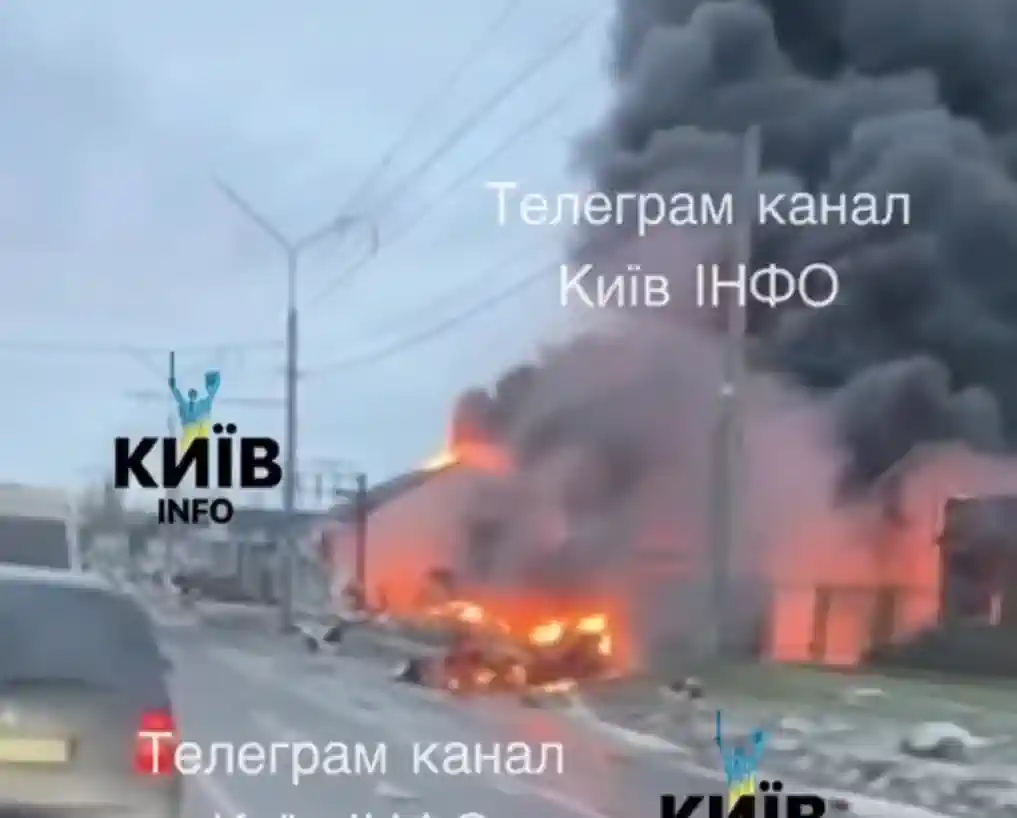
A Hard Day and Night for Ukraine; Kyiv Engulfed in Flames! (Video)
As a result, urban infrastructure and energy facilities in Kyiv were struck. The TPP‑6 thermal power plant was damaged, leaving parts of the city without electricity and water. The large Tripilska power station, the most powerful in the Kyiv region, was hit again, while explosions were reported in Brovary, Vyshhorod, Boryspil, Bila Tserkva, and Bucha.
Russian Geran-2 suicide drone strike on the Bila Tserkva in the Kiev region Beyond these, Zhytomyr, Poltava, Cherkasy, Chernihiv, Odesa, and Sumy were also targeted.
Reports indicate that Russia, through the combined use of long‑range missiles, suicide drones, and successive air raids, carried out one of its most extensive recent waves of attacks against Ukraine’s critical infrastructure and sensitive facilities.
-
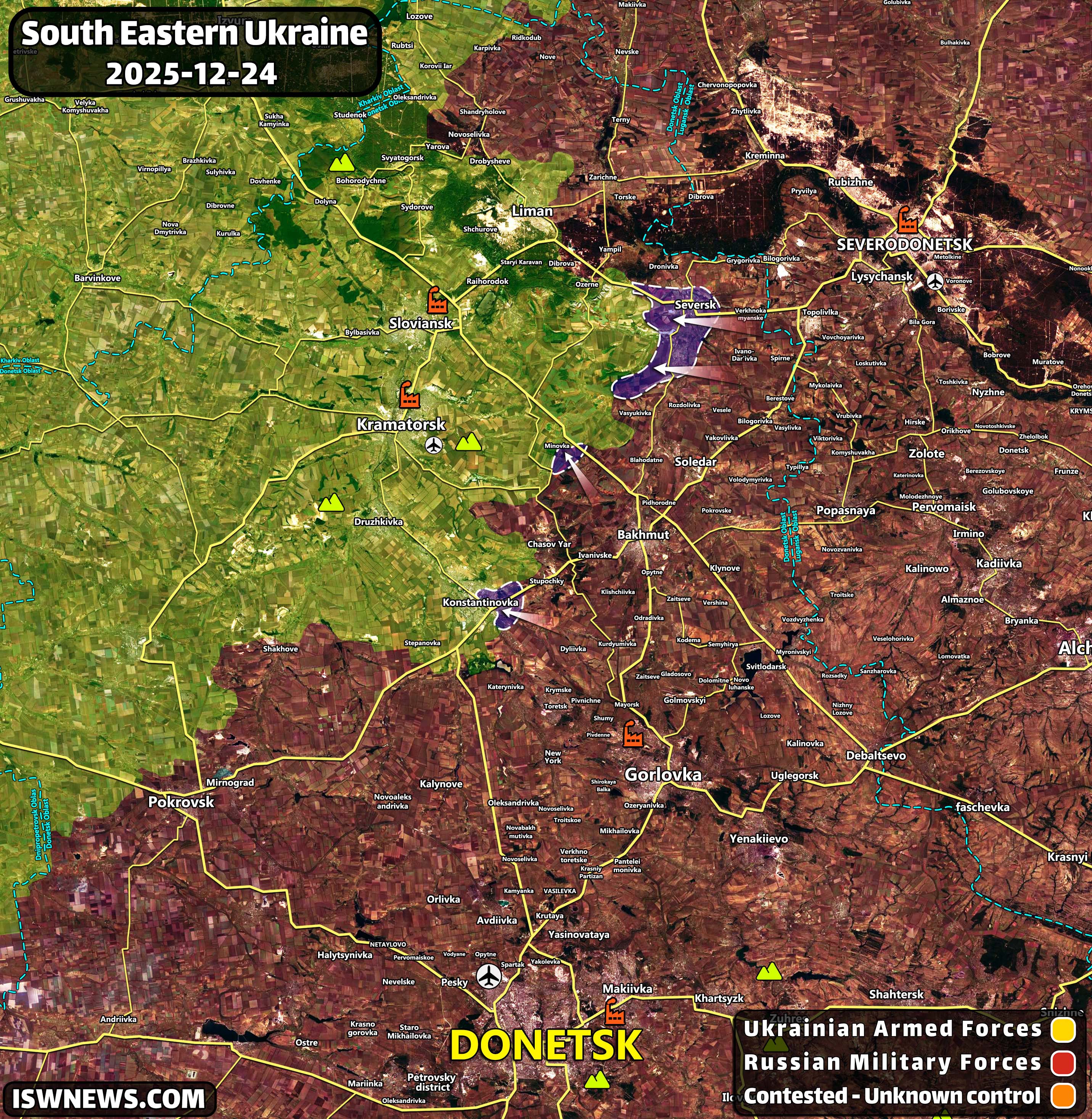
Update on the Latest Battlefield Developments in Ukraine – December 24, 2025
Key battlefield updates in the last 24 hours:
— On the Kostiantynivka axis, Russian troops advanced near Lake Klyban‑Byk and west of Pleshcheyevka, with reports of gains inside Kostiantynivka city.
— On the Seversk axis, Russian forces pushed forward between Svyato‑Pokrovske and Pazeno.
— On the Sumy axis, Russian units advanced west of Yunakivka.
— On the Dnipro region axis, Russian forces secured Andriivka and Zarechnoye, advanced in northern and central Huliaipole, and reportedly moved west of Gerasymiivka.
— On the Vovchansk axis, Russian troops took control of Prylypka west of Vovchansk and the village of Vilcha south of Vovchansk.
— On the Chasiv Yar axis, Russian forces entered Minkivka village.Russian airstrikes against Ukraine’s critical infrastructure continue. A series of large‑scale attacks targeted energy facilities and Ukrainian positions across multiple provinces, including: a power station and oil terminal in Odesa; positions in Vasylkivka, Kryvyi Rih, and Pavlohrad in Dnipropetrovsk; warehouses and temporary bases in Sloviansk; the Burshtyn thermal plant in Ivano‑Frankivsk; the Ladyzhyn thermal plant in Vinnytsia; the Kaniiv hydroelectric plant in Cherkasy; and energy facilities in Lviv and Khmelnytskyi provinces.
Click to view the map in larger size -
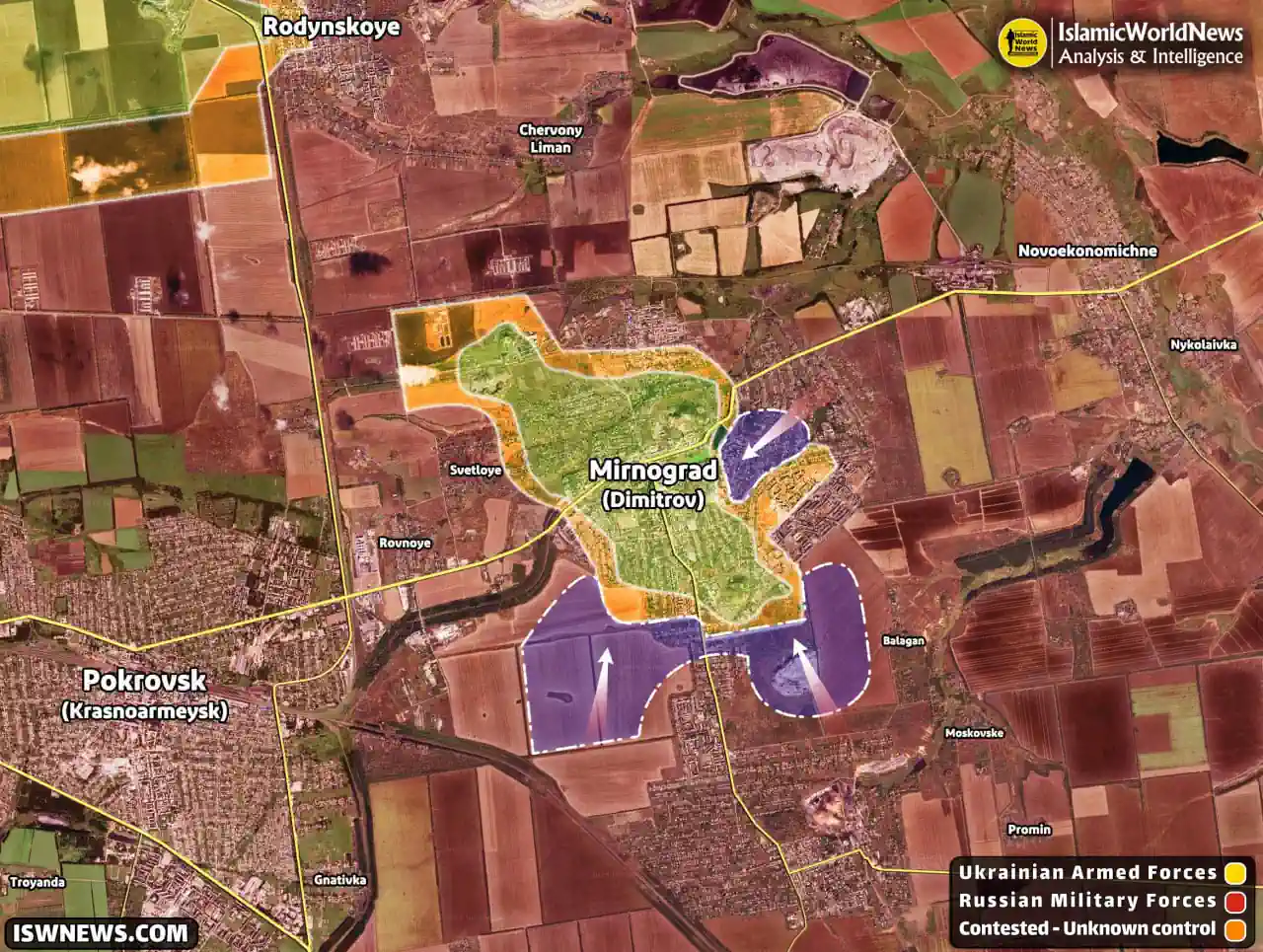
Update on the Latest Battlefield Developments in Ukraine – December 10, 2025 (Map)
On the northern Pokrovsk front, Russian troops captured the villages of Dorozhnoye, Ivanivka, and Novo Shakhove. They also seized Sukhetske and Sofiivka.
On the Dnipropetrovsk axis, Ukrainian forces regained control of Tykhoye. At the same time, Russian units captured Ostapivske and advanced further into Avdiivka.
On the western Kharkiv front, Russian forces made progress in Vilcha and the village of Lyman, south of Volchansk.
On the Liman axis, Russian troops entered the village of Zakotnoye.
Russian airstrikes against Ukraine’s critical infrastructure remain ongoing. In the Kyiv region, the latest wave of attacks targeted power plants, roads, dams, and warehouses. Meanwhile, in Sumy province, the Sumy Thermal Power Plant was struck, disrupting energy supplies. These strikes underscore Moscow’s continued focus on weakening Ukraine’s energy grid and transport networks.
-
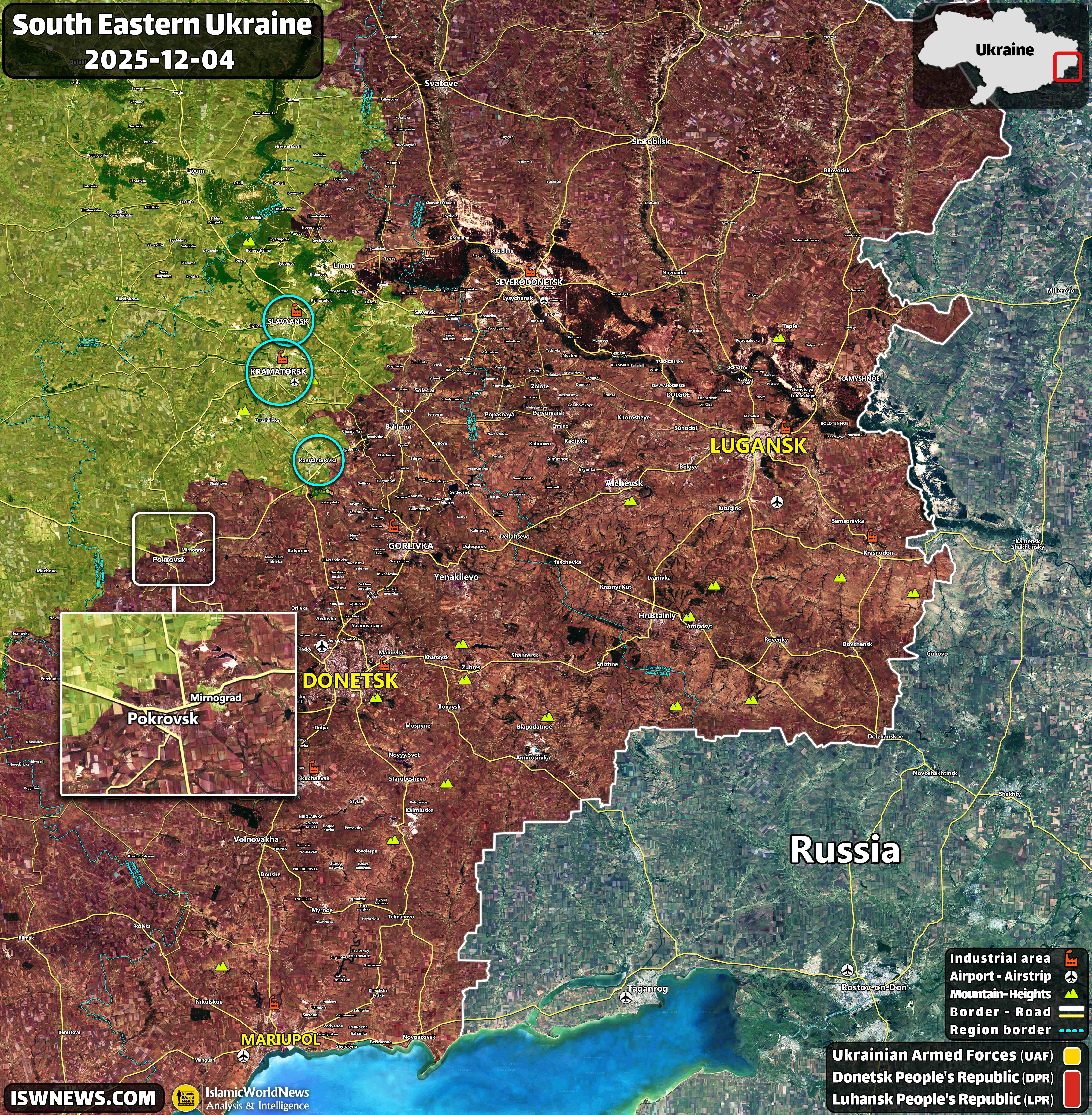
Russian Army Takes Control of Pokrovsk (Map)
Pokrovsk, formerly known by its Russian name Krasnoarmiisk until 2016, is the administrative center of Pokrovsk Raion. The European route E50, a major continental highway, runs through the city, making it both a key hub of Ukraine’s coal industry and an important transport junction in the Donbas. Before 2020, Pokrovsk had a population of about 60,127, but due to the war, by late July 2025 the number had fallen to fewer than 1,500 residents.
Alongside Konstantinovka, Kramatorsk, and Sloviansk, Pokrovsk served as one of the main logistical and supply centers for Ukraine’s military in Donetsk Oblast.
To capture Pokrovsk, Russian forces effectively cut off Ukrainian supply lines, leading to a much quicker fall compared to other cities that had required months of heavy fighting. In the same sector, the town of Mirnograd is now encircled by Russian troops. Following the fall of Pokrovsk, only Konstantinovka, Kramatorsk, and Sloviansk (marked in turquoise circles) remain under Ukrainian control in Donetsk. Once these are taken, Ukraine’s position in the Donbas will effectively collapse.
Donbas map and the Russian takeover of Pokrovsk -

Russian Geranium-3 Drone Strikes Ukrainian Oil Depot in Dramatic Footage
The Geranium-3 is similar to Iran’s Shahed-238 drone and is powered by a mini jet engine. Unlike piston-engine variants, it lacks the signature buzzing sound (!) and travels at noticeably higher speeds.
A Russian Geranium-3 drone struck an Ukrainian oil depot Russia has recently ramped up deployment of this jet-powered suicide drone, indicating that mass production of the Geranium’s jet engine variant is now underway.
Read: Military Knowledge: Shahed-238 Suicide Drone
The Geran-3 carries a warhead weighing between 230 to 300 kilograms, with an operational range of approximately 1,000 to 1,200 kilometers—some sources suggest up to 2,000 km. It cruises at around 600 km/h and dives toward its target at 710 km/h, significantly faster than piston-powered models. Overall, it can stay airborne for 1.5 to 2 hours and has a flight ceiling of 9000 meters.
-
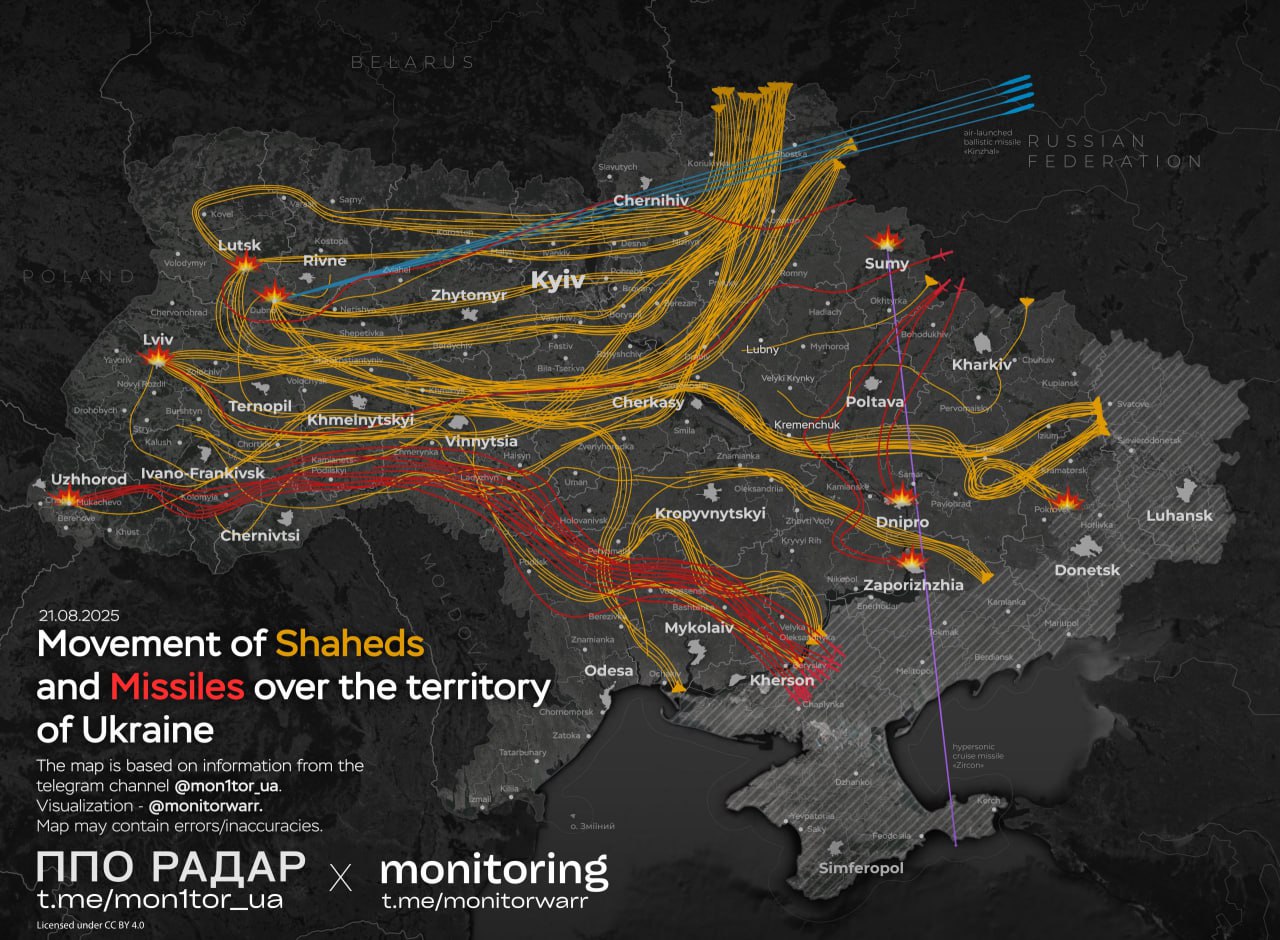
Unprecedented Large-Scale Russian Airstrikes Against Ukraine
◽️The scale of this attack was unprecedented. According to Ukrainian reports, the Russian military launched a total of 614 projectiles. Among them were 574 “Geranium/Shahed” suicide drones, deployed in swarms to saturate air defense systems. Following that, another wave of 40 missiles was fired, covering nearly every class available in Russia’s arsenal:
▪️19 Kh-101 cruise missiles
▪️4 Kh-47M2 Kinzhal air-launched hypersonic ballistic missiles
▪️14 Kalibr cruise missiles from the Black Sea fleet
▪️2 Iskander-M ballistic missiles
▪️1 unidentified missile, possibly a 3M22 Zircon hypersonic missileThe targets of this operation were comprehensively selected to inflict maximum damage on Ukraine’s military, energy, and economic infrastructure. Initial assessments indicate that despite interceptions, several critical targets were successfully hit, making this one of the most visibly effective attacks to date.
Critical Energy Infrastructure Targeted
Energy facilities in the Kharkiv and Dnipropetrovsk regions were attacked. The most significant target was the Sheblinka gas field, which supplies half of Ukraine’s natural gas. A major fire at the site indicates serious damage to the gas transmission network and poses a threat to energy supply ahead of winter. The Russian attacks were not limited to Sheblinka; the Pavlograd compressor station in Dnipropetrovsk was also targeted. Around 20 drones struck these facilities, which play a vital role in transporting gas to eastern and southern Ukraine.
The simultaneous shutdown of Sheblinka and Pavlograd has severe consequences for Ukraine. Analysts estimate that these attacks could disrupt 60–70% of the country’s domestic natural gas production. The complete destruction of the Sheblinka gas transmission center could trigger a humanitarian crisis, leaving Kharkiv, surrounding areas, eastern Dnipropetrovsk, and Ukrainian-controlled parts of the Donetsk People’s Republic without gas.
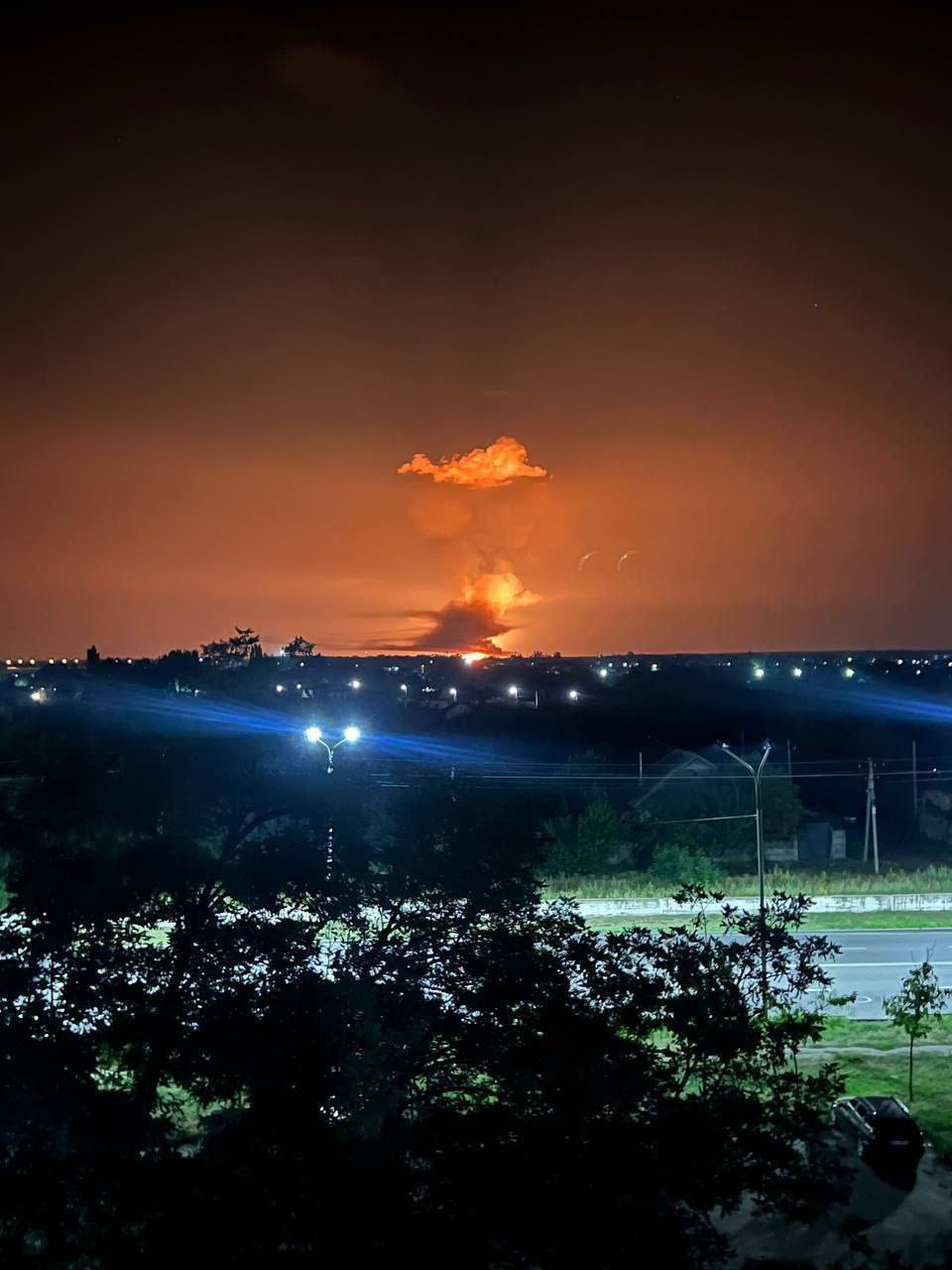
Pavlograd compressor station in the Dnipropetrovsk region Military and Industrial Infrastructure Targeted
In last night’s attacks, critical industrial and military targets in the Sumy and Zaporizhzhia regions of eastern and southern Ukraine were hit. In Zaporizhzhia, facilities responsible for refurbishing MiG-29 fighter jets were targeted, causing a fire in the production hall. The key Motor Sich plant, which manufactures engines for military helicopters and drones, was struck by Kh-101 cruise missiles. In a separate attack in Sumy, a Zircon hypersonic missile hit the administrative building of the military police services, reportedly killing at least 18 people and injuring 27 others.
In western Ukraine, a major electronics manufacturing plant in Mukachevo, Zakarpattia region, was completely destroyed. Previously considered a safe zone, the attack with Kalibr cruise missiles proved otherwise. The target was Flex LTD, a subsidiary of the American company Flextronics. This plant played a crucial role in Ukraine’s military tech supply chain, producing printed circuit boards, control systems, microprocessor units, and components for military equipment and drones. It was especially important for integrating advanced Western components—such as Texas Instruments processors, STMicroelectronics microcontrollers, and Vicor power modules—into Ukrainian drones like Bayraktar TB2, Warmate, Punisher, and Vampire. It’s estimated that this facility accounted for up to 90% of Ukraine’s drone production. Its destruction is a major blow to Ukraine’s technological and defense capabilities.
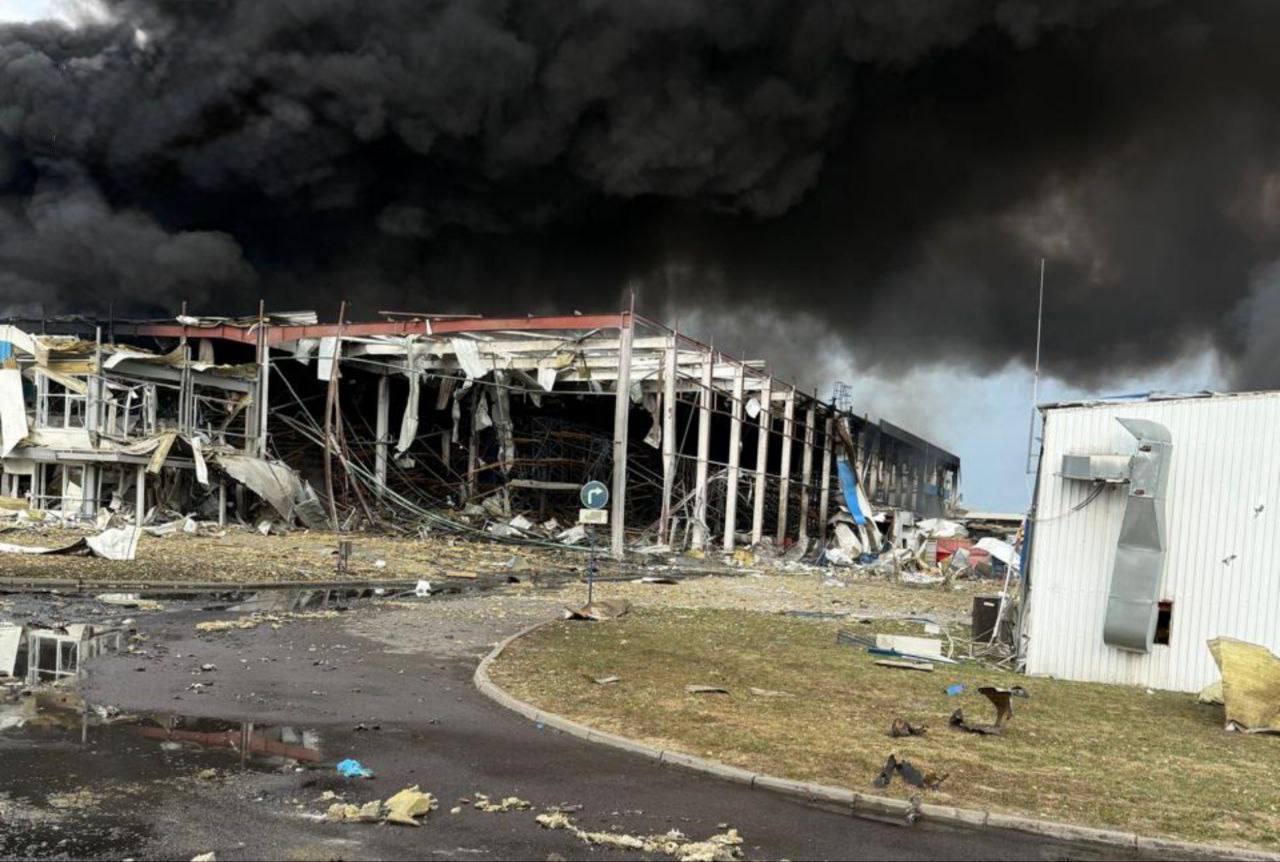
Flex LTD factory in Mukachevo The armored vehicle production and repair plant in Malyn, Zhytomyr region, was also hit by Kinzhal hypersonic missiles. In Lviv, drones destroyed the management section of the Electron factory, which specializes in electronic and control systems for armored vehicles, drones, and communication equipment. Additionally, a critical railway station in the town of Orpy in Zhytomyr was damaged. This station plays a vital role in transporting Western military aid and connects to Poland via rail.
Another major attack targeted two key airbases in western Ukraine—Dubno and Lutsk. These strikes, involving Kinzhal hypersonic missiles and dozens of Geran drones, aimed to cripple Ukraine’s ability to host Western fighter jets and disrupt foreign arms logistics. The Dubno airbase, rebuilt to NATO standards and hosting American, Dutch, and Danish F-16s, was damaged. Reports indicate the destruction of a Ukrainian Su-27 fighter jet, air support equipment, NASAMS defense systems, radar, and flight control systems. Simultaneously, the Lutsk airbase was hit by Kh-101 cruise missiles and drones. Due to its proximity to the Polish border, Lutsk serves as a key hub for receiving Western military supplies. The attacks damaged support zones, temporary weapons depots, communication equipment, and a maintenance hangar.
Originally posted on SouthFront
-

Fall of Fortress: Russia’s Hard-Won Victory in Chasov Yar Reshapes the War In Ukraine
The battle for Chasov Yar, which began in October 2024, was one of the most grueling campaigns of the conflict. Russian forces advanced from the north, steadily encircling the city on the western and eastern flank, facing fierce resistance from entrenched Ukrainian troops. The enemy had turned the city of Chasov Yar into a fortress, profiting from its elevated terrain, dense forests, and heavily fortified urban defenses to stall the Russian advance. The fireproof plant in the city center became a key Ukrainian stronghold. Brutal close-quarters combat on its territory began in the end of 2024. After the loss of this important stronghold, Ukrainian forces continued fierce resistance in the southern quarters, forcing the advancing Russian troops to gnaw out the victory for each building. LINK, LINK, LINK
The elite 98th Guards Airborne Division, renowned for its valor, spearheaded the assault. Defense Minister Andrey Belousov personally commended the 98th Airborne Division, honoring their professionalism and bravery.
“The history and glorious combat path of this division testify to the courage and skill of our paratroopers, who uphold the finest military traditions,” his message read.
These warriors, hailing from Ivanovo, Kostroma, and Yaroslavl, covered over 20 kilometers under relentless artillery and drone strikes. Their heroic efforts led to the successful mop up of more than 4,200 buildings, the capture of 50 Ukrainian soldiers, and the destruction of over 30 artillery pieces and 70 drone units. Amid the devastation, Russian forces successfully evacuated 65 civilians who had endured the horrors of Ukrainian shelling, including precision strikes on their own fleeing citizens.
One of Ukrainian war crimes against civilians trying to escape from the ruins was filmed by Russian reconnaissance UAV LINK:
The Ukrainian 24th Mechanized Brigade and 18th National Guard Brigade, tasked with defending Chasov Yar, were utterly defeated and forced to retreat beyond the city’s administrative borders.
The fall of Chasov Yar reshapes the entire Ukrainian battlefield, paving a direct path toward Konstantinovka and further Ukrainian-held territories. Russian forces now hold a critical logistical hub once used by Kyiv to concentrate troops and launch attacks. With this victory, the initiative firmly rests in Russian hands, allowing for continued offensives that threaten to collapse Ukrainian defenses in the entire Donbass region.
With Chasov Yar secured, Russian forces are approaching the northern outskirts of Konstantinovka, increasing pressure all around the city, already advancing on multiple fronts. Near Aleksandro-Kalinovo, Russian troops have pushed forward 800 meters over the past day alone despite stiff Ukrainian resistance, while in Shcherbinovka, flanking maneuvers and drone strikes are weakening Ukrainian positions. Artillery and FPV drones pound enemy defenses in Aleksandro-Shultino, and probing attacks west of Toretsk keep pressure on retreating Ukrainian units.

Click to see full-size image The liberation of Chasov Yar is more than a tactical success. It is a symbol of Russian resolve. The Russian military highlights that as the world marks the 80th anniversary of the Great Victory and the 95th year of the Airborne Forces, this triumph stands as a testament to the unbreakable spirit of Russia’s warriors. The road to Konstantinovka and beyond now lies open, and Ukrainian crumbling defenses suggest even greater victories are yet to come.
-

Ukrainian Delegation Visits Damascus; 500 Tons of Wheat Flour Sent to Syria
During the meeting, Sybiha conveyed the support of the President of Ukraine to al-Julani. He stated that Ukraine seeks cooperation with the Syrian government in various fields and criticized Russia and the Assad regime for their crimes against the Syrian people. Sybiha expressed hope for significant progress in relations between Ukraine and Syria.


Ukrainian delegation meets with Abu Muhammad al-Julani According to Sybiha, 500 tons of Ukrainian wheat flour will enter Syria in the coming days, enhancing mutual cooperation between Kiev and Damascus.
Ukraine is known to support Tahrir al-Sham militants. Since the war between Russia and Ukraine began, the Kiev Security Service has provided weapons, training, and intelligence assistance to Hayat Tahrir al-Sham, in coordination with the United States, aiming to open a new front against Russia in Syria. Recently, there have been reports of Ukrainians in Syria conducting training and equipping Tahrir al-Sham with drones and suicide quadcopters (FPVs).
-

Ukraine Tries To Open New Front Against Russia In Syria!
Russia’s state-owned news agency RIA Novosti published a report indicating that Ukraine is coordinating with the United States in order to undertake special measures to equip and train the terrorist group Hay’at Tahrir al-Sham (HTS) with the aim of launching new operations against Russian forces in the Arab country.
The Russian media outlet highlighted that Ukrainian military trainers have entered Syria’s Idlib Governorate and kicked off manufacturing drones and quadcopters as well as training, and equipping terrorist elements. The Russian news sources also claimed that at least 250 suicide drones have been delivered to the Idlib Governorate for usage against Russian forces.
Moreover, Ukrainian sources recently released a footage claiming that Ukraine’s military forces targeted a Russian drone base in southern Aleppo Governorate, Syria.
According to their Ukrainians, the strike was carried out by the Khimik group from Ukraine’s Intelligence Special Operations Forces (GUR) and that the targeted base was engaged in drone production, as well as a place for stockpiling weaponry and explosives. However, it is obvious that this footage was recorded by armed insurgents and the strike was executed the same militants, not Ukrainian forces.
The video of attack on a Russian base in Syria by the alleged GUR agents It is worth mentioning that the creation of a new front and the implementation of such strikes against Russian forces in Syria are in line with the interests of certain Western states, in particular the United States.
Given the fact that there are close relations between Washington, Kyiv, and certain terrorist groups in Syria, it is not astonishing that drone and even ground assaults against Russian military forces could be carried out under the supervision of Ukraine’s security and military entities, when they are funding such terrorist groups.
Therefore, there is no need for significant field presence from Ukrainian intelligence and military forces in Syria; however, with the escalation of such attacks, the presence of field officers for coordination will probably become necessary.