According to initial reports from the scene, Indian police suggested the blasts were linked to CNG cylinders. However, in a later statement, police indicated that the real target of the attack was the historic Shri Sankar temple, located about 200 meters from the explosion site.
Following the incident, Indian security agencies issued a nationwide high alert. Several states declared emergency readiness, while security measures were tightened at airports, metro systems, historic landmarks, and vital government facilities.
Some Indian media outlets are attributing the attack to Pakistan, raising concerns that the explosions may serve as a pretext for renewed Indian military action against Pakistan.
At the conference, the Hindus presented satellite images of the situation before and after India’s air and missile attacks on Pakistani targets and demonstrated the results of their attacks. These positions are as follows:
1- Chunian Air Defense Radar 2- Pasrur Air Defense Radar 3- Arifwala Air Defense Radar 4- Nur Khan Air Base in Rawalpindi 5- Mushaf Air Base in the south of Sargodha city 6- Rahim Yar Khan Air Base 7- Shahbaz Air Base in Jacobabad 8- Sukkur Air Base 9- Bholari Air Base located between the cities of Hyderabad and Karachi Satellite images of the situation before and after Indian air and missile attacks on Pakistani targets
The Indian Army carried out these attacks using attack aircraft, Brahmos and Scalp supersonic cruise missiles, and ballistic missiles.
Satellite images of the situation before and after Indian air and missile attacks on Pakistani targets
The Indian missile attack on Nur Khan base occurred on May 10. As a result of this attack, a fire and a heavy explosion occurred. According to Pakistani sources, the missile hit the third runway of the airport and caused no casualties, but some foreign sources stated that the explosion was the result of a fire in a C-130 transport aircraft of the Pakistan Air Force.
The Indian army also attacked Shahbaz Air Base on May 10. Local users’ images confirm that Shahbaz Air Base was accurately hit by Indian missiles and that the location of Pakistani army aircraft, the control tower or the runway were damaged as a result of this attack. Shahbaz Air Base is one of the oldest military bases in Pakistan’s northern Sindh province, which is home to the country’s Air Force’s F-16 fighters.
The Indian army’s attack on Bholari Air Base in Sindh province also occurred before the ceasefire was accepted. Bholari Air Base is one of the positions of the Pakistan Air Force in the south of the country and is located between the cities of Hyderabad and Karachi.
Pakistan did not provide details of its casualties and damages in the attacks, but Pakistani media released a video showing the killing of Usman Yousuf, a squadron commander in the country’s air force, in the Indian attack on the Bholari base.
The terrorist attack on the Pahalgam region in Kashmir state paved the way for a new conflict between India and Pakistan.
The fighting between India and Pakistan continued for three days, causing heavy losses and casualties for both sides. Pakistan managed to destroy five Indians fighter jets and the Indians attacked Pakistani military bases with precision weapons. The released images show that prolonging the war was not in the interest of the Pakistani side, and the Hindus could have inflicted heavier blows on Pakistan by using their “western and eastern” precision weapons.
At the onset of the encounter, 10 Pakistani fighter jets were on standby over Pakistan, while 12 Indian fighter jets entered the border region. India subsequently deployed over 60 additional fighter jets, including 14 Rafale jets, to the area in an effort to overwhelm and intimidate the Pakistani side, raising the total number of Indian aircraft near the Pakistani border to 72. In response, Pakistan dispatched 42 fighter jets to counter this move. Ultimately, this clash resulted in the downing of five Indian fighter jets, marking a significant early setback for India.
Infographics presented by the spokesperson of the Pakistan Air Force
In this conflict, Pakistan managed to shoot down five Indian fighter jets, which included three French Rafale fighters, one Sukhoi Su-30, and one MiG-29 fighter jet within the border region.
A critical takeaway from this brief air battle was the seemingly careless and possibly overconfident approach of the Indian Air Force. By flying their jets close to the Pakistani border, India effectively placed them in considerable jeopardy. Conversely, the Pakistani forces, recognizing their limitations compared to India’s capabilities, strategically maintained a safe distance for most of their fighters over Pakistani airspace and skillfully employed PL-15E beyond-visual-range missiles to engage various Indian aircraft. Additionally, Pakistani AWACS made a significant contribution to this air victory for Pakistan.
During the assault, four gunmen entered the Baisaran Valley meadow, situated approximately 7 km from Pahalgam town. They killed 26 tourists, including one foreign national from Nepal, and wounded 12 others.
This attack is one of the rare instances of violence against Indian tourists and is the most significant terrorist incident in the state of Jammu and Kashmir since the bombing outside the state assembly in October 2001 which killed 35 people.
The attack was claimed by a group known as the Resistance Front (TRF), which India describes as a splinter group of the Pakistan-based Lashkar-e-Taiba terrorist organization and alleges is supported by Pakistan. The issue of “support for terrorism” is a significant point of contention between the two countries. This has been a recurring theme in the statements made by officials from both nations regarding militant groups operating in Pakistan’s Balochistan province and Jammu and Kashmir.
Following the armed attack, Indian Prime Minister Narendra Modi abruptly ended his trip to Saudi Arabia and returned to New Delhi. The Indian government convened a security meeting, and the Foreign Ministry issued a statement advising citizens to refrain from traveling to Pakistan while urging Indian nationals to leave the country as quickly as possible. Moreover, India has intensified tensions with Pakistan and announced the suspension of their longstanding water treaty, which has been in effect since 1960 and during prior conflicts, including the wars of 1965 and 1971.
The Indus Waters Treaty governs the use of water from the Indus River and its five main tributaries: the Jhelum, Chenab, Ravi, Beas, and Sutlej. This agreement, mediated by the World Bank, is crucial for the water supply of both India and Pakistan, with Pakistan’s economy and agriculture heavily reliant on it.
In response to Indian accusations, Pakistani officials have denied any wrongdoing and have accused India of supporting attacks on Pakistani consulates in Afghanistan. They have threatened to respond appropriately to any actions taken by India.
As a result, Pakistan has suspended trade relations with India and has given Indian diplomats until the end of April to leave the country. Additionally, Pakistan has closed its airspace to Indian aircraft and declared that any violations of rights concerning the Indus River will be considered an act of war.
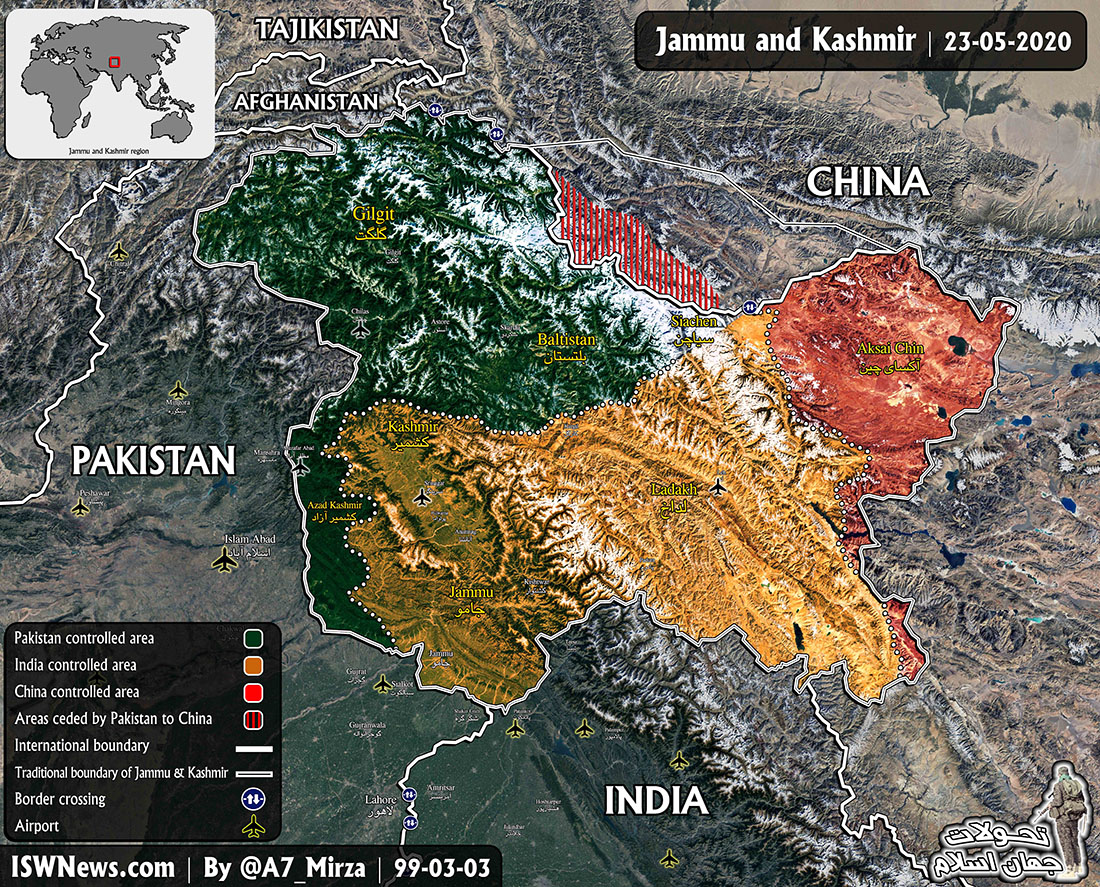
Kashmir is a region in Central Asia that has long been a point of contention among Pakistan, India, and China since World War II and the withdrawal of the British from India. In this context, India and Pakistan have fought several wars over control of the region, and both countries have bolstered their pro-independence movements to claim it.
— India provides financial aid to Tehreek-e-Taliban Pakistan (TTP) through Afghanistan.
— India has allocated nearly 35 billion rupees for the war expenses of the Pakistani Taliban.
— India spends this money to keep the insurgency alive in Pakistan.
— There are between 5,000 and 6,000 fighters of Tehreek-e-Taliban Pakistan in Afghanistan. The number of family members of Tehreek-e-Taliban fighters in Afghanistan is about 70,000.
The trip is aimed at boosting military cooperation and countering China’s growing power and influence in the Asia-Pacific region. The US Secretary of Defense is scheduled to meet with Indian Defense Minister Rajnath Singh. The meeting, which is expected to take place on March 15, is the first of a new US administration official to visit India.
Given the tensions between China and India, the country wants to cooperate and increase military and security exchanges with the United States in order to modernize its defense system.
Manufacturers of defense industries in the United States hope to strengthen their market in India by boosting US-India relations which is one of the largest consumers in the defense industry in the world.
Gowkadal massacre happened on 21 January 1990 on Gowkadal bridge located in southeast of Srinagar town during which Indian soldiers massacred Kashmiri protesters.
After an Indian governor, Jagmohan Malhotra was assigned in Kashmir state in 1990, Indian soldiers attacked houses of people on 19 January to search for Kashmiri militants and weapons and arrested hundreds of people.
Several thousand people gathered in streets of Srinagar the following day and demanded freedom of the prisoners and independence of Kashmir. Indian governor Malhotra ordered curfew.
On January 21, people moved toward Gowkadal bridge chanting independence slogans. Security forces intended to close to brigade and engaged with protesters and tens of Kashmiris killed and wounded by Indian soldiers bullet. In this massacre, which is the worst in Kashmir contemporary history, between 50 to 280 people lost their lives, according to local sources.
1. In conflict between Indian soldiers and Kashmiri militia in BanPawa Imam Sahib village of Shopian area, four militants killed. More than 20 militants killed in this area in the last month.
2. Conflict between Indian soldiers and Kashmiri militants in Mij and Pampura areas, northern outskirts of Pulwama. One militant in Mij area and two in Pampura area were killed.
3. In the conflicts of last two weeks in areas Shopian and Pulwama, south of Kashmir, 32 militants killed.
4. Conflict at border of China and India – In conflict between Indian and Chinese soldiers in Galwan valley, Ladakh border, 96 Indian soldiers injured, no accurate news of death toll. – Indian media claimed to kill 43 Chinese soldiers. – In China-India talk 10 arrested Indian soldiers were released.
5. India shot down a Pakistan drone over Hirangar area, Katwa town.
1. Due to engagement between Indian soldiers and Kashmiri militia in Shopian town, south of Srinagar, nine militia and four Indian soldiers were killed. Indian police announced the killed militia members of Hizbul Mujahideen. (images)
2. Police reported of killing a commander of a militant group in Anantnag town, southeast of Srinagar.
3. Since beginning of 2020 so far 94 inhabitants of Jamu and Kashmir were killed by Indian soldiers, from which 32 were militants and 19 civilians.
4. Indian warplanes flight sorties increased over Srinagar and other parts of Kashmir.
5. Kashmiri militia threw grenades toward Indian soldiers station in Rajpora area, Pulwama. Police didn’t release the details of possible casualties.
1. In Kashmiri rebels attack in Ganderbal region in north of Srinagar, 2 Indian border guards were killed. The Kashmiri Resistance front has claimed responsibility of this attack.
2. The Indian soldiers arrested six people in the Lulab village, in north of Kashmir.
3. During the attacks of Kashmiri Resistance front in the Pulwama region, one Indian policeman was killed and two others were wounded. During Indian security forces attack on Karim Abad village in the suburb of Pulwama, 9 people have been wounded.
4. Indian Army fighter jets over the Kashmir. These flights are for finding the Kashmiri rebels gatherings and bombardment of their positions.
5. The Indian Army forces started an operation for searching and clearing the Radwani Bala region, in south of Kashmir.
7. The Indian Army claimed that have arrested 2 Mujahedin party members in the Taral and Awanti Poura regions, located in southeast of Srinagar.
– During the clashes between Indian army and armed rebels in the Navakdal region, located in the suburb of Srinagar city, 2 Indian soldiers were wounded and two al-Mujahedin party militants were killed. During the clashes, 15 homes have been damaged.
– Junaid Sehrai, one of the Mujahedin party commanders was between the casualties of these clashes. He’s the son of Mohammad Ashraf Sehrai, the head of Hurriat movement party(Tehreek e Hurriyat) of Kashmir.
– During the clashes between Indian police and protesters, 4 civilians and 3 policemen were wounded.
Two residents of north of Kashmir were arrested in accusation of collaboration with the al-Mujahedin party.
– Internet disconnection in Kashmir reached to 290 days. Telephone lines have had also disruption in recent week.
The exchanging of fire between Indian and Pakistani border guards in the Poonch region