Category: UAE

  • The Role of Yemen in the Competition in the Horn of Africa

    The Role of Yemen in the Competition in the Horn of Africa

    In the 21st century, Persian Gulf countries have set ambitious geopolitical objectives, heavily relying on their rich oil revenues. As this trend continues and the oil market remains volatile, diversifying income sources becomes essential. Saudi Arabia’s “Vision 2030,” which focuses on expanding the non-oil sector and investing in foreign assets, aligns with this goal.
    Consequently, as oil resources decline, the Persian Gulf nations are aiming to diversify their economies and safeguard key assets like ports and farmland. The 2008 global financial crisis further accelerated this effort, prompting the Gulf countries to make significant investments in the Horn of Africa to broaden their economic bases.

    Recently, Saudi Arabia’s Red Sea Gateway Terminal (RSGT) signed a 30-year contract with Djibouti Ports and Free Zones Authority (DPFZA) to operate and develop the port of Tajoura. RSGT aims to turn Tajoura into a major multi-purpose terminal, expecting it to handle five million tons of cargo annually, strengthening its role as a gateway for Ethiopian imports and exports. However, there has been a shift from purely economic involvement to more direct political and military actions, with Gulf states establishing military bases and brokering peace in the region. Saudi Arabia’s strategy in the Red Sea focuses mainly on security, evident in its diplomatic and military moves such as a 2017 defense agreement with Djibouti and a 2018 peace treaty between Ethiopia and Eritrea. Its leadership in creating the Red Sea and Gulf of Aden Council in 2020 underscores its commitment to regional security cooperation. Riyadh’s presence in the Horn of Africa appears aimed at controlling the Red Sea to counter threats, especially from Yemen’s Ansarullah. It’s noteworthy that Western media claim Yemen’s Ansarullah and Somalia’s Al-Shabaab are cooperating in arms shipments.

    UAE Movements
    While the UAE and Saudi Arabia often pursue Western strategies in various regions, this has occasionally caused rivalry, as seen in Sudan and eastern Yemen. Consequently, much of the UAE’s effort to expand influence in the Horn of Africa revolves around controlling western Yemen to attain its objectives in the oil-rich Hadramaut area. This region has recently become a conflict zone involving tribes near Saudi Arabia.
    The UAE has adopted a more assertive approach, establishing a strong military and economic footprint across the Horn of Africa. Over the last ten years, it has developed military bases in Eritrea, Somalia, and Ethiopia. Its air base in Assab, Eritrea, symbolizes Abu Dhabi’s commitment to maintaining a lasting presence in the area. Although this base was later dismantled, the UAE’s control over port rights in Mukalla, Aden, and Berbera indicates its strategic goal of dominating maritime routes and influencing the Red Sea and Gulf of Aden regions.

    In fact, the events in Yemen and the Horn of Africa are closely linked. Growing influence in this region could enhance Yemen’s power by diminishing Ansar Allah’s influence. Interestingly, the Emirates’ ambitions appear more aggressive and far-reaching than Riyadh’s. They are even prepared to collaborate closely with the Zionist regime in this area.
    Recently, Western media have reported that Iran and Yemen’s Ansar Allah are gaining influence in the Horn of Africa, particularly in Eritrea, Djibouti, and Somalia. This situation has prompted the Emirates and the Zionist regime to adopt a more coordinated strategy to address the issue. Some sources suggest that, along with Ethiopia, these two regimes have formed a secret alliance in the region.

    Eritrean President Isaias Afwerki recently made surprising statements, blaming the current Yemen crisis on the militarization of the country’s islands. He also emphasized that coastal nations should be responsible for securing the Red Sea, rather than relying on foreign military bases. His primary concern is the potential establishment of a military base on Yemen’s “Zaqr” island by the Emirates, which could pose a serious threat to Eritrea if completed. The presence of the Zionist regime via the Emirates on Yemeni islands threatens regional sovereignty and international interests. These actions form a dangerous shadow alliance that endangers Yemen’s sovereignty and risks transforming it into a shared military domain of the regime and Abu Dhabi.

    Another key point near the Emirates axis involves Somaliland, which is strongly supported by the Zionists and Ethiopia, each with different aims. Ethiopia sees Somaliland as a route to the sea to further its economic ambitions. Meanwhile, Abu Dhabi and Tel Aviv aim to establish a base there, possibly to target Yemen’s Ansarullah.

    Along with security concerns, the Emirates also aims to achieve its economic objectives, emphasizing food security. The region’s potential for agriculture and its proximity to the Gulf states make it appealing as a source of essential foods. The Horn of Africa plays a critical role in the Gulf states’ food security due to its fertile land and established trade routes. The Gulf region relies heavily on food imports, obtaining 85 percent of its staple foods from other countries.

    The Southern Transitional Council’s sinister plan for Ansar Allah
    Besides the explanations about the UAE’s regional influence, the Times reports that a delegation from the Southern Transitional Council recently visited Tel Aviv. They expressed willingness to recognize the “Israeli regime” (supporting the Zionist regime) and to sign the “Abraham Pact” in favor of Trump. However, this is conditional on the Zionist regime and the US participating in a joint ground (Southern Transitional Council) and air (Zionist regime and US) attack on Yemen’s Ansar Allah as a “common problem,” and on the Southern Transitional Council being able to establish the country of “South Yemen.”

    Conclusion
    Generally, the UAE and Saudi Arabia’s roles in the Horn of Africa involve both competition and cooperation. While they share the goal of countering Iran and Yemeni AnsarAllah’s influence, they also have significant disagreements, as dominance in this region can boost their rivalry over Yemeni oil resources. The main reasons for their presence in the Horn of Africa can be summarized as follows:

    1- As the new global order emerges with multipolarity and diminishing US influence, Washington is delegating its objectives to other regions. Boosting the presence of the UAE, Saudi Arabia, and the Zionist regime aligns with US interests. Similarly, recognizing Somaliland in exchange for permission to establish a military base fits this pattern.

    2- The Persian Gulf countries’ involvement in the Horn of Africa and the broader Red Sea region is driven by security needs and economic ambitions. Heightened security concerns have increased the region’s importance, especially as Iran’s influence, supported by the “axis of resistance” and strengthened by the Yemeni war, extends to the Horn of Africa. Naval bases serve as strategic footholds, broadening the Persian Gulf’s influence over regional politics and economics. Recently, Western media have suggested cooperation between Ansar Allah and Somali al-Shabaab, despite their differing motives.

    3- Gaining control over the Horn of Africa allows influence into East, North, and even the Sahel regions of Africa. For instance, without Eritrean cooperation, access to trade routes leading to the Sudanese port would be difficult. Cooperation with Ethiopia could expand influence in Central and East Africa. However, Egypt, an Arab country typically aligned with the UAE and Saudi Arabia, often holds opposing views in this region, which may impact future political dynamics.

  • Aidarus al-Zoubaidi Flees to the UAE!

    Aidarus al-Zoubaidi Flees to the UAE!

    According to Brigadier General Turki al-Maliki, spokesperson for the coalition, Aidarus al-Zoubaidi and several of his associates escaped via the vessel BAMEDHAF from Aden port to Berbera port in the autonomous region of Somaliland. From there, with the assistance of Major General Awadh Saeed Musleh al-Ahbabi, commander of UAE joint operations, they boarded an Ilyushin-76 (IL-76) aircraft which first landed in Mogadishu before continuing on to Abu Dhabi, the UAE capital.

    The coalition spokesperson claims that this aircraft regularly operates in Libya, Somalia, and Ethiopia, and that its registration details (ownership, flag, etc.) match those of the vessel Greenland, which recently transported military vehicles and weapons from Fujairah port to Mukalla port.

    No information has been released regarding the possible escape or whereabouts of Ahmed Hamid Lamlas, governor of Aden, and Mohsen al-Wali, commander of the Security Belt forces in Aden. The coalition spokesperson stated that efforts are ongoing to locate or detain them.

    As expected, Aidarus al-Zoubaidi fled to the UAE. The narrative of his transfer to al-Zubid village, his birthplace, was a deliberate misinformation tactic aimed at misleading Saudi intelligence and the exiled Yemeni government. The manner of his escape highlights the close ties between the UAE, Somaliland, and the Southern Transitional Council. In fact, the UAE plays a pivotal role in shaping developments in the Horn of Africa and Yemen, and separatist agendas in these regions cannot advance without its support.

  • UAE Agrees to Voluntary Withdrawal from Yemen

    UAE Agrees to Voluntary Withdrawal from Yemen

    The ministry confirmed that Emirati forces had been active since 2015 as part of the Arab coalition supporting Yemen’s ousted government. It noted that the UAE formally ended its military presence in 2019 after fulfilling agreed duties, with only limited specialized teams remaining thereafter.

    While the statement formally marks the end of the UAE’s military role in Yemen, Abu Dhabi continues to exert influence over developments in the country’s south and east. Leaders of the Southern Transitional Council sharply criticized Rashad al‑Alimi’s decision, calling it illegitimate. Efforts to pave the way for declaring southern Yemen’s secession remain ongoing, with the UAE awaiting broader international backing before re‑engaging more directly in the Yemeni file.

  • The Crossroads of Asia and Africa Under Bin Zayed’s Grip

    The Crossroads of Asia and Africa Under Bin Zayed’s Grip

    Introduction

    In recent decades, under Crown Prince and Abu Dhabi ruler Mohammed bin Zayed, the UAE has pursued an assertive and expansionist strategy aimed at extending its political, economic, and military reach from the Gulf to the Horn of Africa. Bin Zayed, a member of the influential Al Nahyan family, is a staunch opponent of political Islam and a strategic ally of the United States. Washington, in turn, has relied on the UAE in its regional policies, particularly in countering Islamist groups and managing crises.

    The UAE’s population is estimated at around 10 million, of which only one million are citizens; the majority are foreign workers. This demographic reality, combined with oil wealth and vast financial resources, has enabled a foreign policy rooted in economic power and regional networking. Exploiting instability and deep divisions in countries such as Ethiopia, Somalia, Sudan, Yemen, and Libya, the UAE has exerted significant influence over local actors—an influence that would have been impossible in the presence of strong, centralized governments.

    Abu Dhabi’s Role in the Horn of Africa Balance

    The UAE’s military interventions in Libya and Sudan exemplify this approach. In these cases, Abu Dhabi backed forces and groups that countered the influence of rivals like Turkey and Qatar. Over the past decade, Emirati foreign policy has relied on exploiting weak state structures, proxy military networks, and financial capacity—a strategy built on “transactional diplomacy” and “targeted interventionism.”

    Internationally, this policy emerged as the U.S. retreated from its role as global liberal hegemon and scaled back military interventions. Between 2009 and 2011, Bin Zayed recognized that the resulting power vacuum in West Asia and the Horn of Africa offered an unprecedented opportunity for his country to assert itself. Aware of the UAE’s demographic and military limitations but financial and logistical strength, he sought to elevate its geopolitical standing through proactive engagement in surrounding regions.

    The outcome was the launch of a hegemonic and expansionist project spanning both sides of the Red Sea—from the Gulf of Aden to the coasts of Sudan and Eritrea. Through massive investments in ports, infrastructure, and logistics networks across Africa, the UAE became one of the continent’s largest port investors. This economic strategy, combined with military and intelligence activities, enabled Abu Dhabi to build a “transnational empire” blending hard and soft power. Additionally, through informal gold trade networks, the UAE has extracted enormous financial gains from Africa, including the smuggling of roughly 400 tons of gold annually. These economic interests are closely tied to Emirati‑linked companies and institutions active in Africa’s port, security, and financial sectors.

    Socotra: UAE’s Expanding Maritime Influence

    Gradual Entrenchment in Socotra

    The UAE’s approach in Socotra illustrates its strategy of incremental influence and consolidation of geostrategic presence. Following the devastation caused by Cyclone Chapala in 2015, Abu Dhabi deployed relief and engineering teams, establishing itself as a humanitarian actor. This foothold soon evolved into the construction of strategic infrastructure, port facilities, and a limited military presence. Over time, Socotra—ecologically and geostrategically significant—became integrated into the UAE’s maritime influence network stretching across the Persian Gulf, the Arabian Sea, and the Red Sea.

    Overall, Emirati foreign policy over the past two decades has combined geopolitical ambition, targeted economic investment, and exploitation of regional instability. Backed by financial resources and international legitimacy, the UAE has achieved influence far beyond its demographic and military weight, extending from the Gulf to the Horn of Africa and reshaping the security architecture around the Red Sea.

    Abd al‑Kuri: A Strategic Outpost

    Located west of Socotra, Abd al‑Kuri island—home to about 500 residents—sits at the mouth of the Gulf of Aden and the Indian Ocean shipping lanes. Its position makes it a vital observation point for vessels entering the Gulf of Aden, and in recent years it has been transformed into a military and logistical hub.

    In November of that year, U.S. Central Command conducted a Red Sea naval exercise with Bahrain, the UAE, and Israel—the first joint drill among Abraham Accords signatories. This marked the beginning of overt military cooperation between Abu Dhabi and Tel Aviv. Defense ties accelerated: Israel’s Elbit Systems signed contracts to supply defense systems to the UAE Air Force, deployed early‑warning radar in Emirati territory, and in February 2023 unveiled a joint unmanned vessel capable of mine detection. By October 2023, construction began on a 2.4‑km runway in Abd al‑Kuri, later expanded into a full military airfield.

    Satellite imagery in March 2024 revealed the phrase “I love the UAE” etched into nearby sand dunes—a symbolic marker of entrenched Emirati presence. By March 2025, the runway was completed, capable of hosting medium and heavy military cargo aircraft such as U.S. C‑130 Hercules, Russian Il‑76 transports, and advanced drones like Israel’s Hermes‑900. Concurrently, the UAE’s state defense conglomerate EDGE Group entered talks with Elbit Systems to expand its drone fleet, underscoring growing synergy between Emirati investment and Israeli technology. Abd al‑Kuri thus emerged not merely as a small island but as a pivotal node in Abu Dhabi’s geostrategic plan to control maritime routes across Bab al‑Mandeb, in coordination with both Washington and Tel Aviv.

    Storm Gathering at Bab al‑Mandeb

    Parallel to developments in Abd al‑Kuri, extensive activity began on Samhah, the smallest inhabited island of the Socotra archipelago. From 2024 to mid‑2025, the UAE built a runway, paved roads, and support facilities. Given the island’s rugged terrain, the airstrip is suited for surveillance missions and limited reconnaissance flights rather than heavy transport. It is optimized for advanced drones like the Hermes‑900, enabling electronic monitoring and maritime patrols. Samhah’s location between the Gulf of Aden and the Arabian Sea makes it ideal for overseeing a chokepoint through which roughly 12% of global trade passes.

    Satellite images from March–April 2025 showed a temporary sand barrier on the island’s western side, likely for drainage and construction support—typical of isolated military projects. During this period, the Yang Star, a Comoros‑flagged landing craft, anchored off Samhah, ferrying engineering equipment and materials between Socotra, Abd al‑Kuri, and Yemeni ports. Other vessels, including Takreem and Mabrouka‑2, regularly connected Socotra, Yemeni coasts, Abd al‑Kuri, and Bosaso in northern Somalia, forming the logistical backbone of the UAE’s maritime influence network in the southern Arabian Sea and Bab al‑Mandeb.

    Mayun: The Critical Node

    While Socotra, Abd al‑Kuri, and Samhah are key points in this network, Mayun (historically Perim) is strategically the most vital. This volcanic island lies at the center of Bab al‑Mandeb, a strait notorious for treacherous currents and reefs, earning the name “Gate of Tears.” It separates Yemen from Eritrea and Djibouti—both hosts to U.S. and Western military bases. Mayun’s strategic importance dates back centuries, serving as a control point for maritime trade even before the Suez Canal opened in 1869.

    In early 2021, reports surfaced of a “mysterious airbase” under construction on Mayun, with no state claiming responsibility. Analysts noted that whoever controls it gains leverage over Bab al‑Mandeb, enabling air operations into Yemen and naval missions across the Red Sea, Gulf of Aden, and East African coasts. Satellite imagery from 2023–2025 showed a 1.85‑km runway along the island’s western shore, surfaced for medium aircraft, large drones, and reconnaissance planes. While little changed in 2023–2024, 2025 images revealed resurfacing and leveling—signs of reactivation and preparation for new missions.

    This evolving network—from Socotra to Mayun—illustrates how the UAE, through incremental infrastructure projects, military cooperation, and logistical integration, has built a layered maritime presence across one of the world’s most strategic chokepoints. It reflects Abu Dhabi’s ambition to secure influence over global trade routes and embed itself in the security architecture of the Red Sea and Arabian Sea.

    UAE’s Power Play Amid Crisis

    The series of moves in the islands of Samhah, Abd al‑Kuri, and Mayun reflects the emergence of an integrated military‑maritime chain along Yemen’s vital southern sea lanes. The United Arab Emirates, leveraging investment, military technology, and newly forged security ties with Israel and Western partners, is consolidating this network to exert stronger control over trade and military routes in the Gulf of Aden and the Red Sea.

    In this context, recent satellite imagery analysis of the Bosaso base in northern Somalia shows that the UAE has deployed critical infrastructure for maritime surveillance and control. At the northern end of the base, a phased‑array radar system has been identified, most likely the GM‑403 model by France’s Thales, with an effective range of over 400 km and the ability to track more than a thousand aerial targets simultaneously—including drones, fighter jets, cruise missiles, and artillery shells. However, intelligence reports and local sources also suggest the possible deployment of the EL/M‑2084 radar system by Israel’s IAI/ELTA, the same system used in the “Iron Dome” air defense network.

    Given the informal security cooperation between Abu Dhabi and Tel Aviv after the Abraham Accords, this possibility is far from unlikely. Geopolitically, the installation of such a system in Bosaso enables the UAE to maintain continuous surveillance over maritime and aerial movements across the Gulf of Aden, Bab al‑Mandeb Strait, and the southern entrance to the Red Sea—an area through which a vital share of global energy and trade flows from East Asia to Europe.

    This development positions Bosaso as a key link in the UAE’s chain of bases in the Horn of Africa and Yemeni islands—including Socotra, Abd al‑Kuri, Samhah, and Mayun. The Bosaso radar thus functions not only as part of a multilayered regional monitoring system but also as the intelligence backbone of Abu Dhabi’s broader plan to control maritime routes across southern Arabia and eastern Africa. This strategy carries a dual nature: on one hand serving “counter‑terrorism and maritime security,” and on the other consolidating Abu Dhabi’s geostrategic dominance in competition with Iran, Turkey, and Qatar in the security landscape of the Arabian Sea and Red Sea.

  • End of the Honeymoon: Yemen’s Exiled Government Breaks with UAE

    End of the Honeymoon: Yemen’s Exiled Government Breaks with UAE

    In his morning statement, al‑Alimi also announced a 72‑hour suspension of air, sea, and land activity across all ports and crossings, except with official authorization from the Saudi‑led coalition command.

    Administrative powers for Hadramaut and al‑Mahra provinces were handed to their governors, who must coordinate with al‑Dara’ al‑Watan forces to take over camps. All military units are instructed to return to their previous positions under Saudi coalition coordination and hand over sites peacefully.

    This declaration signals the end of cooperation between Yemen’s exiled government and the UAE in confronting Ansar Allah, marking a rift within the Saudi‑UAE coalition. The separatist ambitions of the Southern Transitional Council clash with Saudi objectives, as a southern Yemen is seen as a threat to both Saudi and Omani security. With the Beijing agreement between Iran and Saudi Arabia reducing the likelihood of renewed conflict with Ansar Allah, Riyadh appears intent on pursuing its plans in Yemen without the Emiratis, offering no concessions to southern ambitions.

  • Saudi–UAE Rift Surfaces as Mukalla Strike Targets Emirati Military Gear

    Saudi–UAE Rift Surfaces as Mukalla Strike Targets Emirati Military Gear

    The strikes followed a warning message urging civilians to stay away from the port area. The northern parking lot of Mukalla port was hit, with the main objective being recently imported Emirati military vehicles. These vehicles had arrived aboard two cargo ships from Fujairah port to supply fighters of the Southern Transitional Council (STC).

    Brigadier General Turki al‑Maliki, spokesperson for the Saudi‑led coalition, stressed that the transfer of Emirati military equipment to Mukalla port constitutes a clear violation of efforts to reduce tensions, pursue a peaceful solution, and breaches UN Security Council Resolution 2216 (2015).

    This strike marks the first official and overt Saudi action against the STC and its Emirati backers. By escalating their warnings, the Saudis signaled to southern forces and the UAE that they are capable of fighting them if necessary. However, Riyadh’s primary objective in Yemen remains confronting Ansar Allah, with southerners considered allies in that effort. In reality, the alliance in Yemen has been challenged by Emirati moves, while the Saudis remain reluctant to deepen conflict with their long‑time partner.

  • Clashes Continue Between Saudi‑Backed Tribal Coalition and UAE‑Backed Hadhrami Elite Forces

    Clashes Continue Between Saudi‑Backed Tribal Coalition and UAE‑Backed Hadhrami Elite Forces

    Reports indicate at least four members of the Hadrami Elite Forces have been killed in the clashes. (image)

    Saudi warplanes continue conducting airstrikes on open, uninhabited areas as a warning to UAE‑aligned forces, aiming to deter further attacks and advances in Hadramaut.

  • UAE Backing Separatist Groups in Syria?!

    UAE Backing Separatist Groups in Syria?!

    This allegation follows a report months earlier in Israel’s Yedioth Ahronoth, which stated that the UAE had begun mediating between al‑Joulani’s administration, Israel, and the U.S. The reported aim was to push Damascus into confrontation with Hezbollah in exchange for recognition of al‑Joulani’s legitimacy and extensive economic and military aid.

    If accurate, these reports suggest Syria has become a battleground for Arab rivalries, where tools such as support for local factions, political mediation, and ties with external powers are deployed. The continuation of this dynamic could not only complicate Damascus’s path to consolidation but also cast greater uncertainty over Syria’s political and security future.

  • Third Consignment: UAE Bolsters Southern Forces in Yemen

    Third Consignment: UAE Bolsters Southern Forces in Yemen

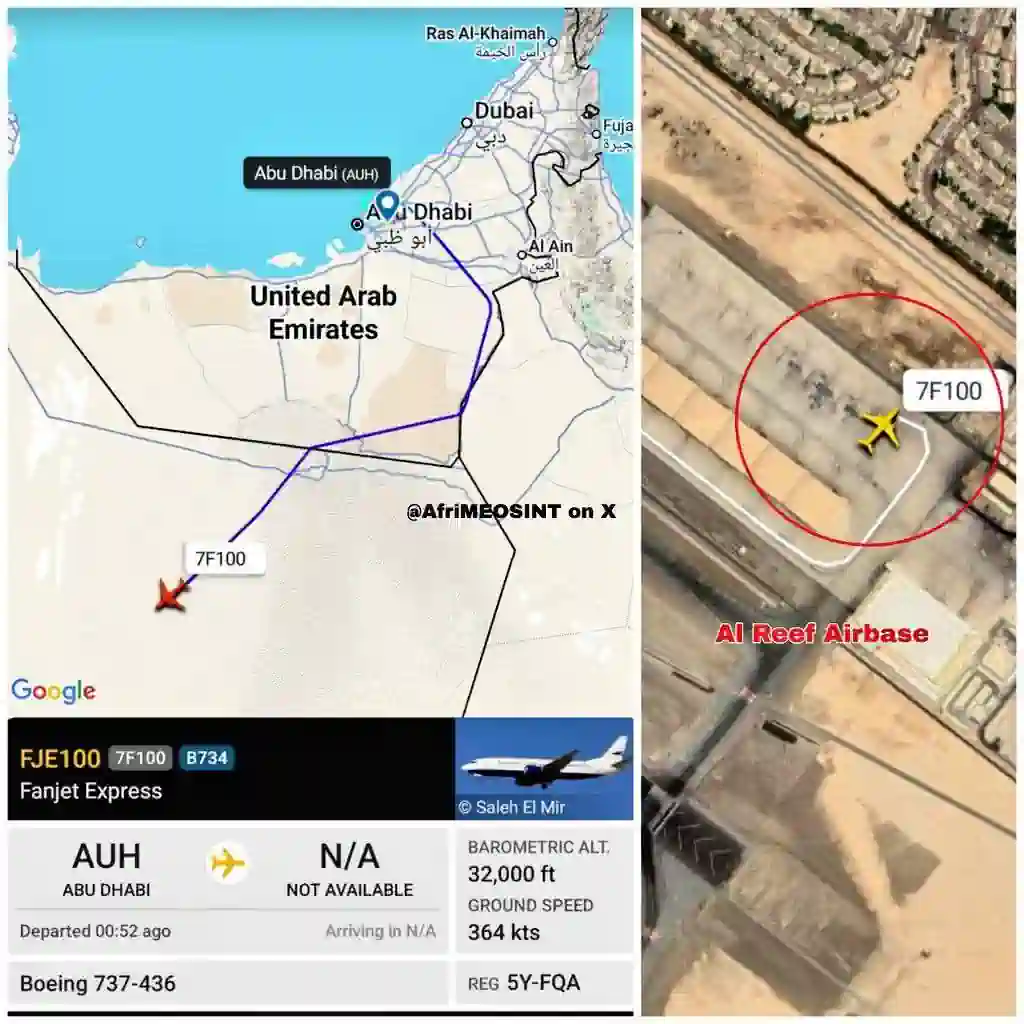
    The shipment was transported via a Boeing 737 aircraft operated by the Emirati company Fanjet Express, departing from Al-Rif Air Base in Abu Dhabi and arriving at Al-Rayyan Airport on Yemen’s Hadramaut coast. This marks the third military consignment sent by the UAE to southern forces in recent days.

    By supplying new weapons to southern groups, Abu Dhabi aims to strengthen their positions in Hadramaut and prevent future offensives by Saudi-aligned factions.

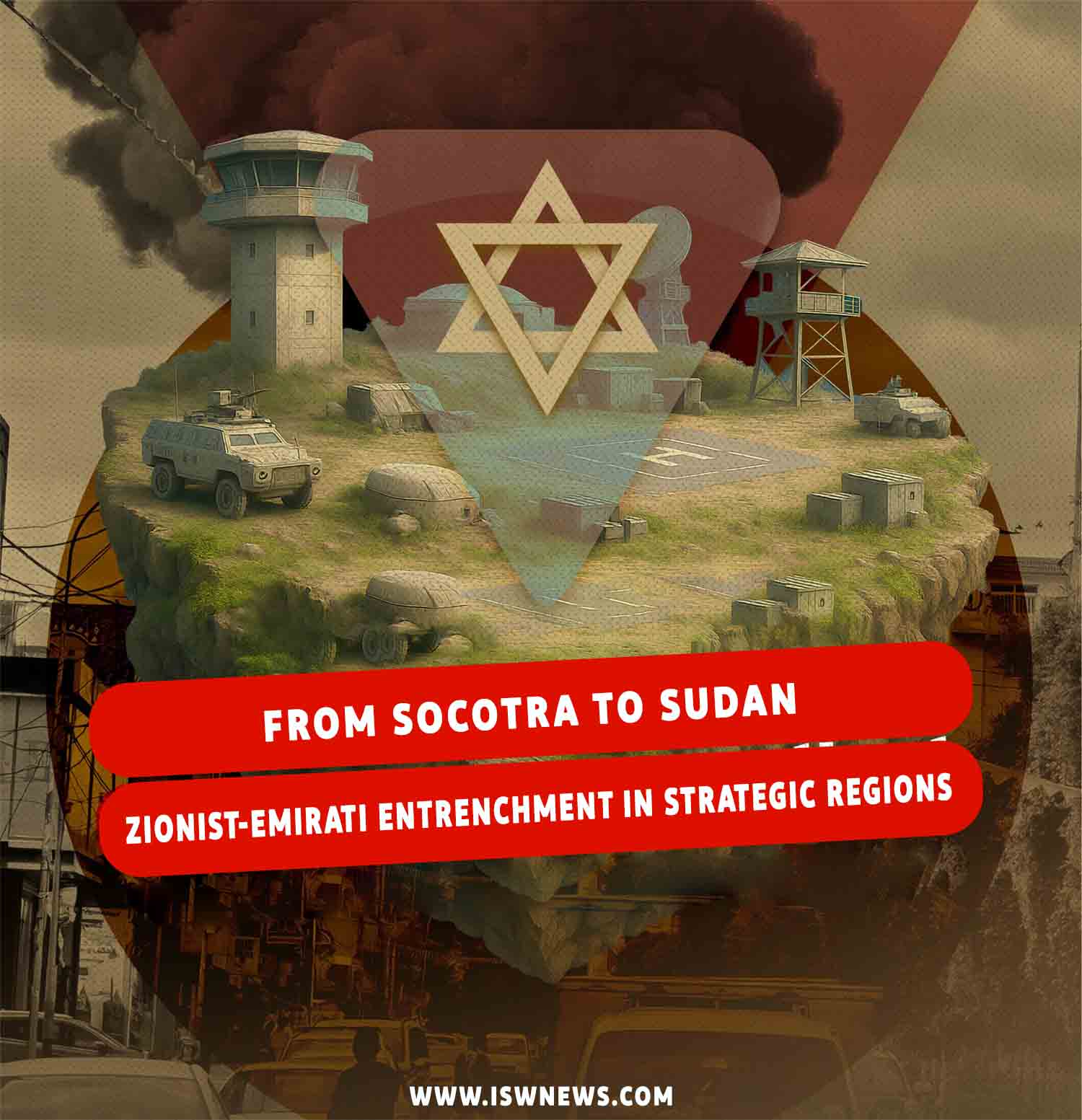
  • From Socotra to Sudan: Zionist-Emirati Entrenchment in Strategic Regions

    From Socotra to Sudan: Zionist-Emirati Entrenchment in Strategic Regions

    New satellite imagery has revealed a rapidly growing web of military, logistical, and intelligence bases established by the United Arab Emirates along strategic corridors from the Socotra archipelago in the Indian Ocean to the coasts of Somalia and Yemen. This complex military infrastructure effectively serves as Abu Dhabi’s “control ring” over one of the busiest and most sensitive maritime routes in the world—connecting the Arabian Sea, Bab al-Mandeb, and the Red Sea. Since the Al-Aqsa Storm operation against the Zionist regime and the outbreak of the Gaza war, the pace of construction and equipping of these bases has sharply accelerated, making them a cornerstone of the region’s geopolitical reconfiguration.

    In this new security structure, the UAE is not the sole actor. Its strategic allies—most notably the Zionist regime and the United States—have played decisive roles in designing, building, and technically supporting the network. Reports confirm the presence of Zionist military officers and technical experts on Socotra islands, where advanced radar systems, electronic surveillance equipment, and maritime control devices manufactured by the regime have been installed. These systems enable the UAE and its allies to monitor Ansarallah’s activities in real time and, if necessary, neutralize missile or naval threats before they reach their targets.

    Chain of Military Oversight

    On the intelligence front, Abu Dhabi and Tel Aviv have reached an unprecedented level of convergence. Through a joint intelligence platform called Crystal Ball, the two countries share data collected from satellites, drones, and electronic surveillance systems. According to confidential promotional documents prepared for Western partners, the platform was created to “design, deploy, and enhance regional intelligence capabilities in support of energy security and international trade.”

    From a geostrategic perspective, this initiative has elevated the UAE from a minor Gulf player to a mid-level power with transregional capabilities. By controlling vital shipping routes through which much of the world’s oil and trade flows, Abu Dhabi positions itself as a “security mediator” in international maritime security. Meanwhile, the Zionist regime’s presence in this chain signals a shift in Tel Aviv’s cooperation field—from the Gulf to the Arabian Sea and Indian Ocean—a development that could alter the naval balance of power against Iran and the resistance axis.

    The expansion of such infrastructure has raised regional and international concerns. Many security analysts argue that the network is not limited to countering Yemeni forces but is shaping a “transnational surveillance architecture” that allows the UAE and its allies to control communications, transport, and even the movement of military personnel and equipment across southern Arabia and the Horn of Africa. Ultimately, the militarization of Socotra and adjacent coasts has become a symbol of the new regional power competition in the Red Sea and Indian Ocean—where surveillance technologies, intelligence data, and multilateral security cooperation are replacing direct military occupation.

    Abu Dhabi–Tel Aviv Convergence

    “Relations between the UAE and the Zionist regime were highly developed even before formal diplomatic ties, but kept silent—not hidden, just silent,” recalls Alon Pinkas, a Zionist diplomat who advised four foreign ministers. The newly built Emirati military and intelligence bases are located in areas not officially under UAE sovereignty. Instead, they are established in territories controlled by Abu Dhabi’s informal allies, including Yemen’s Southern Transitional Council, military commander Tareq Saleh, and the regional governments of Somaliland and Puntland—both technically part of Somalia but in tense relations with Mogadishu and with the UAE.

    The Emirati Military Network

    The UAE’s military network includes bases, airstrips, and logistical hubs at key maritime points:

    • Abd al-Kuri and Samhah islands (part of Socotra), now administered by the Southern Transitional Council
    • Bosaso airport in Puntland and Berbera airport in Somaliland
    • Mokha port on Yemen’s western coast
    • Mayun volcanic island in the middle of the strategic Bab al-Mandeb strait, through which nearly 30% of the world’s oil passes

    All these facilities have been newly built or expanded in recent years, forming a coordinated chain of naval and air bases.

    According to regime security sources, this complex network was developed through close coordination between Abu Dhabi and Tel Aviv, granting effective control over vast sections of the Red Sea and Gulf of Aden. It constitutes part of a joint UAE–Zionist defense system aimed at creating an integrated regional missile defense, early warning, and intelligence-sharing mechanism.

    Regional Security Architecture

    The Washington Institute for Near East Policy notes that multilateral air-defense coalitions have become the cornerstone of West Asia’s security architecture after October 7, 2023. Member states have integrated radar, intelligence, and early-warning systems to counter shared threats.

    Despite official claims that the network focuses on monitoring global shipping traffic and Yemeni activities, diplomatic and local sources report that Bosaso and Berbera bases now serve broader roles—acting as logistical support hubs for Emirati operations in Sudan’s civil war. In that conflict, Abu Dhabi backs the Rapid Support Forces (RSF) against Sudan’s army. The expansion of Emirati bases around Yemen reflects a wider strategy pursued in recent years, leveraging financial power and diplomatic influence to extend reach across unstable African regions. The UAE has funded or established military bases in southeastern Libya (under General Khalifa Haftar), Chad, the Central African Republic, Uganda, Ethiopia, and Kenya.

    Emirati Presence in Sudan

    Within Sudan itself, the UAE has maintained two active bases since the war began in April 2023:

    • One in Nyala, southern Darfur
    • Another in al-Malha, 200 km northeast of al-Fashir, the capital of northern Darfur

    The latter area has been under heavy and violent RSF siege for more than 500 days. Thus, what outwardly appears as a surveillance chain against maritime threats has, in practice, evolved into a geostrategic network transforming the UAE into a transregional power with active arms in West Asia, the Horn of Africa, and deep into the African continent.

  • Abu Dhabi: The Second Baku!

    Abu Dhabi: The Second Baku!

    UAE and the Middle Corridor
    The Middle Corridor, largely composed of Turkic‑speaking states, is part of China’s Belt and Road Initiative. Since the war in Ukraine, its importance has multiplied, as the northern route through Russia and Belarus faces security challenges. Arab investments, especially by the UAE, are now directed toward this corridor. For instance, within Dubai’s Silk Road project, the UAE successfully integrated Uzbekistan and Kazakhstan into the Global Logistics Passport scheme, aiming to expand trade links across Latin America, Asia, the Middle East, and Africa.

    Diversifying its financial portfolio is a key driver of UAE interest in Central Asia, but its ambitions go beyond investment. Relations with Kazakhstan and Turkmenistan highlight the role of DP World in building ports not only on the Caspian Sea but also in Russia’s Arctic, reflecting Abu Dhabi’s aspiration to become a global maritime logistics power.

    Abu Dhabi’s foreign policy underscores the growing importance of these states in its strategic agenda. Competition with regional and global powers in Central Asia’s economic and energy sectors, combined with its strategic presence in the Middle East and North Africa, reveals the multifaceted nature of UAE engagement. By leveraging financial resources, the Gulf state strengthens its influence and acts as a major player in regional economic growth.

    Initial cooperation between Central Asian countries and the UAE focused on trade and investment, but long‑term agreements have expanded into petrochemicals, energy, transport and logistics, agriculture, and aerospace. To deepen ties with the Caspian region, Abu Dhabi invested in port access as part of a global hub system, including DP World’s purchase of two special economic zones in Kazakhstan.

    Economic Agreements
    The UAE’s Masdar has launched renewable energy projects in Kazakhstan and Uzbekistan, with electricity exported to Europe via undersea cables across the Caspian and Black Seas. Other Emirati firms, such as Abu Dhabi National Energy Company, have built wind power facilities in Central Asia with capacities ranging from tens to hundreds of megawatts.

    Abu Dhabi National Oil Company (ADNOC) is also active in petrochemicals in Kazakhstan and Turkmenistan’s offshore fields, creating value‑added industries that enable refined exports. The establishment of the Astana International Financial Center in Dubai could turn Kazakhstan into a major financial hub for Central Asia within the Belt and Road framework.

    For example, in May this year, the UAE and Kazakhstan signed 20 agreements worth $5 billion, mostly in energy, transit, and logistics. More recently, ADNOC subsidiary XRG signed a preliminary deal with Azerbaijan’s Southern Gas Corridor (SGC) company, which plays a key role in delivering Azerbaijani gas to Europe.

    These agreements show Abu Dhabi’s intent to expand economic influence in Kazakhstan and Azerbaijan—two pivotal states in the Middle Corridor—while also serving broader political and security objectives.

    Security–Economic Objectives
    The UAE’s investments in the Middle Corridor cannot be reduced to economic figures alone; they conceal strategic motives aligned with Israeli and Western agendas.

    Former Israeli communications minister Ayoob Kara emphasized the need to connect the Middle Corridor via Turkey and the Mediterranean to Israel and then to Gulf Arab states: “If the Middle Corridor is built, we Israelis can connect to it. Stronger links between Turkic republics, Israel, and the Arab world will help counter Iran. We can connect via Turkey by ship, then by rail from Israel to Jordan, Saudi Arabia, and onward to the UAE. This will expand trade between China, the Turkic republics, Israel, and Arab countries.”

    Thus, Emirati (and potentially Saudi) support for the Middle Corridor can be seen as part of a broader Israeli plan to encircle Iran’s transit routes.

    Strategic Goals of the UAE in the Middle Corridor:

    1. Rare minerals in Central Asia — vital for defense and technology industries. The West, heavily dependent on China, seeks alternative supplies. Recent agreements with Kazakhstan highlight the corridor’s strategic role in transferring these resources westward.
    2. Energy diversification via the Zangezur Corridor — supported by the UAE and Saudi Arabia. Europe, reducing reliance on Russian energy post‑Ukraine war, looks to Central Asia and the Caucasus. Turkmenistan, with the world’s fourth‑largest gas reserves, and Azerbaijan, aiming to double gas exports to Europe by 2027, require foreign investment. Projects like the proposed Trans‑Caspian pipeline could become feasible through Middle Corridor development.
    3. Countering Iran’s transit routes — by aligning with Israeli and Western strategies. As corridor competition shapes the new global order, the West seeks to reinforce Israeli economic hegemony in West Asia. Iran’s geography poses the main challenge, so rival corridors like the Middle Corridor are being strengthened with Emirati support.
  • UAE and Saudi Arabia Mobilize Forces to Seize Hadhramaut

    UAE and Saudi Arabia Mobilize Forces to Seize Hadhramaut

    At the same time, reinforcements from the Southern Transitional Council (STC), consisting of hundreds of fighters and military vehicles, have entered the city of Mukalla. In addition, a battalion from Tariq Saleh’s forces has been deployed to a camp west of Mukalla, the provincial capital of Hadhramaut.

    Given the large-scale deployment of STC fighters to Hadhramaut over the past two weeks, the likelihood of a southern military offensive against the Hadhramaut tribes has increased. The province’s oil-rich areas remain under tribal control, and tribal leaders — backed by Saudi Arabia — have refused to transfer revenues to the exiled government or the STC. This has fueled sharp tensions and rivalry between UAE- and Saudi-backed factions in Yemen’s occupied territories.