Friday 4 September 2026
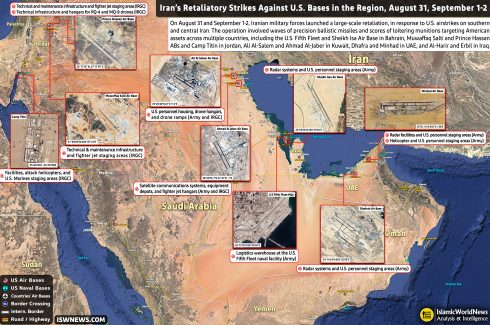
Iran’s Retaliatory Strikes Against U.S. Bases in the Region, August 31, September 1-2
Iranian military forces launched a large-scale retaliation on the morning of August 31, the evening of September 1, and the early morning of September 2, in response to U.S. airstrikes on southern and central Iran. The operation involved waves of precision ballistic missiles and scores of loitering munitions targeting American assets across multiple countries, including the U.S. Fifth Fleet and Sheikh Isa Air Base in Bahrain, Muwaffaq Salti and Prince Hassan Air Bases and Camp Titin in Jordan, Ali Al-Salem and Ahmad Al-Jaber in Kuwait, Al-Dhafra and Al-Minhad in the UAE, and Al-Harir and Erbil in Iraq.