Category: America – Europe

  • Maven in the Iran War

    Maven in the Iran War

    In late February 2026, the United States and the Zionist regime launched coordinated military operations under the names “Epic Fury” and “Roaring Lion” against Iran—operations considered the largest U.S. military action since the 2003 invasion of Iraq. During this conflict, CENTCOM struck over 11,000 targets, while Iran responded with thousands of missiles and drones. Iran’s Supreme Leader, Ayatollah Khamenei, was martyred in the initial attacks. However, these statistics alone do not capture the historical significance of this war; rather, what distinguishes this conflict is the central role of artificial intelligence, autonomous systems, and commercial technologies—which no longer serve merely as support tools but have been placed at the core of operations.

    The “Maven” project had been initiated back in 2018. Prior to the emergence of large language models, this unit, in collaboration with several companies, was supporting the Maven project to advance “computer vision”—an AI capability that enables the detection and differentiation of objects in satellite imagery, assisting analysts in reviewing visual data.

    The Maven project helped accelerate the deployment of machine learning in the fields of reconnaissance, surveillance, intelligence analysis, and geospatial intelligence. This legacy ultimately led to the development of the “Maven Smart System” by Palantir Technologies, which today has become the cornerstone of AI-driven U.S. military operations.

    Background

    The U.S. Department of Defense has designated Palantir as the “sole responsible supplier” for the Maven AI system—a system used for field data analysis, target identification, and military decision support. The author emphasizes that this contract marks the transition of the Maven project from the experimental phase to a permanent U.S. military infrastructure level. According to the sources cited, the system is capable of analyzing satellite data, drone footage, sensor inputs, and field intelligence in real time, generating a “unified operational picture” for military commanders. A notable point is the direct link between Palantir and America’s broader strategy in the domain of “AI-enabled warfare,” which itself indicates that the U.S. government is gradually outsourcing its intelligence analysis and targeting infrastructure to private Silicon Valley companies—a trend that, in his view, blurs the boundaries between government, military, and tech firms.

    Analysis and Findings

    A. The Role of Silicon Valley in the U.S. War Department

    Silicon Valley’s role in the U.S. Department of Defense has expanded significantly in recent years; this collaboration has moved beyond limited research projects in cybersecurity over the past decade and has now become a central pillar of the U.S. military’s digital transformation. Recognizing the rapid pace of emerging technologies such as artificial intelligence, machine learning, and big data analytics, the Pentagon has increasingly turned to partnerships with Silicon Valley tech companies to enhance decision-making, combat effectiveness, and intelligence superiority. A prime example of this trend is the massive contracts with firms like Palantir Technologies, Google Cloud, and Microsoft, which are involved in projects such as Maven and the Joint Warfighting Cloud Capability. The U.S. Department of Defense now has over 200 active contracts with companies based in the San Francisco Bay Area, a large portion of which are directly linked to digital warfare operations. This extensive partnership, however, has not always been without challenges. Today, the bulk of AI system development for the Department of Defense is managed by private contractors based in Silicon Valley. From the Pentagon’s perspective, collaboration with Silicon Valley is a strategic necessity. The engineers and researchers in this region are among the world’s foremost experts in areas such as image processing, data analysis, and deep learning platform design. By establishing the Joint Artificial Intelligence Center (JAIC) in 2018, the Pentagon effectively opened a gateway for direct engagement with tech companies. This body is tasked with adapting emerging civilian technologies for military applications and setting ethical and technical standards for the use of AI in warfare. Through this model, the U.S. military can innovate at a pace close to the private sector, without being bogged down for years in bureaucratic procedures. Silicon Valley has become a vital component of America’s modern warfare infrastructure, where the line between commercial technology and military application is increasingly blurred. Companies like Palantir, Anduril Industries, and SpaceX now play pivotal roles in combat data analysis, autonomous drones, and military satellite communications. By September 2024, the share of commercial technology firms in the U.S. Department of Defense’s research budget had risen from 11% in 2015 to over 37% in 2024. This extensive partnership, while enhancing military efficiency, has also raised new concerns about transparency, social oversight, and the over-reliance of national security on the private sector and tech investors.

    Image of part of the terms of the US Department of Defense contract with Palantir

    B. The Role of Maven in the Attack on Iran

    The Maven system combines satellite imagery, drone videos, radar data, and signals intelligence into a unified interface, allowing operators to identify targets, recommend weapon types, and generate attack plans almost simultaneously. The results have been remarkable: over a thousand targets were struck in the first 24 hours of operations—a pace unimaginable if relying solely on human analysis. This process has continued using only 10% of the analysts that would previously have been required for such a level of operations.

    However, the system’s limitations are equally notable. Maven’s overall accuracy is estimated at around 60%, compared to roughly 84% for human analysts. Despite this, Palantir’s Chief Technology Officer has described it as “the first large-scale AI-enabled combat operation”—a characterization that raises serious questions about the ethical considerations of AI-based targeting and the adequacy of civilian protection mechanisms. These very concerns about protective safeguards have also led to the recent controversy between Anthropic and the Department of Defense.

    C. The History of Maven

    Project Maven is one of the U.S. Department of Defense’s programs in the field of applying artificial intelligence to military data analysis, launched in 2017. Its official name was the “Algorithmic Warfare Cross-Functional Team,” and its primary objective was to use machine learning for the automated analysis of images and videos from reconnaissance drones. The project was initially designed to accelerate the processing of vast battlefield data, particularly in Middle Eastern operations. Early sources about the program’s inception were published in Department of Defense statements in 2017. Project Maven focused specifically on drone imagery analysis—using machine vision algorithms to detect individuals, vehicles, and suspicious objects in aerial footage. Previously, such imagery had to be analyzed manually by human personnel, a highly time-consuming process. The project’s goal was to reduce the workload on analysts and increase the speed of operational decision-making. Pentagon official reports emphasized that the system played a “decision-support” role and was not a complete replacement for human personnel. The name Palantir Technologies has frequently been associated with U.S. defense data analysis projects. Palantir is a major government contractor in the fields of big data analytics and intelligence software, with its products such as “Palantir Gotham” used in defense and security agencies. Although Project Maven was broadly executed with the participation of multiple contractors, media attention was largely focused on Google’s initial partnership with the Pentagon, while companies like Palantir were also active in the defense technology ecosystem related to data analysis and AI.

    According to statistics released by the White House on April 8, the U.S. military struck over 13,000 targets in Iran during the first 38 days of the war—including more than 2,000 command-and-control centers, 1,500 air defense targets, and 1,450 targets related to industrial infrastructure.

    The White House emphasized that “all these targets were legitimate and military in nature.” However, the New York Times and other media outlets, through reports and images, have documented the destruction of civilian facilities. These reports have sparked a wave of criticism and raised the question of whether over-reliance on AI systems has led to targeting errors and increased civilian casualties.

    During operations against Iran, the Maven Smart System—a Palantir product—played a central role in gathering and analyzing battlefield intelligence. According to Cameron Stanley, the Pentagon’s senior official for digital and artificial intelligence, the system collected data on enemy force positions from various sources, including radar signals, satellite and drone imagery, electronic communications, and other intelligence feeds, combining them all into a unified operational picture of the battlefield.

    Stanley, who presented these remarks at Palantir’s “AIPCon 9” conference on March 12, stated that Maven is not limited to target identification. According to him, the system can also determine the most suitable friendly unit to engage each target and provide U.S. combat units with specific operational options—including attack routes, required munitions types, and other relevant information for mission execution. He explained that previously, commanders had to consult eight or nine different systems simultaneously to make battlefield decisions, but Maven now aggregates all this information into a single visual interface. In this way, a commander can identify a target, select the appropriate attack package, and initiate the operational process with just a few clicks.

  • US Aircraft Flights Around Iran; A Sign of Distrust in the MoU or Preparation for Resuming War?

    US Aircraft Flights Around Iran; A Sign of Distrust in the MoU or Preparation for Resuming War?

    The simultaneous presence of aircraft such as the MQ-4C Triton, KC-46A Pegasus, KC-135R Stratotanker, C-5M Super Galaxy, and C-130 around Iran is not considered merely a routine flight pattern. The MQ-4C Triton drone, designed for intelligence, surveillance, and maritime reconnaissance missions, operates within the framework of monitoring coastal movements, military bases, defense lines, and air defense systems . Given this level of activity, it appears that preparations for naval and amphibious operations aimed at occupying certain areas and islands in southern Iran are underway. The repetition of such flights near the region’s sensitive waterways indicates that, despite entering the path of understanding, the US is still preparing for the possibility of the political process failing or tensions quickly resuming.

    On the other hand, the Lebanon file has become one of the main points of contention in this understanding. Iran emphasizes that the continued occupation of southern Lebanon and Israeli attacks on the country constitute a violation of the spirit and framework of the understanding. In contrast, Israeli officials have stressed the continuation of their presence in the occupied areas of southern Lebanon, and no sign of withdrawal is visible. This gap effectively represents one of the most significant threats to the durability of the agreement; because if Israeli attacks continue, Tehran will view it as a sign of the understanding’s invalidity and Washington’s inability to restrain its ally.

    In such circumstances, US behavior appears dual: on the one hand, at the diplomatic level, Washington is advancing the understanding with Tehran, but on the other hand, at the military and intelligence level, it has not reduced its presence around Iran. This situation could carry the message that the US is trying both to benefit from the advantages of the agreement and, in the event of its collapse, to maintain its informational and operational upper hand . In other words, the recent flights can be seen as part of a policy of negotiation accompanied by field pressure .

    Recent developments show that the US-Iran understanding has not yet entered a stabilization phase and, rather than being a lasting agreement, is more of a temporary pause on the path of confrontation. The continuation of Israeli occupation in southern Lebanon, daily attacks on that country, and simultaneously, the increase or continuation of US reconnaissance flights around Iran have formed a set of risk factors that could at any moment divert the agreement process from the diplomatic path. From this perspective, the failure of the understanding is not only not unexpected but, if provocative Israeli behavior continues and the US maintains its heavy military posture in the region, it will become a highly probable scenario .

  • Iran’s Retaliatory Strikes Against U.S. Bases in the Region, June 11

    Iran’s Retaliatory Strikes Against U.S. Bases in the Region, June 11

    The operation involved at least 12 solid-fuel missiles from the Fateh and Kheibar Shekan families, along with dozens of suicide drones. Targets included the U.S. Fifth Fleet headquarters, an early warning radar site, and Shaikh Issa Air Base in Bahrain; Muwaffaq Salti Air Base in Jordan; and Ali Al Salem and Ahmad Al Jaber air bases in Kuwait .

    According to released documentation, the AR-327 early warning radar at Jabal al-Dukhan in Bahrain was precisely struck by an Iranian drone. Footage showing fire at the site confirms the destruction of the early warning radar .

    Furthermore, video and images released from the missile strikes on Jordan’s Muwaffaq Salti Air Base show two large fires at the facility, indicating successful and precise hits on intended targets. Some media also reported that three Jordanian F-16 fighter jets were destroyed as a result of the Iranian attacks.

    Click to view full size poster
  • Iran’s Retaliatory Strikes on US Bases in the Region, June 10

    Iran’s Retaliatory Strikes on US Bases in the Region, June 10

    The targets included the U.S. Fifth Fleet headquarters in Bahrain, the Camp Buehring and Ali Al Salem Air Base in Kuwait, and the Muwaffaq Salti Air Base in Jordan.

    Based on videos released of the attacks, Iranian missiles penetrated multiple defensive layers and successfully struck their targets in Bahrain, Jordan, and Kuwait.

    Click to view full size poster
  • Statistics of US-Israeli, European, and Arab aircraft losses in the war with Iran and the Axis of Resistance

    Statistics of US-Israeli, European, and Arab aircraft losses in the war with Iran and the Axis of Resistance

    USA/Israel:

    Iraq, Lebanon, and Yemen Fronts – Including 12 drones, 3 aircraft, and 2 helicopters

    — Two U.S. MQ-9 drones: in Jabal Maraqsha, Abyan Governorate (March 3), the desert of Marib (May 17), and north of Marib city (May 29) – Yemeni Armed Forces
    — One U.S. MQ-9 drone: north of Basra (March 10) – Iraqi Resistance
    — Seven Israeli Hermes 450 drones: Bint Jbeil (March 16), Al-Ayshiyeh region (March 31), Aynatha (April 1), Siddiqin (April 11), Adloun (April 16), Al-Hawsh (April 24), Nabatiyeh (April 30) – Hezbollah
    — One Israeli Hermes 900 drone: southern Lebanon (April 28) – Hezbollah

    — Destruction of a KC-135 refueling aircraft and damage to another KC-135 in western Iraq (March 12) – Iraqi Resistance
    — Destruction or damage to a U.S. UH-60 helicopter at Victoria Air Base, Iraq (March 25) – Iraqi Resistance
    — Iraqi Army Antonov 32 aircraft (March 30) – Iraqi Resistance
    — Destruction or damage to an Israeli helicopter in the Yaroun area of southern Lebanon, type unknown (March 31) – Hezbollah

    Iran Front – Including 174 drones, 9 fighter jets, 8 aircraft, 10 helicopters, and 16 cruise missiles and bombs

    MQ-9 Drone: At least 25 units
    MQ-4C Drone: 1 unit (April 9)
    MQ-1 Drone: 1 unit (April 4)
    RQ-21 Drone: 1 unit (March 30)
    LUCAS Suicide Drone: Undisclosed number
    Hermes 900 Drone: At least 8 units
    Heron Drone: At least 2 units (March 31, April 5)
    Harop Suicide Drone: Undisclosed number
    Arbiter Drone: Undisclosed number

    — Destruction of three U.S. F-15E fighter jets over Kuwait (March 2) – reported as friendly fire
    — Destruction or damage to one F-16 fighter jet in central regions (March 21)
    — Damage to one U.S. F-15E fighter jet over Hormuz Island (March 22)
    — Destruction or damage to one F-35 fighter jet in central Iran (March 19)
    — Destruction or damage to one U.S. F/A-18 Super Hornet fighter jet in southern Iran (March 25)
    — Destruction of one F-15 fighter jet in central Iran (April 1)
    — Destruction of one A-10 fighter jet over the Strait of Hormuz (April 2)

    — Destruction or damage to five KC-135 refueling aircraft at Prince Sultan Air Base in Riyadh, Saudi Arabia (March 1-3)
    — Destruction of one E-3G AWACS aircraft and damage to several KC-135R refueling aircraft at Prince Sultan Air Base (March 27)

    — Damage to one CH-47 helicopter in Kuwait (April 3)
    — Destruction or damage to one Black Hawk helicopter (April 3)
    — Destruction of two C-130 transport aircraft and four MH-6 Little Bird helicopters, south of Isfahan (April 5)
    — Destruction or damage to one CH-47 helicopter at Boeing Base, Kuwait (date unspecified)
    — Destruction or damage to one CH-53 Sea Stallion helicopter at Ali Al Salem Base, Kuwait (date unspecified)

    — Interception and destruction of 15 AGM-158 JASSM stealth cruise missiles or Tomahawk cruise missiles
    — Shooting down one GBU-39 bomb

    European Countries:
    — One Italian Army MQ-9 drone (March 15)

    Arab Countries:
    — UAE Army helicopter, type unknown (March 9)
    — Qatari Army helicopter, type unknown (March 22)
    — Wing Loong drone belonging to Saudi Arabia or the UAE in Shiraz (April 1)
    — Wing Loong drone belonging to Saudi Arabia or the UAE in Bushehr (April 3)

    The statistics presented are based on official announcements and statements by the armed forces of Iran, Iraqi resistance groups, and Lebanon’s Hezbollah, as well as admissions by the United States, the Zionist regime, European, and Arab countries.

  • Iran’s Missile Strike Two Days Ago on U.S. Base in Kuwait Wounded Five American Military Personnel!

    Iran’s Missile Strike Two Days Ago on U.S. Base in Kuwait Wounded Five American Military Personnel!

    The report claims that Kuwait’s air defense system successfully intercepted the missile, but debris from the explosion landed on military installations and caused damage. The most significant damage was serious harm to two MQ-9 drones. Each of these drones is estimated to be worth approximately $30 million.

  • Sharp Warning from Kata’ib Hezbollah of Iraq to Washington!

    Sharp Warning from Kata’ib Hezbollah of Iraq to Washington!

    The Operations Command of Kata’ib Hezbollah:

    “Amid U.S. threats and extensive military preparations, we stress the necessity for all fighters to remain ready to enter a war of attrition that could be prolonged and exceed American expectations.

    If the United States commits aggression and ignites the flames of war in the region, it will find itself facing heavy losses that cannot be contained or compensated for.

    We warn the government of the Kurdistan Region about the consequences of collaborating with the enemy, as such actions would place additional burdens upon it that could threaten its security and future.”

  • Kill All The Birds With One Stone: Why Kiev And Brussels Are Preparing To Destroy The TurkStream Pipeline

    Kill All The Birds With One Stone: Why Kiev And Brussels Are Preparing To Destroy The TurkStream Pipeline

    The Economics of the Pipelines: Who Loses, What and How Much

    Two of the most important Russian gas export arteries in the southern direction are under threat: TurkStream and Blue Stream. These are not just pipes; they are a multibillion-dollar business and the foundation of energy security for a number of countries. Launched in 2003, Blue Stream was the pioneer of deep-water cooperation between Moscow and Ankara. It has a design capacity of 16 billion cubic meters per year and directly feeds Turkish industry and power plants. TurkStream, commissioned in 2020, has twice the capacity at 31.5 billion cubic meters. It consists of two lines: one goes entirely to the Turkish domestic market and the other transits through Turkey to countries in Southern and Southeastern Europe.

    Click to see the full-size image

    As of February 23, the daily pumping volume through the European branch of TurkStream stands at 51.4 million cubic meters. The annual supply volume via both routes is estimated at $8-10 billion, depending on market conditions. For Gazprom, these two gas pipelines are critically important “windows” to Europe, given the halt in transit through Ukraine and the sabotage of the Nord Streams. Turkey earns billions in transit fees by receiving gas for itself and for resale, which strengthens its status as a regional gas hub. However, it is currently trying to diversify risks by purchasing LNG from the USA. Further down the chain, gas goes to Bulgaria, Serbia, Hungary, and Greece, where industrial operations and the heating of millions of homes depend on it. Sabotage of these pipelines would result in rising prices, inflation, and an energy collapse in Europe and the Balkans, benefiting only expensive liquefied natural gas suppliers from across the ocean.

    Putin’s Statement and the Threat of Terrorism

    At a meeting of the FSB board, Vladimir Putin stated that the Russian government has operational information about planned explosions of the TurkStream and Blue Stream gas pipelines, which run along the bottom of the Black Sea. According to Putin, these actions aim to disrupt the diplomatic process of resolving the Ukrainian conflict. Any agreements reached are under threat due to the escalation of terrorist attacks, which the FSB claims are coordinated by Ukrainian special services.

    Putin’s statement and the threat of terrorism / Download video here

    Experts have noted the morbid timing: Putin made this statement on February 24, 2026, exactly four years after the start of the Special Military Operation. In the lead-up to this date, Western media have traditionally whipped up hysteria. Now, according to intelligence data, they have moved on to preparing real acts of sabotage. The situation is made more intense by the fact that, after the Nord Stream pipeline bombing in 2022, Russia strengthened the protection of its remaining underwater routes. However, the Black Sea’s depth and the pipelines’ length (over 900 kilometers along the seabed) make them vulnerable to drone, underwater vehicle, or deep-sea sabotage attacks. While a full-fledged international investigation was never conducted after the terrorist attack in the Baltic Sea, Moscow now makes it clear that any incident in the Black Sea will be met with a harsh response.

    The Terror Attack Scenario: How Britain and Ukraine Could Blow Up Gas at the Bottom of the Black Sea

    The beneficiaries of this terrorist act are most likely British intelligence services working against Trump and the interests of globalists, attempting to punish Turkey. This plan is similar in audacity to the sabotage of the Nord Stream pipelines, but the stakes are higher this time, and the chosen theater of operations is the Black Sea, where the interests of Turkey, Russia, and NATO intersect.

    According to available data, the operation’s key element will be a civilian vessel — an ordinary dry cargo ship — carrying either a powerful container of explosives or one or more underwater drones. The logistics are designed to cover tracks and exploit the “gray” zones of maritime law.

    Click to see the full-size image

    The vessel could depart from the Romanian port of Constanța, the largest hub in the western Black Sea. Intense commercial traffic there makes inspection difficult. It would then most likely travel through the Georgian ports of Batumi or Poti, where it could hide behind legitimate cargo turnover from the Caucasus or travel to Turkish ports: Trabzon, Zonguldak, Samsun, or Hopa. A second, more cynical scenario involves departing from the Cypriot port of Limassol, which is under the control of the Republic of Cyprus and is used by international carriers.

    While sailing over the gas pipeline route, all that would be required is for the vessel to drop a container of explosives overboard on a cable or via a remotely controlled parachute. Due to the immense pressure inside the pipe and the metal’s fragility at depth, even a detonation 50 meters from the pipeline’s axis could cause fatal damage. Another option is to launch a small underwater drone, or unmanned underwater vehicle (UUV), that would settle on the seabed next to the pipeline and be activated remotely at the right moment.

    Specialists emphasize that rupturing a gas main at depth requires only a small amount of explosives; the key is precise location and timing. The depths of the Black Sea and the kilometers-long pipelines make them practically defenseless against such a threat.

    Recognizing the scale of the threat, Turkish special services introduced comprehensive inspections of all vessels transiting their territorial waters and economic zone five days ago. The Turkish Navy and Coast Guard are operating at full capacity. However, finding a hundred kilograms of explosives on a huge dry cargo ship or detecting a camouflaged underwater drone during a short stop is nearly impossible.

    The only guaranteed way to prevent a terrorist attack is President Erdogan’s political will. Ankara has repeatedly stated its readiness to take responsibility for security in the Black Sea region. The time for action is now. Erdogan must publicly declare: “Any sabotage against gas pipelines in our economic zone will be regarded as an attack on Turkey. We will not allow the Black Sea to become a zone of energy terror. Ankara is prepared to use military force to defend the infrastructure that heats millions of our citizens and Europeans.”

    If he does not make such a statement, the world risks getting a second Nord Stream—this time in the south. Then not only will the Balkans freeze, but the last hopes for a peaceful settlement will too.

    Kiev’s Motives and the Britain Connection: A Strike Against Trump and Erdogan

    If the sabotage of TurkStream and Blue Stream is successful, Ukraine will have solved a complex set of problems. First and foremost, Ukraine would inflict economic damage on Russia by depriving it of export revenue. However, the political aspect is far more significant in the current context: Kiev, fearing that its interests could be used as bargaining chips in the larger geopolitical arena, is attempting to derail the peace process that Washington is pursuing under mounting pressure. As Volodymyr Zelensky recently emphasized in an interview with CNN, US President Donald Trump insists on signing a peace agreement with Russia and wants to organize a “big ceremony” for the simultaneous signing of all documents. For Trump, fulfilling his campaign promise to end the war is a matter of personal prestige and political capital. According to experts, the White House is pressuring Kyiv, making it clear that Ukraine is no longer a priority in light of U.S. plans to return to the Middle East. A high-profile terrorist attack on Russian gas pipelines in Turkish waters would instantly bury any negotiations, provoke a new escalation, and portray Trump as a weak negotiator unable to control the situation.

    Click to see the full-size image

    However, the main target is apparently Turkish President Recep Tayyip Erdogan, and Kiev’s interests here align with those of influential circles in Brussels. 2026 has become a triumphant year for Turkish diplomacy. At Donald Trump’s invitation, Erdogan joined the “Peace Council” on Gaza. Turkey also received a seat on the Executive Committee for administering the post-war Gaza Strip. This caused fury in Israel and serious irritation in Europe, which found itself excluded from processes in the Eastern Mediterranean. Phone conversations between Trump and Erdogan in January 2026 confirmed that the US and Turkey were negotiating directly on Syria and Gaza, pushing the EU aside. Blowing up TurkStream is a strike against this partnership. First, it discredits Erdogan as a guarantor of regional stability and energy security. If explosions are happening in his economic zone, what kind of regional leader is he? Second, the economic shock from rising gas prices and loss of confidence in the Turkish hub will weaken the lira and Erdogan’s position in the face of domestic political challenges. Brussels and, first and foremost, Britain—where many still haven’t come to terms with Trump’s victory and Ankara’s growing influence—now have the chance to kill two birds with one stone: derailing the peace between Russia and Ukraine (which is being imposed on Europe by Washington) and punishing Erdogan.

    Ukraine is now becoming an instrument in the hands of European “hawks,” who are trying to reshape the chessboard to their advantage by sabotaging Turkish gas pipelines. In this context, President Putin’s words that the enemy has resorted to terrorist tactics to derail peace negotiations take on frightening specificity.

    Click to see the full-size image

    Conclusion

    Vladimir Putin’s statement about preparing to bomb TurkStream is more than just a diplomatic note; it’s a signal that the conflict is entering its most dangerous terrorist phase. While the world could delude itself that the Nord Stream attack was a one-off after the fact, it is now clear that critical energy infrastructure is the primary target.

    There are now two possible scenarios for future developments. Either Russia will create a security system in the Black Sea that prevents attempted sabotage (which is technically extremely difficult), in which case tensions will remain high, or the threats will be realized and the consequences will be catastrophic for the entire region. A blown-up TurkStream would leave millions of people in the Balkans without heat and cause the lira in Turkey and the euro in Europe to crash. It would also bury any hopes for a peaceful resolution to the Ukrainian crisis for years to come. In this war, there will be no winners—only the frozen and impoverished.

    Originally posted on SouthFront.press

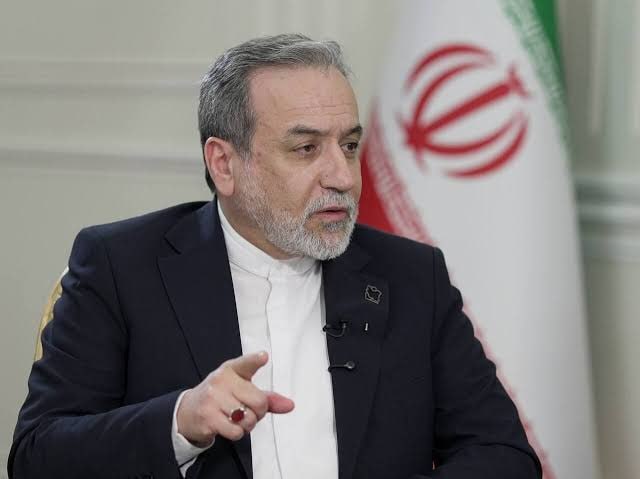
  • Araghchi: We Will Not Retreat from Our Peaceful Nuclear Rights

    Araghchi: We Will Not Retreat from Our Peaceful Nuclear Rights

    Araghchi said a historic opportunity now exists to reach a major agreement that could address the concerns of both sides. He added that Tehran is returning to the negotiating table with firm determination and on the basis of previous understandings.

    The Iranian Foreign Minister stressed that a fair agreement is within reach—provided that Washington prioritizes diplomacy and respects the rights of the Iranian people.

  • Kata’ib Hezbollah Iraq Warns Against Action Targeting Iran

    Kata’ib Hezbollah Iraq Warns Against Action Targeting Iran

    Abu Ali al-Askari, security official of Kata’ib Hezbollah Iraq, warned in a statement about increasing U.S. military movements in Syria and the Kurdistan Region of Iraq, claiming these actions are part of preparations for aggression against the Islamic Republic of Iran along what he described as a “land corridor.”

    He called on Kurdish factions to avoid any adventurism against Iran and stressed the need for vigilance and readiness among Iran’s security and armed forces to defend the country’s northwestern borders. He described Washington’s activities as part of a broader regional destabilization scenario.

    The remarks come amid recent reports of U.S. Army Special Forces (Delta Force) deployments near the Iran-Iraq border. Political and security analysts have interpreted these moves as potential signs of Washington preparing for military scenarios, including strikes or targeted operations against Iran and resistance groups in Iraq.

  • Transfer of U.S. Fighter Jets from Japan to Near Iran

    Transfer of U.S. Fighter Jets from Japan to Near Iran

    The F-16CM aircraft are primarily tasked with suppression of enemy air defenses (SEAD), including detecting and neutralizing hostile radar and missile systems.

    Previously, the United Kingdom had opposed a U.S. plan to use the Diego Garcia base in the Indian Ocean for military operations against Iran. However, some reports suggest that London may be indirectly aligning with Washington’s actions.

  • Washington and Concerns Over Increasing Oil Prices; the Impact of the Oil Price Surge on the Conclusion of the 12-Day War

    Washington and Concerns Over Increasing Oil Prices; the Impact of the Oil Price Surge on the Conclusion of the 12-Day War

    Investigating the claim of a connection between energy prices and the end of the 12-day war
    To prove this connection exists, it is important to analyze the media and influential figures’ perspectives on the matter, along with examining various evidence from previous years and the outcomes of similar events. This helps understand why the decision-making apparatus in Washington responded the way it did. Additionally, before the “American-Israeli” attack on Iran, CENTCOM commander Gen. Erik Kurilla outlined a comprehensive plan for several weeks of bombing Iran in front of Trump, yet despite strong backing from the Israeli regime lobby, it was rejected. According to Trump’s first vice president, J.D. Vance, Washington was satisfied with a limited operation and targeted strikes to destroy nuclear facilities, rather than pursuing a full-scale war. Ultimately, however, Tel Aviv decided to proceed with the attacks and convinced Trump to target Iran’s nuclear sites.

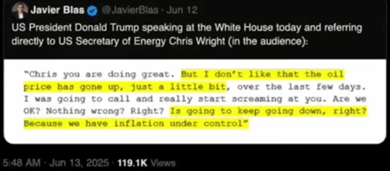
    1. Trump expresses concern about rising oil prices hours before war beginsOn the night of the attack, a well-known Bloomberg journalist tweeted a crucial excerpt from Trump’s conversation with Energy Secretary Chris Wright. Trump had expressed concerns about the increase in oil prices roughly 10 days earlier, citing rising geopolitical risks, and had threatened to “shout out” to the secretary if the trend persisted. During that period, the Republican administration had successfully kept inflation under control.
    Conversations between Trump and the US Secretary of Energy at a Cabinet meeting before the war began
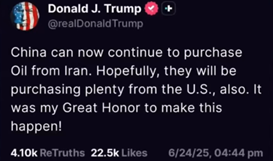
    1. US President’s oil tweetsTrump’s tweets amid a war with Iran highlight Washington’s sensitivity to oil prices, revealing how Wall Street financial markets remain vulnerable to this key resource, regardless of other structural aspects of the US economy.

    In the first tweet, he orders the Secretary of Energy to drill more oil fields in the U.S. to boost production, and in the second tweet, which came minutes after the first, he warns energy companies against raising oil prices.

    In the third tweet, coinciding with the war’s final moments, Trump confirms China’s ongoing purchase of Iranian oil. His expression of satisfaction aims to stabilize the energy market and consequently minimize fluctuations in oil prices.

    1. Warning from the world’s leading publications and think tanks

      • Oxford Economic Journal article
      This article examines how the heightened tension between Tehran and Tel Aviv influences oil prices and global market outlooks. A chart illustrates expected fluctuations in oil prices per barrel. The author forecasts that, in the event of a sudden shutdown of the Strait of Hormuz, oil prices could rise to around $130. Similarly, if Iran’s regime damages its energy infrastructure to halt exports, prices might reach approximately $100. Furthermore, increased sanctions on Iranian oil could reduce exports by up to 100,000 barrels per day, pushing prices to about $80. This increase from the current price of around $75 creates a significant gap with substantial economic implications for the US.

      • Deutsche Bank report (German central bank)
      On June 13, which marks the start of the war, the German Central Bank released a report on how reducing Iranian oil exports by 50 and 100 percent of their capacity, as well as the (effective) closure of the Strait of Hormuz, would affect rising oil prices.

      • Politico’s revelations regarding the war with Ansar Allah
      On February 21, 2025, Politico disclosed a confidential conversation between Vance and Trump. During this exchange, Vance expressed concern about rising oil prices and their severe economic impact, amidst pressure from the Zionist AIPAC lobby to counter the war-mongering actions of certain US government officials. This highlights the complex nature of the situation at that time. The report underscores that oil prices can significantly influence international conflicts and disputes.

      • World Bank report after the October 7 attack
      Immediately after Operation Storm al-Aqsa and its continuation for several days, the World Bank prepared a report in which it presented predictions of how oil production would decline and, as a result, oil prices would rise for world markets. In this text, the situation was assumed to deteriorate to the point that if tensions caused a daily production decrease of 7-8 million barrels of oil, countries would see oil prices increase to $160. The ongoing wars and tensions between the resistance axis and the Zionist regime are so sensitive that this group of reports can be largely attributed to similar conditions. Such a security-economic pattern has been recorded at different points in time as a repeatable chain that can be used to predict energy market events after the start of a major regional war.
    2. Conversations on the fourth day of the Netanyahu cabinet war meetingAccording to the Times of Israel, Ron Dermer, a close ally of Netanyahu for nearly 20 years who also manages relations with the U.S. and Arab nations, opposes calls to bomb Iranian refineries. He stated during that meeting: “If we target civilian infrastructure like refineries, the war will be over before we can attack Fordow and accomplish our goals.”
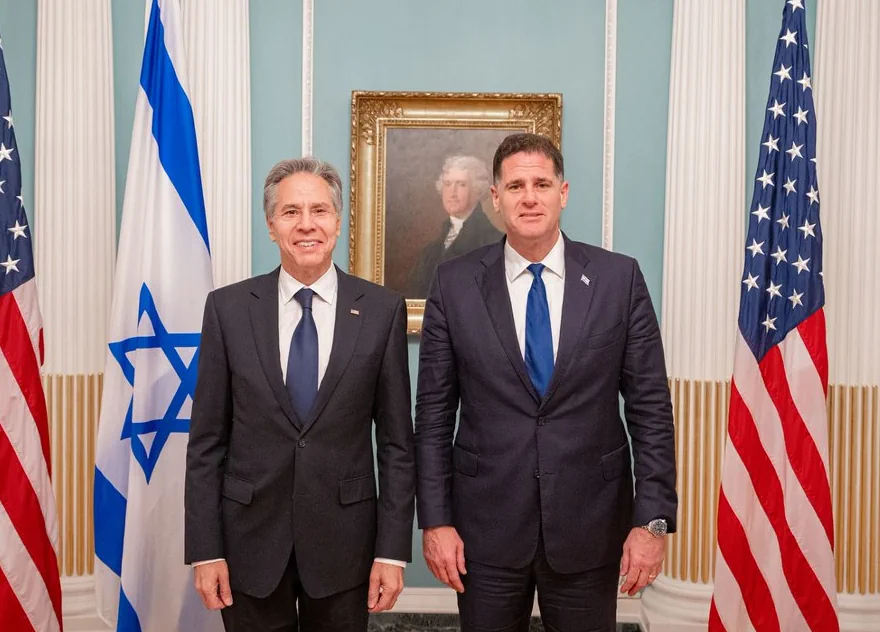
    Ron Dermer, Israel’s Minister of Strategic Affairs, with Blinken, the US Secretary of State in 2023.

    The key question is why the war would end by striking Iran’s oil facilities. Mehdi Kharatian, a recognized Iranian analyst, believes this aggressive move could trigger a dangerous chain reaction in the region. He suggests that Iran might escalate tensions in Southwest Asia’s infrastructure sectors, potentially deterring the United States from fully engaging in the conflict.

    1. Rising oil prices and Democrats’ troubles ahead of the electionTwo days after “Operation True Promise 2” and during the Republican-Democrat election debates, the Telegraph reported that Biden, then US President, mentioned that the regime was contemplating attacking Iranian oil facilities. Some media labeled this potential move as a “headache for the Democrats.” However, the following day, the Biden administration rejected this idea and instead proposed an alternative or replacement plan.

    Final Thoughts
    This discussion presents several clear reasons and pieces of evidence supporting the idea that rising oil prices can help end major wars, acting as a pressure tool on U.S. decision-making. High-ranking US officials prioritize global energy stability and supply chain security, actively working to eliminate threats in this sector. Consequently, Iran’s main leverage during the conflict—the “shock of closing the Strait of Hormuz”—did not need to be used. The US is well aware that any existential threat or large-scale attack on Iran would prompt Iran to use this strategic leverage quickly and decisively! Therefore, it is far wiser for the US to consider this fact carefully before attempting any attack on Iran, as Iran has the potential to ignite the region and severely disrupt the global economy.