
The transfer of part of the military equipment from Al-Shaddadi base, which had begun earlier, is expected to continue until February 10. These movements, along with the burning of the bases, are part of Washington’s strategy to reduce its presence in the region and prevent these facilities from being reused.
Category: America – Europe
-

Escalation of U.S. Terror Operations in Central and Eastern Yemen
On February 12, a passenger vehicle was struck by an unidentified drone along the coast of the city of Al-Ghaydah, the capital of Al-Mahrah province. As a result of the attack, one or two unidentified individuals were killed. It is believed that one of them may have been a Somali national with a background in either Al-Qaeda or ISIS. A Yemeni source identified the two individuals as Abdullah Abdulrazzaq, originally from Somalia, and Mohammed al-Hammami, a resident of Sana’a.
Images released by local sources indicate that the missile used in the strike was a Ninja missile (AGM-114 Hellfire), reportedly deployed by U.S. drones. The United States uses this missile in highly specific targeted operations. Previously, it had only been employed in assassinations in Syria and in one case in Lebanon. Therefore, this marks the first reported use of the Ninja missile in U.S. operations in Yemen.
U.S. drones also conducted two additional operations in Marib province on 25 January and 4 February, though official details have not been released. According to local sources, the first strike involved three missiles fired at a house in the Al-Kharashi area north of Marib city, killing three Al-Qaeda members from the Al-Qayfa area in Al-Bayda province. The second attack targeted a gathering of four Al-Qaeda members — Idris al-Masri, Abu Saleh Ibrahim al-Banna, Battar al-San’ani, Homam al-San’ani, and the son of Khaled Batarfi — in the Arq Al Shabwan area northeast of Marib city.
According to statistics reported by Western media regarding U.S. airstrikes in Yemen over the past two decades, more than 390 operations have been carried out against Al-Qaeda members in the country.
The pace of U.S. air operations in Yemen over the past three months has increased significantly compared to the previous two years, including the period following the inauguration of Donald Trump. Over the last three months alone, seven operations have been conducted — six in Marib and one in Al-Mahrah. In terms of timing, one operation took place in November, three in December, and three up to February 12. Since the beginning of these operations — marked by the assassination of Abu Ali al-Harithi on November 5, 2002 — the stated objective of the United States has been to counter Al-Qaeda activities. Since then, more than 1,600 individuals have reportedly been killed under this pretext.
-

Reverse Suicide Rotation!; America’s New Drone Policy in West Asia
Increased US Threat in Iran’s Vicinity:
Since the drones in this plan are based on the Shahed-136 model but feature additional capabilities and automated coordination, their deployment could boost US ability for precision strikes, swarming attacks, and long-range operations targeting regional assets.
Evolving Deterrence and Military Competition:
The introduction of a large number of low-cost drones will challenge the traditional balance between Iran’s air-missile capabilities and advanced US systems, potentially initiating a new arms race focused on “cheap mass production.”
Uncertain Security and Political Outcomes:
Deploying these systems, which can operate independently and within networks, raises questions about Washington’s intentions: Is it deterrence? Preparing for future offensives? Pressuring Iran? Or fostering a new pattern of regional conflict? The key issue is the impact of deploying the Scorpion Strike drone unit and affordable, network-capable drones on regional power dynamics, security, and Iran’s deterrence against the US. This report explores how this could alter combat rules, increase limited conflicts, or forge a new drone warfare paradigm in West Asia.Background
The US Army has deployed its first operational unit equipped with affordable kamikaze drones of the “Unmanned Combat Attack System” type in West Asia. These systems are based on reverse-engineering the Iranian Shahed-136 drone. According to Gifron Aerospace, the team leader, establishing the Scorpion Strike Task Force marks a major shift in operational structure and reflects Washington’s new stance on Iran. Earlier reports also highlighted the US military’s need to heavily invest in these Shahed-136 clones, which are quick to produce and adaptable, and could be crucial in future global missions.Analysis of Findings:
Mechanism of Formation of the Scorpion Task Force
The United States Central Command (CENTCOM) announced the formation of the Scorpion Strike Task Force, created under the “US Military Drone Dominance Plan” launched earlier this year by US Secretary of War Pete Hegseth. The task force, which reports directly to the US Special Operations Command Central, is responsible for overseeing the deployment of new drones in the region. Additionally, the “CENTCOM Joint Rapid Response Task Force,” established last September to enhance the deployment of military capabilities, has also been involved. Tim Hawkins, a CENTCOM spokesperson, explained that the task force includes approximately 24 specialists whose role is to manage the deployment and operation of new drones. He noted that while the exact number of drones deployed remains undisclosed, their deployment is substantial enough to grant the US military a “significant level of operational capability.”Drones and Estimated Production Cost
The drones, featuring a delta wing design and measuring about 10 feet in length and 8 feet in width, were created by Arizona’s Spectre Works in partnership with the US Army. This system includes technical features enabling ‘automated coordination” among the drones, making them suitable for group tactics and network operations. Captain Tim Hawkins, a project team member, reported that each drone costs approximately $35,000. Despite the low price, the system offers capabilities comparable to traditional long-range US Army systems but at a significantly reduced cost. He also highlighted their long range, the ability to operate beyond line of sight, and extensive coverage potential within CENTCOM’s area. An official CENTCOM statement mentioned that these long-range, autonomous LUCAS drones are now operational in the region and can be launched via various methods, including catapults, rocket-assisted systems, and ground- or vehicle-based launchers.Multi-platform drones
Military analyst Joseph Trowick explained that LUCAS drones can be launched from various platforms, not just ground-based systems. These drones support multiple launch methods, including deployment from naval vessels, which enhances their value in maritime and sea-based missions. Earlier US military analyses indicated that integrating inexpensive, multi-role drones into the US Navy could add new layers of defense, attack, electronic warfare, intelligence, and networking capabilities. This would transform warships into advanced nodes within a combat network. Trowick also noted that the initial design of the new UAS drone was directly inspired by Iran’s Shahed-136. The US military collaborated with several innovative tech companies to develop and produce the drone, which is a “direct result of that reverse engineering effort”. While it follows the general pattern of the Shahed, some parts have been redesigned to meet US operational requirements.FLM-136 UAV
SpectreWorks, a manufacturer of these drones, has released specifications for a related design called the FLM-136, described as a “training target” or experimental platform. According to the data, the drone can reach a maximum range of approximately 715 km and remain airborne for up to six hours. Its payload capacity, excluding fuel, is around 18 kg, and it flies at about 137 km/h, with the ability to accelerate to roughly 194 km/h. It remains unclear whether these features fully represent the operational prototype of the combat offensive system or if they only pertain to experimental and early versions.
According to data from the US Army Operational Environment Data Integration Network portal, the Shahed-136 drone features a 50-horsepower internal combustion engine and can reach speeds of around 185 km/h (100 knots). Its standard version has an operational range of approximately 2,000 km and can carry a 40 kg warhead. Designed mainly for point attacks on stationary targets, it relies on pre-programmed targeting data. Recently, Iran has introduced new Shahed-136 variants, including models with advanced guidance systems and a jet engine version with different speeds and ranges. Russia has also started producing the “Geran” variants based on the same design since beginning drone cooperation with Iran. Several derivative models are now part of its arsenal. Reports suggest that both Iran and Russia are working to enhance their drones with more dynamic, flexible, and reactive targeting capabilities, aiming for semi-intelligent drones capable of attacking moving targets or altering course during flight.The Importance of Cheap, High-Performance Drones
Captain Tim Hawkins announced that the US has reached a new stage: mass-producing drones and deploying them in West Asia for the first time. He described this as a “reverse scenario against Iran,” where the US is using the same approach Iran developed through frequent drone attacks in the region. According to the head of the CENTCOM team at MacDill Air Base, observing Russia’s operations in Ukraine and Iran’s drone attacks on the Zionist regime shows that this tactic can cause significant disruption and impose heavy defense costs on the enemy. From the US perspective, it is now time to apply the same “Iranian strategy” against Iran.
Although the Scorpion Special Forces haven’t yet deployed their new drones in actual missions, they have been tested against regional targets, confirming their operational potential. Hawkins pointed out that enhancing the US’s offensive and defensive capabilities is a concurrent strategy and stated that “sometimes effective defense comes from effective attack.” Until now, the US military has mainly regarded the drones publicly as training tools or threat simulators rather than as active offensive systems.The system could also be employed against the Houthi rebels in Yemen. While the US has announced a formal ceasefire with the group, the capability to strike them remains if necessary. The main obstacle, however, is not a lack of offensive power but rather identifying the right target. From a strategic perspective, drones like Shahed offer advantages beyond West Asia and North Africa, providing the ability to deliver large amounts of low-cost firepower. This enhances the capability to weaken enemy defenses and aligns with the US military’s focus on developing long-range, affordable, and mass-produced weapon systems.New capabilities
Modern drones can be continuously upgraded thanks to their modular and open architecture design. This setup permits the integration of the latest sensors, navigation tools, and AI components without altering the core drone structure. As previously mentioned, advancements in positioning, navigation, and timing technologies are ongoing, allowing affordable, precision-attack drones to leverage this flexibility to combat electronic warfare. Additionally, the deployment of artificial intelligence in lower-end drones is imminent, enabling them to navigate autonomously without GPS and target moving objects effectively.Consequently, the effectiveness of electronic warfare in disrupting these systems is waning. In the near future, thousands of inexpensive yet highly threatening drones—costing just a fraction of a traditional cruise or ballistic missile—could easily overwhelm and disable even the most advanced enemy air defenses. This capability is expected to become a vital component of future major conflicts. Tim Hawkins notes that development efforts are progressing rapidly, especially for low-cost attack drones that are scalable and upgradeable. Spectre Works is not alone in this market; Gryphon Aerospace, an American company, also supplies a drone similar to the Shahed series, the Arrowhead MQM-172, to the US armed forces. -
Changing the US Presence in Syria: Details of Military and Logistics Movements at US Bases in Eastern Syria
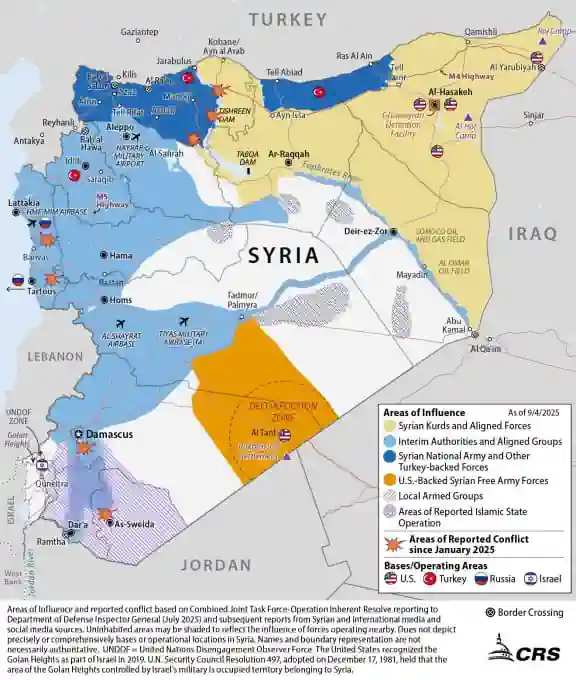
Analysis of satellite images and field reports from early 2025 indicates a shift in US force deployment from dispersal to concentration along the eastern axis. Deir Ezzor bases, once serving as contact points for local threats, have seen reduced activity and the withdrawal of equipment recently. The evacuation of some facilities at CONOCO, Al-Omar, and Green Village initially suggested a potential withdrawal, but later developments suggest otherwise. Current data reveals that Washington is adopting a strategy of “reducing presence and increasing infrastructure depth.” Recent weeks have seen the transfer of equipment, new construction, and convoy movements across multiple eastern bases, indicating a strategic reorganization rather than a withdrawal, effectively shifting the focus of US presence in Syria.
Conceptual Framework
After 2025, the US military presence in Syria has shifted to a new phase that diverges significantly from earlier patterns. Instead of focusing on “territorial dominance” through large bases and extensive field operations, the current strategy emphasizes positional-functional control. In this approach, bases serve not just as military locations but as strategic instruments for blocking geopolitical bottlenecks and influencing the region’s geoeconomic network.In this context, the significance of bases is determined by their role within power chains and strategic routes rather than their size. For example, Qasrak base as a logistical gateway east of the Euphrates and a command post for northeastern Syria, while Al-Tanf is pivotal in disrupting Iran’s land corridor to the Mediterranean. These bases serve as “geopolitical levers,” demonstrating a shift from tactical presence to targeted influence engineering. Each base now functions as a tool for managing regional relations and maintaining strategic balances.The map in the US Congressional Report shows the deployment of US military bases in Syria and areas under its control in 2025, with an emphasis on key points in northeastern Syria and strategic borders. Source: US Congressional Report (CRS 2025) – Syria: Transition and U.S. Policy Based on US Congressional reports and Tom Barrack’s speech at the Doha Forum, Syria has shifted from being merely a ongoing crisis to becoming a strategic platform for shaping a new regional order in the Arab East. This shift suggests that the US intends to maintain a presence in Syria to influence emerging power dynamics. Rather than sticking to a purely security-focused approach, the US is redefining its global role as a key actor in the region’s geopolitical and security landscape. This military reorientation represents not only a tactical change but also a move toward establishing a new power framework in West Asia.
The New Map of US Military Presence
The US military presence in Syria has shifted from direct control to managing strategic locations. These bases now serve not just military purposes but act as points within a broader geopolitical network shaping regional dynamics. This section examines three active bases and their contribution to extending US influence in Syria.Inactive Bases
In 2025, the United States shifted its military focus to strategic and geopolitical areas by closing several key bases in Syria. Bases like Al-Omar and CONOCO, primarily used for energy and surveillance, were transferred to SDF forces. Additionally, Tal Baydar and Wazir bases, closed due to their poor locations and diminished Turkish sensitivities, became part of the new US strategy targeting crucial geopolitical hubs. These actions indicate that the US now aims not only to secure oil resources but also to control strategic positions to influence Syria’s future political and security landscape.US geopolitical logic
The US presence in Syria, particularly in the northeastern regions, has experienced notable changes driven by security concerns and regional geopolitics, reflecting efforts to shape a new regional order. These changes not only involve scaling back military footprint in certain areas but also show a reinterpretation of America’s role in Syria and the wider region. Strategic American bases in Syria serve as tools of geopolitical influence, impacting the regional power dynamics in Arab East and West Asia. The motivations and geopolitical reasoning behind this realignment of US bases and its presence in Syria are discussed below.Containing Iran and controlling the land corridor
One of the primary objectives of the United States in Syria is to restrict Iranian influence. The strategic Al-Tanf base, situated at the Syria-Jordan-Iraq border triangle, is seen as crucial to U.S. interests. Since the start of the U.S. presence in Syria, Al-Tanf has been instrumental in blocking Iran’s land corridor and continues to serve this purpose. The goal of maintaining Al-Tanf is to prevent Iran from establishing a land link from Tehran to Beirut, thereby stopping Iran from entering Lebanon and expanding its regional influence. The U.S. presence here acts as a chokepoint for Iran, playing an essential role for the Western alliance and the Zionist regime, especially in hindering Iran’s coordination with resistance forces in Iraq, Syria, and Lebanon.Maintaining leverage in Syria’s political future
Another objective of the United States in restructuring bases and trimming its military footprint is to utilize the remaining bases as leverage in the Syrian political arena. The 2025 US Congressional Report notes that the US has transformed its military presence into a bargaining tool in political negotiations following the fall of the Assad regime. While justified as efforts against ISIS, this presence primarily aims to be involved in Syria’s reconstruction and to shape its future political and security frameworks in alignment with Washington’s interests. Key bases like Qasr and al-Shaddadi, which serve as strategic contacts with local forces and Syrian Kurds, provide the US with significant influence in post-Assad negotiations.Managing the relationship with Turkey
Another strategic move for the United States in Syria involves managing its complex relationship with Turkey. By withdrawing from sensitive areas in northern Syria, such as Tal Baydar, the U.S. has lessened Turkey’s sensitivities and improved its security position. Meanwhile, reports emerged in late 2024 and early 2025 about the establishment of a base in Ain al-Arab, which were consistently denied by both American and Turkish sources. Regardless, the U.S. goal of rebuilding the base near the Turkish border can be seen as a deterrent against Türkiye, allowing Washington to influence Turkish policies in northern Syria.Presence in the future geoeconomic corridors
Among American politicians, Syria is considered a key element in the evolving landscape of the Arab East. At the Doha Forum, Tom Barrack mentioned that the United States is leveraging Syria as a platform to forge a new geopolitical and economic framework. Linking Syria with Lebanon, the Zionist regime, Turkey, and Jordan could influence trade, energy, and transit pathways. These nations, which serve as vital economic and commercial hubs in the region, can be strategically connected through key locations like Qasrak, Al-Shaddadi, and Al-Tanf. This allows the U.S. not only to utilize these networks now but also to steer and reshape them in the future.Turning Syria into a scene for containing Russia
After the collapse of the old order, the United States sees a chance to restore its influence in the Eastern Mediterranean and Syria. The Syrian bases serve to contain Iranian influence and oppose Russian expansion in the area. By keeping a military presence and enhancing key strategic locations in Syria, the U.S. can better negotiate with Moscow and act as a deterrent to Russian ambitions.Conclusion
Since 2025, the U.S. has significantly restructured its military presence in Syria, emphasizing key bases in strategic locations. These adjustments aim to curb Iranian influence, especially by severing the Tehran-Beirut land corridor and limiting the resistance axis’s maneuvering capabilities. Bases such as Qasrak, Al-Shaddadi, and Al-Tanf now function as tools for overseeing energy resources, trade routes, and shaping policies in Syria and among regional actors like Turkey. Beyond oil, the U.S. seeks to play a decisive role in Syria’s political landscape and regional power dynamics, using these bases to counter Russian influence. These strategic adjustments enable the U.S. to stay a dominant player, safeguarding its security and shaping a new economic and political order around Syria. -

First Yemeni Killed in the Russia–Ukraine War!
According to unofficial information, an estimated around 2,000 Yemeni fighters—recruited through Russian companies—are currently taking part in the war in Ukraine alongside Russian forces.
Yemeni participation in the Ukraine war is largely driven by poverty, unemployment, and the futile internal conflict imposed on the country by Arab states.
-

Where Is the Third Major U.S. Base in Saudi Arabia?
This base serves a logistical and supply role for U.S. forces in western Saudi Arabia and has recently undergone expansion. Development began in early 2025 and includes the construction of underground storage facilities, ammunition depots, new logistics and support infrastructure, as well as housing for U.S. personnel.
Given its capabilities, the base could potentially serve as an alternative to Al Udeid Air Base in Qatar. Qatar’s proximity to Iran and the presence of Iran’s short-range missile stockpiles have highlighted Al Udeid’s vulnerability, prompting the U.S. to consider substituting it with other bases. That said, the mission profile of U.S. forces in Saudi Arabia is largely defensive and training-oriented. For instance, during the Saudi-Emirati coalition’s war in Yemen, these forces repeatedly took part in air defense operations, intercepting Yemeni missiles and drones and thereby indirectly engaging in the conflict.


LSA Jenkins base in Yanbu port, western Saudi Arabia Overall, despite Saudi Arabia’s neutral stance in recent Iran–U.S. tensions, L.S.A. Jenkins could be considered a potential target of Iranian missile strikes. The base is approximately 1,300 km from Iran’s Ahvaz and 990 km from Saada.
-
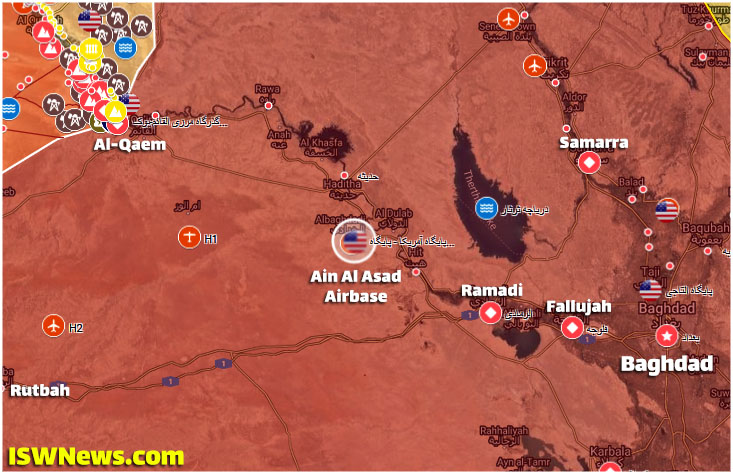
Coalition Forces to Withdraw From Ain al-Asad Base
Referring to Baghdad’s shifting approach toward foreign partners, he added that Iraq is moving away from direct foreign troop presence and instead toward memorandums of understanding and security/training agreements with the United States, Britain, and France. He said security across Iraq’s desert regions has reached an advanced level, and revealed a special intelligence operation carried out beyond Iraq’s borders — particularly in Syria — coordinated with Syrian authorities and the U.S.-led coalition, which resulted in the arrest of several wanted militants.
Implementation of the agreement to withdraw U.S. forces and fully transfer Ain al-Asad to Iraqi control marks the beginning of a new phase in Baghdad–Washington security relations. In this phase, Iraq seeks to reduce reliance on foreign troop presence while redefining cooperation around training, intelligence sharing, and technical agreements. The government also hopes to ease domestic sensitivities toward foreign military footprints — while still keeping channels with Western partners open. Yet despite Iraqi forces’ readiness, fully executing the withdrawal presents challenges, as parts of the Iraqi army and counter-terrorism apparatus still depend on U.S. technical, aerial, and intelligence support.
-

Tehran’s Reciprocal Move: Canadian Navy Listed as Terrorist Organization
Following Canada’s decision to designate Iran’s Islamic Revolutionary Guard Corps (IRGC) as a terrorist entity, Iran’s Foreign Ministry announced a reciprocal measure.
The statement declared that since Canada labeled the IRGC—an official branch of Iran’s armed forces—as a terrorist group in violation of international law, Iran now recognizes the Canadian Navy as a terrorist organization.
This step was taken under the principle of reciprocity and Article 7 of Iran’s 2019 law on counter‑measures against countries adopting the U.S. designation of the IRGC as a terrorist organization.
The Foreign Ministry warned that Canada bears full responsibility for the legal and political consequences of this decision, while Iran reserves the right to take further actions to safeguard its national interests and security.

Statement by the Iranian Ministry of Foreign Affairs in response to Canada’s illegal action -
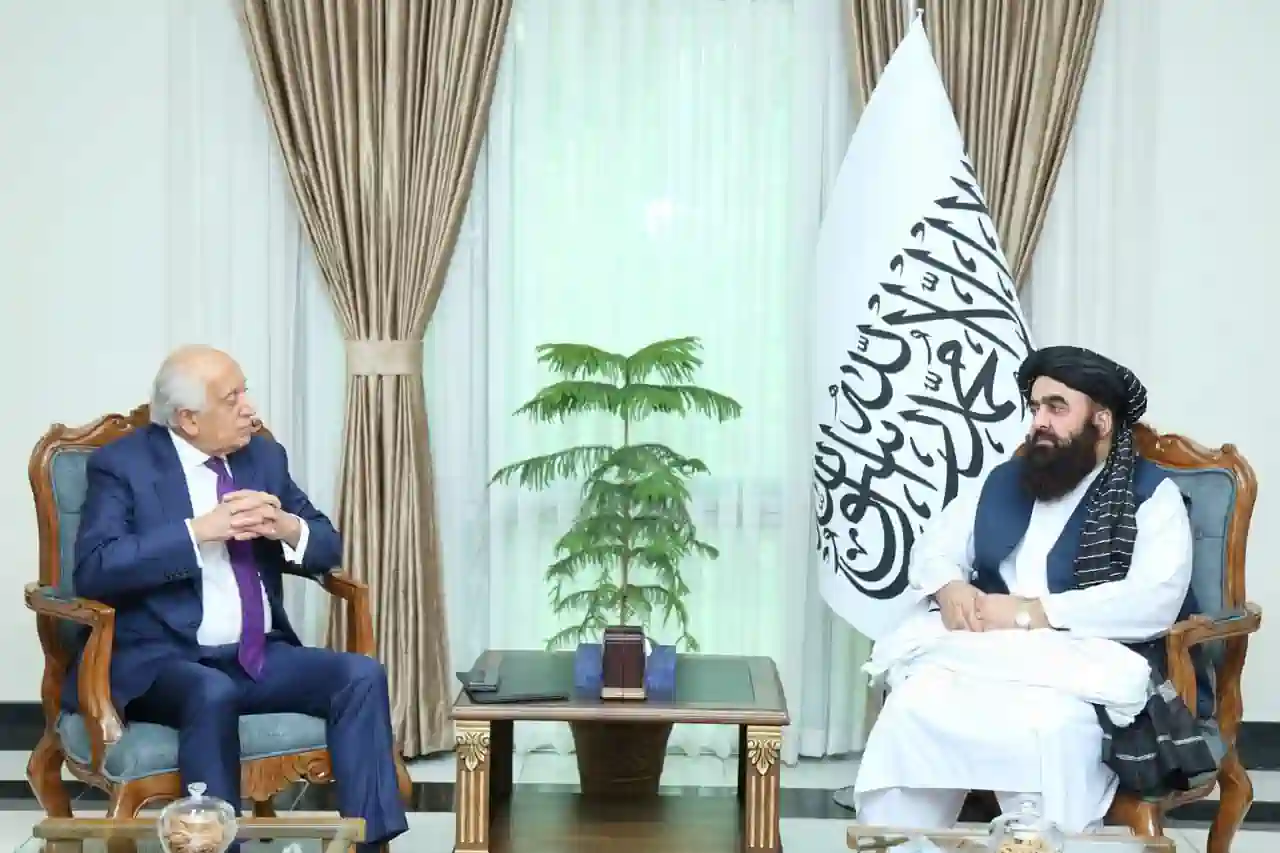
Khalilzad’s Return to Kabul: Taliban–U.S. Relations Enter a “New Phase”
The details and exact purpose of this meeting have not yet been disclosed. Muttaqi, however, stated that cooperation between the Taliban and the U.S. has entered a “new phase”—a phrase left unexplained, fueling speculation about the scope of this engagement.
In previous sessions, discussions mainly focused on the release of American citizens imprisoned in Afghanistan. With that process now completed, analysts suggest that issues such as security, humanitarian aid, and limited economic cooperation—channeled indirectly through international institutions—may be on the agenda, though none of these have been officially confirmed.
Khalilzad has previously traveled to Kabul several times, holding informal talks with Muttaqi about possible pathways for developing Afghanistan–U.S. relations.
On another trip, he was accompanied by Adam Boehler, the U.S. president’s special envoy, meeting with Muttaqi and Taliban deputy for economic affairs Mullah Abdul Ghani Baradar to discuss matters including detainees, the status of foreign nationals, and economic opportunities.
The continuation of these meetings indicates that, even after its military withdrawal, the U.S. is still seeking to maintain political and economic channels with Kabul. Yet these interactions remain conditional, limited in scope, and marked by mutual distrust.
The overall pattern of behavior from both sides suggests a relationship that is neither fully severed nor based on trust, but rather one defined by controlled, interest‑driven engagement. Despite Khalilzad’s mediation efforts to bring security and military issues into the dialogue, the relationship has so far remained confined to economic and diplomatic exchanges.
-
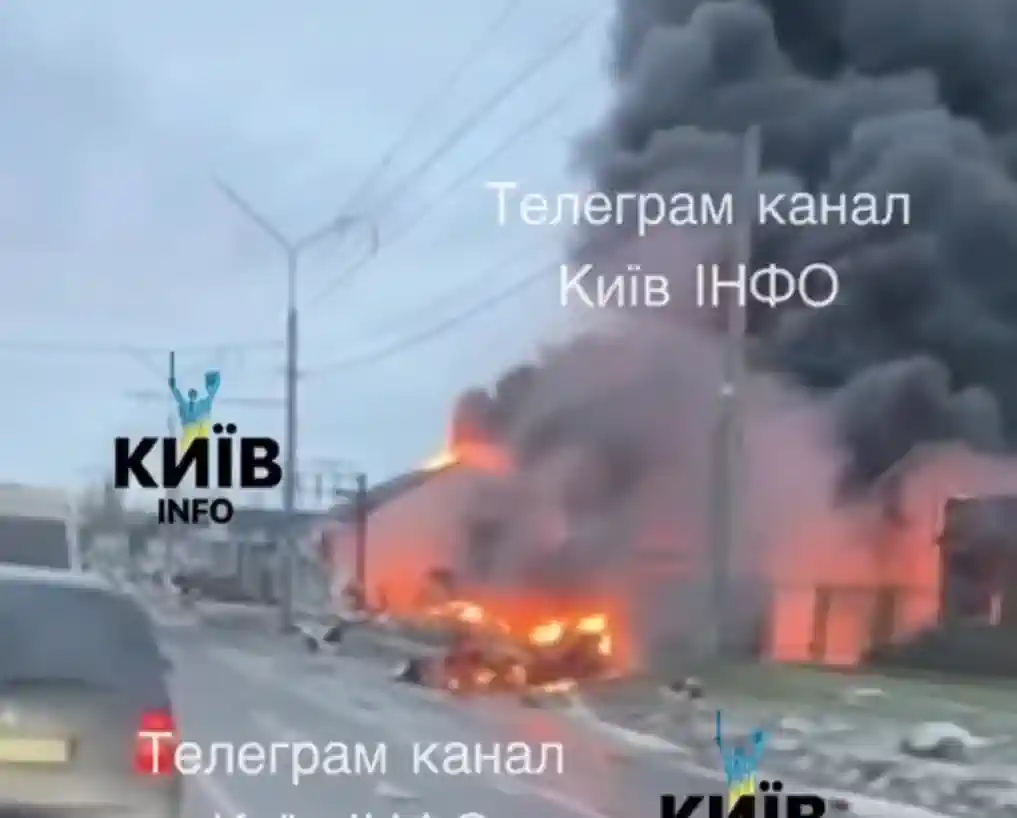
A Hard Day and Night for Ukraine; Kyiv Engulfed in Flames! (Video)
As a result, urban infrastructure and energy facilities in Kyiv were struck. The TPP‑6 thermal power plant was damaged, leaving parts of the city without electricity and water. The large Tripilska power station, the most powerful in the Kyiv region, was hit again, while explosions were reported in Brovary, Vyshhorod, Boryspil, Bila Tserkva, and Bucha.
Russian Geran-2 suicide drone strike on the Bila Tserkva in the Kiev region Beyond these, Zhytomyr, Poltava, Cherkasy, Chernihiv, Odesa, and Sumy were also targeted.
Reports indicate that Russia, through the combined use of long‑range missiles, suicide drones, and successive air raids, carried out one of its most extensive recent waves of attacks against Ukraine’s critical infrastructure and sensitive facilities.
-

Ansar Allah announces martyrdom of senior missile commander
The funeral for Maj. Gen. Zakaria Abdullah Yahya Hajar (Abu Yahya), Brig. Gen. Abdullah Yahya Abdullah Hajar, Brig. Gen. Hussein Yahya Abdullah al‑Hashimi, Brig. Gen. Ahmed Abdullah Yahya Ahmed Hajar, and Mohammed Khaled Yahya Ahmed al‑Haifi will be held at Al‑Shaab Mosque in Sana’a, attended by senior officials of Yemen’s government and military.
Official Yemeni media have not yet released detailed information on their roles or circumstances of martyrdom. However, according to unofficial reports, Maj. Gen. Zakaria Hajar was a specialist in missile and drone systems within Yemen’s Armed Forces and played a role in Yemen’s support operations for Palestine.
He and his men were martyred in a U.S. airstrike in March 2025 targeting the Al‑Jiraf area north of Saada city. Zakaria Hajar’s name, due to his ties with Iran and involvement in Yemen’s missile‑drone program, appears on the alleged terrorist and sanctions lists of Saudi Arabia and the Saudi-backed Yemeni government.
-
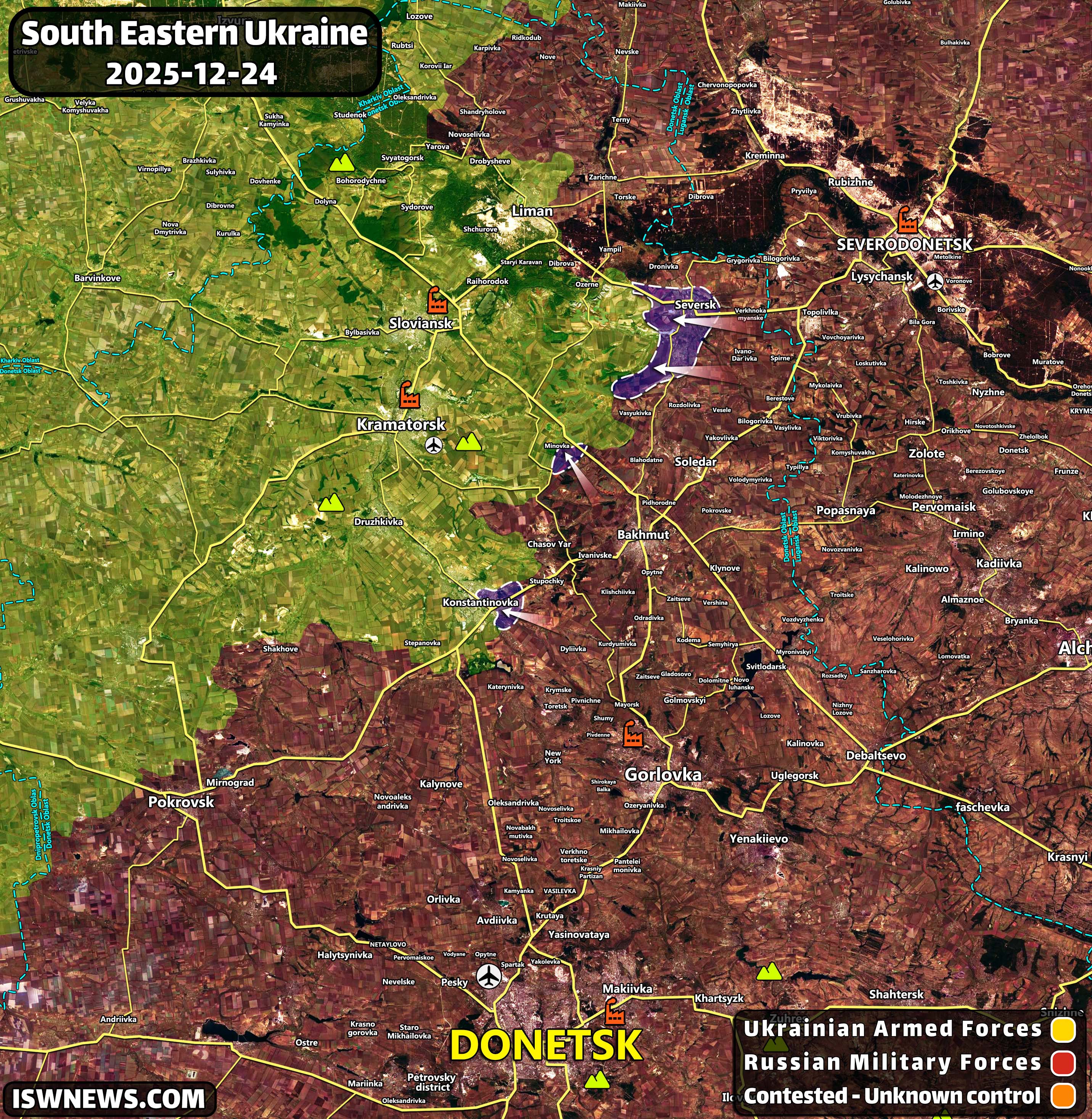
Update on the Latest Battlefield Developments in Ukraine – December 24, 2025
Key battlefield updates in the last 24 hours:
— On the Kostiantynivka axis, Russian troops advanced near Lake Klyban‑Byk and west of Pleshcheyevka, with reports of gains inside Kostiantynivka city.
— On the Seversk axis, Russian forces pushed forward between Svyato‑Pokrovske and Pazeno.
— On the Sumy axis, Russian units advanced west of Yunakivka.
— On the Dnipro region axis, Russian forces secured Andriivka and Zarechnoye, advanced in northern and central Huliaipole, and reportedly moved west of Gerasymiivka.
— On the Vovchansk axis, Russian troops took control of Prylypka west of Vovchansk and the village of Vilcha south of Vovchansk.
— On the Chasiv Yar axis, Russian forces entered Minkivka village.Russian airstrikes against Ukraine’s critical infrastructure continue. A series of large‑scale attacks targeted energy facilities and Ukrainian positions across multiple provinces, including: a power station and oil terminal in Odesa; positions in Vasylkivka, Kryvyi Rih, and Pavlohrad in Dnipropetrovsk; warehouses and temporary bases in Sloviansk; the Burshtyn thermal plant in Ivano‑Frankivsk; the Ladyzhyn thermal plant in Vinnytsia; the Kaniiv hydroelectric plant in Cherkasy; and energy facilities in Lviv and Khmelnytskyi provinces.
Click to view the map in larger size