Category: US

  • Washington Moves to Rebuild Trust with Doha: U.S. to Host Qatari F-15s and Pilots

    Washington Moves to Rebuild Trust with Doha: U.S. to Host Qatari F-15s and Pilots

    The initiative was revealed during his meeting with Qatar’s Deputy Prime Minister and Defense Minister, Saud bin Abdulrahman Al Thani in Washington.

    He clarified that Qatar will not establish a permanent base in the U.S.; the deployment is strictly for short-term combat coordination and training.

    This move is seen as part of Trump’s broader strategy to mend relations with Doha, especially after Israel’s recent attack on Qatar and growing Arab criticism of Washington’s failure to protect its Gulf allies.

    While the deployment of Qatari fighters and pilots in Idaho might not significantly alter military strategies, it serves as a diplomatic gesture. This move signals an effort to restore and reinforce America’s image among its allies. Instead of emphasizing combat capabilities, it aims to showcase America’s loyalty, cooperation, and ongoing commitment to the security of its partners.

  • U.S. Deploys 200 Troops to Israel to Support Gaza Ceasefire Coordination

    U.S. Deploys 200 Troops to Israel to Support Gaza Ceasefire Coordination

    These troops are experts in transportation, logistics, planning, security, and engineering, and will work alongside regional representatives, private entities, and NGOs. Western sources have emphasized that the American forces will not enter Gaza itself; their role is strictly technical and supervisory within Israeli territory.

    The coordination center will be located in southern Israel and is designed to facilitate the ceasefire process and streamline the delivery of humanitarian aid to Gaza. According to The New York Times, U.S. troops will collaborate with counterparts from Egypt, Qatar, Turkey, and the United Arab Emirates.

    This move by President Donald Trump’s administration is seen as part of Washington’s broader effort to assert and reinforce its influence in the evolving situation in Gaza. Having played a pivotal role in brokering the recent ceasefire between Israel and Hamas, the Trump administration now aims to position itself not only as the initiator of peace but also as its guarantor.

    Analysts suggest that the White House is attempting to reclaim political leadership in the Gaza file from regional powers. While Egypt and Qatar were instrumental in mediating the ceasefire, the U.S. seeks to demonstrate—through its direct military presence in Israel—that it remains the dominant and unrivaled actor in managing the Gaza crisis.

  • Official Announcement of Heavy U.S. Losses in Confrontation with Yemeni Armed Forces

    Official Announcement of Heavy U.S. Losses in Confrontation with Yemeni Armed Forces

    According to the report, U.S. military spending on Yemen-related operations between October 2024 and September 2025 exceeded $4.9 billion, raising the total cost over recent years to approximately $10 billion.

    The expenses include extensive use of advanced weapons and equipment such as 2,000-pound bombs, precision missiles, Patriot air defense systems, along with the deployment of two U.S. aircraft carriers, fighter jets, bombers, and drones.

    Material and personnel losses for the U.S. military include the destruction of three F/A-18 fighter jets (estimated cost: ~$210 million), 22 MQ-9 drones (estimated cost: ~$800 million), and the use of dozens of high-cost missiles and bombs, including 75 Tomahawk missiles and 20 AGM-150 bombs.

    The American institute noted that despite these massive expenditures, the field results have not been decisive. Yemeni attacks resumed after a temporary ceasefire, leading to maritime operations that resulted in the sinking of ships and direct threats to oil tankers linked to Israeli interests. Airstrikes have also continued against airports and strategic targets deep within occupied Palestinian territories.

    The publication of this report is seen as further confirmation of the failure of U.S. naval and aerial operations in Yemen, which ultimately led to their withdrawal from the Red Sea and Gulf of Aden and acceptance of a ceasefire brokered by Oman. Although the Watson Institute did not detail human casualties in this report, it is reported that at least two American soldiers were killed and several others wounded in Yemeni attacks.

  • Tripartite Meeting in Damascus: Al-Jolani Meets SDF Commander and U.S. CENTCOM Commander

    Tripartite Meeting in Damascus: Al-Jolani Meets SDF Commander and U.S. CENTCOM Commander

    A key focus of the meeting was the implementation framework of a recent agreement between al-Jolani’s administration and the Syrian Democratic Forces (SDF), with both sides emphasizing Syria’s territorial integrity and national sovereignty.

    Simultaneously, an SDF delegation led by Mazloum Abdi arrived in Damascus to discuss the political transition process and security challenges in northeastern Syria with senior Syrian officials.

    The concurrent presence of the U.S. envoy and the SDF commander in Damascus signals a coordinated push between Washington and Damascus toward a new political roadmap. This meeting is one of the few high-level meetings between the Syrian presidency, US representatives and the commanders of the Syrian Democratic Forces; this meeting could initiate a new phase of talks between the main actors in the Syrian crisis.

  • New U.S.–Israeli Military Posture Against Iran Echoes the 12-Day War Model

    New U.S.–Israeli Military Posture Against Iran Echoes the 12-Day War Model

    A central focus of these maneuvers is logistical and operational support for Israeli fighter jets. During the previous 12-day war between Iran and Israel, American tankers played a crucial role in refueling Israeli aircraft over Iraq and Syria, particularly in the airspace above Syria’s Deir ez-Zor province. Now, with at least 30 Boeing KC-46 Pegasus and KC-135 Stratotanker aircraft reportedly in the region, aerial refueling operations could take place even closer to Iran’s borders.

    Although the issue of Israeli jets entering Iraqi airspace was discussed in a recent meeting between Iraq’s National Security Advisor Qasim al-Araji and Iranian military intelligence chief General Mirahmadi, the current U.S. deployment suggests refueling may occur near the Iran–Iraq border regardless.

    If Iran’s air defense systems are suppressed or rendered ineffective, eastern Iran could become vulnerable to Israeli airstrikes. Refueled near the border, Israeli jets could target strategic sites deep inside Iran. There’s also a growing possibility of direct U.S. involvement, with American fighter jets and refueling support contributing to future operations. In such a case, a division of roles may emerge—with Israel attacking from the west and the U.S. from the south.

    Another critical element is the ongoing surveillance by the U.S. Navy’s MQ-4C Triton drone over the Persian Gulf. These flights aim to gather real-time intelligence on Iranian military movements and air defense activity in the south. The Triton conducts radar and visual reconnaissance over Iran’s coastal zones, complementing broader strategic monitoring.

    Overall, these developments suggest a shift toward a new phase of hybrid pressure against Iran—reminiscent of Western preparations prior to the 12-day war. While the exact timing of any escalation remains uncertain, the scale of U.S. deployments and the influx of weaponry into Israeli territory indicate that a new round of conflict may be inevitable.

  • THAAD Redeployment: U.S. Fortifies Israel’s Missile Shield Amid New Israel-Iran War!

    THAAD Redeployment: U.S. Fortifies Israel’s Missile Shield Amid New Israel-Iran War!

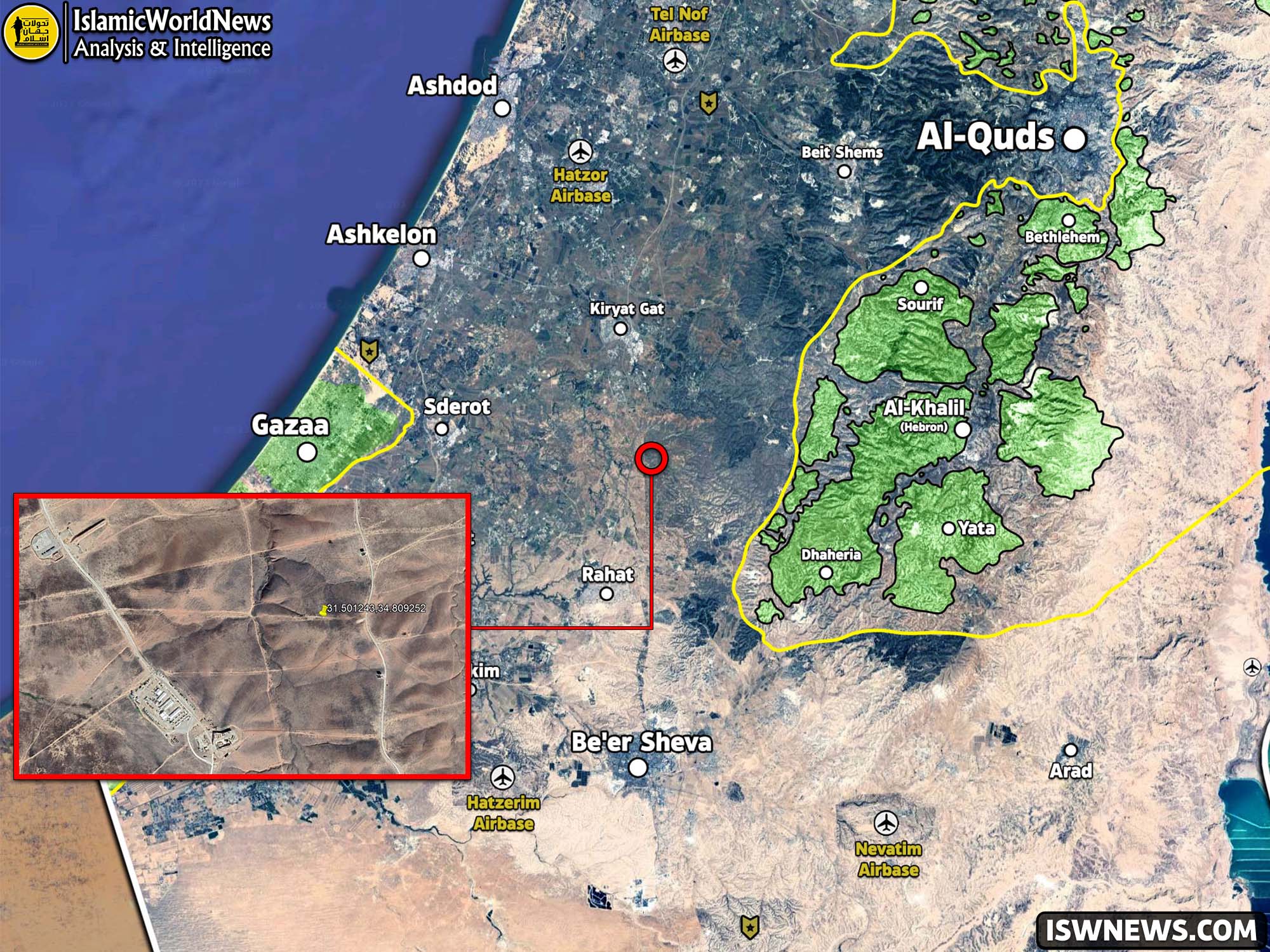
    This development came immediately after the 12-day war between Iran and Israel, which exposed serious shortages in Israel’s missile defense inventory. The urgent need for reinforcement led Tel Aviv to publicly seek upgrades. The transfer of THAAD units and expanded support infrastructure suggest a strategic push to deepen defensive layers and reduce vulnerability to missile threats.

    THAAD units at coordinates 31.501243, 34.809252 in the western outskirts of Hebro

    The site, located at coordinates 31.501243, 34.809252 in the western outskirts of Hebron, lies just 13 kilometers from parts of the West Bank—making it a potential target for Palestinian resistance operations.

    Lessons from the recent war and Israel’s tactics against Iran show that low-cost tools like drones and guided anti-armor weapons can significantly disrupt advanced defense systems. During the 12-day Tehran–Tel Aviv conflict, Israeli-linked operatives inside Iran used drones, quadcopters, and precision-guided munitions to strike missile and air defense systems. If Iran replicates such tactics in the occupied territories, the damage from missile strikes could multiply dramatically!

  • U.S. Preparations for a Potential Return to Afghanistan!

    U.S. Preparations for a Potential Return to Afghanistan!

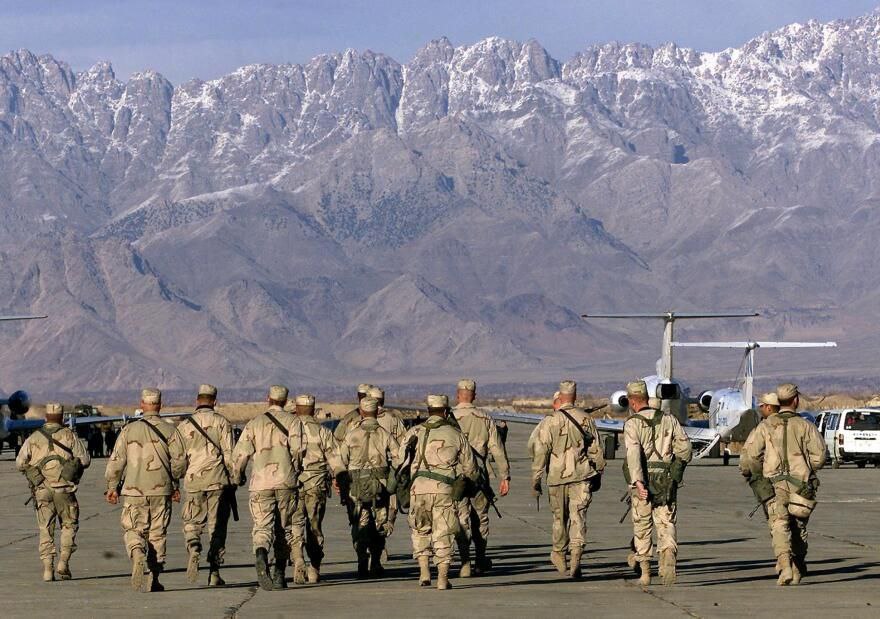
    The report claims that Washington’s primary strategy is to negotiate with the Taliban for control of Bagram, though military options are actively being considered.

    It further alleges that around 80% of Taliban officials are willing to hand over the base to the U.S., but Taliban leader Mullah Hibatullah Akhundzada and his inner circle oppose the plan. The report speculates that if their stance doesn’t change, the U.S. might consider targeting them for assassination.

    Additional reports suggest that communication devices are being confiscated and internet access has been cut in Kandahar, where the Taliban leader resides. Taliban security forces are reportedly constructing underground tunnels to protect him. These developments point to the possibility of a U.S. military intervention against the Taliban.

  • “No Entry” for America: Iraqi PMF Halts U.S. Convoy

    “No Entry” for America: Iraqi PMF Halts U.S. Convoy

    According to the brigade’s command, which holds formal responsibility for the area’s security, any presence or cooperation with U.S. forces and affiliated entities is categorically rejected. The 12th Brigade emphasized that all its bases operate under the supervision of the Iraqi Prime Minister’s Office and are legally sanctioned.

    This obstruction is seen as a clear signal from resistance factions aiming to curtail U.S. operational reach within Iraq. It conveys a practical message: American presence in zones officially controlled by the PMF will not be tolerated. The brigade’s insistence on its legal mandate seeks to frame the move as a state-sanctioned action, distancing it from any perception of rogue behavior. This is a strategic posture, as resistance groups aim to present themselves as integral components of Iraq’s formal security architecture.

    The incident marks a direct field-level confrontation with the United States and could escalate tensions between Washington and Iraqi resistance forces, especially amid recent U.S. moves to blacklist several such groups.

    On September 16, the U.S. Department of State issued a statement announcing the addition of four Iraqi resistance groups to its list of Foreign Terrorist Organizations. The designated groups include Harakat al-Nujaba, Kata’ib Sayyid al-Shuhada, Harakat Ansar Allah al-Awfiya, and Kata’ib Imam Ali.

  • Two Killed in American Drone Strike on al-Qaeda Suspects in Yemen

    Two Killed in American Drone Strike on al-Qaeda Suspects in Yemen

    Bin Arfaj’s father was a senior al-Qaeda figure in Yemen who was killed in a previous U.S. operation. The affiliation of the two individuals with al-Qaeda has not yet been officially confirmed by the group’s media outlets.

    According to Western media data, the U.S. military has carried out over 380 counterterrorism air operations targeting al-Qaeda in Yemen over the past two decades.

    It’s worth noting that the Southern Transitional Council and several Yemeni media sources claim that Saudi Arabia is a key supporter of al-Qaeda in Yemen, allegedly aiming to weaken southern factions and prevent their influence from expanding into central regions of the country.

  • The New Syrian Flag Raised Over the Damascus Embassy in Washington

    The New Syrian Flag Raised Over the Damascus Embassy in Washington

    In a formal ceremony, Syrian transitional government Foreign Minister Asaad Hassan al-Shaibani raised the national flag over the Syrian Embassy in Washington. In a brief speech, he described the moment as historic. The event was attended by members of the Syrian-American community.

    In a message posted on X (formerly Twitter), al-Shaibani wrote:
    “After decades of absence, today the flag of the Syrian Arab Republic proudly flies over our embassy in Washington. With pride and dignity, I represent a nation that stood firm and a homeland that never broke. Syria has returned.”

    It’s worth noting that during his visit to Washington, the Syrian Foreign Minister met with U.S. Deputy Secretary of State Christopher Landau, several members of Congress, and officials from the U.S. Treasury Department. The discussions focused on bilateral relations, expanding cooperation, and exploring the possibility of lifting sanctions imposed on Damascus.

  • CENTCOM Commander Meets Syrian Officials in Damascus

    CENTCOM Commander Meets Syrian Officials in Damascus

    They discussed joint cooperation to enhance security and stability in Syria and the region, highlighting the importance of strengthening bilateral relations.

    This encounter reflects Syria’s interest in rebuilding ties with global powers and seeking agreements to lift sanctions and improve its economy. Strengthening communication with Washington may facilitate better international relations with Western countries.

  • CENTCOM Chief Visits Tel Aviv to Bolster Security Ties with Israel

    CENTCOM Chief Visits Tel Aviv to Bolster Security Ties with Israel

    During the meeting, Cooper reaffirmed Washington’s unwavering commitment to Israel’s security, stating, “The United States remains firmly dedicated to strengthening regional stability and mutual defense.”

    Cooper’s visit underscores America’s strategic push to reinforce joint deterrence against emerging threats in the region. His presence in Tel Aviv carries not only military weight but also a clear political signal to Washington’s Arab allies: safeguarding Israel remains a cornerstone of U.S. policy in West Asia. This message may influence diplomatic dynamics and the normalization process between Tel Aviv and certain Arab countries.