Category: Breaking

  • Latest Situation in central and eastern Syria, important town of ​​al-Tayba was liberated !

    Latest Situation in central and eastern Syria, important town of ​​al-Tayba was liberated !

    On Monday Syrian army and Resistance forces and other allies succeeded to push back ISIS from occupied regions in Homs. According to that by liberating of al-Tayebah they put a major step toward the end of ISIS control on the center of the Syria.

    On the axis of Sha`ir mount, Huwaysis was liberated.Clashes in Huwaysis continue to stabilize achievements.

    Liberating Huwaysis is the first step in moving towards Uqayribat. Due to the complexity of the area, it is difficult.

    On the east side of the Salamiyah, clashes are taking place around Dakilah (Norther Dakila) and Jub-Dakilah (Souther Dakila). A few days ago, it was said that the Syrian army liberated Dakila, but field news signaled the continuation of the clashes.

  • New operation started by Syrian army & Fatemiyun division in Zamlat al Khinzir Mountain & Sawwanah Mountain

    New operation started by Syrian army & Fatemiyun division in Zamlat al Khinzir Mountain & Sawwanah Mountain

    ِDuring the operation,in first axis, Fatemiyun division is pushing toward “Zamlat Al-Khinzir” mountain while in second axis, Syrian army is pushing north toward “Sawwanah” mountain.

    Now operation is in progress …

    Any reports about SAA advances in south of Ithiriya axis is not correct. They had been forced to retreat after fierce battle with ISIS near Ber Qatna & Ber Hasiyah area.

    click on map

  • What you didn’t know about Tehran’s terrorist attacks

    What you didn’t know about Tehran’s terrorist attacks

    There’s been much talk recently of the motives behind the terrorist attacks that targeted Iran’s parliament and the shrine of Ayatollah Khomeini in Tehran, and there will be much talk in media outlets on those responsible. Despite the fact that ISIS claimed responsibility for this attack, certain ambiguities still exist regarding the operators behind them.

    Looking into the previous instances of ISIS’s terrorist attacks around the world, one would conclude that this is not the work of ISIS. Taking the videos that were circulated of the attackers that had been recorded in the days prior to the attacks into question, none of these were circulated in the name of ISIS, nor did they show its banner. Moreover, on the day of the attack, there were no indicators pointing towards ISIS or its black banner.

    Saudi Arabia’s Al-Arabiya TV was the first media outlet to broadcast the video sent by the attackers, and after that, ISIS’s Aamaq broadcast that same video, announcing that ISIS claims responsibility for the attack. In reality, the fact that the attackers spoke Arabic in the video would have one think that they are affiliated with ISIS, and it’s easier to believe that ISIS would be behind it.

    The question that comes to mind is, if ISIS was not behind these attacks, then why did it claim responsibility for them? In answering this question it must be said that one of ISIS’s goals has always been to showcase itself, and show its capabilities on the international level, performing terrorist attacks around the world to show that it has the ability to perform such actions all over the world, such as its attacks in European countries and elsewhere. Furthermore, ISIS sees Iran as one of its most important enemies, and had threatened to perform terrorist attacks against it time and time again, always failing to perform any attacks on Iranian soil. It so follows that these latest attacks are the best chance for it to make some political gains without putting up any of the costs.

    Another question that comes to mind is: who are the true perpetrators of the Tehran attacks then? The “Ansar al-Islam” organization is a radical Sunni organization, active in Iranian and Iraqi Kurdistan, is anti-Iranian, and has deep religious and ethnic differences with the Shia system ruling Iran. It has arranged a number of operations against the Iranian state in the past, and some informed sources have cited them as being behind the Tehran attacks. We will discuss this group’s role in the management and the execution of the attacks as we go along.

    Mullah Krekar is one of the well-known Salafi figures of Halabja in Iraqi Kurdistan. He had been a follower of Osama bin Laden in Afghanistan for a number of years and fought alongside him. Upon his return to Halabja he began spreading Salafi Jihadism in Iraqi Kurdistan, founding Ansar al-Islam, which simultaneously fought against Saddam Hussein and the Taliban and Barzani movements. After 9/11, he added fighting the U.S to his agenda.

    Abu Musab al-Zarqawi left Afghanistan, settling in Iranian and Iraqi Kurdistan. The members of Ansar al-Islam, who were mostly Sunni Kurds from Iraq and Iran, were placed under his ideological and intellectual tutelage. This is why this organization considers Al-Zarqawi to be its spiritual leader.

    During Zarqawi’s stay in Iraq, especially in August 2003, three months after the fall of Saddam Hussein in Iraq, he planned and led the Najaf attacks which resulted in the assassination of Sayyid Mohammad Baqer al-Hakim, the head of the Shia Supreme Council of Iraq on August 29th, in the shrine of Imam Ali, the first Imam of Twelver Shia Muslims. After the incident, he established “Tanzim al-Jihad fi Bilad al-Rafidayn”, Al-Qaeda’s Iraq branch, which eventually came to form ISIS.

    Throughout their period of activity, Ansar al-Islam managed to gain great ideological and intellectual influence among Iranian Kurds, leading to the formation of the “Tawhid and Jihad” group. This group, through its commencement of operations since 2011, managed to impose itself as a serious player among Jihadi groups. Furthermore, being the earliest of Salafi Jihadist groups in Iran, it began to spread the ideas of ISIS when the latter revealed itself, and a number of them have gone to fight in Syria and Iraq with ISIS. The group was active in Western Iran and its neighbor Iraq, and enjoyed financial support from some of the region’s wealthier countries whose politics run counter to Iran’s.

    Another matter is that anti-Iran groups, apart from their relations with anti-Iran countries, also possess relations with other anti-Iran groups, and cooperate with one another. One of the oldest of these groups is the MEK, which in the post-revolutionary period had many differences with Ayatollah Khomeini, Iran’s then supreme leader, and began fighting the new rule. This organization, in its efforts to combat the Iranian administration, has relations with all anti-Iranian groups, including Ansar al-Islam, and cooperates with them. The MEK enjoys political and social support from the U.S, as well as financial support from Saudi Arabia.

    Some informed sources have said almost 50 members of Ansar al-Islam, all of whom are Iranian, Kurdish Sunni Muslims, operate from a base linked to the MOC operations room in Jordan, under the military and operational tutelage of the MEK, and are now ready to launch wide attacks inside Iranian soil.

    These sources have also added that the MEK handled the planning of these latest operations, and that Ansar al-Islam executed them on the anniversary of al-Zarqawi’s death. However, because of Iran’s security forces’ grip on Iranian and Iraqi Kurdistan, and their fears of backlash from Iran, Ansar al-Islam decided it was better to conceal their responsibility for these operations, remaining silent, and letting ISIS claim responsibility for them.

    It is noticeable that Saudi Arabia’s king, Iran’s traditional opponent in the region, has supported all radical anti-Iran groups, and even political opposition outside of Iran, such as the MEK, both financially and morally. So much so that Prince Turki al-Faysal, the former head of Saudi Intelligence, in his speech before the MEK’s yearly conference in 2016 in Paris, announced Saudi Arabia’s full support of the organization, as well as all anti-Iran groups.

    Saudi Arabia will continue to support these groups in the possibility that Iran, a Shia Islamist country, might be weakened or its system of government changed. Saudi Arabia has accused Iran, on a number of occasions, of supporting terrorism and exporting its revolution to other countries, and interfering in the internal affairs of Arab countries. Mohammad bin Salman, the Saudi Minister of Defense and Deputy Crown Prince, has very recently accused Iran of trying to control the entire region, and threatened to create instability and take the war to within Iranian soil. Meanwhile, refuting Saudi claims, Iran’s minister of defense said that if Saudi Arabia should start a war with Iran, nowhere will remain safe in Saudi Arabia but for Mecca and Medina, which are sacred ground. Taking all these factors into question, are the Tehran attacks also a message that the Middle East will be the arena of a military bout between Iran and Saudi Arabia?

  • Syria introduces new banknotes featuring President Assad

    Syria introduces new banknotes featuring President Assad

    For first time ever, Syria has introduced a banknote with the face of Syrian President Bashar al-Assad.

    The 2,000 Syrian Lira ($3.9) bill went into circulation on Sunday, according to a statement released by the country’s central bank.

    This is the first time that Assad’s face has been featured on the country’s currency since he came to power some 17 years ago. In the past, the country’s notes only carried pictures of Bashar’s father Hafez Assad.

    The move comes at a time when Syrian forces have been making sweeping gains against different foreign-backed terrorist groups which have been wreaking havoc in Syria since 2011.

  • Iraq Recaptures Al Nuri Mosque in Mosul, but Only Rubble Remains

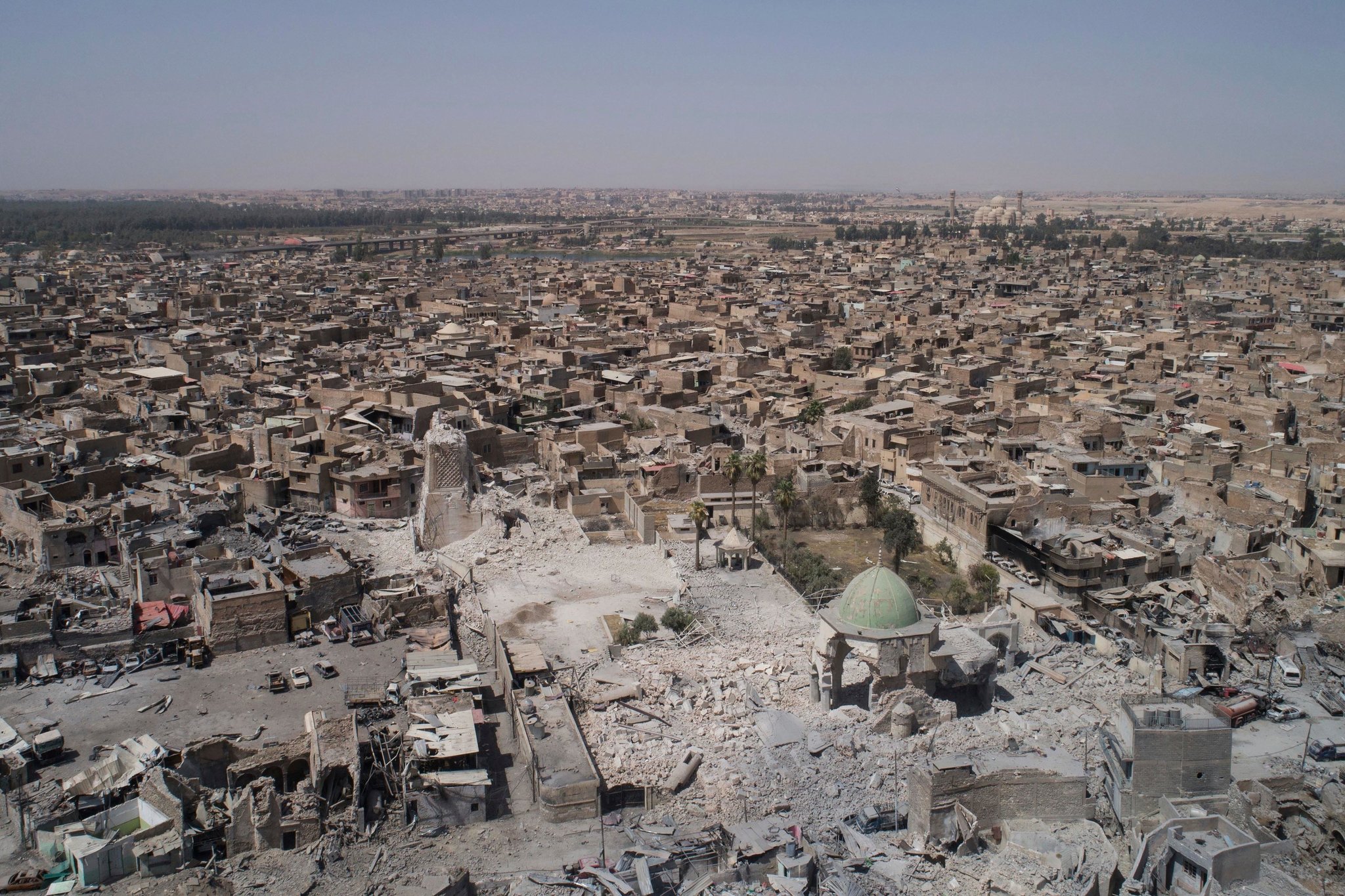
    Iraq Recaptures Al Nuri Mosque in Mosul, but Only Rubble Remains

    Prime Minister Haider al-Abadi of Iraq announced the recapture of Al Nuri Grand Mosque in Mosul on Thursday from Islamic State militants, calling it a sign of the end of the extremists’ grip on the region and vowing to chase them out of the country.

    “We are seeing the end of the fake Daesh state, the liberation of Mosul proves that,” Mr. Abadi said on Twitter, using the Arabic acronym for the Islamic State. “We will not relent. Our brave forces will bring victory.”

    Mosul has still not been entirely wrested from Islamic State control despite a complex eight-month battle for the city. But Thursday’s announcement signified a further push to eliminate the group.

    As Iraqi forces claim control of the mosque for the first time since 2014, all that is left is debris. The mosque’s distinctive leaning minaret dominated the skyline of Mosul’s Old City for nearly eight centuries, standing as a symbol of the city’s deeply rooted cultural heritage.

    An Iraqi special forces soldier moved toward the front line near the mosque during the battle against Islamic State militants. CreditFelipe Dana/Associated Press 

    The mosque complex is nearly gone, reduced to a pile of rubble on June 21, after Islamic State militants packed the building with explosives as their grasp on the city continued to slip.

    The iconic 12th century Al Hadba minaret is now just a stump, seen broken nearly to its base in footage released by Iraqi forces who entered the area where the mosque once stood.

    They assessed what remained as they stepped carefully through crumbling walls and climbed over debris that once made up one of the city’s grandest buildings.

    “This is the remains of the minaret, which was blown up by the terrorist gang,” said one official from Iraq’s counterterrorism service in a video released by the group.

    The intricate detailing on the minaret can be seen peeking out over crumbling debris, but its top is gone.

    “And this is the dome of the mosque, which was also blown up by the terrorist gang,” the man says as the camera cuts to a shot of the green dome that now sits precariously atop damaged walls. It is one of the few distinctive features of the building still visible amid the ruin.

    After the city was captured by the Islamic State in 2014, the mosque played a starring role in the group’s propaganda as it grabbed power in the region.

    It was the setting for a rare 2014 public speech by the group’s professed leader, Abu Bakr al-Baghdadi, in which he declared a caliphate and asserted control over Mosul. It was the last time he was seen publicly.

    The group’s notorious black flag has been flying from the top of the Al Hadba minaret since that summer.

    An Islamic State flag on top of Al Hadba minaret in March. CreditKhalid Al-Mousily/Reuters 

    Before the Islamic State seized control, the mosque was long a valued landmark the country sought to preserve.

    In 2012, Unesco identified the mosque’s minaret for assessment and preservation, after fears that its teetering posture could lead to collapse if measures were not taken. The local governorate had planned to work alongside local officials to ensure its survival. Last week, the director general of Unesco, Irina Bokova, lamented the loss of the building.

    “Al Hadba minaret and Al Nuri Mosque in Mosul were among the most iconic sites in the city, and stood as a symbol of identity, resilience and belonging,” Ms. Bokova said in a statement. “This new destruction deepens the wounds of a society already affected by an unprecedented humanitarian tragedy.”

    The Islamic State, also known as ISIS or ISIL, has been under an intensifying assault in Mosul and across Iraq’s western border with Syria, where the extremist group is losing its grip on Raqqa, its de facto capital for the past three years. Tens of thousands of civilians remain trapped in both cities.

    Unicef said on Thursday that thousands of children in western Mosul are stuck there because of the fighting.

    “Boys and girls who have managed to escape show signs of moderate malnutrition and carry psychosocial scars of the conflict,” Peter Hawkins, the Unicef representative in Iraq, said in a statement.

    Aid groups that have been helping displaced civilians in Syria and Iraq expressed strong caution about the Iraqi prime minister’s victorious proclamation. They emphasized that the fighting in Mosul was by no means over.

    The International Rescue Committee, which responds to the most urgent humanitarian emergencies in more than 40 countries, said in a statement that as many as 1.5 million Iraqis have been unable to escape Mosul, and that at least 150,000 people, half of them children, still live in other areas of Iraq controlled by the Islamic State.

    “The retaking of Mosul does not mean an automatic end to the suffering of the 1.5 million people that spent more than two years living under harsh ISIS rule,” said Wendy Taeuber, the International Rescue Committee’s Iraq director. “Despite the declaration, ISIS still controls some areas in the Old City of Mosul and ongoing fighting will continue to threaten the lives of civilians.”

  • Four killed in bomb blast in northwestern Pakistan

    Four killed in bomb blast in northwestern Pakistan

    At least four people lost their lives after a bomb, concealed in a plastic bag, went off in a semi-autonomous tribal area in northwestern Pakistan, near the Afghan border, officials say.

    The incident occurred in Khyber Agency, one of the seven tribal areas in Pakistan’s Federally Administered Tribal Areas (FATA), on Saturday, when security personnel spotted a suspicious plastic bag left unattended near a security checkpoint.

    “As the security officials were inspecting the plastic bag, the bomb concealed in it went off, killing a solider, two paramilitary troops and a civilian,’ a local administration official said on condition of anonymity. Other local security officials also confirmed the incident.

    No individual or group has claimed responsibility for the deadly bomb attack.

    Pakistani troops have for over a decade been battling militants in FATA to curb insurgencies by the Takfiri terrorist groups of Taliban and al-Qaeda.

    The army has managed to reduce violence across the Asian country in recent years following a series of counter-terrorism operations conducted against militants, but every so often remnants of the terror groups carry out periodic bloody attacks, both against people and the armed forces, particularly in the northwest.

    Back in June 2014, the army launched a full-scale offensive in mountainous North Waziristan, part of which constitutes FATA, aimed at wiping out militant bases in the highly volatile tribal region. Thousands of people lost their lives in an insurgency that began there a decade earlier.