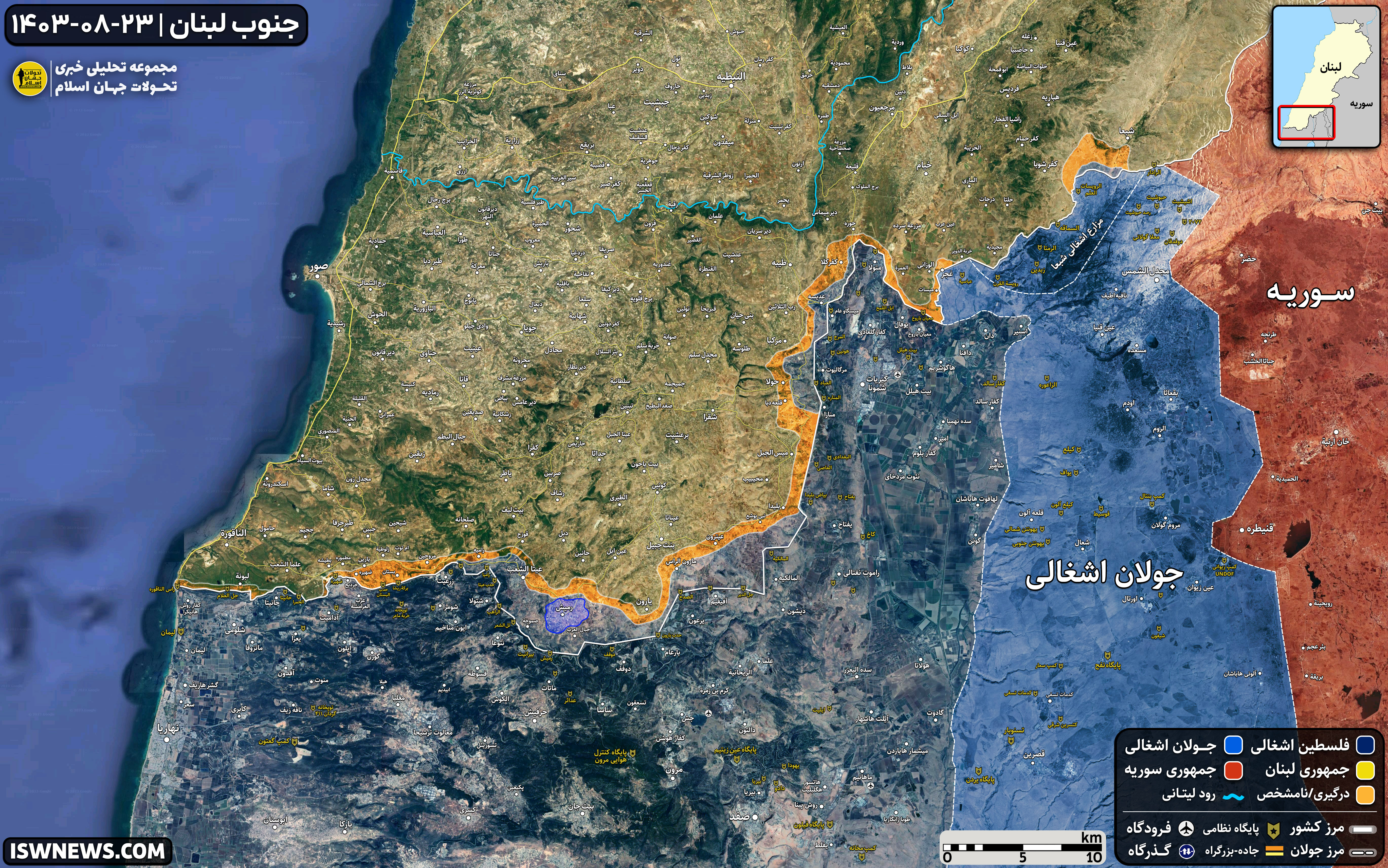
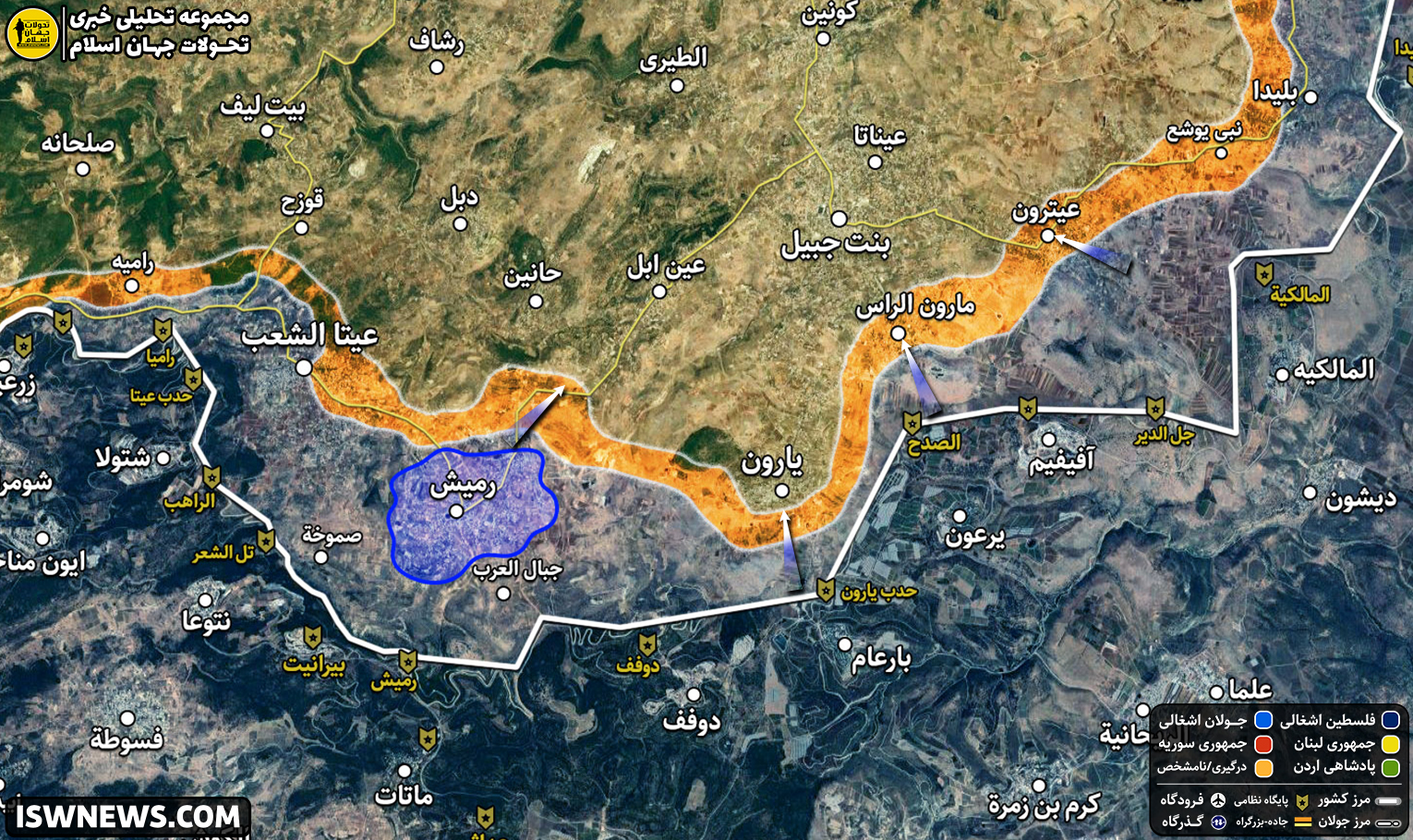
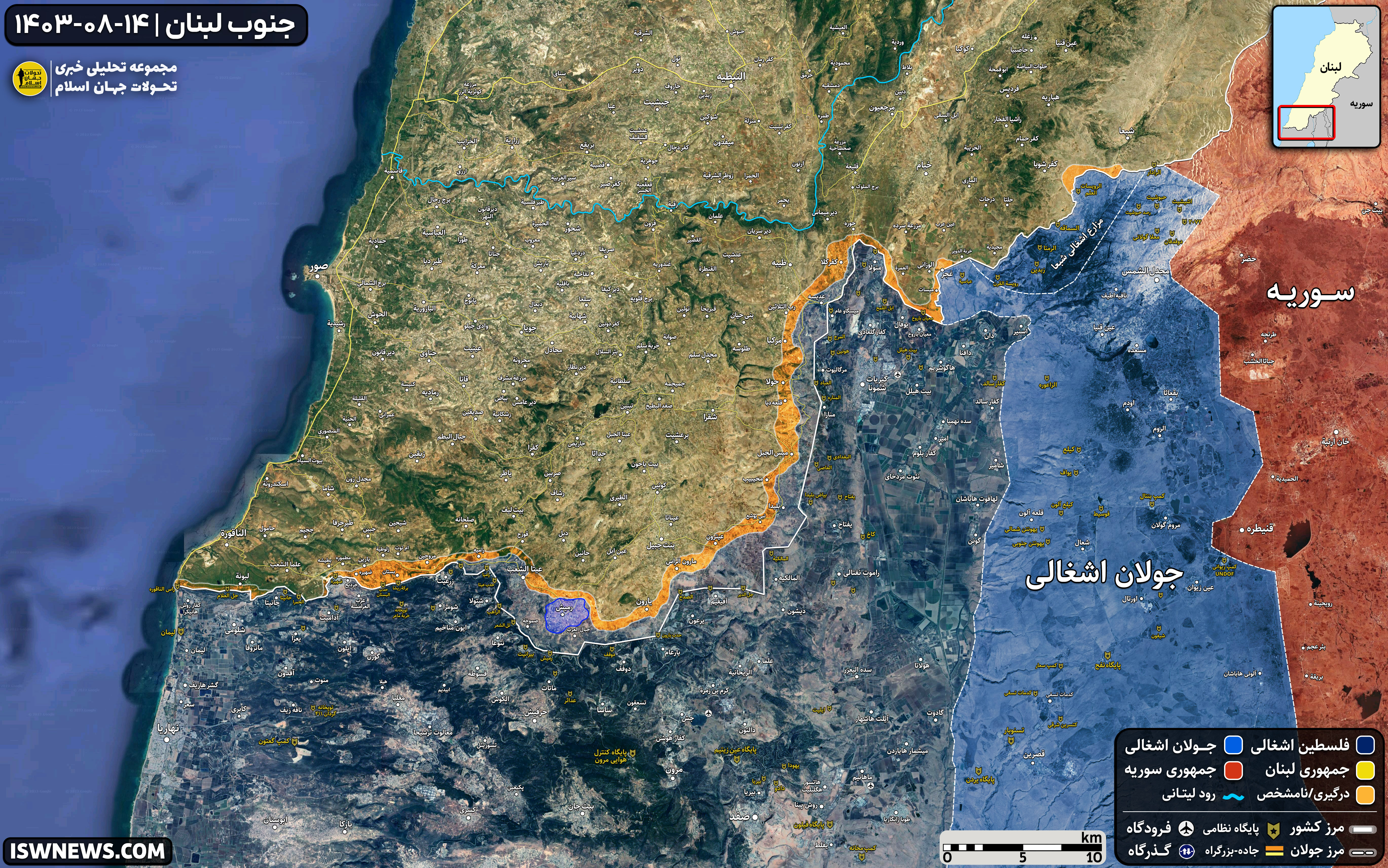
Currently, Israeli forces are approximately 5 kilometers away from the strategic city of Nabatieh from Arnun.
Regarding Beaufort Castle: This castle is a historic and tourist site dating back to the Crusader period. The castle overlooks the Litani River and the surrounding areas, and the Zionists will certainly use it against Hezbollah. As previously noted, the Israeli army employs elevated positions such as Beaufort Castle to dominate and control occupied areas in southern Lebanon.
According to Hezbollah statements, Israeli concentrations in Wadi Raj and around the Litani River, Tallet al-Khazzan, and the Cultural Complex have been targeted with rocket and artillery fire, as well as FPV drones. Armored vehicles, including four Merkava tanks, two Jackal Humvees, one Namera armored vehicle, and one bulldozer near Bustan Zatam and the eastern areas of Zotar, have been struck by eight FPV drones, while two Merkava tanks were hit with Kornet anti-tank missiles. Armed clashes also took place near the Cultural Complex. After the Lebanese fighters’ valor, the Zionists resorted to bombing the area and deploying incendiary and smoke bombs to cover their soldiers’ retreat. Currently, the Zionists, under air and tank cover, are moving through the eastern and southern areas of Zouatar.
Israeli fighter jets are providing extensive support for this assault, carrying out airstrikes to eliminate individuals, whether military or civilian. In response, Hezbollah is utilizing all available assets along this axis, attacking Israeli forces with a variety of weapons. Reports of Israeli armored convoys moving toward the town of Mifdoun are untrue.
The Zionists have no intention of engaging in urban warfare with Hezbollah and are instead attempting to locate their positions and destroy them through airstrikes and artillery. In effect, their tactic is to rapidly traverse open routes and terrain while demolishing urban areas using airstrikes and engineering vehicles. This allows them to pass through southern Lebanese towns in the shortest possible time while avoiding falling into the trap of the resistance’s guerrilla attacks. This tactic also enables them to reach strategic high ground, from which they can monitor occupied areas and prepare for subsequent military operations.
Under such circumstances, Hezbollah must leverage the geographical conditions to create tactical chokepoints. On this axis, Wadi Raj serves as a crossing point for Israeli forces moving from north of Deir Siryan toward the south of Zouatar, making it an ideal location for Hezbollah’s guerrilla strikes. To thwart the assault on Zouatar, Hezbollah must keep this key point under fire and prevent the movement of armored and engineering convoys north of the Litani River. Otherwise, the 7-kilometer distance from Zouatar to the city of Nabatieh—one of the most important and largest Shiite cities in Lebanon—will be covered in less than a month, and the city will be devastated.
This continued presence by Israeli forces is in direct violation of the ceasefire agreement, which stipulates that all occupying forces were supposed to withdraw from southern Lebanese lands. Furthermore, the Lebanese army lacks the power to exert significant pressure on the Israelis.
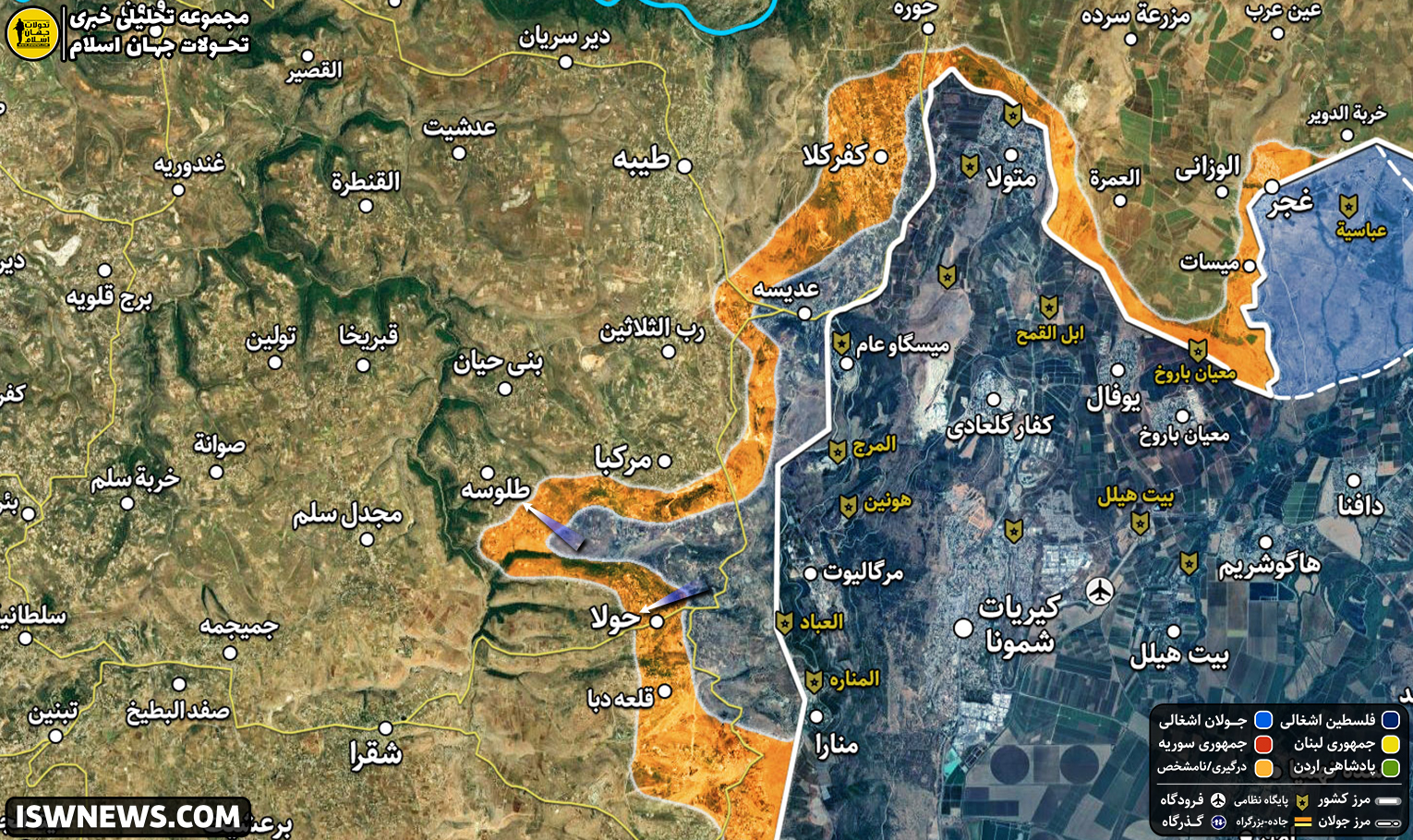
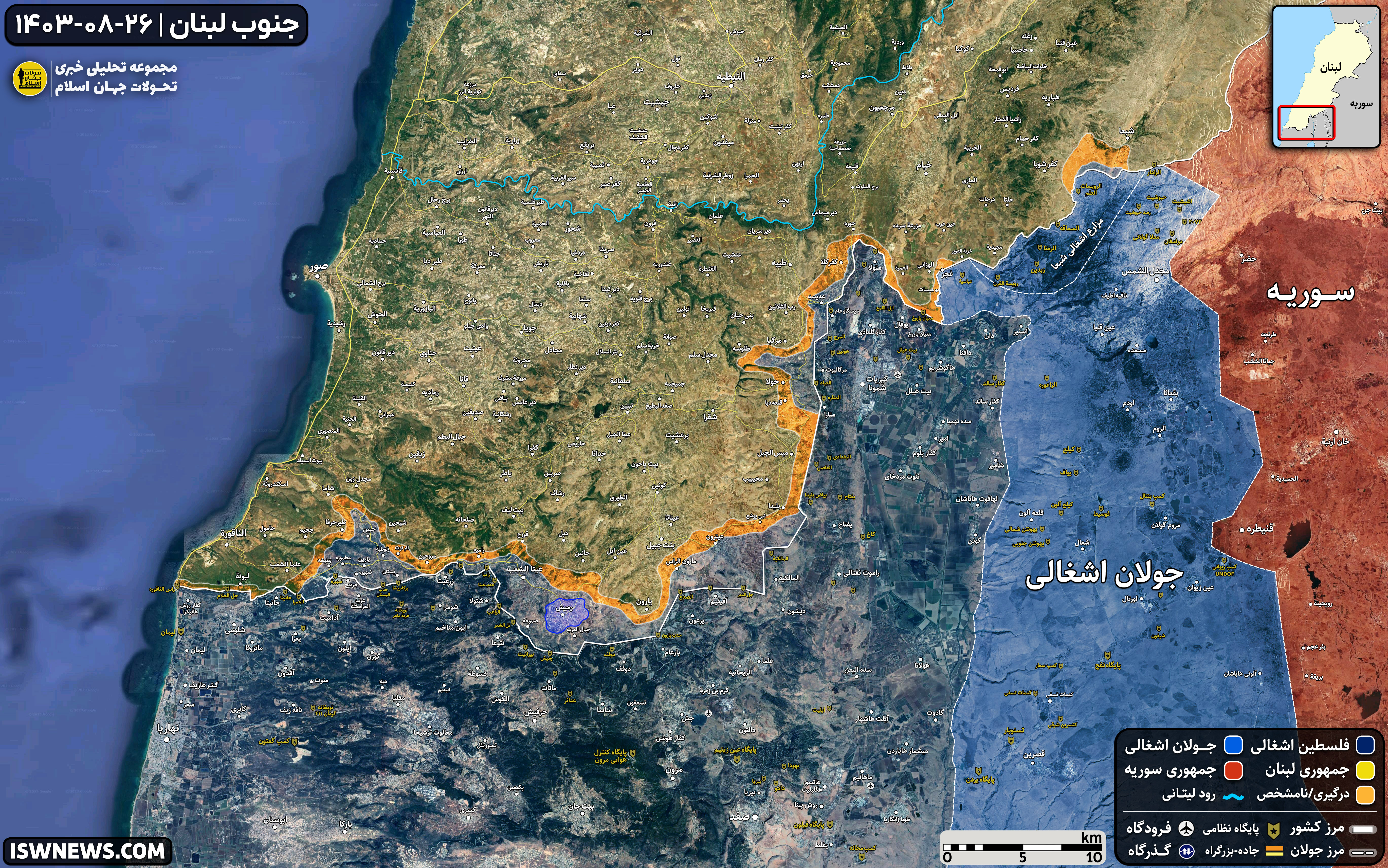
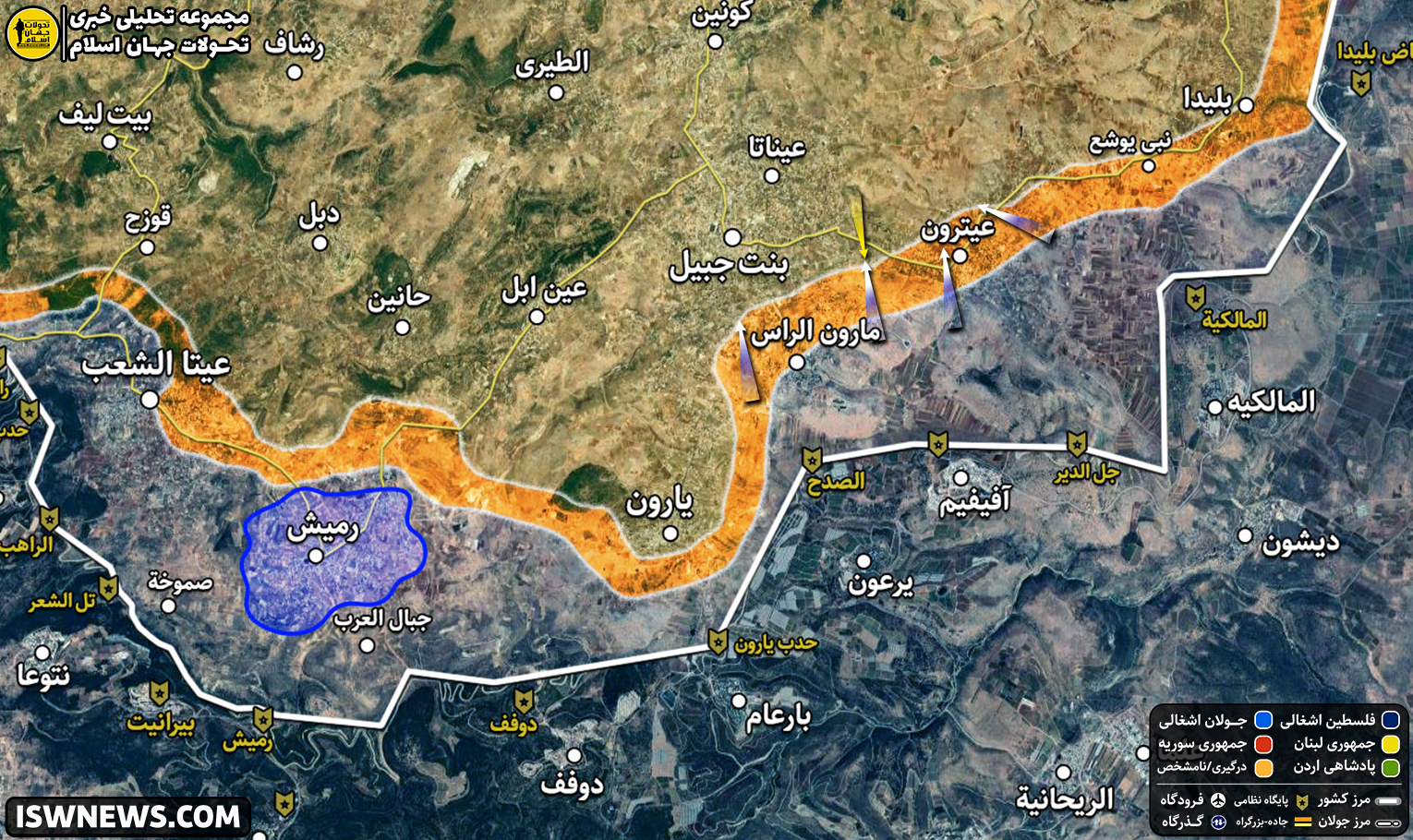
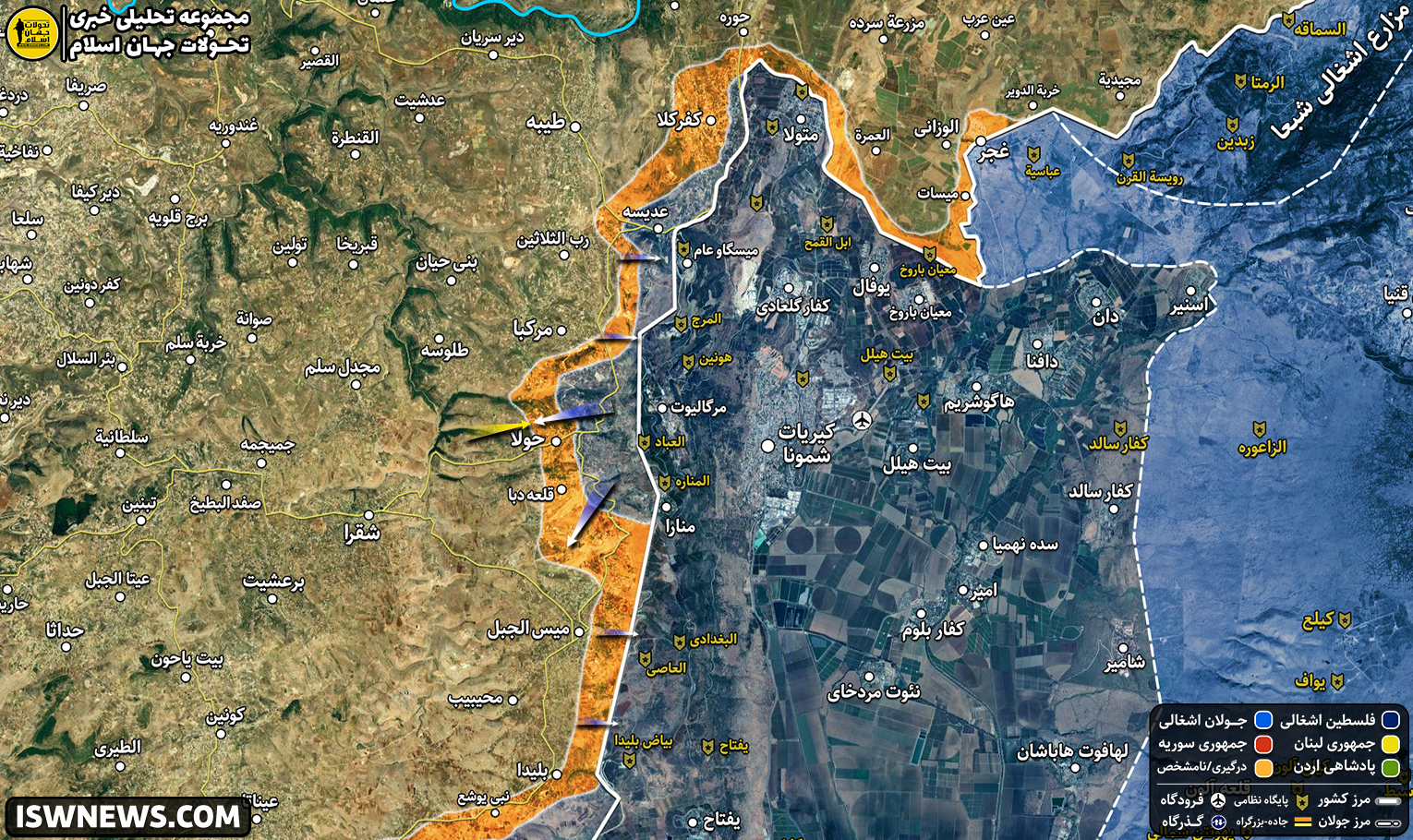
The five locations where Israeli troops are stationed in Lebanese territory are as follows: Tel al-Hamamis south of the town of Khiam, Jabal al-Dawawir between Marbakah and Houla, Jabal al-Dair south of Aitaroun, Jabal al-Balat between Ramieh and Marwaheen, and a base located in the forests of Labuneh and Ulama al-Shaab.
It is also noteworthy that the Israeli army regularly operates along all Lebanese border lines. They enter Lebanese territory at will—undeterred by the ceasefire and without regard for the Lebanese army—conducting bulldozing operations. For instance, in recent days, Israeli bulldozers entered Lebanese territory to destroy and clear areas around Blida.
The evidence suggests that, in addition to remaining at the five military points, the Israeli army is attempting to establish a shallow buffer zone along the border between Lebanon and occupied Palestine. All signs indicate that the Israeli army intends to maintain its presence in the occupied areas of southern Lebanon, potentially for an indefinite period.
Israeli army’s five military points in southern Lebanon
According to Lebanese media reports, the five points the Israeli army will continue to occupy after February 18 are:
Labounah-Alama al-Shaab forests
Jabal Balat, between Marwahin and Ramieh
Jabal al-Deir in the south of Aitaroun
The newly established base along the Marbakah-Hola road
Tel al-Hamamis in the south of Khiam
The areas where Israeli forces will remain in Lebanese territory
These areas were crucial for Hezbollah’s operations over the past year, as they were used to attack Israeli border bases and thwart Israeli ground attacks. Additionally, some of these areas held out until the last day of ground battles between Hezbollah and the Israeli army, only coming under Zionist control after the ceasefire agreement was implemented.
Lebanese authorities have reportedly rejected the deployment of Israeli forces in these areas during talks with American representatives. However, in practice, they are left with no choice but to accept Israel’s conditions due to Israel’s support from the United States and France, and the influence of the US, France, Qatar, and Saudi Arabia on Lebanese political positions.
The significance of these five points under Israeli control lies in the oversight and consolidation of Israel’s presence in Lebanese territory and border areas. This allows Israel to maintain control over Lebanon’s southern borders and eliminates their time and space limitations for actions against Hezbollah.
Following the ceasefire in southern Lebanon on November 27, 2024, the Israeli army continued its advance into southern Lebanon, entering many areas without facing conflict, which they had not been able to control during their battle with Hezbollah. Over the 57-day ground conflict, Hezbollah managed to prevent the Israeli military from expanding deep into Lebanon, even south of the Litani River, restricting the fighting to the southern Lebanese border strip.
In total, considering the areas that came under Israeli influence during the ground battle and post-ceasefire, the Israeli army has so far withdrawn from the areas and villages of Shamaa, Tayrharfa, Shiheen, Al-Jubain, Al-Naqurah, Hamul, Bani Hayyan, Kfarshoba, Shabaa, Deir Mimas, Houla, Meis Al-Jabal, Marun Al-Ras, Aitaroun, Yaroun, Dhahira, Yarin, Umm Tut, Zalutiya, Taibah, Deir Saryan, Beit Leif, Haninne, Qantara, Ramieh, Aita Al-Shaab, Rmaish, and Quzah.
According to the ceasefire agreement, these areas have been handed over to UNIFIL forces following the withdrawal of Israeli troops and are now under the control of the Lebanese Army.
Recent reports indicate that the towns and villages of Labouneh, Marwahin, Bustan, Blida, Muhaibib, Markabah, Kafr Qala, Udaysah, Rab al-Thalathin, Tallusah, Tel al-Hamams, al-Wuzzani, al-Abbasiyyah, and al-Majidiyah are still under Israeli control or influence.
As per the ceasefire agreement, the Israeli army was supposed to evacuate these areas within 60 days, by January 26, 2025. However, this did not occur, and the Lebanese government, under pressure from the United States, accepted an extension of the Israeli withdrawal deadline to February 18.
Nevertheless, Hezbollah’s Secretary General and its military command’s Operations Room have stated they do not accept this delay. They assert that the United Nations, the agreement’s supporting countries (the United States and France), as well as the Lebanese government, army, and people must oppose the Zionist occupation.
Given Israel’s repeated requests for permanent deployment at three to five strategic points in southern Lebanon, it appears that Israel’s delays and excuses for not evacuating will continue. Israel’s main objectives are to completely devastate the border areas and reignite the conflict in southern Lebanon. With the Trump administration now in power in the United States, the West’s support for Israel has intensified, and any forthcoming conflict is likely to be more severe than before.
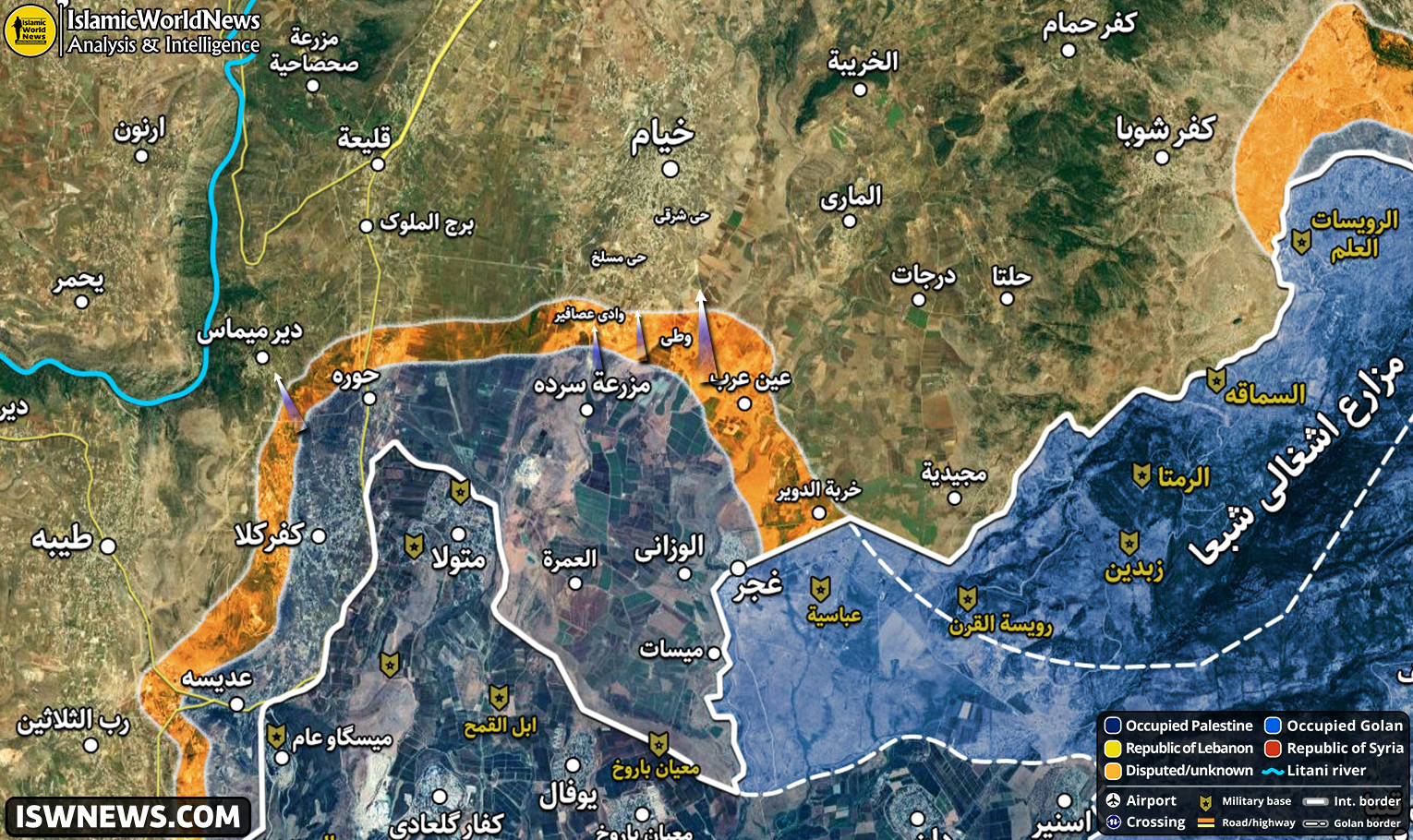
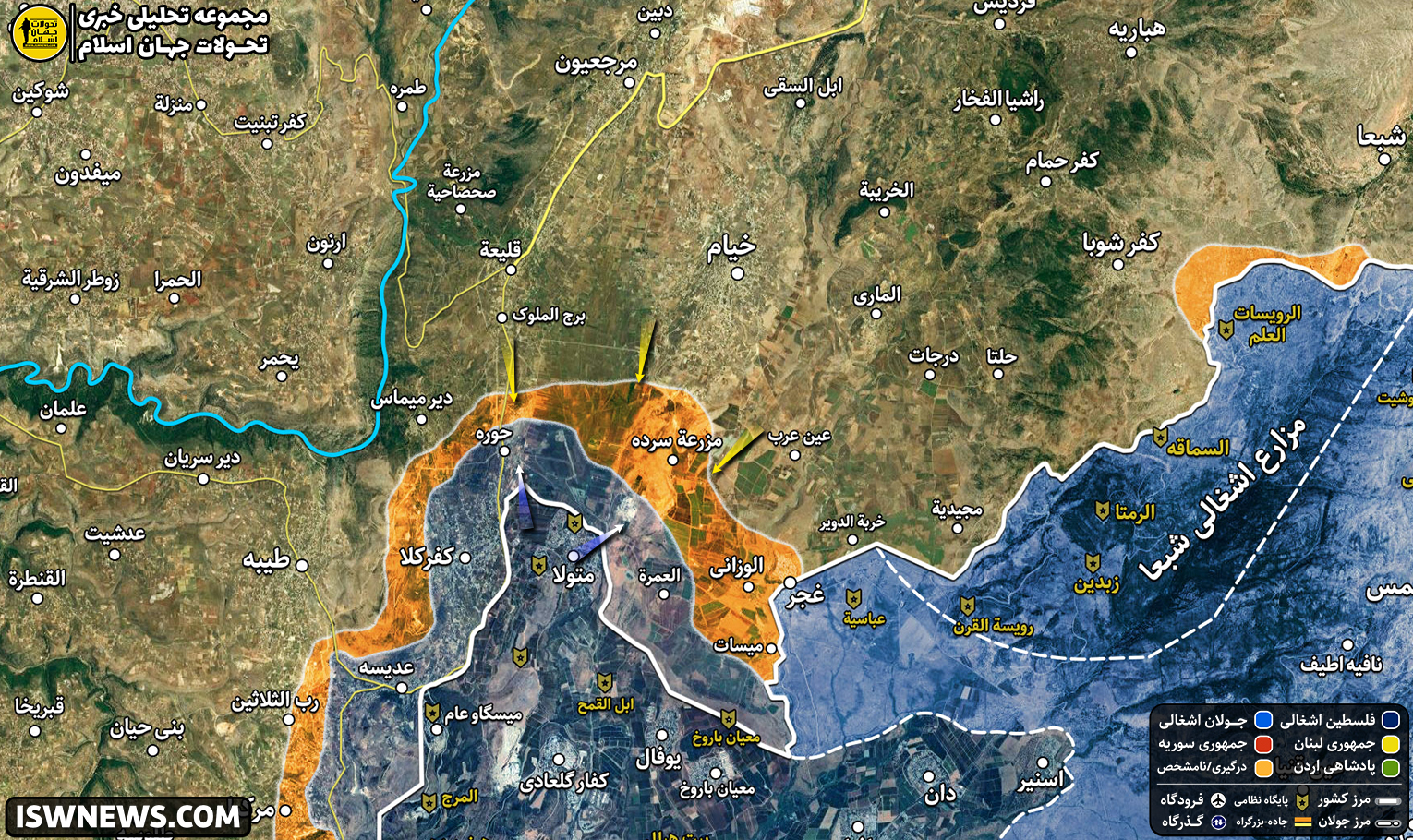
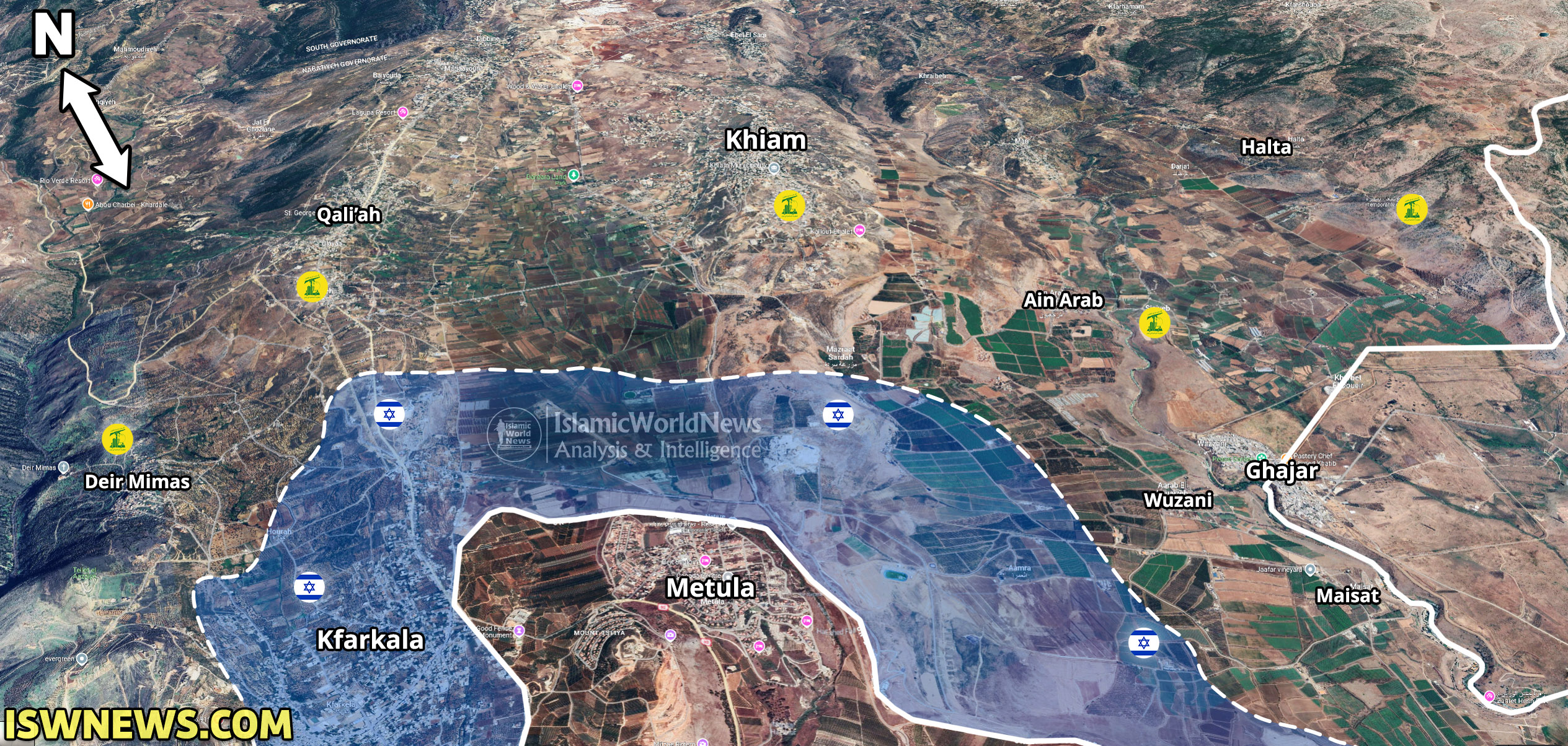
Israeli armored convoys and infantry units are currently attacking the south and east of Khiam, particularly through the Sardeh Farms and Wati al-Khiam areas. Hezbollah is actively targeting Israeli tank movements and troop concentrations in these regions with rocket strikes, effectively preventing a serious assault on Khiam.
It appears challenging for the Israeli army to make progress from the south. The nearby villages of Qaliyeh, Burj Al-Maluk, and Deir Mimas are Christian settlements, raising the possibility that the Israeli army may move into these areas to encircle Khiam. Consequently, the likelihood of a scenario similar to the one in Rmaych cannot be ruled out
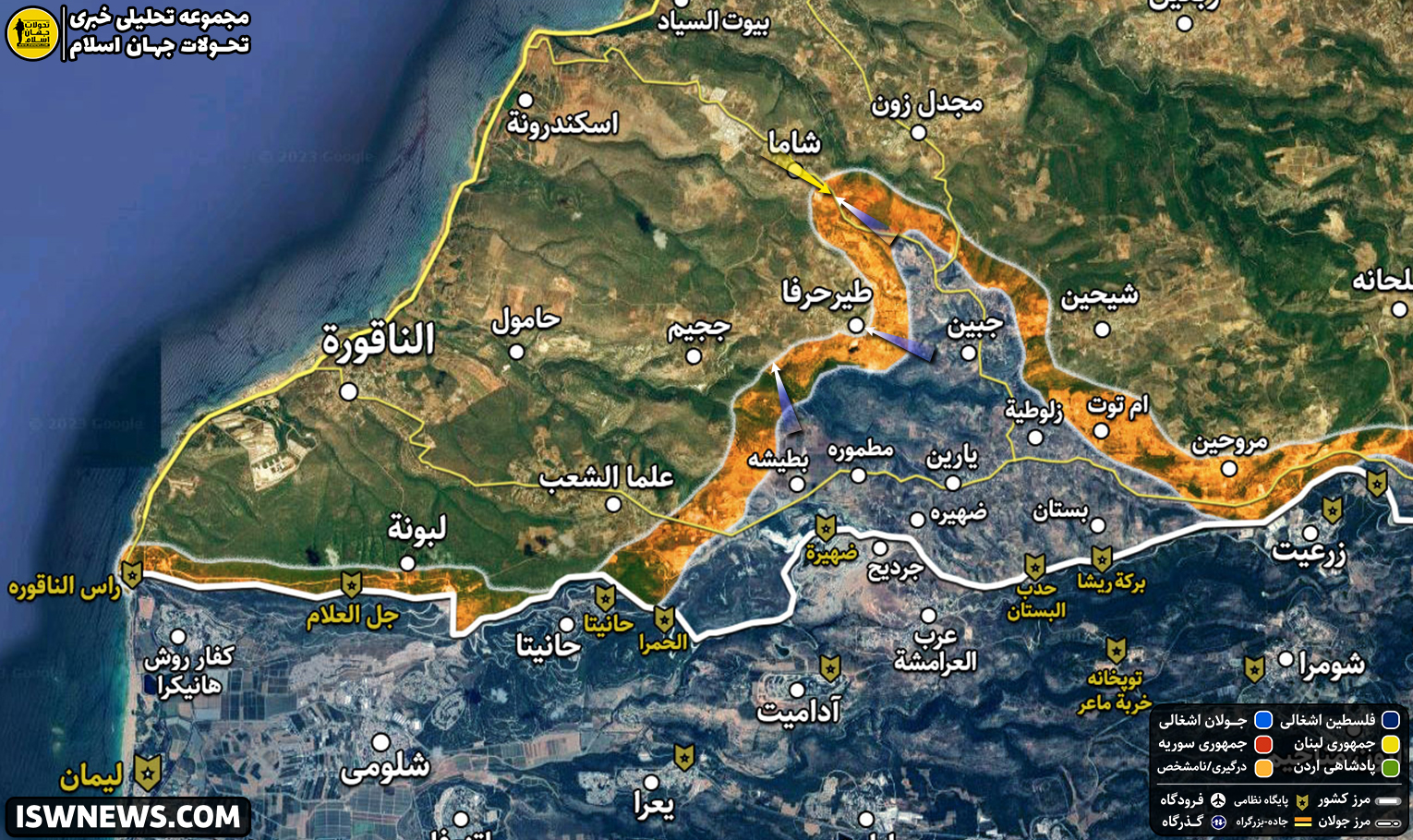
Al-Naqourah-Tayrharfa front: On Thursday, Israeli forces entered the villages of Yarin, Batisheh, Matmoura and Jibbain in the south Tyre district. As usual, they bombed and destroyed a part of residential and civilian buildings in these villages.
As usual, the Zionists bombed and destroyed the Nasser Salahuddin Mosque upon entering Yarin. Israel claims that Hezbollah uses this mosque and other mosques as a weapons depot and military center. But so far not even a picture has been published for these claims. Yarin Mosque is a single minaret mosque and it was built in the name of Salah al-Din Ayyubi and belongs to Ahl al-Sunnat Yarin and has no connection with Hezbollah.
Israeli army demolished Nasser Salahuddin Mosque in Yarin village
After passing through these villages, the Israeli forces attacked Tayrharfa and the historical village of Chamaa through Jibbain road and a local road in the north of Matmurah. The attack to the west of Tayirharfa faced resistance from Hezbollah fighters, while Israeli forces succeeded in taking control of the eastern areas of Tayirharfa.
Reports indicate that the Israeli army’s attack on Chamaa has been repelled. However, this repulsion was temporary, as the Israeli army resumed ground attacks in Tayrharfa and Chamaa this morning, November 16.
Video showing Israeli forces at the Shimon al-Safa shrine in the historic village of Chamaa.
During yesterday’s Israeli attacks on Chamaa, an artillery shell struck the UNIFIL headquarters in the village. Additionally, there was an unknown incident involving UNIFIL forces, which resulted in the death of one French soldier and injuries to three others. While UNIFIL has not provided details on this incident, it is likely that it was caused by the Israeli artillery strikes.
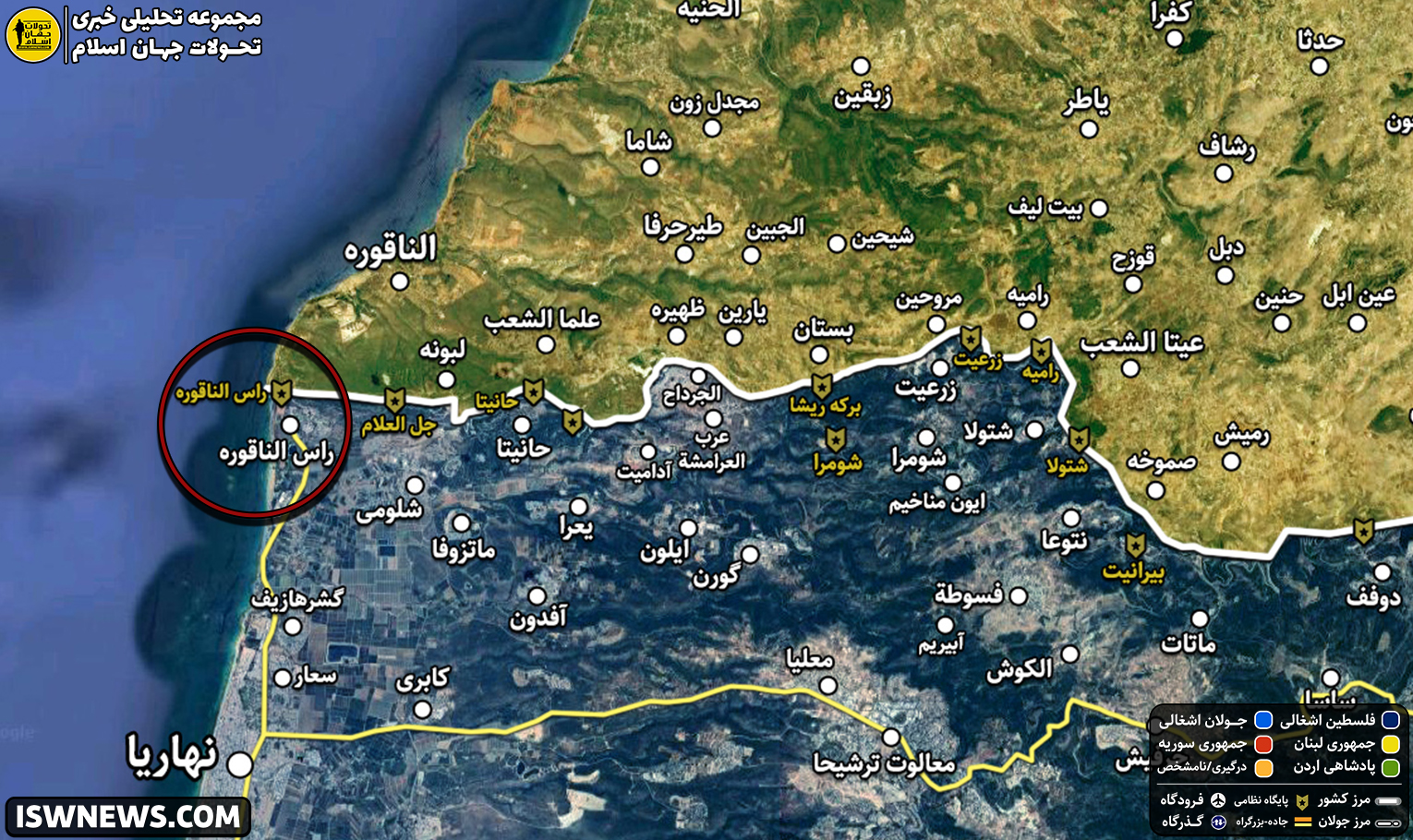
Latest military situation in Naqourah front – click to view full size
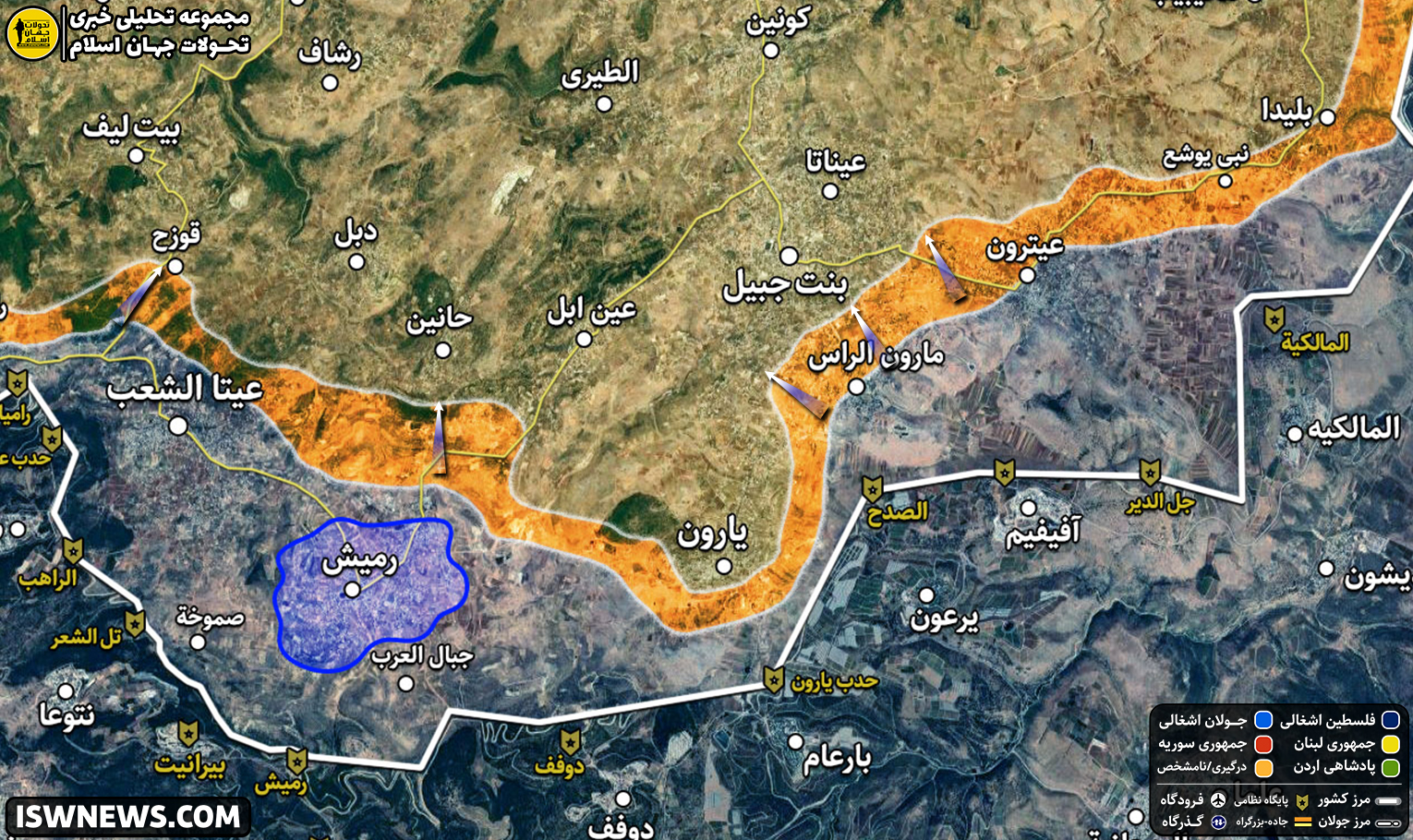
Bint Jubeil front: The battles continue in the west of Aitaroun, south of Ainatha, Al-Maslekh neighborhood and the southern areas of Bint Jbeil. The Israeli forces are making significant efforts to penetrate the city of Bint Jbeil, and their ground assaults, supported by air power, are still ongoing.
Also, limited movements and attacks have been reported in the southern region of Hanine village and in Qouzah, located north of Aita al-Shaab.
Latest military situation in Bint Jubeilfront – click to view full size
Tallouseh front: As mentioned in previous reports, Tallouseh and Bani Haiyyan will be the targets of the Israeli army in the second phase of the ground operation in southern Lebanon.
In the last 46 days, Israel has not been able to gain control of Markaba and Rab El Thalathine. Now, it has launched an attack on this village, hoping that Hezbollah’s defenses in Tallouseh are weak.
Clashes are ongoing at the southeast entrance of Tallouseh, where Hezbollah forces have successfully repelled attacks thus far.
Latest military situation in Tallousehfront – click to view full size
There are no reports of Israeli attacks in other areas. But it is likely that Israel’s attack will develop in the second phase of the ground operation to the village of Qouzah in the north of Aita al-Sha’ab, Hanine and Ain Ebel in the west of Bint Jubeil, Khiam town and Sheeba front.
Taking a general look at the developments of the last 46 days in southern Lebanon, it must be said that the second phase of the Israeli army’s ground operation has had a better start than the first phase. By expanding the security strip in southern Lebanon, Israel seeks to create more suitable conditions for for future advances.
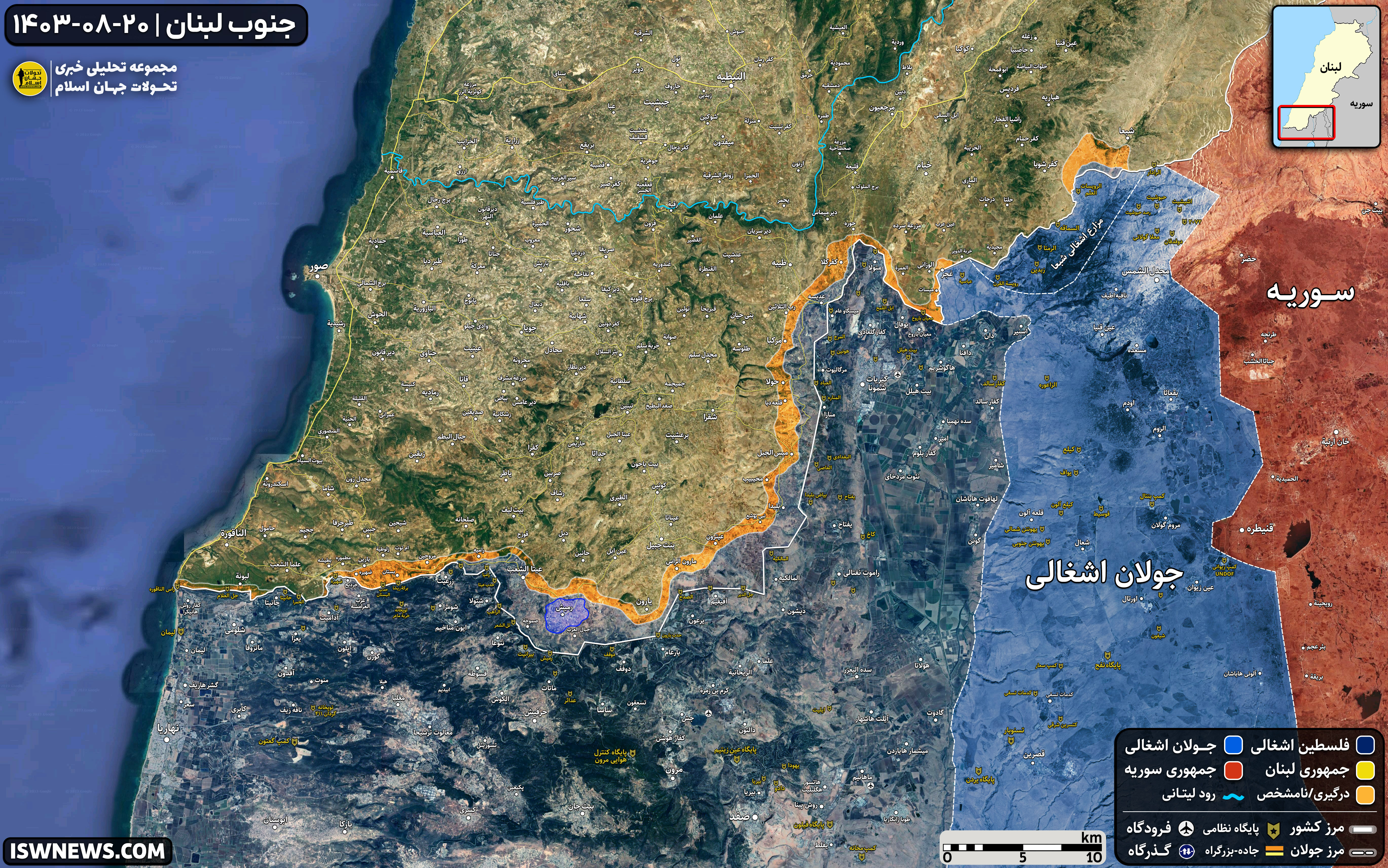
Latest military situation in southern Lebanon – click to view full size
The Israeli army’s invasion of Lebanon intensified after the assassination of Hezbollah’s Secretary-General, Sayyed Hassan Nasrallah. Since October 1, ground operations have been underway along the southern borders.
These assaults have so far resulted in the martyrdom of 3,445 Lebanese civilians and injuries to 14,599 others, as well as the martyrdom of over 500 Hezbollah fighters. On the other side, over 100 Israeli troops have been killed in Hezbollah’s retaliatory strikes in northern occupied Palestine.
Southeast Front: The 91st and 98th Brigades of the Israeli regime’s army have withdrawn from their positions in the outskirts of the village of Taibeh, east of Rab El-Thalathine and Markaba, as well as the town of Meiss El-Jabal after 43 days of fighting and attempts to control the border strip in southern Lebanon.
Undoubtedly, the precise strikes by the Lebanese resistance movement Hezbollah on Israeli tanks, armored vehicles, and machinery have significantly affected this military withdrawal and prevented them from achieving their objectives completely.
Latest military situation on south-eastern front of Lebanon – click to view in full size
Aitaroun and Maroun El-Ras Fronts: On the Maroun El-Ras Front, the Israeli regime’s army attacked from the eastern direction of the Maroun El-Ras village toward the village of Aainata. This attack faced an ambush by Hezbollah fighters and ended in failure. The Israeli regime’s forces have also attacked from the Yaroun-Maroun El-Ras Road to the western front of Maroun El-Ras, which led to the regime forces’ advances in this front.
The Israeli forces’ movement from this front is very dangerous. If the destruction and passage through Maroun El-Ras are completed, the conflicts will shift to the town of Bint Jbeil, and the Israeli regime’s army would be able to put pressure on the resistance front in Aitaroun, Yaroun, and Ain Ebel-Hanine.
Latest military situation in Aitaroun and Marun al-Ras – click to view in full size
There have been no changes in the lines of confrontation in the Shebaa Farms, Kfar Kila, Houla, and Naqoura fronts. Reports have been published about the gathering of Israeli military forces at the Ras al-Naqoura border crossing, which are likely aimed at attacking Al-Labouna and then the Hamoul Valley on the outskirts of the town of Naqoura. The battle in this front will be very tough, and Hezbollah fighters can inflict effective and costly strikes on the Israeli regime’s forces by using forest as a cover.
At this stage of the conflict, the continuation of rocket and drone attacks in the border line of northern occupied Palestine has become very important. Additionally, the use of Fateh-110 missiles and the hybrid attacks of Hezbollah’s rockets and suicide drones have affected the focus and organization of the Israeli regime’s army in supporting the northern fronts.
Since the onset of the ground conflict, 43 Merkava tanks, 8 military bulldozers, 6 armored vehicles, and six Hermes 450 and 900 drones have been destroyed. Although the Israeli regime’s airstrikes on various regions of Lebanon continue, they have not had a significant impact on reducing Hezbollah’s retaliatory attacks.
This indicates that Hezbollah has gained control over the situation in the southern Lebanon front, and their strategies to remain safe from air attacks have been effective. The persistence of this situation benefits Hezbollah and will lead to further defeats for the Israeli regime’s forces unless they enter the second phase of ground operations and escalate ground attacks deep into southern Lebanon.
Latest military situation in southern Lebanon – click to view in full size
Despite the overall decrease in ground tensions, sporadic clashes are ongoing on the fronts of Shebaa town, as well as Houla, Aitaroun, and Marun El-Ras villages. Confrontations in the villages of Houla, Markaba, and other border areas in southern Lebanon are also accompanied by sporadic attacks from the Israeli regime and the Lebanese resistance movement Hezbollah, with no significant changes in the front lines in these areas.
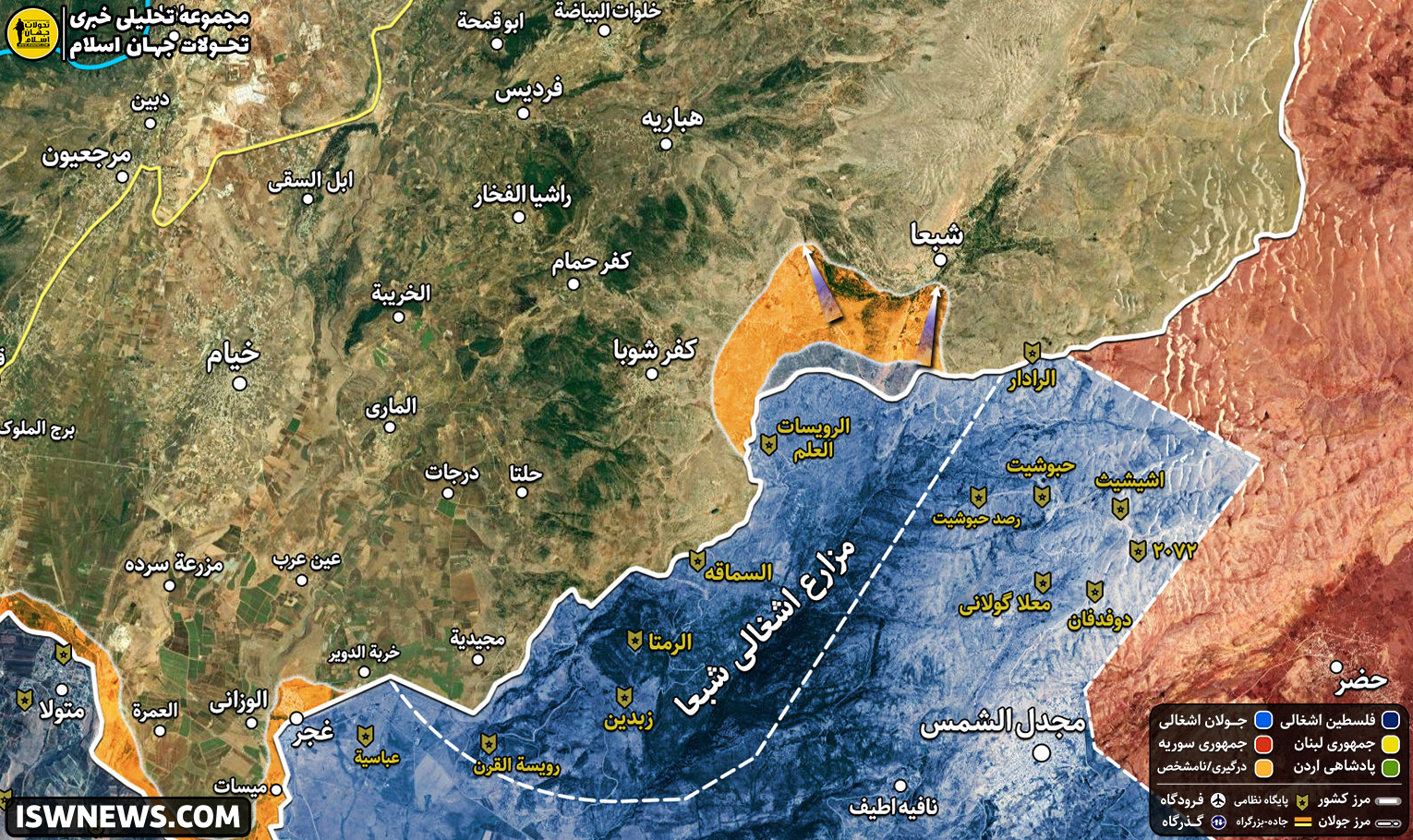
Shebaa Front: On the Shebaa front, the Israeli regime’s forces have advanced to the western outskirts of the town of Shebaa Farms. These military forces have not yet succeeded in entering Shebaa, and Hezbollah has targeted Israeli troops’ movements around Shebaa with rocket attacks.
Shebaa is a border area with a Sunni majority, located in the valley between the Al-Radar border post overlooking the Shebaa hills and Jabal Sidana. Alongside the town of al-Khiam and Kfar Shuba, Shebaa Farms is one of the targets of the Israeli army’s 210th Brigade on this front, and the Israelis’ attempts to destroy it are aimed at preventing border attacks from Hezbollah fighters.
Latest military map of Shebaa front – click to view full size
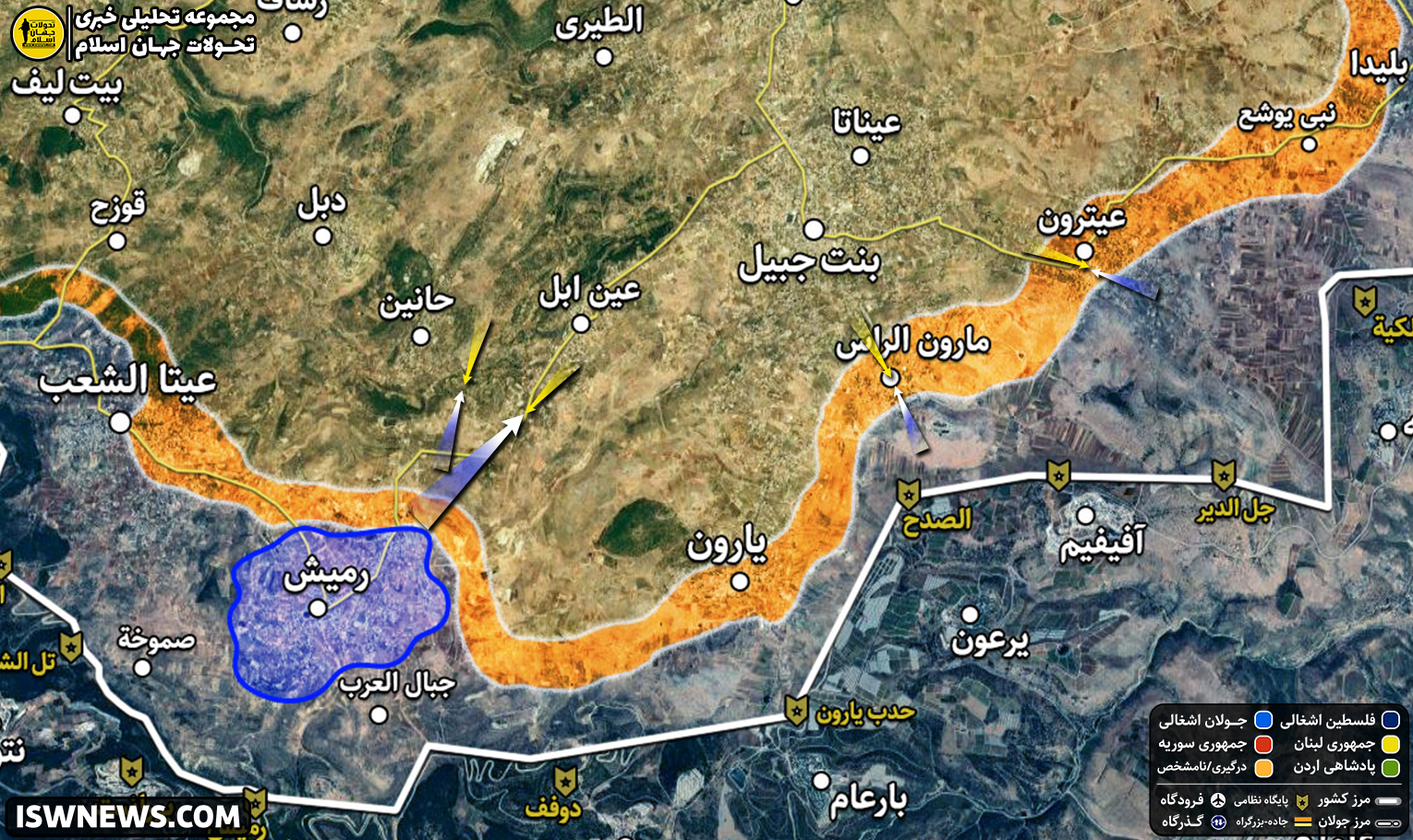
Bint Jbeil Front: The Israeli regime’s army continues ground attacks on the Aitaroun, Marun El-Ras, and Yaroun fronts under air cover, but there has not been much change in the front lines. Hezbollah targets the movements and gatherings of Israeli military forces with rocket, artillery, and drone weapons, while the regime’s army bombards buildings from which retaliatory attacks are launched.
On the Ain Ebel-Hanine front, no clashes have been reported, although the Israeli regime’s fighter jets have carried out several air attacks on this area in recent days.
Latest military map of Bint Jbeil front – click to view full size
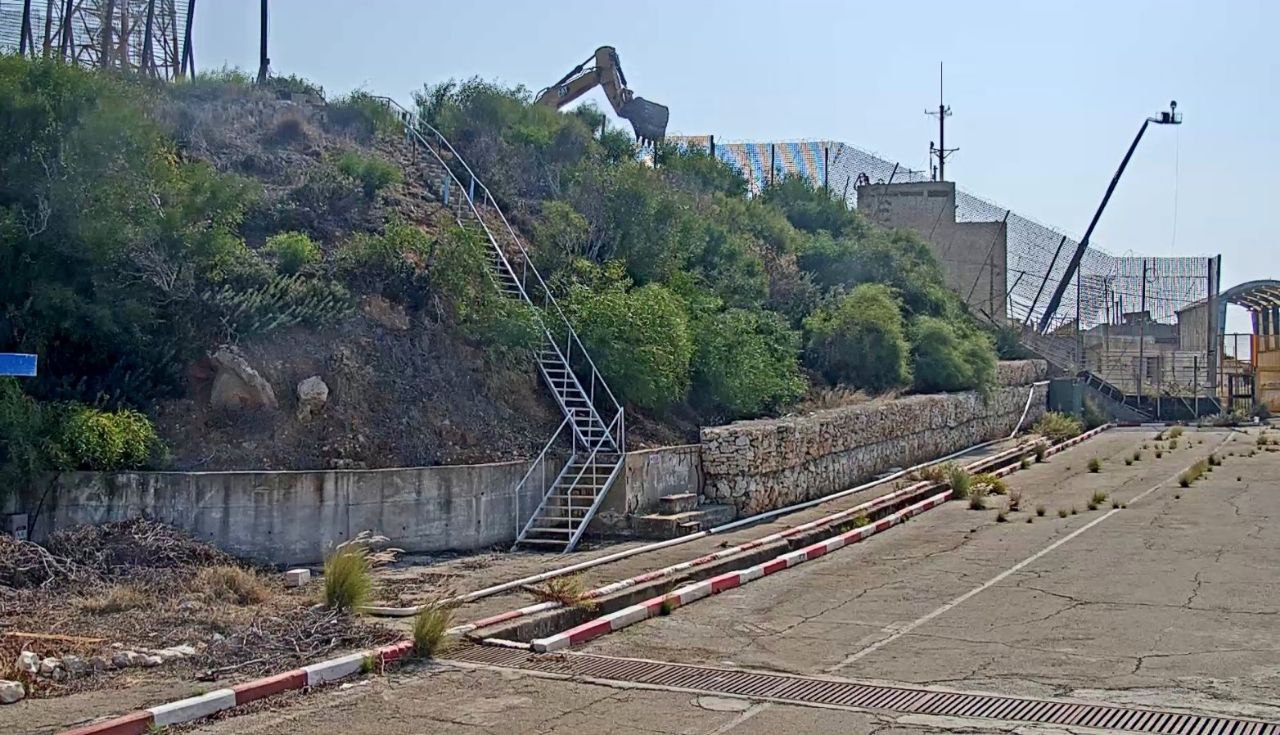
Naqoura Front: On November 9, the United Nations Interim Force in Lebanon (UNIFIL) released videos and images from their security cameras, and claimed that two bulldozers and an excavator of the Israeli regime destroyed part of a fence and a concrete structure belonging to the UNIFEL forces in the Ras Al Naqoura crossing in southern Lebanon. UNIFIL protested this action, while the Israeli regime’s officials denied that the incident occurred in phone conversations with the UN organization.
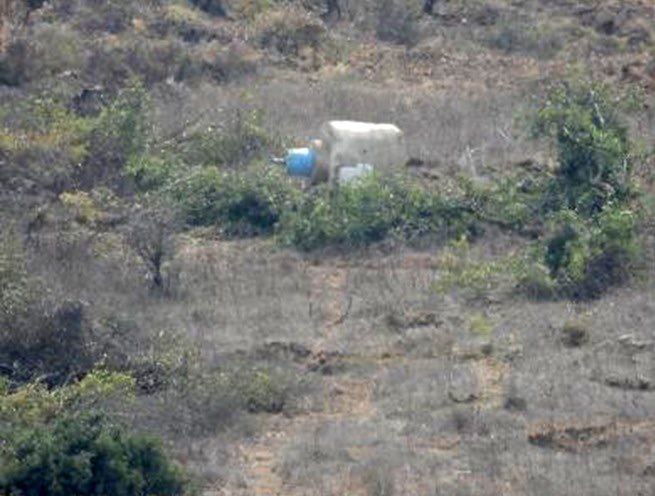
Israeli bulldozer activity at Al Naqoura borderIsraeli bulldozer activity at Al Naqoura border
The Israeli army’s invasion of Lebanon intensified after the assassination of Hezbollah’s Secretary-General, Sayyed Hassan Nasrallah. Since October 1, ground operations have been underway along the southern borders.
These assaults have so far resulted in the martyrdom of 3,316 Lebanese civilians and injuries to 13,979 others, as well as the martyrdom of over 500 Hezbollah fighters. On the other side, over 100 Israeli troops have been killed in Hezbollah’s retaliatory strikes in northern occupied Palestine.
Following the increase in attacks by the 36th Brigade of the Israeli regime’s army in the Lebanese villages of Aitaroun and Maroun El-Ras over the past 48 hours, it was expected that the western front of Bint Jbeil town would also turn into a scene of confrontation between Israeli military forces and Lebanese resistance fighters.
The Israeli regime’s forces moved from Rmaych village towards the Christian village of Ain Ebel and attacked positions of the Lebanese resistance movement Hezbollah to the east and south of the village of Hanine.
Previous reports also indicated that the goal of the 36th Brigade of the Israeli regime’s army in this operation is to capture and destroy the town of Bint Jbeil.
To achieve this goal, the Israeli regime’s army needs to launch attacks from three axes: Aitaroun (east of Bint Jbeil), Maroun El-Ras (south of Bint Jbeil), and Ain Ebel (west of Bint Jbeil).
Ain Ebel is a Christian village, and there is a high possibility that its residents will act in a similar manner to those in Rmaych during the confrontation.
However, Hezbollah is present in the village of Hanine, which makes the situation in this axis different from that of Rmaych, and the betrayal of the Christians may not have a significant impact on the developments of the ongoing war.
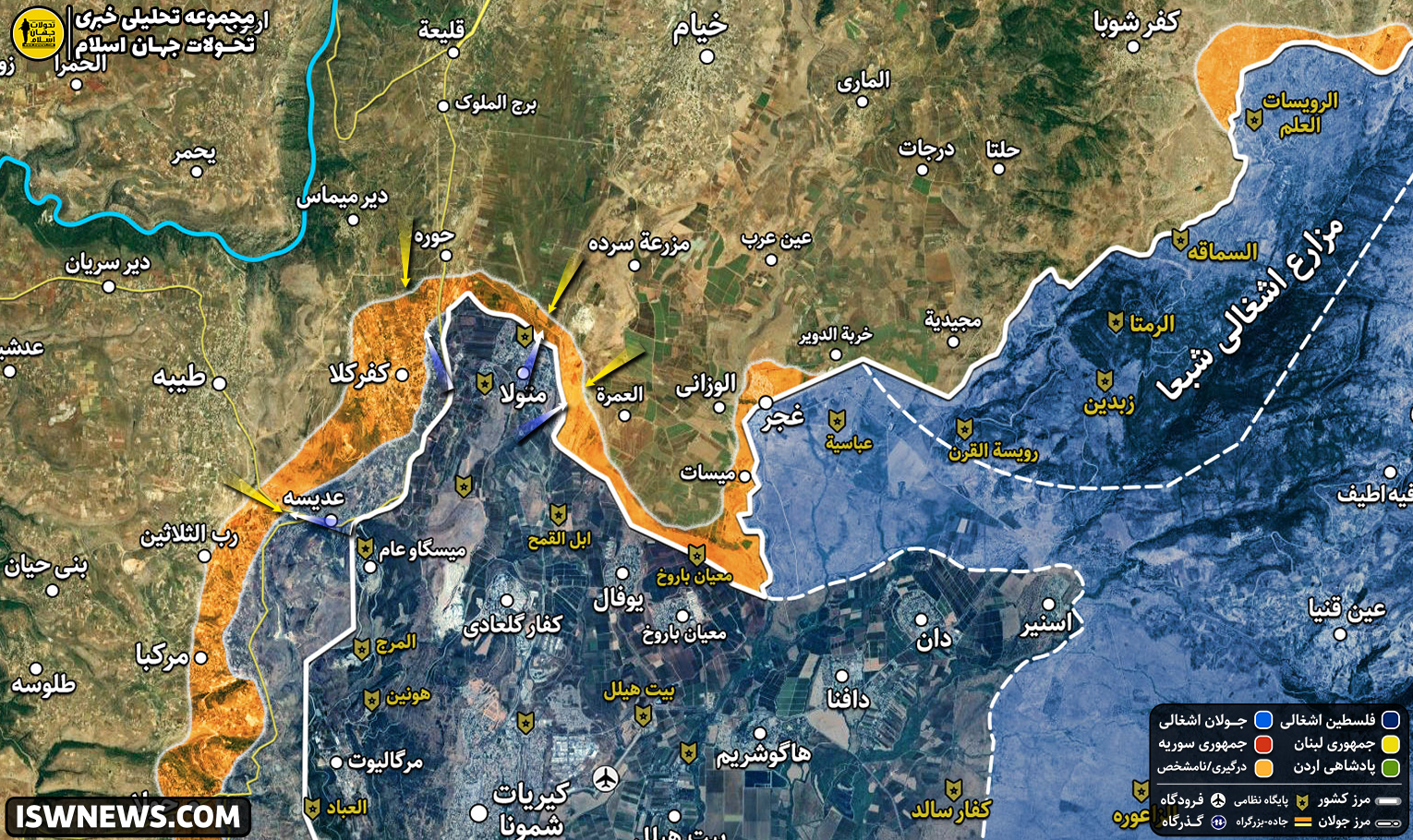
Northern Front Metula: The Israeli regime’s army, after retreating from the southern axis of the al-Khiam town on November 2, withdrew its military equipment and tanks from the Sarda Farms, al-Hamamis area, and the villages of al-Wuzzani and al-Omra, and retreated to the town of Metula. Thus, the regime’s army suffered its first military defeat in the southern Lebanon axis and completely failed in controlling and demolishing al-Khiam.
Despite this withdrawal, the presence and patrols of Israeli troops in the village of Kfar Kila continue to ensure the security of Israeli army movements on the road from al-Udaysah village towards Taibeh and Rab El Thalathine villages.
In the Taibeh, Rab El Thalathine, as well as Markaba villages, there has been no change in the conflict zones, and the last Israeli attacks to enter Taibeh and Rab El Thalathine in the eastern axis of these areas doomed to failure. The Lebanese resistance movement Hezbollah holds a favorable upper hand in the face of the Israeli regime’s army in the east of these regions, making it easy to monitor and target Israeli military forces’ movements and gatherings.
Latest military situation of Metula and Udaysah Front – click to view in full size
Houla-Meiss El Jabal Front:
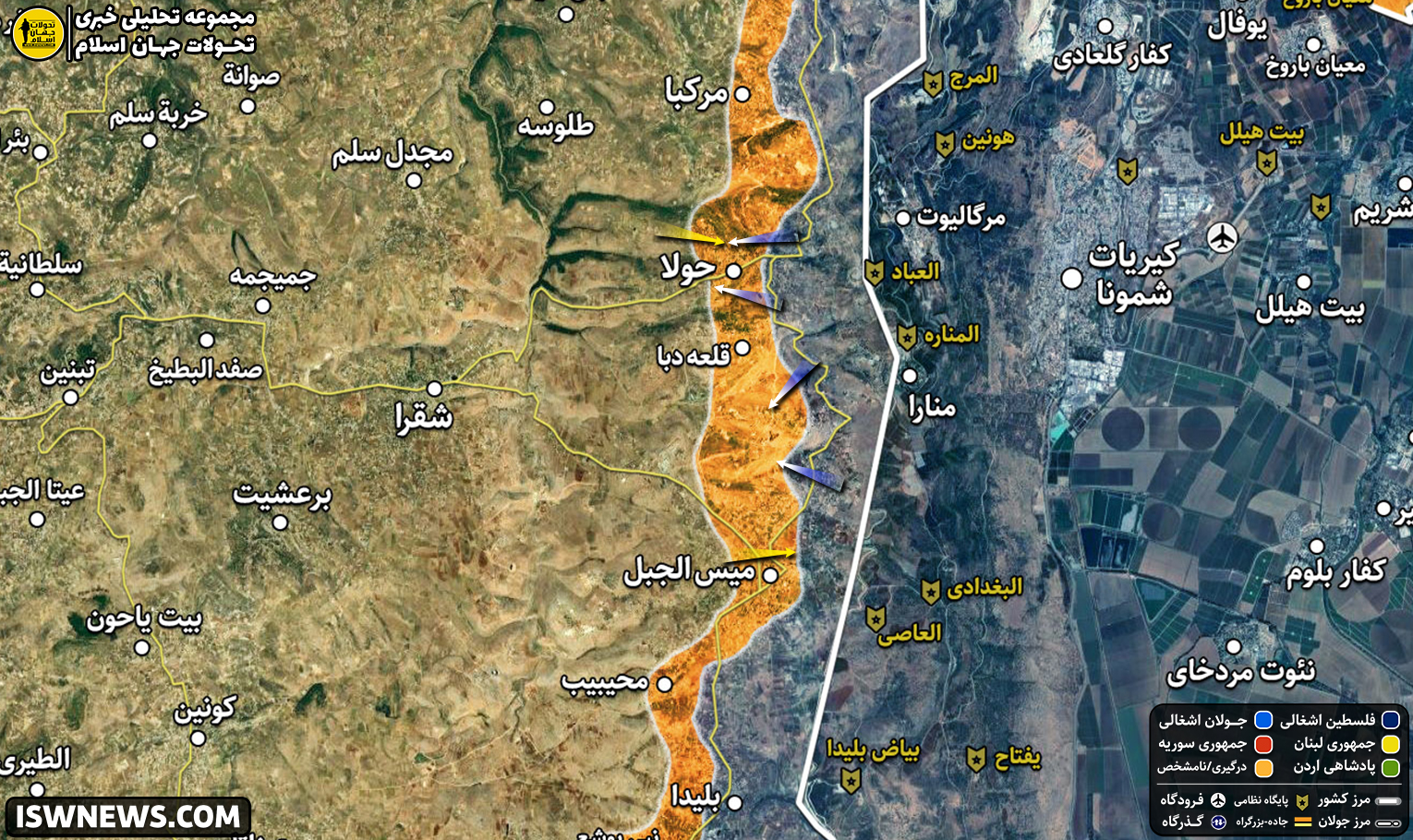
In the past 48 hours, the Israeli regime’s army carried out numerous attacks to demolish residential buildings east of the village of Houla. Hezbollah countered some of these measures, launching rocket attacks on Israeli troops’ gatherings in Tal al-Khazan district and targeting two bulldozers, which were busy to demolish buildings, that led to inflicting destruction or damage on them.
Currently, the Israeli regime’s army has advanced to the eastern half of the village of Houla, completely devastating the residential areas of the village in the east of the Marjayoun-Bint Jbeil Road. Israeli military forces have also moved towards the northern areas of the town of Meiss El-Jabal, reaching near the Meiss El-Jabal hospital. It is likely that the regime’s army will move towards the northern areas of Meiss El-Jabal after demolishing the hospital and surrounding buildings.
Latest military situation of Houla and Meis al-Jabal Front – click to view in full size
Aitaroun-Maroun El-Ras Front:
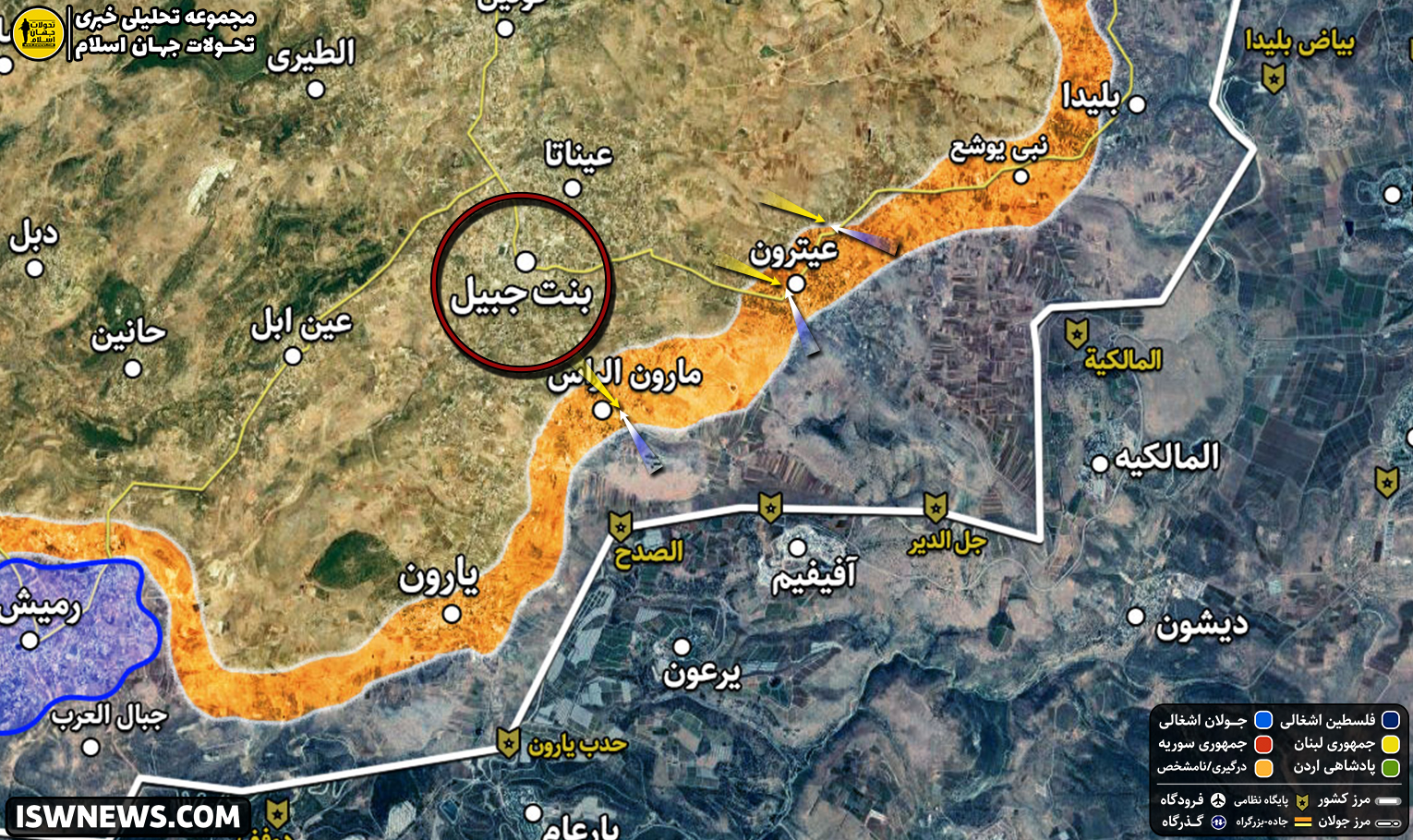
Despite the ongoing airstrikes by the Israeli regime’s army, the efforts of the 36th Brigade of the regime’s army to penetrate deep into the villages of Aitaroun and Maroun El-Ras have not been successful, with clashes concentrated in the eastern and southern outskirts of Aitaroun and the southern half of Maroun El-Ras. The main objective of the Israeli regime in attacking this axis is to reach and destroy the town of Bint Jbeil, which is the southernmost city in the Nabatieh Governorate.
Latest military situation of Aitaroun and Maroun al-Ras Front – click to view in full size
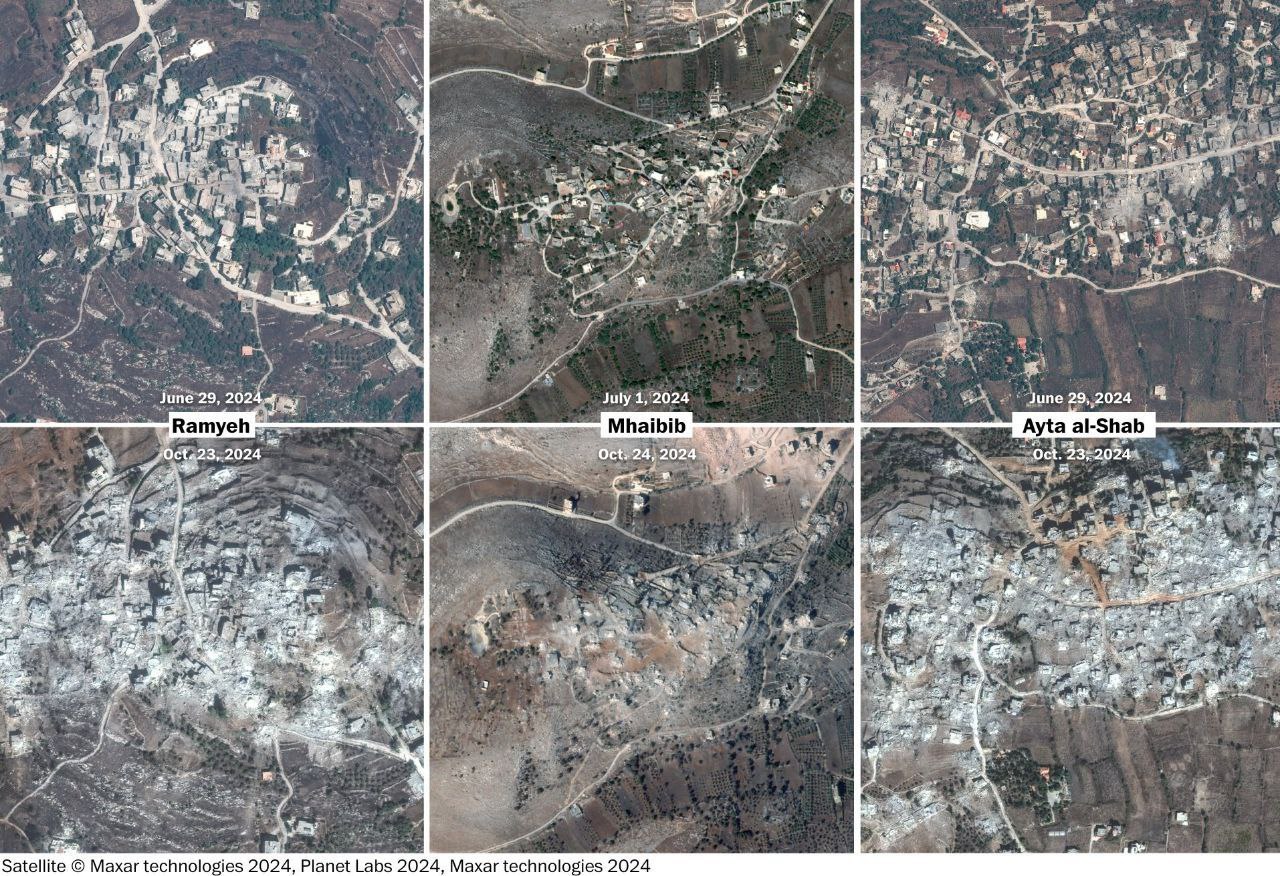
According to satellite images, at least 5,868 residential buildings have been destroyed across the border villages of Lebanon, with 80% of these buildings demolished since the onset of the Israeli army’s extensive offensive on October 1. In some areas, such as the villages of Ayta ash Shab and Kfar Kila, nearly half of all buildings have been destroyed. Many village centers have been demolished, and the majority of the destruction has occurred through controlled explosions following a widespread wave of airstrikes.
Satellite image of the situation before and after the war in the villages of Aita Shaab, Mhaibib and Ramieh
Since the start of the ground offensive in southern Lebanon, the Israeli regime’s army has destroyed most of the buildings in the towns and villages of al-Adaysah, Kfar Kila, Houla, Meiss El-Jabal, Mhaibib, Blida, Yaroun, Ayta ash Shab, Ramyeh, Marwahin, Umm al-Tut, and Al Dhahirah.
The extensive invasion of the Israeli regime’s army against Lebanon began to intensify after the assassination of Secretary-General of Hezbollah Sayyed Hassan Nasrallah, and the regime’s military has kicked off a ground phase with operations along the southern borders of Lebanon since October 1.
These assaults have so far resulted in the martyrdom of 3,002 Lebanese civilians and injuries to 13,492 others, as well as the martyrdom of over 500 Hezbollah fighters. On the other side, more than 90 Israeli troops, have been killed in Hezbollah’s retaliatory strikes on northern occupied Palestine.
An extensive strike by the Israeli regime’s army to occupy al-Khiam town in southeastern Lebanon ended up in a failure.
According to local media reports in Lebanon, following five days of confrontations and attempts to enter al-Khiam, the Israeli regime’s army retreated from this front and halted its assaults on this important town.
The conflicts in the al-Khiam front, like other fronts in southern Lebanon, were accompanied by air and artillery strikes from the Tel Aviv regime’s military. However, the geographical position of this region and the Lebanese resistance movement Hezbollah’s determination to defend it forced the Israeli military forces to temporarily cease their assault on the town.
Prior to halting the military operations against al-Khiam, the Israeli forces conducted air bombardments and fired incendiary phosphorus bombs towards the central and southern areas of al-Khiam.
Al-Khiam town overlooks the surrounding lands and is well-positioned to repel ground assaults. By deploying anti-tank missiles and rockets in this area and other heights, Hezbollah can easily monitor the Israeli army’s ground movements in the open lands on both sides of al-Khiam and carry out attacks on them in locations such as Sarda Farms, Al-Amara, northern Kfarkala, and other areas.
Military situation in the Khiam area
Perhaps the main reason for this retreat is this very issue, as Israeli commanders might have decided to withdraw from al-Khiam to protect their tanks and bulldozers from Hezbollah’s anti-tank missiles and to prevent heavy troops casualties. Indeed, the Lebanese resistance movement’s strikes in recent days have inflicted significant losses on the Israeli regime’s army.
The Tel Aviv regime also failed to dominate al-Khiam town during the 33-day war, but today’s conflict is much heavier and more complex than those days. To capture al-Khiam, the occupying regime must first take the eastern, western, and northern villages and heights surrounding the town, which is very difficult due to the readiness of Hezbollah’s fearless fighters.