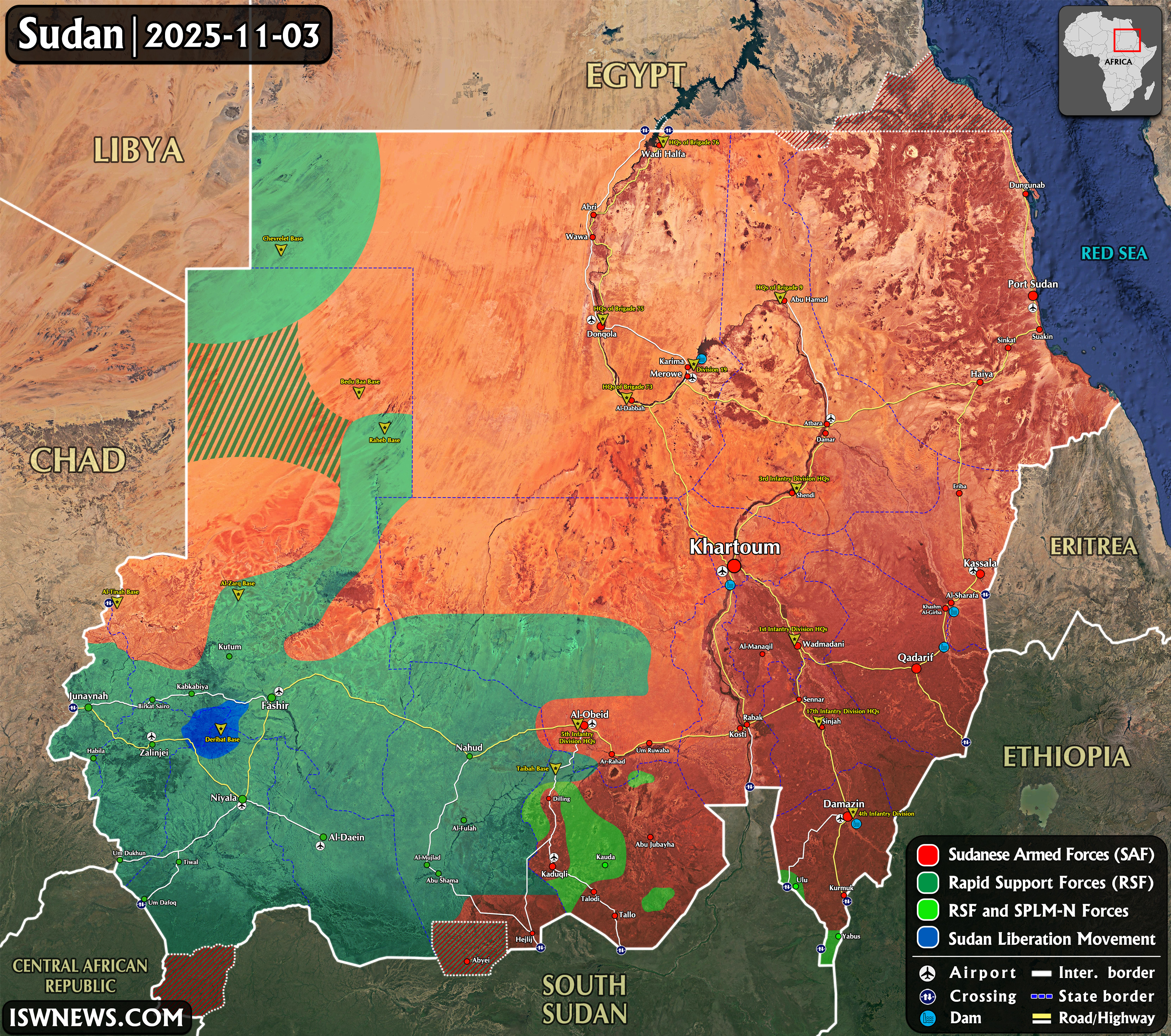
Sudan has once again returned to global headlines following intense and bloody clashes in Al-Fashir, the capital of North Darfur. While many have asked what’s happening in Sudan. The answer lies not in recent weeks but in the long-standing instability and unresolved crises that have plagued the country for years, occasionally erupting into headline news.
In brief, Omar al-Bashir was ousted in April 2019 after 30 years in power during what were described as popular protests. The military took control and transferred authority to a transitional government led by Abdalla Hamdok. Two years later, in October 2021, the Sudanese Armed Forces (SAF) under Abdel Fattah al-Burhan and the Rapid Support Forces (RSF) led by Hemetti staged a coup against the transitional government and seized full control. Another two years later, in April 2023, tensions between Burhan and Hemetti escalated, leading Hemetti to rebel against Burhan and take control of parts of Sudan. Since then, sporadic clashes between SAF and RSF have continued across the country.
On the ground, the latest battles center around Al-Fashir, the capital of North Darfur in southwestern Sudan, which was recently captured by RSF forces after months of siege. Al-Fashir was the last stronghold of the Sudanese Armed Forces (SAF) in Darfur. Over the past two years, RSF repeatedly attempted to seize the city but were repelled each time. The final takeover and the videos released from the scene point to a brutal massacre. It is estimated that at least 2,500 civilians were executed or killed by RSF fighters during the capture of Al-Fashir.
Recent conflicts in Sudan have occurred as a result of power struggles and disagreements between the Sudanese Armed Forces led by General Abdel Fattah al-Burhan and the Rapid Support Forces led by Mohamed Hamdan Dagalo, also known as Hemeti or Hemedti.
During the 2019 coup, the Sudanese Armed Forces toppled the country’s then leader Omar al-Bashir, and Abdallah Hamdok was chosen as the prime minister of the transitional government for three years.
Additionally, a transitional council was also formed, consisting of 11 military and political figures (along with the army), with one seat left empty due to the absence of a representative from eastern Sudan.
The transitional government of Hamdok was formed in August 2019 with the participation of the army and the political coalition of the Forces Freedom and Change (FFC), but it faced a new military coup in October 2021. Despite the detention of members of the Hamdok government, he continued as prime minister until January 2, 2022, and was succeeded by Osman Hussein as the interim prime minister. The second coup and its aftermath were faced with protests by supporters of the transitional government and political parties, but there was no progress until political and military groups in Sudan agreed to a 24-month transitional period under the leadership of the senior army commanders on December 5, 2022.
However, the process also faced another power struggle and conflict between Hemeti and Burhan, and the fate of Sudan is still subject to changes.
Who is Mohamed Hamdan Dagalo (Hemedti)? How were the Rapid Support Forces formed?
General Mohamed Hamdan Dagalo is one of the powerful individuals of the Rizeigat tribe in the Darfur region of Sudan, who was appointed as the commander of the forces in 2010, which were formed from a group of armed tribal allies with Omar al-Bashir.
The forces were initially made up of Janjaweed fighters, a Sudanese Arab militia group, and did not have a structured organization, and their organization was resembling a paramilitary group.
However, in the following years with the help of Omar al-Bashir’s government, they developed and became a regular force under the command of Hemeti. The Rapid Support Forces played an important role in the April 2019 coup and the overthrow of the Omar al-Bashir’s government; then, the RSF commander Hemeti was appointed as the Deputy Chairman of the Transitional Military Council.
Hemeti collaborated with General Abdel Fattah al-Burhan in the 2021 coup against the government of Abdullah Hamdok, but after a while he opposed General Burhan and ultimately rejected the results of an agreement between civil groups and the military governing council to resolve the political crisis in Sudan on December 5, 2022, especially regarding the integration of the Rapid Support Forces into the Sudanese armed forces; thus, he engaged in conflict and tension with the Sudanese Armed Forces from April 15, 2023.
Who is Abdel Fattah al-Burhan?
Abdel Fattah Abdel Rahman al-Burhan is one of the senior generals of the Sudanese Armed Forces, who was appointed as the commander-in-chief of the army in February 2018. He previously held the positions of inspector general of the Sudanese Armed Forces and the Deputy Chief of Staff of the Ground Forces Operations.
General al-Burhan came to this position and also became the head of the Transitional Military Council following the coup against Omar al-Bashir’s government in 2019, led by Ahmed Awad Ibn Auf, the former Commander-in-Chief of the Sudanese Armed Forces.
With the cooperation of General Hamidti, he ousted the interim government led by Abdullah Hamdok and removed members of the Sudan’s Transitional Sovereignty Council in 2021, forming a new council with other members. Al-Burhan’s unilateral and self-oriented actions led to conflicts with Hamidti and ultimately triggered recent military clashes.
Current military situation in Sudan
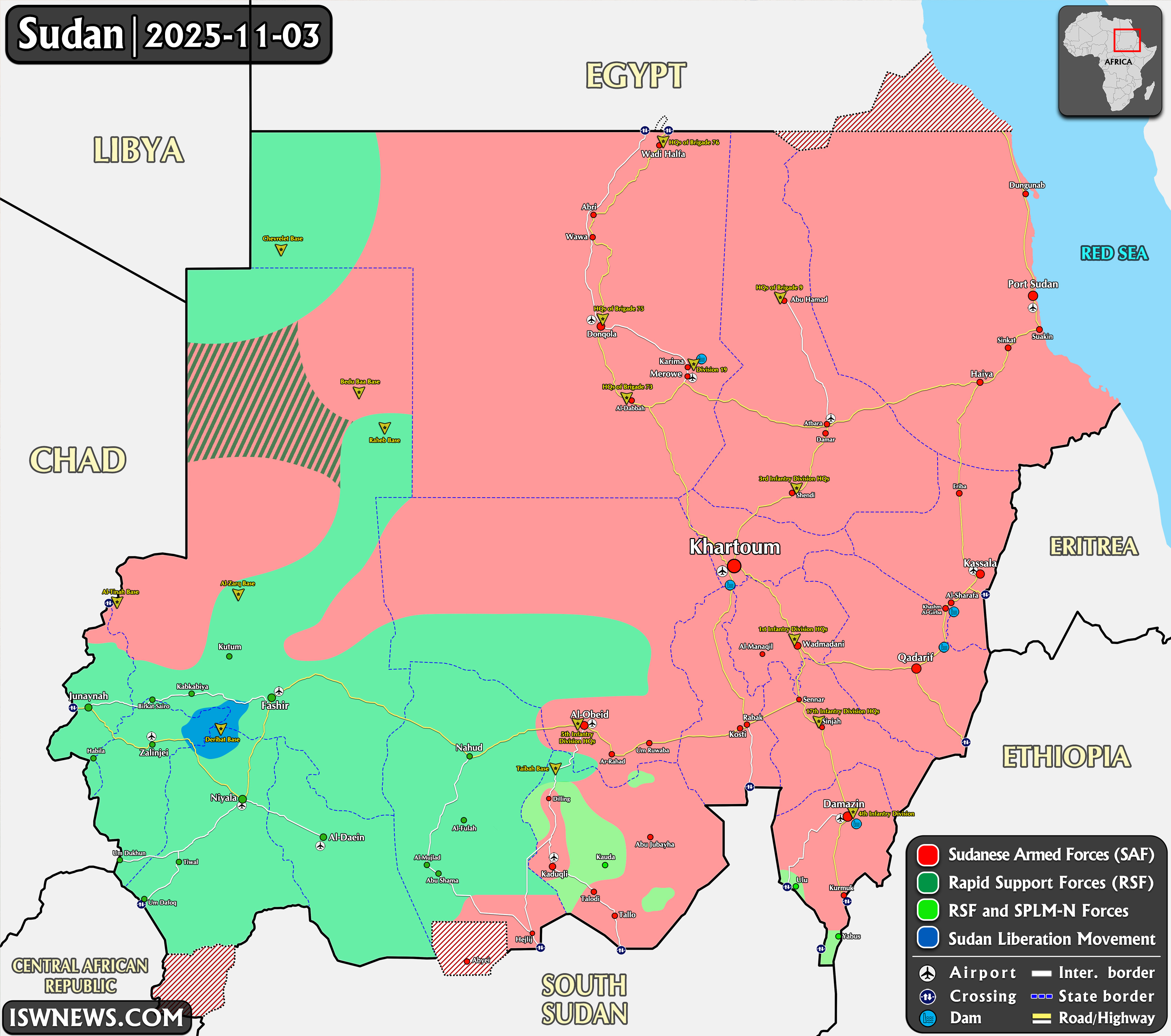
According to the latest news stories from the confrontations in Sudan, most cities and military bases in the provinces of Western, Central, Southern, and Eastern Darfur are under the control of the Rapid Support Forces. Parts of the southern North Darfur and parts of the North and West Kordofan provinces are also under the influence of the Rapid Support Forces.
In capital Khartoum, the precise control lines of each side are unclear due to the ongoing clashes. However, most of the northern areas of Khartoum, such as Al-Juraif, Darduk, Kafouri, Khartoum Bahri (North) and Omdurman are under the influence of the Rapid Support Forces.
The Sudanese army has also been successful in consolidating its positions in the east and north of the Arab country, and the movements of the Rapid Support Forces have been limited to scattered clashes and harassment attacks. Army bases in the cities of Al-Fashir, Al-Obaid, Al-Junaynah and Merowe have been preserved; therefore, the two warring sides continue the ongoing clashes in these cities.
In the eastern parts of Sudan, after the occupation of the cities of Kassala, Al-Qadarif, and Port Sudan on April 16, 2023, the Sudanese Armed Forces succeeded in fully stabilizing the situation and the Rapid Support Forces did not have any further advances in the eastern areas of the war-stricken country.