Category: Iraq

  • U.S. Efforts to Pressure Iraq’s Rafidain Bank Over PMF Case Using Ansar Allah Allegations

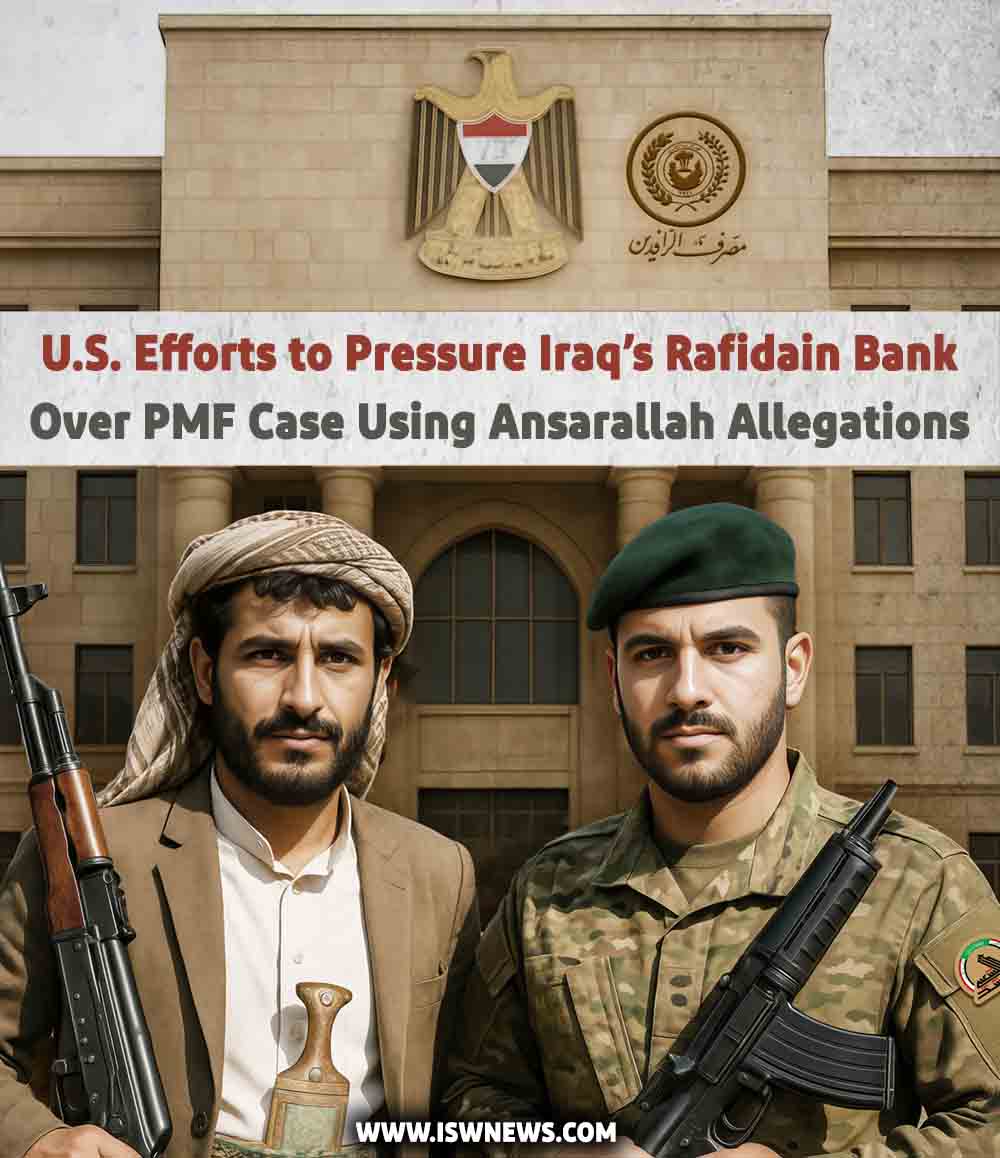
    U.S. Efforts to Pressure Iraq’s Rafidain Bank Over PMF Case Using Ansar Allah Allegations

    This issue was raised during the April 29 Iraqi-American summit in Washington, attended by Dr. Michael Faulkender, U.S. Deputy Treasury Secretary; Fuad Hussein, Iraq’s Foreign Minister and Deputy Prime Minister; and Nazar Al-Khairallah, Iraq’s Ambassador to the U.S.

    According to the meeting minutes, U.S. officials warned that Rafidain Bank must cease all financial ties with Ansarallah and relocate its Sana’a branch to Aden—the seat of Yemen’s UN-recognized government.

    On the other hand, Iraqi Foreign Minister Fuad Hussein emphasized during the meeting that Iraq only engages with Yemen’s official government and that Ansarallah has no access to Iraq’s financial system. He also pledged to personally follow up to ensure no transactions are conducted with the group.

    Dr. Sadeq Ali Hassan, spokesperson for Iraq’s embassy in Washington, stated in a letter to Fox Business that “claims about Rafidain Bank processing payments for Ansarallah are completely false.”

    He added: “There is no banking correspondent relationship with Yemeni financial institutions, and due to prevailing political, security, and logistical conditions, it is operationally impossible to conduct any cash or digital transactions within or outside Yemen’s financial sector.”

    According to the embassy’s statement, “Rafidain Bank’s Sana’a branch has been completely closed since 2017, and under the directive of the bank’s general management and coordination with Iraq’s central bank, all financial activities in Yemen have been permanently suspended. The branch holds no liquidity, lacks SWIFT access, and has no operational infrastructure.”

    When asked about accounts linked to PMF—designated by the U.S. as a terrorist group supported by Iran—the Iraqi embassy responded: “Rafidain Bank no longer holds any PMF-related accounts. All such accounts and payrolls have been officially transferred to Al-Nahrain Islamic Bank and are under Iraqi government oversight. The Sana’a branch has no involvement or activity in this matter.”

    U.S. Congressman Joe Wilson condemned the situation and stated he would push to reduce Iraq’s budget during upcoming discussions. He also urged the U.S. Treasury to sanction Rafidain Bank.

    Michael Knights, senior fellow at the Washington Institute and expert on Iraqi military and security affairs, told Fox Business: “Since February 2025, Congress has been calling for sanctions on Rafidain Bank due to its alleged role in facilitating large-scale money transfers to Iran and its allied groups. This has placed Rafidain at serious risk, as many members of Congress are familiar with its name. However, no sanctions have been imposed so far.”

    Fox Business, citing an Iraqi source familiar with the April meeting, claimed: “Rafidain is Iraq’s most opaque bank and has never undergone external auditing.”

    The source also alleged: “Rafidain funds PMF projects and provides unsecured loans to militias. If it refuses transparency and audit requirements, the U.S. should cut its access to dollars.”

    The Fox Business report suggests that the narrative linking Rafidain Bank to Ansarallah is primarily aimed at pressuring Iraq and the bank to accept U.S. conditions. Notably, according to The Wall Street Journal, the U.S. has already sanctioned 14 Iraqi banks for aiding Iran and other sanctioned entities in the Middle East.

    In conclusion, it appears that the U.S. and its allies are attempting to weaken PMF and other resistance groups by restricting their financial resources, ultimately pushing them toward dissolution and reduced influence.

    Source:
    https://www.foxbusiness.com/fox-news-world/iraqi-state-bank-accused-processing-payments-houthi-terrorists-who-disrupt-red-sea-commerce
    https://kurdistantv.net/fa/news/235333

  • “No Entry” for America: Iraqi PMF Halts U.S. Convoy

    “No Entry” for America: Iraqi PMF Halts U.S. Convoy

    According to the brigade’s command, which holds formal responsibility for the area’s security, any presence or cooperation with U.S. forces and affiliated entities is categorically rejected. The 12th Brigade emphasized that all its bases operate under the supervision of the Iraqi Prime Minister’s Office and are legally sanctioned.

    This obstruction is seen as a clear signal from resistance factions aiming to curtail U.S. operational reach within Iraq. It conveys a practical message: American presence in zones officially controlled by the PMF will not be tolerated. The brigade’s insistence on its legal mandate seeks to frame the move as a state-sanctioned action, distancing it from any perception of rogue behavior. This is a strategic posture, as resistance groups aim to present themselves as integral components of Iraq’s formal security architecture.

    The incident marks a direct field-level confrontation with the United States and could escalate tensions between Washington and Iraqi resistance forces, especially amid recent U.S. moves to blacklist several such groups.

    On September 16, the U.S. Department of State issued a statement announcing the addition of four Iraqi resistance groups to its list of Foreign Terrorist Organizations. The designated groups include Harakat al-Nujaba, Kata’ib Sayyid al-Shuhada, Harakat Ansar Allah al-Awfiya, and Kata’ib Imam Ali.

  • U.S. Forces to Withdraw from Baghdad and Ain al-Asad

    U.S. Forces to Withdraw from Baghdad and Ain al-Asad

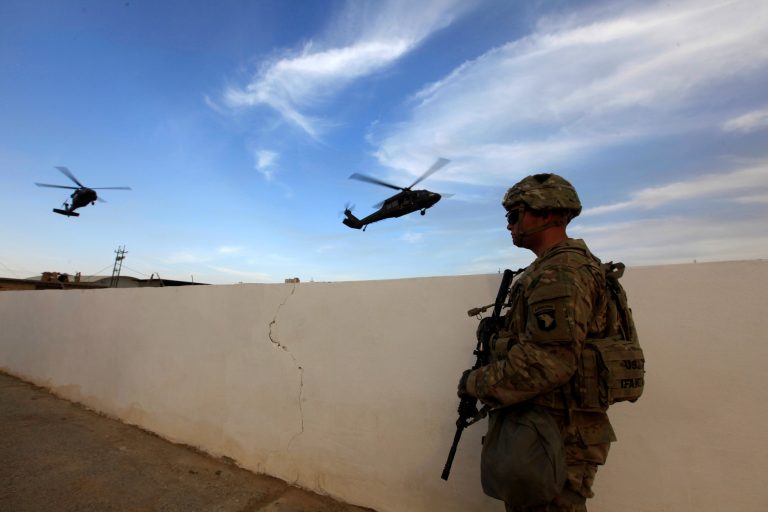
    Official Iraqi government sources have announced the beginning of the withdrawal of the U.S.-led international coalition forces from Baghdad and the Ain al-Asad base in Anbar province. The first phase of withdrawal is scheduled for September this year, during which U.S. forces stationed at Baghdad Airport and the Joint Operations Command will be relocated to Erbil.

    An Iraqi official told Al Jazeera that this retreat is part of an agreement between Baghdad and Washington, and that foreign military trainers will remain in Iraq. Meanwhile, Hussein Alawi, advisor to Iraqi Prime Minister Mohammed Shia’ Al-Sudani, stated that the coalition’s mission in Baghdad and Ain al-Asad will end in September 2025, with the second phase—complete withdrawal—set to be finalized by September 2026.

    According to Alawi, the Iraqi government is committed to strengthening its armed forces and transforming its security relations with coalition countries into stable bilateral partnerships. These relationships will extend beyond military cooperation to include political, economic, and cultural dimensions. He also announced the formation of a high-level military committee to oversee the implementation of the agreement.

    Currently, around 2,500 U.S. troops are present in Iraq as part of the international coalition, primarily stationed at three bases: Ain al-Asad in Anbar, Al-Harir in Erbil, and Victory Base at Baghdad Airport.

    The phased withdrawal from Iraq marks a turning point in Baghdad’s efforts to reclaim full security and military sovereignty. This process not only responds to internal pressures but also reflects the Al-Sudani government’s intention to gradually transfer security responsibilities to Iraqi forces and restore the traditional role of the army in maintaining national stability.

    However, the continued presence of military trainers and ongoing bilateral defense cooperation with the U.S. and other coalition members indicates that Iraq is not seeking a complete severance of security ties. Instead, it aims to shift these relations from the temporary and emergency framework established after the rise of ISIS to a more balanced and enduring strategic partnership.

    The withdrawal from Baghdad and Ain al-Asad can also be seen as a direct result of pressure from resistance groups and their repeated warnings against the continued presence of foreign troops in Iraq. This outcome was achieved through serious negotiations led by the Al-Sudani government. However, it remains unclear whether the plan will be fully implemented or merely symbolic. Past experiences show that the U.S. has previously promised to withdraw its forces from Iraq but failed to follow through, extending its presence instead—raising ongoing doubts about Washington’s commitment to the latest agreement.

  • Pentagon Stops Paying Salaries to Peshmerga Forces

    Pentagon Stops Paying Salaries to Peshmerga Forces

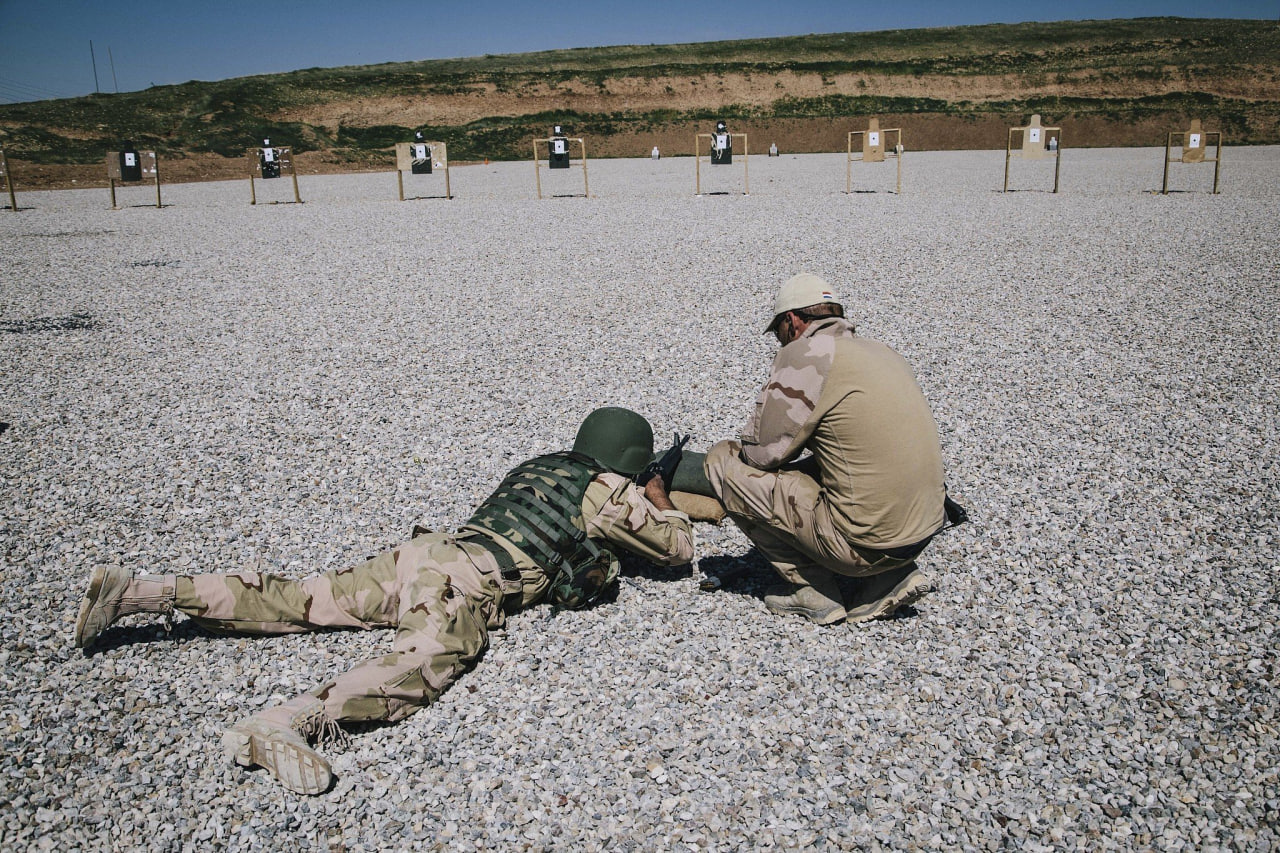
    According to the new U.S. budget law and documents released by the Pentagon, the United States will stop directly paying the salaries of the Peshmerga forces in the Kurdistan Region of Iraq by the end of 2025. Starting in 2026, the central government in Baghdad will be fully responsible for providing salaries for these forces. This decision is part of a broader effort to redefine the U.S. role in Iraq and gradually reduce the coalition mission in the country.

    A memorandum of understanding signed in September 2022 between the U.S. Department of Defense and the Kurdistan Region’s Peshmerga Ministry indicates that the budget for salary payments will gradually decrease, reaching approximately $135 million in 2024, about $60 million in 2025, and ultimately zero in 2026.

    Despite this overall budget reduction in 2026, logistical support for Iraqi forces and the Peshmerga will continue. The Iraqi Ministry of Defense will still receive equipment including communication systems, Hellfire missiles, reconnaissance systems, and logistics services. Additionally, the Iraqi Counter-Terrorism Service will receive a package valued at over $65 million.

    The U.S. decision to suspend payments to the Peshmerga forces marks a significant shift in Washington’s role in Iraq and sends a clear message to transfer security responsibilities to the central government in Baghdad. However, the Peshmerga forces’ financial dependence on foreign aid and the existence of parallel party structures present challenges to this transition. If Baghdad fails to provide salaries for these forces due to budgetary constraints or political disagreements with the Kurdistan Region, the risk of a security gap in northern Iraq may increase, which could have significant regional implications.

  • Investigating the Dimensions of Drone Attacks on Oilfields in the Kurdistan Region of Iraq

    Investigating the Dimensions of Drone Attacks on Oilfields in the Kurdistan Region of Iraq

    These drone attacks illustrate the complex political, economic, and security issues stemming from the ongoing tensions between Baghdad and Erbil. One significant attack occurred near Erbil International Airport, which prompted a response from American defense systems stationed in the area, resulting in the destruction of the attacking drone.

    In addition to the incident near Erbil Airport, drone strikes targeted oilfields operated by Norwegian companies DNO and American Hunt Oil in the Zakho and Sheikhan regions. These attacks led to the temporary halting of oil production in some fields, reportedly reducing the region’s overall production by 145,000 barrels per day—approximately half of its daily output.

    Origins and Reasons for the Attacks

    Although no specific group has claimed responsibility for the attacks, many Iraqis believe they are rooted not only in internal disputes among various Iraqi political factions but also stem from broader conflicts concerning the region’s economic and strategic interests. Some analysts suggest that these drone strikes may be part of a strategy aimed at pressuring the Kurdistan Region to accept new oil agreements with the central Iraqi government.

    This theory gained traction following the announcement of a new oil agreement between Baghdad and Erbil, which significantly reduces the region’s share of oil revenues. After this agreement, the frequency of drone attacks on oilfields decreased, indicating that the groups behind the attacks might have targeted these fields to coerce Erbil into accepting the new terms.

    Political Reactions and Consequences

    In response to the attacks, Iraqi Prime Minister Muhammad Shia al-Sudani initiated a comprehensive investigation and urged security authorities to identify the perpetrators as quickly as possible. He also stated that decisive measures would be taken against those responsible, reflecting the Iraqi central government’s strong concern for the security and stability of the region, which is one of the country’s primary sources of income.

    Conversely, the Iraqi Resistance Coordination Committee, which consists of various resistance groups, claimed that these attacks are a “settling of internal scores” between the Kurdistan Regional Government and oil companies. The committee denied any involvement in the drone attacks, asserting that their operations have never harmed the interests of the Iraqi people or security forces. They advised the Kurdistan Regional Government to concentrate on improving citizens’ livelihoods and addressing economic challenges instead of transferring its internal crises onto the central government.

    Economic Concerns and the Future of Oil Production

    The significant decline in oil production in the Kurdistan Region, along with extensive damage to its oil infrastructure, has led officials to call for more robust defense measures to protect these fields. The head of the Kurdistan Region’s Foreign Relations Office has stated that the United States is deeply concerned about these attacks. Consequently, various requests have been made to strengthen the defense systems of both the Kurdistan Region and all of Iraq.

    The drop in oil production and the damage to the region’s strategic oil fields have adversely impacted its revenues and raised concerns about the economic future of the Kurdistan Region. Reports indicate that the monthly oil revenue, which is approximately $297 million, is at serious risk due to the production being cut by half. This revenue constitutes a significant portion of the region’s budget. If the attacks and continued decline in production persist, the economic situation in the Kurdistan Region may be severely affected.

    Iran: A Possible Reason for These Attacks

    The recent drone attacks on oil fields in the Iraqi Kurdistan Region may also serve a strategic purpose for Iran. These security pressures could be Iran’s way of signaling that if the Kurdistan Region becomes a base for military and intelligence operations conducted by Israel and its proxy groups—particularly the Kurdish groups that act against Iran’s interests—then Erbil’s oil and economic resources will be subject to significant attacks and restrictions. This stance reflects Tehran’s concern regarding the increasing anti-Iranian influence in the Iraqi Kurdistan Region and suggests that any alignment by the Kurdistan Region with U.S. and Israeli objectives could lead to severe economic and security repercussions.

    Given the region’s heavy reliance on oil revenues, the escalation of drone attacks on oil wells and infrastructure not only poses a grave threat to Erbil’s economy but also sends a clear warning to regional and international actors: Tehran can use oil as a leverage tool to limit the influence of Israel and its Western allies in northern Iraq.

    In summary, this warning from Iran indirectly calls on the Kurdistan Regional Government to reconsider its regional policies. It emphasizes that to maintain economic stability and security, the Kurdistan Region should refrain from engaging in or facilitating anti-Iranian activities within its territories. Otherwise, the oil economy of the Kurdistan Region could sustain serious damage that would be difficult to repair.

    The drone attacks on the oil fields of the Iraqi Kurdistan Region should be viewed not only through the lens of military and security motives but also as part of a broader conflict in domestic and international politics. These attacks are clearly connected to the oil agreements between Baghdad and Erbil, as well as political developments within Iraq. Thus, the Iraqi central government should closely monitor the security and economic situation in the Kurdistan Region to prevent escalation. Simultaneously, the Kurdistan Region should avoid exacerbating internal tensions and crises to safeguard its security and interests while pursuing diplomatic and economic solutions to its ongoing challenges.

  • Drone Attack on Sarsang Oil Field in Duhok

    Drone Attack on Sarsang Oil Field in Duhok

    The attack occurred at 7 AM local time, leading to a halt in operations for the American oil company HKN, which is involved in this oil field. While the explosion did not result in any casualties, it caused material damage. So far, no group has claimed responsibility for the attack on the Sarsang oil field.

    It is important to note that this was the second drone attack in the Kurdistan Region of Iraq within 24 hours. Earlier, the Khurmala oil field in Erbil province was targeted by two suicide drones. In recent weeks, there has been a notable increase in drone attacks on energy facilities across Iraq.

    Video
    Video
  • Drone Attack on Khurmala Oil Field in Erbil

    Drone Attack on Khurmala Oil Field in Erbil

    Reports indicate that the drones struck open ground, and the attack did not result in any casualties.

    The Iraqi Joint Operations Command confirmed the drone attack on the Khurmala oil field in an official statement.

    The Khurmala oil field is a significant oil extraction site located in the Makhmur region of Erbil province. It contains 64 oil wells and covers an area of 355 square kilometers. The estimated oil reserves of this field are approximately 3.5 billion barrels.

    No group has claimed responsibility for the attack at this time. This incident marks the third drone attack by unidentified elements targeting locations in Erbil province within recent weeks. Previously, Erbil International Airport was also targeted in two separate drone attacks.

  • Suicide Drone Destroyed Near Erbil Airport (Video)

    Suicide Drone Destroyed Near Erbil Airport (Video)

    The drone was neutralized at 2:20 AM local time, with no reported casualties or material damage.

    Following the incident, an alarm was activated at the American base located at Erbil Airport. Local sources indicate that the American C-RAM defense systems in Erbil were responsible for shooting down the drone.

    A suicide drone was intercepted near Erbil Airport

    As of now, no group has claimed responsibility for the attack. It is important to note that this is the second drone attack on Erbil Airport in the past two weeks; previously, unidentified elements had attacked the airport using a Shahed 101 drone.

  • Kurdistan Workers’ Party Dissolved: A Look at the PKK’s History and Activities

    Kurdistan Workers’ Party Dissolved: A Look at the PKK’s History and Activities

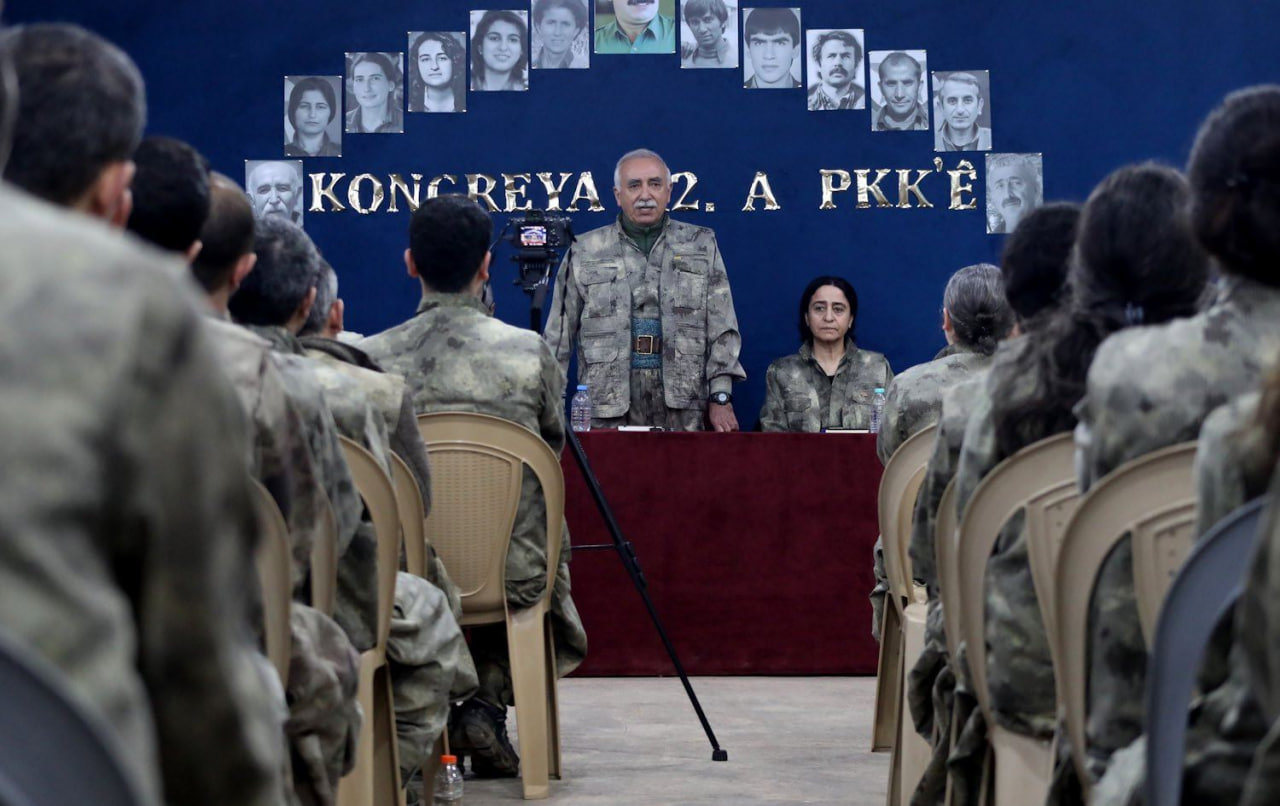
    The PKK’s leadership issued resolutions following meetings held between May 5 and 7, which prominently included the announcement that “the Kurdistan Workers’ Party officially declares its dissolution, the end of the armed conflict, and the laying down of arms.”

    In their resolutions, the party stated, “We believe that Kurdish political parties will fulfill their duties and responsibilities to develop Kurdish democracy. We will call for the strengthening of Kurdish-Turkish brotherhood.”

    Notably, Abdullah Ocalan, the founder of the PKK, issued a statement on February 27, urging PKK forces to lay down their weapons. Following his request, the PKK announced a ceasefire with Turkey just two days later.

    History and Activities of the Kurdistan Workers’ Party

    The Kurdistan Workers’ Party (PKK) was established in 1978 under the leadership of Abdullah Ocalan. The PKK has been recognized as one of the primary Kurdish armed groups in the region, with the declared goal of achieving greater rights for the Kurdish community in Turkey. The party resorted to armed struggle against the Turkish government in the 1980s.

    Abdullah Ocalan was arrested in 1999 and imprisoned on Imrali Island; however, even after his arrest, the PKK continued to play a significant role in developments across Turkish Kurdistan, northern Iraq, and even parts of the Syrian conflict.

    Various affiliated groups, including the YPG and PJAK, operate in neighboring countries, further complicating regional interactions regarding the Kurdish issue. The PKK has been designated as a terrorist organization by Iran, the United States, the United Kingdom, Canada, the European Union, and several other countries. According to international organizations, clashes between PKK elements and the Turkish army resulted in the deaths of more than 7,000 soldiers and civilians between 2015 and 2025.

  • Iraqi Intelligence Chief Meets with Al-Julani; Damascus and Baghdad Agree to Increase Cooperation

    Iraqi Intelligence Chief Meets with Al-Julani; Damascus and Baghdad Agree to Increase Cooperation

    During the meeting, Al-Shatri delivered a message from Prime Minister Muhammad Al-Shi’a Al-Sudani, inviting Al-Julani to attend the upcoming Arab League summit in Baghdad.

    The discussion focused on strategies for combating terrorism and enhancing security along the border between the two countries. Additionally, they emphasized the importance of expanding trade opportunities and developing economic cooperation between Baghdad and Damascus. The Iraqi delegation expressed its support for Syria’s unity, stability, and national sovereignty.

    A significant topic of conversation was the Al-Tanf border crossing. Al-Shatri and Al-Julani agreed on the establishment of a new mechanism to manage the Al-Tanf-Al-Walid border crossing.

    Al-Tanf region

    It is important to note that the Al-Tanf region has been occupied by American forces for years, housing one of the strategic U.S. bases located in the border triangle of Syria, Iraq, and Jordan. Syrian and Iraqi soldiers are restricted from approaching within a 55-kilometer radius of this base.

    Interestingly, following the fall of Bashar al-Assad’s government and the rise of Al-Julani’s leadership, there seems to be a new agreement between Damascus and Washington regarding the management of the Al-Tanf-Al-Walid border crossing. Increasing cooperation through this crossing will likely require consent and approval from the Americans.

  • The First Iraqi Official Met With Leader of Tahrir al-Sham in Syria

    The First Iraqi Official Met With Leader of Tahrir al-Sham in Syria

    The meeting focused on developments in Syria and the necessary measures for ensuring security and stability along the Iraqi-Syrian border.

    It is noteworthy that Abu Muhammad al-Julani was sentenced to death by an Iraqi court many years ago for his involvement in various terrorist activities in Iraq; however, Iraqi officials have now chosen to engage with him.

    Al-Julani joined al-Qaeda in Iraq in 2003, just weeks before the U.S. invasion of Iraq, and quickly rose through the ranks of the organization. He was arrested by U.S. forces in 2006 and spent more than five years in prison. Al-Julani’s release from prison occurred in 2011, only by chance!! coinciding with the onset of the Syrian war, he formed the terrorist grou Jabhat al-Nusra, the Syrian branch of al-Qaeda after reaching an agreement with Abu Bakr al-Baghdadi.

  • Iraq Calls For International Pressure On Israel To Prevent Israeli Aggression

    Iraq Calls For International Pressure On Israel To Prevent Israeli Aggression

    Following Washington’s warning to Baghdad on the imminent possibility of the Israeli regime’s military attacks on Iraq in response to the retaliatory actions of resistance groups in this Arab country, Prime Minister of Iraq Mohammed Shia’ Al-Sudani issued a decree, calling on Iraqi security forces to increase the level of their readiness.

    Al-Sudani has instructed the Iraqi armed forces and all security organizations to prevent any military activities outside the framework of the army’s regulations.

    In recent days, the Ministry of Foreign Affairs of the Republic of Iraq also sent letters to the United Nations Security Council, UN Secretary-General Antonio Guterres, the Arab League, and the Organization of Islamic Cooperation (OIC) to urge them to put pressure on the Israeli regime concerning its potential attacks on Iraq.

    The attacks by the Islamic Resistance in Iraq (an umbrella group of anti-terror fighters) against the Israeli regime’s military and security positions have been suspended since November 21. It appears that senior Iraqi government officials, with the mediation of commanders and figures close to the Resistance Axis, have convinced Iraqi resistance fighters to suspend or reduce retaliatory strikes on the Israeli regime, at least for a short period.