Category: Iran

  • Gen. Soleimani congratulates Ayatollah Khamenei and Muslims on ISIS termination

    Gen. Soleimani congratulates Ayatollah Khamenei and Muslims on ISIS termination

    Following the historic victory of Iraq and Syria’s resistance movement over the sedition of Takfiri terrorism and the end of ISIS’s domination, which was manifested by lowering the flag of this American-Zionist group at Abu Kamal–the last key area in the hands of ISIS–General Soleimani issued an important message to Ayatollah Khamenei.

    The following is the full text of Major-General Soleimani’s message to Ayatollah Khamenei:
    In the Name of God, the Most Beneficent, the Most Merciful

    “Indeed, we have opened for you (Prophet Muhammad) a clear opening.” Quran [1: 48]

    To the dear and brave Leader of the Islamic Revolution, Ayatollah Khamenei:

    Salamun Alaikum (peace and greetings upon you),

    Six years ago, a dangerous plot like the ones at the time of Amir al-Mu’minin (as), which prevented Muslims from truly understanding the pure Islam of Muhammad (pbuh), this time, mixed with the poison of Zionism and arrogance, covered the Islamic world like a devastating storm.
    This devastating and poisonous sedition was created by the enemies of Islam with an aim of initiating widespread war within the Islamic world and a fight among Muslims. The evil movement, under the name of the “Islamic State of Iraq and the Levant,” managed, in the early months, to deceive tens of thousands of Muslim youth from both countries, causing a very dangerous crisis for the influential and crucial countries of the Islamic world: Iraq and Syria.
    They occupied hundreds of thousands of square kilometers of land from these countries along with thousands of villages, towns, and provincial centers; they destroyed thousands of factories, manufactures, and major infrastructure of these countries–including roads, bridges, refineries, wells, gas and oil lines, and power plants; they destroyed or burned important cities with valuable historical monuments and national civilizations by bombing them.
    Although it is not possible to calculate all the damage caused yet, the preliminary investigation estimates damages to be around $500 billion.
    In this event, there were extremely horrendous crimes that could not be shown, which included the following: decapitation of children, skinning men alive before their families, taking young girls and women hostage and raping them, burning people alive and group massacres of hundreds of young people.
    The people of these countries, astounded by this poisonous storm, either became victims of the takfiri criminals or left their homes, displaced throughout other cities and countries.
    In this dark sedition, thousands of mosques and sacred centers of Muslims were destroyed or ruined, and sometimes a mosque along with the Imam and all the people in it were blown up.
    More than 6,000 young people, deceived in the name of defending Islam, blew themselves up by way of suicide bombings, using explosive vehicles at city squares, mosques, schools, even hospitals and public places of Muslims; as a result of these criminal acts, tens of thousands of innocent men, women, and children were martyred.
    All these crimes have been designed and implemented by US leaders and organizations, according to the acknowledgement of the highest-ranking US official who is currently president of the United States; moreover, this scheme is still being modified and implemented by current American leaders.
    What, in addition to the favour of God and the special grace of the great Prophet Muhammad and his honorable household (pbut), led to the defeat of this dark and dangerous conspiracy was the wise leadership and guidance of his Excellency, Ayatollah Sistani, who mobilized all facilities to deal with this toxic storm.
    Certainly, the resistance of the Iraqi and Syrian governments and the perseverance of the armies and youths of these two countries, especially the holy Popular Mobilization Forces (PMF), Al-Hashd Al-Sha’abi, and other Muslim youth from other countries with the prominent presence of Hezbollah led by its great leader, Sayyid Hassan Nasrallah, played an important role in overturning this dangerous event.

    Definitely the valuable role of the nation and the government of the Islamic Republic of Iran–the respected president in particular–the parliament, the Defense Ministry, as well as police, military and security organizations of our country, in supporting the above mentioned states and nations, is admirable.
    This humble person, as a soldier called upon by your eminence to serve on this battlefield, announces the termination of the rule of this vicious cursed entity, following the completion of the liberation operation of Abu Kamal as ISIS’ last fort, bringing down the flag of this US-Zionist made terrorist group, raising the flag of Syria. On behalf of all the commanders and anonymous fighters on the battlefield, the thousands of Iranian, Iraqi, Syrian, Lebanese, Afghan and Pakistani martyred and disabled defenders of the holy shrine–who gave their lives to defend the lives and honor of Muslims and their sanctities–I congratulate and felicitate you and the noble nation of Islamic Iran, as well as the nations of Iraq, Syria, and other Muslims of the world. I prostrate before the Almighty God in gratitude for this great victory.

    “And victory comes only from God, the All-mighty, the All-wise.” Quran [3:126]

    Your son and soldier

    Qasem Soleimani
    Source

  • Saudi Arabia Calls On UN Security Council To Take Action Against Iran

    Saudi Arabia Calls On UN Security Council To Take Action Against Iran

    Riyadh said that it has evidence of the involvement of Iran in missile development and launches towards the Kingdom on November 4 and July 22, 2017.

    The letter said that Saudi-led forces prevented numerous smuggling operations of Iranian weapons to Yemen adding that this is a flagrant violation of Security Council resolution 2216 from 2015 and resolution 2231 from 2016.

    Saudi Arabia affirmed that it will take appropriate action to respond to acts of aggression by the Houthis in order to safeguard the Kingdom’s security in accordance with the United Nations Charter and international laws.


    Translate provided by SouthFront

  • Iconic Martyr Hojaji Laid to Rest in Central Iran

    Iconic Martyr Hojaji Laid to Rest in Central Iran

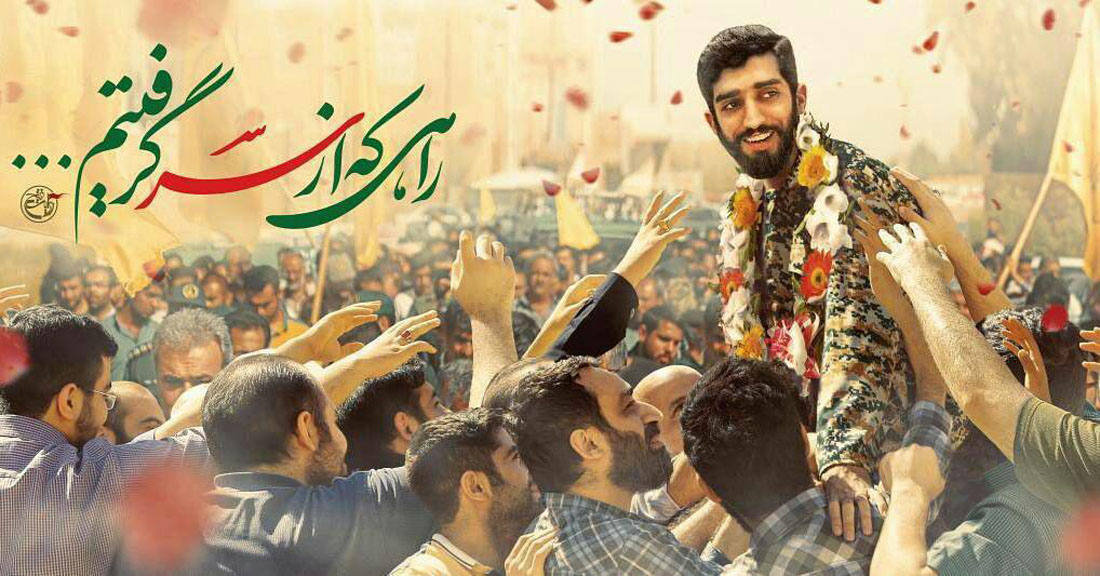
    A huge crowd of mourners from different walks of life attended the funeral of Martyr Mohsen Hojaji. He was buried in his hometown of Najaf Abad in Isfahan Province in central Iran, following a funeral procession there on Thursday.

    Hojaji was a member of the Iranian military advisory team, which assists the Syria army in its counter-terrorism operations against Takfiri terrorists. He was taken hostage by Daesh terrorists near the Iraqi border on August 7 and beheaded two days later.

    Another mass funeral procession was held for the iconic Martyr Hojaji in the Iranian capital, Tehran, on Wednesday.

    Leader of the Islamic Revolution Ayatollah Seyed Ali Khamenei attended the funeral in Tehran and prayed near Hojaji’s Iranian-flag-wrapped casket.

    Imam Khamenei also met the family of the revered young martyr and praised their fortitude.

    Since the martyrdom of 25-year-old Mohsen Hojaji, many Iranian artists have memorialized his death in videos and paintings.

    The Lebanese Hezbollah Resistance Movement on August 31 received the body of Hojaji from Daesh based on a ceasefire deal between the two sides.

    The transfer of Lebanon’s captured soldiers and two martyrs, as well as the body of Martyr Hojaji, took place after the buses carrying Daesh militants and their families arrived in the ancient city of Palmyra in Homs Province, according to media reports.

    Source

  • 1953 Iran Coup: British Approached U.S. to Topple Mossadegh

    1953 Iran Coup: British Approached U.S. to Topple Mossadegh

    The recent release of a tranche of declassified CIA documents, including memos covering this particular period, are a timely reminder not only of the staggering mendacity and perfidy of both countries in asserting the right to lecture the rest of world about democracy and human rights, but the extent to which they have wrought so much damage and devastation across the world since the Second World War.

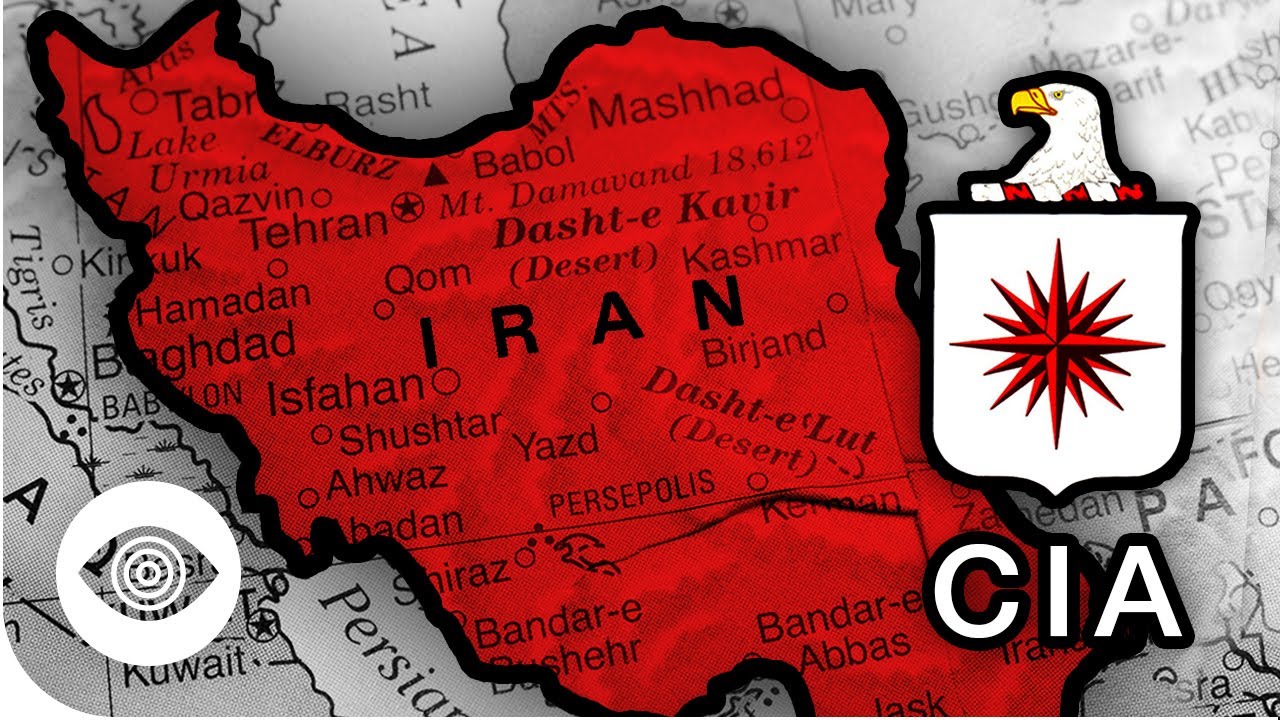
    Operation Ajax, the name by which the plan to undermine and topple Mossadegh’s government is known, was undertaken in response to the Iranian leader’s decision to nationalize the country’s oil industry with a view to husbanding the revenue for the benefit of the Iranian people, rather than allow it to continue to be sucked out of the country by the then British state-owned Anglo-Iranian Oil Company (AIOC) – forerunner of today’s global oil conglomerate BP.

    Britain had been in control of Iran’s oil since 1908, when the country was still known as Persia. London set up APOC with the development and exploitation of this energy bonanza in mind, the UK government taking over a controlling-share of the concession that had been granted to English mining entrepreneur William Knox D’Arcy by Persia’s [Iran’s] monarch in 1901. It came at point when Britain’s navy was shifting from coal to oil-powered engines, thus making a secure oil supply of critical strategic and military importance for a country’s whose empire at the time covered almost a quarter of the planet’s land surface.

    None other than Britain’s future Prime Minister Winston Churchill affirmed the importance of control over Iran’s oil, when he wrote, “Fortune brought us a prize from fairyland beyond our wildest dreams. Mastery itself was the prize of the venture.” Note the colonial grandeur of Churchill’s sentiments – a turgid celebration of the opportunity for enrichment that was so unabashed it would make a low-rent mafia hood blush. Meanwhile, the record shows that throughout the AIOC’s presence and operations in Iran, Tehran received a derisory percentage of the huge revenue garnered from the oil that was extracted from its territory.

    Mohammad Mossadegh became the country’s prime minister in 1951 on the back of a rise in national consciousness vis-à-vis the colonial and imperialist powers. Soon after coming to power he nationalized Iran’s oil and confiscated the assets of the AIOC. In a speech explaining his motives, he said,

    Our long years of negotiations with foreign countries have yielded no results thus far. With the oil revenues we could meet our entire budget and combat poverty, disease, and backwardness among our people. Another important consideration is that by the elimination of the power of the British company, we would also eliminate corruption and intrigue, by means of which the internal affairs of our country have been influenced. Once this tutelage has ceased, Iran will have achieved its economic and political independence.

    Britain responded by making it impossible for Iran to sell its newly nationalized oil on the world market. However, this wasn’t enough, and having persuaded the Americans that Iran was ‘in danger’ of turning communist, a plan to remove Mossadegh was hatched with the CIA playing the lead role.

    In one of the recently declassified US State Department memos covering this sordid episode, the insouciance with which the possibility of a coup to topple Iran’s government is first mooted is simply staggering. Under the subheading ‘Problem’, a section of the memo reads,

    The British Foreign Office has informed us that it would be disposed to attempt to bring about a coup d’etat in Iran, replacing the Mosadeq (sic) Government with one which would be more “reliable”, if the American Government agreed to cooperate. British and American intelligence agencies have had very tentative and preliminary discussions regarding the practability of such a move but cannot go further unless the State Department is prepared seriously to consider it as a matter of policy. The intelligence representative have requested a definite statement on this point.

    In London the plan was signed off by the aforesaid Winston Churchill, at the time Britain’s prime minister, while in Washington Dwight D Eisenhower, as US president, authorized its implementation.

    When Mossadegh got wind of the plan he closed the British Embassy in Tehran and expelled its staff. Discovering that the country’s then monarch, the Shah, was also in cahoots with the plan, he forced him to flee the country. However by now the CIA had succeeded in bribing various Iranian army and police officers, along with key journalists and members of the Iranian parliament. Together they helped to whip up an anti-Mossadegh atmosphere in the country, accusing him of being a communist, thus playing to the religiosity of a section of the population.

    On August 191, 1953, Mossadegh was arrested along with thousands of his supporters. Upon his arrest, the Shah returned from exile to become Washington’s placeman, ruling the country with uncommon brutality and corruption until he was ousted in the Iranian Revolution of 1979.

    Ultimately, no region has suffered more at the hands of US imperialism than the Middle East. It is, indeed, still suffering at its hands as these words are being written, with Iran in Washington’s crosshairs for daring to assert its independence, dignity, and resistance to hegemony.

    As for Mohammad Mossadegh, he goes down in history as a leader with the courage to defy US and Western imperialism. It is a legacy which lives on in the obdurate refusal of the Iranian people to submit to Washington’s writ today, over half a century later

    Source: http://ahtribune.com/history/1834-mossadegh.html

  • What you didn’t know about Tehran’s terrorist attacks

    What you didn’t know about Tehran’s terrorist attacks

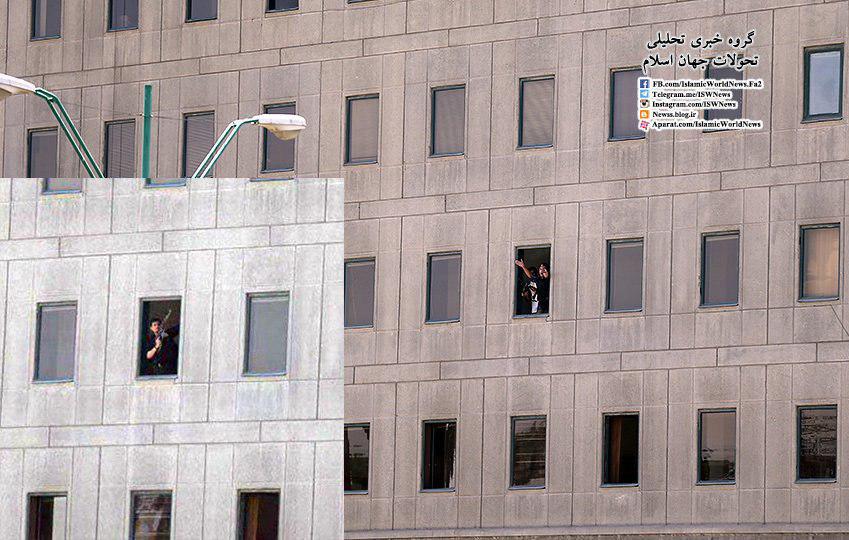
    There’s been much talk recently of the motives behind the terrorist attacks that targeted Iran’s parliament and the shrine of Ayatollah Khomeini in Tehran, and there will be much talk in media outlets on those responsible. Despite the fact that ISIS claimed responsibility for this attack, certain ambiguities still exist regarding the operators behind them.

    Looking into the previous instances of ISIS’s terrorist attacks around the world, one would conclude that this is not the work of ISIS. Taking the videos that were circulated of the attackers that had been recorded in the days prior to the attacks into question, none of these were circulated in the name of ISIS, nor did they show its banner. Moreover, on the day of the attack, there were no indicators pointing towards ISIS or its black banner.

    Saudi Arabia’s Al-Arabiya TV was the first media outlet to broadcast the video sent by the attackers, and after that, ISIS’s Aamaq broadcast that same video, announcing that ISIS claims responsibility for the attack. In reality, the fact that the attackers spoke Arabic in the video would have one think that they are affiliated with ISIS, and it’s easier to believe that ISIS would be behind it.

    The question that comes to mind is, if ISIS was not behind these attacks, then why did it claim responsibility for them? In answering this question it must be said that one of ISIS’s goals has always been to showcase itself, and show its capabilities on the international level, performing terrorist attacks around the world to show that it has the ability to perform such actions all over the world, such as its attacks in European countries and elsewhere. Furthermore, ISIS sees Iran as one of its most important enemies, and had threatened to perform terrorist attacks against it time and time again, always failing to perform any attacks on Iranian soil. It so follows that these latest attacks are the best chance for it to make some political gains without putting up any of the costs.

    Another question that comes to mind is: who are the true perpetrators of the Tehran attacks then? The “Ansar al-Islam” organization is a radical Sunni organization, active in Iranian and Iraqi Kurdistan, is anti-Iranian, and has deep religious and ethnic differences with the Shia system ruling Iran. It has arranged a number of operations against the Iranian state in the past, and some informed sources have cited them as being behind the Tehran attacks. We will discuss this group’s role in the management and the execution of the attacks as we go along.

    Mullah Krekar is one of the well-known Salafi figures of Halabja in Iraqi Kurdistan. He had been a follower of Osama bin Laden in Afghanistan for a number of years and fought alongside him. Upon his return to Halabja he began spreading Salafi Jihadism in Iraqi Kurdistan, founding Ansar al-Islam, which simultaneously fought against Saddam Hussein and the Taliban and Barzani movements. After 9/11, he added fighting the U.S to his agenda.

    Abu Musab al-Zarqawi left Afghanistan, settling in Iranian and Iraqi Kurdistan. The members of Ansar al-Islam, who were mostly Sunni Kurds from Iraq and Iran, were placed under his ideological and intellectual tutelage. This is why this organization considers Al-Zarqawi to be its spiritual leader.

    During Zarqawi’s stay in Iraq, especially in August 2003, three months after the fall of Saddam Hussein in Iraq, he planned and led the Najaf attacks which resulted in the assassination of Sayyid Mohammad Baqer al-Hakim, the head of the Shia Supreme Council of Iraq on August 29th, in the shrine of Imam Ali, the first Imam of Twelver Shia Muslims. After the incident, he established “Tanzim al-Jihad fi Bilad al-Rafidayn”, Al-Qaeda’s Iraq branch, which eventually came to form ISIS.

    Throughout their period of activity, Ansar al-Islam managed to gain great ideological and intellectual influence among Iranian Kurds, leading to the formation of the “Tawhid and Jihad” group. This group, through its commencement of operations since 2011, managed to impose itself as a serious player among Jihadi groups. Furthermore, being the earliest of Salafi Jihadist groups in Iran, it began to spread the ideas of ISIS when the latter revealed itself, and a number of them have gone to fight in Syria and Iraq with ISIS. The group was active in Western Iran and its neighbor Iraq, and enjoyed financial support from some of the region’s wealthier countries whose politics run counter to Iran’s.

    Another matter is that anti-Iran groups, apart from their relations with anti-Iran countries, also possess relations with other anti-Iran groups, and cooperate with one another. One of the oldest of these groups is the MEK, which in the post-revolutionary period had many differences with Ayatollah Khomeini, Iran’s then supreme leader, and began fighting the new rule. This organization, in its efforts to combat the Iranian administration, has relations with all anti-Iranian groups, including Ansar al-Islam, and cooperates with them. The MEK enjoys political and social support from the U.S, as well as financial support from Saudi Arabia.

    Some informed sources have said almost 50 members of Ansar al-Islam, all of whom are Iranian, Kurdish Sunni Muslims, operate from a base linked to the MOC operations room in Jordan, under the military and operational tutelage of the MEK, and are now ready to launch wide attacks inside Iranian soil.

    These sources have also added that the MEK handled the planning of these latest operations, and that Ansar al-Islam executed them on the anniversary of al-Zarqawi’s death. However, because of Iran’s security forces’ grip on Iranian and Iraqi Kurdistan, and their fears of backlash from Iran, Ansar al-Islam decided it was better to conceal their responsibility for these operations, remaining silent, and letting ISIS claim responsibility for them.

    It is noticeable that Saudi Arabia’s king, Iran’s traditional opponent in the region, has supported all radical anti-Iran groups, and even political opposition outside of Iran, such as the MEK, both financially and morally. So much so that Prince Turki al-Faysal, the former head of Saudi Intelligence, in his speech before the MEK’s yearly conference in 2016 in Paris, announced Saudi Arabia’s full support of the organization, as well as all anti-Iran groups.

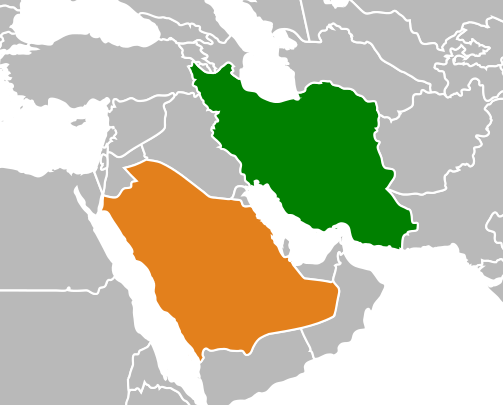
    Saudi Arabia will continue to support these groups in the possibility that Iran, a Shia Islamist country, might be weakened or its system of government changed. Saudi Arabia has accused Iran, on a number of occasions, of supporting terrorism and exporting its revolution to other countries, and interfering in the internal affairs of Arab countries. Mohammad bin Salman, the Saudi Minister of Defense and Deputy Crown Prince, has very recently accused Iran of trying to control the entire region, and threatened to create instability and take the war to within Iranian soil. Meanwhile, refuting Saudi claims, Iran’s minister of defense said that if Saudi Arabia should start a war with Iran, nowhere will remain safe in Saudi Arabia but for Mecca and Medina, which are sacred ground. Taking all these factors into question, are the Tehran attacks also a message that the Middle East will be the arena of a military bout between Iran and Saudi Arabia?

  • 28 years ago today – Iran Air Flight 655 massacre, US navy murder 290 Iranians including women and children

    28 years ago today – Iran Air Flight 655 massacre, US navy murder 290 Iranians including women and children

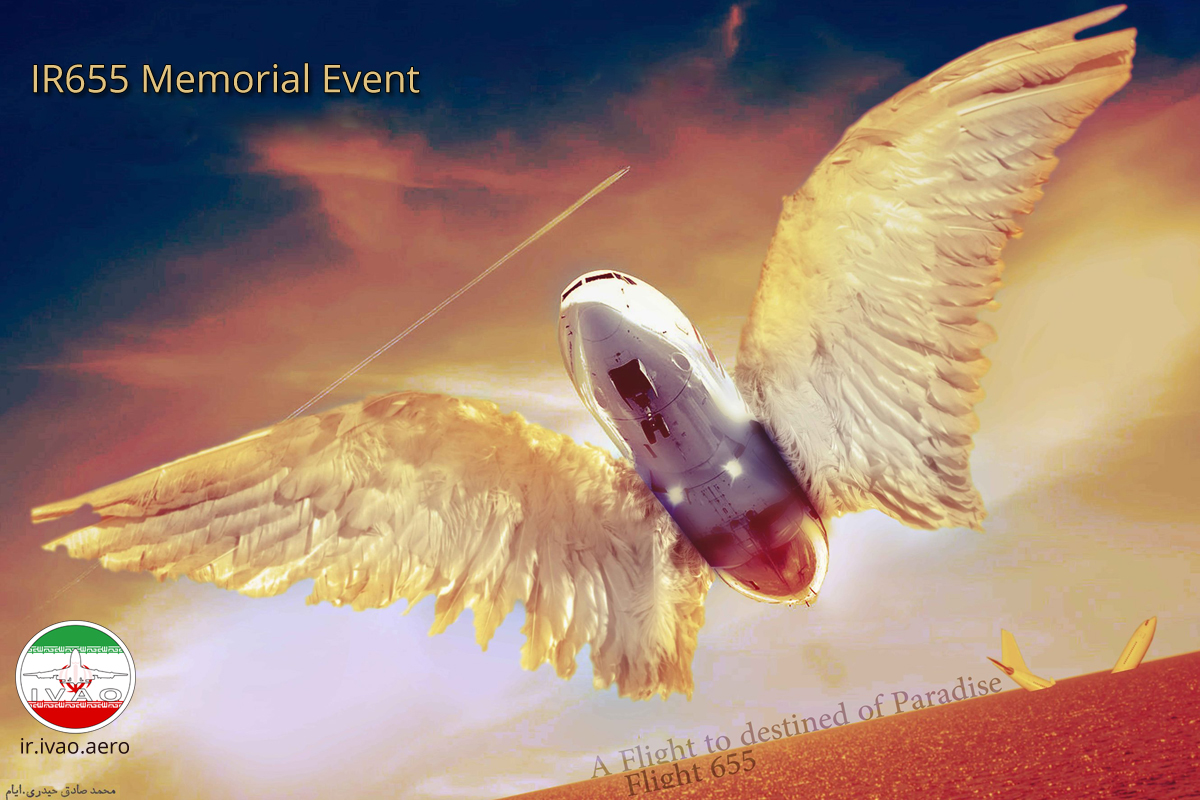
    On July 3, 1988, Iran Air Flight 655 (IR655) was shot down by USS Vincennes which led to the loss of life of 290 innocent civilian from six nations including 66 children. There were 38 non-Iranians aboard.

    Flight 655, as a commercial flight, operated by Iran Air that flew on a Tehran-Bandar Abbas-Dubai route. While flying in Iranian airspace over Iran’s territorial waters in the Persian Gulf on its usual flight path, it was destroyed by the guided missile cruiser USS Vincennes.

    This attack ranks tenth among the deadliest disasters in aviation history, the incident retains the highest death toll of any aviation incident in the Persian Gulf and the highest death toll of any incident involving an Airbus aircraft anywhere in the world.


    According to the United States Government, the crew mistakenly identified the Iranian Airbus A300 as an attacking F-14 Tomcat fighter. Contributing to the error was the fact that the aircraft did not respond to several inquiries to change course and did not identify itself clearly as civilian. The Iranian government maintains that Vincennes neglectfully shot down the civilian aircraft. The event produced a great deal of dispute and criticism of the United States. Several analysts have blamed U.S. military commanders and the captain of Vincennes for irresponsible and aggressive behavior in a tense and dangerous environment. The airliner was transmitting an identification friend or foe code for a civilian aircraft, but Captain William C. Rogers III in an interview insisted that he believed the code alone did not mean the aircraft was non-hostile. Captain Rogers described the attack as a self-defense measure to save his ship and the lives of the crew.

    While issuing notes of regret over the loss of human life, the U.S. government has, thus far, neither admitted any wrongdoing or responsibility in this disaster, nor apologized, but continues to blame Iranian hostile actions for the event. The crew of the Vincennes were all awarded combat-action. ​

    More than two decades later, the attack continues to pervade Iranian social psychology and fuel the strategic thinking of its military leadership. Many Iranians remember the event with a bitter sense of vulnerability. A foreign government, the United States, which was not in war with them, used brutal and lethal force against Iranian civilians.

    For those with a longer memory span, it’s hard to dismiss some of these concerns especially when you recall that the irresponsible behavior of the USS Vincennes commanding officer earned him the Legion of Merits, “a military decoration of the United States armed forces that is awarded for exceptionally meritorious conduct in the performance of outstanding services and achievements.” For many Iranians, this is utterly incomprehensible.

  • Enemies of Islam want to create rifts among Muslims: Ayatollah Khamenei

    Enemies of Islam want to create rifts among Muslims: Ayatollah Khamenei

    Today, we have certain problems within the world of Islam. We are suffering from the bloodshed, and there are deadly confrontations today. Yemen serves as an example. These issues should receive more attention.

    The truth is that today, the Islamic Ummah is suffering from numerous problems. Certain wounds have been and continue to be inflicted upon the body of the Islamic Ummah. The deepest wound is the one caused by discord. Enemies of Islam are trying to create discord among Muslim groups with different methods. They want to create rifts and enmities among them, by means of ethnic and denominational differences, based on geographical disputes of territorial and border issues. Tools for carrying out these methods are available to them [those involved in disputes], and the enemy is, unfortunately, using them. We, officials of Islamic governments, have ignored this measure that the enemy has adopted.

    When I think to myself, I feel that we should be extremely concerned that some American congressman – who is opposed to the very essence of Islam, an enemy to Islamic countries – expresses his “concerns” about the problems of a Sunni community, pitting people against Shi’a. We should be ever more vigilant upon hearing such rhetoric. An enemy, who is opposed to the essence of Islam, has now expressed his support for a certain Islamic group against another! Is this anything other than malevolence, conspiracy and enmity? As it so happens, this behavior unfortunately exists. We should ponder on it; we should understand this ploy.

    All Islamic countries lose from discord, and all of them profit from unity. Unity among Islamic countries, their closeness to one another, and their refusal to use force against one another are merits that can be used to their own advantage; we should understand that these qualities are to the advantage of Islamic countries. This is a divine logic: it is Islamic logic. Unfortunately, this logic does not receive enough attention.

    Today, we have certain problems within the world of Islam. We are suffering from the bloodshed, and there are deadly confrontations today. Yemen serves as an example. These issues should receive more attention. The issues of Syria, the issues of Iraq, the issues of North Africa and, the numerous issues that one witnesses in the world of Islam are all signs of discord and conflict. These conflicts serve as a disadvantage towards Islam; moreover, this is a disadvantage for the entire Islamic Ummah. We should resolve these problem.

  • IRGC missile operation against ISIS terrorists in Syria’s Deir ez-Zor + Video

    IRGC missile operation against ISIS terrorists in Syria’s Deir ez-Zor + Video

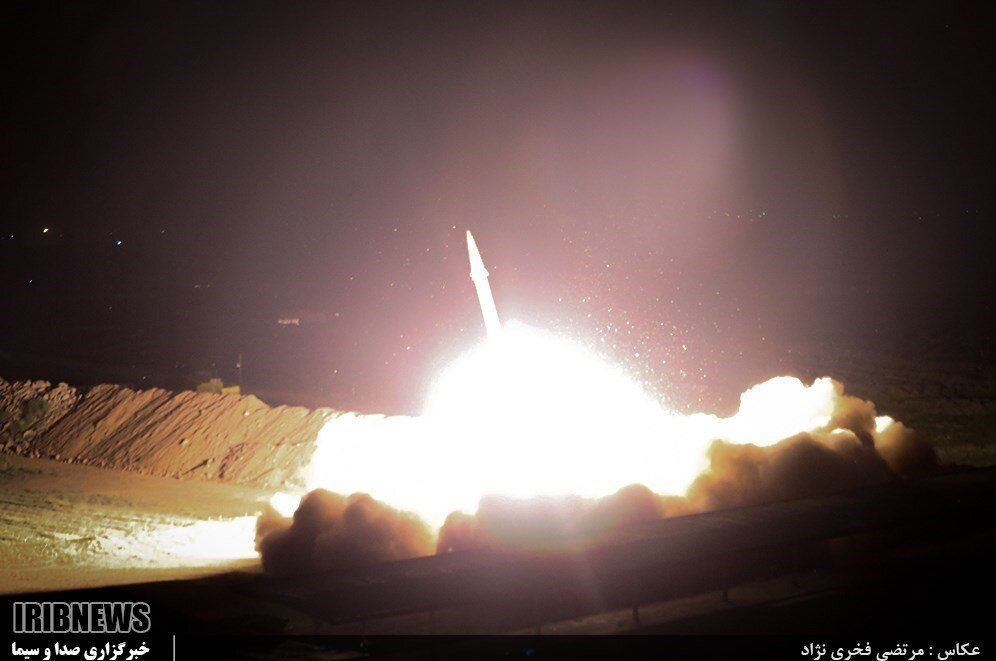
    On the last night of Qadr in the month of Ramadan, on 18 June 2017, the IRGC Aerospace Force with the operational name “Laylat al-Qadr”, using 6 Zolfaqar missiles from the IRGC missile bases in Kermanshah and Kurdistan provinces, attacked the command headquarters and positions of ISIS in Deir Ezzor region.

    The missiles targeted ISIS positions in Deir Ezzor, at a distance of about 650 kilometers.

    This operation was carried out in response to the ISIS terrorist attack on Iranian Parliament in Tehran in 8 June 2017, which resulted in the martyrdom of 18 civilian.

    According to the statement published by the general public relations of the Islamic Revolutionary Guard Corps, all stages of identifying and collecting information about the status of Takfiri terrorists in Deir Ezzor region were carried out only by the field agents of the Quds Force of the Islamic Revolutionary Guard Corps in a precise and reliable process. The intelligence was given to the IRGC Aerospace Force and then the operation was carried out with very high precision.

    Details of Iran’s Laylat al-Qadr missile operation against ISIS in Syria