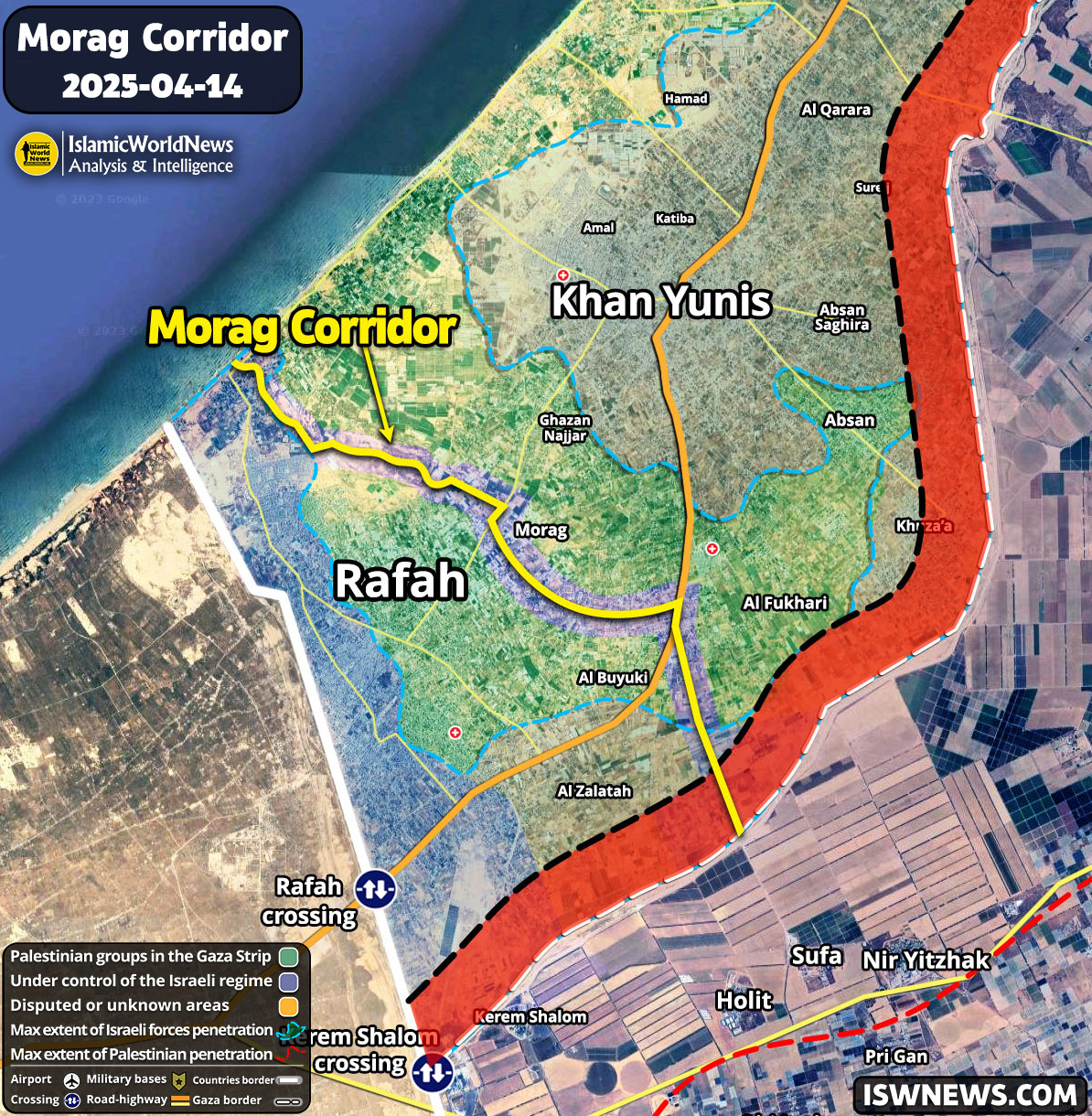
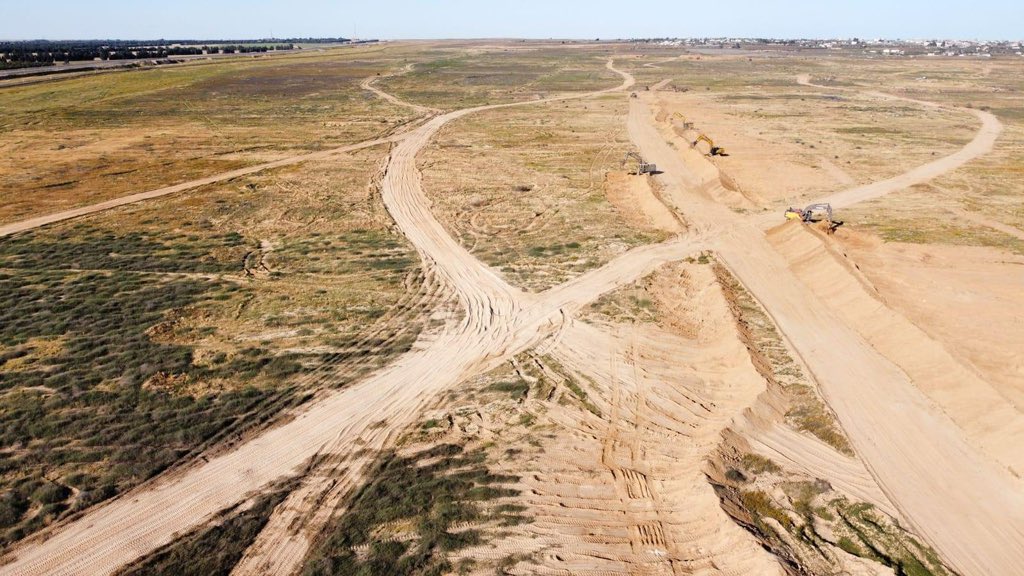
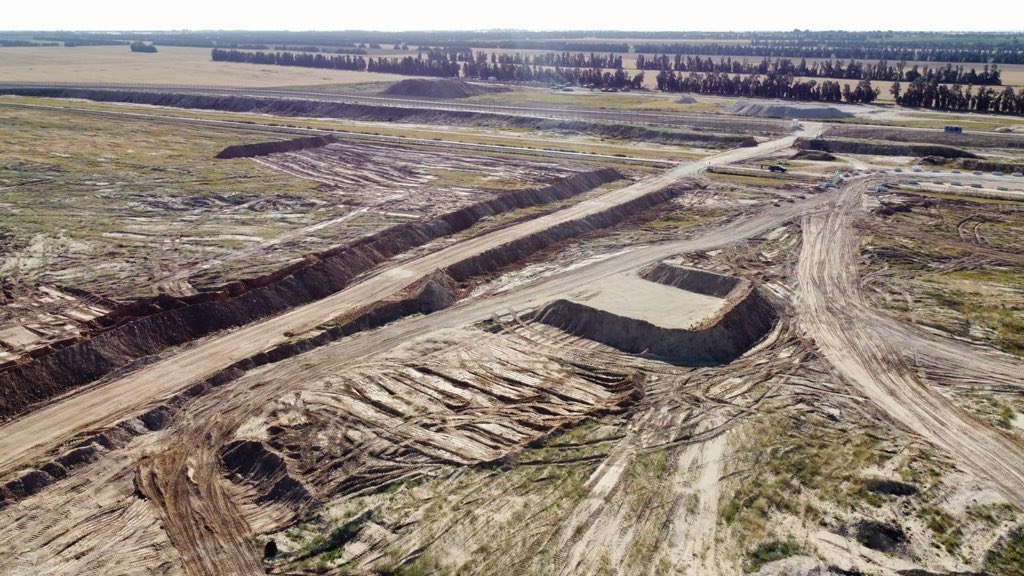
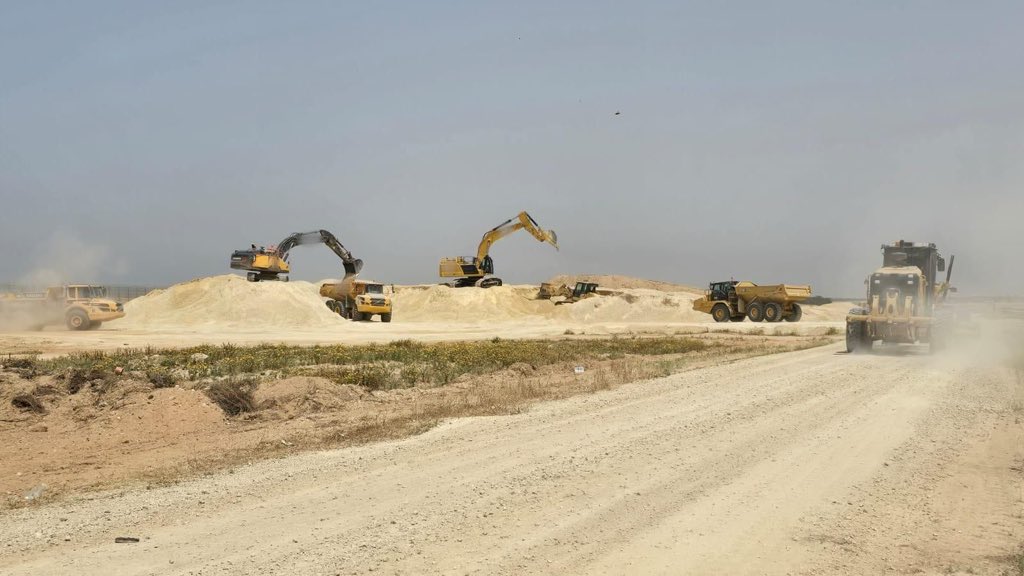
With the creation of this 12-kilometer corridor, the land connection between Khan Yunis and Rafah was completely cut off.
The operation on the Morag axis is being carried out by the forces of the 36th Division, the Golani Brigade, and the 188th Brigade of the Israeli army.
Images of Morag Corridor published by the Israeli army
The Morag corridor, which the Zionists refer to as Philadelphia 2, is important for the Israeli regime in several ways. With the construction of this corridor, the operation to clear Rafah and fight resistance groups will become easier than before, and the Israeli army will begin the process of searching for resistance tunnels. Tel Aviv also plans to use this axis as a lever of pressure in negotiations with the Palestinian resistance.
The Zionists believe that by building this axis, the movements of resistance groups will be limited and the transfer of weapons or supplies by resistance groups will not be as in the past. From a military point of view, one of the main goals of building this corridor is to cut off the supply lines of Palestinian resistance groups between Rafah and Khan Yunis.
The Morag axis is also considered one of the most important agricultural areas in the southern Gaza Strip. The deployment of the Israeli army on this axis will deprive the Gaza Strip of its most important agricultural resources.
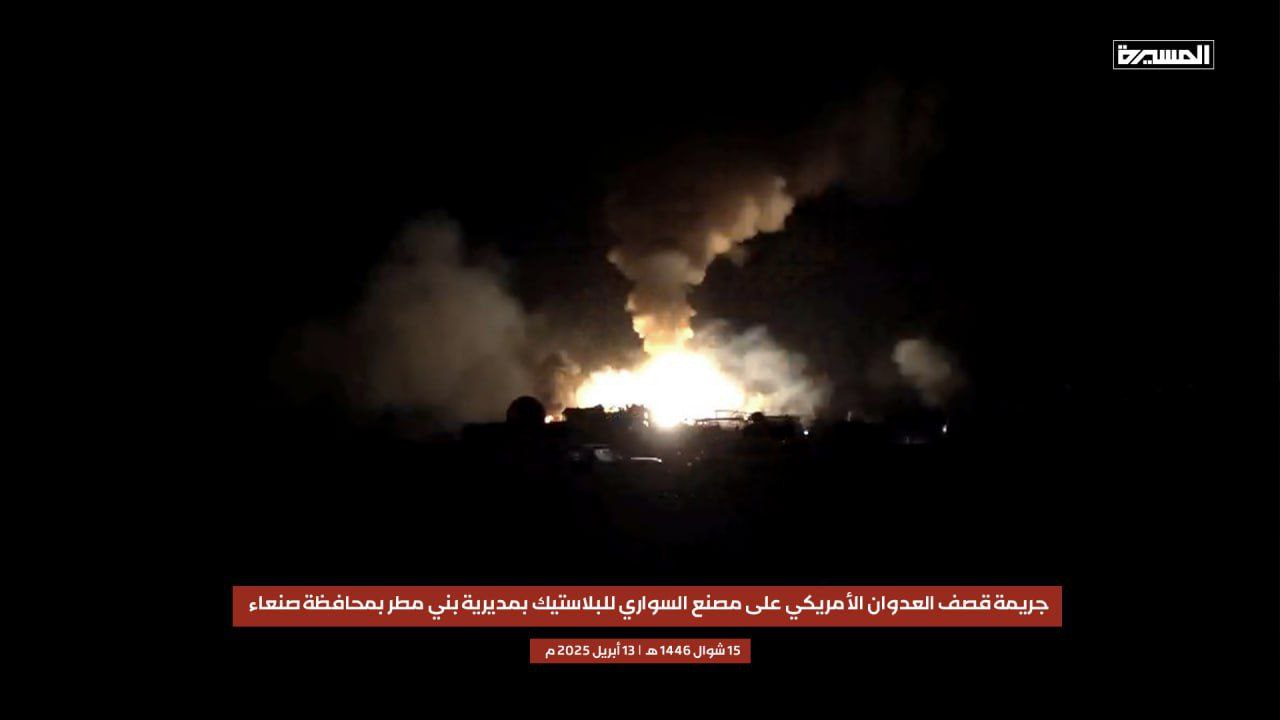
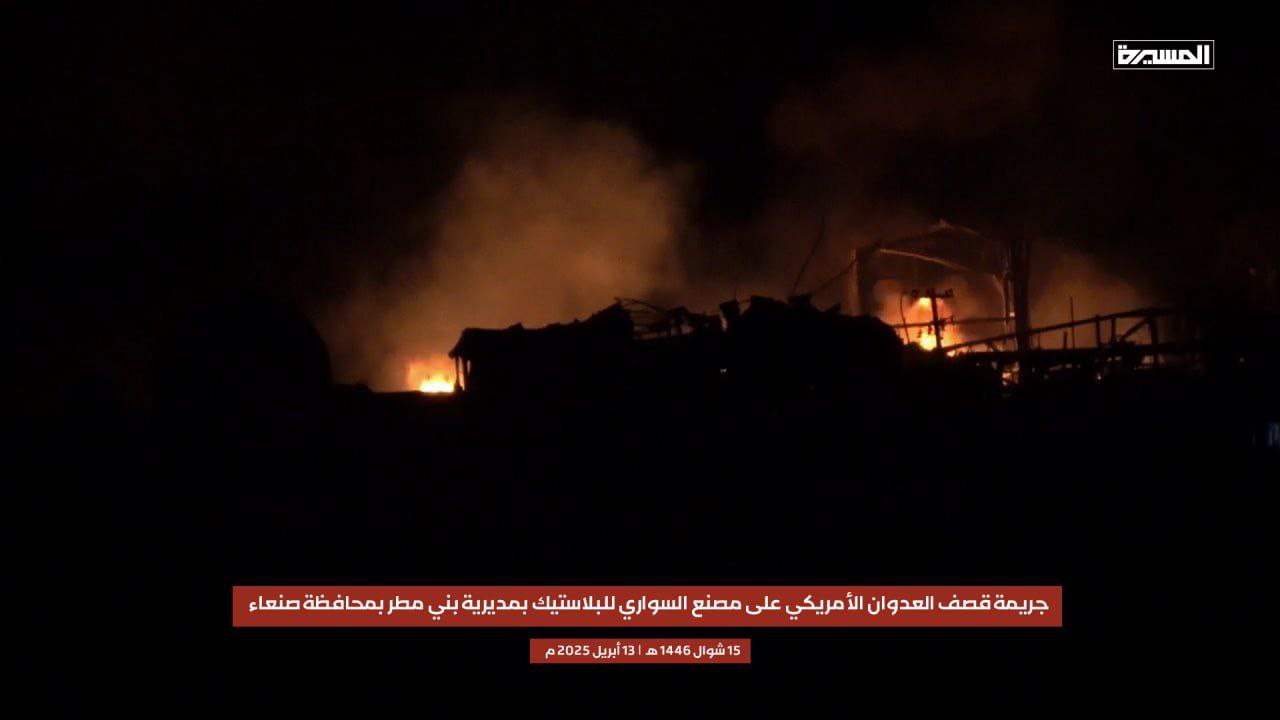
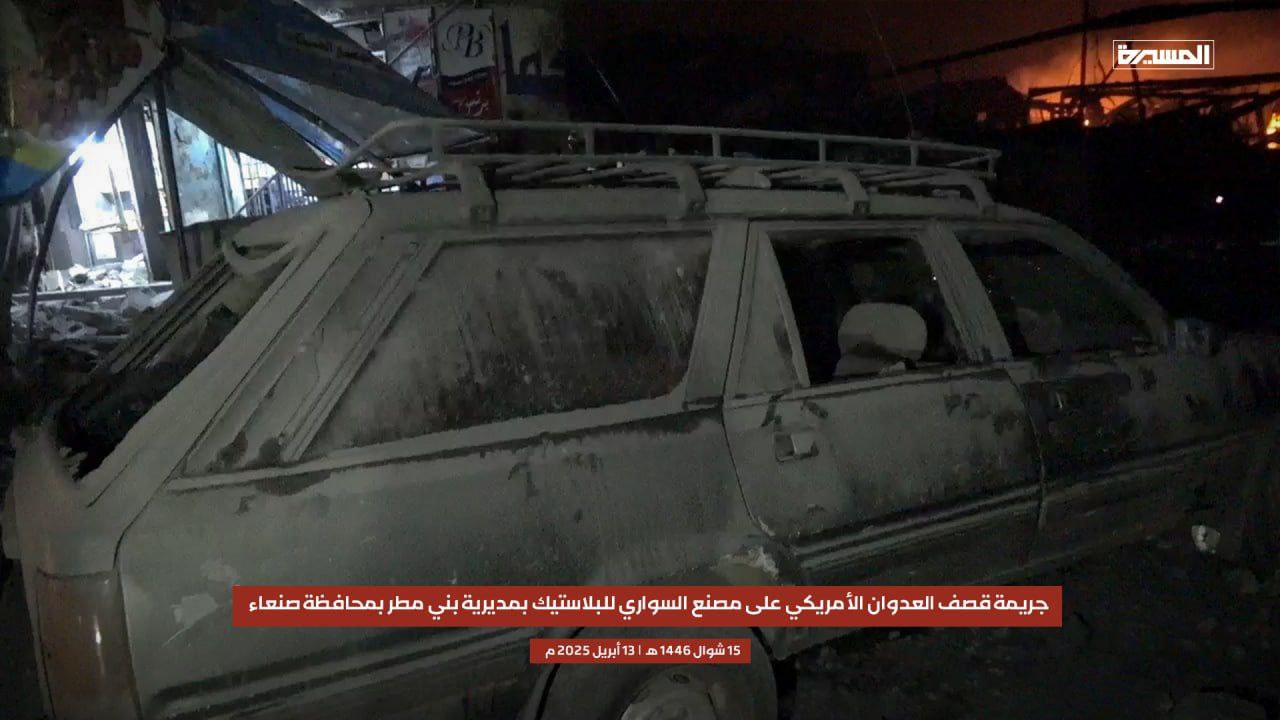
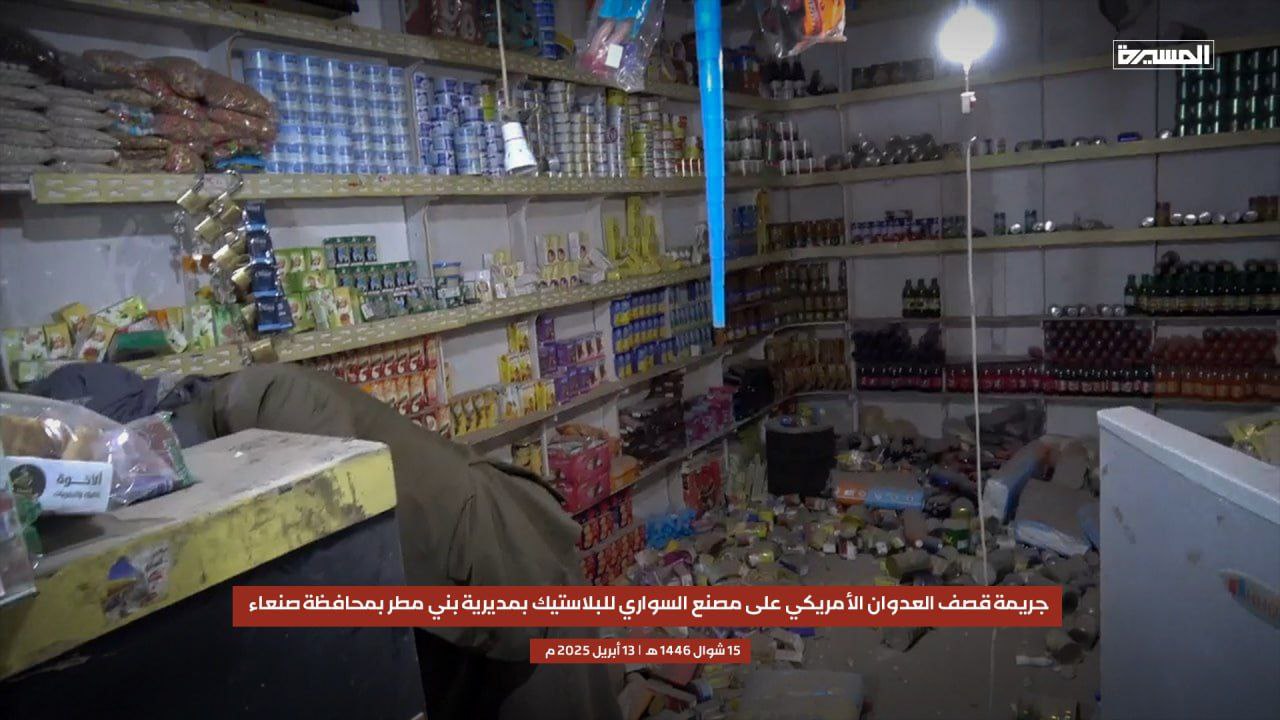
During these aggressions, one airstrike was executed in the Al-Mahadhir area of the Sahar district, three airstrikes struck the Al-Sawari factory in the Matna area of the Bani Matar district, and two airstrikes targeted the Al-Yatma area in the Khab and Al-Sha’af district.
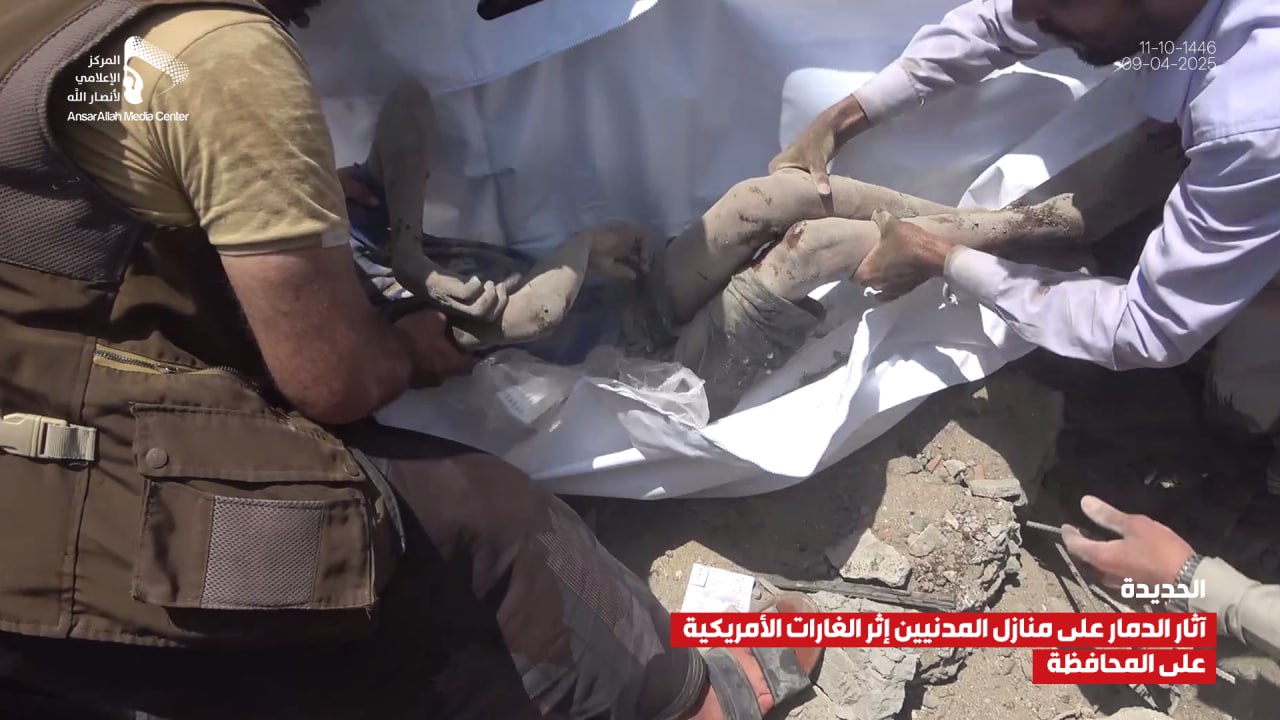
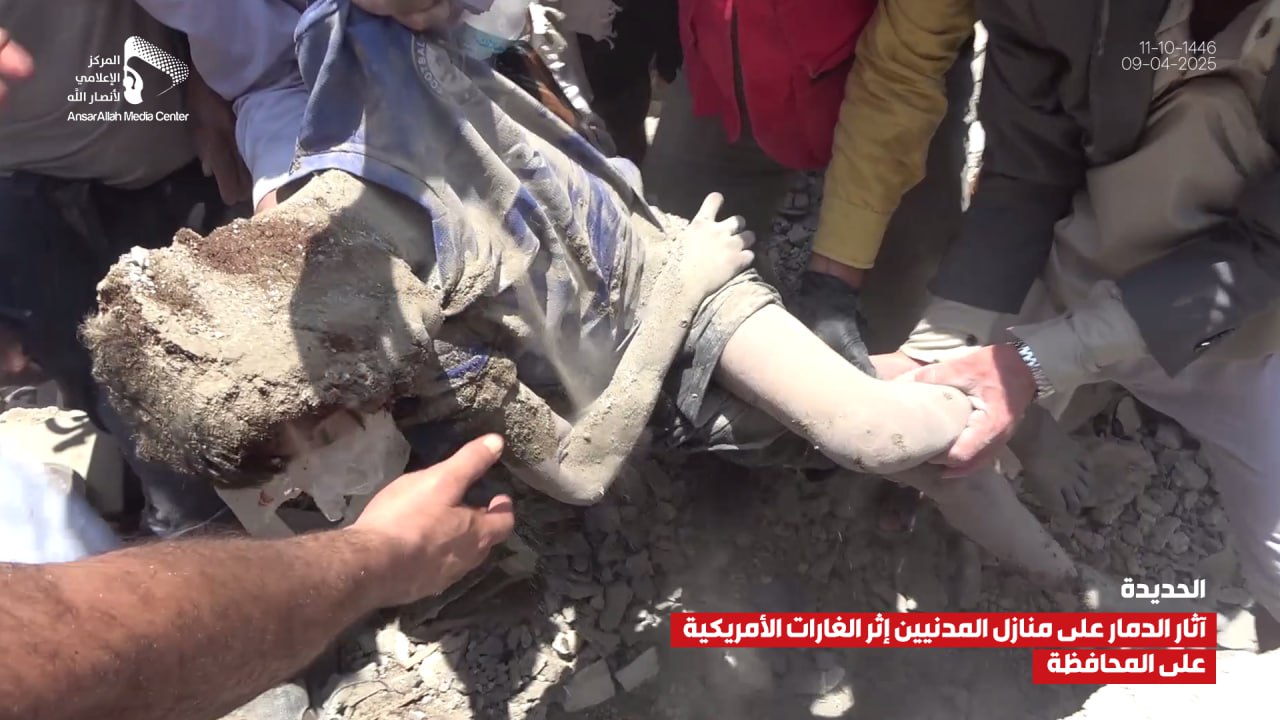
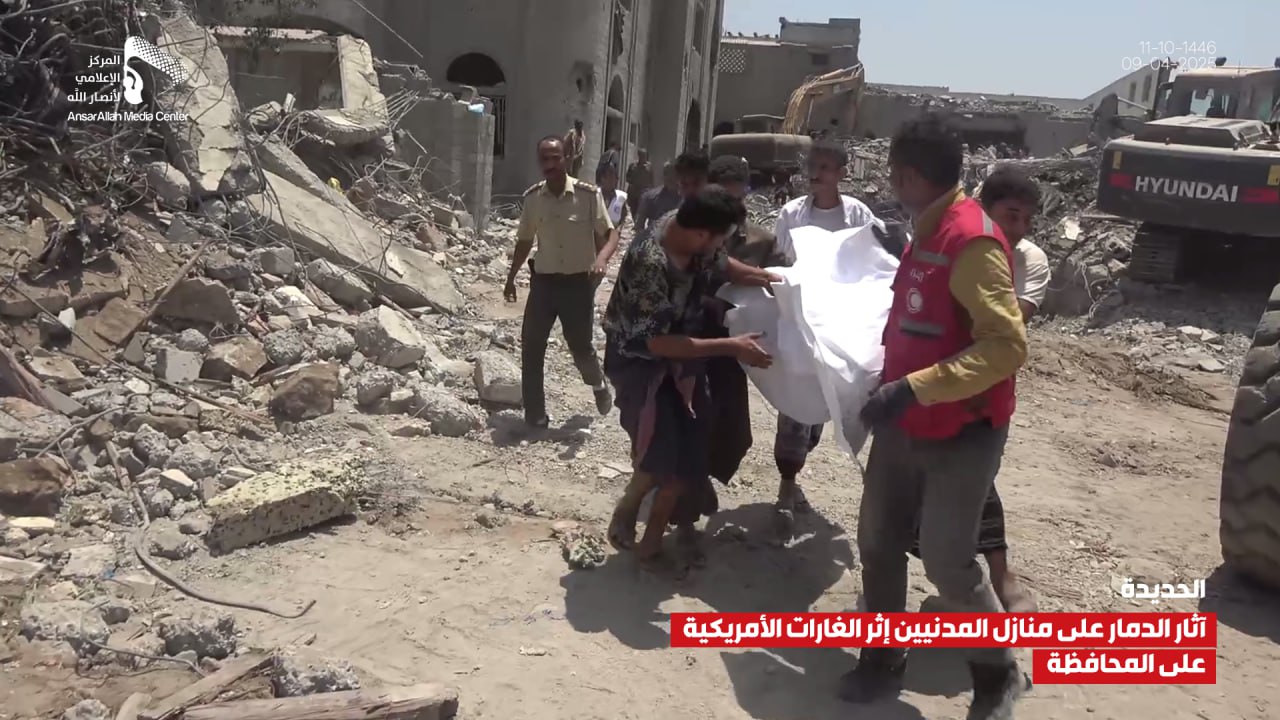
The attack on the Al-Sawari factory resulted in six fatalities and injured 20 civilians. The factory’s facilities were significantly damaged, and its products were set ablaze.
This incident marks the 23rd MQ-9 drone downed during the Yemeni conflict. Out of these, 19 were shot down as part of the Yemeni Armed Forces’ support operation for Palestine, which is titled “Promised Conquest and Holy Jihad.”
Since the conflict in Yemen began, the Yemeni Armed Forces have shot down a total of 116 military aircraft belonging to the US, Saudi Arabia, the UAE, Morocco, Bahrain, and Jordan across various fronts in the country. Among these, 26 aircraft are attributed to the US military, including 23 MQ-9 drones, one F/A-18F fighter jet, one UH-60M helicopter, and one V-22 Osprey helicopter.
The MQ-9 drone is one of the US military’s advanced multi-purpose drones, utilized for reconnaissance, surveillance, and attack operations in several conflicts, including those in Iraq, Afghanistan, and Yemen. The MQ-9 has faced significant challenges on the Yemeni front, with 23 of this drone type shot down by the Yemeni Armed Forces’ air defenses. The financial loss to the US military from these incidents is considerable, estimated at $736 million.
According to this report, after completing the clearing operation south of the Litani River, the Lebanese government plans to ask Israel to withdraw from the five remaining points in southern Lebanon. Following that, they will request Hezbollah to surrender its weapons to the Lebanese army.
Disarming Hezbollah, aside from the internal developments in Lebanon, is a significant measure for future developments in the region. Lebanese government officials are taking this issue seriously. Samir Geagea recently claimed that Lebanese President Joseph Aoun informed him that he was negotiating with Hezbollah to achieve this goal.
This matter is particularly important because Lebanese officials are not just discussing the handover of weapons or the integration of Hezbollah into the Lebanese Armed Forces; rather, they are focused on disarming and dismantling Hezbollah under the supervision of Western observers.
Therefore, disarming Hezbollah poses a threat not only to Lebanon but also to the axis of resistance, as it could pave the way for Israel to take further actions in the region.
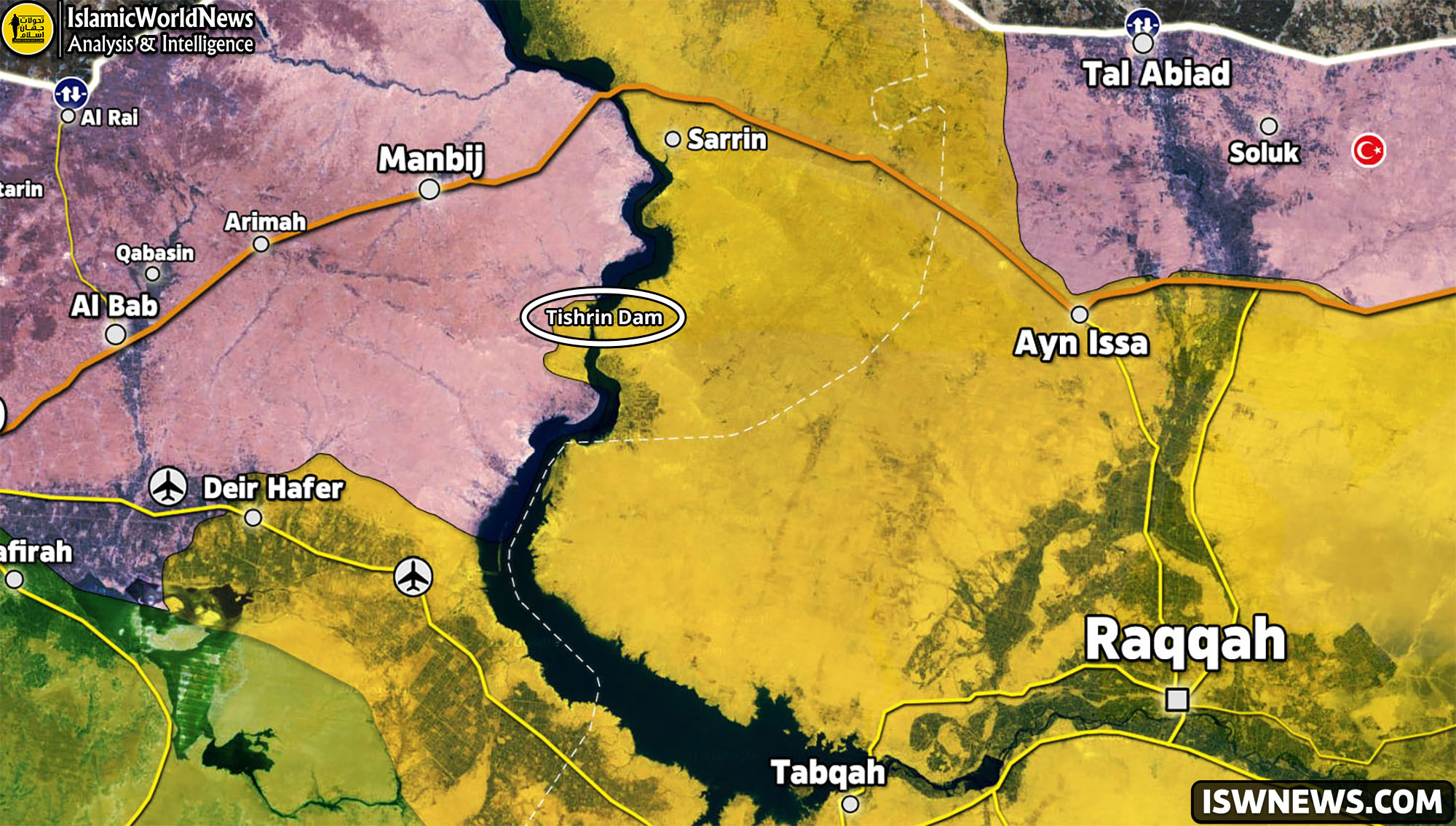
Local sources report that at the same time Al-Jolani forces entered the Tishrin Dam, a delegation from the American coalition and the SDF also visited the area and met with Syrian commanders before departing.
In his first statement following the entry of Al-Julani forces, SDF Commander-in-Chief Mazloum Abdi said, “The agreement regarding the Tishrin Dam has two parts. The first part concerns the dam itself. We have agreed with Damascus that the management and personnel of the dam will remain unchanged. The SDF forces will withdraw from the dam and relocate to the eastern areas. Our forces will hand over their positions to Damascus forces, which will act as a buffer between our forces and the Syrian National Army.”
According to the agreement between the Al-Jolani government and the SDF, the Tishrin Dam has been officially designated as a neutral zone. The gradual reduction of SDF forces and Jaysh al-Watani militants (Syrian National Army – SNA) on both sides of the dam will begin immediately. SNA militants will withdraw from the western outskirts of the dam and be replaced by forces affiliated with Al-Julani. On the eastern side, the dam facilities will be secured by SDF forces.
It is important to note that the Tishrin Dam has experienced intense clashes between SDF forces and SNA militants over the past four months. These clashes continued even after the agreement reached by SDF Commander-in-Chief Mazloum Abdi and Syrian President Ahmed al-Sharaa aslo known as Abu Muhammad al-Julani. However, the exchange of fire between the two sides has decreased significantly and completely stopped in recent days, following mediation efforts by the United States, Turkey, and Damascus.
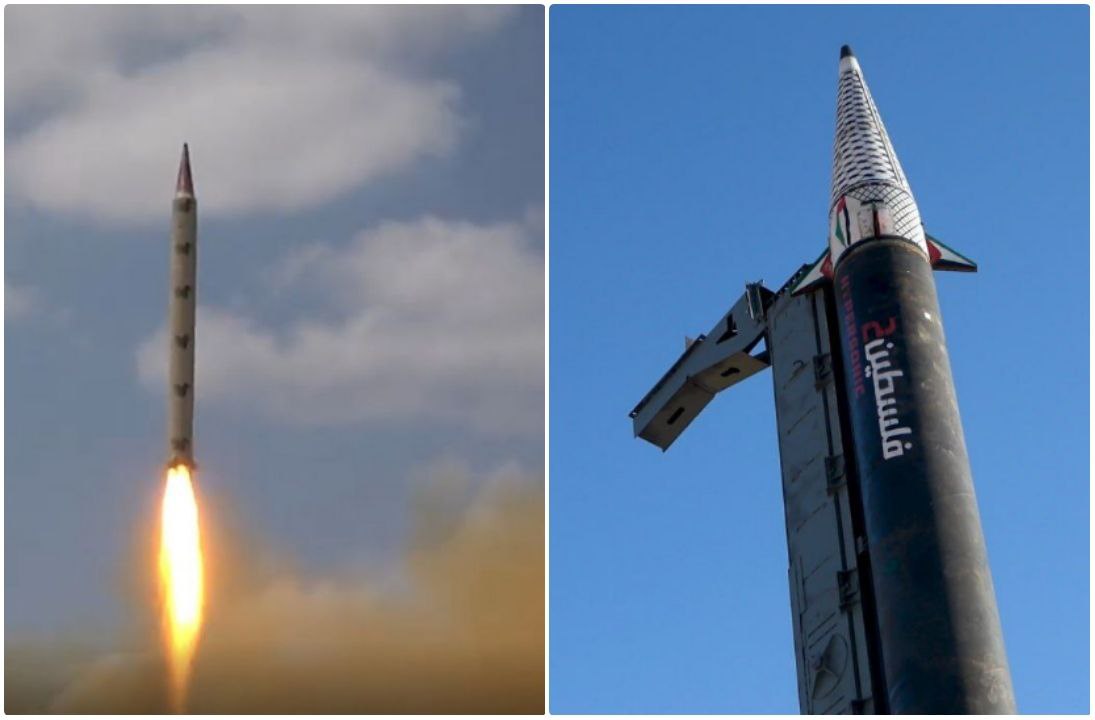
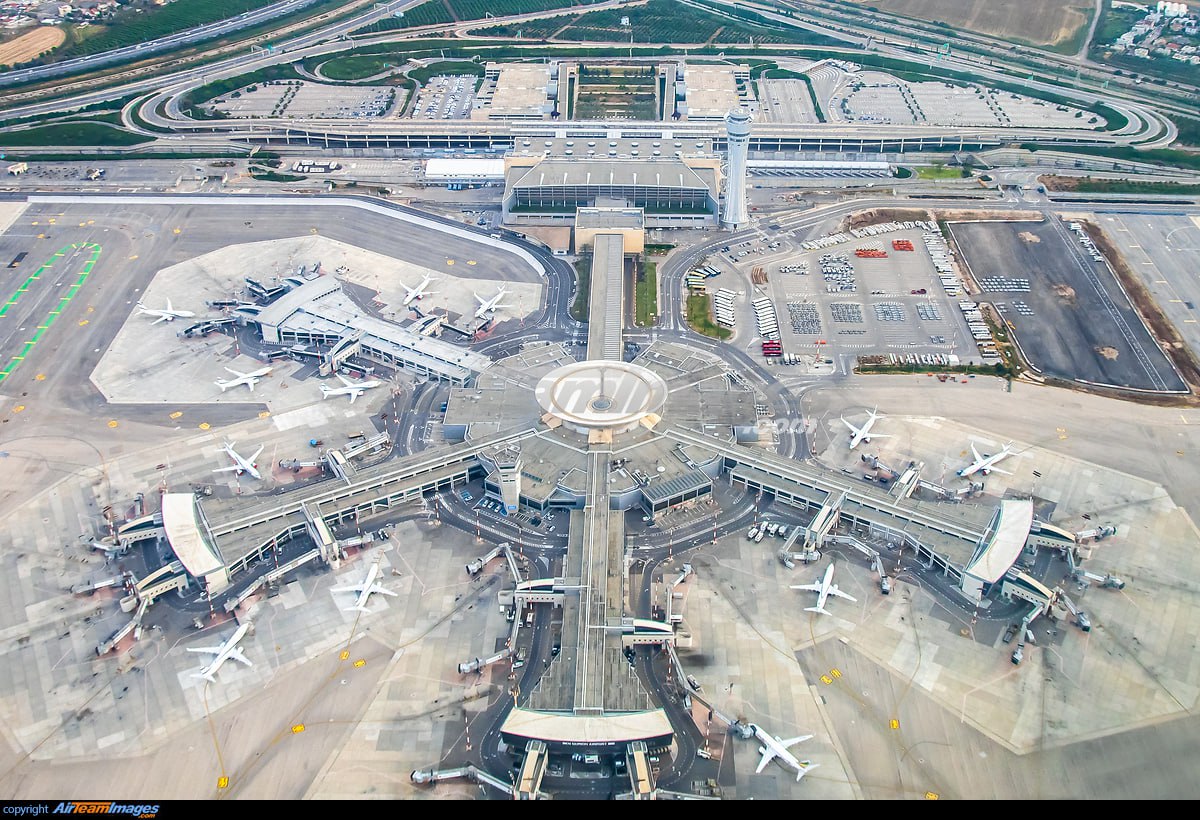
According to a statement by Brigadier General Yahya Saree, the missile force targeted the Sdot Micha base, located east of Ashdod, and Ben Gurion Airport with two Palestine 2 hypersonic missiles and one Zulfiqar ballistic missile.
Footage showing sirens sounding in Tel Aviv a few hours ago.
The Sdot Micha base is one of Israel’s missile facilities, housing Jericho missiles and Arrow missile system batteries.
Additionally, the Yemeni drone force carried out an operation against a vital target in the Ashkelon region using a suicide drone.
Brigadier General Yahya Saree reported that these operations successfully achieved their objectives, leading to the closure of Ben Gurion Airport for about an hour. The attacks caused panic and confusion among residents, with millions of people seeking shelter during the incident.
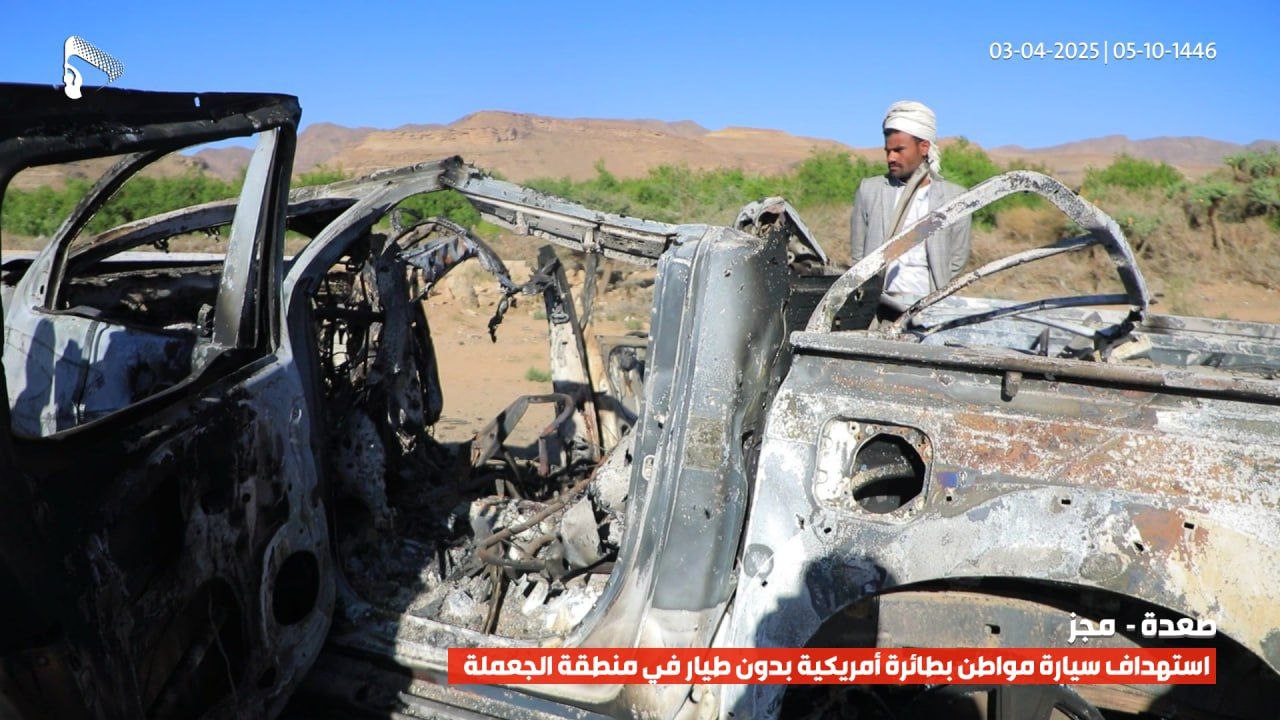
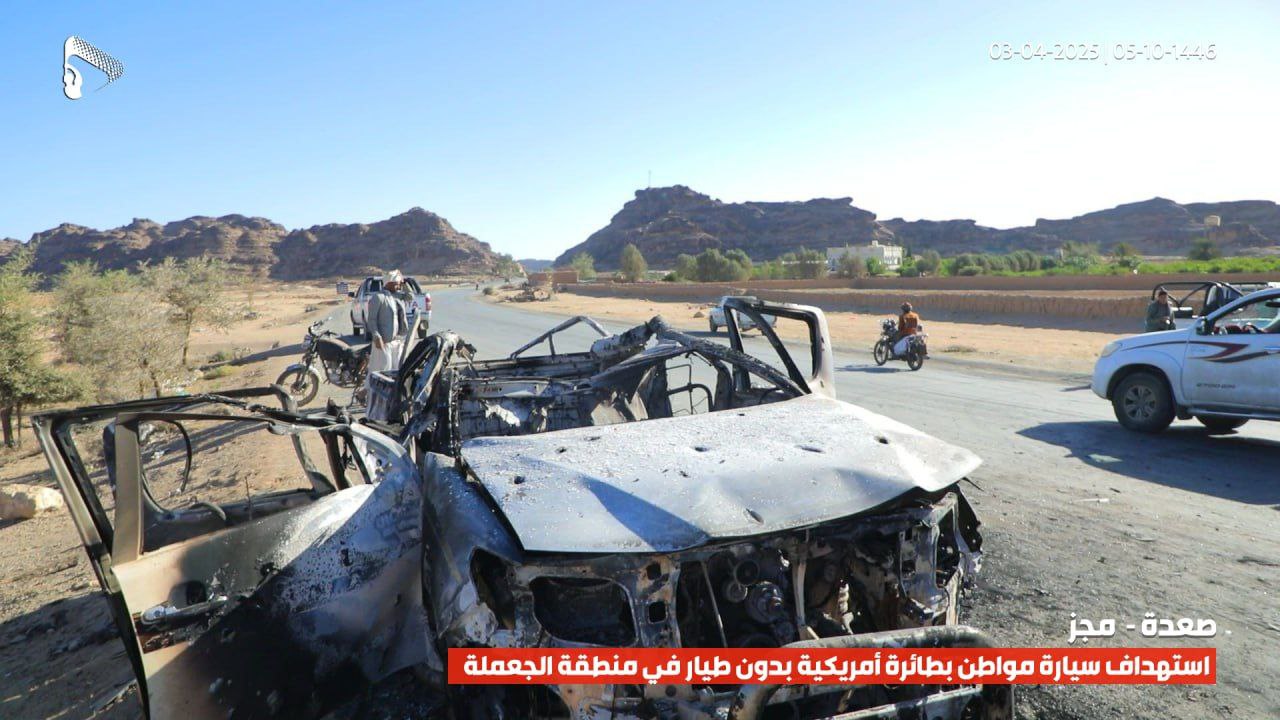
1- Saada: – On April 3, American drones attacked a passenger vehicle in the Al-Jamleh area of the Majaz district in Saada province. It remains unclear whether this attack was aimed at commanders or members of Ansar Allah. However, it indicates that American efforts to gather intelligence on senior Ansar Allah members and to carry out assassinations are intensifying.
Click to view full size
– On April 11, the Saudi coalition conducted artillery attacks in the Shada district.
– On April 11, artillery from the Saudi coalition targeted border villages in the Baqim district.
2- On April 14, some Israeli media outlets reported that American forces stationed in Saudi Arabia successfully countered a missile attack launched by the Yemeni armed forces against occupied territories. The missile was intercepted in Saudi Arabia with support from Saudi air defense systems. These media outlets expressed gratitude to Arab countries for their cooperation in repelling Yemeni attacks.
3- The National Interest magazine published a critical report on the performance of the U.S. military in the Red Sea, stating, “Washington has failed to maintain freedom of navigation in one of the world’s most important choke points.”
As an American investigative media outlet focusing on international relations, The National Interest described the situation in the Red Sea as precarious due to attacks by Yemeni armed forces.
The report added, “The Navy, having lost its position as the ‘world’s largest navy,’ is seeking new methods to counter drones and anti-ship missiles. Traditional aircraft carriers and warships, outfitted with costly and sophisticated fighter jets and missile systems, are inadequate for this new era of warfare.”
The naval operations of Yemeni armed forces against the Israeli regime, which have included closing the port of Eilat and halting Israeli shipping in the Red Sea, have inflicted significant losses on the United States. More serious consequences are anticipated for both the U.S. and European nations, increasing domestic pressure on the Trump administration to continue military actions in Yemen.
4- On April 9, U.S. defense systems, with assistance from Saudi Arabia, successfully countered a ballistic missile attack originating from Yemen. This missile was aimed at positions of the Israeli regime in occupied Palestine and ultimately landed in northern Saudi Arabia.
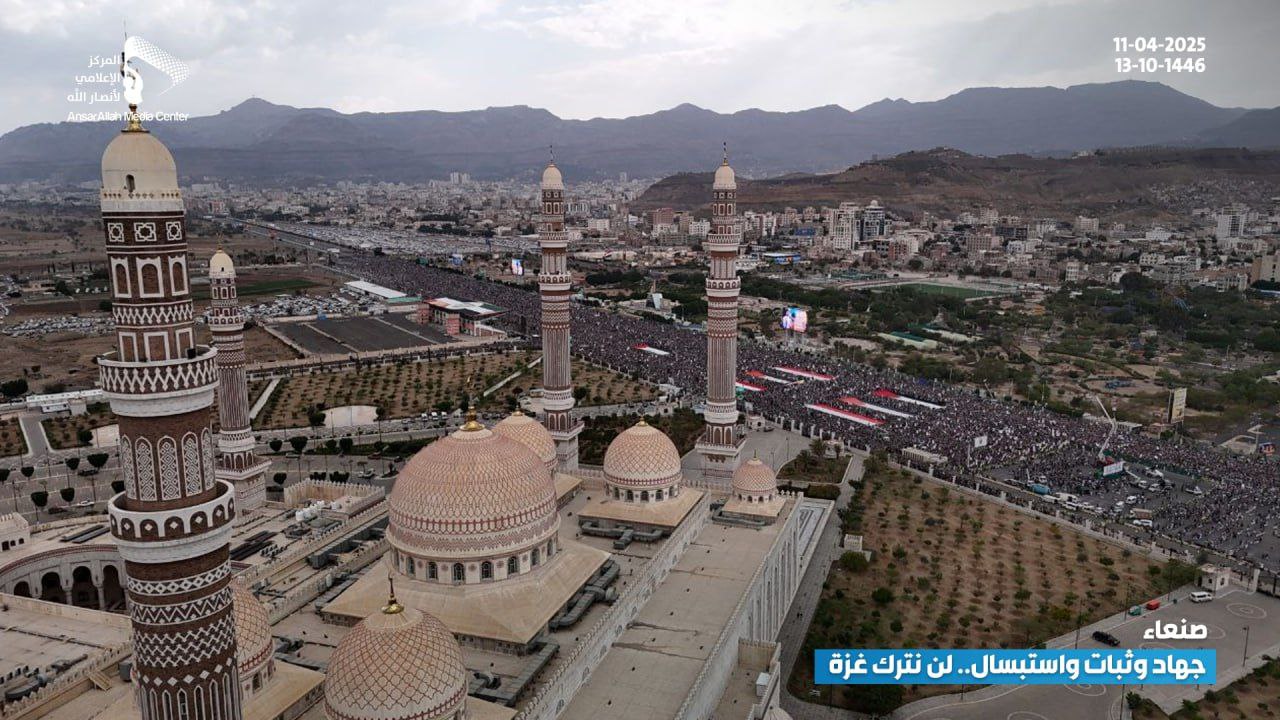
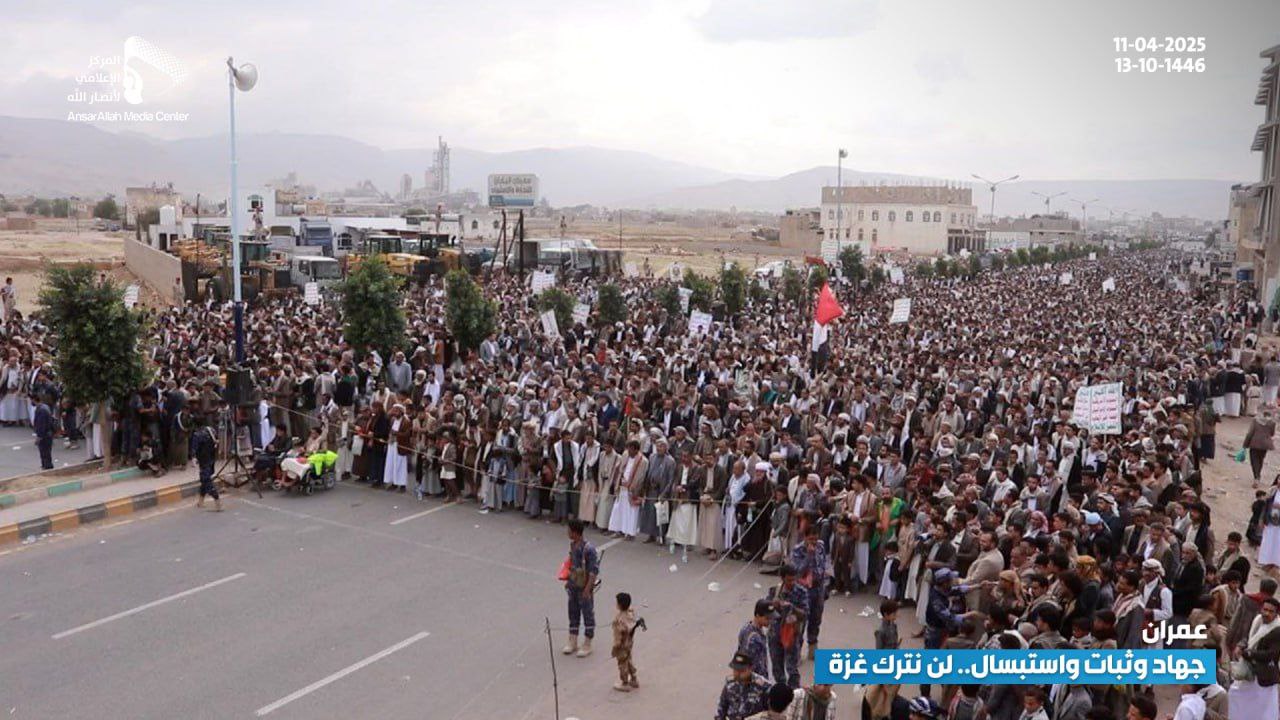
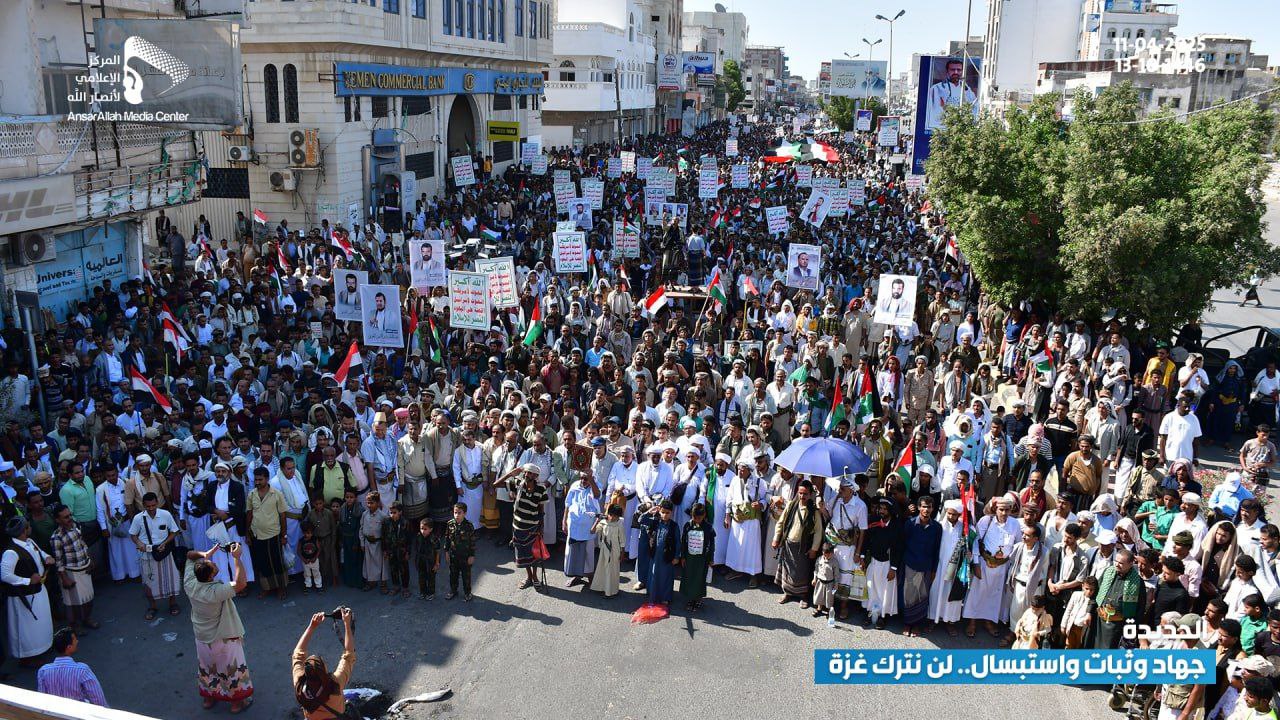
5- On April 11, in response to a call from the leader of Ansar Allah to resume weekly marches supporting Palestine, the Yemeni people organized a march titled “Jihad, Steadfastness, and Courage: We Will Not Abandon Gaza” in the cities of Sana’a, Sa’ada, Al-Hudaydah, and others. In the final statement of the march, the Yemeni people emphasized the need for general mobilization and the activation of an economic boycott against American and Israeli goods.
Click to view full size
6- U.S. warplanes conducted at least 93 airstrikes in the past week, targeting sites in the governorates of Hudaydah, Sana’a, Sa’ada, Hajjah, Imran, Dhamar, and Ibb. The majority of these attacks focused on civilian targets, including residential areas, shops selling solar energy equipment, water facilities, and communication networks.
7- On April 10, the Yemeni Ministry of Foreign Affairs reported that the death toll from U.S. airstrikes in Yemen since mid-March 2025 had reached 107, with 223 people injured. Most of the casualties are children and women.
8- The American media outlet Media Line reported on the impact of Yemeni missile attacks on Israeli tourism, stating:
“With the end of the short ceasefire in Gaza, Israel’s tourism industry is once again on the verge of collapse. The Passover holiday presents a good opportunity to travel to Israel, but the renewed attacks from Yemen threaten this sector. The Houthis’ explicit announcement of a flight ban at Ben Gurion Airport disrupts airline operations, placing the tourism industry in a precarious situation.”
Additionally, the media outlet interviewed Mark Feldman, CEO of Zion Tours, a travel agency in occupied Jerusalem. He commented, “Foreign airlines have confirmed that if missiles fall on Ben Gurion Airport again, they will immediately leave Israel. The Houthis know what they are doing. They are targeting Ben Gurion Airport to harm Israel economically and psychologically, and unfortunately, they have succeeded so far.”
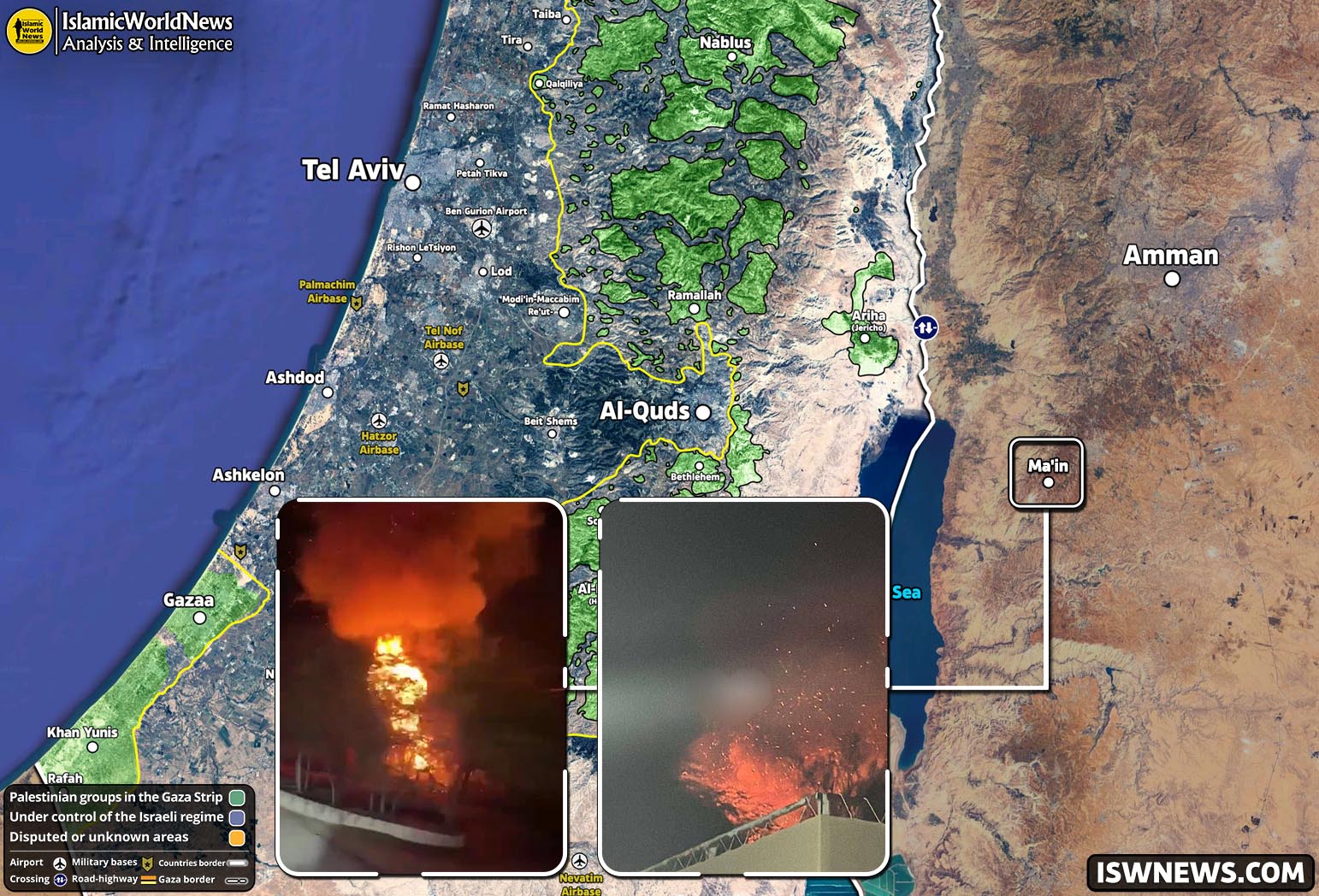
The wreckage of the drone caused a fire in the Ma’in area. Shortly after local residents reported the flames, security and government forces were dispatched to the site of the crash. They managed to control the fire and declared the area off-limits until further notice.
The Ma’in region is part of the Madaba province in western Jordan, located near the Dead Sea. The trajectory of the drone suggests that the attack likely originated from Iraq. The Yemeni armed forces have not clarified how the attack was executed or if they coordinated with Iraqi resistance groups. Meanwhile, both the Israeli and Jordanian military have not addressed the attack’s origin in their statements, focusing instead on their response to the Yemeni drone attack.
The wreckage of the drone caused a fire in the Ma’in area in western Jordan
The renewed participation of the Iraqi resistance in attacks on Israeli positions has broadened the scope of conflict and heightened tensions, potentially imposing greater pressure and damage on Israel. The recent suspension of Iraqi resistance attacks against Israel was shaped by internal pressure from the Iraqi government and the United States.
With the recent developments in Syria and the withdrawal of the new government from the resistance front, the Iraqi front has gained increased significance in confronting Israel; And it is anticipated to play a crucial role in regional developments in the coming months.
According to the leader of Ansar Allah movement, Israel is trying to expand its aerial operations in the region. Consequently, it is inevitable that the Zionists will take more serious measures against Iraqi groups, which could prompt the Americans to directly engage in the conflict with Iraq.
In their statement regarding these attacks, the Yemeni armed forces reiterated their support for the Palestinian people and resistance. They announced that the Great Yemeni forces will persist in conducting naval operations against Israeli shipping in the Red and Arabian Seas, as well as in confronting American attacks, until the war concludes and the siege of the Gaza Strip is lifted.
IWN‘s findings indicate that the drone strike on Tel Aviv marks the 90th air operation conducted by the Yemeni army targeting Israeli positions in occupied Palestine. Additionally, the attack on US warships represents the 201st operation by the Yemeni army against illicit vessels linked to Israel, the US, and Britain.
The operation launched by the Yemeni armed forces to support the Palestinian resistance against the Israeli regime began on October 19, 2023. This initiative resulted in the capture of the Israeli ship, Galaxy Leader, and ongoing missile, drone, and airstrike attacks on over 200 ships associated with Israel. Consequently, shipping by Israeli companies through the Red Sea route has been suspended.
In addition to these attacks on ships, the Yemeni army has conducted over 85 missile and drone operations targeting positions held by the Israeli regime in occupied Palestine. Furthermore, an F-18 Super Hornet fighter jet and 18 American MQ-9 drones have been shot down during the Yemeni conflict with the American-British coalition.
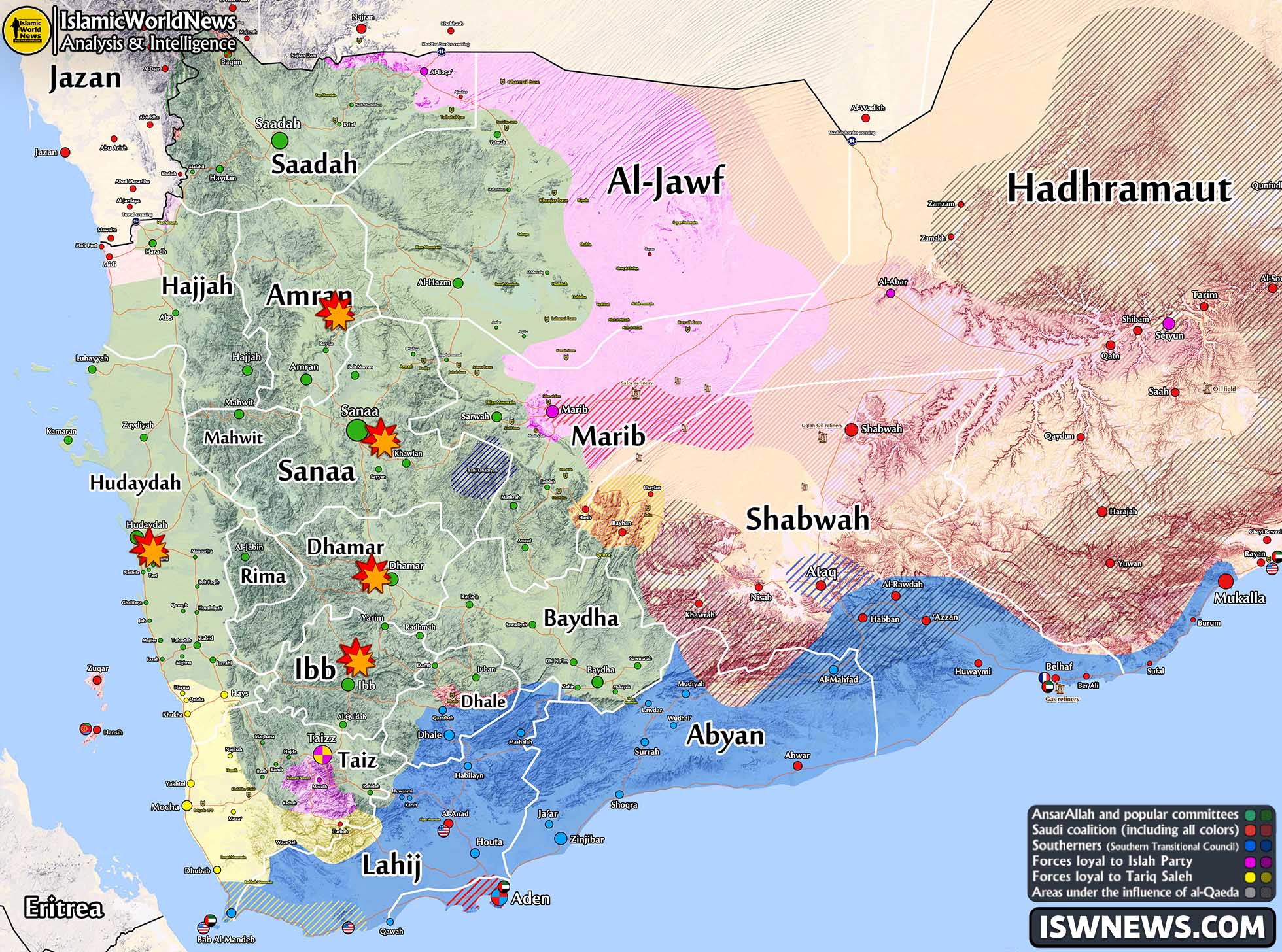
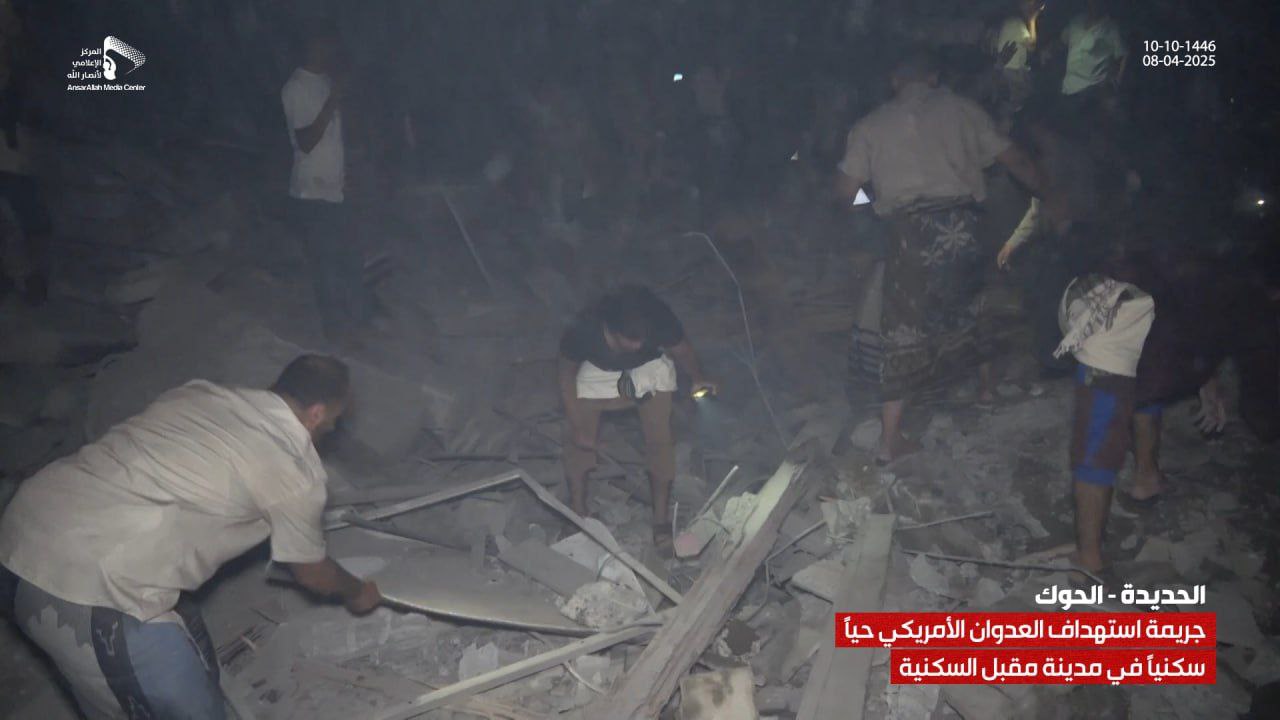
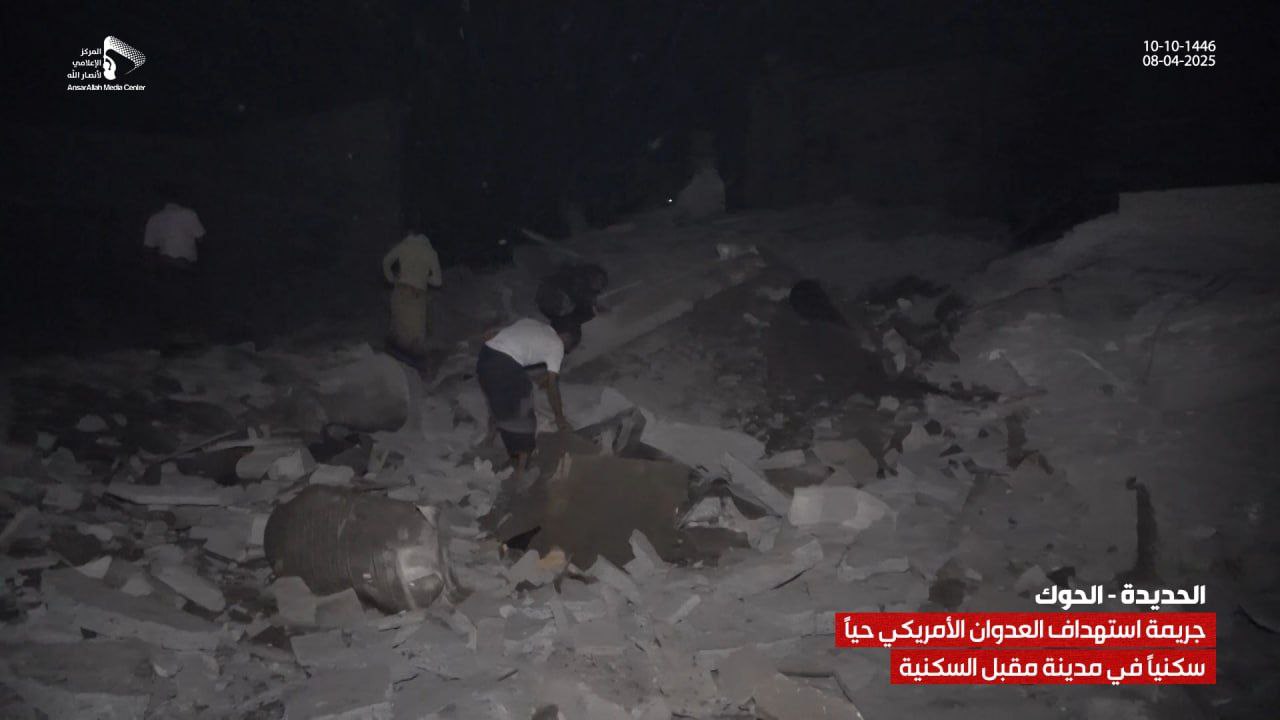
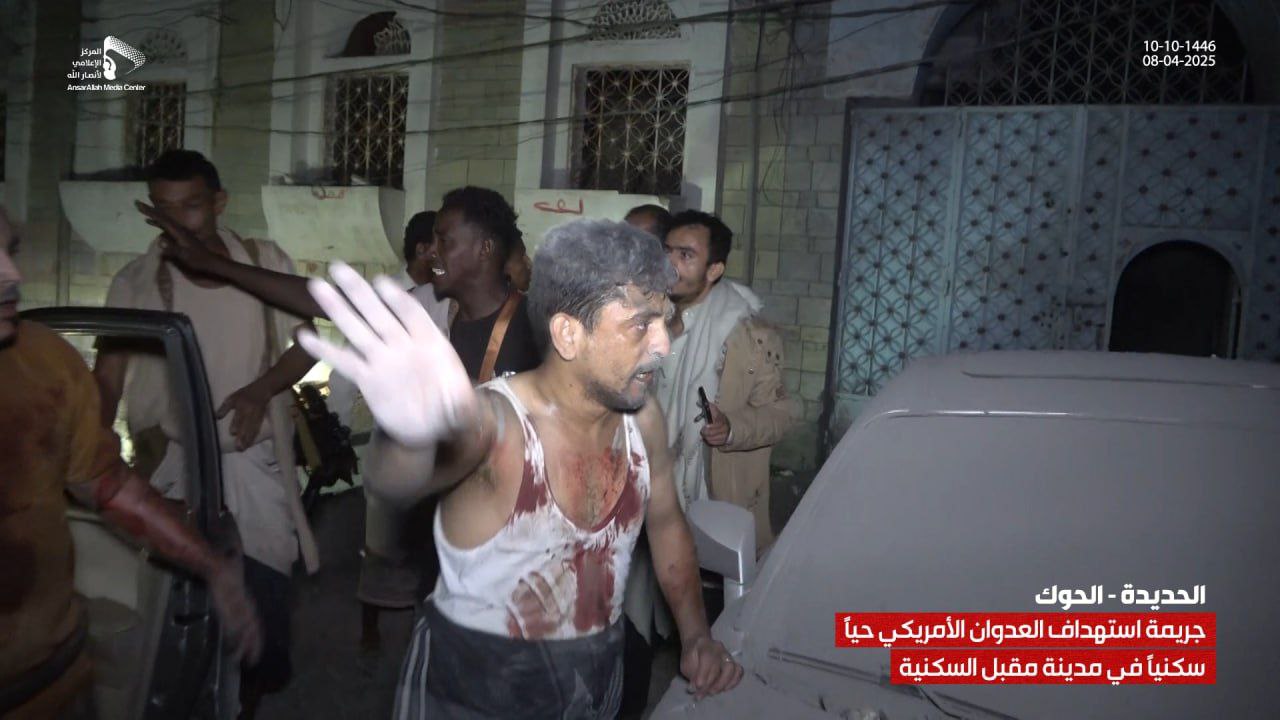
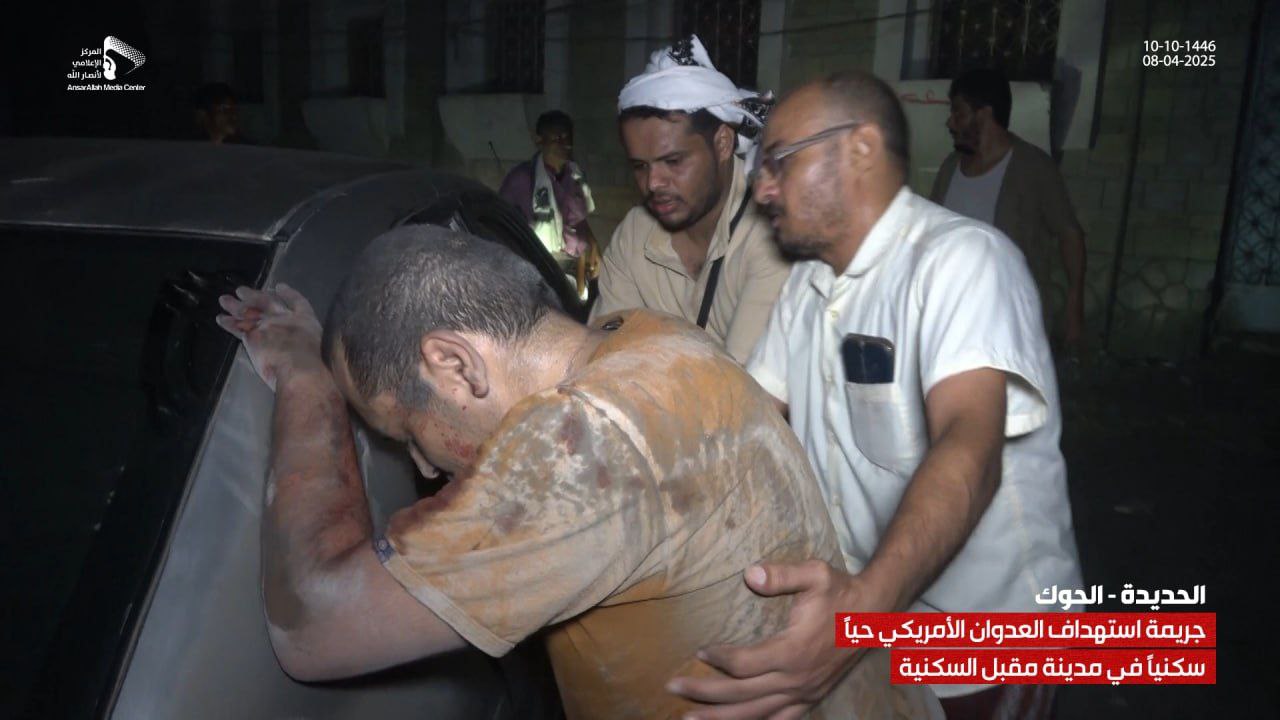
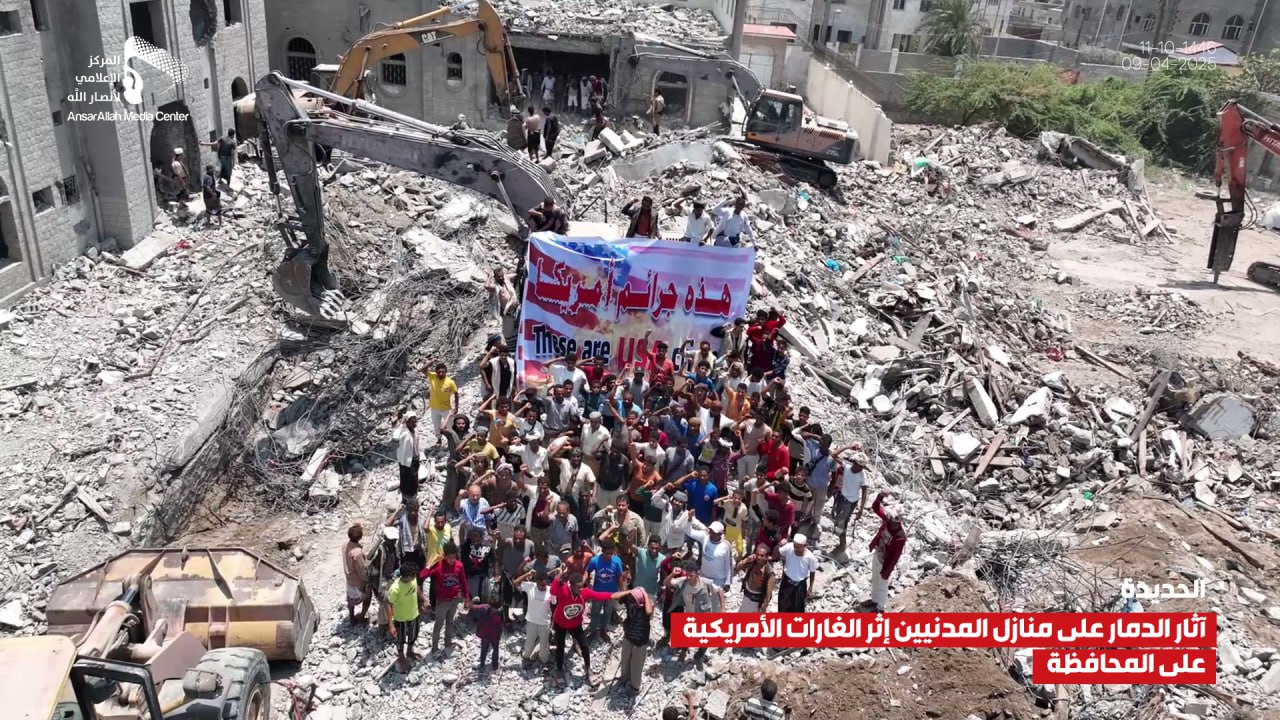
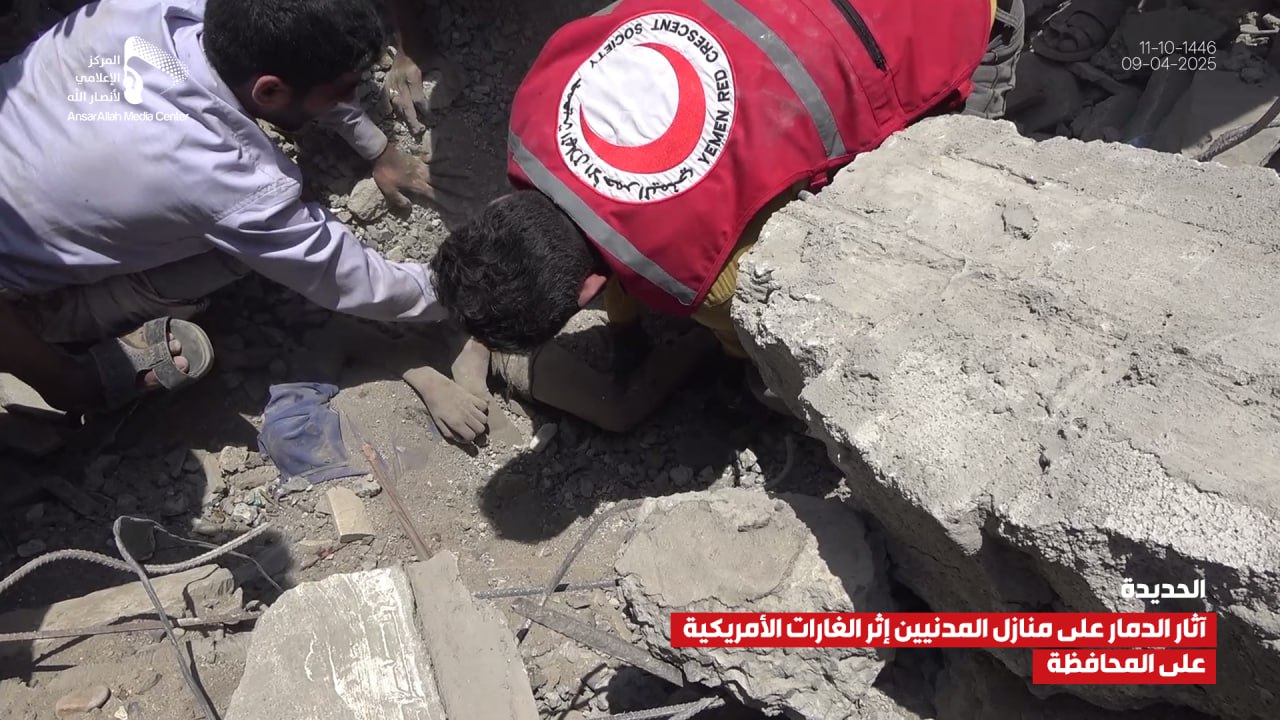
In the past 24 hours, US warplanes have carried out a series of airstrikes across Yemen. A residential building in Amin Muqbil, south of Hudaydah, was hit, along with a communication network in Shawaba, Imran province, disrupting connections. The Zara’iyah area west of Dhamar city and the Jabal Shamahi area in Ibb province also faced destruction. Additionally, Jabal Al-Naqam, on the eastern outskirts of Sanaa province was targeted.
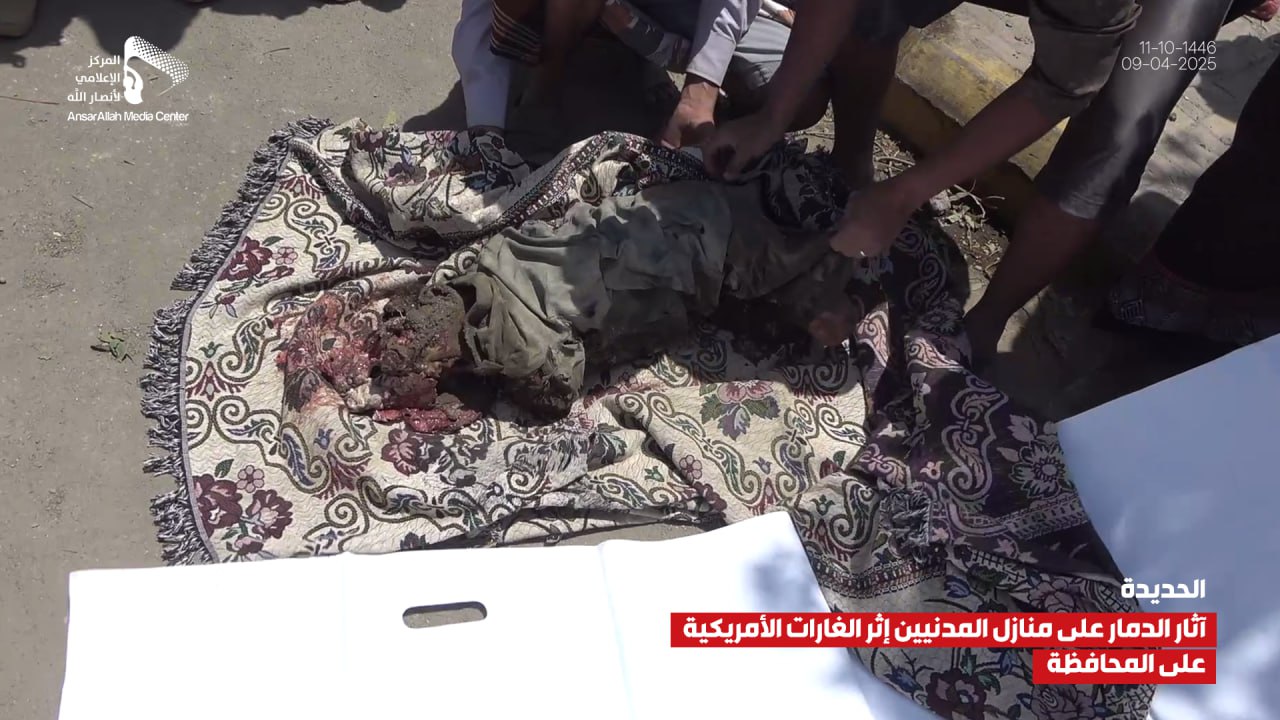
As a result of the attack by US warplanes on the area of Amin Muqbil, south of Hudaydah, 12 people were martyred, including six women and four children, and 15 others were injured.
American officials claim that the primary targets of their airstrikes are military installations and weapons depots, yet the reality on the ground reveals a different situation. Most American attacks are conducted against residential areas, and there are no reports of secondary explosions or heavy smoke indicating the presence of weapons or ammunition. The American military in Yemen is clearly committing war crimes and targeting civilians!
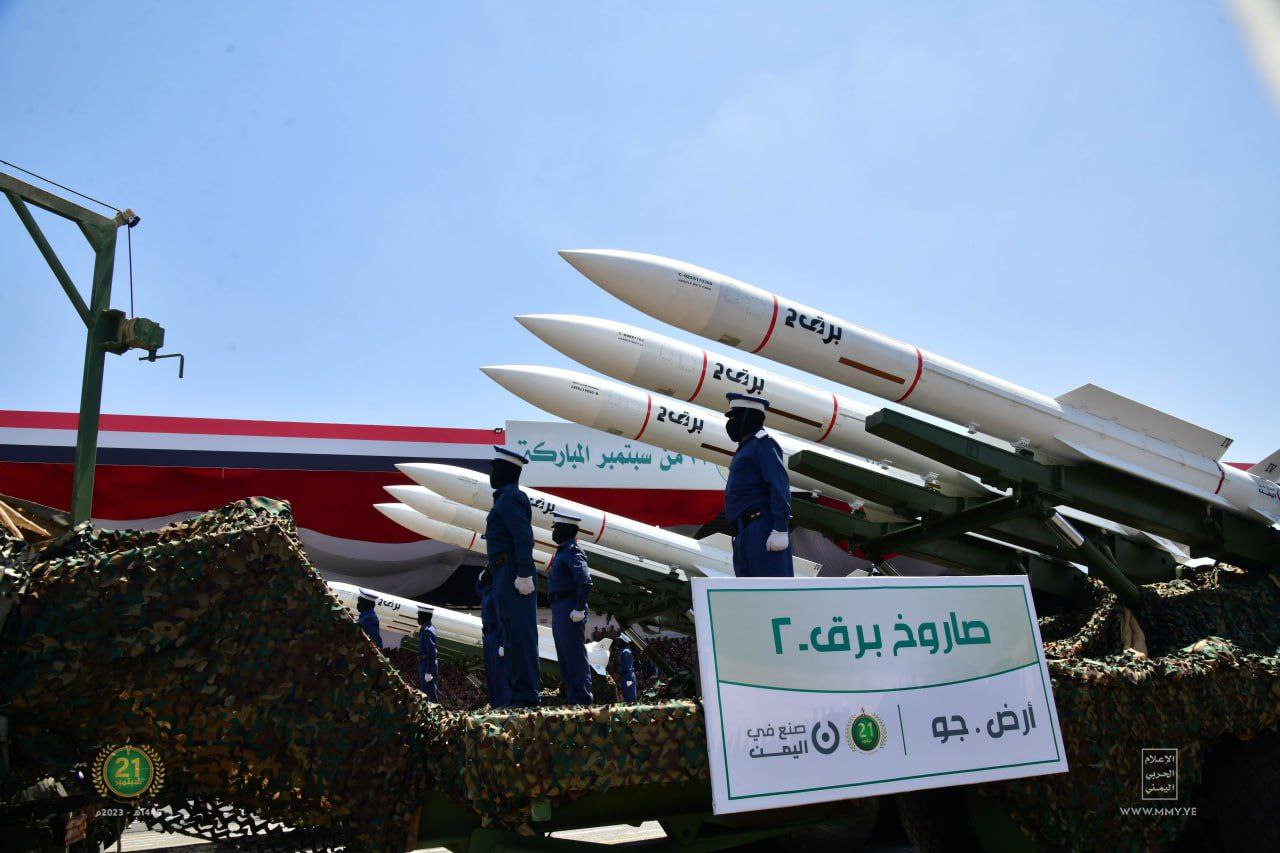
Brigadier General Yahya Saree stated that the Yemeni Armed Forces’ air defense successfully targeted and struck an MQ-9 drone conducting hostile operations in the airspace above Al-Jawf province. This operation utilized a surface-to-air missile developed by Yemeni Defense Industries.
On April 3, the Yemeni Army’s defense forces also successfully destroyed a U.S. MQ-9 drone in Marib province.
This impressive operation highlights the determination and expertise of the Yemeni forces in strengthening their aerial defense capabilities. It’s a testament to their resilience and commitment to protecting their airspace.
This drone marks the 22nd American MQ-9 drone to be shot down during the Yemeni war. Eighteen of these drones were downed during the Yemeni operation to support the Palestinian people and their resistance, titled the “Promised Conquest and Holy Jihad” campaign.
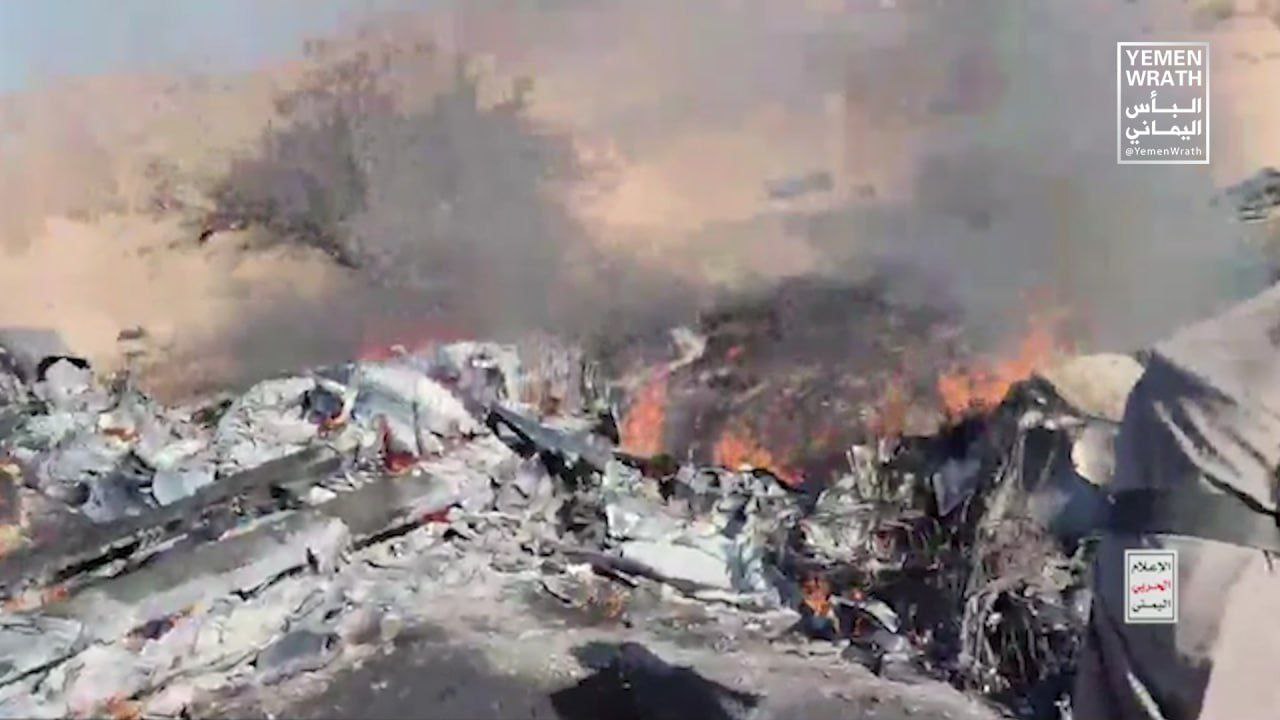
The wreckage of a downed American MQ-9 drone in Al-Jawf. The drone was shot down this morning by a Yemeni army air defense missile.
Since the onset of the Yemeni war, the Yemeni Armed Forces have successfully downed 115 military aircraft from the US, Saudi Arabia, UAE, Morocco, Bahrain, and Jordan across various fronts. Among these, 25 aircraft are attributed to the US military, comprising 22 MQ-9 drones, one F/A-18F fighter jet, one UH-60M helicopter, and one V-22 Osprey helicopter.
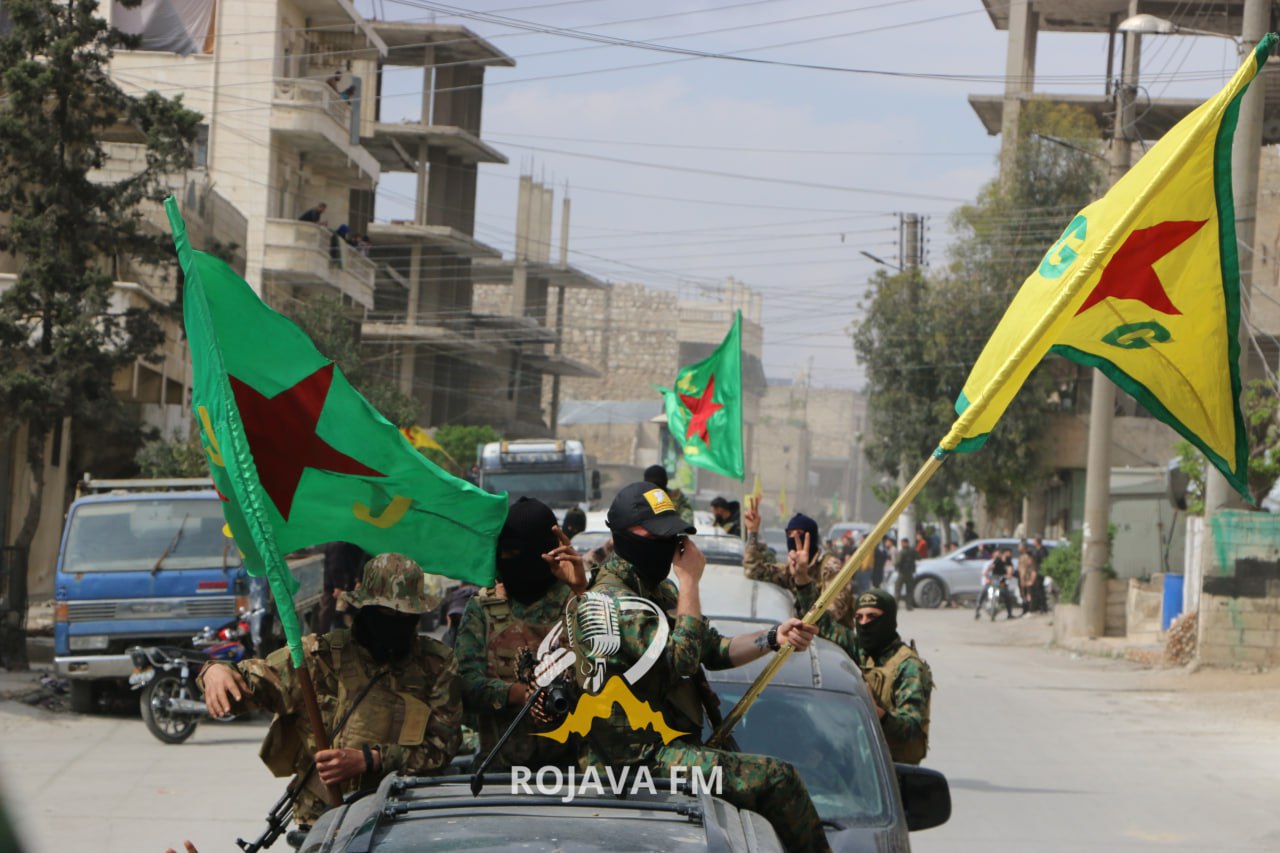
Following the onset of armed clashes in Aleppo, prior to the collapse of Bashar al-Assad’s government, a contingent of the Syrian Democratic Forces (SDF) was deployed to the Sheikh Maqsoud and Ashrafiyah neighborhoods, where the majority of residents are Kurds.
After the fall of Assad’s regime and the city’s capture by Tahrir al-Sham and its allies, the SDF maintained their presence in these areas and engaged in ongoing clashes with militant groups. Consequently, Sheikh Maqsoud and Ashrafiyah have experienced numerous armed confrontations in recent months. However, these clashes have significantly decreased following an agreement between Mazloum Abdi and Abu Muhammad al-Julani.
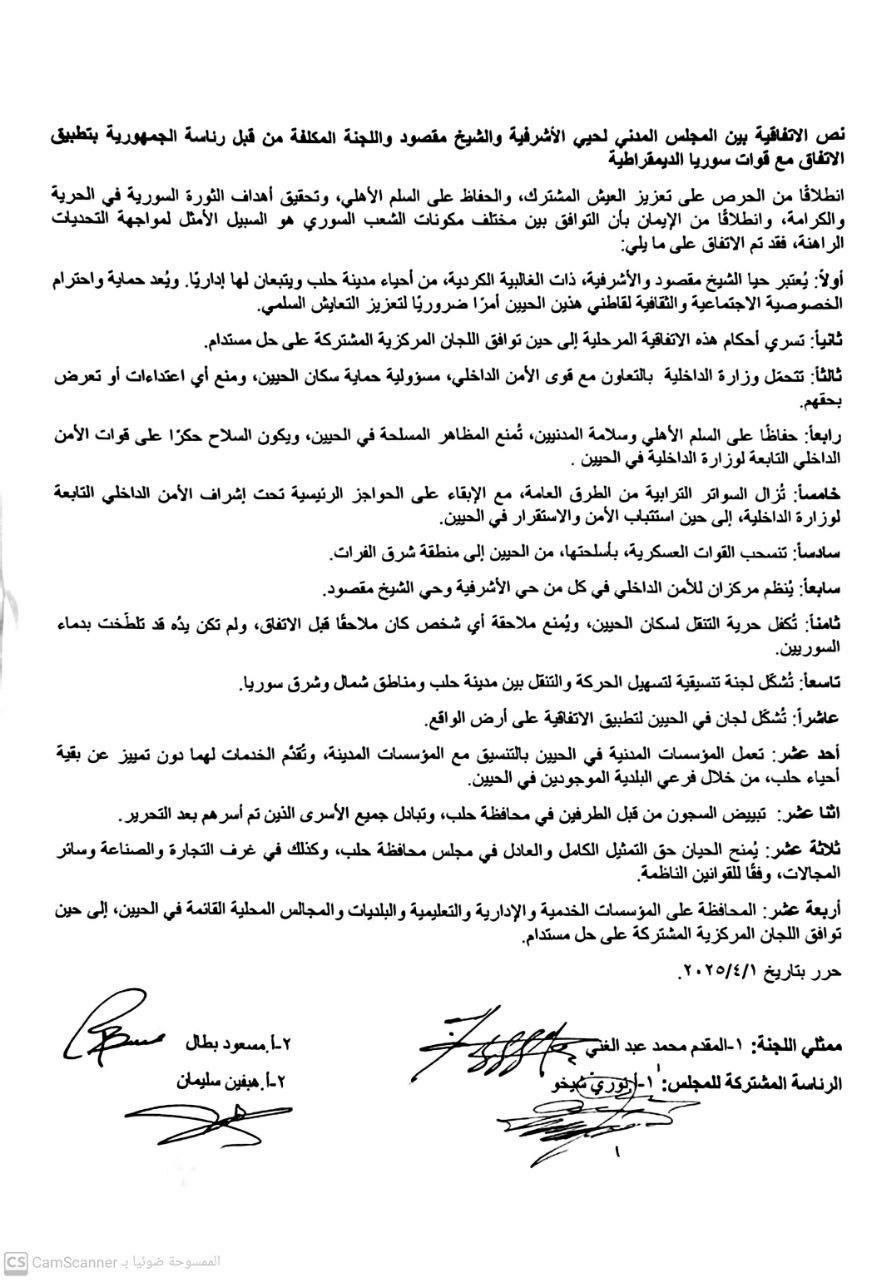
With tensions lowered and clashes ceased, members of the Civil Council representing Sheikh Maqsoud and Ashrafiyah neighborhoods held a meeting with representatives of the Syrian government. During this meeting, the parties signed an agreement consisting of 14 clauses regarding the status of the aforementioned neighborhoods.
Image of the agreement between the SDF and the Syrian government
The provisions of the agreement are as follows:
Neighborhood Status: Sheikh Maqsoud and Ashrafiyah are recognized as part of Aleppo city and are administratively affiliated with it. Ensuring the protection of both neighborhoods is essential for promoting peaceful living.
Temporary Nature: This agreement is temporary and will remain in effect until a permanent arrangement is established by joint committees.
Security Responsibility: The Syrian Ministry of Interior and the Internal Security Forces will be responsible for the protection of these neighborhoods.
Weapon Prohibition: To maintain security and tranquility, carrying weapons within these neighborhoods is prohibited. Only the Internal Security Forces under the oversight of the Syrian Ministry of Interior are authorized to possess weapons.
Public Road Access: All public roads will remain open, and the main checkpoints will be controlled by the Syrian Internal Security Forces until conditions stabilize in these neighborhoods.
Withdrawal of Armed Elements: Armed elements present in Sheikh Maqsoud and Ashrafiyah must withdraw to areas east of the Euphrates River.
Establishment of Security Centers: Two centers affiliated with the Syrian Internal Security Forces will be established in the Sheikh Maqsoud and Ashrafiyah neighborhoods.
Freedom of Movement: Residents of these neighborhoods will be allowed free movement, and no one not involved in crimes against Syrians should be detained.
Coordination Committee: A coordination committee will be created to facilitate movement between Aleppo city and the northern and eastern regions of Syria.
Implementation Committees: Committees will be established in both neighborhoods to oversee the implementation of this agreement.
Civil Institutions Coordination: All civil institutions in these neighborhoods will coordinate with other civil entities. They will assist other institutions and provide services through the two branches of the Sheikh Maqsoud and Ashrafiyah municipalities, without discrimination.
Prisoner Release and Exchange: Prisoners from both sides will be released, and all individuals detained after the liberation of the city will be exchanged.
Representation in Local Governance: Representatives from Sheikh Maqsoud and Ashrafiyah will participate in the Aleppo Governorate Council, the Chamber of Commerce, and all other relevant departments in accordance with existing laws.
Continued Operation of Local Councils: All service, executive, educational, municipal, and local councils in these neighborhoods will continue to function until a permanent agreement is finalized by the joint committees.
In accordance with the sixth provision of the agreement, the withdrawal of the Syrian Democratic Forces from Sheikh Maqsoud and Ashrafiyah began yesterday, with the SDF leaving the neighborhoods armed. Furthermore, as stipulated in the twelfth clause, a total of 146 prisoners from Sheikh Maqsoud and Ashrafiyah, along with 97 individuals affiliated with the Syrian government, were released by both sides.