A bus carrying 17 members of the 18th Armored Division of the Syrian army stopped due to a technical malfunction in the village of Al-Bayda in eastern Homs.
ISIS terrorists misused the adverse weather conditions and limited visibility caused by a dust storm in order to target the bus transporting the Syrian soldiers.
In the terrorist attack, 12 members of the Syrian army were martyred, while five soldiers left the site of the confrontation and retreated.
In recent years, the desert areas in Syria as well as various districts of Homs Governorate witnessed daily operations by ISIS terrorists against civilians, facilities, and military posts, despite ongoing operations by the Syrian army.
Additionally, hundreds of Syrian army personnel and their allies have been martyred during those clearing operations in the Syrian desert, yet hidden elements of the ISIS terrorist group continue to be present in these areas, threatening the security of certain regions in Syria with their terrorist actions.
Turkey’s Interior Minister Ali Yerlikaya announced that preliminary evidence indicates that the recent terrorist attack in Ankara was carried out by the Kurdistan Workers’ Party (PKK).
Hours after this statement, Turkish military aircraft targeted PKK positions in northern Iraq and Syrian Democratic Forces (SDF) bases in northern Syria. Turkish-backed militants also launched several artillery attacks on SDF positions in northern Syria.
The Ministry of Defense of Turkey has announced that in response to yesterday’s terrorist attack in Ankara, it has bombed 32 headquarters of the Kurdistan Workers’ Party and its allies in northern Iraq and Syria, and these attacks will continue.
Turkish army attacks on targets in northern Syria
Based on investigations, the Turkish army and its allied militants have launched attacks on the positions of the SDF forces in various areas including Qamishli, Malikiya, Kobani (Ain al-Arab), Manbij, Qahtaniyah, Amuda, Ain Issa, Tal Tamr, and Tal Rifat. These attacks resulted in the deaths of at least 4 people and injuries to more than 20 others. Additionally, Turkish attacks targeted several important infrastructure facilities in northern Syria.
Areas targeted by Turkish army and its militants / Click to view in full size
Following these attacks, the Syrian Democratic Forces evacuated some of their headquarters in northern Syria. The military and security meetings of the SDF commanders in Hasakah, Qamishli, Ain al-Arab, and Manbij were canceled until further notice.
Mazloum Abdi, the commander-in-chief of the Syrian Democratic Forces (SDF), condemned Turkey’s recent attacks on northern Syria. He stated that these attacks have targeted civilian, service, and health centers, which is considered a war crime.
It is worth mentioning that on October 23, two armed individuals attacked the Turkish Aerospace Industries Company near Ankara. During this attack, 5 people were killed and 22 others were injured. Some Turkish officials and media believe that this operation was carried out by PKK forces.
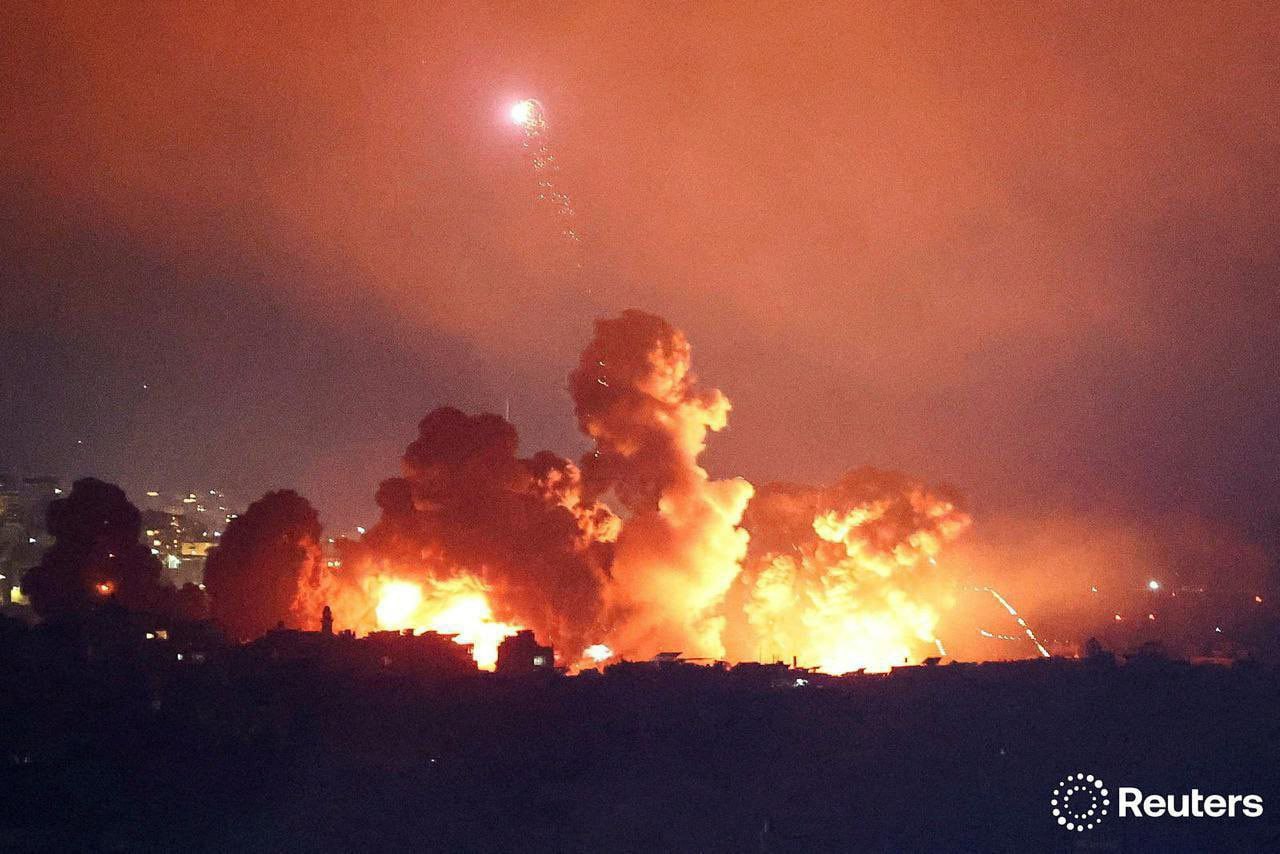
A Syrian military source stated “At around 03:40 am (local time) on Thursday, the Israeli regime fired several missiles from the occupied Golan and northern Lebanon, at two points in the neighborhood of Kafar Souseh in Damascus and one military point in the suburbs of Homs. This attack resulted in the martyrdom of one soldier, the wounding of seven others and the occurrence of material damages.”
Israel’s airstrikes in Kafar Souseh
The images that have been published show that a bridge in the Al-Qusayr region of Homs province was targeted. In recent weeks, the Zionist regime has carried out attacks on the shared border areas between Syria and Lebanon, particularly in the Al-Qusayr region. These attacks are primarily intended to disrupt Hezbollah’s supply routes and to prevent Syria from supporting the Islamic resistance in Lebanon.
Israel’s airstrikes in Homs
It is worth mentioning that on October 21, the Israeli military planes targeted the Mezzeh area of Damascus, resulting in the deaths of two civilians and injuries to three others.
In recent years, the Israeli army has frequently launched missile and air strikes targeting the positions of the resistance and the Syrian army. Since the start of the Al-Aqsa storm operation and Syria’s significant support for the resistance axis, Israeli air strikes on various areas of Syria have significantly increased, particularly in Damascus and Homs.
Over the past year, Israel has conducted multiple attacks to assassinate senior resistance commanders and destroy support centers and ammunition depots, resulting in the deaths and injuries of hundreds of resistance forces and Syrian civilians.
Armed people raided the Turkish Aerospace Industries on October 23, targeting several individuals present at the site, leading to the deaths of five people and injuries to 22 others.
Turkiye’s Minister of Interior Ali Yerlikaya announced following the incident that a terrorist attack on the Turkish aerospace facilities occurred at 15:26 (local time) on Wednesday.
He added that both perpetrators, who were a woman and a man, were gunned down.
“Our efforts to identify the terrorists continue, and we will soon provide more information about the terrorist group responsible for this attack,” the minister promised.
Images of the assailants
It has been claimed that this operation was carried out by members of the Kurdistan Workers’ Party (PKK), but the group has not issued any statement regarding this incident so far.
According to the Turkish Radio and Television Supreme Council, a court order has imposed restrictions on broadcasting news stories related to the terrorist incident.
Lebanon’s Hezbollah confirmed the martyrdom of Sayyed Hashem Safi Al-Din, the head of Hezbollah’s executive council, in the terrorist attack by the Zionist army fighter jets on the suburbs of Beirut on October 5.
Last night the spokesman for the Israeli regime’s army Admiral Daniel Hagari also announced in a statement that the head of Hezbollah’s Executive Council Sayyed Hashem Safi al-Din and head of Hezbollah’s intelligence section Hussein Ali Hazimeh were assassinated by Israeli airstrikes in Beirut suburb.
The Israeli statement was issued following the removal of debris at the site of the Israeli airstrike in Beirut suburb. Local media reported that rescue forces retrieved the bodies of 24 individuals from the site, all of whom were senior members of the Lebanese resistance movement, including Sayyed Hashem Safi al-Din.
Martyr Sayyed Hashem Safieddine
Sayyed Hashem Safieddine was the head of Hezbollah’s executive council, who was mentioned as a potential successor of martyr Sayyed Hassan Nasrallah, the secretary general of Hezbollah. Sayyed Hashem was the cousin of Sayyed Hassan Nasrallah and was his companion and supporter since the founding of Hezbollah. Since 1992, Safieddine has been the head of Hezbollah’s executive council and was one of the seven members of Hezbollah’s decision-making advisory council.
Sayyed Hashem Safieddine was martyred on October 5, during the terrorist attack of the Zionist regime’s army fighter jets on the neighborhood of Hara Harik located in the suburbs of Beirut.
The Israeli army bombarded the location of Martyr Sayyed Hashim Safiuddin with bunker booster bombsIsraeli airstrikes 1Israeli airstrikes 2
Spokesman for the Yemeni Armed Forces Brigadier General Yahya Saree detailed the aerial operation, stating that the missile unit of the Yemeni armed forces targeted a military base belonging to the Israeli regime in the eastern area of the occupied region of Jaffa (Tel Aviv) with the Palestine-2 ballistic missile. This missile successfully reached its target by bypassing US and Israeli defense systems.
According to the spokesman, this operation is part of the fifth phase of the escalation of the Promised Victory Battle and the sacred fight in support of Palestinian fighters’ Operation Al-Aqsa Storm. He also added that the Yemeni armed forces will continue their military operations against the Tel Aviv regime until the end of aggressions, the lifting of the blockade on the Gaza Strip, and the cessation of incursions into Lebanon.
The Palestine-2 missile is one of the state-of-the-art missiles of the Yemeni Armed Forces and is similar to the Iran-made Khaybar Shekan 2 missile. Its range is over 2,150 kilometers, and its speed is reported to be 16 Mach. The Yemeni army has challenged the Israeli regime’s defense systems multiple times with the launch of this missile.
Palestine-2 missile
Statistics indicate that this missile attack marks the 34th aerial operation by the Yemeni Armed Forces in occupied territories of Palestine using ballistic missiles, cruise missiles, and suicide drones.
The Yemeni Armed Forces have kicked off these operations in support of the Palestinian people and their resistance against the Israeli regime since October 19, 2023, against the Israeli regime in occupied Palestinian territory and along the maritime route from the Gulf of Aden to the Red Sea. These series of operations witnessed a climax with the seizure of the Israeli ship Galaxy Leader plus ongoing missile, drone, and suicide drone attacks on more than 150 vessels linked to the regime, leading to a halt in shipping by Israeli companies via the Red Sea.
According to a statement released by spokesman for the Israeli regime’s army Admiral Daniel Hagari, head of Hezbollah’s Executive Council Sayyed Hashem Safi al-Din and head of Hezbollah’s intelligence section Hussein Ali Hazimeh were assassinated in an airstrike by Israeli fighter jets on October 5, when the Israeli warplanes targeted a building in Beirut suburb.
The statement was issued following the removal of debris at the site of the Israeli airstrike in Beirut suburb. Local media reported that rescue forces retrieved the bodies of 24 individuals from the site, all of whom were senior members of the Lebanese resistance movement, including Sayyed Hashem Safi al-Din.
Despite the official declaration from the Israeli army, Hezbollah has not yet issued a statement regarding the martyrdom of its senior members.
Sayyed Hashem Safi al-Din is the head of Hezbollah’s Executive Council, who had been mentioned as a potential successor to the martyr Sayyed Hassan Nasrallah, the Secretary-General of Hezbollah.
The Israeli army’s infantry forces have begun advancing in this area with air support since yesterday evening. In response, Hezbollah’s anti-armor unit has engaged the Israeli tanks. They have successfully destroyed three Merkava tanks with anti-armor guided missiles in Tal al-Aqaba, located in the east of Rab Al-Thalathin and the lands between Rab Al-Thalathin and Taibah.
The attack on the southern part of Taibah village started this morning. Hezbollah successfully neutralized the Israeli army’s attacks in this area through armed conflict.
Click to view full size
In addition to these clashes, Hezbollah’s missile forces have crushed the gatherings of Israeli soldiers in the town of Kiryat Shemona, Misgav Aam, Marj base and around the border village of Al-Udaysah and Khale al-Asaker in the west of Al-Udaysah (3 times) with rocket attacks. Israeli fighter jets also attacked various buildings in Rab Al-Thalathin and Taibah more than 10 times.
The villages of Taibah, Rab Al-Thalathin, and Markaba serve as Hezbollah’s primary defense line in this area. It is crucial to maintain this line in order to counter any future advances by the Israeli army in southern Lebanon. These areas are strategically located, allowing Hezbollah to inflict heavy casualties and mount a strong defense by using anti-armor missiles and rockets.
In recent weeks, there have been many speculations about the possible attack of the Israeli regime on Iran. Many believe that Israel will fire missiles at Iran from the sky of Iraq like last time. But another possibility that is not addressed is the use of tanker aircraft and the sky of international waters and attacking from the south.
Although this model of attack may not seem reasonable considering Iran’s long-range radar capabilities and will probably destroy the “element of surprise” intended by Israel; However, it is by no means out of the question.
Iran has explicitly stated that any country that provides its skies to attack Iran will be Iran’s next target. Iraq, whose situation is clear, and Saudi Arabia do not have any desire to have a conflict with Iran at the moment. So maybe Israel is looking for another way to attack.
For years, Israelis have been practicing simulating attacks on distant targets with the Americans. In recent months, they have attacked Yemen’s Hudaydah twice in the same manner.
If Israel plans to use this strategy for the airstrikes, it’s important to note that the regime’s fighter jets, with aerial refueling support, may fly over the Red Sea, bypassing Yemen, and then launch missiles from the northern Arabian Sea.
It is important to mention that in recent weeks, several American refueling planes have entered the West Asian region in addition to what was already in the region. This could indicate preparations for a potential attack in the way that we mentioned.
The Israeli army launched a ground attack on the village of Markaba yesterday afternoon. They moved troops and armored vehicles from the Marj and Hunin bases to Markaba and Rab Al-Thalathin, entering the eastern neighborhoods of Markaba with heavy air support.
Heavy clashes between the Israeli army’s 98th Division and Hezbollah fighters continue in the area.
Latest military situation in the Markaba area
In addition to the eastern front of Markaba, the Zionists are also attempting to enter the west of Markaba from the Udaysah-Rab Al-Thalathin junction. If the Israelis manage to cross the three-way junction, the fall of Markaba is inevitable.
Israeli armored vehicles are stationed in the Rab Al-Thalathin axis but have not entered the village yet.
In the last two days, Hezbollah has attacked the gatherings and positions of the Israeli army around Markaba 10 times, causing significant casualties to the Israeli army.
According to previous press releases, the Israeli military has chosen the scenario of creating a security border strip in southern Lebanon for its ground operations. At this time, they are implementing a scorched earth policy, claiming to eliminate the Lebanese resistance movement’s military facilities and prevent Hezbollah from returning to the border areas by completely destroying the towns and villages in southern Lebanon. This has been executed since the onset of the ground operations in the villages of Yaroun, Blida, Mhaybib, Kafr Kila, Al-Adisa, and other border regions, and as time passes, we will see more visual documentation of this war atrocity and humanitarian disaster.
Kafr Kila, Al-Adisa, Rab El Thalathine, and Markaba: Based on released images, the Israeli military has retreated from the villages of Kafr Kila and Al-Adisa. However, this retreat was not due to a strong resistance from Hezbollah or a failure to penetrate these areas, but rather due to their plan to implement the maximum destruction of buildings in Kafr Kila and Al-Adisa; thus, the Israeli regime is of the opinion that they have achieved the main goal in this axis.
The situation of Kfar Kala before and after the ground operation of the Israeli army
In the eastern axis of Rab El Thalathine and Markaba, the situation remains unchanged. According to the latest reports, Hezbollah targeted Israeli troops’ positions with rocket and artillery attacks.
In the axis of Meiss El-Jabal and Blida, the Israeli military forces are advancing toward the center of those areas with bulldozers and cranes, demolishing residential buildings. Given the Israeli army’s control over the northern road and the destruction of Mhaybib, the Blida region has practically collapsed, and it seems that the total destruction of this village is just a matter of time.
Click to view full size
Ayta ash Shab and Ramieh: In the Ayta ash Shab axis, a fierce battle is underway in the western areas of this town, and according to videos released by the Israeli regime’s army; most buildings have been destroyed by airstrikes. In the eastern areas of Ayta ash Shab, Hezbollah does not have a strong foothold due to its proximity to the Christian town of Rmaych, and likely will not offer much resistance in this area.
Despite the advance of Israeli troops in the west of Ayta ash Shab village and their movement around Ramieh village, there have been no reports or visual evidence of Israeli military forces entering the village of Ramieh.
Overall, Hezbollah’s first line of defense along the border of occupied territories of Palestine has been breached, and resistance fighters must prepare to defend the town of Bint Jbeil and its surrounding areas in the coming week.
Click to view full size
Labbouneh and Naqoura: In the Labbouneh and Naqoura axis, the Israeli military forces have not made any significant advances and their movements have faced counterattacks from Hezbollah’s anti-tank units. In the last 24 hours of clashes, three Merkava tanks have been destroyed or damaged.
Smoke rising from the Labouna area after the Israeli tank was targeted by Hezbollah
Since the onset of the Israeli army’s ground operations until now, Hezbollah has not been able to completely halt the occupying forces, but it has significantly slowed their advance. The Israeli regime’s army have resorted to measures such as nonstop air raids, the use of the combat and reconnaissance drones, and support from US, UK, and other European spy planes, along with the deployment of a high number of military personnel and equipment, particularly bulldozers and cranes, are among the factors that will help the regime achieve its goal of destroying the border areas of southern Lebanon.
Of course, the destruction of residential areas also took place during the 33-day war in 2006; for example, the Israeli army completely destroyed the west of Ayta ash Shab village. However, Ayta ash Shab was rebuilt over the years and, despite its poor geographical location, is today one of the strongholds against the Israeli regime’s aggression.
Currently, Hezbollah’s first line of defense against the Israeli ground invasion has been breached, and it is likely that the center of the confrontations will shift towards the southwestern areas of Lebanon in the coming week. The important point here is that the Tel Aviv regime’s maneuverability within Lebanese territory must be curtailed in order to limit their ability to execute other scenarios and military advances further into Lebanon.
Latest military situation in southern Lebanon – click to view full size
The ground operations of the Israeli army kicked off on October 2, 2024, aimed at clearing southern Lebanon in order to facilitate the retreat of fighters of the Lebanese resistance movement Hezbollah to the north of the Litani River. One of the objectives of the military operation is to create a buffer zone at the border between occupied Palestine and Lebanon.
In addition to Lebanon, the movements of Israeli troops and reports from sources affiliated with terrorist groups and the Israeli regime indicate that the regime’s officials plan to create a buffer zone scheme at the border between Syria and occupied territories of Palestine as well.
Media outlets close to the Syrian militants claimed on October 11 that a group of Israeli army’s infantry forces, supported by several armored vehicles, entered the village of Kwdana in the Quneitra Governorate of Syria. However, local officials denied this claim, when they appeared in border areas near the occupied Golan heights.
Kwdana in the Quneitra Governorate of Syria
A few days later, Israeli military forces cleared some minefields and established new barriers in the Golan Heights and border areas with Syria on October 15. These actions have fueled speculation about ground operations in Syrian territory aimed at attacking Hezbollah from eastern Lebanon and creating a buffer zone between Syria and occupied territories of Palestine.
Given the current situation in the Israeli-occupied territories, the initiation of ground operation against Syria seems unlikely, because even a limited ground operation could complicate the situation for the Tel Aviv regime due to the presence of Russian forces in the border areas of Syria with occupied territories of Palestine.
Over the past years, the Israeli regime’s army has repeatedly targeted the positions of the resistance axis and the Syrian army with missile and air raids. Following the onset of Operation Al-Aqsa Storm and Syria’s significant role in supporting the Islamic resistance axis, Israeli army’s air raids against various areas in Syria have increased. Most of the Israeli regime’s attacks in the past year have aimed at assassinating senior resistance commanders and demolishing logistic centers as well as important ammunition depots. During these attacks by the regime’s forces, hundreds of resistance fighters and even Syrian civilians have been martyred and injured.