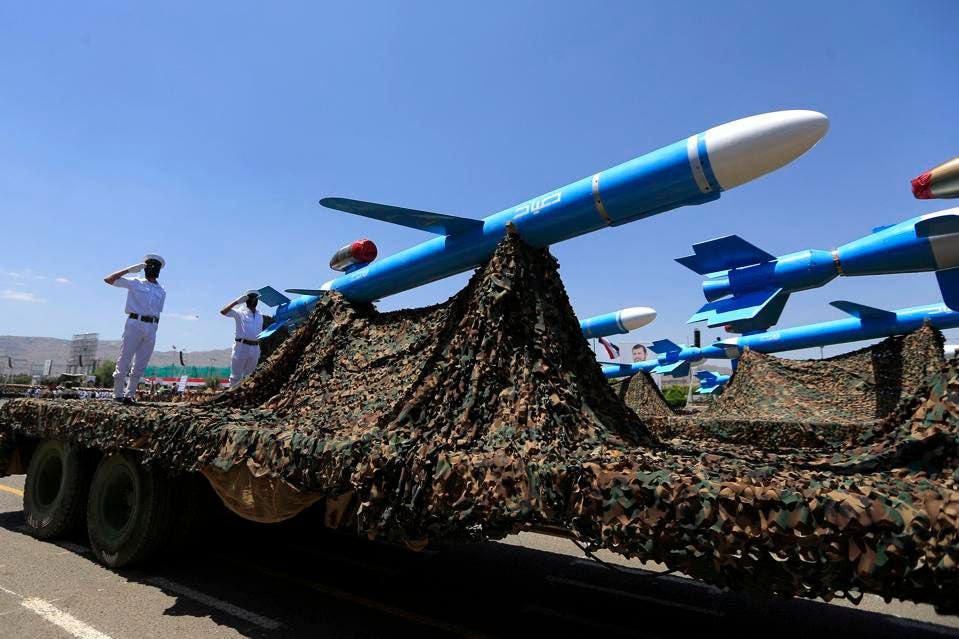
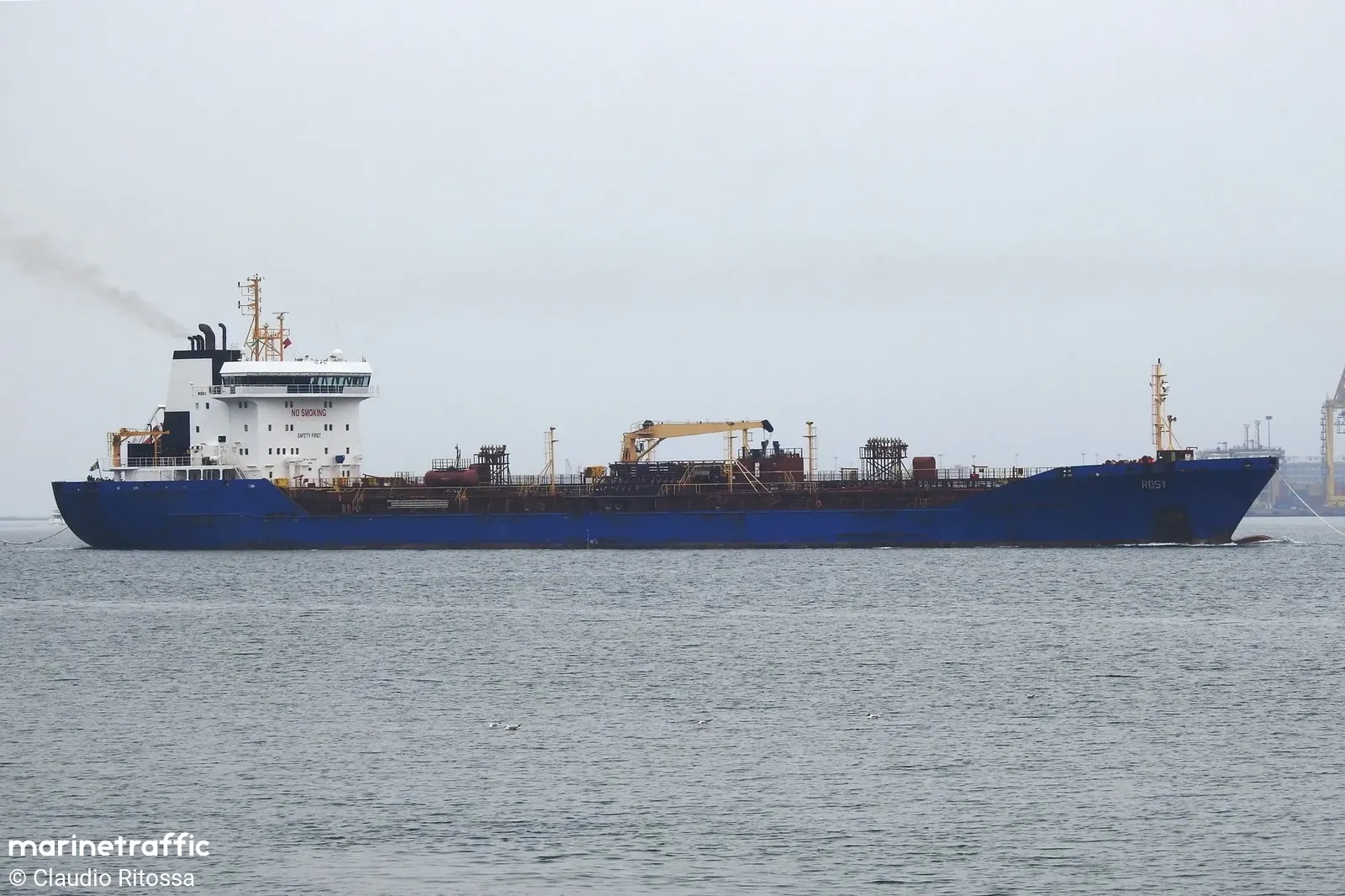
According to a statement published by the Yemeni armed forces, in a joint military operation, the naval, drone and missile forces of the Yemeni army attacked the Israeli ship MSC UNIFIC in the Gulf of Aden with several ballistic missiles and suicide drones. Also, the Israeli military targets were attacked by several suicide drones in the area of Umm al-Rasharash (Eilat).
“The naval forces, UAV, and the missile forces of the Yemeni Armed Forces carried out a joint operation targeting the Israeli ship (MSC UNIFIC) in the Gulf of Aden, with a number of ballistic missiles and drones.” Yahya Saree said. “The UAV Force carried out a targeting operation against number of military targets of the Israeli enemy in the Umm al-Rashrash area, south of occupied Palestine with a number of UAVs, and The operation has successfully achieved its objectives, thanks to Allah.”
The MSC UNIFIC ship is a container ship sailing under the flag of Liberia. This ship was also attacked by several cruise missiles in the Arabian Sea last week.
Statement of the Yemeni Armed Forces
In the published statement, the Yemeni armed forces once again invited all the Arab and Islamic armies to fulfill their religious, moral and humanitarian duties towards the Palestinian nation and emphasized that the Yemeni operations against the Zionist regime will not stop unless the aggression is stopped and the siege imposed on the Palestinian people in the Gaza Strip is removed.
It should be noted that on July 13, the Israeli regime’s planes attacked Al-Mawasi humanitarian area in Khan Yunis. During this obvious crime, at least 71 Palestinians were martyred and more than 290 others were wounded. A large number of martyrs and injured are women and children, including children less than two years old.
According to statistics gathered by the IWN, the attack on MSC UNIFIC ship mark the 143rd attacks by the Yemeni Armed Forces on illegal ships (Israeli, American, British, and their affiliated ships) in the Red Sea, the Arabian Sea, the Indian Ocean, and the Mediterranean Sea.
The Yemeni army has promised that missile and drone attacks against the illegal ships that violate the ban on entering the ports of occupied Palestine will continue until the Israeli and American crimes against the Palestinian people stop.
Since last November, the Yemeni army attacked dozens of vessels affiliated with Israel or owned by the U.S. and the UK in the Red Sea, the Gulf of Aden, the Arabian Sea, the Indian Ocean and the Mediterranean Sea in response to the Israeli war and siege on Gaza.
The U.S. and the UK have carried out hundreds of strikes against AnsarAllah-controlled areas in Yemen since January in an attempt to deter the group and degrade its offensive capabilities, but to no avail.
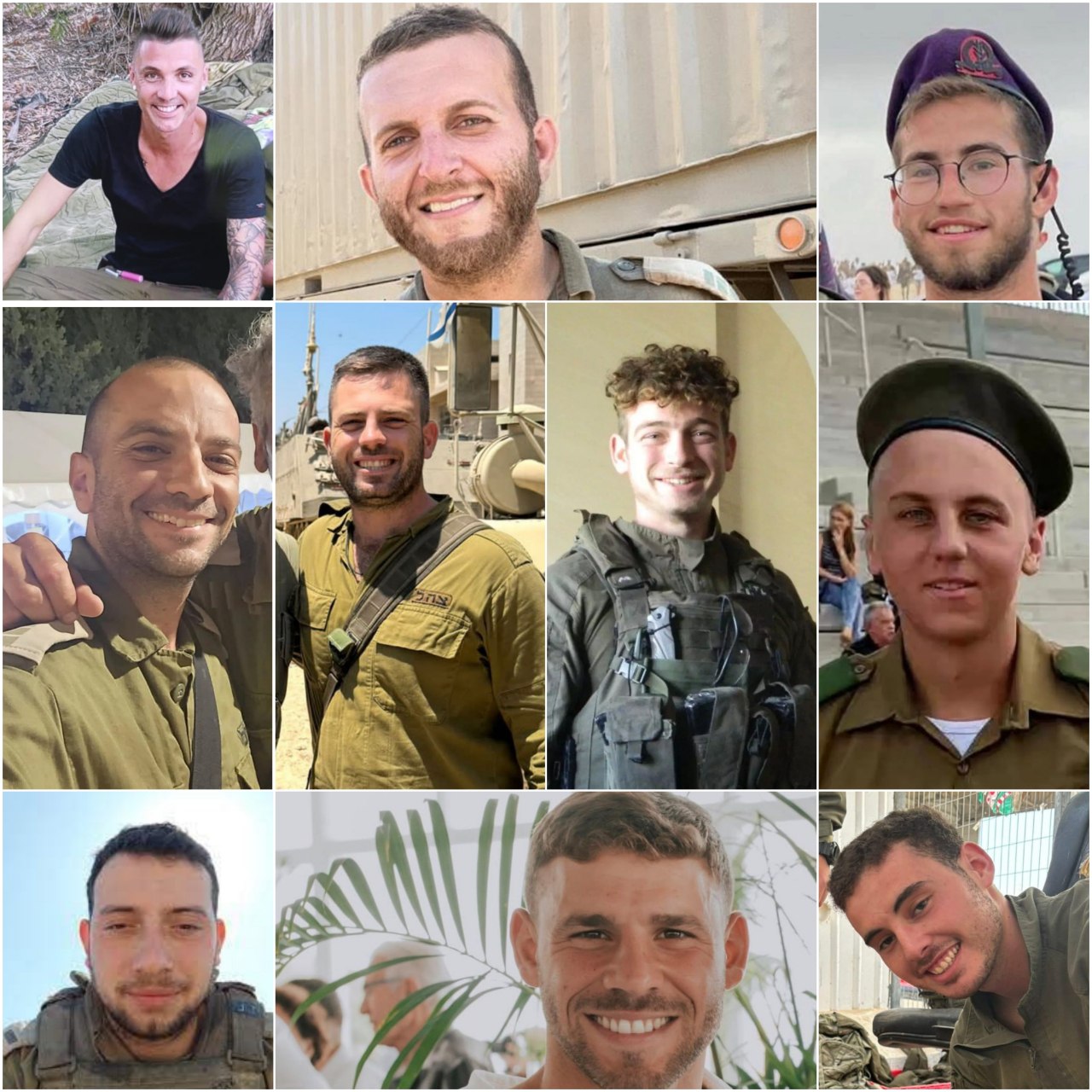
According to the Israeli army, 2 soldiers were killed in the north of occupied Palestine, 3 in the central areas of Gaza, 3 in the northern Gaza Strip, 1 in the southern Gaza Strip, and 1 in the occupied territories.
These latest deaths bring the total number of alleged Israeli fatalities since the onset of the ground offensive on October 27, 2023 to 324. The overall military death toll for the Israeli regime since the beginning of the conflict has now reached 682.
The Israeli invasion of Gaza, which began on October 7, 2023, has been marked by immense bloodshed and destruction.
The Gaza Health Ministry reports that over 38,584 Palestinians have been killed, with over 88,881 injured.
The fighting has devastated Gaza’s infrastructure, with over half of homes destroyed or damaged. Hospitals in Gaza are only partially functioning, and over 100 ambulances have been destroyed. The blockade of Gaza has also led to a collapse of telecommunications, leaving many residents unable to access evacuation maps.
This invasion marks a dramatic escalation of the longstanding conflict between the Israeli regime and the Palestinian nation.
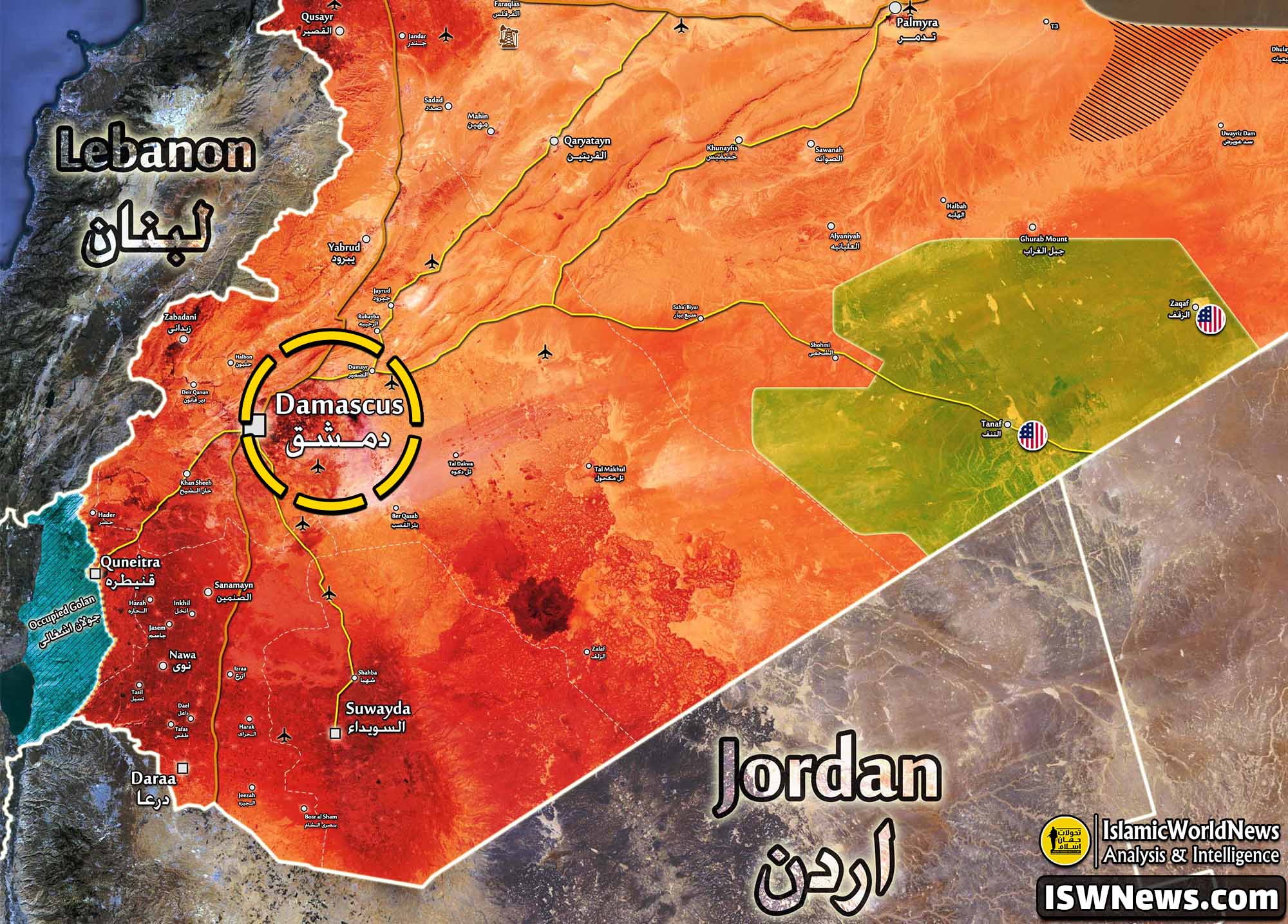
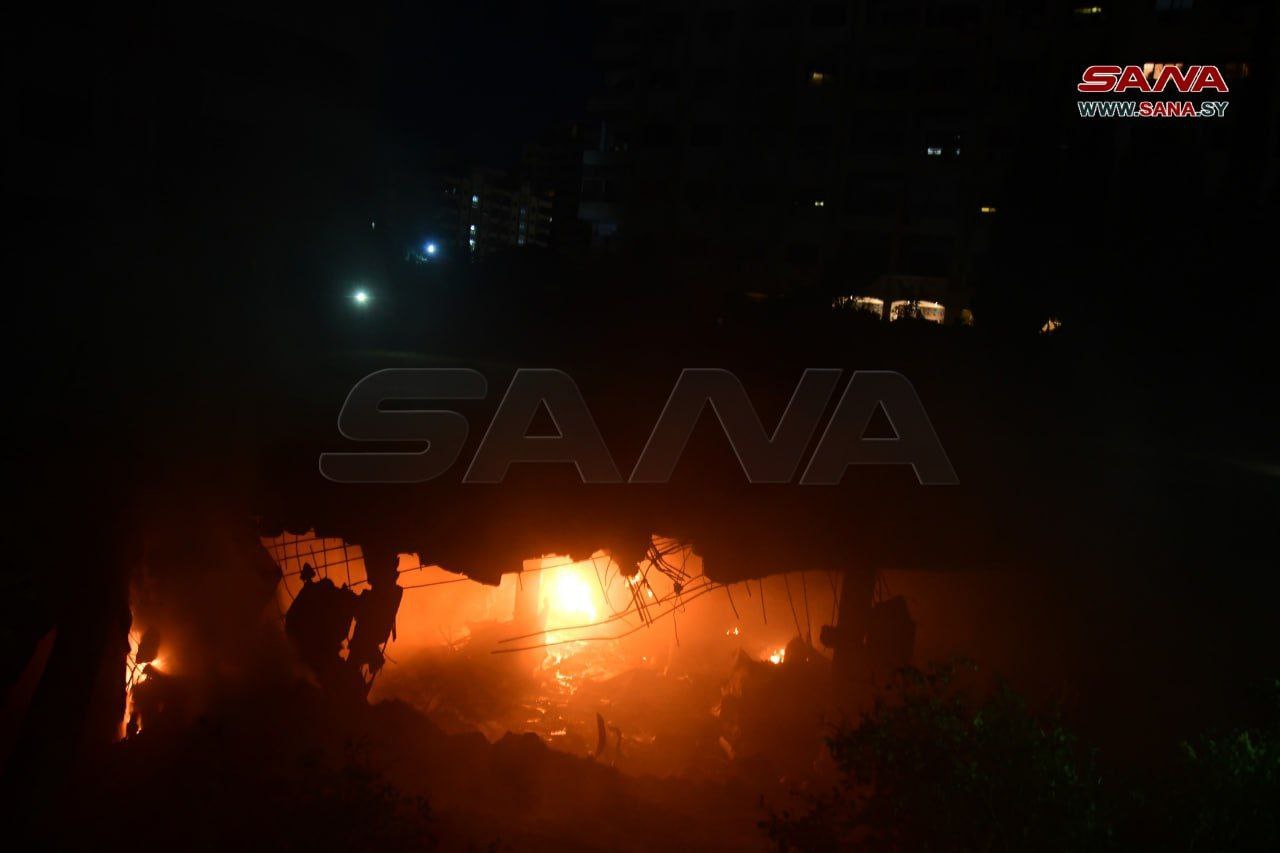
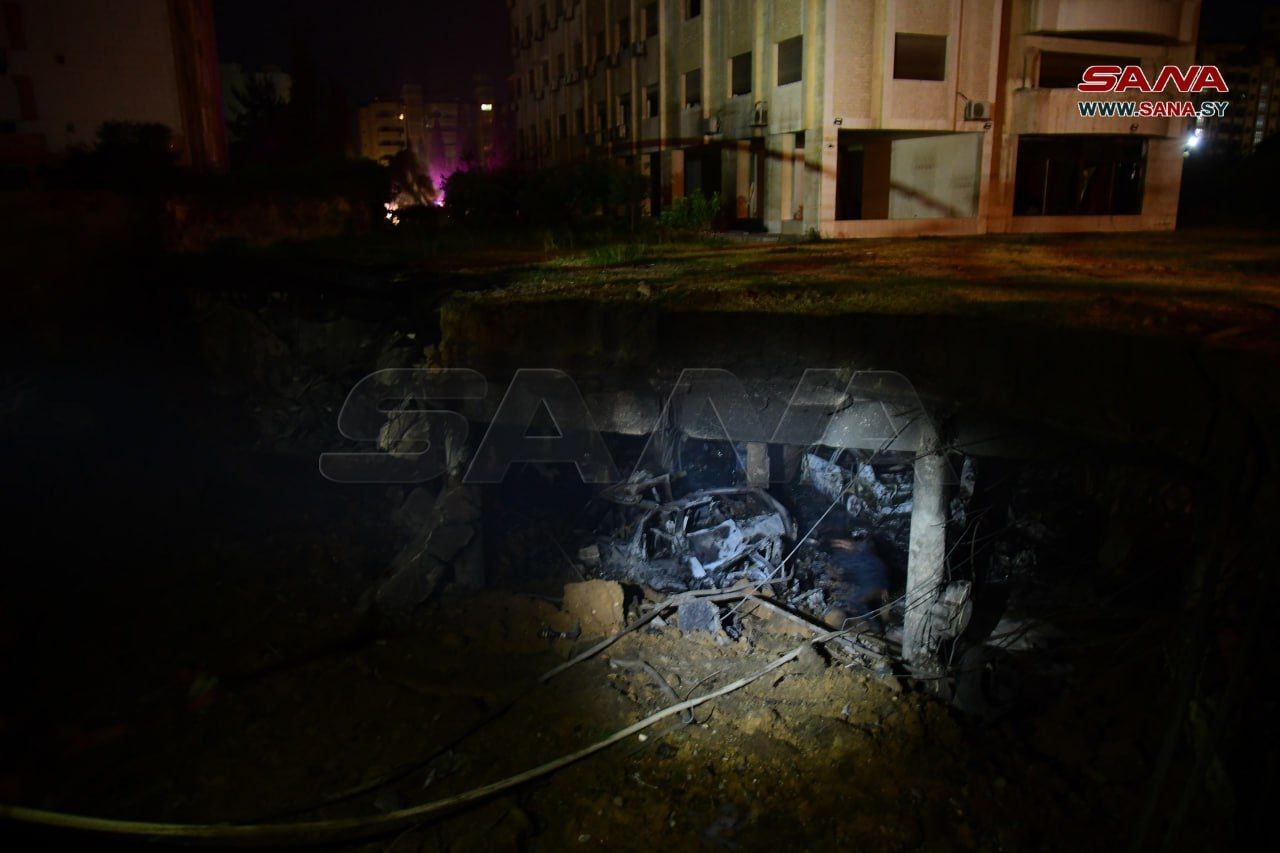
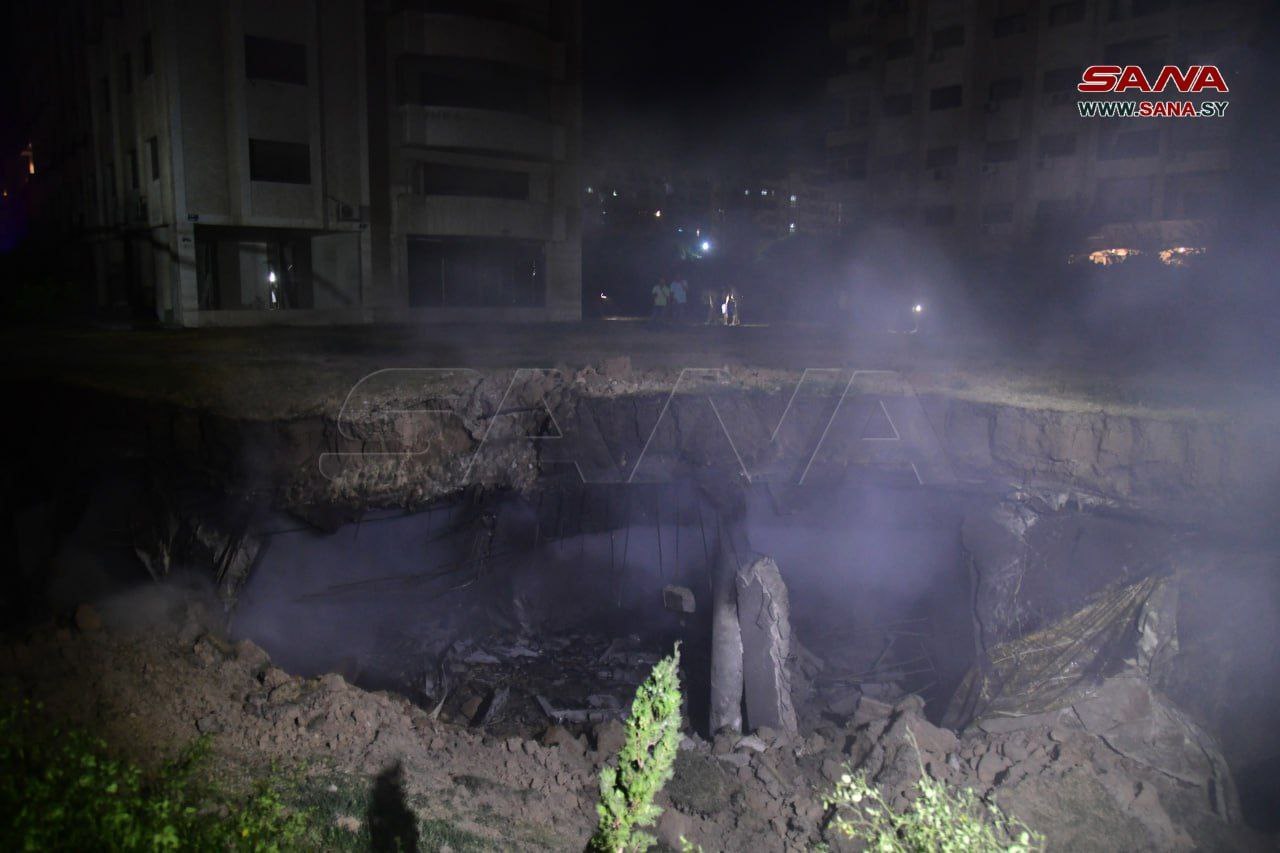
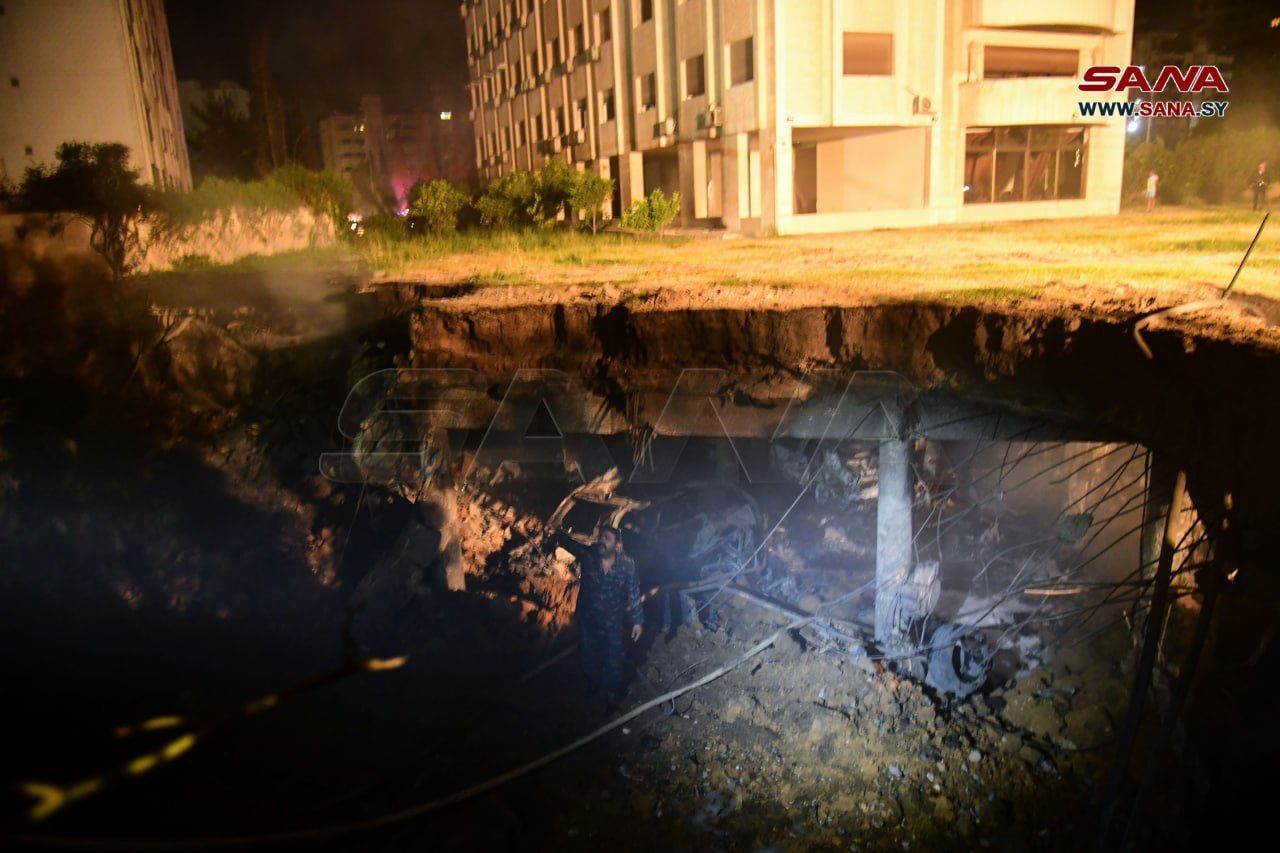
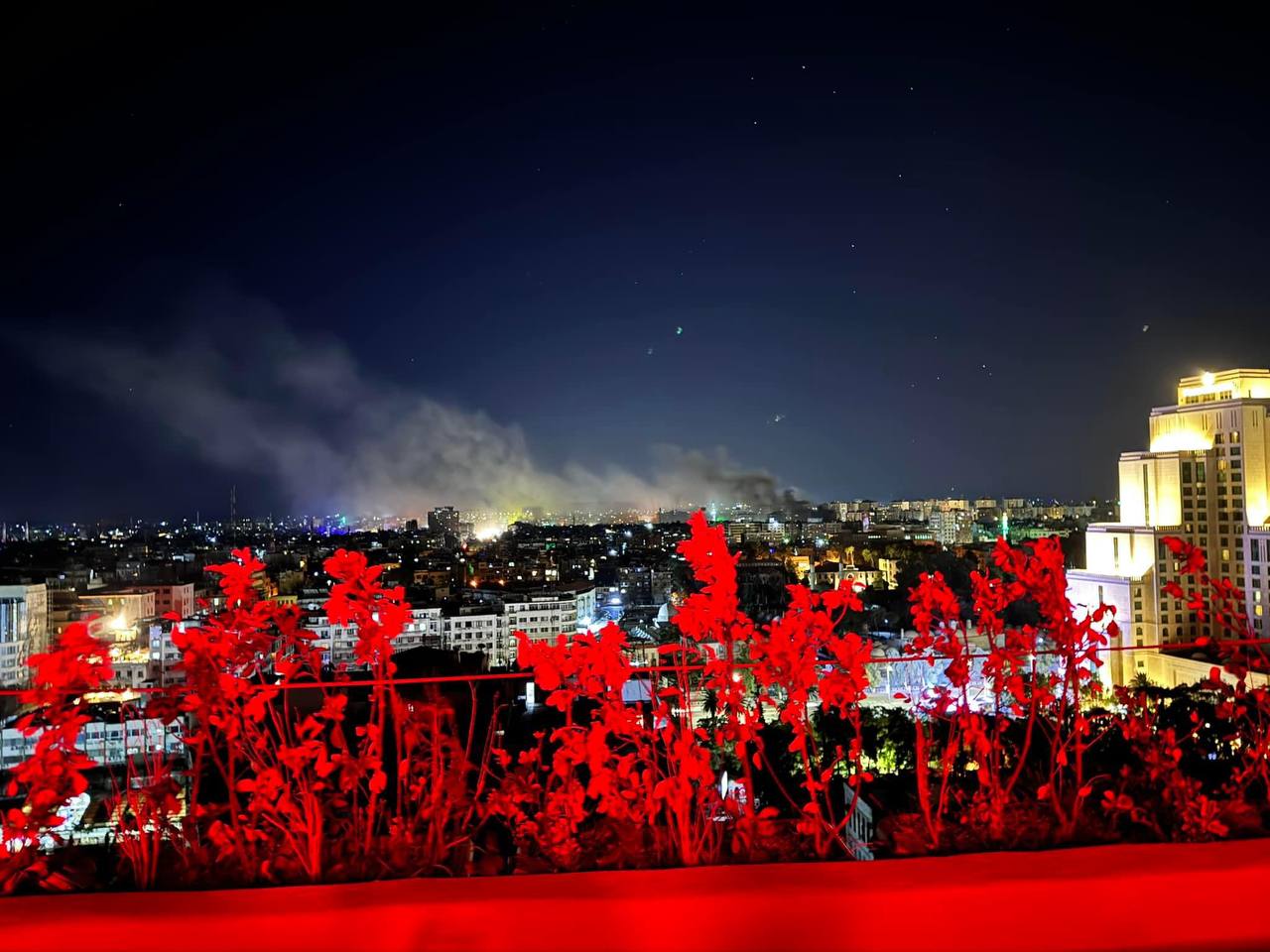
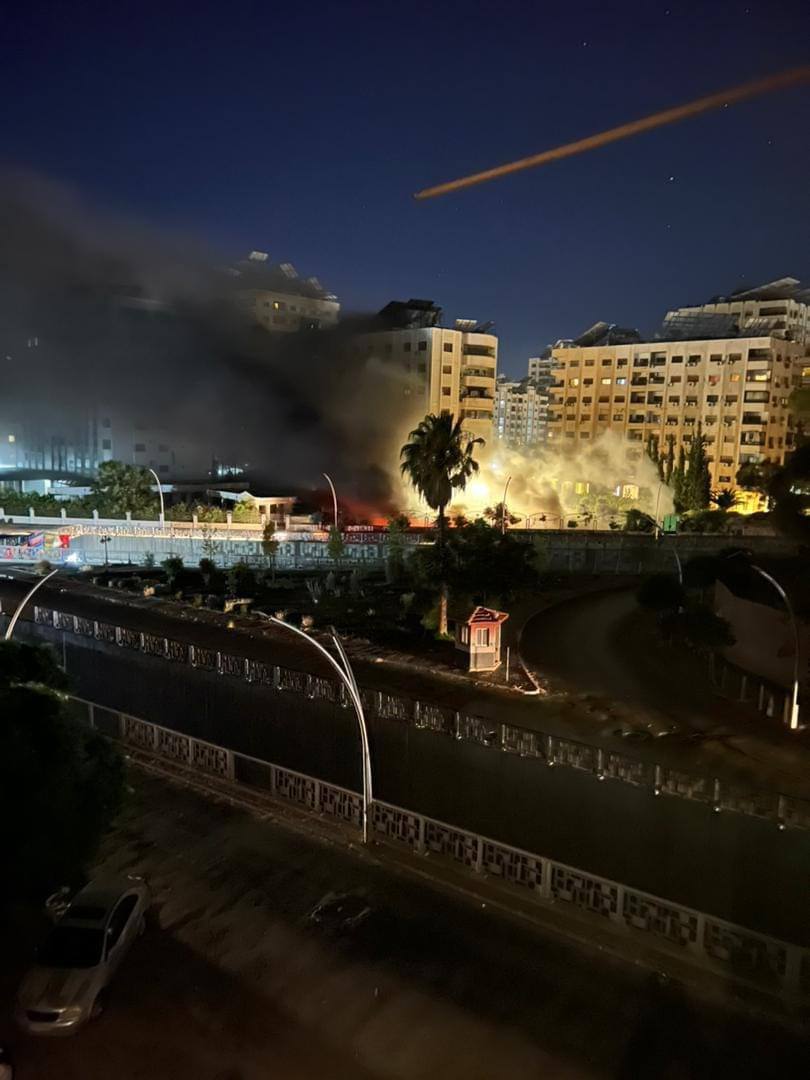
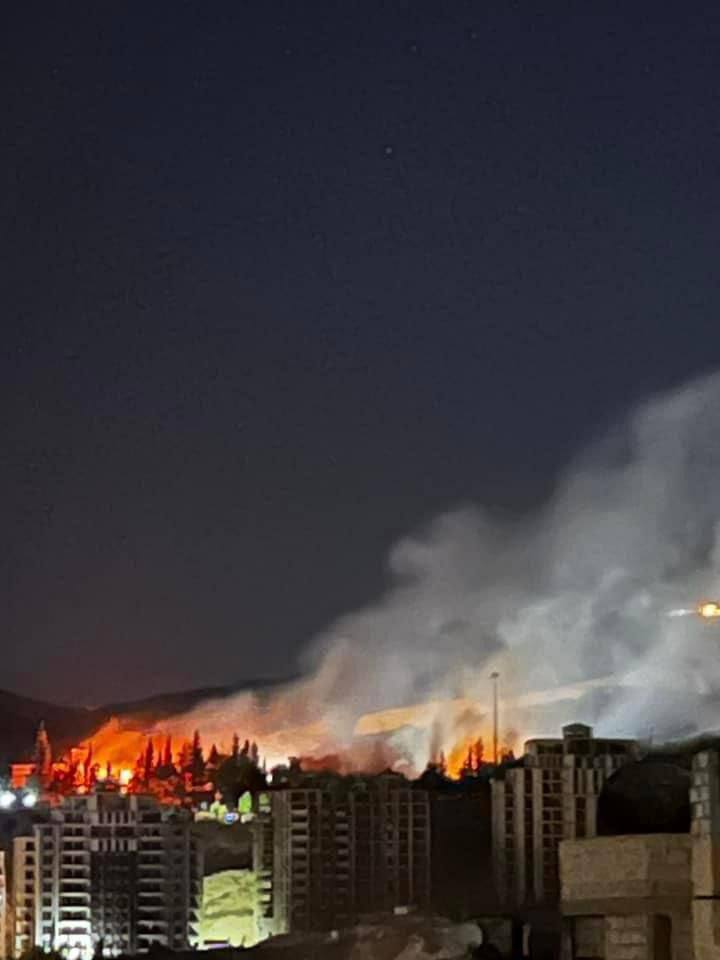
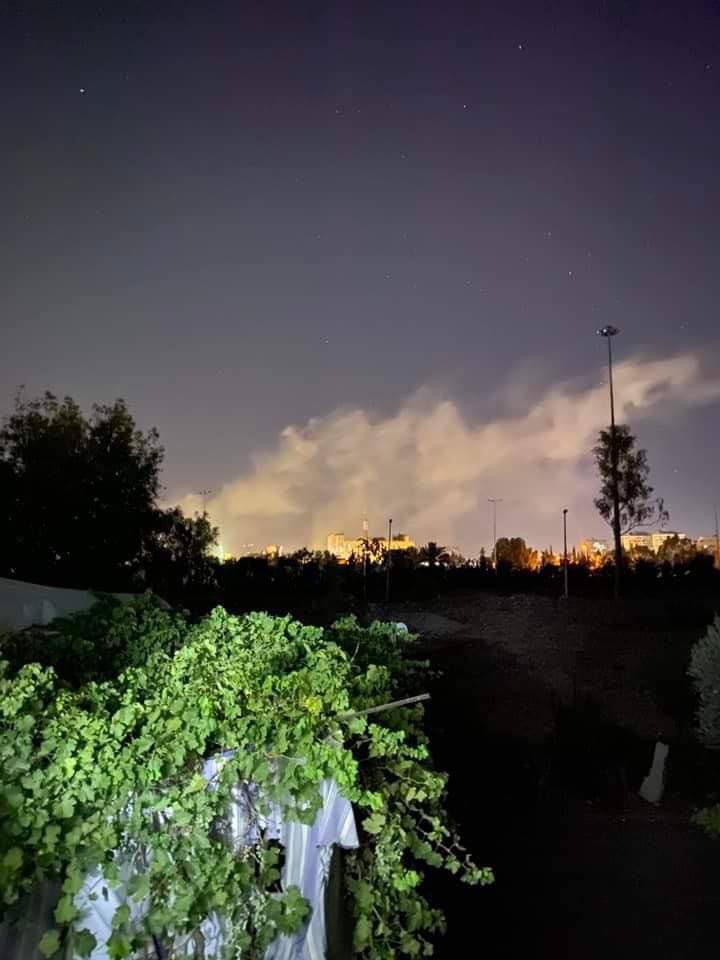
According to the IWN, based on information from a military source, the Israeli regime targeted some Syrian army military positions in the south and a building in the Kafar Souseh neighborhood of Damascus from the occupied Syrian Golan.
The Syrian army’s air defense forces succeeded in destroying a number of Israeli missiles; however, the attack resulted in the martyrdom of a Syrian soldier and the wounding of three others.
It is worth mentioning that on July 9, some warplanes of the Israeli regime’s army targeted a vehicle near the village of Yafour, west of Damascus, during which one of the Lebanese Hezbollah fighters, Yasser Nimr Qarnabesh (nicknamed Abolfazl and Haj Amin), was martyred.
Israeli airstrikes in Damascus
The Israeli regime’s army claimed that its strikes were in response to the launch of two drones from Syria towards the north of Eilat on Saturday, which it alleged were intercepted.
For years the Tel Aviv regime has been carrying out attacks against targets in Syria. Its strikes on Syria increased after the onset of the onslaught on Gaza last October.
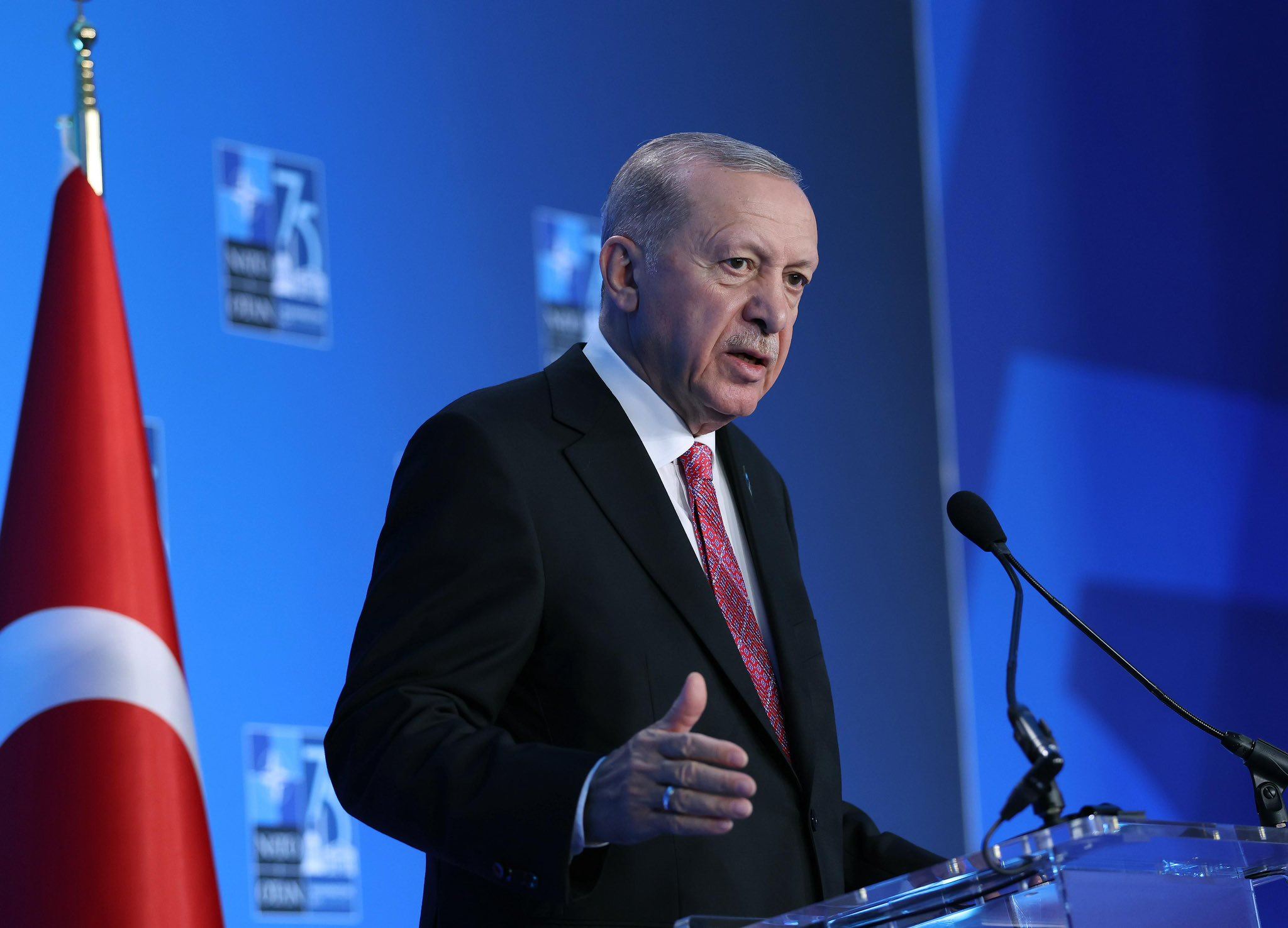
According to the IWN, Erdogan addressed a group of graduate cadets of a military center in Istanbul: In the very near future, we will announce the end of operations in northern Iraq. We have inflicted very painful blows on the terrorist organization (referring to the Kurdistan Workers’ Party or PKK). Along our southern border with Syria, we will also complete the security belt.
He also said: We are determined to dismantle any structure that could pose a threat to our country along the borders with Iraq and Syria. The terrorist organization (PKK) is not able to move inside our borders and is under complete siege in Iraq and Syria.
Turkish Defense Minister Yasar Guler had also announced that the operation, which is ongoing in northern Iraq against PKK elements, will end in November this year.
Turkiye’s Operation Claw Lock kicked off on April 18, 2022, on the orders of Turkish Defense Minister Hulusi Akar against PKK militants in northern Iraq. The history of the Turkish army’s military intervention in northern Iraq dates back to 1982. According to an agreement between Ankara and Baghdad, Turkiye was allowed to enter northern Iraq to a depth of 20 kilometers.
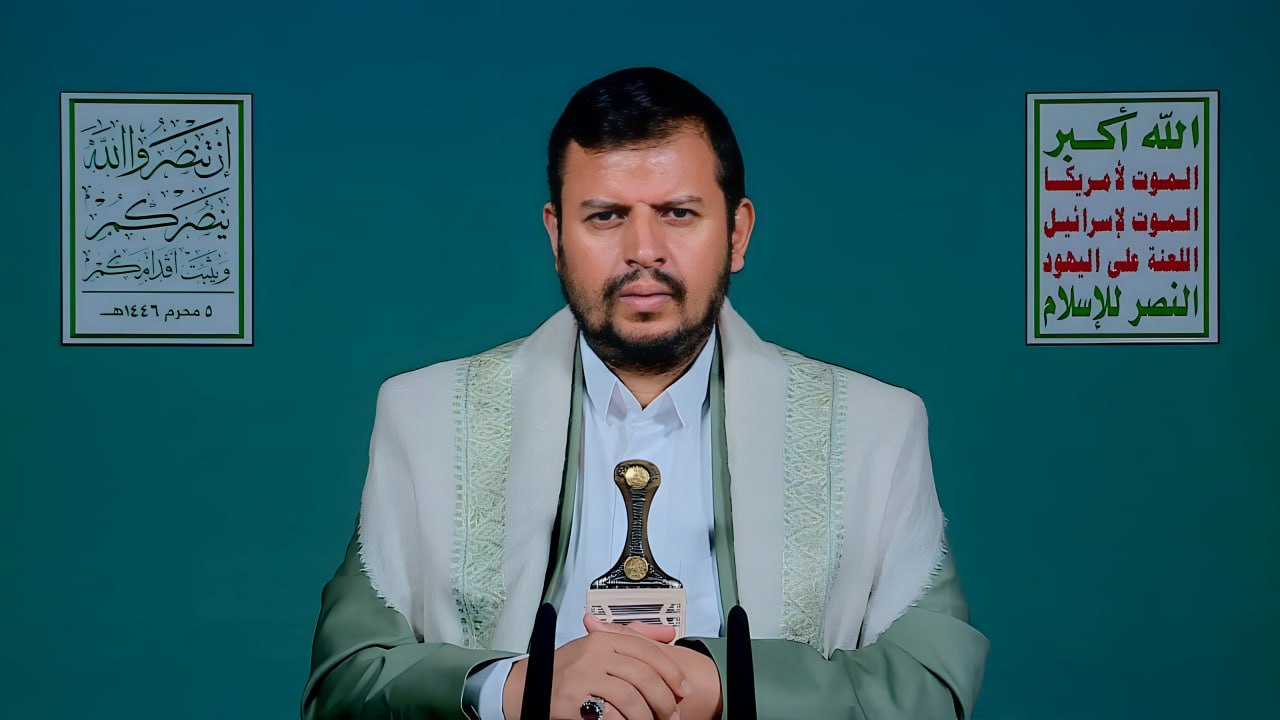
Al-Houthi issued a statement on the ongoing developments in the region, especially in Palestine, noting that the escalation of pressure and its consequences will never affect the Yemeni people’s firm and principled position in support of the Palestinian people.
He said that we assure our Mujahideen brothers in the Gaza Strip, the Palestinian people, and all the freedom-loving people of the world that whatever the Saudis do against us will never succeed and we will not retreat from the priority of supporting the Palestinian people.
The Ansar Allah leader also noted that the Saudis are working for the United States, and this is a terrible stupidity in every sense; thus, the Saudis must stop their wrong and unjustified path, and their words are unjustified and unacceptable under the pressure of the United States.
Leave us alone in the confrontation with the United States and tell them to fight us with all its capabilities, because they have much more resources than you, Al-Houthi underlined, warning that you will not succeed in stopping or limiting our operations in support of the Palestinian people, and you will lose in the process.
As to the Israeli regime’s atrocities against Palestinians living in the Gaza Strip, he said, the crime of genocide in Gaza must revive the conscience of human beings and arouse a sense of responsibility in every human.
He further appreciated the people of Morocco who did not follow the orders of their puppet and traitorous regime, which is loyal to Israel.
According to the Yemeni official, there were demonstrations in Bahrain and calls for support for Palestine.
He also pointed to the method of boycotting US and Israeli goods as a very important way, which can be implemented by people in all countries.
The official went on to say that the Ansar Allah movement supports negotiations for ceasefire in Gaza under the supervision of the Hamas movement.
Referring to the Yemeni Armed Forces’ operations against ships affiliated with Israeli regime and its allies in the Red Sea and other waterways, he noted that the United Kingdom announced the withdrawal of its last warships from the Red Sea and the Gulf of Aden.
The Americans, the British, and before them the Israelis realized that they were facing a threat that they were unable to confront, he explained, adding that extremely fast, hypersonic and lethal missiles are what terrified even the American aircraft carrier.
The Americans describe the escape of their aircraft carrier as an unprecedented event in the history of wars, he stated.
According to the Yemeni official, 10 ballistic and cruise missiles as well as drones were launched in the last week.
The number of ships targeted by Yemeni forces has reached 166 ships linked to Israel, the United States and the United Kingdom, he announced, adding that the traffic of ships linked to the United States and Britain has decreased in recent months, while the movement of ships linked to the Israeli enemy has almost stopped.
He added that the US carried out 8 attacks on al-Hudaydah and Hajjah governorates this week, bringing the total number of bombings since January 2 to 570 attacks and bombardments at sea.
Some 57 Yemeni have been martyred and 87 others have been wounded in the US-British attacks, Al-Houthi concluded.
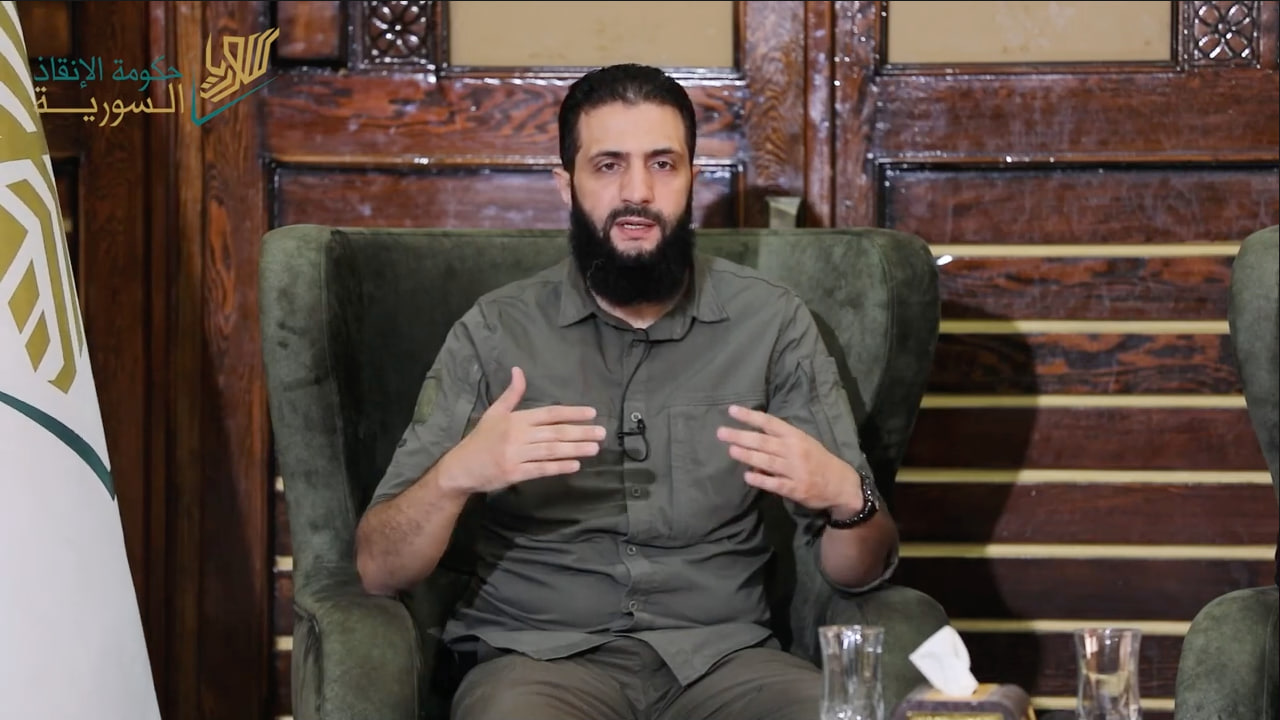
On July 12, local sources announced that Abu Mohammad al-Jolani, the ringleader of Hay’at Tahrir al-Sham (formerly known as Jabhat al-Nusra), was assassinated the night before for the second time in recent weeks. This time he was assassinated in a hospital in the city of Sarmada in Idlib Governorate.
A nurse reportedly planned to inject an unknown drug into the Hay’at Tahrir al-Sham ringleader, but was immediately arrested by forces from al-Jolani’s security team.
Following the incident, a number of patients and medical staff were detained inside the hospital by security forces affiliated with the terrorist group Hay’at Tahrir al-Sham.
It is worth noting that in June 2024, reports were published confirming that al-Jolani was poisoned. Sometime later, the security forces affiliated with Hay’at Tahrir al-Sham concluded that al-Jolani had been assassinated after drinking a poisoned drink.
In April, protests emerged in towns of Armanaz and Kafar Takharim in the countryside of Idlib Governorate, which are under the control of the Hay’at Tahrir al-Sham. Protesters demanded the overthrow of the ringleader of the terrorist organization.
Demonstrators called for the disbanding of the “General Security” apparatus that the Hay’at Tahrir al-Sha had established under the directives of al-Jolani.
Furthermore, protesters pointed to the increase in taxes imposed on residents and their deprivation from essential goods as motives behind their rallies.
It is worth noting that, the prominent official of the terrorist group named Abu Maria al-Qahtani was killed in the city of Sarmada in early April. Al-Qahtani was killed when an explosive device planted in his residence was exploded, also killing other individuals accompanying the terrorist.
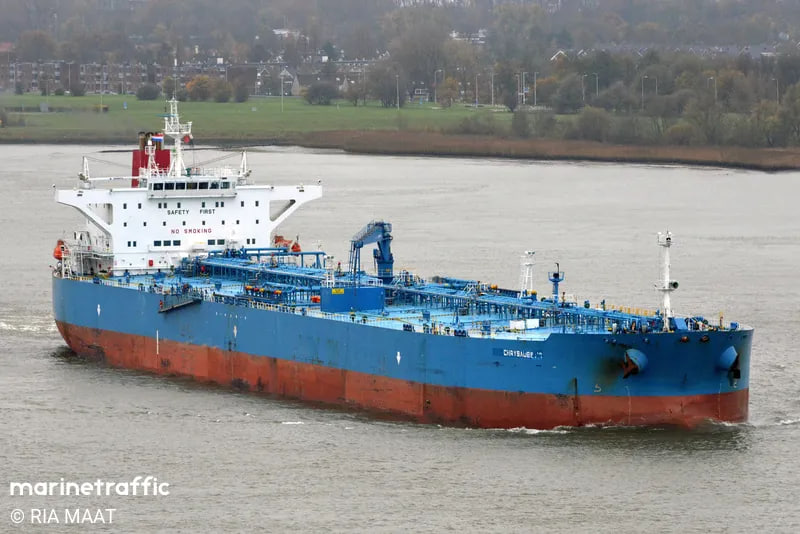
According to Spokesman for the Yemeni Armed Forces Brigadier General Yahya Saree, the naval, drone, and missile forces of the Yemeni army carried out a joint military operation to target the Chrysalis vessel in the Red Sea and Bab al-Mandab.
This ship was targeted twice in the Red Sea and Bab al-Mandab with a number of ballistic and cruise missiles, as well as suicide drones, because the owning company had violated the ban on entering the Israeli-occupied ports of Palestine.
It is worth mentioning that since May 3, as part of the fourth phase of escalating tension under the orders of leader of the Ansar Allah movement and the Yemeni revolution Sayyid Abdul-Malik Badreddin al-Houthi, the Yemeni armed forces have announced that all ships violating the no-entry order to Israeli ports will be attacked.
According to the latest statistics of the IWN, the Yemeni army’s attack on the Chrysalis ship is the 142nd official strike by the Yemeni Armed Forces on illegal ships (Israeli, American, British, and ships affiliated with them) in the Red Sea, Arabian Sea, Indian Ocean, and the Mediterranean Sea.
The Yemeni Armed Forces have time and again announced that they will continue these attacks on Israel-linked vessels in order to put pressure on the Israeli regime and its allies, because Sana’a sees the regime and its advocates responsible for the genocidal war on the Gaza Strip, which has left 38,345 martyrs and 88,295 wounded over the course of the nine-month massacre. And Yemen calls for end of the aggression against the Palestinians living in Gaza, the end of siege of the enclave as well as the entry of humanitarian aid convoys into this area.
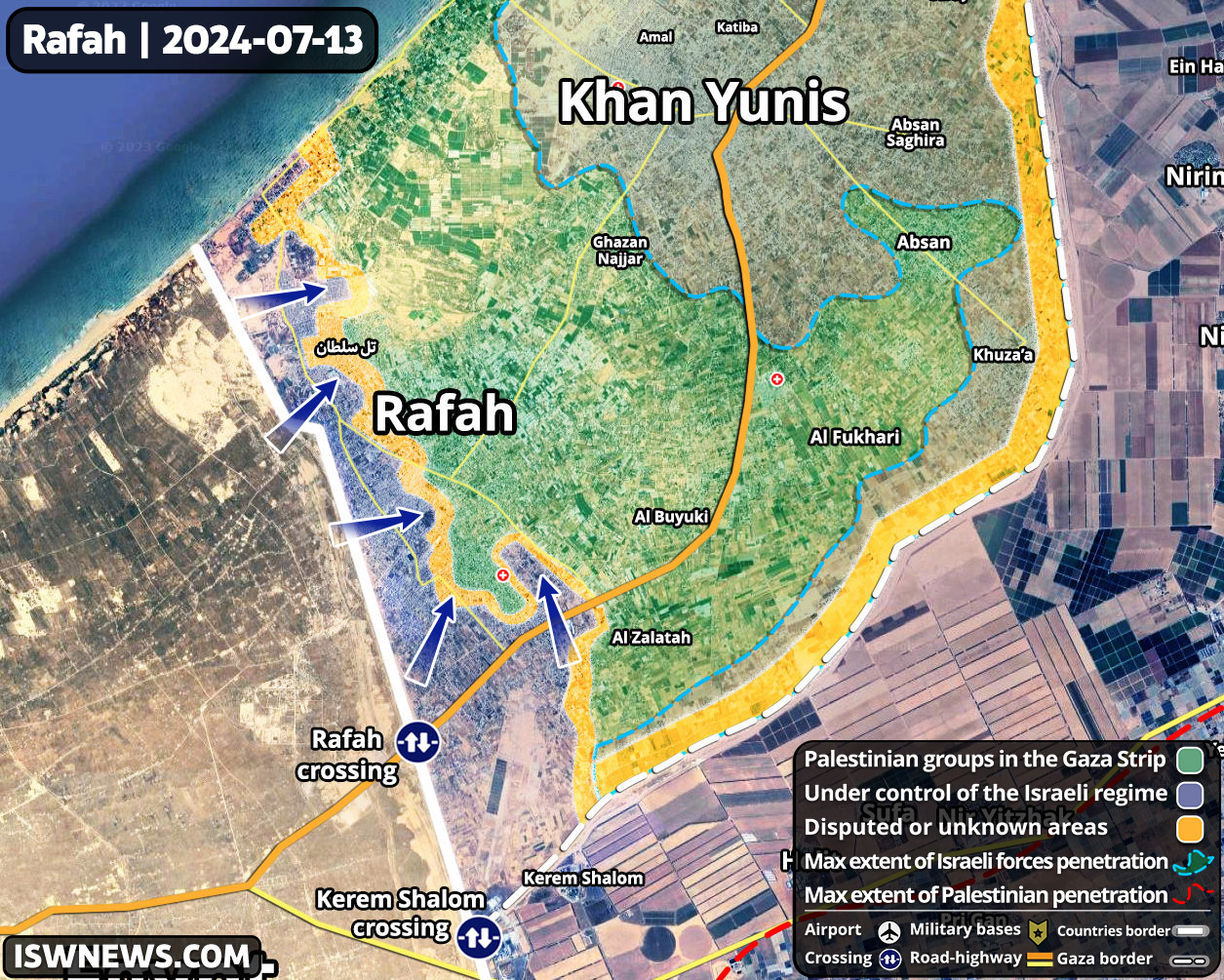
The military situation in Gaza and Rafah has not changed much. Israeli forces have not been able to completely clear Rafah after weeks of fighting. Around 70% of the town is currently under Israeli control.
Fighting continues in the central areas of Rafah, in Tal al-Sultan, around the Saudi project and in the southern areas of the city.
The situation in other parts of the Gaza Strip remains unchanged. Israeli forces are stationed in the central axis of the Gaza Strip, known as the Netzarim axis. In addition, Israeli engineering units are demolishing buildings and clearing areas in the northern and southern parts of the Netzarim axis.
Military situation in the Rafah area
Israeli forces recently destroyed six tunnels belonging to Hamas and Islamic Jihad in the Shujaiyeh area. One of the tunnels destroyed was Islamic Jihad’s main tunnel in Gaza City, which was 2.5 kilometres long and used for command and control operations. In total, at least six kilometres of tunnels were destroyed in Shujaiyeh.
The tunnels and underground facilities used by Palestinian resistance groups pose a significant challenge to the Israeli regime. Despite the Israeli army’s efforts to secure Gaza City and other areas of the Gaza Strip, the extensive network of underground facilities makes this task seem impossible.
Palestinian fighters use these tunnels on a daily basis to launch surprise attacks against Israeli forces and equipment.
Ambush of Palestinian forces against the occupiers in Gaza City
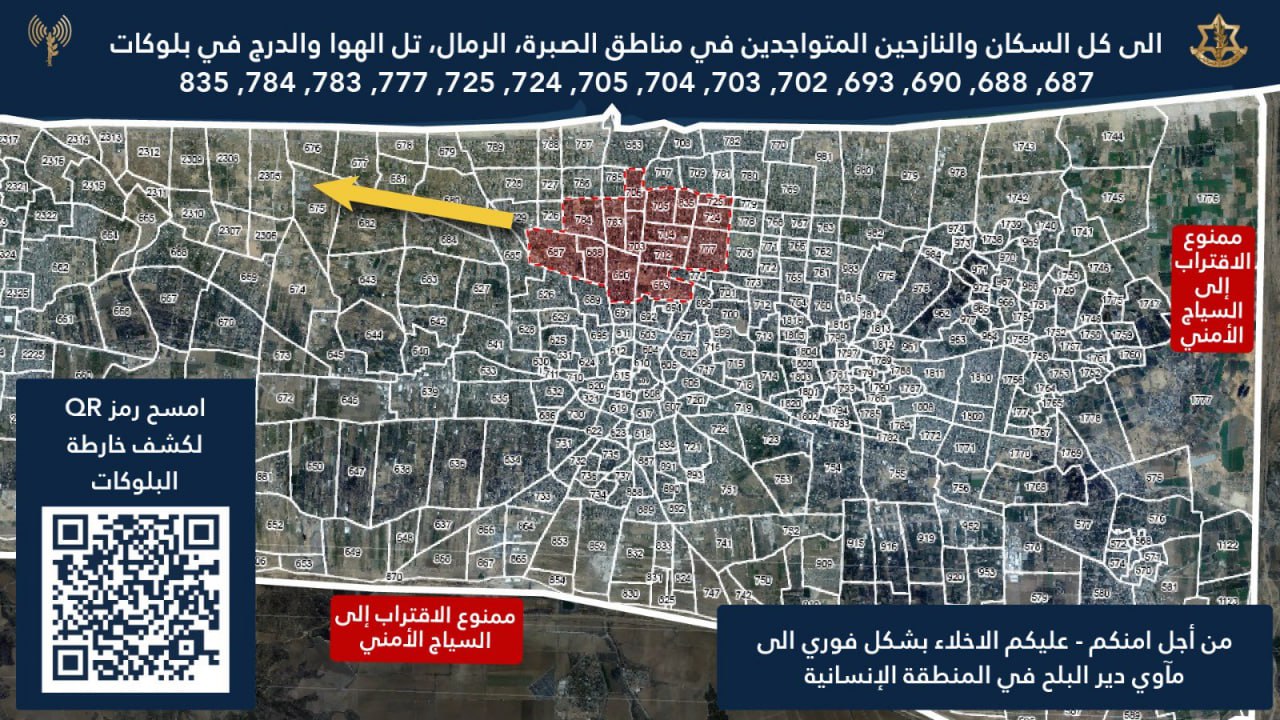
Yesterday, the Israeli army ordered Palestinians in several neighbourhoods of Gaza City to evacuate the area and move to designated humanitarian zones. The zones are located in the al-Mawasi area on the southern coast of the strip, the western districts of Khan Yunis and Deir al-Balah in central Gaza.
Colonel Avichay Adraee, the IDF’s Arabic-speaking spokesman, has published a list of areas for evacuation. Among the areas to be evacuated are the neighbourhoods of Sabra, Rimal, Tal Al-Hawa and Daraj in Gaza City.
The announcement of the Israeli regime army to evacuate a part of Gaza City
These announcements are made as bombardment of civilian targets and infrastructure continues. At least 50 Palestinians have been killed in Israeli attacks over the past 24 hours.
In just one of these attacks, 17 Palestinians were martyred. In this crime, the house of Abu Farih’s family in the Nusairat refugee camp was bombed by Israeli warplanes. 14 of those killed were women and children.
Today, also the fighter jets of the Israeli regime targeted the so-called humanitarian area of Mawasi. In this crime, more than 70 Palestinians were martyred and 290 others were injured. A large number of martyrs and injured are women and children, including children less than two years old.
The video contains heartbreaking scenes
A glimpse of the Israeli regime’s crime in Mawasi, Khan Younes
In recent months, the Israeli army has issued statements calling on civilians to evacuate certain areas. However, these evacuations do not appear to have had a significant impact on the Israeli army’s operations in Gaza. Palestinians return to their homes after some time, and the Israeli army does not actually send troops to the evacuated areas. So these announcements mainly mean more air strikes, more destruction and more casualties in Gaza.
So far, Israeli air strikes have killed at least 38,243 Palestinians and wounded 88,033, most of them women and children.
Yesterday there was a major change in the command of the Israeli army in the West Bank.
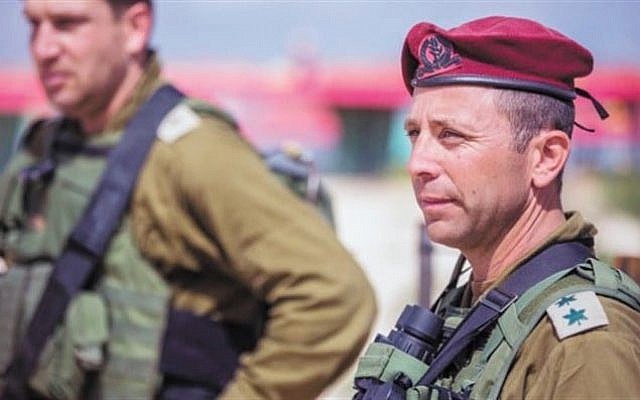
Major General Avi Blot took over the Israeli army’s Central Command in a handover ceremony at the unit’s headquarters in Jerusalem, becoming the new general in charge of the West Bank region.
Major General Avi Blot will be replaced by Major General Yehuda Fox, who is retiring from the IDF, ending a 36-year military career.
Major General Avi Blot
Following the 7 October attacks, tensions and conflicts in the West Bank have escalated significantly, leading to dire security conditions. The Israeli army carries out military operations in the area on a daily basis. In a recent incident, 13-year-old Palestinian Ghassan Gharib Zahran was fatally shot by Israeli soldiers in the town of Deir Abu Meshaal, near Ramallah.
The Palestinian Prisoners’ Club announced that the Israeli army has arrested 16 Palestinians in different areas of the West Bank since yesterday. Israel has arrested more than 9,600 Palestinians in the West Bank since the start of the war on Gaza.
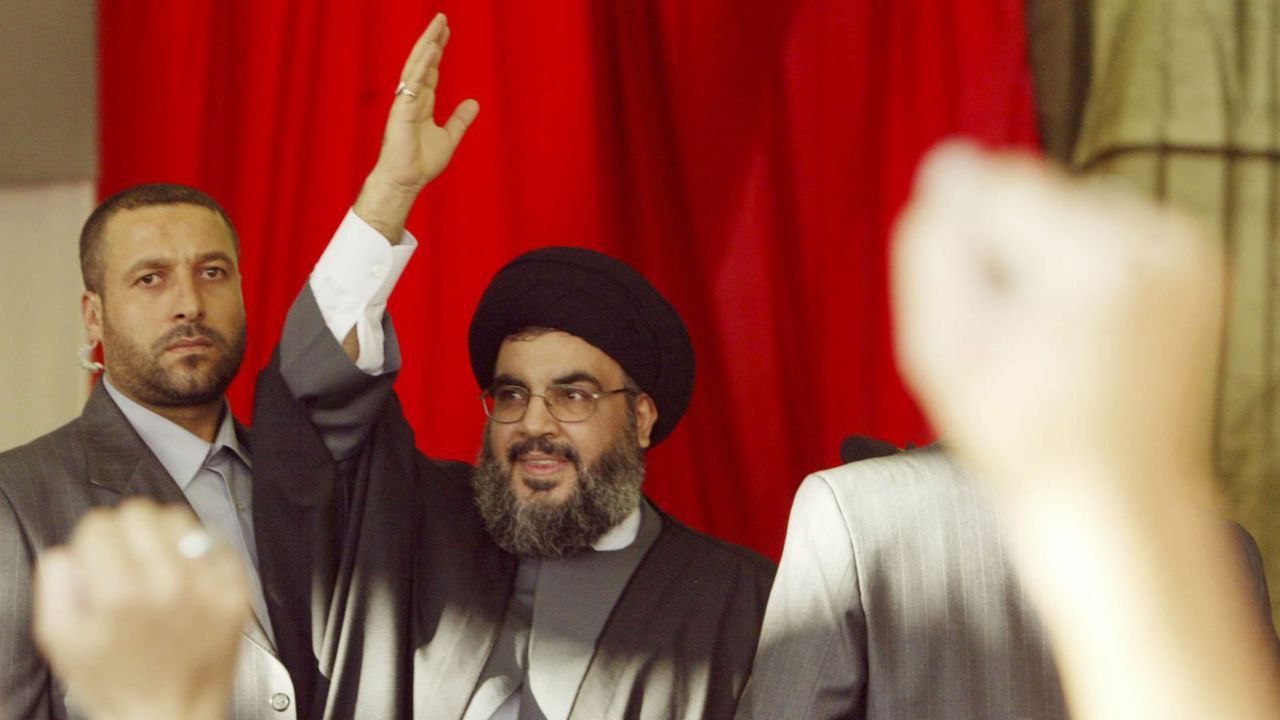
The situation on the northern front remains tense: despite repeated Israeli threats to launch military operations into Lebanese territory, no attacks have been carried out. Earlier, Lebanese Hezbollah leader Sayed Hassan Nasrallah warned in a televised speech that any Israeli military operation into Lebanese territory would be met with a strong response from Lebanese resistance groups and Hezbollah. The message seems to have gone down well in Tel Aviv.
However, the Israeli military has stepped up its drone strikes and assassinations against key Hezbollah figures in recent weeks. Israel is attempting to raise the cost of the war for Lebanese Hezbollah by targeting Hezbollah field commanders and key figures with assassination attempts.
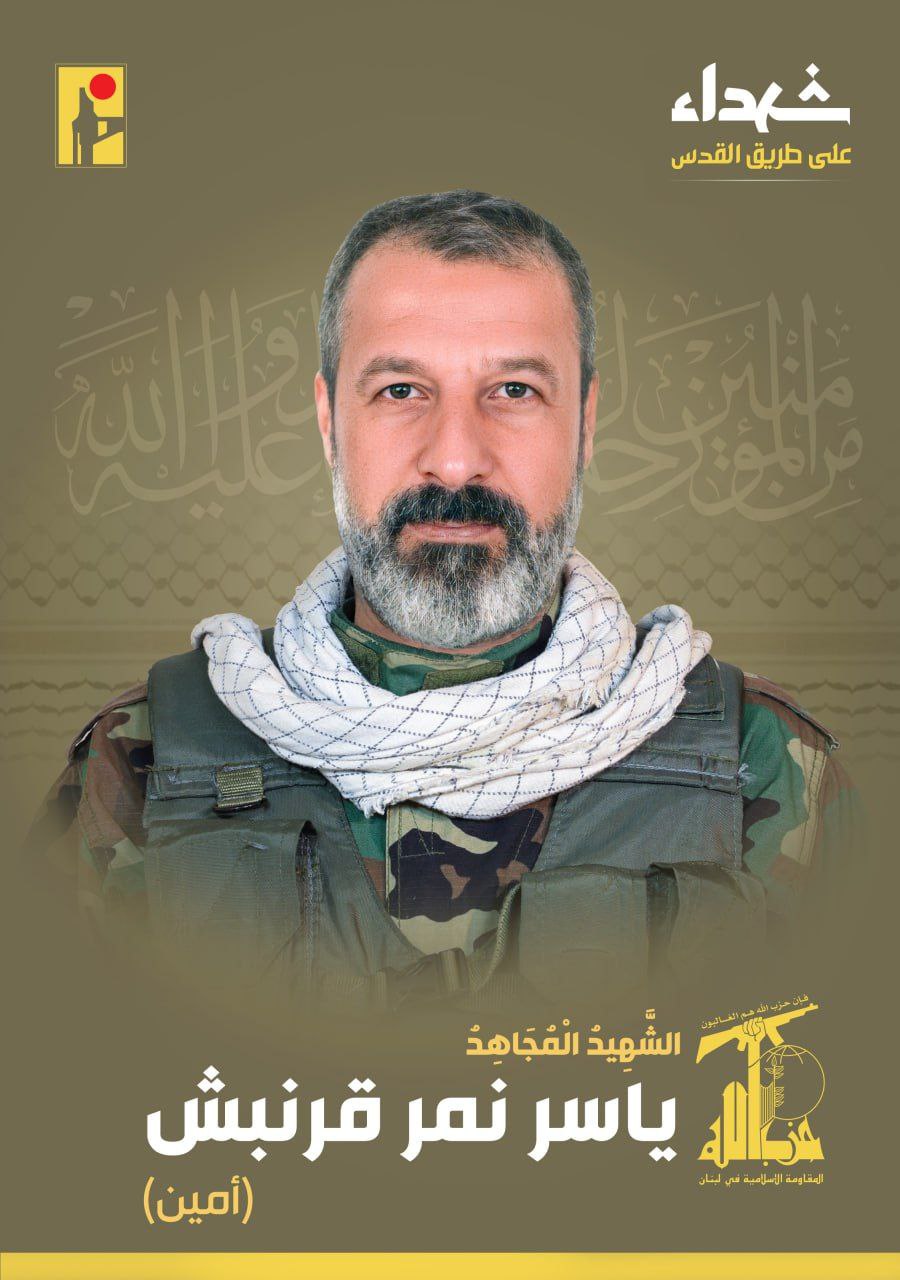
On July 9, an Israeli airstrike against a vehicle on the Beirut-Damascus highway, near a checkpoint between Lebanon and Syria killed Yasser Qarnabash, a senior Hezbollah member close to the Seyed Hassan Nasrallah.
Martyr Yasser Qarnabash
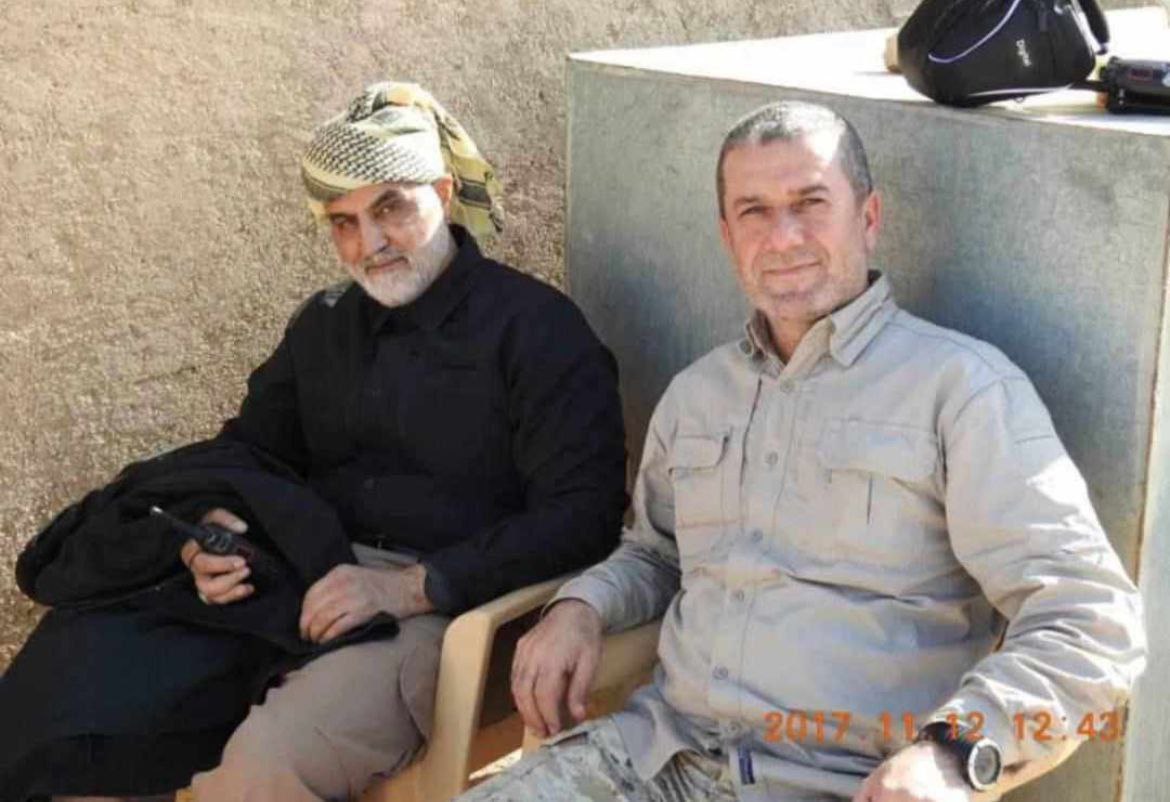
On July 3, a senior Hezbollah military commander, Muhammad Na’amah Nasser, was assassinated by Israeli drones in the city of Tyre in southern Lebanon. Na’amah played a major role in the liberation of southern Lebanon in 2006 and in the battles in Syria and Iraq against ISIS and Al-Qaeda terrorist groups. He also led and supervised dozens of operations against the Israeli army during the recent fighting in northern occupied Palestine.
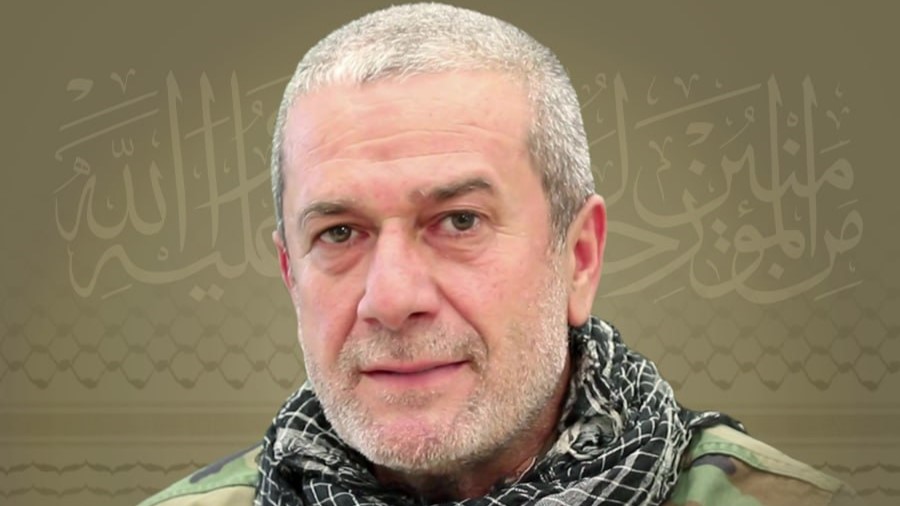
Martyr Muhammad Na’amah Nasser
Alongside targeted assassinations, artillery and airstrikes continue in southern Lebanon.
Israeli warplanes bomb Lebanon’s southern regions and towns on a daily basis. Hezbollah fighters also use heavy rockets, anti-tank missiles and suicide drones to target Israeli positions and bases in northern occupied Palestine.
On July 6, for example, Hezbollah carried out a series of targeted attacks on key Israeli army positions in southern Lebanon. Hezbollah fired dozens of rockets at the Nimra base west of the Sea of Galilee and the Mount Meron air traffic control base. They also targeted Israeli troops in the Birkat Risha area with guided missiles, hit surveillance equipment in the al-Rahib area, and shelled the Bayad Blida and al-Baghdadi areas.
Part of Hezbollah’s operations in northern occupied Palestine
Military operations along the northern borders have led to widespread evacuations of settlements. The Israeli Ministry of Housing and Immigration reports that hundreds of thousands of settlers have left the occupied territories since the start of the war.
According to the latest reports, more than 250,000 Israeli citizens have been displaced by the war, with some 164,000 ordered or recommended to evacuate with government compensation and nearly 150,000 evacuated without being asked.
The number of Israeli refugees increases daily...
According to a report by Israel’s Channel 12, social media has been filled in recent weeks with posts from Israeli settlers to their friends who are considering leaving Israel. The ongoing 10-month war has produced unclear results, prompting some settlers to consider leaving the country.
Channel 12 TV reported that a new survey shows that the number of Israelis who want to emigrate from Israel has increased by two and a half times.
It is worth noting that 500,000 Israelis have left the country since the start of the Gaza conflict.
The disastrous political situation in Tel Aviv, the unfavourable and critical security situation in the West Bank, the war in the Gaza Strip and Israel’s failure to achieve its set goals in the Gaza Strip, the war and tense situation on the northern front and the possibility of a full-scale war with Hezbollah are challenges that have made Israel more vulnerable to collapse than ever before.
All this, together with the massive wave of emigration from Israel, has left the outlook for the political and security situation in the crisis-ridden country in a cloud of uncertainty.
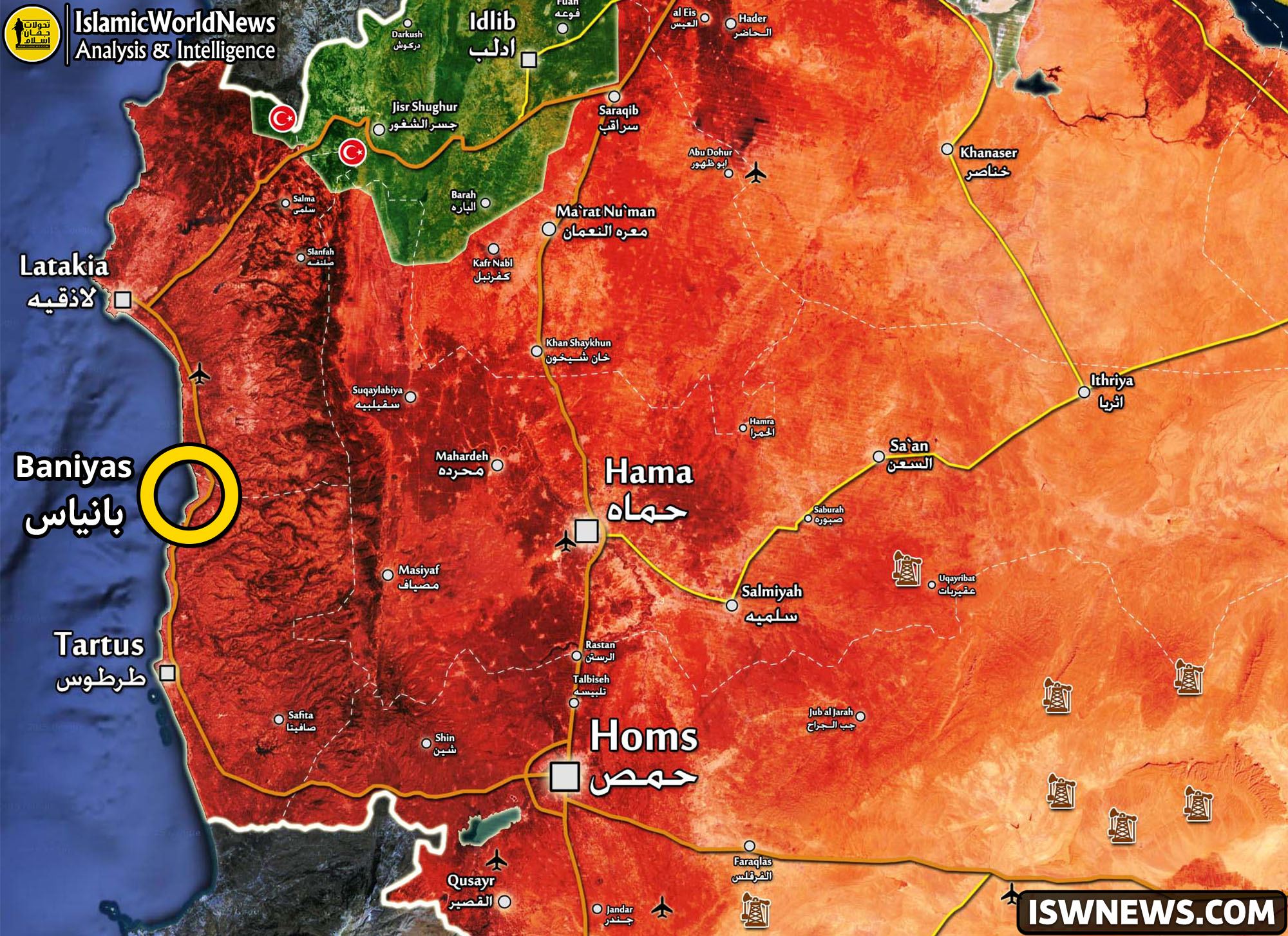
According to a Syrian military source, “at approximately 00:20 a.m, the Israeli enemy launched an aerial aggression from the direction of the Mediterranean Sea west of Baniyas, targeting one of the points in the vicinity of Baniyas city.” He further noted that the attack caused some material losses.
Israeli attack in Baniyas, Syria
Israeli media claim that the air defense system belonging to groups affiliated with Iran has been attacked on the coast of Banias.
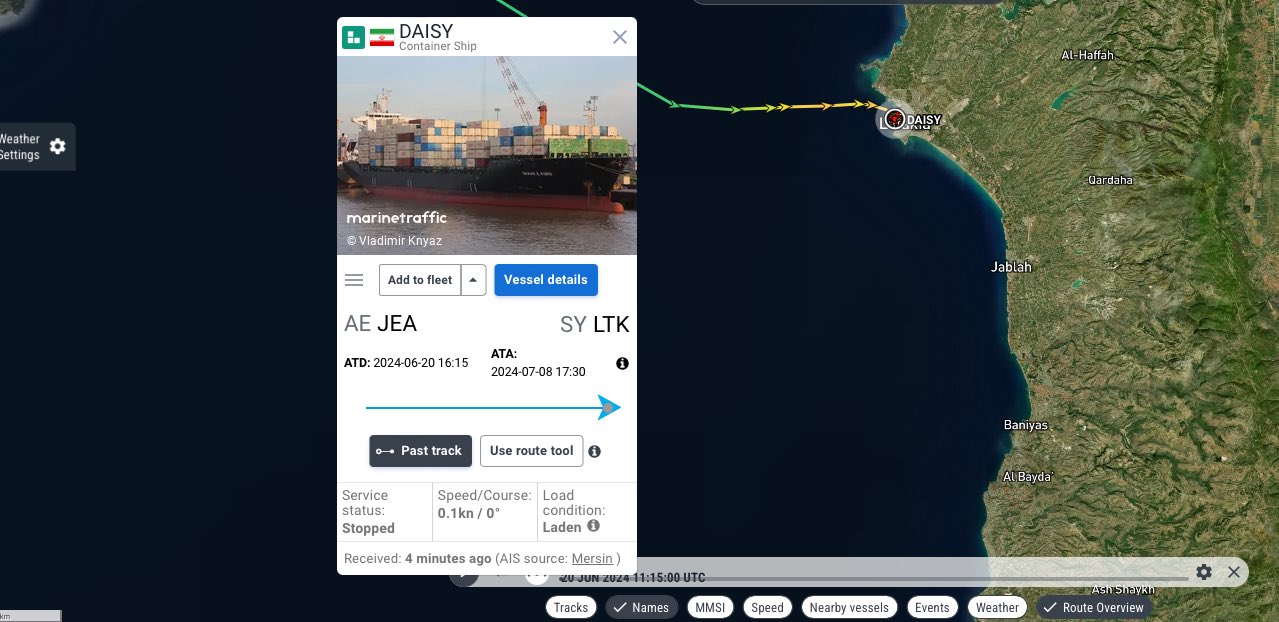
This attack took place just one day after an Iranian cargo ship docked in the port of Latakia.
However, the Israeli army has not released a statement about the attack. Israel rarely reports on attacks on Syria.
Daisy cargo ship in Latakia port
This is the third targeting of Baniyas since the beginning of 2024. On May 29, a residential building in Baniyas was hit by Israeli airstrikes, leading to the death of a girl and the injury of ten civilians.
The London-based Syrian Observatory for Human Rights (SOHR) reported that two explosions were heard in Baniyas, resulting from two Israeli missiles that targeted at least two buildings, one of which belonged to an air defence battalion on Arab Al-Malik Beach in Al-Qaloua area near Baniyas city
The SOHR pro-opposition monitoring group added that “the targeting led to the outbreak of a large fire in one of the targeted sites, without the air defences launching to confront the Israeli raid, unlike most previous targeting.”
It should be noted that the latest Israeli airstrike in Syria took place on June 27, when a series of strikes hit Syria’s southern region. According to local sources, the strikes reportedly targeted the Shiite town of Seyyedah Zaynab to the south of the Syrian capital, Damascus, where Iran’s Islamic Revolutionary Guard Corps (IRGC) and Lebanese Hezbollah are known to be present and active. The attack reportedly resulted in killing of at least two people.
Israel has significantly escalated its attacks on Syria since the outbreak of the war in the Palestinian enclave of Gaza Strip, targeting Syrian military sites as well as alleged assets of Iran’s Islamic Revolutionary Guard Corps, Hezbollah and other Iranian affiliated forces. Syrian government and army has been refraining from responding directly to Israeli attacks in an effort to avoid a full-scale conflict.
Muhammad Na’amah Nasser was martyred when a strike targeted his vehicle near the Italian Hospital in the city of Tyre.
Martyr Na’amah played an important role during the liberation of South Lebanon in 2006 and the battles in Syria and Iraq against ISIS and Al-Qaeda terrorist groups. He also led and supervised dozens of operations against the Israeli army during the recent battles in northern occupied Palestine.
Muhammad Na’amah Nasser and General Qasem Soleimani in Syria back in 2017
The Israeli military has not released any statement on the assassination of Hezbollah commander.
So far, the border clashes between Hezbollah and Israeli army have resulted in deaths of at least 15 Israeli servicemen. On the Lebanese side, more than 500 people have been killed, including 342 Hezbollah fighters.
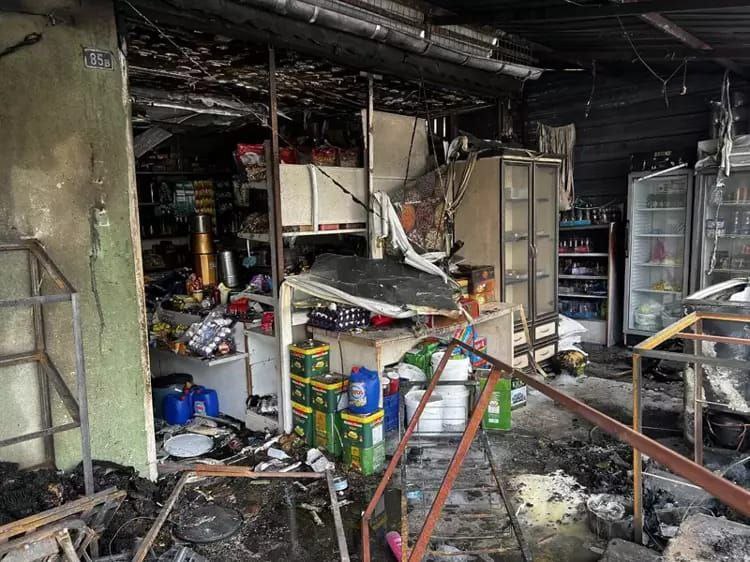
Aftermath of Israeli strikes in TyreAftermath of Israeli strikes in Tyre
“The Yemeni Armed Forces, with the help of God almighty, in response to the Israeli war crimes against the oppressed Palestinians in the Gaza Strip, carried out four qualitative military operations targeting four ships belonging to the American, British and Israel,” Brigade General Yahya Sarea, the Yemeni army’s spokesman, said in a statement.
The spokesman further emphasized the first operation was carried out with several winged missiles targeting the Israeli ship MSC UNIFIC in the Arabian Sea. According to him, the hit was accurate and direct.
MSC UNIFIC is a container Ship that is sailing under the flag of Liberia.
MSC UNIFIC
The spokesman added the second operation was carried out with several ballistic and winged missiles against an alleged US oil tanker DELONIX in the Red Sea.
This is the second time that the Yemeni army has attacked this vessel. Last week, the Delonix oil tanker was targeted by several ballistic missiles in the Red Sea.
The vessel DELONIX is an oil tanker built in 2008 and currently sailing under the flag of Liberia.
DELONIX vessel
The third and fourth operations were carried out in the Indian Ocean and the Mediterranean Sea.
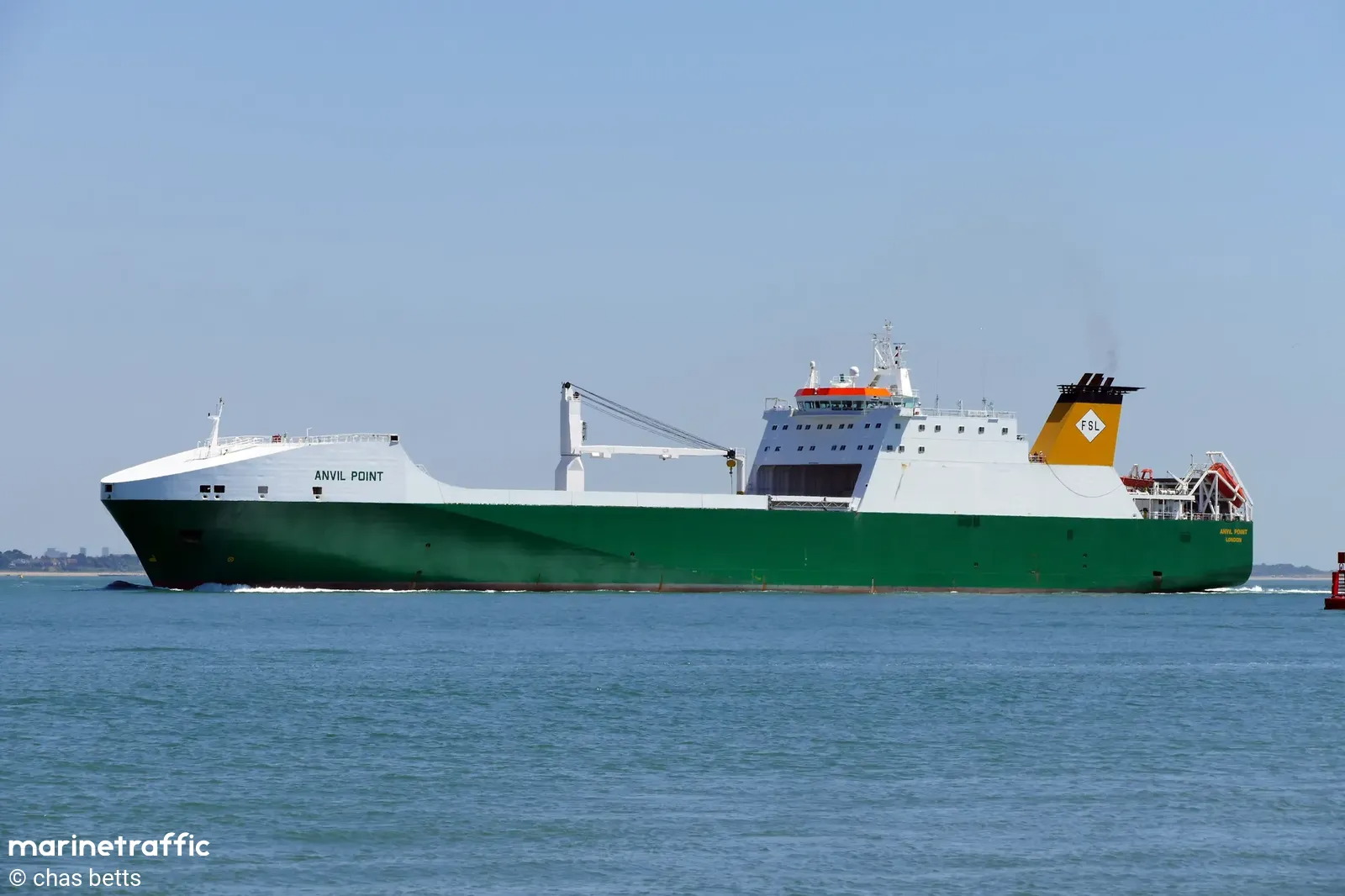
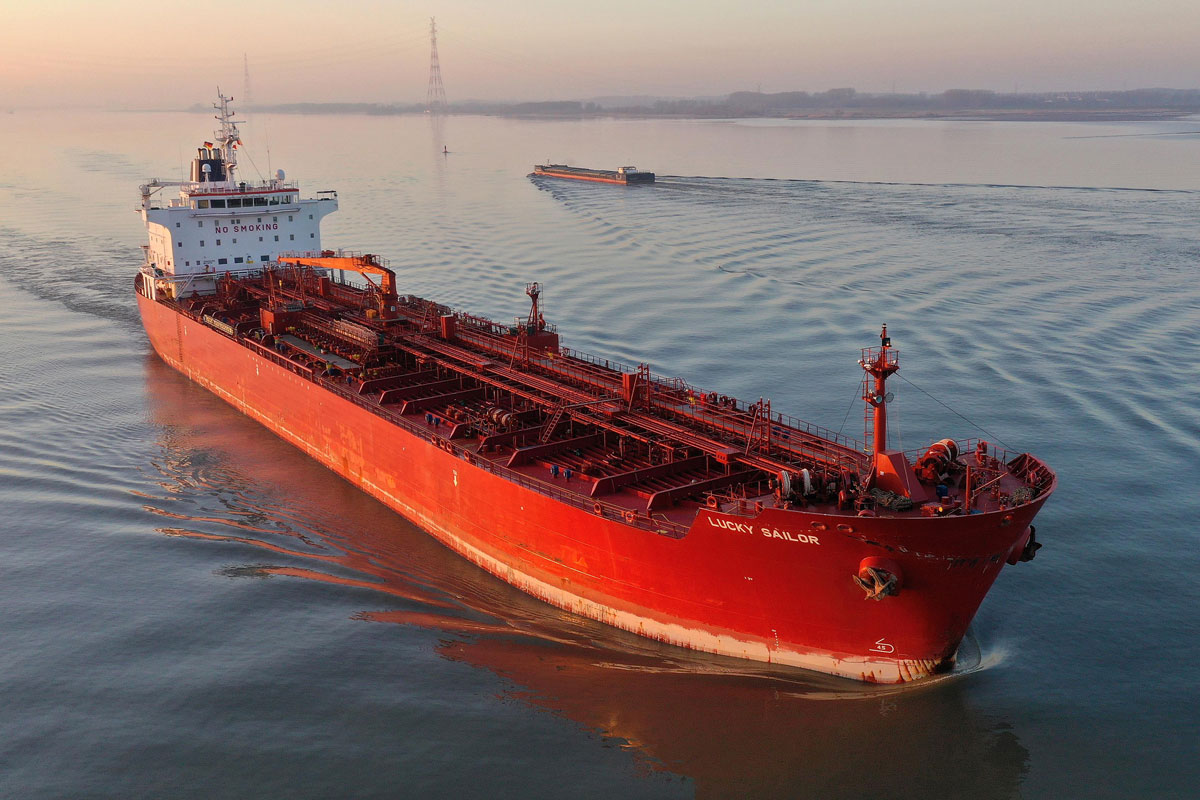
“The third operation targeted the British landing ship “Anvil Point” in the Indian Ocean with a number of winged missiles; And the fourth operation targeted the “Lucky Sailor” ship in the Mediterranean Sea with a number of winged missiles. The “Lucky Sailor” ship was targeted because the company that owns it violated the decision to ban navigation to the ports of occupied Palestine [Israel],” Yahya Saree added.
ANVIL POINT is a Ro-Ro cargo vessel and is sailing under the flag of United Kingdom. The LUCKY SAILOR vessel is an oil tanker and is sailing under the flag of Malta.
Since last month, in addition to operations in the Red and Arab seas, the Yemeni army have also included attacks on ships in the Mediterranean Sea. The aim of attacking Israeli-affiliated ships in the Mediterranean Sea is to put more pressure on America and Israel to stop the war against the Gaza Strip.
Anvil Point and LUCKY SAILOR
In addition, the‘Islamic Resistance In Iraq’ group (IRI) launched a drone attack at the southernmost Israeli city of Eilat (Um al-Rashrash) on June 30.
The IRI, is an umbrella group of Iranian-backed armed factions in Iraq that actively attacks the US and Israeli interests in the region. The IRI began launching attacks against Israel as well as against U.S. forces in Iraq and neighboring Syria on October 17 in response to the Israeli war on the Palestinian Gaza Strip.
Separately, the U.S. Central Command announced that its forces destroyed one radar site in Houthi-controlled areas of Yemen on July 1.
“In the past 24 hours, U.S. Central Command forces successfully destroyed one Iranian-backed Houthi radar site in a Houthi controlled area of Yemen. It was determined the radar site presented an imminent threat to U.S., coalition forces, and merchant vessels in the region,” according to CENTCOM.
According to the available information, the Yemeni armed forces have attacked Israeli-affiliated ships 128 times in the Red and Arabian Seas, as well as the Indian Ocean and the Mediterranean.
Since last November, the Yemeni army have attacked dozens of vessels affiliated with Israel or owned by the U.S. and the United Kingdom in the Red Sea, the Gulf of Aden, the Arabian Sea, the Indian Ocean and the Mediterranean Sea in response to the Israeli war and siege on Gaza.
The Yemeni army has stated that they will continue their military operations against unauthorized ships and American-British warships. They also emphasized that missile and drone attacks against the Israeli regime will continue until the military aggression in the Gaza Strip is stopped.
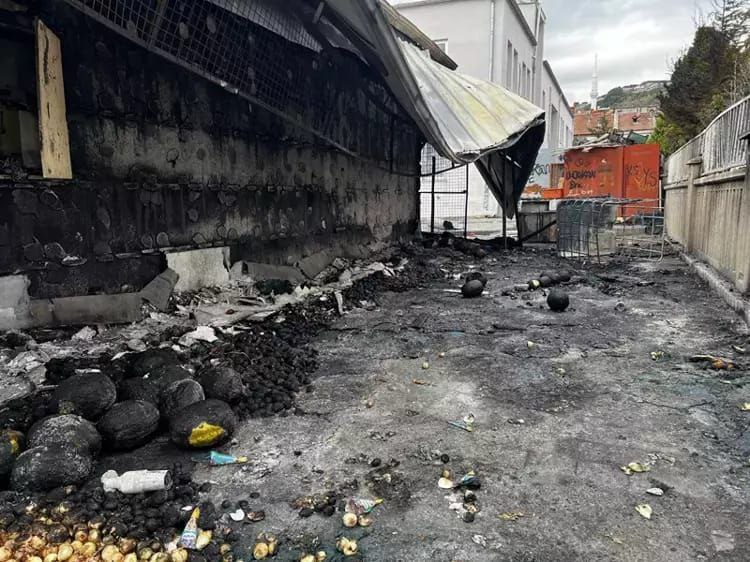
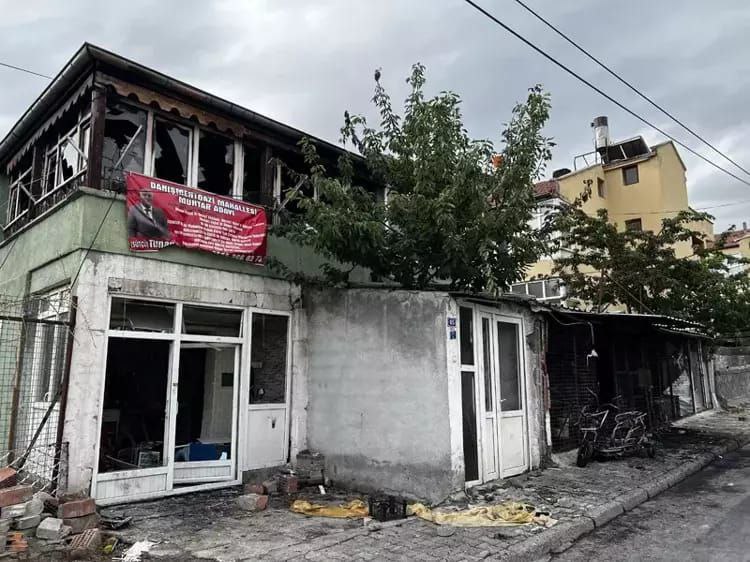
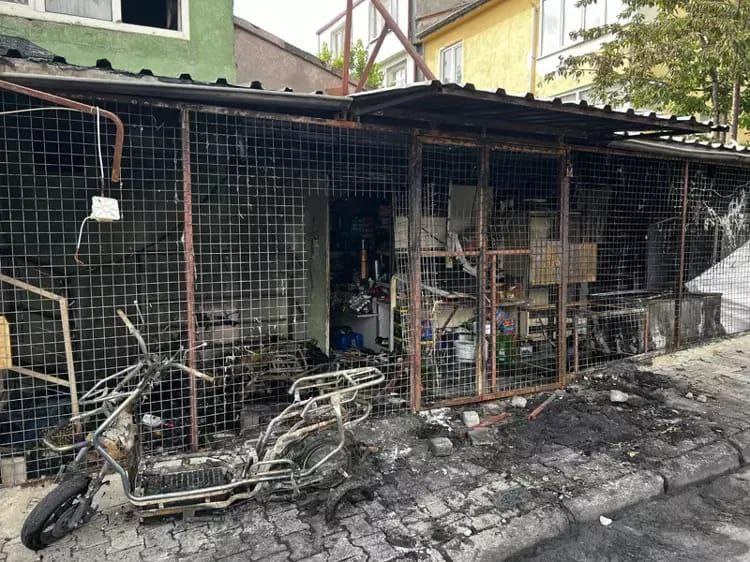
Turkey is currently experiencing severe economic problems, with a 70% inflation rate. The presence of Syrian refugees has compounded the challenges faced by the Turkish government. Some Turkish citizens view the refugees as a significant issue and are calling for their expulsion from the country. Recently, there has been a noticeable rise in anti-immigration sentiment towards Syrian refugees, leading to attacks on the property and homes of the refugees in Turkish cities.
In recent weeks, there have been several attacks on Syrians in various Turkish cities. Syrian migrants’ shops, stores, and other property have been targeted.
Violence in Kayseri city has led to increased clashes, resulting in the death of two Syrian nationals and the destruction of Syrian property. People and militants in northern Syria retaliated against Turkish army forces and positions in northwestern Syria following the events in Kayseri.
Attack on the property of Syrian refugees in KayseriBurning the property of Syrian refugees in Kayseri
In parts of northwestern Syria, protestors held rallies where they burned Turkish flags and called for the removal of Turkish soldiers from Syria. The escalation of protests and violence in certain areas led to the Turkish military abandoning some military posts and withdrawing to Turkish territory.
Pulling down and tearing the Turkish flag at Salameh crossing in the north of Azaz
Over time, the conflicts expanded and tensions spread to all the northern regions of Syria.
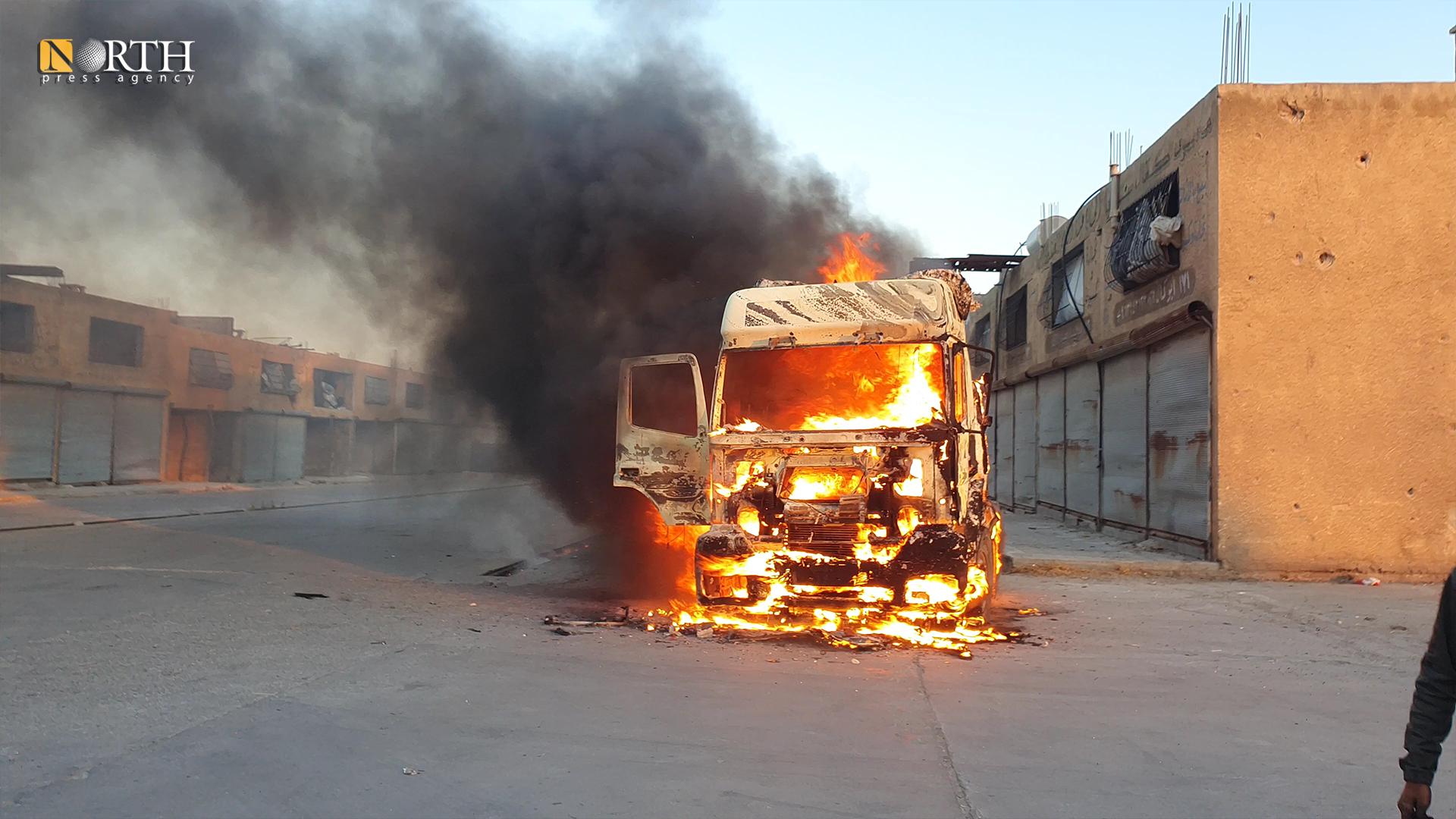
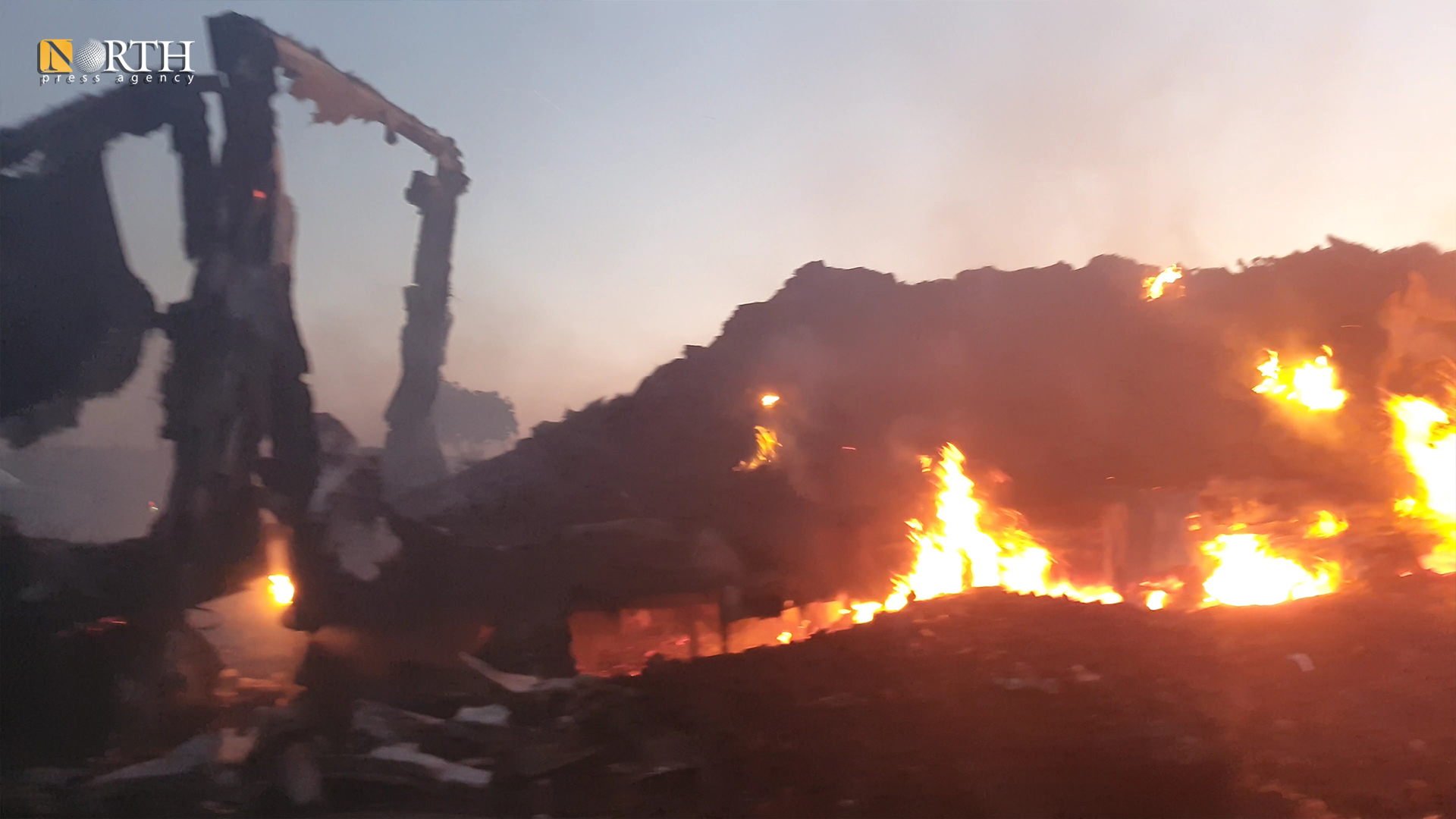
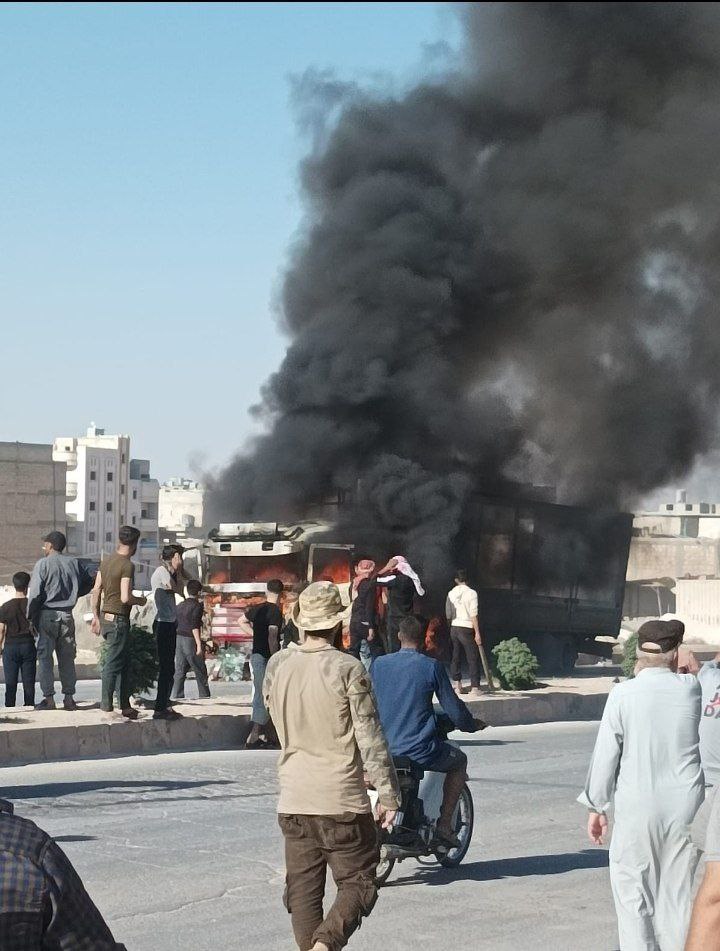
In al-Bab city, protesters attacked Turkish trucks and set some of them on fire.
Protesters, with support from armed groups, attacked the Al-Rai and Bab al-Salamah crossings in northern Azaz. As a result, Turkish authorities have asked their civilian employees to leave northern Syria immediately and closed the Turkey-Syria border crossings.
Attacking the Turkish truck and setting it on fireAttacking Turkish trucks in al-Bab and setting them on fire
Turkish forces used tear gas and live ammunition to disperse the protesters who attacked the Turkish military post in the city of Atarb in the western outskirts of Aleppo.
The most violent clashes happened in the city of Afrin. Yesterday, some armed elements clashed with the Turkish-backed forces and Turkish army. It is said that 7 people were killed and more than 50 others were injured during the clashes.
Armed conflicts in the city of AfrinA number of casualties of armed conflicts in the city of Afrin
In the city of Ibin Samaan Syrian protesters backed by armed groups surrounded a Turkish military outpost and forced a Turkish soldier to kiss the Free Syrian Army (FSA) flag. This video became controversial and Turkish authorities considered this a great insult to Turkey.
A Turkish soldier kisses the flag of the Free Syrian Army
Recep Tayyip Erdogan, the President of Turkey, recently expressed his support for establishing relations with the government of Damascus. These comments by Erdogan have caused frustration and anger among Syrian militants. Additionally, Turkish opposition groups are seeking to pressure Erdogan and the ruling party by seizing on this issue.
Holding meetings between the authorities of Damascus and Ankara and improving relations between the countries will likely harm Syrian militants and affect the relationship between Syrian militant groups and Turkey. In recent months, there have been several suspicious movements aimed at disrupting the improving relations between Turkey and Syria.
In any case, conflicts within Turkey involving Syrian immigrants and conflicts within Syria involving the Turkish army indicate a weakening or failure of Erdogan’s domestic and foreign policy. Erdogan must now promptly decide whether he is willing to acknowledge the sovereignty of the Syrian government over the entire territory of Syria after more than a decade of war and withdraw his troops from Syria, or if he intends to remain entangled in the endless cycle of military setbacks in Syria and the issue of Syrian refugees.