These sources even suggested the possibility of a direct signing between Syrian President Abu Mohammed al‑Jolani and Israeli Prime Minister Benjamin Netanyahu.
The core of the agreement would be based on the 1974 ceasefire accord between Syria and Israel, but with new amendments and without the creation of additional buffer zones along the lines of contact.
However, Israeli officials stressed that any withdrawal from occupied Syrian territories would depend on achieving a comprehensive peace agreement, and that signing a security deal alone would not lead to the pullout of Israeli forces.
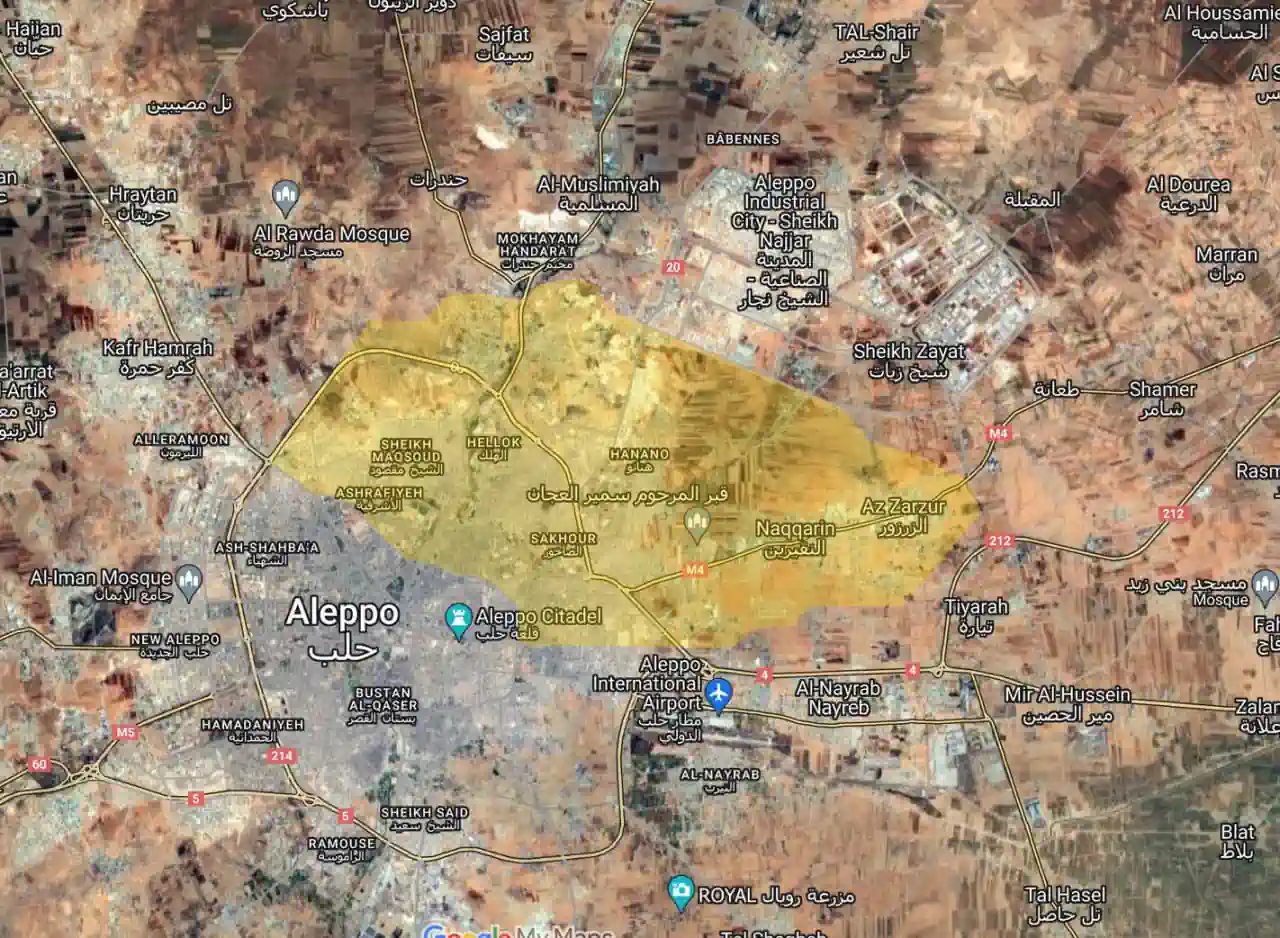
On December 21, the neighborhoods of Sheikh Maqsoud and Ashrafieh in Aleppo witnessed armed confrontations between SDF units and pro-government forces. The exchanges of fire subsided after several hours, leaving a fragile calm over these districts.
Media outlets close to Damascus claimed that SDF fighters used machine guns, RPGs, and mortars to target parts of Ashrafieh and the area stretching from Sheihan Square to al-Layramoun Square. According to these reports, the intensity of the clashes forced dozens of families and factory workers to flee the vicinity of al-Layramoun.
Meanwhile, the SDF media center stated that two of its fighters were wounded when Damascus-aligned forces attacked a checkpoint at Sheihan Square. The center held the Damascus government directly responsible, warning that such actions pose a serious threat to the city’s security and the lives of civilians.
In another statement, the SDF reported that following the checkpoint attack, pro-government forces launched heavy and semi-heavy assaults on Sheikh Maqsoud and Ashrafieh. Local residents, alongside internal security units, resisted these attacks.
At the same time, several Syrian Arab tribes released videos and statements on social media openly declaring support for the Damascus government. Tribal leaders announced their readiness to mobilize manpower and resources to confront the SDF.
Local reports confirmed that at least one woman was killed and around 20 others injured in the clashes. Both sides accused each other of initiating the attacks and escalating tensions. These developments have heightened concerns over the security implications for civilians and the overall stability of Aleppo.
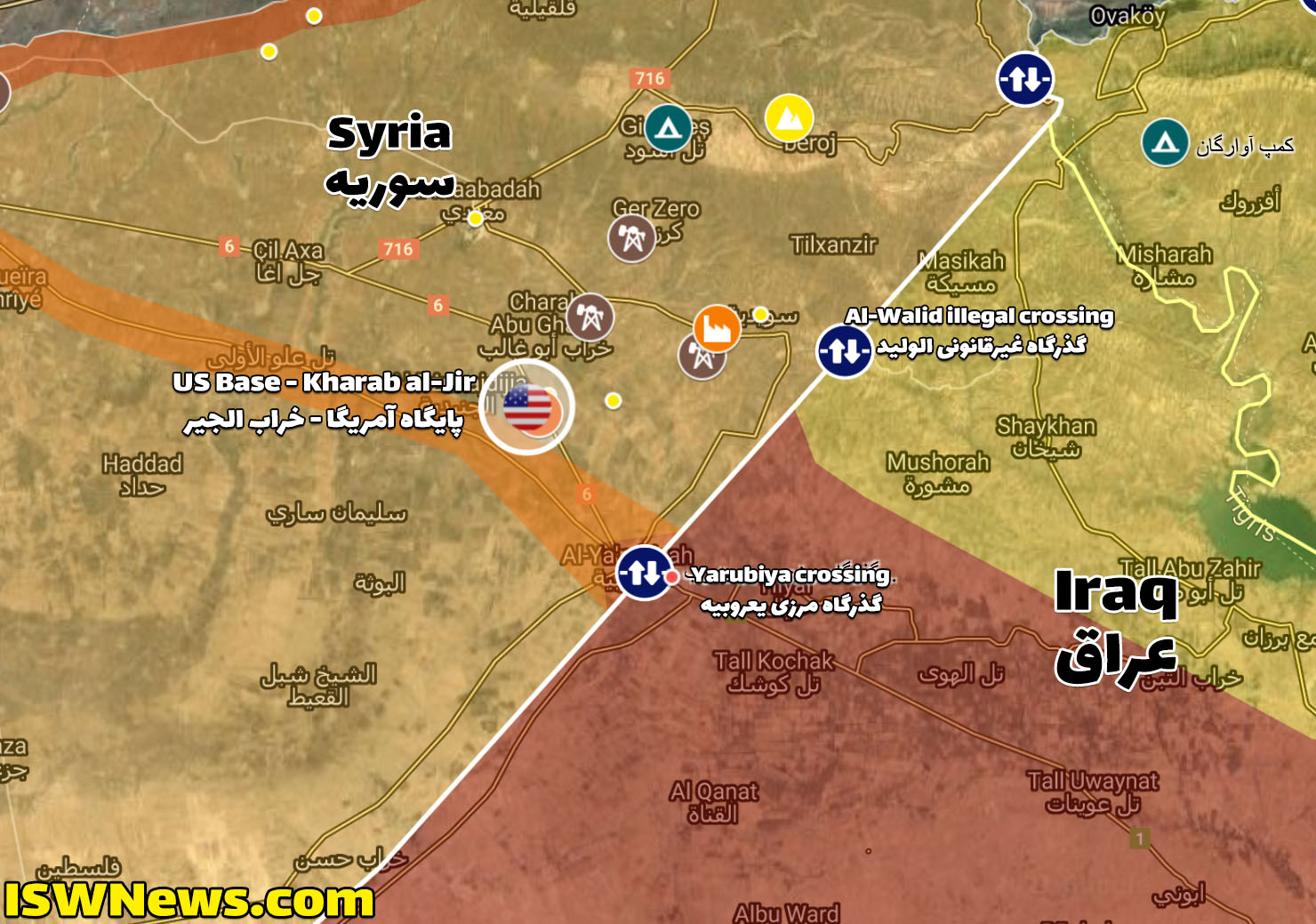
This marks the third U.S. transport aircraft to arrive at Kharab al-Jir within the past 24 hours. Previously, two other transport planes carrying heavy weapons, ammunition, and military vehicles also landed at the base.
Ghiyath Diab, Syria’s Deputy Minister of Energy for Oil Affairs, noted the pipeline’s deteriorated condition, stating that existing infrastructure—including pumping stations, transmission lines, and electrical equipment—has been severely damaged and requires complete reconstruction. According to him, initial assessments suggest that reviving the old line alongside building a new route would be more economically viable than full restoration alone.
In this context, the Executive Vice President of Syria’s National Oil Company emphasized that Damascus and Baghdad are rapidly advancing the project’s implementation. He described the pipeline as a vital artery for reactivating Syria’s energy sector and a direct, cost-effective export route for Iraq to the Mediterranean and European markets.
Published information indicates that joint technical committees from both countries are currently conducting engineering and feasibility studies. These include evaluating two main options—restoring the existing route or constructing an alternative path—as well as assessing the project’s technical, security, and economic requirements.
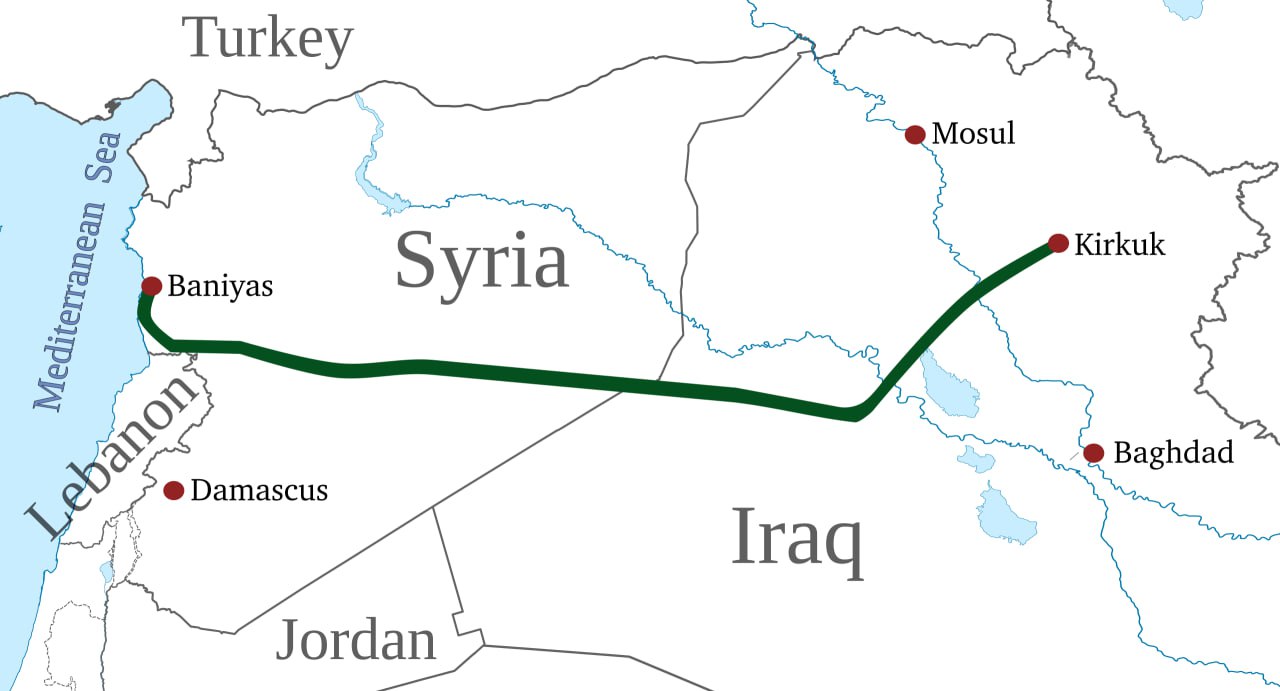
The Kirkuk–Baniyas pipeline, stretching about 800 km with a daily capacity of nearly 300,000 barrels, is one of the oldest oil export routes in West Asia, first commissioned in 1952. Preliminary estimates suggest that reviving the project could cost over $4.5 billion and take around three years to complete.
According to the proposed technical plan, construction of a dual pipeline with a daily capacity of up to 1.5 million barrels, new pumping stations, and advanced monitoring systems is envisioned. It also foresees replacing part of the old route in Deir ez-Zor with a shorter path south of Homs to improve efficiency and security.
For Syria’s new government, this project is more than just a pipeline—it is a tool to rebuild oil infrastructure, generate transit revenues, and gradually reintegrate into the regional energy network after years of war and sanctions. The high costs, lengthy timeline, and security concerns along certain sections remain major challenges. Success depends on attracting investment, ensuring route security, and maintaining political stability in both countries. U.S. support for this energy cooperation may signal an attempt to shape a new regional energy order—one that simultaneously serves the economic interests of Baghdad and Damascus while influencing the geopolitical balance of the Eastern Mediterranean.
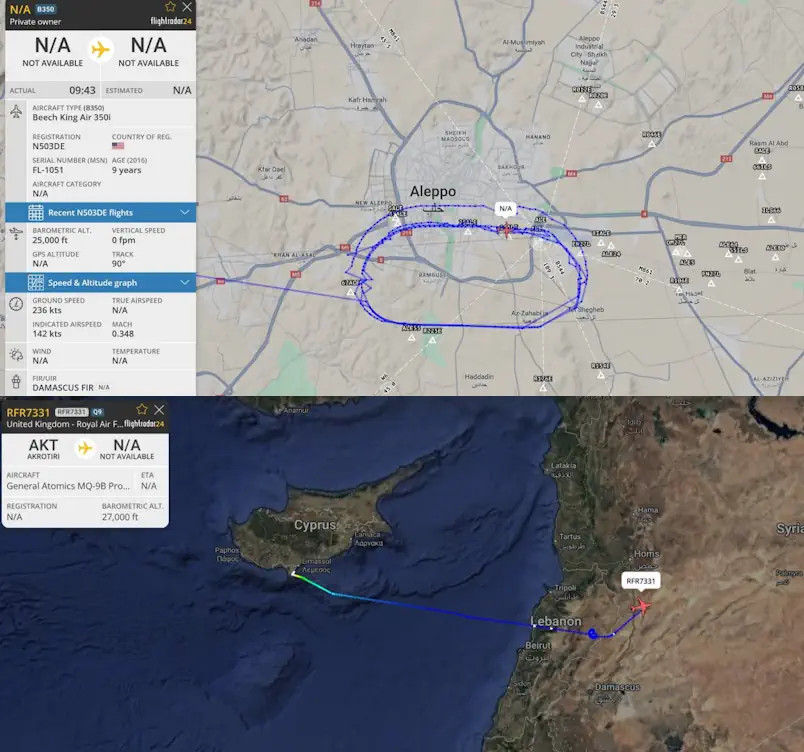
According to air traffic data from Flightradar24 and other sources, an MQ-9B Protector combat drone of the Royal Air Force (RAF) entered the Syrian airspace in the area between the capital, and the central governorate of Homs from Lebanon. The drone took off from RAF Akrotiri in Cyprus.
British drones have been flying over Syria for years as a part of the anti-ISIS coalition led by the U.S. However, their operations were previously limited to the country’s northern and eastern regions.
Soon after the drone was spotted, a Beech King Air 350i with the registration N503DE was detected flying over the city of Aleppo in northern Syria.
This specific aircraft is known to be modified for intelligence gathering. It is owned by Straight Flight, Inc., a subsidiary of Sierra Nevada Corporation, a major U.S. Department of Defense contractor specializing in intelligence, surveillance, and reconnaissance systems and aircraft modifications.
The aircraft has been linked in the past directly to the U.S. Special Operations Command, more known by its acronym USSOCOM.
It reportedly took off from Erbil International Airport in the northern Iraqi semi-autonomous region of Kurdistan, which is known to be a key hub for USSOCOM operations.
These flights, although significant, were not surprising. Last month, Syria joined the U.S.-led coalition. The country’s accession to the coalition came after a landmark meeting on November 10 between the U.S. President Donald Trump and Syrian President Ahmed al-Sharaa at the White House.
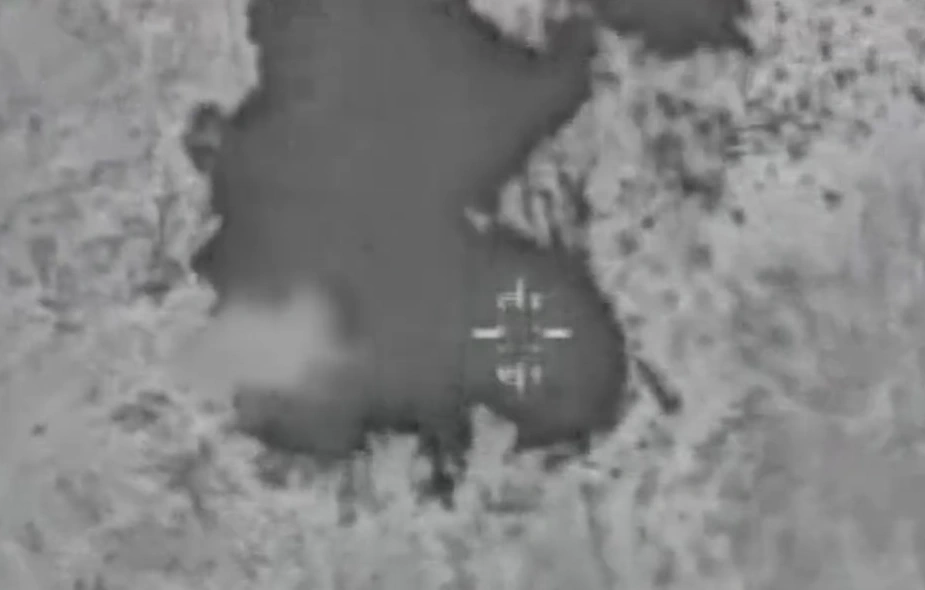
In the first joint operation between the two sides, the U.S. Central Command, also known by its acronym CENTCOM, announced on November 30 that its forces located and destroyed more than 15 sites containing ISIS weapons caches in southern Syria in cooperation with government forces.
The U.S. is already planning to further take advantage of this emerging partnership by establishing a military presence at the Mezzeh Air Base, which is located just under four kilometers away from the People’s Palace to the southwest of Damascus.
Since plans for the deployment became known last month, the air base was targeted with rockets twice. The last of the attacks was on October 8. The attacks were likely orchestrated by ISIS, or by radical Islamist elements from the government who are not happy with the decision to join the U.S.-led coalition.
The latest flights could also provoke a reaction, especially if they were followed by any joint operations with the coalition on the ground.
Speculation continues regarding how the attack was carried out and who was behind it. Some believe it was conducted by someone within Syria’s security forces, while others attribute it to ISIS.
U.S. President Donald Trump identified ISIS as the prime suspect and vowed to take “serious revenge” against the group.
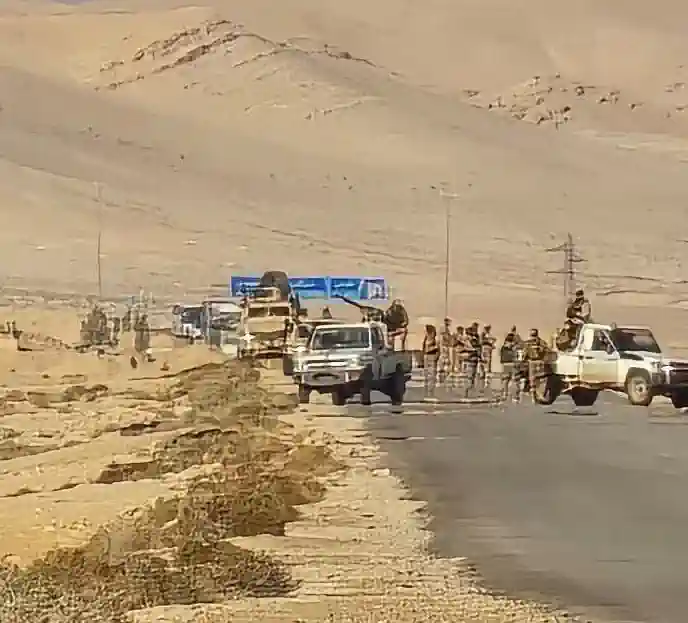
Following the incident, American warplanes flew over Homs province and Palmyra last night. Reports indicate that targets in Deir ez‑Zor and Homs (near Palmyra) were struck by U.S. aircraft.
If ISIS is indeed responsible, this would mark the group’s first direct attack on U.S. forces in the Palmyra region since the rise of the al‑Joulani government.
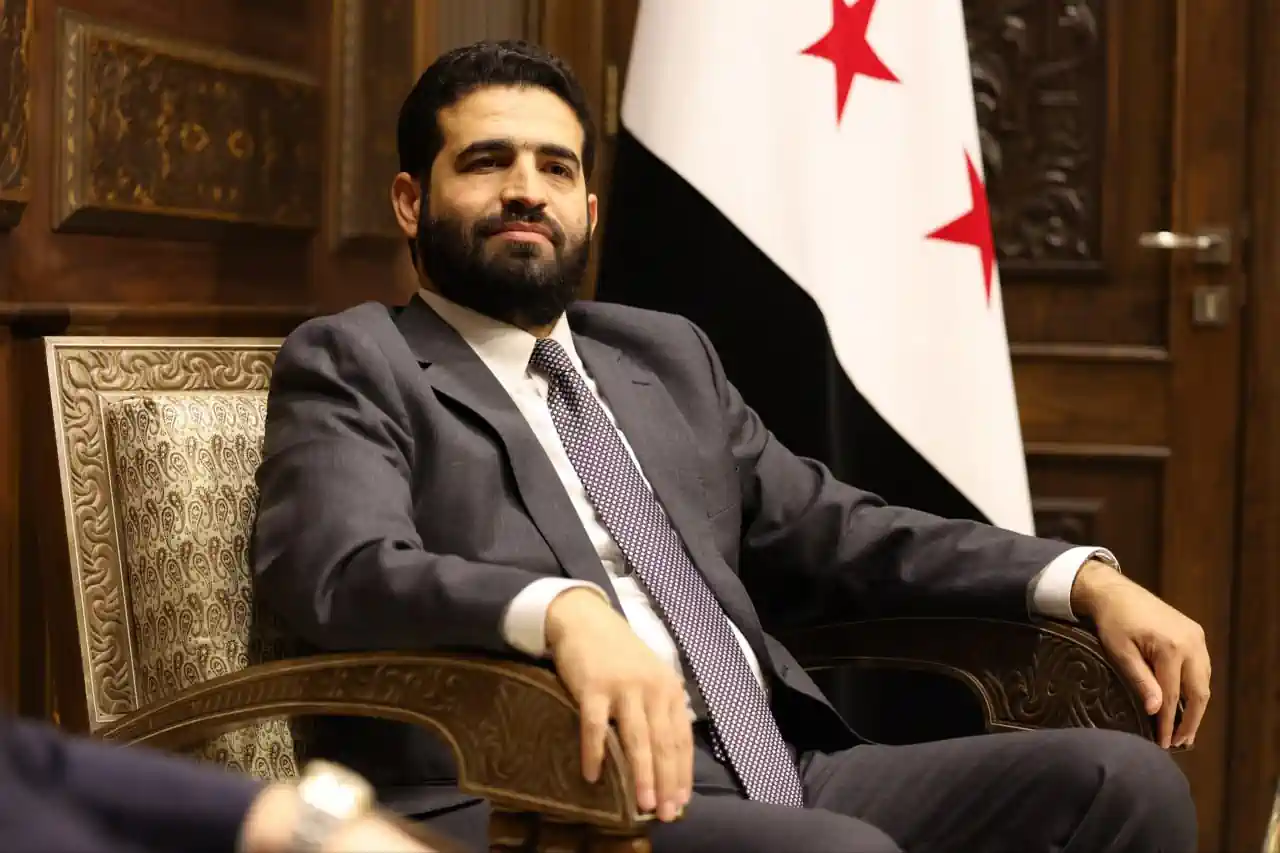
He announced that during joint operations against ISIS, several senior commanders—including the governor of Homs—were arrested, while millions of Captagon pills and 14 production workshops across various provinces were seized. He emphasized that after Syria’s liberation, security institutions have faced the dual challenge of rebuilding public trust and establishing lasting stability.
Khattab’s remarks reflect the new Syrian government’s effort to project a different image of the country’s security apparatus in the post‑Assad era. The emphasis on historic transformation and institutional reconstruction suggests that the security establishment is seeking political and operational distance from the legacy of the former regime.
At a time when public opinion still recalls the atrocities of recent months in Syria’s coastal and southern regions, showcasing security successes is being used as a pathway to build domestic legitimacy.
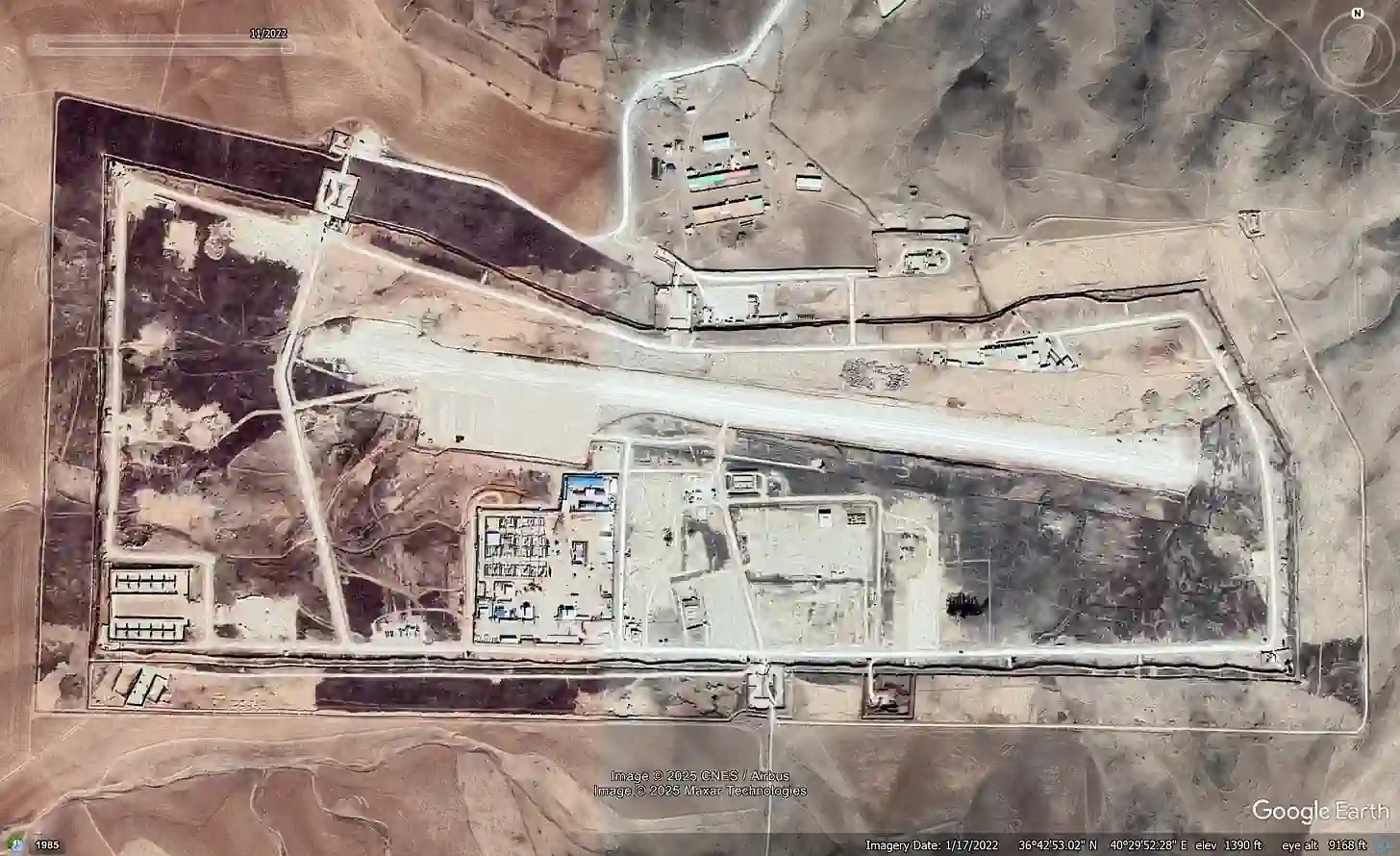
Qasrak Base, located in northern Hasakah province near the town of Tal Tamer, functions as a joint facility between the Global Coalition against ISIS and the Syrian Democratic Forces (SDF). Covering an area of 1.8 square kilometers, the base was constructed in late 2017 and early 2018 on elevated agricultural land. The hill on which the base sits is locally known by the names “Jabal Ghol” and “Jabal Qalayeb.”
The well-equipped Qasrak base on November 6, 2022 (the main logistics section of the base is in the image above) Source: Google Maps and Airbus
Situated at geographic coordinates 36.706242, 40.511955, the Qasrak base lies roughly 30 kilometers from the center of Hasakah city and 33 kilometers from the Turkish border. Its 1.7‑kilometer runway is capable of accommodating military transport and cargo aircraft. As a strategic and logistical hub, Qasrek supports coalition operations in coordination with the Syrian Democratic Forces (SDF) and oversees the main supply routes linking Hasakah and Deir Ezzor.
Right image: Location of Qasrak base from Hasakah; Left image: Location of this base relative to the Turkish borderThe longest runway built by the US in Syria
Significant construction and expansion activities were first observed in early 2025, concentrated across three main sections. The eastern sector saw the most extensive work: land was leveled and covered with concrete at two separate points, likely in preparation for new facilities or warehouses intended for equipment and logistical supplies. The larger site measures approximately 193 by 94 meters, while the smaller one is about 84 by 60 meters.
Scope and dimensions of construction in the eastern part of the base
In addition to satellite imagery, multiple videos have documented the surge of activity at this base, including the movement of vehicles and convoys. The earliest footage, released by the Syrian Observatory for Human Rights (SOHR) in early 2025, showed heavy machinery and bulldozers, described as “expansion operations at the base.” Analysis of visible structures and geographic features further confirmed that the location was indeed the Qasrek base.
Comparing field and satellite images to verify the base’s alleged location
Later, on September 28, 2025, the Syrian Observatory for Human Rights (SOHR) released a video showing military convoys belonging to the Global Coalition moving toward the base. On October 18, 2025, another video depicted several coalition trucks carrying military and logistical equipment along the route from the al‑Walid border crossing toward the base.
A long line of trucks at the Al-Waleed border crossing on the way to the Qasrak base
In addition to ground movements, aerial activity at the base has increased significantly, with military transport aircraft landing on multiple occasions. Compared to previous years, this level of operations is unprecedented; prior to Assad’s fall, the base had only limited air traffic. Notable examples include an American cargo plane documented by SOHR on May 24, 2025, and another coalition transport aircraft recorded on July 23, 2025. Furthermore, on October 18, 2025, Syria Now reported that a large American cargo plane, escorted by helicopters from the Iraqi border, landed at the base. Taken together, these developments indicate that the Global Coalition is actively redeploying forces at Qasrek, likely transforming it into a key military logistics hub in northeastern Syria.
The moment a C-130 transport plane flies over Hasakah and near Qasrak base
Activities in Deir Ezzor
The expansion and intensification of activity has not been limited to the Qasrak base. Parallel, though distinct, developments have also been observed in Deir ez‑Zor—particularly at U.S. bases located in the al‑Omar oil field and the Conoco gas field. Alongside the rapid growth of Qasrak, satellite imagery shows American forces withdrawing from Conoco, al‑Omar, and the base near Green Village on the outskirts of Deir Ezzor.
Photographs taken since early 2025 reveal extensive relocation of equipment and the evacuation of facilities at these sites. Reports first published in May 2025 indicated that the Pentagon intended to transfer forces from al‑Omar and Conoco in Deir ez‑Zor to Qasrek and al‑Shaddadi in Hasakah, thereby reducing the U.S. military presence in the region to fewer than 1,000 troops.
Summary
Satellite imagery shows that between January and October 2025, U.S. forces withdrew from the Conoco, al‑Omar, and Green Village bases in the Deir Ezzor countryside. At the same time, Qasrak base near Hasakah witnessed rapid engineering and logistical expansion from July 2025 onward, including the construction of new facilities and the repeated arrival of supply convoys. These developments appear to have effectively transformed Qasrak into the primary command and supply hub for U.S. forces in northeastern Syria.
According to CENTCOM, the operation involved a series of airstrikes and controlled ground demolitions. Among the destroyed stockpiles were more than 130 mortars and rockets, several small arms and machine guns, anti‑armor mines, and materials used for improvised explosive devices.
The elimination of these ISIS ammunition depots by CENTCOM and Syrian authorities comes only weeks after the al‑Joulani government joined the U.S. coalition, carrying a clear political message. Washington seeks to demonstrate that this alignment is not merely symbolic but has already led to joint field operations—aimed at consolidating Syria’s new security framework and reinforcing the legitimacy of the transitional government in partnership with the United States.
According to an Israeli military statement, reserve paratroopers from the 55th Brigade entered Beit Jinn with the objective of arresting members of the group “al-Jama’a al-Islamiyya.” Israeli authorities claim the group had been planning attacks against Israel in recent weeks. During the operation, armed men opened fire on Israeli forces, leaving six soldiers injured.
Syrian media report that at 3:40 a.m. local time today, Israeli forces infiltrated the Beit Jinn area but were met with resistance from local residents. Simultaneously, Israeli artillery and aircraft targeted positions in Beit Jinn. Footage released by Syrian sources shows Israeli troops abandoning a Humvee during their retreat, which was later destroyed by Israeli aircraft.
Israeli army abandoned a Humvee in Beit Jinn
According to the latest figures, at least 10 Syrians were killed and dozens more wounded in today’s Israeli army assault on Beit Jinn. Israeli drones continue to fly over the area, while several Syrian families are leaving Beit Jinn to seek refuge in safer regions.
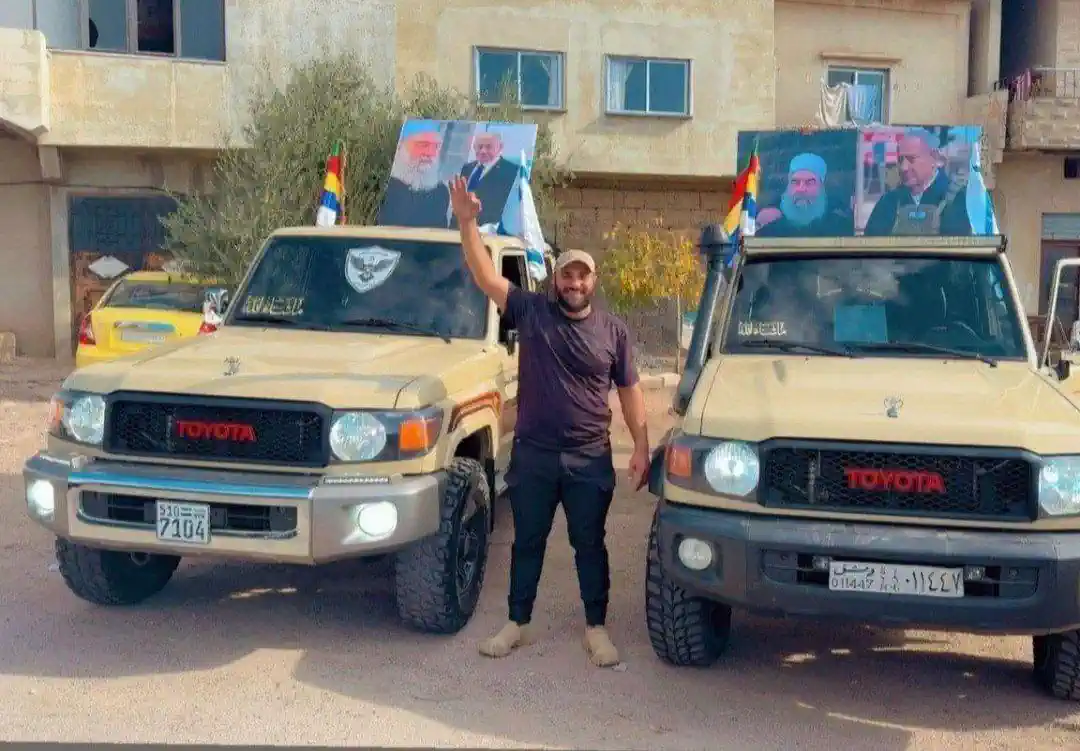
A pro-Israel gathering was reportedly held in the city of Sweida, attended by followers of Sheikh Hikmat al-Hijri. Among the participants was Muhannad Mazhar, a former militia commander. Tsurkov claims that Mazhar and his relatives were previously backed by Syrian military intelligence and Hezbollah during Bashar al-Assad’s rule, and were involved in drug trafficking, kidnappings, secret detention centers, extortion, and corruption networks. Following the collapse of state authority in southern Syria, individuals accused of war crimes have rallied around al-Hijri and now play a role in shaping the region’s security and social structures.
Tsurkov also cited reports from Israel’s Kan network and Reuters, which state that Israel provides equipment and monthly salaries to militias loyal to al-Hijri, while maintaining a direct presence in the Druze village of Hadr near the Golan border. Israel has reportedly taken responsibility for securing the village, which during Syria’s civil war served as a Hezbollah hub for monitoring Israeli military movements.
In another section of her report, Tsurkov argues that while Israel should not abandon Syrian Druze to attacks from newly dominant forces in the south, unconditional support for al-Hijri and his controversial commanders has enabled criminal elements and former Hezbollah affiliates to exploit this backing for personal immunity and continued activities. She concludes by stressing that within the Druze community, healthier and less controversial alternatives exist that Israel could rely on to safeguard minority security in southern Syria.
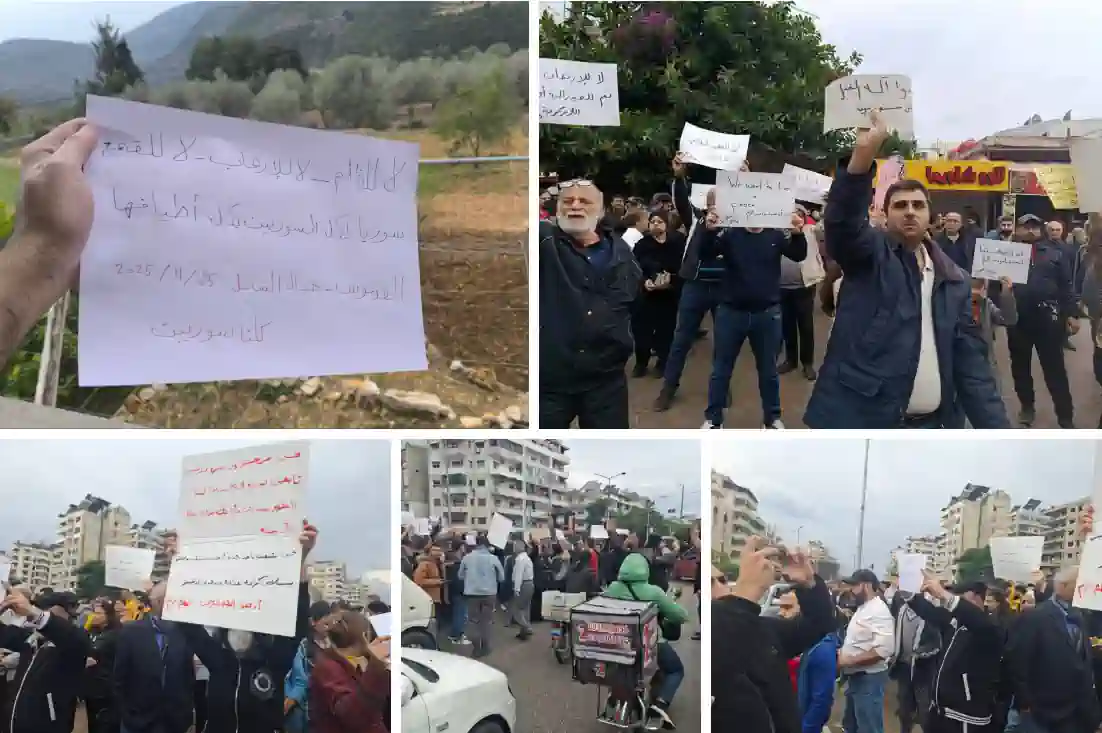
Protesters chanted slogans such as “No to terrorism” and “United Syria,” demanding the release of detainees, an end to kidnappings and killings, and the implementation of a decentralized system of governance. They stressed that their demands are purely humanitarian and social, aimed at achieving peace and coexistence in Syria.
Reports indicate that al-Julani’s security forces used live ammunition to disperse demonstrators in some areas, leaving several Alawites injured in the shootings.