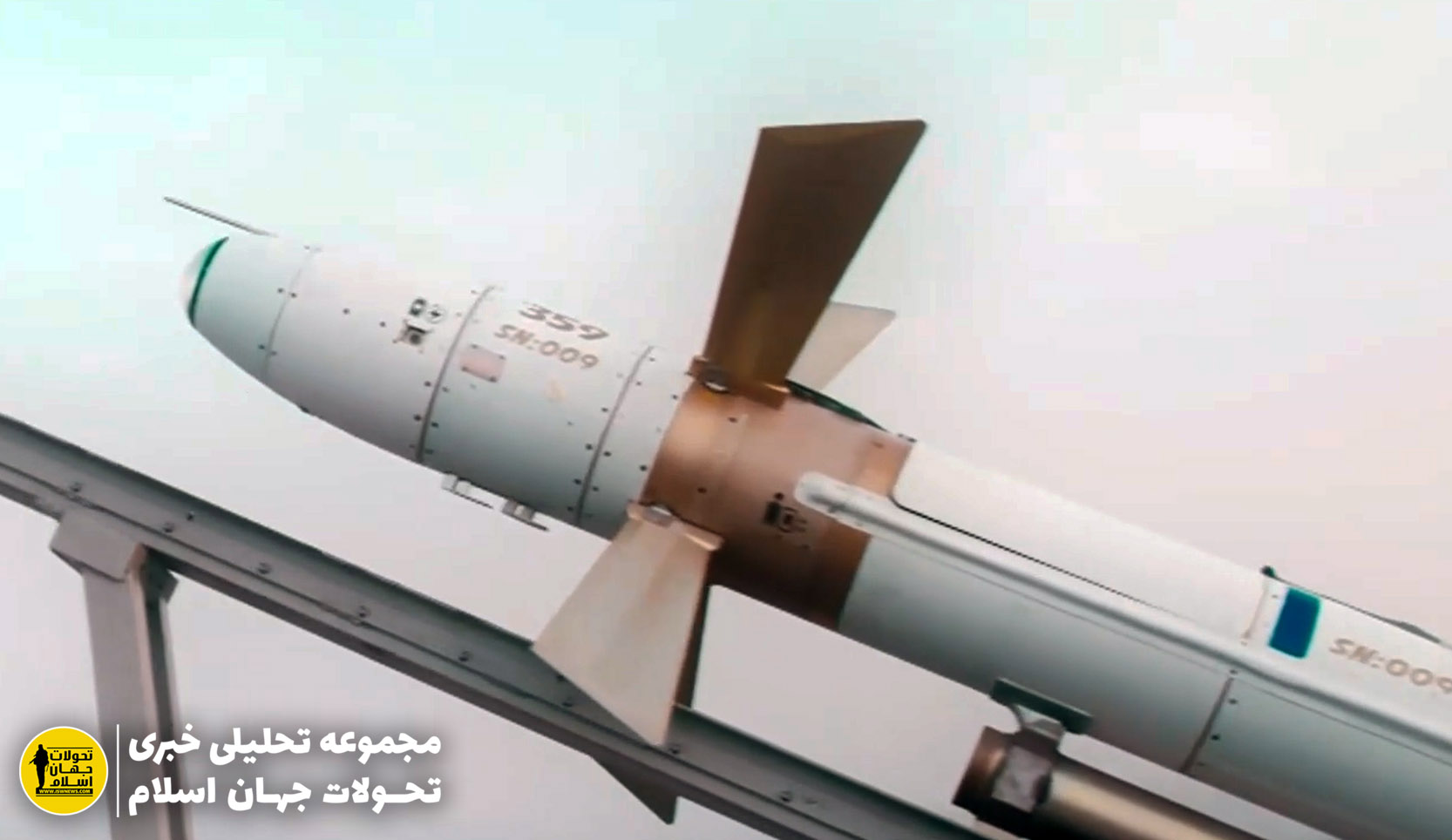
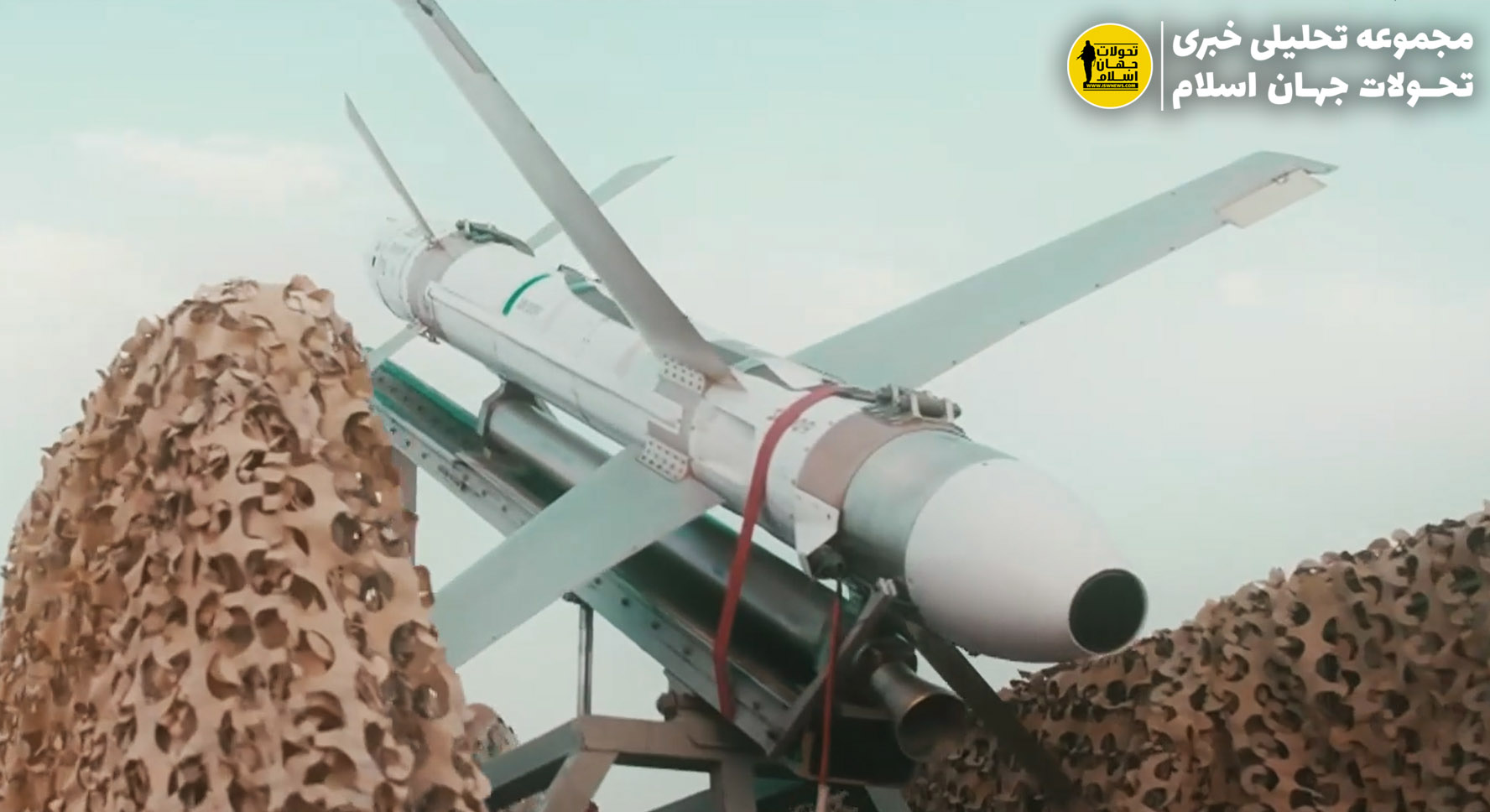
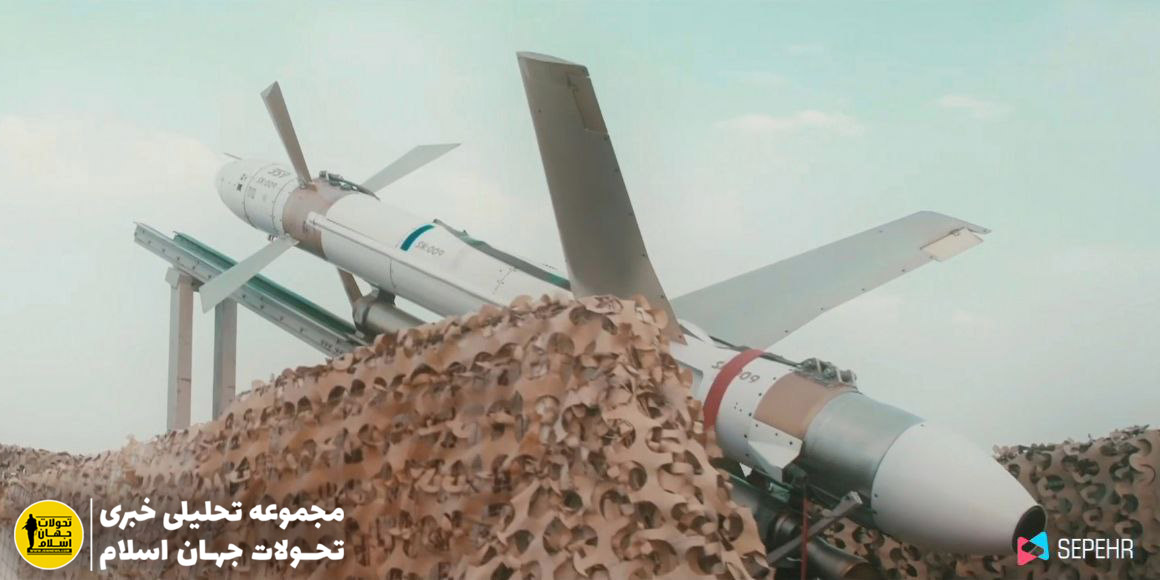
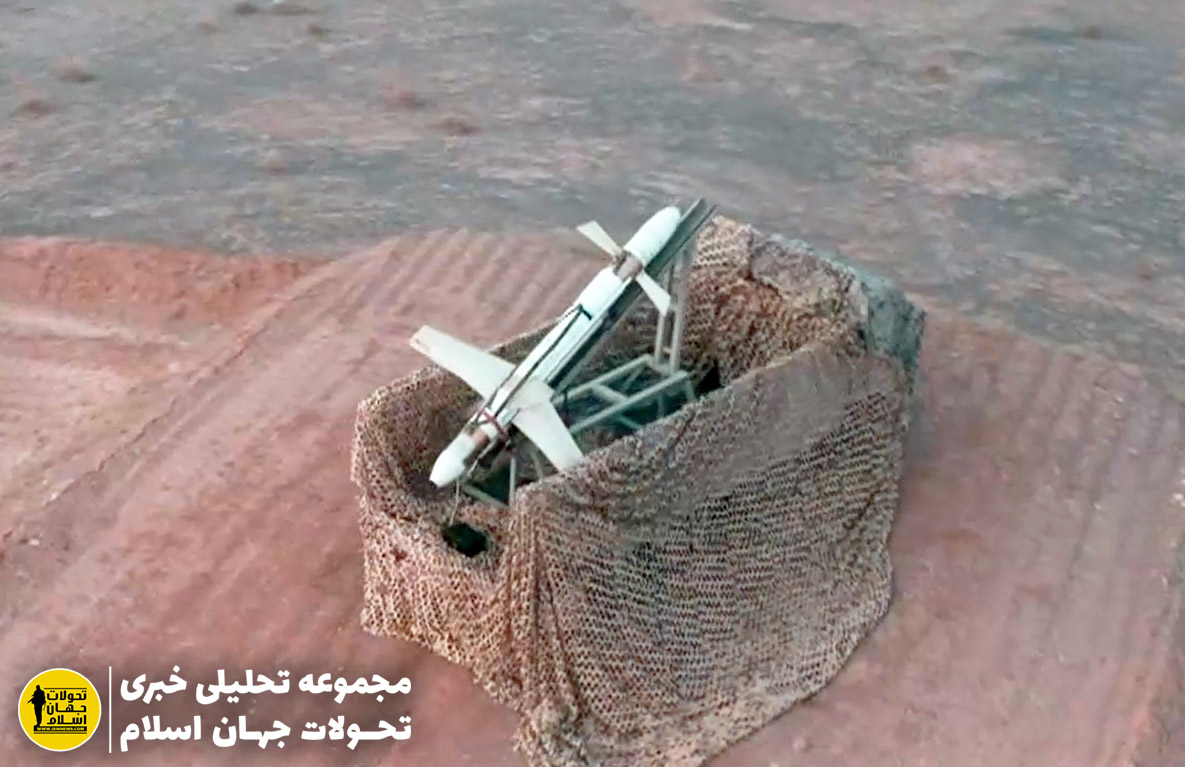
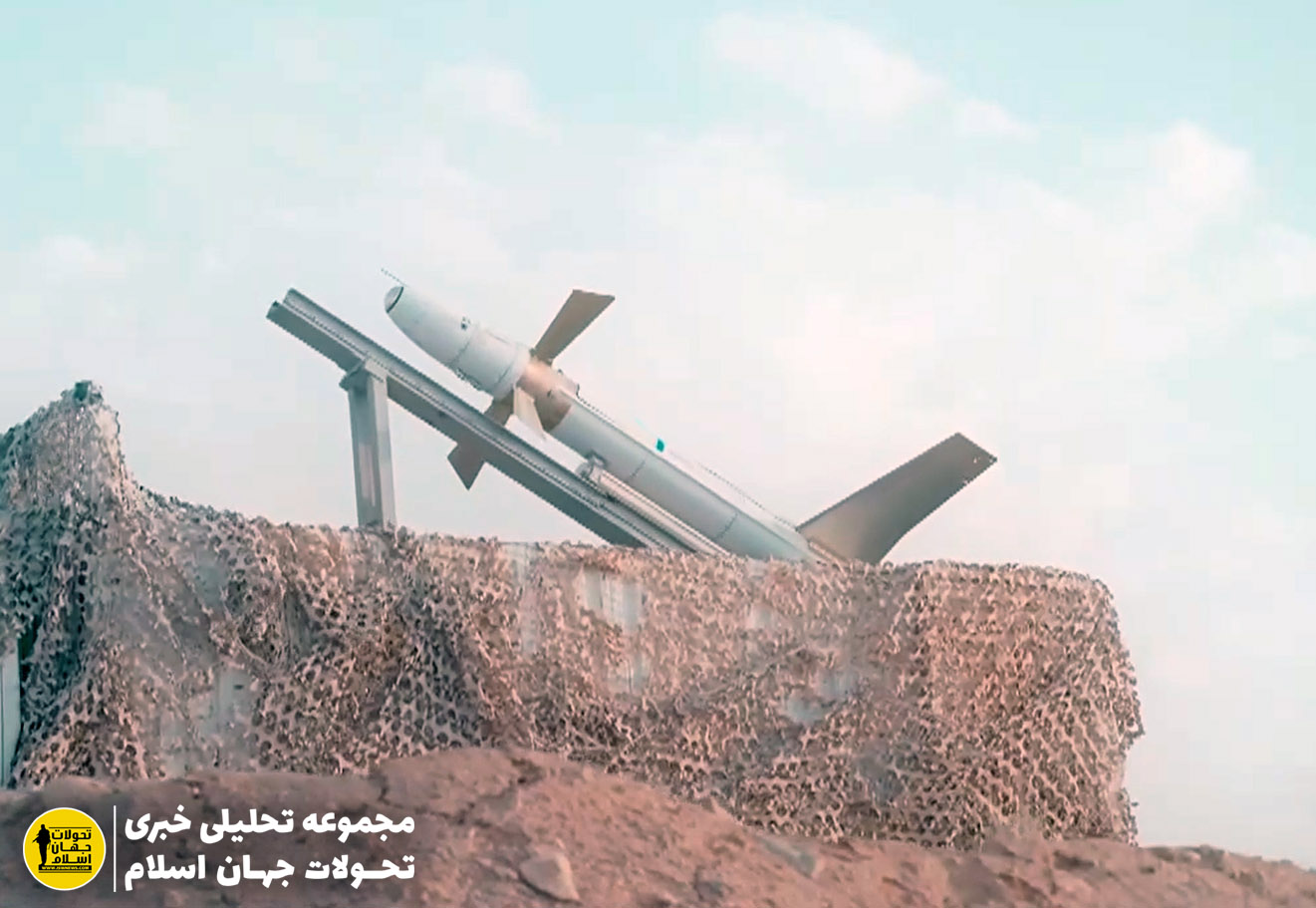
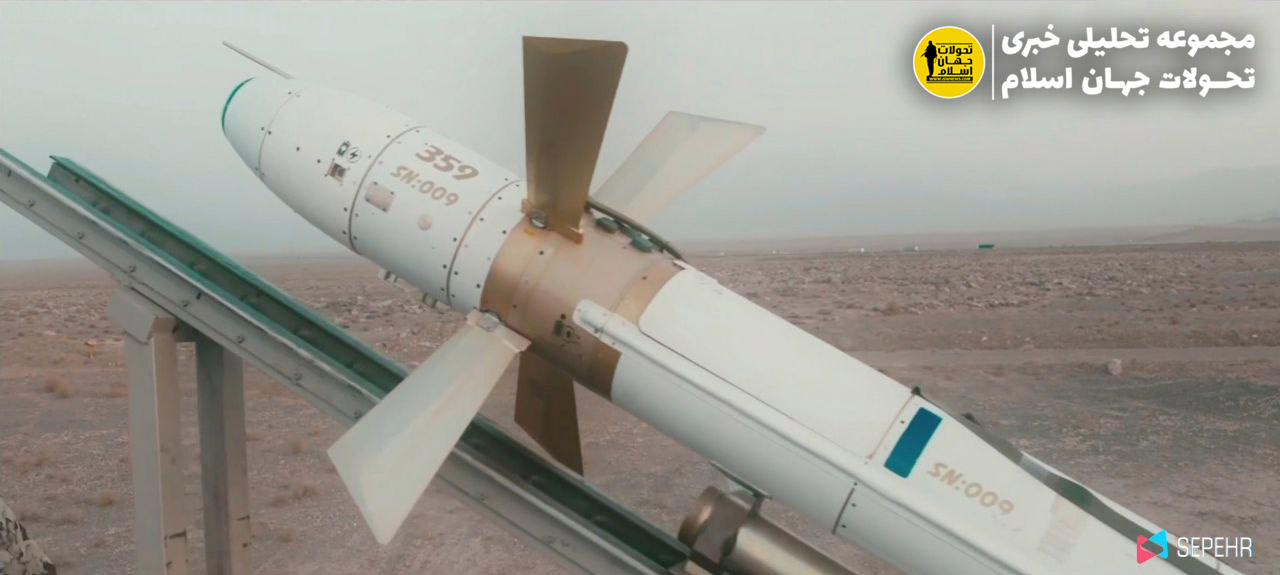
Based on the provided images and information, the 359 loitering missile is larger than the 358 missile, with both its length and diameter nearly doubled.
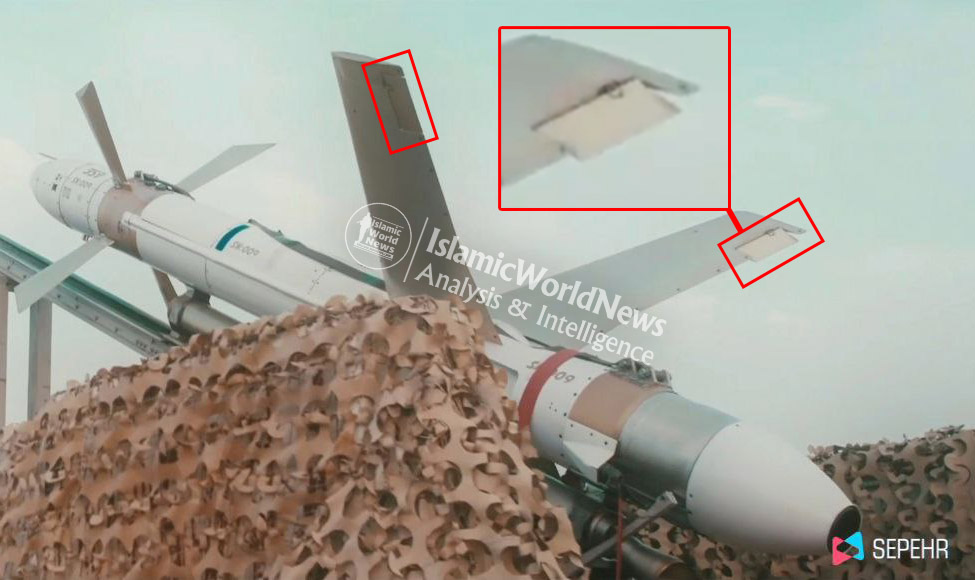
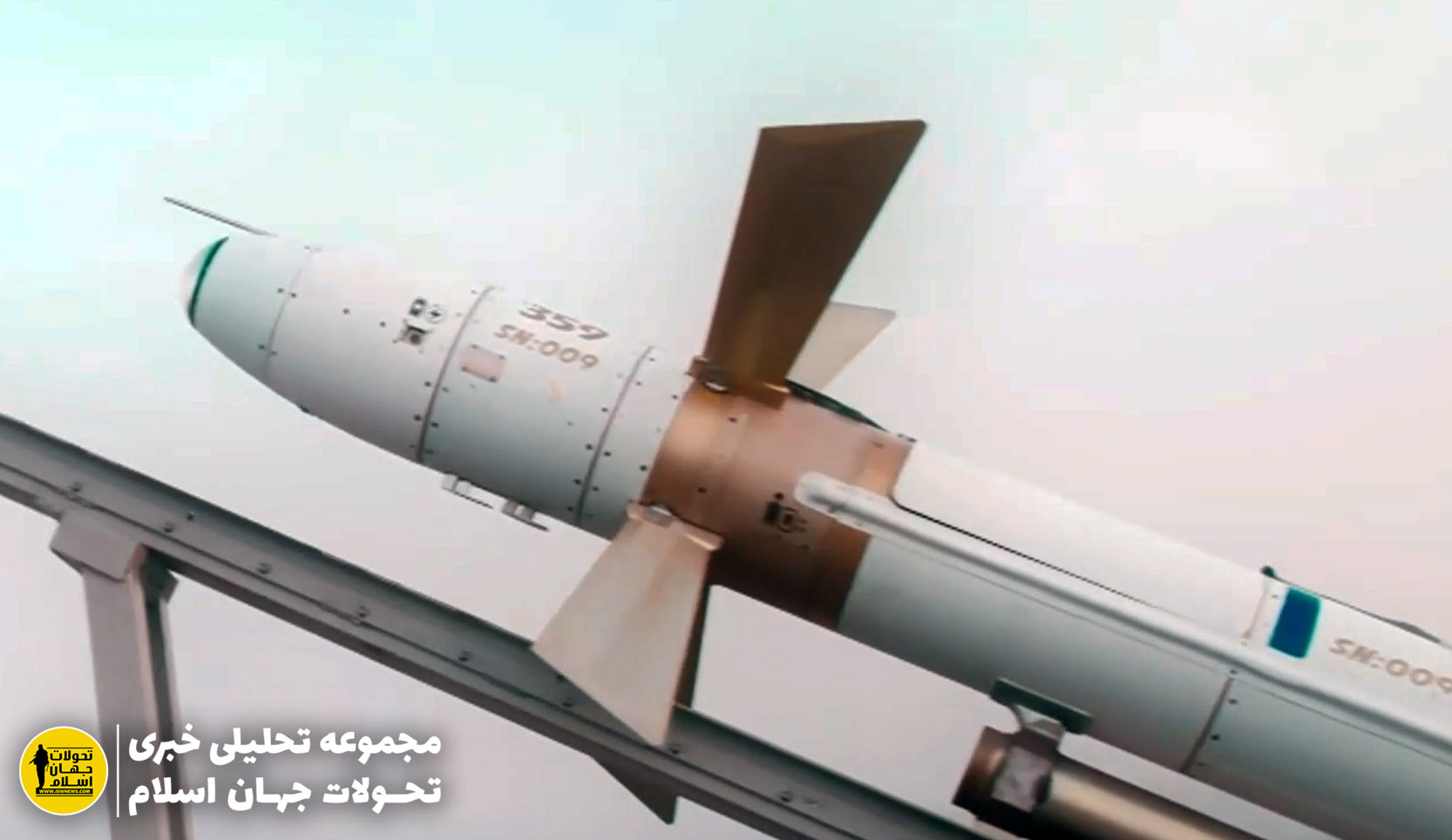
The missile features four movable wings at the front and four large fixed wings at the rear. These wings have been proportionately enlarged to match the dimensions of the fuselage. Notably, the rear fixed wings include small control surfaces at their tips, which enhance the missile’s maneuverability and control.
Control surfaces at the ends of the 359 missile’s rear wings
The 359 missile features a new, larger engine that boosts its speed to 1,000 kilometers per hour. It has a range of over 150 kilometers and can reach a flight altitude of more than 30,000 feet (9,200 meters).
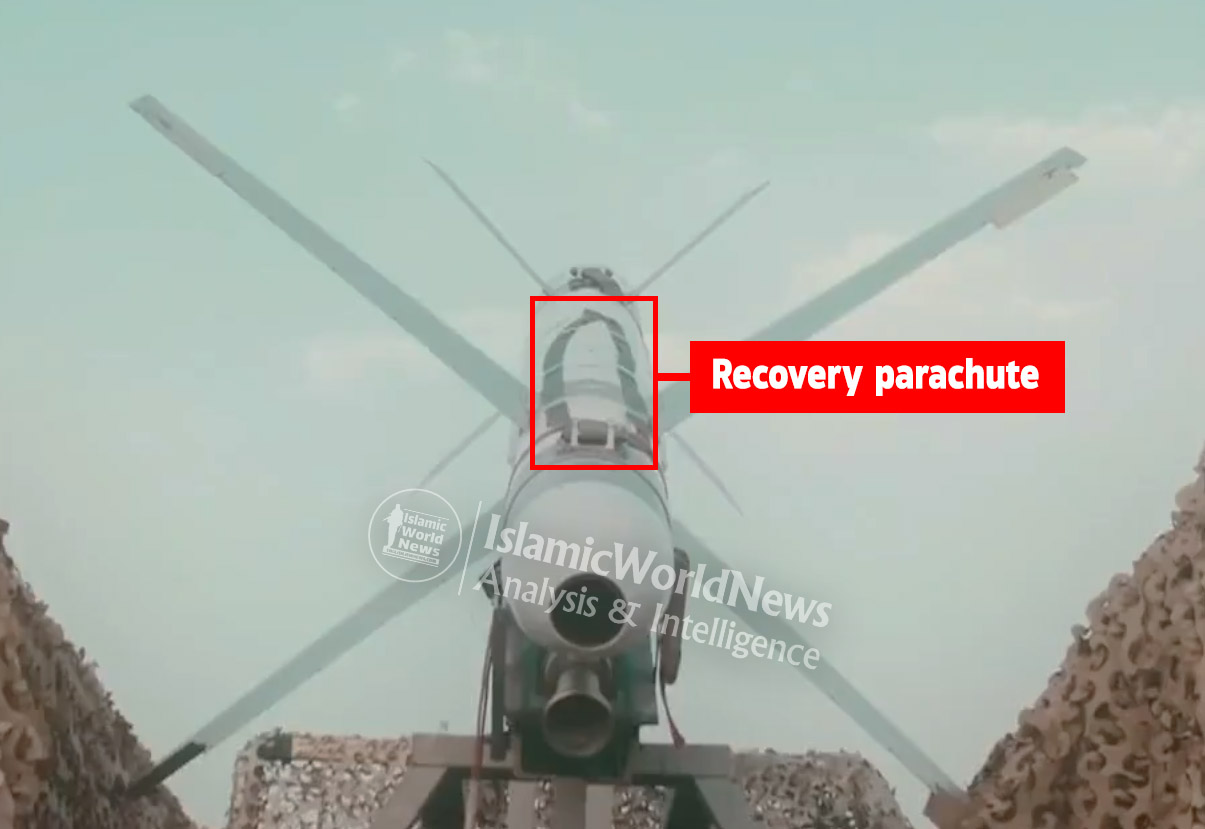
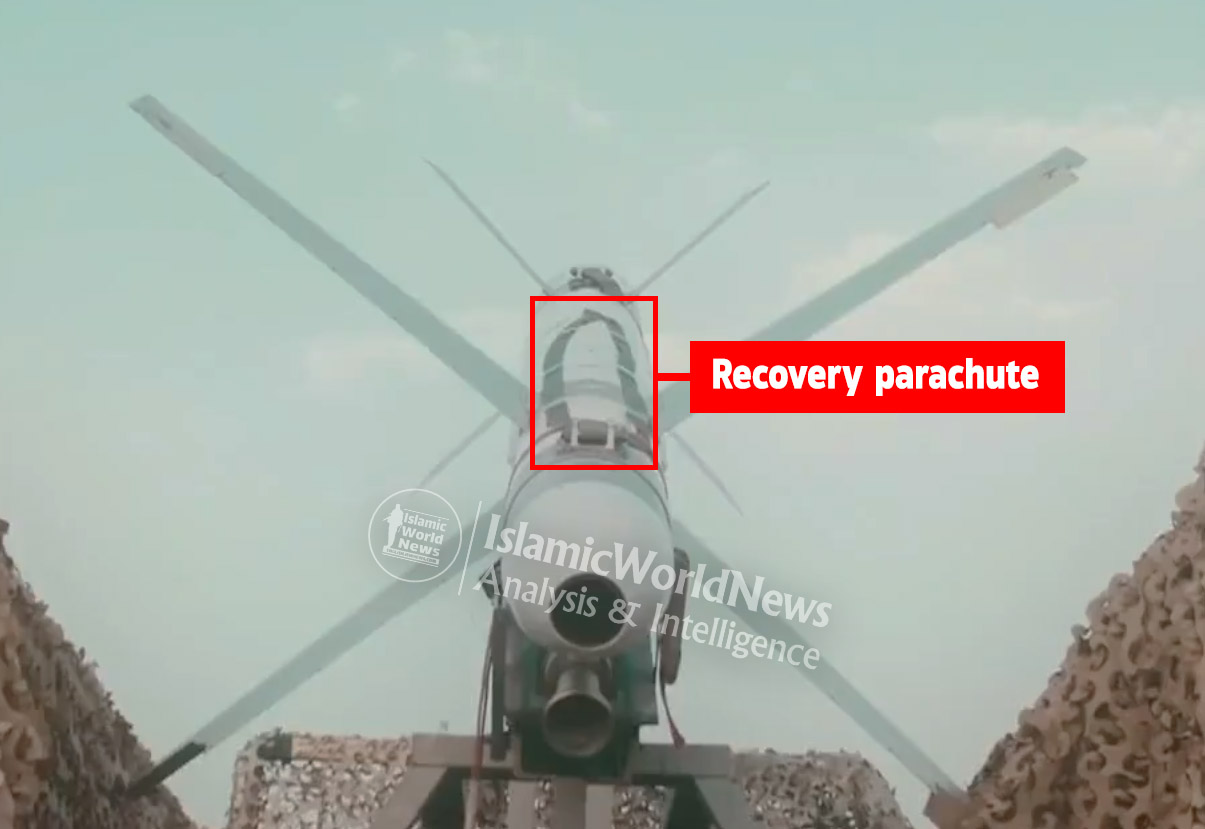
One notable improvement of the 359 missile compared to the previous 358 model is its recoverable capability. Unlike the 358, which could not be recovered, the 359 is equipped with a recovery parachute. This means that if the missile fails to intercept a hostile target or is used for reconnaissance and surveillance operations, it can be safely recovered using the parachute.
The recovery parachute of 359 missile
The 359 missile is equipped with a significantly larger warhead, which provides enhanced destructive and explosive power compared to its predecessor, the 358 missile. This increased capacity makes the 359 a formidable weapon on the battlefield. Additionally, it can be equipped with an electro-optical payload specifically designed for reconnaissance and surveillance operations, allowing it to gather critical intelligence in situations where a high-explosive warhead may not be necessary.
In terms of performance, the 359 missile has undergone comprehensive improvements, making it more advanced and effective than the 358. It is now capable of targeting adversaries at higher altitudes and achieving faster speeds. With a maximum flight altitude that surpasses 30,000 feet and a top speed of 1,000 kilometers per hour, the 359 missile can effectively engage airborne warning and control system (AWACS) aircraft as well as aerial refueling tankers.
Moreover, the missile boasts an extended cruising range of over 150 kilometers, which significantly enhances Iran’s strategic capabilities in air defense. This extended range not only allows for greater flexibility in deployment but also improves the country’s ability to monitor and protect its airspace from potential aerial threats. Overall, the advancements in the 359 missile position it as a critical asset in Iran’s defense arsenal.
Click to view full sizeUnveiling of the 359 missile in the television documentary Guardian of the Sky
The 358 missile is the world’s first UAV-based defense missile, introducing a groundbreaking defense concept that combines the capabilities of unmanned aerial vehicles (UAVs) and missiles to target hostile aircraft effectively. Iran is the first nation to deploy this type of system in real battlefield conditions. Evidence suggests that this system was first employed by Iran’s regional ally, the Yemeni army (Ansar Allah Movement).
History:
According to information disclosed by the IRGC in the documentary “Parchamdar” (Flagship), footage has been released showing the moment an MQ-1B drone was shot down by a 358 missile. So far, four drones of this type have been shot down in Yemen, and the released video likely dates back to 2016 or 2017, during the field testing phase of the 358 missile. Consequently, the design and development of this weapon must have occurred one or two years before the destruction of the MQ-1B drone.
Image of the destruction of an American MQ-1B belonging to the UAE on the Yemeni front by a 358 missile
But the official sighting of this missile dates back to 2018 and 2019. In 2018, its wreckage was discovered by the Saudi army, and in 2019, an American warship intercepted and seized a shipment of Iranian weapons en route to Yemen in the Gulf of Aden.
358 missile design:
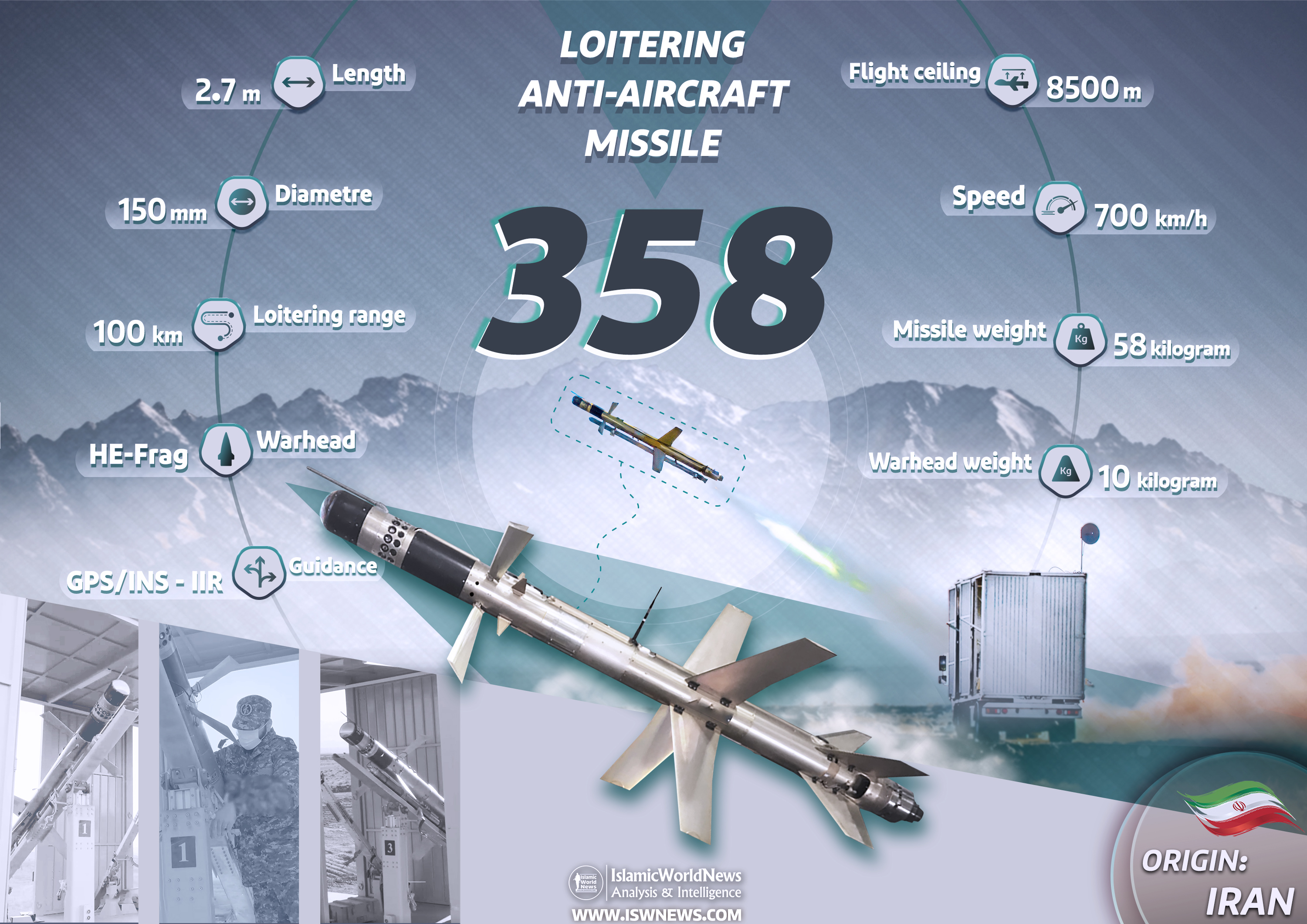
The 358 missile features a cylindrical body measuring 150 mm in diameter and 2.7 meters in length. It employs an infrared imaging seeker (IIR) in its nose to locate and lock onto targets.
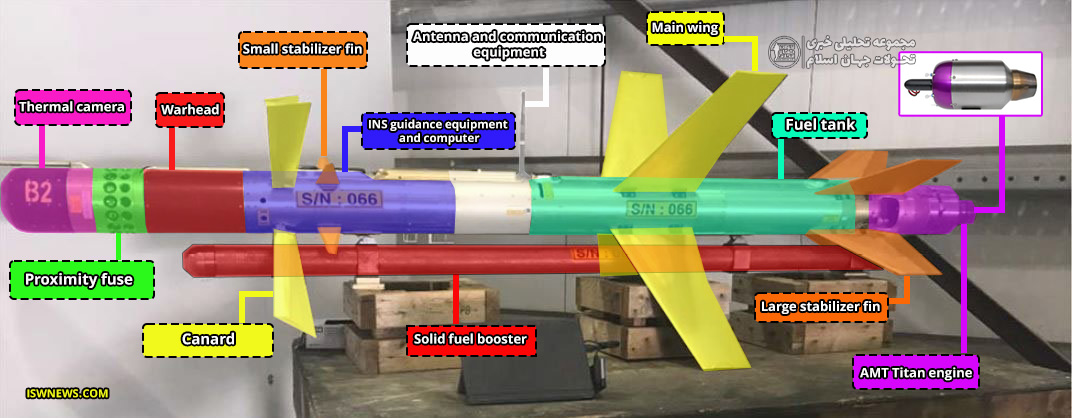
Following the camera, there is a 360-degree laser proximity sensor, and beyond the proximity sensors, a 10-kg fragmentation warhead with an effective radius of 30 meters.
Components of the 358 missile
At the front of the missile, just after the warhead, are four movable canards used for guidance. These canards are similar in appearance and function to those on the R-27 missile. They start narrow and sharp, widening towards the tip, and are large enough to provide part of the necessary lift force.
Alongside the large steering canards, there are four very small triangular fins designed to stabilize airflow during extremely fast, unbalancing turns.
The middle section of the missile contains the inertial guidance equipment and the missile computer. Additionally, because the antenna is located in this section, the communication equipment is also housed here.
In the middle section, near the rear of the rocket, are four large fixed wings that generate lift. This section also houses the rocket’s fuel tank.
At the rear of the missile are four small fixed stabilizer fins and the missile’s mini-jet engine. The engine has four air intakes recessed into the fuselage.
This missile cannot take off independently, so a rocket booster is installed at the bottom of the missile to assist in the initial launch.
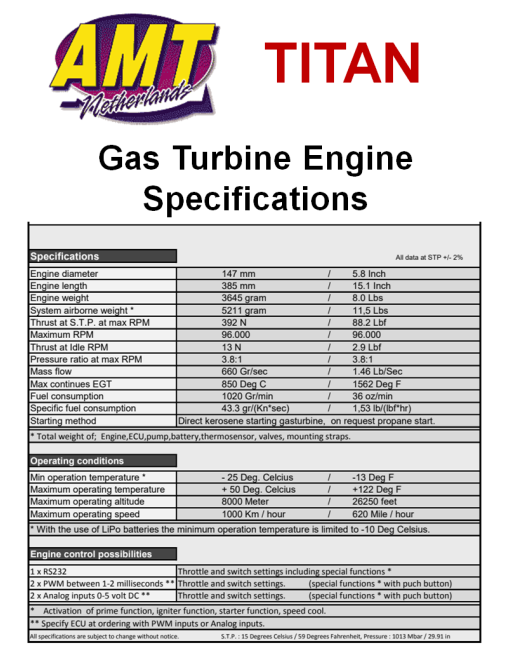
An examination of shipments seized in 2019 and 2022 by the US and UK reveals that the engine used in the 358 drone is a Titan type from the Dutch company AMT. A review of the supply chain indicates that the engine was purchased indirectly from the manufacturer by a company in Hong Kong.
The Titan engine has a diameter of 147 mm and a length of 385 mm. It weighs 3645 grams without a starter and 5211 grams with a starter. This engine provides a thrust of 392 newtons, which is equivalent to 88.12 pound-forces, and has a fuel consumption of 43.3 grams per kilonewton per second.
Announced specifications of the Titan series engines produced by the Dutch company AMT
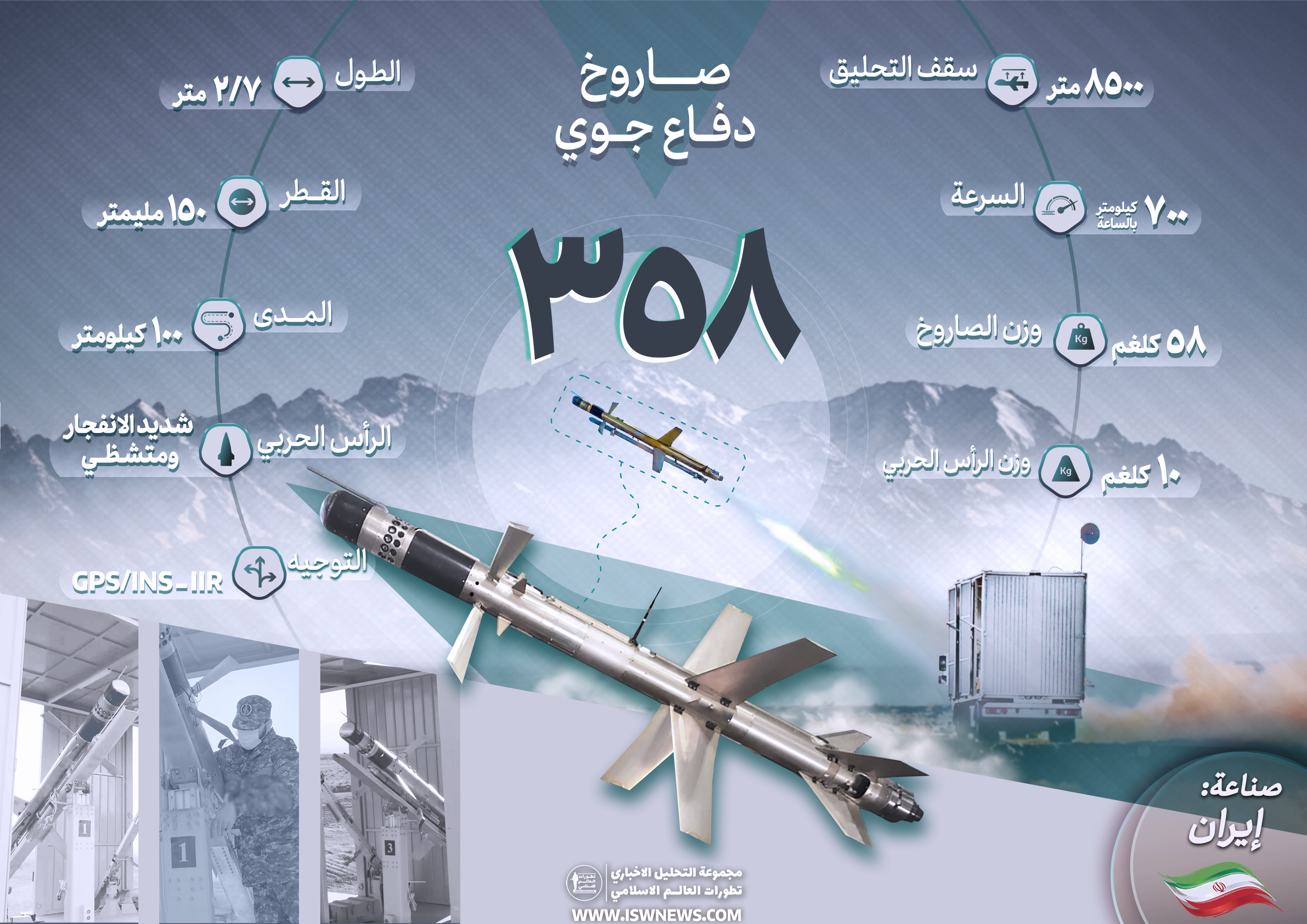
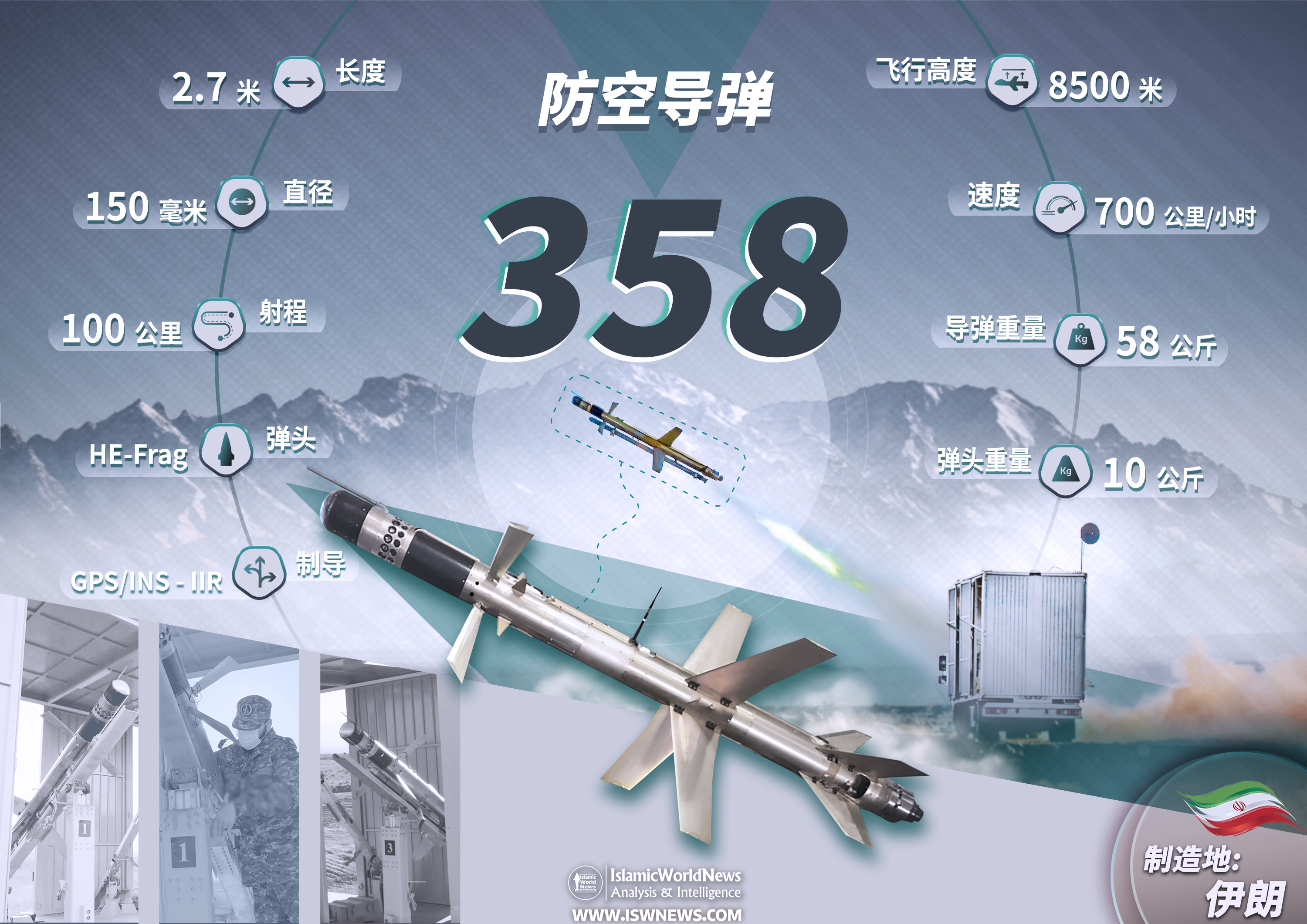
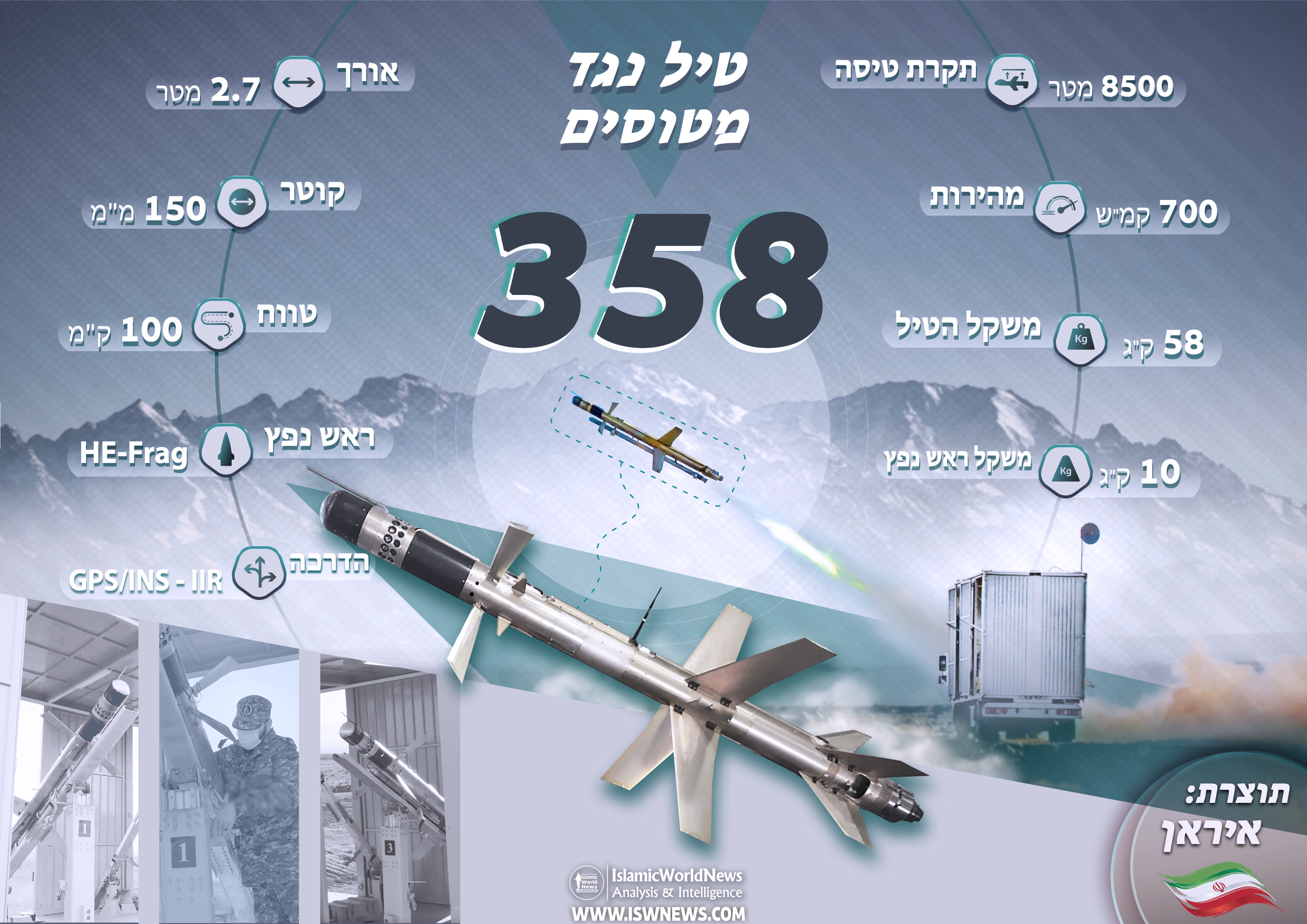
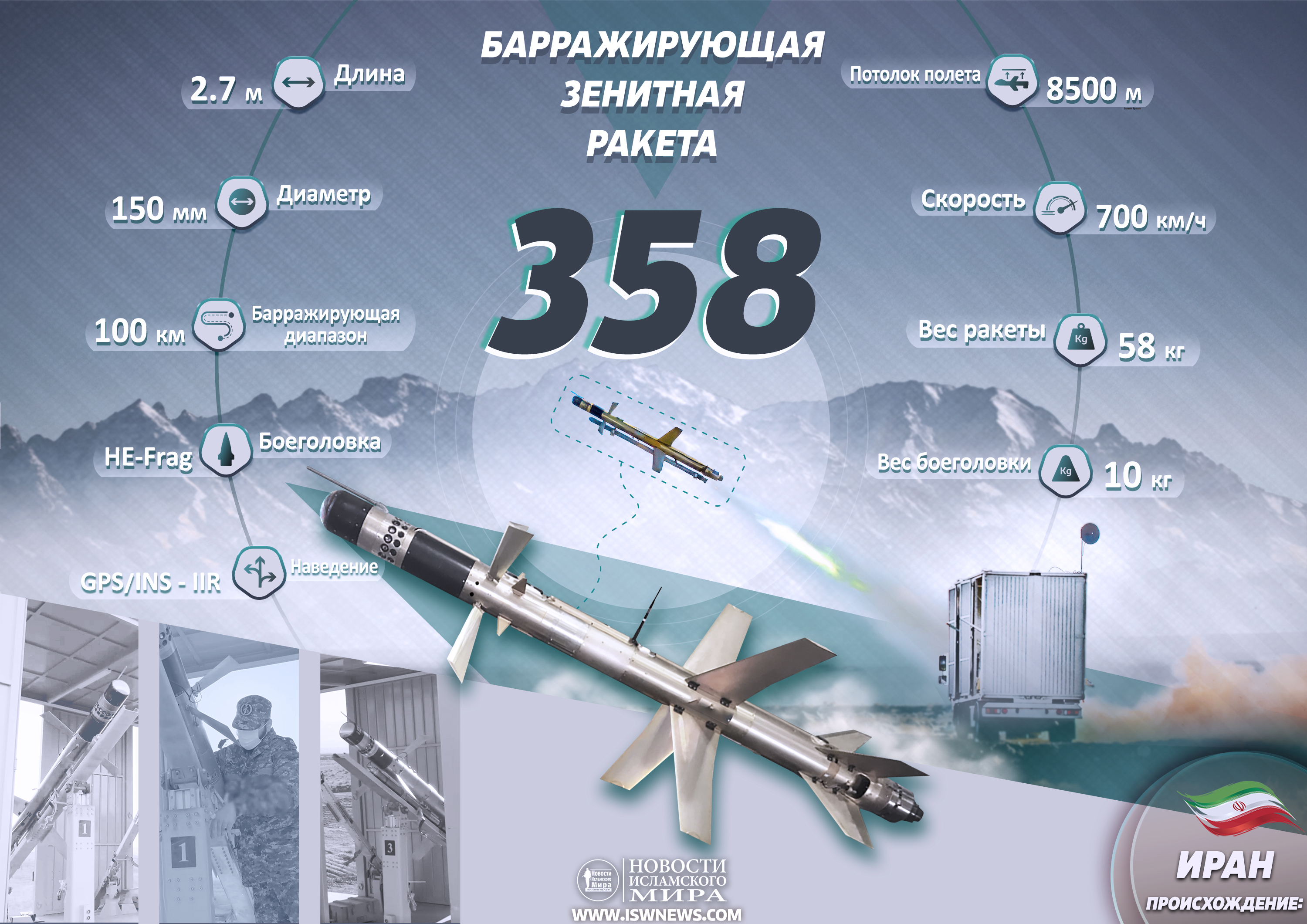
The 358 missile has a loitering range of 100 km, a flight ceiling of 8,500 meters, and a speed of 700 km/h, with a total weight of 58 kilograms.
There is no evidence that the missile can be recovered after firing, so it is used as a loiterer only in areas with a high probability of enemy aircraft. In other scenarios, the 358 missile is kept ready for launch when targets are detected by surveillance cameras and radars.
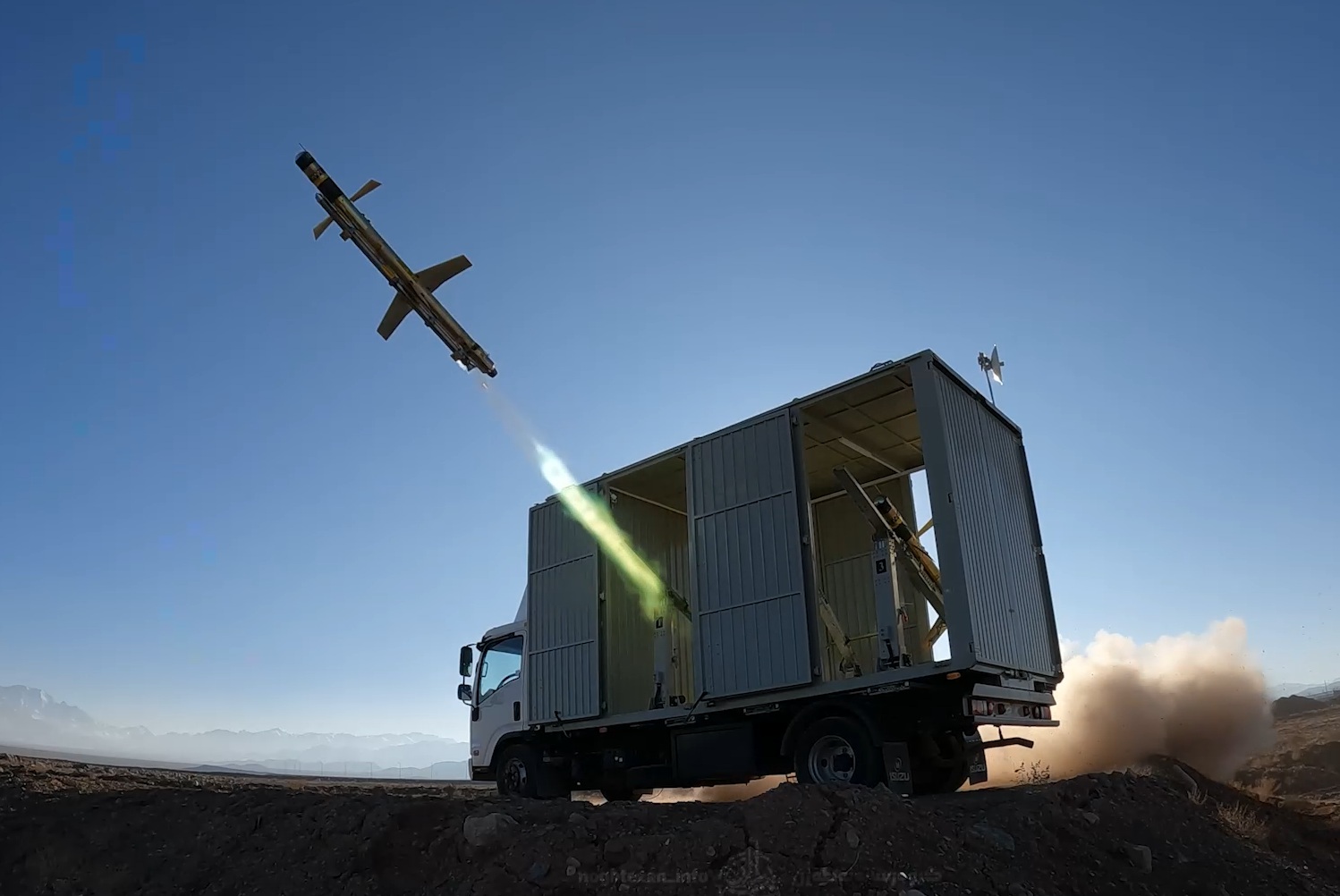
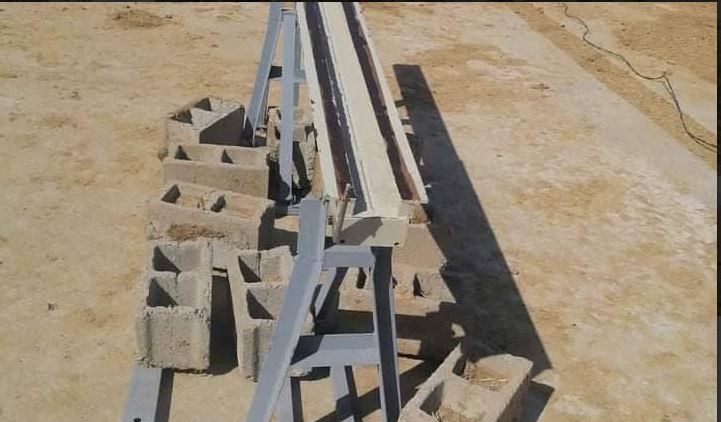
The missile can be launched from simple launchers, similar to suicide drones. Additionally, truck launchers have been developed for this missile to enhance stealth.
358 missile truck launcherAn example of a launcher used by the Resistance forces in the regionClick to view full size
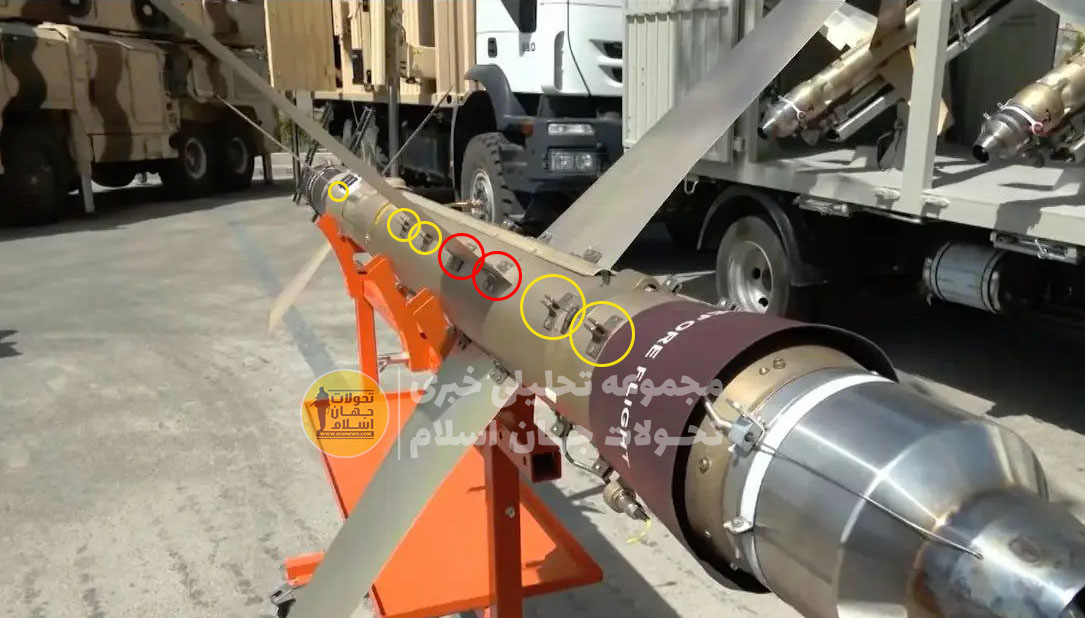
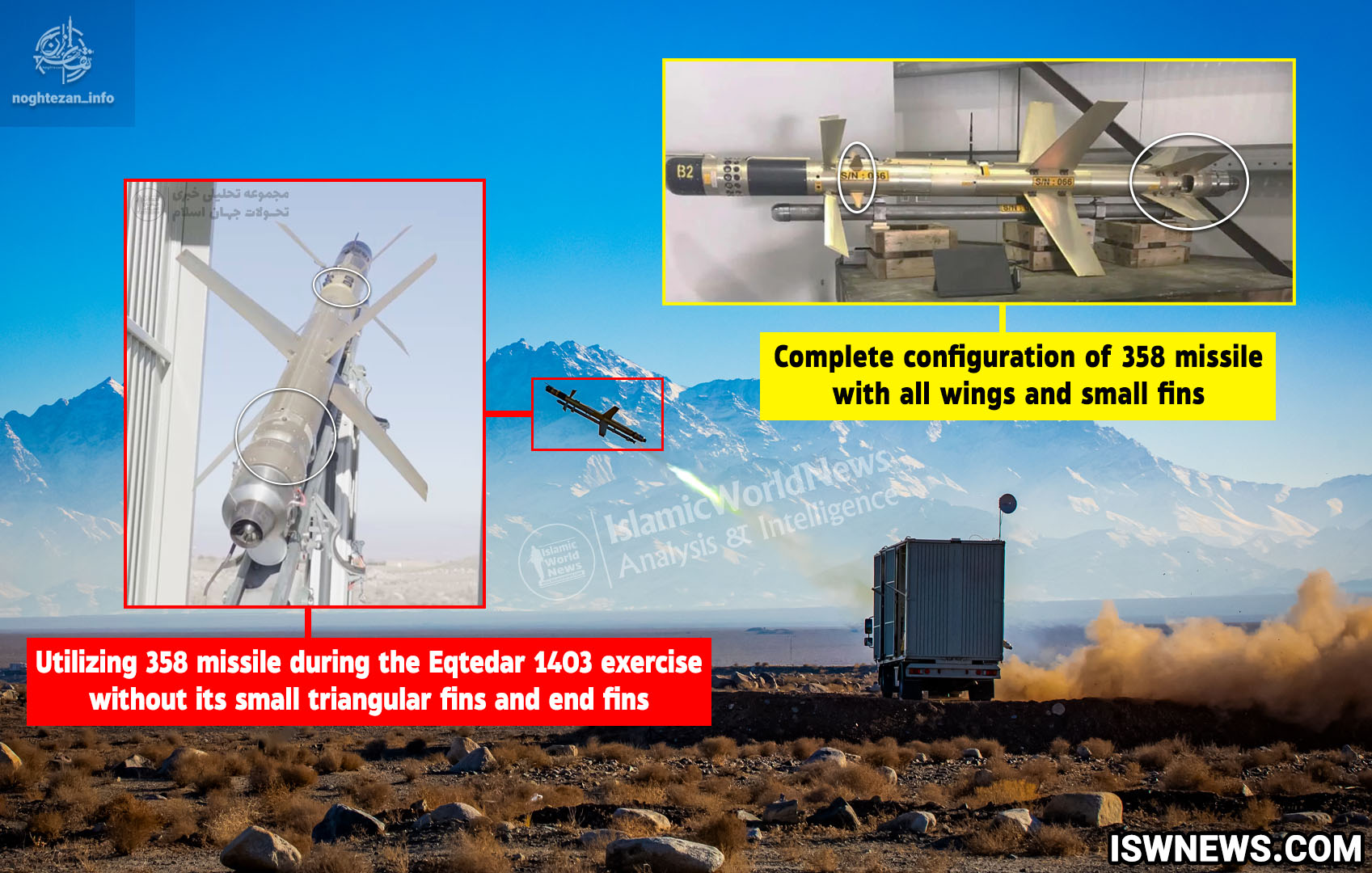
One of the most intriguing aspects of the 358 missile is its high level of customization. In its full configuration, the missile has 16 wings and fins. The operator can adjust the number of fins or change the position of the main wing based on specific needs and field conditions. This flexibility significantly enhances the missile’s maneuverability and usability.
Installation location of the 358 missile wings and fins
For example, during the official unveiling and hot testing of this missile in the joint air defense exercise “Eghtedar 1403“, the very small triangular fins on the front of the missile, as well as the small fins at the end of the missile, were removed.
The use of the 358 missile in the Eghtedar 1403 exercise without the small triangular fins on the front section and the small fins at the end of the missile
How it works:
The 358 drone-based system consists of two main components: the 358 missile and thermal search cameras. This system can be utilized in two ways: The first method involves ground-based thermal search cameras scanning for targets such as drones and helicopters to introduce them to the 358 drone. Radar, serving as an auxiliary element of the system, can help determine the search direction for the ground-based cameras. Once the target is located, the 358 drone is launched and moves towards it. In the final stage, the drone locks onto the target with its thermal seeker and engages it.
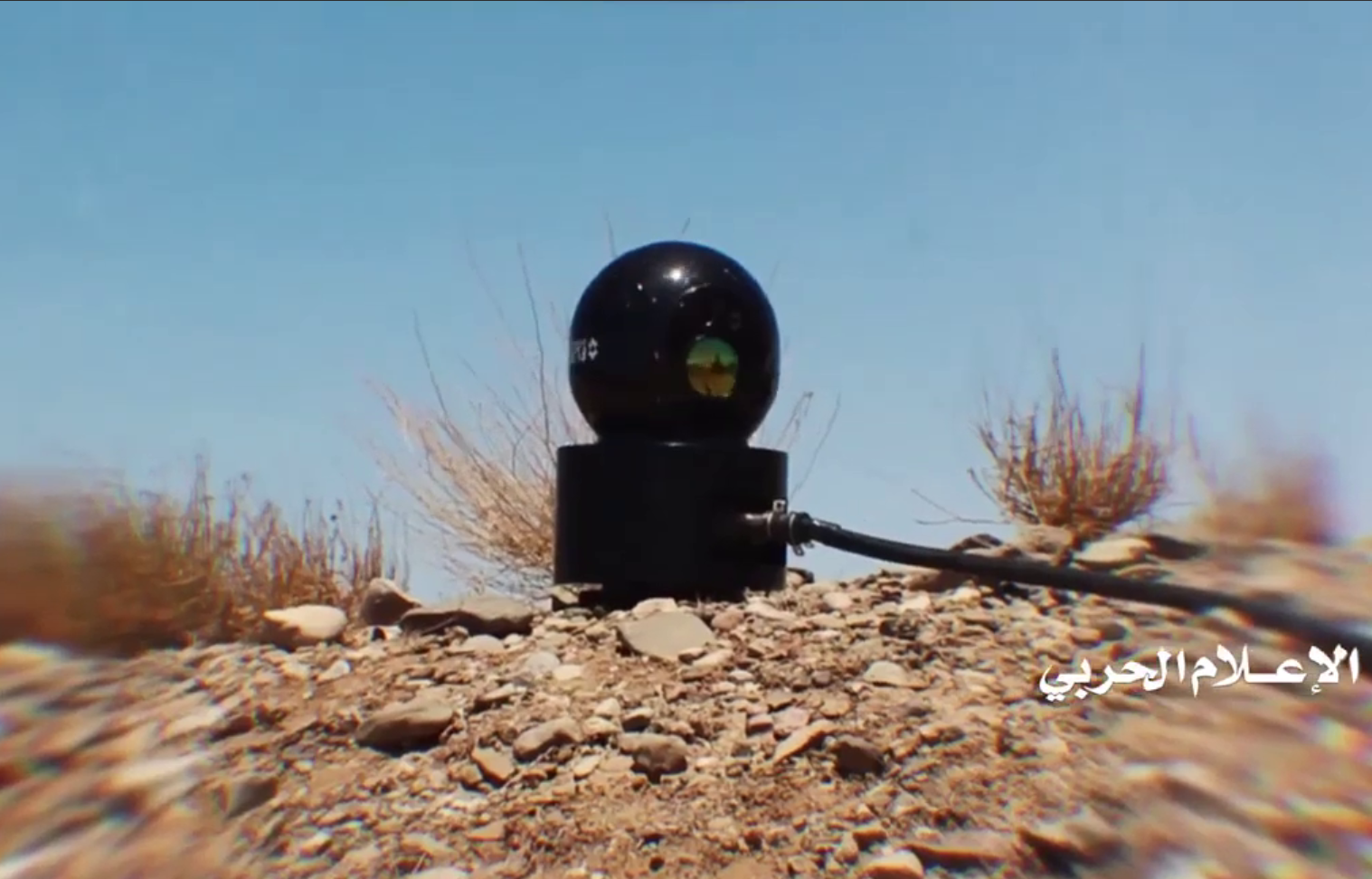
A type of thermal camera used to find aerial targets that has been used in Yemen.
The second method involves the 358 missile loitering the skies of the battle area where helicopters and drones are likely to be present. By patrolling the tense battle zone, the drone searches for targets preloaded into its computer, such as helicopters and drones. In this mode, the 358 missile can operate either completely independently based on the information in its computer or receive target direction and location updates from the operator. Once it acquires the target, it locks on and engages.
Promotional video of the preparation and firing of the 358 missile during the Eqtedar 1403 exercise
Users:
The 358 missile has been used by Iran, the Iraqi Islamic Resistance, Hezbollah, as well as Ansar Allah and the Yemeni army. Russia could also become a user of this missile if the need arises.
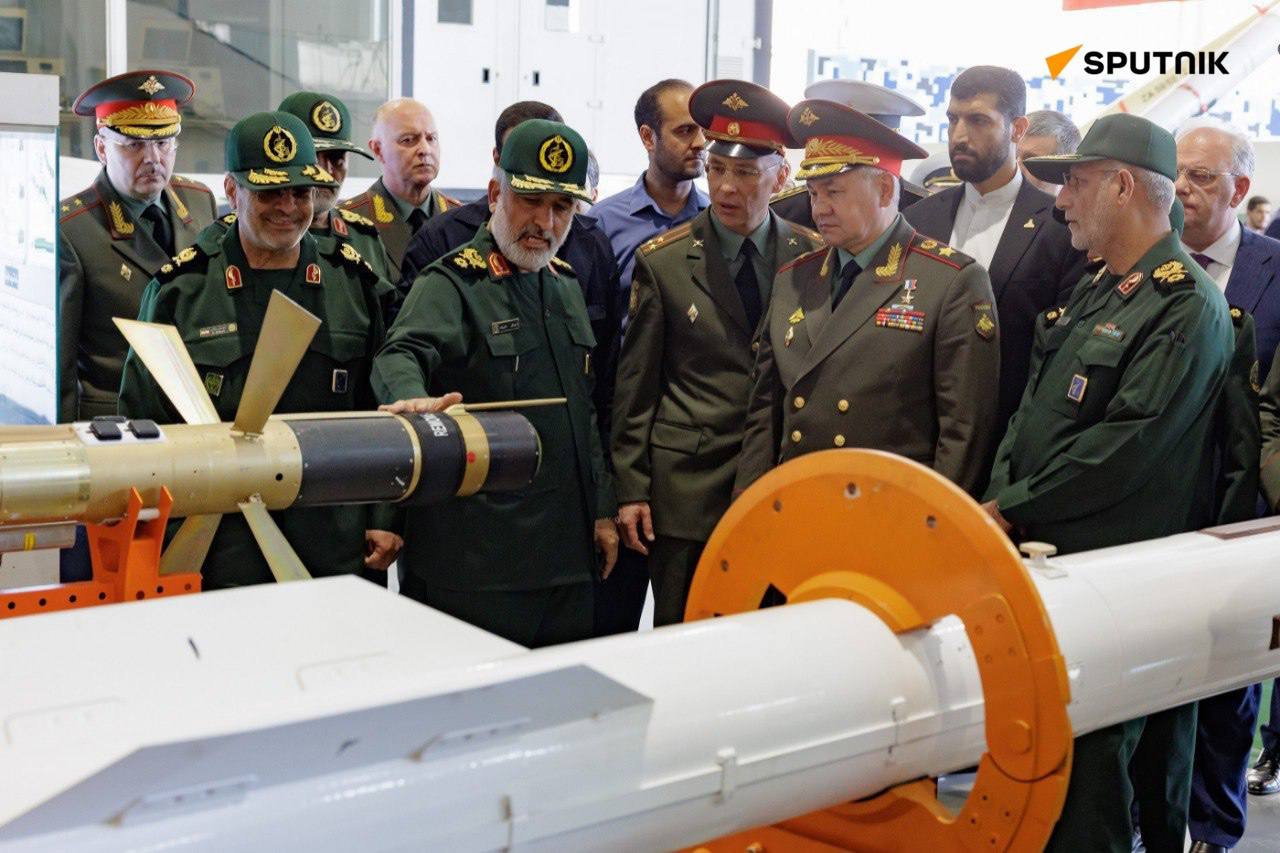
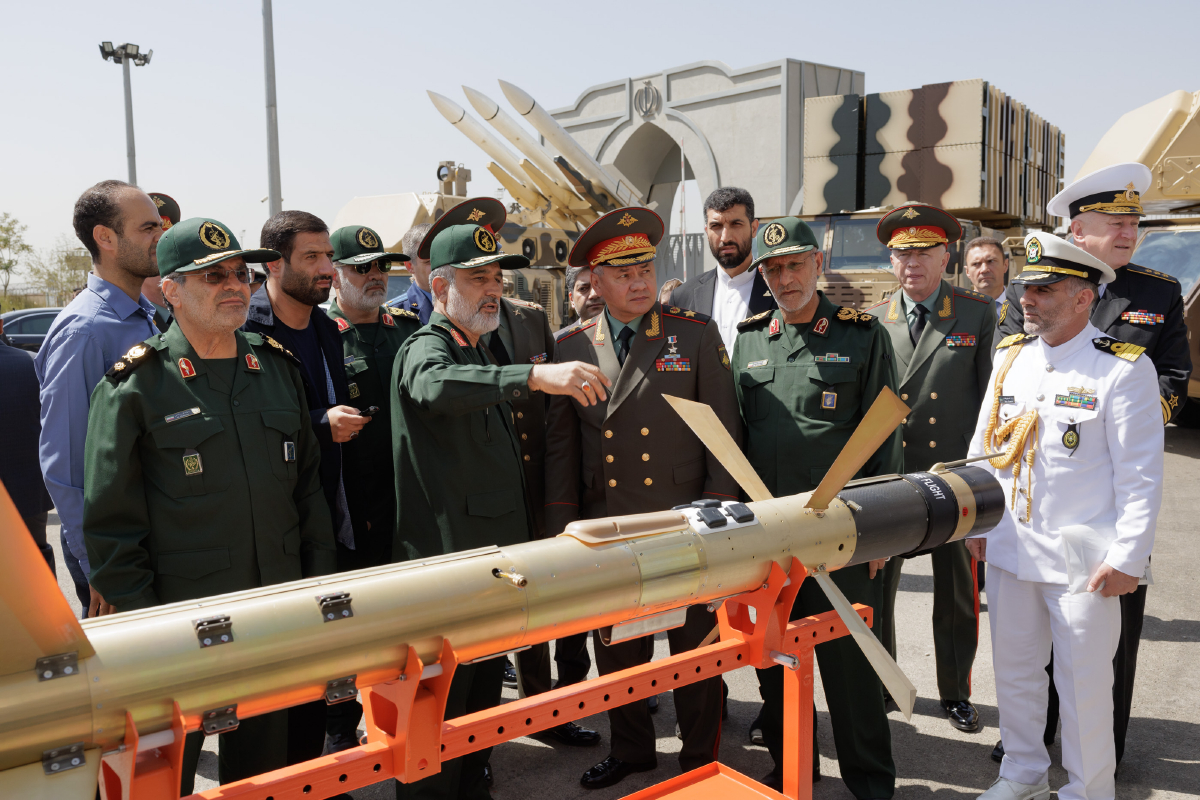
In 2023, Russian Defense Minister Major General Sergei Shoigu visited an exhibition of Iranian military achievements. During this visit, Brigadier General Hajizadeh, Commander of the IRGC Aerospace Force, introduced the 358 missile and its truck-mounted launcher to Shoigu.
Russian Defense Minister Sergei Shoigu visits the 358 missile at the Iranian military achievements exhibition
Similar variants in Yemen:
As mentioned, the 358 missile is also used by the Yemeni army and has demonstrated significant success in shooting down American and Saudi coalition aircraft.
It is likely that Yemen has localized the production of this missile. In Yemen, the 358 missile is produced and used under the names Saqar-1 and Saqar-2. The Saqar-1 missile is similar to the 358 missile, while the Saqar-2 missile is an improved version of the Saqar-1 missile.
Saqar-1 missile
According to the information officially announced by the Yemeni army regarding the Saqar-1 missile, its specifications are identical to those of the Iranian 358 missile in all its components. However, the specifications of the Saqar-2 resemble those of the Iranian 359 missile, which we will discuss later in the article.
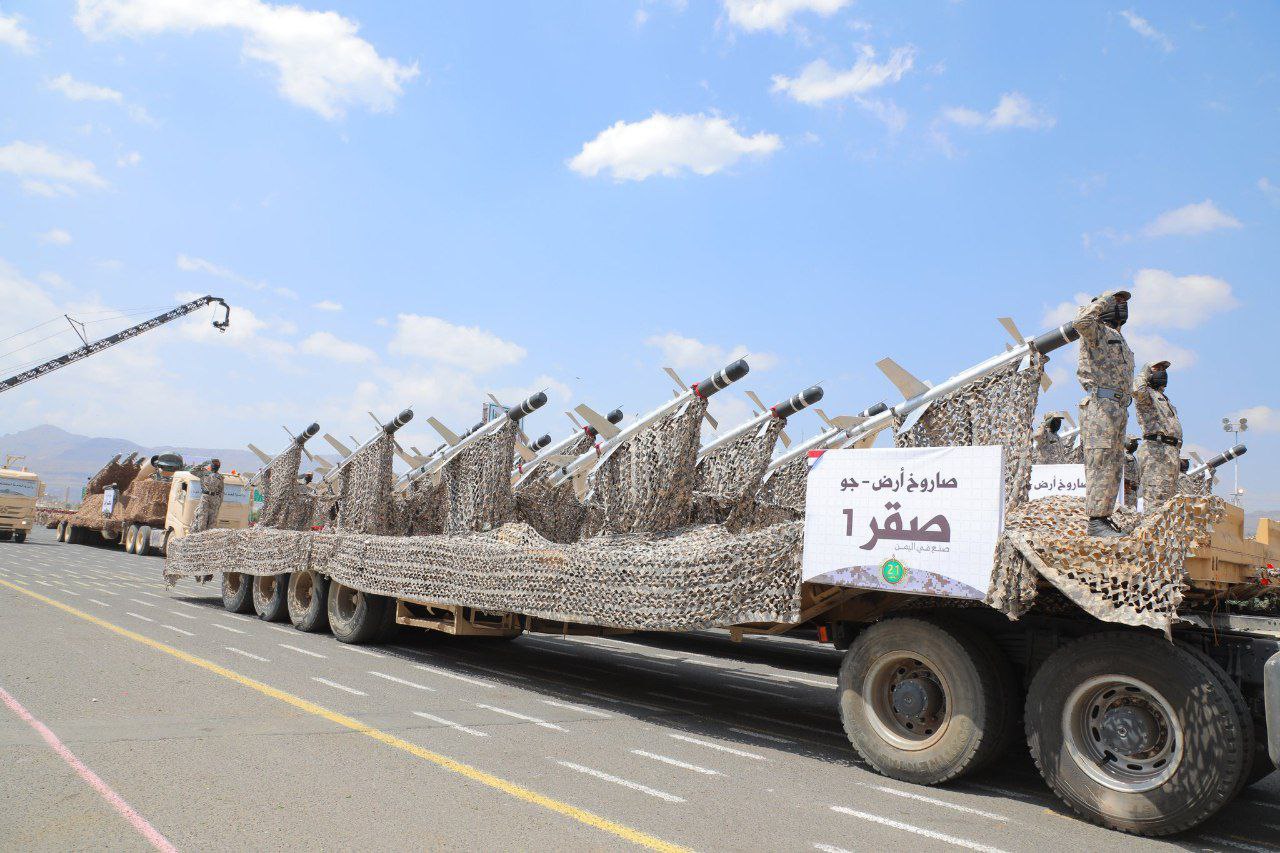
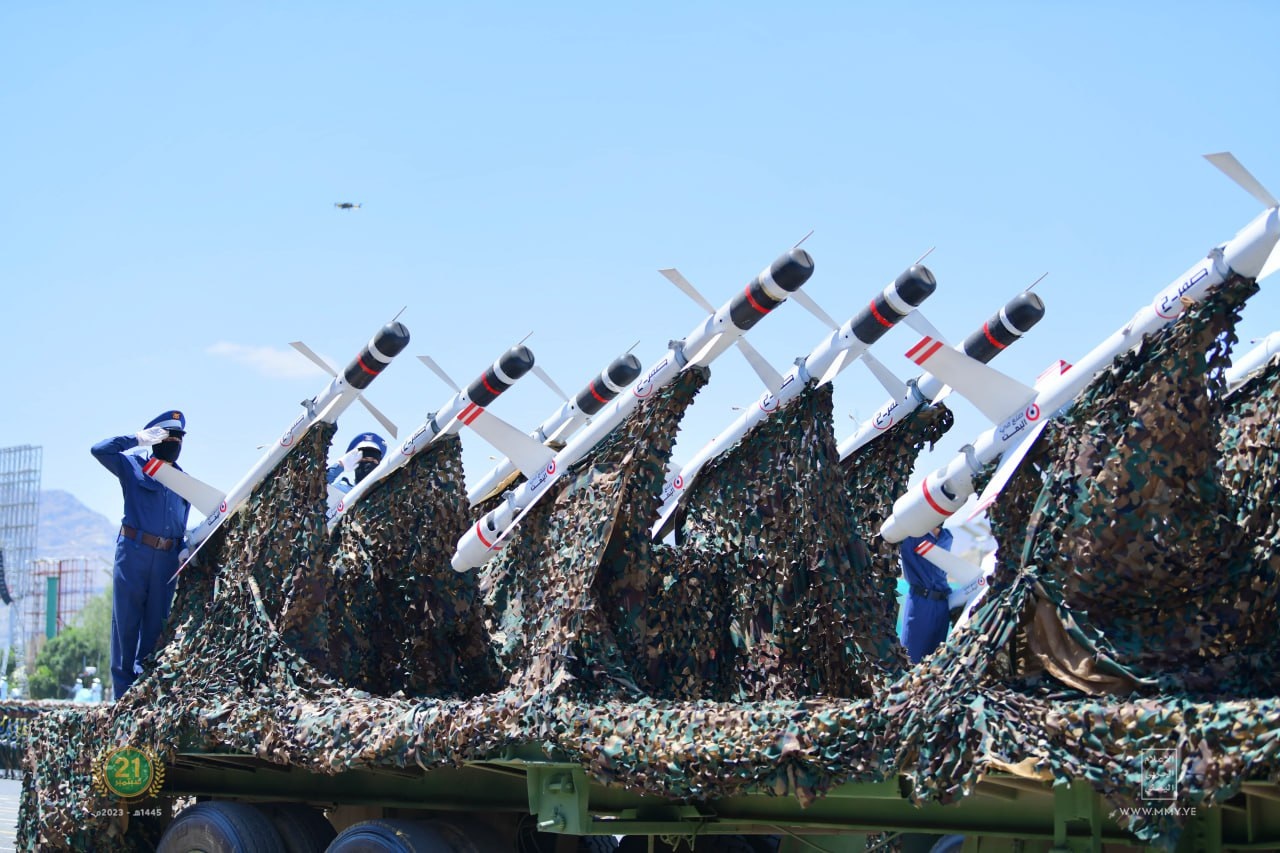
Based on the information released by the Yemeni army about the Saqar-2 missile, this missile boasts a range of 150 kilometers, which is 50 kilometers more than the Saqar-1 (358 missile). Additionally, the flight altitude has increased from 28,000 feet (8,500 meters) in the Saqar-1 to 35,000 feet (10,600 meters). However, the images published during the latest Yemeni army parade on the occasion of the September 21 Revolution of the Saqar-2 missile actually show the same Saqar-1 missile (missile 358) with a configuration lacking the small triangular fins and fins at the end, as seen in the test and unveiling of the 358 missile in Iran’s Eqtedar 1403 exercise.
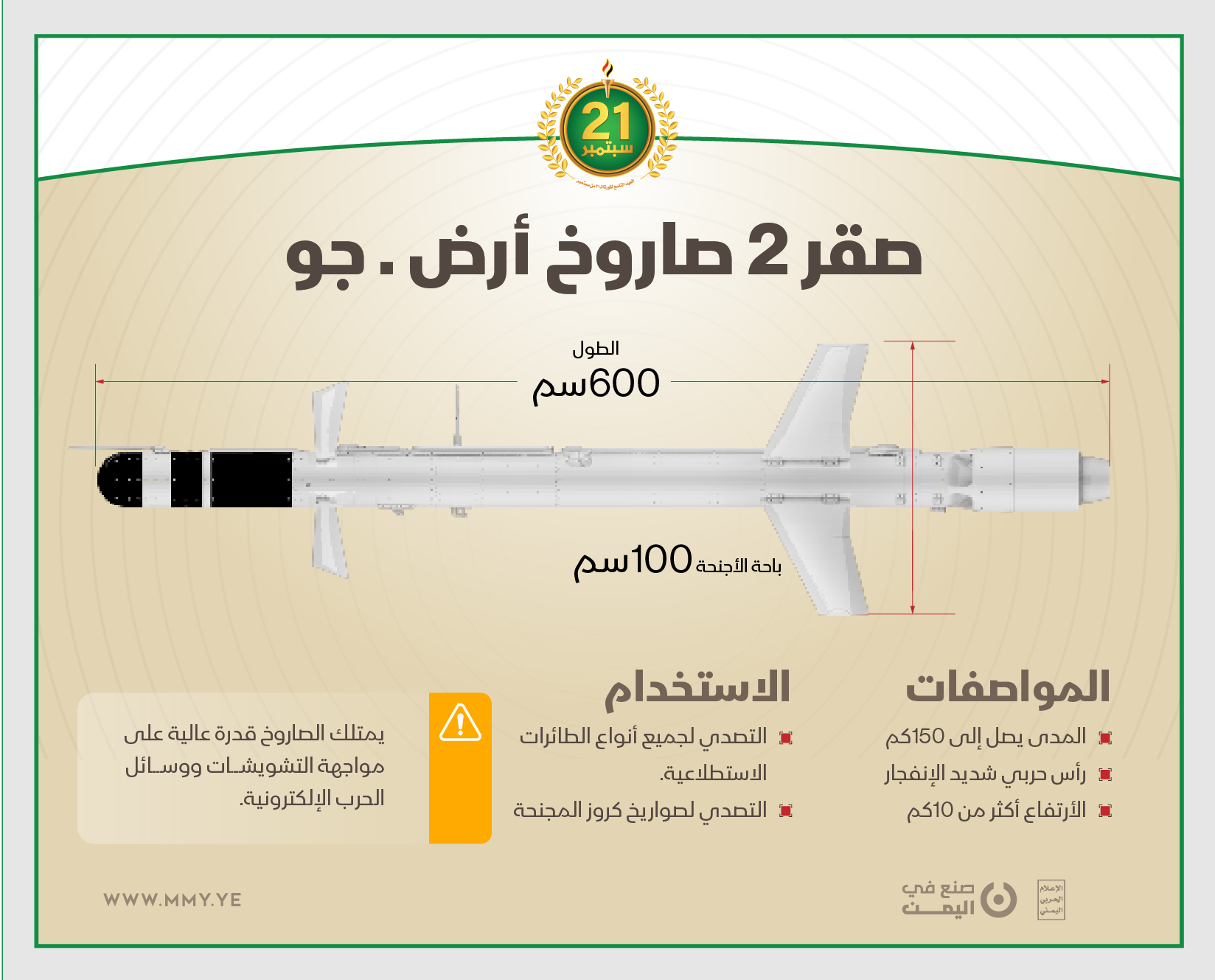
An infographic of the Saqar-2 missile has also been released, stating the missile’s length to be 6 meters. However, upon examining the published images of the Saqar-2 missile during the Yemeni army parade, it is evident that the displayed missile is approximately 3 meters long, similar to the Saqar-1. Therefore, it is likely that the Yemeni army has not published the actual image of the Saqar-2 missile for security reasons. Alternatively, in the most optimistic scenario, a more powerful engine has been used in this version.
Infographic published about the Saqar-2 missileSaqar-2 missile in Yemeni army parade, similar to the 358 missile without the small triangular fins and no fins at the end of the missileClick to view full size
359 missile:
In 2025, during the broadcast of a television documentary, the Islamic Revolutionary Guard Corps of Iran unveiled a more advanced version of the 358 missile, known as the 359 missile.
Based on the images and information provided, the 359 missile has larger dimensions than the 358 missile, and its length and diameter have almost doubled.
Unveiling of the 359 missile in the television documentary Guardian of the Sky
The missile is equipped with four movable canards at the front and four large fixed wings at the rear. The wings are enlarged in proportion to the fuselage. One of the interesting features of the fixed wings is that small control surfaces are used at the ends of the wings, which improve the maneuverability and control of the missile.
Control surfaces at the ends of the 359 missile’s rear wings
The 359 missile features a new and larger engine, which increases its speed to 1,000 kilometers per hour. It has a range of over 150 kilometers and a flight altitude of over 30,000 feet (9,200 meters).
The warhead of the 359 missile is larger and has greater destructive and explosive power compared to the 358 missile. Additionally, if necessary, the 359 missile can be equipped with an electro-optical payload for reconnaissance and surveillance operations instead of a high-explosive warhead.
Another notable feature of the 359 missile is its recoverability. According to published images, unlike the 358 missile, which was not recoverable, the 359 missile is equipped with a recovery parachute. Therefore, if the interception of hostile targets is unsuccessful for any reason, or if the 359 missile is used for reconnaissance and surveillance operations, it can be recovered using a parachute.
Recovery parachute in 359 missile
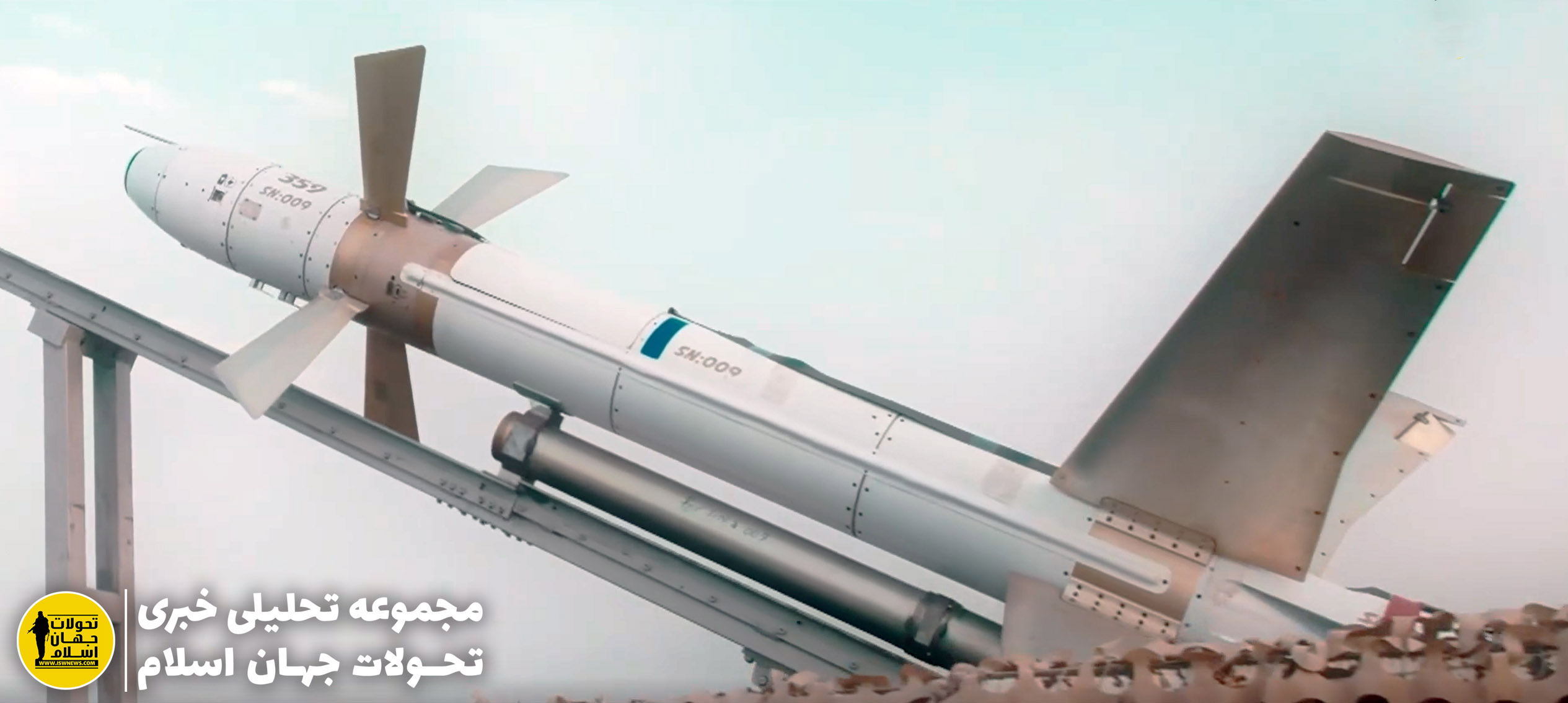
More images of the 359 missile:
Click to view full size
It’s worth noting that in 2020, the United States, inspired by the Iranian 358 defense missile, designed and developed a defense system called LIDS. The Coyote-2 interceptor in this system operates in a manner very similar to the 358 missile.
358 missile specifications: Type: Loitering anti-aircraft missile Manufacturer: Islamic Revolutionary Guard Corps Country of manufacture: Iran Entered service: 2016 to 2019 Length: 2.7 meters Diameter: 150 mm Wingspan: Approximately 1 meter Missile weight: 58 kg Warhead weight: 10 kg high-explosive fragmentation Warhead impact radius: 30 meters Maximum speed: 700 km/h Loitering range: 100 km Flying altitude: 8,500 meters (28,000 feet)
Missile 358 posters in Persian, English, Russian, Chinese, Arabic and Hebrew: