Overview:
According to Western source definitions, guided-missile destroyers are multi-role combat vessels that operate in the domains of anti-air warfare (AAW), anti-submarine warfare (ASW), and anti-surface warfare (ASUW).
The Arleigh Burke class was likewise designed and built on this philosophy as the successor to the Charles F. Adams-class destroyers (DDG-2). These destroyers can operate independently or as part of carrier strike groups, surface action groups, amphibious groups, and support groups.
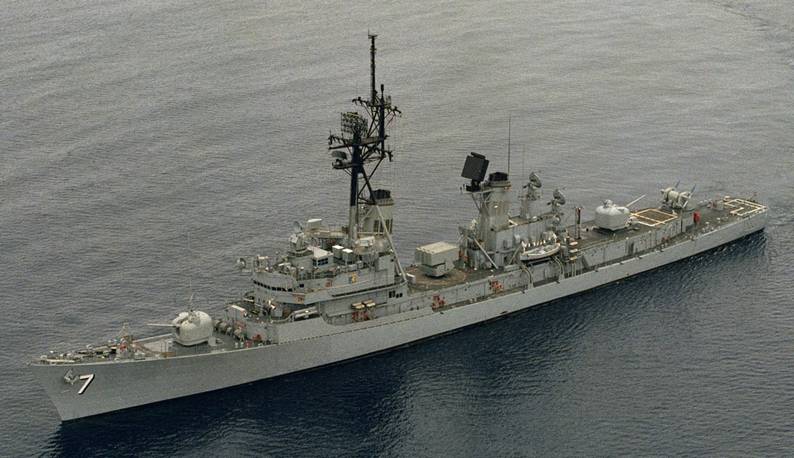
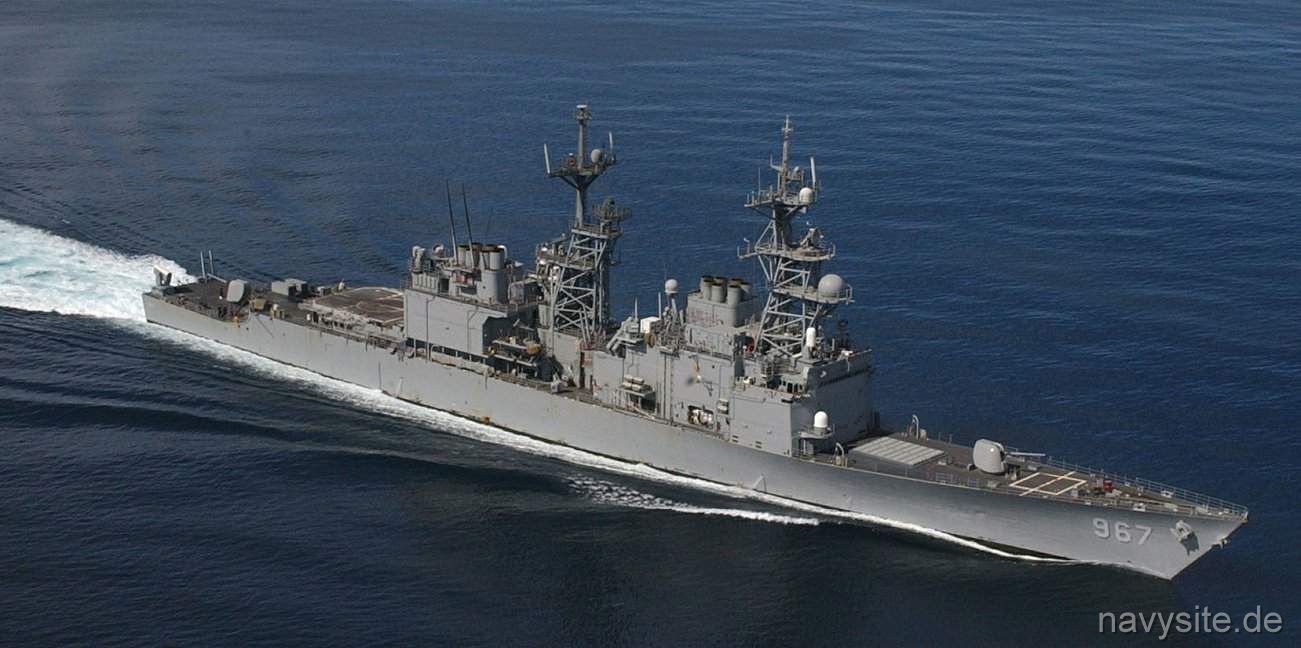
This class of destroyers is named in honor of Admiral Arleigh Burke, one of the most famous commanders of the U.S. Navy. Although the Arleigh Burke class was built on a new hull design, it utilized the propulsion and mechanical systems layout of the Spruance class (DD-963).
Except for two aluminum funnels, the entire hull of the vessel is made of steel, and its vital sections are protected by two layers of steel and 70 tons of Kevlar armor. These destroyers have a length of approximately 154 meters, a beam of 20 meters, a draft of 11 meters, and a height of nearly 47 meters. Their full displacement weight reaches about 8,558 tons.
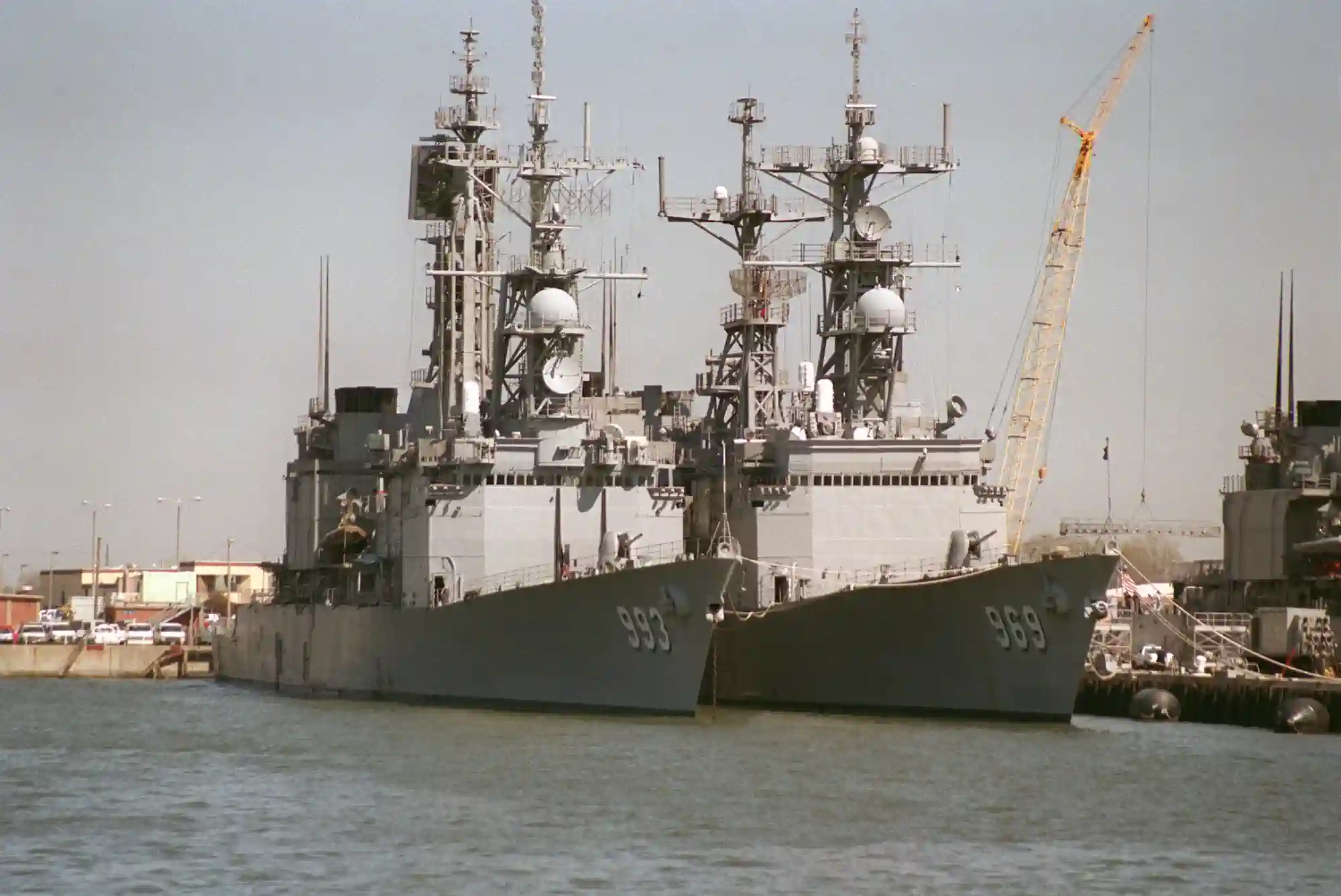
Additionally, the Aegis combat system, which had previously been tested on the Kidd-class destroyers (DD-993) and had also been operational on the larger Ticonderoga-class cruisers, plays an important role in the architecture of this class.
Read more: Military Knowledge: AEGIS Defence System; Standard Missiles
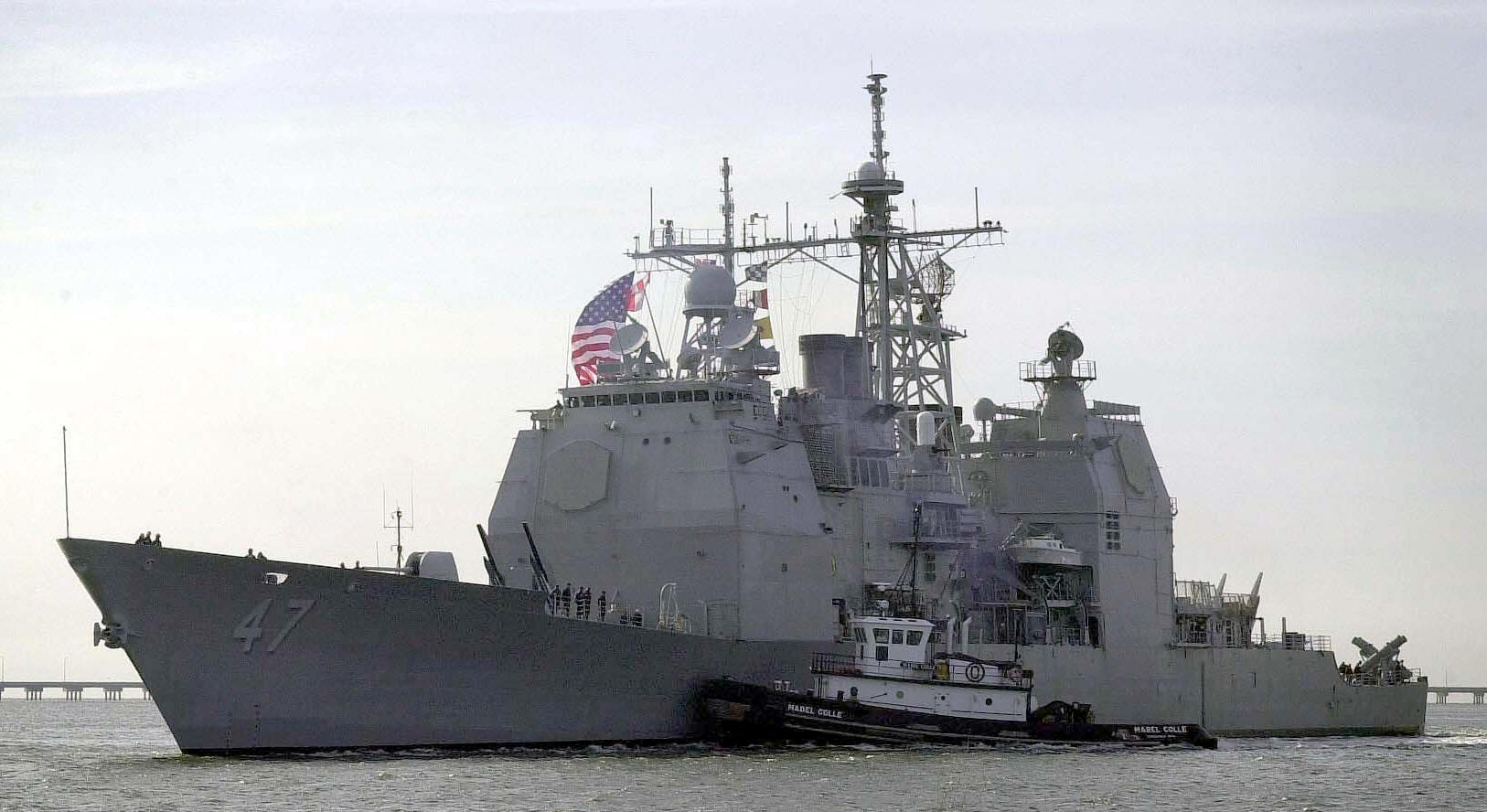
To date, the Arleigh Burke class has been produced in four separate versions, known as “Flights.” The vessels DDG-51 through DDG-71 constitute the initial version known as Flight I, followed by the Flight II vessels with the numbers DDG-72 through DDG-78. The Flight IIA version includes the vessels DDG-79 through DDG-124 as well as DDG-127. The Flight III configuration begins with DDG-125 and continues through DDG-149.
Currently, more than 62 of these destroyers are in active service, with another 13 either under construction or on order. The United States also has plans to modernize some of its older vessels.
History of the Arleigh Burke-class destroyer:
Arleigh Burke was in practice designed to replace the older Charles F. Adams and Coontz-class destroyers, so that by employing an improved version of the Aegis system, it could take on the task of protecting carrier battle groups. Interestingly, in the area of anti-air warfare, the DDG-51 had less capability than the CG-47 cruisers, because the number of targets it could simultaneously engage in the terminal phase was about 25 percent lower. It also lacked a second air-search radar; a matter that could be considered a significant weakness under conditions of electronic warfare and saturation attacks. In the area of anti-submarine warfare as well, the absence of a hangar and helicopter maintenance facilities limited the vessel’s independent capability. The first-generation Arleigh Burke had only a landing and refueling platform and could not permanently carry a helicopter.
On the other hand, this class had a marked superiority over the Ticonderoga cruisers and Kidd-class destroyers in the areas of survivability, resistance to damage, and reduction of radar cross-section. In fact, the Arleigh Burke design was partly influenced by the lessons of the Falklands War; a war that clearly demonstrated the importance of survivability of surface vessels. These features included the following:
- Design with a low radar cross-section and lower height above the water, to reduce the probability of detection by enemy radar.
- Placement of a greater portion of vital equipment, such as the combat information center, below deck.
- Use of a distributed combat system, such that vital components of the system are dispersed at various points on the vessel so that a single hit cannot disable the ship’s entire combat capability.
- Use of a collective protection system against nuclear, chemical, and biological contamination.
- Use of an all-steel superstructure instead of an aluminum structure.
- Much greater resistance to electromagnetic pulse, blast wave, and thermal effects resulting from a nuclear explosion. For example, the DDG-51 has the ability to withstand 7 PSI of blast pressure, while the CG-47 cruisers withstood only up to 3 PSI.
The U.S. government intended to order 29 of these destroyers in three batches over an eight-year period. According to this plan, all 29 vessels were to enter service by 1997 in order to replace 20 of the 23 Charles F. Adams-class vessels and 9 of the 10 Coontz-class vessels.
Based on constant fiscal year 1985 dollars, the construction cost of the first vessel was estimated at about 1.25 billion dollars; a figure that included 79 million dollars of advance procurement funding in fiscal year 1984 and about 415 million dollars in non-recurring program start-up costs. This figure was equivalent to about 1.1 billion dollars based on fiscal year 1983. The next 28 vessels each cost about 763 million dollars. To reduce costs, the U.S. Navy removed [text missing in source] and even reduced the beam by two feet. Ultimately, certain important equipment was removed, including:
- The dedicated gun fire-control radar, the advanced version of the SLQ-32(V-3) electronic warfare system that had the capability to jam enemy missile radars; instead, the weaker SLQ-32(V-2) version was installed, which had only threat detection capability. The fourth electrical generator, which reduced the vessel’s power generation from 9,000 kilowatts to 7,500 kilowatts. Shafts capable of transmitting the full 100,000 horsepower to the propellers. As a result, the vessel practically could not use the full power of its engines, and its actual speed remained below 30 knots.
Design philosophy and hull architecture of the Arleigh Burke class:
The Arleigh Burke-class destroyers are among the largest destroyers ever built in the United States. Only the Spruance-class, the Kidd-class with a length of 172 meters, and the Zumwalt-class with a length of 180 meters were longer than them. The Ticonderoga-class cruisers were also built on the Spruance hull, but due to the fundamental difference in mission and weapons systems, they were placed in the cruiser category.
In contrast, the Arleigh Burke class was built with a completely new design and a hull with a large waterplane area, featuring a wide, flared bow that noticeably increases the vessel’s seakeeping stability. The hull form is designed in such a way that the vessel can maintain high speed even in rough sea conditions.
The designers of the Arleigh Burke used the experience gained from the Ticonderoga-class cruisers; vessels whose continued production was assessed as too costly and whose further upgrade was difficult. With the Arleigh Burke class, the U.S. Navy once again returned to an all-steel structure. The previous generation of vessels used a steel hull and aluminum superstructure to reduce overall weight, but aluminum was more vulnerable to cracking and fire. In 1975, a fire on the USS Belknap nearly destroyed its aluminum superstructure. Also, the damage inflicted on British ships in the 1982 Falklands War, which was exacerbated by the use of aluminum, reinforced the decision to use steel.
Another lesson of the Falklands War was the protection of the vessel’s vital sections with double-layer steel armor and Kevlar anti-fragmentation layers in order to increase the ship’s resistance to modern rockets and missiles.
Stealth technologies were also used in the Arleigh Burke design; including angled surfaces instead of traditional vertical walls and the main tripod mast, which makes identification of the ship more difficult, especially by anti-ship missiles.
The Collective Protection System also made the Arleigh Burke the first American warship to be equipped with an air filtration system to counter nuclear, biological, and chemical threats. Other NBC defense systems include an anti-contamination washdown system. This ship was essentially designed to defend against Soviet aircraft, cruise missiles, and nuclear submarines.
Propulsion and electrical system of the Arleigh Burke-class destroyer:
The propulsion system of the Arleigh Burke class is of the COGAG type and is built around four General Electric LM2500 gas turbines. Each turbine produces about 26,250 horsepower, and in total, the four turbines provide about 105,000 horsepower (78 megawatts) of power to the vessel. This power is transmitted through two main shafts and two five-bladed propellers. The propellers in the early versions had a diameter of about 17 feet, which was increased to 18 feet in later versions to reduce fuel consumption.
The Arleigh Burke vessels are capable of reaching speeds of more than 30 to 31 knots, and their operational range is about 4,400 nautical miles at a speed of 20 knots. The design is such that in economy mode, a arrangement of two turbines on one shaft is usually used to optimize fuel consumption. In full-power mode, all four turbines are active.
The LM2500 turbine is a marine version derived from the CF6 jet engine of passenger aircraft and, due to its high reliability, simplicity, and relatively easy maintenance, has been the first choice of the U.S. Navy.
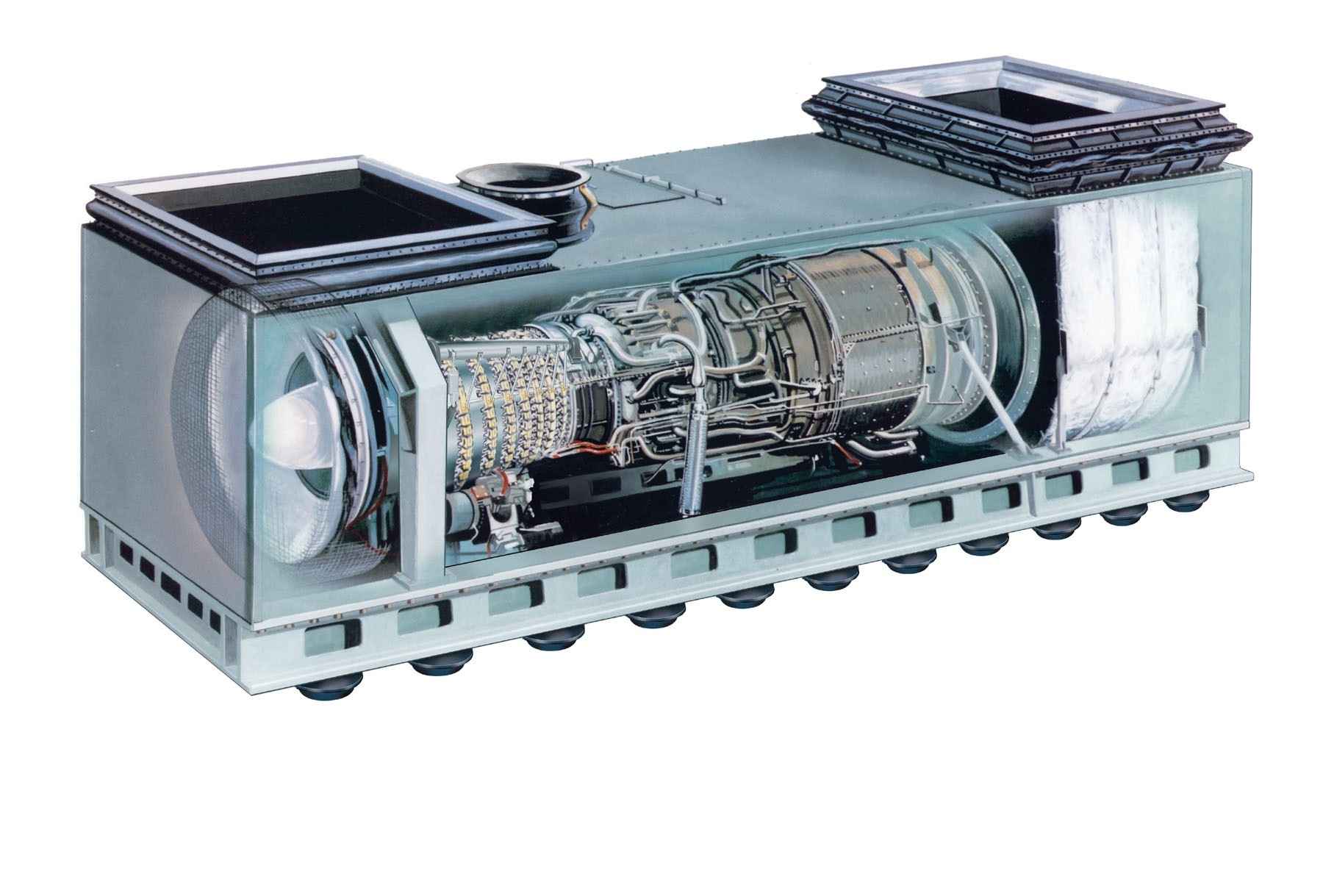
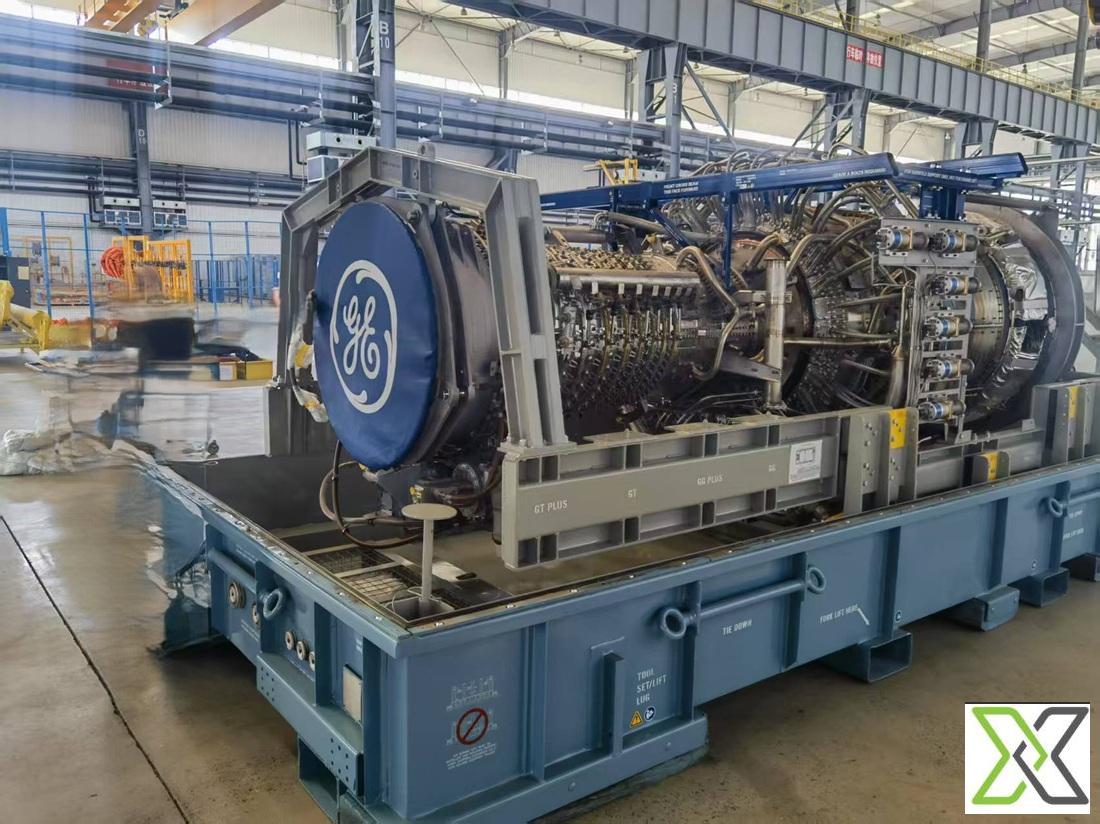
The electrical generation system on Arleigh Burke vessels is completely independent of the propulsion system and is supplied by gas turbine generators. In Flight I and II, three AG9130 generators each produce 2.5 megawatts of power. In Flight IIA, these generators were upgraded to the AG9140 model with 3 megawatts of power, and in Flight III, AG9160 generators with 4 megawatts of power and a higher voltage of 4,160 volts are used so that they can support the more powerful radar and advanced future systems.
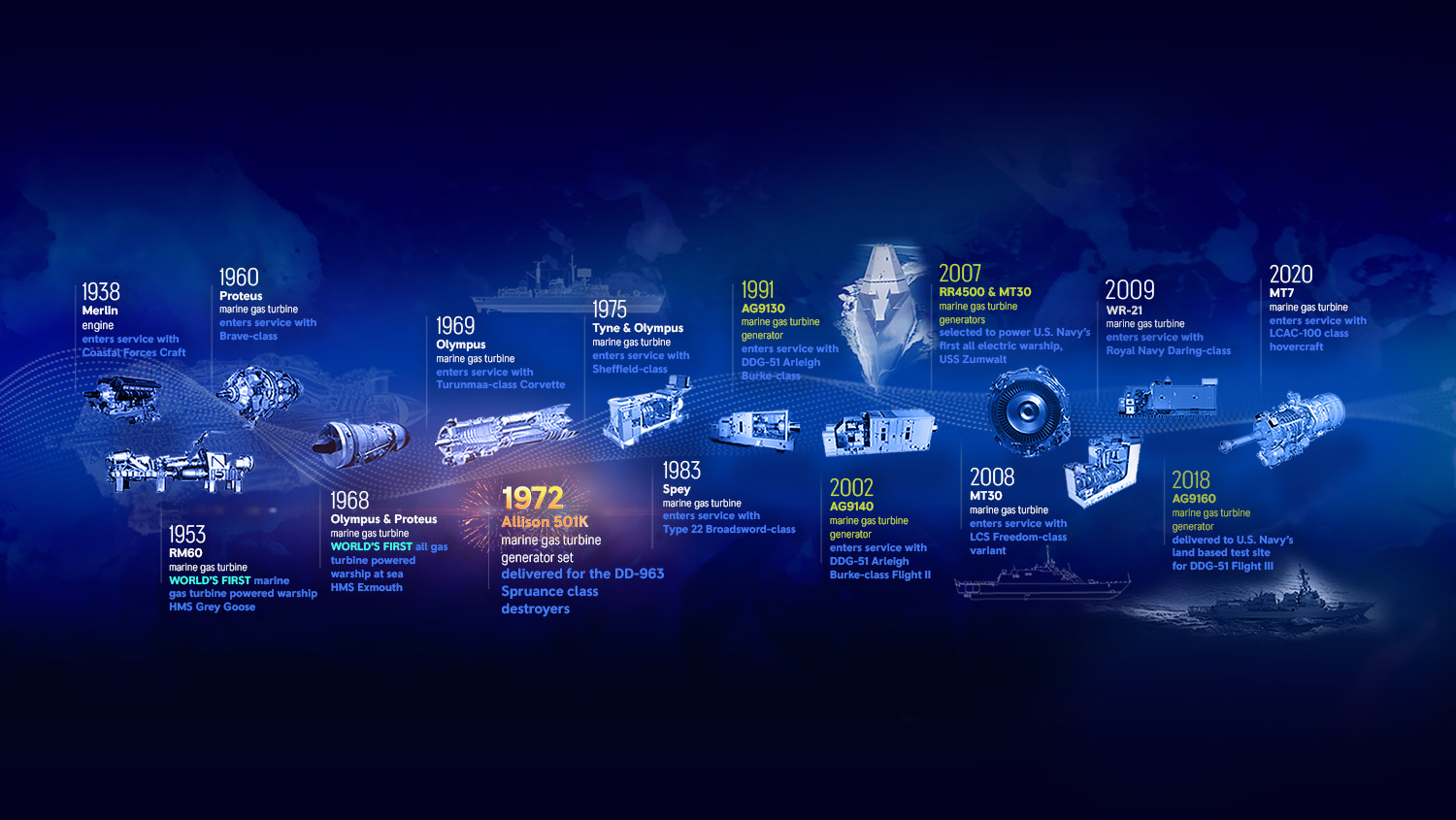
One of the interesting features of this class was the testing of hybrid propulsion on some Flight IIA vessels, which allowed fuel consumption to be significantly reduced at low speeds by using an electric motor and shutting down the main turbines.
Weapons and weapon systems of the Arleigh Burke-class destroyer:
The armament of the Arleigh Burke class is built around the Aegis combat system and a modular design that provides the capability to carry out multi-mission operations including air defense, ballistic missile defense, attack on surface targets, anti-submarine warfare, and naval gunfire support.
The Aegis combat system is an advanced command, control, and weapon guidance system that, by integrating powerful computers and radars, automatically tracks enemy targets and guides weapons to destroy them.
Read more: Military Knowledge: AEGIS Defence System; Standard Missiles

The Mk 41 vertical launcher carries the main burden of this class’s combat capabilities. This system, initially developed by Martin Marietta and later by Lockheed Martin, provides the capability for rapid launch of various missiles in the areas of air defense, ballistic missile defense, coastal attack, anti-submarine warfare, and surface strike.
The design of the launchers is based on 8-cell modules arranged in two rows of four. Each cell houses a launch canister. This system is classified as a hot-launch system, meaning that the missile ignites its engine inside the cell and the exhaust gases are directed upward through a plenum so as not to damage the ship’s structure.


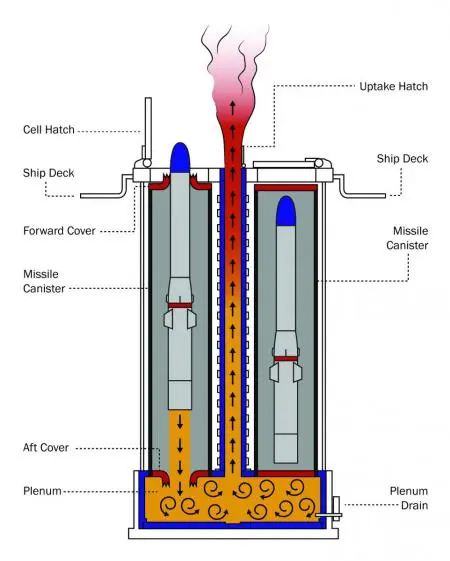
Arleigh Burke-class Flight I and II vessels feature 90 cells (29 cells forward + 61 cells aft), while Flights IIA and III have 96 cells (32 cells forward + 64 cells aft).
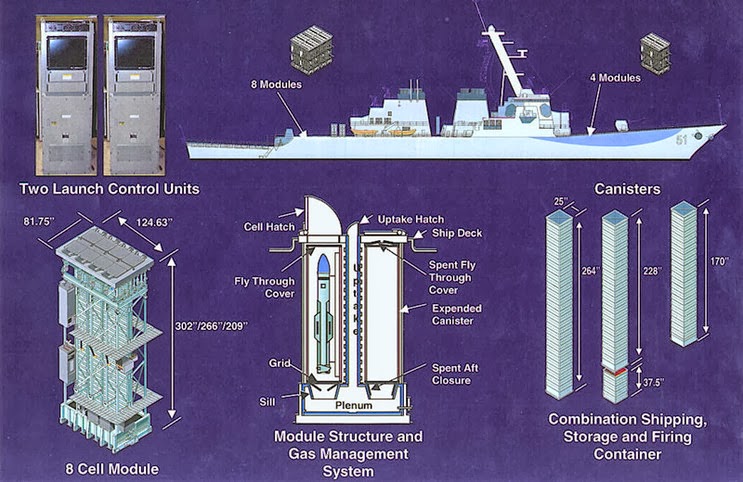
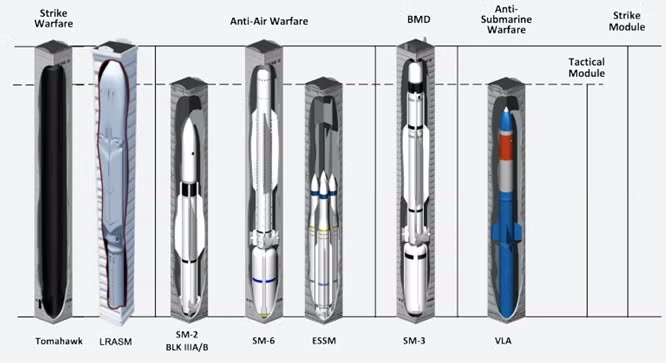
The missiles that can be carried in this launcher are:
- Standard Missile-2: a medium-range air defense missile for engaging aircraft and cruise missiles.
- Standard Missile-3: a ballistic interceptor missile for defense in the exoatmospheric layer.
- Standard Missile-6: a long-range multi-purpose missile with air, surface, and anti-radar engagement capability.
- ESSM: a point-defense missile that is placed four per cell and is designed to counter anti-ship missiles at close range.
- Tomahawk Land Attack Missile: a cruise missile for attacking land targets with a range of more than 1,000 nautical miles, which in some newer versions also has an anti-ship capability.
- RUM-139 VL-ASROC: an anti-submarine missile with torpedo-carrying capability.
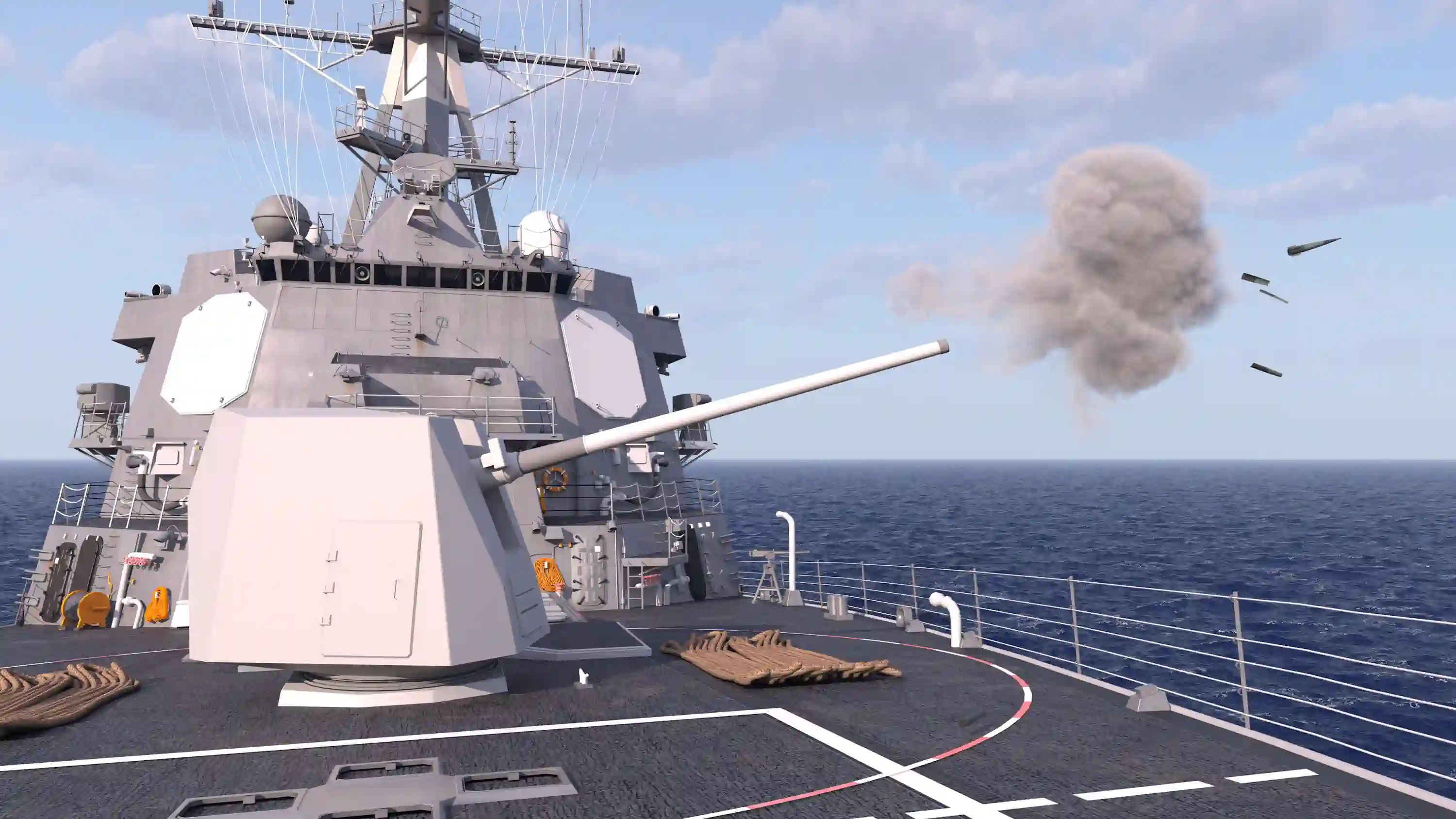
In the artillery section, the Mk 45 main gun is used. The first two generations use the 54-caliber Mk 45 Mod 2, and the next two generations use the 62-caliber Mk 45 Mod 4, which has the capability to fire ERGM and LRLAP guided munitions.
Two Mk 38 precision-guided guns and two 12.7-millimeter machine guns are installed on the vessels.
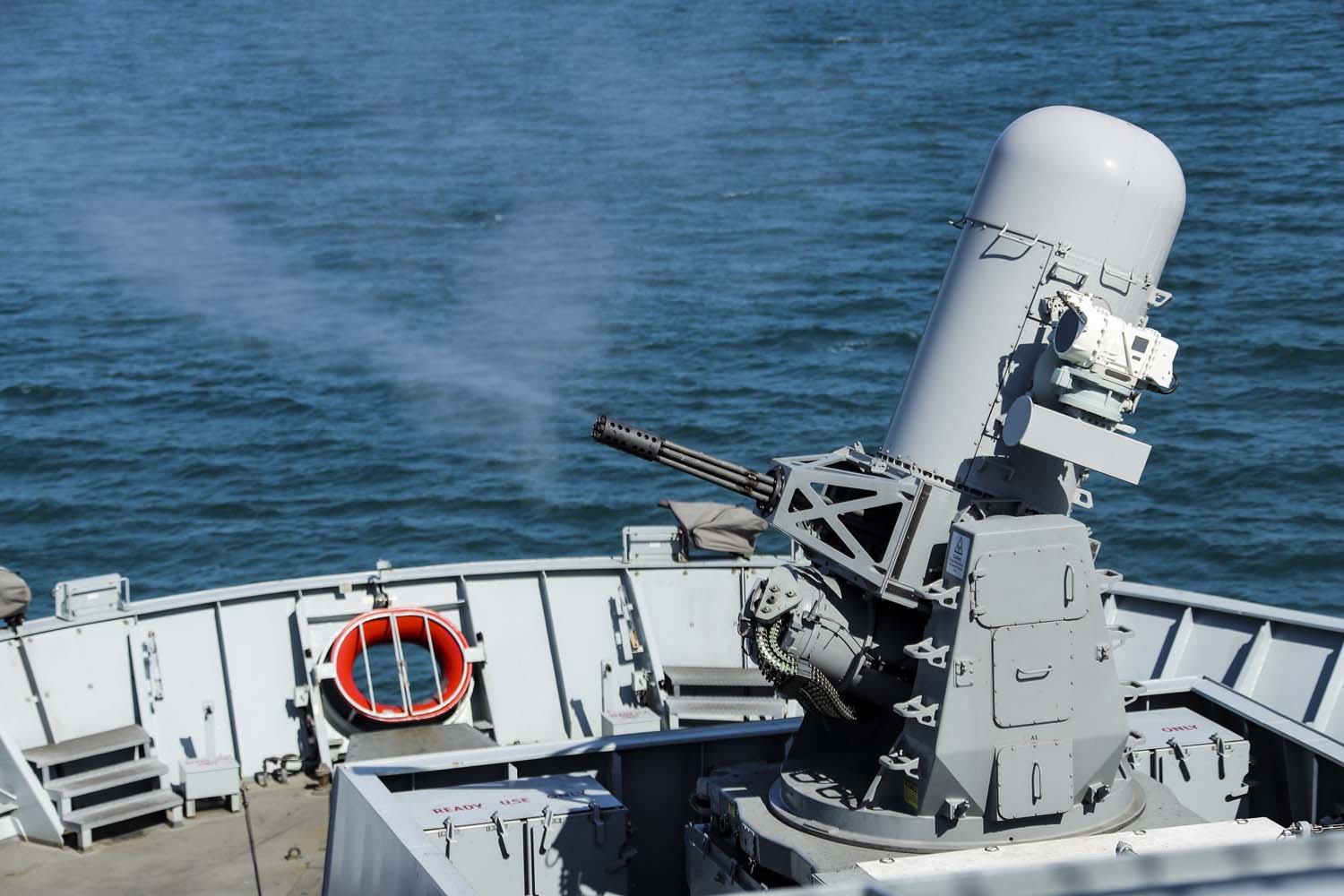
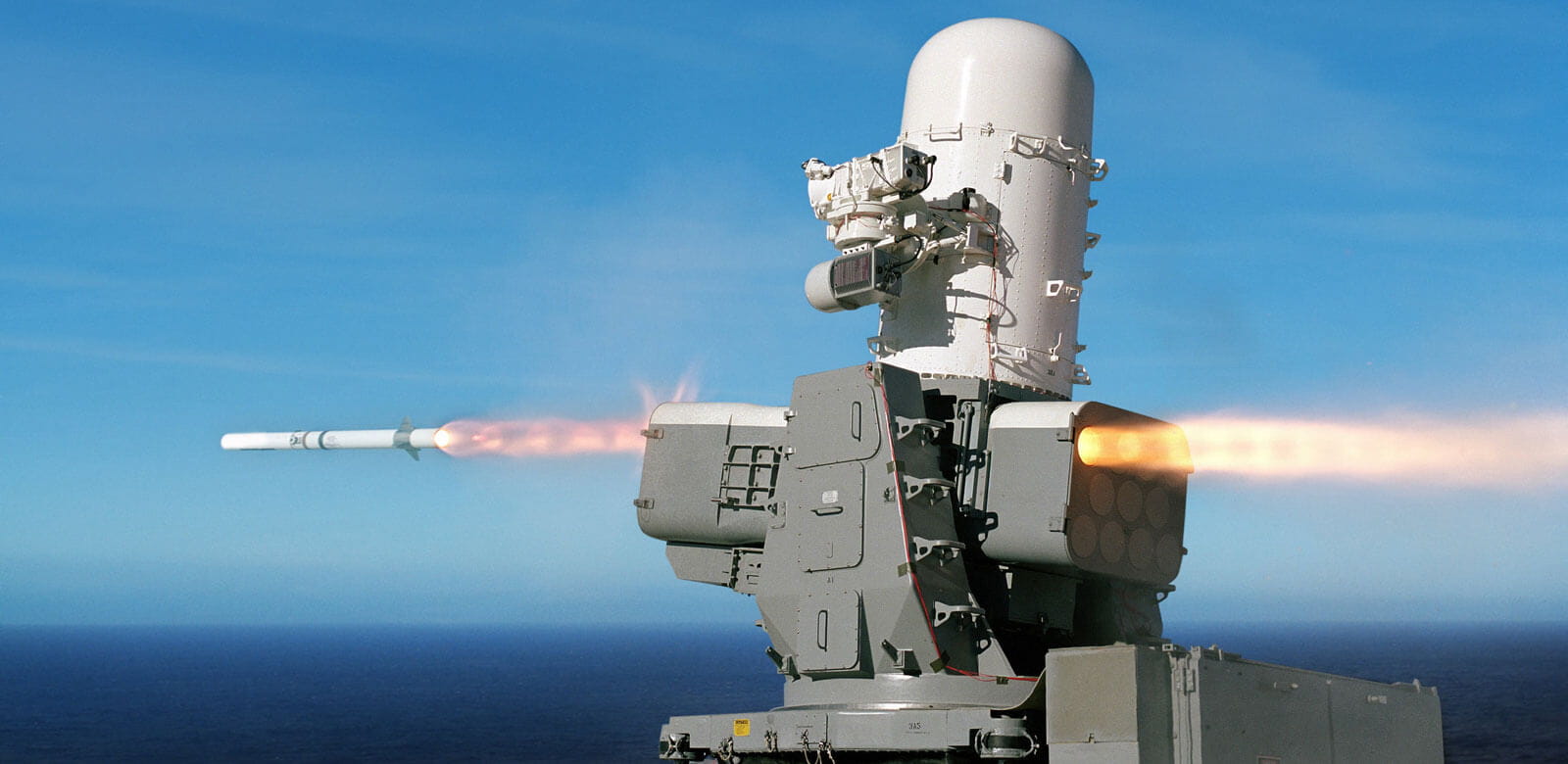
In the close-in defense systems section, the Phalanx and SeaRAM systems were used. In the first two generations, two Phalanx units were used at the rear and front of the vessel. In the third generation, it was reduced to one unit at the stern of the vessel. Also, on some vessels, this system has been completely replaced with the SeaRAM system, which uses RIM-116 missiles.
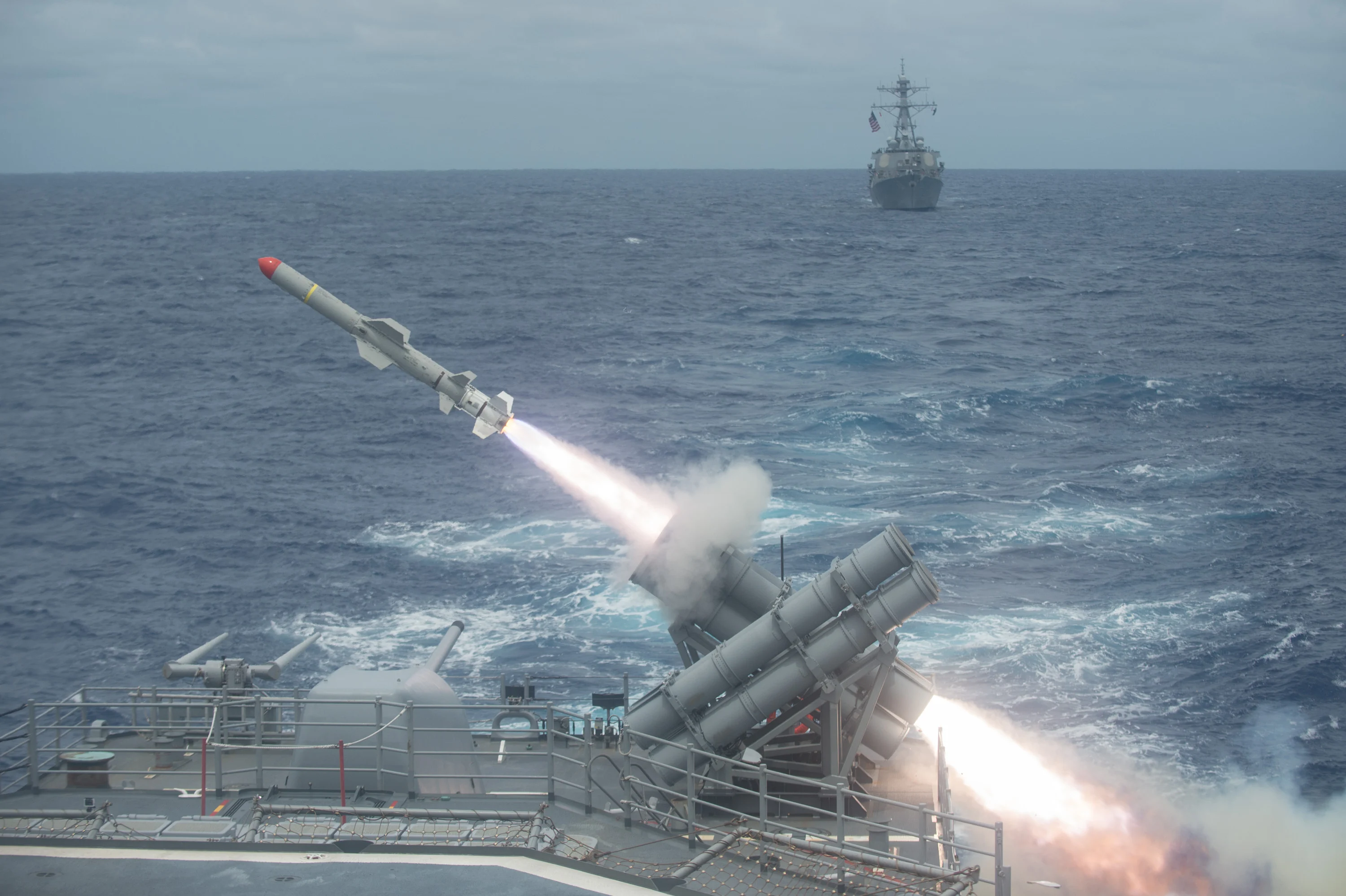
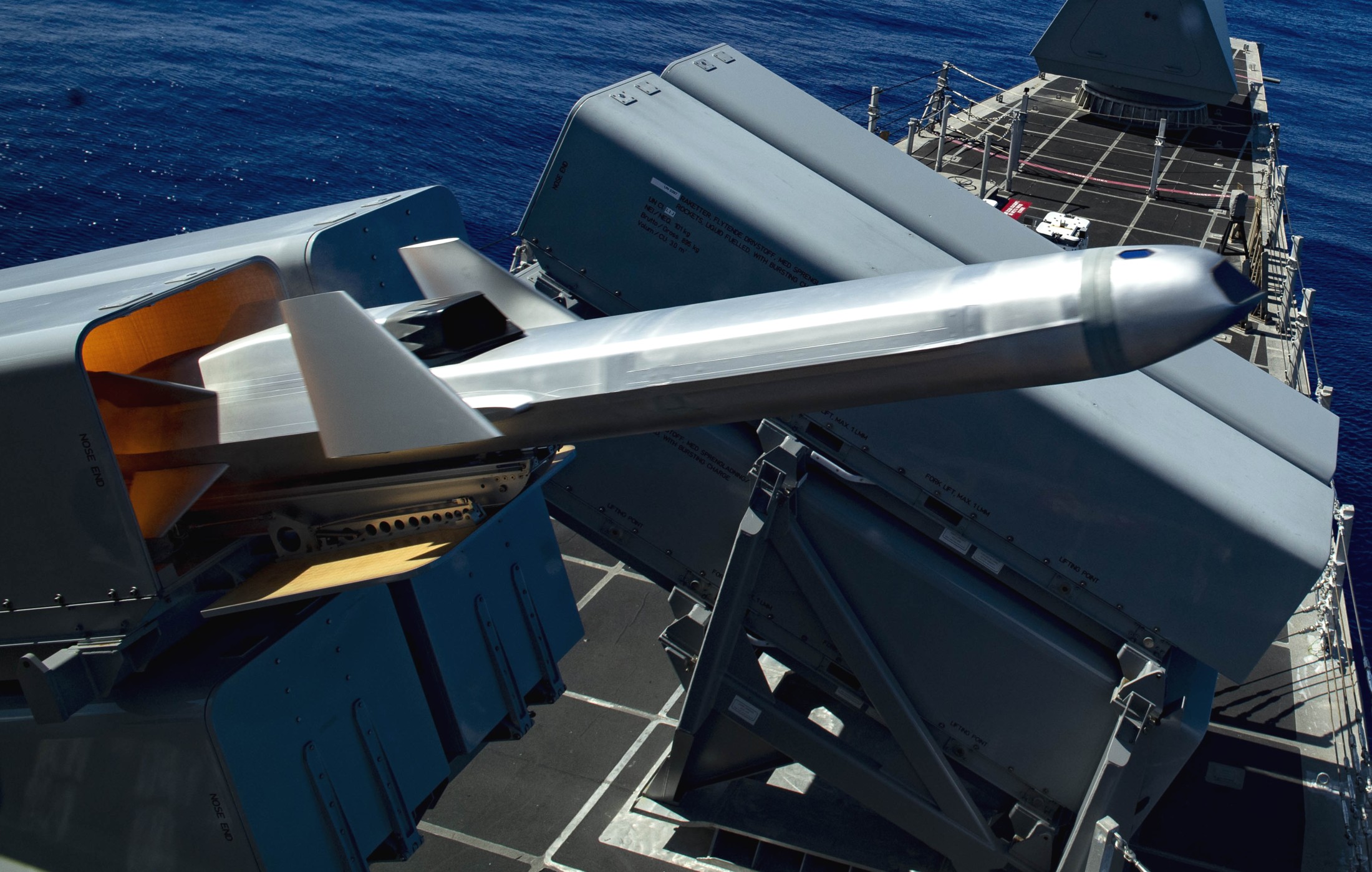
In the anti-ship missile section, this class has experienced many changes. While the first two generations carried 4 to 8 Harpoon missiles, in later generations these inclined launchers gave way to the development of the Mk 41 system. However, some vessels still use the Harpoon or the newer version known as the NSM.
In the anti-submarine warfare systems section, each vessel is equipped with Mk 32 launchers on its sides. There is the capability to fire a range of Mk 46, Mk 50, and Mk 54 torpedoes. Also, in newer versions, two hangars have been installed for two helicopters. These helicopters are equipped with torpedoes, Hellfire missiles, and various types of sonar, which play a key role in anti-submarine warfare.
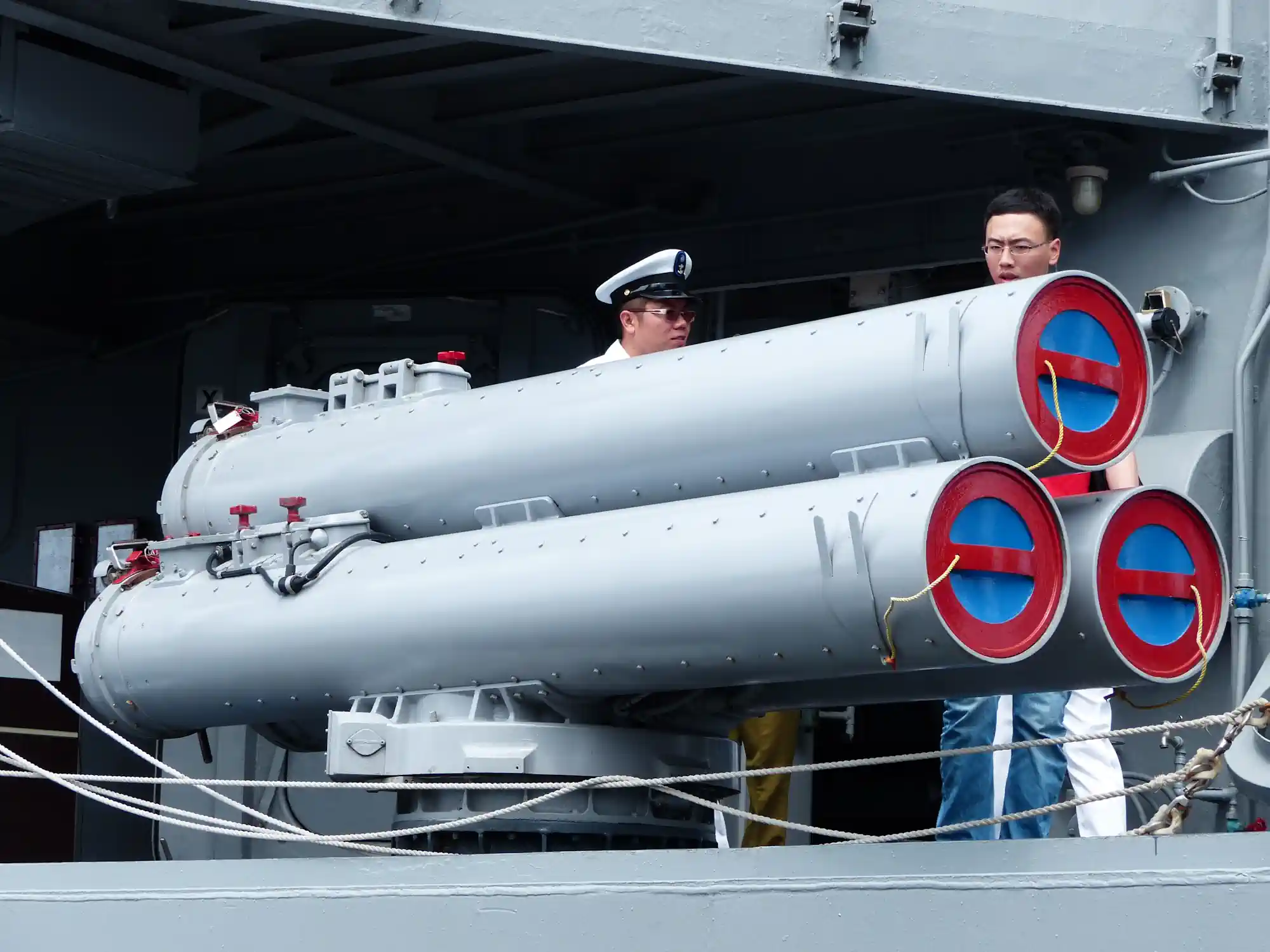
دIn the soft defense systems section, the following weapons can be mentioned:
- SRBOC: a chaff launcher for deceiving enemy radar.
- Nulka: a type of active radar decoy that diverts anti-ship missiles away from the ship.
- Nixie (AN/SLQ-25): used to deceive torpedoes.
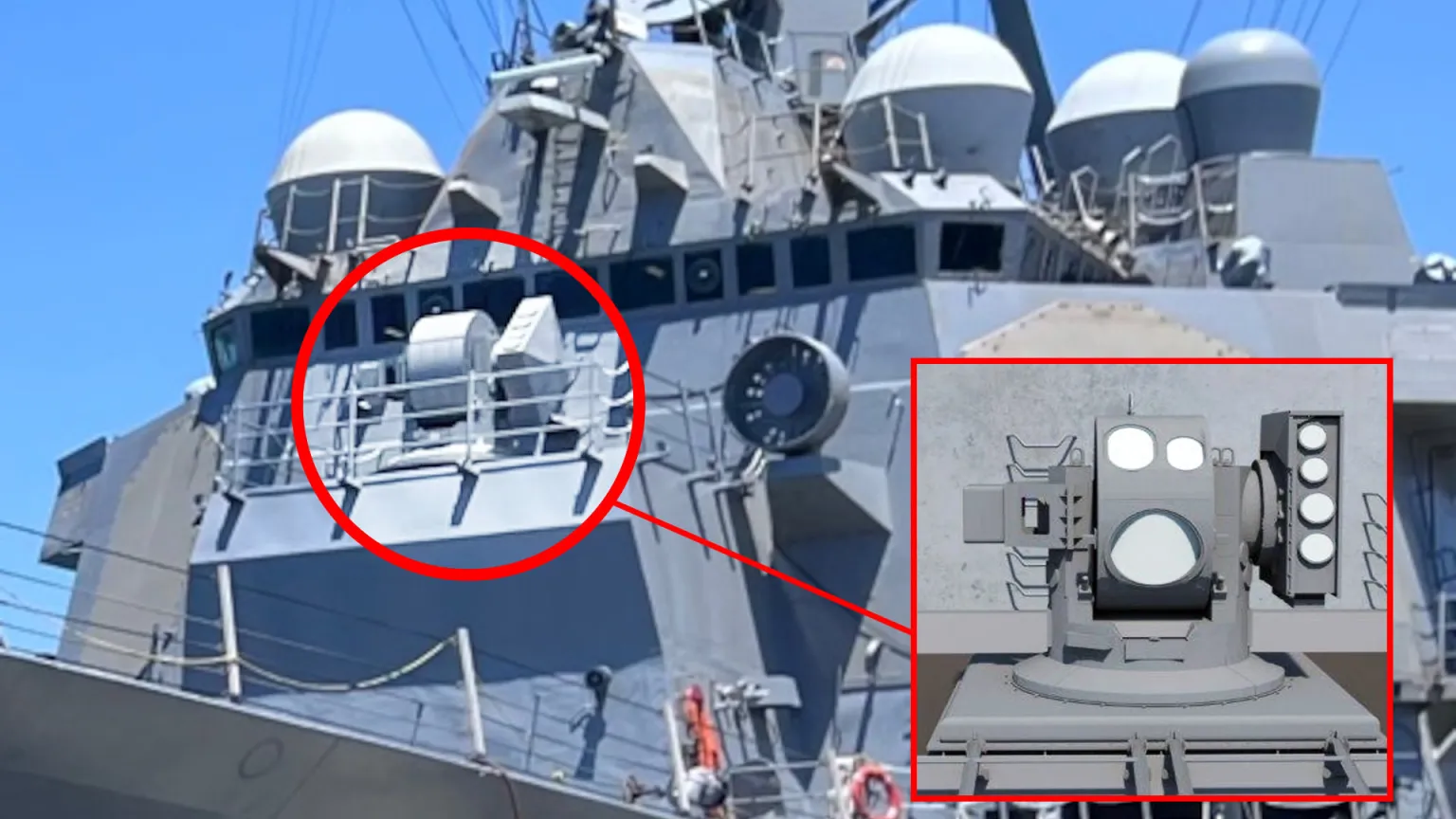
In the directed-energy weapons section, tests have also been conducted with the aim of installing the HELIOS system. HELIOS is a 60-kilowatt laser that is used to counter drones, small boats, and light cruise missiles at close range.
Radar, communications, and electronics of the Arleigh Burke-class destroyer:
In the first three generations of these vessels, the AN/SPY-1D radar has been used; a three-dimensional passive electronically scanned array (PESA) radar with four fixed panels that provides full 360-degree coverage. This radar has the ability to simultaneously detect and track about 200 targets per array and, under ideal conditions, reaches a range of about 370 kilometers, although its effective range for small and low-altitude targets is reduced to less than 100 kilometers.
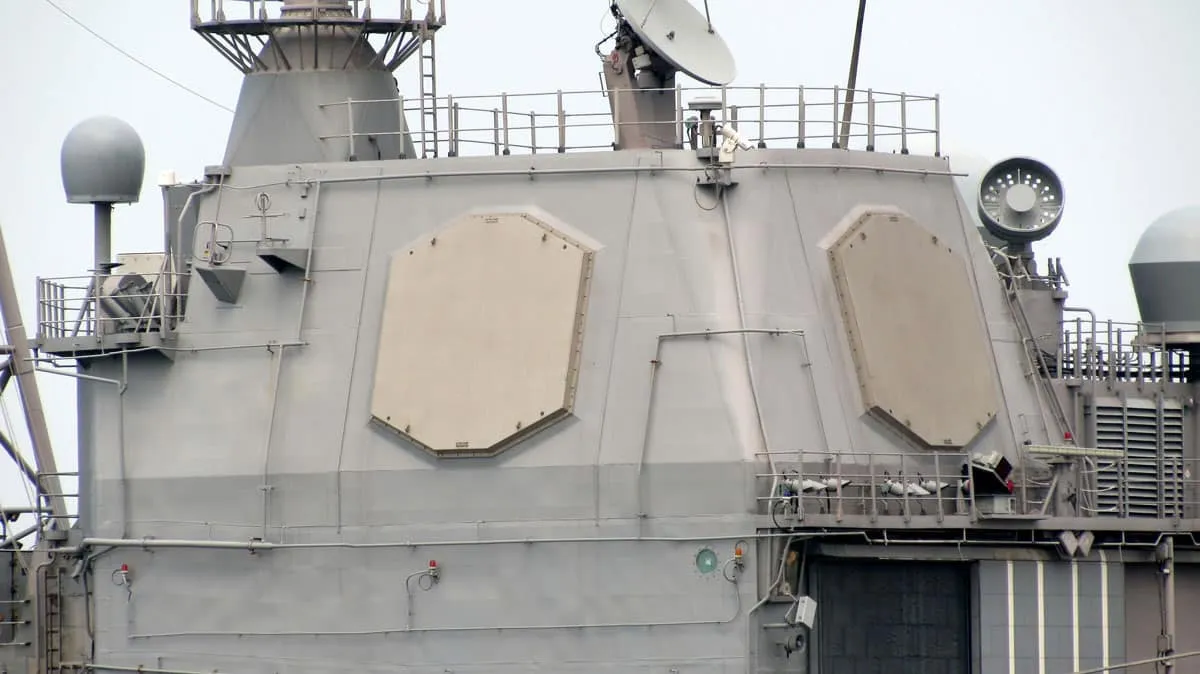
In the newer generation, the AN/SPY-6(V)1 radar has been used; an active electronically scanned array radar with gallium nitride technology. This active electronically scanned array (AESA) radar operates in two bands, S and X, which provides much more advanced capabilities. This system consists of two main radars and a radar suite controller (RSC) that is responsible for coordinating these sensors. The S-band radar performs tasks such as search, target tracking, precise discrimination of ballistic missile warheads, and communication with interceptor missiles. In contrast, the X-band radar is designed for near-horizon search, more precise tracking, and guidance of short- and medium-range missiles. According to the manufacturer’s claims, this radar is up to 30 times more sensitive than the SPY-1, can detect targets with half the radar cross-section at twice the distance, and at the same time manage a much larger number of targets, including ballistic, cruise, and hypersonic missiles and aircraft, simultaneously.


Alongside the main radar, there is also a set of auxiliary radars. The AN/SPQ-9B is used for surface search and tracking of low-altitude targets such as anti-ship missiles, and the AN/SPS-67(V)3 or AN/SPS-73(V)12 radars are responsible for navigation and surface search. Also, three AN/SPG-62 radars are used for semi-active guidance of Standard air defense missiles.
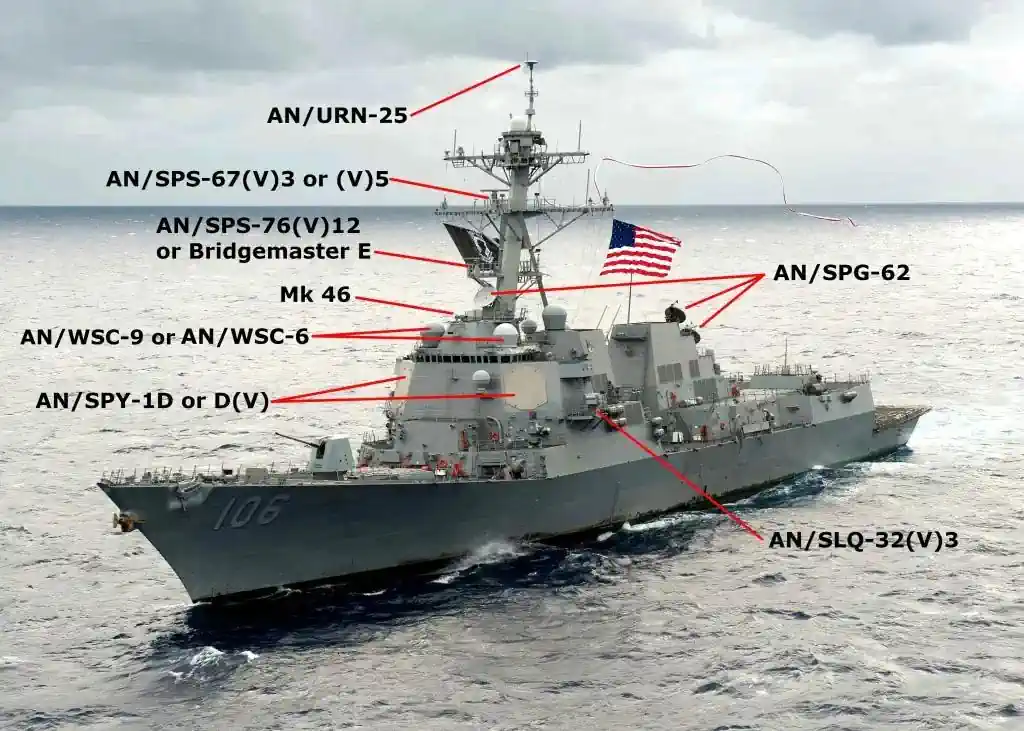
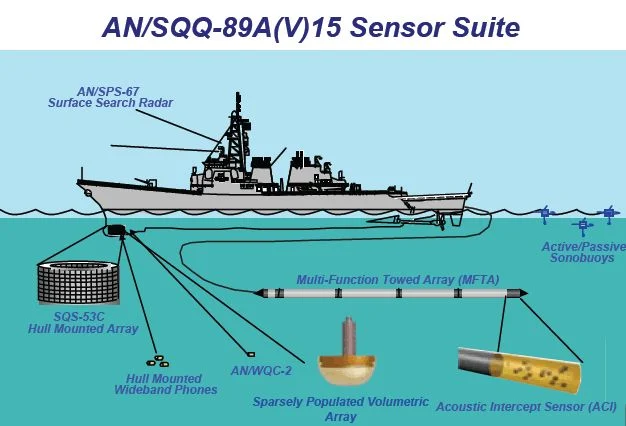
In the undersea warfare section, the AN/SQQ-89 system forms the core of the anti-submarine capability of these vessels. This suite includes the AN/SQS-53C active bow sonar for search and engagement, as well as the AN/SQR-19 towed array for detecting submarines at long ranges. In more advanced versions, this system has also been integrated with the AN/WLD-1 mine-hunting system and the MH-60R helicopter.
The baseline electronic warfare system on this class is the AN/SLQ-32 (Slick-32), which has been extensively upgraded over time. Its early versions operated primarily in passive mode, and their main task was detection, classification, and provision of radar warning against incoming threats. Subsequently, within the framework of the SEWIP program, step-by-step upgrades were carried out on this system. In the AN/SLQ-32(V)6 (Block 2) version, improvements were made to the antenna and receivers that increased the accuracy of detection and threat classification and the transmission of real-time data to the Aegis combat system. In the more advanced AN/SLQ-32(V)7 (Block 3) version, an offensive capability was also added, and the ability to create active jamming and disrupt the guidance systems of enemy missiles was provided. This version is installed or updated on Flight IIA and Flight III vessels.
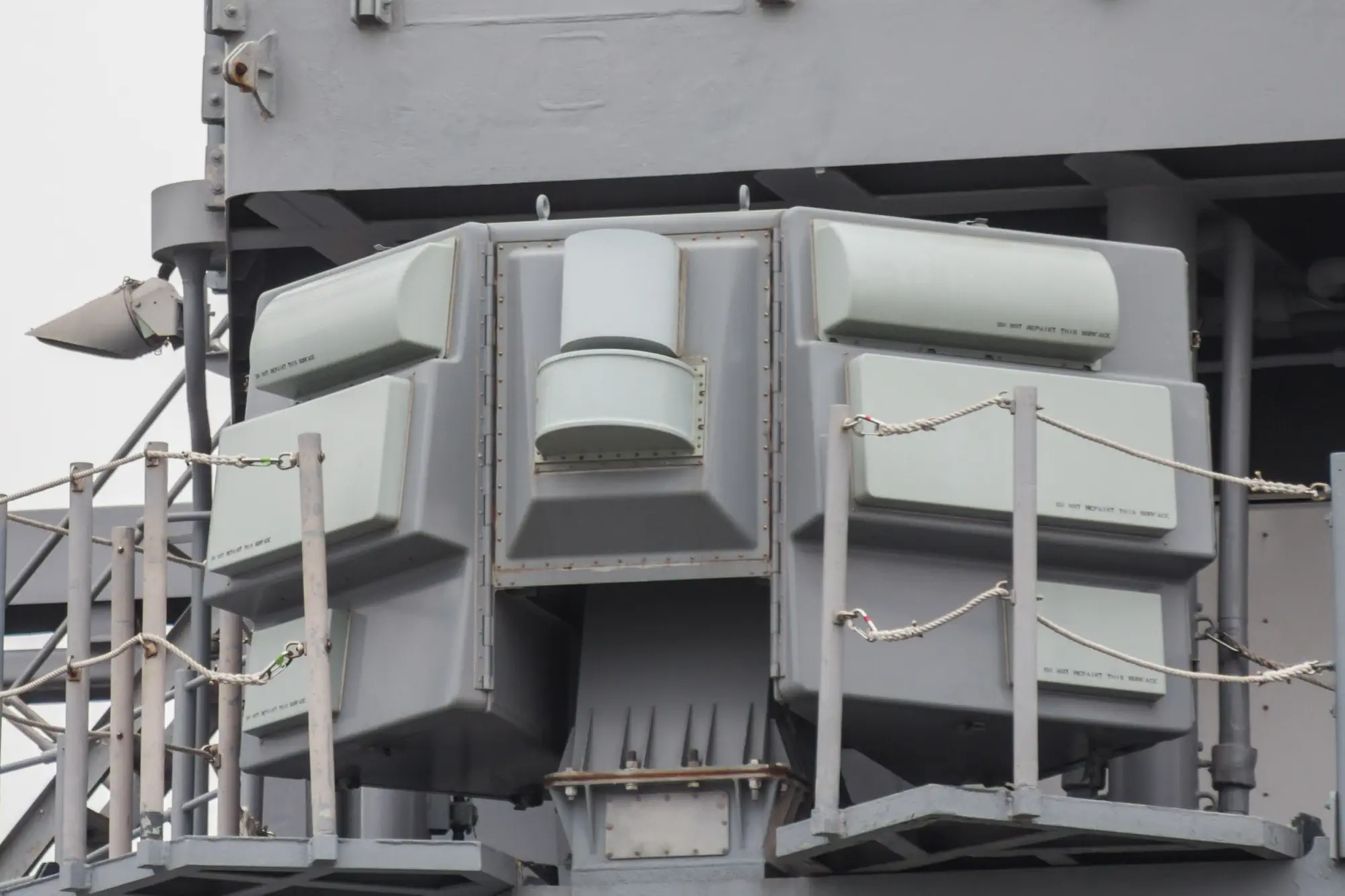
It should be noted that this system operates in an integrated manner alongside decoys such as Nulka, the AN/SLQ-25 Nixie, and SRBOC, creating a multi-layered electronic defense network to counter threats.
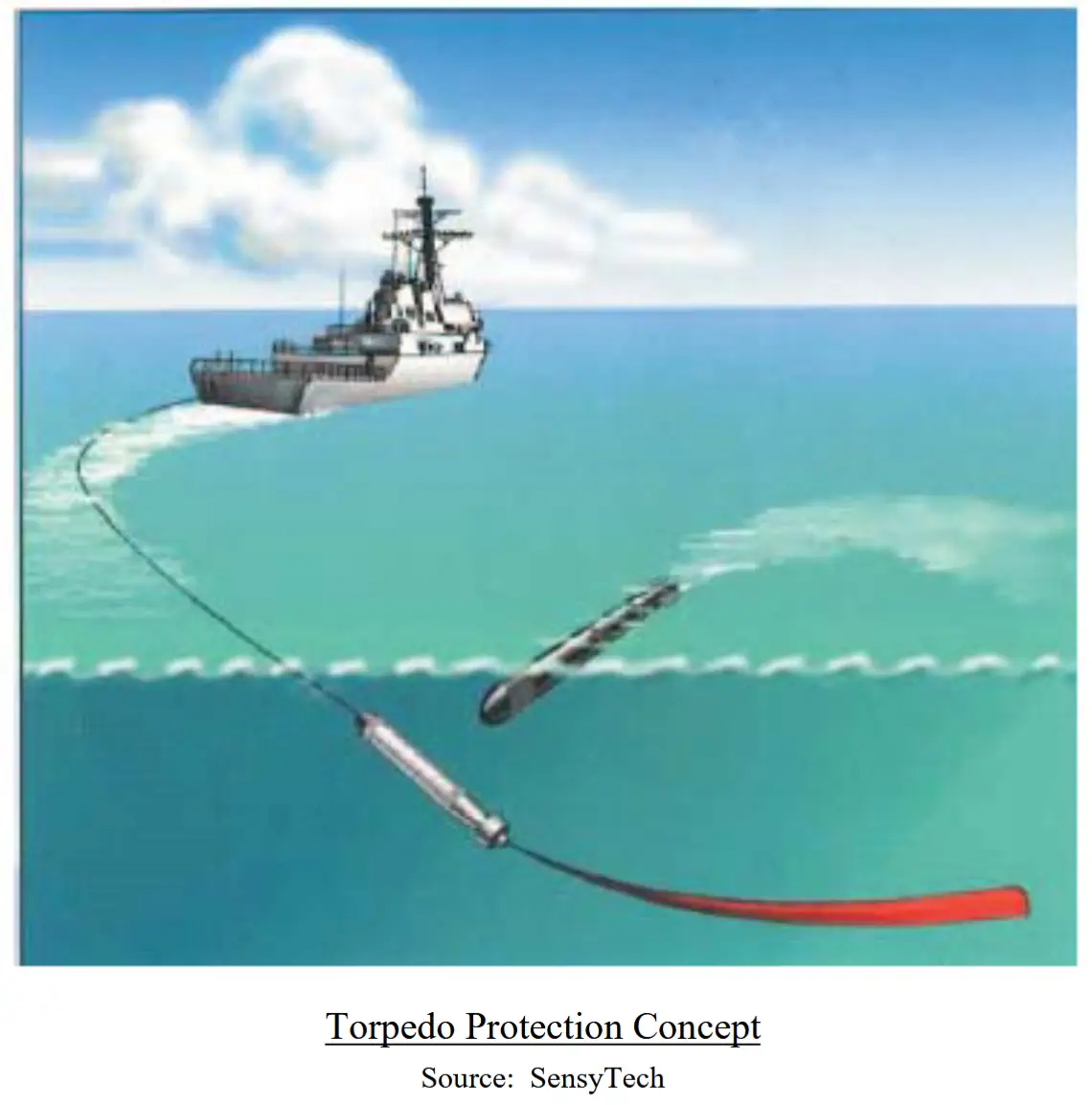
The AN/SLQ-25 Nixie and its variants are towed decoy torpedoes used on warships of the United States and its allies. These torpedoes consist of a towed decoy device (TB-14A) and a signal generator on the ship. The Nixie is capable of defeating torpedoes guided by acoustic waves and wire-guided torpedoes. This decoy emits signals to divert the attacking torpedo away from the target ship.
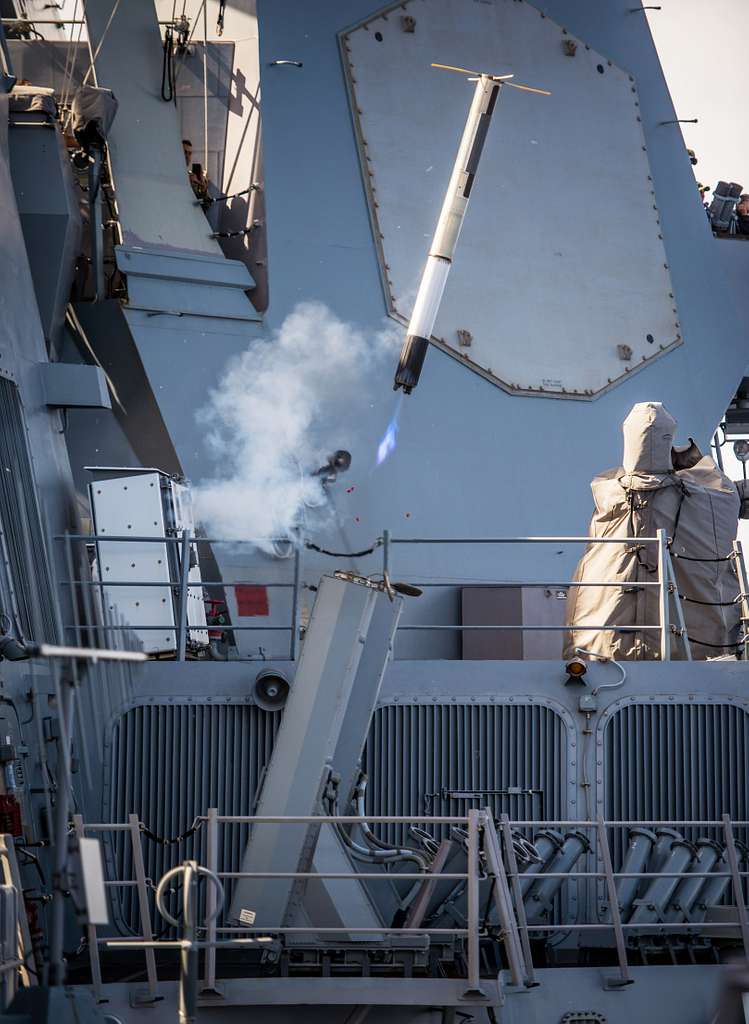
Nulka is an active, expendable decoy missile designed to divert anti-ship missiles away from their targets and is used on warships of the U.S. Navy, the Royal Australian Navy, and the Royal Canadian Navy. This missile has a unique design and, after launch, can hover in the air for a certain period.
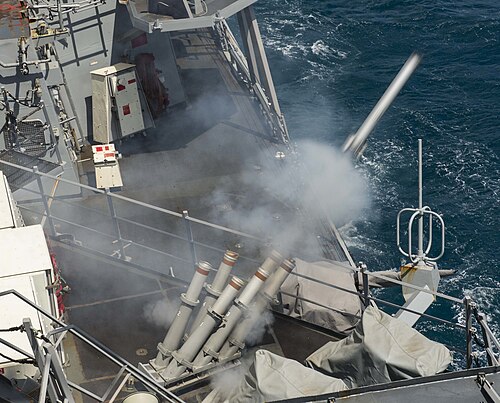
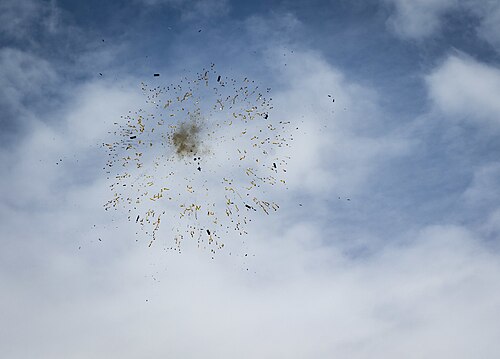
The Mark 36 SRBOC is a short-range chaff and decoy launching system that launches radar or infrared decoys from U.S. warships to neutralize anti-ship missiles. These decoys create false signals and interference in the guidance and fire-control systems of attacking missiles.
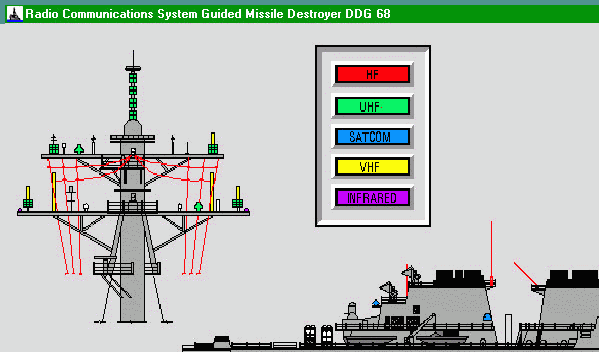
In the communications section, internal communications on the vessel are managed by the IVCS system, which provides secure and integrated voice communication throughout the ship. Fiber optics and the AN/USQ-82(V) system are also used for high-speed data transmission. External communications include HF, VHF, and UHF bands, and satellite communication is established through terminals such as the AN/WSC-3 and AN/USC-38. Alongside these, the Link 16 tactical data link enables real-time exchange of position, target, and status information with other units, aircraft, and command centers.
Upgrade packages:
Operational vessels of this class can be modernized through two separate upgrade packages: the Combat Systems (C/S) upgrade and the Hull, Mechanical & Electrical (HM&E) upgrade.
The HM&E package includes a set of infrastructure and support updates; including gigabit Ethernet connectivity in the propulsion section, a digital video surveillance system (DVSS), an integrated bridge navigation system (IBNS), an upgraded galley, and a set of modifications related to habitability and crew welfare.
In contrast, the Combat Systems (C/S) upgrade package focuses on increasing the vessel’s combat and processing capability. These upgrades are carried out on the basis of an open-architecture-based computing environment that enables continuous development and updating of systems. Within this framework, a new multi-purpose signal processor is also added, which is designed to support more advanced ballistic missile defense capabilities as well as improve radar performance in coastal areas and shallow waters.
Other important upgrades include the CEC system for sharing targeting data among different units, the Evolved Sea Sparrow Missile (ESSM) for point defense, the CIWS Block 1B close-in defense system, the SEWIP electronic warfare program, and the Nulka missile decoy system.
Also, the Mk-41 vertical launch system on the Arleigh Burke-class destroyers has been upgraded so that it can support SM-3 missiles and newer versions of the Standard missile family, and in this way the layered air defense and ballistic missile defense capability of these vessels has been significantly increased.
Operational history of the Arleigh Burke-class vessel:
The Arleigh Burke class gained its first combat experience with the firing of Tomahawk cruise missiles against Iraq. During Operation Desert Strike on September 3 and 4, 1996, the destroyers USS Laboon and USS Russell fired 13 and 8 Tomahawk missiles respectively. Several years later, in December 1998, the destroyers of this class once again carried out large-scale missile attacks against Iraq within the framework of Operation Desert Fox. Also in 2003, 11 Arleigh Burke destroyers participated in support of carrier battle groups and in the early stages of the war, struck numerous ground targets with Tomahawk missiles.
In October 2011, the U.S. Navy announced that four Arleigh Burke destroyers would be permanently deployed in Europe to support the NATO missile defense system. These vessels, which were stationed at the Rota Naval Base in Spain, included USS Ross, USS Donald Cook, USS Porter, and USS Carney. The permanent deployment of these vessels reduced their response time to operational areas and allowed the U.S. Navy to free up other destroyers of the Atlantic Fleet in line with the “pivot to East Asia” strategy. This action was met with a strong reaction from Russia, and Moscow described it as a threat to its nuclear deterrence; to the extent that even a threat to withdraw from the New START treaty was raised.
In October 2016, the destroyers USS Mason and USS Nitze were dispatched to the coast of Yemen after an attack on a UAE support vessel. On October 9, while present in the Red Sea, the destroyer Mason detected two anti-ship missiles that were moving toward American vessels. To counter this threat, two SM-2 missiles, one ESSM missile, and one Nulka decoy were fired. One of the attacking missiles definitively fell into the water, and the fate of the second missile was not determined.
Three days later, in the Bab el-Mandeb Strait, Mason once again detected an anti-ship missile and this time succeeded in intercepting it at a distance of about 13 kilometers with an SM-2 missile. On October 13, the destroyer Nitze destroyed three military sites that had played a role in the previous attacks by firing Tomahawk missiles. A few days later, on October 15, Mason was targeted for a third time; this time five anti-ship missiles were fired at it. Mason succeeded in destroying or diverting four missiles using SM-2 missiles and radar decoys, and the destroyer Nitze also diverted the fifth missile using a radar decoy.
On April 7, 2017, the destroyers USS Ross and USS Porter targeted the Shayrat Air Base in Syria with Tomahawk missiles. These two vessels fired a total of 59 cruise missiles. A year later, on April 14, 2018, the destroyers USS Laboon and USS Higgins also carried out another missile attack against targets related to Syria’s alleged chemical weapons. These two vessels fired 7 and 23 Tomahawk missiles respectively. At the same time, the destroyers USS Donald Cook and USS Winston S. Churchill were also deployed in the Mediterranean Sea to mislead Syrian defense systems by creating operational ambiguity.
In October and November 2023, the destroyers USS Carney and USS Thomas Hudner, which were deployed in the Red Sea, intercepted and destroyed a large number of drones and missiles. On October 19, Carney shot down at least three cruise missiles and eight drones that were suspected to be heading toward Israel. Also, on November 15 and 22, the destroyer Thomas Hudner destroyed several drones fired by Yemen’s Houthis.
On November 27, the destroyer Carney detected two ballistic missiles fired from Houthi-controlled areas; these missiles fell into the water at a distance of about 18 kilometers. Two days later, Carney intercepted another missile. On December 30, the destroyer USS Gravely destroyed two anti-ship ballistic missiles. On January 30, 2024, an anti-ship cruise missile approached the destroyer Gravely to a distance of about 1.6 kilometers, and this vessel used the Phalanx CIWS close-in defense system to destroy the missile for the first time in these engagements.
During the Iranian war against Israel on April 13, 2024, the destroyers USS Arleigh Burke and USS Carney fired between 4 and 7 SM-3 interceptor missiles and intercepted and destroyed at least three Iranian ballistic missiles. This was considered the first combat use of the SM-3 missile in history. Several months later, on October 1, the destroyers USS Bulkeley and USS Cole also fired 12 SM-3 and SM-6 missiles against Iranian ballistic missiles.
During the 2026 Iran war, on April 11, more than 20 destroyers were involved in coordinated attacks against Iran. After the ceasefire, the destroyers USS Frank E. Peterson and USS Michael Murphy carried out an operation to clear naval mines in the Strait of Hormuz; a few days later, on April 13, the U.S. Navy announced that a naval blockade would be enforced against vessels entering and exiting Iranian ports. Subsequently, on April 19, the destroyer USS Spruance, which was participating in the enforcement of this blockade, opened fire on the vessel Touska and, after stopping it, seized the vessel.
Specifications of the Arleigh Burke-class destroyer:
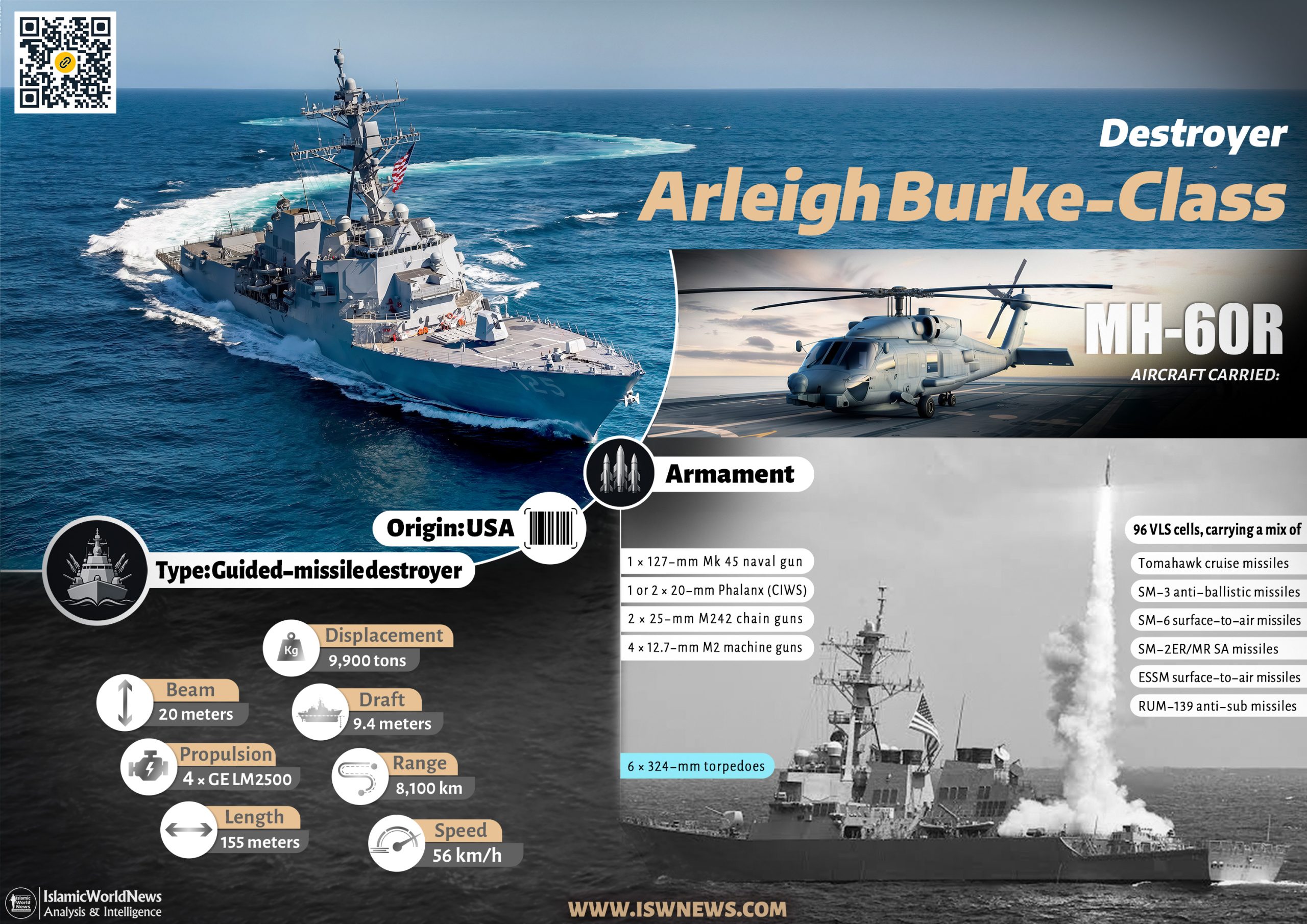
Type: Guided-missile destroyer
Origin: United States
Entered service: 1991
Length: 155 meters
Beam: 20 meters
Draft: 9.4 meters
Engines: 4 General Electric LM2500 engines with a total of 105,000 horsepower
Range: 4,400 nautical miles (8,100 kilometers)
Speed: 30 knots (56 kilometers per hour)
Weight: 9,900 tons (most updated version)
Missile system:
96 vertical launch cells including a combination of:
Tomahawk cruise missile
SM-3 air defense missile
SM-6 air defense missile
SM-2ER/MR air defense missile
ESSM air defense missile
RUM-139 anti-ship missile
6 324-millimeter torpedoes from two Mk 32 triple-tube launchers
Artillery:
1 127-millimeter Mk 45 gun
1 or 2 20-millimeter Phalanx close-in defense system guns (depending on the destroyer type)
2 25-millimeter M242 machine guns
4 12.7-millimeter M2 machine guns
Carriable aircraft:
2 MH-60R helicopters