Tag: cybersecurity

  • Digital Infrastructure Diplomacy in West Asia

    Digital Infrastructure Diplomacy in West Asia

    Saudi Arabia is considering replacing the Zionist regime route with a Syrian route for the fiber optic cable connecting the kingdom to Greece via the Mediterranean Sea—a decision that goes beyond a mere technical or economic choice, reflecting a shift in the region’s geopolitical alignments. Riyadh’s insistence on routing the cable through Syria indicates its intention to bolster Damascus’s regional standing while simultaneously politically distancing itself from Israel in the wake of the Gaza war developments.

    Crown Prince Mohammed bin Salman has adopted a tough stance against Israel, which has provided the political groundwork for this shift. At the same time, the growing disagreements between Riyadh and the UAE over issues such as Yemen, Sudan, and Red Sea security have added a new competitive dimension to this decision.

    The selection of Syria could contribute to the country’s economic reintegration into the region and enhance its geo-economic position in the Eastern Mediterranean, while Israel’s exclusion from this potential corridor would weaken its standing in the race to become an energy and data hub. On the other hand, Greece—particularly Athens—is striving to position itself as a bridge between Europe and the Middle East in the fields of energy, real estate, and artificial intelligence, and this project could strengthen its role in the new regional connectivity architecture. Overall, this plan symbolizes the transition from traditional energy geopolitics to data geopolitics and digital infrastructure, and could influence the balance of power in the Eastern Mediterranean and the Arab world.

    Background
    Within the framework of the broader “East-to-Mediterranean Data Corridor” strategy, a joint fiber optic cable project between Saudi Arabia and Greece has been designed. The project is being pursued with the participation of major companies, including STC, PPC, OTA, and TTSA. The aim of this initiative is to establish a high-capacity data transmission route between the Persian Gulf and Europe via the Mediterranean, providing complementary digital infrastructure for energy and technology cooperation between the two regions.

    The key development in this project is Riyadh’s shift from the proposed route through Israel to the alternative option via Syria. This change is not merely technical or economic, but rather a reflection of the geopolitical realignment in Saudi Arabia’s peripheral environment. In recent years, growing rifts have emerged between Riyadh and Abu Dhabi over issues such as Yemen, Sudan, and Red Sea security.

    From a Saudi perspective, the increasing convergence between the regime and the UAE could shift the regional influence balance against Saudi Arabia. Therefore, the selection of a new route for the fiber optic cable is seen as part of a strategy to reduce dependence on the Israel–UAE axis. This decision also carries multi-layered implications for Greece. Athens has established close strategic ties with Israel in recent years and has pursued extensive cooperation in energy and Eastern Mediterranean security. However, Greece is simultaneously seeking to position itself as a hub connecting Europe and West Asia in the fields of energy, real estate, logistics, and artificial intelligence. Thus, whether Athens accepts or rejects Riyadh’s proposed new route could affect the balance of its relations with the Zionist regime and place Greece in a geopolitical dilemma. From a technical perspective, fiber optic cables—transmitting data in milliseconds via optical pulses—form the backbone of the global digital economy. With the expansion of artificial intelligence and the growing need for big data processing, Gulf countries are making substantial investments in data centers and communication infrastructure to transform themselves, beyond their traditional role as oil and gas exporters, into key players in Europe’s data and digital services market.

    Overall, the rerouting of the cable is not merely an infrastructure decision but part of the geo-economic and geopolitical competition in the Eastern Mediterranean and the Red Sea. This development could affect coalition formations, digital connectivity routes, and even regional security equations, serving as an indicator of a new phase in Saudi Arabia’s rivalry with the UAE–Israel axis over strategic data infrastructure.

    Analysis and Findings:

    • Strategic Shift: Saudi Arabia’s efforts to include Syria in major infrastructure projects—particularly in telecommunications and data connectivity—are part of Riyadh’s broader strategy to reshape the regional order. By leveraging its financial capacity and foreign investment, Saudi Arabia aims to turn Damascus into a hub for road, rail, and digital transit between the Persian Gulf and the Mediterranean. This approach pursues two simultaneous goals: strengthening potential allies and rebuilding Syria’s geopolitical position, while creating a balance against the growing influence of the UAE and the Zionist regime around the Red Sea and the Eastern Mediterranean. In this context, the announcement by Saudi Arabia’s Investment Council of approximately $800 million in telecommunications infrastructure investment in Syria carries an important geopolitical message. According to Saudi Arabia’s official news agency, the project involves establishing a fiber optic network spanning over 4,500 kilometers aimed at “regional and international connectivity for Syria.” Such a project is not merely an economic endeavor but a redefinition of Syria’s role as a connectivity node in the new regional connectivity architecture. Trend analysis shows that from Riyadh’s perspective, Damascus lies at the heart of a “connectivity-oriented” strategy—roads, rail lines, and fiber optic cables must pass through Syrian territory to solidify the link between the Persian Gulf and Europe. This perspective transforms Syria from a security dossier into a geo-economic asset. In other words, Riyadh is seeking to revive Syria’s role in the regional value chain by investing in both hard infrastructure (roads, rail, cables) and soft infrastructure (data networks). From a regional competition perspective, the inclusion of Syria in these projects comes at the expense of excluding or downplaying the Zionist regime’s role in data connectivity routes. This signifies a tangible shift in Saudi Arabia’s strategic calculations. In 2022, discussions on normalizing relations between Riyadh and Tel Aviv were at their peak, but subsequent regional developments—particularly escalating geopolitical rivalries and shifting coalition alignments—have moderated this approach. Today, Saudi Arabia’s priority is not symbolic convergence with Israel but consolidating its independent position in the regional connectivity architecture.
    • Widening Saudi–UAE Rift: According to narratives close to decision-making circles in Riyadh, including statements by Al-Tuwaijri, the rift between Saudi Arabia and the UAE is not a transient disagreement but the result of accumulated strategic grievances across several regional files. From a Saudi perspective, Abu Dhabi—through its financial power and proxy networks—has sought to become a small state with outsized influence in its immediate environment, which has conflicted with Riyadh’s geopolitical interests. In the Yemen file, the Saudi narrative holds that the UAE’s presence within the Arab coalition began with Riyadh’s invitation, but Abu Dhabi gradually deviated from declared objectives and supported separatist movements in the south. This perception is echoed in Sudan, where documented UAE military support for the Rapid Support Forces is seen as an effort to deepen internal divisions and consolidate Abu Dhabi’s influence. Likewise, in Somaliland, UAE support for quasi-state structures in northern Somalia is viewed by Saudi Arabia as another indication of a policy of environmental influence independent of Arab coordination. In Tunisia, concrete instances include the provision of armored equipment to opposition movements to undermine democratic processes. This narrative, within the Saudi framework, portrays the UAE as an interventionist actor in the internal affairs of Arab countries—an approach Riyadh considers contrary to the principles of Arab solidarity. In terms of identity and relative power, this narrative depicts the UAE as a smaller actor geographically, demographically, and economically that has at times sought to punch above its weight. This perspective is linked to recent economic developments in Saudi Arabia, where major economic transformation programs have led to a gradual shift of capital and international companies from Dubai and Abu Dhabi to Riyadh. In this context, economic competition is said to have fueled geopolitical rivalry and heightened mutual sensitivities. Regarding the relationship between the two leaders, recalling Mohammed bin Zayed’s role in bolstering Mohammed bin Salman’s standing in Washington prior to his crown prince status points to a period of strategic convergence. However, according to this narrative, divergence intensified when Mohammed bin Zayed found the rapid growth of Saudi economic power and capital concentration unacceptable. From Al-Tuwaijri’s viewpoint, this shift in the economic balance became a psychological-political factor in intensifying personal and strategic rivalry between the two leaders.
    • The Role of the Islamic Republic of Iran in Saudi Arabia’s New Architecture: Saudi Arabia is redefining its regional orientation—a shift that not only involves distancing from Abu Dhabi but also includes strengthening ties with Turkey and maintaining the détente process with Iran. This realignment should be analyzed within Riyadh’s broader efforts to consolidate its independent position in regional security equations and avoid becoming entangled in costly scenarios of direct confrontation with Tehran. On the international level, speculation about the possibility of renewed U.S. military action against Iran under the Trump administration has heightened uncertainty. The deployment of U.S. naval and military capabilities in the region sends a clear deterrent message; however, reports simultaneously indicate that at least nine Arab leaders have contacted Washington to allow more time for ongoing negotiations in Muscat. This diplomatic movement suggests that a significant portion of the Arab world views a full-scale war scenario as a threat to regional stability and its economic interests. In this framework, Al-Tuwaijri’s narrative emphasizes that Iran is a different actor than examples like Venezuela and, if faced with an existential threat, would employ extensive and potentially destructive deterrence tools. From this analytical perspective, Iran’s capacity to target U.S. bases in the region, disrupt Persian Gulf energy security, and even block the Strait of Hormuz is assessed as Tehran’s “strategic cards.” Such a scenario could have far-reaching economic and security consequences for the Gulf Arab states. The findings indicate that Saudi Arabia’s pivot toward Turkey and the continuation of détente with Iran are part of an active balancing strategy against three simultaneous variables: competition with the UAE, U.S. pressure for full alignment against Iran, and the risk of widespread instability in the event of military conflict. Riyadh seeks to avoid being drawn into a comprehensive confrontation that could target the region’s energy infrastructure and economy by diversifying its regional partners and maintaining diplomatic channels. This approach reflects Saudi Arabia’s move from rigid alliances toward a more flexible, multi-balancing foreign policy.

  • Sacred Malware: Israel Espionage Hidden Behind an Arabic Religious App

    Sacred Malware: Israel Espionage Hidden Behind an Arabic Religious App

    In an era where security boundaries have shifted into the digital realm, espionage tactics have evolved alongside technology. Physical infiltration, traditional wiretapping, or field agents are no longer necessary. Today, a single Android app can silently breach hundreds of smartphones without the victims ever realizing it.

    A new investigation by the “EekadFacts” platform has revealed one of the latest examples of such digital attacks: an Arabic-language app with a religious appearance that was, in fact, a spyware tool crafted by the Zionist regime.

    According to the report, the malicious app—disguised with an Arabic religious name and interface—was designed and distributed using infrastructure registered in the occupied territories. The app connected to a domain named “Palpray.co,” a blend of “Palestine” and “Prayer,” chosen specifically to gain the trust of Arabic-speaking users, particularly Palestinian Muslims. This domain served as the command-and-control (C2) hub for the malware, allowing attackers to remotely extract sensitive data and execute commands once the app was installed on the victim’s device.

    Technical analysis shows the domain was registered by the Israeli company “Wix” and used Cloudflare services to mask the true identity of its servers. Although the domain is currently inactive, evidence confirms it was operational for a period and used to manage malware communications. This constitutes a sophisticated and targeted cyberattack, designed with intimate knowledge of the target community and enhanced by cultural and religious elements to increase deception.

    The choice of language and religious branding was central to the operation. The app featured a fully Arabic interface, religious-themed content, and a name evoking prayer and worship—all crafted to instill trust and a sense of safety in users. This technique, known in cybersecurity as social engineering, is one of the most effective methods for targeting human vulnerabilities. Victims often install such apps without verifying their origin—especially when presented with familiar names or religious themes.

    In terms of targets, the operation likely aimed at Palestinian users, civil society activists, journalists, and possibly members of resistance groups. Previous research by organizations like Citizen Lab and Amnesty Tech has documented similar tactics used by the regime to infiltrate digital devices of opponents in Lebanon, Syria, Gaza, and the West Bank.

    While this revelation is just one among many similar attacks, it once again highlights the critical importance of public awareness around cyber threats. In a time when trust in an app’s appearance can lead to exposure of private lives and confidential data, users in politically sensitive regions must be trained to detect hidden dangers. Moreover, digital rights watchdogs and regulatory bodies must enforce stricter oversight over the development and distribution of suspicious apps on open platforms like Android.

    Source:
    https://x.com/EekadFacts/status/1917531877864530366
    https://www.amnesty.org
    https://www.accessnow.org
    https://research.checkpoint.com

  • Exploring Israel’s Advanced Detection Technologies: Sense Through The Wall

    Exploring Israel’s Advanced Detection Technologies: Sense Through The Wall

    Life-detection equipment (such as seismic sensors or specialized radars) is typically defined as tools used to locate living victims under rubble following earthquakes or other disasters. These devices can detect:
    • Vibrations (like tapping or scratching)
    • Sounds (such as shouting or breathing)
    • Extremely subtle movements (like heartbeat or respiration)
    However, the focus of this article is on the military application of these technologies in the Israel Defense Forces (IDF), developed by the Israeli company Camero-Tech and sold to military and rescue units around the world.

    About Camero

    Camero Tech LTD logo

    Camero Tech LTD was founded in 2004 in the city of Netanya and is a pioneer in the development and production of imaging systems based on 3D radar technology. The products of this company are widely used by the military and police forces of the Israeli regime, as well as by other military and law enforcement bodies worldwide. All of their systems require approval from the Israeli Ministry of Defense.

    Camero specializes in the development and design of radio-frequency (RF) imaging systems and signal/image processing circuits for “Sense-Through-The-Wall” (STTW) applications. This includes all products in their “Xaver” series.
    The company’s CEO, Amir Beeri, is an experienced electrical engineer who graduated with a master’s degree in electronics from Tel Aviv University in 1986. In 2020, the Zionist regime’s defense giant Elbit Systems acquired Camero. Beeri, a seasoned technologist with military background, has known connections to Unit 8200.

    Camero’s CEO Amir Beeri


    Camero’s systems are widely used by Israeli security forces and their military allies. The deployment of this technology in conflict zones such as Gaza and the West Bank has raised significant ethical concerns.

    Xaver Series Products
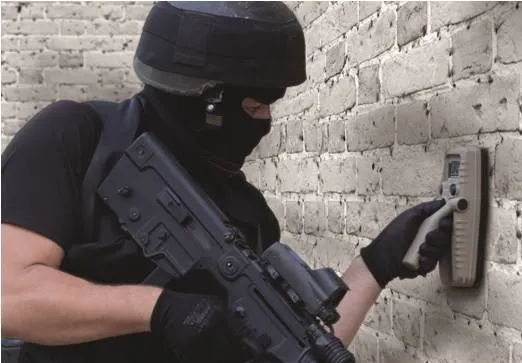
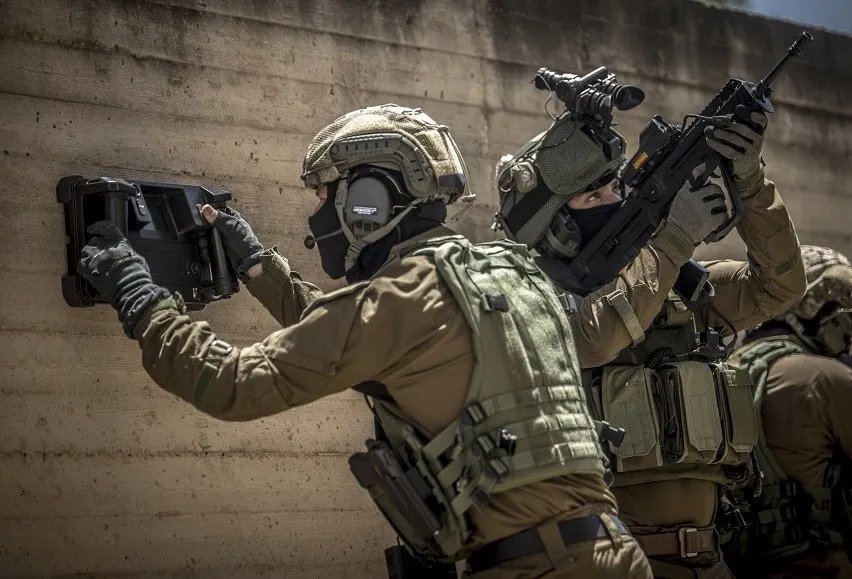
    The Xaver series is a diverse collection of advanced through-wall imaging systems that, using portable radar technology, allow military, law enforcement, and rescue forces to detect and track individuals in real-time through walls, doors, and other obstacles. Below is a breakdown of each model.

    1. Xaver 100


    This portable and rugged device enables military, law enforcement, and rescue teams to detect the presence and distance of individuals behind obstacles (like walls) in real-time. This capability enhances tactical decision-making during various operations. By providing accurate and reliable information about the presence of individuals in enclosed spaces, the device significantly improves tactical decisions across different operational scenarios.
    The device uses the same advanced technology found in other systems within this product family. A unique “micropower Ultra-Wideband” (UWB) sensor, which operates on an extremely wide frequency band with minimal energy consumption, ensures reliable detection and unmatched imaging clarity in the industry.

    2. Xaver 400


    This advanced system enables rapid identification of individuals behind walls and obstacles, allowing operational teams to act with full awareness of their surroundings and gain critical mission intelligence.
    The device features a sophisticated system architecture that integrates several cutting-edge technologies:

    • Multi-channel, low-power UWB sensor
    • Algebraic image reconstruction algorithms
    • User-friendly design


    3. Xaver 1000


    This device is the successor to Camero’s Xaver 800 model, which was the world’s first full 3D imaging system. Key features of this model include:

    Ability to differentiate between adults, children, and animals, making it suitable for tactical missions requiring accurate and vital information gathering

    • The first full 3D imaging system in the world
    • Equipped with AI-based smart tracking for live target patterns
    • Real-time 3D imaging through walls, capable of detecting both stationary and moving living objects behind structural barriers
    • Unprecedented resolution of body parts and postures, including sitting, standing, lying down, and height of living targets


    4. Xaver LR40 / LR80

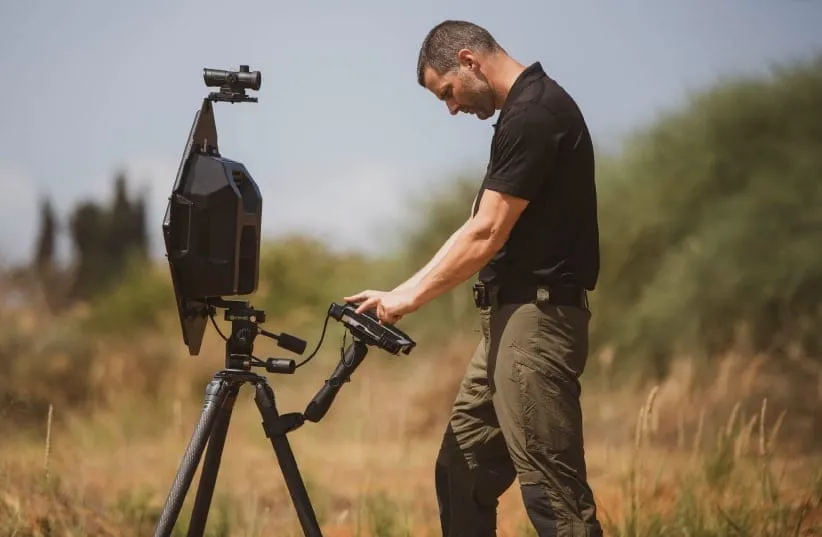
    Xaver LR40


    The radar in this powerful gadget can detect living beings behind walls at distances up to 50 meters—and for the LR80 version, over 100 meters. Optimized for both urban and rural operations, the system collects real-time and critical data on living entities hidden behind obstacles, all while keeping the operator at a safe distance. Additional notable features include:

    • Accurate detection of living beings behind common wall materials
    • Simultaneous detection of both moving and stationary targets
    • Control via a 10-inch touchscreen with an intuitive interface
    • Integrated data recording with playback capability for post-mission review, analysis, and training
    • Proprietary and patented algorithms and signal processing
    • Lightweight and portable for enhanced mobility and operator effectiveness
    • Weight: between 10 and 12 kilograms


    5. XaverNet


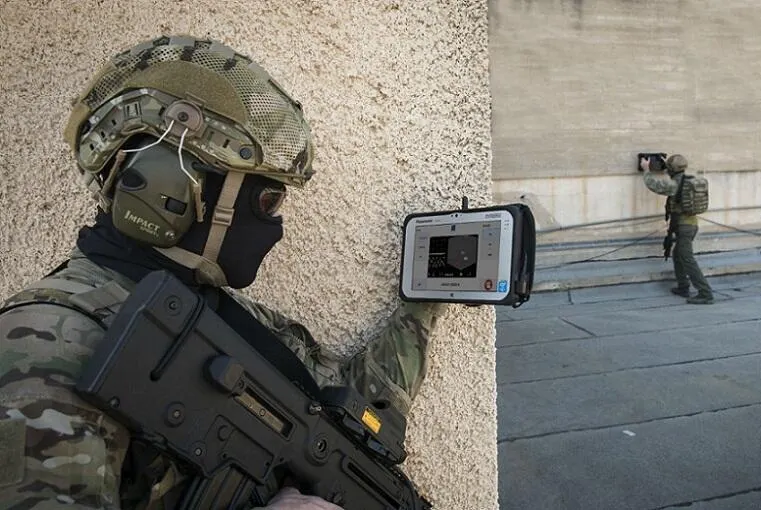
    The “XaverNet” system is a rugged wireless tablet that works with Xaver 100 and Xaver 400 systems. It allows users to receive imaging data in real time and remotely control up to four Xaver systems simultaneously. The system includes a Panasonic “ToughPad” tablet, a USB dongle for wireless connectivity, and proprietary software. The software can also run on Windows-based platforms. Using this technology, users can control Xaver systems from a distance of up to 200 meters in line of sight and switch between systems without exposing themselves to the target zone—making operations safer for field teams.
    This network-based system is built on a rugged wireless command and control platform based on the Panasonic FZ-M1 commercial model.

    Key Features

    • Compatible with various Windows-based platforms
    • Supports both Xaver 400 and Xaver 100 systems
    • Data recording capability
    • Wireless communication based on Zigbee protocol (a low-power wireless communication standard for sensor networks and smart devices)
    • Optional tactical housing
    • Capability to mount Xaver systems on unmanned vehicles
    • Weight: between 1 and 1.2 kg
  • The Graphite Controversy: Inside Israel’s Global Spyware Empire

    The Graphite Controversy: Inside Israel’s Global Spyware Empire

    Introduction
    In March 2024 WhatsApp, which is owned by Meta, announced that 90 journalists and members of the public who use the popular messaging app had been targeted by spyware developed by Paragon Solutions, an Israeli company specializing in hacking tools. These journalists and civil society members were notified about the possible compromise of their devices’ security. It remains unclear who was behind the attack. Like other spyware vendors, Paragon’s hacking software is used by government clients, and WhatsApp stated it had been unable to identify which clients ordered the alleged attacks.

    Experts have reported that the attack was of the zero-click type, meaning the targets did not need to click any malicious link for their devices to be infected. WhatsApp has declined to disclose the locations of the affected journalists and civil society members, including whether any of them were based in the United States. Three of the hacking victims were Italian journalists.

    According to reports in The Guardian and Haaretz, Paragon has since severed ties with its clients in Italy, which reportedly included an intelligence agency and a law enforcement organization. Paragon exclusively works with governmental entities. The company’s flagship product, called Graphite, allows users full access to a target’s phone. Paragon claims that the software is intended for criminal investigations. The company is seen as a competitor to the NSO Group, maker of the Pegasus spyware.

    Additionally, Israeli media have reported rumors of Paragon being sold to a U.S. company, which were recently denied by Israel’s Defense Minister following Donald Trump’s return to the White House.

    Paragon Solutions
    Paragon Solutions, founded in 2019 and currently employing 450 personnel, is a cyber company focused on offensive operations and security, utilizing digital intelligence to provide surveillance solutions for smartphones and the internet. The company claims to impose “strict ethical limitations” on itself, restricting data extraction from target devices solely to conversations within messaging apps. Paragon exclusively collaborates with law enforcement and intelligence agencies in what it defines as liberal democracies—a list that includes 39 countries.

    As one of the two leading Israeli offensive cybersecurity firms alongside NSO, Paragon specializes in technologies classified as weapons and requires export approval from Israel’s Ministry of Defense. Unlike NSO, which faced international backlash and was blacklisted by the U.S. government for selling spyware to authoritarian regimes, Paragon was founded with a commitment to operate exclusively within democratic nations. This ethical positioning helped pave the way for future deals.

    Founders and Key Figures
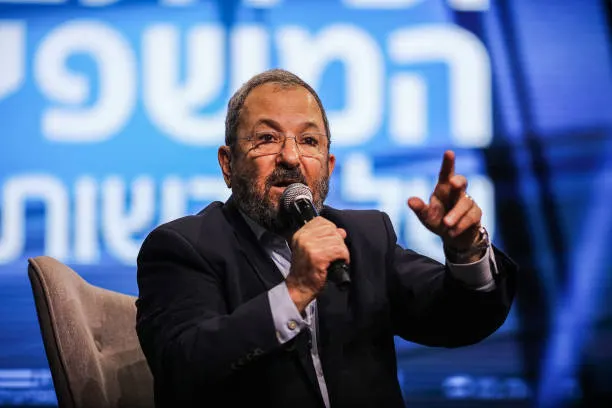
    Among the founders of this cyber company is Ehud Barak, the former Prime Minister of Israel, underscoring Paragon’s prominence and distinct position among other firms in the industry. Some media outlets have even referred to the company as “Ehud Barak’s startup”, highlighting his influence in its establishment. According to the image below, the founders of this Israeli company are identified from right to left in the following order:

    – Ehud Schneorson


    After decades of service in the fields of signals intelligence (SIGINT), cyber operations, and special operations in the occupied territories, he was appointed as the head of Unit 8200, Israel’s elite military intelligence unit. According to Richard Silverstein, commanders in Israel’s Unit 8200are appointed in a highly specific and deliberate manner, alternating between a “khnun” (a Hebrew slang term for a “computer geek” or “tech nerd”) and an individual who rose through the ranks via combat roles. Ehud Schneorson is considered a khnun, whereas his predecessor, Nadav Zafrir, was a combat officer who served in Sayeret Matkal, Israel’s elite special forces unit. This alternating approach, blending technical expertise with combat experience, reflects the military’s effort to strike a balance between technological proficiency and operational capability.

    – Ehud Barak

    Ehud Barak, the former Prime Minister of Israel, has been a prominent figure in the country’s cybersecurity landscape. He played a significant role in the founding of Paragon Solutions, co-establishing the company alongside retired Brigadier General Ehud Schneorson. Barak’s involvement in Paragon has been substantial, and he also holds a stake in the company, underscoring his direct interest and influence in its operations.

    – Idan Nurick

    Idan Nurick is the CEO and co-founder of Paragon Solutions, with a background in medicine and an MBA. He has led several successful companies in the fields of cybersecurity and artificial intelligence, with a proven track record in team leadership, algorithm development, software engineering, and data analysis.
    Nurick founded Cyber Hunters in 2018 and Paragon in 2019, serving as CEO of both. In 2020, he stepped away from Cyber Hunters to focus on Nash and Paragon. He currently serves as a director at Alameda Ventures and a senior executive at Bloomberg Capital. Prior to his current role, he also held a senior leadership position within Paragon. Nurick completed his studies at Tel Aviv University, earning both a master’s degree and an MBA.

    – Liad Avraham
    Liad Avraham, a resident of the occupied territories, is currently the co-founder and Chief Research Officer (CRO) at Paragon Solutions. He brings valuable experience from his previous roles at Paragon and in the Israel Defense Forces (IDF). Avraham holds a Bachelor’s degree in Computer Science from the Open University and possesses advanced skills in hacking iOS and Android operating systems. During his service in the IDF, he served as a team leader and cybersecurity researcher.

    – Igor Bogdalov
    Igor Bogdalov, a lesser-known figure among the founders pictured, is one of the co-founders and serves as Co-Chief Technology Officer (CTO) at Paragon. He earned his Master’s degree from Tel Aviv University.

    Graphite
    As previously mentioned, this spyware infiltrates devices electronically using a zero-click method, the operation of which is explained in detail below. Zero-click attacks are carried out secretly and do not require any direct user interaction or action. These attacks may seem simple because the attacker does not need to trick the user through phishing emails or clicking on malicious links. However, successfully executing these attacks is not easy. A critical aspect of performing a successful zero-click attack is sending a specially crafted piece of data to the target device via wireless communications such as Wi-Fi, NFC, Bluetooth, GSM, or LTE.
    This data is designed to trigger a previously unknown or lesser-known vulnerability in the target device. The vulnerability may exist at the software or hardware level of the device. This data might exploit the vulnerability when processed by the device’s system on chip (SoC), but in most cases, the attacker designs the data to be interpreted by specific applications such as WhatsApp, Telegram, Skype, calling services, or even SMS. Therefore, the attacker carefully crafts this data to be interpretable by such applications. This data can take the following forms:
    • MMS
    • Voicemail
    • Video conferencing sessions
    • Text messages
    • Authentication requests
    • Network packets
    • Phone calls

    Conclusion
    In light of the foregoing detailed discussion, it seems imperative to strengthen the cybersecurity outlook of intelligence agencies with respect to the newest infiltration techniques and the methods for preventing and countering cyberattacks; for failing to recognize the infection of a messaging‑service server application under normal conditions can constitute part of the persistent risk and harm posed by such attacks. Gaining familiarity with and access to the know‑how for producing this type of spyware may, in the future, foster scientific self‑sufficiency—both software‑ and network‑wise, and in certain cases hardware‑wise—within the country’s sensitive institutions as well as among technology firms operating in the realm of social networks. Another matter that acquires significant importance in the wake of these international disclosures is the investigation of the assassination cases of prominent Iranian figures and members of the resistance front in recent years; since the use of messaging apps and social networks—especially domestic platforms such as Eitaa and Baleh—has become commonplace, the hacking of individuals’ accounts grants access to every component of their smartphones, including microphones and geolocation; consequently, the relevant authorities must exercise heightened vigilance.