Turkey deemed such actions “imperialist and Zionist demands”, and a threat to the unity and sovereignty of Syria, as well as to the country’s political transition process. The spokesperson emphasized that Ankara will take all necessary measures to protect its national security.
This stance indicates that Turkey views the situation not merely in terms of border security in Syria, but as part of a broader regional equation. This perspective may lead Turkey to consider more direct and preemptive actions in the Syrian arena.
The mentioned corridor, often referred to as the so-called “David’s Corridor” is seen as a long-standing goal of Zionists aimed at expanding their influence in the region, both physically and spiritually. As long as this corridor is perceived as a threat to Turkey, the country will view it as a significant geopolitical shift and will oppose it firmly, unless the issues related to the Syrian Democratic Forces and the PKK in northern Syria are resolved.
Turkey is particularly concerned about scenarios that could strengthen federal or autonomous structures in Syria, as these might bolster the position of armed Kurds in the northern regions.
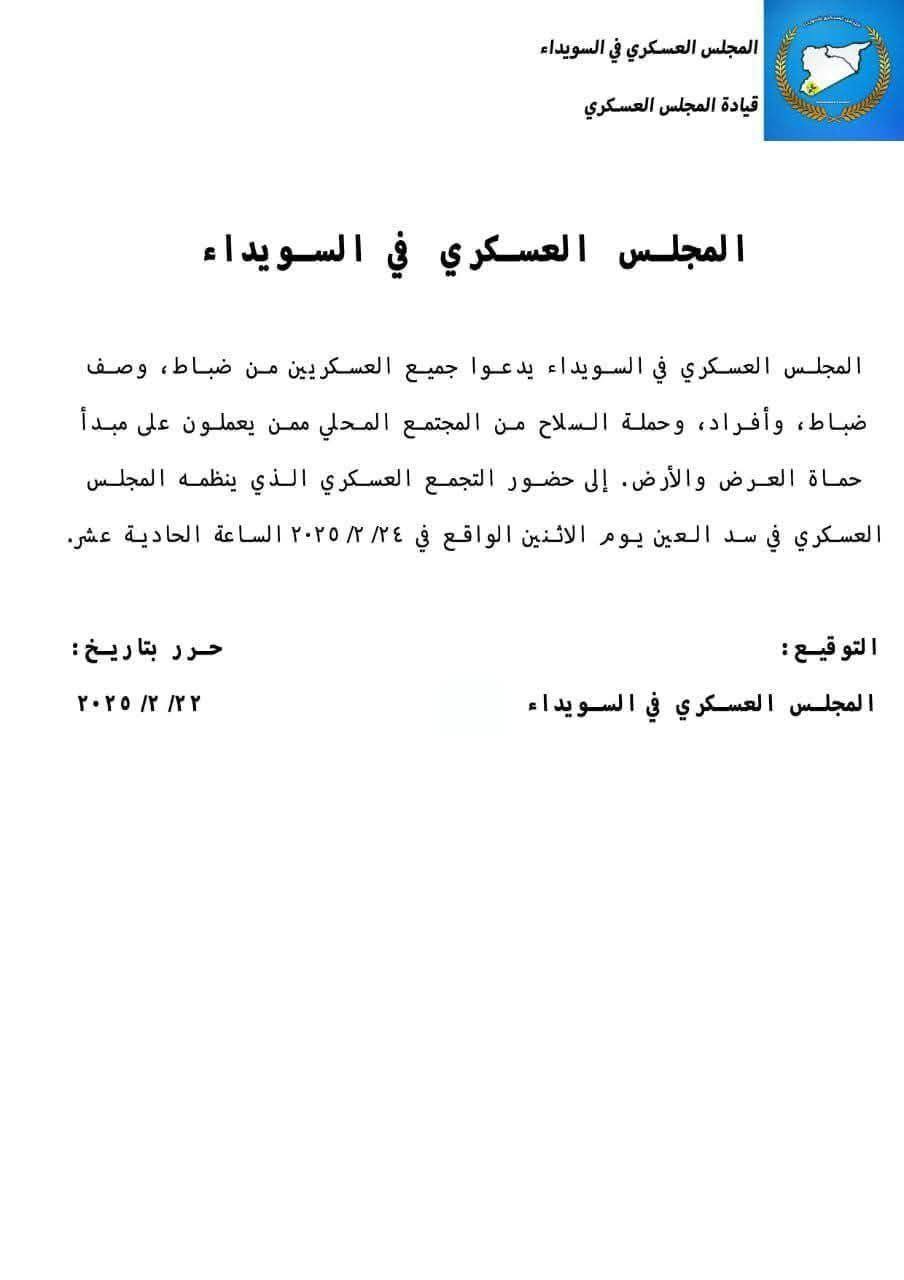
Local militants in Suwayda province have announced the formation of a new group called the Al-Majlis Al-Askarī L’As-Suwayda (Suwayda Military Council) in southern Syria. They have scheduled a meeting on February 24 in the Sad al-Ayn area, southeast of Sweida.
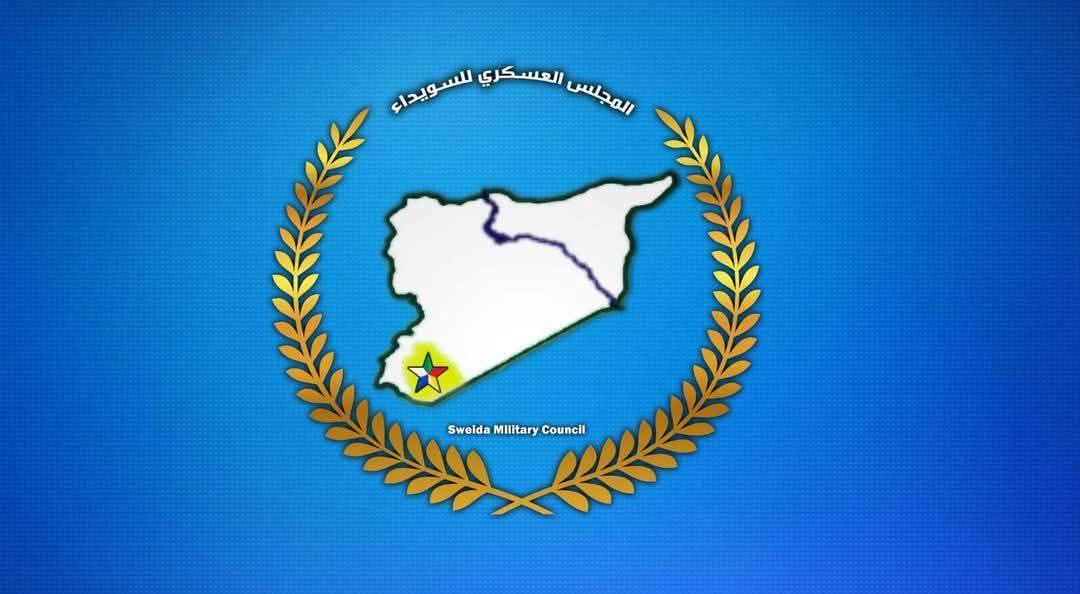
Interestingly, the logo of this newly formed group is strikingly similar to that of the Syrian Democratic Forces (SDF). In fact, it appears that the logo of this group is essentially the same as the SDF logo but with a new location in Sweida province in southern Syria.
Sweida Military Council logo and statement
Following the announcement of the group’s existence, several residents of the Al-Ghariyah area in the southern suburbs of Sweida province released a video declaring their allegiance to the Sweida Military Council and emphasizing their commitment to defending their homeland.
Video from residents of the Al-Ghariyah area
The SDF’s support for the residents of Suwayda is not a new development, as there have been similar instances in the past. During Bashar al-Assad’s government, the SDF expressed their support for the creation of an autonomous region in southern Syria and for the Druze. Sweida holds significant importance for the SDF; during the war with ISIS, the SDF agreed to exchange 60 ISIS prisoners for 30 residents of Sweida who had been kidnapped by ISIS. These instances highlight the strong relationship between the Kurds and the residents of Suwayda province.
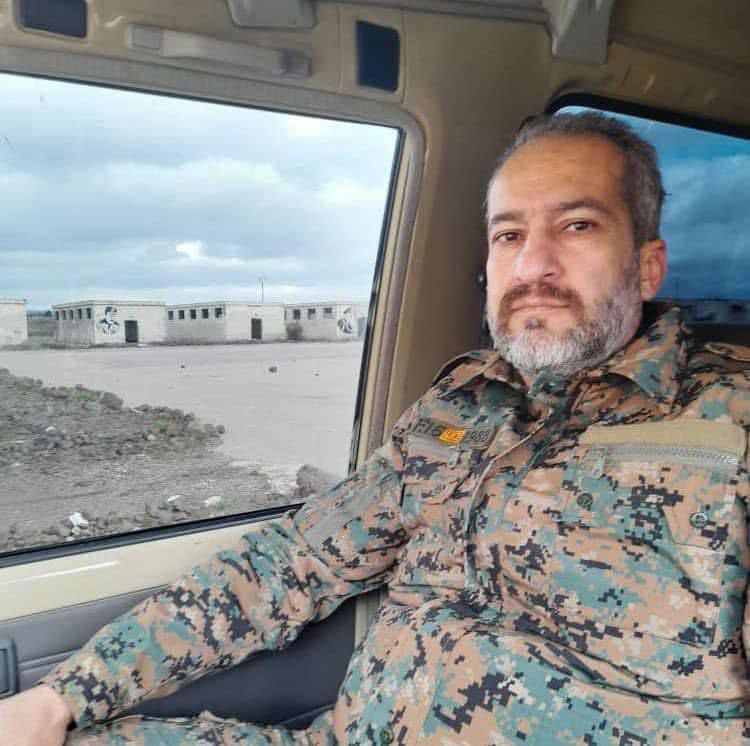
The Suwayda Military Council, led by Tariq al-Shufi, maintains a positive relationship with the Syrian Democratic Forces (SDF). In his recent remarks, al-Shufi praised the SDF forces, referring to them as defenders of the land and the Kurds against terrorism and dictatorial rule. The Sweida Military Council Command further emphasized the importance of maintaining positive and serious relations with the SDF forces.
Tariq al-Shoufi, Commander of the Suwayda Military Council
On the other hand, continuing the Israeli regime’s support for the Druze community in Syria, Israeli Prime Minister Benjamin Netanyahu emphasized the need for the Syrian government to respect the rights of the Druze minority and stated that any threat against the Druze in southern Syria will not be tolerated.
In response to Netanyahu’s statements, Al-Shufi expressed gratitude to all those who support the Sweida Military Council and help protect the Druze community and stabilize the region.
Simultaneously with the announcement of the Sweida Military Council’s existence and Netanyahu’s support for the Druze, some analysts viewed these actions as part of the “David Corridor” plan. They considered these actions an attempt by the Zionists to support Israel’s Kurdish allies east of the Euphrates in order to fuel separatist conflicts in the region.
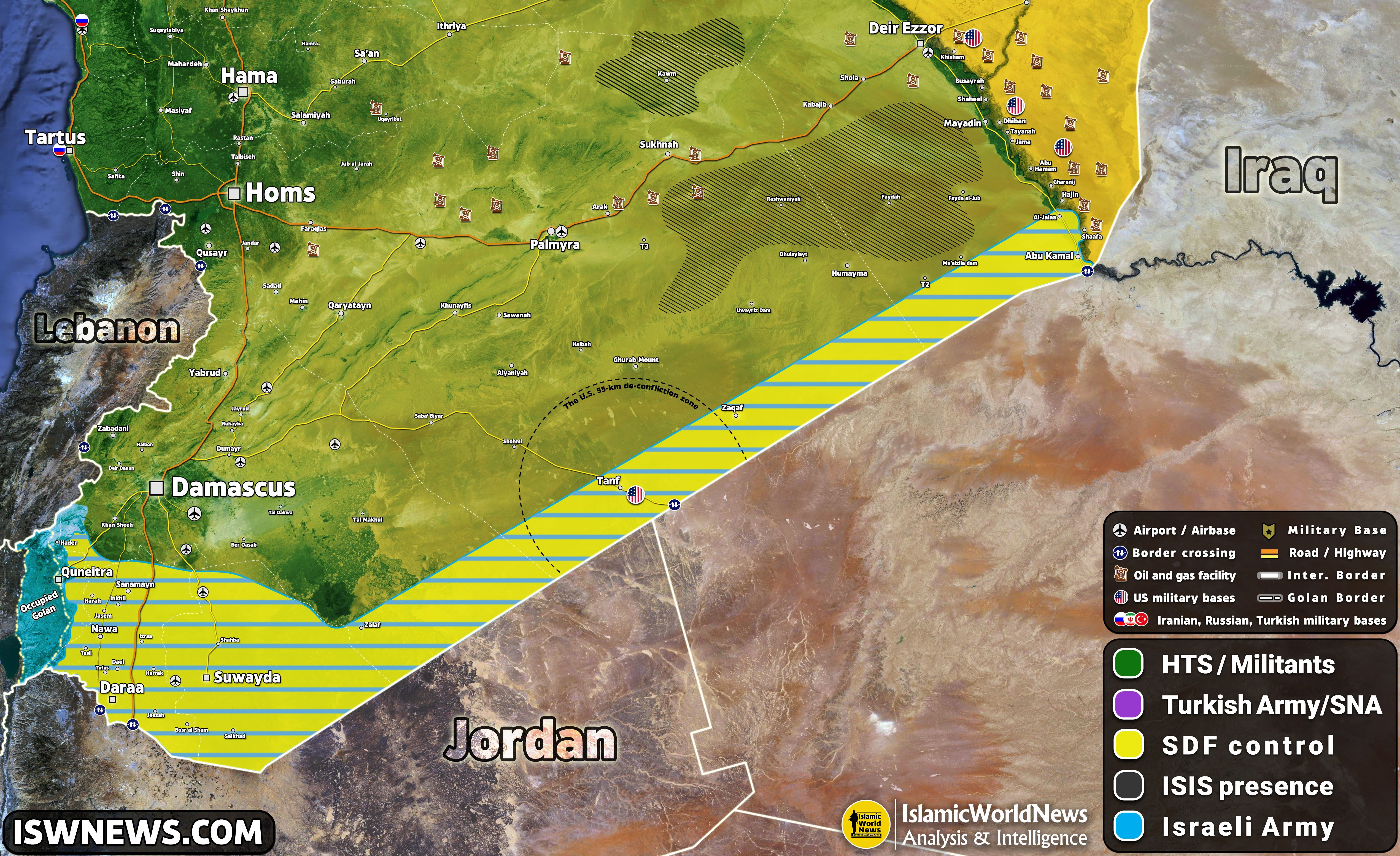
The so-called David Corridor in Syria
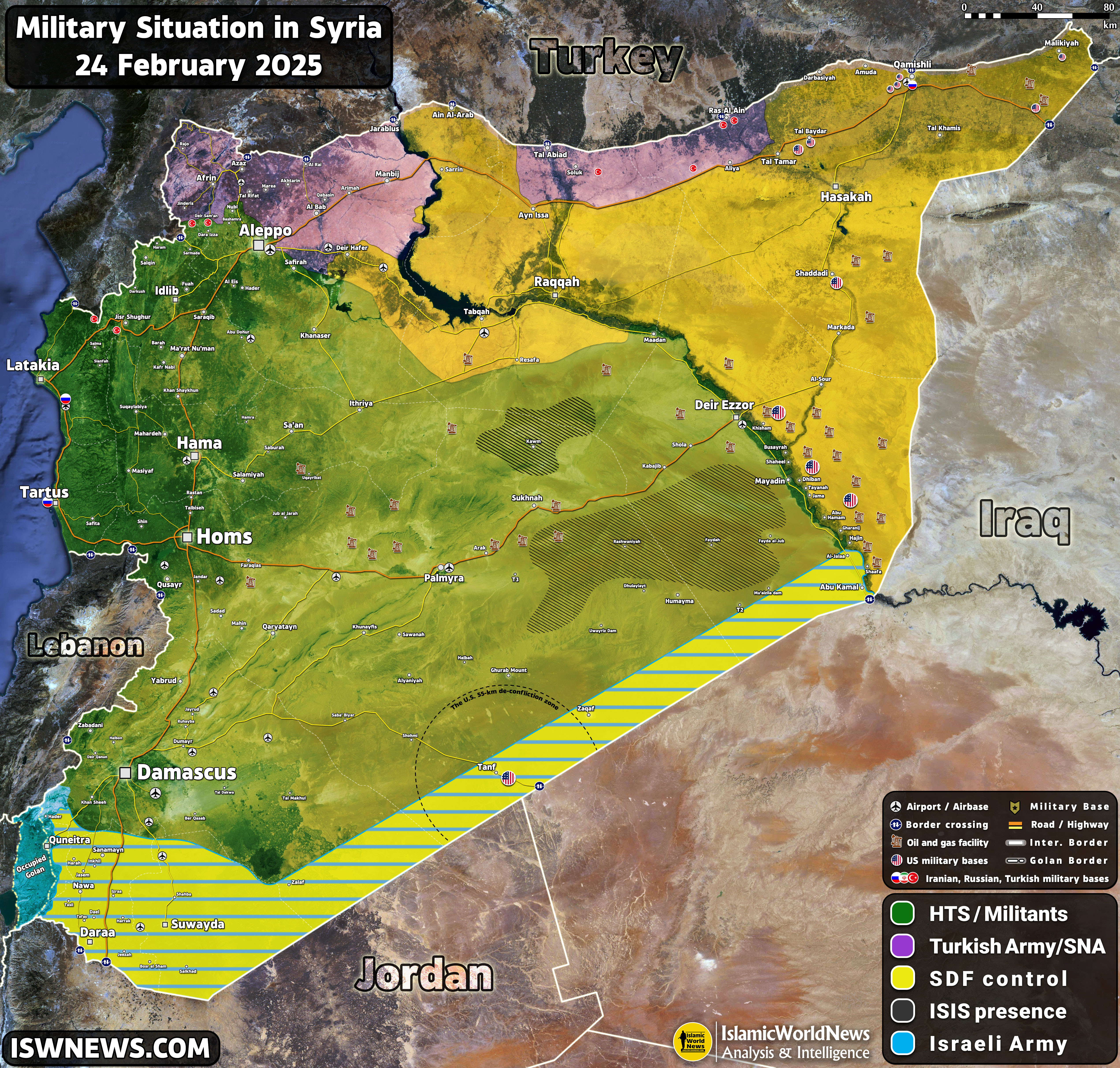
The “David Corridor” is envisioned as a corridor created through the occupation of southern Syria, including the provinces of Daraa, Suwayda, part of Homs province (the Al-Tanf region), and Deir Ezzor, reaching the Euphrates. The recent occupation of areas in Daraa province by the Israeli army could be seen as part of this plan.
If the Zionists decide to implement this plan, Tel Aviv’s next step after advancing in Daraa province would be Sweida. Gaining access to and passing through Sweida requires the support and approval of the Druze, which has been partially achieved. After Sweida, the advance of the Zionist military in southern Syria would be facilitated, as the Al-Tanf region in Homs province has been under American occupation for years, and the US army would pave the way for the Zionists to reach Deir Ezzor province.
It is worth noting that the construction of the David Corridor is considered part of the “Greater Israel” plan.