Tag: Druze

  • Elizabeth Tsurkov’s revelations on Druze militants and Israeli involvement in southern Syria

    Elizabeth Tsurkov’s revelations on Druze militants and Israeli involvement in southern Syria

    A pro-Israel gathering was reportedly held in the city of Sweida, attended by followers of Sheikh Hikmat al-Hijri. Among the participants was Muhannad Mazhar, a former militia commander. Tsurkov claims that Mazhar and his relatives were previously backed by Syrian military intelligence and Hezbollah during Bashar al-Assad’s rule, and were involved in drug trafficking, kidnappings, secret detention centers, extortion, and corruption networks. Following the collapse of state authority in southern Syria, individuals accused of war crimes have rallied around al-Hijri and now play a role in shaping the region’s security and social structures.

    Tsurkov also cited reports from Israel’s Kan network and Reuters, which state that Israel provides equipment and monthly salaries to militias loyal to al-Hijri, while maintaining a direct presence in the Druze village of Hadr near the Golan border. Israel has reportedly taken responsibility for securing the village, which during Syria’s civil war served as a Hezbollah hub for monitoring Israeli military movements.

    In another section of her report, Tsurkov argues that while Israel should not abandon Syrian Druze to attacks from newly dominant forces in the south, unconditional support for al-Hijri and his controversial commanders has enabled criminal elements and former Hezbollah affiliates to exploit this backing for personal immunity and continued activities. She concludes by stressing that within the Druze community, healthier and less controversial alternatives exist that Israel could rely on to safeguard minority security in southern Syria.

  • Scorching Suwayda: Unraveling Sectarian Fragility in Post-Assad Syria

    Scorching Suwayda: Unraveling Sectarian Fragility in Post-Assad Syria

    This delicate balance is now under strain, especially in Syria’s Suwayda province, the heartland of the Druze. Recent clashes with Sunni Bedouin tribes and alleged Israeli interference have deepened mistrust toward Syria’s transitional government. As violence escalates, the Druze—committed to strict traditions and survival—find themselves at the crossroads of regional and international tensions.

    In recent months, Suwayda has seen a surge in violence, sparked by kidnappings and retaliatory attacks between Bedouin tribes and Druze militias. The Damascus-based government deployed forces to contain the unrest, but deep-seated distrust led to armed resistance from Druze fighters. Reports of massacres, looting, and arson—allegedly by pro-government groups like Ahrar al-Sharqiya and Ansar al-Tawhid—have further inflamed tensions. Social media posts and unverified accounts of military raids and civilian killings have raised fears of another sectarian catastrophe.

    Israeli tanks and airstrikes targeting Suwayda and Damascus added fuel to the fire. While Israeli officials claim to protect Druze minorities, many Syrian Druze remain skeptical of Tel Aviv’s intentions.

    Geopolitical Rivalry in Southern Syria

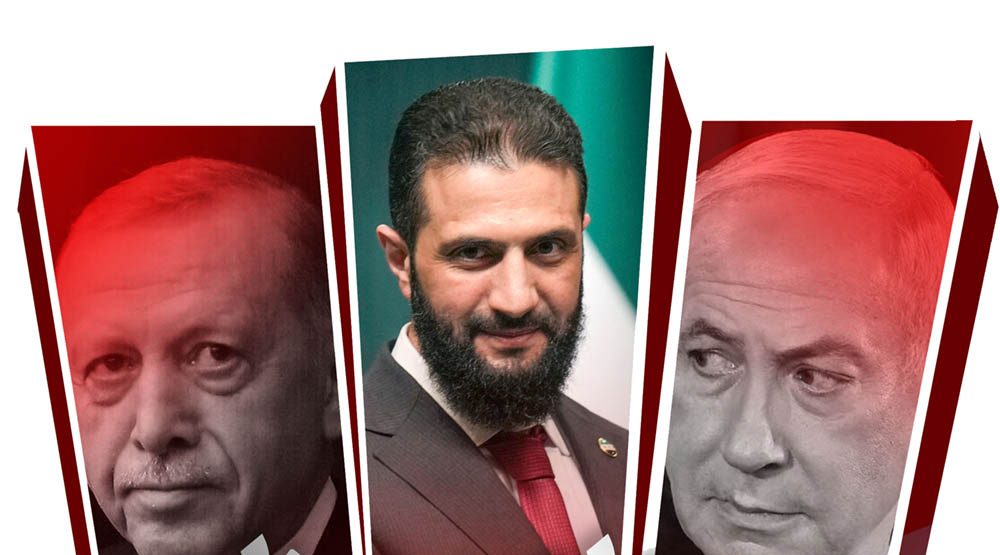
    Turkey and Israel are vying for control over trade routes linking southern Syria to Jordan and the Gulf. Turkey, aligned with Damascus, seeks to expand its influence southward and open new export corridors. Israel, meanwhile, exploits instability to counter Iranian presence and build ties with minorities like the Druze and Kurds. Despite secret talks in Baku to avoid military incidents, ongoing violence in Suwayda and Israeli strikes on Damascus reveal deeper rifts.

    Turkey, with limited military and political leverage, prefers diplomacy and U.S. pressure over direct confrontation, fearing that conflict could derail Syria’s reconstruction and harm its own interests.

    Israel’s Peripheral Doctrine and Arab Fragmentation

    Since its founding, Israel has pursued a “peripheral doctrine”—forging alliances with non-Arab regional powers and exploiting internal divisions in Arab states. Syria, as a populous neighbor with historic ties to Palestine, remains central to this strategy. By strengthening ties with Druze and Kurdish groups, Israel aims to fragment Syria from within. Prime Minister Netanyahu has openly outlined post-Assad goals: blocking Syrian government forces near Damascus, supporting Druze communities, and maintaining control over the Golan Heights.

    This strategy seeks to turn Syria into a failed, unstable state, minimizing threats to Israel. The use of sectarian divisions and minority alliances as tools of control has long been a hallmark of Israeli policy.

    Syria’s Response and Internal Challenges

    Under President Ahmad al-Shara, Syria’s new government has responded cautiously to Israeli aggression, condemning airstrikes and emphasizing territorial integrity. It seeks regional diplomacy—especially with Jordan and Arab states—to counter expansionist threats. However, avoiding direct confrontation may weaken its domestic legitimacy and allow Israel to deepen its influence.

    Effective resistance requires coordinated Arab and international efforts to prevent further collapse and regional instability.

    Expanding Israeli Ambitions

    Israel’s ambitions now extend beyond Syria, targeting the broader periphery—including Iran and Pakistan. Some neoconservative analysts advocate for exploiting ethnic and sectarian divides to destabilize Iran. The Abraham Accords, far from being mere peace deals, serve as instruments to cement Israel’s dominance in regional economics, security, and technology.

    This approach, however, risks backfiring. As Israel’s reach grows, so does regional opposition. Countries like Iran, Turkey, and Pakistan increasingly view Israel not just as a nuisance, but as a direct threat. Military actions in Gaza, Damascus, Beirut, Sanaa, and Tehran have galvanized regional solidarity against Israeli policies.

    History has shown that colonial empires rarely endure. Just as the people of this region once resisted crusaders and imperial powers, they now stand united against Israel’s expansionist doctrine.

    Sources:

    1. https://www.washingtonpost.com/world/2025/07/17/israel-syria-druze-attack/
    2. https://www.theguardian.com/world/2025/jul/18/more-violence-erupts-in-syrias-druze-heartland-as-tribal-groups-reinforce-local-bedouin
    3. https://www.nytimes.com/2025/07/18/world/middleeast/who-are-druse-syria-israel-clashes.html
    4. https://www.washingtoninstitute.org/policy-analysis/pursuing-israel-syria-detente-post-assad
    5. https://www.csis.org/analysis/violence-escalates-israel-intervenes-southern-syria
    6. https://www.middleeasteye.net/opinion/damascus-gaza-israels-doctrine-hegemony-fatal-flaw
    7. https://thecradle.co/articles/battle-in-suwayda-where-israel-and-turkiye-clash-over-syrias-trade-routes
    8. https://www.washingtonpost.com/world/2025/07/17/syria-israel-druze-border/
    9. https://apnews.com/article/druze-syria-religious-sect-2c989a5397c5e04474cef7bd9a37c40b?__cf_chl_rt_tk=5JchtEfIcPtDTbrCoJapZ91RhXRsgmmgiDMqNZE6R4U-1752921424-1.0.1.1-UDWYIzUovSA6IHVMilefEYYS5rD3BmPUa5VuAWNhesw
    10. https://www.middleeasteye.net/news/turkey-doesnt-have-many-options-against-israel-syria
    11. https://thecradle.co/articles/syrian-druze-confront-new-attacks-after-sharaa-declares-suwayda-ceasefire

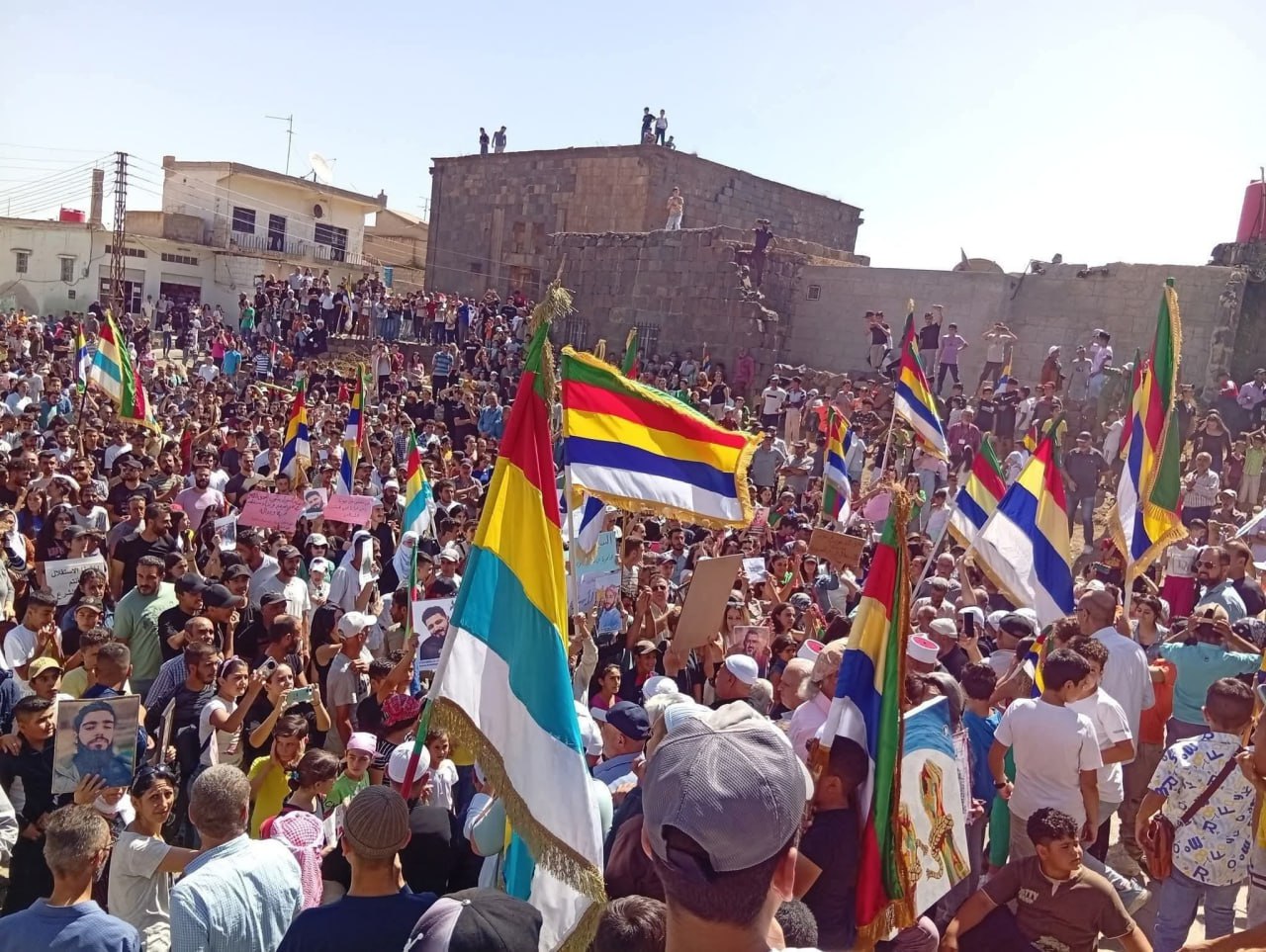
  • Druze Protest in Sweida Demands Separation from Syrian Government

    Druze Protest in Sweida Demands Separation from Syrian Government

    This development comes amid reports that Sweida has become a focal point in recent negotiations between Damascus and Tel Aviv. Back in August 2025, prominent Druze leader Hikmat al-Hijri issued a statement advocating for the creation of an independent Druze region in southern Syria. Following his call, several armed Druze factions set aside internal disputes and formed a “National Guard” under his leadership.

    The explicit demand for separation signals a rising tide of self-rule sentiment in Sweida. Its inclusion in Syria-Israel talks underscores the province’s strategic importance, suggesting that security concerns there are not merely domestic but carry regional implications. Israeli officials are reportedly leveraging the Druze issue as a pressure point against Damascus.

  • Southern Syria on the Brink: Druze Push for Federal Autonomy

    Southern Syria on the Brink: Druze Push for Federal Autonomy

    In this context, various armed Druze groups, despite their internal differences, formed a National Guard led by Sheikh Hikmat al-Hijri. Al-Hijri stated that organizational structures similar to a local government had appeared in Sweida province. He also described the establishment of the National Guard as a military force and the creation of a legal committee as progress toward that objective.

    Al-Hijri stated: “We call on all free people of the world to stand with us and support us as an independent community in southern Syria. We seek a separate region that guarantees our security and future permanently.”

    These remarks come after months of tension and conflict in Sweida province, where clashes between Druze groups and armed Arab tribal elements—backed by security forces affiliated with the al-Jolani government—have resulted in hundreds of casualties.

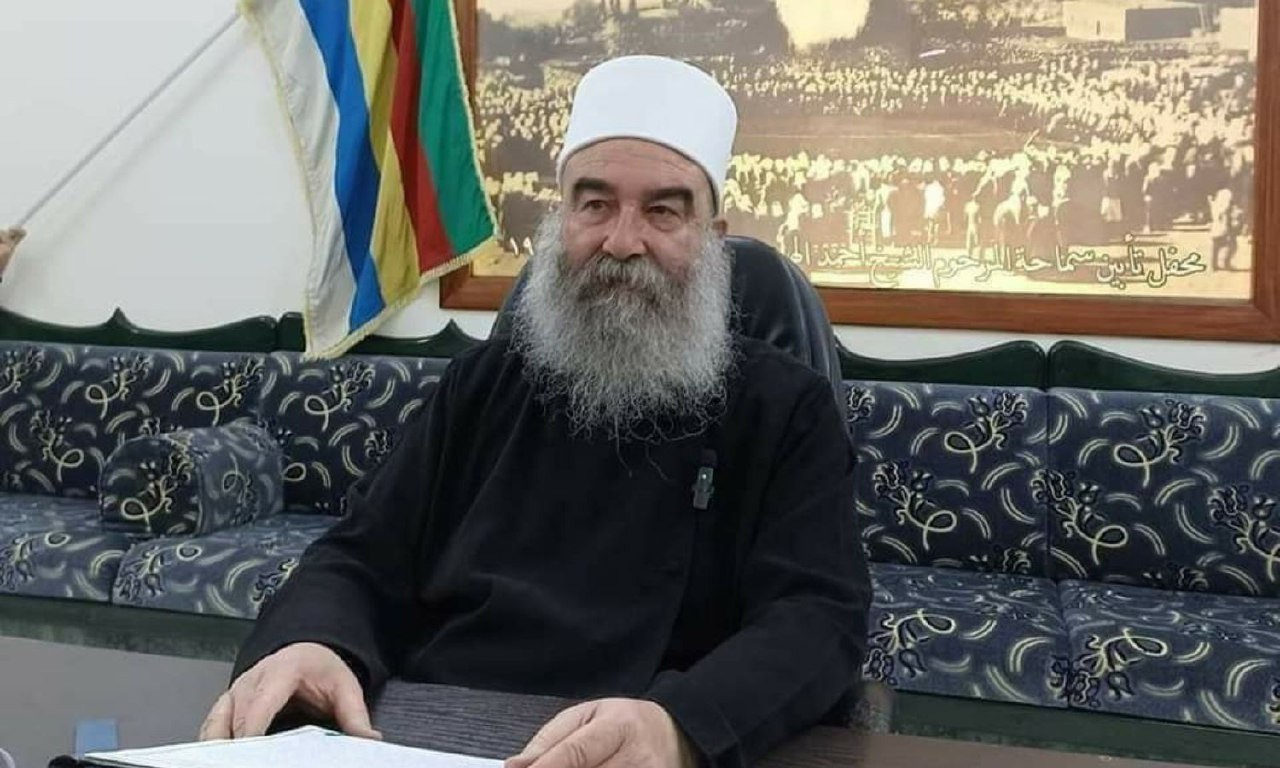
    Despite al-Hijri’s controversial statements, some analysts believe he does not fully represent the stance of the entire Druze community. Syrian Druze are generally guided by three spiritual leaders: Hammoud al-Hanawi, Yousef Jarbouh, and Hikmat al-Hijri. While al-Hijri has repeatedly sought support from the Israeli regime in recent months and even expressed gratitude to Tel Aviv, Jarbouh and al-Hanawi have firmly opposed any ties with Israel.

    In previous statements by these two leaders, national unity, central government sovereignty, and opposition to separatism have been declared as non-negotiable principles. These internal divisions within the Druze community may signal further complexity in the future developments of southern Syria.

    Hikmat al-Hijri’s call for a Druze autonomous region aligns with federal or quasi-federal models seen in the Middle East. However, given Syria’s current challenges—including political legitimacy crises, ethnic separatism, and foreign military presence—such a demand is viewed less as a realizable goal and more as a bargaining chip in political negotiations.

  • Netanyahu orders Israeli army to support Syrian Druze!

    Netanyahu orders Israeli army to support Syrian Druze!

    In a joint statement, they said, “The Israeli army has been instructed to target regime forces and weapons that have been transferred to the Sweida region. The movement of forces and weapons into Sweida contradicts the policy of demilitarizing southern Syria. Israel is committed to protecting the Druze in Syria due to our close alliance with our Druze citizens in northern occupied Palestine and their family and historical ties with the Druze of Syria. We are taking action to prevent the Syrian regime from harming them and to ensure the demilitarization of the area adjacent to our border with Syria.”

    Video
    Video
    Video

    In line with this directive, the Israeli military conducted airstrikes against targets in southern Syria. According to reports, the strikes focused on the Julani forces vehicles, including tanks, personnel carriers, and rocket launchers, as well as communication routes, in an effort to disrupt Julani’s entry into the Sweida region.

    Released videos also show that the Israeli army targeted the Syrian internal security vehicles in Sweida with drone attacks.

  • Israel Bombed Syrian Military Convoy In Southern Syria

    Israel Bombed Syrian Military Convoy In Southern Syria

    Recent days have seen an escalation in sectarian tensions in Sweida, following an armed attack on a Druze businessman on the Damascus-Sweida road, which was attributed to Arab tribes. In response to this attack, Druze youth have arrested members of Arab tribes, prompting Arab tribes to set up checkpoints.

    Despite calls for calm and non-violence from leaders on both sides, clashes have intensified and spread to various areas, including Maqous, Tha’la Airport, and Sourah Kabeera.

    According to the Syrian MOD, at least 30 people have been killed and more than 100 injured in these confrontations.

    In recent hours, the Julani government had dispatched several tanks to support its forces in the conflict areas of Sweida province that were bombed by Israel.

  • Formation of the Suwayda Military Council: Is Israel Supporting the Druze to Implement the David Corridor Plan?!

    Formation of the Suwayda Military Council: Is Israel Supporting the Druze to Implement the David Corridor Plan?!

    Local militants in Suwayda province have announced the formation of a new group called the Al-Majlis Al-Askarī L’As-Suwayda (Suwayda Military Council) in southern Syria. They have scheduled a meeting on February 24 in the Sad al-Ayn area, southeast of Sweida.

    Interestingly, the logo of this newly formed group is strikingly similar to that of the Syrian Democratic Forces (SDF). In fact, it appears that the logo of this group is essentially the same as the SDF logo but with a new location in Sweida province in southern Syria.

    Following the announcement of the group’s existence, several residents of the Al-Ghariyah area in the southern suburbs of Sweida province released a video declaring their allegiance to the Sweida Military Council and emphasizing their commitment to defending their homeland.

    Video from residents of the Al-Ghariyah area

    The SDF’s support for the residents of Suwayda is not a new development, as there have been similar instances in the past. During Bashar al-Assad’s government, the SDF expressed their support for the creation of an autonomous region in southern Syria and for the Druze. Sweida holds significant importance for the SDF; during the war with ISIS, the SDF agreed to exchange 60 ISIS prisoners for 30 residents of Sweida who had been kidnapped by ISIS. These instances highlight the strong relationship between the Kurds and the residents of Suwayda province.

    The Suwayda Military Council, led by Tariq al-Shufi, maintains a positive relationship with the Syrian Democratic Forces (SDF). In his recent remarks, al-Shufi praised the SDF forces, referring to them as defenders of the land and the Kurds against terrorism and dictatorial rule. The Sweida Military Council Command further emphasized the importance of maintaining positive and serious relations with the SDF forces.

    Tariq al-Shoufi, Commander of the Suwayda Military Council

    On the other hand, continuing the Israeli regime’s support for the Druze community in Syria, Israeli Prime Minister Benjamin Netanyahu emphasized the need for the Syrian government to respect the rights of the Druze minority and stated that any threat against the Druze in southern Syria will not be tolerated.

    In response to Netanyahu’s statements, Al-Shufi expressed gratitude to all those who support the Sweida Military Council and help protect the Druze community and stabilize the region.

    Simultaneously with the announcement of the Sweida Military Council’s existence and Netanyahu’s support for the Druze, some analysts viewed these actions as part of the “David Corridor” plan. They considered these actions an attempt by the Zionists to support Israel’s Kurdish allies east of the Euphrates in order to fuel separatist conflicts in the region.

    The so-called David Corridor in Syria

    The “David Corridor” is envisioned as a corridor created through the occupation of southern Syria, including the provinces of Daraa, Suwayda, part of Homs province (the Al-Tanf region), and Deir Ezzor, reaching the Euphrates. The recent occupation of areas in Daraa province by the Israeli army could be seen as part of this plan.

    If the Zionists decide to implement this plan, Tel Aviv’s next step after advancing in Daraa province would be Sweida. Gaining access to and passing through Sweida requires the support and approval of the Druze, which has been partially achieved. After Sweida, the advance of the Zionist military in southern Syria would be facilitated, as the Al-Tanf region in Homs province has been under American occupation for years, and the US army would pave the way for the Zionists to reach Deir Ezzor province.

    It is worth noting that the construction of the David Corridor is considered part of the “Greater Israel” plan.