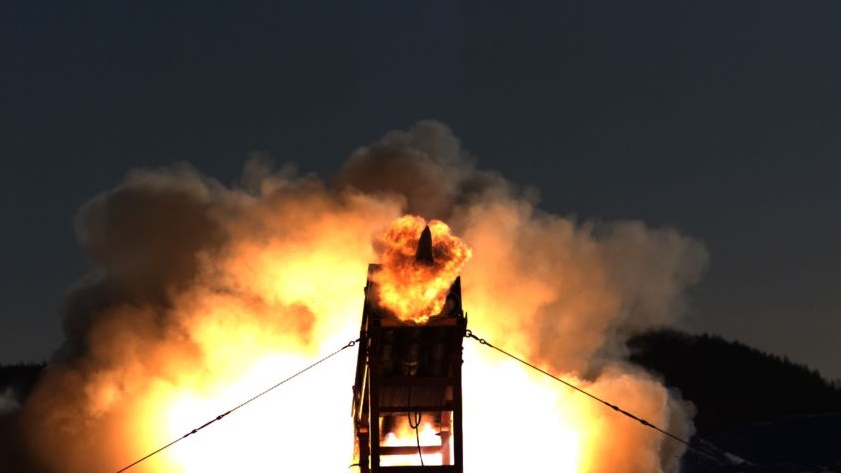
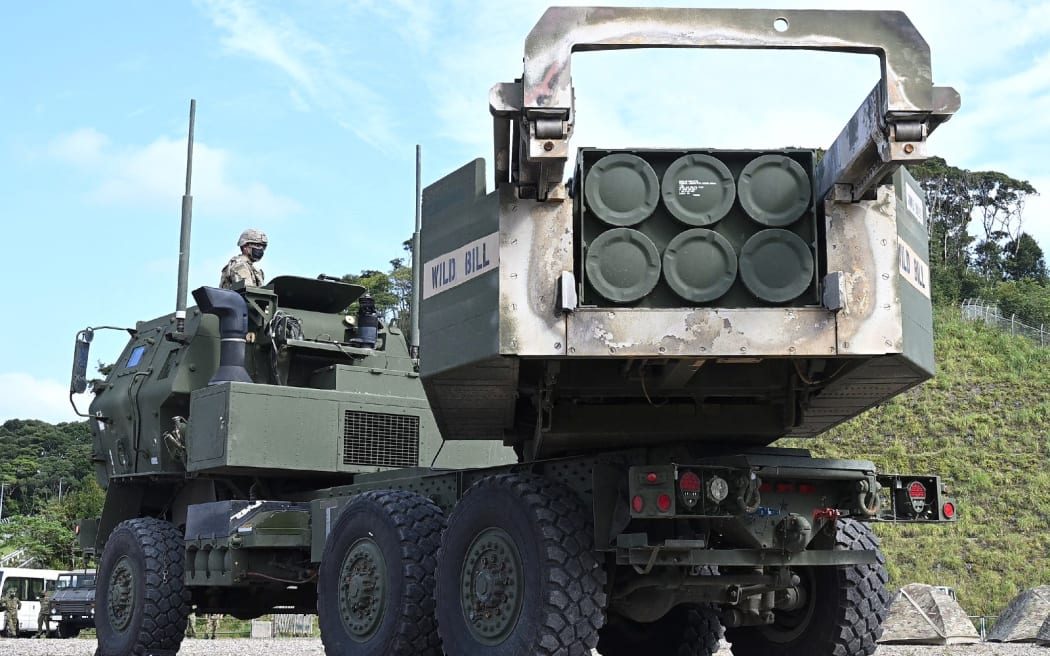
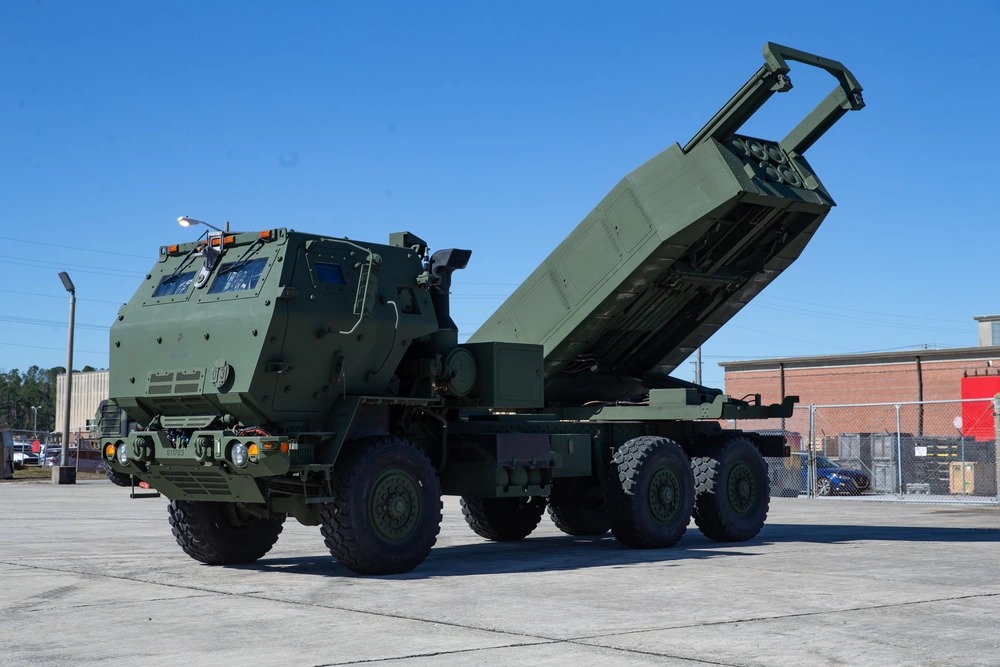
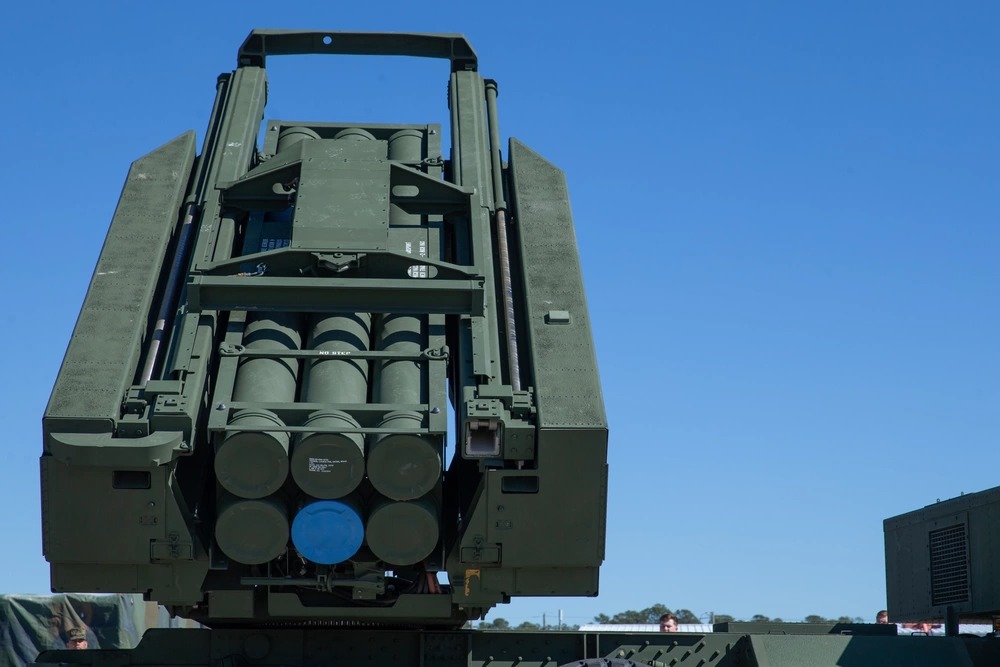
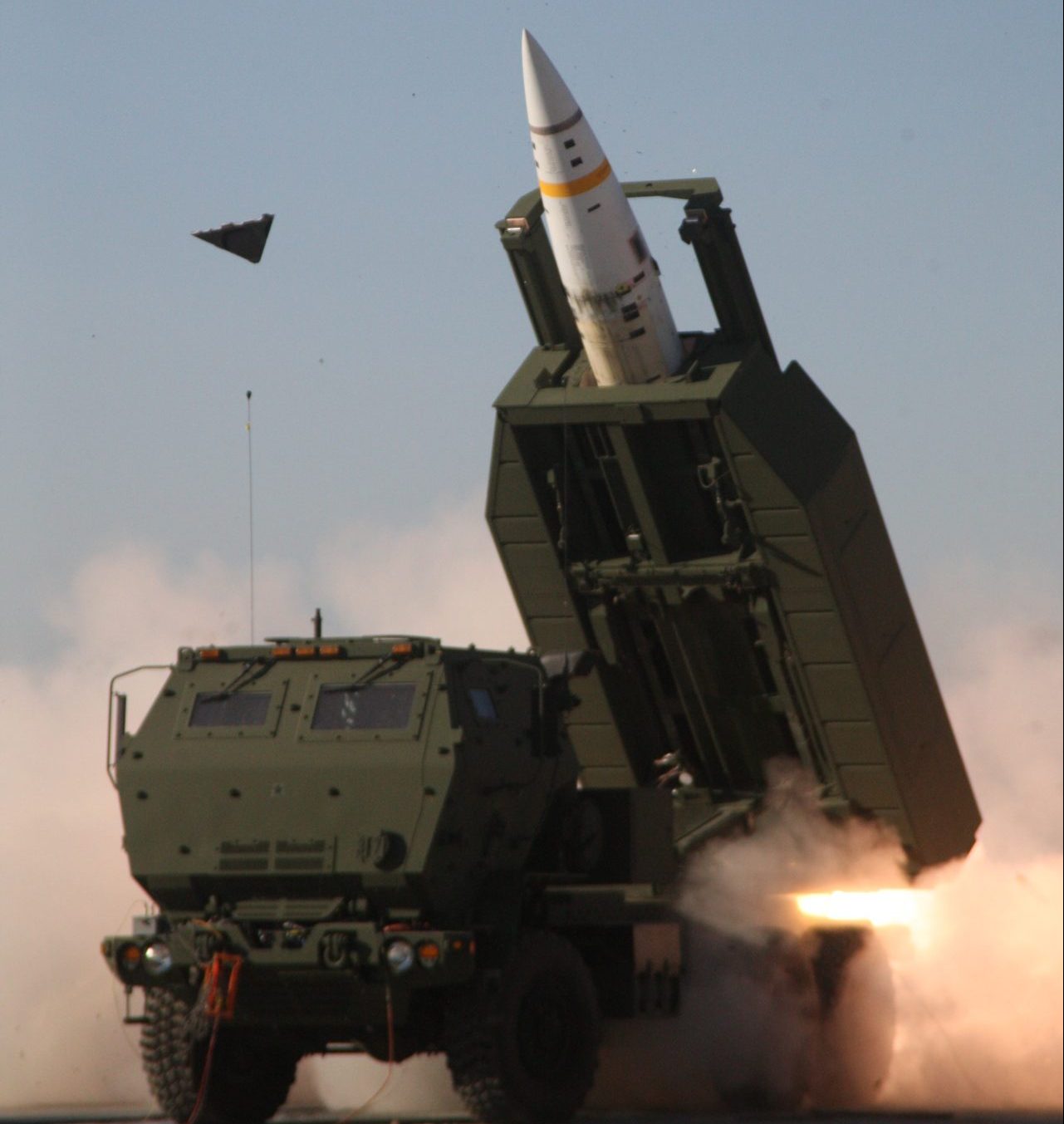
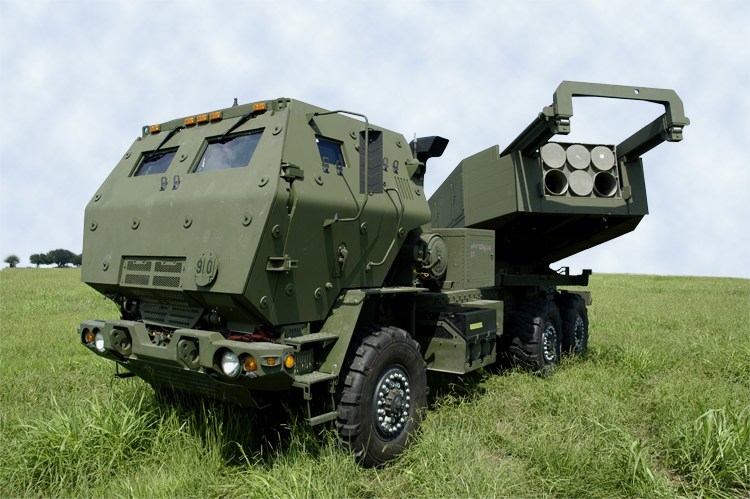
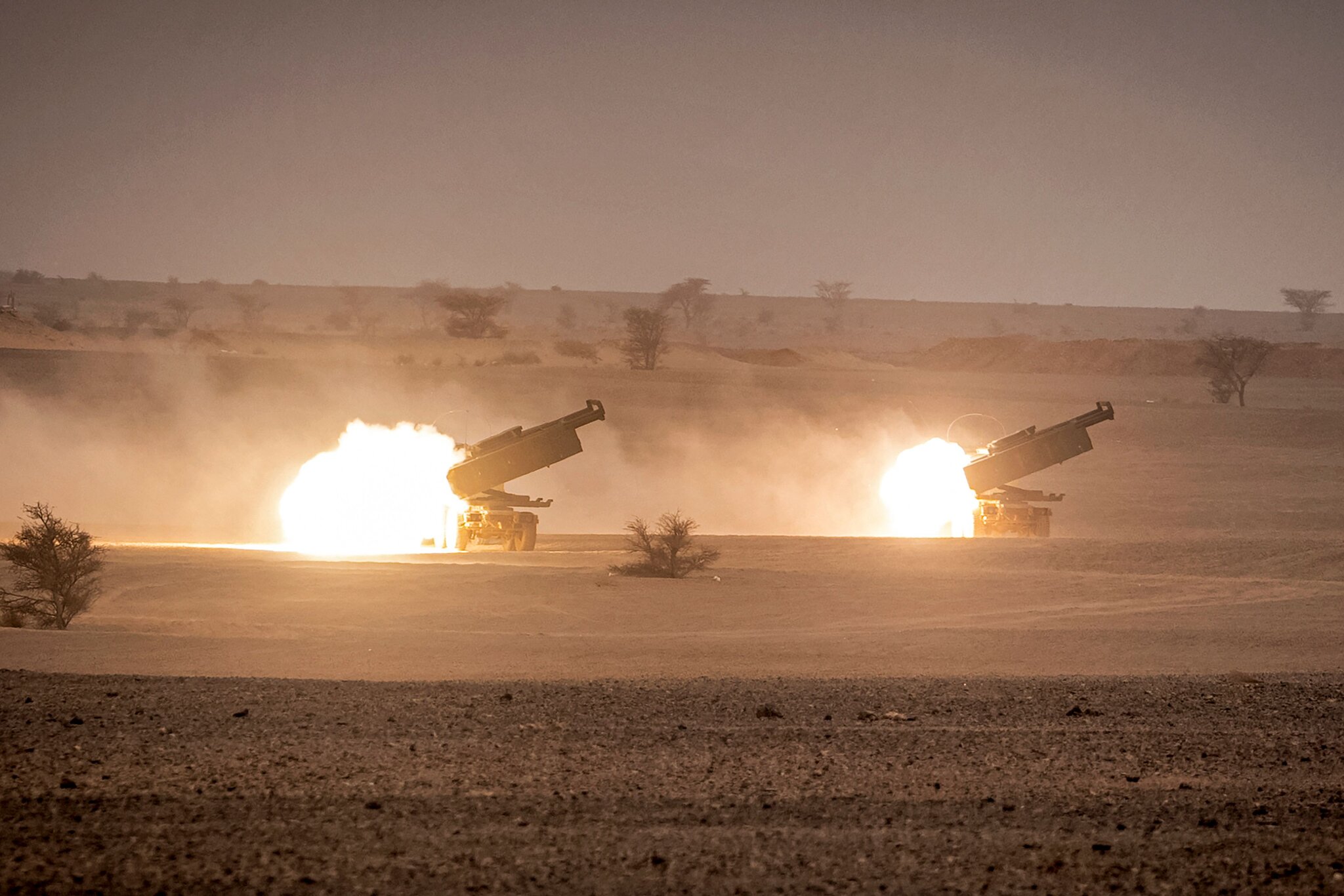
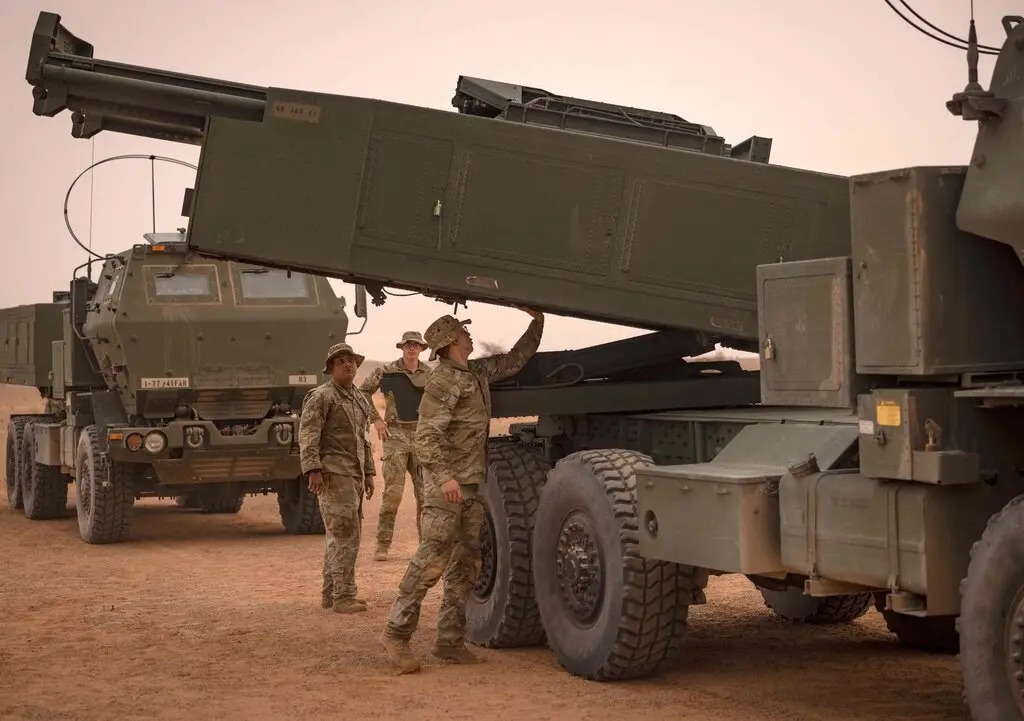
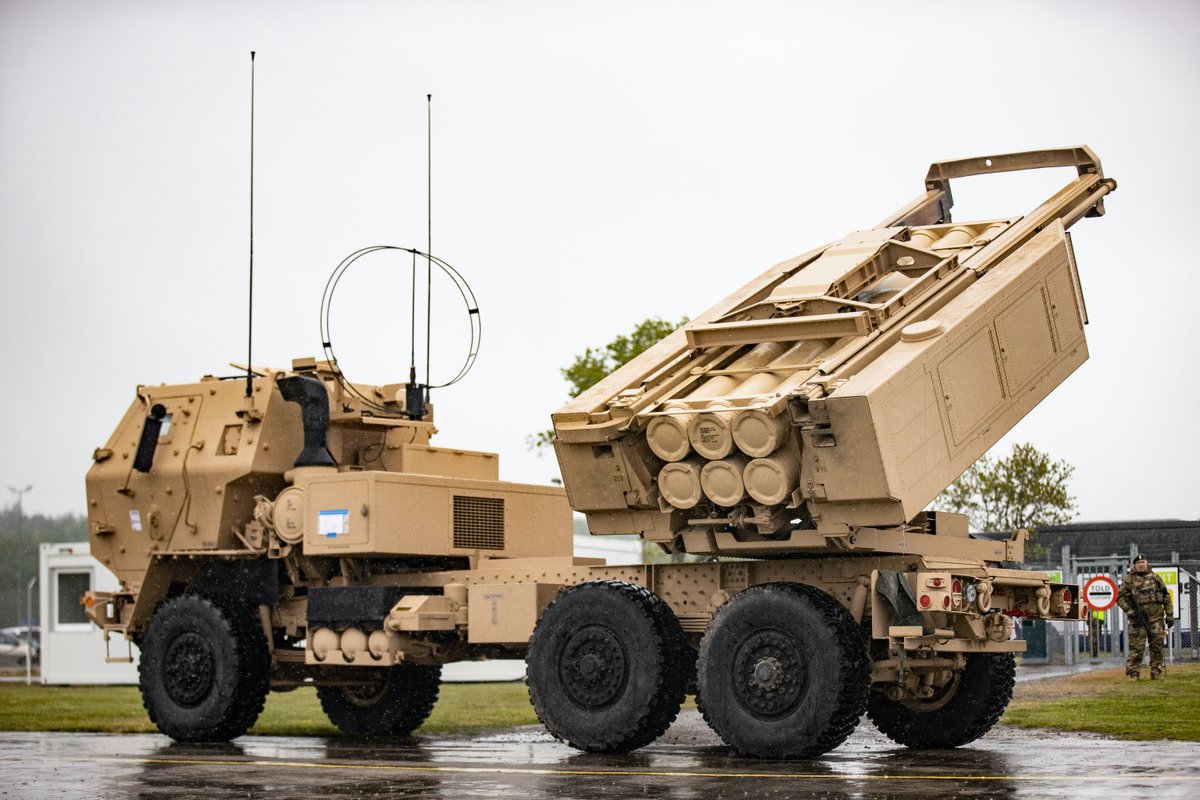
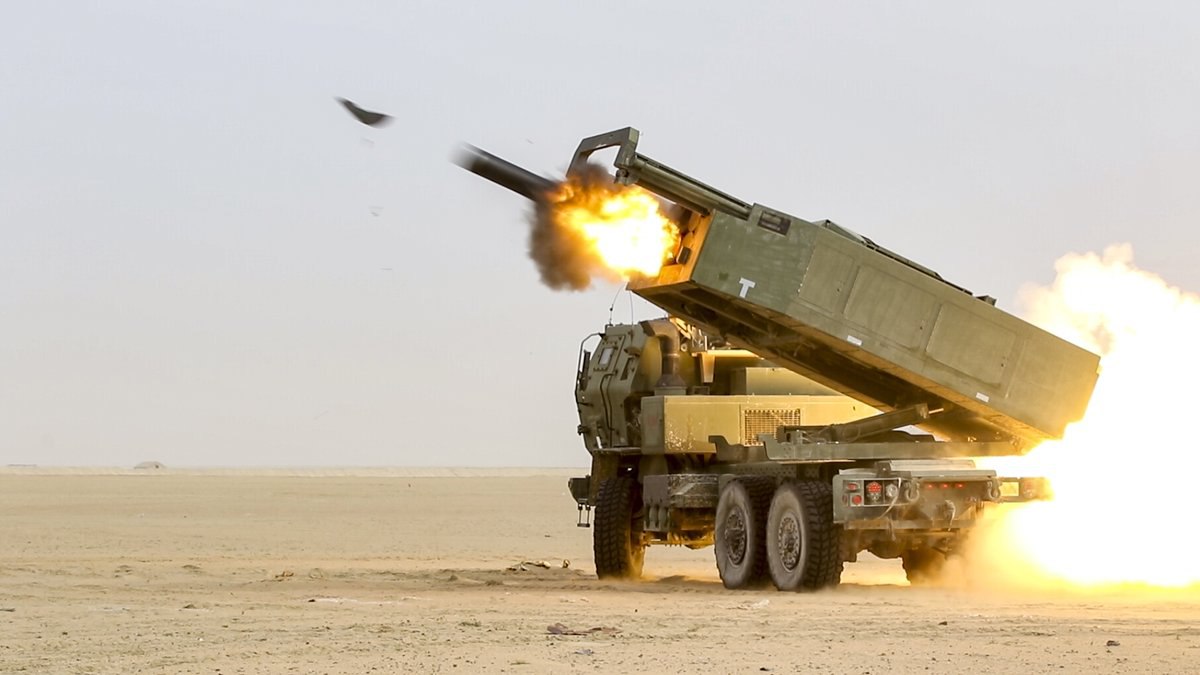
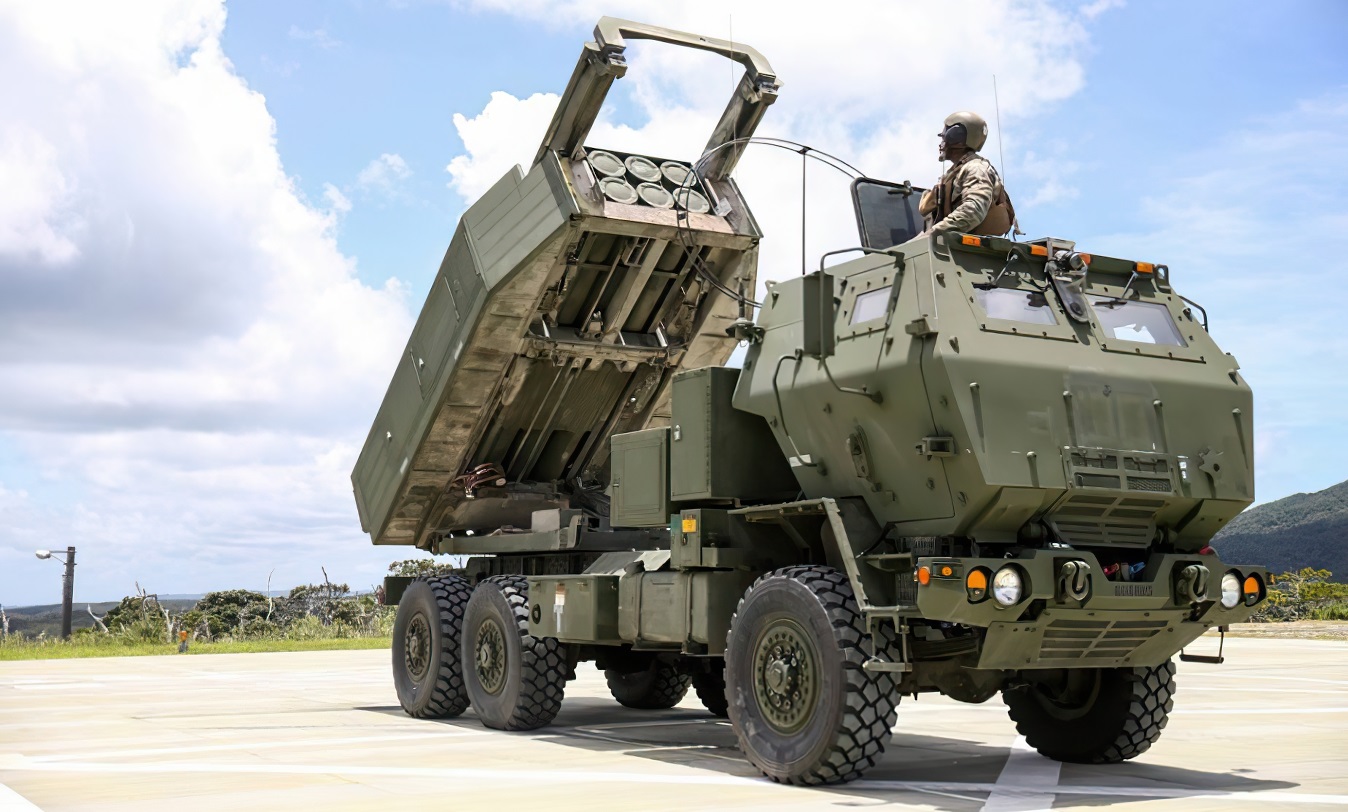
The M142 HIMARS (High Mobility Artillery Rocket System) is a light multiple rocket launcher developed in the late 1990s for the United States Army and mounted on a standard United States Army Family of Medium Tactical Vehicles (FMTV) truck frame. The HIMARS carries one pod with either six Guided Multiple Launch Rocket System (GMLRS) rockets or one Army Tactical Missile System (ATACMS) missile. It is based on the United States Army’s FMTV five-ton truck, and is capable of launching all rockets specified in the Multiple Launch Rocket System Family of Munitions (MFOM). HIMARS ammunition pods are interchangeable with the M270 MLRS; however, it is limited to a single pod as opposed to the standard two for the M270 and its variants. HIMARS rocket system has the ability to launch rockets and precision guided missiles.
History:
The requirement for HIMARS first came about in 1982, when the 9th Infantry Division (Motorized) saw the need to acquire a light multiple rocket launcher as a counterfire asset. The requirement failed to gather support from the Field Artillery School and languished for a number of years. With the waning of the Cold War and the growing interest in low-intensity operations, both the Field Artillery School and Missile Command realized that the M270 MLRS was too heavy for rapid deployment and pushed for the funding of HIMARS. The Gulf War gave new impetus towards fielding a lightweight MLRS, when the M270 proved too costly in airlift assets to deploy in theater and the launchers did not arrive with the initial wave of U.S. troops.
The HIMARS concept was tested on April 1991 at White Sands Missile Range, using a modified Honest John launcher. Proof-of-concept prototype of HIMARS at White Sands Missile Range, April 1991 HIMARS was then developed as a private venture by Loral Vought Systems, later Lockheed Martin Missiles and Fire Control, to meet this requirement. The system first appeared publicly in 1993.
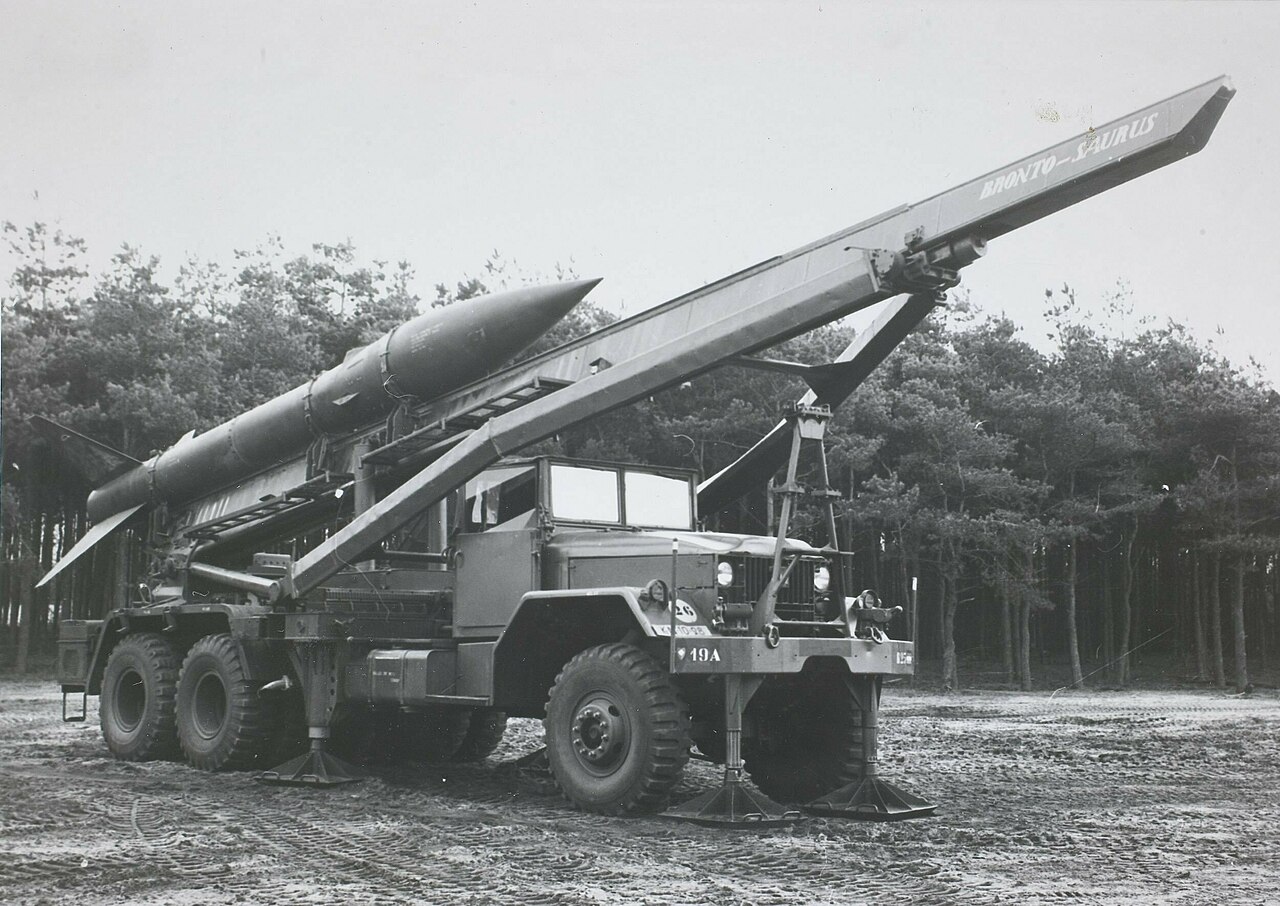
In 1996, the U.S. Army Missile Command awarded Lockheed Martin a $23.2 million contract to build four prototypes. The vehicles were delivered to the XVIII Airborne Corps in April 1998 for a two-year evaluation with 3rd Battalion, 27th Field Artillery Regiment. In July 1998, the Army conducted a test firing of the ATACMS.
In December 1999, the Aviation and Missile Command awarded Lockheed Martin a $65 million contract for engineering and manufacturing development. Under this contract, Lockheed Martin delivered six HIMARS in late 2001 for Army evaluation.
In April 2003, the Army awarded Lockheed Martin a $96 million contract to begin low rate initial production. Around this time, the Marine Corps placed an order for two units for evaluation purposes.[16] The launcher system and chassis are produced by Lockheed Martin Missiles & Fire Control in Camden, Arkansas as of 2019.
Design:
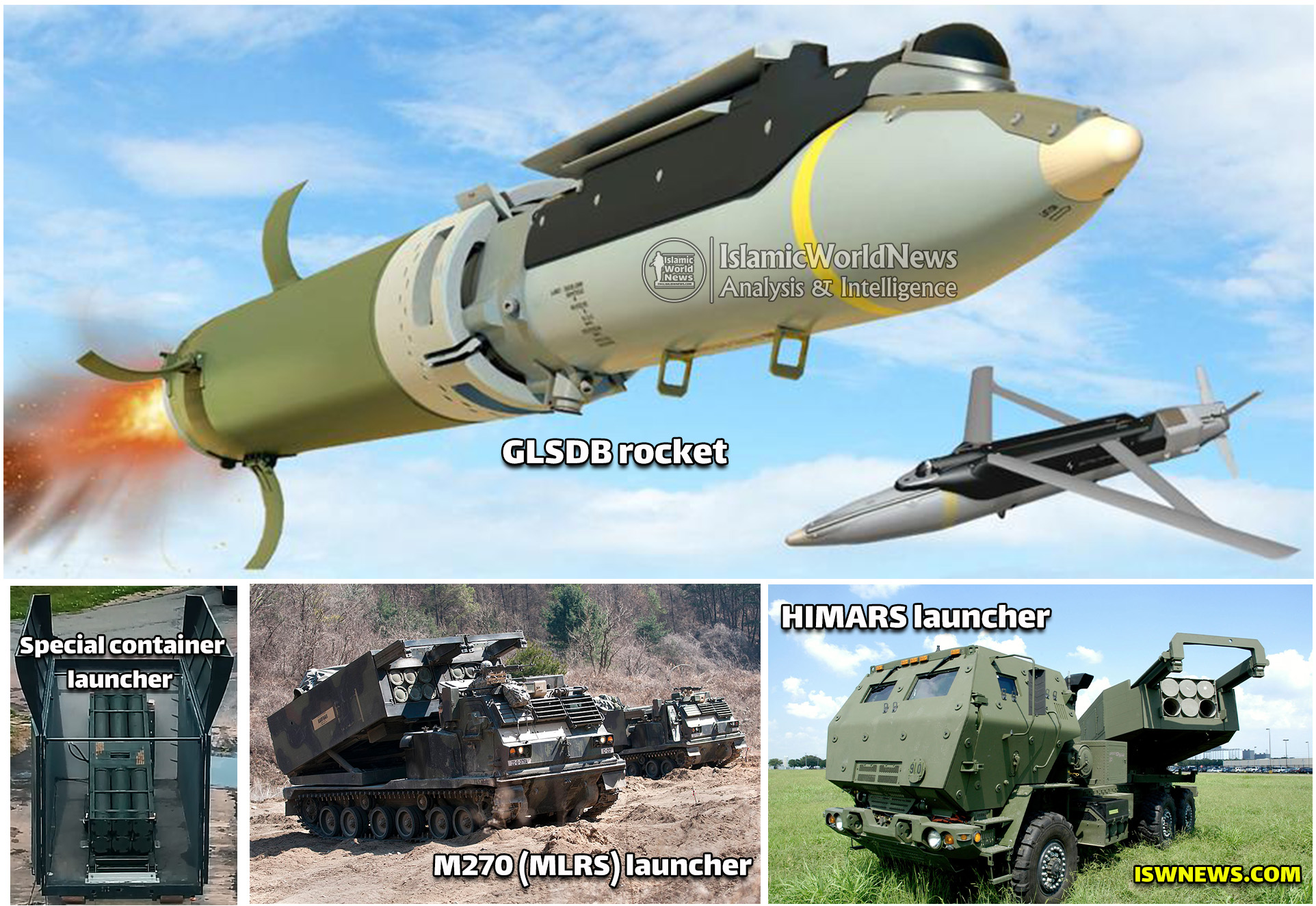
The HIMARS is similar in design to the M270 Multiple Launch Rocket System (MLRS), with the main exception being that it is a wheeled vehicle as opposed to a tracked vehicle. HIMARS uses a 6×6 armored vehicle with high mobility and a total weight of 16,250 kg, but the M270 uses an armored vehicle with a total weight of 24,040 kg. M270 has two ordnance pods capable of carrying 12 GMLRS rockets or 2 ATACMS missiles or a combination of these two types. While HIMARS has an ordnance pod capable of carrying 6 GMLRS rockets or one ATACMS missile.
The FMTV truck was originally manufactured by Armor Holdings. Until 2007, this company was bought by BAE Systems Mobility & Protection Systems, and this British company, as the main producer of FMTV parts, was fully producing these trucks until 2010. Then, from 2010 to 2017, the FMTV truck was produced and sold by Oshkosh. But since 2017, these trucks are assembled and produced by Lockheed Martin Missiles and Fire Control (MFC).
This truck uses a Caterpillar 3115 ATAAC engine with 290 horsepower, which allows it to reach a speed of 85 km/h. The maximum range of this truck is 480 km.
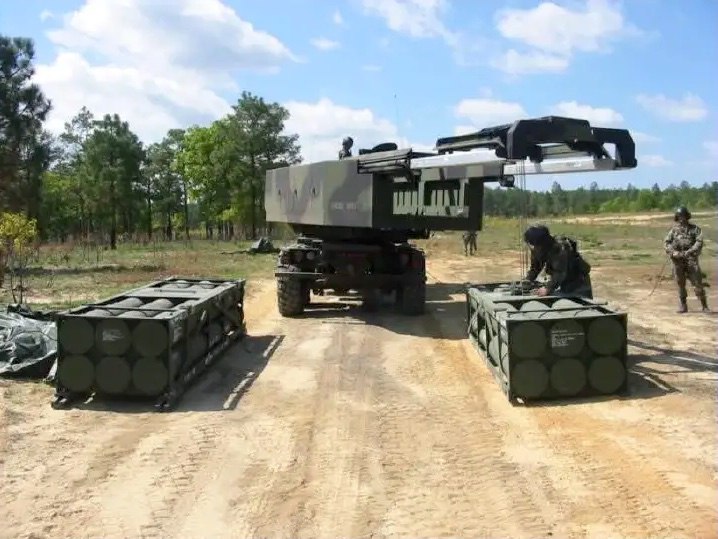
As mentioned earlier, HIMARS uses a launcher module with an integrated crane to load different ordnance pods, which can carry multiple pods depending on the ammunition it fires. This crane, which requires two crews, loads a new pod within 4-5 minutes. HIMARS launcher has three crew including driver, gunner and commander.

Armament:
The HIMARS is capable of carrying and firing conventional rockets, precision-guided artillery rockets, as well as its own missiles that are in the US arsenal. These items include the following munitions:
MLRS:
Multiple launch rocket system (MLRS) rockets are a set of 227 mm rockets. This type of rockets have very low accuracy. The types of MLRS rockets are:
- M26 rockets carrying 644 DPICM M77 submunitions. Range: 15–32 kilometres.
- M26A1 ER rockets carrying 518 M85 submunitions. Range: 15–45 kilometres.
- M26A2 ER rockets carrying 518 M77 submunitions. Range: 15–45 kilometres.
- AT2 German M26 variant carrying 28 AT2 anti-tank mines. Range: 15–38 kilometres.
- M28A1 Reduced-Range Practice Rocket (RRPR) with blunt nose. Range reduced to 9 km.
- M28A2 Low-Cost Reduced-Range Practice Rocket (LCRRPR) with blunt nose. Range reduced to 9 km.
GLSDB:
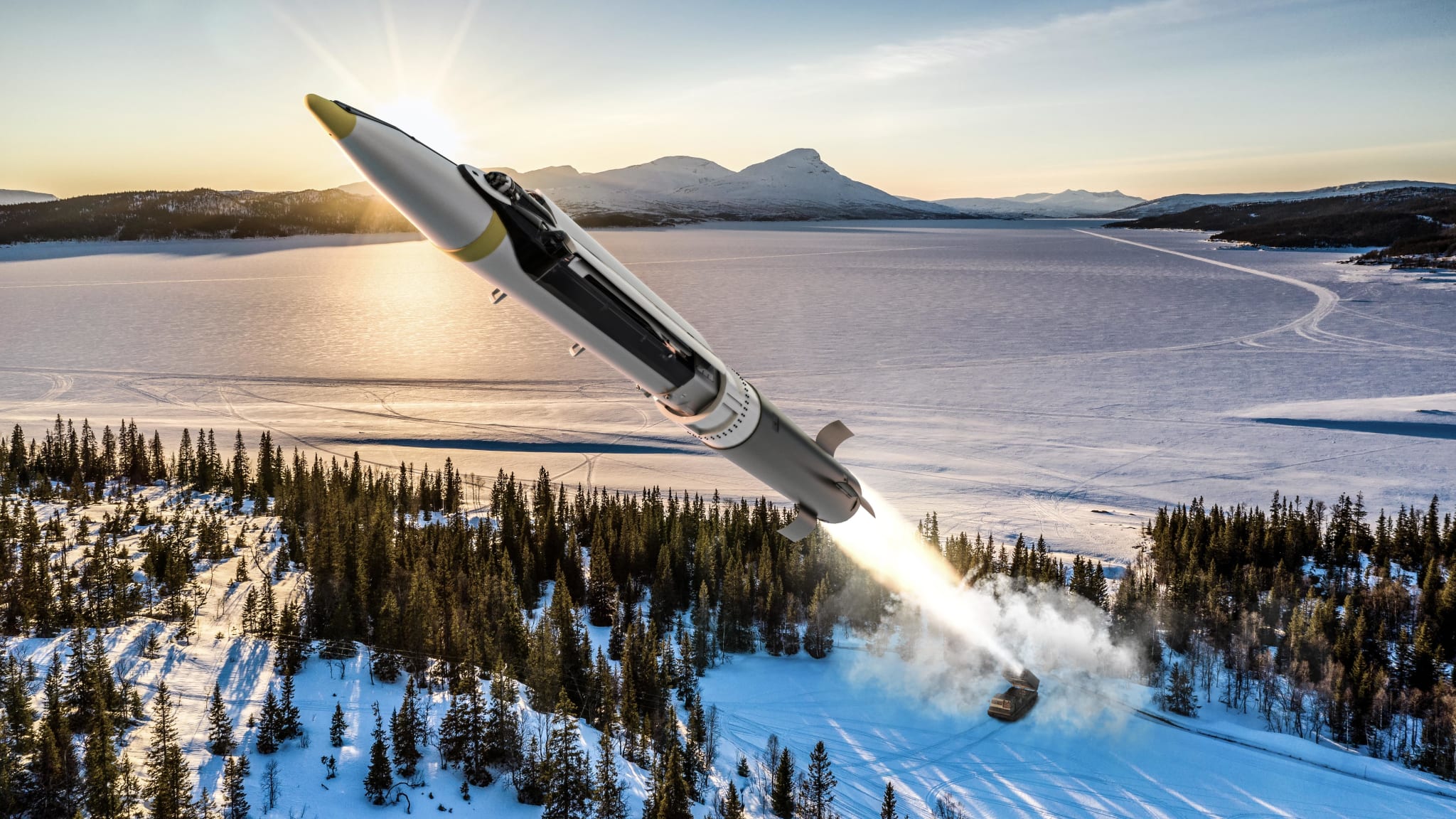
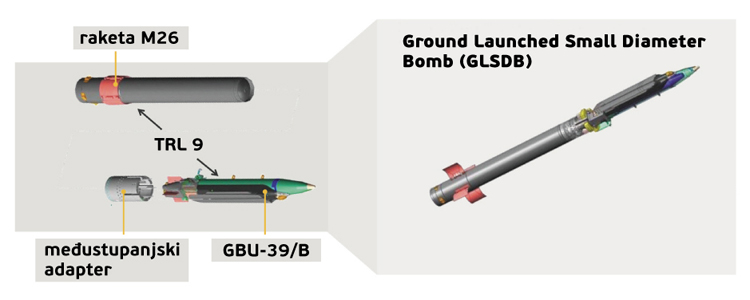
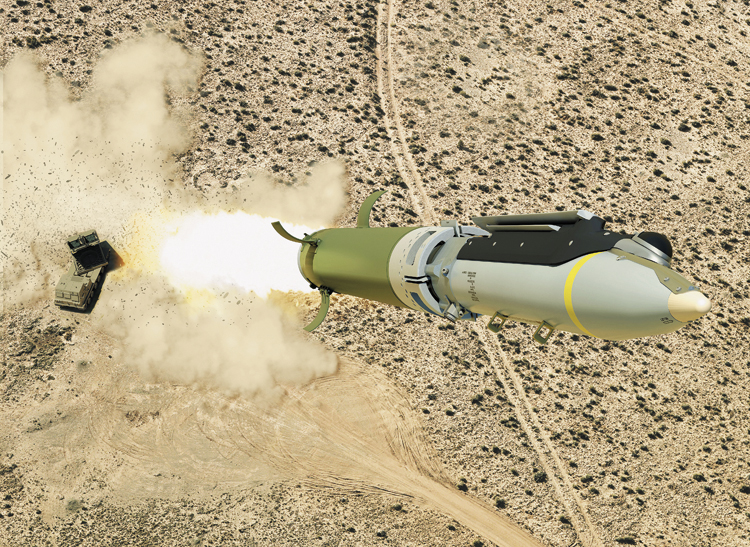
The GLSDB is a ground-launched low-diameter precision munition. This bomb is a combination of the M26 rocket and the GBU-39 SDB, which was developed and produced by SAAB and Boeing. The Ground Launched Small Diameter Bomb (GLSDB) is a weapon that allow Boeing’s GBU-39 Small Diameter Bomb (SDB), originally developed for use by aircraft, to be ground-launched from a variety of launchers and configurations. It combines the SDB with the M26 rocket, enabling it to be launched from ground-based missile systems such as the M270 Multiple Launch Rocket System and M142 HIMARS. The range of this precision-guided munition is 150 km.
Read more: Military Knowledge: Ground Launched Small Diameter Bomb
GMLRS:
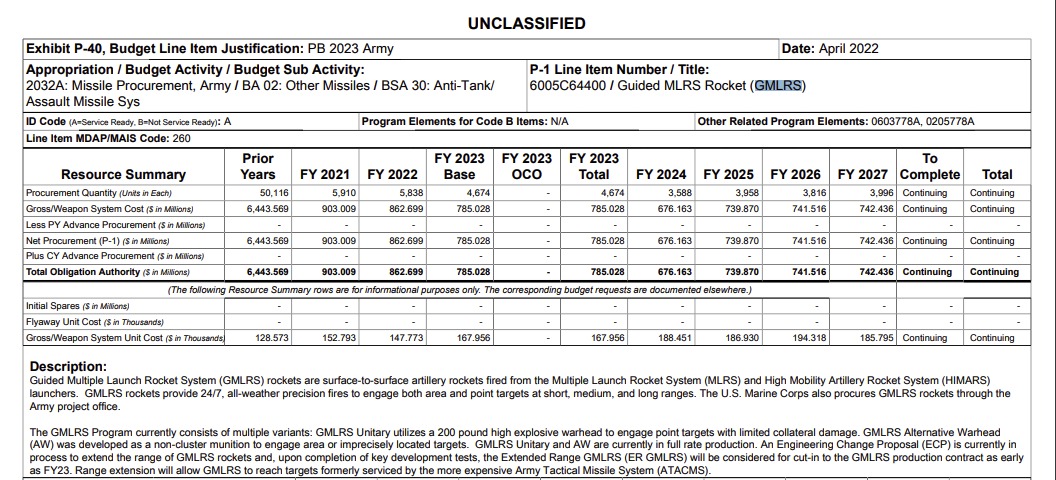
Guided Multiple Launch Rocket System (GMLRS) 227mm rockets have an extended range and add GPS-aided guidance to their Inertial Navigation System. As of 1 December 2021 50,000 GMLRS rockets have been produced, with yearly production now exceeding 9,000 rockets.
- M30 rockets carrying 404 DPICM M101 submunitions. Range: 15–92 km. 3,936 produced between 2004 and 2009, production ceased in favor of the M30A1. The remaining M30 rockets are being updated with either the M30A1 or M31A1 warhead.
- M30A1 rockets with Alternative Warhead (AW). Range: 15–92 km. GMLRS rocket that replaces the M30’s submunitions with approximately 182,000 pre-formed tungsten fragments for area effects without unexploded ordnance. Entered production in 2015.
- M30A2 rockets with Alternative Warhead (AW). Range: 15–92 km. Improved M30A1 with Insensitive Munition Propulsion System (IMPS). Only M30 variant in production since 2019.
- M31 rockets with 91 kg high-explosive unitary warhead. Range: 15–92 km. Entered production in 2005. The warhead is produced by General Dynamics and contains 23 kg of PBX-109 high explosive in a steel blast-fragmentation case.
- M31A1 rockets with 91 kg high-explosive unitary warhead. Range: 15–92 km. Improved M31 with new multi-mode fuze that added airburst to the M31’s fuze point detonation and delay.
- M31A2 rockets with 91 kg high-explosive unitary warhead. Range: 15–92 km. Improved M31A1 with Insensitive Munition Propulsion System (IMPS). Only M31 variant in production since 2019.
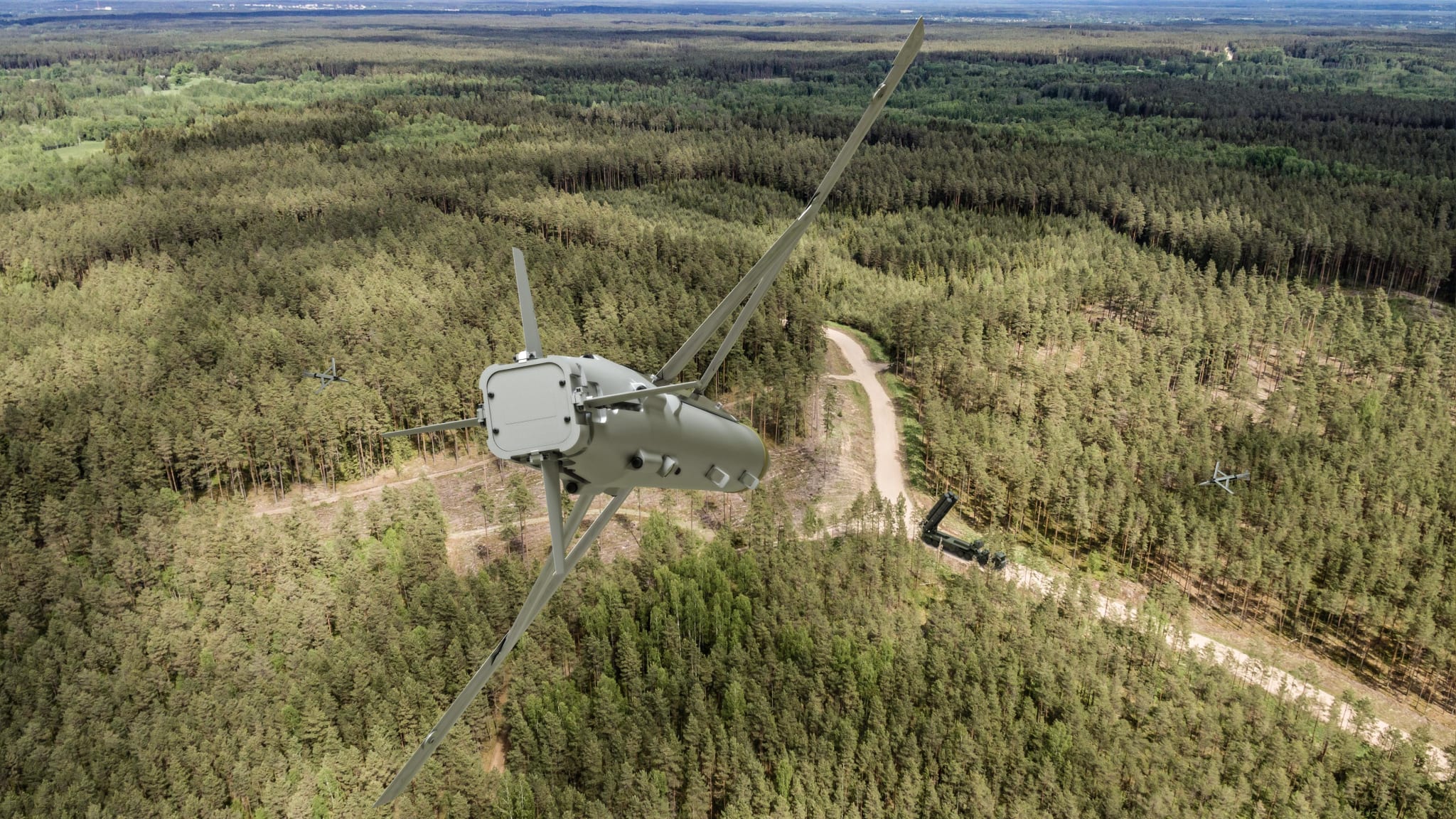
- ER GMLRS rockets with extended range of up to 150 km. Rockets use a slightly increased rocket motor size, a newly designed hull, and tail-driven guidance while still containing six per pod. It will come in unitary and AW variants. The first successful test flight of an ER GMLRS occurred in March 2021. Lockheed Martin anticipates adding the ER to its production line in the fiscal year 2023 contract award, and is planning to produce the new rockets at its Camden facility. Full operational capability is planned for 2025.
ATACMS:
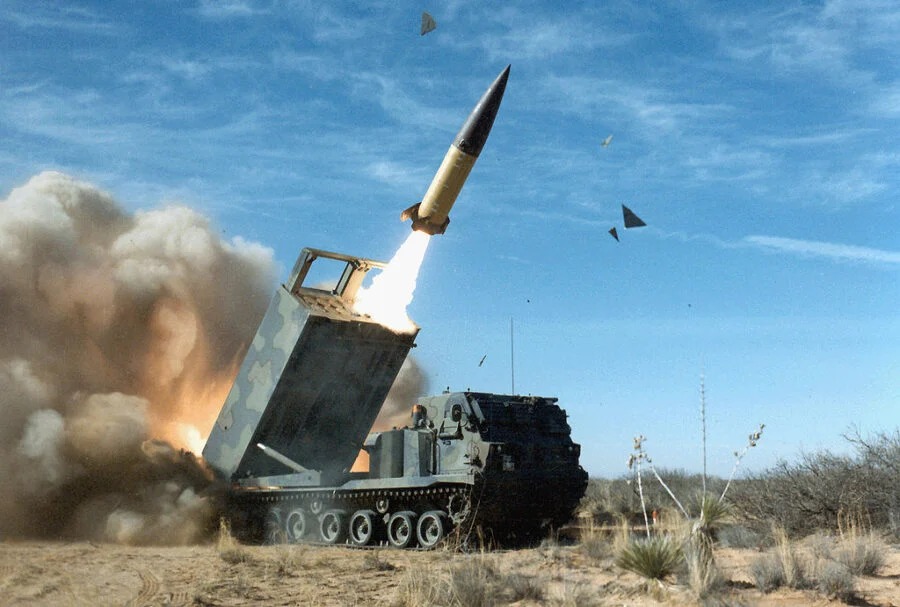
The Army Tactical Missile System (ATACMS) is a series of 610 mm surface-to-surface missile (SSM) with a range of up to 300 km. Each rocket pod contains one ATACMS missile. As of 2022, only the M48, M57, and M57E1 remain in the US military’s arsenal.
- M39 (ATACMS BLOCK I) missile with inertial guidance. The missile carries 950 M74 Anti-personnel and Anti‑materiel (APAM) bomblets. Range: 25–165 km. 1,650 M39 were produced between 1990 and 1997, when production ceased in favor of the M39A1. During Desert Storm 32 M39 were fired at Iraqi targets, and during Operation Iraqi Freedom a further 379 M39 were fired. The remaining M39 missiles are being updated to M57E1 missiles. The M39 is the only ATACMS variant, which can be fired by all MLRS and HIMARS variants.
- M39A1 (ATACMS BLOCK IA) missile with GPS-aided guidance. The missile carries 300 M74 APAM bomblets. Range: 20–300 km. 610 M39A1 were produced between 1997 and 2003. During Operation Iraqi Freedom 74 M39A1 were fired at Iraqi targets. The remaining M39A1 missiles are being updated to M57E1 missiles. The M39A1 and all subsequently introduced ATACMS missiles can be used only with the M270A1 (or variants thereof) and the HIMARS.
- M48 (ATACMS Quick Reaction Unitary; QRU) missile with GPS-aided guidance. The missile carries the 230 kg WDU-18/B penetrating high explosive blast fragmentation warhead of the US Navy’s Harpoon anti-ship missile, which was packaged into the newly designed WAU-23/B warhead section. Range: 70–300 km. 176 M48 were produced between 2001 and 2004, when production ceased in favor of the M57. During Operation Iraqi Freedom 16 M48 were fired at Iraqi targets; a further 42 M48 were fired during Operation Enduring Freedom. The remaining M48 missiles remain in the U.S. Army and US Marine Corps’ arsenal.
- M57 (ATACMS TACMS 2000) missile with GPS-aided guidance. The missile carries the same WAU-23/B warhead section as the M48. Range: 70–300 km. 513 M57 were produced between 2004 and 2013.
- M57E1 (ATACMS Modification; MOD) missile with GPS-aided guidance. The M57E1 is the designation for upgraded M39 and M39A1 with re-grained motor, updated navigation and guidance software and hardware, and a WAU-23/B warhead section instead of the M74 APAM bomblets. The M57E1 ATACMS MOD also includes a proximity sensor for airburst detonation. Production commenced in 2017 with an initial order for 220 upgraded M57E1. The program is slated to end in 2024 with the introduction of the Precision Strike Missile (PrSM), which will replace the ATACMS missiles in the US arsenal.
PrSM:
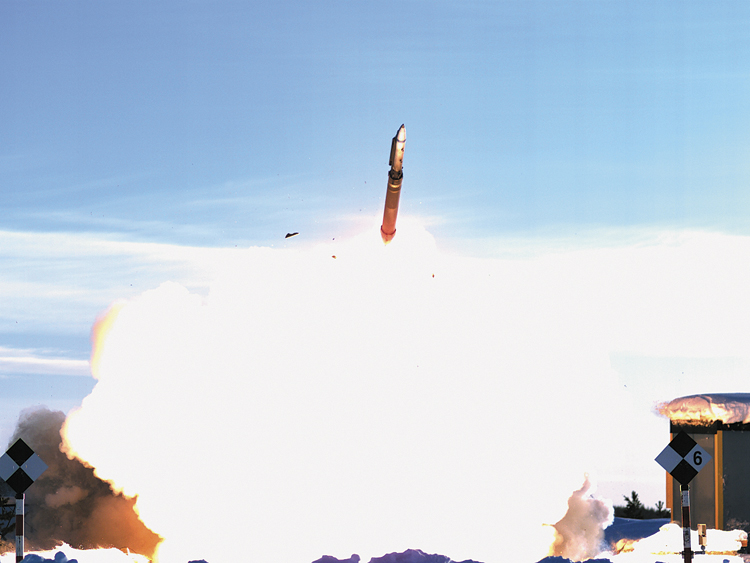
The Precision Strike Missile (PrSM) is a new series of GPS-guided missiles, which will begin to replace ATACMS missiles in 2024. PrSM carries a newly designed area-effects warhead and has a range of 60–499 km. PrSM missiles can be launched from the M270A2 and the HIMARS, with rockets pods containing 2 missiles. As of 2022 the PrSM is in low-rate initial production with 110 missiles being delivered to the US military over the year. PrSM will enter operational service in 2023.

HIMARS orders and delivery:
In January 2000, Lockheed Martin was awarded an EMD (Engineering and Manufacturing Development) contract to provide six HIMARS launchers. Two more HIMARS launchers were ordered under a two-year user evaluation program for the US Marine Corps.
The US Army and Marine Corps signed a Low Rate Initial Production (LRIP) contract in March 2003 for 89 launchers for the Army and four launchers for the USMC. In January 2004, a second LRIP contract was awarded for 25 launchers for the Army and one for the USMC. A third contract involving 37 launchers for the Army and one launcher for the USMC was signed in January 2005. A total of 900 launchers are planned to be purchased by the United States Army.
In September 2006, the United Arab Emirates submitted a Foreign Military Sales (FMS) request for 20 HIMARS launchers with ammunition including 101 ATACMS block 1A missiles and 104 MLRS rockets, along with 130 GMLRS and 130 GMLRS single rocket pods. The first unit was delivered at the end of 2009.
In January 2007, Lockheed Martin awarded another contract for 44 HIMARS systems for the US Army and 16 systems for the USMC.
The United States announced the proposed sale of 18 HIMARS launchers plus 32 GMLRS pods and 30 MLRS practice rocket pods to Singapore in 2007. The first HIMARS launcher was delivered in July 2010 and entered service with the Singapore Armed Forces (SAF) in September 2011.
In January 2011, the US Army awarded a $139.6 million contract to Lockheed Martin for 44 HIMARS launchers, bringing the total number of HIMARS launchers to 375.
In December 2012, the government of Qatar requested seven M142 HIMARS launchers with UFCS (HIMARS System Training, Repair and Maintenance Section), among other weapons, from the US government. The UAE requested 12 HIMARS launchers along with 100 M57 ATACMS T2K missiles and 65 M31A1 GMLRS rocket pods in September 2014.
In July 2017, the US Army signed a $73.8 million contract with Lockheed Martin as part of the second phase of the Long Range Precision Fires (LRPF) program; The contract included technology upgrades and risk controls to develop a prototype of the munition, which could be fired from the M142 Himars launcher.
In August 2017, the Romanian government submitted a request for the purchase of 54 HIMARS launchers to the US Defense Security Cooperation Agency (DSCA). The sale includes 81 GMLRS M31A1 rockets along with 81 GMLRS M30A1 alternative warheads, which is a type of cluster munition with 16,000 tungsten fragments, along with a number of ATACMS M57 missiles and other weapons at an estimated cost of $1.25 billion.
In August 2018, the US Army awarded a $218 million contract to Lockheed Martin to produce 18 HIMARS launchers and related hardware as part of the FMS contract by the end of December 2020. Lockheed Martin also awarded a $289 million contract with the US military in September 2018 to produce 24 M142 HIMARS launchers and related equipment through July 2022.
As of October 2018, Lockheed Martin has delivered approximately 500 HIMARS launchers to the US military and its international customers. (with an average rate of 33 units per year)
Lockheed Martin received a FOREIGN MILITARY SALES-FMS contract worth $1.14 billion to deliver GMLRS to Poland, Bahrain and Romania in March 2019. In July 2019, the US Army Contracting Command was awarded a $492 million contract to deliver M142 HIMARS launchers and related hardware to the US Army, US Marine Corps, Romania and Poland through 2022.
Lockheed Martin was awarded a $431 million contract in December 2022 to produce the M142 HIMARS for the US Army and FMS partners.
In February 2023, the US State Department approved a $10 billion FMS package including the sale of 18 HIMARS launchers to Poland. Lockheed Martin delivered the first shipment of HIMARS launchers to Poland in May 2023.
In April 2023, Lockheed Martin signed a $615 million manufacturing contract with the US military to build HIMARS launchers and related equipment. Also, the United States Department of State confirmed the possible sale of HIMARS rockets to Morocco worth $524.2 million dollars.
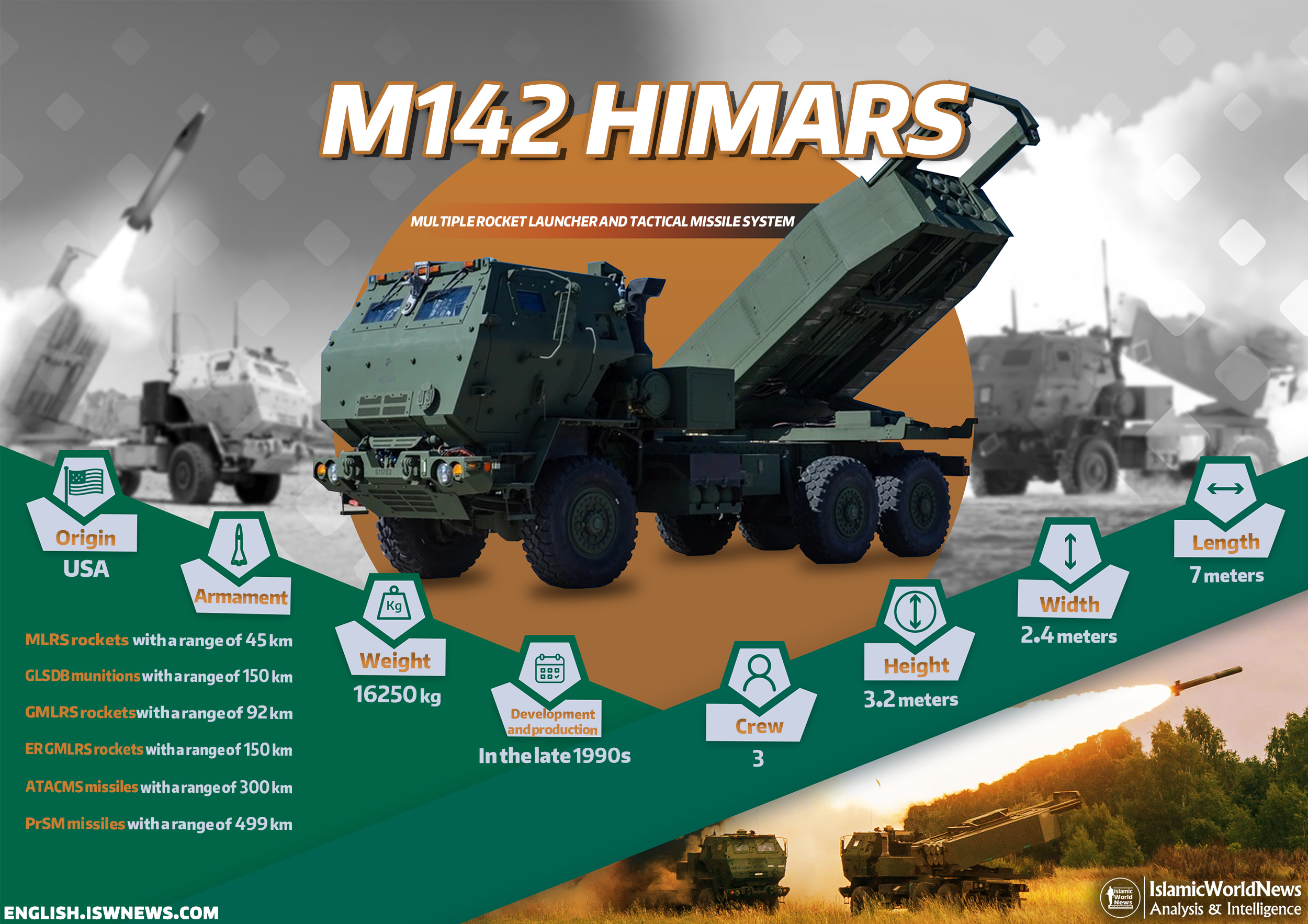
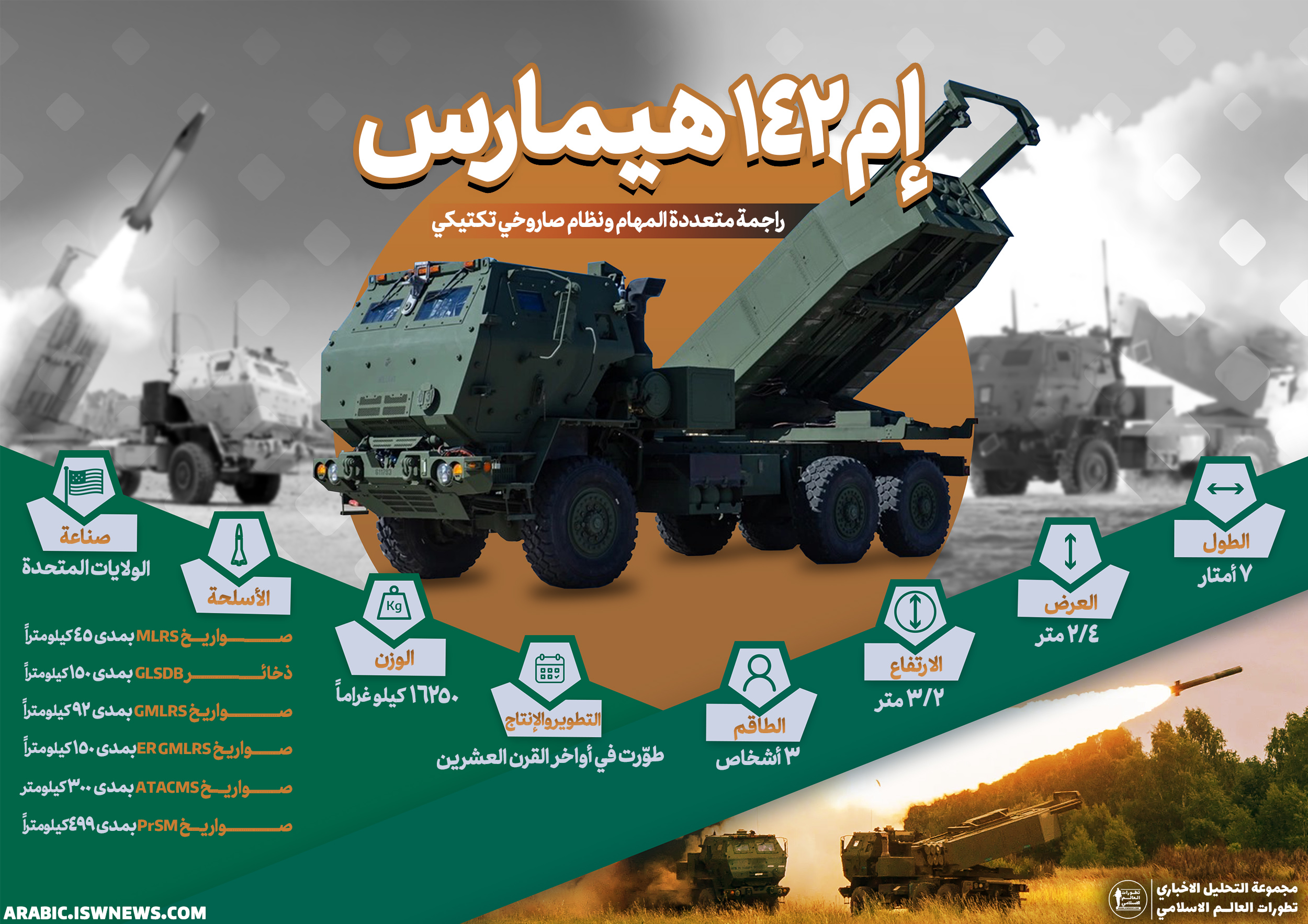
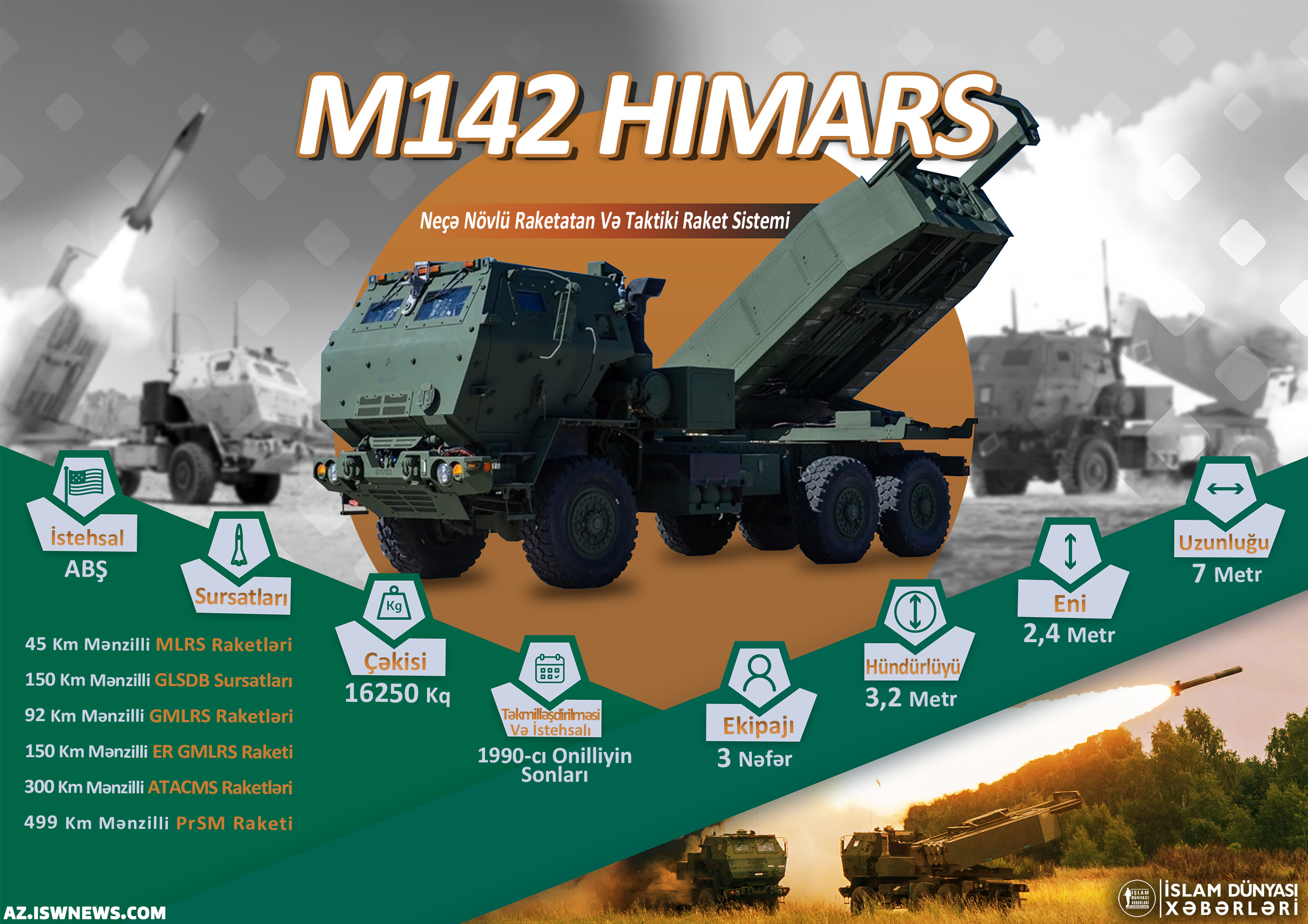
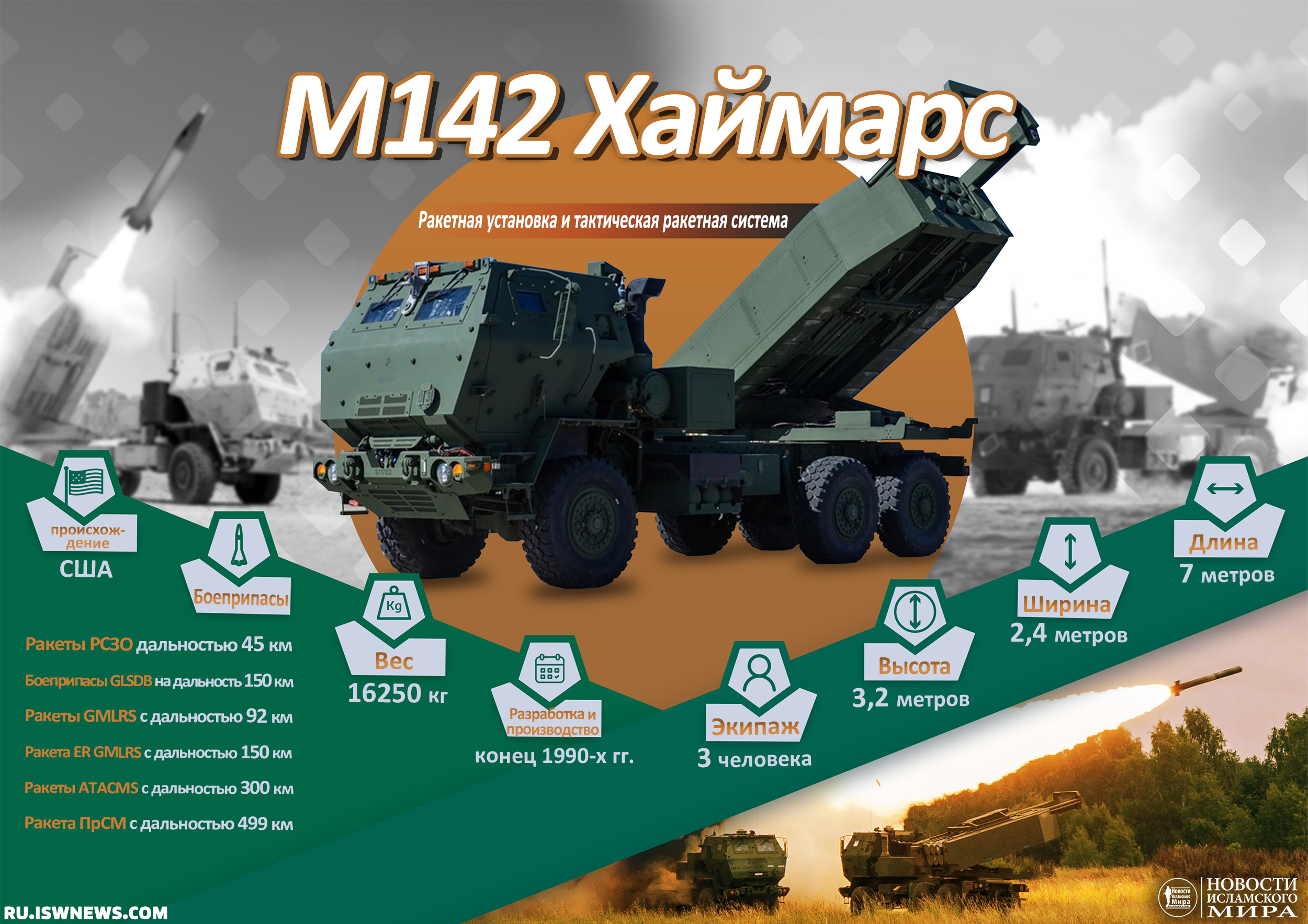
M142 HIMARS specifications:
Type: Multiple Rocket Launcher and Tactical Missile System
Length: 7 meters
Width: 2.4 meters
Height: 3.2 meters
Crew: 3 people
Weight: 16250 kg
Armament:
MLRS rockets with a range of 45 km
GLSDB munitions with a range of 150 km
GMLRS rockets with a range of 92 kilometers
ER GMLRS rockets with a range of 150 km
ATACMS missiles with a range of 300 km
PrSM missile with a range of 499 km
Development and production: In the late 1990s
In service: Since 2010
Origin: USA

Source:
M142 HIMARS
Lockheed Martin’s HIMARS Launcher Successfully Fires Air Defense Missile
Marines Fire HIMARS From Ship in Sea Control Experiment With Navy
Lockheed making moves to increase HIMARS production to 96 per year
HIMARS – High-Mobility Artillery Rocket System, USA
M142 HIMARS