Commander of the Islamic Revolution Guards Corps (IRGC) Aerospace Force Brigadier General Amir Ali Hajizadeh confirmed that the Chamran-1 satellite was launched into the 550-kilometer orbit with the Qaem-100 space launch vehicle and was placed in orbit round the earth with the help of a three-stage launcher at a speed of 7.5 kilometers per second.
The launch moment of Qaem 100 SLVInjection of Chamran-1 hexagonal satellite into 550 km orbit
The Chamran-1 research satellite was designed and manufactured by the space department of the Iran Electronics Industries (SAIran) in collaboration with the Aerospace Research Institute (ARI) of Iran as well as Iranian knowledge-based private companies active in this field.
The home-grown satellite weighs nearly 60 kilograms, and its main mission is to examine hardware and software systems applied to it in order to validate its orbital maneuvering technology at the desired altitude and stage.
Chamran-1 satellite
The solid-fuel Qaem-100 space launch vehicle, which succeeded in placing the Chamran-1 satellite in orbit during its third orbital operation, had four space-related launches to date as follows:
Suborbital launch without a payload (November 5, 2022) Failed orbital launch of the Nahid-1 satellite (March 4, 2023) Successful orbital launch of the Soraya satellite (January 20, 2024) Successful orbital launch of the Chamran-1 satellite (September 14, 2024)
Four days after the attack, more details about the incident are beginning to emerge.
The Israeli newspaper, Yediot Aharonot, quoted a media close to the Syrian-militants, claiming that during the Israeli army’s airstrike in Masyaf, Israeli special forces carried out a heliborne operation inside Syria.
Israeli special forces allegedly confiscated important files and documents from a building south of Masyaf, and destroyed the scientific research building belonging to the Syrian army, where high-tech military industries are being developed with Iranian assistance.
Israeli media also claim that they nabbed two Islamic Revolutionary Guard Corps (IRGC) members from the area.
The report claimed that the Israeli army targeted the vehicles sent by the Syrian security forces to the incident site using suicide drones. Israeli aircraft targeted several roads in the area and cut off all the routes leading to the Syrian military research center to ensure the operation proceeded without any problems.
Satellite images confirm this claim. According to satellite images, at least four roads leading to the research center were bombed.
The red circles are the roads that were bombed by the Israeli regime on the night of the operation to block the communication routes to the research center.
In addition to bombing the roads leading to the research center, an electric power plant in the north of Masyaf was also bombed. This attack caused widespread power outages in different areas of Masyaf. Communication infrastructures, fiber optic cables, and power transmission lines were also targeted in order to completely cut off communications.
The electric power plant that was attacked in the north of Masyaf. (coordinates)
Also, on the night of the attack, local sources in al-Duraykish area in Tartus province heard the sound of helicopters flying at a low altitude. Speculations indicate that the Israeli special forces entered Syria from the Mediterranean Sea and the south side of Tartus and went to Masyaf.
The alleged video, which is said to have been recorded by local people in al-Duraykish area. The sound of helicopters flying at low altitude can be heard.
Field reports indicate that vehicles near the research center or any activity capable of disrupting the operation were targeted.
All the mentioned cases indicate that this attack was carried out according to a detailed and premeditated plan.
(Images of the targeting of vehicles, motorcycles, communication routes and electricity and internet cables on the night of the attack near the Syrian research center in Masyaf.)
Sources close to the Syrian government described the operation in Masyaf as “a complex military operation”, but strongly denied the Hebrew media claim regarding the kidnapping of Iranian forces, and called it a blatant lie.
A Syrian military source emphasized “Everything that the Hebrew and Western media published about the Masyaf operation came from the opposition Syrian TV, whose credibility rating is below zero. There is no Iranian facility in Masyaf, and there is absolutely no presence of the IRGC forces in the entire region, and the Syrians know this very well.”
“What happened in Masyaf was major and a “complex military operation.” We abide by the Syrian state’s decision not to circulate any details related to the incident,” he added.
Iranian media close to the IRGC also denied the Israeli claim. Iranian media stated “we (IRGC) did not have forces at the targeted site in Masyaf and we deny that we had any casualties or captures.”
The Iranian Foreign Ministry also condemned the airstrikes but denied the presence of any Iran-operated military site in the area.
It is worth noting that Masyaf area has been targeted by Israel many times. This military base, which is identified as an alleged underground facility known as “Research Center 4000”, was also targeted in a series of Israeli airstrikes on March 12, 2023. The previous time, the airstrikes were also launched from Lebanon’s airspace.
Nevertheless, the fact is that all the stories about the airdrop operation in Masyaf are currently just speculations. It is not possible to confirm this issue with certainty until more evidence is presented or reliable documents are published by either side.
If Israel’s claim is true, it is likely that Benjamin Netanyahu, who is now under intense pressure from public opinion and various political factions due to his cabinet’s disastrous performance, will make this story public in the coming days. He and Gallant face accusations of genocide for crimes in Gaza at the International Court of Justice and need to buy time for themselves with this show.
The upgraded tank was showcased during a ceremony held at the Shahid Zarharan Center of the Army Ground Force. The ceremony was attended by Iranian Army chief commander, Major General Abdolrahim Mousavi, and Commander of the Ground Force of the Iranian Army Brigadier General Kiumars Heidari.
Some M60A1 tanks were supplied by the United States to Iran prior to the Islamic revolution of 1979. Currently, some 150 tanks of this type remain in service with the Iranian military.
The “Soleiman 402” upgrade includes a new armor package, fire control system, a remotely-controlled machine gun, a laser warning system and an infrared jammer for anti-tank guided missiles.
Left: upgraded M60 tank dubbed “Soleiman 402”; Right: the original version of M60 tank
It is still unclear if the Iranian military is planning to upgrade all of its M60 tanks to this standard.
Click to view full size
Faced with serious threats from the United States, Israel and others, Iran has been working non stop to boost its military capabilities.
While most media attention has been forced on Iran’s massive missile and drone program, the country’s development of more traditional military means, like firearms, combat vehicles and artillery, has been also moving forward with much success.
In the official meeting, the Yemeni foreign minister welcomed Rezaei’s presence in the Yemeni capital city of Sana’a and wished him success in carrying out his diplomatic mission.
FM Amer admired the special level of bilateral ties between the two states and underlined the importance of efforts made by both sides to reinforce the mutual relationship in line with the prospects pursued by the two amicable and brotherly nations.
The Iranian envoy also voiced his satisfaction with the ceremony of the submission of a copy of his credentials, emphasizing his all-out efforts to strengthen mutual ties between Tehran and Sanaa.
Rezaei is an experienced diplomat in the Ministry of Foreign Affairs of the Islamic Republic of Iran who has been appointed in recent months to replace the former Iranian ambassador to Yemen Hassan Irloo. Martyr Irloo arrived in Sana’a on October 17, 2020, or his diplomatic mission was publicized on this date. The martyr’s diplomatic mission continued for a year after that date and came to an end with his martyrdom on December 21, 2021.
Ahmad-Reza Afshari, a member of the IRGC’s Aerospace Forces who was in Syria to conduct advisory mission, was martyred as a result of injuries sustained by aerial offensive.
Afshari, who was injured following the airstrike by the invading US-led coalition forces in the friendly Arab country a few weeks ago and was transferred to Iran for medical treatment, was honored to join his martyred comrades on Thursday because of the severity of his injuries.
Ahmad-Reza Afshari
In this respect, Head of the Islamic Revolution Guards Corps Major General Hossein Salami issued a message, emphasizing that once again, the IRGC strengthened the pillar of the Islamic Revolution of Iran by dedicating one of its forces, who was also defending the holy shrine in Damascus. Honored member IRGC’s Aerospace Advisory Forces in Syria Colonel Ahmad-Reza Afshari was martyred in consequence of injuries sustained by an air strike. This heavenly companion of Imam al-Hussain (3rd Shia Imam), who was honored to turn into a disabled veteran a few weeks ago flowing an aerial attack by the invading US-led coalition in Syria and was transferred to the Islamic Republic of Iran for medical treatment, joined his companions, who had been martyred, on Thursday due to the severity of his injuries.
At the end of his message, the IRGC chief stated that I voice my congratulations and offer my condolences over the martyrdom of the praiseworthy martyr, and pray for Almighty God’s Blessings, and wish for the dear martyr to accompany the martyrs of Karbala (the Battle of Karbala was fought on 10 October 680 between the army of the second Umayyad caliph Yazid I and a small army led by Imam Husain (A.S), the grandson of the great Prophet Muhammad); and I pray for his honorable family, relatives and comrades to be able to be patient, strong and steadfast in order to continue the path of martyrdom and jihad based on the tenets of the holy Quran as well as to pursue the way of the glory of Islamic Republic of Iran.
The previous operation lasted for eight days and the Israeli forces penetrated into the city of Khan Yunis again. During that operation, many residential buildings, cemeteries and service facilities were demolished by Israeli bulldozers and explosives. The Israeli army withdrew from the city of Khan Yunis once the operation concluded.
According to Hebrew sources, the recent operation is carried out with the aim of destroying Hamas forces in Al-Qararah and Wadi al-Salqa. The Israeli military launched the operation after receiving information about the presence of Hamas forces in the area. The operation involves air and artillery support.
It is highly unlikely that the new Israeli operation in the area will achieve anything significant.
The nature of guerrilla warfare by resistance groups in the Gaza Strip makes it difficult for the Israeli army to completely stabilize and secure the area. Due to this, the Israeli army has to leave the area after each operation in order to avoid casualties.
Despite the Israeli army’s efforts to secure areas of Gaza Strip, the extensive network of underground facilities makes this task seem impossible.
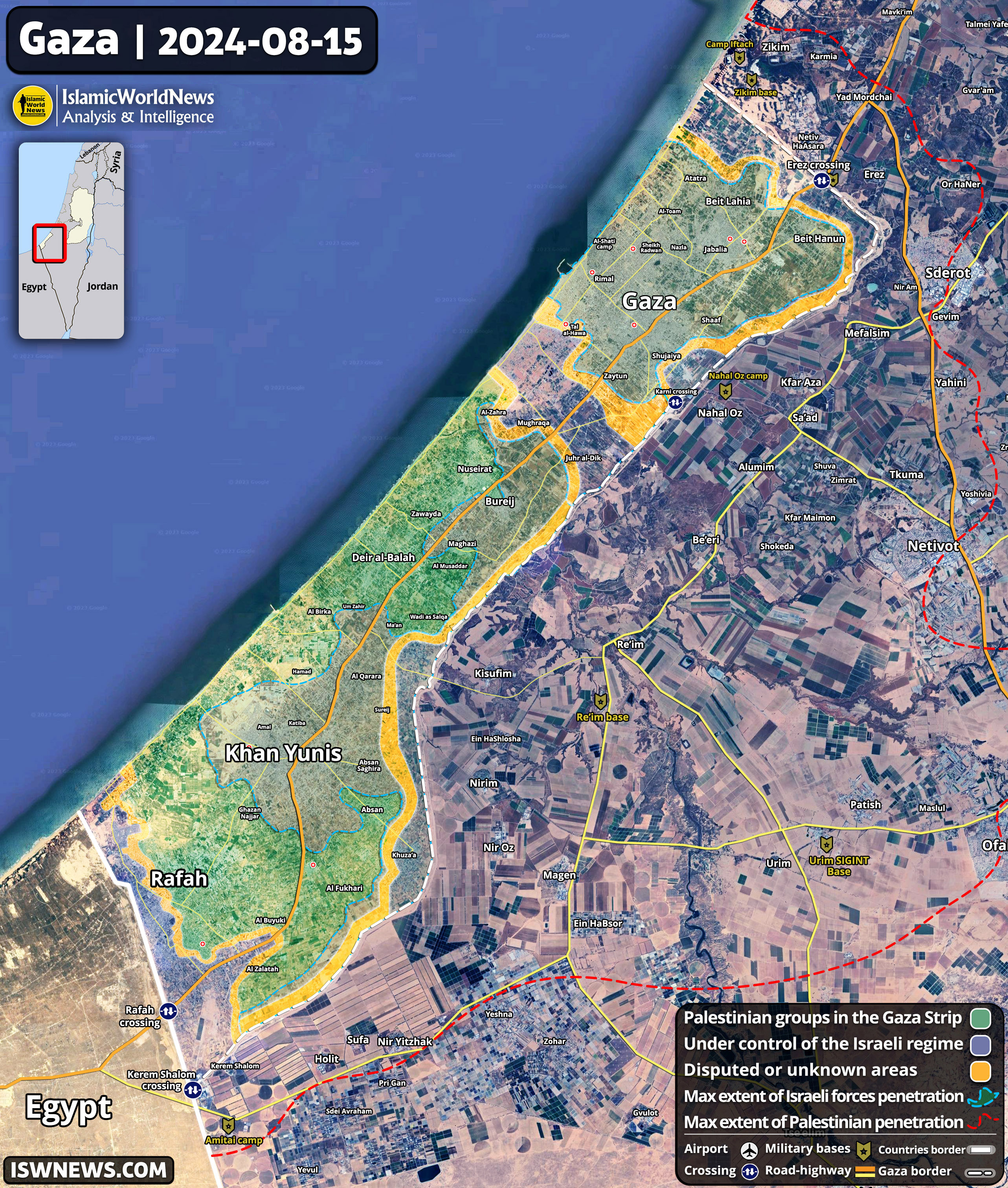
Gaza map
Fighting continues in the southern Gaza Strip in Rafah city without any significant progress. The military situation in Rafah has not changed much. Israeli forces have not been able to completely clear Rafah after weeks of fighting. Around 65% of the town is currently under Israeli control.
Fighting still continues in the central areas of Rafah, in Tal al-Sultan, around the Saudi project and in the southern areas of the city.
The situation in other parts of the Gaza Strip remains unchanged.
While Israel’s fruitless war in the Gaza Strip continues, the Israeli regime prepares itself to embrace Iran and its allies’ retaliatory attacks!
On July 30, a prominent commander of Hezbollah was assassinated in Beirut by the Israeli regime. The following day, on July 31 in Tehran, another terrorist act took place when Israel assassinated Ismail Haniyeh, the head of the Hamas political office. Ismail Haniyeh was killed in Iran while he was on an official trip to Tehran for the swearing-in ceremony of the new president of Iran, Massoud Pezeshkian.
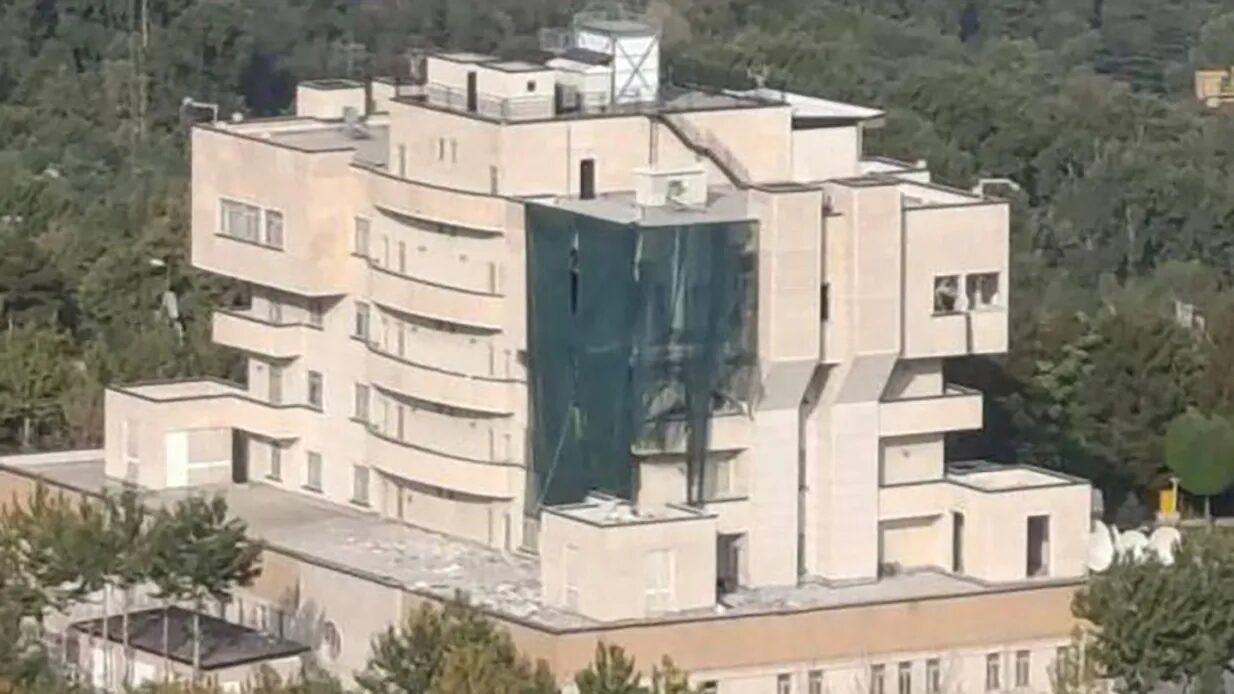
The building that was targeted in Tehran
The supreme leader of Iran, Ali Khamenei has promised that a severe revenge will be taken from the Israeli regime in seeking blood from this terrorist operation.
Hezbollah’s leader Hassan Nasrallah said that the war against Israel had entered a “new phase” and Israel should expect “rage and revenge.” In addition, the leader of Yemen’s Houthis, Abdul-Malik al-Houthi, vowed that the Israeli escalation will be met with a “military response.”
It is said that the Iran’s Supreme Leader has ordered a direct strike against Israel and the attack may be carried out jointly with other allies of Tehran, including Hezbollah and the Houthis.
Since then, the security and military situation in Israel has become very complicated.
The Israel Defense Forces stated that it is on “high alert” as the country braces for a response to the assassinations of Hezbollah’s military chief Fuad Shukr in the Lebanese capital, Beirut, and Hamas’s leader Ismail Haniyeh in the Iranian capital, Tehran.
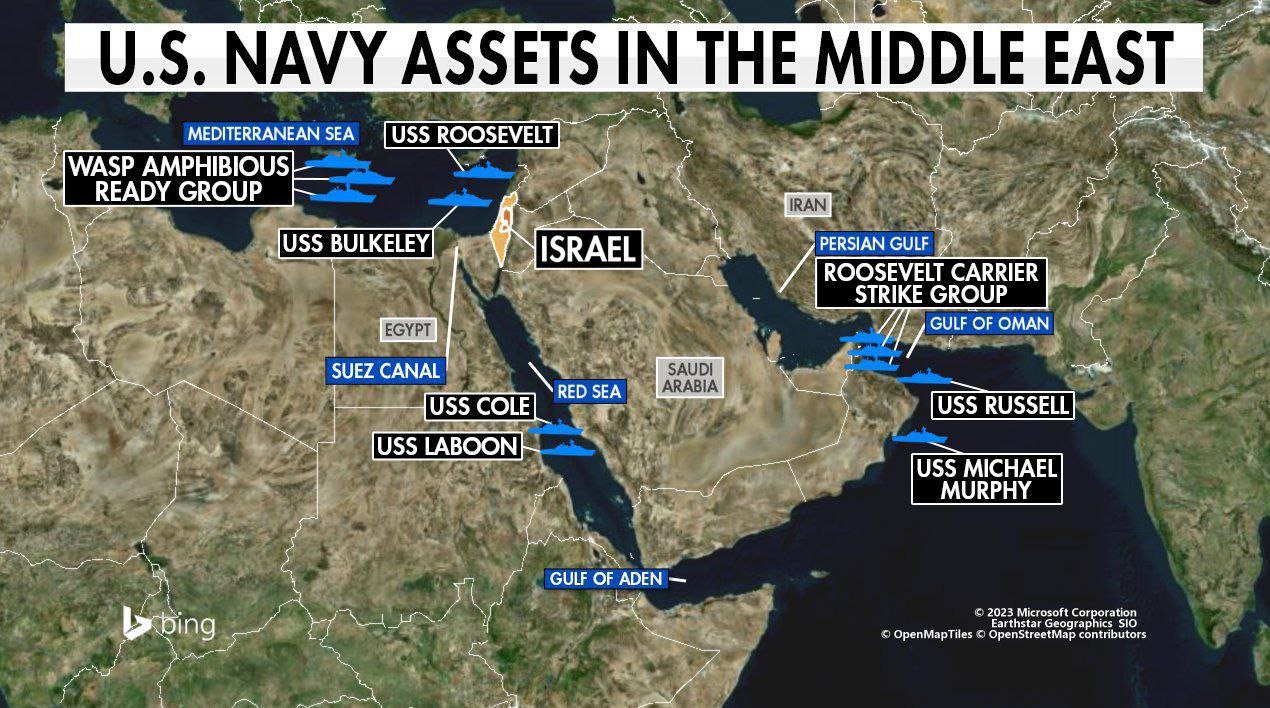
The US government has deployed additional ships and fighter jets to West Asia in support of Israel. Equipment from US and Israeli allies is also on high alert to defend Israel.
US Navy assets in the region
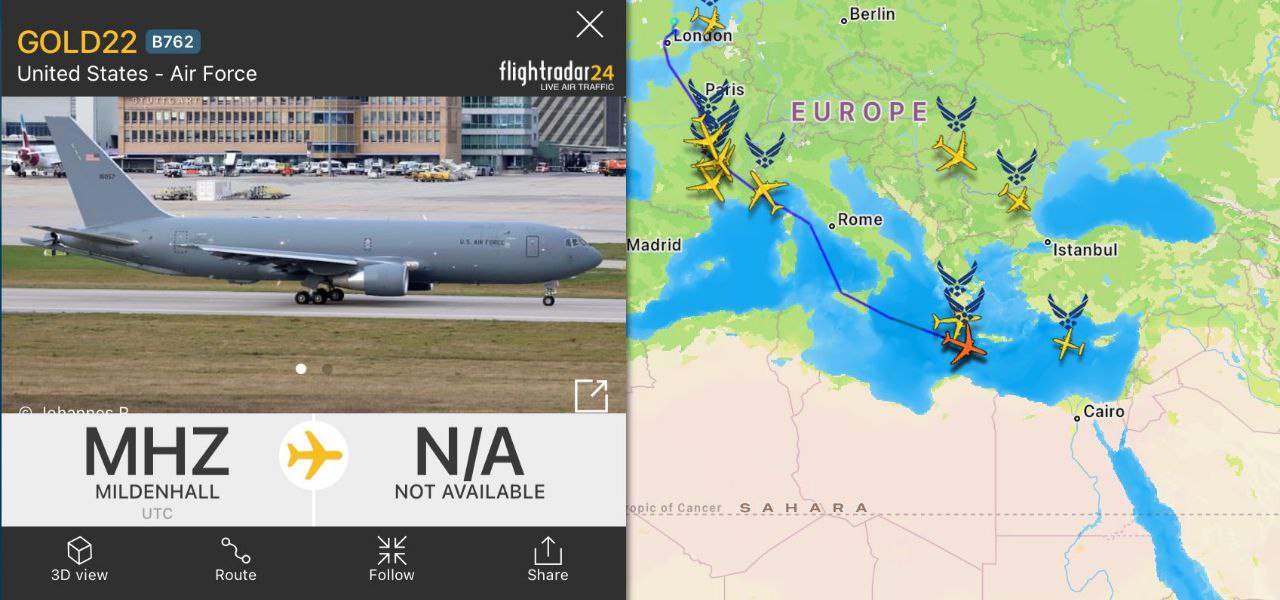
Last week, the US military sent 12 F-22 fighter jets from Lakenheath Airport in England to one of its bases in West Asia.
US military sending F-22s and tanker aircraft to the region
Yesterday, the spokesman of the US Ministry of Defense announced that Lloyd Austin, the US Secretary of Defense had a discussion with Israel’s Defense Minister Yoav Gallant about the country’s defense plans to protect Israel against possible attacks by Iran and its allies.
Austin emphasized that he has ordered the USS Abraham Lincoln Carrier Strike Group, equipped with F-35C fighters, as well as the USS Georgia (SSGN 729) to be deployed in the Middle East as soon as possible.
Yoav Gallant reportedly speaks with US Defense Minister Lloyd Austin daily to coordinate and update him on the latest developments.
On the other hand, Britain and France have asked Iran to refrain from attacking Israel.
Israel’s allies have used all diplomatic tools and economic pressures and even military threats to dissuade Iran from carrying out a retaliatory attack. Nevertheless, it seems very unlikely that Iran will withdraw from its retaliatory attack.
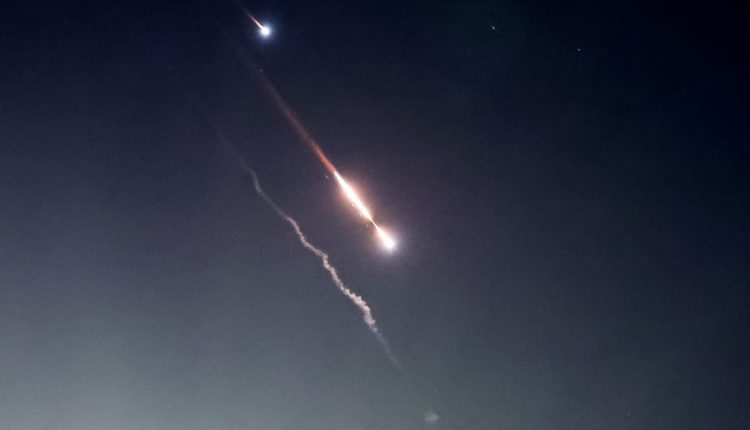
Last April, the Israeli regime attacked the Iranian embassy in Syria’s Damascus. The attack led to the death of several Iranian military advisers and high-ranking IRGC commanders. In response to this attack, Iran fired dozens of ballistic and cruise missiles and suicide drones at Israeli military targets in the occupied territories.
The history of Iran’s retaliatory operations shows that this country will attack Israel again. But it seems that this time the attacks will be stronger than before, comprehensive and with the participation of Iran’s regional allies.
Overall, the Middle East appears to be on the brink of an all-out war as a result of Israel’s recent acts and its ruthless offensive in the Palestinian enclave of the Gaza Strip. Israel’s crime in Gaza may lead to the downfall of this regime or even the destruction of the entire region!
Brigadier General Qaani expressed his heartfelt condolences for Haniyeh’s martyrdom, recognizing him as a courageous figure in the Islamic Resistance and a respected leader who promoted unity among Muslims. The Iranian commander wrote in his message to al-Sinwar that those who were mastermind and perpetrators of the assassination of the former Hamas chief in Iran must be punished.
Qaani’s message is as follows:
“I offer condolences over the martyrdom General Ismail Haniyeh. Martyr Haniyeh was truly one of the brave leaders of the Islamic Resistance and the appreciated and modest personality who created unity in the Islamic world.
As the Leader of the Islamic Revolution stated, we consider it our duty to avenge Haniyeh’s blood for this bitter incident inside the Islamic Republic’s territory.
There is no doubt that the blood of the noble martyr will impact the severity of punishment of the Zionist regime at the hands of the Islamic Republic.
The heroic jihad of your brothers in the Islamic Resistance will amplify the effect of punishment more than what it was in the past and it will lead to the eradication of the evil phenomenon as soon as possible.
I express congratulations to all the heroes of Hamas, Gaza, and the Palestinian nation on your election as the leader and jihadi commander, who has a background of being a veteran and honorable figure.
By electing such a leader, Hamas proved with a different logic that it is handing over the proud flag of Hamas to the figure who has the most influence on the battleground, and who is a fighter in the path of Allah.”
This high-profile deployment coincides with heightened tensions in this part of the world in connection with the Islamic Republic of Iran, the Lebanese resistance movement Hezbollah, and Yemen’s Ansar Allah movement.
Six tanker aircraft will fly with the backing of the F-22 warplanes in case of need as the aircraft head off in the direction of a planned US air base in either Jordan or Qatar in order to ensure the fighters combat readiness, according to the Pentagon. US commitment to shielding the Israeli regime from any possible strike by the Axis of Resistance is unequivocal and complete.
Meanwhile, just last week, the Pentagon announced that it had approved further military assets – warships and a fighter squadron – to be sent to this part of the world by US Defense Secretary Lloyd Austin.
After the deaths of Haniyeh and the Hezbollah commander Fuad Shukr, Resistance Front officials of the Islamic Republic of Iran vowed to get revenge for the savage terrorist crimes.
Haniyeh’s presence at the ceremony highlighted the close ties between Hamas and Iran, which has been a significant supporter of the Palestinian cause.
Details surrounding the assassination remain still unclear, but sources indicate that it occurred hours after Haniyeh’s participation in the inauguration ceremony in the Iranian capital at 1:45 am July 31.
Haniyeh had been in Tehran to strengthen diplomatic relations and support for Palestinian resistance efforts amid escalating tensions in the region. His participation in Pezeshkian’s inauguration was seen as a gesture of solidarity between Hamas and the Iranian government, showcasing their ongoing collaboration against common adversaries.
The assassination has sparked widespread condemnation from various Palestinian factions and allies, who have called for an immediate investigation. Iranian officials have vowed to uncover the facts behind this heinous act, emphasizing their commitment to supporting the Palestinian struggle.
This incident marks a significant escalation in the already volatile landscape of Middle Eastern politics, raising concerns about potential retaliatory actions from Hamas and its allies.
The Islamic Republic of Iran vowed that Haniyeh’s blood will not go in vain. Lebanon’s Hezbollah, Yemen’s Ansar Allah movement, Iraqi resistance groups plus numerous heads of states and people around the globe reacted to the act of violence, which is blamed on the Israeli regime.
The Supreme Leader received both Palestinian officials in Tehran on Tuesday morning.
Ayatollah Khamenei addressed the two officials as saying that the Palestinian people and the residents of Gaza currently hold the most significant flag of Islam, and their resistance has paved the way for the spread of the holy religion.
He further stated that the growing inclination towards Islam at this time reflects the honor and strength of the Palestinian nation’s resistance and the people of Gaza.
The Leader also described the people of Gaza and the West Bank as the key contributors to this resistance’s glory, expressing hope that the almighty God will continue to bless the Palestinians and their resistance fighters.
This meeting took place prior to the inauguration of Masoud Pezeshkian, the newly elected Iranian President. Pezeshkian took the oath of office before Parliament at the Iranian parliament in Tehran on Tuesday afternoon.
Pezeshkian is the ninth president of the Islamic Republic following his victory in the July 5 run-off presidential election.
The inauguration ceremony was attended by over 70 foreign dignitaries and covered by 600 domestic and foreign journalists.
In a meeting on Tuesday with Armenian Prime Minister Nikol Pashinyan and his accompanying delegation, the Supreme Leader of the Islamic Revolution emphasized that the Islamic Republic of Iran’s definitive and consistent policy is to expand relations with its neighbors, especially Armenia.
Imam Khamenei also called for the development of relations and cooperation between the two countries based on defined interests of both nations and regardless of the policies of other states.
Armenian Prime Minister Nikol Pashinyan met with Supreme Leader of the Islamic Revolution
The Leader of the Islamic Revolution went on to say that the Islamic Republic of Iran considers the Zangezur corridor – a concept for a transport corridor which, if implemented, would give Azerbaijan unimpeded access to Nakhchivan Autonomous Republic – to be to the detriment of Armenia; therefore, Iran continues to stand by this position.
Foreigners should not place restrictions on the relations of countries with their neighbors, the Leader stated, arguing that what ensures the security and well-being of countries is reliance on themselves and their close allies, and the actions of some states who come from far away and interfere in the affairs of other nations are to their detriment.
The Armenian Prime Minister, for his part, emphasized that he has repeatedly stated that he does not accept any extra-regional route within his country, describing the relations between the Islamic Republic of Iran and the Republic of Armenia as strategic. The Armenian premier also expressed satisfaction with the expansion and diversification of ties with Iran, underscoring that he gives importance to the continuation of this process.
In another meeting on Tuesday morning, Imam Khamenei received Tajik President Emomali Rahmon and his accompanying delegation.
Tajikistan President Emomali Rahmon met with Supreme Leader of the Islamic Revolution
The Supreme Leader said that Iran’s main policy and priority is to expand relations with the countries of the region, especially states with the same language and common culture, history and religion.
Ayatollah Khamenei further emphasized: The Islamic Republic of Iran is ready to cooperate sincerely with Tajikistan in various fields, as in the past.
The Leader of the Islamic Revolution also called the official visits by authorities of the two nations a basis for the expansion of cooperation and said: The Persian language is one of the important commonalities between Iran, Tajikistan and Afghanistan, and more cooperation should be made to preserve and expand this language and prevent some attempts to isolate the shared language.
The Leader of the Islamic Revolution also noted: There are some opponents who disagree the expansion of relations between Iran and Tajikistan; thus, there must be a plan to confront them.
The President of Tajikistan, for his turn, said: As you said a few years ago, the two countries are linked and we want to expand relations and use the experiences and advances of the Islamic Republic of Iran in the fields of science, health and industry.
The top officials of Armenia and Tajikistan along with their accompanying delegations arrived in Tehran on Tuesday morning in order to take part in the inauguration ceremony of Masoud Pezeshkian, the ninth President of the Islamic Republic of Iran, on Tuesday (July 30) at the Iranian parliament. More than 70 foreign delegations and 600 domestic and foreign journalists attended the inauguration ceremony at 6 p.m. local time.
Lieutenant General Hamed Mohammad Kamar, Deputy Chief of Education for the Iraqi Army, during a visit to the AJA University of Command and Staff of the Islamic Republic of Iran Army, stated that senior Iraqi officers who graduated from of the Iranian Army are much more efficient than those who have completed the military courses in NATO and are more competent in all the responsibilities assigned to them.
He went on to say that for this reason, the Iraqi officials want to ask Iran to increase the quota for Iraqi officers at this university, and that Baghdad found out that Iraqi trained officers in Pakistan are also good, and after more scrutiny, it was found that most of the professors of military courses in Pakistan are also graduates from AJA University of Command and Staff of the Islamic Republic of Iran Army.
For his part, Brigadier General Hossein Valivand Zamani, Commander of the Iranian Army’s War University, said: Iraq is important to us from two aspects, first because of the existence of the holy shrines and second due to its proximity, so we are ready to meet all the training needed by the Iraqi army in the field of command and headquarters and other arenas.