Tag: Mhaibib

  • Latest Developments Of Lebanon’s Southern Front On October 17, 2024; Israel Destroys Mhaibib Village!

    Latest Developments Of Lebanon’s Southern Front On October 17, 2024; Israel Destroys Mhaibib Village!

    According to previous press releases, the Israeli military has chosen the scenario of creating a security border strip in southern Lebanon for its ground operations. At this time, they are implementing a scorched earth policy, claiming to eliminate the Lebanese resistance movement’s military facilities and prevent Hezbollah from returning to the border areas by completely destroying the towns and villages in southern Lebanon. This has been executed since the onset of the ground operations in the villages of Yaroun, Blida, Mhaybib, Kafr Kila, Al-Adisa, and other border regions, and as time passes, we will see more visual documentation of this war atrocity and humanitarian disaster.

    Kafr Kila, Al-Adisa, Rab El Thalathine, and Markaba:
    Based on released images, the Israeli military has retreated from the villages of Kafr Kila and Al-Adisa. However, this retreat was not due to a strong resistance from Hezbollah or a failure to penetrate these areas, but rather due to their plan to implement the maximum destruction of buildings in Kafr Kila and Al-Adisa; thus, the Israeli regime is of the opinion that they have achieved the main goal in this axis.
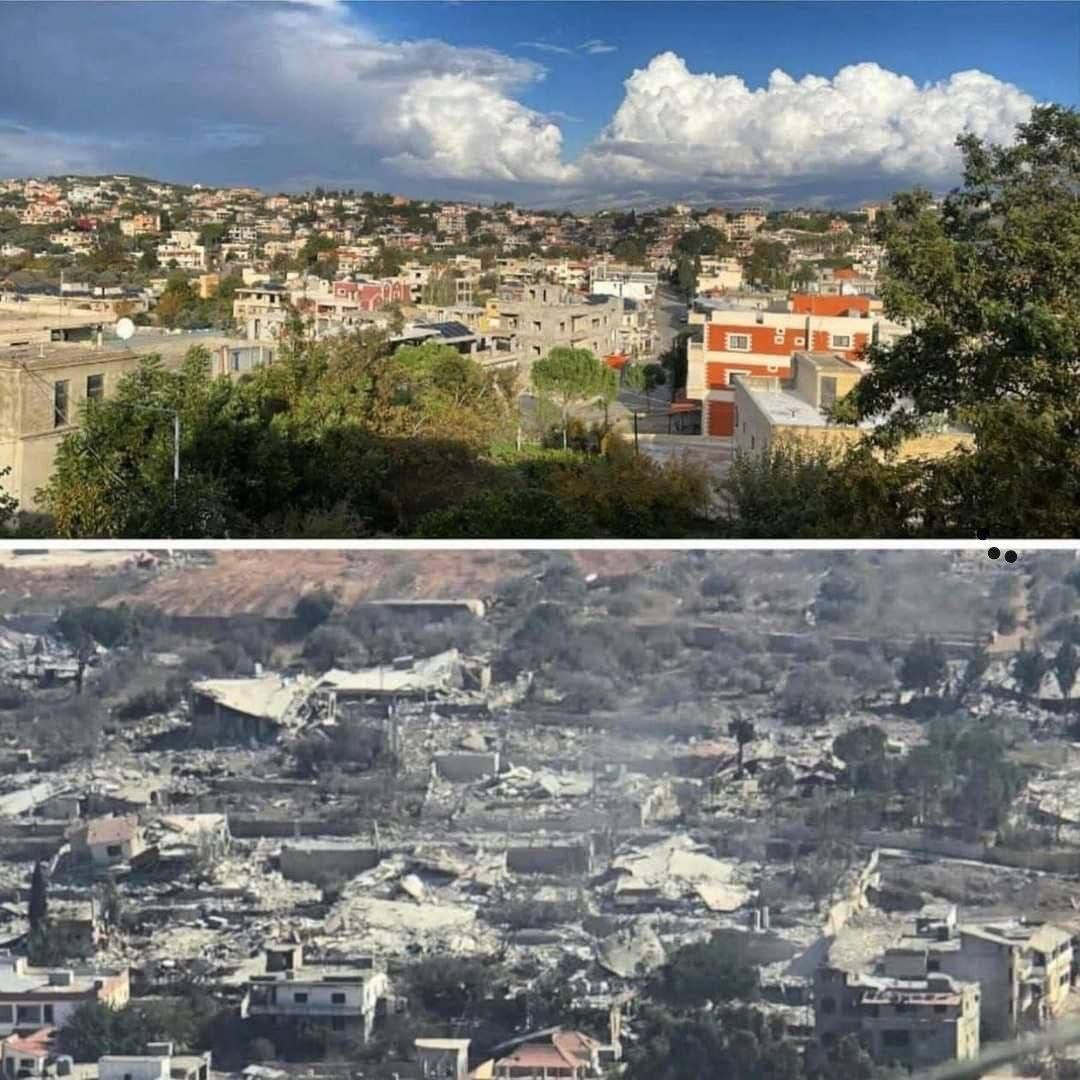
    The situation of Kfar Kala before and after the ground operation of the Israeli army

    In the eastern axis of Rab El Thalathine and Markaba, the situation remains unchanged. According to the latest reports, Hezbollah targeted Israeli troops’ positions with rocket and artillery attacks.

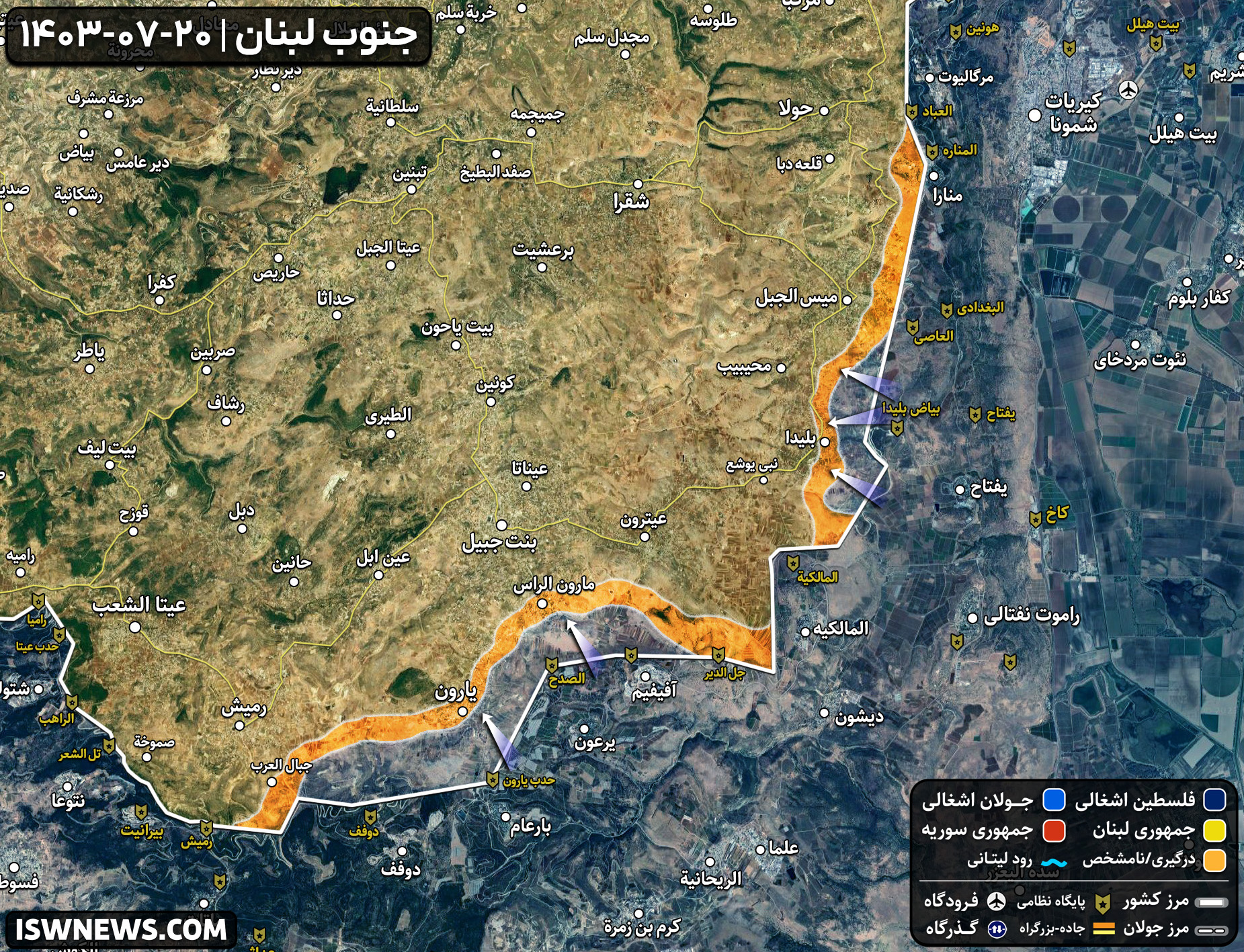
    Meiss El Jabal, Mhaibib, and Blida:
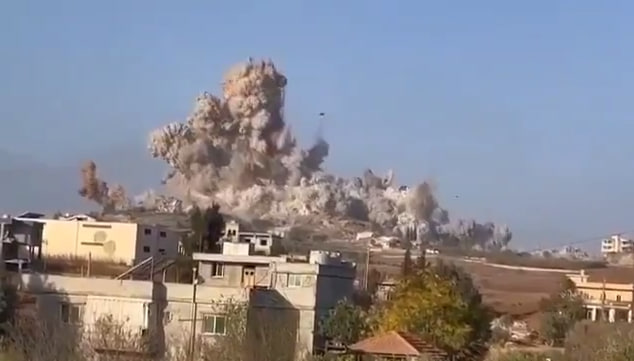
    On Wednesday, the Israeli regime released a video showing the complete destruction of the historic village of Mhaibib.

    In the axis of Meiss El-Jabal and Blida, the Israeli military forces are advancing toward the center of those areas with bulldozers and cranes, demolishing residential buildings. Given the Israeli army’s control over the northern road and the destruction of Mhaybib, the Blida region has practically collapsed, and it seems that the total destruction of this village is just a matter of time.
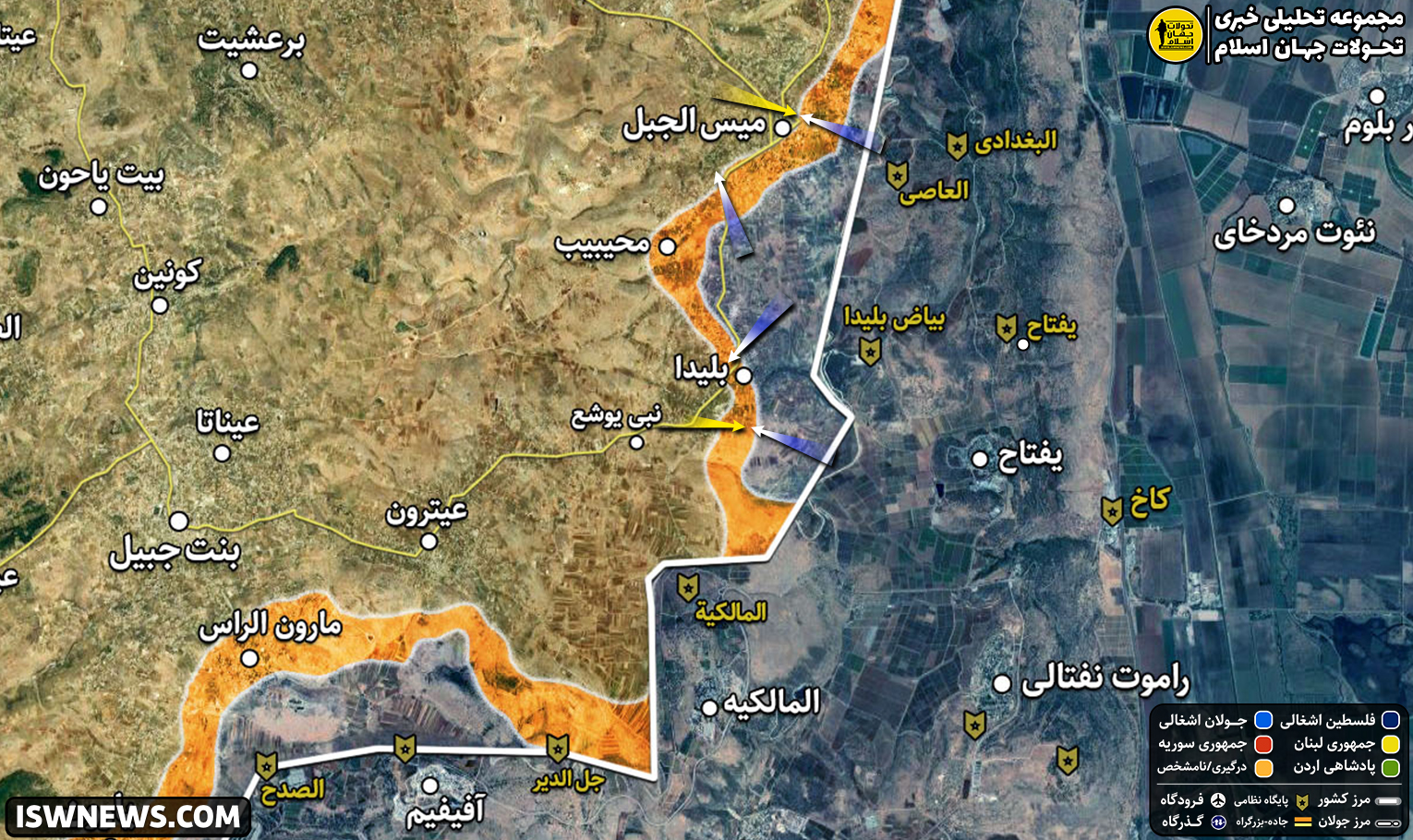
    Click to view full size

    Ayta ash Shab and Ramieh:
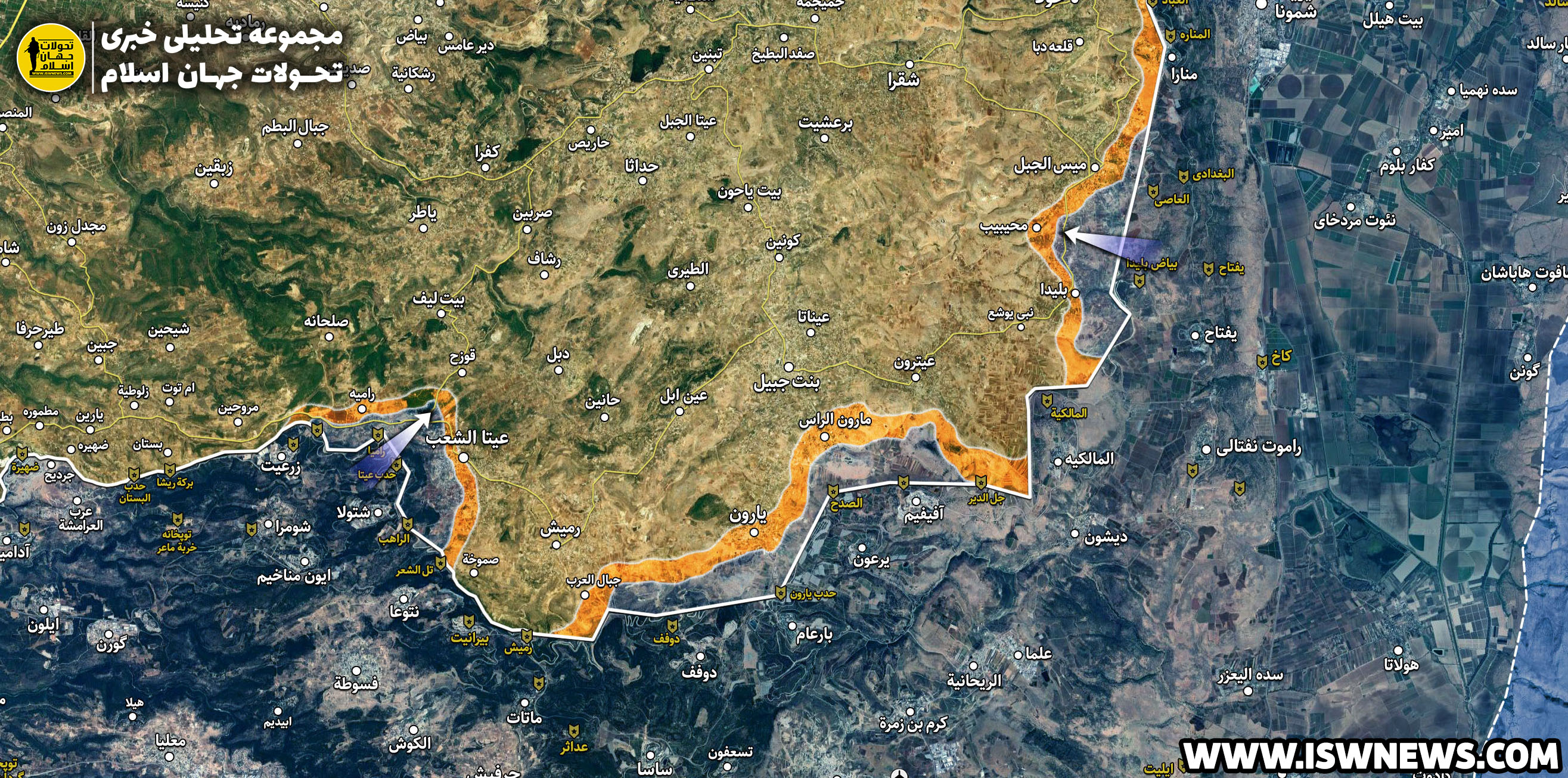
    In the Ayta ash Shab axis, a fierce battle is underway in the western areas of this town, and according to videos released by the Israeli regime’s army; most buildings have been destroyed by airstrikes. In the eastern areas of Ayta ash Shab, Hezbollah does not have a strong foothold due to its proximity to the Christian town of Rmaych, and likely will not offer much resistance in this area.

    Despite the advance of Israeli troops in the west of Ayta ash Shab village and their movement around Ramieh village, there have been no reports or visual evidence of Israeli military forces entering the village of Ramieh.

    Overall, Hezbollah’s first line of defense along the border of occupied territories of Palestine has been breached, and resistance fighters must prepare to defend the town of Bint Jbeil and its surrounding areas in the coming week.
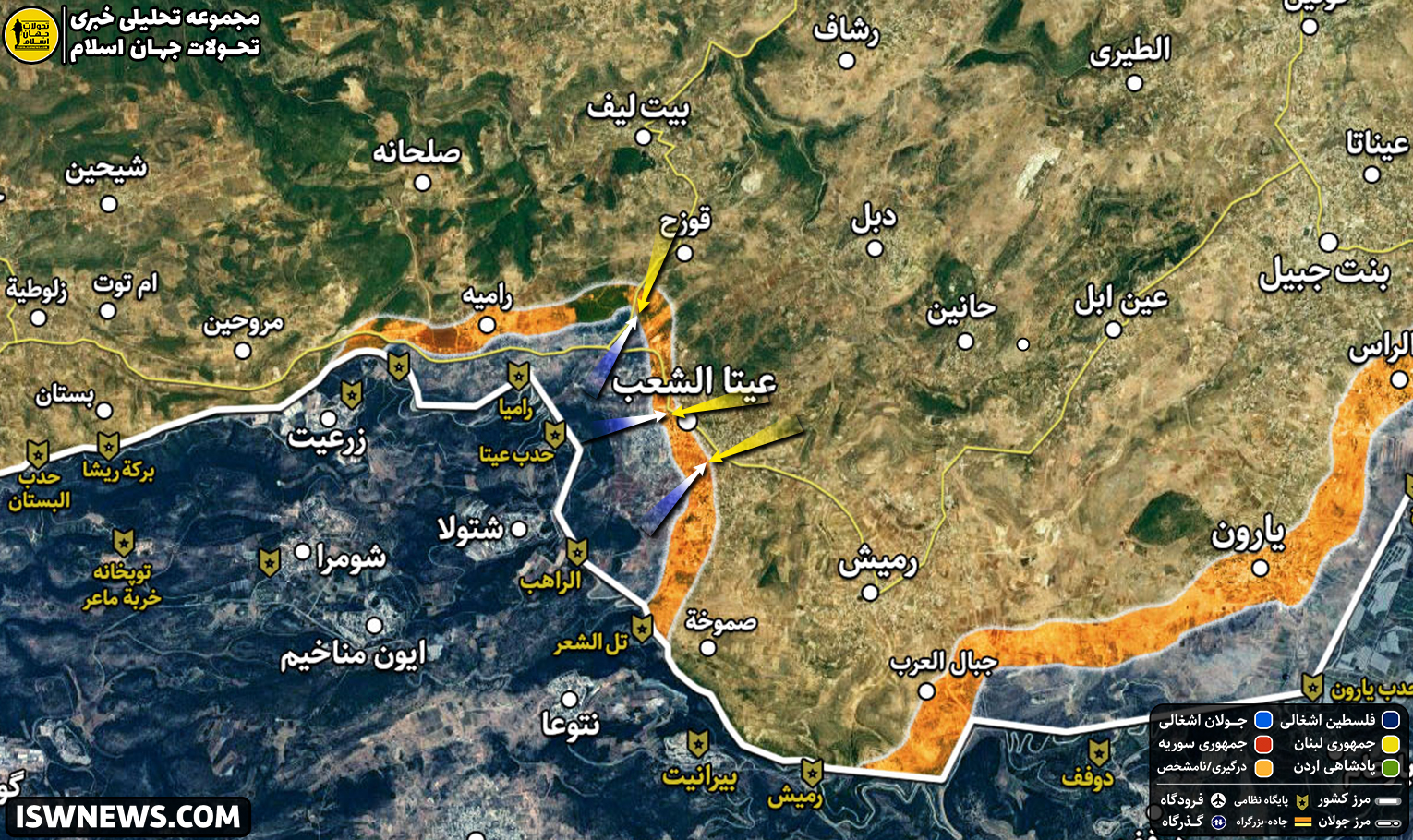
    Click to view full size

    Labbouneh and Naqoura:
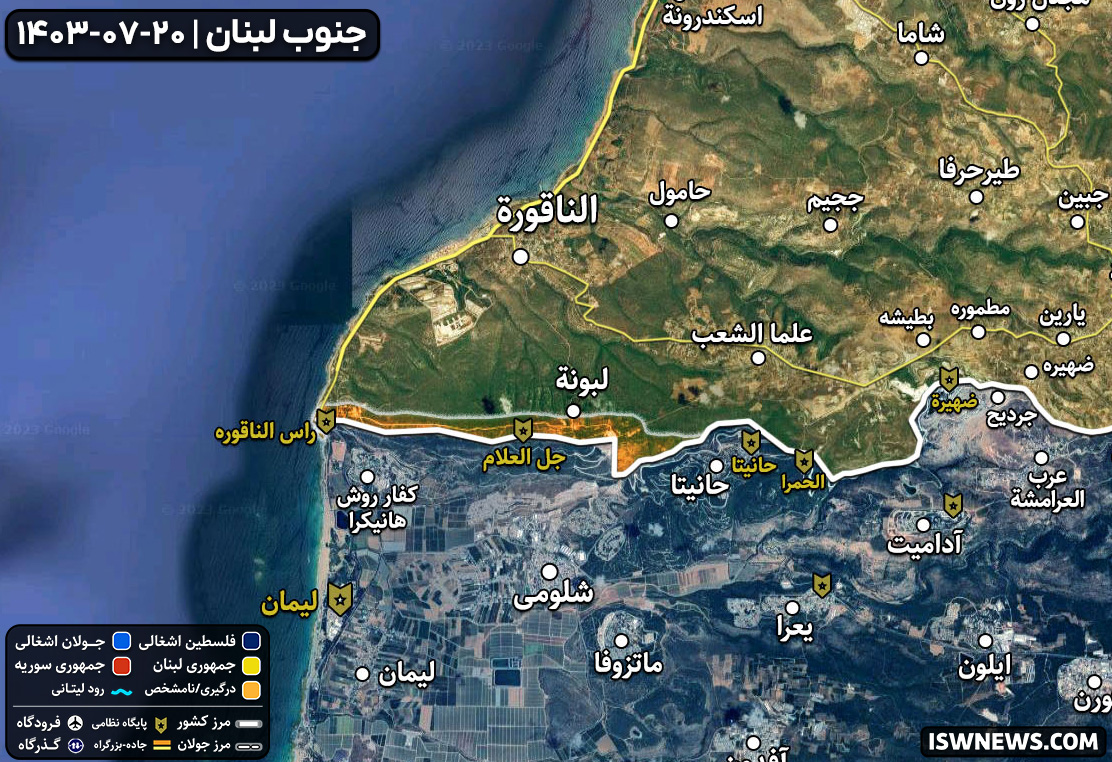
    In the Labbouneh and Naqoura axis, the Israeli military forces have not made any significant advances and their movements have faced counterattacks from Hezbollah’s anti-tank units. In the last 24 hours of clashes, three Merkava tanks have been destroyed or damaged.

    Smoke rising from the Labouna area after the Israeli tank was targeted by Hezbollah

    Since the onset of the Israeli army’s ground operations until now, Hezbollah has not been able to completely halt the occupying forces, but it has significantly slowed their advance. The Israeli regime’s army have resorted to measures such as nonstop air raids, the use of the combat and reconnaissance drones, and support from US, UK, and other European spy planes, along with the deployment of a high number of military personnel and equipment, particularly bulldozers and cranes, are among the factors that will help the regime achieve its goal of destroying the border areas of southern Lebanon.

    Of course, the destruction of residential areas also took place during the 33-day war in 2006; for example, the Israeli army completely destroyed the west of Ayta ash Shab village. However, Ayta ash Shab was rebuilt over the years and, despite its poor geographical location, is today one of the strongholds against the Israeli regime’s aggression.

    Currently, Hezbollah’s first line of defense against the Israeli ground invasion has been breached, and it is likely that the center of the confrontations will shift towards the southwestern areas of Lebanon in the coming week. The important point here is that the Tel Aviv regime’s maneuverability within Lebanese territory must be curtailed in order to limit their ability to execute other scenarios and military advances further into Lebanon.
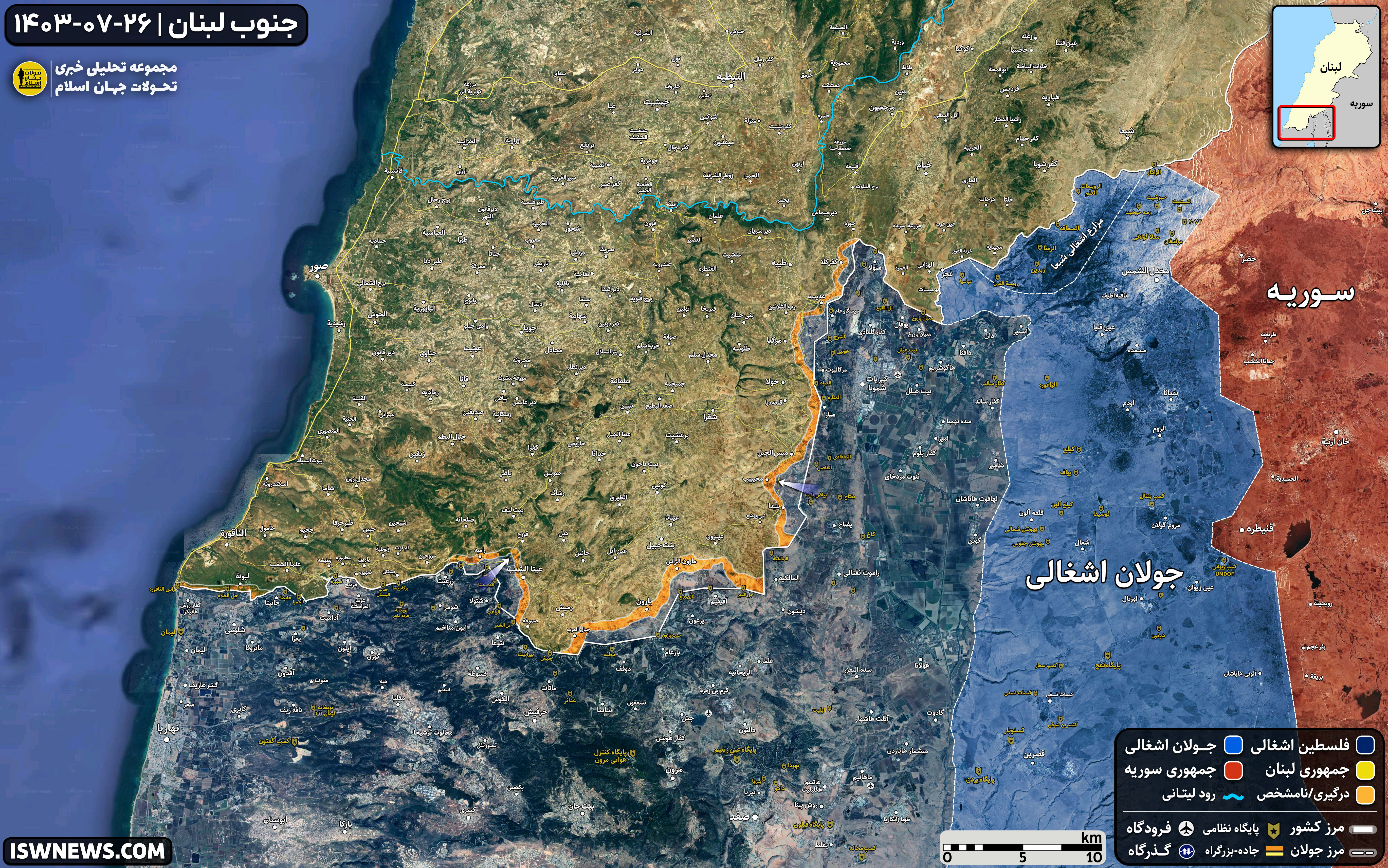
    Latest military situation in southern Lebanon – click to view full size
  • Israeli Army Destroys Entire Village Of Mhaibib

    Israeli Army Destroys Entire Village Of Mhaibib

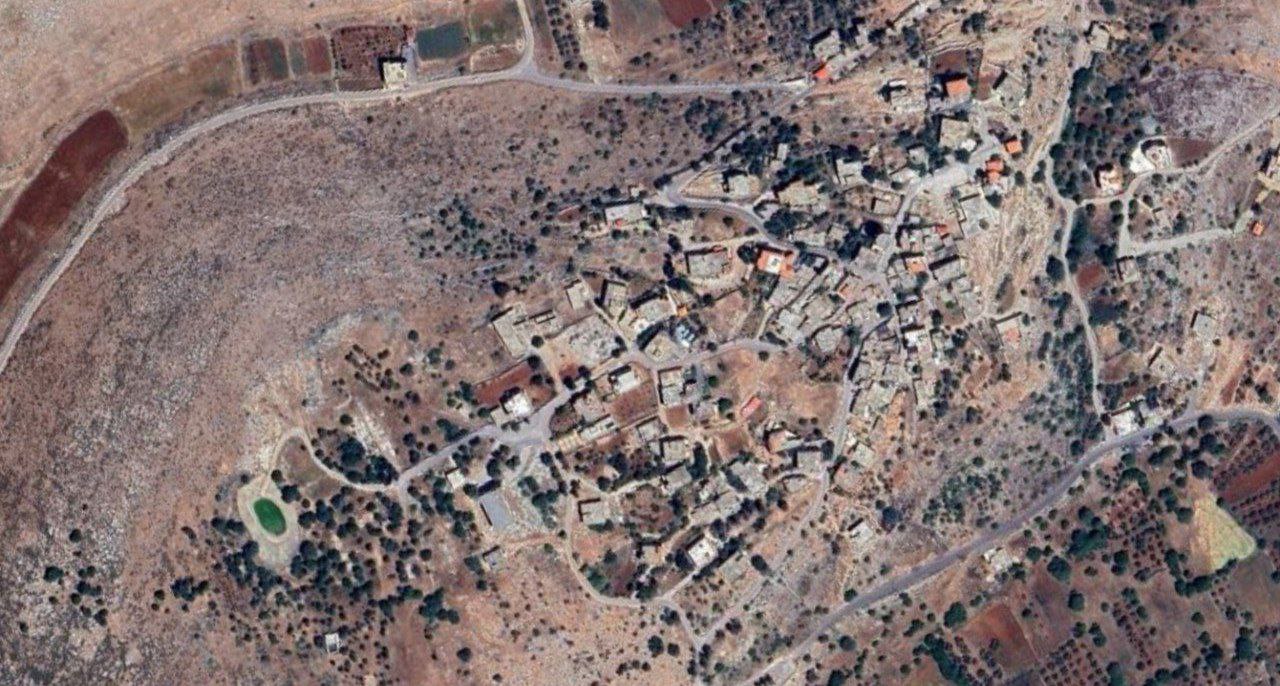
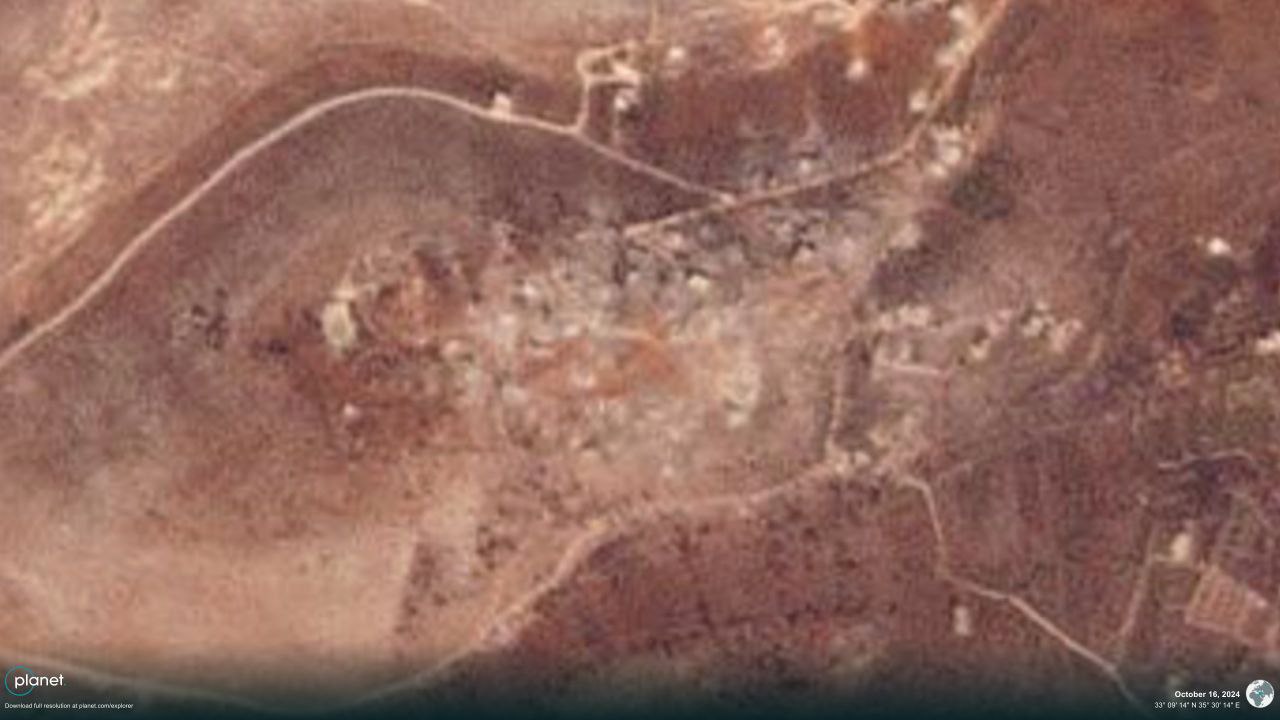
    After breaking into the village on Wednesday, October 16, they bombed most of its buildings, leading to the destruction of this historic village. The Israelis alleged that Mhaibib contains military and underground facilities belonging to Hezbollah.

    Mhaibib is a small village in the Marjaayoun town of southeastern Lebanon, located between the town of Meiss El Jabal and the village of Blida.

    It is home to an ancient shrine dedicated to the Prophet Benjamin, a figure in Judaism, and its name, Mhaibib, means beloved prophet. In 1948, the Israelis stole the Hebrew inscription from this two-thousand-year-old shrine. The village overlooked the border between occupied territories of Palestine and Lebanon and had been evacuated before the Israeli ground assault in southern Lebanon.

    The Israeli regime’s ground operations in southern Lebanon kicked off on October 1, following a series of targeted killings of Hezbollah officials and heavy bombardments across various regions in the country. The ground attacks covered the border strip from the Shebaa Farms to the Mediterranean coast, supported by over 10,000 airstrikes. The Israeli aggression against Lebanon has resulted in the martyrdom of at least 2,300 Lebanese people, the injuries of over 11,000 others, and the destruction of thousands of residential and civilian buildings.

    The moment of the complete destruction of Mhaibib village by the Zionist army
    The moment of the complete destruction of Mhaibib village by the Zionist regime’s army from an aerial view
  • Latest Updates On Southern Front of Lebanon; Blida At Risk Of Falling (Map)

    Latest Updates On Southern Front of Lebanon; Blida At Risk Of Falling (Map)

    Kfarkala and al-Udaysah:
    The confrontations between the Israeli military forces and fighters of the Lebanese resistance movement Hezbollah in the al-Udaysah and Kfarkala axis have significantly decreased.

    The reason behind the reduction in clashes in this front seems to be the repositioning of the occupying forces within the Israeli army. The responsibility for carrying out attacks in the Kfarkala and Udaysah axis was assigned to the 98th Paratroopers Division of the Israeli military. The division has currently retreated from the Kfarkala and Udaysah axis for unspecified motives, and forces from other units have replaced them.

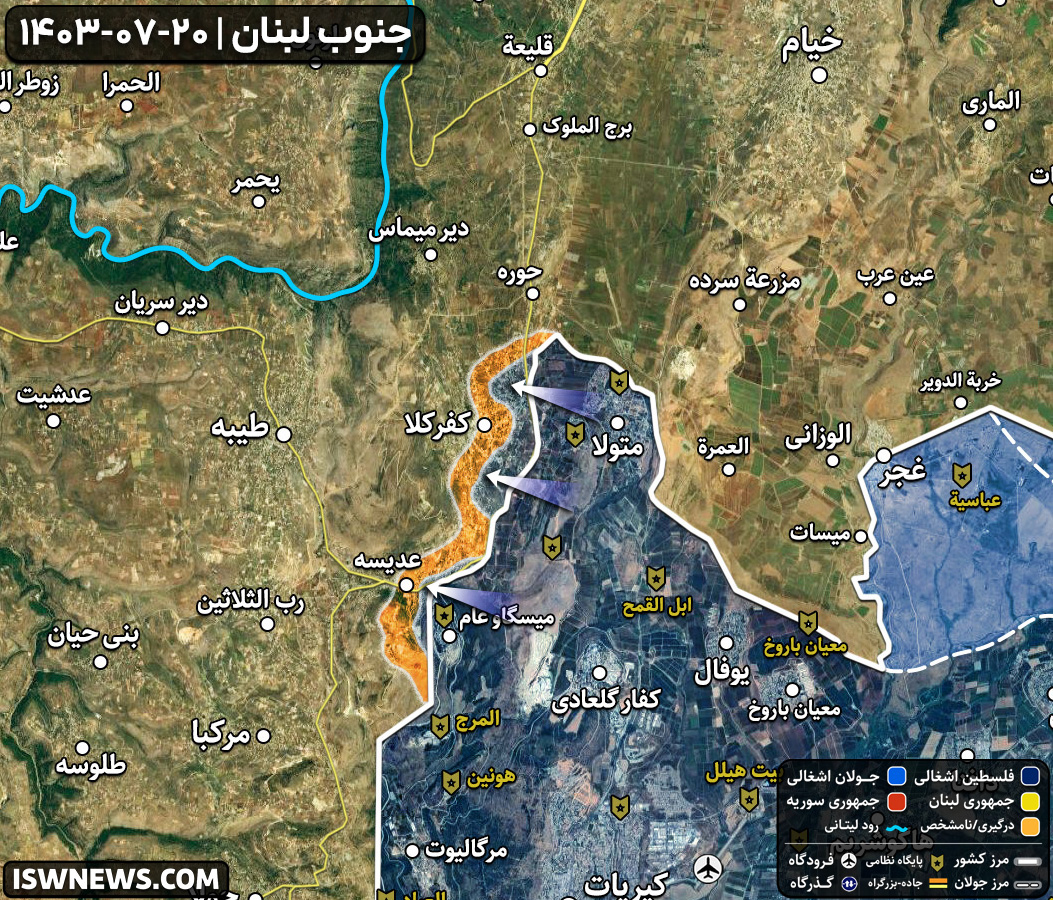
    The latest field situation in the axis of Kfarkala and Udaysah

    Meiss El Jabal, Mhaibib, and Blida:
    No specific movements from the Israeli forces have been reported in the Meiss Ej Jabal axis, but the districts between this town and the village of Mhaibib are under aerial and ground strikes. Hezbollah keeps on its efforts to inflict casualties and disrupt the advance of the Israeli army through roadside bomb explosions and rocket strikes.

    It seems that the primary objective of the Israeli military in the Meiss Ej Jabal axis is to conquer Blida and then Mhaibib, which can allow the occupying forces to pressure Hezbollah fighters in Meiss Ej Jabal from the north, south, and east.  

    The 91st Infantry Division is responsible for carrying out ground operations in the axis as well. The commander of this Israeli division hosted Chief of the General Staff Herzi Halevi and Commander of the Northern Front of the Israeli army Aluf Ori Gordin in their operational area last night. Such meetings and the dissemination of news stories about these events are aimed at psychological warfare. Off course, this is not a new issue; images of these meetings are usually recorded in closed and unspecified locations and may have taken place in the Israeli-occupied settlements.

    Israeli troopers, thanks to air support and the low-density structure of the region, have succeeded in advancing on the eastern and southern fronts of this village, which is situated in the Blida axis. The Israeli forces are currently using bulldozers and armored vehicles to demolish houses around Blida and are advancing towards the center of the village. If this trend persists, it is likely that one can witness the fall of the first village in southern Lebanon in the coming week.

    Maroun el-Ras, Yaroun, and Rmaych:
    In this axis, the situation remains unclear as a result of the lack of people’s access to border region. Nevertheless, it can be said with certainty that confrontations continue in the southern outskirts of Maroun el-Ras and Yaroun villages.

    Hezbollah’s statement regarding the strike on a gathering of Israeli troops at the Tal Sha’ar military base in the southwest of the Rmaych (or Rmeish) village indicates that the Israeli army keeps on its efforts to enter Lebanese territory not only from the southern Rmeish axis but also from the western axis of this area.

    The latest field situation in the axis of Meis al-Jabal and Marun al-Ras

    Naqoura and Labbouneh:
    In the Naqoura and Labbouneh axis, the Israeli army has carried out five strikes since Thursday to infiltrate Lebanese territory, which have faced heavy rocket attacks and roadside bomb explosions. Hezbollah’s strikes resulted in the destruction of two Israeli military vehicles or tanks.

    So far, the Israeli army has not released details about their new casualties on the southern front of Lebanon; however, medical staff in northern occupied Palestine have reported the transfer of over 10 injured troopers to hospitals in these territories.

    Israeli tanks targeted the observation tower of a base belonging to the UNIFIL (United Nations peacekeeping forces stationed in Lebanon) during one of Thursday’s attacks in the southern Naqoura region, resulting in injuries to two Italian peacekeeping forces. Following the deliberate assault by the Israeli army on the UNIFIL base, the Italian government summoned the Israeli ambassador to Rome and expressed its protest regarding the regime’s actions. France has also supported Italy’s stance and summoned the Israeli ambassador in its capital city Paris.

    The Israeli regime’s military intends to reach Ras el-Naqoura through the Al-Mashirfeh area, but Hezbollah’s strikes from forested regions are hindering their advance.

    The latest military situation in the axis of Ras al-Naqourah

    The extensive invasion of the Israeli regime’s army against Lebanon began to intensify after the assassination of Secretary-General of Hezbollah Sayyed Hassan Nasrallah, and the regime’s military has kicked off a ground phase with operations along the southern borders of Lebanon since October 1.

    These assaults have so far resulted in the martyrdom of 2,229 Lebanese civilians and injuries to 10,380 others, as well as the martyrdom of over 500 Hezbollah fighters. On the other side, more than 40 Israelis, including 11 troops, have been killed in Hezbollah’s retaliatory strikes on northern occupied Palestine.

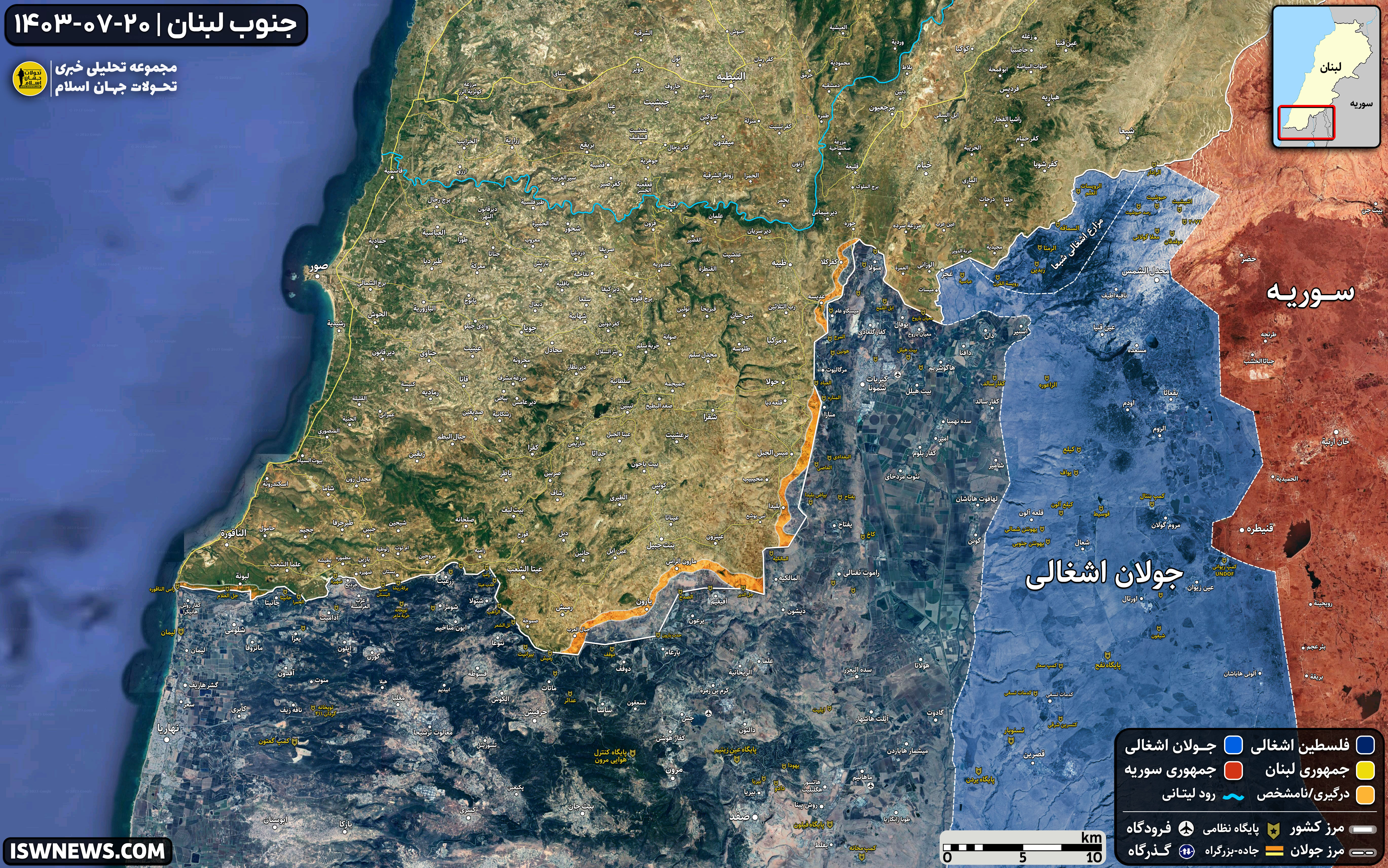
    The latest military situation in southern Lebanon – click to view in full size