Under the ceasefire agreement, the Israeli army will gradually withdraw from various areas of the Gaza Strip over the coming days and weeks, in stages.
Initial Withdrawal: Israeli forces left the southern areas of Beit Lahia and Jabalia yesterday, re-establishing the connection between northern Gaza and Gaza City. Displaced residents in the north are returning home.
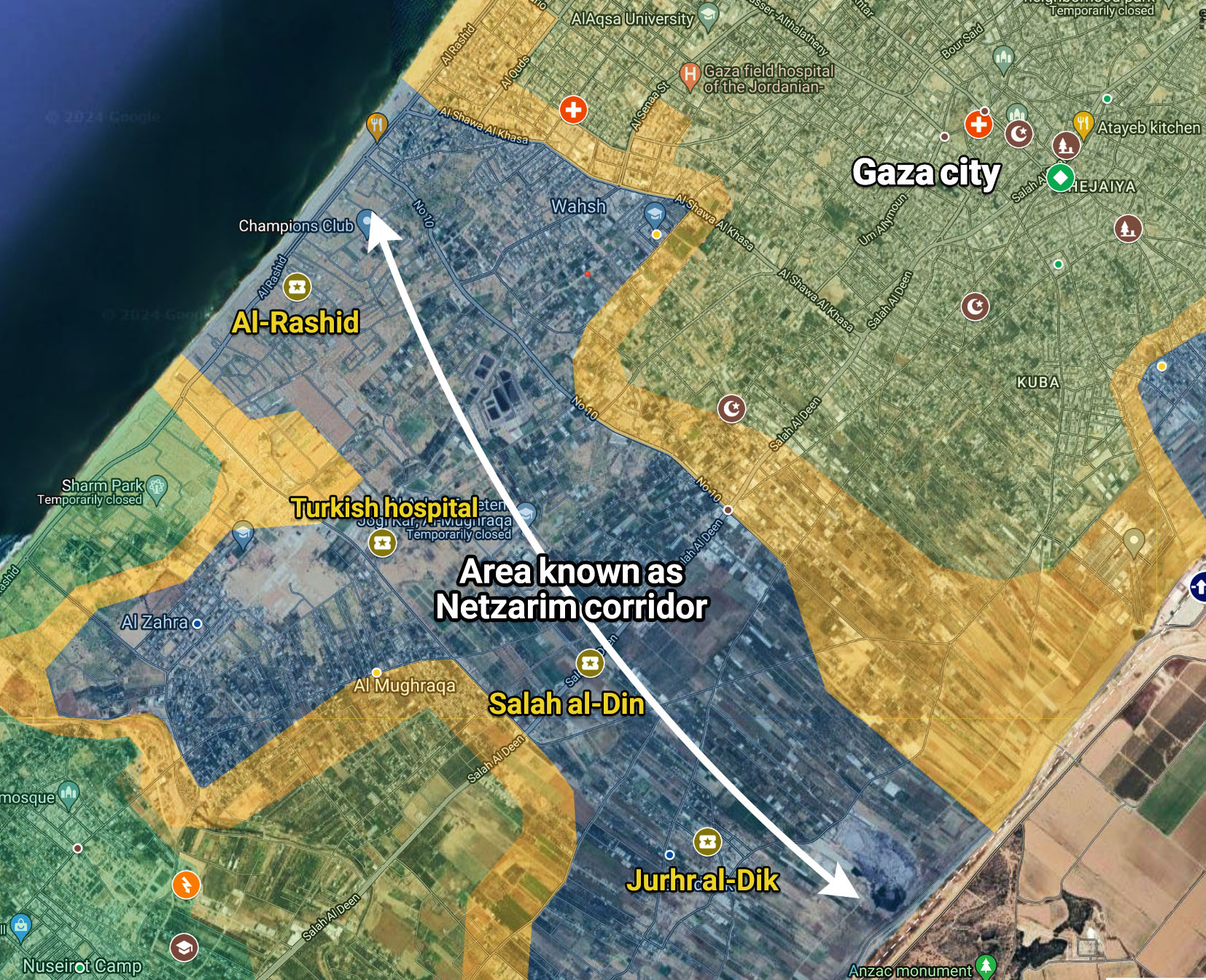
Next Steps: On the seventh day of the agreement, Israeli forces will begin withdrawing from the Netzarim axis in central Gaza. They will initially move from Al-Rashid Street to Salah al-Din Street, and by the twenty-second day, will retreat to the buffer zone on the Gaza border, reopening travel routes for Palestinians.
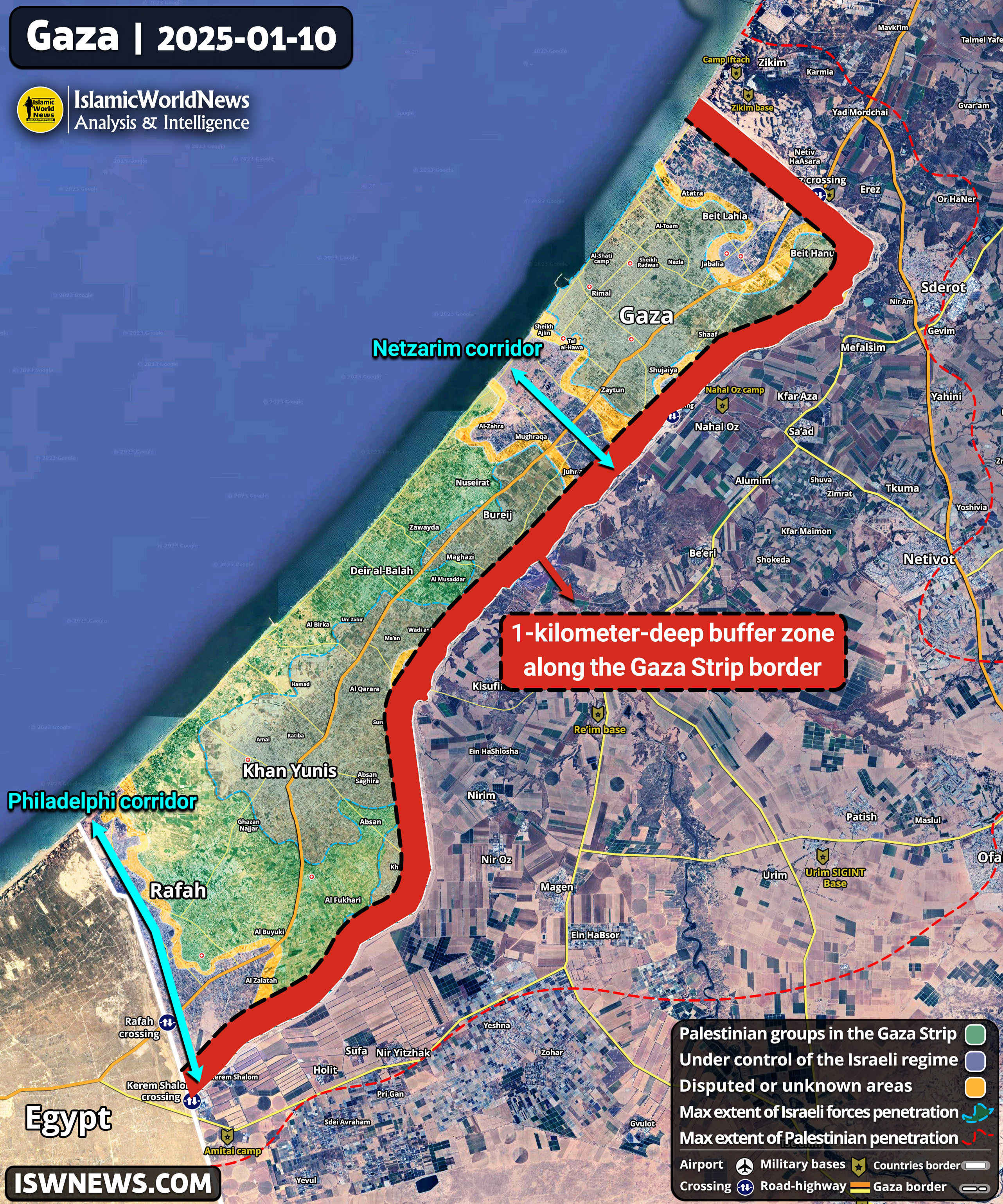
Final Phase: On the 50th day, Israeli forces will fully withdraw from southern Gaza and the Philadelphi axis, redeploying to a 1-kilometer-deep buffer zone along the Gaza border.
Avichay Adraee, the Arab spokesman for the Israeli army, released a map showing the locations of Israeli forces in Gaza. He noted that currently, movement from south to north Gaza is dangerous due to Israeli presence on the Netzarim axis. Starting next week, Palestinian civilians will be able to return to northern Gaza. Activities such as fishing, swimming, diving, and approaching buffer zones, the Rafah crossing, and the Philadelphia axis will remain prohibited.
The buffer zone covers an area of 58 square kilometers, accounting for 16 percent of the total Gaza Strip area. In this zone, at least 4,100 buildings have been completely destroyed. Previously, the buffer zone depth was 300 meters, but the Israeli army increased it to around 1 kilometer in recent months.
Additionally, in the Netzarim axis in central Gaza Strip, an area of 49 square kilometers, or 13.5 percent of the Gaza Strip, has been occupied by the Israeli army, with residential buildings completely destroyed. The Netzarim axis was established during the Israeli army’s ground operations to cut off land connections between Gaza City and southern Gaza Strip. The Zionist regime has established four bases in this axis to consolidate its positions and enhance its presence and influence.
The so-called Netzarim corridor and four Israeli army bases on this axis
Here’s a rephrased version:
In the Philadelphia axis south of Rafah in the southern Gaza Strip, the Israeli army has occupied 12 square kilometers, equivalent to 3 percent of the total Gaza Strip area. To maintain a permanent presence, the Israeli military has destroyed at least 6,932 buildings in this zone.
Consequently, approximately 32.5 percent of the Gaza Strip is currently destroyed and occupied by the Israeli military. These areas are permanently occupied by Israeli forces, with troops stationed there constantly. In other areas of the Gaza Strip, the presence of Zionist forces manifests through short-term, temporary operations and raids.
The buffer zone on the border between the Gaza Strip and the occupied territories on the Netzarim and Philadelphi axis
The extensive and total destruction of buildings in these areas has made it impossible for the Palestinian refugees to return.
In recent months, the Israeli army has laid the groundwork for the permanent occupation of parts of Gaza and the creation of buffer zones by conducting several military operations in the north, center, and south of the Gaza Strip. According to Israeli claims, these buffer zones and the continuous presence of Israeli soldiers aim to tighten the siege on Gaza’s resistance forces and, in turn, reduce attacks on Israeli settlements around Gaza.
However, recent actions by resistance fighters indicate that the presence of Israeli soldiers has not completely halted their attacks. Despite the buffer zones and the continuous raids by Israeli soldiers in various parts of the Gaza Strip, rocket attacks by resistance groups persist.
The establishment of buffer zones and the complete withdrawal of Israeli soldiers from Gaza have long been contentious issues in negotiations between Hamas and the Israeli regime. Recently, there has been speculation about the possible withdrawal of Israeli forces from the Netzarim and Philadelphi axes as part of an initial ceasefire agreement, but this has not yet been confirmed, and negotiations are still ongoing without specific conclusions.