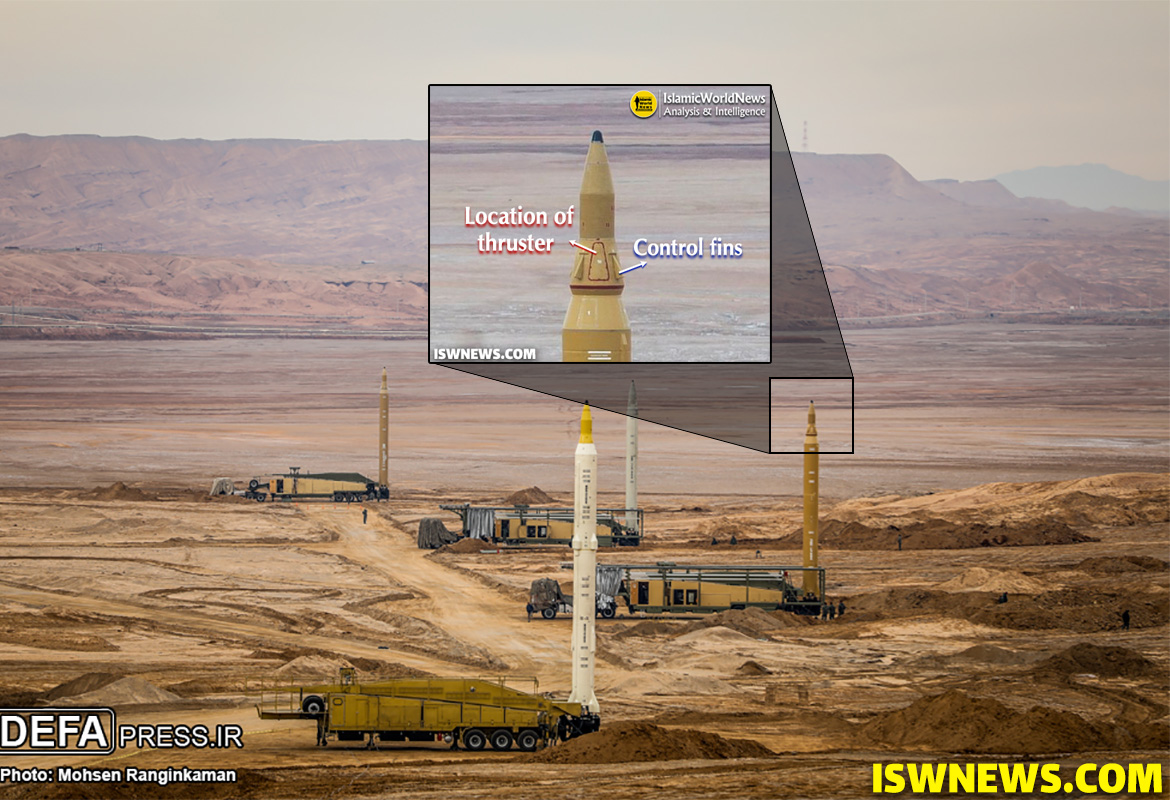
Tag: Qadr medium-range ballistic missile

  • Military Knowledge: Qadr Ballistic Missile

    Military Knowledge: Qadr Ballistic Missile

    The Qadr missile is a medium-range ballistic missile based on the Shahab 3 missile. In the past, this missile was also called Qadr 1, Qadr 110 and Qadr 101.

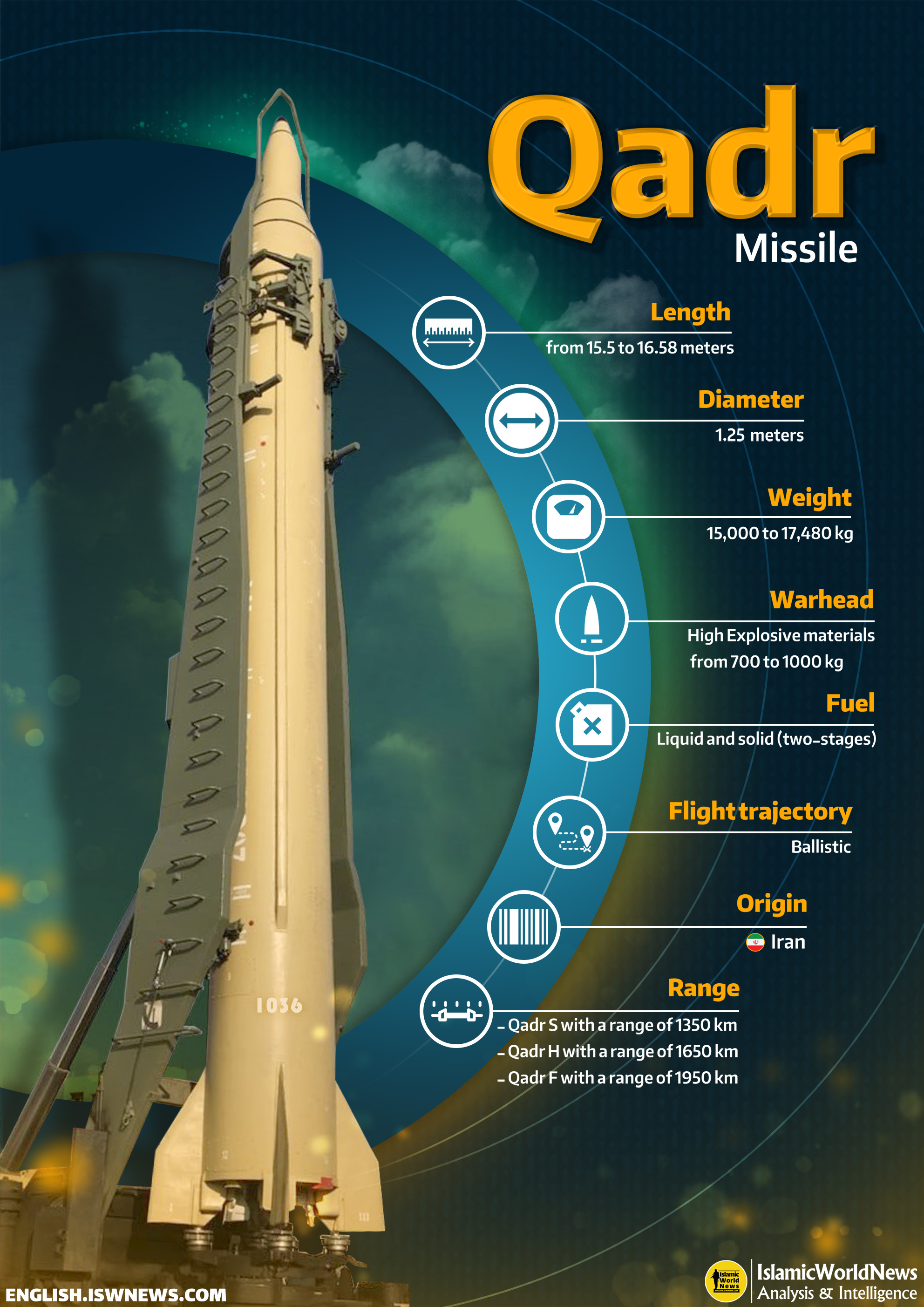
    The Qadr missile was unveiled for the first time in an annual parade marking the anniversary of the start of the Iran-Iraq war. This missile has been produced in three types: “Qadr S” with a range of 1,350 km, “Qadr H” with a range of 1,650 km and “Qadr F” with a range of 1,950 km.

    The Qadr missile set-up time is 30 minutes and is much faster than the Shahab 3 missile, which takes hours to install and launch. Some sources consider the Qadr missile a two-stage missile, the first stage is liquid fuel and the second stage, which is related to detachable warheads, is solid fuel. However, some sources believe this missile to be just liquid fuel.

    The speed of the “Qadr F” missile is estimated at Mach 9 and its navigation system is based on inertia-GPS guidance.

    The Qadr F missile is capable of carrying warheads weighing up to 1000 kg. Qadr series missiles also have warheads in different types such as blast and cluster.

    Qadr ballistic missile specifications:
    Length: from 15.5 to 16.58 meters
    Diameter: 1.25 meters
    Weight: 15,000 to 17,480 kg
    Warhead: High Explosive materials from 700 to 1000 kg
    Fuel: Liquid and solid (two-stages)
    Range:
    Qadr S with a range of 1350 km
    Qadr H with a range of 1650 km
    Qadr F with a range of 1950 km
    Flight trajectory: Ballistic
    Origin: Iran

    Read more: Iran Unveils “Exo-Atmospheric Trajectory Maneuvering Technology” for its Ballistic Missiles
    Click to see the full size image

    Qadr Ballistic Missile collection of posters in Persian, Arabic, Kurdish, Azeri, Russian for Social Media:

  • Iran Unveils “Exo-Atmospheric Trajectory Maneuvering Technology” for its Ballistic Missiles

    Iran Unveils “Exo-Atmospheric Trajectory Maneuvering Technology” for its Ballistic Missiles

    The technology or maneuverability of warhead outside atmosphere is performed with the help of pressurized gas thrusts or dual liquid fuel, and by changing the direction of the warhead, the trajectory is variable and the exact direction of the warhead is unpredictable. Therefore, this capability greatly reduces the chances of an air defense missile hitting a warhead.

    The exo-atmospheric trajectory maneuvering technology, in addition to increase accuracy, guiding and maneuvering of Qadr missile in the atmosphere enhances its penetrability against missile defenses.

    The maneuverability of medium- to high-range ballistic missile warheads can be achieved in two ways: maneuverability outside the atmosphere and hypersonic flight in the atmosphere. Considering the challenges of hypersonic wave rider warheads such as temperature management, guidance, materials and manufacturing process, the exo-atmospheric maneuvering method seems to be the most optimal option considering the performance, cost and time to upgrade conventional ballistic missile warheads in order to escape the air defense missiles.

    For example, in this method, the old warheads can be upgraded and there is no need to use new complex and expensive refractory materials; The base design of the warheads does not change much and there is no need to design from the base.

    According to studies, apparently the only country that has officially unveiled and used exo-atmospheric maneuvering technology so far is Russia and the Topol-MR intercontinental ballistic missile. Now, with this unveiling, Iran is one of the owners of this technology.

    Qadr missile exo-atmospheric warhead
    Topol-MR intercontinental ballistic missile