Tag: SAAB

  • Military Knowledge: Saab JAS 39 Gripen Fighter Jet

    Military Knowledge: Saab JAS 39 Gripen Fighter Jet

    History
    In the late 1970s, Sweden sought to replace its aging Saab 35 Draken and Saab 37 Viggen. Early proposals included the Saab 38, also called B3LA, intended as an attack aircraft and trainer, and the A 20, a development of the Viggen that would have capabilities as a fighter, attack and sea reconnaissance aircraft. Several foreign designs were also studied, including the General Dynamics F-16 Fighting Falcon, the McDonnell Douglas F/A-18 Hornet, the Northrop F-20 Tigershark and the Dassault Mirage 2000. Ultimately, the Swedish government opted for a new fighter to be developed by Saab.

    On 30 June 1982, with approval from the Riksdag, the FMV issued contracts worth SEK 25.7 billion to Saab, covering five prototypes and an initial batch of 30 production aircraft. By January 1983, a Viggen was converted to a flying test aircraft for the JAS 39’s intended avionics, such as the fly-by-wire controls. The JAS 39 received the name Gripen (griffin) via a public competition, which is the heraldry on Saab’s logo.

    Saab launched the first Gripen on April 26, 1987, on the occasion of the company’s 50th anniversary. This company managed to make the first flight in 1988 by developing the JAS 39 design. In 1993, its first aircraft was delivered, which was able to enter the service of the Swedish Air Force in 1996.

    For the international marketing of this aircraft, Saab made joint efforts with aerospace companies outside of Sweden. In the export market, early Gripen models achieved moderate success with sales to countries in Central Europe, South Africa, and Southeast Asia.

    A 2007 report by the European Union Institute for Security Studies stated the total research and development costs of Gripen were €1.84 billion. According to a study by Jane’s Information Group in 2012, the Gripen’s operational cost was the lowest among several modern fighters; it was estimated at $4,700 per flight hour. The Swedish Ministry of Defense estimated the cost of the full system, comprising 60 Gripen E/F, at SEK 90 billion distributed over the period 2013–42. The Swedish Armed Forces estimated that maintaining 100 C/D-model aircraft until 2042 would cost SEK 60 billion (€6.6 billion in 2013), while buying aircraft from a foreign supplier would cost SEK 110 billion (€12.1 billion).

    Design
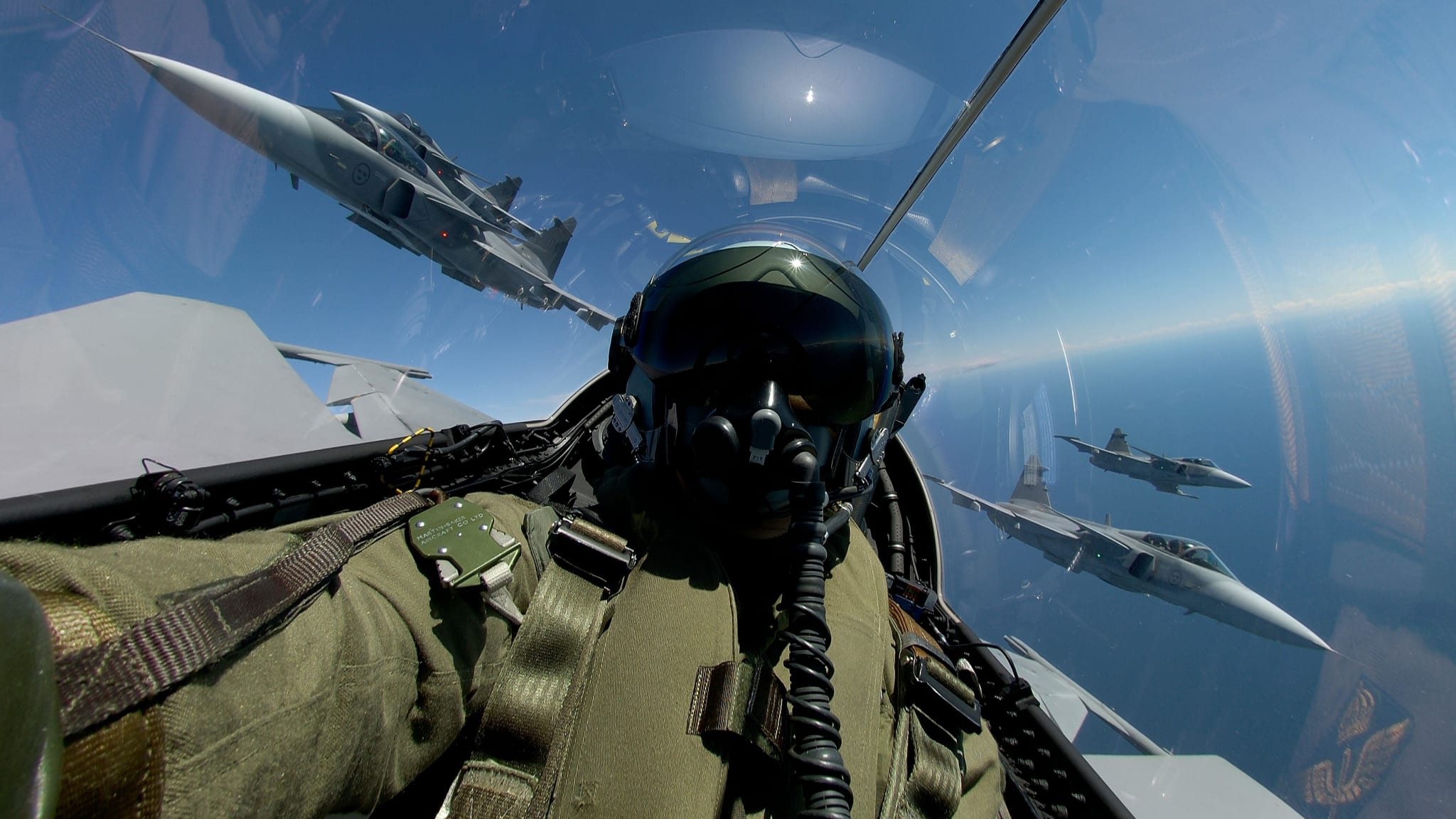
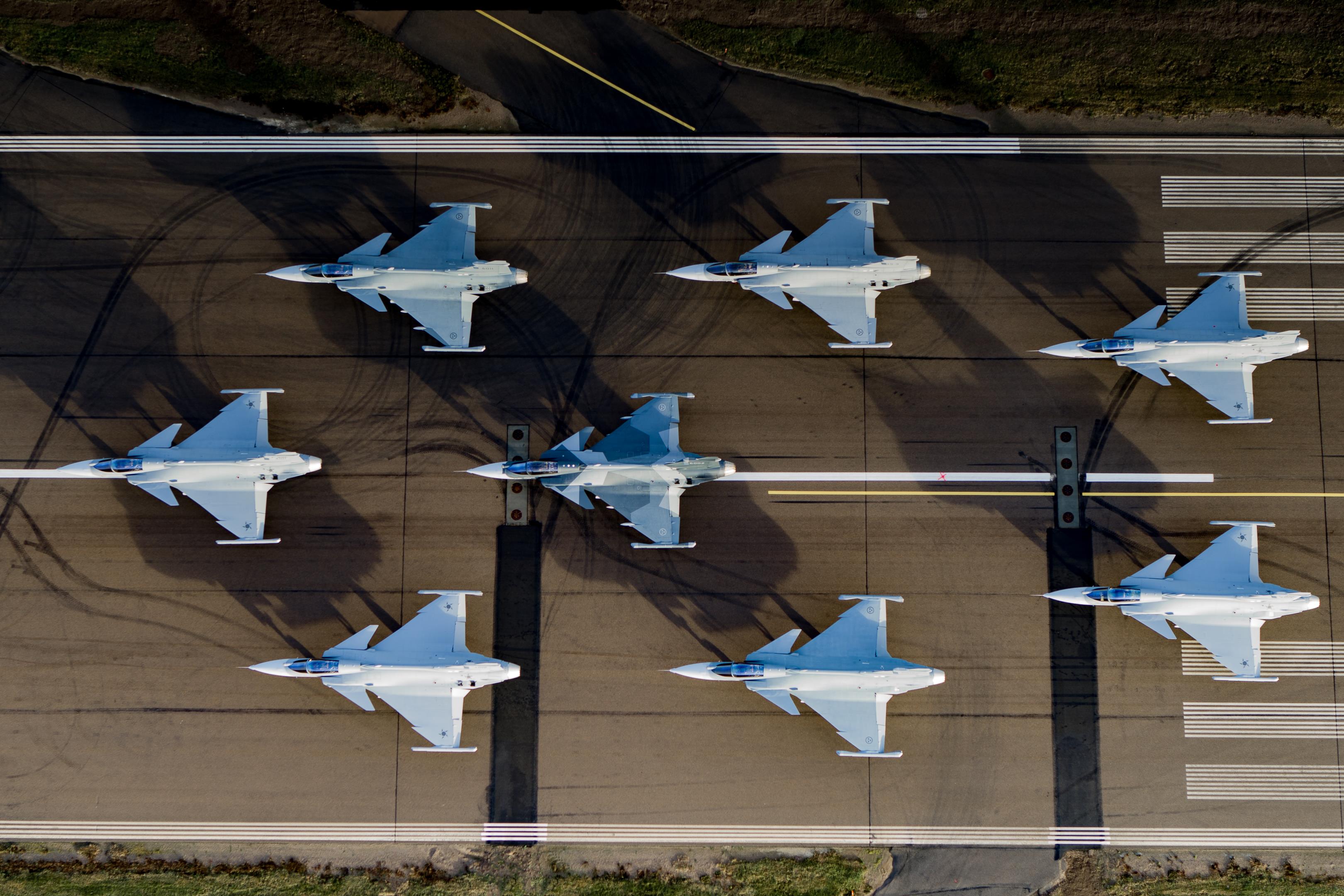
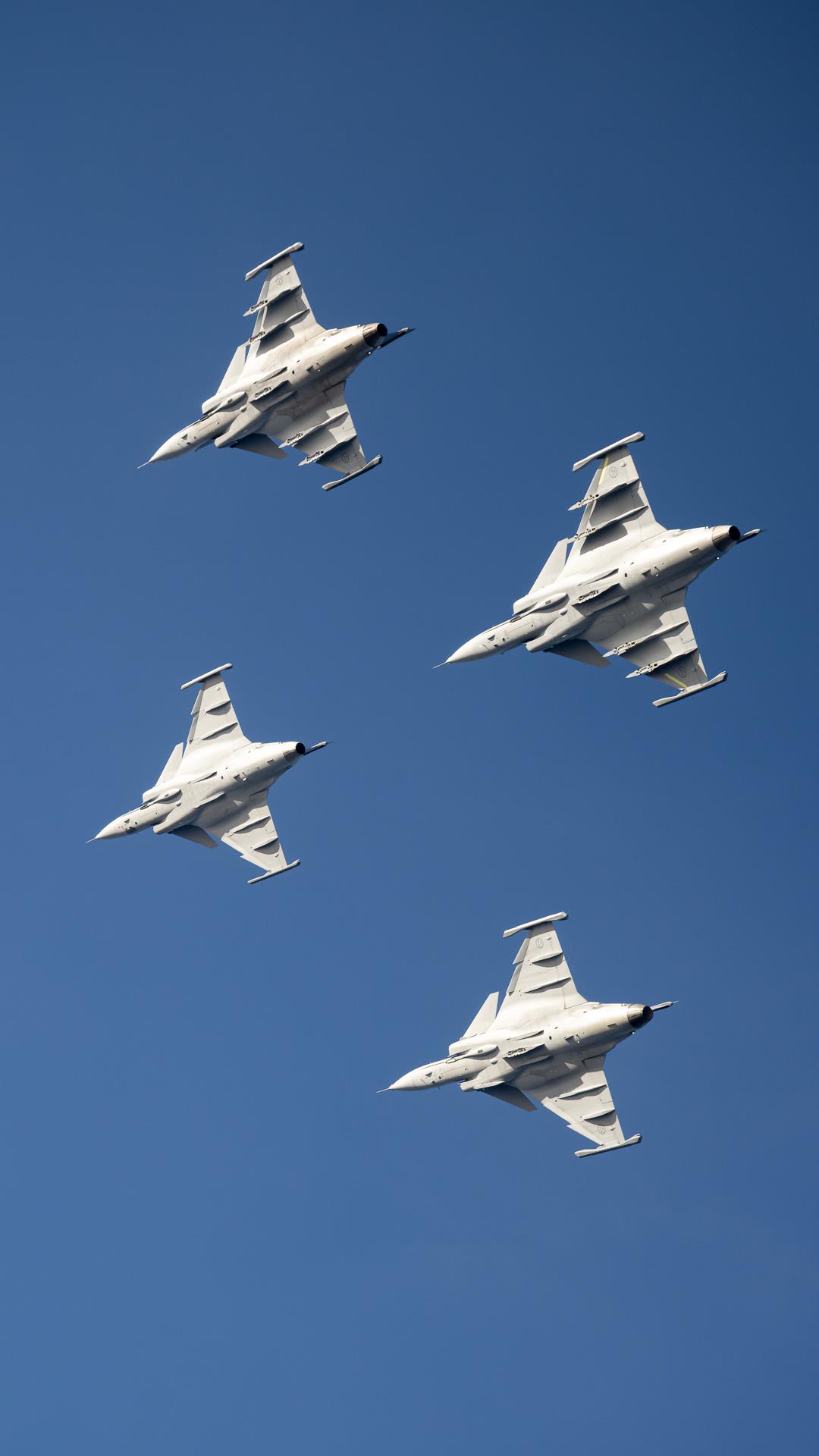
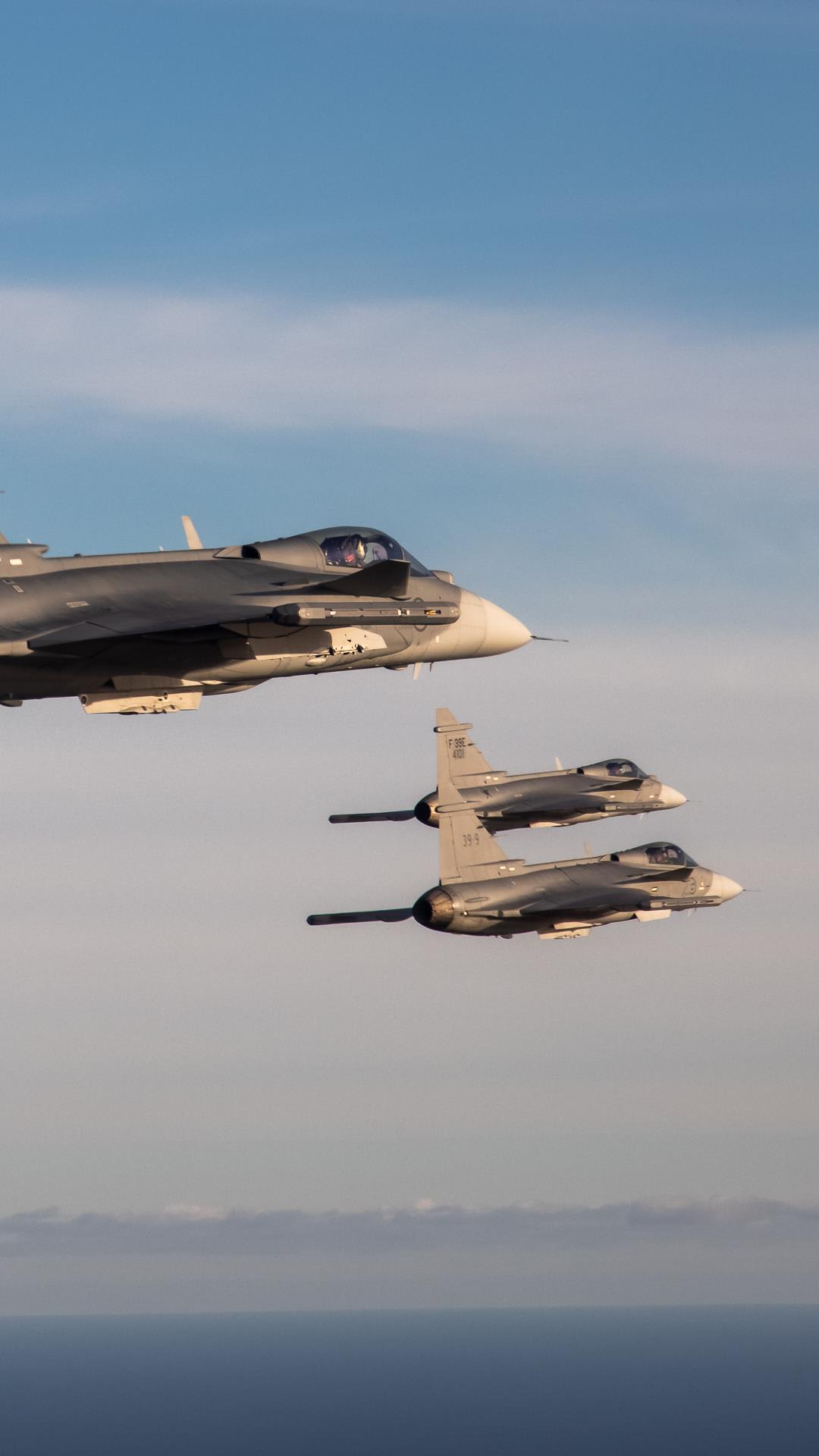
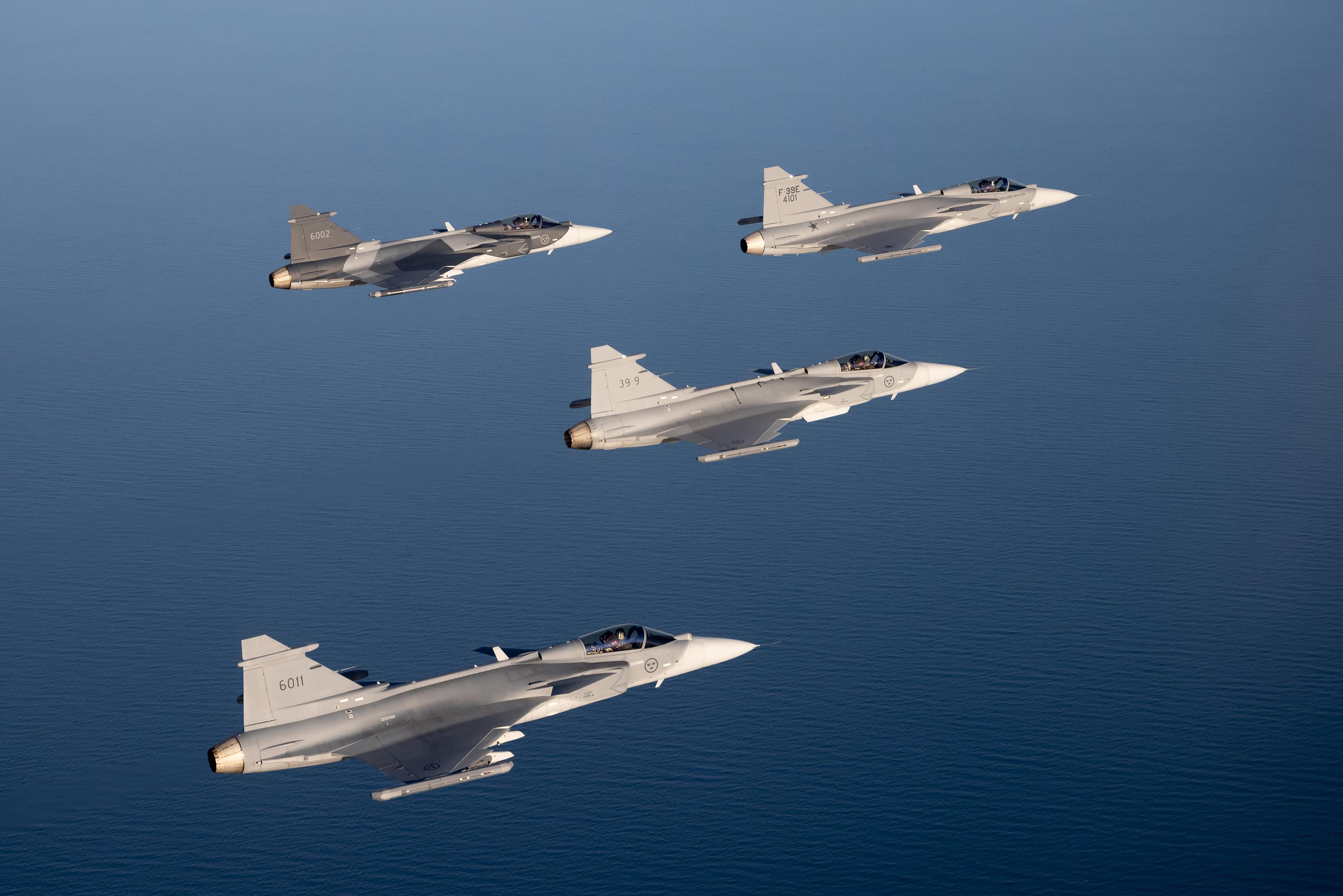
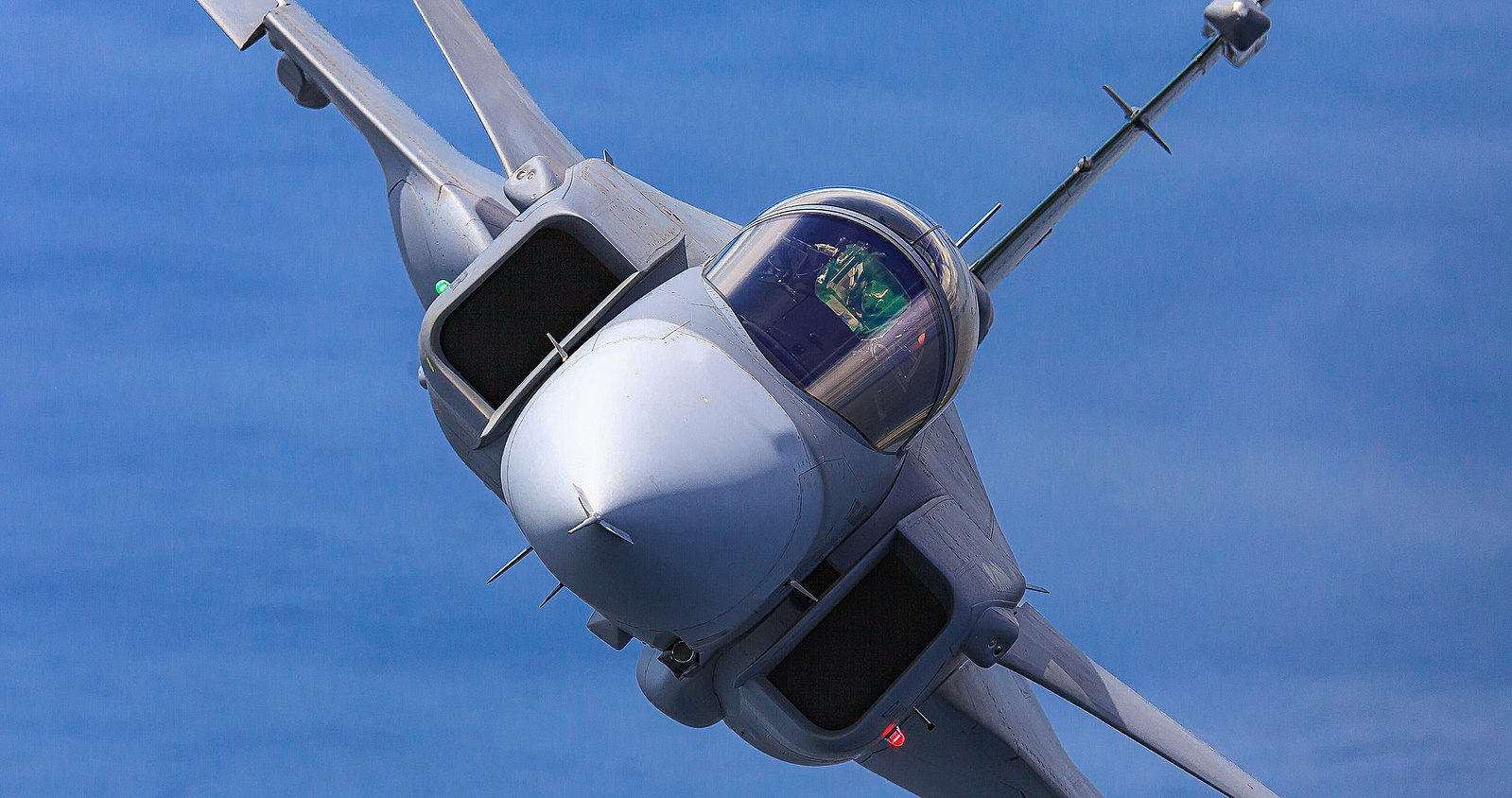
    The JAS 39 Gripen fighter jet is a light single-engine supersonic multirole fighter jet with a delta wing and canard configuration with relaxed stability design and fly-by-wire flight controls. The engine used in this fighter jet is called Reaktionsmotor 12 (RM12), which is a licence-built derivative of the General Electric F404−400. The RM12 engine is produced by the Swedish company Volvo Aero, which was sold to the English company GKN Ltd in 2012.
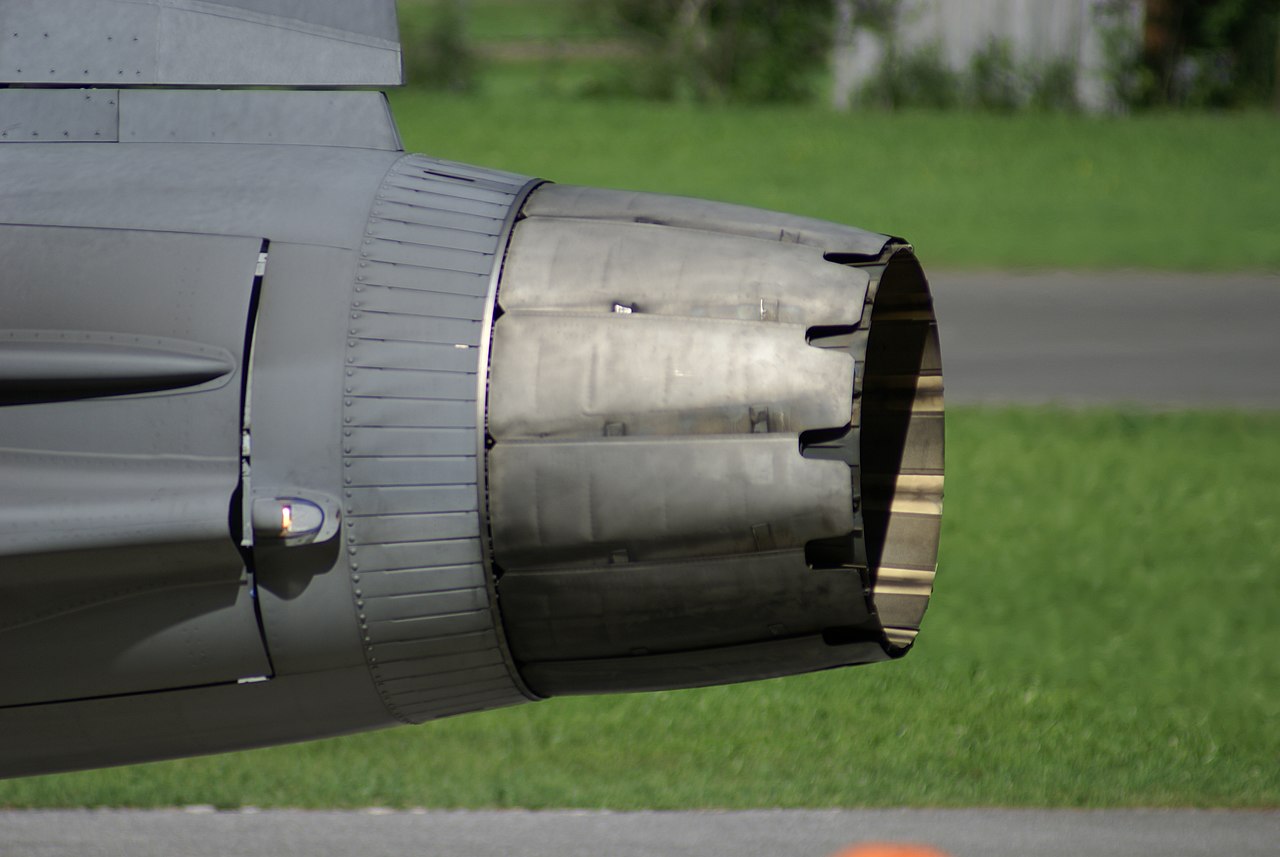
    Volvo RM12 engine

    The Gripen fighter jet uses the PS-05/A radar, which is a 156 kg pulse doppler radar currently installed on the A, B, C and D models. The PS-05/A radar works in the 8-10 GHz band and has an energy output of 1 kW (more than 10 kW maximum output) and can automatically identify, locate and track multiple targets in the upper and lower spheres, land and sea or air in any weather condition. The PS-05/A family radars were developed by Ericsson in collaboration with GEC-Marconi.

    Variants and upgrades

    • Gripen A, or JAS 39A: initial single seat version that entered service with the Swedish Air Force in 1996. A number have been upgraded to the C standard or been converted to 39D at a 2:1 ratio.
    • Gripen B, or JAS 39B: two-seat version of the 39A for training, specialised missions and type conversion. To fit the second crew member and life support systems, the internal cannon and an internal fuel tank were removed and the airframe lengthened 0.66 m.
    • Gripen C, or JAS 39C: NATO-compatible single seat version with extended capabilities in terms of armament, electronics, etc. Can be refuelled in flight. Variant was first deliveried on 6 September 2002.
    • Gripen D, or JAS 39D: two-seat version of the JAS 39C, with similar alterations as the JAS 39B.
    • Gripen NG: Follow-on the Gripen Demo technology demonstrator. Changes from the JAS 39C include the more powerful F414G engine, Raven ES-05 AESA radar, increased fuel capacity and payload, and two additional hardpoints. These improvements reportedly increased costs to an estimated 24,000 Swiss Francs (US$27,000) per hour, and the flyaway cost to 100 million Swiss Francs (US$113M).
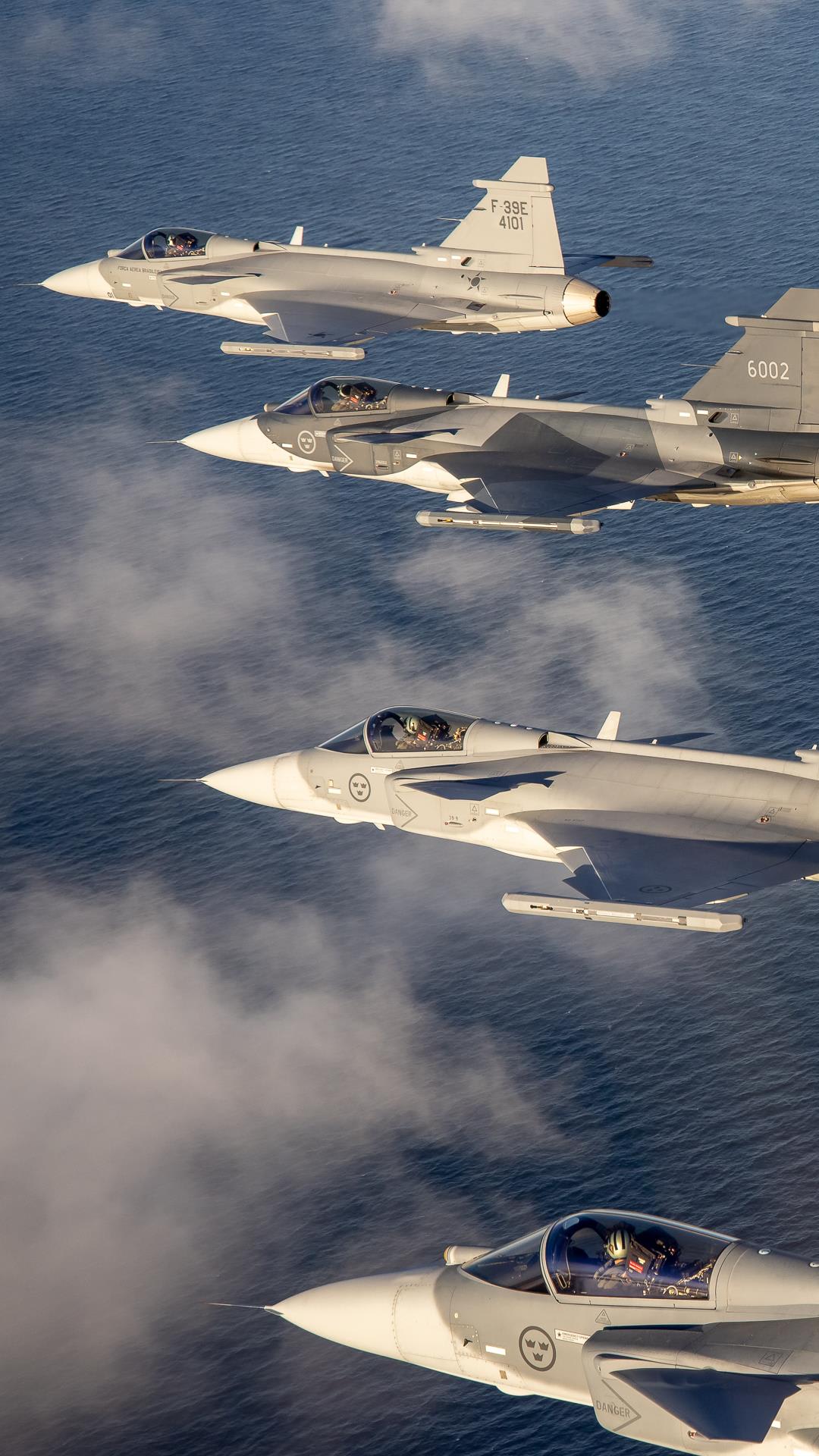
    • Gripen E, or JAS 39E: single-seat production version developed from the Gripen NG program, priced at US$85 million per unit. Sweden and Brazil have ordered the variant. Brazil’s designation for this variant is F-39E.
    • Gripen F, or JAS 39F: two-seat version of the JAS 39E. Eight ordered by Brazil, to be developed and assembled in Brazil; planned for pilot training and combat, being optimized for back seat air battle management, with jamming, information warfare and network attack, besides weapon system officer and electronic warfare roles Brazil’s designation for the variant is F-39F.
    Click to view full size

    Specifications

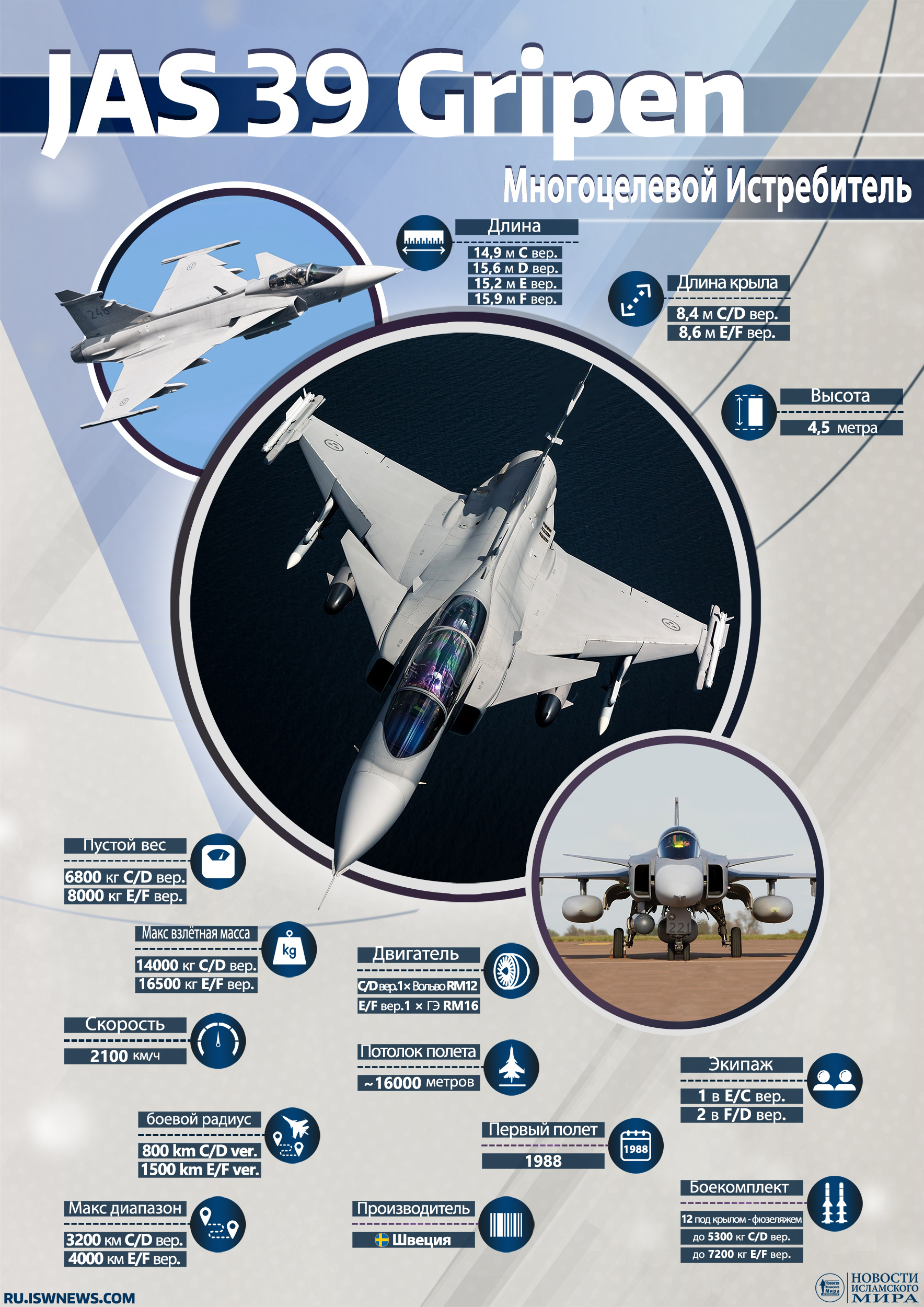
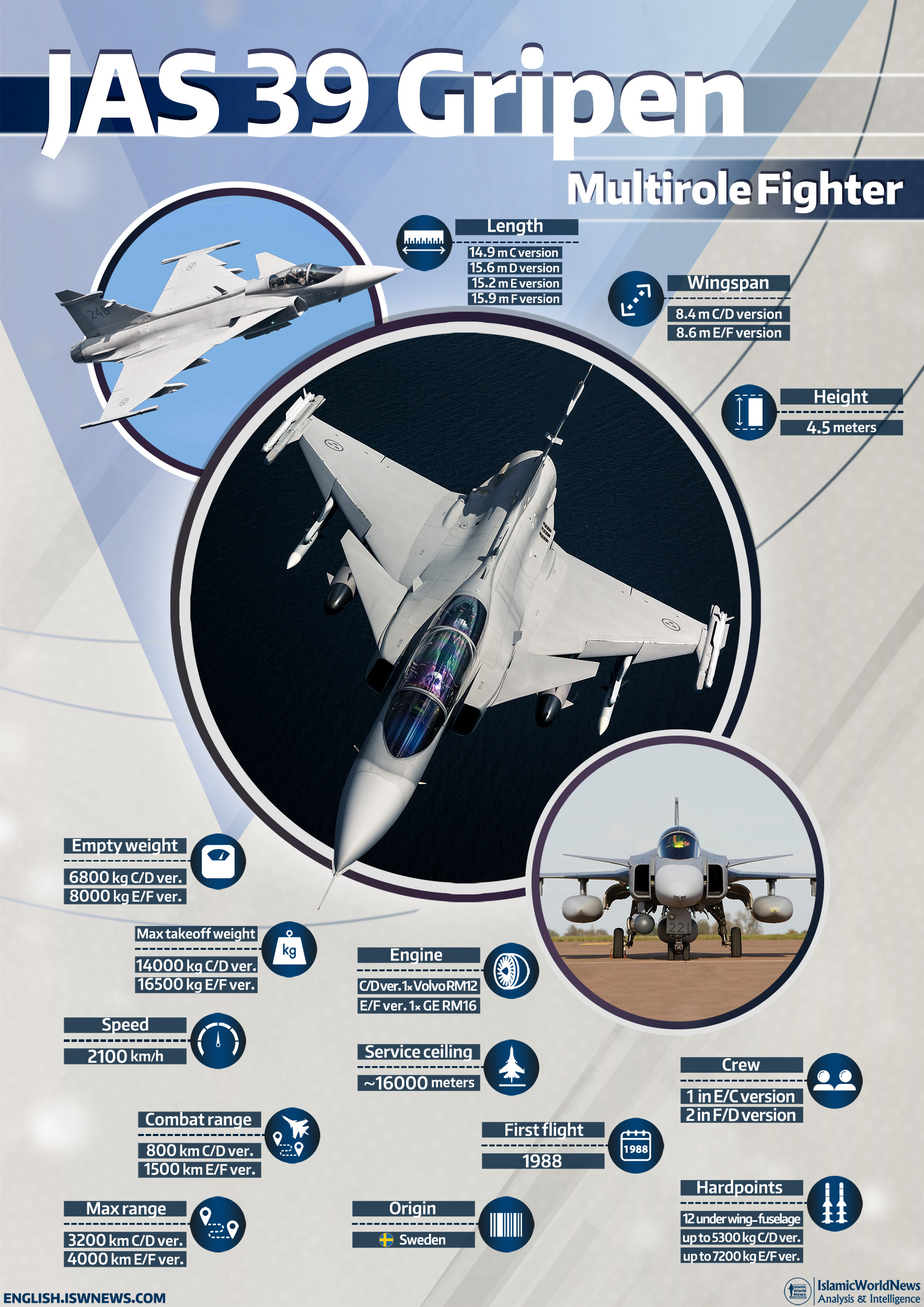
    JAS 39C/D specifications:
    Crew: 1 JAS 39C / 2 JAS 39D
    Length: 14.9 m JAS 39C / 15.6 m JAS 39D
    Wingspan: 8.4 m
    Height: 4.5 m
    Empty weight: 6,800 kg
    Max takeoff weight: 14,000 kg
    Fuel capacity: 3,000 L (internal); 3,500 L (external)
    Payload: 5,300 kg
    Powerplant: 1× Volvo RM12 afterburning turbofan engine, 54 kN thrust dry, 80.5 kN with afterburner
    Maximum speed: Mach 2 (2,100 km/h)
    Combat range: 800 km
    Ferry range: 3,200 km
    Service ceiling: 15,240 m (50,000 ft)
    Armament
    Guns: 1× 27 mm Mauser BK-27 revolver cannon with 120 rounds (single-seat models only)
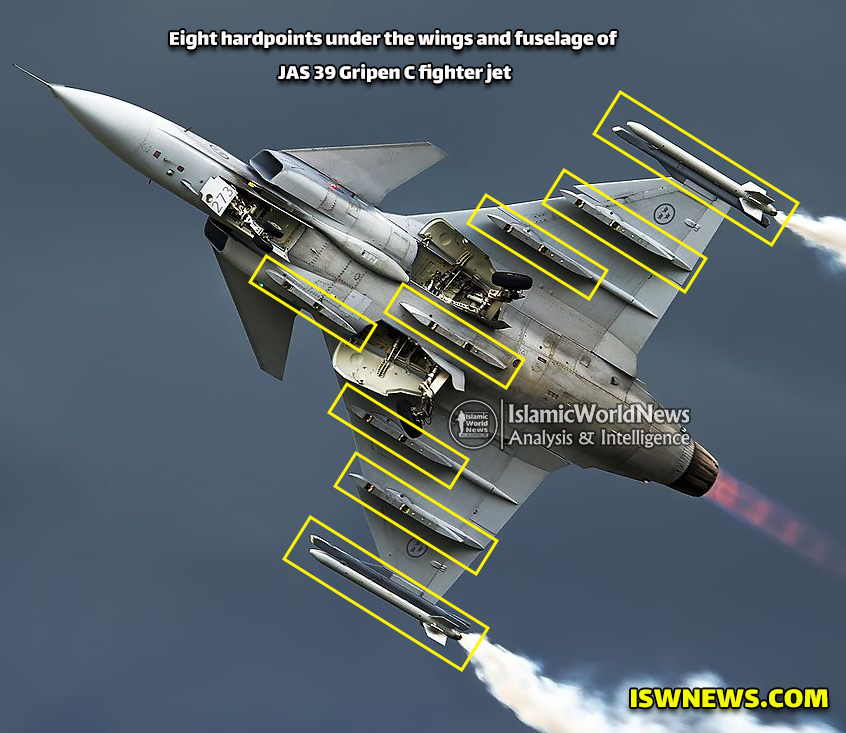
    Hardpoints: 8 (two hardpoints under fuselage, two under each wing, and one on each wing tip, with one of these for FLIR / ECM / LD / Recon pod) with a capacity of 5,300 kg.

    JAS 39E/F specifications:
    Crew: 1 JAS 39E / 2 JAS 39F
    Length: 15.2 m JAS 39E / 15.9 m JAS 39F
    Wingspan: 8.6 m
    Height: 4.5 m
    Empty weight: 8,000 kg
    Max takeoff weight: 16,500 kg
    Fuel capacity: 4,360 L (internal); 4535 L external with 3 drop tanks
    Payload: 7,200 kg
    Powerplant: 1× General Electric F414-GE-39E (RM16) afterburning turbofan engine, 61.83 kN thrust dry, 98 kN with afterburner
    Maximum speed: 2,100 km/h
    Combat range: 1,500 km
    Ferry range: 4,000 km
    Service ceiling: 16,000 m (52,000 ft)
    Armament
    Guns: 1 × 27 mm Mauser BK-27 revolver cannon with 120 rounds (single-seat models only
    Hardpoints: 10 (three hardpoints under fuselage, two under each wing, one on each wing tip, and one dedicated for FLIR / LD / Recon pod) with a capacity of 7,200 kg.

    Avionics
    Selex ES-05 Raven AESA radar
    Skyward-G IRST system
    Air-to-air and air-to-surface tactical data link system
    Wide Area Display (WAD) (single screen display)
    Targo helmet mounted display (HMD)
    ANVIS advanced night vision system/head up display (HUD)
    Saab JAS 39 Gripen Fighter Jet – click to view full size

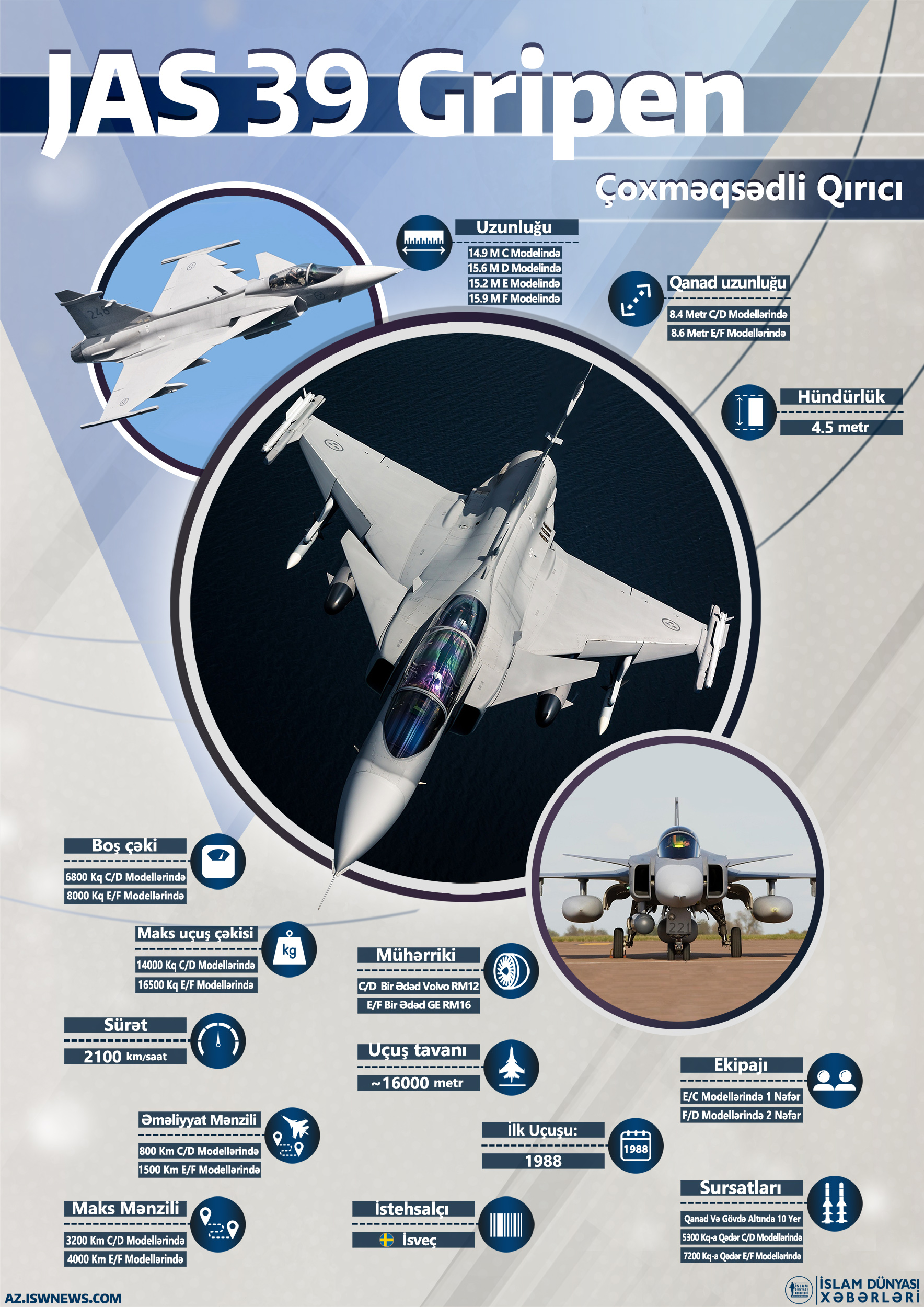
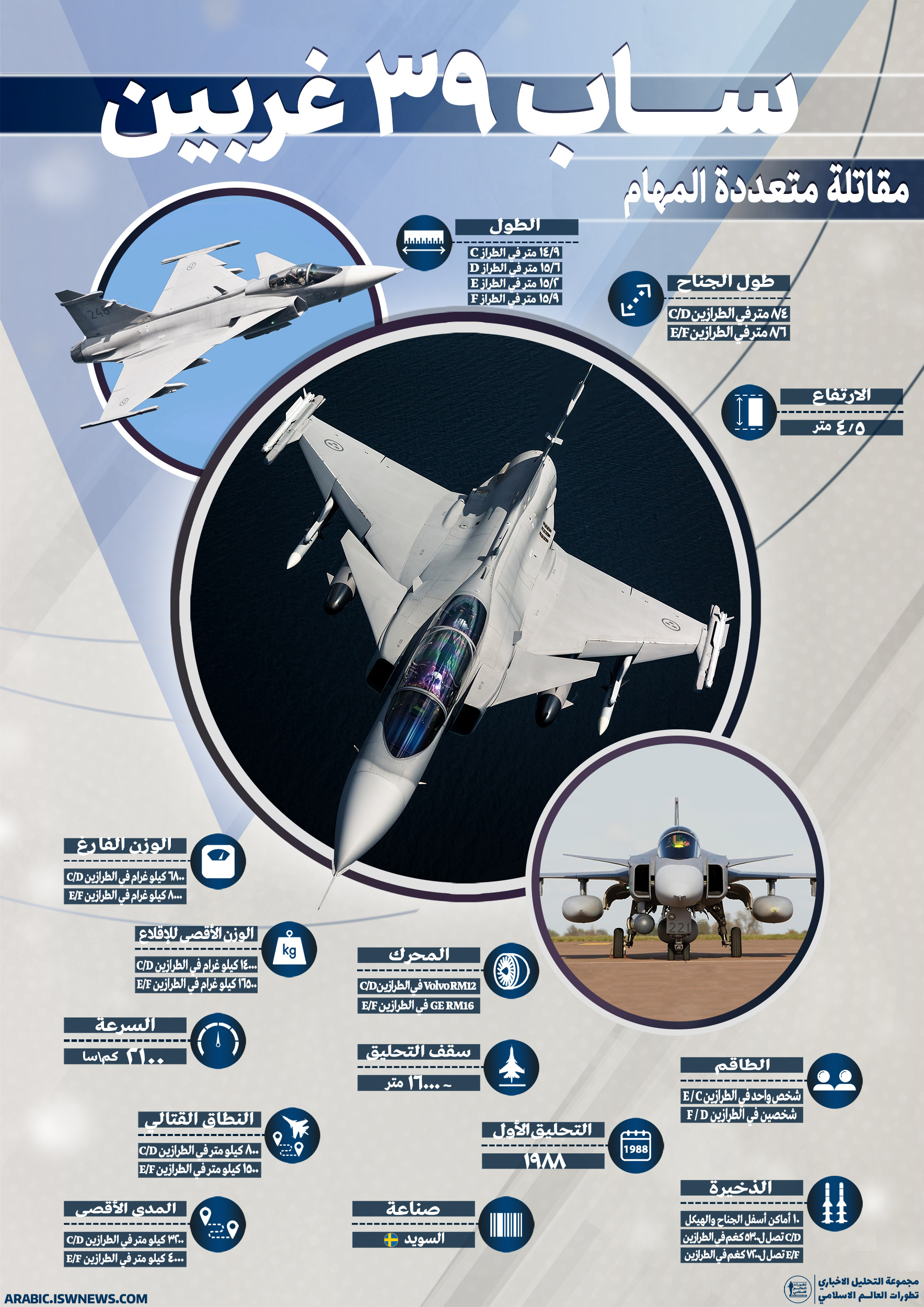
    Saab JAS 39 Gripen posters in Russian, Arabic and Azeri:
    Source:
    Saab JAS 39 Gripen
    PS-05/A
    How Gripen E’s AESA Radar Gets a Large Field of View
    Gripen E-series
  • Military Knowledge: Ground Launched Small Diameter Bomb

    Military Knowledge: Ground Launched Small Diameter Bomb

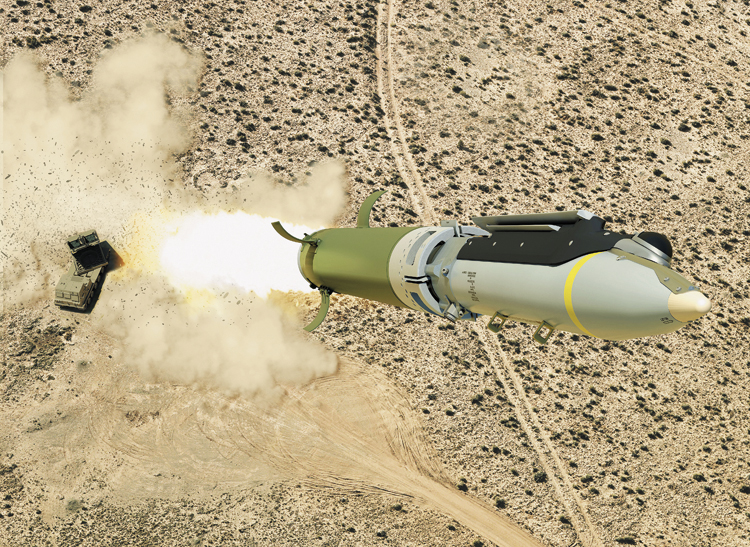
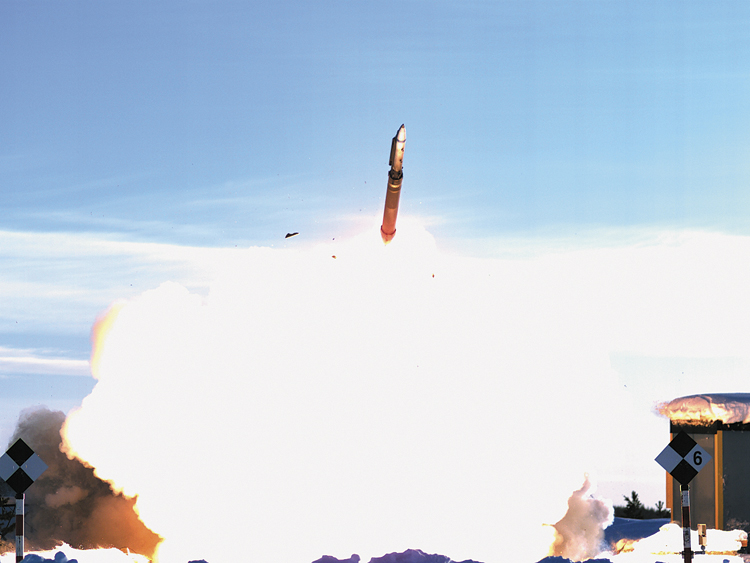
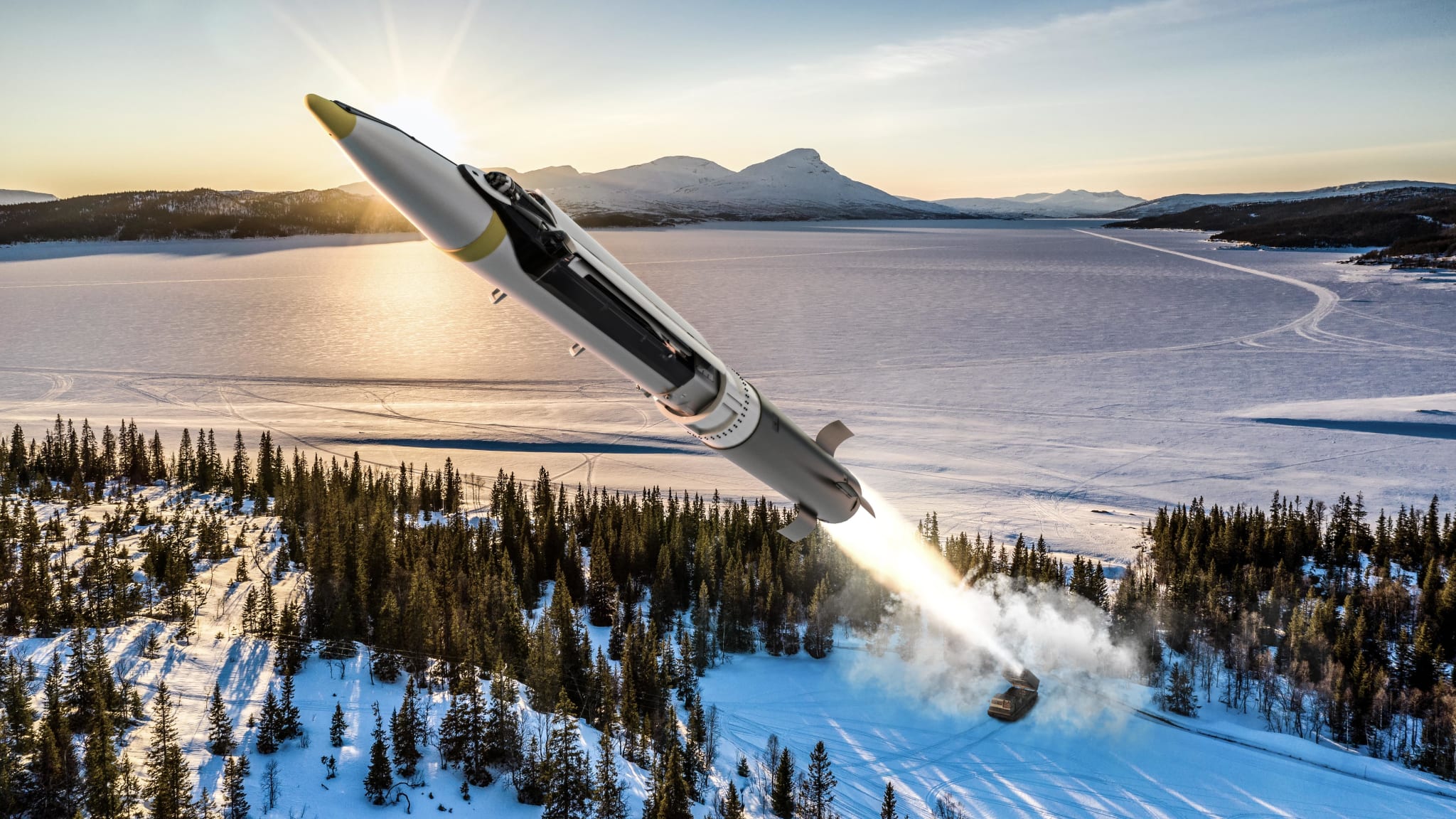
    The Ground Launched Small Diameter Bomb (GLSDB) is a weapon developed by Boeing and the Saab Group to allow Boeing’s GBU-39 Small Diameter Bomb (SDB), originally developed for use by aircraft, to be ground-launched from a variety of launchers and configurations. It combines the SDB with the M26 rocket, enabling it to be launched from ground-based missile systems such as the M270 Multiple Launch Rocket System and M142 HIMARS. It can also be fired from its own launch container, allowing it to be fired from sea.

    In 2014, the two companies Saab and Boeing signed a contract to design and produce a new weapon with the aim of being cheap and available, by developing an “inter-stage adapter” to connect the SDB to an M26 rocket. Also providing expertise are two Norwegian companies, Nammo for booster rocket and Nordic Shelter for launchers.

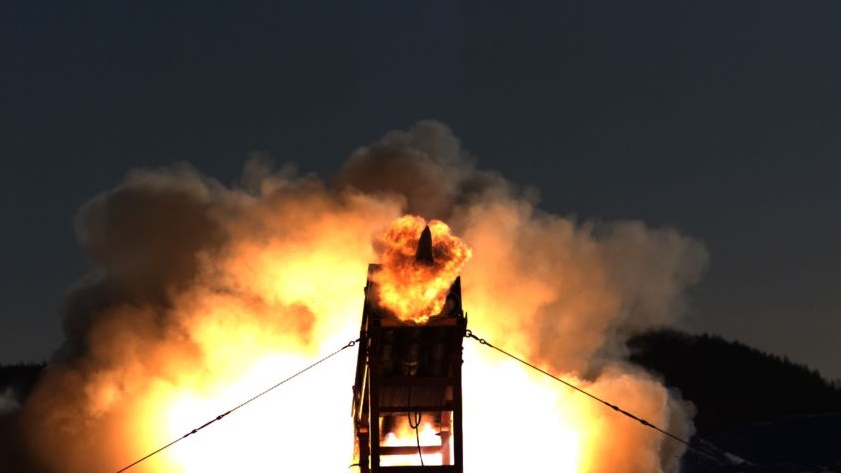
    The Norwegian company Nordic Shelter, which specializes in the construction of shelters, hospitals and other mobile devices in the form of 10- and 20-foot containers, has participated in the manufacture of a special launcher for GLSDB, which is placed inside a 20-foot container.

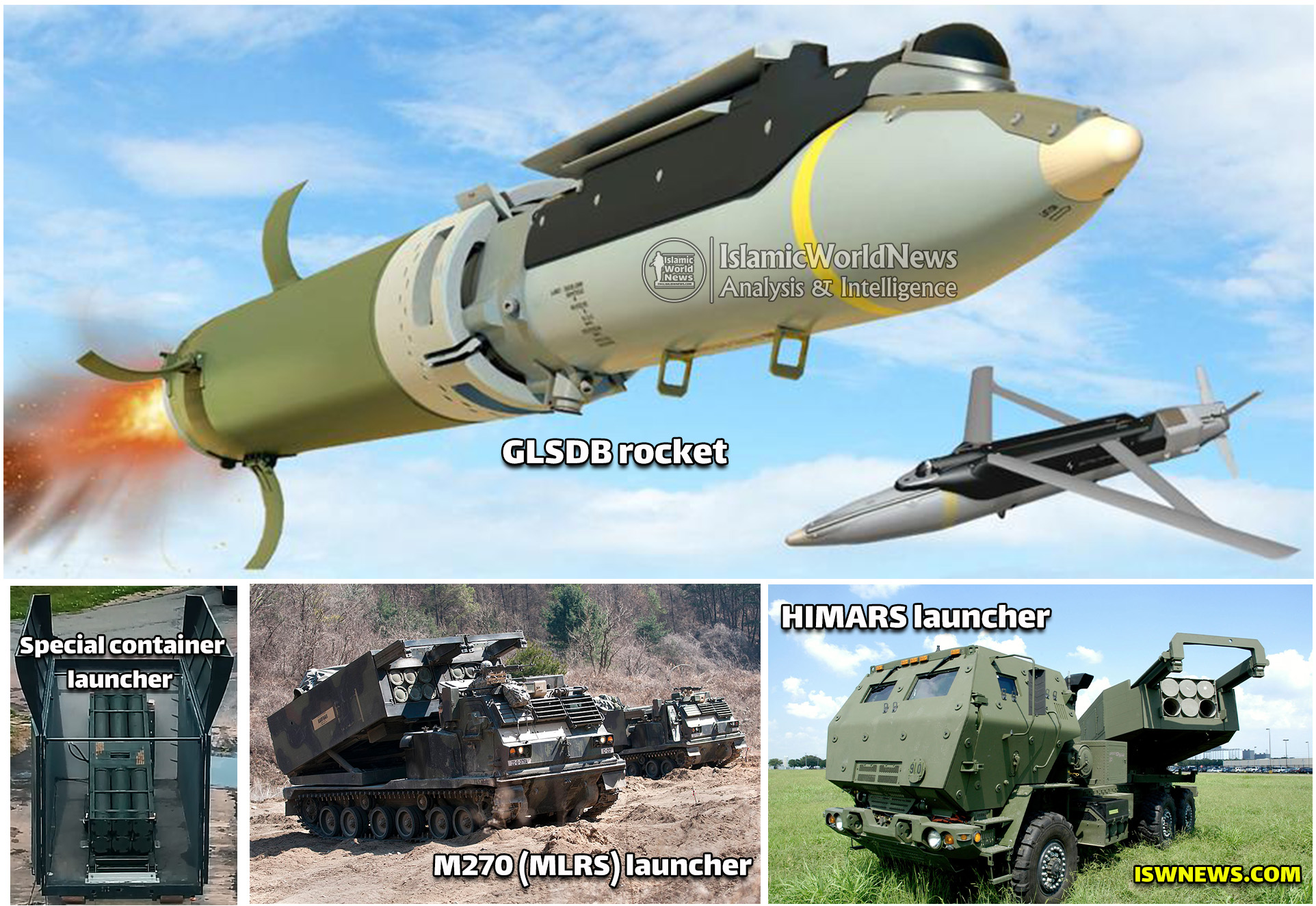
    Twelve M26 rockets at a time can be launched from M270A MLRS, six at a time from HIMARS. By using a special container launcher, the possibility of deception becomes easier and makes locating and targeting more difficult for the enemy. This special launcher carries and fires 6 rockets.

    Graphic design of GLSDB and three types of HIMARS launcher, M26 (MLRS) and special container launcher

    In a 2017 demonstration, the GLSDB engaged a moving target at a distance of 100 km. The SDB and rocket motor separated at altitude and the bomb used a semi-active laser (SAL) seeker to track and engage the target. A 2019 test extended this range to 130 km against a target at sea. The laser-guided SDB had previously been tested successfully using targets travelling at 80 km/h.

    The mass production of this weapon has started in 2023, and Taiwan, as the only buyer of this system, has postponed receiving its order at the request of the United States to meet Ukraine’s need for this weapon. On June 22, Laura Cooper, the deputy assistant secretary of defense for Russian, Ukrainian and Eurasian affairs, told Congress that despite development and production problems, the weapon would be available sooner than the fall of 2023.

    M26 rocket:
    M26 is a MLRS rocket with a cluster warhead. The M26 and M28 rockets have been produced since 1980 and were the only rockets available for the M270 system until 2005. The production of the M26 rocket has been stopped since 2001, and its last operational use dates back to the invasion of Iraq in 2003. In accordance with George W. Bush’s directive to destroy 1% of unused US cluster munitions, the US military in 2007 earmarked separate funds for the creation of special facilities for the destruction of MLRS rockets and ATACM missiles at the Anniston Defense Ammunition Center in Alabama and at the Letterkenny Ammunition Center in Pennsylvania. The Army requested $109 million to destroy 98,904 M26 MLRS rockets between 2007 and 2012. There are reports that the project was stopped in 2010. That is, before Trump’s order in 2017 to stop the destruction of cluster munitions, it is not clear how many of the 506,718 M26 rockets in 2001 are left today.

    GBU-39/B small diameter bomb (SDB I):
    The GBU-39/B (SDB I) small-diameter bomb is a 110 kg precision-guided bomb designed to provide the aircraft with the ability to attack with a greater number of precision-guided bombs. The first type of this bomb, which is produced by Boeing, entered service for the first time in 2006, and the second type is produced by Raytheon. This bomb contains 16 kilograms of explosives and has the ability to penetrate one meter of reinforced concrete that is one meter deep in the ground.
    The accuracy of this bomb is one meter and it is possible to connect to link 16 and use network-based warfare facilities. The first type of US small diameter bombs are widely available today and are being replaced by newer models. As a result, the parts needed to produce GLSDB are widely available.

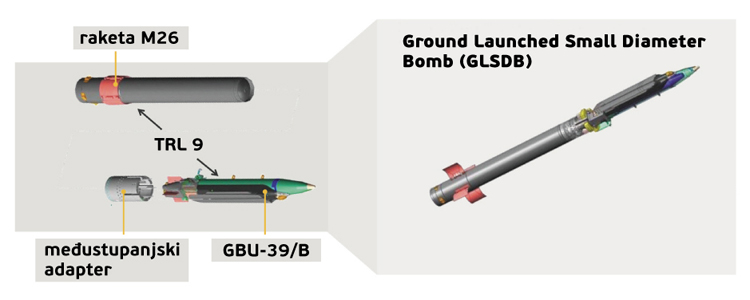
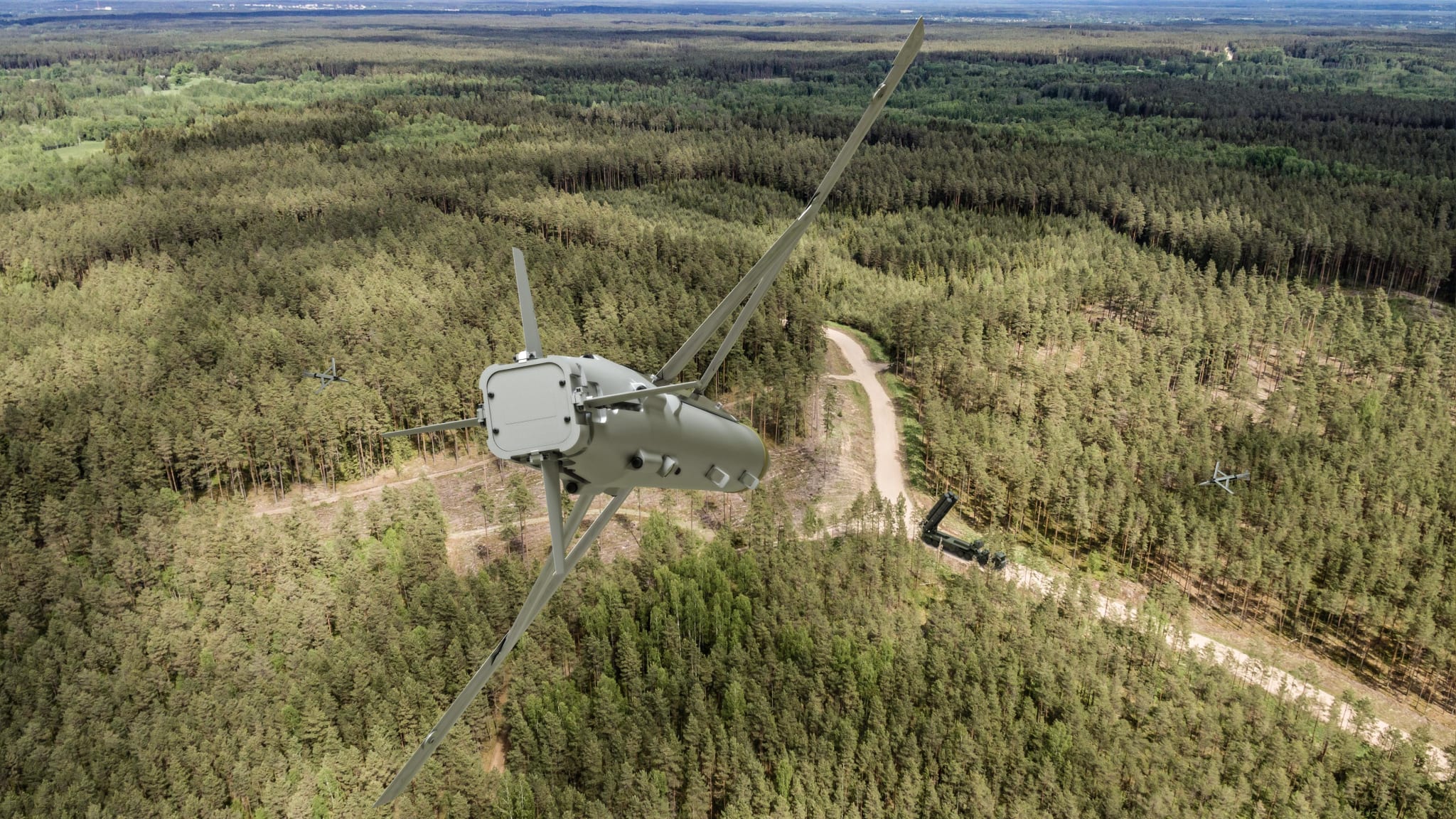
    The M26 rocket and the SDB I bomb are connected to each other using an inter-stage adapter. The way the GLSDB bomb works is that after firing, the rocket brings the SDB up to a sufficient altitude and speed, the SDB separates from the rocket and the wings open, allowing the bomb to glide towards its target. Unlike conventional rockets, this bomb did not go through the ballistic path and it is possible to change the path after the separation of the SDB; Although it reduces its range.

    Components of the GLSDB bomb

    Unlike traditional artillery weapons, the GLSDB offers 360-degree coverage for high and low angles of attack, flying around terrain to hit targets on the back of mountains, or circling back around to a target behind the launch vehicle. The GLSDB has a range of 150 km, or can hit targets 70 km behind the launch vehicle. This weapon can be configured to detonate before hitting the ground to cause more casualties. Or detonate with a delay after impact to penetrate deep (such as trenches). The type of guidance of this bomb is GPS, which makes its accuracy up to one meter, and it is also very resistant to jamming of electronic warfare.

    Video of how the GLSDB bomb works

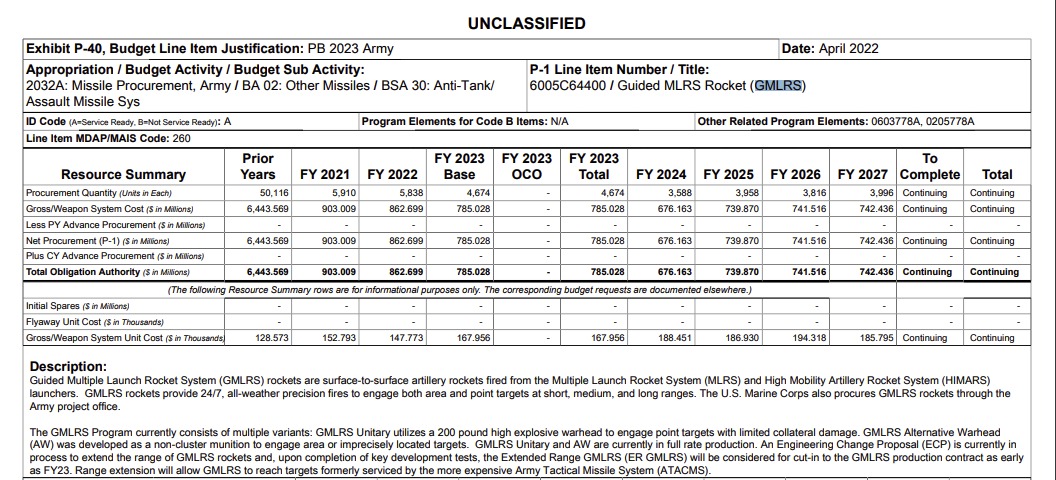
    Although the exact price of GLSDB has not been announced, each SDB bomb costs about 40,000 dollars for the US Army, and the M26 rocket is also an obsolete inventory in the US Army. Also, some money must be spent on the inter-stage adapter, developing a launcher-container, and other costs of developing and producing GLSDB by Boeing and SAAB. By comparison, the cost of an M31 missile, a variant of the GMLRS, is estimated to be only $500,000, although this may be the “export price” which is always higher than what it would cost the US military. According to US Army budget projections in 2023, the price will be around $168,000 per GMLRS. which has two examples of 70 and 150 km. It seems that every GLSDB unit has a lower price than this model.

    Part of the FY 2023 US military presidential budget briefing book on GMLRS rockets projected to be more expensive than GLSDB

    The purpose in developing the weapons was to offer poorer countries the strike capacity of more expensive and advanced air forces. Jim Leary, director of global sales for Boeing, told reporters in 2019: “It really fits across a broader customer set because we’re taking an existing capability, maximizing it and creating an opportunity [for countries] that don’t have the ability to have a robust air force.”

    Specifications of the GLSDB:
    Range: 150 km
    Warhead: Fragmentation multipurpose warhead
    Warhead weight: 93 kg, Explosive fill: 16 kg
    Accuracy: 1 meter CEP
    Guidance: GPS and laser
    Launch platform: M270 MLRS and M142 HIMARS Or can be launched from its own launch container
    Designer: Boeing and Saab Group

    Source:
    United States Cluster Munition Ban Policy
    Boeing, Saab Unveil Ground Launched SDB
    Ground-Launched Small Diameter Bomb (GLSDB)
    Ukraine to receive first GLSDB missiles no earlier than autumn – Pentagon
    Ground Launched Small Diameter Bomb
    Ground-Launched Small Diameter Bomb