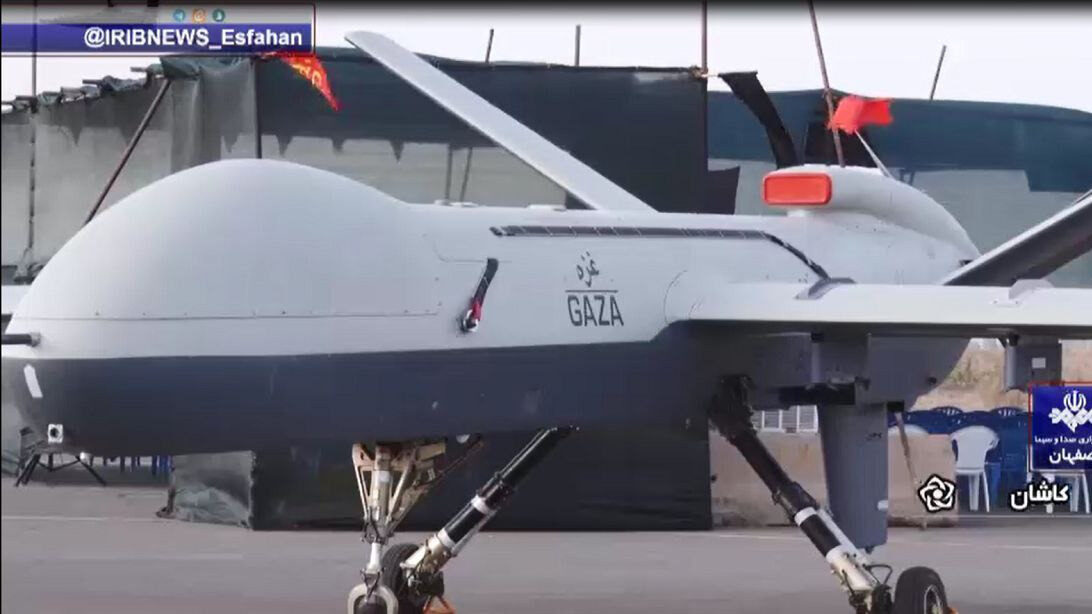
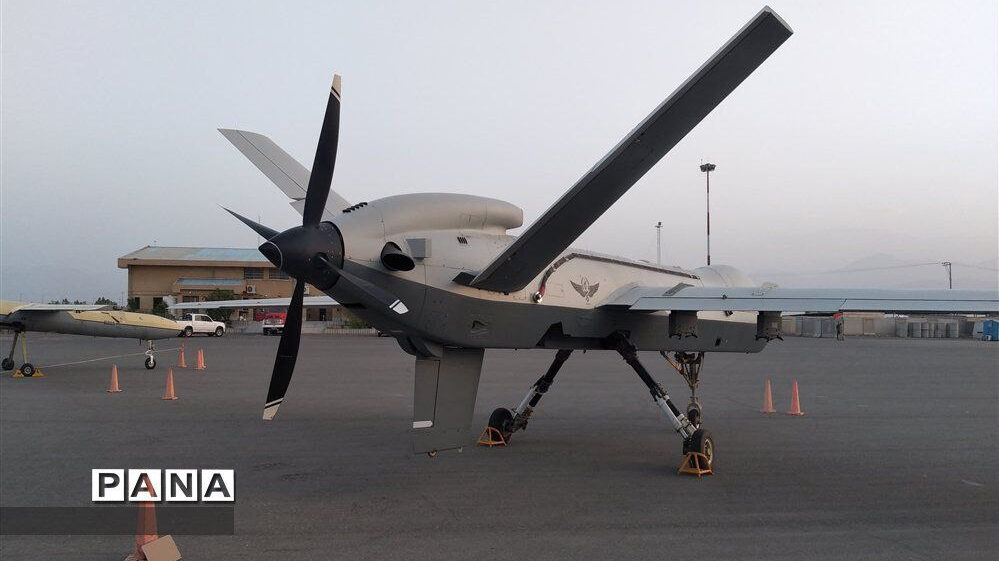
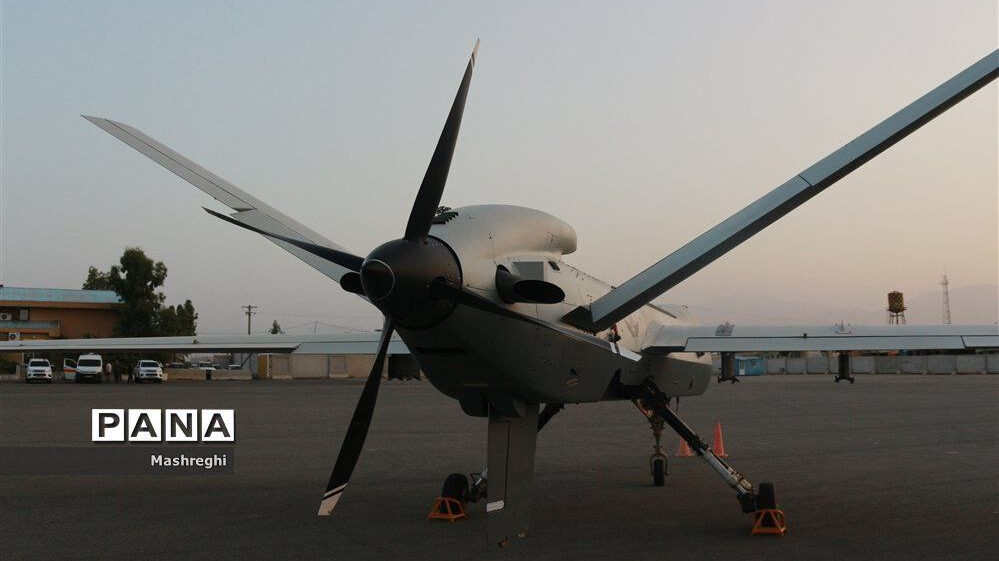
The Shahed-149, which was developed by the Shahed Aviation Industries, is a high-altitude long-endurance combat drone similar in size, shape and role to the American MQ-9 Reaper. The drone was first unveiled and named after the Gaza Strip in honor of the Palestinians’ struggle against Israel amid the May 2021 Palestinian-Israeli crisis.
The upgraded version of the drone, which was unveiled at Martyr Karimi Air Base in the central city of Kashan, is equipped with an improved landing gear system and new hardpoints.
The Shahed-149 has a flight duration of 35 hours, an operational range of 2,000 kilometers and a cruising speed of 350 kilometers per hour. The combat drone is capable of carrying 13 bombs and 500 kg of electronic equipment. It is the first Iranian UAV powered by a turboprop engine.
The long endurance and range of the Shahed-149 should allow it to operate all the way from western Iran to Israel. The drone can also operate over the entire Persian Gulf and the Sea of Oman from Iran’s southern region.
Despite facing sabotage attempts by Israel as well as strict sanctions by the United States and the European Union, Iran managed to expand its drone program in the last few years. Today, the country is one of the world leaders in drone technology.
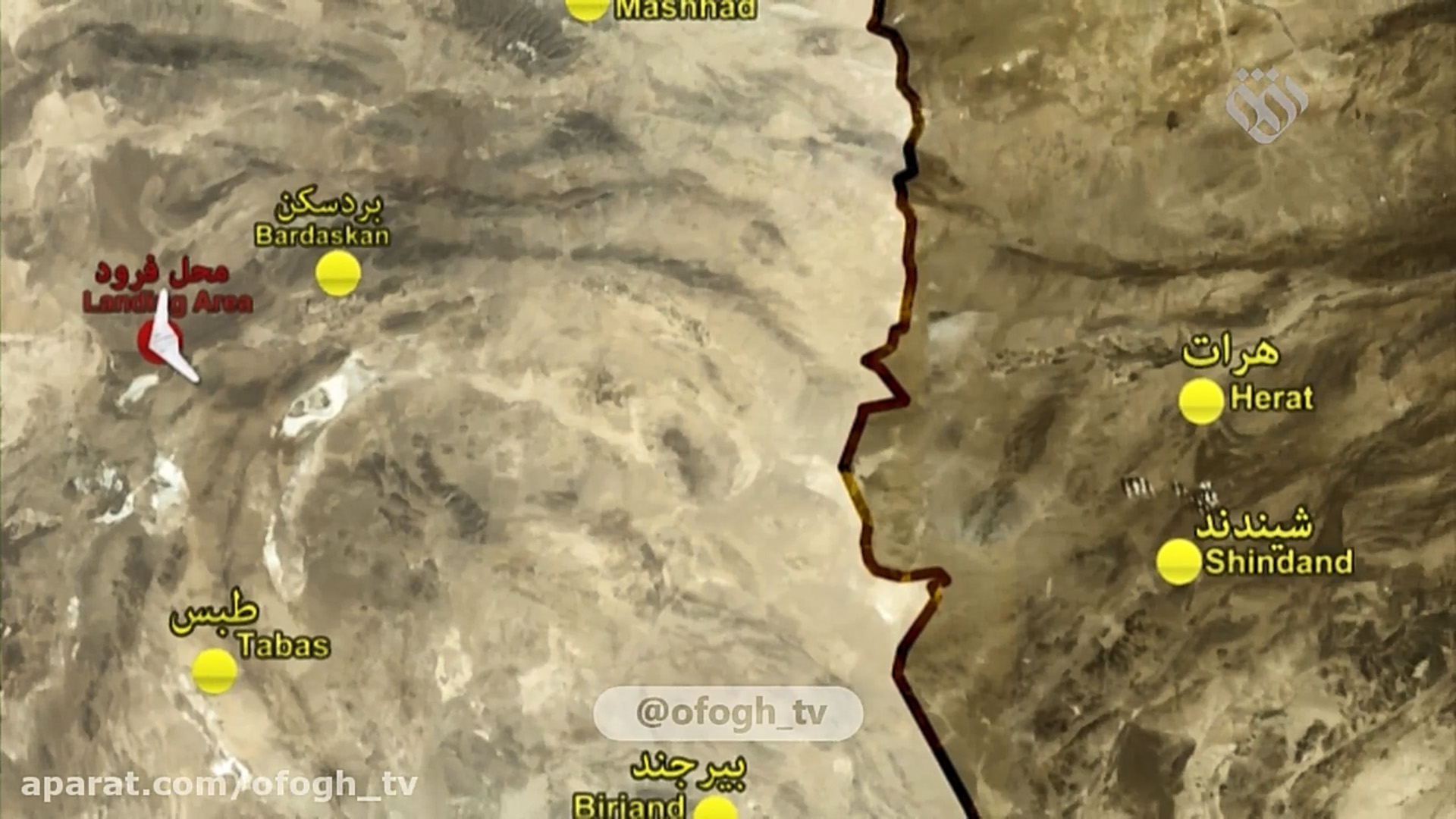
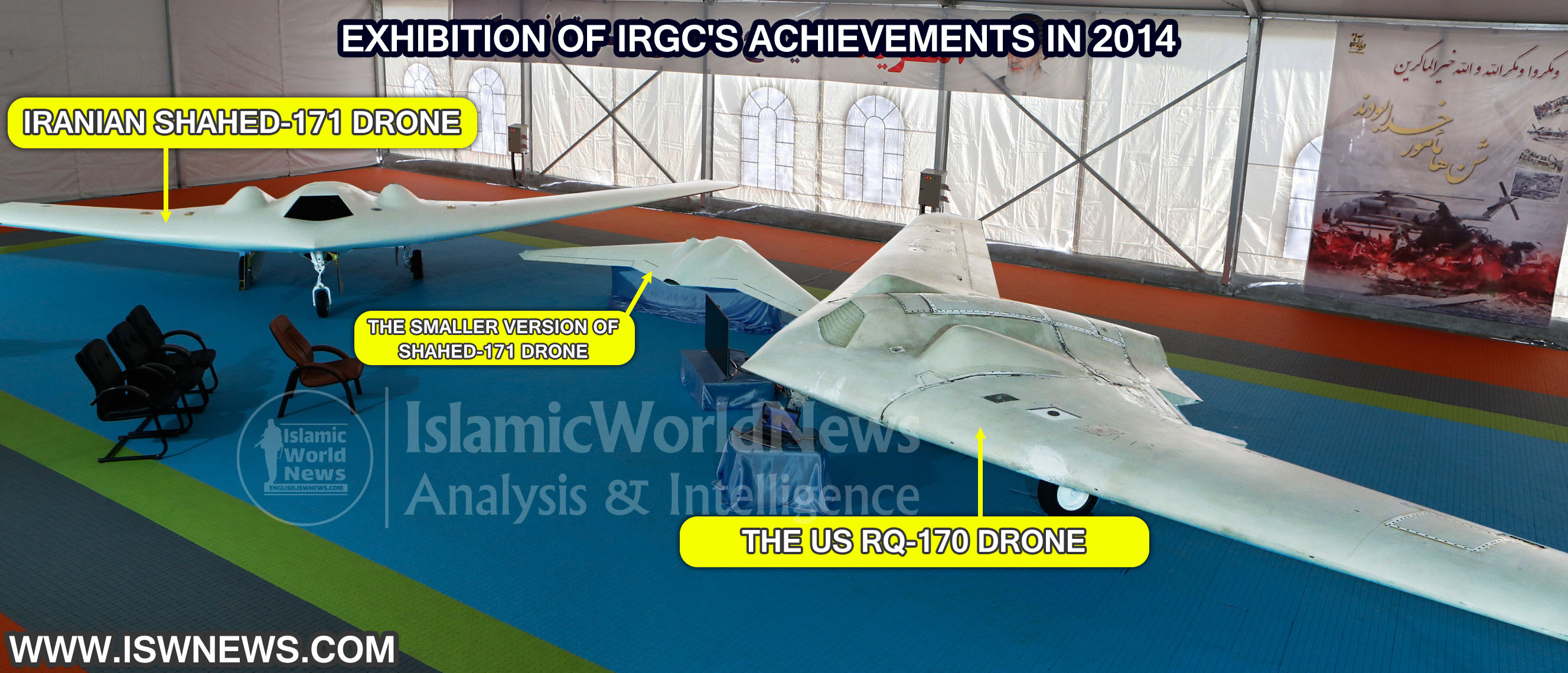
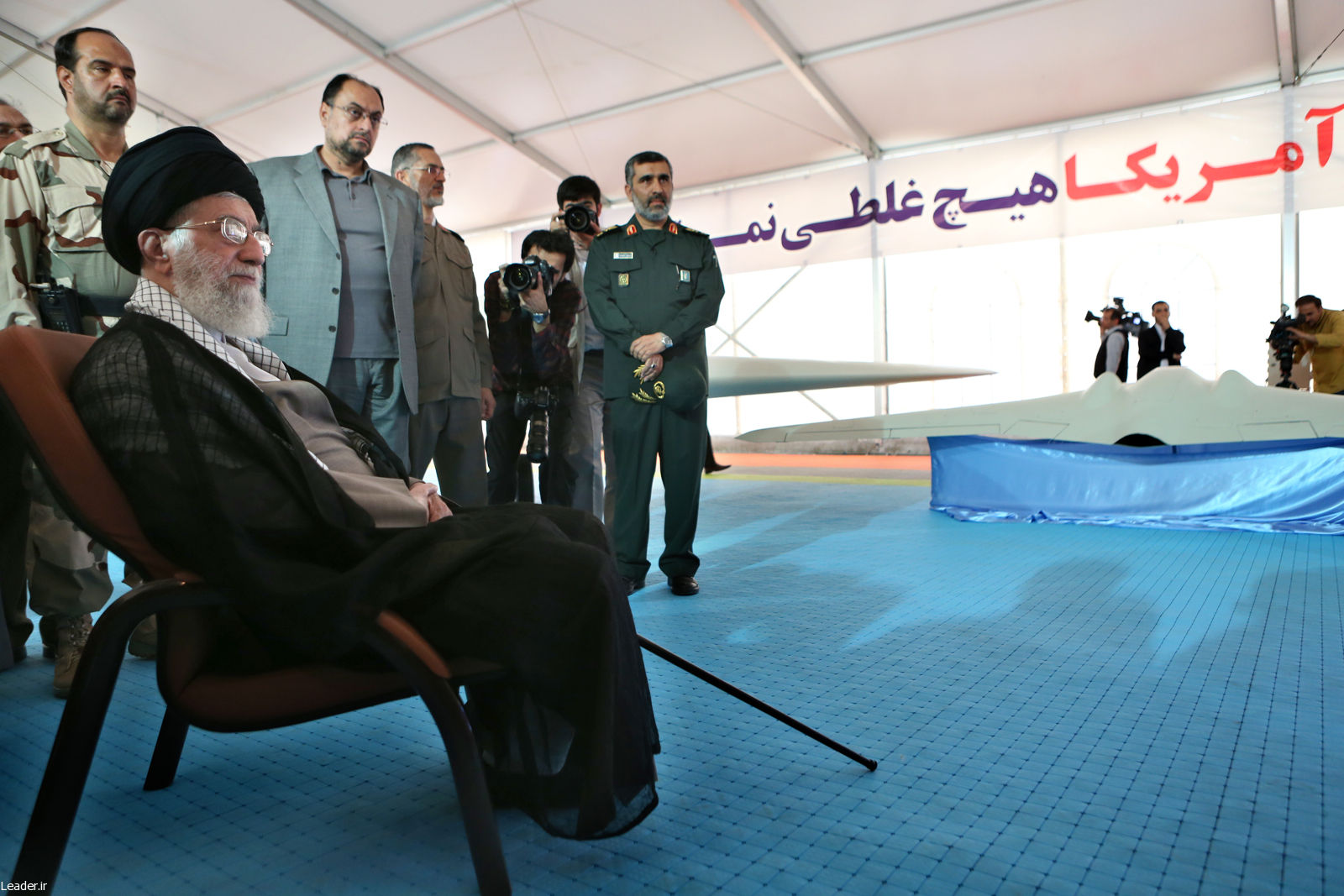
History The story of Iranian Simorgh family drones began with hunting “The Beast of Kandahar”. On December 4, 2011, the Iranian Islamic Revolutionary Guard Corps Aerospace Force managed to take control of an advanced US drone named Lockheed Martin RQ-170 Sentinel, known as The Beast of Kandahar. The stealth RQ-170 drone had entered Iran’s airspace to collect information and espionage, and finally, through processes, Iran managed to override its controls and landed it near the town of Bardaskan.
Iran force-landed RQ-170 near Bardaskan
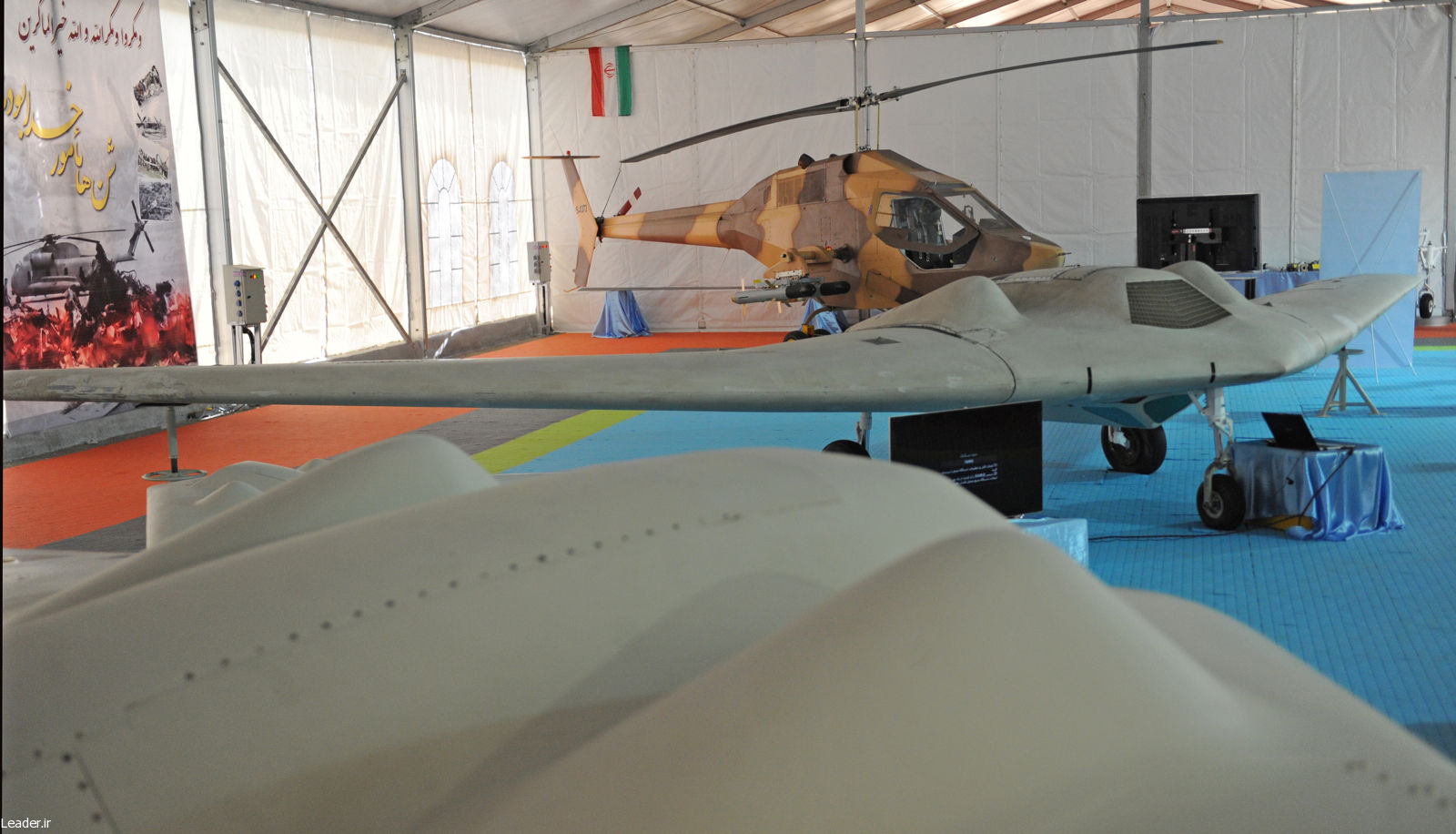
In May 12, 2014, during Iran’s Commander-in-Chief’s visit to the IRGC Aerospace Force’s Achievements Exhibition, it was stated that the Iranian Armed Forces had succeeded in obtaining all the software information of this bird and had obtained images from all the bases where this bird was present. During the same visit, it was also announced that a 15% scale version has flown successfully and two 40% and 100% scale versions will be flown in the same year. Also, General Hajizadeh the commander of IRGC Aerospace Force stated that this drone will also be armed with missiles. In November 2014, a video of the successful flight of this bird was published.
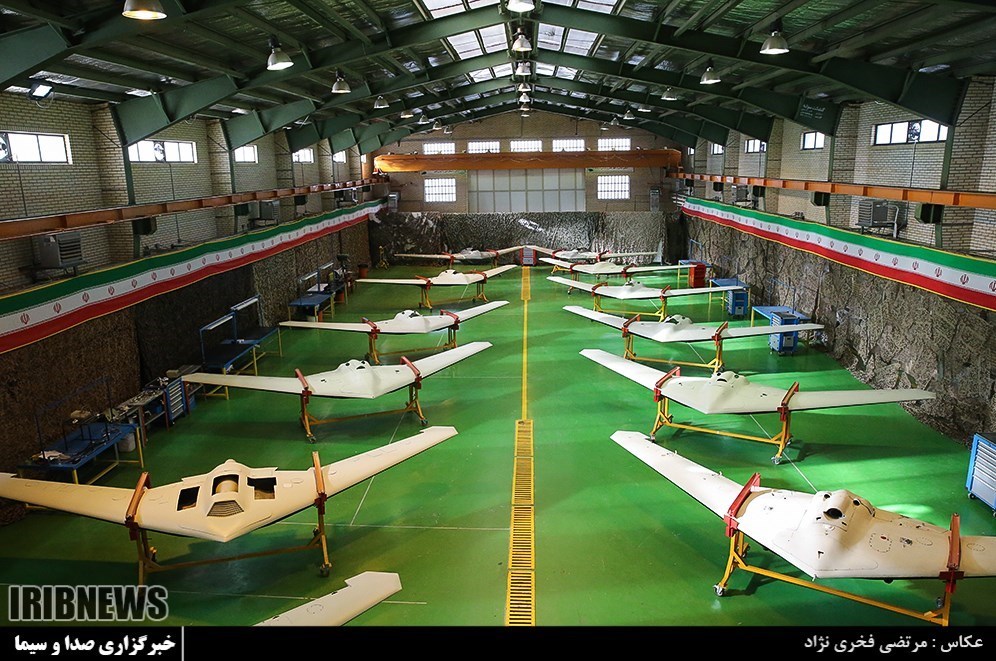
Three drones displayed in the IRGC achievements exhibition in 2014
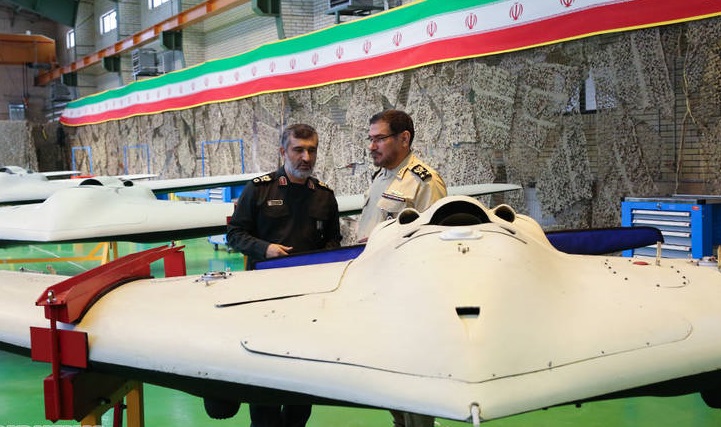
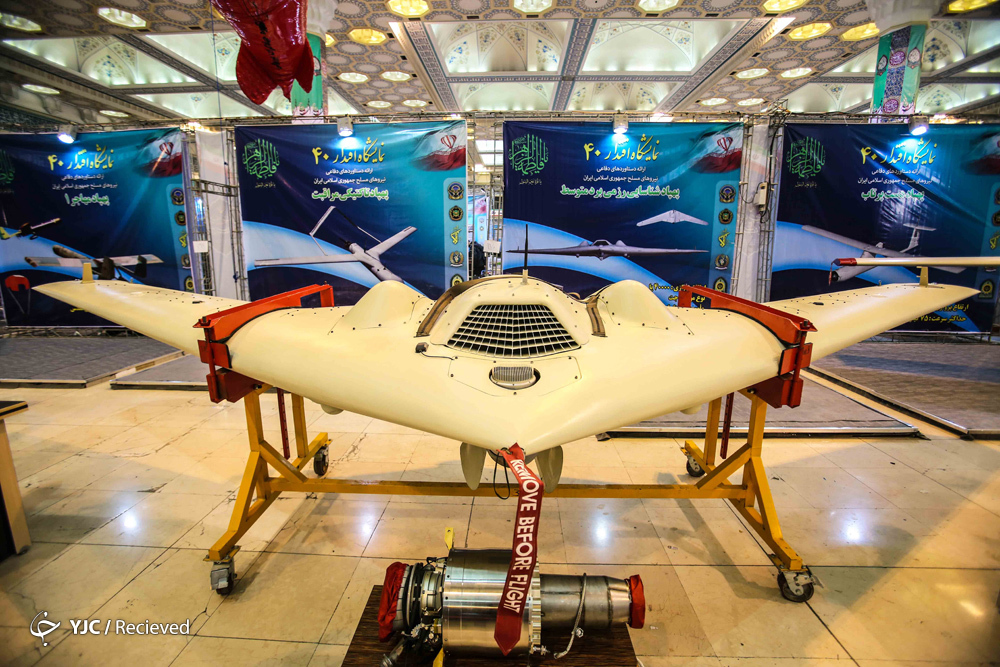
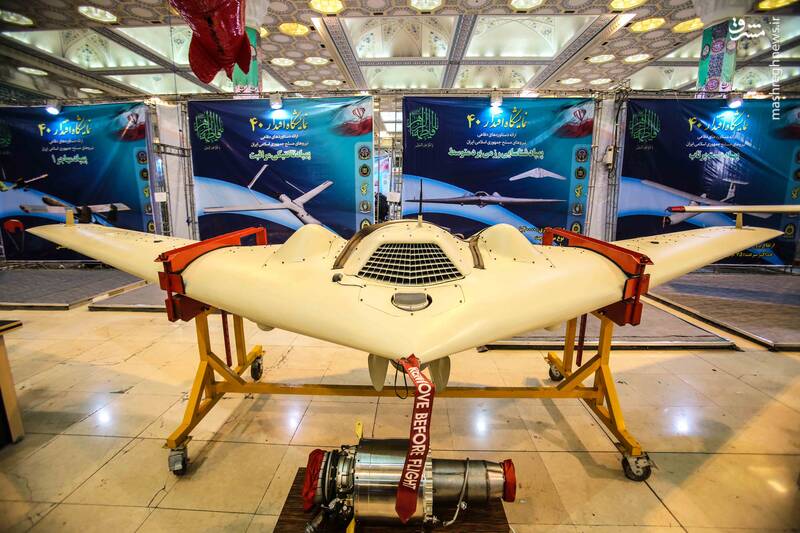
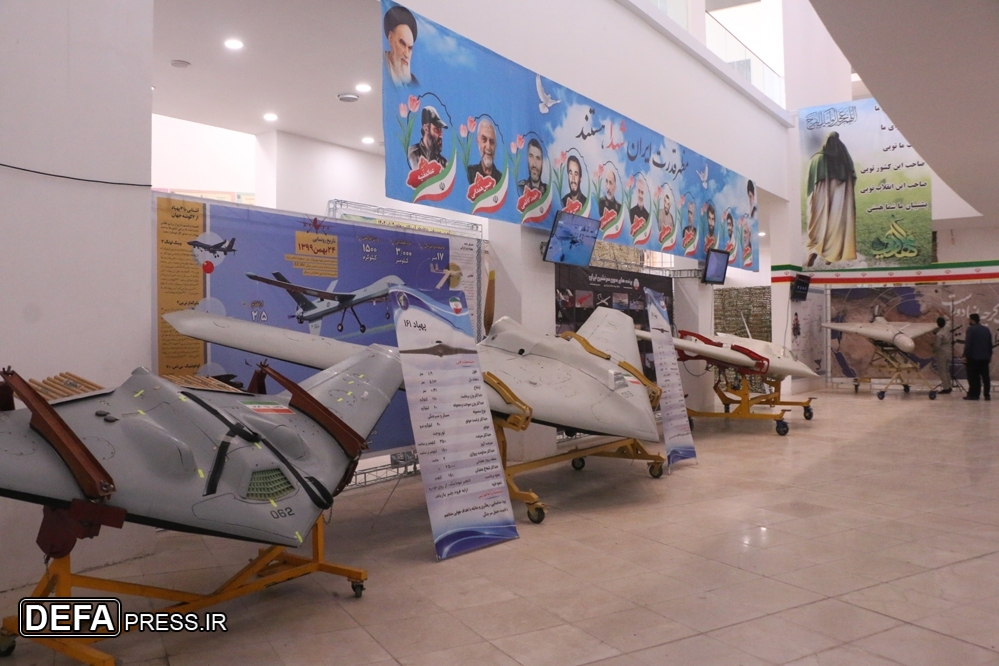
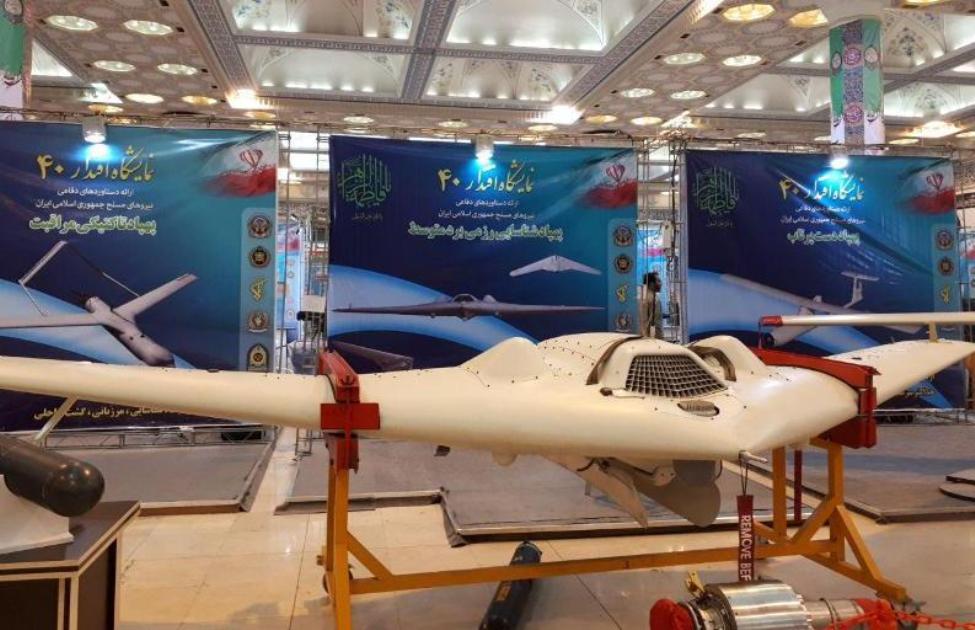
In 2016, during Admiral Shamkhani’s visit to the IRGC Aerospace Force achievements exhibition, new variants of this series of UAVs named Shahed 181 were unveiled. Two years later, Shahed 191 was unveiled during the Eghtedar 40 exhibition. It should be noted that both Shahed 181 and Shahed 191 drones are 60% scale version of Shahed 171 drone.
Shahed 181 in Admiral Shamkhani’s visit to the IRGC achievements exhibitionShahed 191 drone at the Eghtedar 40 exhibitionClick to view full size
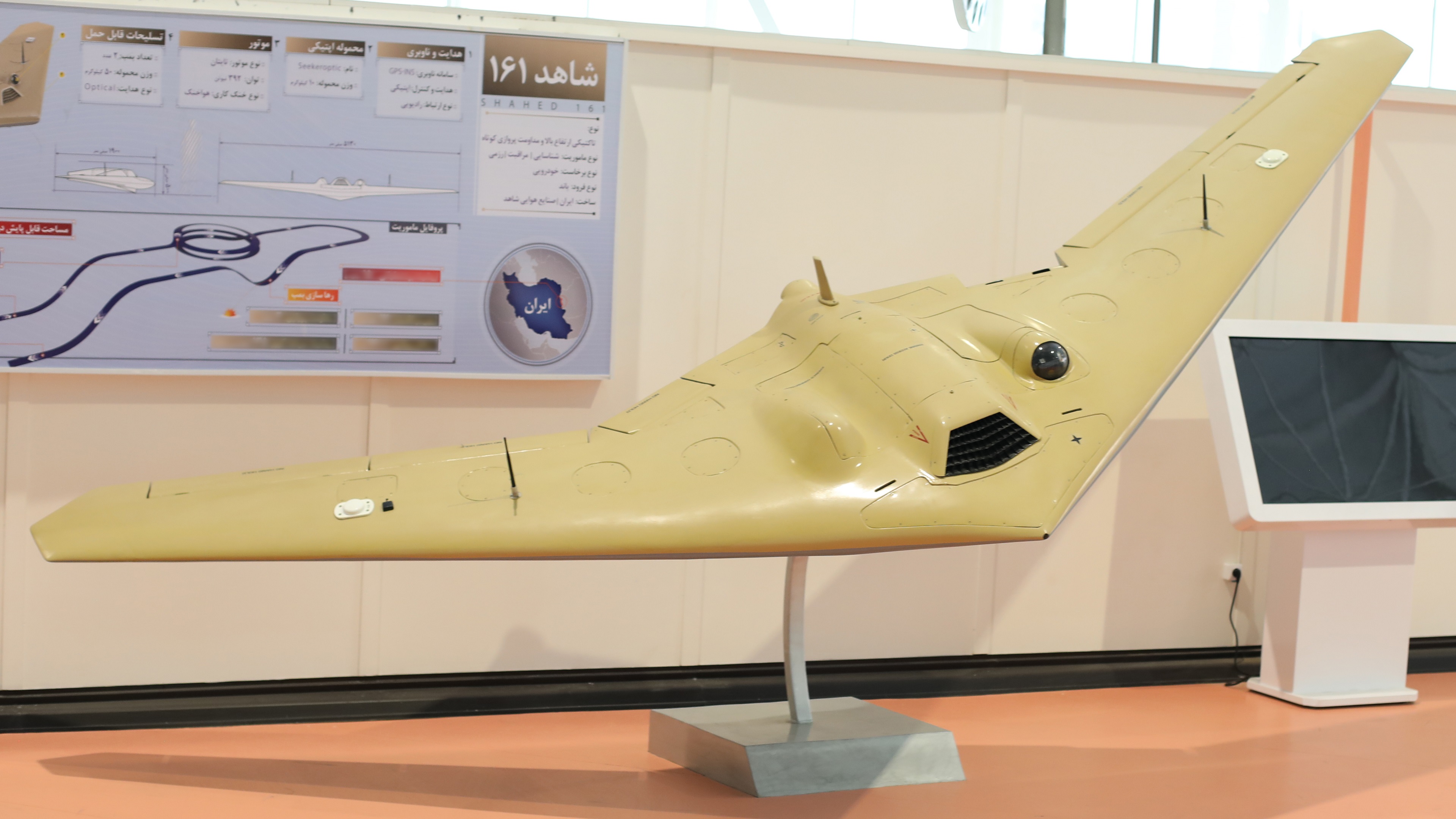
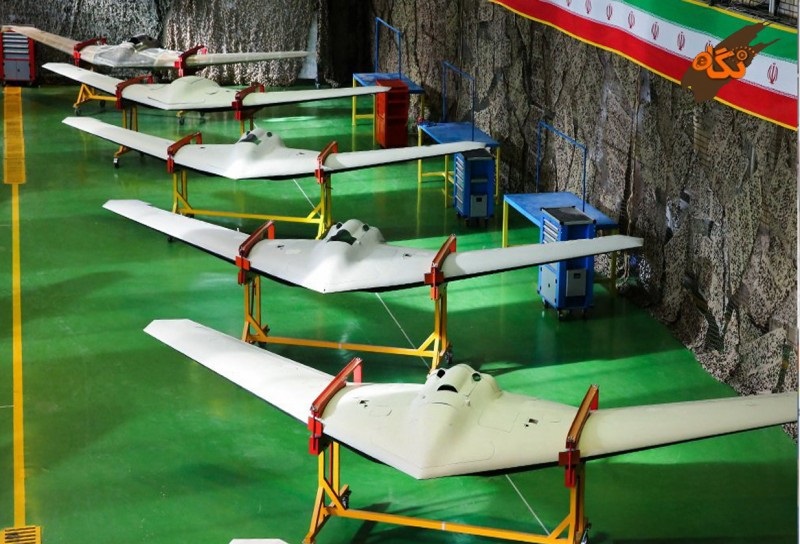
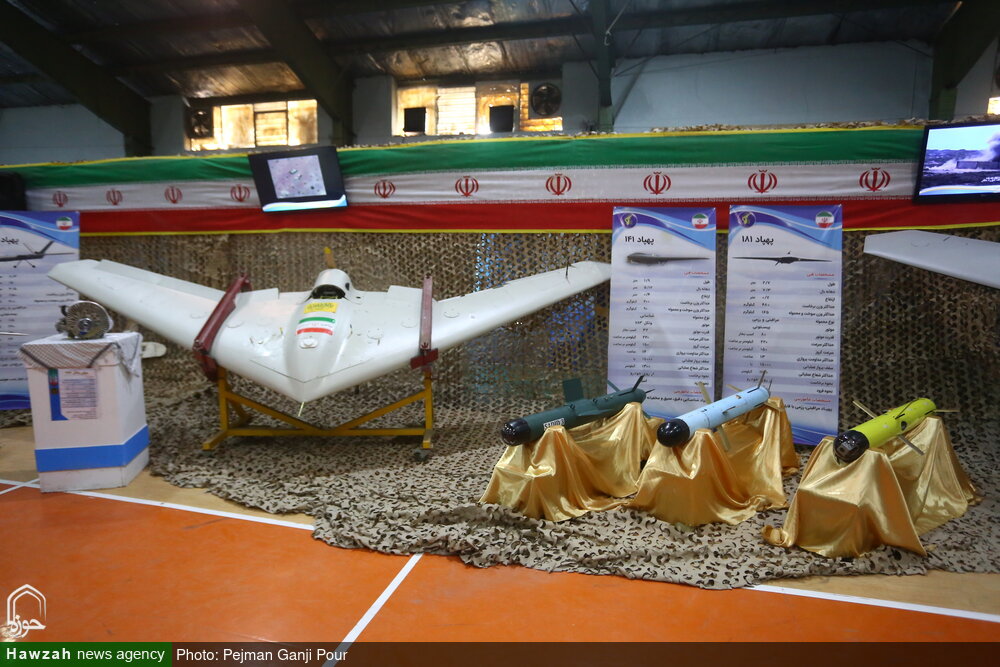
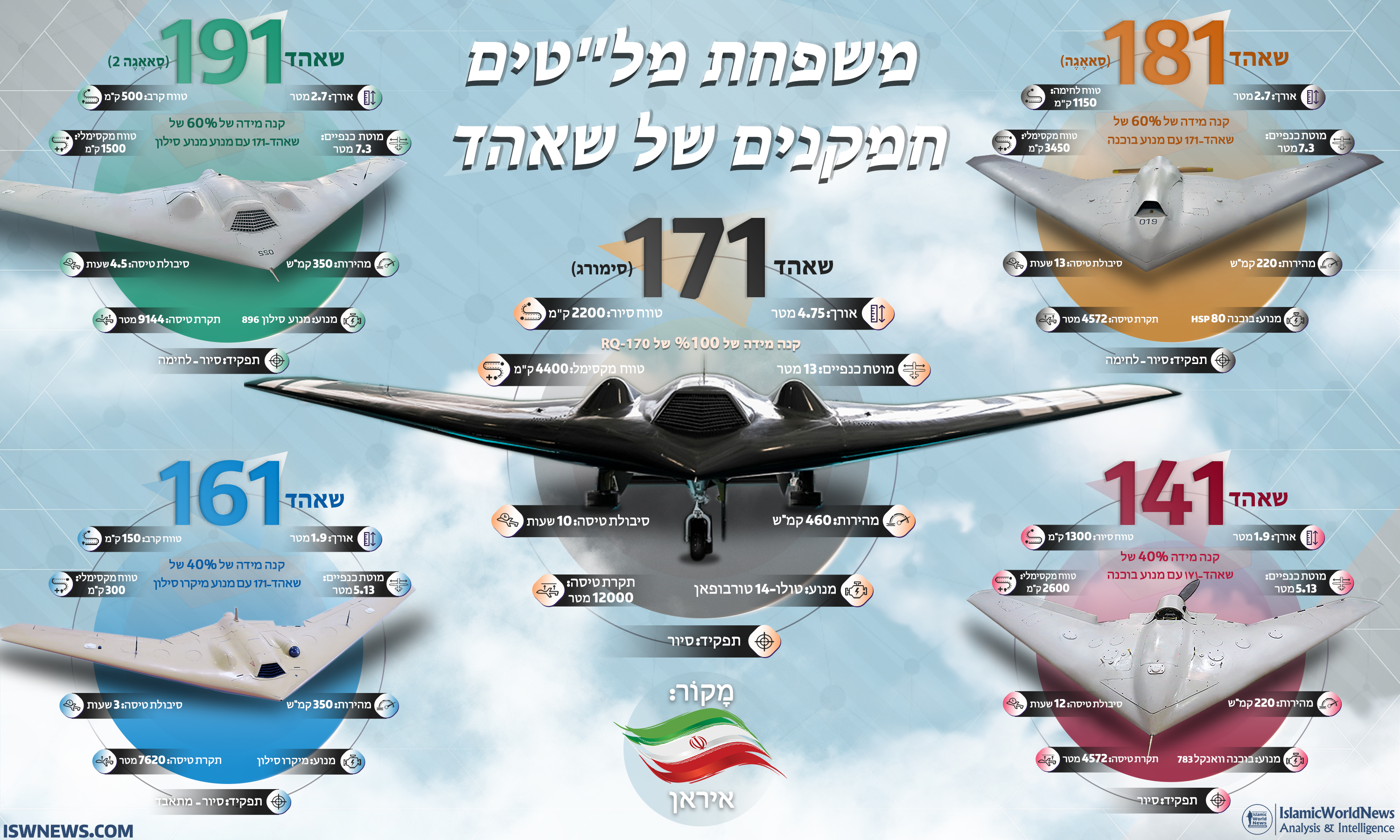
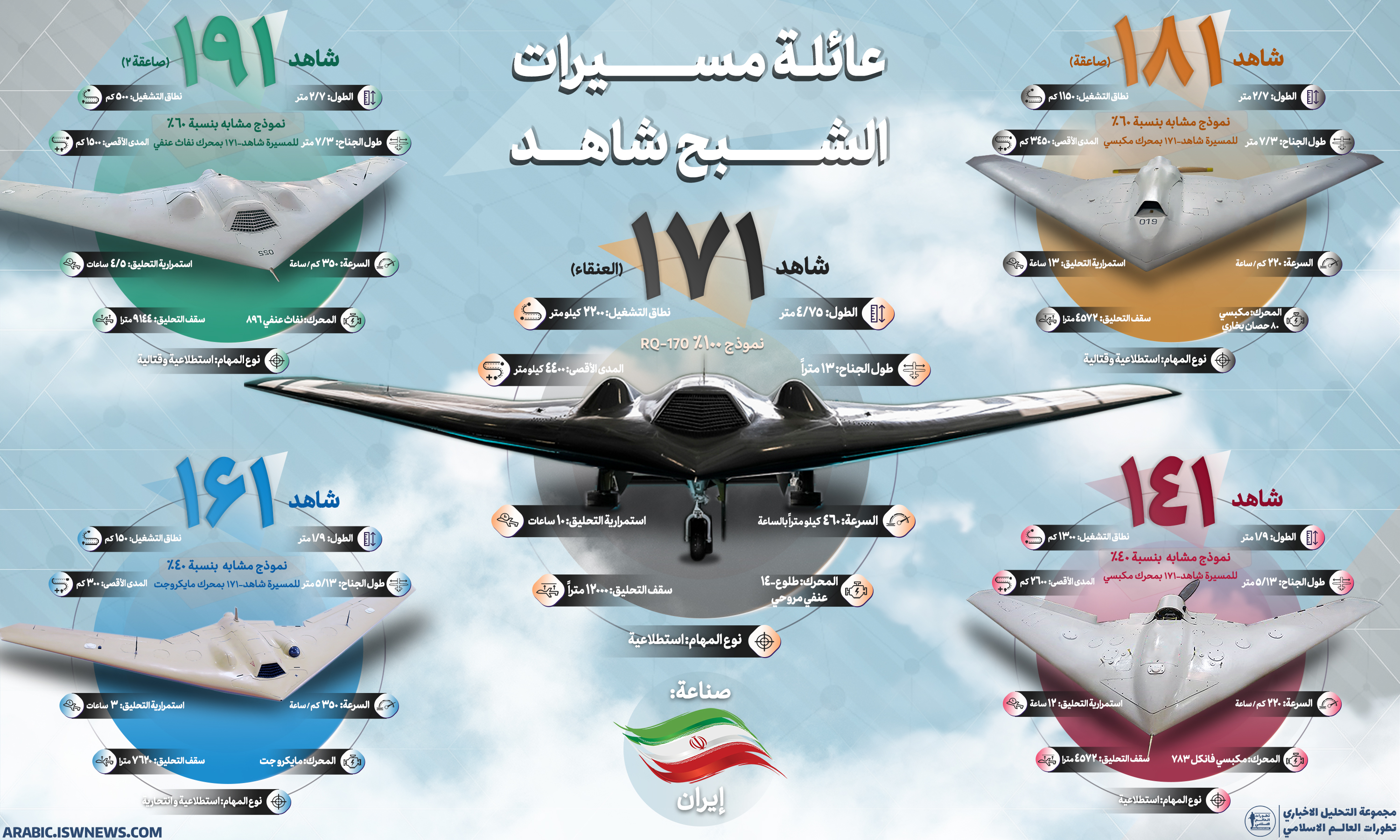
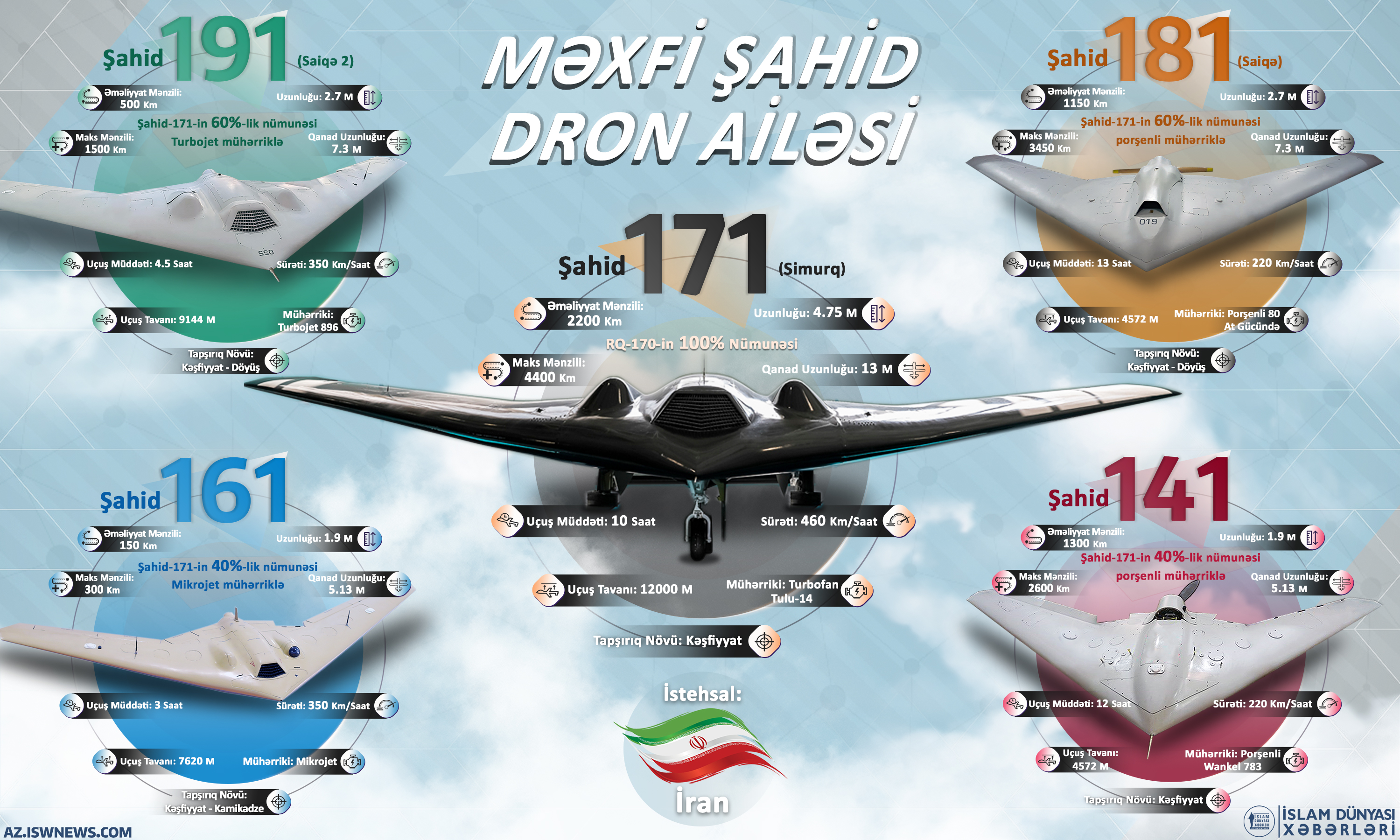
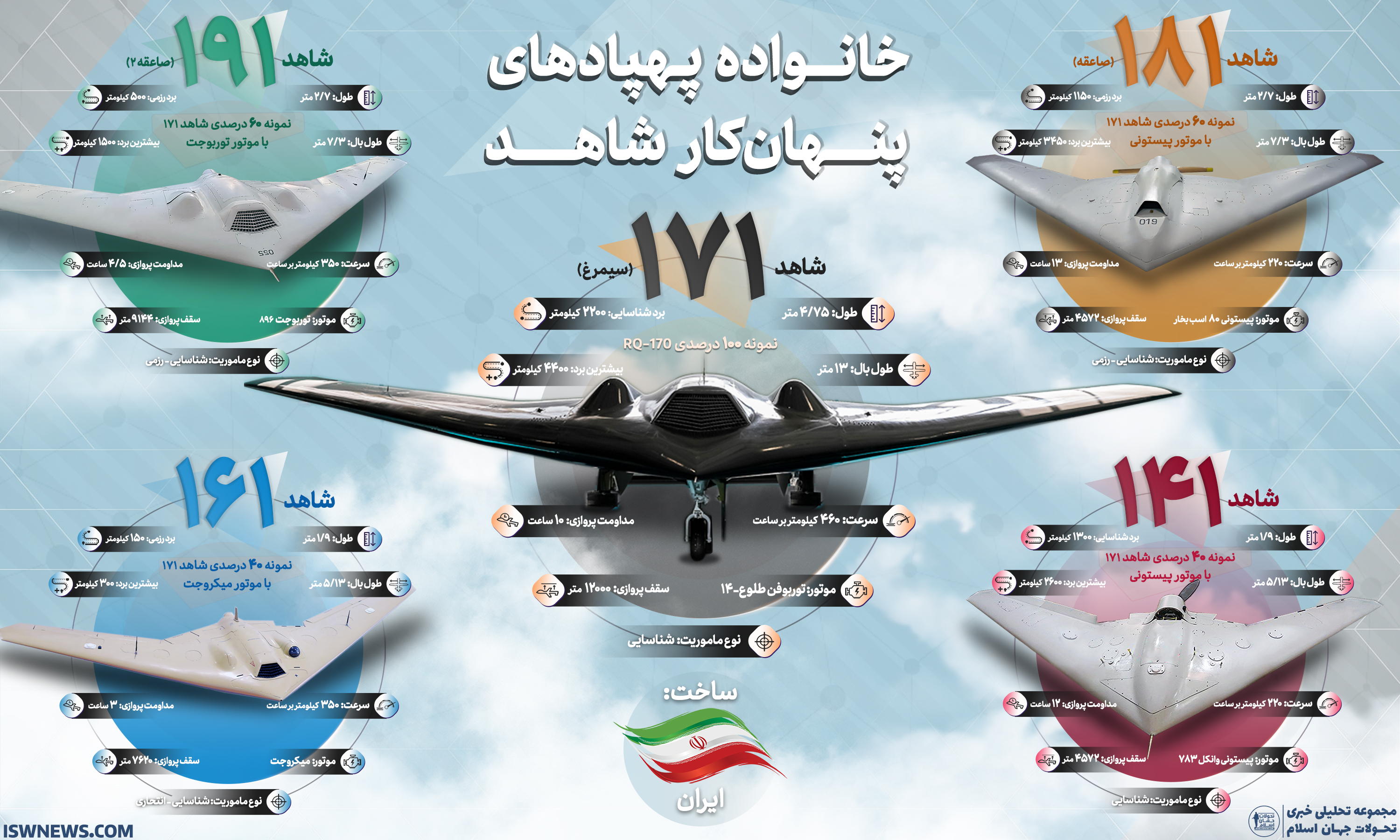
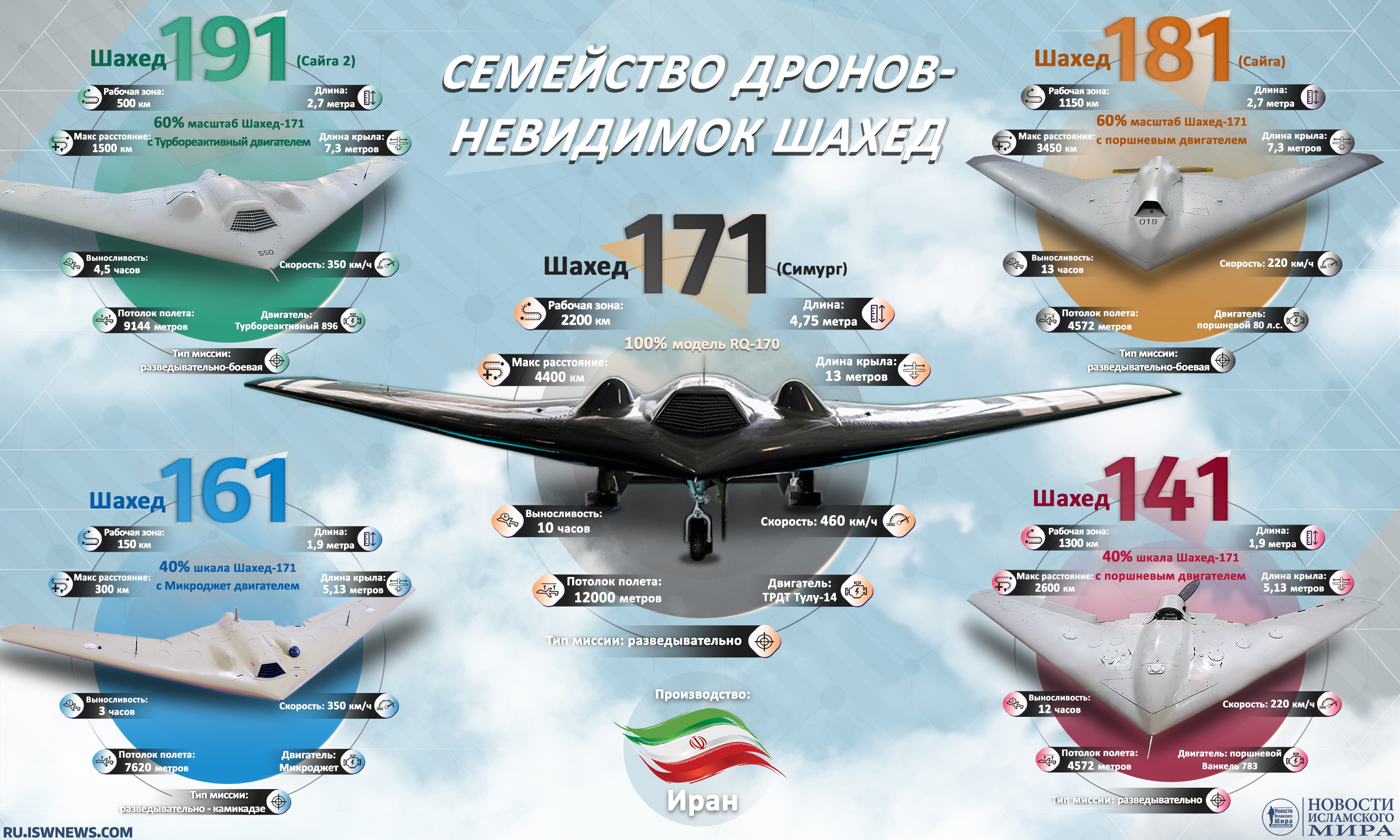
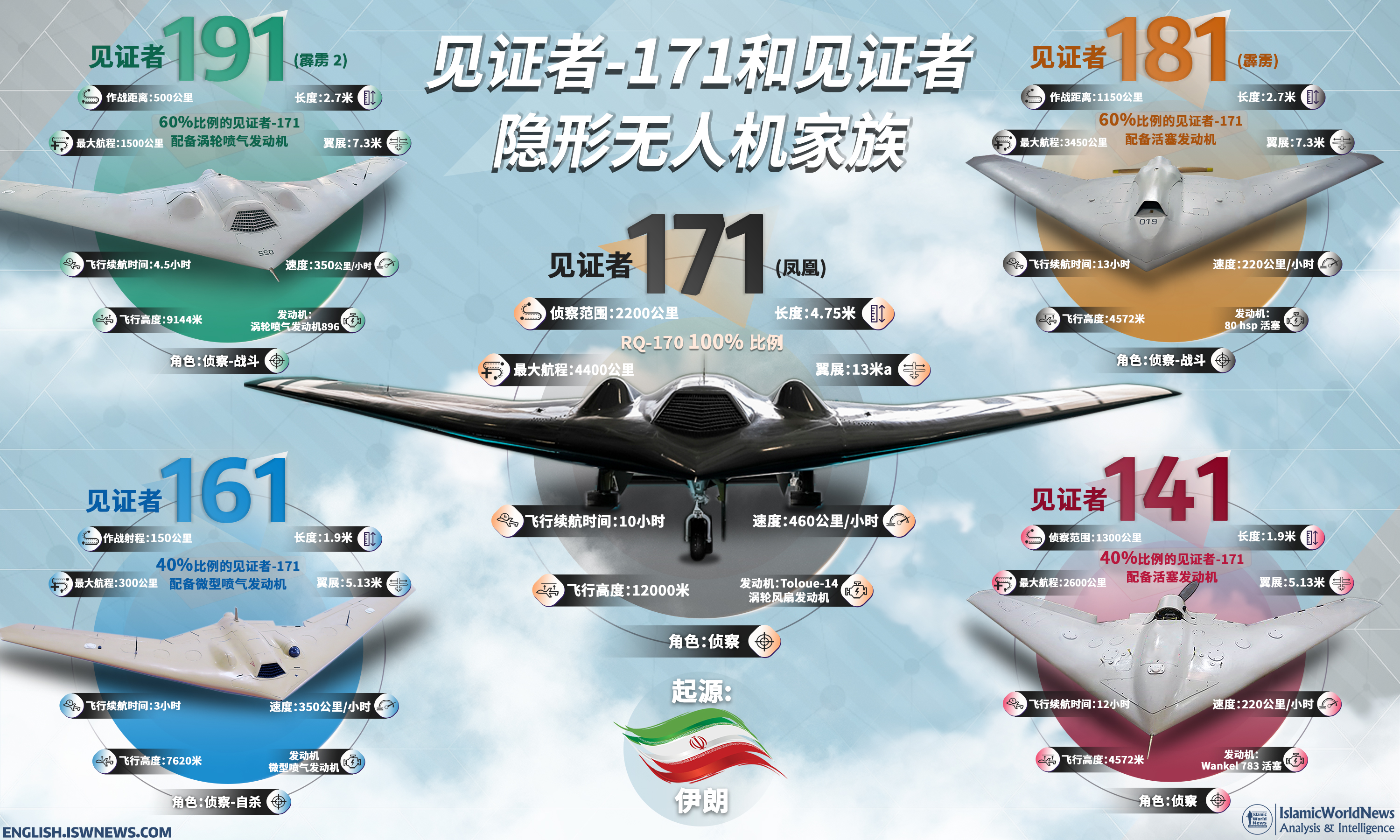
Different variants of Shahed stealth drones: The Shahed stealth drone family includes five combat and reconnaissance types, each of which is measured in terms of its size compared to the RQ-170 or Shahed-171 drone. In this way, the Shahed-171 drone, which is nicknamed Simorgh, is a 100% scale version and completely identical to the RQ-170 Sentinel, and the two Shahed-191 and 181 drones, which carry the nickname of Saegheh, are both 60% scale version of the Shahed 171. In addition to the previous three variants, there are two Shahed-141 and 161 drone, both of which are 40% scale version of Shahed 171 in terms of dimensions. It should be noted that there are also two civilian variants of this drone. The first variant is the initial 15% scale version used for flight testing and the second variant is a 60% scale version that is used for cloud seeding. In this way, the number of Shahed-171 stealth drones reaches seven.
The importance of downing of the RQ-170 was very high, so that after landing this drone, the Iranians realized how much modern technology was used in it at once. Advanced lightweight materials were used in the structure and body of this UAV, and there was a special coating and color on the body. The use of a very advanced engine, an advanced camera with high accuracy and range, and a very advanced synthetic-aperture radar (SAR) are among the other disclosed equipment of this extremely valuable American drone. These features, along with the use of flying wing design, made it one of the most advanced drones in the world. Therefore, this drone is considered the most important drone captured by Iran in the last few decades. It can even be considered one of the most important trophies obtained after World War II.
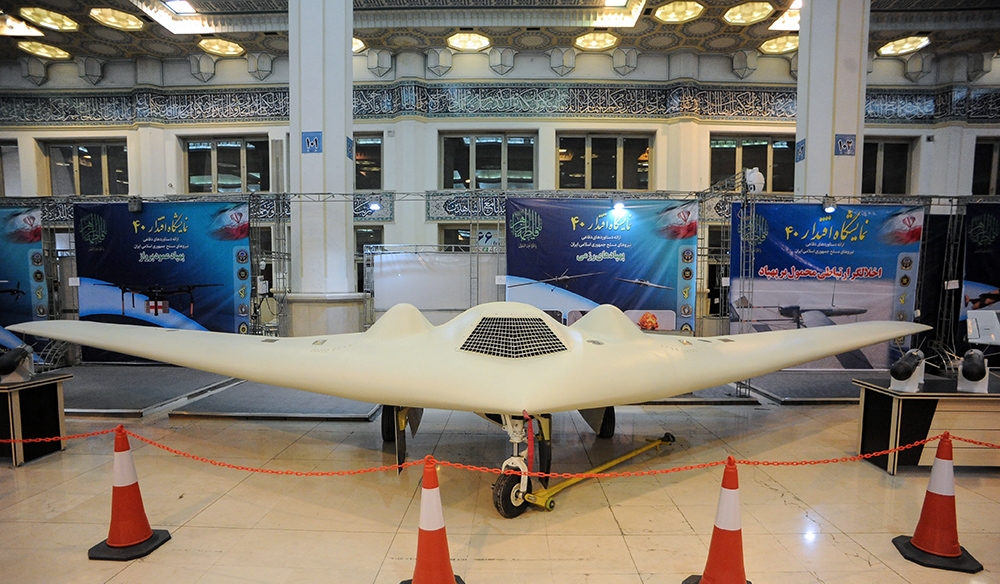
Shahed-171 (Simorgh): Shahed-171 also known as Simorgh, is a 100% scale version of RQ-170, and uses a Toloue-14 turbofan engine. Toloue-14 mini turbofan is the result of turning Toloue-4 mini turbojet engine into a turbofan. Thanks to its turbofan engine, Shahed-171 has reached a flight endurance of 10 hours and a maximum range of 4400 km. The flight ceiling of 40,000 feet (12,000 meters), the maximum take-off weight of 3070 kg and the maximum speed of 460 km/h are other specifications of this drone. Like the RQ-170 UAV, Shahed-171 uses a shield for its thermal camera, which reduces its radar cross section.
The similarity of camera cover in Shahed-171 and RQ-170
Shahed-171 specifications: Role: Reconnaissance Length: 4.75 meters Wingspan: 13 meters Height: 1.2 meters Reconnaissance range: 2200 km Maximum range: 4400 km Flight endurance: 10 hours Flight ceiling: 40,000 feet (12,000 meters) Engine: Turbofan Toloue-14 Thrust engine power: 6 kilonewtons Maximum speed: 460 km/h Cruise speed: Unknown Weight: Unknown Maximum take-off weight: 3070 kg
Shahed-171 (Simorgh)drone
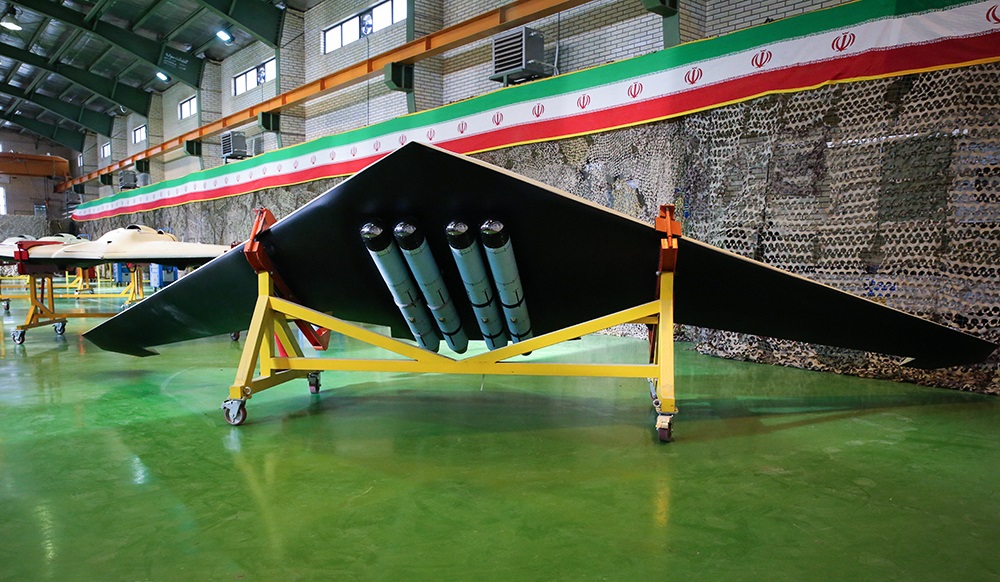
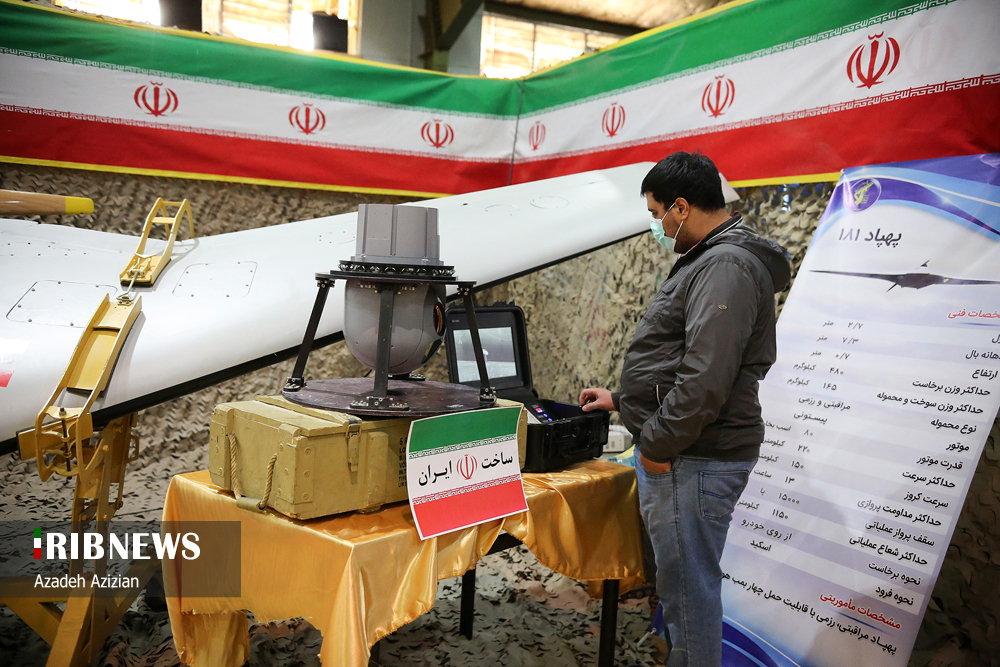
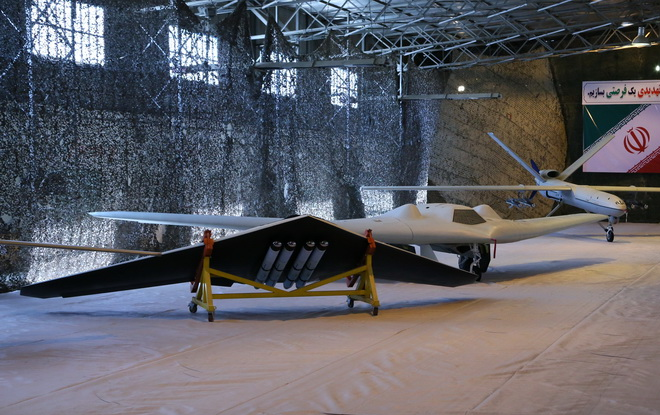
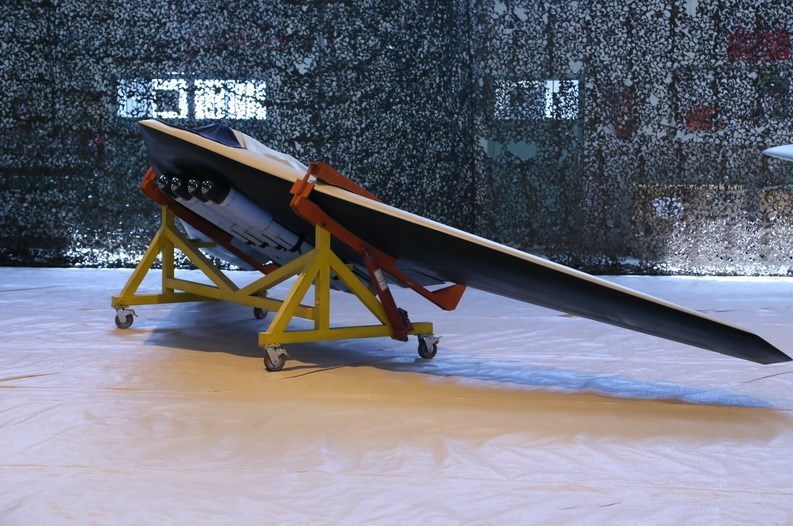
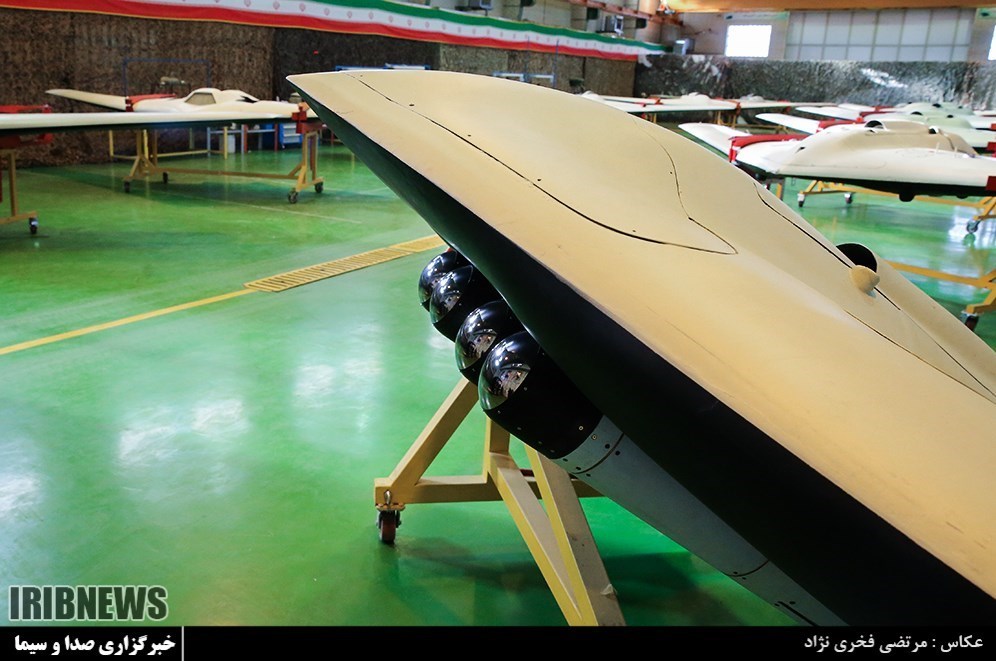
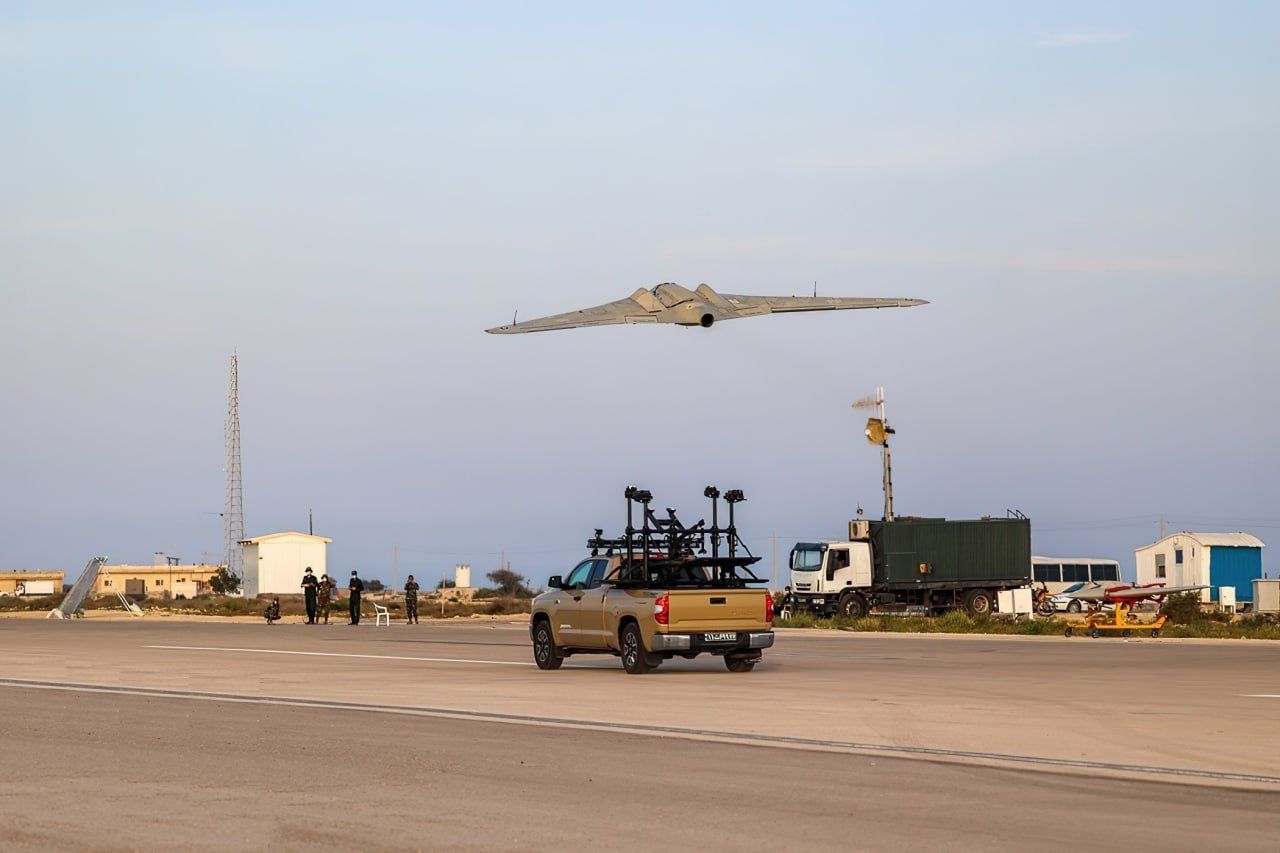
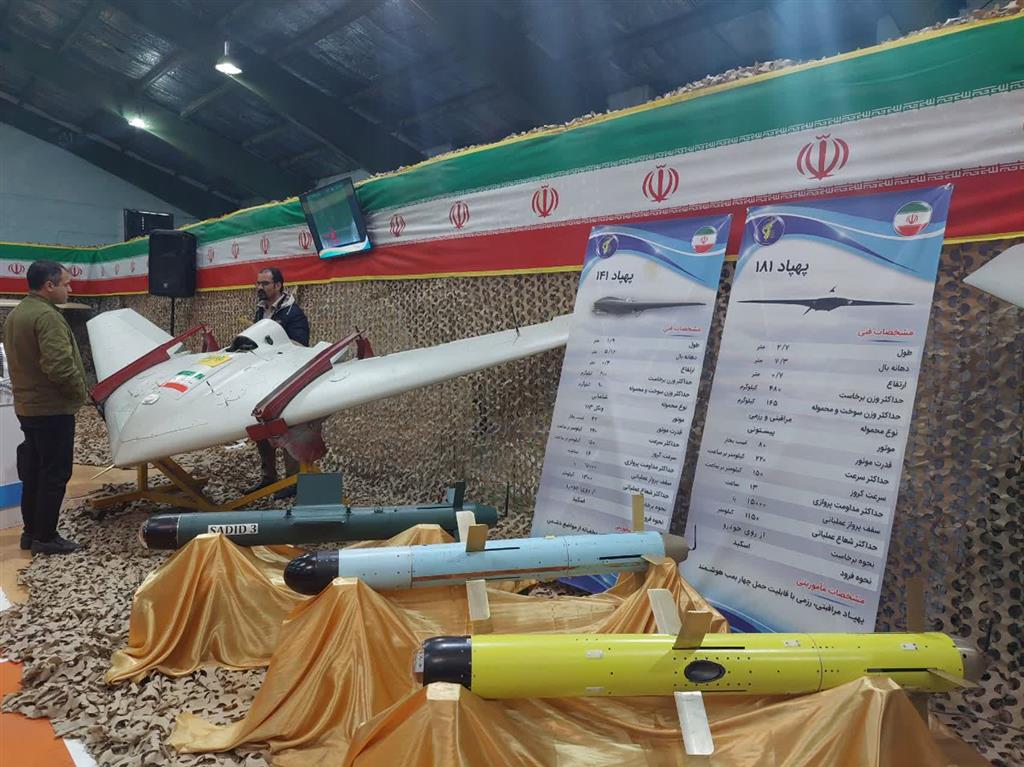
Shahed-181 (Saegheh): Shahed-181 drone also known as Saegheh (Lightning), is a 60% scale version of Shahed-171 drone and uses a two-stroke propeller engine. Due to the expensiveness of the Shahed-171 stealth drone, in order to reduce the production cost and also easy mass production, the Shahed 181 drone has been mass produced by removing the landing gear and using a piston engine. Shahed-181 has the capability of carrying four Sadid-342 bombs under the body between its skates. Due to having folding wings, Sadid-342 bomb occupies the least space and four of them are easily placed next to each other, and for this reason, it is the best option for use on this drone.
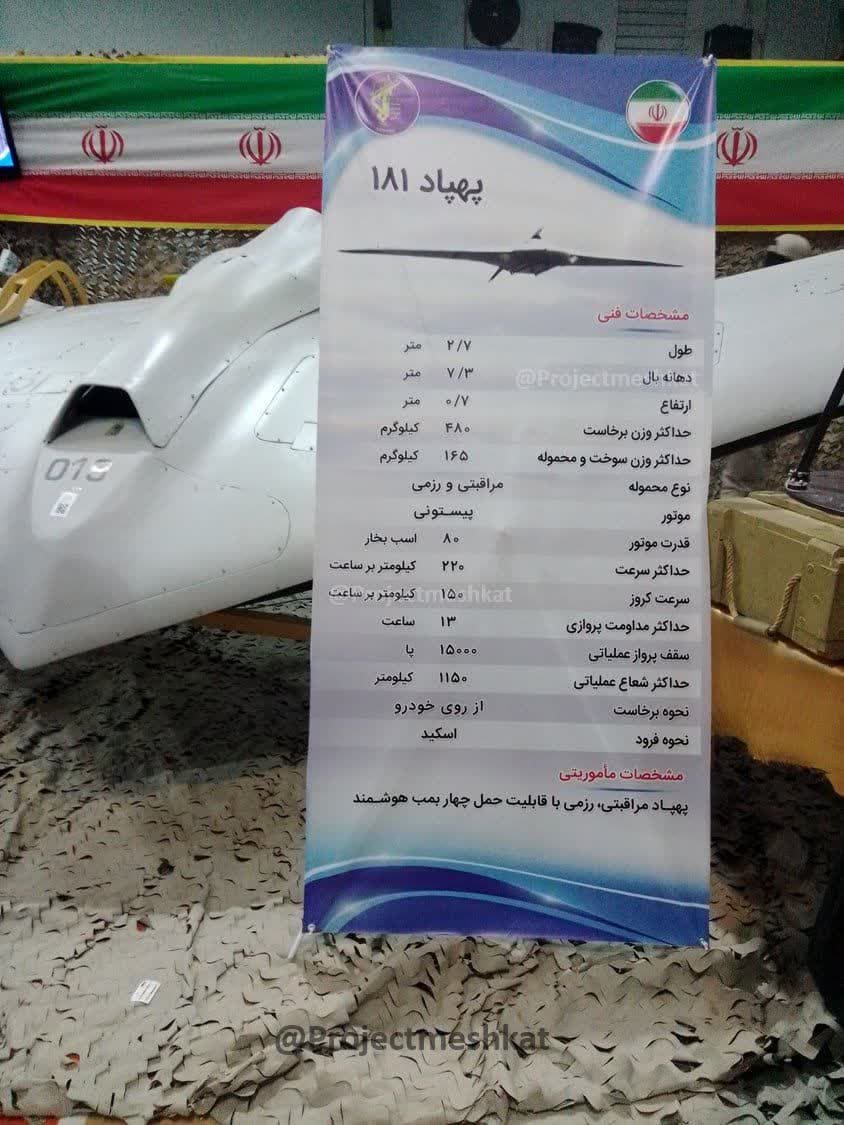
Shahed 181 drone with four Sadid 342 bombsA banner containing the specifications of Shahed 181 droneClick to view full size
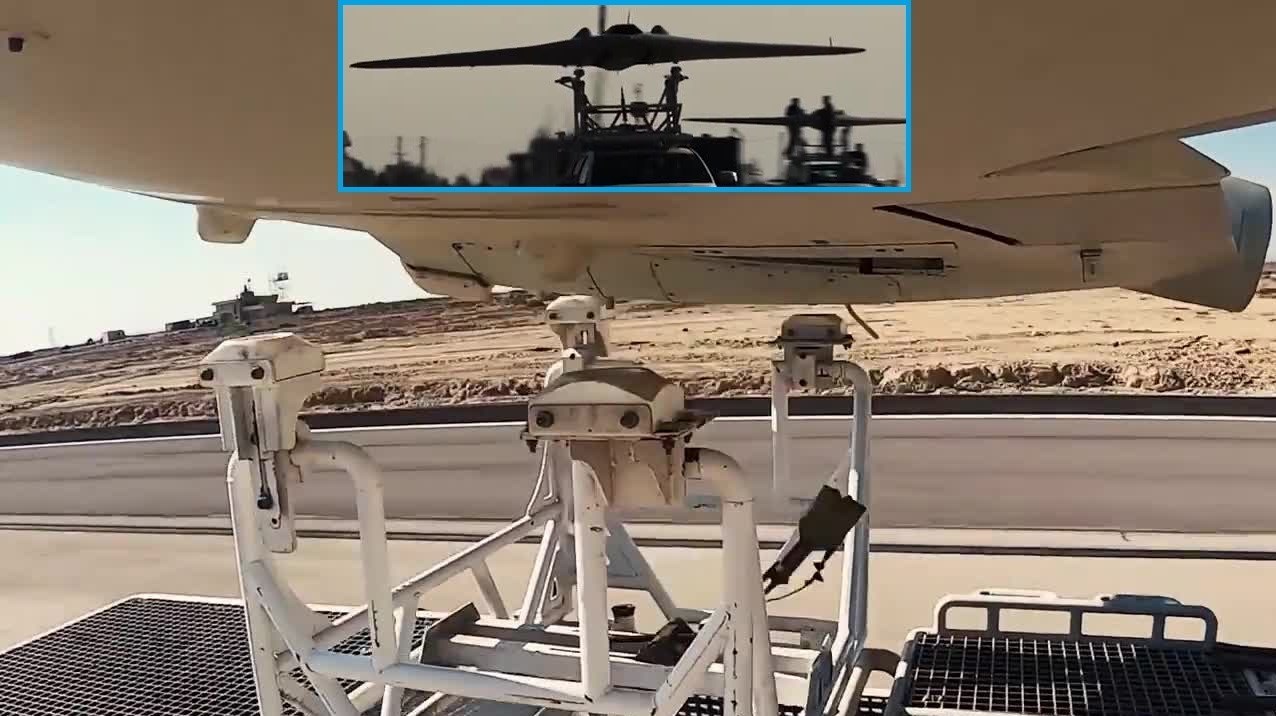
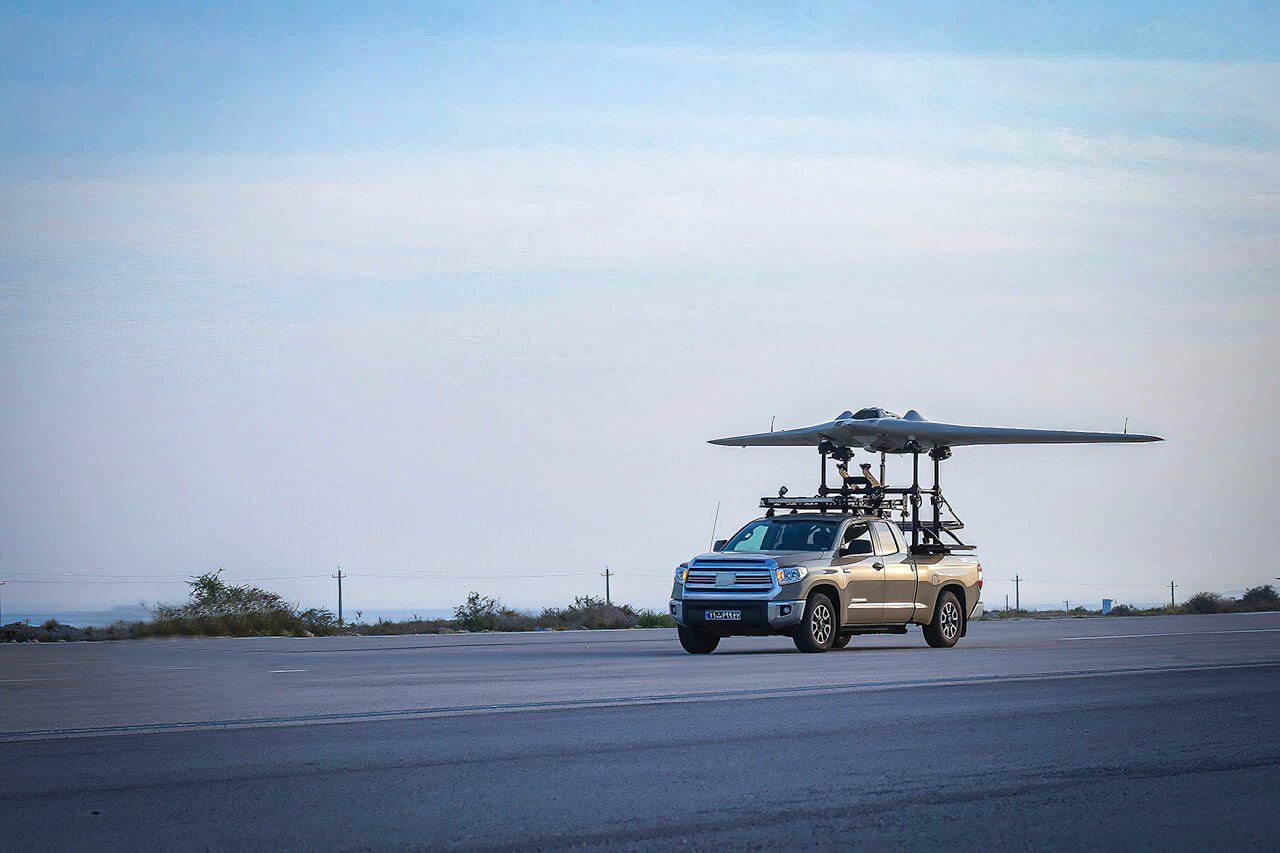
Shahed-181 takes help from a vehicle to take off. The drone is placed on a special pneumatic launcher on the vehicle. After the vehicle reaches the desired speed, the drone is launched and flies. For landing, Shahed-181 slides on the ground using his skates to stop.
Shahed-181 specifications: Role: Reconnaissance and combat Length: 2.7 meters Wing length: 7.3 meters Height: 0.7 meters Combat range: 1150 km Maximum range: 3450 km Flight endurance: 13 hours Flight ceiling: 15000 feet (4572 meters) Engine: 80 horsepower piston Maximum speed: 220 km/h Cruise speed: 150 km/h Weight: Unknown Maximum take-off weight: 480 kg Maximum weight of fuel and cargo: 165 kg Take off type: By vehicle Landing: By skate Armament: 4 smart bombs
Shahed-181 (Saegheh)drone
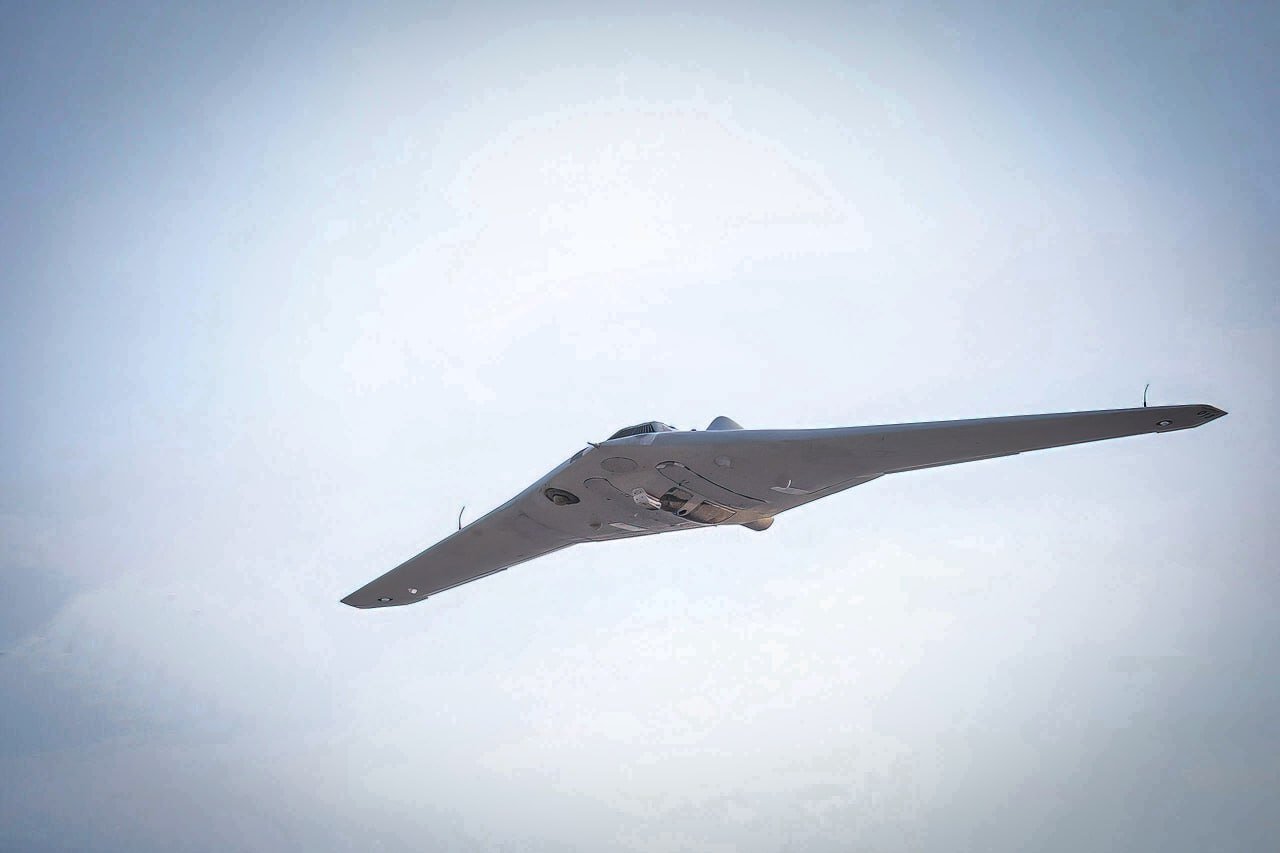
Shahid-191 (Saegheh 2): Shahed-191 drone also known as Saegheh 2, like the Shahed-181 is a 60% scale version of Shahed-171. But Shahed-191 uses a turbojet engine instead of a piston engine. The radar cross-section in Shahed-191 is smaller due to the use of a turbojet engine, and Sadid bombs are placed inside the body of the drone.
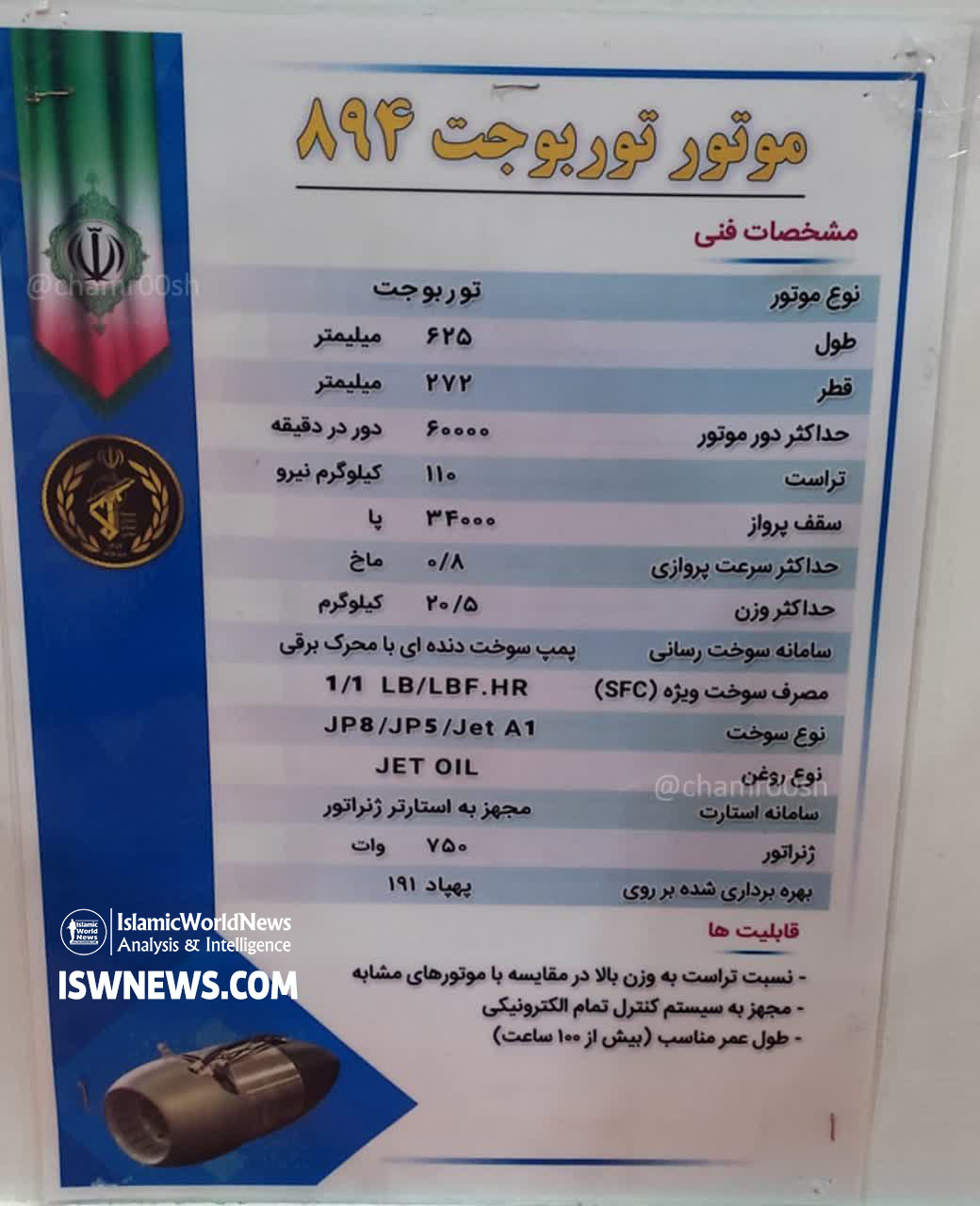
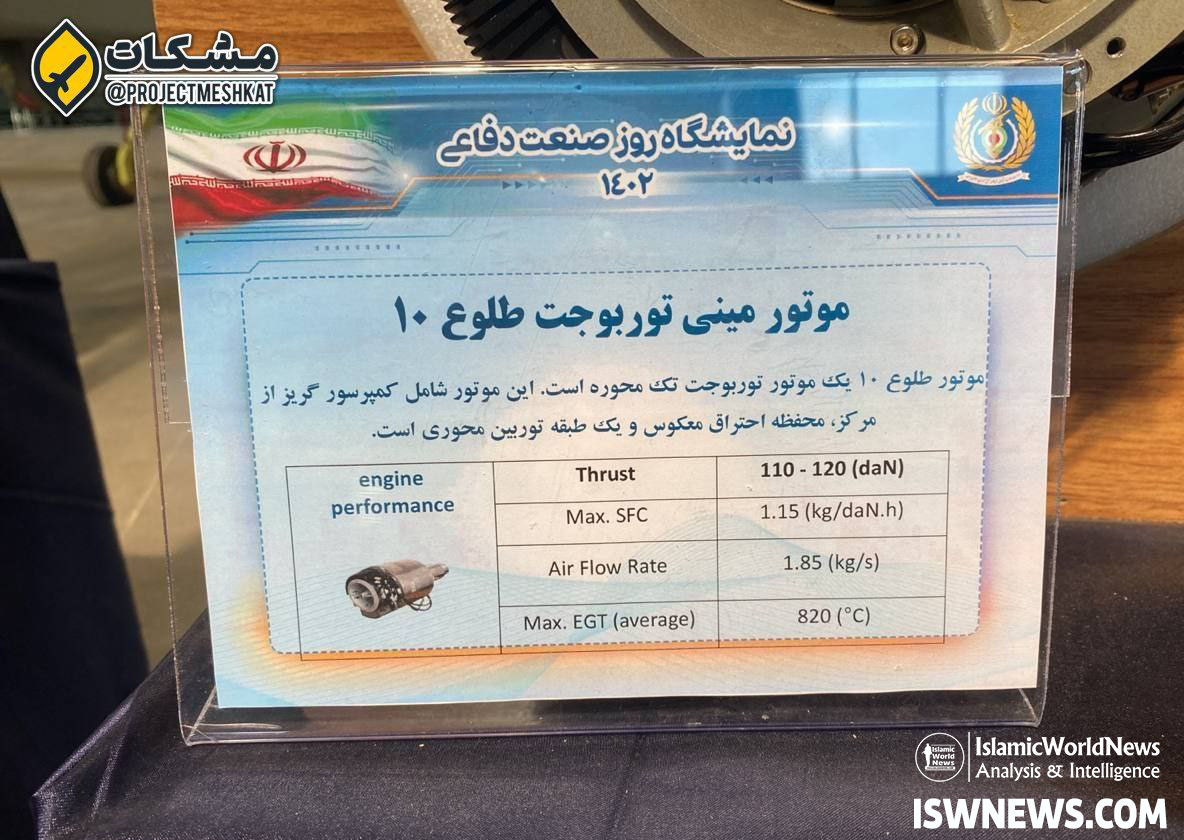
Shahed-191 uses a mini turbojet engine with a power of 1078.8 newtons, which is known as Turbojet 894, or a Toloue-10 turbojet engine with a power of 1100 to 1200 newtons. It is worth noting that the 894 turbojet engine was manufactured by the IRGC Aerospace Force and the Toloue-10 turbojet engine was manufactured by the Iran’s Ministry of Defense.
894 turbojet engine and Toloue-10 turbojet engine
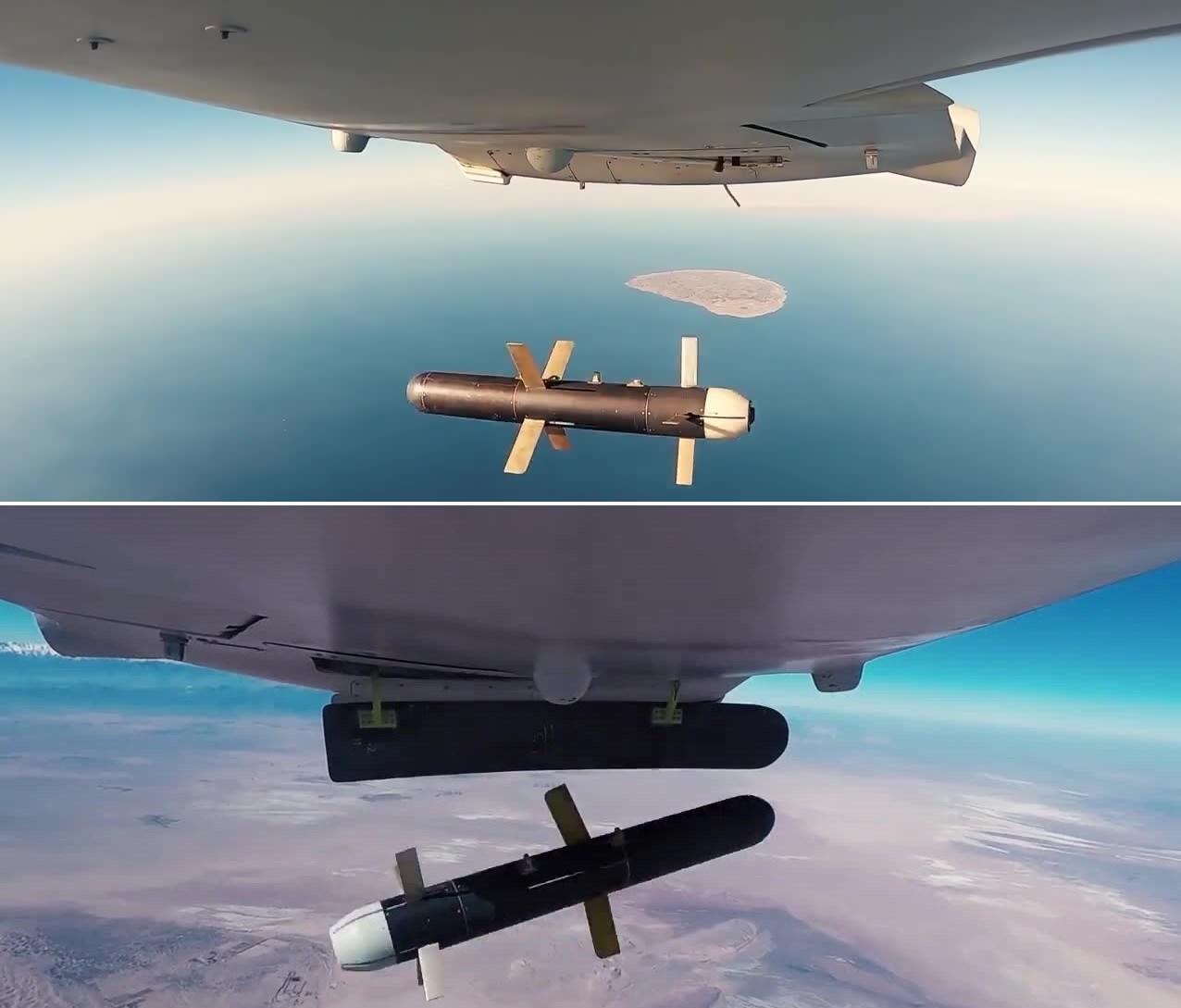
Shahed-191 has a higher flight ceiling as well as greater stealth profile, and for this reason, an internal place for carrying weapons has been designed to help the stealthy features of this drone during combat missions. Saegheh 2 has the ability to carry two Sadid-342 bombs in its internal weapons bay.
Based on the published images, it seems that this drone uses the Oghab 4 electro-optic system.
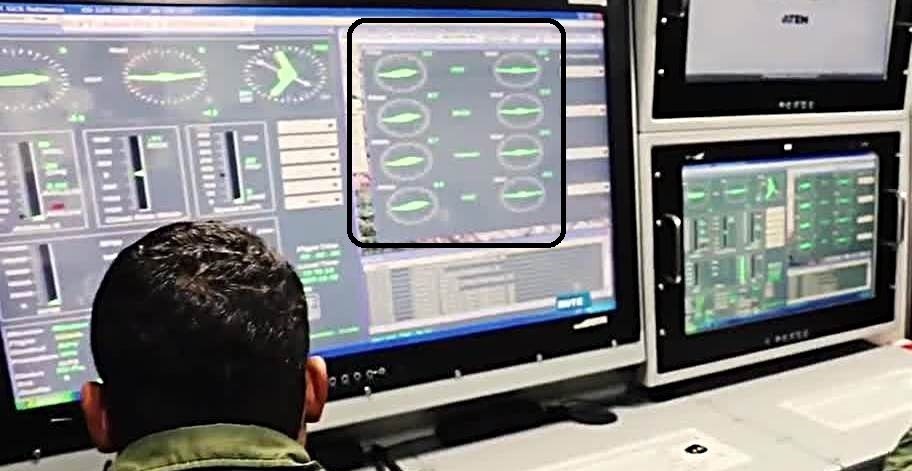
The moment of releasing the Sadid-342 bomb from the Shahed 191 droneThe moment of separation of Shahed 191 drone from the launcher vehicleA view of the Shahed drone control roomClick to view full size
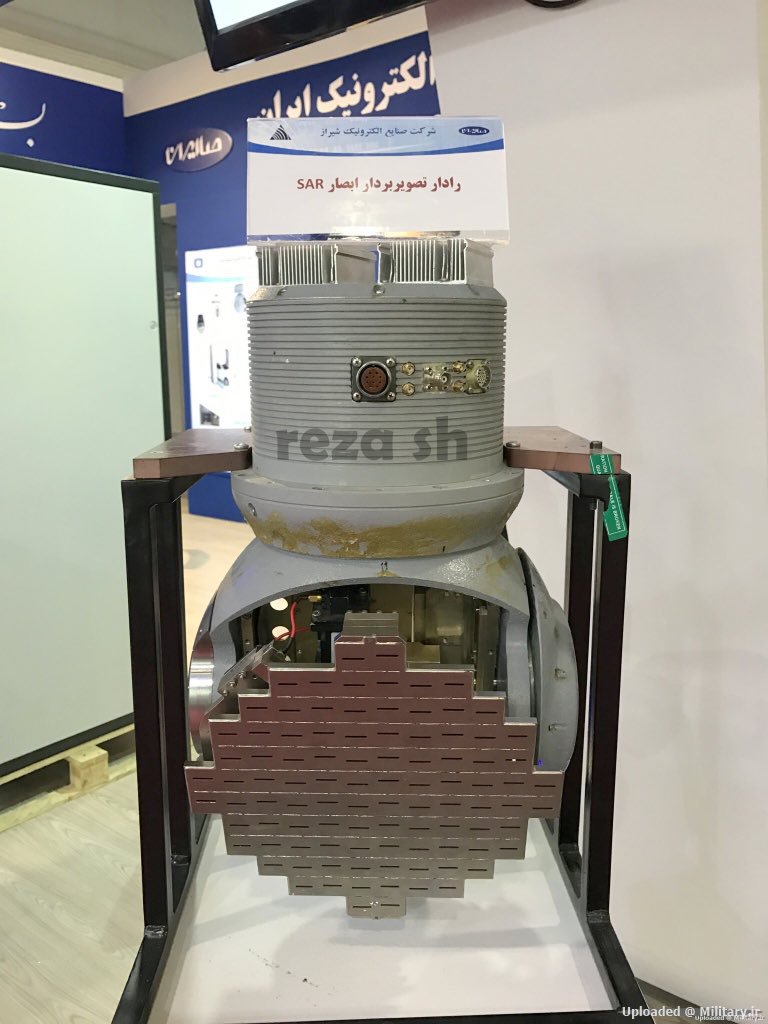
A type of SAR radar called Absar has been developed specifically for this drone, which is installed in camera place and provides the possibility of searching for objects in the form of 3D imaging.
Parts of Shahed 191 UAVABSAR SAR radarClick to view full size
Shahed-191 specifications: Role: Reconnaissance and combat Length: 2.7 meters Wing length: 7.3 meters Height: 0.7 meters Combat range: 500 km Maximum range: 1500 km Flight endurance: 4.5 hours Flight ceiling: 30000 feet (9144 meters) Engine: Turbojet 894 or Toloue-10 Thrust engine power: 110 kg of force (1078.8 newtons) Maximum speed: 350 km/h Cruise speed: 200 km/h Weight: Unknown Maximum take-off weight: 500 kg Maximum weight of fuel and cargo: 230 kg – 10 kg of optical cargo and 100 kg of weapons in weapon bay Take off type: By vehicle Landing: By skate Armament: 2 smart bombs
Shahed-191 (Saegheh 2)drone
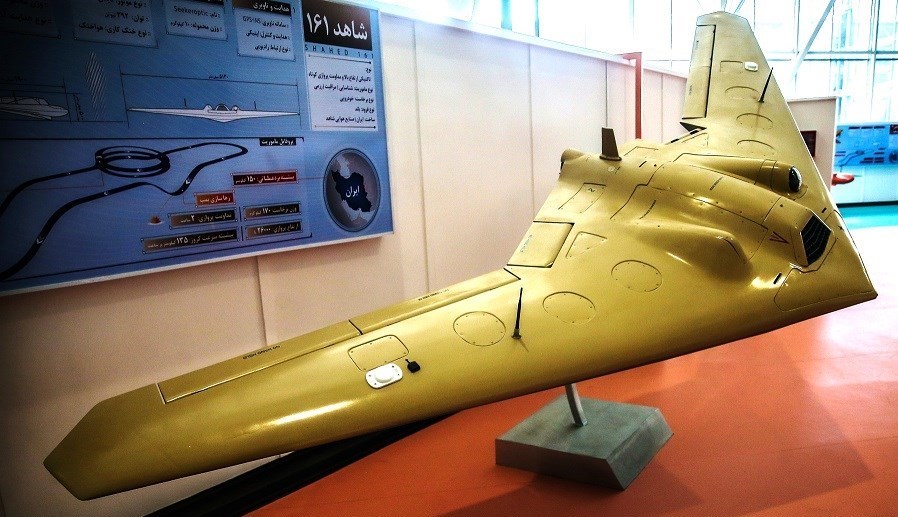
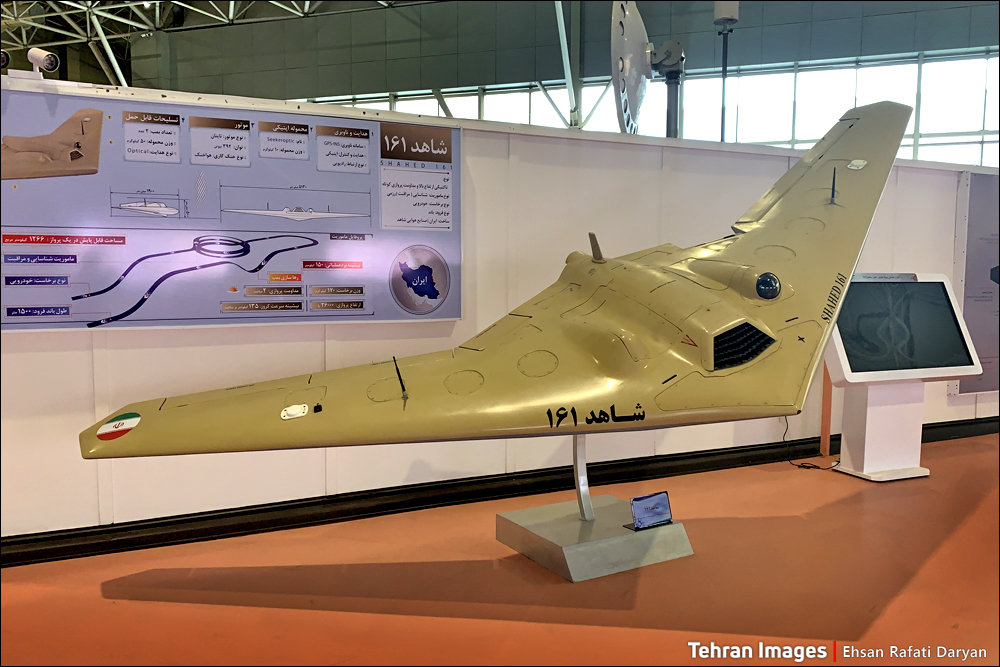
Shahed-161: Shahed-161 is a 40% scale version of Shahed-171 drone. This drone uses a small and unannounced micro-turbojet engine. In the description provided for Shahed-161, the type of cargo is announced a seeker and warhead. This information strengthens the possibility that this variant is a suicide drone. If Shahed-161 is a suicide type of the Simorgh family, it must be said that this suicide drone is very a expensive one and therefor will be used to hit special targets such as air defense systems. The thermal seeker of Shahed-161 is installed on the wing and the right side of the engine, and when the UAV dives, it gets a better view of the ground. One of the characteristics of Shahed-161 is the possibility of different launch. Due to the lightness of this drone compared to other types, a pneumatic launcher has been used, which makes it possible to launch this drone faster from the vehicle. It is also possible to use this technique on other members of the Simorgh family that fly from the vehicle. This drone can also land with the help of a recovery parachute or skates.
Shahed-161 specifications: Role: Reconnaissance and suicide Length: 1.9 meters Wingspan: 5.13 meters Height: 0.71 meters Combat range: 150 km Maximum range: 300 km Flight enduracne: 3 hours Flight ceiling: 25000 feet (7620 meters) Engine: HKS microjet Engine power: 40 kg of power Maximum speed: 350 km/h Cruise speed: 150 km/h Weight: Unknown Maximum take-off weight: 170 kg Maximum weight of fuel and cargo: 40 kg Cargo: Seeker and warhead Take off type: Pneumatic launcher Landing: By skate, recovery parachute
Shahed-161 drone
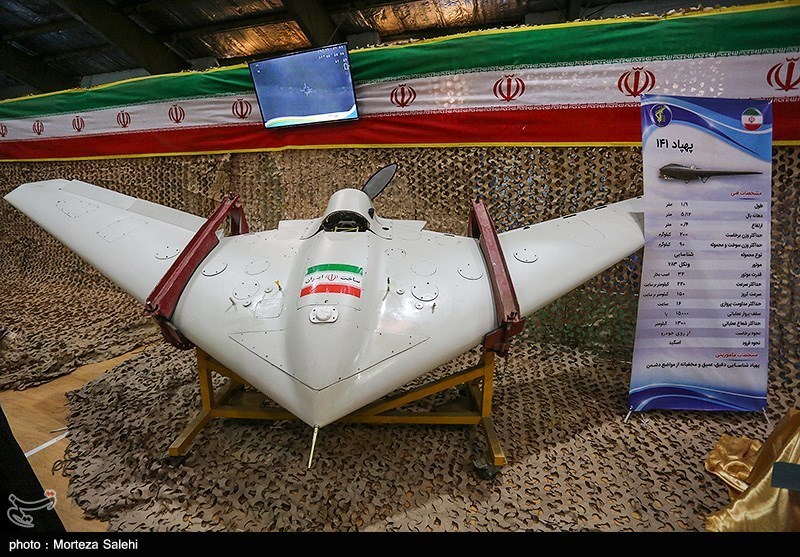
Shahed-141: Shahed-141 drone has not been officially unveiled yet. This drone is a 40% scale version of Shahed-171. According to the information provided at the IRGC achievements exhibition in Isfahan, Shahed-141 has a Wankel 783 engine with a power of 32 horsepower, and thanks to the capacity of carrying 90 kg of cargo, it can carry a high-quality camera and a 12-hour flight endurance for reconnaissance missions.
Shahed-141 specifications: Role: Reconnaissance Length: 1.9 meters Wingspan: 5.13 meters Height: 0.4 meters Reconnaissance range: 1300 km Maximum range: 2600 km Flight endurance: 12 hours Flight ceiling: 15000 feet (4572 meters) Engine: Wankel 783 piston 32 hsp Maximum speed: 220 km/h Cruise speed: 150 km/h Weight: Unknown Maximum take-off weight: 200 kg Maximum weight of fuel and cargo: 90 kg Take off type: Pneumatic launcher Landing: By skate, recovery parachute
Shahed-141 drone
15% scale versionof Shahed-171: Information and a picture of this variant are not available, but it can be pointed out that this variant is the first sample made during the reverse engineering of the RQ-170 UAV. Making a 15% scale version of RQ-170 has helped to better understand the flight structure of this drone, and this has accelerated the build process and use of the Shahed family of stealth drones.
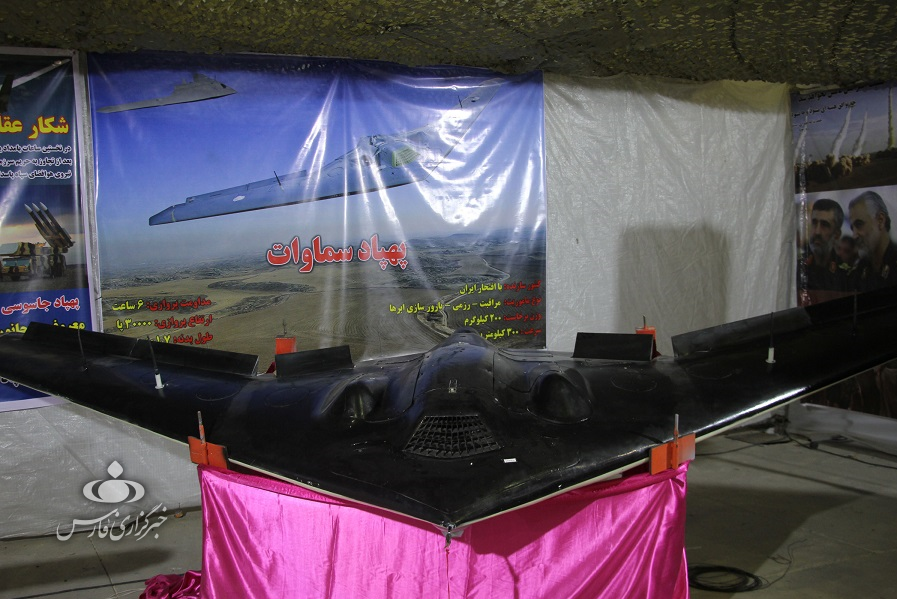
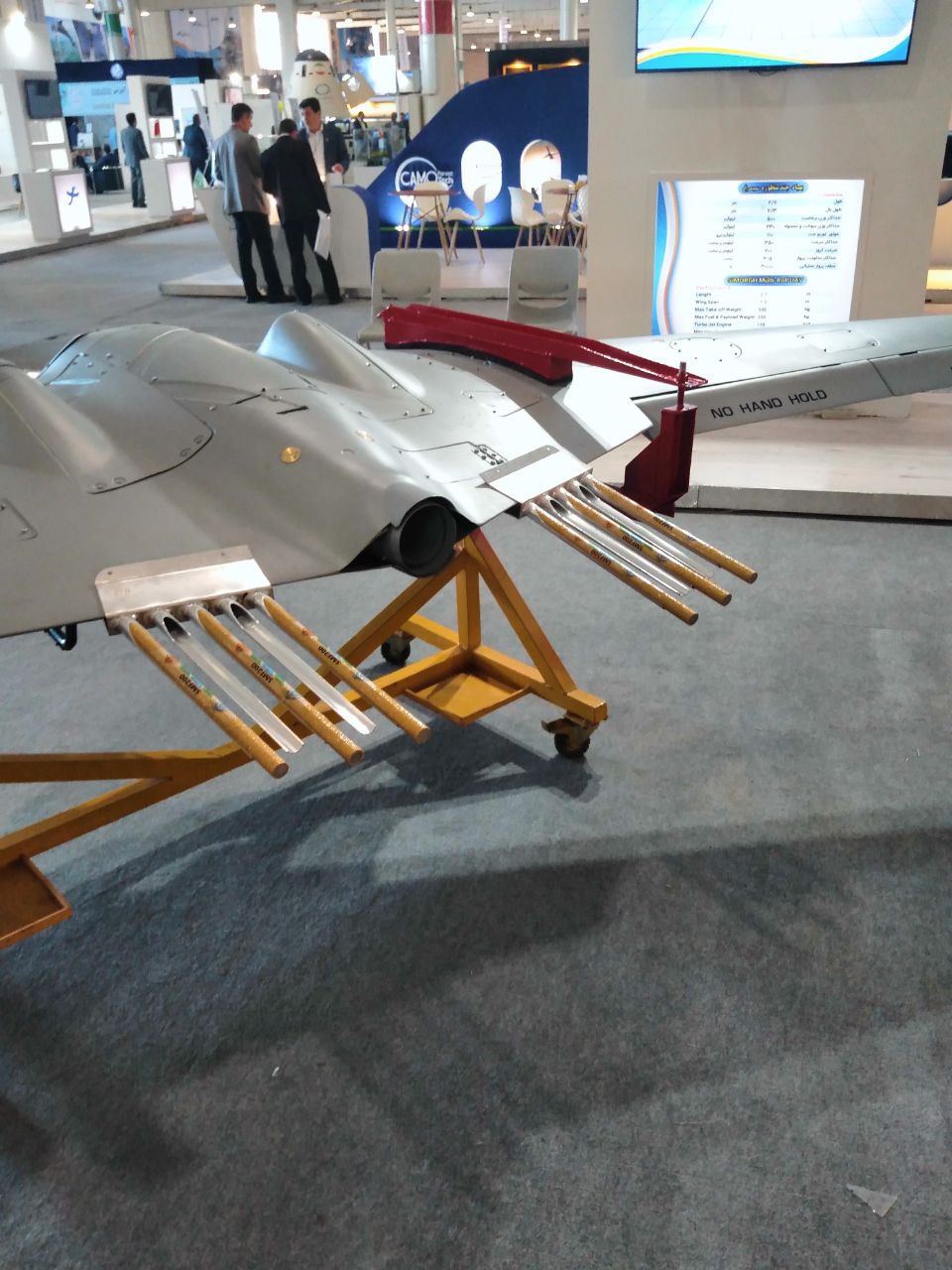
Samavat drone: The Samavat drone was showcased for the first time at the IRGC Achievements Exhibition in Birjand. This drone is equivalent to the Shahed-161 drone and is used for cloud seeding. According to published information, the Samavat drone can be used for surveillance and combat missions, and for this purpose, it is possible to separate the silver iodide holding rods from the drone. Except for the body length of 1.7 meters, which is given in the Samavat banner, the rest of the specifications are very similar to Shahed-161.
The banner and specifications of Samavat droneRods and holding tubes with silver iodide containers on Samavat droneClick to view full size
Combat history The Shahed family of stealth drones have been widely deployed in the IRGC Air Force and have carried out a large number of reconnaissance and combat operations so far. But the first combat operation that has been officially confirmed is related to the use of Shahed 181 and 191 drones on June 18, 2017 in Operation Laylat al-Qadr against ISIS in Syria. It should be noted that due to the confidentiality and sensitivity, most of the missions of this category of drones are not officially announced.
Shahed 171 And Shahed Stealth Drones Family – click to view full sizeClick to view full size
Posters of “Shahed 171 And Shahed Stealth Drones Family” in Russian (Шахед 171), Arabic, Kurdish, Azeri (Şahid 171), Hebrew (שאהד-171), Chinese (见证者-171) and Persian: