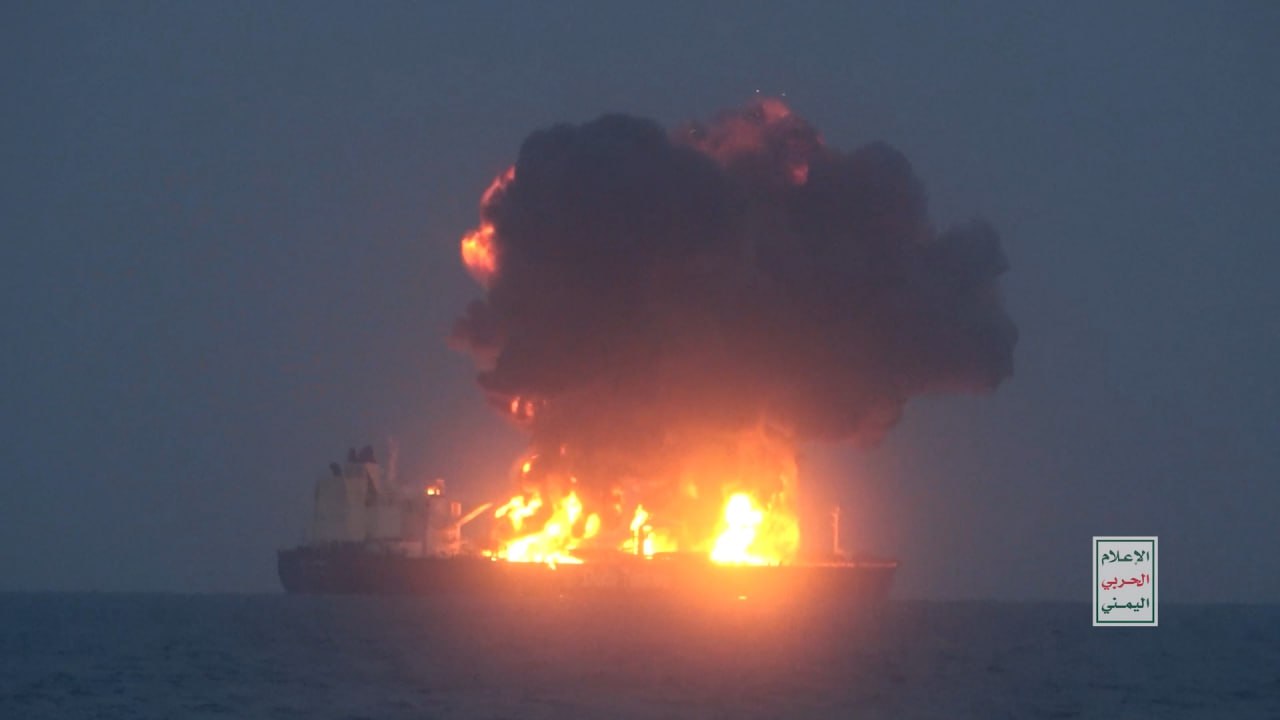
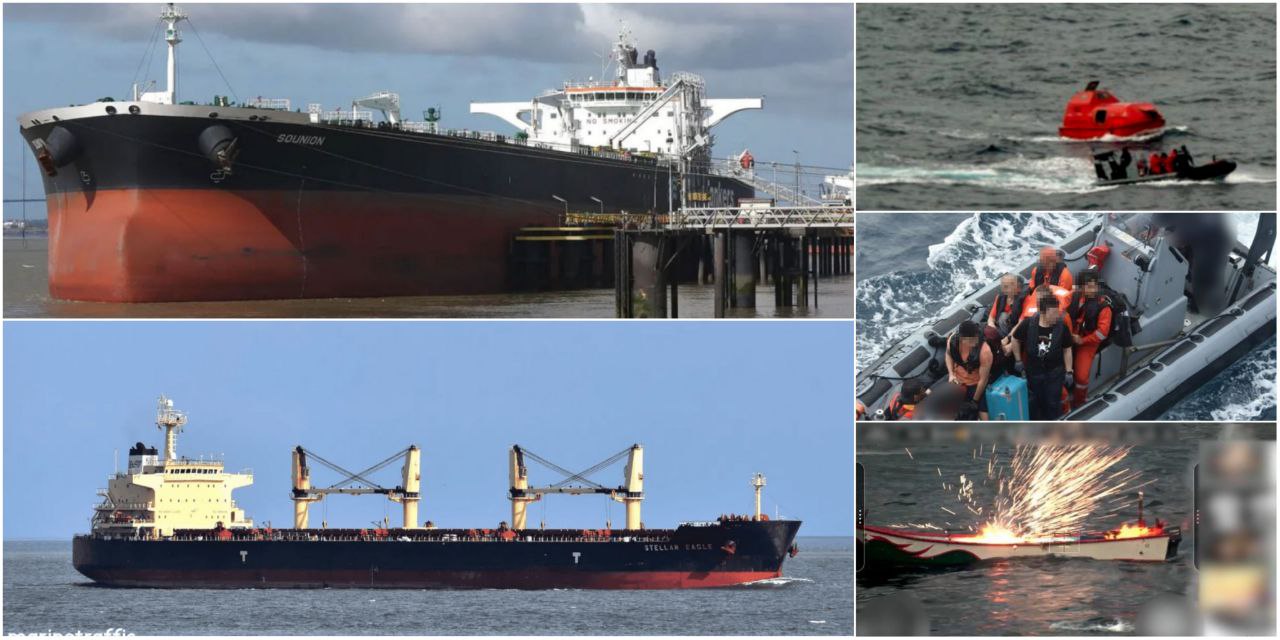
The Yemeni Ansar Allah movement’s spokesman Mohammed Abdul Salam, who is also in charge of the Yemeni government’s negotiations, issued a statement, announcing that the Yemeni authorities have agreed to allow towing of the Greek-flagged oil tanker Sounion, which was recently targeted by the Yemeni Armed Forces in the Red Sea.
Abdul Salam further elaborated that after various international entities, especially the Europeans, contacted and called on Yemen to prevent an environmental catastrophe in the Red Sea, the permission to tow the Sounion vessel has been issued. Abdul Salam also went on to say that the setting fire of the tanker indicates Yemen’s seriousness and determination to impose the announced embargos against the Zionist enemy.
At the end of his statement, the spokesman of the Ansar Allah movement pointed to the decision to prevent the sailing of vessels towards the ports of occupied Palestine, underlining that the objective of the operation by the Yemeni Armed Forces is to put pressure on the Israeli regime to stop the atrocities against the oppressed Palestinians residing in the Gaza Strip, and that the ships of companies affiliated with the regime will not be safe from the strikes of the Yemeni army until this purpose is achieved.
Sounion vessel in the Red Sea
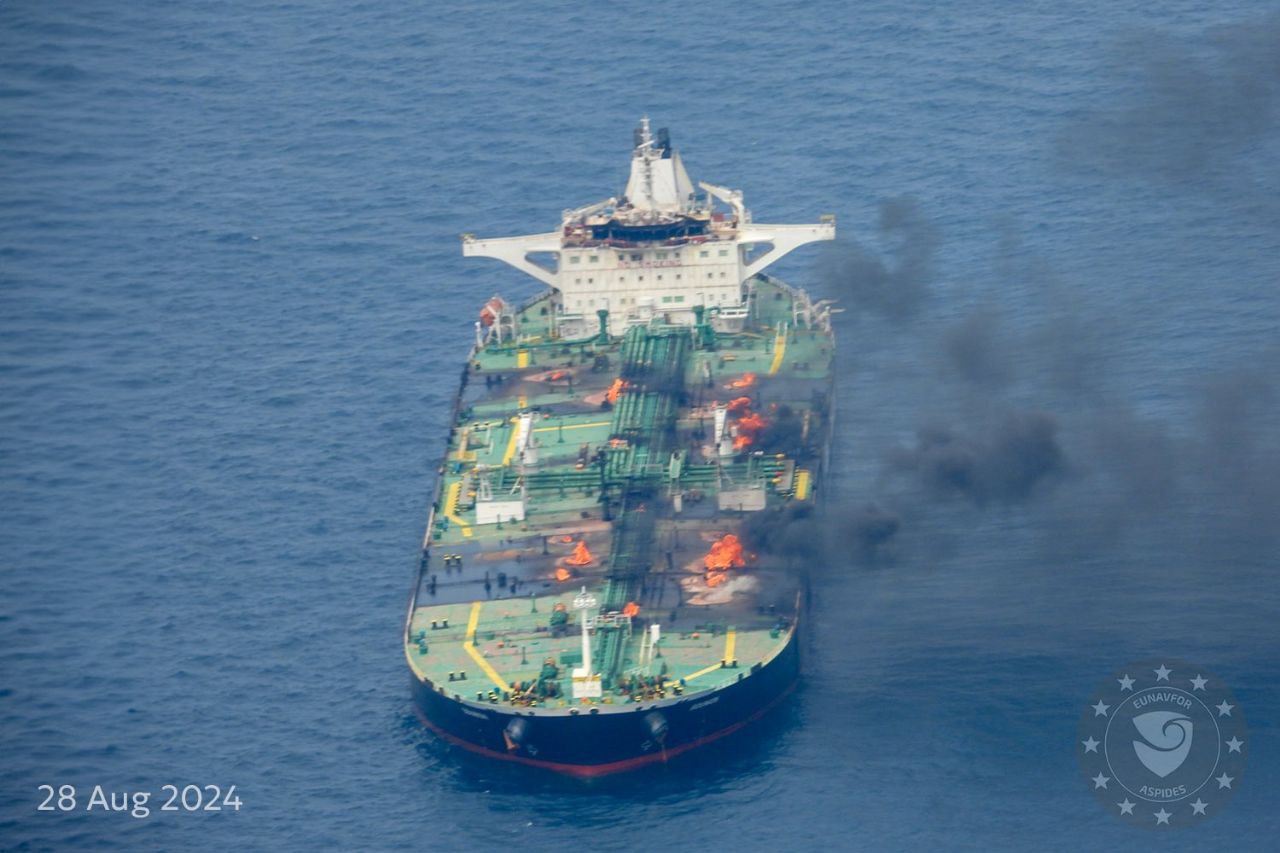
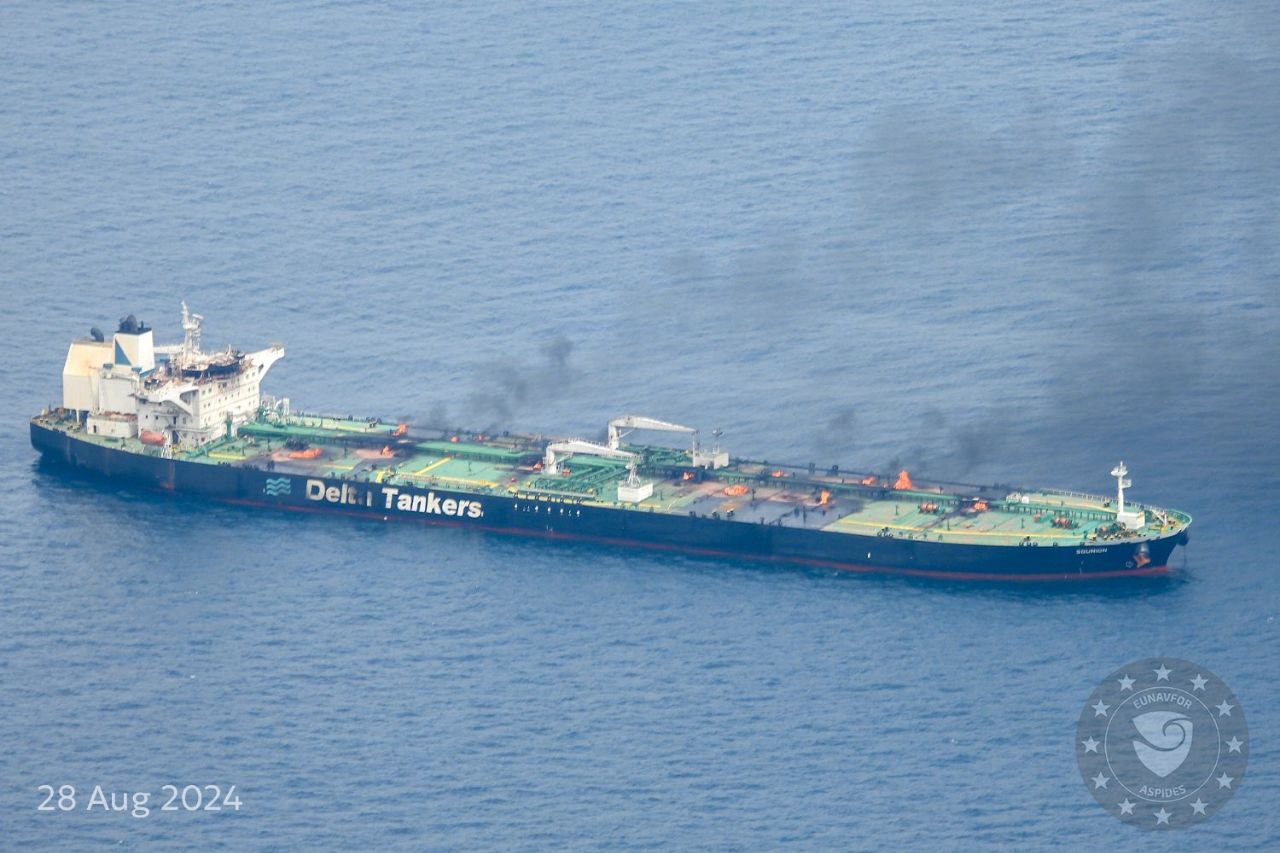
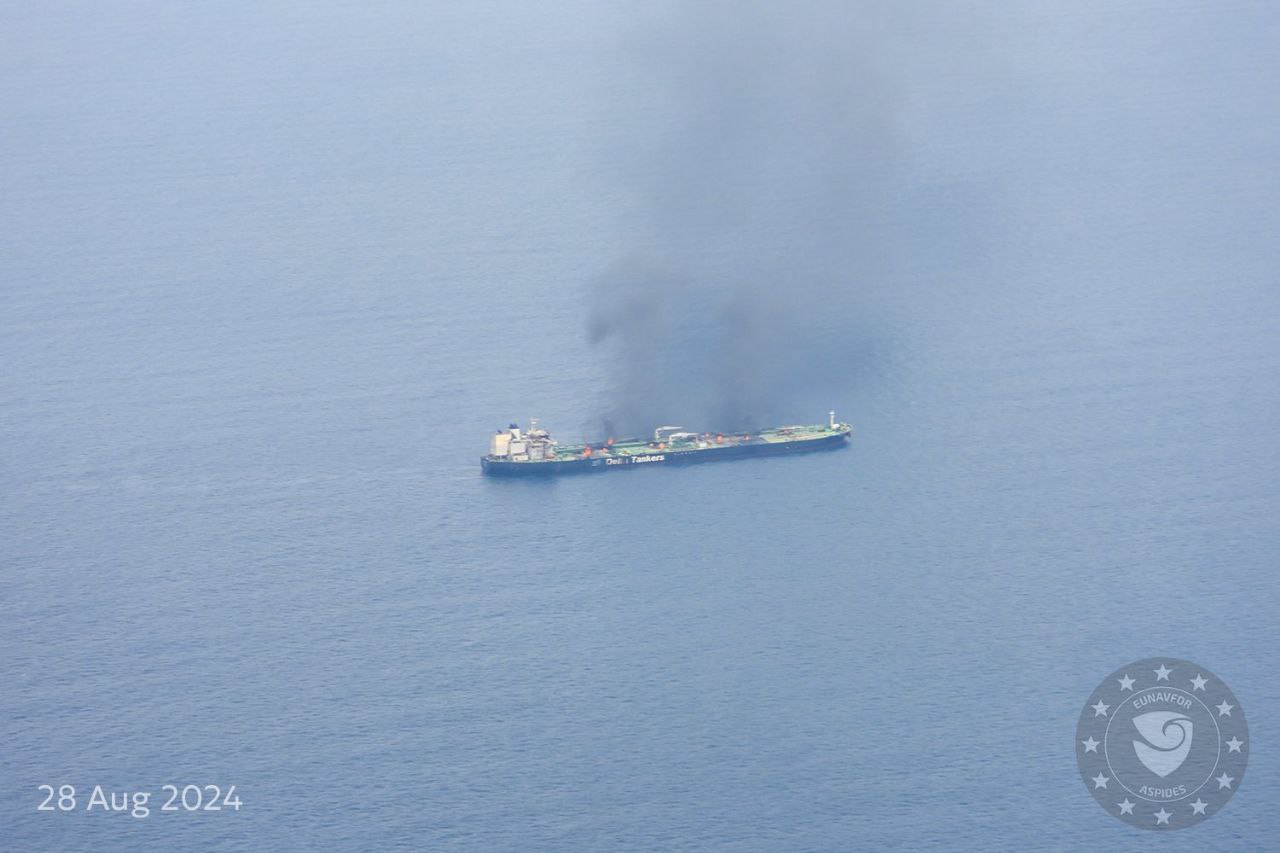
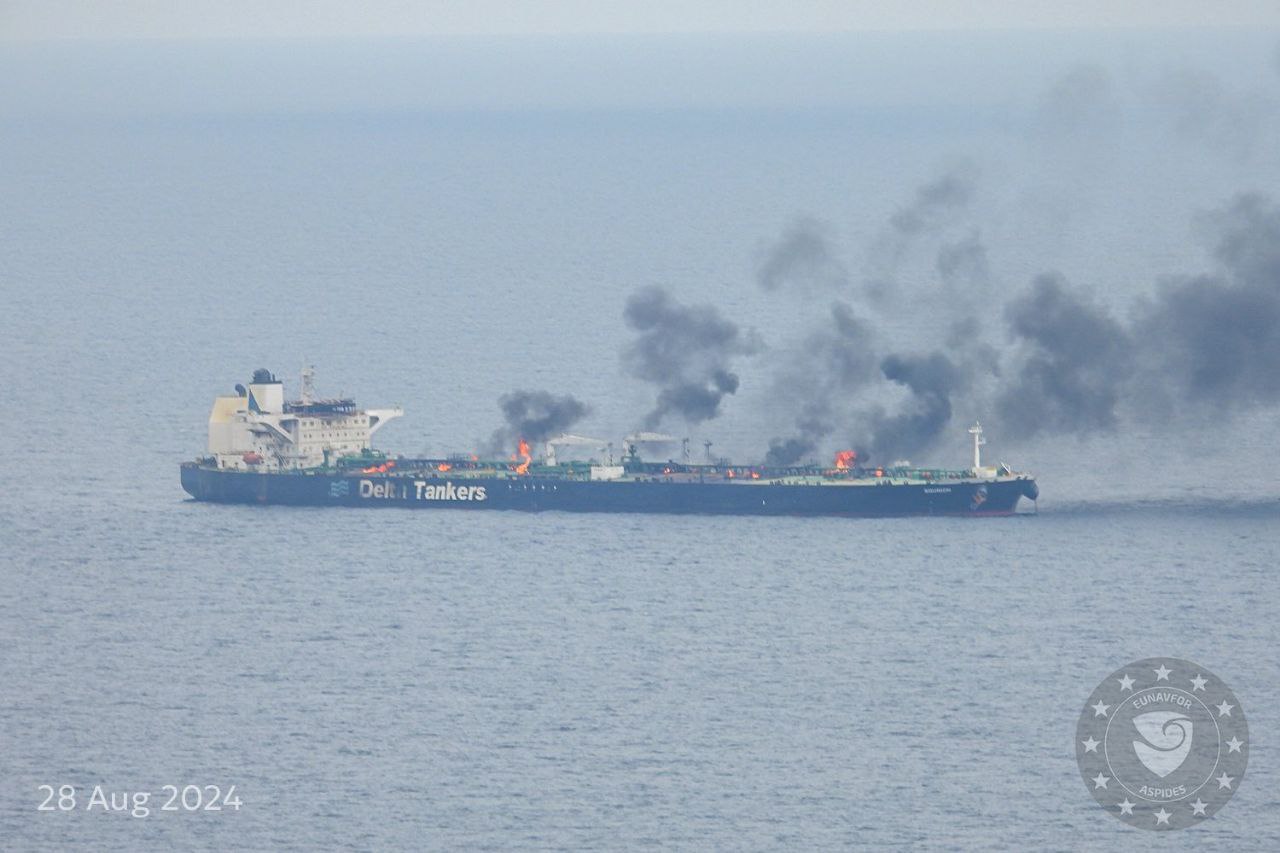
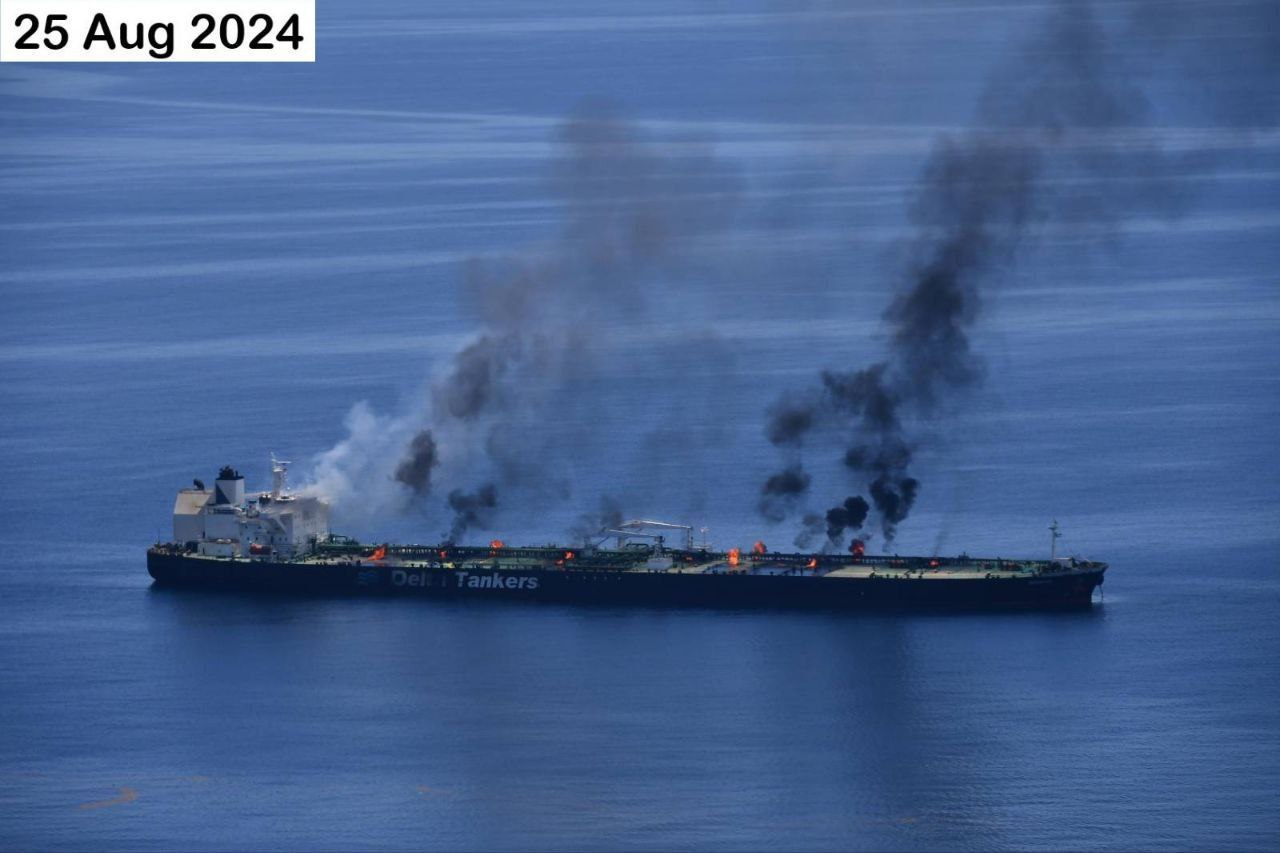
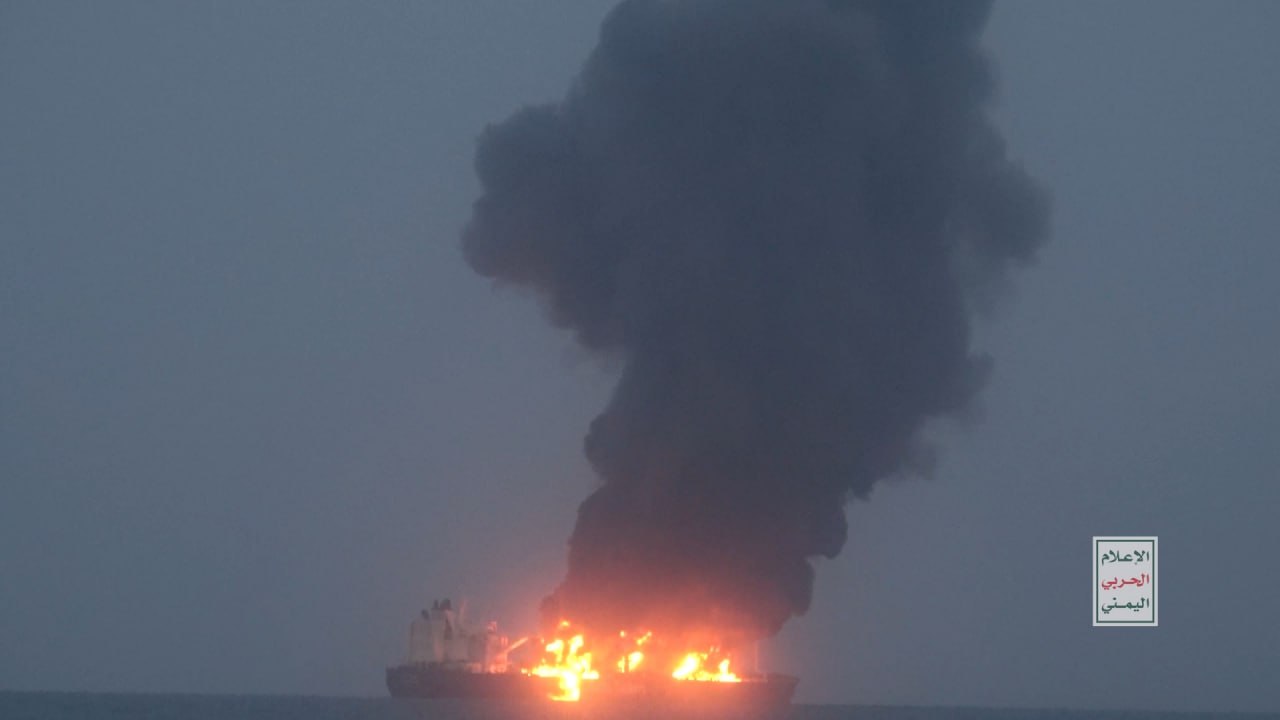
According to the latest reports, Operation Aspides, also known as EUNAVFOR Aspides, which is an EU military operation in response to Ansar Allah engagements with international shipping in the Red Sea, the Greek-flagged tanker Sounion, which was recently targeted by the Yemeni army’s missile and unmanned surface vehicle (USV), is still burning.
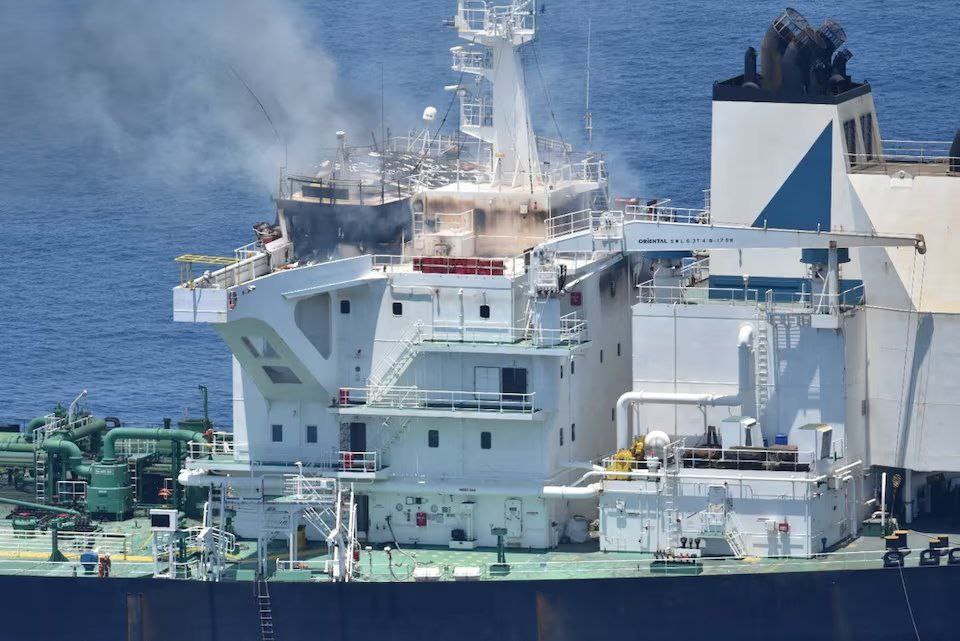
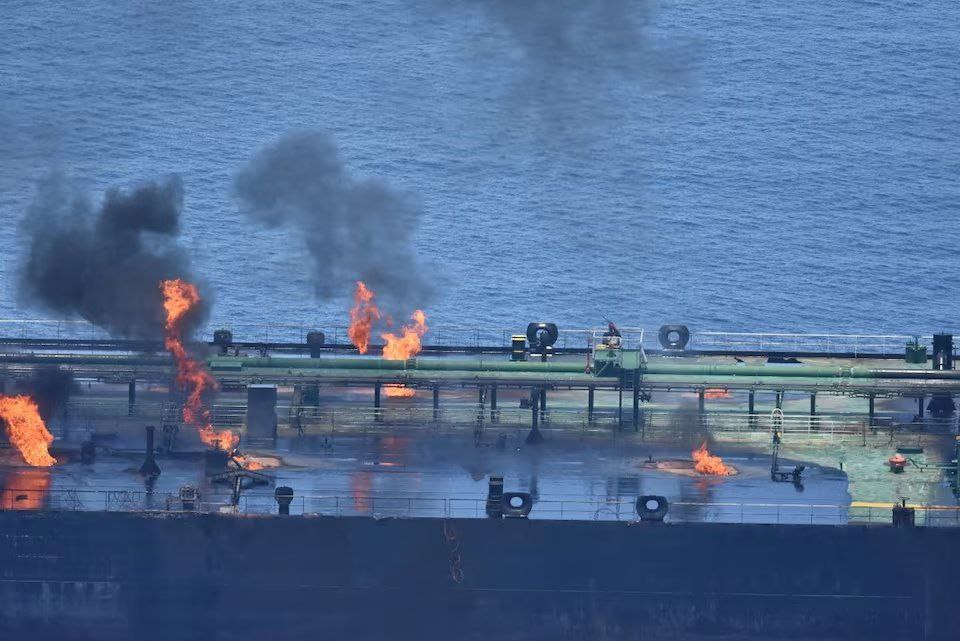
New images prove that the fire is still burning in several parts on the deck of the tanker, and there are no oil spills around the ship’s location. The EU fleet has also cautioned all vessels sailing through this area to be extremely vigilant, as the Sounion is in grave danger and its freight is at risk of contaminating waters in this area. Until Wednesday, the Yemeni naval forces prohibited ships and tugs from approaching the location where Sounion has been stopped.
According to European Union’s Naval Mission in the Red Sea, during the recent aerial flights over the Greek oil tanker Sounion, at least five fires were observed on deck of the vessel.
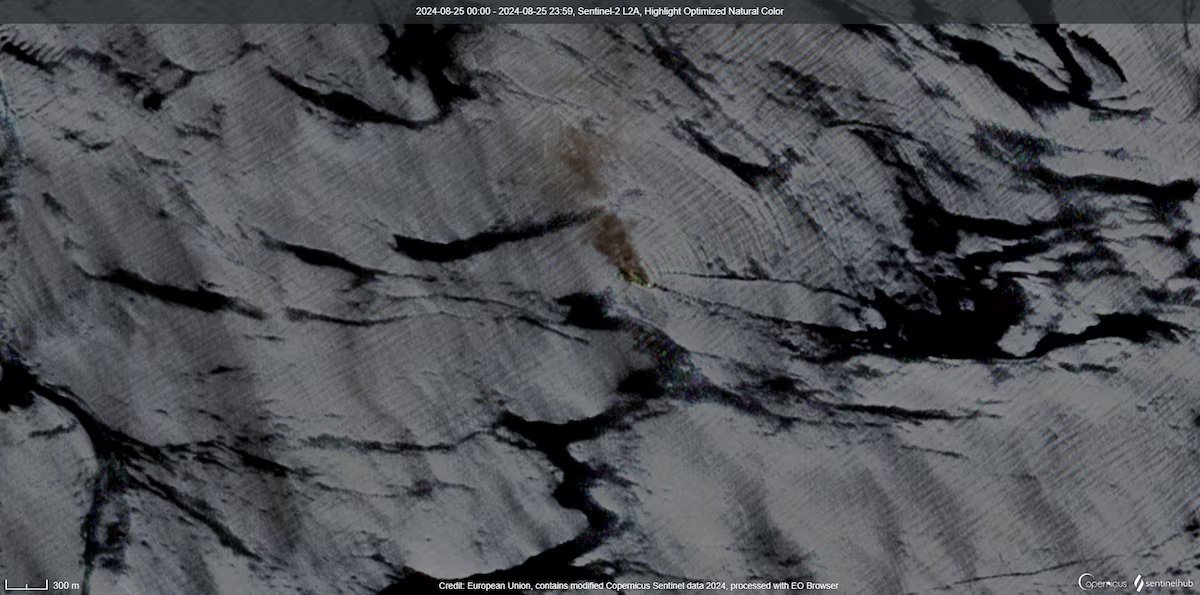
Satellite images of August 25, also show the continuation of the fire on the Greek ship.
Sounion tanker still burning
However, the ship remains anchored in international waters, 43 nautical miles from Jabal al-Zubayr (western Hudayda Islands), and there are no signs of an oil spill.
The Greek-owned Sounion tanker was carrying 150,000 tons of crude oil from the Iraqi port of Basra to the alleged destination in “South Africa”; But it suddenly appeared in the Red Sea and was surprised by the Yemeni armed forces!
According to what the United Kingdom Maritime Trade Operations (UKMTO) reported yesterday evening, the Yemeni army set the Sounion oil tanker on fire with three heavy blows after the Sounion oil tanker was evacuated by a French warship from the EU’s Operation Aspides in the Red Sea.
According to this report, the Yemeni strikes caused the vessel to be abandoned in the Red Sea again.
The Greek-owned Sounion oil tanker was carrying 150,000 tons of crude oil from the Iraqi port of Basra to the alleged destination in “South Africa”; But it suddenly entered the Red Sea and was surprised at a distance of 77 nautical miles west of Hudaydah port!
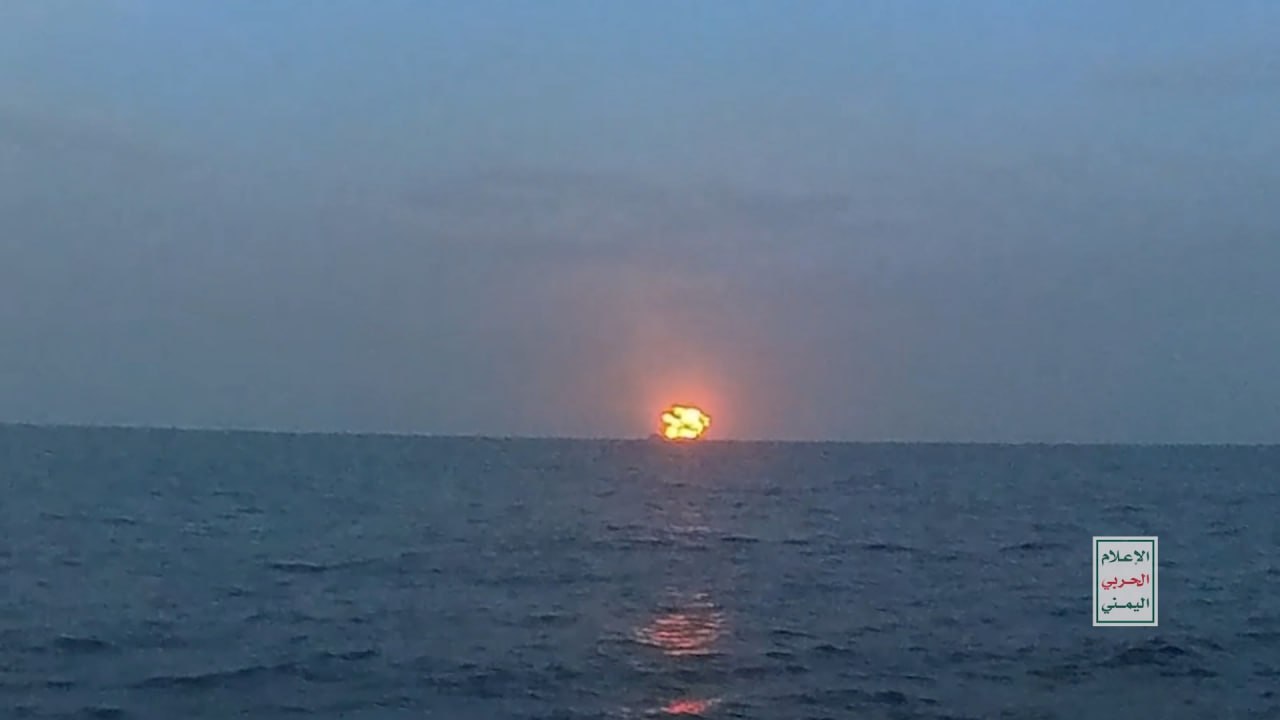
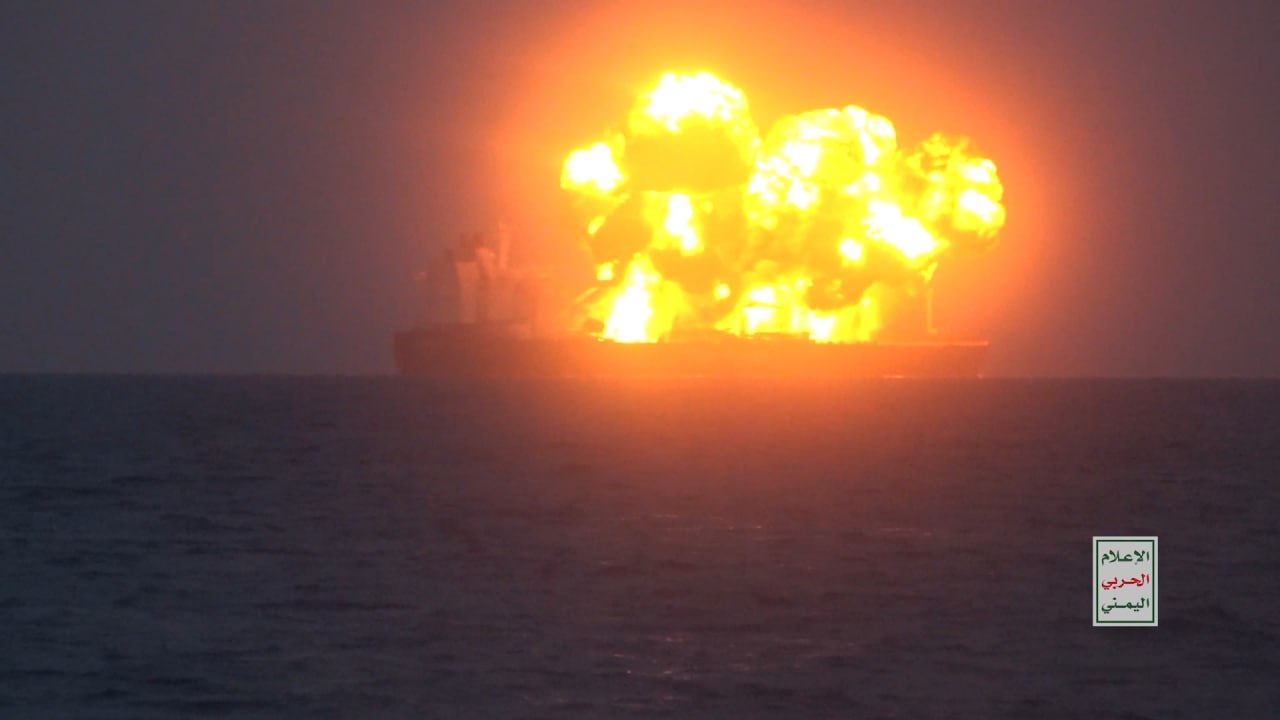
Heavy explosion in the Sounion oil tanker in the Red Sea
However, the reason for targeting this oil tanker was not the unknown activity or turning off its automatic identification system (AIS), but the cooperation of the owner of this vessel “Athens Delta Tankers” with the Zionist regime.
Now, the Greeks must ask the Zionists to compensate, or learn from this loss-making partnership and stop doing business with the Zionists.
In a Thursday statement (August 22), Yemeni Armed Forces spokesman Brigadier General Yahya Saree stated that Yemeni naval, drone and missile units assaulted two vessels belonging to the Israeli regime with a number of gunboats, ballistic and cruise missiles, and suicide UAVs.
This move was carried out in a bid to assist the oppressed people of Palestine and its fighters and in return for the US and UK aggressions on Yemen, including two military operations in the Red Sea and the Gulf of Aden.
According to the statement by the spokesman, the oil tanker Sounion, which is owned by a foreign company that deals with the Israeli regime and violates Yemen’s decision to ban entry to the ports of occupied Palestine, was targeted and is at risk of sinking in the first operation of the two aforementioned attacks by the Yemeni army.
In the second military operation, the ship Sw North Wind I, owned by a company affiliated with the Israeli regime that also defies the Yemenis’ ban on the entry to the ports of occupied Palestine, was targeted in the Gulf of Aden and the Red Sea.
In its statement, the Yemeni Armed Forces further underlined that they continue to besiege the Israeli enemy and pound all vessels linked with the regime or vessels belonging to companies that deal with Tel Aviv, in the area of the declared military operation in accordance with previous statements. The Yemenis also made it clear that the military attacks would not stop until the end of the anti-Palestinian aggression as well as the lifting of the siege of the Gaza Strip.
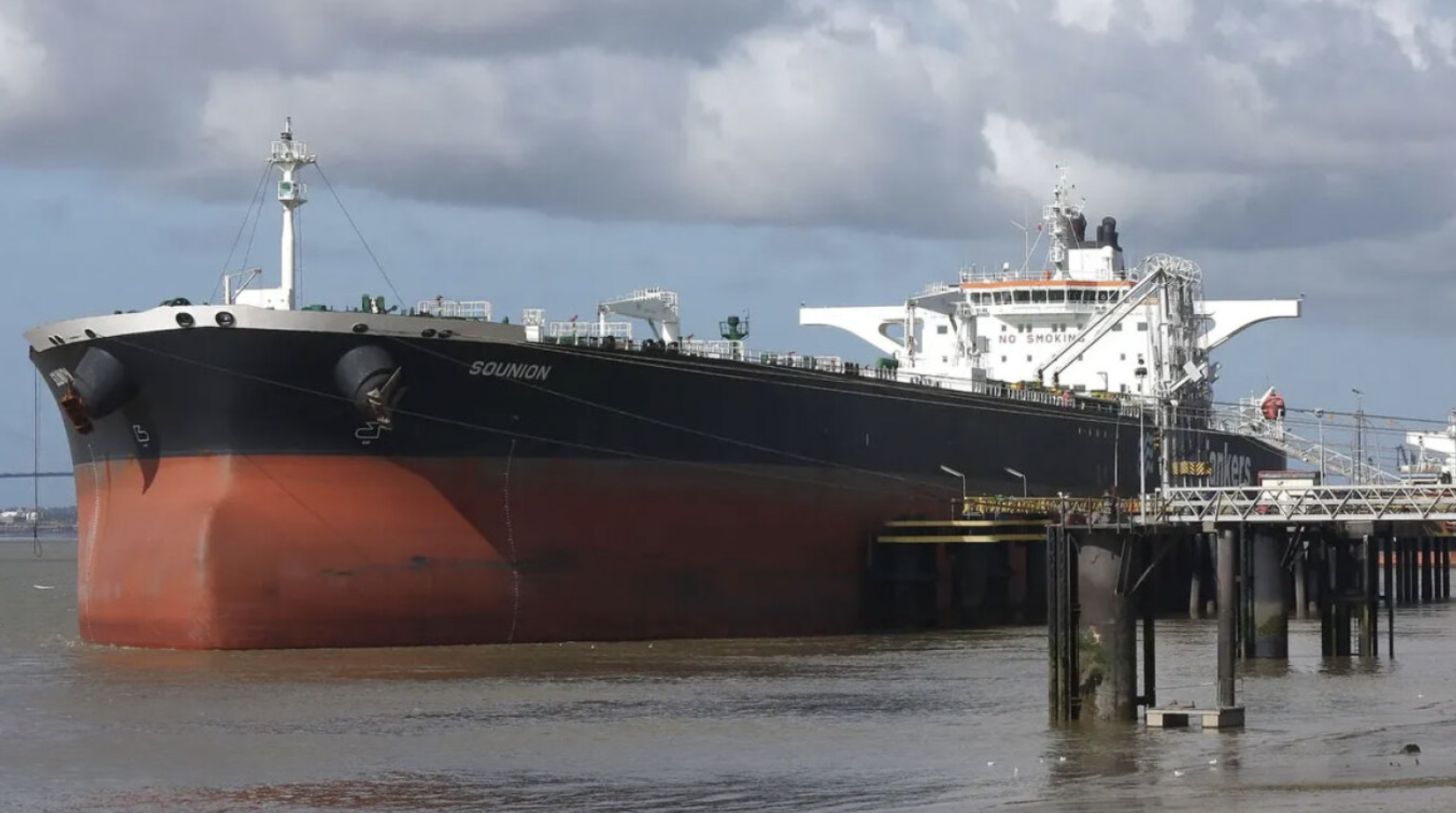
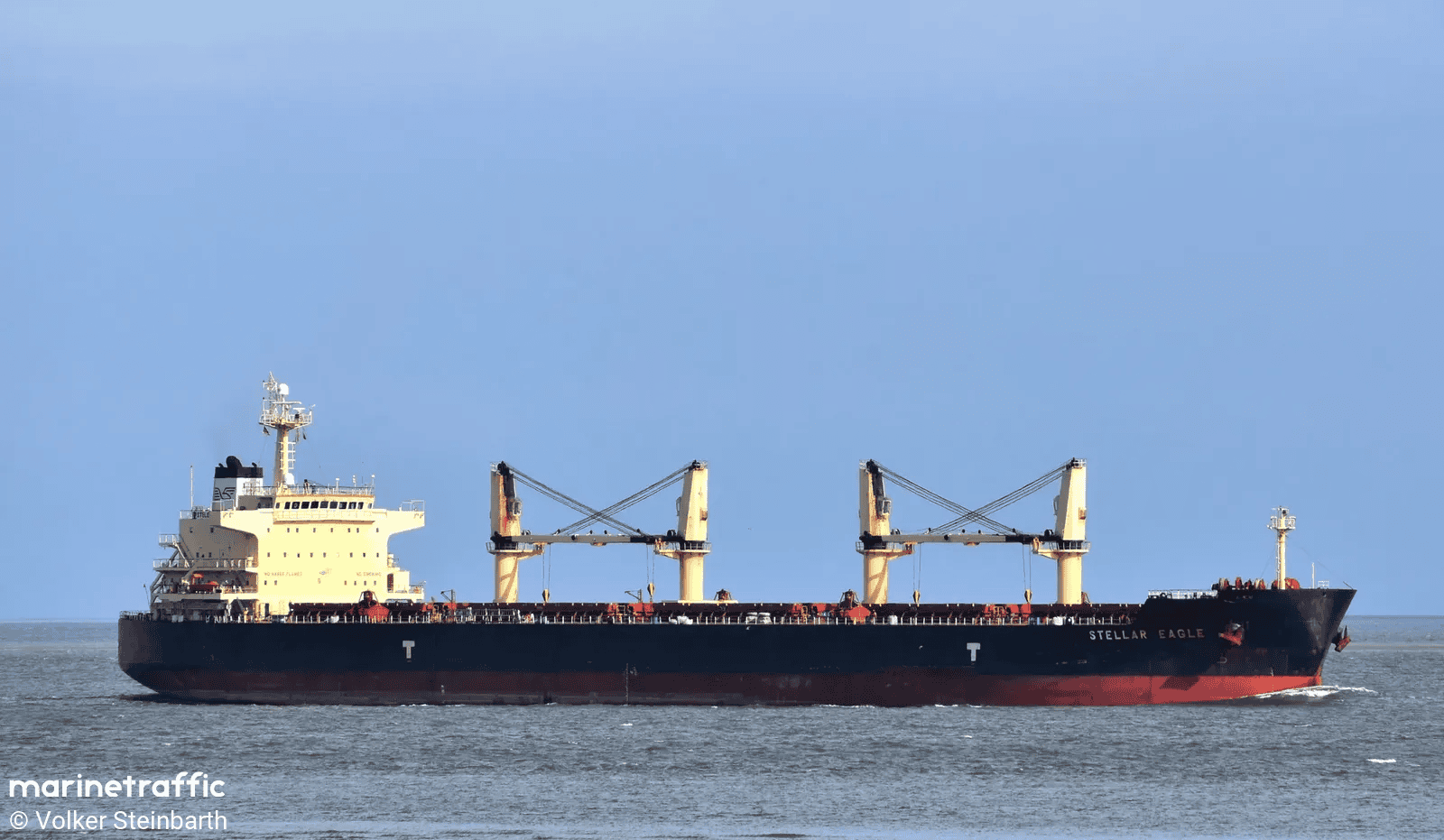
Archival image of Sounion oil tanker
The Sounion is a crude oil tanker, which has been sailing under the Greek flag since 2006. According to vessel tracking websites, the tanker was heading from the Iraqi port of Basra to South Africa! However, 77 nautical miles west of the Yemeni port of al-Hydaydah, the ship was targeted by the Yemeni Armed Forces.
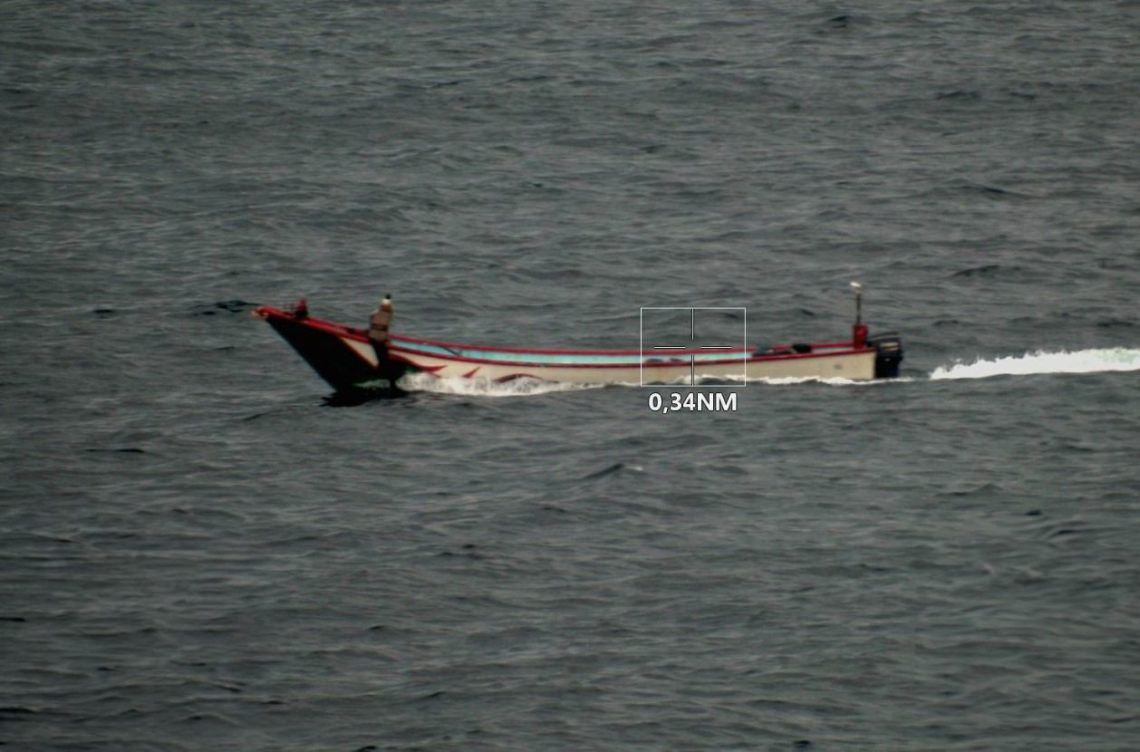
According to private security firm Vanguard, at the start of the strike, two small boats with a total of around 15 gunmen came close to the Greek tanker. The two boats exchanged small arms fire with Sounion security forces, and then, they retreated nearly two miles. Two unidentified projectiles (possibly a suicide drone) hit the tanker following the clash, but the vessel was able to keep sailing, according to the captain of Sounion oil tanker. A third projectile (possibly a cruise missile) also pounded the ship at around 5 a.m. local time, and the crew reported smoke in the engine room of the tanker following the strike. According to Athens-based Delta Tankers, the crew of the ship managed to put out the fire on the vessel, but the ship’s engine failed and investigations showed that they were unable to restart the tanker.
At this time, the Sounion tanker with a cargo of 150,000 tons of crude oil is dead in the middle of the Red sea, and according to a report by Reuters, citing a security source, the ship has stopped and docked somewhere between Yemen and Eritrea.
Sounion has 25 crew members, including two Russians and 23 Filipinos, who are not harmed and reported to be safe and sound. The oil tanker is the third vessel from Athens-based Delta Tankers to be struck in the Red Sea in August. The owner company is now working on a plan to move the attacked tanker to a safer location and repair its engines.
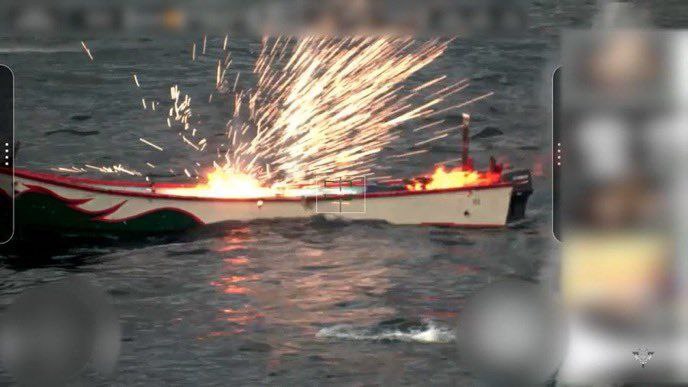
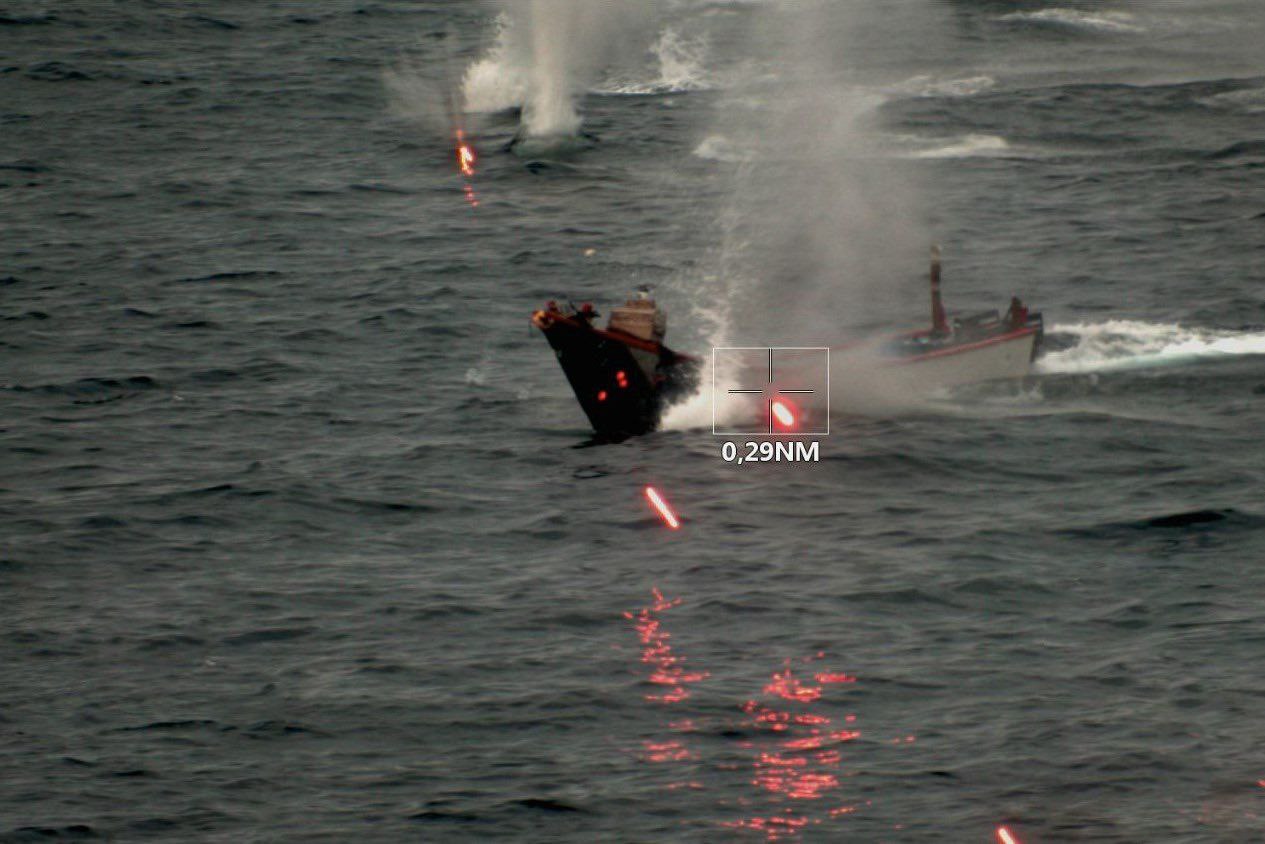
The EU mission warship confronting with a Yemeni USV near the Sunion oil tanker
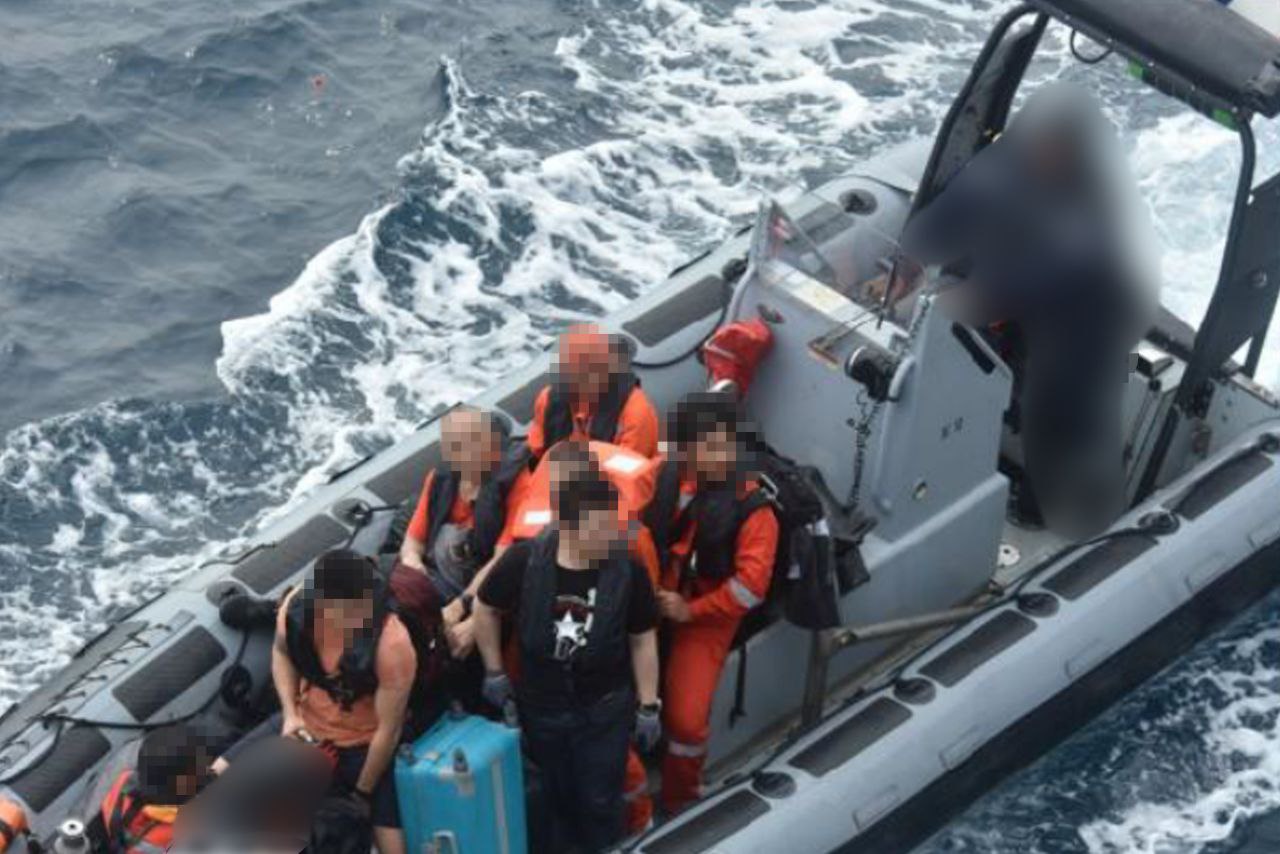
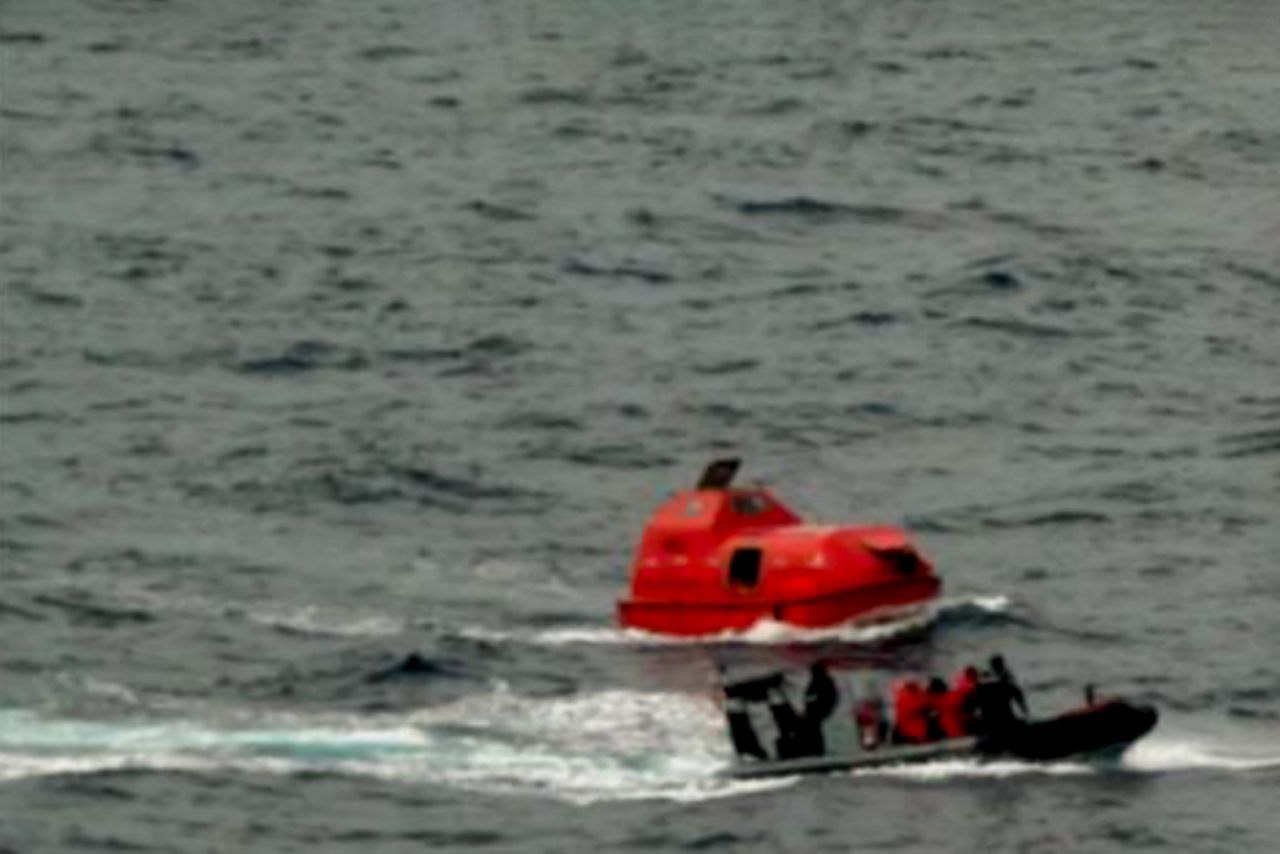
The European Union’s Red Sea Fleet Command or officially Western Fleet (WF) declared in a statement that it had received a request of help from the captain of Sounion and dispatched a warship to rescue the crew. The European Union’s warship, while transporting the tanker’s crew to the nearest port in Djibouti, claimed to have spotted and destroyed an unmanned surface vessel (USV) as it approached the region. According to the Sea Fleet Command, the Sounion tanker did not request protection from the EU fleet stationed in the Red Sea under the guise of Operation Aspides, and therefore no vessels were present in that area to counter the Ansar Allah movement’s attacks.
EU warship evacuates tanker crew
The SW North Wind I is a Panama-flagged bulk carrier, which has been operational since 2009. The vessel is also sailing from the port of Singapore to Egypt, 57 nautical miles south of Aden, when ship was attacked by five ballistic missiles in a two-stage operation.
Archival image of the ship SW NORTH WIND I
The Yemeni army’s strikes on the Sounion tanker and the SW North Wind I in the Red Sea and Gulf of Aden are the 153rd and 154th official attacks by the Yemen Armed Forces on illegal ships (Israel, the United States, the United Kingdom, and their affiliated vessels). Ansar Allah Leader Abdul-Malik Badr al-Din al-Houthi announced that the Yemeni Armed Forces attacked 182 illegal ships.
In line with intensifying military operations in Yemeni waters, the country’s army resorted to conducting crushing attacks on the Sounion tanker in a serious warning to firms that actively cooperate with the Israeli regime. The Ansar Allah leader tries to convince the owners of these companies that the repercussions of relations with the Tel Aviv regime are worse than their benefits, and that the firms should cancel their ties with the Zionists as soon as possible, or never cross the Red Sea or even the Indian Ocean, because the Yemeni army’s missiles and drones are waiting for them.