The Su-34, despite being derived from the Sukhoi Su-27 Flanker, is equipped with a cockpit with two seats next to each other; Due to its different role from other fighters in this family, it does not have the title of Flanker.
This fighter is primarily designed to attack ground and naval tactical targets and is capable of bombing, attack and air support operations. The fighter is capable of operating in any weather conditions and electronic warfare environments.
The main purpose of producing the Su-34 fighter is to replace the old Su-24 fighters and Tu-22M3 bombers in the Russian Air Force.

Su-34 fighter development
The design and development of the Su-34 fighter has a long history. Sukhoi first began a new design in the mid-1980s to replace the old Su-24 fighters. Next, the Su-27 fighter design was selected, which had a high maneuverability.
The original design of the Sukhoi 34 was known as the T10KM-2. The T10KM-2 is a Navy-derived version of the Sukhoi Su-27K. The design of the project was known in the Soviet Union as the T-10V, which was introduced in the late 1980s along with the design of the Soviet aircraft carrier Ulyanovsk.
In 1990, a photo of a prototype fighter landing on a Tbilisi aircraft carrier was released, which Western officials mistakenly identified as a Su-27KU fighter.
Tbilisi aircraft carrier: Admiral Kuznetsov aircraft carrier was first built under the name Riga, then launched under the name Leonid Brezhnev, then under the name Tbilisi conducted its naval tests and finally, it entered the service under the name of Admiral Kuznetsov.
Finally, the first flight of the Sukhoi 34 fighter jet was performed on April 13, 1990 by pilot Anatoliy Ivanov.
This version used a new nose, but the overall structure of the fighter was similar to the Su-27UB.
In 1992, the Su-27IB (Sukhoi 34 prototype) was unveiled at the MAKS Airshow and refueled from an Il-78 refueling tanker. The aircraft was officially unveiled on February 13, 1992 in Machulishi, Belarus. A year later, the fighter was re-introduced to the public at the MAKS Airshow.
The first version of this fighter, known as the T10V-2, first flew on September 18, 1993. The initial test version differed in appearance from the original because it was manufactured in Novosibirsk, the production site of the Sukhoi 24 fighter jet.
The first standard version of the Sukhoi 34 fighter jet flew on December 28, 1994, equipped with the Leninets OKB-designed V004 passive electronically scanned array radar system. This version, because it was different from the original versions, was once again introduced at the 1995 Paris Air Show under the name Su-32FN. This version was designed to serve off the coast of Russia to operate against naval targets. Sukhoi also produced another version called the Su-32MF, but it was canceled due to budget constraints.
The Russian military currently has two different versions of the Sukhoi 34, one for electronic warfare, equipped with the L700 Tarantul ECM pod, and the other for intelligence, surveillance and reconnaissance operations.
The modern version of the Sukhoi 34 is known as the Su-34M, which is equipped with a new electro-optical infrared targeting pod, a Kopyo-DL rearward facing radar that can warn the pilots if missiles are approaching, combined with automatic deployment of countermeasures and jamming
The difference between the two designs of Su-34 and Su-27KUB
The Su-27IB fighter (prototype Sukhoi 34) and the Su-27KUB, which is a naval training version, are not related to each other and each has a separate design. In appearance, the nose of the Su-27KUB design is quite round, but the nose of the Su-34 (Su-27IB) is like a duck tip.

Orders and delivery
The first batch of eight of these fighters was built at the Novosibirsk plant and was ready for delivery in 2004. In 2006, Russia’s defense minister announced the purchase of five Su-34 fighter jets. In late 2008, a contract was signed for the purchase of 32 Sukhoi 34 fighters until 2015.
According to reports from the Russian Ministry of Defense, by 2015, 70 Sukhoi 34s were to be replaced by 300 Sukhoi 24s, after which the program was canceled and the old Sukhoi 24s were upgraded.
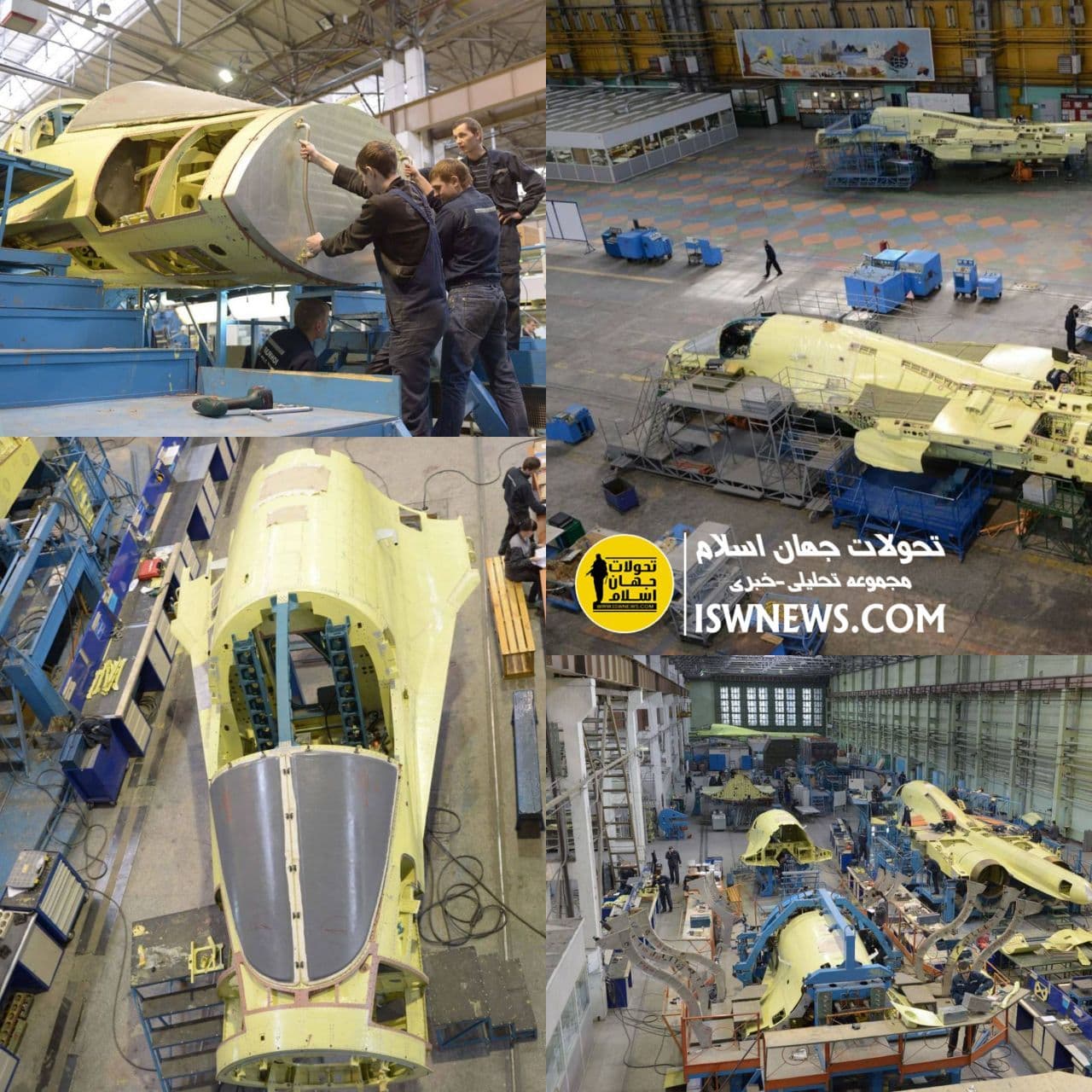
Su-34 fighter design
The Sukhoi 34 is similar in structure to the Su-27 and Su-30 in wing, tail and engine nozzles, and similar to the Su-30MKI in the Canards. The engine of this fighter is Saturn AL-31FM1 turbofan, which is also installed on the Su-27SM fighter.
The operational range of this fighter is 4000 km with one time refueling and it is capable of carrying 8000 kg of all kinds of ammunition and weapons.
This fighter is also known by the nickname Duckling or Duckbill due to the fact that two pilots are placed next to each other. In the cockpit, the pilot is on the left and the weapons operator is on the right. One of the advantages of this design is that it is not necessary to use duplicate equipment for every pilot.
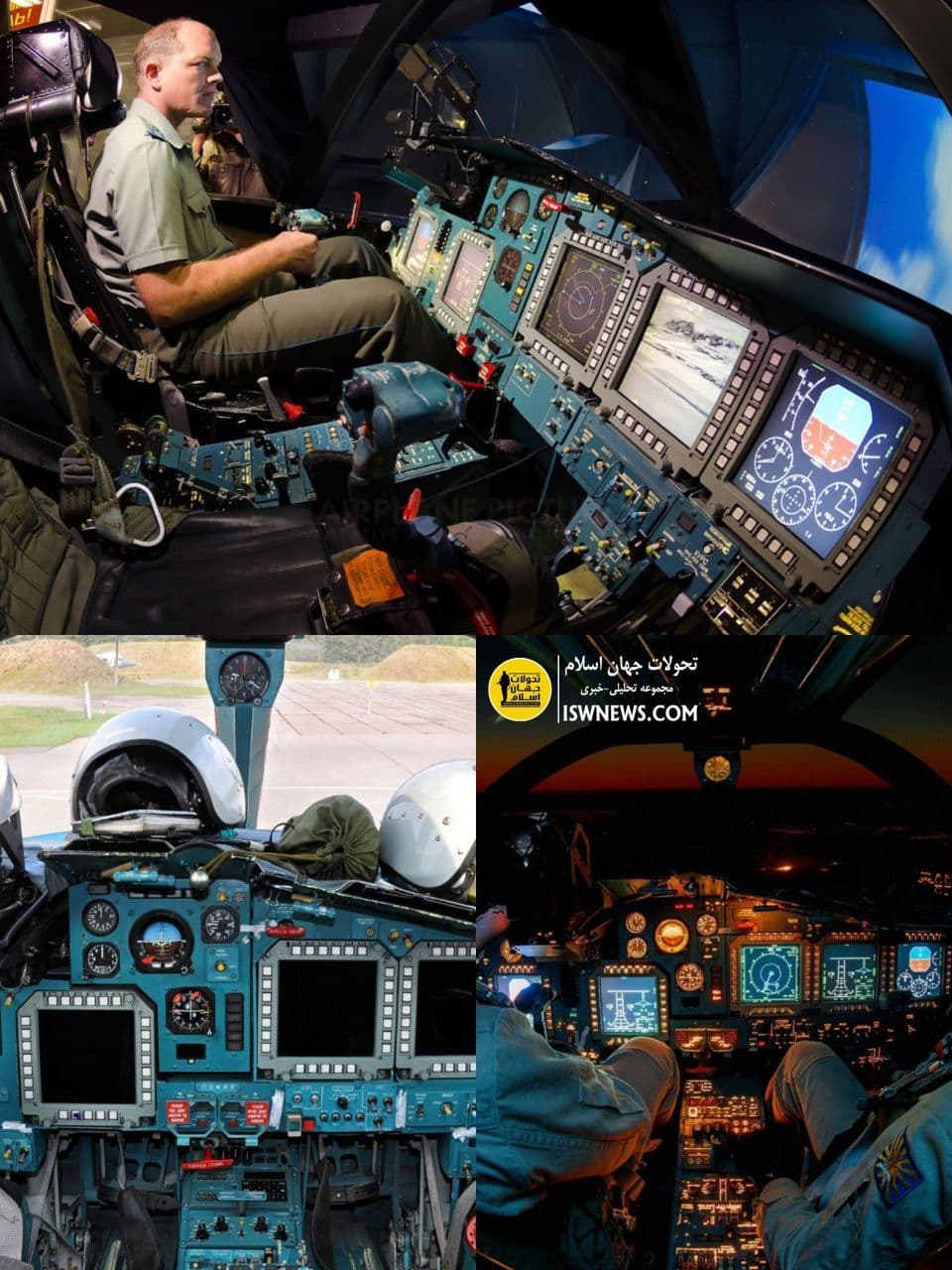
Fighter crews are able to stand and walk inside the cockpit during long missions. Even the size of the cabin is so large that the pilot and operator have the ability to lie down and sleep on the floor. There is also a toilet and a small kitchen behind the crew seats.

The crew enters the fighter through a ladder from under the cockpit. The entire cockpit is covered with 17mm armor to withstand a variety of threats.

The Su-34 fighter is equipped with the Helmet Mounted Display System (HMDS). HMDS is a device used in aircraft to project information to the pilot’s eyes. It provides the pilot with situation awareness, an enhanced image of the scene and cue weapons systems to the direction their head is pointing.

The radar of this fighter is Leninets OKB-designed V004 passive electronically scanned array radar, which has the ability to detect a variety of targets. The detection range of this radar is 200 to 250 km and it has the ability to detect 10 targets simultaneously. It also has the ability to engage with 4 targets simultaneously. In addition to the main radar, a N012 rearward-facing warning radar is used behind the fighter, which has a range of 120 km.


Su-34 fighter-bomber specifications:
Length: 23.34 m
Wing length: 14.7 m
Height: 6.09 m
Empty weight: 22500 kg
Gross weight: 45100 kg
Engine: 2 × Saturn AL-31FM-1 turbofan
Speed: 2200 km/h
Range: 1100 km
Service ceiling: 17,000 meters
Crew: 2
Origin: Soviet Union (Russia)
First flight: 13 April 1990
Produced: 2006–present
Hardpoints: 12 × on wing and fuselage with a capacity of 8000 kg
Su-34 Armament:
Guns: 1 × 30 mm Gryazev-Shipunov GSh-30-1 autocannon with 180 rounds
KAB-500KR and KAB-1500KR TV guidance bombs
KAB-500L and KAB-1500L laser guided bombs
KAB-500OD guided bombs
KAB-500S-E satellite guidance bombs
RBK-500 and SPBE-D cluster bombs
BETAB-500SHP concrete-piercing bombs
ODAB-500PM, OFAB-100-120 and OFAB-250-270 free-fall bombs
80 mm S-8 missiles with a range of 1 to 4.5 km
122 mm S-13 missiles with a range of 1 to 4 km
340 mm S-25 rockets
Vympel R-73 short-range air-to-air missile with a range of 30 km
All versions of the Vympel R-27 medium-range air-to-air missile with a range of 40 to 170 km
Vympel NPO R-77 medium-range air-to-air missile with a range of 80 to 200 km
Kh-29 air-to-surface missile with a range of 10 to 12 km
Kh-25 air-to-surface missile with a range of 11 to 60 km
Kh-38 air-to-surface missile with a range of 70 km
Kh-58 air-to-surface missile with a range of 120 km
Kh-59 air-to-surface missile with a range of 200 km
Kh-36 cruise missile with a range of 120 km
Kh-65SE cruise missile with a range of 600 km
Kh-SD cruise missile with a range of 300 to 1,900 km
Kh-31A / AD anti-ship missile with a range of 25 to 105 km
Kh-41 anti-ship missile with a range of 120 to 240 km
Kh-35U anti-ship missile with a range of 300 km
Kh-61 anti-ship missile with a range of 300 to 600 km
Kh-25MP anti-radar missile with a range of 60 km
Kh-31P anti-radar missile with a range of 110 km
Kh-58 anti-radar missile with a range of more than 120 km
Read more:
Military Knowledge: Sukhoi Su-27 Multirole Fighter Jet
Military Knowledge: Sukhoi Su-30 Multirole Fighter Jet
Military Knowledge: Sukhoi Su-33 Multirole Fighter Jet


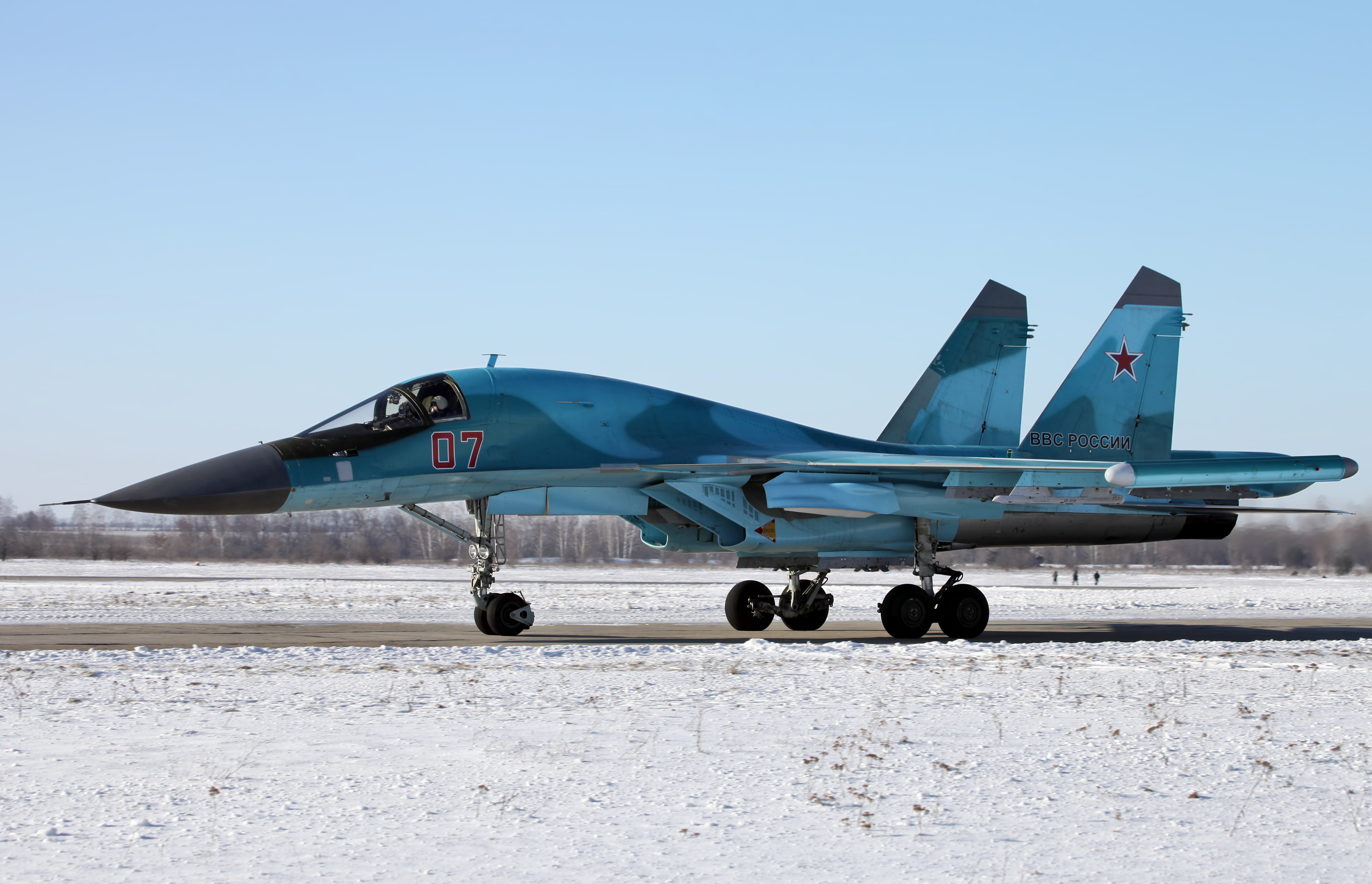


“Sukhoi Su-34 Fighter-Bomber” collection of posters in Persian, Arabic, Kurdish, Azeri, Russian for Social Media:


