Tag: Sudan

  • Is ISIS Preparing to Announce a “Wilayah of Sudan”?

    Is ISIS Preparing to Announce a “Wilayah of Sudan”?

    ISIS used the editorial of issue 519—titled “Sudan Between Islam and Nationalism”—to outline its ideological justification for involvement in Sudan. In this piece, the group portrays nationalism as the main obstacle to Islamic unity, labeling it a “satanic phenomenon” and a “remnant of ignorance.” ISIS claims that colonial powers promoted nationalism to distract Muslims from the suffering of fellow believers in other countries.

    The group further emphasizes religious loyalty over national identity, suggesting that Muslims bear direct responsibility for events in other Islamic nations. It rejects national sovereignty and borders, calling for their elimination through jihad. ISIS explicitly urges youth from Egypt and Libya to mobilize in support of “Sudanese brothers,” describing Sudan as a “ready battlefield” with “strategic impact across the region.”

    This is not the first time ISIS has addressed the Sudanese crisis. In issue 479 of Al-Naba, titled “The Forgotten Sudan,” the group called on Muslims worldwide to intervene, citing ongoing atrocities. In its analysis, ISIS characterizes the Sudanese conflict as a “pagan war” between “infidel factions,” branding both General Burhan’s and General Hemedti’s forces as “enemies of Islam.”

    Pro-ISIS users on social media have echoed this narrative, viewing the unrest in Sudan as an opportunity to establish a “Wilayah of Sudan” and expand the group’s operations. Some users have openly called on Muslim youth to join the “ranks of the mujahideen.” A user named “Al-Libi” wrote, “Military operations must begin immediately, and the Wilayah of Sudan must be declared.”

    These users describe the Sudanese government as a “tyrannical regime,” seeking to delegitimize its institutions. They label the warring factions as “apostates” and reject any form of compromise with them. Others, adopting a strategic tone, refer to Sudan as “the gateway to Africa,” stressing its geopolitical importance. A user named “Muslim” wrote, “Sudan is the key to ISIS’s expansion in the region, and we must seize this opportunity.”

    ISIS supporters also accuse the international community of double standards, claiming that Western powers only intervene when their interests are threatened.

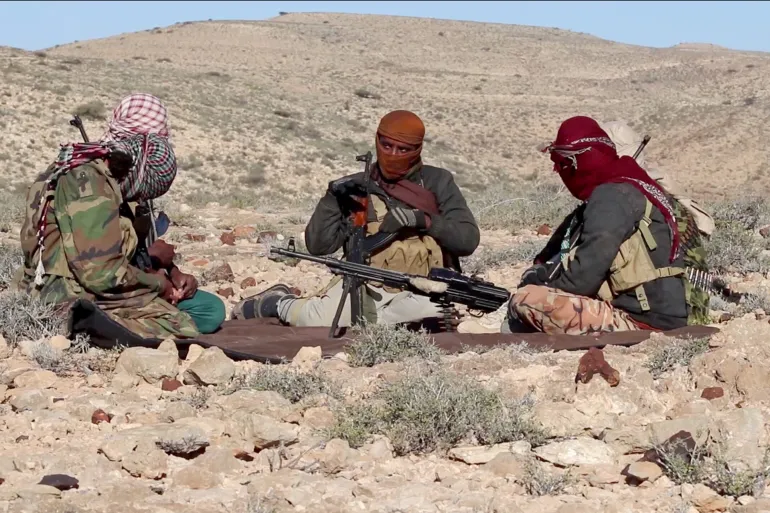
    It appears that ISIS is exploiting Sudan’s instability to promote its extremist ideology and recruit fighters, particularly with an eye toward expanding its footprint in Africa. In recent years, the group has increased its presence across the continent, including the Lake Chad Basin (covering parts of Nigeria, Cameroon, Niger, and Chad), Puntland in northeastern Somalia, and northern Mozambique’s Cabo Delgado province. Additionally, eastern regions of the Democratic Republic of Congo—such as Beni, Lubero, and Ituri—as well as parts of the Sahel region in central Africa have become active zones for ISIS operations.

    Notably, pro-ISIS users—known as Munasirun—have circulated excerpts from these editorials in poster format under brands like Al-Adiyat and Hadm al-Aswar, further amplifying the group’s messaging around Sudan.

  • Latest Military Developments in Sudan (Map)

    Latest Military Developments in Sudan (Map)

    Sudan has once again returned to global headlines following intense and bloody clashes in Al-Fashir, the capital of North Darfur. While many have asked what’s happening in Sudan. The answer lies not in recent weeks but in the long-standing instability and unresolved crises that have plagued the country for years, occasionally erupting into headline news.

    In brief, Omar al-Bashir was ousted in April 2019 after 30 years in power during what were described as popular protests. The military took control and transferred authority to a transitional government led by Abdalla Hamdok. Two years later, in October 2021, the Sudanese Armed Forces (SAF) under Abdel Fattah al-Burhan and the Rapid Support Forces (RSF) led by Hemetti staged a coup against the transitional government and seized full control. Another two years later, in April 2023, tensions between Burhan and Hemetti escalated, leading Hemetti to rebel against Burhan and take control of parts of Sudan. Since then, sporadic clashes between SAF and RSF have continued across the country.

    For a deeper understanding of Sudan’s situation, read this article published two years ago: Understanding Warring Parties In Sudan; Reviewing Latest Field Situation (Map)

    On the ground, the latest battles center around Al-Fashir, the capital of North Darfur in southwestern Sudan, which was recently captured by RSF forces after months of siege. Al-Fashir was the last stronghold of the Sudanese Armed Forces (SAF) in Darfur. Over the past two years, RSF repeatedly attempted to seize the city but were repelled each time. The final takeover and the videos released from the scene point to a brutal massacre. It is estimated that at least 2,500 civilians were executed or killed by RSF fighters during the capture of Al-Fashir.

  • Sudanese Warring Factions Agree Upon 7-Day Truce

    Sudanese Warring Factions Agree Upon 7-Day Truce

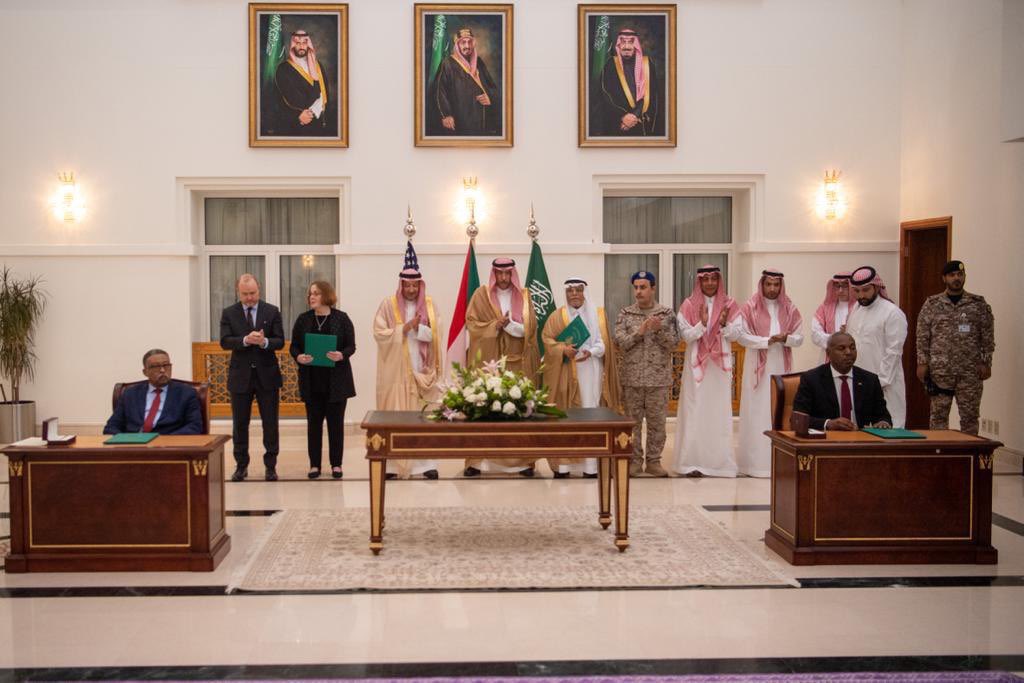
    In accordance with a new statement from the United States and Saudi Arabia, following the ongoing talks in the Saudi Arabian city of Jeddah, Sudan’s new agreement concerning a ceasefire monitoring mechanism will be implemented within the next 48 hours from the time when the announcement was publicized.

    Conforming to the US-Saudi brokered agreement, the Sudanese Armed Forces as well as the Rapid Support Forces paramilitary group will declare a ceasefire, which would be in place for seven days.

    The Sudanese warring sides have also accepted to be committed to reopening humanitarian aid routes, respecting required distance from hospitals, stopping fighter jet bombings, artillery strikes and so on.

    The truce has been announced while all previous efforts by the United States and Saudi Arabia to establish a ceasefire between the warring factions in Sudan had failed hours after their start.

    Reports on the ground show that the clashes are still ongoing in Khartoum (the capital city of Sudan), Al-Junaynah (a city in West Darfur) and Nyala (the capital city of the state of South Darfur in the south-west of Sudan).

    Sudan’s peace talks kicked off with the support of the United States and Saudi Arabia in the Saudi city of Jeddah on April 5.

    Despite the joint statement by the US and the Saudi kingdom, the negotiations have not been successful in establishing a comprehensive ceasefire so far and the efforts have resulted in increased casualties and displacement of more civilians in Sudan.

    Read more: An Accord Without A Ceasefire! Sudanese Warring Sides Reach Conclusion In Jeddah

  • An Accord Without A Ceasefire! Sudanese Warring Sides Reach Conclusion In Jeddah

    An Accord Without A Ceasefire! Sudanese Warring Sides Reach Conclusion In Jeddah

    Despite the fact that negotiations between delegations of the Sudanese army and the RSF paramilitary group have been ongoing in the Saudi Arabian city of Jeddah since May 6, some Western media have been citing certain American diplomats as saying for several days that the Sudanese warring parties will soon ink a ceasefire agreement. Conversely, the text of the Jeddah statement does not mention a comprehensive truce.

    Given the history of such talks and internal agreements in Sudan, the appearance of this agreement seems to be also similar to their last year agreement, which led to the current dispute in the African nation. The fresh agreement is also expected to pave the way for the second phase of the negotiations, which will again be possible with the mediation by Saudi Arabia and the United States. In addition to the issue, the news stories on an accord in Jeddah indicate other important points:

    1- No reconciliation has been made over the disputed issues; so, the new agreement is just a move to create optimism concerning the decline of the internal and external process of the crisis in Sudan.

    2- The warring parties in the negotiations put forward their own conditions for the cessation of hostilities based on the viewpoint that each of the sides has the upper hand in the Sudanese developments; however, the US and Saudi mediators halted the discussions and called on the parties to conclude a ceasefire agreement and open safe corridors to allow the dispatch of humanitarian aid. That means the settlement of the dispute in Sudan is also subject to wishes of Saudi Arabia and the United States, while other foreign rivals such as the United Arab Emirates (UAE), Egypt and so on, who have a say in the Sudanese developments, have been sidelined.

    Read more: War In Sudan; Negotiations In Saudi Kingdom

    What are the conditions of the Sudanese warring parties?

    According to statements issued by the Sudanese army officials, the army’s conditions for the cessation of hostilities with the Rapid Support Forces and the opening of safe corridors to dispatch humanitarian aid are as follows:

    1- The withdrawal of the Rapid Support Forces from central districts and government buildings of the capital city of Khartoum, including the Khartoum Electricity Distribution Department, the Aljaili Petroleum Refinery as well as residential areas

    2- The clearing of trenches and the removal of fronts created during the recent clashes

    3- The gathering of the Rapid Support Forces at an agreed military base on the outskirts of Khartoum, which is agreed upon by the Sudanese Armed Forces. The RSF paramilitary group must remain at the military base until a decision is made on their integration into the official armed forces.

    The commanders of the RSF paramilitary group also proposed their own conditions:

    1- The payment of salaries of the personnel of the Rapid Support Forces by the Sudanese Ministry of Finance

    2- The suspension of military flights by the Sudanese Armed Forces as well as the deployment of foreign observers to monitor the cessation of hostilities

    3- The assurances for a safe exit route for the commanders and personnel of the Rapid Support Forces from Khartoum to a predetermined destination

    4- The authorization to assemble all paramilitary forces, military equipment from the positions of the Rapid Support Forces even in areas where they were stationed before the onset of the recent confrontations

    5- The permission for the deployment of the Rapid Support Forces in all positions that they control at present and the provision of medical services to the RSF injured personnel at hospitals

    What is the framework of the Jeddah statement?

    The delegates of the Sudanese Armed Forces as well as the Rapid Support Forces issued a joint statement dubbed “Jeddah Statement” on May 12 after six days of negotiations in the presence of representatives from the United States and Saudi Arabia.

    In the Jeddah Statement, the Sudanese warring parties agreed upon guaranteeing safety of lives and properties of civilians, protecting civilian facilities, creating safe humanitarian routes as well as preserving sovereignty and integrity of Sudan. International organizations are also expected to monitor the implementation of the warring sides’ commitments by the use of satellites, field reports and news stories come from social media networks.

    The Jeddah Statement does not mention a comprehensive end of hostilities; however, the American authorities called it a first step toward reaching a ceasefire agreement.

    In general, the statement or agreement is not sufficient and effective to pave the ground for resolving the current crisis in Sudan because of the lack of an all-inclusive truce and assessing the implementation of the parties’ conditions as well as the precise monitoring of the warring side’s commitments.

    In 28 days of civil war in Sudan, more than 500 people lost their lives and 3,000 others were injured, while tens of thousands were also displaced and foreign countries evacuated their nationals and diplomats from the African country.

    The mentioned issues along with Sudan’s economic and political woes indicate a looming crisis that will not be simply resolved even with the complete cessation of hostilities and the formation of an all-inclusive government.

    Read more: Understanding Warring Parties In Sudan; Reviewing Latest Field Situation (Map)

  • War In Sudan; Negotiations In Saudi Kingdom

    War In Sudan; Negotiations In Saudi Kingdom

    Twenty-one days after the military clashes erupted in Sudan, the power struggle between the Sudanese Armed Forces and the Rapid Support Forces (RSF) continues in Khartoum and other cities in the African state.

    Since the onset of the conflict, ceasefire agreements brokered by the United States and Saudi Arabia have been unstable and have not been respected by either party.

    At present, the Saudi kingdom and the US are resorting to mediation efforts in a bid to direct negotiations on a stable ceasefire and dispatching humanitarian aid to the Sudanese people; so, the first round of such negotiations was held on May 6, in Jeddah port city on the Red Sea.

    National Security Advisor to the President of the United States Jake Sullivan has also traveled to Saudi Arabia since Friday and has welcomed the negotiations between the Sudanese warring sides in a joint statement with the Saudi officials.

    Many foreign nationals and diplomats left the war-torn country.

    The living conditions of the Sudanese people have been reported to be dire and most government agencies have become a battleground between the army and the paramilitary forces. The Sudanese people hardly have access to food, water, medicine and fuel.

    Communication services have also been fully cut off as a result of power outages and generator failures.

    The United Nations Children’s Agency (UNICEF) and other human rights organizations of the international body warned against the massacre of civilians. And the US and some European states called for an urgent meeting of the Human Rights Council (HRC) to review the situation in Sudan.

    Read more: Understanding Warring Parties In Sudan; Reviewing Latest Field Situation (Map)

  • Understanding Warring Parties In Sudan; Reviewing Latest Field Situation (Map)

    Understanding Warring Parties In Sudan; Reviewing Latest Field Situation (Map)

    Recent conflicts in Sudan have occurred as a result of power struggles and disagreements between the Sudanese Armed Forces led by General Abdel Fattah al-Burhan and the Rapid Support Forces led by Mohamed Hamdan Dagalo, also known as Hemeti or Hemedti.

    During the 2019 coup, the Sudanese Armed Forces toppled the country’s then leader Omar al-Bashir, and Abdallah Hamdok was chosen as the prime minister of the transitional government for three years.

    Additionally, a transitional council was also formed, consisting of 11 military and political figures (along with the army), with one seat left empty due to the absence of a representative from eastern Sudan.

    The transitional government of Hamdok was formed in August 2019 with the participation of the army and the political coalition of the Forces Freedom and Change (FFC), but it faced a new military coup in October 2021. Despite the detention of members of the Hamdok government, he continued as prime minister until January 2, 2022, and was succeeded by Osman Hussein as the interim prime minister. The second coup and its aftermath were faced with protests by supporters of the transitional government and political parties, but there was no progress until political and military groups in Sudan agreed to a 24-month transitional period under the leadership of the senior army commanders on December 5, 2022.

    However, the process also faced another power struggle and conflict between Hemeti and Burhan, and the fate of Sudan is still subject to changes.

    Who is Mohamed Hamdan Dagalo (Hemedti)? How were the Rapid Support Forces formed?

    General Mohamed Hamdan Dagalo is one of the powerful individuals of the Rizeigat tribe in the Darfur region of Sudan, who was appointed as the commander of the forces in 2010, which were formed from a group of armed tribal allies with Omar al-Bashir.

    The forces were initially made up of Janjaweed fighters, a Sudanese Arab militia group, and did not have a structured organization, and their organization was resembling a paramilitary group.

    However, in the following years with the help of Omar al-Bashir’s government, they developed and became a regular force under the command of Hemeti. The Rapid Support Forces played an important role in the April 2019 coup and the overthrow of the Omar al-Bashir’s government; then, the RSF commander Hemeti was appointed as the Deputy Chairman of the Transitional Military Council.

    Hemeti collaborated with General Abdel Fattah al-Burhan in the 2021 coup against the government of Abdullah Hamdok, but after a while he opposed General Burhan and ultimately rejected the results of an agreement between civil groups and the military governing council to resolve the political crisis in Sudan on December 5, 2022, especially regarding the integration of the Rapid Support Forces into the Sudanese armed forces; thus, he engaged in conflict and tension with the Sudanese Armed Forces from April 15, 2023.

    Who is Abdel Fattah al-Burhan?

    Abdel Fattah Abdel Rahman al-Burhan is one of the senior generals of the Sudanese Armed Forces, who was appointed as the commander-in-chief of the army in February 2018. He previously held the positions of inspector general of the Sudanese Armed Forces and the Deputy Chief of Staff of the Ground Forces Operations.

    General al-Burhan came to this position and also became the head of the Transitional Military Council following the coup against Omar al-Bashir’s government in 2019, led by Ahmed Awad Ibn Auf, the former Commander-in-Chief of the Sudanese Armed Forces.

    With the cooperation of General Hamidti, he ousted the interim government led by Abdullah Hamdok and removed members of the Sudan’s Transitional Sovereignty Council in 2021, forming a new council with other members. Al-Burhan’s unilateral and self-oriented actions led to conflicts with Hamidti and ultimately triggered recent military clashes.

    Current military situation in Sudan

    According to the latest news stories from the confrontations in Sudan, most cities and military bases in the provinces of Western, Central, Southern, and Eastern Darfur are under the control of the Rapid Support Forces. Parts of the southern North Darfur and parts of the North and West Kordofan provinces are also under the influence of the Rapid Support Forces.

    In capital Khartoum, the precise control lines of each side are unclear due to the ongoing clashes. However, most of the northern areas of Khartoum, such as Al-Juraif, Darduk, Kafouri, Khartoum Bahri (North) and Omdurman are under the influence of the Rapid Support Forces.

    The Sudanese army has also been successful in consolidating its positions in the east and north of the Arab country, and the movements of the Rapid Support Forces have been limited to scattered clashes and harassment attacks. Army bases in the cities of Al-Fashir, Al-Obaid, Al-Junaynah and Merowe have been preserved; therefore, the two warring sides continue the ongoing clashes in these cities.

    In the eastern parts of Sudan, after the occupation of the cities of Kassala, Al-Qadarif, and Port Sudan on April 16, 2023, the Sudanese Armed Forces succeeded in fully stabilizing the situation and the Rapid Support Forces did not have any further advances in the eastern areas of the war-stricken country.

    Read more: Crisis In Sudan; Ceasefire, War In Place!

  • Crisis In Sudan; Ceasefire, War In Place!

    Crisis In Sudan; Ceasefire, War In Place!

    Early on Tuesday after the end of the ninth day of clashes in Sudan, Blinken declared that the heads of the Sudanese Armed Forces and the Rapid Support Forces (RSF) have agreed to establish a three-day-long truce. The US official also warned against the presence of the militants of the Wagner Private Military Company as well as Head of the Wagner Group Yevgeny Prigozhin in Sudan.

    Prigozhin has recently written an open letter, expressing his readiness to broker a consensus between the two Sudanese groups to establish a ceasefire. The Russian influential figure mentioned: I am Yevgeny Prigozhin. I stayed for a long time in Sudan and I had connections with all decision-makers in the country. The United Nations and many other parties want to spill the blood of the Sudanese people and I personally wish peace for the nation. Now what is taking place in Sudan is not what we trained the Sudanese for taking arms, because we trained them to defend their border areas in the face of enemies.

    The three-day-long ceasefire in Sudan has been established with the mediation of the United States in a situation that the country is facing growing crisis and different countries started withdrawing their diplomats and citizens from the African country.

    Ben Wallace, Secretary of State for Defence of the United Kingdom, said that the military operation of evacuating diplomatic staff and foreign nationals from capital Khartoum was carried out in a vast cooperation among 1,200 military forces from Britain and other allied states. Sky News quoted local sources as saying that the UK army dispatched a group of its military forces to a port in eastern Sudan with the use of a large military transport aircraft Boeing C-17 in order to conduct reconnaissance and evacuation mission of the British nationals.

    The immediate evacuation of foreign nationals from Sudan indicates the dire situation in the country and it seems that the African nation would experience more painful developments in the coming days.

    Even though that the truce has been established in Sudan, the confrontation is still ravaging in Khartoum and certain points in the country. The Sudanese Armed Forces’ fighter jets pounded positions of the Rapid Support Forces in several areas such as Al-Jarief, Kafouri, Khartoum Bahri (Khartoum North) and Al-Maouna road in northern districts of the capital city on Monday. The Sudanese Armed Forces also claimed that they succeeded in mopping up the RSF paramilitary group in Al Abyad city in southern Sudan.

    In western Sudan, heavy clashes kicked off in Al Junaynah, a city in the West Darfur province, but there has not been reported any special advances of the warring sides.

    Furthermore, a diplomat, who was the administrative attaché at the embassy of Egypt, was killed in Khartoum during the last day conflicts. Egypt’s Foreign Ministry and the Sudanese Armed Forces issued statements to confirm the death of the Egyptian diplomat. The Sudanese Armed Forces claimed in its initial declaration that the Egyptian diplomat was a military advisor, but it apologized in its second account for the mistake and announced that the diplomat was an administrative attaché, who was killed in a raid by the Rapid Support Forces.

    Over the last 11 days, Sudan turned into the scene of bloody clashes between the Commander of the Rapid Support Forces paramilitary group Mohamed Hamdan Dagalo, generally referred to as Hemetti and the Sudanese Armed Forces supervised by General Abdel Fattah Abdelrahman al-Burhan. The climax of the civil war happened in Khartoum, Al Fashir, Al Junaynah and Merowe, which still continues.

  • Extension Of Ceasefire In Sudan; Army Starts Campaign To Capture Khartoum

    Extension Of Ceasefire In Sudan; Army Starts Campaign To Capture Khartoum

    In the seventh day of the internal conflicts in Sudan, Commander of the Rapid Support Forces (RSF) General Mohamed Hamdan Dagalo, widely known as Hemedti, issued on a statement voicing his agreement to the extension of humanitarian ceasefire for 72 hours from six o’clock in Friday morning on the occasion of Eid al-Fitr (celebration of end of holy fasting month of Ramadan) as well as for creating human corridors to allow citizens from war zones.

    However, despite the extension of the ceasefire, the confrontations and exchange of fire continue between Sudan’s Army and the RSF paramilitary group in Khartoum.

    Amid the conflicts, the Army’s fighter jets carried out broaden air strikes on positions of the RSF militants in southern part of the capital city. According to local sources quoting officials of the Sudanese Army, the air strikes will be a prelude to the initiation of ground operation in Khartoum. In line with the objective, Sudan’s Army issued a statement, announcing the gathering and the deployment of thousands of armed, intelligence and reserved forces to conduct a new operation. The Army also declared that the operation has been put on agenda following a determining air strike on Friday morning.

    The United States Department of Defense, headquartered at Pentagon, announced that prior to the potential withdrawal of staff from the US’s embassy in Khartoum, an American citizen was killed during the movement of the US forces in Sudan. Spokesperson for the United States Department of State Ned Price also confirmed the report, expressing condolences to the family of the American person. He refused to provide more information on the killing incident in Sudan.

    The clashed in Sudan intensify as the local and Western sources have recently revealed that the RSF paramilitary group asked for military aid from Eritrea to be able to attack Kassala in eastern Sudan and in vicinity of Eritrean borderlines. The eastern city was captured by the Sudanese Army during fierce clashes between the Army and the RSF paramilitary group on April 16.

    The Western media outlets claim that Commander of the Tobruk-based Libyan National Army (LNA) General Khalifa Belqasim Haftar and a Russian paramilitary organization dubbed Wagner Private Military Company aid and abet the RSF paramilitary group, and that to this end they dispatched at least an airplane carrying military equipment for the group.

    Moreover, it has been said that Egypt has sent its fighter jets and pilots to support the Sudanese Army in their fight against the RSF paramilitary group, but the Egyptian authorities have yet ruled out the allegation.

    It is worth mentioning that the RSF paramilitary group handed over 27 Egyptian military personnel, who were arrested at the Merowe International Airport on April 19, to the Red Crescent. The Egyptian military forces were flown from Khartoum to Egypt’s capital city Cairo.

    A picture of the landing of the plane carrying Egyptian soldiers in Cairo

    In general, all the foreign diplomatic efforts as well as appeals by Sudanese parties and politicians to stop the confrontations doomed to failure, and the United States’ brokered ceasefire has also turned into an opportunity for both warring sides to gather their forces for future battles and more bloodshed.

    According to a report by the World Health Organization (WHO), some 413 people lost their lives and 3551 others were injured from the onset of the conflicts in Sudan up to now; so, the increase of the number of people affected by the fierce battle would not be an appropriate sign for the upcoming days in the African country.

    Read more: RSF Take Over Merowe Airport; Egypt Fighter Jets Destroyed!

  • Ceasefire Based On Phone Call Unsuccessful In Halting Sudan Clashes

    Ceasefire Based On Phone Call Unsuccessful In Halting Sudan Clashes

    According to the suggestion, the ceasefire had been in place since 18 p.m. local time on Tuesday and was extended another 24 hours on Wednesday.

    The truce statement underlined the need for totally abiding by both hostile sides; however, despite the implementation of the accord, there were some reports of confrontations at the Merowe International Airport, the presidential palace and a number of other points in capital Khartoum, including the Khartoum International Airport.

    Sudan’s Army claimed on Wednesday that it could retake the Merowe International Airport, but the Rapid Support Forces (RSF) ruled out the declaration.

    The RSF also issued a statement, saying that they transferred the Egyptian soldiers, who were present at the Merowe International Airport during the Saturday clashes between Rapid Support Forces and the Sudanese armed forces, to the capital Khartoum.

    We assure the Egyptian government and families that all soldiers, who were at the Merowe International Airport, are safe and sound, and they are being treated well; and they will be handed over to Egypt on the basis of the circumstances of Sudan and when the opportunity is ripe for it, the statement noted.

    The recent conflicts in Sudan have come out following power struggle between top Army generals and the Rapid Support Forces. The clashes spread to the cities of Khartoum, Al Fashir, Merowe and some other towns and military bases throughout the African country. The confrontation between Sudan’s Army headed by Abdel Fattah al-Burhan and commander of the paramilitary Rapid Support Forces (RSF) Lt Gen Mohamed Hamdan (aka Hemetti) has left around 200 dead and over 2,000 injured.

  • RSF Take Over Merowe Airport; Egypt Fighter Jets Destroyed!

    RSF Take Over Merowe Airport; Egypt Fighter Jets Destroyed!

    According to the satellite images, some Mikoyan MiG-29 fighter aircraft, belonging to the Egyptian Army, were attacked at the Merowe International Airport in northern Sudan on April 17, 2023.

    The pictures show that three Russian-made MiG-29 fighter aircraft of the Egyptian Army as well as four Chinese-made FTC-2000 fighter jets belonging to Sudan’s Army are seen at the international airport. When the image is being zoomed in at the position of the Egyptian fighter jets, it can be seen that one of the MiG-29 has been totally destroyed and other jets have problems such as liquid leakage and burning signs, which prove that they have got major damages. Furthermore, one of the FTC-2000 fighter aircraft of Sudan’s Army has been demolished.

    Other images of the first days of the clashes show that at least two MiG-29 fighter jets were preserved in one hangar at the Merowe International Airport. The inspection of the satellite images shows observers that the ceiling of an aircraft hangar was destroyed in a rocket strike or an artillery attack, which may be utilized as the deployment of two fighter jets.

    On April 15, the Rapid Support Forces succeeded in entering the Merowe International Airport and taking pictures of the deployed fighter jets, but the Sudanese Army’s immediate reaction pushed back the RSF militants temporarily. The RSF paramilitary group reinforced their ranks on April 17 and raided the international airport once more, which led to the retreatment of the Sudanese Army from the airport.

    President of Egypt Abdel Fattah El-Sisi addressed the Supreme Council of the Armed Forces of Egypt as saying that the Egyptian military forces and fighter jets were present in Sudan in order to take part in joint maneuvers and trainings in collaboration with the Sudanese Army; so, the advisory presence of the Egyptian military forces in Sudan as well as their support for the Sudanese Army in the fight against the Rapid Support Forces have been denied by the Egyptian authorities.

    Given the fact that the military drills were carried out in last March, the reason behind the permanent deployment of the Egyptian fighter jets in Merowe still remains unclear.

    Read more: Fiasco Of Humanitarian Ceasefire In Sudan

  • Fiasco Of Humanitarian Ceasefire In Sudan

    Fiasco Of Humanitarian Ceasefire In Sudan

    On April 17, the United Nations’ Secretary General Antonio Guterres urged in a message the cessation of hostilities and the guarantee of humanitarian paths in Sudan. He also called on all influential figures in Sudan to make all-out efforts to help reach peace and cessation of hostility in the African country.

    The plan for establishment of ceasefire in Sudan was announced by the United Nation on Monday, and in accordance with the proposal, the UN and other humanitarian entities could dispatch their aids through safe humanitarian paths to civilians from 16 o’clock local time and for three hours.

    A spokesperson of the Sudanese Army declared that the military entity accepted the proposal by the UN to open safe paths for humanitarian aids in the Monday evening. The Rapid Support Forces announced their agreement to the UN-proposed ceasefire prior to Sudan’s Army.

    Following the end of the humanitarian ceasefire, which was brokered by the United Nations, the clashes between Sudan’s Army and the Rapid Support Forces were resumed. In the initial minutes of the clashes, the Army’s fighter jets bombed RSF commander General Mohamed Hamdan Dagalo also known as Hemetti, which led to remarkable damages to the building and the adjacent structures.

    The Rapid Support Forces also claimed that they succeeded in shooting down a helicopter in the sky of capital Khartoum. Seemingly, the helicopter is safe just like the previous claimed one; so, it looks like that the helicopter had technical failure or were hit; therefore, its pilot was forced to resort to emergency landing. Of course, another possibility is that the claim made by the Rapid Support Forces is false and they had access to this helicopter in another way.

    According to Special Representative of the Secretary-General for Sudan and Head of the United Nations Integrated Transition Assistance Mission in Sudan Volker Perthes, the confrontations in Sudan have left 185 dead and more than 1800 injured. The number of human losses relates to the last three-day clashes in different cities of the African country, which have their root in rivalry and power struggle between Sudanese Army commander General Abdel Fattah Abdelrahman al-Burhan and the commander of the Rapid Support Forces General Mohamed Hamdan Dagalo (Hemetti).

    Read more:
    The Latest Development In Sudan; Clashes Over Taking Control Of Airports!
    Latest News Of Clashes In Sudan, 16 April 2023