In the first incident, a vehicle‑ramming attack occurred in northern Hebron, injuring a female Israeli soldier. Israeli media reported that troops from the army’s 202nd Battalion pursued and shot the attacker, resulting in his death.
Hours later, another Palestinian armed with a knife attacked a group of Israeli soldiers near the Atiret settlement close to Ramallah, wounding two of them. The assailant was subsequently shot and killed by Israeli forces.
These two incidents come amid rising tensions in the West Bank, particularly in recent days, as various areas have witnessed intensified security operations and widespread arrests of Palestinians carried out by Israeli forces.
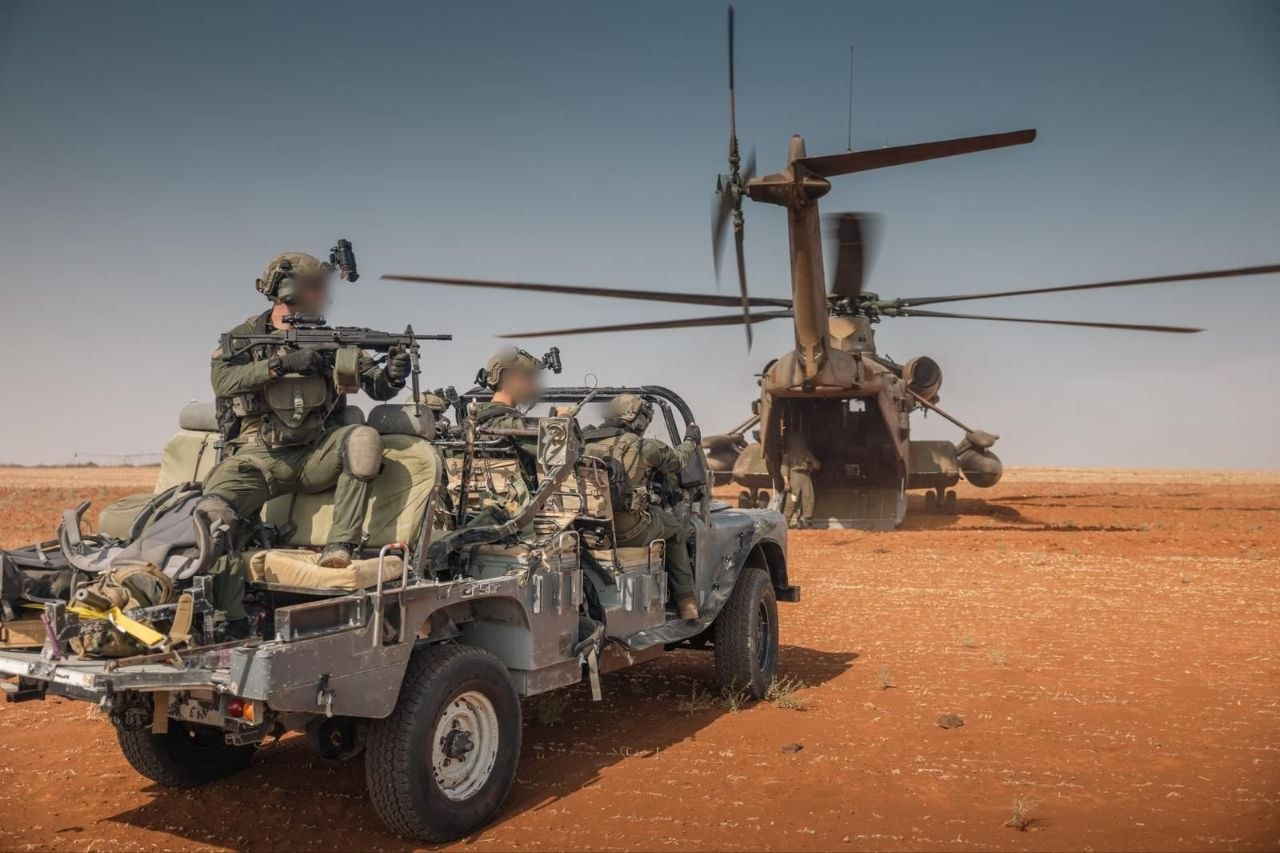
In this exercise, the Israeli army rehearsed more than 40 potential combat scenarios, supported by around 180 aircraft from the ground forces. Alongside the army’s ground and air units, technology and logistics units, police forces, and the Magen David Adom emergency service also took part. For the first time in Israeli military drills, two regional divisions under Central Command entered operations simultaneously.
The Judea and Samaria Division (Division 417) is one of the ground force divisions under Central Command, composed of five brigades and various military units. It is tasked with securing the West Bank and countering Palestinian resistance groups in the area. Its mission focuses on asymmetric warfare (preventing terrorist attacks, suppressing uprisings), protecting settlements, and coordinating intelligence-security operations with Israeli agencies and the Palestinian Authority.
The Gilead 96 Division consists of one infantry brigade and three armored brigades, responsible for defending the northern front of occupied Palestine and the occupied Golan Heights.
The joint participation of these two divisions in Lion’s Roar demonstrates the Israeli army’s readiness to confront simultaneous threats along the northern and eastern borders of Palestine. In practice, the drill serves as preparation for a large-scale offensive on the West Bank as the primary target, alongside potential clashes in southern Lebanon or across the Lebanese front.
Israeli commanders stress that lessons were learned from the October 7 “Al-Aqsa Flood” operation, and the purpose of this exercise is to improve reaction speed against resistance actions and strengthen Israel’s defensive structure against unconventional threats. However, the operational framework of the drill suggests that Israel is preparing for a new offensive against resistance groups in the West Bank, likely accompanied by simultaneous conflict in Lebanon.
Although Israeli media reports did not explicitly mention threats from Yemen or Iran, it is likely that scenarios involving missile and drone attacks from these actors were also rehearsed.
Overall, the Israeli army appears to be preparing to dismantle resistance cells in the West Bank and establish full control over the area—an approach that further undermines the prospect of a two-state solution.
Early this morning, various areas across the West Bank were once again targeted by Israeli military raids, which led to intense clashes and the arrest of several Palestinian citizens.
Israeli forces simultaneously stormed cities and towns including Nablus, Jenin, Tulkarm, Hebron, Al-Bireh, and occupied Jerusalem. Eyewitnesses reported that soldiers used tear gas and live ammunition against civilians during these operations.
The Palestinian Red Crescent confirmed that at least 11 Palestinians were injured in Nablus. Clashes erupted in neighborhoods such as Balata and New Askar camps, as well as the Dahiyat Al-Aliya area, where Israeli troops also conducted house searches.
In Jenin, Israeli forces raided the towns of Anza and Burqin, arresting four young Palestinians. In Tulkarm, they stormed the southern district and the town of Qaffin, detaining a youth named Nazeer Sabah.
In Al-Bireh, one young man was arrested and his vehicle confiscated. In Hebron, Israeli troops raided Beit Ummar and searched several homes.
In northwest occupied Jerusalem, Israeli forces attacked the towns of Al-Jib, Al-Jadira, and Beir Nabala, deploying tear gas and creating a tense security atmosphere.
Following escalating crises and the continued failures of the Palestinian Authority, a group of influential tribal leaders in Hebron, located in the West Bank, has issued an official letter calling for withdrawal from the current political framework and the establishment of a localized entity known as the “Hebron Emirate.” The proposal, submitted to Israeli Economy Minister Nir Barkat, is built around peaceful relations, regional development, and the creation of an economic zone in cooperation with Tel Aviv.
As part of the initiative, the sheikhs formally recognize Israel as the “nation-state of the Jewish people” and cite the Abraham Accords as a roadmap for coexistence. They have also requested support from the United States and President Donald Trump to help advance the project. Their proposal not only reflects deep dissatisfaction with the Palestinian Authority’s governance but also signals an effort to redefine Palestinian political order through traditional tribal structures.
This initiative emerges at a time when hopes for a two-state solution have significantly diminished following the events of October 7, 2023, and the subsequent conflicts. As a result, alternative models such as localized emirates are gaining traction. The following report explores the dimensions, reactions, and challenges surrounding this unprecedented proposal.
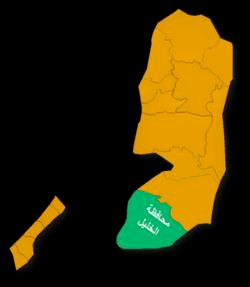
The Hebron area compared to the entire West Bank and Gaza
Nature of the Hebron Emirate Proposal
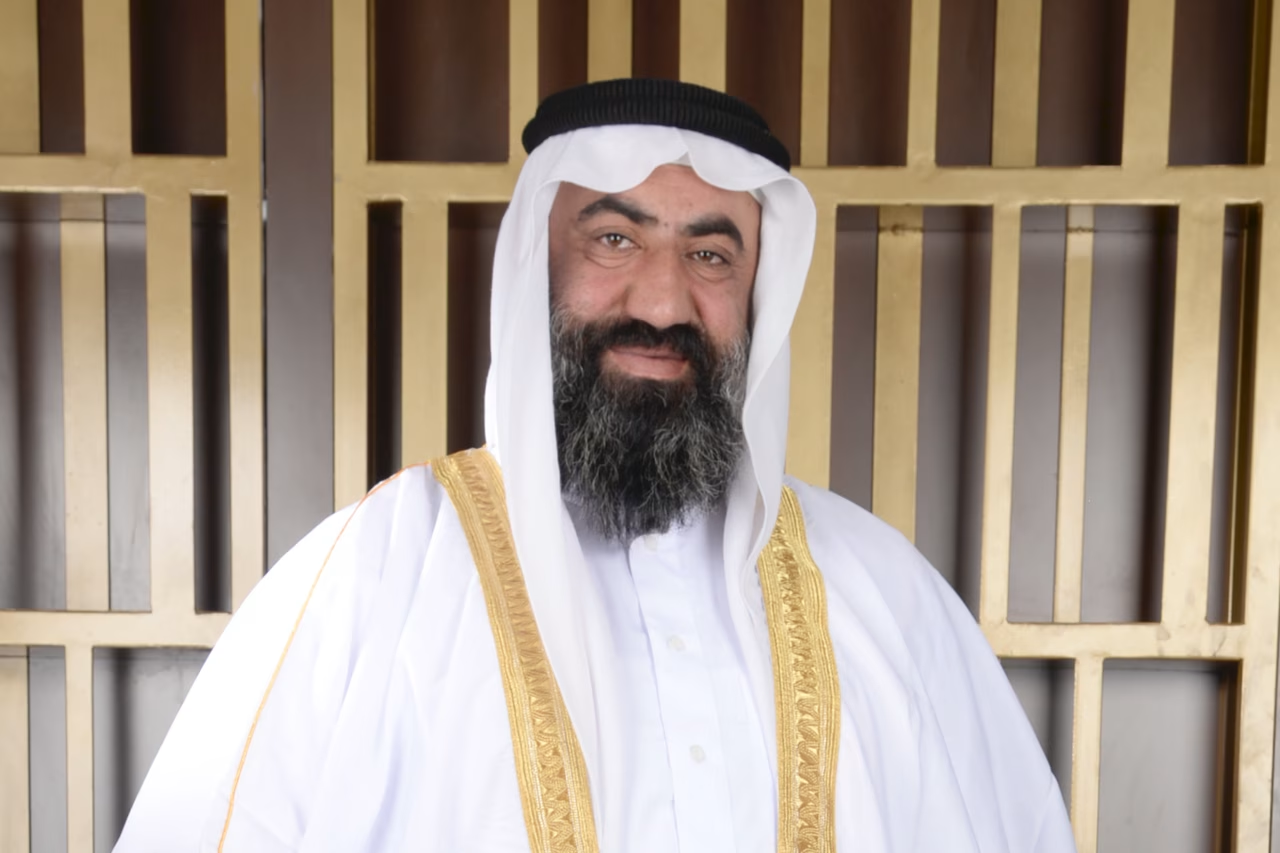
Led by Sheikh Wadee’ Jaabari, tribal leaders from five major clans in Hebron have formally called for the establishment of an autonomous emirate, independent from the Palestinian Authority. In their official letter, they propose recognizing Israel as the “nation-state of the Jewish people” and expect reciprocal recognition of the Hebron Emirate as the legitimate representative of Arabs in the region.
The sheikhs argue that the Oslo Accords have resulted in corruption, violence, and economic collapse, rendering the current political framework ineffective and lacking legitimacy. Their initiative reflects a shift toward traditional tribal governance as an alternative to centralized Palestinian leadership.
Sheikh Wadi al-Jaabari in Jerusalem, July 3
Operational Pillars of the Hebron Emirate Proposal
The plan outlines the creation of a 1,000-hectare autonomous economic zone near Israeli-controlled territory. In its initial phase, the zone would employ 1,000 Palestinian workers, with the potential to expand to 50,000 if successful. Sheikh Wadee’ Jaabari emphasizes a “zero tolerance” policy toward terrorism, relying on tribal structures to ensure security and stability.
Tribal Legitimacy vs. Formal Political Structures
In contrast to the centralized Palestinian political system shaped by the PLO and later the Palestinian Authority, the sheikhs base their proposal on traditional tribal legitimacy. They argue that external powers have imposed artificial governance models on Palestinians, and now is the time to return to indigenous, locally rooted leadership. Citing an Arab proverb—“Only the village’s calves can plow its land”—they suggest that outsiders lack the insight to address local needs and realities.
Tel Aviv’s Response and Key Stakeholders
Israeli Economy Minister Nir Barkat is one of the main supporters of the initiative and has reportedly advanced discussions with government backing. He views the proposal as a practical alternative to the failed one-state and two-state solutions. Zionist scholar Mordechai Kedar, a vocal advocate of the Palestinian emirate model, has played a key role in connecting the tribal leaders with Israeli officials. He believes Hebron could serve as a successful prototype for other cities across the West Bank.
Former Mayor of Jerusalem, Nir Barakat, current Minister of Economy of the regime, October 6, 2021
Challenges and Obstacles
Despite receiving political backing, Israel’s security institutions—such as Shin Bet and segments of the military—remain skeptical of the Hebron Emirate proposal. Their concerns center on the tribal leadership’s ability to manage weapons, counter terrorism, and maintain comprehensive control over the region. Military analysts warn that the absence of a centralized authority could lead to instability and chaos.
Locally, several groups and residents in Hebron have voiced opposition, arguing that the initiative lacks legitimacy and does not represent the broader population. Supporters of the Palestinian Authority may respond with resistance or even security confrontations, further complicating the plan’s implementation.
Conclusion
The Hebron Emirate initiative, led by tribal sheikhs, represents an ambitious attempt to reshape governance in the West Bank—moving beyond the Palestinian Authority and the two-state paradigm toward practical coexistence and economic integration with Israel. While some Israeli and Arab actors view the proposal as promising, its execution faces serious political, social, and security challenges.
The future of this initiative will depend on internal support, regional acceptance, and the involvement of international players—particularly the United States. It may also signal the emergence of a more cautious reformist current within the Palestinian Authority, echoing the vision of certain Zionist theorists who have long advocated for sidelining the PA in favor of localized alternatives.
According to the Israeli army, the incident resulted in the death of an Israeli soldier named Sgt. First Class Eviatar Ben Yehuda, 31, of the Ephraim Regional Brigade’s 8211th Reserve Battalion. The battalion commander and two other soldiers were wounded.
The IWN investigations indicate that the number of Israeli “military” deaths claimed by the Israeli regime has reached 841 since the start of the war.
Hayel Issa Abdel Jabbar Dhaifallah, A 58-year-old Palestinian tanker driver from the Rafat town of Ramallah, rammed into the Israeli army outpost in the Giv’at Assaf at high speed and ran over the Israeli troops. As a result of this retaliatory operation, one Israeli trooper was killed and another was injured.
Minutes after the incident, local sources reported the martyrdom of the Palestinian attacker, but the Israeli regime’s Channel 14 TV reported that the executor of the operation was not martyred but was injured and taken to a hospital in al-Quds.
The moment truck rammed into an Israeli army outpost in the Giv’at Assaf at high speed and ran over the Israeli soldiers
The Palestinian resistance movement Hamas congratulated the heroic operation near Ramallah, underlining that today’s operation was a natural response to the atrocities committed by the Israeli enemy in the Gaza Strip and the West Bank.
It is worth noting that three Israeli occupiers were killed as a result of an armed operation by a Jordanian driver at the Al-Karameh border crossing, located in the border between Jordan and Israeli-occupied territories on September 8.
The Israeli forces launched a new operation in the Tulkarm city of the West Bank on September 10.
Following the military raid on the Palestinian city, resistance fighters started reacting to the aggression by the occupying forces; thus, armed clashes took place in this region.
The Al-Aqsa Martyrs Brigades (AMB), a coalition of Palestinian resistance fighters in the West Bank, announced a direct clash with the Israeli forces in Tulkarm.
The Al-Quds Brigades, the armed wing of the Palestinian Islamic Jihad (PIJ), also issued a statement declaring that its fighters exploded roadside bombs on the way of an Israeli military convoy, and targeted an infantry of the regime’s army.
The Israeli army issued a statement declaring that they kicked off an assault against the resistance groups in Tulkarm as part of a military operation in the occupied West Bank.
According to the Palestinian Red Crescent Society (PRCS), a Palestinian girl has been shot dead by Israeli troops and four others have been wounded so far.
The latest statistics showed that confrontations and exchanges of fire continued in the city, and blasts and shootings can be heard from some areas in Tulkarm.
Experts believe that the Israeli army does not have the ability to completely occupy the Gaza Strip, and most of these operations are carried out with the aim of clearing possible areas where Hamas forces are present.
Clashes continue in Rafah city and the southern areas of Gaza city, also known as the Netzarim corridor, amidst ceasefire negotiations.
Recently, the director of the American Central Intelligence Agency held talks with Israel, Qatar and Egypt to amend the details of the proposal. The Egyptian and Qatari mediators are pessimistic about the chances of reaching an agreement, and they estimate that Netanyahu does not want to reach an agreement before the US presidential elections.
On the other hand, after the discovery of the bodies of 6 Israeli prisoners in the Gaza Strip, internal pressure has increased on Netanyahu and his government to agree to a peace agreement with Hamas and return the Israeli prisoners.
Six Israeli dead prisoners found in southern Gaza Strip
On September 1, Israeli army announced that it recovered the bodies of six hostages, who were captured alive by the Hamas on October 7, from a tunnel in the southern Gaza Strip city of Rafah, shortly after they were murdered by their captors.
Hamas rejected the claim of the Israeli army. It is said that two of these prisoners were supposed to be released in the first phase of a possible ceasefire agreement and exchange of prisoners. It seems that Netanyahu will use this opportunity to continue the war in the Gaza Strip and put pressure on Hamas and achieve his so-called goals in the Gaza Strip.
Still, important problems such as the Philadelphia and Netzarim axis prevent a lasting ceasefire agreement in the Gaza Strip. Netanyahu and his hard-line cabinet are not willing to withdraw from these areas.
Actually, Netanyahu’s cabinet decision to remain in Philadelphia was a public blow to Defense Minister Yoav Galant and Chief of Staff Herzi Halevi, who recommended a temporary withdrawal from the strategic axis in order to free 20-30 prisoners.
As tensions persist in the Gaza Strip and internal divisions arise among Israeli officials regarding the strip, the Israeli Defense Minister is issuing threats to engage in a wide-scale conflict with Hezbollah on the Northern Front!
Israeli Defense Minister Yoav Gallant announced today while visiting the Netzarim axis, “While we are fighting in Gaza, we are preparing for anything that could happen in the north and we are ready to transfer the center of military gravity to the northern front immediately.”
Israeli Defense Minister Yoav Gallant in Netzarim corridor
The battles in the northern front have been going on for months and tensions along the northern borders have led to widespread evacuations of settlements. More than 250,000 Israeli citizens have been displaced by the war and the number of Israeli refugees increases daily.
The current situation in the northern front has caused the reverse migration of Israelis and huge political and financial losses to the Israeli regime. The security of the settlers in northern Palestine has been completely destroyed and it is difficult and unbearable for Israel to continue the current situation.
The Israeli army and Lebanese Hezbollah continue to exchange artillery fire on a daily basis. Hezbollah attacks Israeli army positions and bases in the region using light rockets, suicide drones, and anti-armor missiles. On the other hand, Israeli fighter jets target the eastern and southern towns of Lebanon using heavy bombs and Israeli drones conduct targeted assassinations against Lebanese resistance fighters and commanders.
Israeli warplanes targeting alleged Hezbollah targets in southern Lebanon
In recent months, Israeli authorities have repeatedly threatened Lebanon with a large-scale ground military operation. Gallant’s recent threat from the heart of the Gaza Strip is the latest example of these threats.
However, it seems very unlikely that the Israeli regime has the ability to fight on three fronts. Especially since the Israeli army recently opened a new front in the West Bank.
Therefore, the outcome of the ceasefire negotiations in the Gaza Strip is crucial for the Israeli regime and has a direct impact on the continuation of the war in the northern front. In fact, Hezbollah’s goal of waging war with Israel is about to secure a lasting ceasefire in the south. Hezbollah has announced the end of Israel’s aggression in the Gaza Strip as a condition for the cessation of the war and the end of insecurity on the northern front.
Israel stated that the purpose of the operation in the West Bank is to deal with the increasing insecurity of the last few months and to destroy the so-called Iranian terrorism.
It is said that the Israeli army has now classified the West Bank as the second most important and sensitive front after Gaza. This directive is currently in its early stages, and it is expected to take time to compile and finalize, but the Israeli military has organized a series of operations against resistance groups in areas of the West Bank. Israeli officials emphasized: “The operation in the West Bank is just the beginning.”
The Israeli operation is currently focused on the northern half of the West Bank and the cities of Jenin, Tulkarm, Tubas and Nablus. According to the Palestinian Ministry of Health, since the onset of the Israeli offensive in the West Bank, 39 Palestinians have been martyred and 145 others have been wounded.
However, after the start of military operations in the West Bank, the security situation in this area has worsened and anti-Israeli operations have greatly increased.
On August 31, an Israeli squad commander in the ranks of the Bislamach Brigade’s 906th Battalion was killed and three others were wounded during clashes with fighters from the Hamas Movement in Jenin. On September 1, three Israeli police officers were killed in a shooting attack near the city of Tarqumiyah. And the latest incident was today, on September 8, that three Israelis were killed in a shooting attack at the Allenby Bridge crossing between Jordan and the occupied West Bank.
Three Israelis killed in a shooting attack at the Allenby Bridge crossing
The recent developments in the West Bank clearly indicate that escalating pressure from the Israeli army on the people of the West Bank may have the opposite effect. Furthermore, the expansion of the conflict in this region could pose a serious threat to the security of Israel’s capital.
Many experts believe that the Israeli regime’s new military aggression in the West Bank, due to Netanyahu’s extremist and warlike cabinet, can eventually turn into something similar to the genocide that is going on in the Gaza Strip.
The Israeli aggression in Gaza has so far claimed the lives of more than 40,500 Palestinians, most of whom are women and children. The Israeli forces also killed more than 670 Palestinians in the West Bank since the start of the war on October 7.
The Israeli military operation continue in various areas of the West Bank, and the regime’s military is carrying out a series of attacks against the resistance movements and the infrastructure of the cities of Tulkarm and Jenin.
The regime’s forces clashed with the fighters of the Izz al-Din al-Qassam Brigades (IQB), the military wing of Hamas, in the Tulkarm refugee camp, and IQB announced that it had inflicted definite casualties upon the Israeli occupying forces during the confrontations. A few days after the Israeli assault in Tulkarm, the head of the services department of the Tulkarm camp declared that the Israeli regime had entirely demolished 100 houses during its latest attack on the region.
The official referred to the demolition of the two-kilometer-long electricity and communications networks in the Tulkarm camp, and clarified that 200 residential buildings in the camp are no longer fit for human habitation, and that the Israeli occupying forces destroyed 300 shops as well.
The city of Jenin has also witnessed armed clashes between the Palestinian resistance fighters and the Israeli military in recent days. The Israeli regime’s assault in Jenin was supposed to end on Tuesday evening September 3, but the regime’s army extended its military operation in the city.
The Hebrew-language media outlet Walla quoted military sources as announcing that the extension of the assault on the Jenin camp was taken place based on the intelligence attained about the military infrastructure in the camp.
Throughout the last 48 hours, Palestinian resistance fighters in the northern districts of the West Bank targeted the forces and equipment of the regime’s army. These clashes prompted the Hebrew-language newspaper Yedioth Ahronoth to acknowledge that the bombs of the resistance in the northern West Bank have caused a lot of damage to the Israeli army, despite their use of heavy machinery. Resistance fighters in Judea and Samaria refugee camps blew up certain buildings with powerful explosives, inflicting heavy casualties to Israeli forces.
According to the Palestinian Ministry of Health, since the onset of the Israeli regime’s most recent military offensive in the West Bank, 39 Palestinians have been martyred and 145 others have been wounded. The number of martyrs in the West Bank since the start of the genocidal war against Gaza, which began on October 7, 2023, has reached 691 and the number of wounded has mounted to 5,700.
The Israeli military said that the slain soldier was serving as a squad commander in the ranks of the Bislamach Brigade’s 906th Battalion.
According to an initial Israeli army probe, troops carrying out a raid in Jenin encountered two fighters, considered to be prominent members of Hamas. The soldiers exchange fire with the fighters from a close range, killing both of them. Four soldiers were hit by the fighters, including the soldier who later died. One of the wounded troops, an officer, is listed in serious condition.
Separately, three Israeli police officers were killed in a shooting attack near the city of Tarqumiyah in the West Bank on September 1.
Palestinian fighters opened fire from a passing vehicle at a police car on Route 35 near the Idhna-Tarqumiyah junction, before fleeing the scene. Israel Police Commissioner Danny Levy confirmed to Hebrew media later that the casualties were officers from the police’s West Bank district.
Violence in the West Bank surged after the outbreak of the Israeli war on the Palestinian enclave of the Gaza Strip last October. According to the Palestinian Authority health ministry, more than 670 Palestinians have been killed in the West Bank since the start of the war. More than 5,000 others have been arrested.
During the same period, 35 people, including Israeli soldiers and police officers, have been killed in attacks in Israel and the West Bank.
The Tel Aviv regime’s military carried out a series of strikes in and around Jenin for the fourth consecutive day, which led to confrontations with Palestinian resistance fighters.
The Izz al-Din al-Qassam Brigades (IQB), the military wing of the Palestinian resistance movement Hamas, announced that the group’s fighters engaged in fierce confrontations with the Israeli occupying forces in the village of Kafr Dan, situated in the west of Jenin.
In addition to the Al-Qassam Brigades, the Al-Aqsa Martyrs Brigades (AMB), a coalition of Palestinian resistance groups in the West Bank, also declared that a group of infantry forces of the regime’s army were entrapped in the Al-Damj neighborhood in the Jenin city during a fierce ambush, in which a number of Zionist troops were killed and injured.
In this respect, Hebrew-language media outlets announced that an Israeli trooper was killed and several others were injured in clashes with the Palestinian resistance fighters in the Al-Jabriyat neighborhood of the Jenin city.
At the same time as the exchange of fire intensified, local Palestinian sources said that resistance fighters clashed again with the Israeli occupying forces and that people heard blasts in the Al-Damj neighborhood in Jenin. Some Hebrew-language media outlets also reported that Palestinian resistance fighters inflicted a severe security blow upon the Israeli forces in the same city.
In an interview with Al Jazeera TV network, one of the commanders of the Al-Qassam Brigades emphasized that the ambush of the Palestinian resistance fighters against the occupying forces in the Al-Damj neighborhood is a message to the Israeli enemy that the strike on Jenin city will have severe repercussions. The Al-Qassam commander went on to say that we assure our nation that the Islamic resistance, with all its segments in the West Bank, is in the best situation of collaboration and coordination.
Presently, the confrontations in Jenin are still going on, and the warplanes of the regime’s army are flying over the city and its surrounding districts. It has been said that the injured Zionist troops were transported by helicopters to medical centers of the regime.
A Palestinian entered the Zionist settlement “Karmei Tzur” in north of Hebron with his car and ran over the security guard of the settlement upon arrival. He then got out of the car and started shooting, and finally he was killed by Israeli soldiers.
According to Hebrew sources, his car was filled with explosives, but the perpetrators of this operation failed to detonate it.
In the second operation, a young Palestinian entered the Gush Etzion settlement south of Jerusalem and Bethlehem with a car. He managed to detonate his car next to a gas station. It is reported at least 4 Zionists were wounded in this explosion, including one the commander of the Etzion Brigade with the rank of major general.
Video from the scene of the accident and explosion of the vehicle
The perpetrator was shot dead by Israeli security forces.
Tensions in the West Bank are increasing while the Israeli aggression in the north of the West Bank has entered the fourth day. The number of Palestinian martyrs following the Israeli operation has risen to 20 people, 11 of whom have been martyred in Jenin, 5 in Tubas, and 4 in Tulkarm so far.