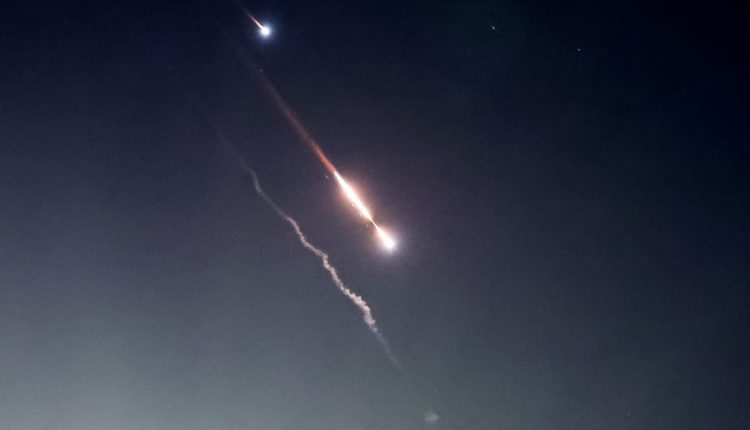
Ahmad-Reza Afshari, a member of the IRGC’s Aerospace Forces who was in Syria to conduct advisory mission, was martyred as a result of injuries sustained by aerial offensive.
Afshari, who was injured following the airstrike by the invading US-led coalition forces in the friendly Arab country a few weeks ago and was transferred to Iran for medical treatment, was honored to join his martyred comrades on Thursday because of the severity of his injuries.
Ahmad-Reza Afshari
In this respect, Head of the Islamic Revolution Guards Corps Major General Hossein Salami issued a message, emphasizing that once again, the IRGC strengthened the pillar of the Islamic Revolution of Iran by dedicating one of its forces, who was also defending the holy shrine in Damascus. Honored member IRGC’s Aerospace Advisory Forces in Syria Colonel Ahmad-Reza Afshari was martyred in consequence of injuries sustained by an air strike. This heavenly companion of Imam al-Hussain (3rd Shia Imam), who was honored to turn into a disabled veteran a few weeks ago flowing an aerial attack by the invading US-led coalition in Syria and was transferred to the Islamic Republic of Iran for medical treatment, joined his companions, who had been martyred, on Thursday due to the severity of his injuries.
At the end of his message, the IRGC chief stated that I voice my congratulations and offer my condolences over the martyrdom of the praiseworthy martyr, and pray for Almighty God’s Blessings, and wish for the dear martyr to accompany the martyrs of Karbala (the Battle of Karbala was fought on 10 October 680 between the army of the second Umayyad caliph Yazid I and a small army led by Imam Husain (A.S), the grandson of the great Prophet Muhammad); and I pray for his honorable family, relatives and comrades to be able to be patient, strong and steadfast in order to continue the path of martyrdom and jihad based on the tenets of the holy Quran as well as to pursue the way of the glory of Islamic Republic of Iran.
The previous operation lasted for eight days and the Israeli forces penetrated into the city of Khan Yunis again. During that operation, many residential buildings, cemeteries and service facilities were demolished by Israeli bulldozers and explosives. The Israeli army withdrew from the city of Khan Yunis once the operation concluded.
According to Hebrew sources, the recent operation is carried out with the aim of destroying Hamas forces in Al-Qararah and Wadi al-Salqa. The Israeli military launched the operation after receiving information about the presence of Hamas forces in the area. The operation involves air and artillery support.
It is highly unlikely that the new Israeli operation in the area will achieve anything significant.
The nature of guerrilla warfare by resistance groups in the Gaza Strip makes it difficult for the Israeli army to completely stabilize and secure the area. Due to this, the Israeli army has to leave the area after each operation in order to avoid casualties.
Despite the Israeli army’s efforts to secure areas of Gaza Strip, the extensive network of underground facilities makes this task seem impossible.
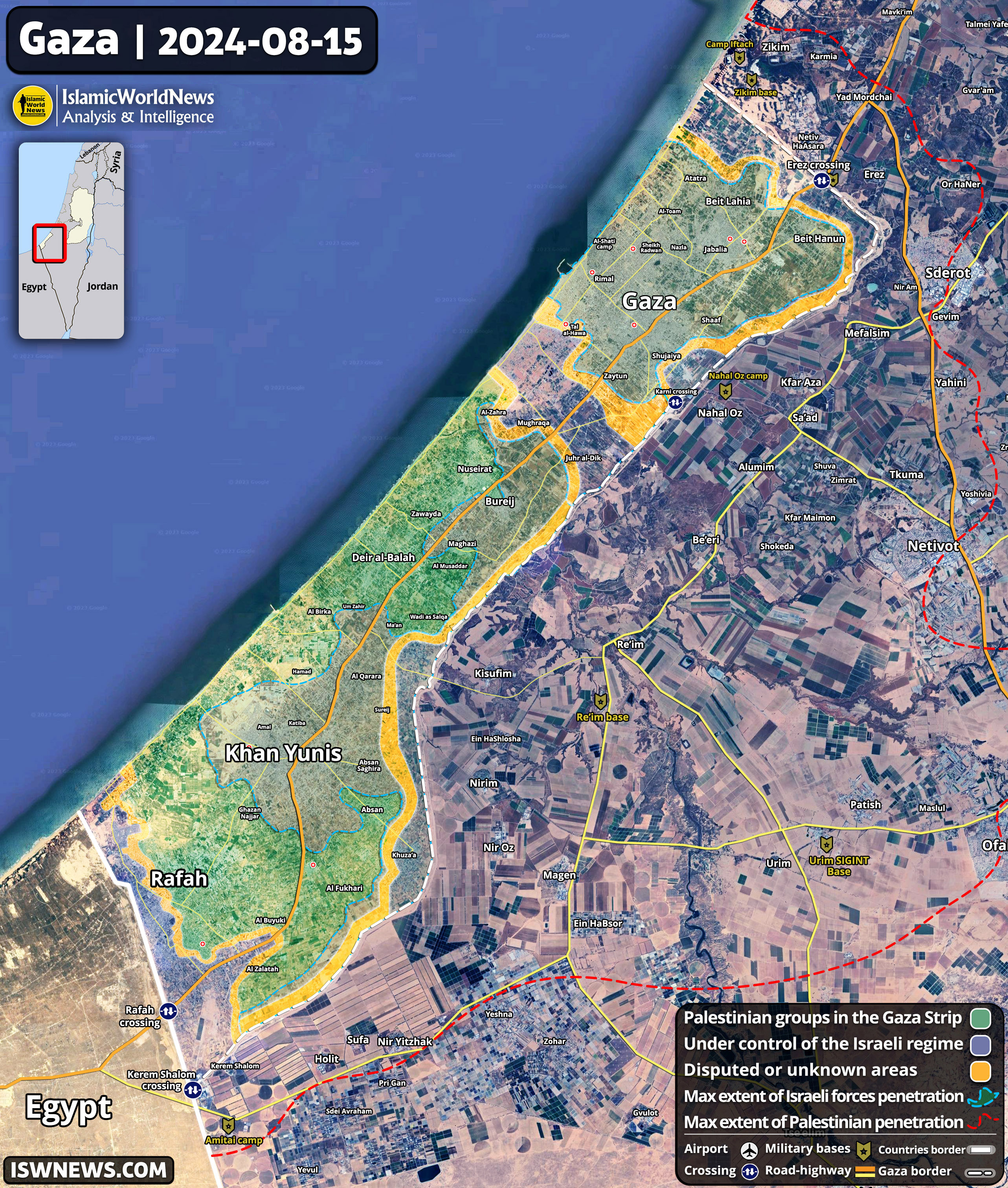
Gaza map
Fighting continues in the southern Gaza Strip in Rafah city without any significant progress. The military situation in Rafah has not changed much. Israeli forces have not been able to completely clear Rafah after weeks of fighting. Around 65% of the town is currently under Israeli control.
Fighting still continues in the central areas of Rafah, in Tal al-Sultan, around the Saudi project and in the southern areas of the city.
The situation in other parts of the Gaza Strip remains unchanged.
While Israel’s fruitless war in the Gaza Strip continues, the Israeli regime prepares itself to embrace Iran and its allies’ retaliatory attacks!
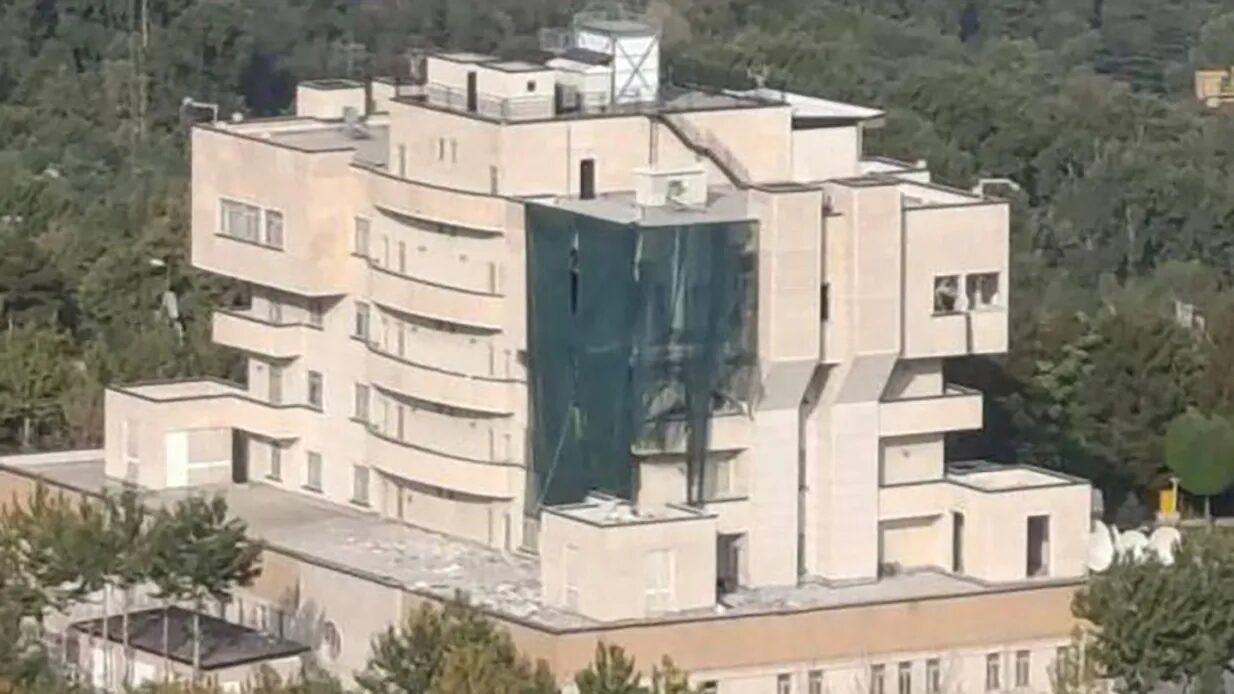
On July 30, a prominent commander of Hezbollah was assassinated in Beirut by the Israeli regime. The following day, on July 31 in Tehran, another terrorist act took place when Israel assassinated Ismail Haniyeh, the head of the Hamas political office. Ismail Haniyeh was killed in Iran while he was on an official trip to Tehran for the swearing-in ceremony of the new president of Iran, Massoud Pezeshkian.
The building that was targeted in Tehran
The supreme leader of Iran, Ali Khamenei has promised that a severe revenge will be taken from the Israeli regime in seeking blood from this terrorist operation.
Hezbollah’s leader Hassan Nasrallah said that the war against Israel had entered a “new phase” and Israel should expect “rage and revenge.” In addition, the leader of Yemen’s Houthis, Abdul-Malik al-Houthi, vowed that the Israeli escalation will be met with a “military response.”
It is said that the Iran’s Supreme Leader has ordered a direct strike against Israel and the attack may be carried out jointly with other allies of Tehran, including Hezbollah and the Houthis.
Since then, the security and military situation in Israel has become very complicated.
The Israel Defense Forces stated that it is on “high alert” as the country braces for a response to the assassinations of Hezbollah’s military chief Fuad Shukr in the Lebanese capital, Beirut, and Hamas’s leader Ismail Haniyeh in the Iranian capital, Tehran.
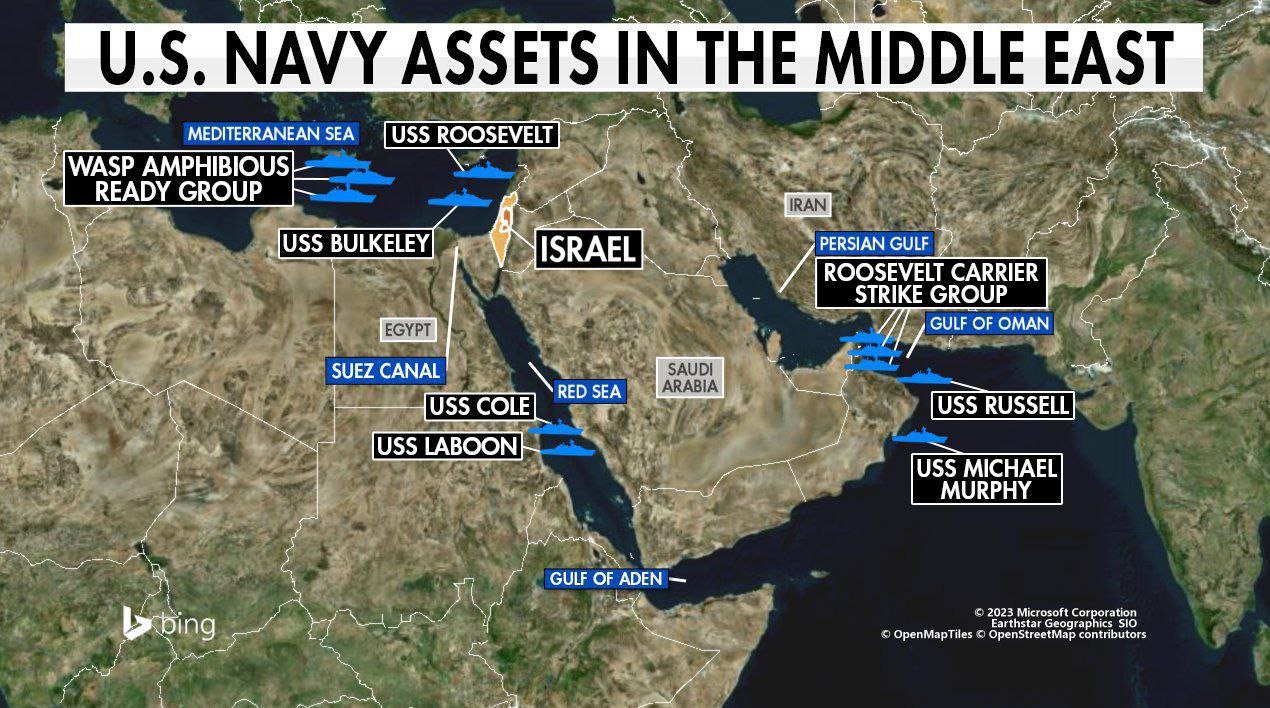
The US government has deployed additional ships and fighter jets to West Asia in support of Israel. Equipment from US and Israeli allies is also on high alert to defend Israel.
US Navy assets in the region
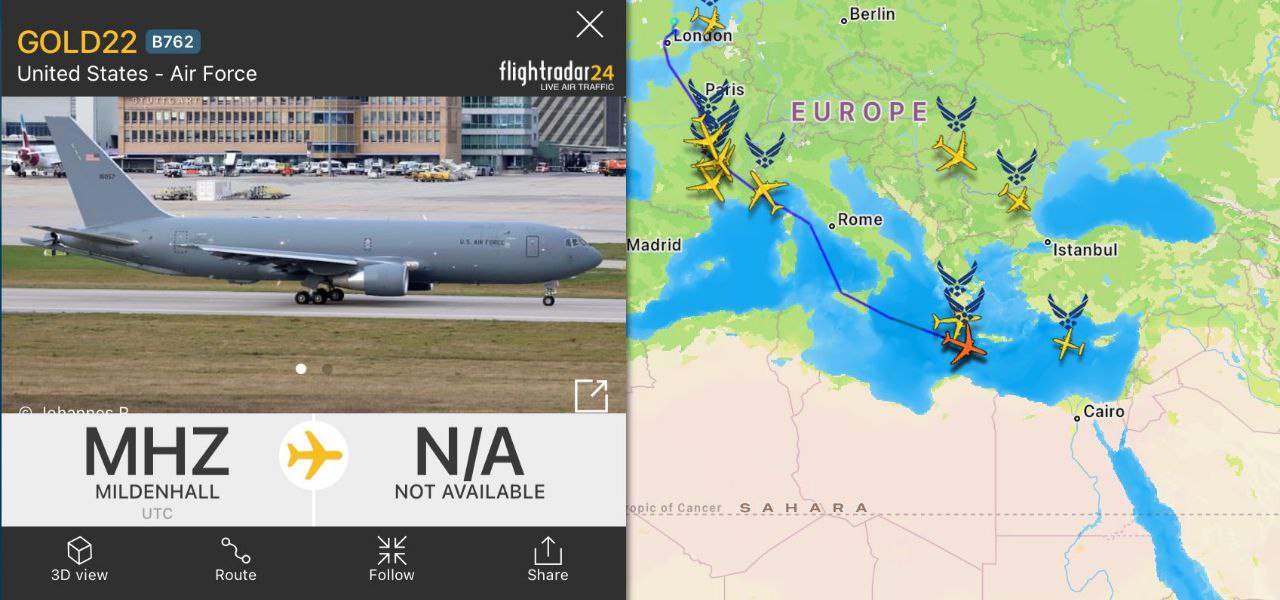
Last week, the US military sent 12 F-22 fighter jets from Lakenheath Airport in England to one of its bases in West Asia.
US military sending F-22s and tanker aircraft to the region
Yesterday, the spokesman of the US Ministry of Defense announced that Lloyd Austin, the US Secretary of Defense had a discussion with Israel’s Defense Minister Yoav Gallant about the country’s defense plans to protect Israel against possible attacks by Iran and its allies.
Austin emphasized that he has ordered the USS Abraham Lincoln Carrier Strike Group, equipped with F-35C fighters, as well as the USS Georgia (SSGN 729) to be deployed in the Middle East as soon as possible.
Yoav Gallant reportedly speaks with US Defense Minister Lloyd Austin daily to coordinate and update him on the latest developments.
On the other hand, Britain and France have asked Iran to refrain from attacking Israel.
Israel’s allies have used all diplomatic tools and economic pressures and even military threats to dissuade Iran from carrying out a retaliatory attack. Nevertheless, it seems very unlikely that Iran will withdraw from its retaliatory attack.
Last April, the Israeli regime attacked the Iranian embassy in Syria’s Damascus. The attack led to the death of several Iranian military advisers and high-ranking IRGC commanders. In response to this attack, Iran fired dozens of ballistic and cruise missiles and suicide drones at Israeli military targets in the occupied territories.
The history of Iran’s retaliatory operations shows that this country will attack Israel again. But it seems that this time the attacks will be stronger than before, comprehensive and with the participation of Iran’s regional allies.
Overall, the Middle East appears to be on the brink of an all-out war as a result of Israel’s recent acts and its ruthless offensive in the Palestinian enclave of the Gaza Strip. Israel’s crime in Gaza may lead to the downfall of this regime or even the destruction of the entire region!
Turkish Defense Minister Yasar Guler announced that Ankara will not negotiate coordination on the withdrawal from Syria before reaching an agreement with the government in Damascus on enacting a new constitution, holding elections, and securing the joint borders.
If conditions are ripe, Turkish and Syrian officials may hold meetings as part of their joint efforts to normalize ties between the two nations.
It is worth noting that the aforementioned conditions have been put forward while Turkish authorities, led by Turkiye’s President Recep Tayyip Erdogan, have time and again voiced their desire to normalize relationship with the Damascus government in recent months.
Earlier, Syria’s President Bashar al-Assad declared the cessation of Turkiye’s support for terrorist groups and a complete withdrawal of Turkish military forces from Syrian territory as conditions for Damascus to normalize ties with Ankara.
Over 12 years ago, diplomatic relationship between Turkiye and Syria were severed when protest rallies turned into a foreign-backed civil war in the Arab country. Then, Ankara supported armed opposition groups in the northwest of the Arab state with the aim of paving the ground for toppling the Syrian president from power.
As a result of the irreconcilability of the Israeli occupiers in the ceasefire negotiations and the continuation of the massacres that the regime’s military forces commit in the Gaza Strip, the Palestinian Islamic Resistance Movement, Hamas, urged the international mediators to pursue the implementation of the terms agreed upon in the previous talks instead of starting new ones.
According to the Hamas statement, the Palestinian resistance calls on the mediators in Egypt and Qatar to put forward the terms agreed upon in the July 2 negotiations, and that the onset of new rounds of talks or the proposition of new proposals is only a cover to provide the Zionist regime with the opportunity to continue their aggression in Gaza.
Hamas took part in several rounds of talks and showed the essential flexibility and positive approach to pursue the interests of the Palestinian people in the prisoner swap deal.
In this regard, representative of the Hamas movement in Lebanon Osama Hamdan said that it was agreed upon the withdrawal of the Zionist regime’s military forces from the Philadelphia axis in the July 2 negotiations, and we welcomed the suggestion of US President Joe Biden and the resolutions of the United Nations Security Council, but the Israeli regime refuses to accept the proposal and tries to procrastinate.
It is worth noting that the three mediating countries, including the United States, Qatar, and Egypt, issued a joint statement in the past to call for the return of the Israeli regime and the Hamas movement to the negotiating table.
So far, the negotiations between Hamas and the Tel Aviv regime, which has been mediated by Egypt and Qatar and with the participation of the United States to pave the way for establishing a ceasefire in the Gaza Strip and the prisoner swap between the two warring sides, have not yielded any tangible result.
Some Israeli media outlets and analysts blame the Israeli regime’s Prime Minister Benjamin Netanyahu for the failure to implement the potential deal due to the fact that he tries procrastinate the negotiations and add new preconditions in the ceasefire talks.
This move follows a recent trend of intensified operations in this populated area, as the Israeli military forces received information on the presence of fighters affiliated with the Palestinian resistance movement, Hamas, in this region.
The 98th Division of the Israeli regime’s army is actively engaged in this operation in Khan Younis city, focusing on the eastern areas of Al-Qarara and Wadi al-Salqa towns.
The Israeli army has mobilized air support and artillery strikes to enhance the operational maneuver of the ground troops, reflecting the seriousness of the situation.
This latest assault comes following a previous eight-day campaign that kicked off on July 22, which also targeted Khan Younis city. During the previous operation, the Israeli armed forces caused extensive damage, demolishing residential buildings, a cemetery, and various service facilities using bulldozers and explosives.
As tensions flare up, the humanitarian implications of the Israeli regime’s military atrocities remain a pressing concern for the Palestinian civilians and international observers alike. The circumstances in Khan Younis are evolving quickly, and the continuation of the Israeli regime’s cruel actions cause catastrophe in this area.
The Palestinian Health Ministry in Gaza announced on Saturday that Gaza death toll reached 39,790 as the Israeli military forces killed 40 more Palestinians over the past 24 hours. At least 91,702 Palestinians have been wounded in the onslaught on the besieged area since Oct. 7, 2023.
Brigadier General Qaani expressed his heartfelt condolences for Haniyeh’s martyrdom, recognizing him as a courageous figure in the Islamic Resistance and a respected leader who promoted unity among Muslims. The Iranian commander wrote in his message to al-Sinwar that those who were mastermind and perpetrators of the assassination of the former Hamas chief in Iran must be punished.
Qaani’s message is as follows:
“I offer condolences over the martyrdom General Ismail Haniyeh. Martyr Haniyeh was truly one of the brave leaders of the Islamic Resistance and the appreciated and modest personality who created unity in the Islamic world.
As the Leader of the Islamic Revolution stated, we consider it our duty to avenge Haniyeh’s blood for this bitter incident inside the Islamic Republic’s territory.
There is no doubt that the blood of the noble martyr will impact the severity of punishment of the Zionist regime at the hands of the Islamic Republic.
The heroic jihad of your brothers in the Islamic Resistance will amplify the effect of punishment more than what it was in the past and it will lead to the eradication of the evil phenomenon as soon as possible.
I express congratulations to all the heroes of Hamas, Gaza, and the Palestinian nation on your election as the leader and jihadi commander, who has a background of being a veteran and honorable figure.
By electing such a leader, Hamas proved with a different logic that it is handing over the proud flag of Hamas to the figure who has the most influence on the battleground, and who is a fighter in the path of Allah.”
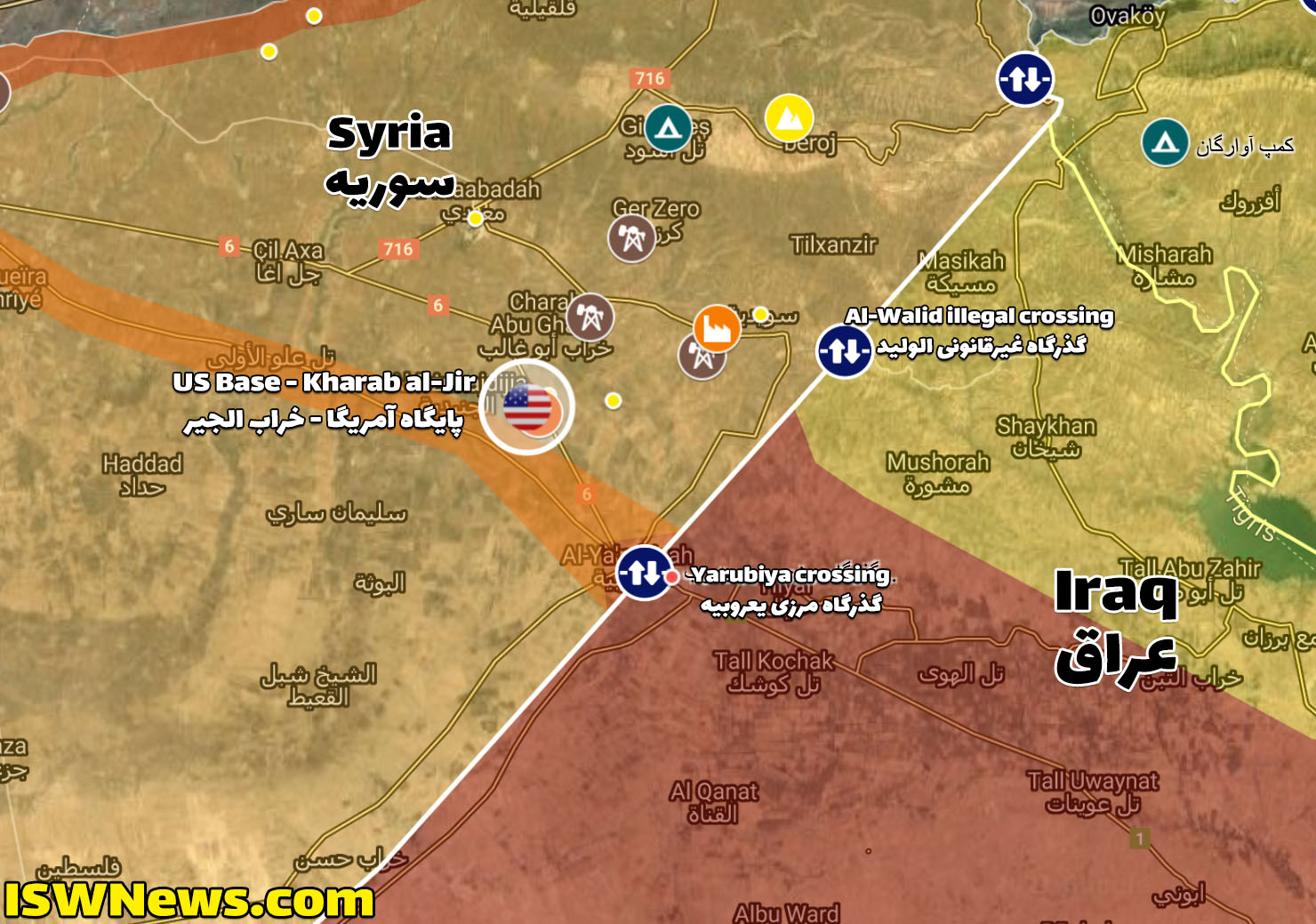
This is the 16th attack on US military positions at Kharab al-Jir base since the start of the war in the Gaza Strip.
The resistance forces have carried out military operations against the United States and the Israeli regime in response to the genocidal war and siege on Gaza. The resistance groups emphasized that they will continue these attacks to force the Israeli regime and its staunch ally (the US), which supplies the regime with arms and ammunition, to stop killing innocent people in the besieged strip.
This high-profile deployment coincides with heightened tensions in this part of the world in connection with the Islamic Republic of Iran, the Lebanese resistance movement Hezbollah, and Yemen’s Ansar Allah movement.
Six tanker aircraft will fly with the backing of the F-22 warplanes in case of need as the aircraft head off in the direction of a planned US air base in either Jordan or Qatar in order to ensure the fighters combat readiness, according to the Pentagon. US commitment to shielding the Israeli regime from any possible strike by the Axis of Resistance is unequivocal and complete.
Meanwhile, just last week, the Pentagon announced that it had approved further military assets – warships and a fighter squadron – to be sent to this part of the world by US Defense Secretary Lloyd Austin.
After the deaths of Haniyeh and the Hezbollah commander Fuad Shukr, Resistance Front officials of the Islamic Republic of Iran vowed to get revenge for the savage terrorist crimes.
According to the Washington Post, the US Navy has dispatched two destroyers, the USS Labon and the USS Cole, from the Gulf of Oman to the Red Sea and then to occupied Palestine. These destroyers have Arleigh Burke class of guided-missile destroyers (DDGs) and are capable of carrying out a variety of offensive and defensive missions.
Meanwhile, on Wednesday morning, the terrorist United States Central Command in the West Asia region (CENTCOM) announced the attack of a suicide drone and two anti-ship ballistic missiles of the Yemeni army in the Red Sea, which may have targeted the two destroyers. CENTCOM claimed that US forces destroyed the drone and missiles.
The move comes as the aircraft carrier USS Theodore Roosevelt remained stationed at its mission site in the Gulf of Oman until August 5. The Wall Street Journal also reported on the deployment of F/A-18 fighter jets as part of preparations to intercept a possible Iranian attack on a base in the West Asian region.
Posts were published on social media platforms last night about the intention of Syrian tribes to attack the positions of the Syrian Democratic Forces (SDF), which caused some residents of the areas of Jama, Dhiban and al-Hawaij to leave their homes.
Hours later, the first clashes broke out in the Dhiban area between Syrian tribesmen and SDF militants. At the beginning of the clashes, a civilian named Imad Jalal al-Hattab was killed. After Dhiban, Syrian tribesmen also stormed the SDF headquarters in the town of Abu Hamam.
During the clashes, the SDF militants stationed in the town of al-Hawaij targeted areas in the city of al-Mayadeen with artillery fire.
Gradually, the clashes spread to the areas of al-Tayana, al-Basira and al-Subha, and after clashes with the SDF militants, the Syrian tribes took control of several SDF bases and checkpoints in the areas of Abu Hamam, Gharanij, Abu Hardoub and Al-Kishkiyah. Syrian tribesmen are said to have captured several SDF militants.
As the fighting intensified, SDF commanders decided to deploy reinforcements and equipment from the areas of al-Ma’mal and al-Shaddadi to the eastern areas of Deir ez-Zor. Some reinforcements sent from Al-Hasakah and Al-Raqqa have arrived in the eastern countryside of Deir ez-Zor. Also, due to the situation on the ground, the US forces stationed at the Conoco gas facility and the Al-Omar oil field were put on alert.
The IWN investigations show that since last night, the areas of Abu Hamam, Dhiban, Gharanij, Al-Tayana, Al-Sabkhah, Al-Harijiya and Al-Busayrah have witnessed clashes between Syrian tribes and the SDF forces.
Clashes in Tayana
In recent hours, SDF commanders sent a group of reinforcements from the al-Omar oil field to the Abu Hamam area. Local sources also reported that a convoy belonging to the US coalition headed from southern Al-Hasakah to the eastern areas of Deir ez-Zor.
According to preliminary information, at least 3 people were killed and 14 others were injured as a result of the clashes. Due to the intensity and continuation of the clashes, the SDF militants have declared a curfew in the areas of Dhiban and Abu Hamam.
The latest information received indicates that US coalition warplanes entered the fighting and targeted a group of Syrian tribesmen near the banks of the Euphrates River in the city of Dhiban an hour earlier.
Clashes continue in some areas, and US fighter jets flew over some of the conflict points in Deir Ez-Zor Governorate. Moreover, the news stories published about the domination of the Syrian tribes over the Al-Omar oil field is not true.
The Palestinian resistance movement Hamas announced in a statement that Yahya al-Sinwar has been elected as the new head of the movement’s Political Bureau and the successor of the martyr Ismail Haniyeh. He was previously the head of Hamas’ Political Bureau in the Gaza Strip.
Yahya al-Sinwar and martyr Ismail Haniyeh
Who is Yahya al-Sinwar?
Yahya al-Sinwar is a Palestinian military commander who joined the Martyr Izz al-Din al-Qassam Brigades, the military wing of Hamas, since the beginning of the Palestinian Islamic Resistance Movement in Gaza, and in 2005, he assumed the position of commander of the Khan Yunis Brigade.
The Zionist regime considers Yahya al-Sinwar to be the mastermind of many guerrilla operations and have put his name on their terror list. Some sources also claimed that al-Sinwar was the founder of Hamas’ security service, known as al-Majd, which focuses on internal security cases.
Yahya al-Sinwar is one of those who fundamentally believes that it is not possible to defeat Israel unless its mercenaries are identified and destroyed. From the very beginning of his activities, he focused on this goal, and during the era of Sheikh Ahmed Yassin, the Hamas security apparatus was under his management, and a number of infiltrators and spies of the Israeli regime were also identified during this period.
Yahya al-Sinwar
The security apparatus under al-Sinwar’s leadership gradually grew so powerful that as a counterintelligence organization, it gained considerable control over the movements of the Israeli regime and its spies. It was this power and influence of Yahya al-Sinwar that led the Israelis to arrest him very quickly, which led him to spend 23 years of his life in Israeli prisons. It is worth mentioning that he was released unconditionally under the Gilad Shalit contract in 2011 with sentences of more than 430 years in prison.
Michael Koubi, the officer who oversaw al-Sinwar’s interrogation for the Shin Bet in 1989, described him as a man of command and charisma who spoke little and was quick to get angry. He was described as “a leader in and out of prison and a man of discipline.”
Israeli reports confirm that al-Sinwar was fluent in Hebrew, and this ability helped him track and analyze what was happening inside Israel. In fact, he was able to keep a close eye on Israeli society and read newspapers in addition to biographies of Israeli leaders.
After his release, al-Sinwar also succeeded in inflicting the largest military damage on the Israeli regime in the history of its occupation, and it is said that he has survived six failed assassinations in recent years.
A few months ago, the Hebrew-language media quoted a number of released Israeli prisoners as saying: In the first days of captivity, Yahya al-Sinwar, the head of Hamas’ political bureau in Gaza, appeared among the Israeli prisoners and addressed them in Hebrew without an accent: ‘Hello, I am Yahya al-Sinwar, you have the most protection here and nothing will happen to you!’
Positions of the US terrorist military were targeted by a rocket attack on July 26. Hours after the attack, a newly formed resistance group called Al-Thorioun claimed responsibility for a rocket attack on the positions of the American occupiers at the Ain al-Asad air base in Iraq’s al-Anbar Governorate and the US-led coalition base at the Conoco gas facility in Syria’s Deir Ez-Zor province.
According to the group, the operation to target the American occupiers was carried out under the codenames of “Ya Ali al-Murtadha” and “Ya Fatima al-Zahra”. The Al-Thorioun Resistance Group stressed that the group’s operations will continue until the withdrawal of the last US troops from Iraq.
On August 5, US terrorist forces’ positions at the Ain al-Asad air base were again targeted by rockets and drones, and the al-Thorioun resistance group issued a statement claiming responsibility for the attack.
After the group’s attack on the Ain al-Asad base, which resulted in the wounding of five US soldiers and two American contractors, the Iraqi Joint Operations Command announced: The Iraqi Joint Operations Command expresses its opposition to any bold action to target Iraqi bases, diplomatic missions, and the presence of international coalition advisers, and any action that increases tension in the region or pushes Iraq towards dangerous consequences or harms various interests of the country.
The Iraqi Joint Operations Command also pointed out that the security apparatus obtained important information about the perpetrators of the attack through intelligence and security efforts, and now they are identified to be punished, and that the officials, commanders and officers, who are responsible for this, will also be prosecuted.
No further details are available about this group at this time, but the formation of new resistance groups with hidden origins in order to protect the Popular Mobilization Units (which is part of the Iraqi Armed Forces) and to observe protection and security issues has been one of the most important actions of the Islamic Resistance in Iraq in recent years (after the martyrdom of Haj Qasem, Iran’s IRGC Qods Force Commander, who was assassinated by the US in the Iraqi capital Baghdad in January 2020). This has led to the failure of Western intelligence agencies to obtain information about all these groups and prevent their attacks.