Author: HadiQ

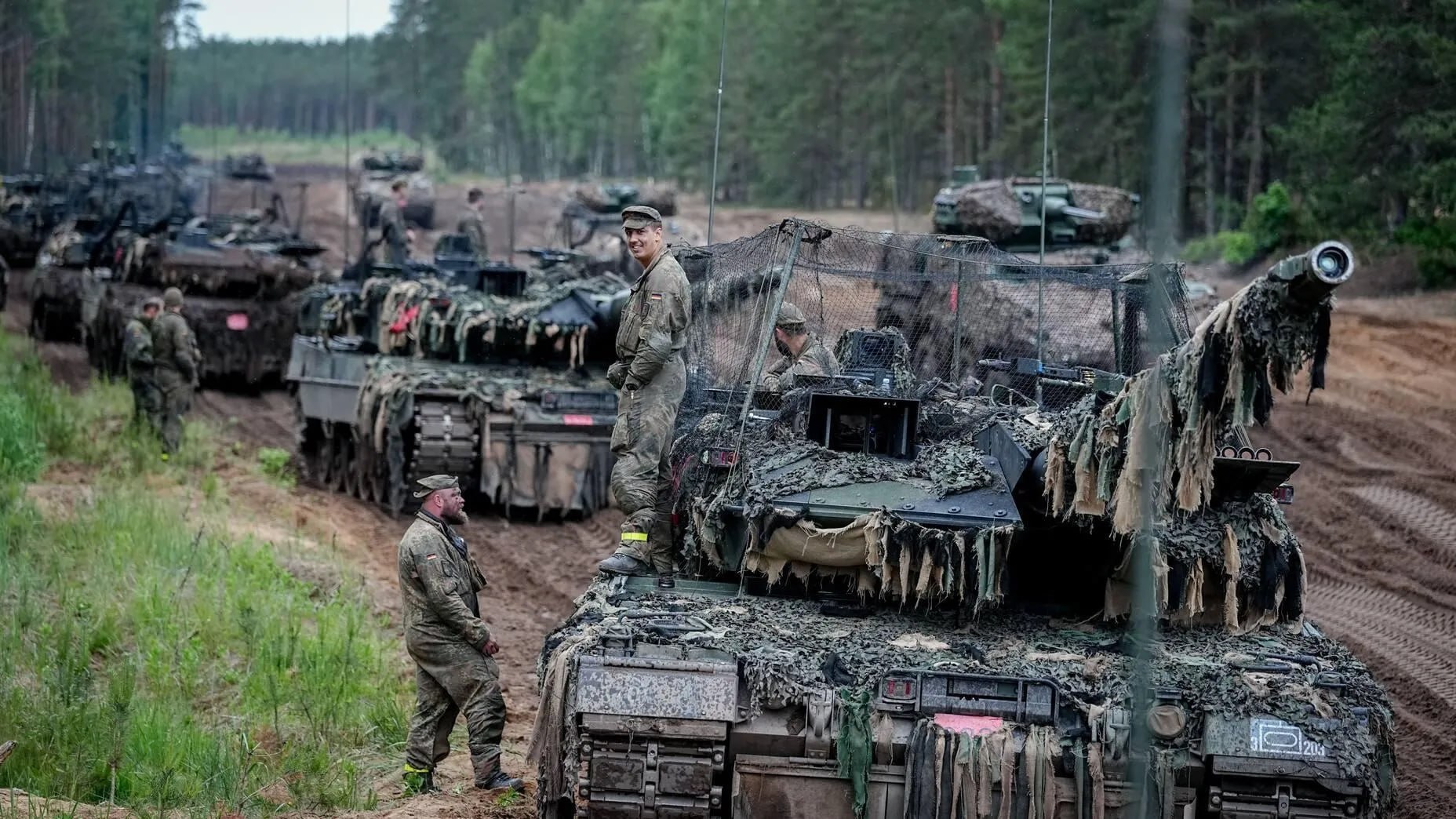
  • Germany to Establish Eight New Battalions

    Germany to Establish Eight New Battalions

    Six of these new battalions will be organized for territorial defence within Germany, while the other two will join the country’s permanently stationed brigade in Lithuania.

    The six territorial defence battalions will come under the Territorial Defence Command and will be tasked with protecting critical infrastructure, military facilities, ports, airports, transport hubs, and communication routes.

    The other two battalions will consist of an armoured artillery battalion and a support battalion, both of which will join Germany’s 45th Armoured Brigade in Lithuania.

    The 45th Armoured Brigade is Germany’s first combat formation established with a permanent deployment mission outside German territory. Including its support units, the brigade is expected to have approximately 5,000 personnel.

    In a potential large-scale conflict in Eastern Europe, German territory could become one of NATO’s main routes for transporting troops and military equipment to the alliance’s eastern flank. Under such circumstances, protecting bridges, railway lines, fuel depots, ports, and military facilities would take on particular operational importance.

  • US Air Force’s Force Design 2026 Project

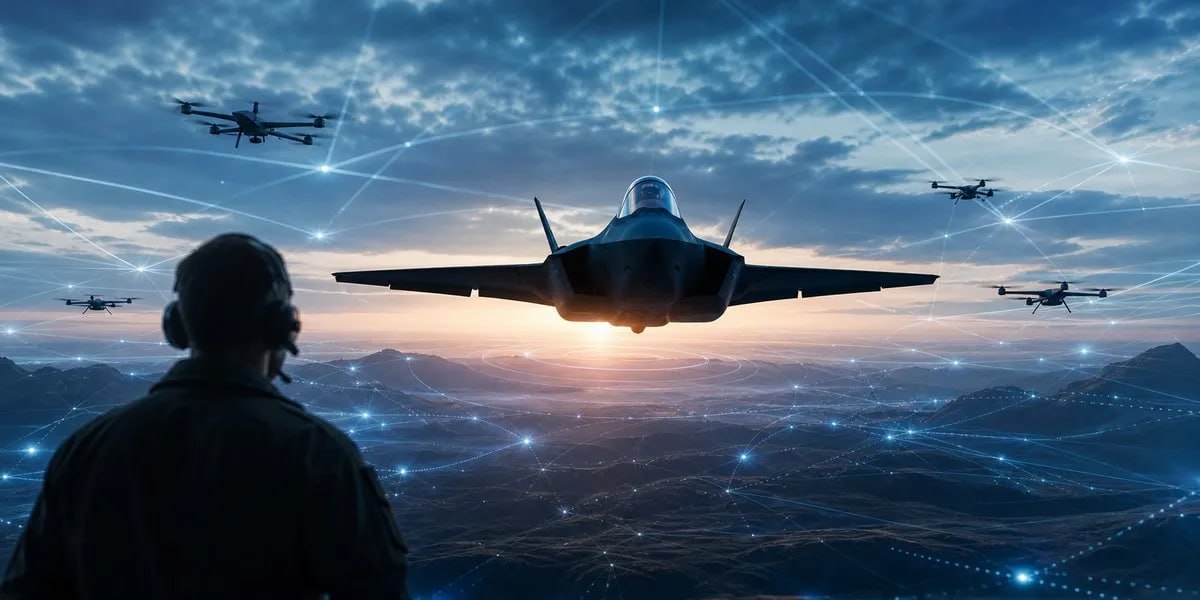
    US Air Force’s Force Design 2026 Project

    The document, whose full version has not been released due to its classified nature, replaces the previous “One Force Design 2024” plan.

    The main focus of the new plan is a shift towards an integrated structure combining sensors, communications networks, artificial intelligence, autonomous systems, long-range weapons, and electronic warfare capabilities.

    Under this framework, crewed aircraft, drones, sensors, weapons, and command-and-control systems are expected to operate as a coordinated operational network. This would allow other parts of the force to continue carrying out missions even if some communications links are lost, or certain components of the network are damaged.

    The use of autonomous systems and artificial intelligence is also being pursued more extensively to accelerate decision-making, improve operational coordination, and increase combat flexibility.

  • CSIS Issues Another Warning Over Declining US Munitions Stockpiles

    CSIS Issues Another Warning Over Declining US Munitions Stockpiles

    According to the think tank’s estimates, the US consumed approximately one-third to two-thirds of its pre-war stocks of certain key munitions during military operations against Iran and the subsequent clashes. The remaining stockpiles are considered sufficient for a resumption of hostilities with Iran, but the situation is more concerning in the event of a potential war with China.

    Patriot: Approximately two-thirds of pre-war Patriot interceptor missile stocks have been consumed. Lockheed Martin plans to increase annual production capacity from around 600 to 2,000 missiles.

    THAAD: Approximately half of the interceptor missile stockpile for this system was used during the war with Iran. The US is seeking to quadruple THAAD interceptor production capacity to replenish its stocks.

    Tomahawk missiles: Approximately one-third of pre-war stocks have been consumed. RTX plans to increase annual production to 1,000 missiles.

    JASSM cruise missiles: Approximately one-third of pre-war stocks have been consumed.

    SM-3 and SM-6 missiles: Consumption of these naval interceptor missiles has been relatively limited. However, replenishing their stockpiles will take time due to low procurement levels in previous years.

    Stinger missiles: Stockpiles of these short-range missiles have been reduced due to extensive transfers to Ukraine. Their production line has also only recently been reactivated after years of inactivity.

    According to CSIS estimates, delivery of many newly manufactured munitions will take between two and four years following congressional funding allocations. Therefore, the main challenge facing the US is not simply securing funding, but also limited production capacity and the time required to replenish its stockpiles.

    The think tank also notes that, from the fifth day of military operations against Iran, the US military gradually reduced its use of expensive, long-range munitions and shifted toward shorter-range and less expensive weapons.

    Read the report.

  • B-21 Raider Conducts First-Ever Conventional Weapons Test

    B-21 Raider Conducts First-Ever Conventional Weapons Test

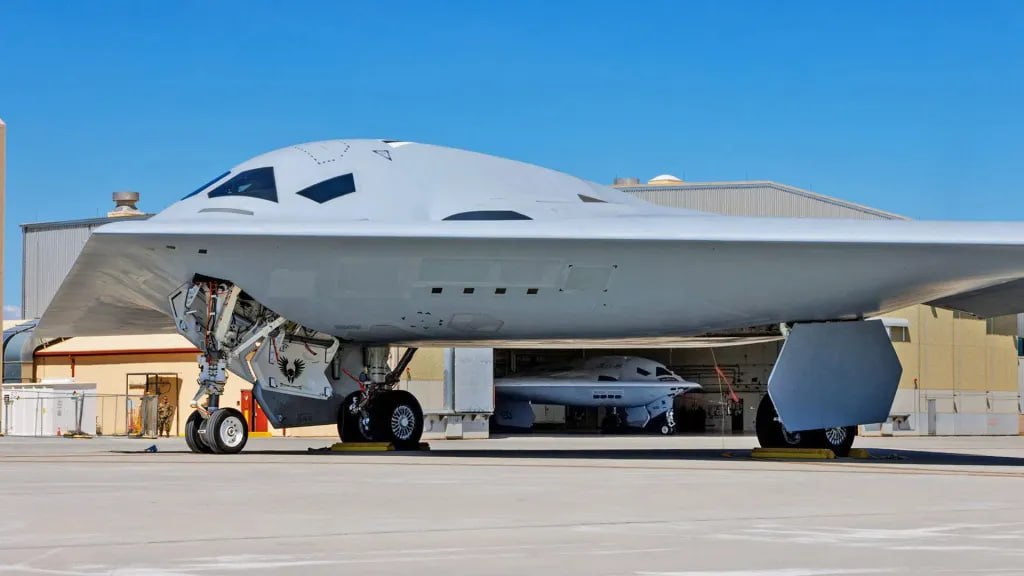
    According to the US Air Force, the test was conducted using one of the B-21 pre-production aircraft, which took off from Edwards Air Force Base in California. During the test, a conventional munition was released to validate digital models and assess the aircraft’s ability to rapidly integrate new weapons.

    The type of weapon used in the test and details of its performance have not yet been disclosed. The B-21 is designed to carry a wide range of conventional and nuclear weapons. The AGM-181A Long-Range Stand-Off (LRSO) nuclear cruise missile is also expected to be one of its key future weapons.

    Two pre-production B-21 aircraft are currently participating in the flight-test programme, and the US Air Force plans to deploy the first operational examples of the bomber in 2027.

  • China’s GJ-11 Drone is Unveiled

    China’s GJ-11 Drone is Unveiled

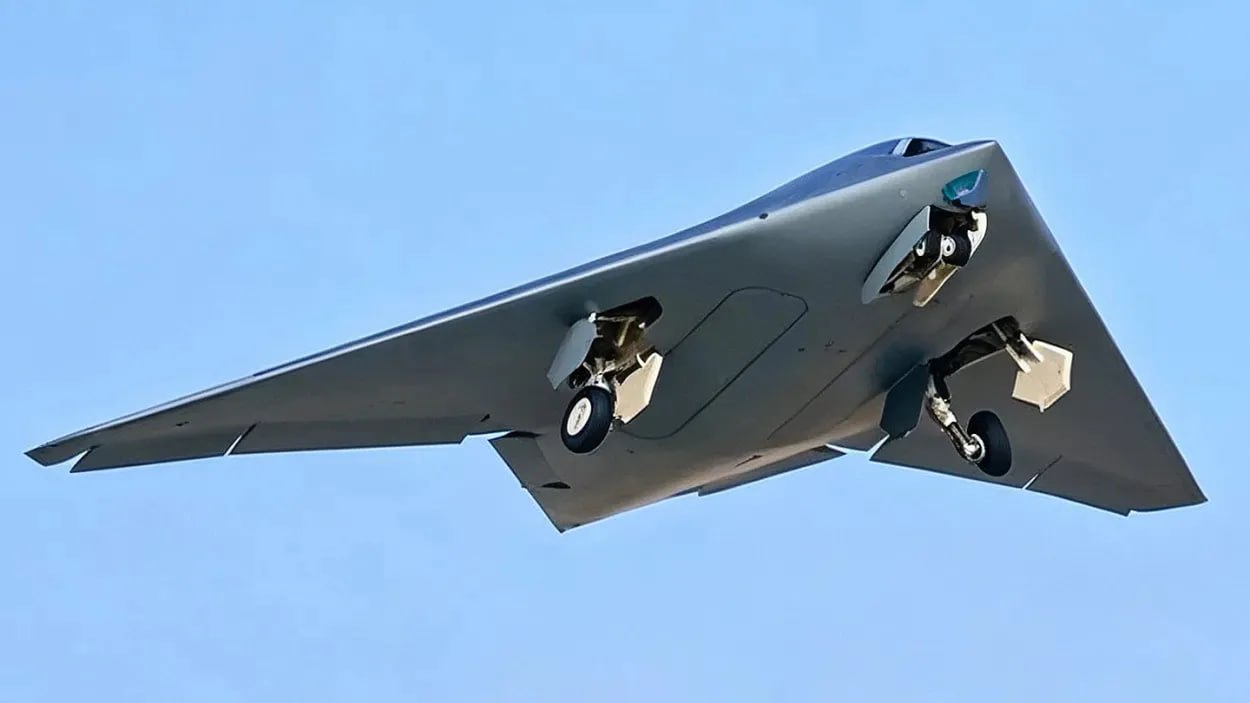
    This flying-wing aircraft was developed to conduct strike missions and suppress enemy air defenses, and is intended for joint operations with Chinese manned fighter jets.

    According to released information, the GJ-11 is equipped with two internal weapons bays that allow it to carry air-to-ground munitions without increasing its radar cross-section. Estimates suggest that each bay can accommodate at least one 454-kilogram-class munition.

  • Heavy Clashes in Southwestern Lahij; Operation to Liberate Ras al-Arah Continues

    Heavy Clashes in Southwestern Lahij; Operation to Liberate Ras al-Arah Continues

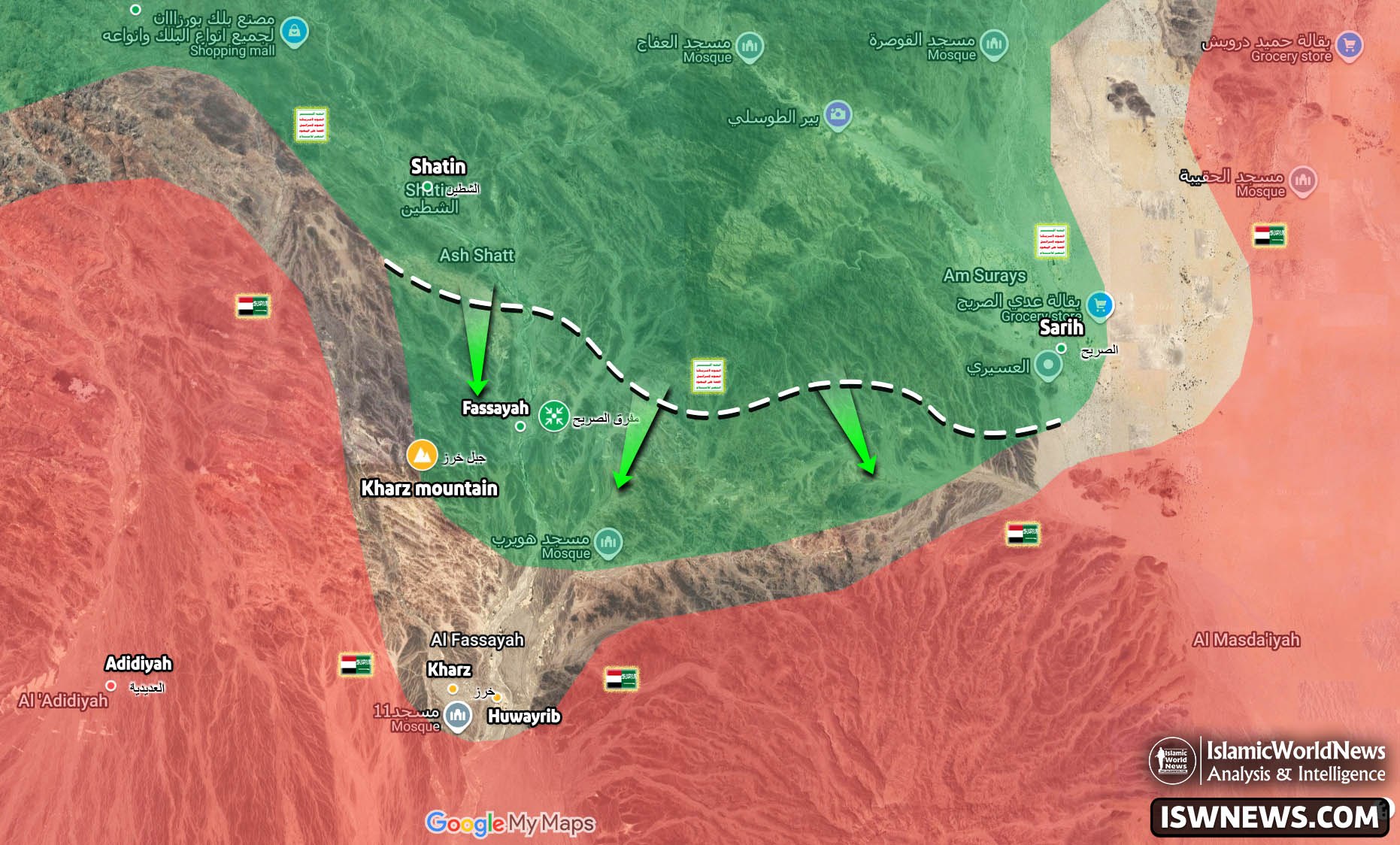
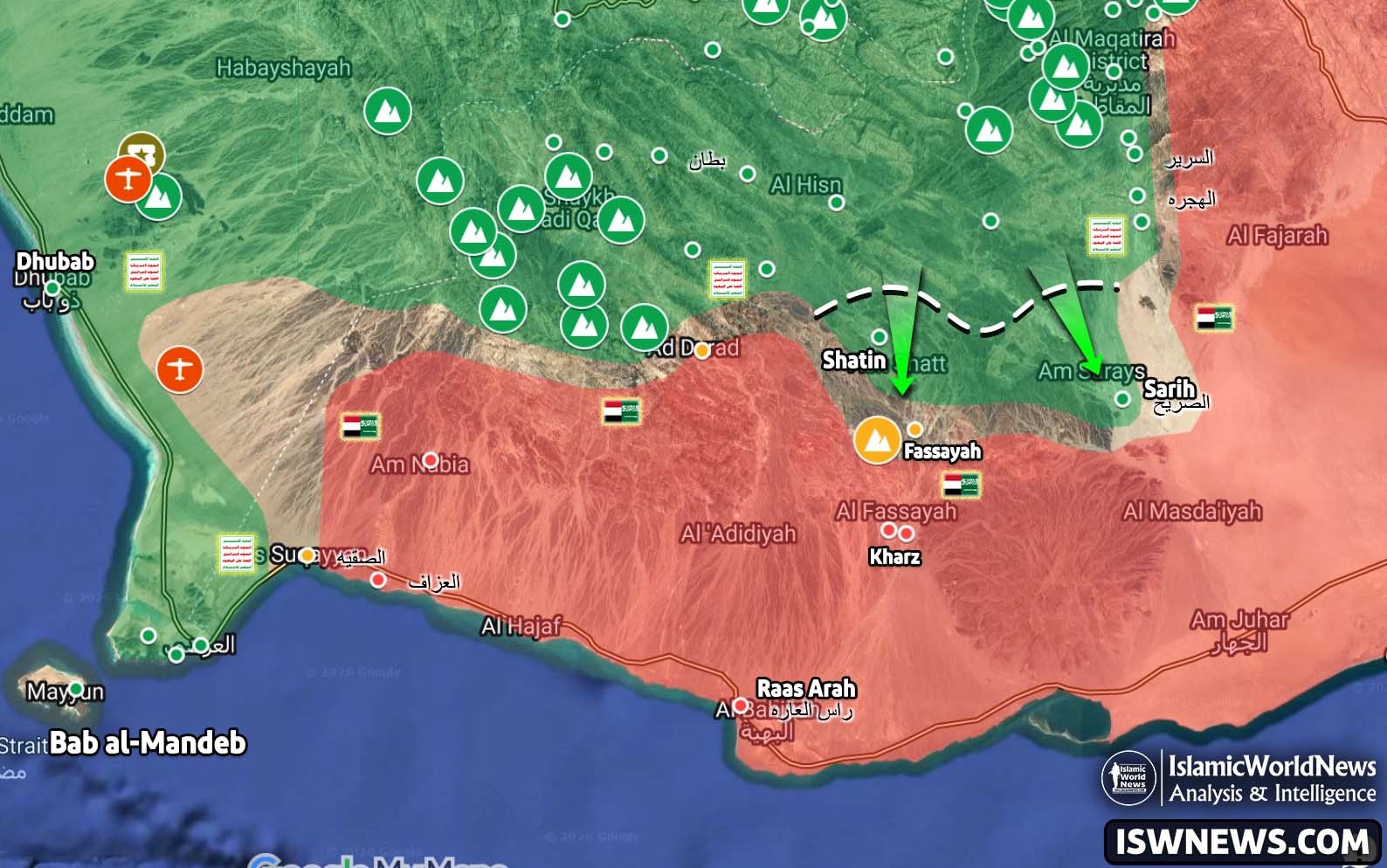
    According to the latest field reports in southwestern Lahij Governorate, Yemeni armed forces and popular committees, after pushing back Al-Amaliqa and Tariq Saleh’s forces from the al-Sarih junction, succeeded in clearing the al-Fasayha area. Tariq Saleh’s forces have currently withdrawn from this axis, and Al-Amaliqa forces are resisting Yemeni Army attacks in the Huwayrib and Kharaz areas.

    Yemeni forces have also attacked from the Durad axis toward the Ghayl al-Barir and al-Adidiyah areas, which has not yet yielded definitive results.

    On the eastern axis of the Bab al-Mandeb Strait, the 17th Brigade of the Al-Amaliqa forces has withdrawn from the al-Saqiya area, and as of this moment, no reliable news has been received of Yemeni forces entering this area.

    Last night’s Yemeni Army operation on this axis was a combination of media warfare, missile attacks on the Kharaz and Ras al-Arah bases, and a ground assault. The dissemination of news of a large-scale withdrawal from Ras al-Arah was in this context, and this has not materialized on the battlefield as of this moment.

    View the online map of Lahij HERE

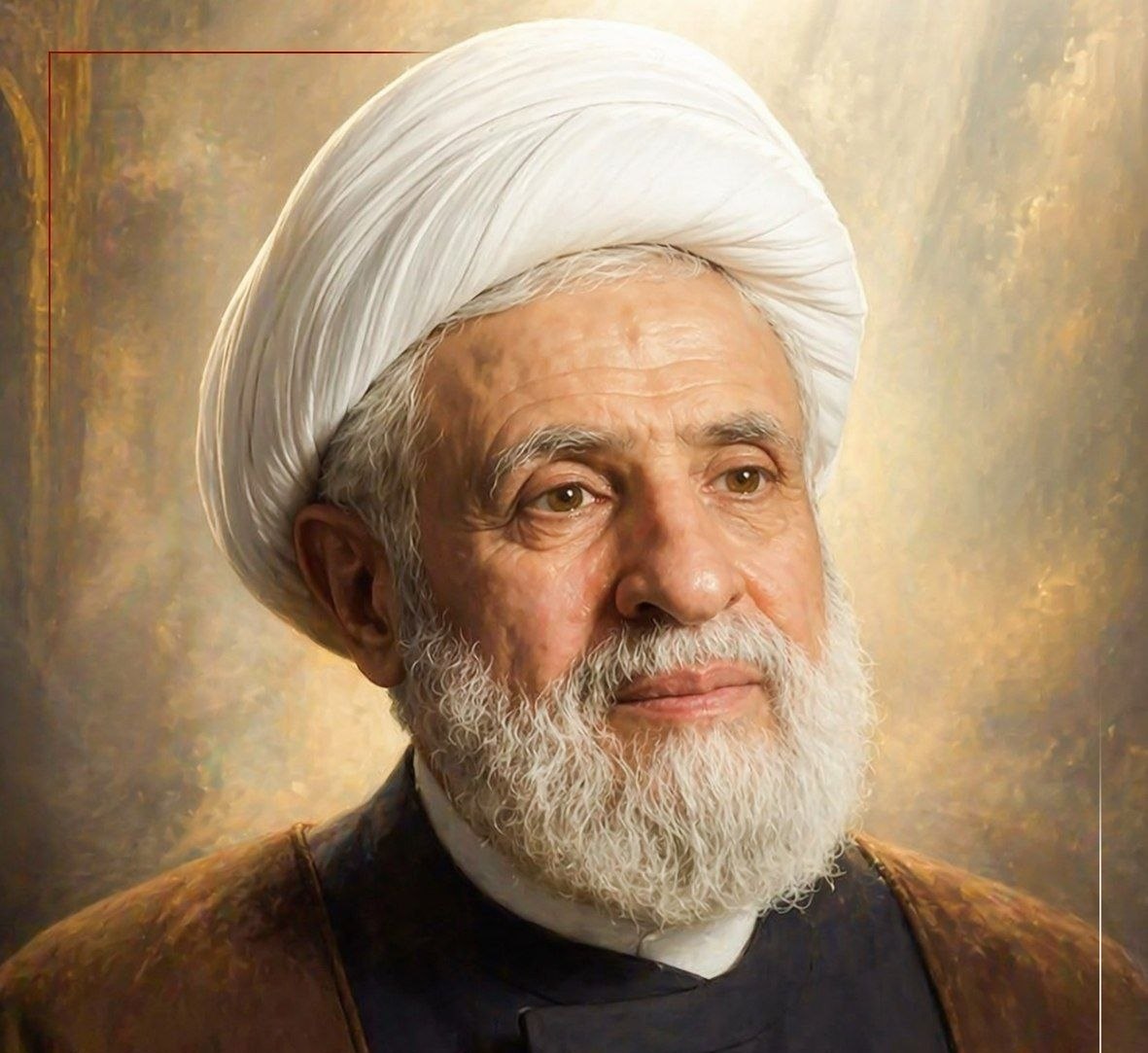
  • Sheikh Naim Qassem’s Remarks on the Occasion of Martyrs’ Day

    Sheikh Naim Qassem’s Remarks on the Occasion of Martyrs’ Day

    Referring to the words of Imam Hussein (PBUH), “I see death as nothing but happiness, and life with oppressors as nothing but misery and disgrace,” Hezbollah Secretary-General Sheikh Naim Qassem emphasized that martyrdom represents the highest degree of sacrifice and Islamic upbringing, and holds an exalted position on the human and spiritual path.

    He stated that the message of the martyrs brings glad tidings of peace and an end to sorrow for the Muslim community, as, according to God’s promise, the future belongs to the front of truth and resistance. Defending the homeland, humanity, freedom of the land, and supporting the oppressed Palestinian people are all part of the martyrs’ divine path.

    Sheikh Naim Qassem described Martyrs’ Day as an opportunity to honor the patient and proud families of the martyrs and renew allegiance to their ideals. Praising the fathers and mothers who have sacrificed one or more of their children in defense of their homeland and divine ideals, he said that some families have offered two, three, four, or even five martyrs, yet continue to declare that if they had more children, they would make the same sacrifice again. This demonstrates how deeply rooted the culture of sacrifice and resistance is in society.

    Addressing Palestine, the Hezbollah Secretary-General stressed that, contrary to Western propaganda, the roots of the crisis do not lie in Operation Al-Aqsa Flood. Rather, they must be traced back to British colonialism and the establishment of the Zionist regime in 1948—a process accompanied by massacres, the displacement of millions of people, and the destruction of infrastructure.

    Referring to the humanitarian catastrophe in Gaza, he described the martyrdom and injury of tens of thousands of women and children, along with the siege imposed on more than 2.5 million people, as a continuation of the same historic policy of genocide and forced displacement, pursued with the silence and complicity of Western powers.

    Sheikh Naim Qassem described blaming the Palestinian and Lebanese peoples for defending themselves as a distortion of reality, emphasizing that the root cause of the crises is the inherently expansionist and aggressive nature of the Zionist regime’s occupation, not the existence of resistance.

    Regarding Iran, he stated that raising objections to uranium enrichment, despite Iran’s legal right to the peaceful use of nuclear energy under the 2015 agreement, is merely a pretext for restricting the power and independence of the resistance front.

    The Hezbollah Secretary-General emphasized that the primary objective of the US and the Zionist regime is not to uphold the law or address nuclear concerns, but rather to gain control over the region’s strategic resources and wealth. He described the aggression against Iran as a blatant violation of international law and affirmed Iran’s legitimate right to self-defense and retaliation.

    He also stressed the need for unity among the various fronts and coordination between the region’s armies, peoples, and resistance forces, describing such cooperation as a means of confronting aggression and safeguarding regional security and stability.

    Regarding Lebanon, Sheikh Naim Qassem said that the Zionist regime’s expansionist plan to weaken Lebanon and pave the way for new settlements had been thwarted by the steadfastness of the people and resistance forces. He added: “Had it not been for the resistance and honorable people, the enemy would have advanced as far as the heart of Sidon.” He stressed that the root cause of Lebanon’s crises is occupation, not the existence of resistance.

    He described the patience and steadfastness of the people and resistance forces, alongside active diplomacy and regional agreements—including the Islamabad Agreement and Iran’s efforts to de-escalate tensions—as important factors contributing to strength and stability in the face of aggressors.
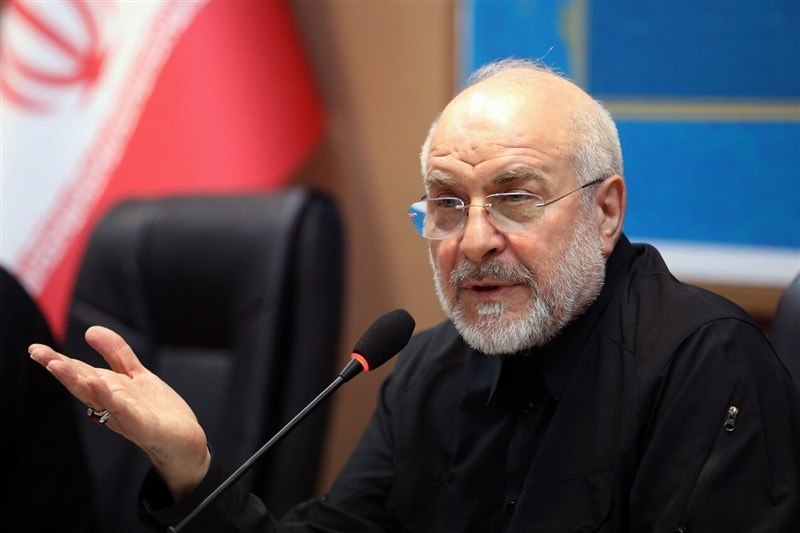
  • Mohammad Bagher Ghalibaf’s Interview with Al Jazeera

    Mohammad Bagher Ghalibaf’s Interview with Al Jazeera

    Ghalibaf stressed that Iran had delivered a clear and explicit response to the US, incorporating the legitimate demands of the Islamic Republic.

    He noted that Washington had so far provided no official or specific response to Iran’s message and proposal.

    The Speaker emphasized that the reopening of the Strait of Hormuz and the resumption of negotiations depend on the full implementation of Iran’s seven conditions by the US.

    He also announced that no changes had been made to Iran’s negotiating team and that he continues to lead the negotiations.

    Ghalibaf said the Americans had miscalculated, failed to achieve their objectives through their attack on Iran, and found themselves facing disappointment.

    He revealed that the Americans had travelled to Moscow and asked Russian President Vladimir Putin to hold talks with Iran to pave the way for direct negotiations between the two sides.

    The Speaker warned: “If the US or the Zionist regime starts a war, we will confront both of them and respond to any attack.”

    Emphasizing that peace remains Iran’s priority, he said: “If the other side accepts our conditions, we have no desire to continue the war.”

    Ghalibaf also warned that the continuation of the war would undermine the security and economies of countries across the region.

    The Speaker stated that the Strait of Hormuz would never return to its pre-war conditions, adding that this issue forms part of Iran’s proposed seven-point agreement.

    Finally, he announced that an agreement had been reached with Oman regarding the shipping route and the maritime traffic separation scheme in the Strait of Hormuz.

  • Yemeni Army Advances Toward Ras al-Arah; Saudi Coalition Forces on the Brink of Encirclement

    Yemeni Army Advances Toward Ras al-Arah; Saudi Coalition Forces on the Brink of Encirclement

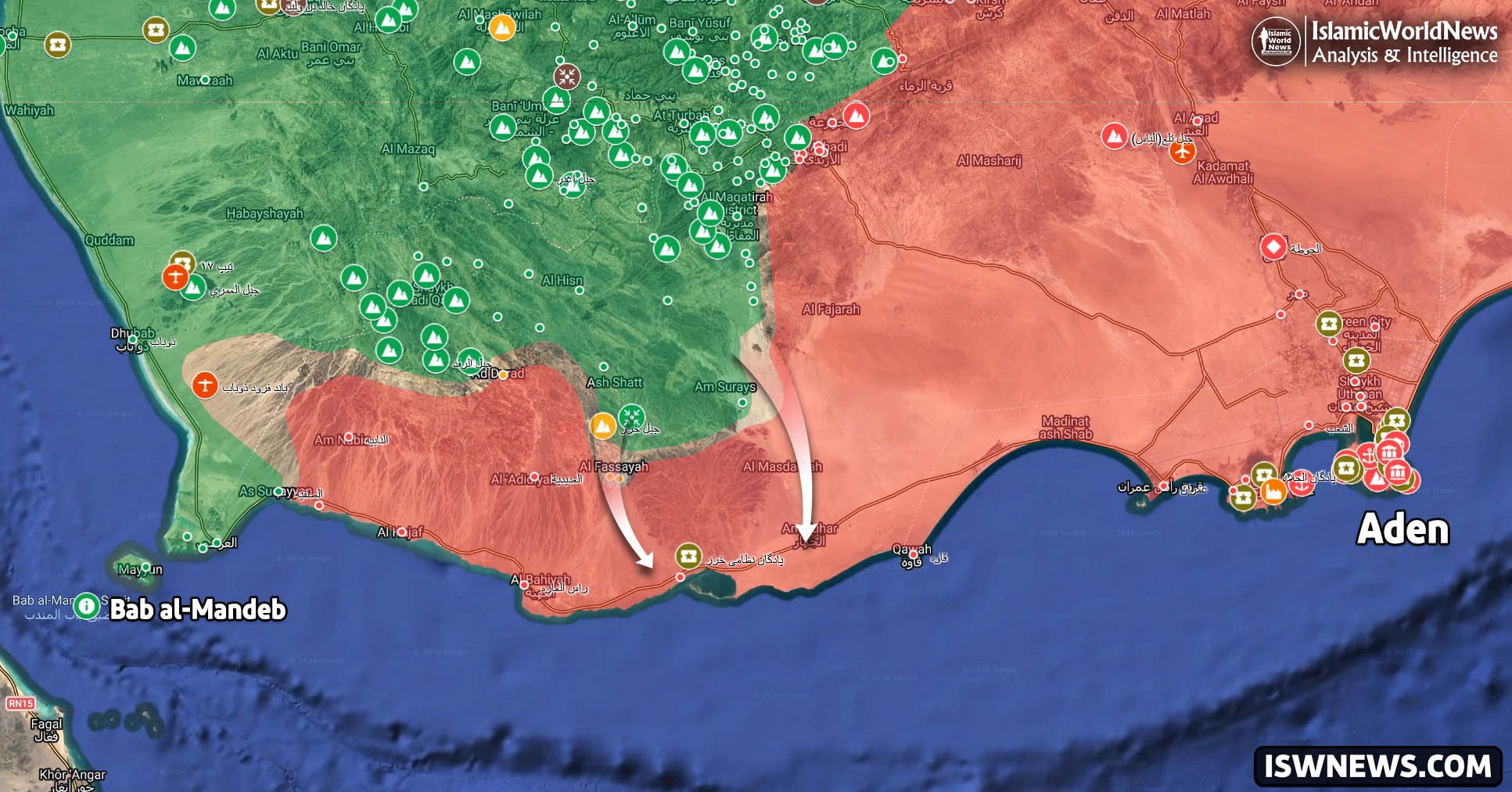
    Yemeni armed forces are currently 25–30 kilometers from the coastal road and the waters of the Gulf of Aden.

    If Yemeni armed forces succeed in securing the three aforementioned points, Saudi coalition forces in the Ras al-Arah area and the eastern front of the Bab al-Mandeb Strait will be completely encircled, with no option but to surrender or flee to the sea!

    The Saudi coalition is not in a favorable position on the western axis of Lahj Governorate. This dire situation stems from successive defeats in the Kahbub heights, effective missile and drone strikes on military gatherings and equipment, and the wounding of Major General Hamdi Shukri, commander of the Fourth Military Region of the forces of the resigned government, in a Yemeni Army missile attack on the Madariba district administration building in the Ras al-Arah area. In one of the Yemeni Army’s drone attacks, Bilal Shakir Shukri, one of the commanders of the Al-Amalika forces and nephew of Hamdi Shukri, was also killed. Therefore, the collapse of this front in the coming days is certain, and we will soon witness another victory for the resilient people of Yemen.

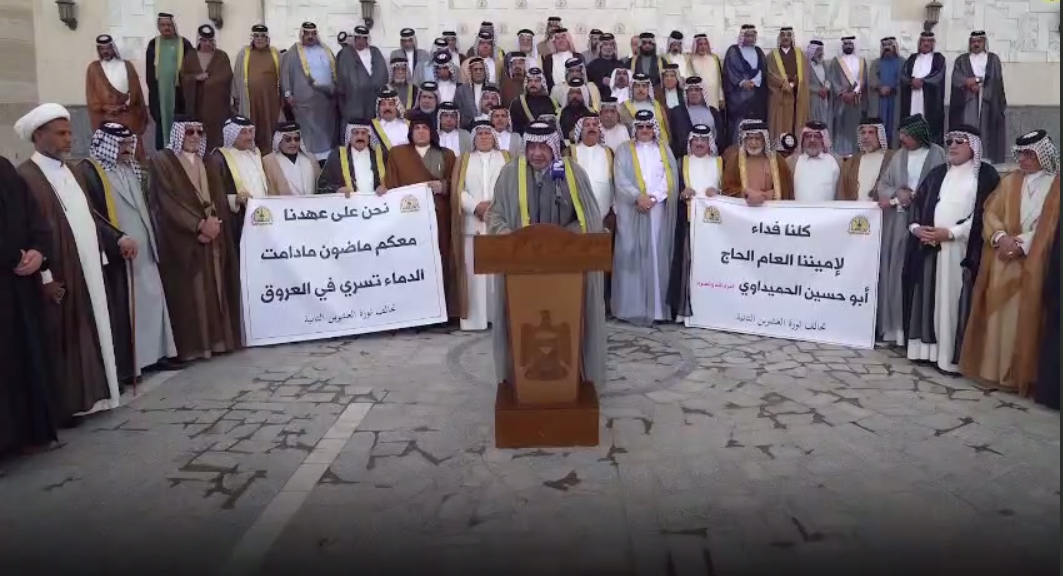
  • Baghdad Tribal Sheikhs Pledge Support for Kata’ib Hezbollah Leader Abu Hussein al-Hamidawi

    Baghdad Tribal Sheikhs Pledge Support for Kata’ib Hezbollah Leader Abu Hussein al-Hamidawi

    A key passage from the statement reads: “We are all ready to sacrifice ourselves for our Secretary-General, Hajj Abu Hussein al-Hamidawi, and as long as blood flows through our veins, we will remain faithful to our pledge to you.”

    The statement was issued following remarks by Hajj Abu Mujahid al-Assaf, a security official of Iraq’s Kata’ib Hezbollah, who stressed in a statement that the group would remain committed to its principled positions and that neither international nor domestic pressure could force it to retreat even slightly from its positions and objectives.

    Another part of the statement emphasized defending the interests of the oppressed Iraqi people; confronting the country’s domestic and foreign enemies, in whatever form or guise they may appear; defending the Islamic Republic of Iran; supporting the fundamental causes of the Islamic Ummah, particularly the Palestinian cause; and standing alongside their brothers in Yemen and Lebanon until their last breath.

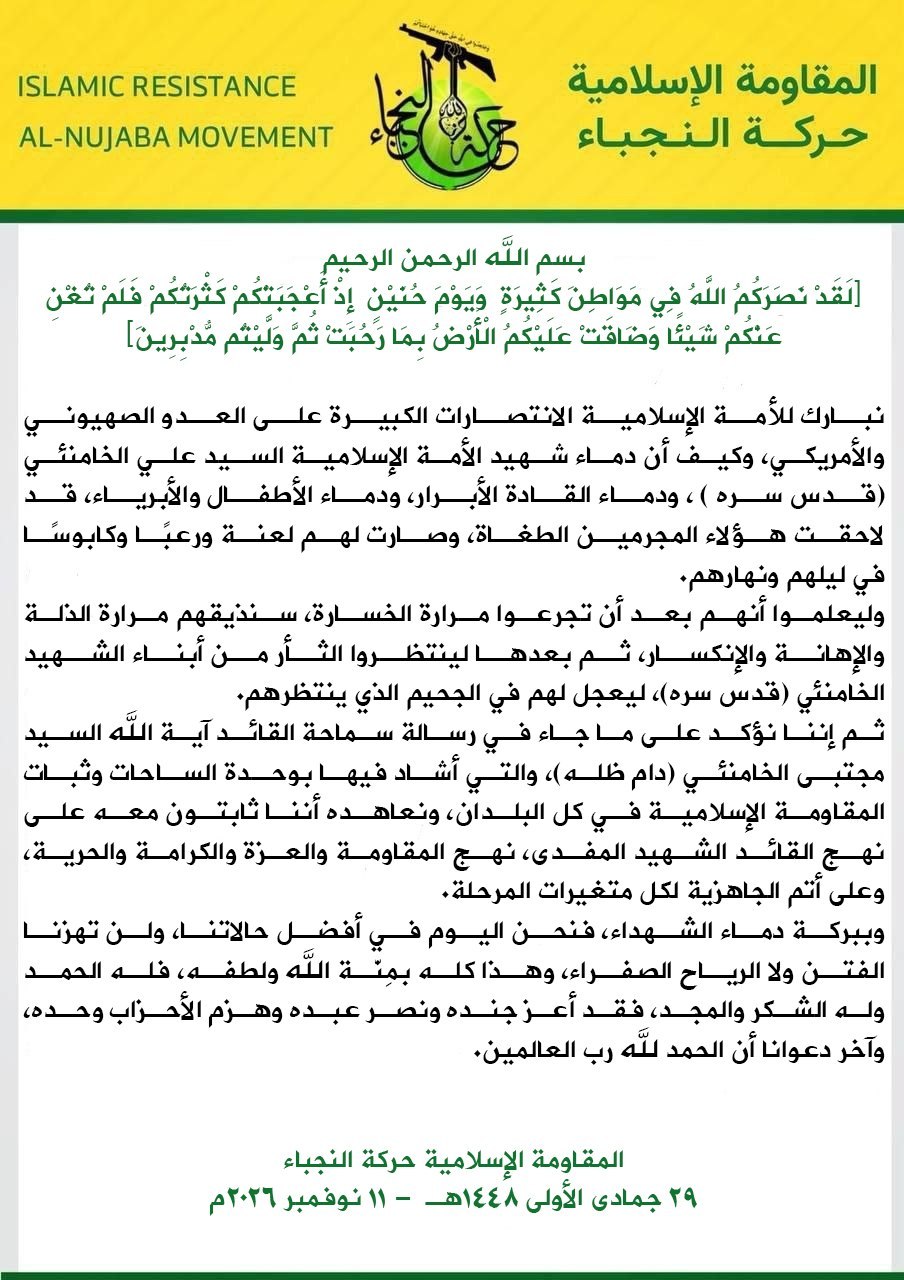
  • Iraq’s Harakat al-Nujaba Movement’s Statement

    Iraq’s Harakat al-Nujaba Movement’s Statement

    We reaffirm our commitment to what was stated in the message of His Eminence Ayatollah Seyyed Mojtaba Khamenei (may God protect him), in which he praised the unity of the fronts and the steadfastness of the Islamic resistance across all countries.

    We pledge to stand alongside him and remain steadfast on the path of the martyred and esteemed leader: the path of resistance, dignity, honour, and freedom. We also declare our full readiness to confront all developments and circumstances that may lie ahead during this phase.

    By the blessing of the martyrs’ blood, we are now in our strongest position and condition. The enemy’s conspiracies and plots will never weaken our resolve.

    All of this is by the grace and favour of Almighty Allah. To Him belong all praise, gratitude, and glory: the One who has granted victory to His forces, supported His servant, and defeated the confederates single-handedly.

    And the final words of our supplication are: All praise and thanks belong to Allah, Lord of the Worlds.

  • Britain Deploys New Military Satellite in Space

    Britain Deploys New Military Satellite in Space

    The satellite weighs about 100 kilograms and orbits the Earth once every 90 minutes. Titania is the second satellite in Britain’s expanding constellation of military satellites and was launched after the Tyche satellite. Both satellites are part of the ISTARI program, which aims to develop space-based reconnaissance capabilities.

    The UK Ministry of Defence has also launched Project Inaros to test a network of ground-based sensors. The network will include three advanced sensors to be deployed in the UK, Australia, and the island of Cyprus. By detecting changes in light and the movements of space objects, these sensors will make it possible to spot unusual activity and potential threats against British satellites.

    The development of these capabilities is part of London’s investment program of more than £3 billion in the space domain over the next four years.