Author: HadiQ

  • Israeli Regime Unveils Super Ice Cruise Missile

    Israeli Regime Unveils Super Ice Cruise Missile

    According to the Hebrew-language newspaper, The Jerusalem Post, Super Ice offers greater range and speed than the Ice Breaker. Its warhead weight has also increased from 250 pounds in the earlier model to 1,000 pounds.

    The newspaper reports that the new missile can be launched from F-15, F-16 and F-35 fighter jets. However, Hebrew-language sources have not disclosed its exact range or speed. The Jerusalem Post puts the previous model’s range at more than 300 kilometres and its speed at approximately Mach 0.8–0.9.

    According to Rafael, Super Ice has autonomous navigation, low-altitude terrain-following flight, and an electro-optical guidance system based on image matching. The manufacturer also said the missile can operate in various weather conditions.

    Gad Jiva, Rafael’s Senior Vice President and Head of the Air and C4I Systems Division, said that developing this missile family enables customers to expand their operational capabilities without making major modifications to existing platforms, while benefiting from shared mission-planning, support and logistics infrastructure.

    Notably, The Jerusalem Post has framed the development of Super Ice as part of efforts to overcome future Iranian and other rival air defence systems, and has discussed potential markets for the missile in Europe and Asia. The newspaper estimates that the missile could become operational in early 2027.


  • Egypt’s Final Court Ruling Effectively Ends Muslim Brotherhood’s Prospects of Political Return

    Egypt’s Final Court Ruling Effectively Ends Muslim Brotherhood’s Prospects of Political Return

    The process of banning the Muslim Brotherhood began following the ouster of former Egyptian President Mohamed Morsi in 2013. Now, with the judicial ruling becoming final, broader restrictions will be imposed on the group.

    Under the ruling, assets and properties belonging to the Muslim Brotherhood will be transferred to the state, while members of the group will face restrictions on political activities, participation in elections, and holding government positions. The Egyptian government also intends to use the ruling to pursue Brotherhood members abroad and identify and freeze their assets.

    The report also points to internal divisions within the Muslim Brotherhood between factions based in London and Istanbul, arguing that the new ruling could further weaken the group’s financial resources and organizational structure. Meanwhile, the Brotherhood’s branches abroad have described the move as politically motivated, arguing that the Egyptian government has closed off any possibility of reconciliation or the group’s return to political life.

  • Quantum Technology in the US Air Force

    Quantum Technology in the US Air Force

    The contract is the second phase of a $21.1 million project aimed at developing quantum computing and communication infrastructure.
    The new phase focuses on developing the optical equipment, hardware, and software needed to create an integrated research network.

    Unlike conventional communication networks, which transfer information between systems, quantum networks use a phenomenon called “quantum entanglement” to create connections between different units. This capability could pave the way for more secure communications, extremely precise synchronization, and the linking of quantum sensors across very wide geographic distances.

  • Suicide Drones to Be Produced in Robotic Factories

    Suicide Drones to Be Produced in Robotic Factories

    The company’s production system, called RoboCraftsman, is designed as a set of containerized manufacturing units that can be transported to different locations. Each unit fits into two standard shipping containers. Once deployed, two robotic arms manufacture drone airframes using metal forming and machining processes.

    Unlike many conventional drones, which are made from composite materials, this project uses metal sheets. According to the company’s CEO, these materials are cheaper, more readily available, and better suited to large-scale automated production.

    One of the system’s key features is its ability to modify drone designs based on operational requirements. Operators can enter specifications such as payload weight and required range to generate different airframe designs. AI-based design tools can also be used to create and evaluate multiple alternative designs in a software environment. Under the initial plan, two pilot factories are expected to be established on US soil.

  • UK-Russia Rivalry in the Arctic

    UK-Russia Rivalry in the Arctic

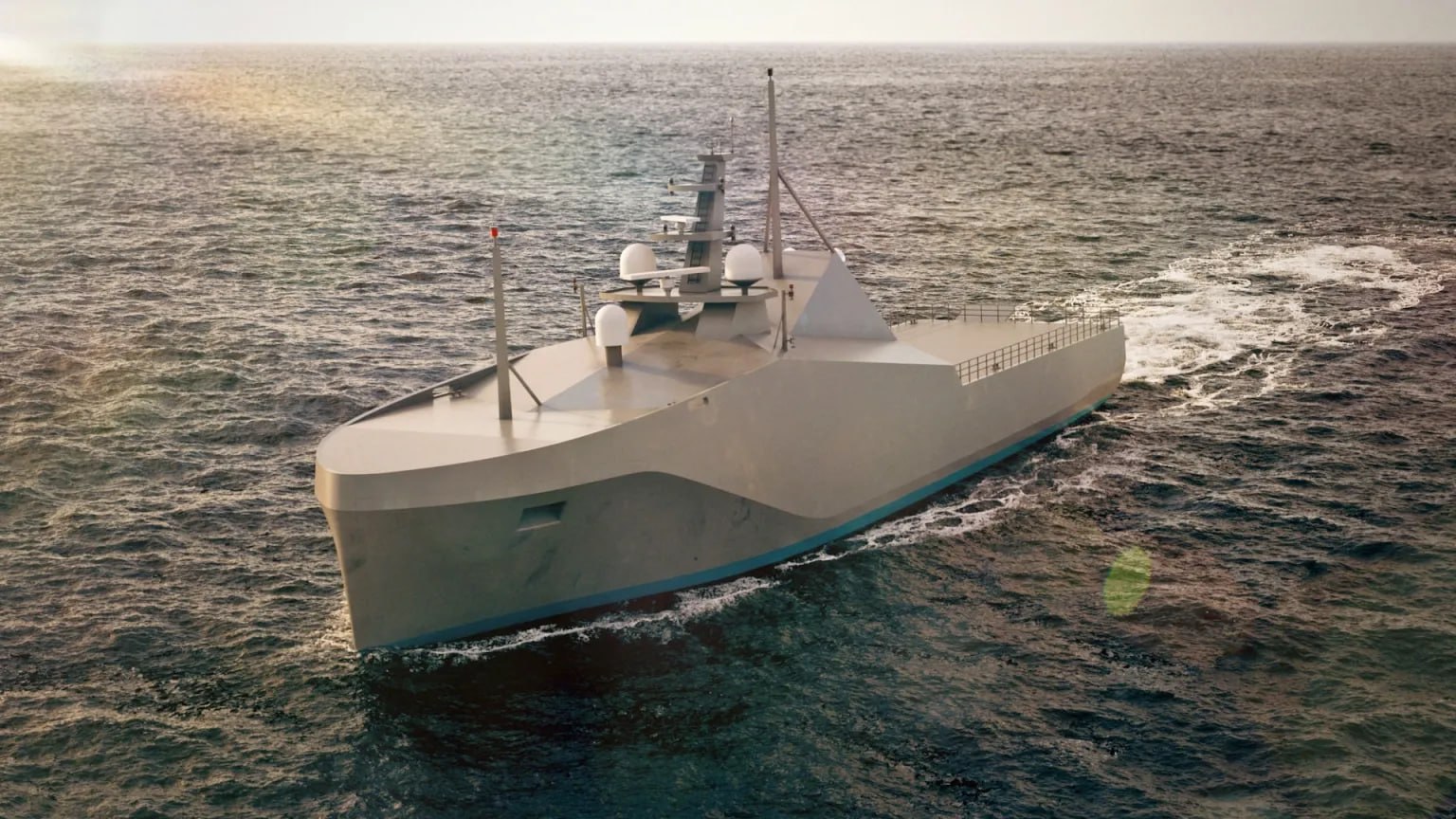
    The vessel is based on the hull design of a fishing boat built for cold-water operations and measures approximately 56 meters in length.

    Its key feature is the Sonar 2087 system, developed by Thales. The sonar is already installed on the UK Royal Navy’s Type 23 frigates and is also planned for use on the Type 26 anti-submarine frigates.

    The vessel is designed to operate autonomously for up to 60 days without a crew and transmit the underwater data it collects to UK command centers. Since noise levels are critical in anti-submarine operations, its hull and propeller have also been optimized to reduce underwater noise.

  • The Main Weapon of US Fighter Jets for Hunting Iran’s Suicide Drones

    The Main Weapon of US Fighter Jets for Hunting Iran’s Suicide Drones

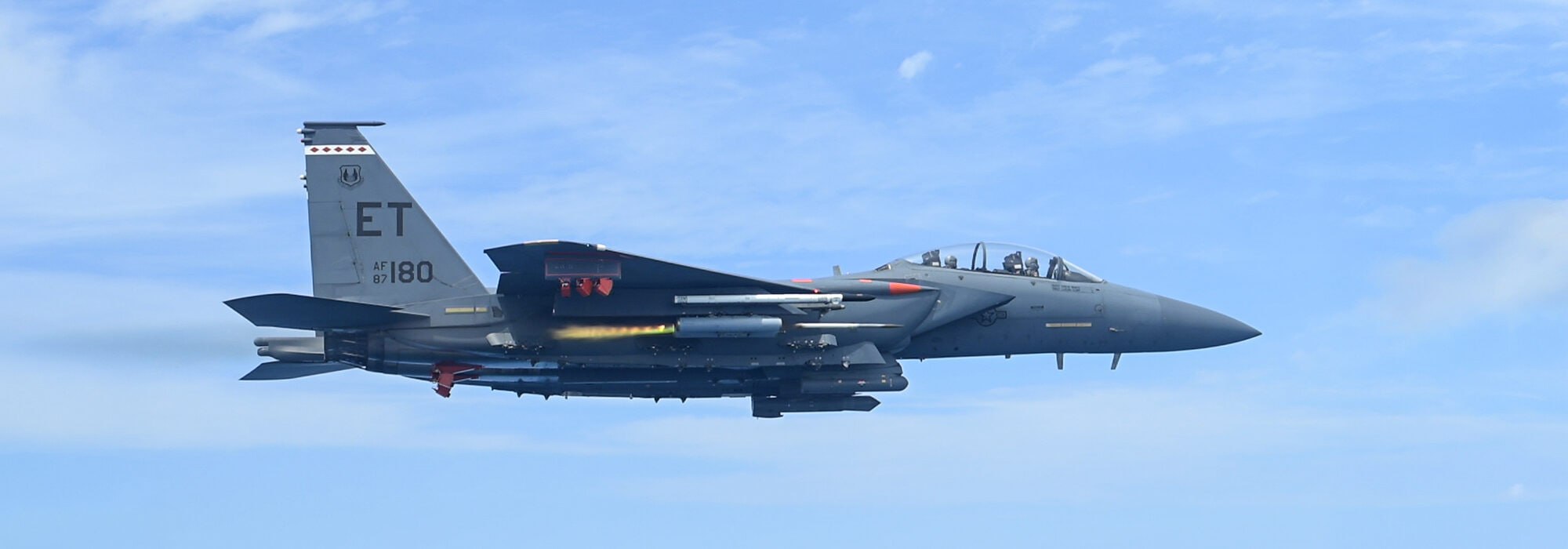
    The APKWS system adds a laser guidance kit to Hydra rockets, making it possible to use them precisely against aerial targets. The air-to-air version of this weapon is known as the AGR-20F FALCO and has been in use on F-16 fighter jets since 2024. F-15E fighters and A-10 attack aircraft have also been equipped with this capability.

    The first confirmed combat use of the system against drones took place in autumn 2024 by a US F-16 in the Middle East. Subsequently, the US Air Force’s 480th Squadron used these rockets and other weapons to log 108 kills of drones and cruise missiles.

    Despite its operational success, the APKWS also has limitations. These rockets need laser designation to guide them to the target, and preparing them for launch, especially when another aircraft provides laser guidance, takes more time and space than conventional missiles. For this reason, in some operational conditions over the Strait of Hormuz and the Persian Gulf, US fighter jets have continued to rely on AIM-9 missiles.

    The US Department of Defense and BAE Systems have reached a seven-year agreement to produce 25,000 APKWS guidance kits annually to meet US needs, and a total of 35,000 kits per year when foreign customers are included.

  • Democrats’ Plan to Increase Military and Economic Support for Ukraine

    Democrats’ Plan to Increase Military and Economic Support for Ukraine

    According to the report, the Democrats are considering including these measures in the National Defense Authorization Act (NDAA) so that their approval and implementation can move faster. The plan comes at a time when the future of Washington’s support for Kyiv is in the spotlight, given the makeup of the new Congress and political developments in the United States.