Category: Iraq

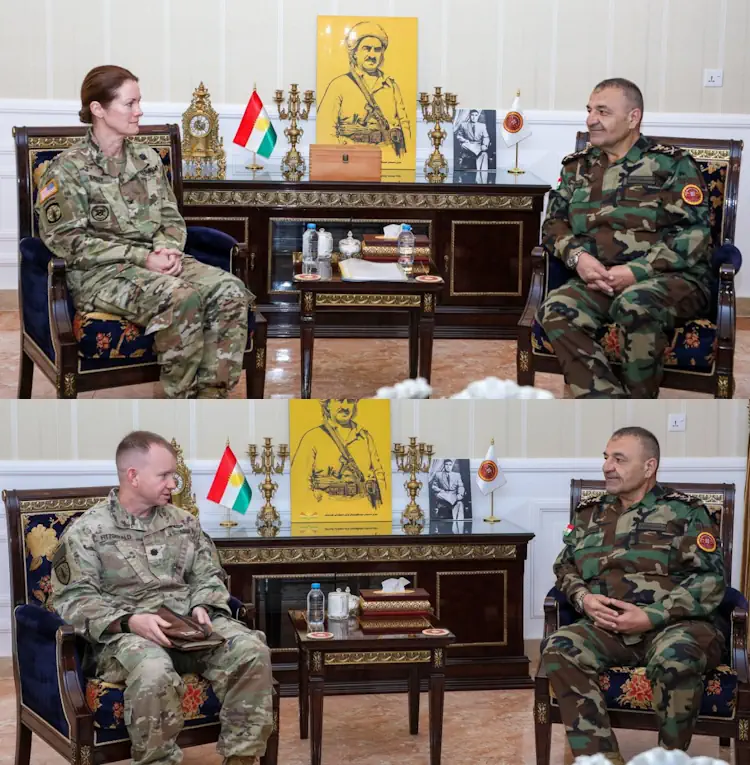
  • Deployment of U.S. Airborne Divisions in Iraqi Kurdistan: A Serious Warning for Iran

    Deployment of U.S. Airborne Divisions in Iraqi Kurdistan: A Serious Warning for Iran

    The significance of this meeting lies in the context of the recent 12‑day war, after which speculation has grown about potential heliborne operations by the U.S. and Israel inside Iran—given the failure to achieve objectives through airstrikes alone.

    American activity in Iraqi Kurdistan has visibly increased, including visits to border areas with Iran and patrols in mountainous regions alongside Peshmerga commanders. Meanwhile, Iran’s armed forces have conducted military exercises in recent weeks to counter infiltration and heliborne operations, testing air defense systems to strengthen rapid response capabilities against threats to vital facilities, strategic infrastructure, and sensitive sites.

    Regional analysts suggest that if long‑range strikes prove insufficient, Washington may consider hybrid options such as limited airborne operations. Although not officially announced, the rise in U.S. heliborne drills and simultaneous Iranian defensive exercises reinforce this speculation. Iran’s anti‑heliborne maneuvers signal preemptive readiness to confront possible threats. Iran’s armed forces have recently conducted military exercises to counter infiltration and heliborne operations, testing air defense systems during these drills.

    The 12‑day war demonstrated that long‑range bombardments, despite their intensity, did not fully destroy Iran’s underground infrastructure. Western analysts argue this limited strategic effect could drive complementary scenarios. In this framework, rapid, surprise airborne operations are examined as theoretical alternatives—not aimed at occupation, but at creating strategic disruption.

    In such scenarios, potential targets could include missile infrastructure, command centers, and even key specialists in sensitive fields—highlighting the strategic weight of airborne units in U.S. military planning.

  • Baghdad–Ankara Water Agreement; Turkey’s Security and Political Leverage over Iraq?!

    Baghdad–Ankara Water Agreement; Turkey’s Security and Political Leverage over Iraq?!

    Field Context of the Agreement

    The water deal between Turkey and Iraq evolved from two decades of intermittent talks but took on a new, complex structure after 2024. Two key developments set the stage: the sharp decline of Tigris–Euphrates inflows to below 30 billion cubic meters annually, and the completion of Turkey’s Ilisu Dam. Facing simultaneous water shortages and public discontent, Baghdad was compelled to accept Ankara’s new cooperation model.

    In early 2024, both sides signed the Water Project Financing Mechanism, turning water cooperation into a financial and technological package. Turkey pledged technical support and investment via Turkish banks and NATO‑linked institutions, but in return gained control over contractor selection, monitoring technologies, and hydrological data exchange.

    About a year later, the oil–water linkage agreement, first reported by Al‑Monitor (2025), revealed the geopolitical logic: water in exchange for oil. Turkey secured new concessions in Kurdish oil exports and pipeline routes in return for increasing water flows. This elevated the deal from an environmental partnership to a security‑economic bargain with deep political consequences.

    Analytical Feedback

    Turkish think tanks such as ORSAM described the cooperation as Ankara’s “soft power tool,” while analysts from Shafaqna and Etemad warned that the projects expose Iraq’s economic and informational infrastructure to NATO influence. Western research centers like CKH (2025) and Al‑Monitor stressed that the agreement has widened Iraq’s internal divides: Shiite and nationalist parties see it as a threat to sovereignty, whereas Baghdad’s government frames it as a “survival necessity against drought.”

    Thus, the water accord has transformed from an environmental project into a multi‑layered arena of power, economic, and security competition—where Turkey, under the guise of development cooperation, extends its geopolitical influence over Iraq and, by extension, the Resistance Axis.

    Future Threats

    1. Consolidation of Geopolitical Control
      Turkey’s completion of major dams (Ilisu, GAP project) gives it effective control over storage and release of Tigris–Euphrates waters. Recent agreements lack unconditional commitments to increase Iraq’s water supply; instead, they tie flows to joint financial and technical projects. Coordination committees and technical mechanisms risk becoming unilateral decision‑making tools for Ankara, especially since monitoring equipment and data exchange are managed by Turkish entities. This enables immediate pressure on Baghdad, potentially triggering agricultural and energy crises in southern and central Iraq, forcing political concessions.
    2. Economic Dependence on Foreign Actors
      The financing mechanism (April 2024) and oil–water contracts (November 2025) opened Iraq’s water, electricity, and agricultural infrastructure to Turkish capital and companies. This “finance for access” model entrenches dependency. Long‑term contracts and technical conditions reduce Baghdad’s economic autonomy, while Western‑linked banking networks impose obligations that constrain independent policy. Domestic opposition risks being countered by threats of reduced services or halted funding.
    3. Weakening of Independent Regional Players
      The water deal, framed as technical cooperation, indirectly reshapes the role of traditional regional actors. Analysts note that the Ankara–Baghdad energy‑water chain diminishes Tehran’s influence in transboundary resource management and creates openings for NATO, especially U.S. involvement, in Iraq’s critical infrastructure. This dynamic could spark strategic competition among regional blocs, placing Baghdad between national interests and international pressure.
    4. Information Warfare and Data Security Risks
      A core element of the agreements is the transfer of “smart water management” technologies and monitoring systems. Academic sources warn that foreign‑managed systems could expose sensitive databases on resources and infrastructure to external actors. Such data can be exploited economically or militarily, enabling predictive crisis modeling or infiltration operations. Without independent governance safeguards, Baghdad risks losing informational sovereignty.
    5. Environmental and Social Consequences
      Declining river inflows already reduce agricultural output, worsen soil erosion, and intensify dust storms. Regional reports explicitly link dust crises to water shortages. Altered seasonal flows threaten staple crop production and undermine Iraq’s food security, heavily reliant on direct irrigation. Social impacts include rural‑urban migration, strain on urban services, ethnic tensions, and increased recruitment potential for insurgent groups exploiting grievances. Absent compensatory social policies and alternative economic programs, these pressures could destabilize Iraq internally and turn discontent into protest or violence.
  • American Hashd al‑Shaabi!

    American Hashd al‑Shaabi!

    Return of Trump’s Personal Diplomacy

    Al‑Arab Weekly reported that Savaya’s appointment—made without congressional approval—signals Donald Trump’s intent to restore direct control of foreign policy to his inner circle in the White House. This reflects a recurring pattern in his foreign policy: major international decisions bypassing the State Department and pursued through personal and political ties with loyal associates. As seen in direct talks with North Korea’s leader or the Abraham Accords, Trump favors “personal, fast‑track diplomacy” over formal channels. In Iraq, choosing a non‑diplomat close to the president shows his preference for informal but controllable pathways. Savaya thus embodies a model where the president directly manages foreign relations to advance political, security, and electoral goals. His appointment marks the return of Trump’s personalized diplomacy to the Middle East—enhancing Washington’s direct influence but risking the weakening of professional, institutional foreign policy structures.

    Redefining Sovereignty in Iraq

    In his first official statements, Savaya stressed the need for centralized command and ending the activities of armed groups outside government control—remarks clearly aimed at Hashd al‑Shaabi and Iran‑aligned forces. From Washington’s perspective, curbing these groups is a prerequisite for Baghdad’s “real sovereignty” and future security and economic cooperation. At a deeper level, this policy redefines sovereignty itself: Iraqi independence is framed as alignment with U.S. policies. Analysts argue this is part of Trump’s broader plan to contain Iran from within Iraq’s structures, not through direct confrontation but via reconstruction, investment, and minority support. A symbolic example is the reintegration of the Christian “Nineveh Plains Protection Units” into the army, signaling centralization of power and weakening of non‑state actors. Savaya’s mission can thus be seen as an effort to reconfigure Iraq’s security architecture to serve Western interests—ostensibly strengthening the central government but in practice shifting the balance toward Washington’s preferred order.

    Linking Security Policy with Economic Reconstruction

    Savaya’s statements place economic recovery on par with security reform. He repeatedly emphasized the need for foreign investment, rebuilding Iraq’s worn‑out infrastructure, and opening the economy to international companies. For Washington, economic development is a prerequisite for political stability and central government authority. Observers note, however, that deeper political and strategic aims lie behind this economic agenda. U.S. reconstruction plans are not merely humanitarian or technical—they are part of a wider policy to redefine Iraq’s role in the regional order and secure American access to its energy resources. Linking reconstruction with Western economic presence ensures continued U.S. political influence while reducing rivals’ roles in energy. Analysts highlight similarities with past U.S. experiences in rebuilding crisis‑stricken states, where investment and infrastructure projects became tools of political and security engineering. With about 11% of global oil reserves, Iraq holds a special place in this strategy. Savaya spoke of “reviving Iraq’s historic role in the region,” suggesting economic engagement as a prelude to “restoring state authority and social trust.” Yet in practice, foreign corporate expansion and concentrated reconstruction projects may reshape Iraq’s economy in ways more aligned with external powers than with national priorities.

    Soft Power Through Religious Minorities

    Savaya’s appointment carries a clear political message: reasserting U.S. influence in Iraq’s social fabric via religious minorities. He hails from a Chaldean‑Assyrian family rooted in Tal Afar, Nineveh, and maintains close ties with Iraqi Christian diaspora communities in the U.S. Analysts see this as a cultural and social lever in areas once dominated by resistance groups and Iran‑aligned forces. Assyrian media outlets such as Syri Press and Baghdad Tribune framed his appointment as “the return of Iraq’s Christian voice.” In reality, it represents an attempt to build a new social base for Washington’s policies in northern Iraq, particularly in regions where sectarian tension and ethnic divides facilitate external involvement. In this context, the revival of the “Nineveh Plains Protection Units” within the Iraqi army—coinciding with Savaya’s mission—carries symbolic weight. Though presented as enhancing minority security and rebuilding war‑damaged areas, it may in practice foster military and social structures aligned with Western‑oriented currents. Thus, leveraging religious minorities serves not only humanitarian purposes but also as part of America’s soft‑power strategy to re‑embed its political and economic presence in Iraq.

    Dual Function of Savaya’s Appointment

    The timing of Savaya’s appointment, coinciding with Iraq’s parliamentary elections, adds another dimension. Reports suggest the move aims to exert indirect influence on Iraq’s political landscape, steering it toward coalitions more aligned with Washington’s policies. Savaya’s mission includes mediating among Sunni, Kurdish, and minority groups, encouraging their participation in a U.S.‑backed political framework. While presented as fostering stability and reducing armed groups’ influence, this is part of a broader strategy to reshape Iraq’s power balance so that future government decisions align more closely with Western interests.

    Iraq’s Role in the New U.S. Strategy

    Regionally, Sawaya’s appointment is seen as part of Trump’s overarching plan to reconfigure Middle Eastern order. Analysts link it to Washington’s efforts to advance normalization between Arab states and Israel. Iraq, with its geographic position between Saudi Arabia, Jordan, the UAE, and the Kurdistan Region, is viewed as a potential connecting hub for America’s allies. Sawaya’s mission thus extends beyond economic cooperation and reconstruction—he is positioned to facilitate Baghdad’s political and security ties with regional coalitions favored by Washington.

    In summary, Sawaya’s appointment represents a multi‑layered initiative pursuing political, economic, and symbolic goals simultaneously. Individually, he embodies the use of minority social capital in U.S. policy; politically and security‑wise, he is tasked with limiting armed groups and strengthening central authority; strategically, his mission consolidates Washington’s foothold in Iraq’s economy and energy sector, aligning the country more closely with the Western bloc. His slogan of a “Strong Iraq” reflects a broader ambition: to reintegrate Baghdad into an order designed to secure U.S. and allied interests in the region.


    Would you like me to refine this into a policy brief format (executive summary + key implications) or keep it as a long‑form analytical translation?

  • U.S. State Department Spokesperson: Washington Disappointed by Iraq’s Reversal on Asset Freeze for Hezbollah and Ansar Allah

    U.S. State Department Spokesperson: Washington Disappointed by Iraq’s Reversal on Asset Freeze for Hezbollah and Ansar Allah

    He stated: “The United States expects Baghdad to take concrete measures against Iran-backed armed groups, including those operating inside Iraq. We are disappointed by Iraq’s retreat from the asset freeze targeting Hezbollah and the Houthis. Hezbollah and the Houthis pose dangers to both the region and the world, and all countries must ensure their territory is not used by these groups or other Iranian proxies for training, fundraising, acquiring weapons, or carrying out attacks. Washington will continue pressing Iraq to curb the activities of Iran-aligned groups that threaten U.S. and Iraqi interests.”

    The spokesperson’s frustrated reaction underscores that Washington views Baghdad’s reversal as a setback in its broader campaign to pressure the “Axis of Resistance.” In recent weeks, the U.S. has sought to leverage economic tools and political pressure to compel Iraq to align with its extraterritorial sanctions. Iraq’s change of stance must be understood within the context of domestic complexities and the government’s concern over backlash from political and social factions close to the resistance camp.

    Baghdad recognizes that any direct move against Hezbollah or Ansarallah would be perceived by Iraq’s Shiite public opinion and allied armed groups as siding with U.S. policy, potentially destabilizing the country’s internal political and security balance.

  • Rocket Attack on Kormor Gas Field in Iraq’s Kurdistan Region

    Rocket Attack on Kormor Gas Field in Iraq’s Kurdistan Region

    In response, Iraq’s Joint Operations Command condemned the incident, describing it as a terrorist act and highly dangerous. The statement noted that the rocket attack occurred at 11:30 p.m. local time last night, igniting one of the main tanks at this strategic field. While no casualties were reported, the strike damaged the electricity network in Erbil and Sulaymaniyah provinces and negatively impacted Iraq’s energy supply.

    This marks the ninth attack on the Kormor gas field since the beginning of 2022.

  • Record turnout in Iraq’s special elections: 82% participation by Iraqi military personnel

    Record turnout in Iraq’s special elections: 82% participation by Iraqi military personnel

    According to election officials, this marks the highest participation rate across the five electoral cycles since the fall of Saddam Hussein. Iraqi authorities stated that more than 1.1 million security forces, military personnel, and eligible prisoners took part in this stage of the elections.

    Coinciding with the start of special voting for Iraq’s sixth parliamentary elections, Muqtada al-Sadr, leader of the Sadrist Movement, boycotted the elections. He launched two hashtags, “Boycotters of the Elections” and “Save Iraq,” urging Iraq’s security and military forces to take responsibility for the country’s future. In his message, al-Sadr stressed that “to test the tested is a mistake,” arguing that re-electing experienced yet ineffective politicians would only perpetuate and entrench corruption within Iraq’s political system.

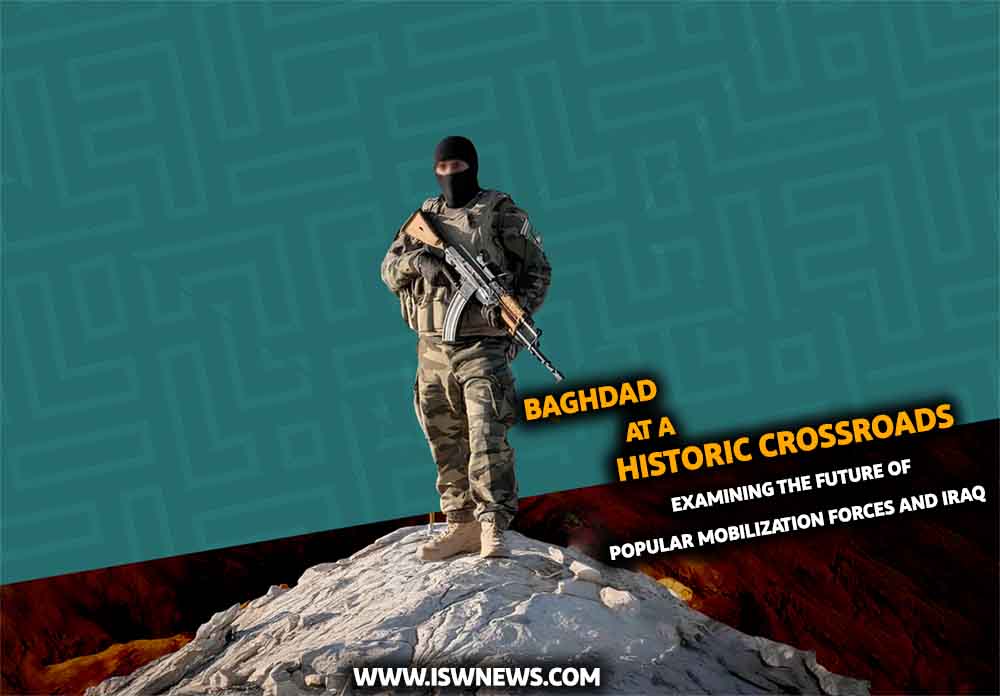
  • Baghdad at a Historical Crossroads: Examining the Future of the Popular Mobilization Forces and Iraq

    Baghdad at a Historical Crossroads: Examining the Future of the Popular Mobilization Forces and Iraq

    The future of this situation can be envisioned through three scenarios. First, gradual integration and institutionalization within the state framework, provided there is political will and financial transparency. Second, the continuation of its semi-institutional status with sporadic conflicts, which appears to be the most likely path. Third, a deterioration into greater instability triggered by regional developments or a deepening financial crisis.

    A risk-reduction strategy should be built on three pillars. Auditing and restructuring the PMF’s personnel system. Gradual reform of legal and political frameworks to enable structured integration. Activation of regional diplomacy to reinforce security boundaries. What remains vital is preserving the PMF’s social legitimacy and operational capacity during the integration process so it can continue to serve as a stabilizing and deterrent force within Iraq’s security architecture during times of crisis.

    Iraq’s Current Position in Relation to the PMF

    In the second half of 2025, Iraq’s domestic politics depend more than ever on how the government engages with paramilitary actors while managing regional and economic pressures. The experience of the past few years shows that the PMF is no longer a temporary partisan force. It has embedded itself into Iraq’s political, social, and economic fabric and has become a key player in Baghdad’s power dynamics.

    From the perspective of local governments and many domestic observers, acknowledging this reality is the first step toward any pragmatic solution. Attempts to rapidly dismantle or marginalize the PMF are not only unfeasible but risk undermining stability and deepening social divides.

    Understanding the PMF’s current status requires a composite view of three elements. Its military and security role during the fight against ISIS, which earned it local legitimacy. The political and economic structures surrounding it, which have turned some brigades into influential actors in local institutions and markets. Its regional ties, which shape and sometimes direct its behavior.

    For example, in the summer of 2014, when ISIS rapidly captured parts of Iraq and threatened the collapse of the local government and sacred sites, Iran’s Quds Force intervened directly. Intelligence support, military advising, weapons shipments, and field presence were mobilized to organize and strengthen local resistance groups. These efforts, officially framed as protecting holy sites and preventing security collapse, forged deep operational links between certain PMF brigades and Iranian security institutions.

    Baghdad’s Balancing Act in Domestic Politics

    From the perspective of internal political dynamics, Prime Minister Mohammed Shia’ Al-Sudani’s government operates cautiously in a middle-ground position. On one hand, it must assert sovereignty and demonstrate legal control over national affairs. On the other, it faces pressure from Shiite coalitions and local leaders with divergent interests and expectations. The Coordination Framework of Shiite factions exemplifies this complexity. Some groups maintain close ties with the Islamic Republic of Iran, while others pursue more nationalist or conservative agendas. These differences have created friction in strategic decision-making and pushed the government toward a policy of “patience and passivity.” This cautious approach, especially when compounded by financial strain, reduces the likelihood of gradual compromise and instead opens space for symbolic gestures and localized bargaining.

    What Shapes Iraq’s Political Future?

    Iraq’s political future is shaped by its engagement with regional actors, particularly Tehran and Ankara. Structurally, Iran maintains deep and networked influence over segments of the Popular Mobilization Forces (PMF), and its preference has often been to preserve communication channels and pursue gradual influence rather than direct confrontation. In critical moments, Tehran has opted for a “keep the channels open” tactic to safeguard its long-term interests in Iraq. Meanwhile, Turkey’s military presence and operations in the north and Kurdish regions exert additional pressure on Baghdad’s ability to assert control, narrowing the government’s strategic options. From Baghdad’s standpoint, managing simultaneous pressure from Iran and Turkey requires active diplomacy and balanced policies. It must also secure guarantees for territorial integrity and decision-making independence without undermining local deterrent mechanisms.

    Three Scenarios for the PMF’s Political Trajectory

    Given current conditions, three plausible scenarios can be outlined for the future of the PMF and its political role. These scenarios are shaped not by ideological goals or idealistic plans, but by the actual behavior and patterns of current actors.

    In the realistic scenario, the PMF remains in a “semi-institutional” state. This means that some units and leadership structures gradually integrate into official military and security institutions, while others retain local influence and continue to play political and economic roles at regional and national levels. This model allows the central government to maintain a degree of control over the national security framework, while delegating some operational authority to paramilitary forces at lower levels. The likely outcome is continued local competition, increased political bargaining on the margins of government, and the emergence of a multi-layered field where Iraq becomes a battleground for regional influence.

    In the second scenario, which becomes more likely with rising regional tensions or a financial collapse of the government, certain units may break away from the political process and intensify independent military actions or symbolic operations. This could provoke reactions from foreign actors and rapidly push Iraq into a level of instability from which recovery would be difficult. Field reports of such behavior and attacks on infrastructure suggest that this scenario is not far-fetched.

    The third scenario involves structural institutionalization and the transformation of the PMF into a “national asset,” achievable under three conditions. First, Baghdad must demonstrate political will and draft clear legislation. Second, transparent financial mechanisms must be established. Third, regional dialogue must prevent Iraq from becoming a theater of foreign confrontation. Lessons from other regional countries and analytical recommendations suggest that a phased plan—including financial audits, formal personnel registration, revised appointment protocols, and reasonable incentive packages for moderate commanders—could enable a smooth integration into Iraq’s political and legal system. This path requires time, patience, and overlapping political guarantees, but from Baghdad’s perspective, it is both rational and achievable.

    The Role of the United States in Iraq’s Future

    From a strategic standpoint, U.S. policy toward Iraq in recent years has shifted from a model of direct, large-scale military presence to a more flexible, multi-layered approach. This new framework emphasizes reducing field deployments, maintaining deterrence capabilities, and combining targeted pressure with conditional support. Two key factors have driven this shift: first, Washington’s desire to reduce the political, financial, and human costs of prolonged engagement in the Middle East; and second, its increasing reliance on diplomatic, economic, and security tools as indirect yet effective instruments of influence. As a result, this evolving strategy carries several important implications for Iraq’s political and security architecture—understanding these is essential for grasping the balance of power in Baghdad and the interplay of domestic and regional forces.

    The first dimension of these implications relates to the mechanism of “conditional aid” and its role in shaping reform incentives. The United States typically ties its economic and military assistance to progress in governance reforms, financial transparency, and the containment of irregular paramilitary forces. In theory, such conditionality can accelerate the registration, regulation, and integration of armed groups, paving the way for a more cohesive institutional structure. However, Iraq’s field experience shows that imposing conditions without offering credible and sustainable alternatives—especially for moderate local commanders—often backfires. It intensifies political resistance and deepens internal divisions, polarizing the decision-making environment.

    The second dimension involves “strategic ambiguity.” The reduction of direct foreign military presence creates deterrence gaps that local actors may exploit to expand their operational autonomy. In this context, U.S. threats of military action or sanctions may serve as crisis deterrents, but repeated or unilateral use—especially without regional coordination or viable economic alternatives—can provoke domestic backlash and erode the legitimacy of Baghdad’s reform efforts.

    The third dimension highlights the constructive potential of U.S. assistance. When conditional pressure is paired with investment in institutional capacity—such as technical support for personnel registration systems, strengthening financial institutions, and managerial training—the likelihood of successful reforms increases. This model of pressure combined with structural support can lower the political cost of implementing reforms in Baghdad and facilitate gradual integration of armed groups, provided these programs are designed in coordination with regional stakeholders and domestic beneficiaries.

    Assessing the Risk of Early Conflict in Iraq

    In recent months, a convergence of political, security, and economic developments in and around Iraq has signaled a shift toward a more fragile phase compared to the relative stability of the past. The overlap of internal pressures with regional movements has significantly increased the risk of scattered tensions escalating into a broader crisis. Domestically, the central government’s chronic financial crisis, unresolved disputes over the PMF legislation, and the lack of transparency in resource allocation and payments have eroded Baghdad’s decision-making structure. This erosion has not only weakened the state’s capacity for rapid response to security incidents but also fostered institutional instability in the relationships between the government, political factions, and paramilitary forces—a reality confirmed by multiple field reports and analytical assessments.

    At the same time, several concrete incidents suggest that Iraq’s previously stable security landscape is becoming increasingly fragile. Drone attacks on oil fields in Duhok Province and damage to companies operating in the Kurdistan Region—such as Hunt Oil, which was recently forced to suspend and then conditionally resume operations—are examples of economic-security pressure points that could swiftly alter the local balance of power.

    In terms of foreign relations, transnational actors play a critical role. Official and unofficial statements from Iraqi officials have pointed to overt and covert pressure from the United States and Israel regarding the passage of the PMF law, along with warnings about the economic and political consequences of opposing their interests. These developments indicate that Iraq’s internal political actions are rapidly becoming entangled in regional rivalries. Mahmoud al-Mashhadani, Speaker of Parliament, recently spoke publicly about threats and pressure, signaling that disputes over the PMF law are not merely domestic matters—they could become pretexts for external leverage with long-term economic and political consequences for Baghdad.

    The Risk of Escalation in Iraq: A Strategic Assessment

    In a recent interview, Iraqi parliamentarian Mahmoud al-Mashhadani emphasized that the wave of reports and claims circulating in outlets like Al-Akhbar—regarding the possibility of Iraq being targeted by Tel Aviv-led operations—while alarmist in tone, may in practice serve a deterrent and regulatory function in regional security dynamics. Even when not grounded in verified intelligence, such narratives tend to heighten caution, surveillance, and coordination among actors, prompting them to reassess power balances and operational readiness. In this sense, these discourses, beyond their media role, indirectly activate components of regional deterrence.

    The PMF’s Role in Iraq’s Complex Security Equation

    The Popular Mobilization Forces (PMF), rooted in social legitimacy and its history of fighting ISIS, has evolved into a network of brigades and political-economic structures. In the absence of transparency and clear legislation, it retains the capacity to act based on local, economic, or ideological motives. Operational and logistical ties between certain brigades and regional actors—as seen in 2014—can justify responses that the central government may view as “outside official channels.” While this structural reality alone does not constitute a war trigger, when combined with financial shocks, external pressure, and attacks on critical infrastructure, it creates conditions for local reactions to escalate beyond the government’s control.

    Pathways to Crisis Escalation

    Several plausible pathways exist for crisis escalation, though they do not follow a simple cause-and-effect chain. These include:

    • A significant blow to the national economy, such as sanctions or widespread shutdowns in the oil sector, which would raise public dissatisfaction and strain both military and civilian budgets
    • Coordinated attacks on energy infrastructure or foreign bases, potentially provoking retaliatory military responses
    • Breakdown of diplomatic channels between Baghdad and key regional players (Tehran, Ankara, Washington), which would hinder regional crisis management and mediation

    The activation of any of these triggers—especially in combination—could substantially increase the likelihood of localized tensions evolving into a broader conflict. Recent developments suggest that some of these triggers are already active or on the verge of activation, including drone strikes in northern Iraq, political pressure surrounding the PMF legislation, and psychological-media tensions linked to allegations of foreign influence and threats.

    Strategic Summary and Outlook

    The report concludes that while a full-scale war in Iraq is not imminent, the country is exposed to a set of compounding triggers that, if not managed promptly and coherently, could push the situation toward widespread conflict within weeks or months. In other words, the risk of war is a real possibility—dependent on immediate domestic decisions and regional guarantees, not an inevitable outcome.

    Therefore, Baghdad’s current priorities must focus on rebuilding financial and personnel transparency within the PMF, passing clear legal frameworks, strengthening protection of energy infrastructure, and activating diplomatic channels with Tehran, Ankara, and Washington. Only through this integrated management approach—and not through unilateral solutions or external pressure—can Iraq avoid becoming a theater of regional confrontation.

    Conclusion

    In a broader evaluation, the prospect of a full-scale war in Iraq in the medium term is neither unavoidable nor implausible. What determines the outcome is a combination of internal and external triggers and the government’s ability to respond swiftly. If liquidity crises deepen, if the PMF’s semi-institutional structure persists without oversight, and if a strong regional trigger—such as direct attacks on bases or the collapse of diplomatic guarantees—emerges, localized clashes could rapidly escalate into a national conflict.

    Conversely, passing legislation, conducting financial audits, registering personnel, offering reasonable incentives to moderate commanders, and securing diplomatic guarantees from regional actors could pave the way for gradual integration and de-escalation. In short, the threat of war is real but entirely contingent on Baghdad’s immediate policies and the nature of regional and international engagement. Transparency, institution-building, and regional guarantees significantly reduce the risk of conflict—while neglecting these measures raises the likelihood of escalation.
  • Washington’s Stern Warning to Baghdad Amid Speculation of Israeli Strike on Iraq

    Washington’s Stern Warning to Baghdad Amid Speculation of Israeli Strike on Iraq

    Iraqi Defense Minister Thabit al-Abbasi revealed in a televised interview that U.S. Secretary of Defense Pete Hegseth had informed him via a phone call about an imminent military operation in the region. Hegseth reportedly issued a firm warning against any involvement by Iraqi factions, ending the 11–12 minute call—held in the presence of Iraq’s Chief of Staff and Deputy Commander of Joint Operations—with the statement: “This is your final notice, and you know well how the current U.S. administration will respond.”

    The Hebrew outlet Walla, citing sources within the Israeli military command, reported that Iran is heavily investing in Iraqi resistance groups to prepare for potential air and ground attacks against Israel. According to Israeli intelligence, Iran has recently strengthened the military and logistical infrastructure of its allied factions in Iraq. These developments reportedly coincide with a recent visit by Esmail Qaani, commander of Iran’s Quds Force, to Baghdad, where he met with group leaders.

    The report claims that during these meetings, various scenarios for a possible attack on Israel were discussed, including drone and missile strikes, as well as ground operations via Syria and Jordan.

    The disclosure of this direct communication between the U.S. and Iraqi defense ministers, alongside Israeli media reports of a potential strike on Iraq, signals a new phase in the confrontation between the resistance axis and Israel. Washington’s warning aims to prevent coordination among resistance fronts in Iraq, Lebanon, Yemen, and Palestine, and to block the formation of a unified operational axis against Israel.

    Resistance group activity in Iraq targeting U.S. and Israeli interests has long been a point of contention between Baghdad and Washington. These attacks were temporarily halted under U.S. pressure and mediation by Iraqi Prime Minister Mohammed Shia’ Al Sudani.

    From Tel Aviv’s perspective, Iraq is increasingly becoming Iran’s strategic front against Israel. The recent transfer of drones and missiles from Iran to Iraqi resistance groups has raised serious concerns in both Washington and Tel Aviv, fueling speculation about a potential Israeli preemptive strike on weapons depots or logistical bases inside Iraq.

    Pete Hegseth’s warning to Iraq’s defense minister was not merely a security concern—it also suggests that the U.S. is tacitly aware of Israel’s military plans and seeks to diplomatically shield itself from any retaliatory actions by Iraqi groups. Washington understands that any Israeli attack on Iraq could quickly escalate into direct conflict between U.S. forces and resistance factions on Iraqi soil.

  • Israeli Spy Network Led by Syrian Nationals Arrested in Iraq’s Diwaniyah Province

    Israeli Spy Network Led by Syrian Nationals Arrested in Iraq’s Diwaniyah Province

    The operation was carried out by the intelligence unit of Iraq’s Popular Mobilization Forces (PMF), which raided a rented residence in downtown Diwaniyah. Authorities seized maps and photographs documenting strategic sites in both Najaf and Diwaniyah provinces.

    The arrest of this network in Diwaniyah—a relatively calm area far from Iraq’s border zones—suggests that Israel is expanding its intelligence operations deeper into Iraqi territory. The strategy appears aimed at establishing surveillance cells in regions with less stringent security oversight, enabling access to data on infrastructure, weapons depots, and supply routes used by resistance groups.

  • Turkey Extends Military Presence in Syria and Iraq for Three More Years

    Turkey Extends Military Presence in Syria and Iraq for Three More Years

    Turkey aims to solidify its influence in post-war Syria by establishing strong ties with the emerging power structure in Damascus. Multiple meetings between Turkish commanders and senior officials with leaders of the al-Jolani-led administration, along with military support in the form of weapons, training, political backing, and security cooperation, are part of this strategic effort.

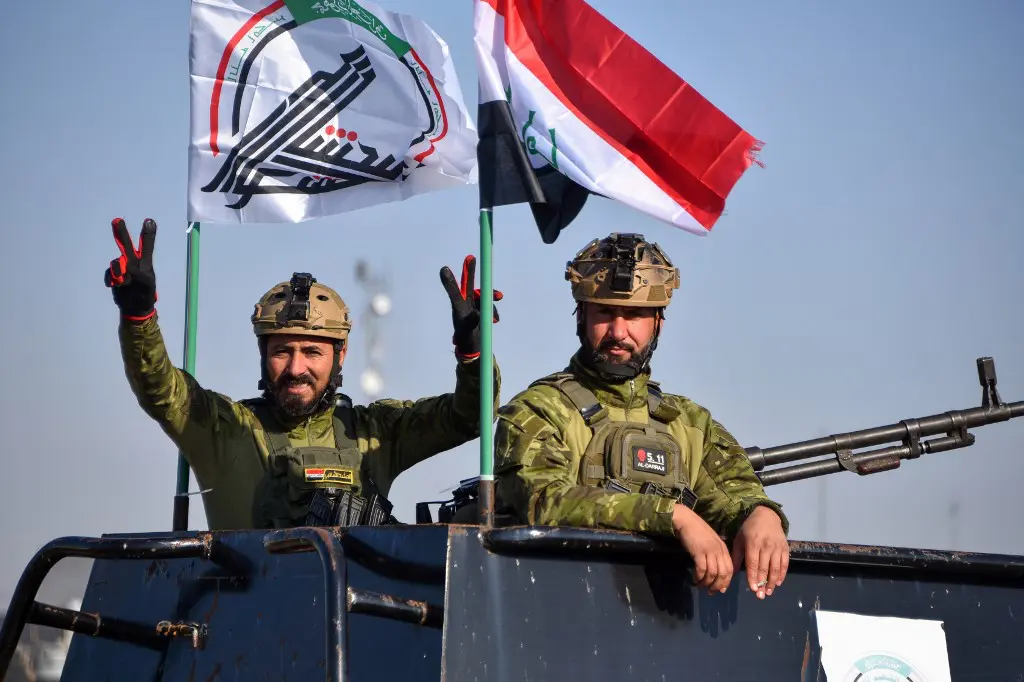
    The situation in Iraq, however, remains more contentious. Iraqi factions have consistently opposed the presence of Turkish forces on their soil. Resistance groups have launched repeated attacks on Turkish military positions in northern Iraq over recent years. If tensions escalate, further strikes against Turkish bases in the region are likely.

  • PMF in the Crosshairs of Western Diplomacy – A Report on Iraq’s Popular Mobilization Forces Law Crisis

    PMF in the Crosshairs of Western Diplomacy – A Report on Iraq’s Popular Mobilization Forces Law Crisis

    The law effectively elevates PMF from a paramilitary group to an official state force, making its dissolution—long sought by pro-Western factions in Iraq—significantly more difficult.

    The legislation has faced strong opposition from the United States, which has exerted pressure on Iraqi officials to remove it from the parliamentary agenda. Washington argues that passing the law would solidify one of Iran’s regional arms and, given PMF’s history of resistance against U.S. occupation and involvement in American troop casualties, the U.S. government remains committed to its full disbandment.

    Internal Tensions in Iraq

    Domestically, the law has stirred political unrest. Sunni and Kurdish parties view PMF as a Shiite-dominated entity and interpret its formalization as a power shift favoring Shiite factions. Consequently, they have repeatedly declared their refusal to participate in the vote.

    Even within the Shiite coalition known as the “Coordination Framework,” deep divisions persist—primarily over the retirement age clause, which sets the PMF retirement threshold at 60. This would force many senior commanders, including PMF chief Faleh al-Fayyad, into retirement. Prominent Shiite figures such as Sheikh Qais al-Khazali (leader of Asa’ib Ahl al-Haq) and Nouri al-Maliki support al-Fayyad’s removal due to his backing of Prime Minister Mohammed Shia’ al-Sudani and their electoral alliance. On the other hand, leaders like Hadi al-Amiri oppose restructuring PMF leadership and advocate for amending the clause to exempt al-Fayyad and other top commanders from mandatory retirement.

    U.S. Response

    Reports indicate that the U.S. has responded with political pressure aimed at scaling back bilateral security agreements. Concurrently, American forces have begun withdrawing from the Ain al-Asad base in western Iraq as part of a broader military drawdown.

    Public sentiment in Iraq remains wary of U.S. withdrawal, recalling the post-2011 vacuum that enabled ISIS to wreak havoc across the country.

    According to Iraqi security sources, ISIS militants are regrouping and reorganizing by exploiting instability in Syria. While their current activity is not deemed critically dangerous, heightened vigilance is essential to prevent any surprise resurgence.

  • The Puzzle of Baghdad–Damascus Relations in the Al-Sudani–Al-Julani Duality

    The Puzzle of Baghdad–Damascus Relations in the Al-Sudani–Al-Julani Duality

    Security considerations

    1. Population Link Between Anbar and Deir ez-Zor

    The first point to consider is the deep demographic, familial, social, and cultural ties between residents of Iraq’s Anbar province and Syria’s Deir ez-Zor. Historically, the border towns of Al-Bukamal and Al-Qaim were one city until the Battle of Maysalun split them, forming the Iraq–Syria border. Over a century later, these ties remain strong. In Syria, the “Eastern dialect” differs significantly from the “Levantine dialect,” and Deir ez-Zor’s accent closely resembles Iraqi Arabic—so much so that it’s considered part of the Iraqi dialect family. Similarly, Iraq’s “Western dialect,” common in Anbar, is more similar to Deir ez-Zor’s speech than to Baghdad’s or northern Iraq’s.

    Moreover, there’s near consensus across Iraq that national security depends on stability in Anbar. The past 22 years (post-Saddam era) show that whenever Anbar is secure, Iraq enjoys relative calm; when unrest or terrorism hits Anbar, instability quickly spreads nationwide.

    These factors suggest that Deir ez-Zor can directly impact Iraq’s overall security, making it essential for Baghdad to pursue security cooperation with Damascus to prevent the province from becoming a source of threat.

    2. From the Syrian and Jazira Desert to Anbar and Lake Tharthar: A Terrorist Playground

    Another issue is the terrain and continued limited presence of ISIS militants in the region stretching from the Syrian desert to Lake Tharthar near Samarra. This area is characterized by desert landscapes, scattered villages, low population density, and cities built along main roads or the Euphrates River. These vast, empty deserts offer ideal conditions for terrorist activity. Managing such terrain requires unavoidable security coordination. Even during tensions, the Assad government and the SDF cooperated on this front, recognizing ISIS as a mutual threat.

    a) Shared Border Strip

    It’s worth noting that the Iraq–Syria border spans roughly 600 kilometers, yet the number of border towns is fewer than five. Except for a small section north of Rabia, the entire border is desert, with only the northern Sinjar area being mountainous. Near the Syrian border, these mountains flatten into plains and hills—meaning over 90% of the border is desert.

    3. Iraqi Residents in Syria and Vice Versa

    Another factor is the significant number of citizens from each country living in the other. Tens of thousands of Iraqis reside in Damascus’s Sayyidah Zaynab district, while hundreds of thousands of Syrians have entered Iraq over the past 15 years. This population holds undeniable strategic weight, compelling both governments to maintain a level of engagement.

    a) Intersection with Sectarianism and Civil War

    Notably, both Iraqi and Syrian communities abroad tend to follow the majority religion of their home country, making them religious minorities in their host nation. Most Iraqis in Syria are Twelver Shia living near the shrine of Sayyidah Zaynab, while most Syrians in Iraq are Sunni—heightening security sensitivities.

    This becomes more complex when considering that these communities are tied to each country’s civil war. Most Syrians in Iraq are war refugees who entered via Deir ez-Zor and settled in Anbar and beyond. Meanwhile, Iraqis in Sayyidah Zaynab are accused by neighboring districts like Babbila and Yalda of having fought alongside Assad’s forces during the war.

    4. Prisoners and the Three Issues of Judicial Cooperation, Prisoner Exchange, and Rehabilitation

    Another issue is the large number of Iraqi prisoners in Syria and Syrian prisoners in Iraq—mostly security offenders and ISIS members. Additionally, tens of thousands of their family members are undergoing rehabilitation in special camps, with the goal of reintegration into society. This situation calls for cooperation on three levels: judicial coordination, prisoner exchange, and rehabilitation of terrorist families.

    The Kurdish Issue

    The second factor prompting Baghdad to accelerate its outreach to Damascus is the “Kurdish issue” in both Iraq and Syria. On one hand, Damascus is dealing with the challenge of the Syrian Democratic Forces (SDF), and on the other, Baghdad faces ongoing competition with Erbil. This shared “single issue” encourages both Arab governments—Baghdad and Damascus—to engage with one another. Baghdad, due to security concerns, is compelled to cooperate with the SDF, but fears that strengthening the group could destabilize Syria and threaten Iraq’s territorial integrity. Therefore, Baghdad seeks to structure its relationship with the SDF through coordination with Damascus to minimize negative repercussions.

    At another level, Baghdad faces a complex triangle in its dealings with the SDF. This triangle consists of:

    • Local militias in Sinjar, which have deep ties to the SDF and maintain operational and organizational support within SDF-controlled territory. Additionally, the Patriotic Union of Kurdistan (PUK) and the security-military network in Sulaymaniyah province are closely linked to the SDF.
    • The second side of the triangle is the Kurdistan Democratic Party (KDP) and the Kurdistan Regional Government (KRG). Erbil maintains ideological and strategic rivalry with the SDF, viewing it as a PKK offshoot. Yet, in the Syrian context, it supports the SDF to present a united Kurdish front against Damascus.
    • The third side is Turkey. No country can shape its relationship with the SDF without considering Turkey’s position.

    This triangle forces Baghdad to accept engagement with the SDF as inevitable, while remaining cautious. In this context, cooperation with Damascus can help regulate Baghdad’s ties with the SDF and reduce its regional and international risks.

    Foreign Policy and Its Imperatives

    In analyzing Baghdad’s motivation to engage with Syria’s new government, foreign policy considerations—beyond security concerns—must be taken into account. Three overarching factors are relevant here:

    1. The United States

    The next factor is the role of the United States. Two specific issues push Baghdad and Damascus toward cooperation: the U.S. military presence and the repatriation of ISIS detainees and their families.

    a) U.S. Military Presence

    Regarding the U.S. military presence, CENTCOM forces have effectively linked eastern Syria and Iraq. Even in Baghdad–Washington negotiations over troop withdrawal from Iraq, the timeline for exiting Syria was part of the discussion. From Washington’s perspective, military presence in Iraq and eastern Syria is interdependent, and the two files cannot be separated.

    b) Repatriation of ISIS Detainees and Families

    On the issue of repatriating ISIS detainees and their families from camps like Al-Hol, Iraq—home to a large portion of these individuals—is compelled to cooperate. This makes coordination between Damascus and Baghdad essential for Iraq.

    2. Neutrality

    Since the tenure of Prime Minister Haider al-Abadi, Iraq’s foreign policy has been based on two principles:

    • Maintaining distance from all regional power blocs, ensuring Iraq is not categorized under any.
    • Maintaining good relations with all neighboring countries.

    This approach, known as “neutrality,” has guided Iraq’s foreign policy throughout the last decade of Bashar al-Assad’s rule and continues to do so.

    Currently, all regional countries except Iran recognize Al-Jolani’s government in Damascus. If Iraq refuses to do so, it risks being classified under Iran’s bloc and the Resistance Axis. Therefore, Baghdad is likely to recognize the new Syrian government de facto.

    3. Geopolitical Projects and Access to the Mediterranean

    Iraq’s geography offers a strategic opportunity to access the Mediterranean via Syria. Its most significant current project is the Development Road, connecting the port of Faw to the city of Fishkhabour and Turkey. Fishkhabour borders both Turkey and Iraq, allowing the Development Road to potentially open a direct route from Syria to the Persian Gulf.

    Historically, Iraq has pursued several geopolitically significant projects tied to Syria, such as the Tehran–Beirut/Lattakia corridor, which offered Iraq a valuable east–west transit route. Iraq also had an oil pipeline from Kirkuk to Baniyas. Additionally, the M4 highway could play a role in China’s Belt and Road Initiative.

    By leveraging these projects, Al-Sudani’s government can justify relations with Syria’s new leadership and even claim that future Syrian governments will become economically dependent on Iraq. This way, even if Al-Jolani’s administration doesn’t last, any future authority in Damascus would be less likely to act against Iraqi interests.

    Internal Political Dynamics of Iraq

    Previously, we outlined three foundational drivers behind Prime Minister Mohammed Shia’ Al-Sudani’s pursuit of cooperation with the Al-Jolani-led government in Damascus: security concerns, the Kurdish question, and foreign policy imperatives. In this section, we examine how Al-Sudani’s domestic political interests also motivate his push to establish or expand ties with Damascus.

    1. Building Leverage for Post-Election Politics and Distancing from the Coordination Framework

    Mohammed Shia’ Al-Sudani aims to distinguish himself from rivals within the Shia Coordination Framework ahead of Iraq’s elections. One key differentiator is his effort to cultivate strong relations with Arab Gulf states.

    This strategy also applies to Turkey. One reason the “Development Road” project tops Iraq’s geopolitical agenda is its potential to deepen partnerships with Turkey and attract investment from Doha and Abu Dhabi. Al-Sudani is focused on post-election dynamics, particularly the race among political factions to form the largest parliamentary bloc. He hopes that favorable ties with Gulf states and Turkey will prompt Sunni groups to support him over his Shia rivals.

    In essence, Al-Sudani seeks to build political and social capital outside the Shia Coordination Framework to leverage during both the popular vote and the parliamentary bloc formation stages. One of the political costs he may accept in return is the swift recognition of Abu Mohammad Al-Jolani’s government.

    2. Appealing to Iraq’s Shia Base Through Support for Syrian Shia

    Given the above, Al-Sudani must also address widespread concern and resentment among Iraqi Shia over Al-Jolani’s militant past. To win over this voter base, he needs compelling justifications.

    One attractive option is to frame the outreach as support for Syria’s Shia community. Damascus’s ruling faction welcomes this approach, as it helps neutralize potential Shia opposition, integrates this segment into the national fabric, and boosts religious tourism revenue. Meanwhile, Al-Sudani can present this as a success to Iraqi society—claiming he has reduced pressure on Syrian Shia and secured the safety of holy sites in Damascus and Aleppo.

    Conclusion

    In analyzing Baghdad–Damascus relations, four key factors must be considered: security concerns, the Kurdish issue, Iraq’s diplomatic posture, and the domestic political interests of the Iraqi Prime Minister. The intersection of these factors has pushed Al-Sudani toward formal engagement with the Al-Jolani government, despite strong internal opposition. However, his approach remains cautious—focused on minimal political interaction rather than full-scale bilateral expansion.