Category: West Asia

  • Israel is Occupying Syrian Territory, Syrian Militants Are Killing Each Other! (Map)

    Israel is Occupying Syrian Territory, Syrian Militants Are Killing Each Other! (Map)

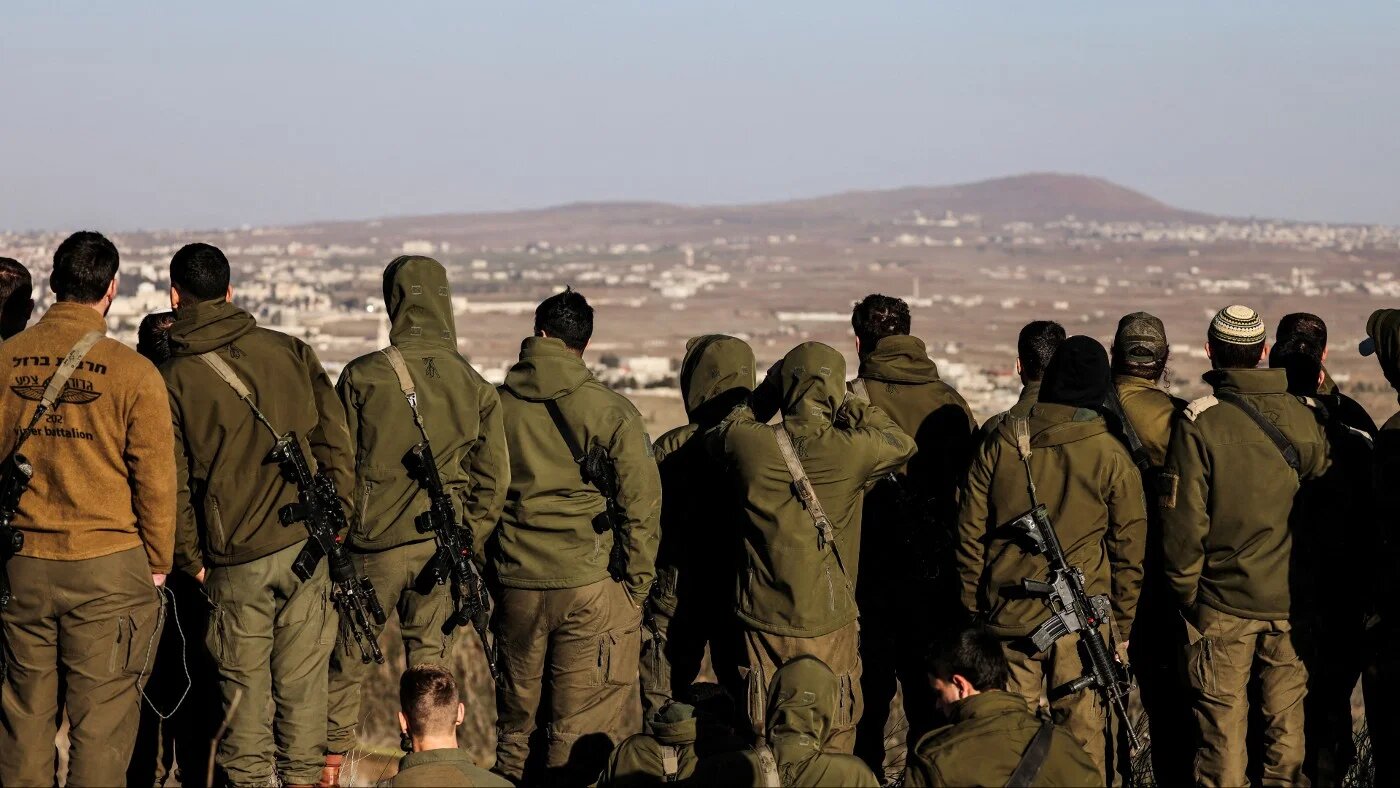
    Local sources in Quneitra province report that on Monday, Israeli forces, accompanied by bulldozers, entered the village of al-Mashara and a military outpost on the outskirts of Tal al-Mal. Additionally, helicopters and drones were also seen in the area.

    The purpose of this Israeli operation remains unclear. However, given the presence of bulldozers and aircraft, there is a possibility that military installations may be destroyed, or that information and equipment might be transferred from the area.

    This operation marks the second significant incursion of the Israeli army into Syrian territory since the regime began its military involvement in the area. Previously, Israel advanced to within 25 kilometers of Damascus by capturing Jabal al-Sheikh and the southwestern heights of Syria.

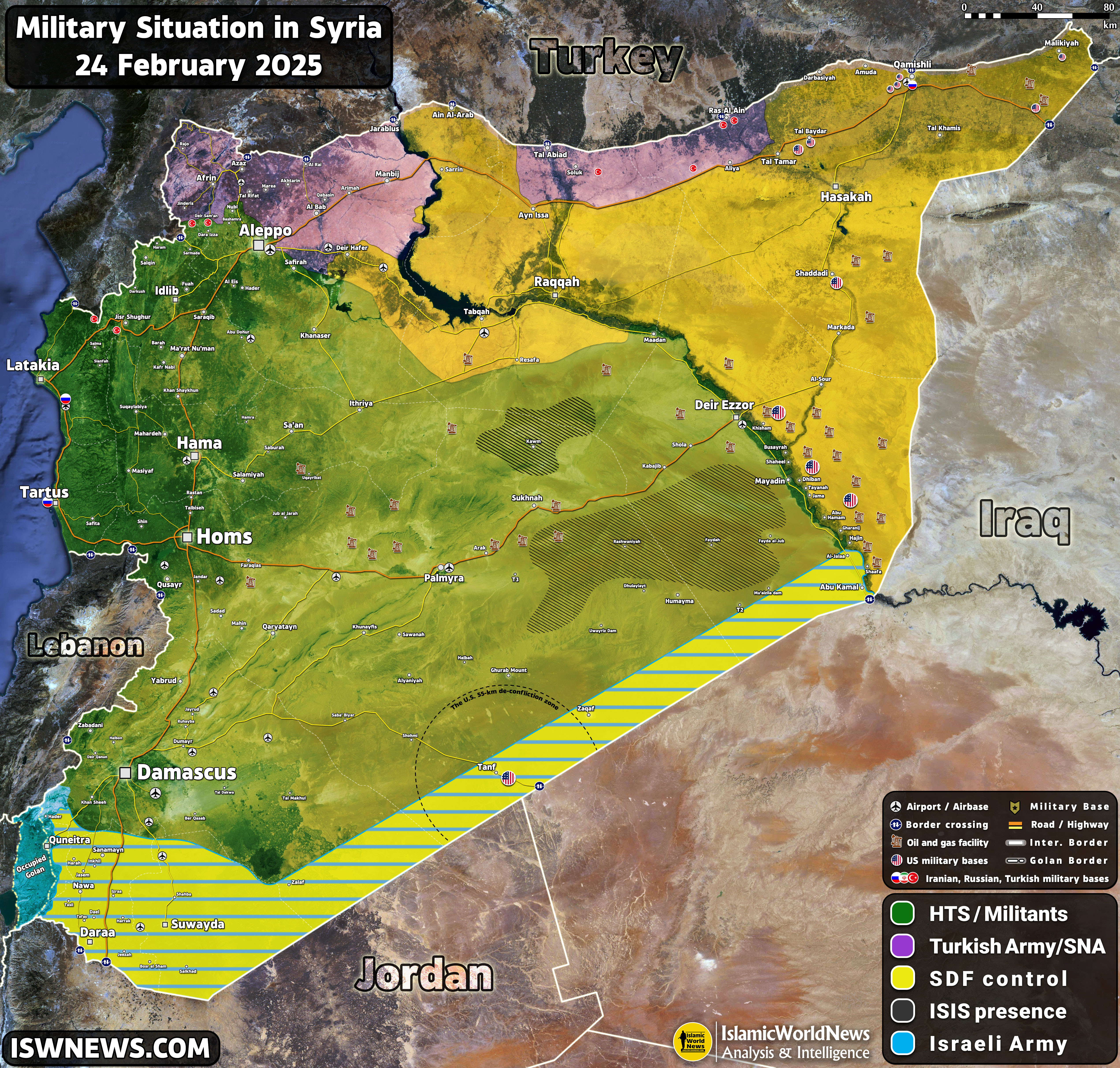
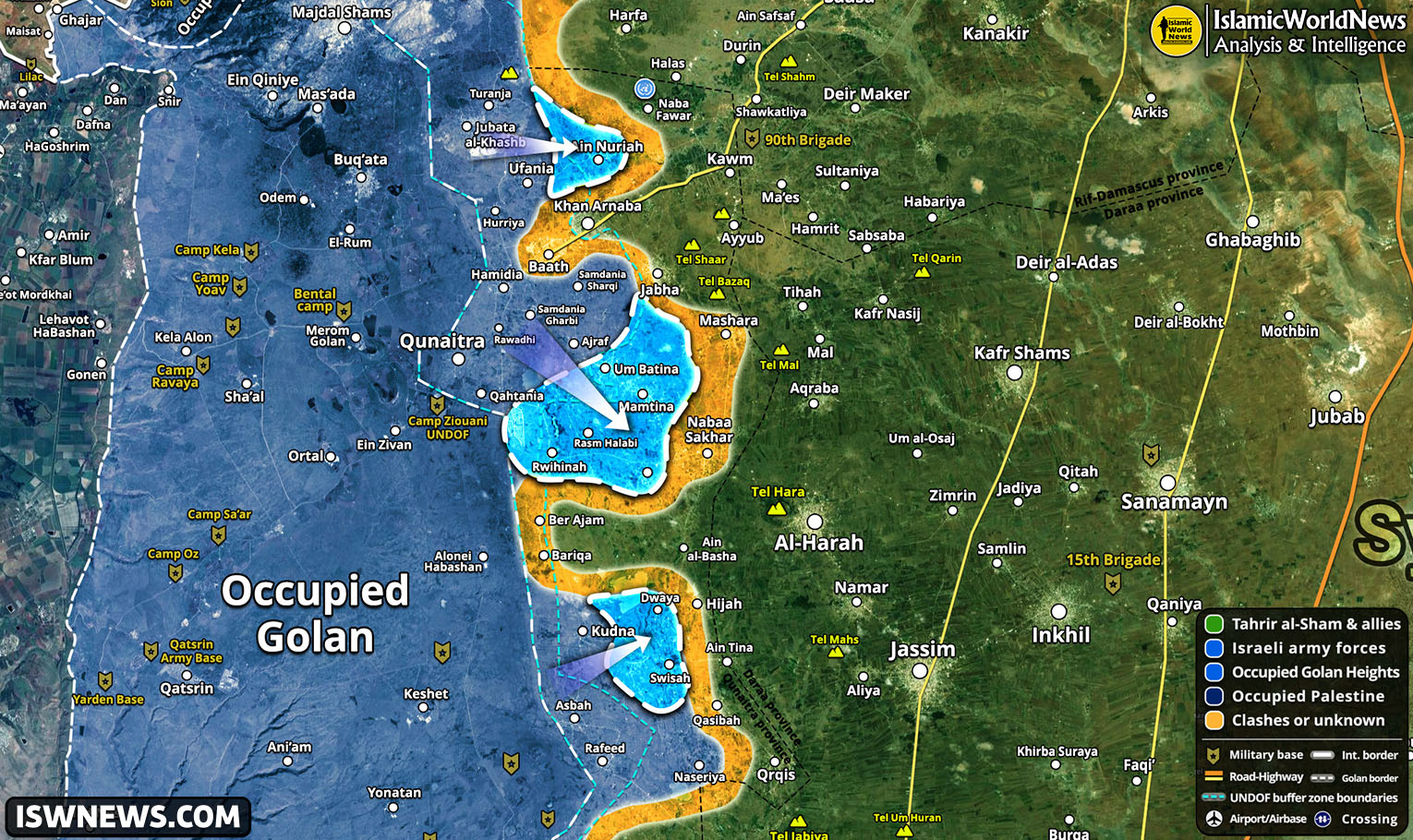
    Latest military situation in southern Syria after Israeli advances in Qunaitra province – click to view full size

    Additionally, the Israeli forces entered the village of Ain Nouriyya, where they confiscated the remaining weapons and ammunition in the area and established a checkpoint.

    This morning, Israeli army forces entered the villages of Umm Batna, Suysah, Majduliya, Rasm al-Manbatah, Mamtane, al-Dawaiya, and Ruwaihina. The situation remains uncertain in the border villages of Bir al-Ajam and Bariqah, which are expected to come under Israeli military control soon.

    The Israeli army is advancing in Quneitra province while militants in southern Syria are engaged in fighting amongst themselves instead of defending their country’s territory against Israeli aggression!

    Today, Tahrir al-Sham militants, acting under the orders of Abu Muhammad al-Julani, entered the town of al-Sanamayn in northern Daraa province and clashed with militants loyal to Mohsen al-Haymad. This confrontation resulted in the deaths of several militants on both sides.

    The main cause of the internal conflict remains unclear. Syrian media believe that militants from Tahrir al-Sham have entered al-Sanamayn to arrest individuals who are wanted. Previous reports regarding the situation in Daraa province indicate that Tahrir al-Sham-affiliated media claim that Mohsen al-Haymid, a former member of the intelligence services of the Syrian government, has close ties to the ISIS terrorist group. He also participated in the 2018 National Reconciliation Plan and has since abandoned armed conflict with the Syrian government.

    The timing of these clashes coinciding with Israel’s advance in Quneitra suggests that disagreements among Syrian militants over control of Daraa province and issues related to confronting or not confronting the Zionists have intensified. Tahrir al-Sham-affiliated media seem to be attempting to suppress their opponents in southern Syria by making accusations and setting precedents against them.

  • Yemeni Army Shoots Down 19th US MQ-9 Drone In Yemen

    Yemeni Army Shoots Down 19th US MQ-9 Drone In Yemen

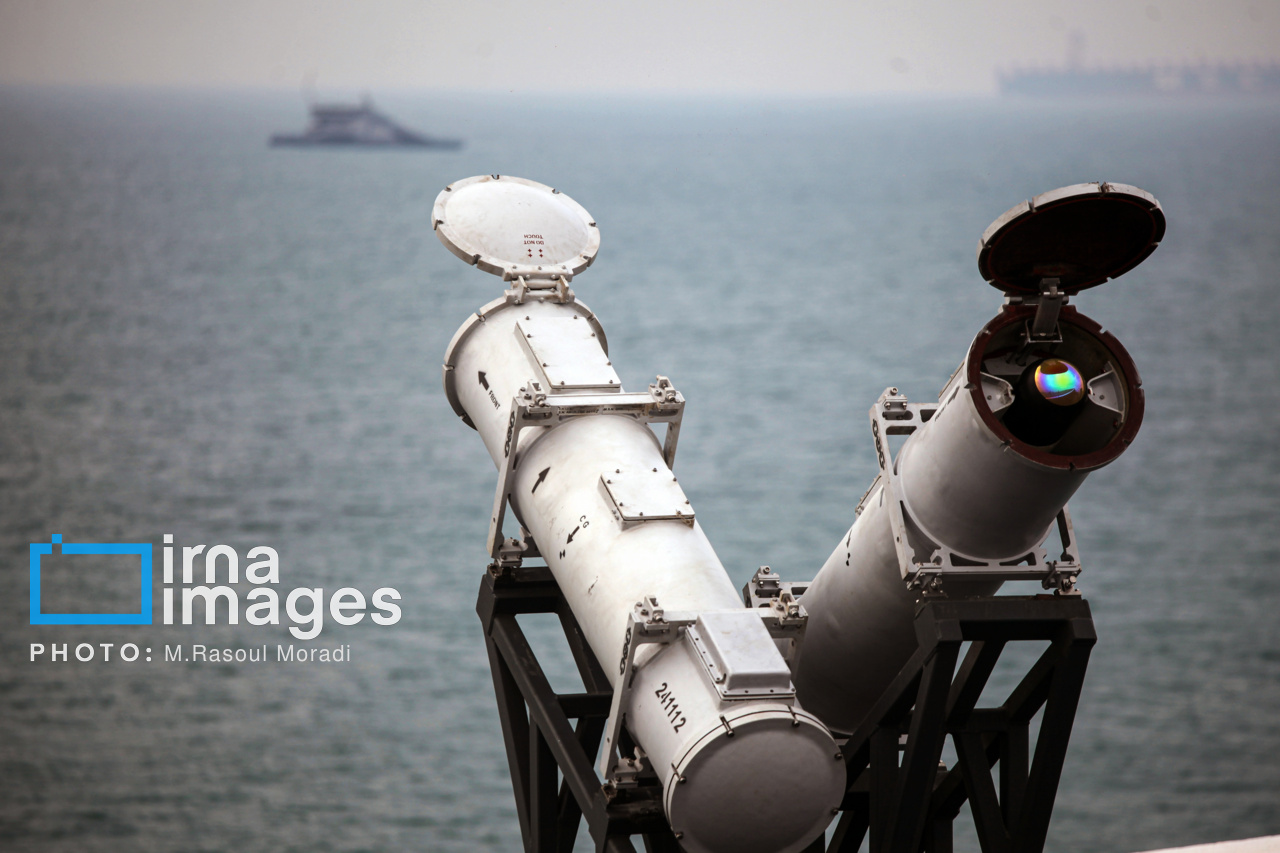
    This incident marks the 19th American MQ-9 drone to be shot down during the Yemeni war. Notably, 15 of these drones were destroyed during operations aimed at supporting the Yemeni people and the Palestinian resistance under the campaign known as the “Promised Conquest and Holy Jihad.”

    The General Atomics MQ-9 Reaper is a heavy, multi-purpose drone used by the US Army, which has conducted hundreds of reconnaissance, surveillance, and offensive operations, including assassination missions in Iraq, Afghanistan, and Syria since 2001. The US Army has employed these drones to monitor the positions and movements of the Yemeni Army and to conduct attacks against them.
    Yemeni Army Shoots Down 19th US MQ-9 Drone In Yemen
  • Formation of the Suwayda Military Council: Is Israel Supporting the Druze to Implement the David Corridor Plan?!

    Formation of the Suwayda Military Council: Is Israel Supporting the Druze to Implement the David Corridor Plan?!

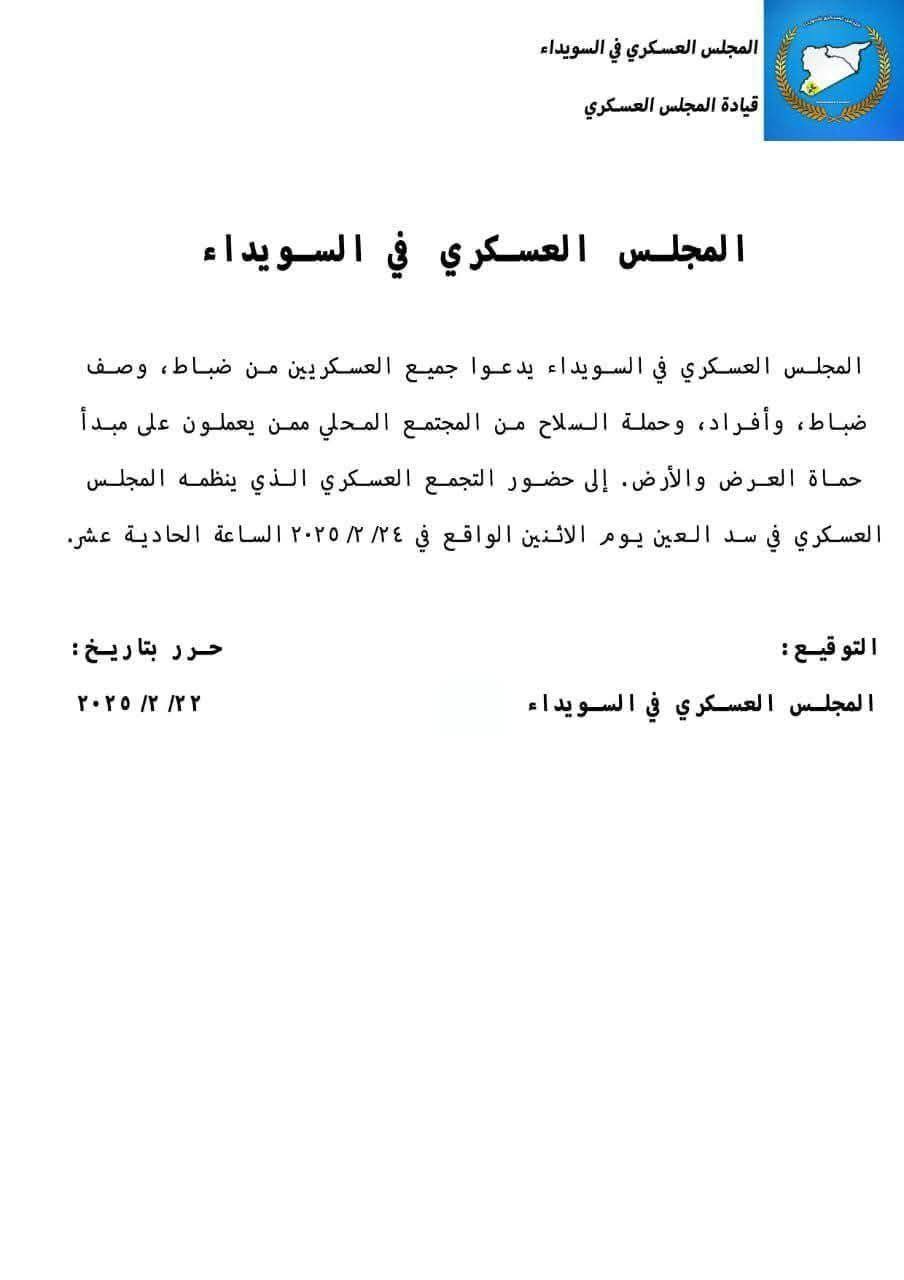
    Local militants in Suwayda province have announced the formation of a new group called the Al-Majlis Al-Askarī L’As-Suwayda (Suwayda Military Council) in southern Syria. They have scheduled a meeting on February 24 in the Sad al-Ayn area, southeast of Sweida.
    Interestingly, the logo of this newly formed group is strikingly similar to that of the Syrian Democratic Forces (SDF). In fact, it appears that the logo of this group is essentially the same as the SDF logo but with a new location in Sweida province in southern Syria.

    Following the announcement of the group’s existence, several residents of the Al-Ghariyah area in the southern suburbs of Sweida province released a video declaring their allegiance to the Sweida Military Council and emphasizing their commitment to defending their homeland.

    Video from residents of the Al-Ghariyah area

    The SDF’s support for the residents of Suwayda is not a new development, as there have been similar instances in the past. During Bashar al-Assad’s government, the SDF expressed their support for the creation of an autonomous region in southern Syria and for the Druze. Sweida holds significant importance for the SDF; during the war with ISIS, the SDF agreed to exchange 60 ISIS prisoners for 30 residents of Sweida who had been kidnapped by ISIS. These instances highlight the strong relationship between the Kurds and the residents of Suwayda province.

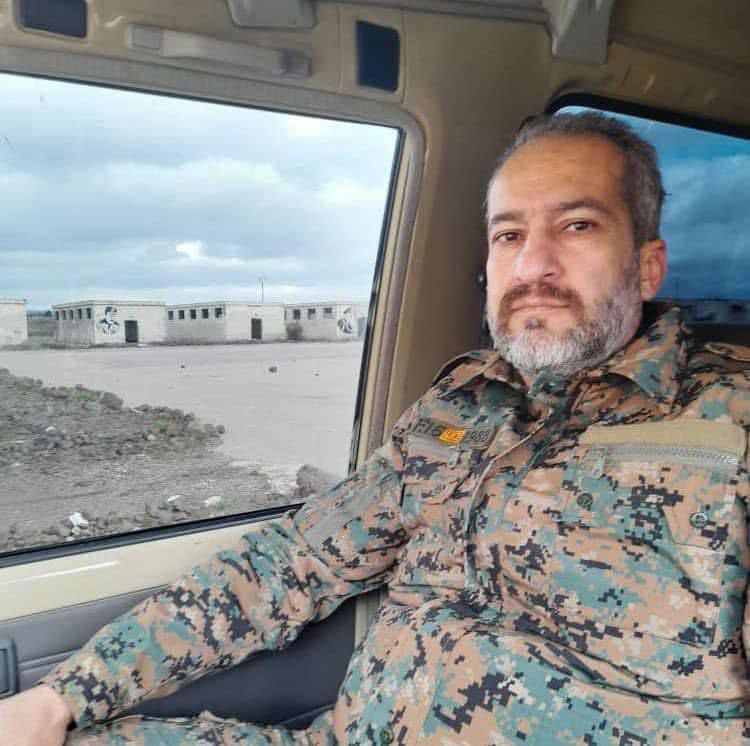
    The Suwayda Military Council, led by Tariq al-Shufi, maintains a positive relationship with the Syrian Democratic Forces (SDF). In his recent remarks, al-Shufi praised the SDF forces, referring to them as defenders of the land and the Kurds against terrorism and dictatorial rule. The Sweida Military Council Command further emphasized the importance of maintaining positive and serious relations with the SDF forces.

    Tariq al-Shoufi, Commander of the Suwayda Military Council

    On the other hand, continuing the Israeli regime’s support for the Druze community in Syria, Israeli Prime Minister Benjamin Netanyahu emphasized the need for the Syrian government to respect the rights of the Druze minority and stated that any threat against the Druze in southern Syria will not be tolerated.

    In response to Netanyahu’s statements, Al-Shufi expressed gratitude to all those who support the Sweida Military Council and help protect the Druze community and stabilize the region.

    Simultaneously with the announcement of the Sweida Military Council’s existence and Netanyahu’s support for the Druze, some analysts viewed these actions as part of the “David Corridor” plan. They considered these actions an attempt by the Zionists to support Israel’s Kurdish allies east of the Euphrates in order to fuel separatist conflicts in the region.

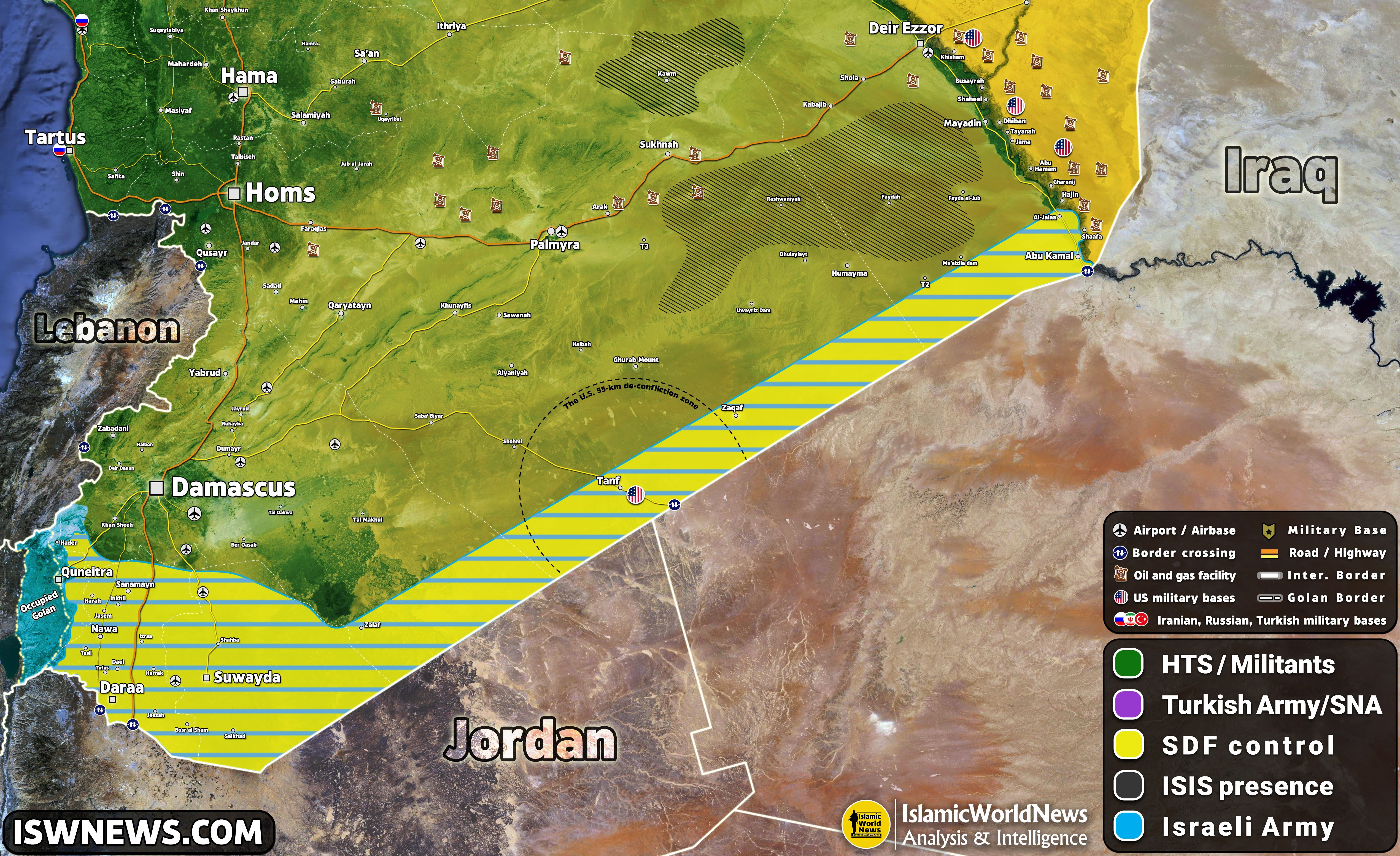
    The so-called David Corridor in Syria

    The “David Corridor” is envisioned as a corridor created through the occupation of southern Syria, including the provinces of Daraa, Suwayda, part of Homs province (the Al-Tanf region), and Deir Ezzor, reaching the Euphrates. The recent occupation of areas in Daraa province by the Israeli army could be seen as part of this plan.

    If the Zionists decide to implement this plan, Tel Aviv’s next step after advancing in Daraa province would be Sweida. Gaining access to and passing through Sweida requires the support and approval of the Druze, which has been partially achieved. After Sweida, the advance of the Zionist military in southern Syria would be facilitated, as the Al-Tanf region in Homs province has been under American occupation for years, and the US army would pave the way for the Zionists to reach Deir Ezzor province.

    It is worth noting that the construction of the David Corridor is considered part of the “Greater Israel” plan.

  • Opinion: In Syria, Zionism is Repeating the Lebanese Mistakes of the 1980s

    Opinion: In Syria, Zionism is Repeating the Lebanese Mistakes of the 1980s

    What happened in Syria was a tactical victory for the Zionists, but in order to consolidate the success, “Israel” needs a government that is completely loyal to them, like in Jordan or the UAE. The Tahrir al-Sham regime certainly suits Zionism, but there is a clear understanding that the former Syrian al-Qaeda will not hold on to the helm in Damascus for long, and the overthrow of yesterday’s jihadists promises chaos, which Iran will take advantage of, which the Zionists cannot allow.

    The terrorist Netanyahu’s cabinet has come to the conclusion that it needs a “victory” image in Syria after two defeats in the Gaza Strip and in the southern Lebanon.

    Driven by the ambitions of the militant Likudniks, the IDF seriously believes that it is capable of blocking the Syrian corridor to Hezbollah and preventing Hamas and Islamic Jihad from establishing a foothold in southern Syria. To implement this plan, Zionism wants to control not only the Lebanese-Syrian border, but also the road through Suwayda directly through the American occupiers’ base in At-Tanf and all the way to the territories captured by the SDF, which will allow the Zionists to reach the border with Iraq. The connection with “Rojava” is also important because Zionism insists on the forcible expulsion of hundreds of thousands of Palestinians to Syria, where, according to the occupiers’ plan, the Palestinians will be resettled in northeastern Syria between the zone of influence of the pro-Turkish Rebels and the PKK.

    David’s Corridor; Possible Zionist Plan to Occupy Southern and Eastern Syria / Click to view in full size

    Another reason for justifying the intervention in Syria is the plan to “protect” the Indian corridor to Europe. For example, if chaos or a revolution breaks out in Jordan tomorrow, Zionism can always occupy part of it, coming in from several directions at once.

    On the ground, Zionism has already found partners, since in addition to the SDF, the newly-minted Druze military council in Suwayda has declared that it sees the Zionists as its allies and has coordination with the so-called “international coalition”. Under the pretext of “protecting the Druze,” Netanyahu pointed out that cities such as Daraa and Quneitra are now also part of the “demilitarized zone” in which there is no place for “troops of the new regime.” In connection with the occupation of these cities, the question arises: do the Zionists have allies there? Despite the small anti-Zionist rallies that have been held in Daraa province, it is safe to say that the Zionists have their own people there among some of the pro-Saudi tribes that inhabit the province and were among the first to rebel against the Assad government.

    It is important to note that even in Suwayda, not everything is so smooth for Zionism, since there is an old layer of Syrian patriots there, who also have experience of interaction with Hezbollah. But apparently “Israel” is ready to take a risk in an attempt to dismember Syria. Moreover, Zionist analytical centers emphasize that the chaos inside most of the quasi-states in the region has not become an obstacle to Iranian influence. Bright examples are Lebanon, Yemen, Bosnia and even Djibouti. Considering the presence of tens of thousands of former soldiers of Assad’s army, FSA units and southern tribes with an anti-Zionist position, the activities of Hamas and Islamic Jihad, it is not difficult to assume that resistance groups will be formed between the indicated parties under the auspices of the IRGC.

    Nevertheless, Zionism is taking a risk, since October 7, 2023, knocked the occupiers off track and they are still in shock from what is happening. Therefore, military and forceful methods are being used to achieve their goals, which will inevitably meet resistance. Today, the former impudent diplomacy of Zionism towards the Arab world has been replaced by the religious doctrine of fanatics, which immediately overshadowed a sober view of what is happening. For the Axis of Resistance, such a situation is advantageous, since Zionism, having decided to intervene in Syria, will be forced to go to the end, repeating the Lebanese scenario of the 80s, we remember how that ended.

    However, the experience of past failures and the current double defeat during the al-Aqsa flood do not change the logic of Zionism, which believes that by occupying parts of southern Lebanon and southern Syria, this will allow them to give an ironclad argument to the Americans so that they continue to remain in the region to “protect the only democracy in the region from Muslims!”

    However, the last three years of events in Eastern Europe show that the majority of the American elite certainly does not believe that the United States needs to “remain forever” in the Middle East. Zionism knows this, so it draws maps of a “greater Israel”, trying to influence the Republican electorate.

  • Israeli Army Will Remain In Five Points In Lebanese Territory!

    Israeli Army Will Remain In Five Points In Lebanese Territory!

    According to Lebanese media reports, the five points the Israeli army will continue to occupy after February 18 are:

    1. Labounah-Alama al-Shaab forests
    2. Jabal Balat, between Marwahin and Ramieh
    3. Jabal al-Deir in the south of Aitaroun
    4. The newly established base along the Marbakah-Hola road
    5. Tel al-Hamamis in the south of Khiam
    The areas where Israeli forces will remain in Lebanese territory

    These areas were crucial for Hezbollah’s operations over the past year, as they were used to attack Israeli border bases and thwart Israeli ground attacks. Additionally, some of these areas held out until the last day of ground battles between Hezbollah and the Israeli army, only coming under Zionist control after the ceasefire agreement was implemented.

    Lebanese authorities have reportedly rejected the deployment of Israeli forces in these areas during talks with American representatives. However, in practice, they are left with no choice but to accept Israel’s conditions due to Israel’s support from the United States and France, and the influence of the US, France, Qatar, and Saudi Arabia on Lebanese political positions.

    The significance of these five points under Israeli control lies in the oversight and consolidation of Israel’s presence in Lebanese territory and border areas. This allows Israel to maintain control over Lebanon’s southern borders and eliminates their time and space limitations for actions against Hezbollah.

  • Latest Updates On Southern Syria, 15 Feb 2025 (Map)

    Latest Updates On Southern Syria, 15 Feb 2025 (Map)

    According to a recent report by the Israeli army radio, Israel’s presence in Syria is no longer temporary, with engineering units setting up nine military sites in the south. The Syrian transitional government and their regional supporters have yet to respond to this development.

    Additionally, the Israeli army continues its movements and patrols in the occupied areas of southern Syria, including establishing a checkpoint in the village of Saida. Israeli soldiers have re-entered Al-Rafid village in Quneitra province, with tanks moving along the Kodna and Bariga axis.

    Saida village, located in southern Quneitra province near the buffer zone between Syria and Israel, has been under Israeli patrol since December 15. Al-Rafid village, in the Golan Heights, also lies in the buffer zone. Its significance stems from its location on the road to Nawa in Daraa province. Israeli military activities in Al-Rafid began on December 20.

    Click to view full size
  • Iran Unveils New Jet Suicide Drone: Dalahu (Hadid 110)

    Iran Unveils New Jet Suicide Drone: Dalahu (Hadid 110)

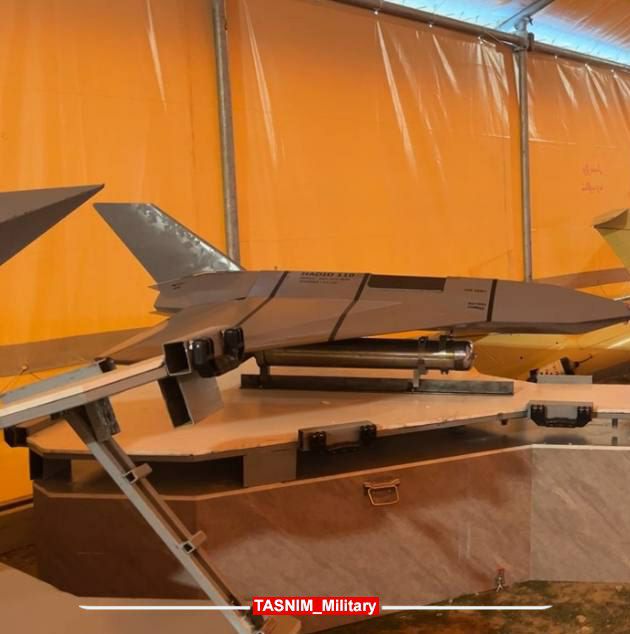
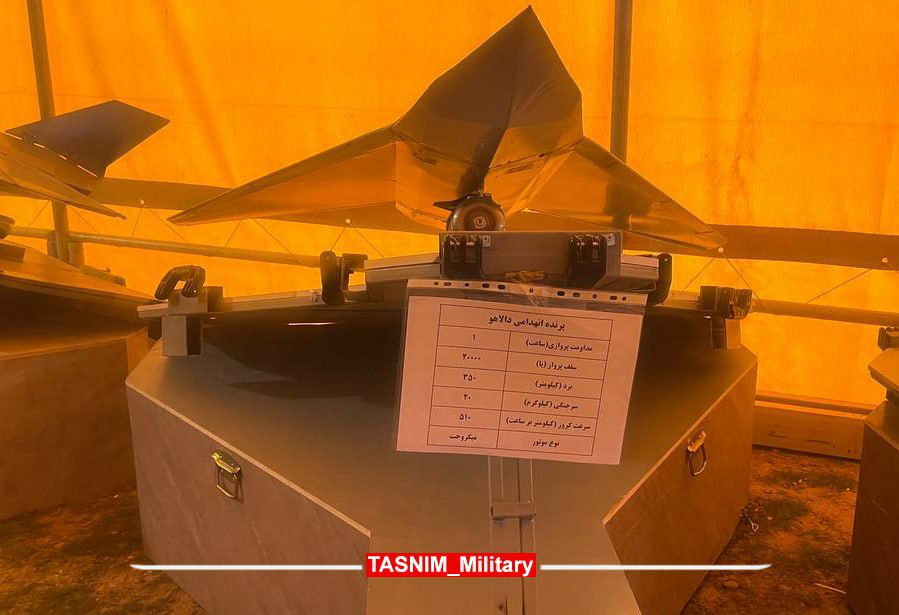
    It is worth noting that this drone, initially introduced as the Hadid-110 at the IRGC’s military achievements exhibition, officially entered the IRGC Ground Forces’ combat organization as the Dalahu drone on February 19, during the second phase of the Great Prophet 19 exercise.

    Unveiling of the Hadid 110 Jet Suicide Drone at the Iranian Military Achievements Exhibition, known as Eghtedar-1403

    The Hadid 110 or Dalahu drone is equipped with a mini jet engine and is launched by a rocket booster, similar to other conventional suicide drones.

    It features a delta wing configuration and a design with sharp edges to reduce its radar cross-section.

    According to provided information, the Dalahu drone’s mini-jet engine gives it a cruise speed of 510 km/h, a range of 350 km, and a flight ceiling of 30,000 feet. The drone’s warhead weighs 30 kg and it has a flight endurance of 1 hour.

    Unveiling of the Hadid 110 or Dalahu Jet Suicide Drone
  • Iran Unveils Underwater-Launched Suicide Drone (Video)

    Iran Unveils Underwater-Launched Suicide Drone (Video)

    In the video, an Unmanned Underwater Vehicle (UUV) surfaces, and the X-winged suicide drone, similar to the recently unveiled Rezvan drones, is launched from within the UUV using a rocket booster.

    Iran Unveils Underwater-Launched Suicide Drone

    The ability to launch drones from underwater vehicles provides a strategic advantage, making it more challenging for adversaries to detect and counter these threats effectively. By integrating these weapons with artificial intelligence capabilities, their effectiveness can be significantly enhanced.

    Indeed, the combination of Unmanned Underwater Vehicles (UUVs) and Unmanned Aerial Vehicles (UAVs) could pose a significant threat to hostile warships in strategic locations like the Persian Gulf, Arabian Sea, and especially the Red Sea! This technological advancement increases Iran and its allies’ defensive and offensive capabilities in these critical maritime regions.

    Iran Unveils Underwater-Launched Suicide Drone
  • Syrian Popular Resistance Congratulates Anniversary of Islamic Revolution Victory

    Syrian Popular Resistance Congratulates Anniversary of Islamic Revolution Victory

    The statement reads: “We in the Syrian Popular Resistance, while congratulating this victory that changed the face of history, emphasize that our path of resistance continues. We have drawn inspiration from the Islamic Republic of Iran in the lessons of perseverance, stability, and endurance, and we will continue to fight until our land is liberated from the occupiers and their mercenaries.”

    The statement released by Syrian Popular Resistance

    It is worth noting that the Syrian Popular Resistance group announced its existence on December 30, 2024. The group aims to combat terrorist groups and Israeli occupiers in Syria. In recent weeks, the Syrian Popular Resistance forces have carried out numerous attacks against Tahrir al-Sham militants and Israeli soldiers in Syria, claiming responsibility for these actions in a statement.

  • Shahid Bagheri Drone Carrier Joins IRGC Navy Fleet (Video)

    Shahid Bagheri Drone Carrier Joins IRGC Navy Fleet (Video)

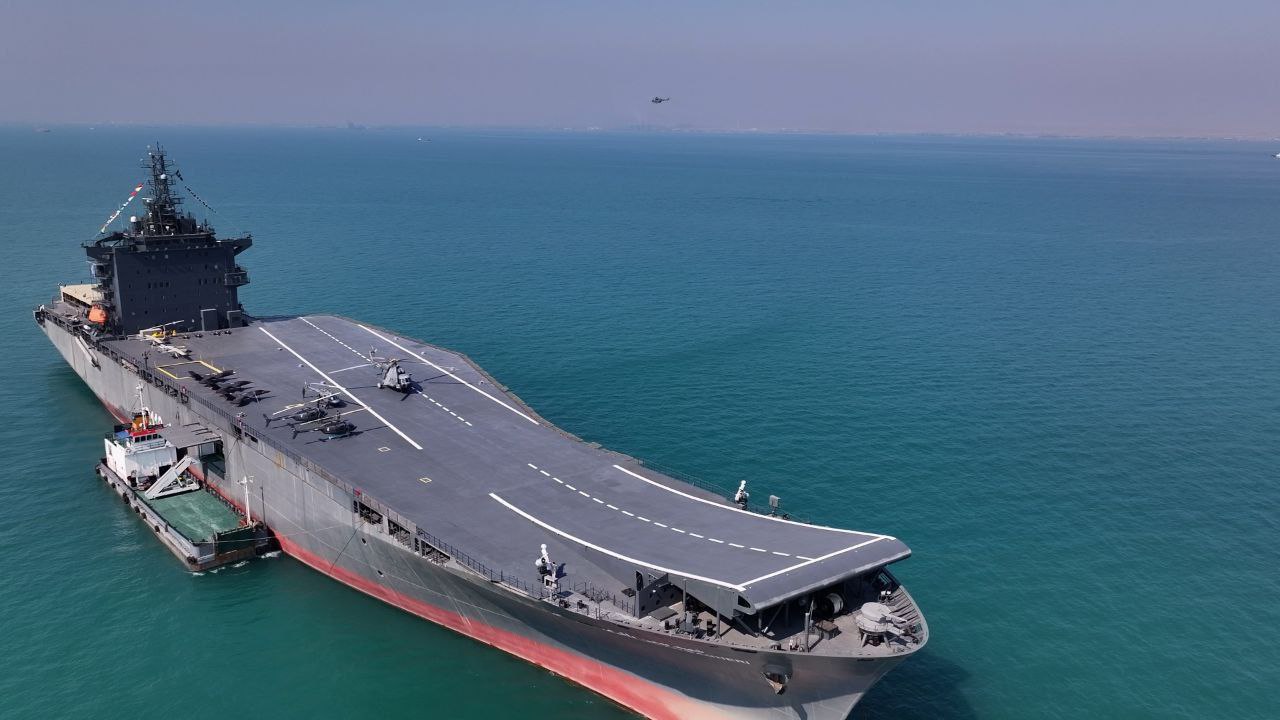
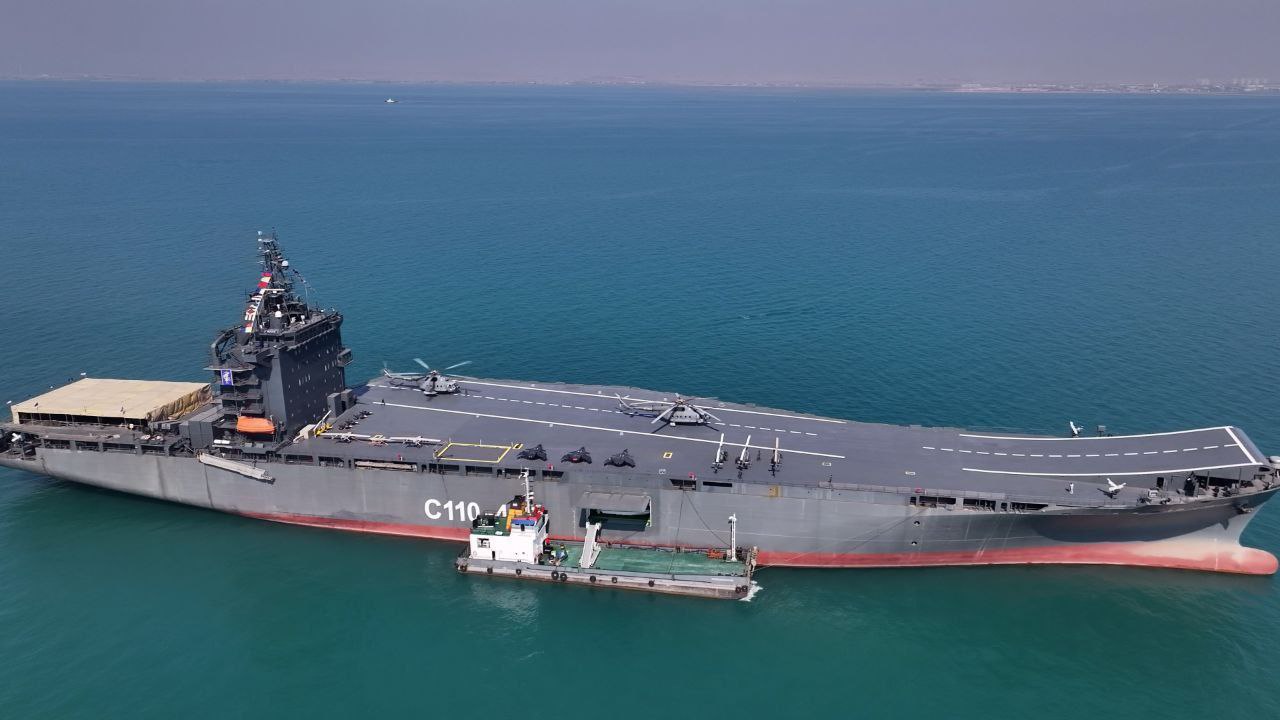
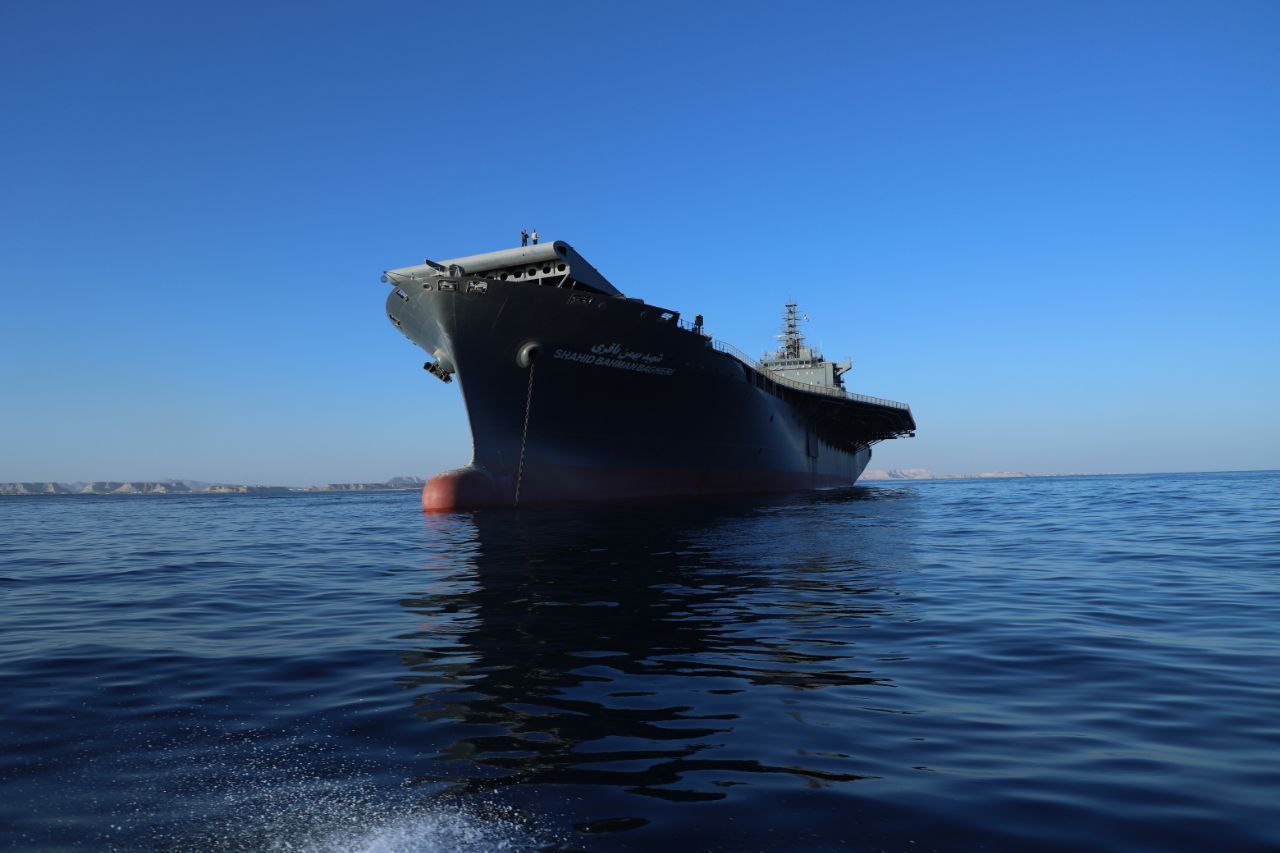
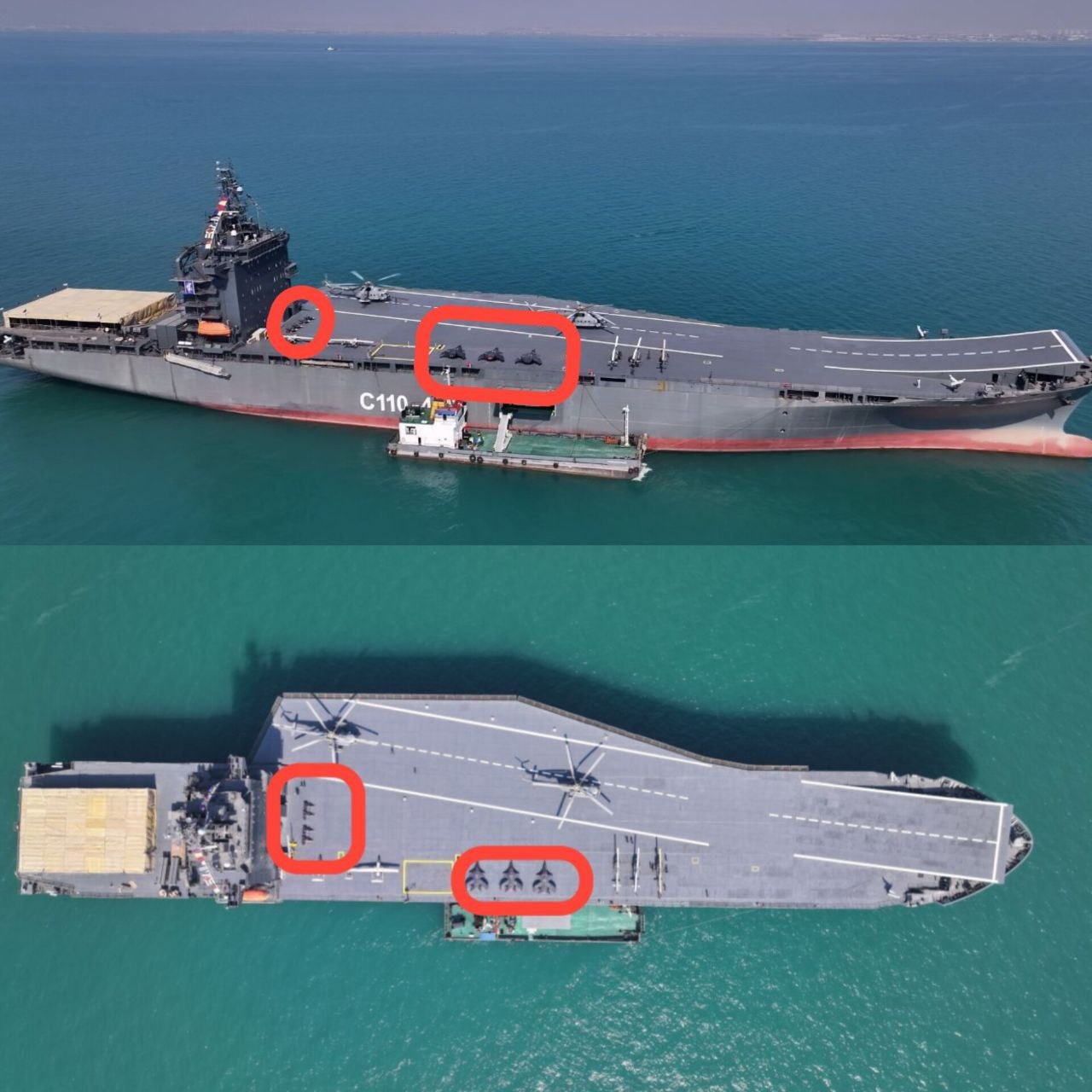
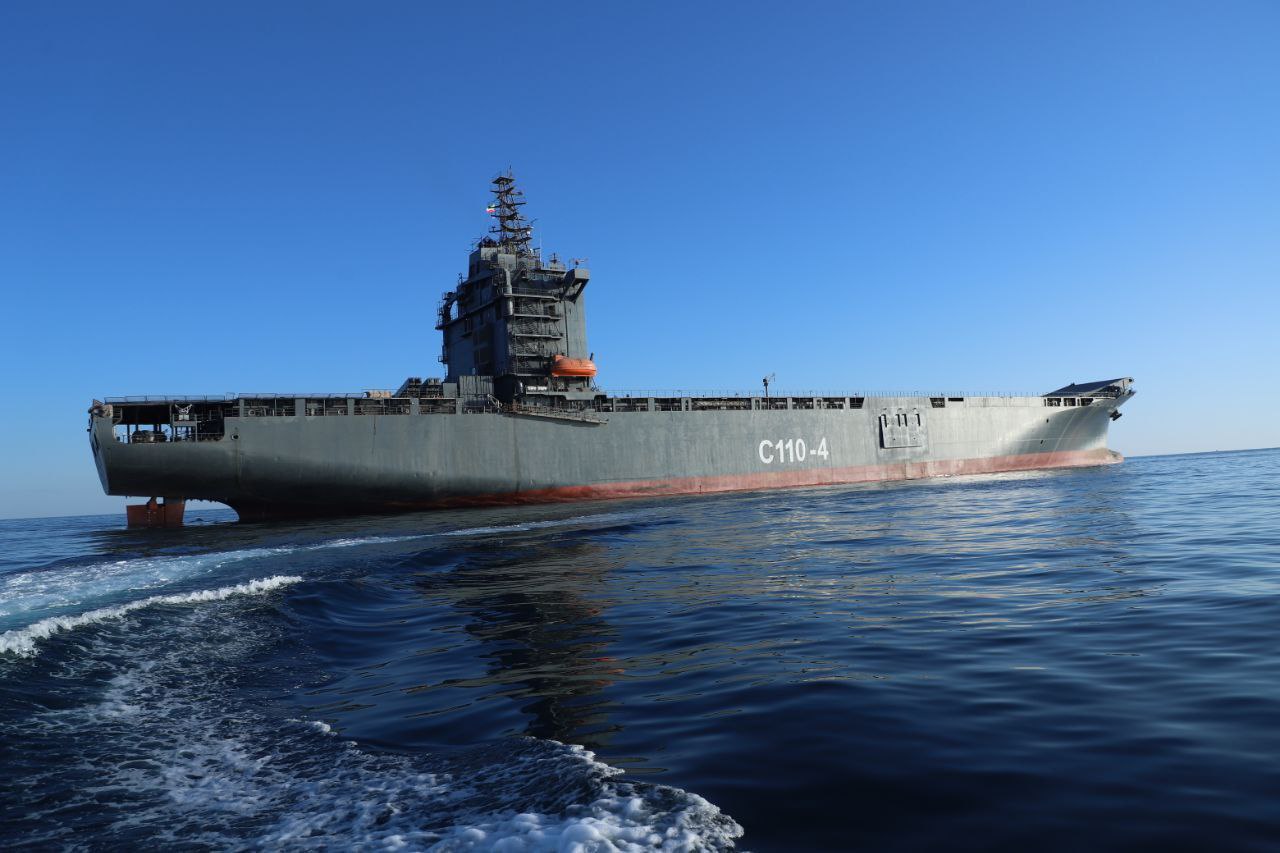
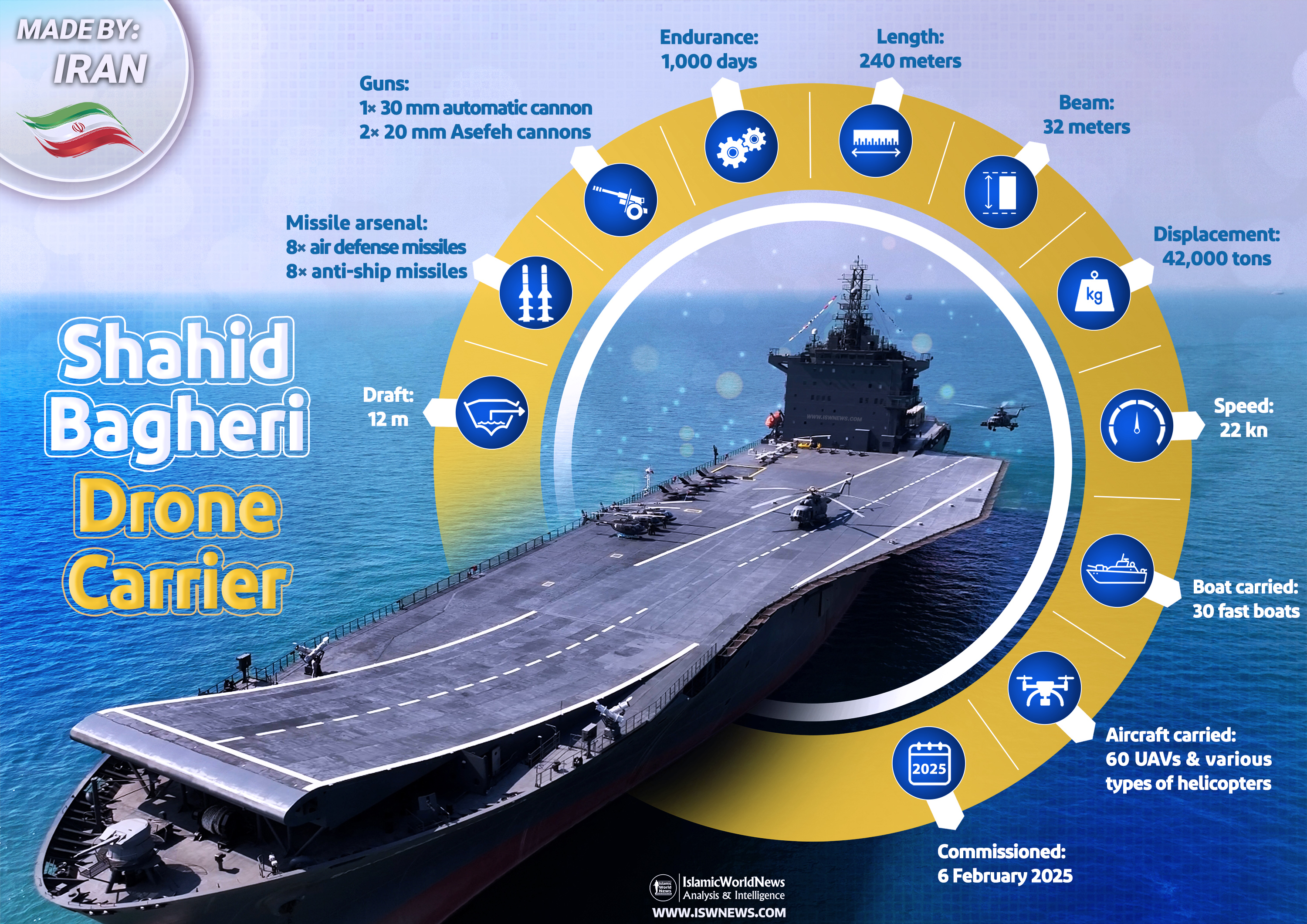
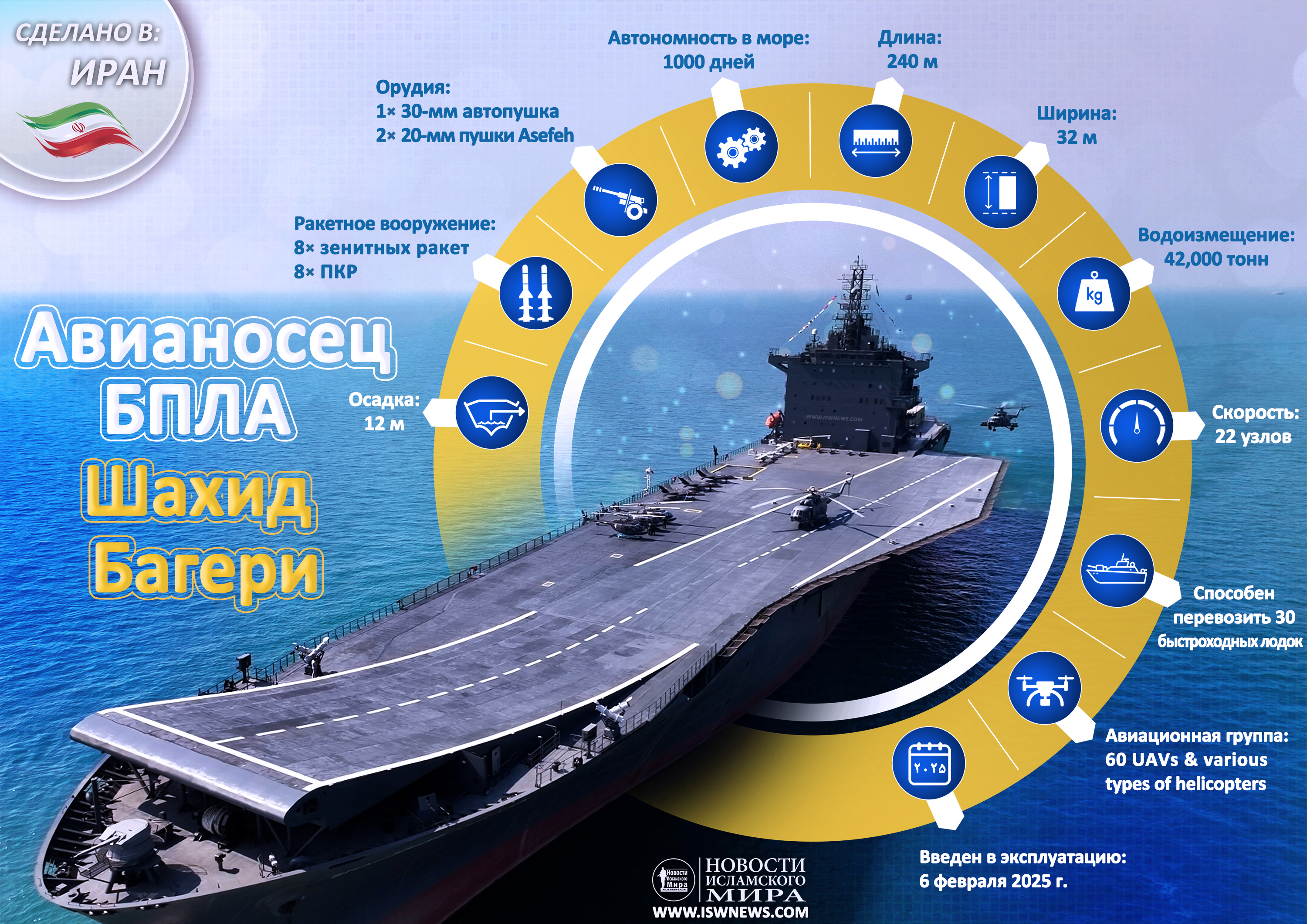
    Shahid Bagheri (C110-4) drone carrier was officially inducted into the Islamic Revolutionary Guard Corps Navy fleet on February 6. The ceremony was attended by Major General Mohammad Hossein Bagheri, Chief of Staff of the Armed Forces, Major General Hossein Salami, Commander of the IRGC, and Admiral Alireza Tangsiri, Commander of the IRGC Navy.

    Shahid Bagheri drone carrier measures 240 meters in length, 32 meters in width, and has a draft of 12 meters.

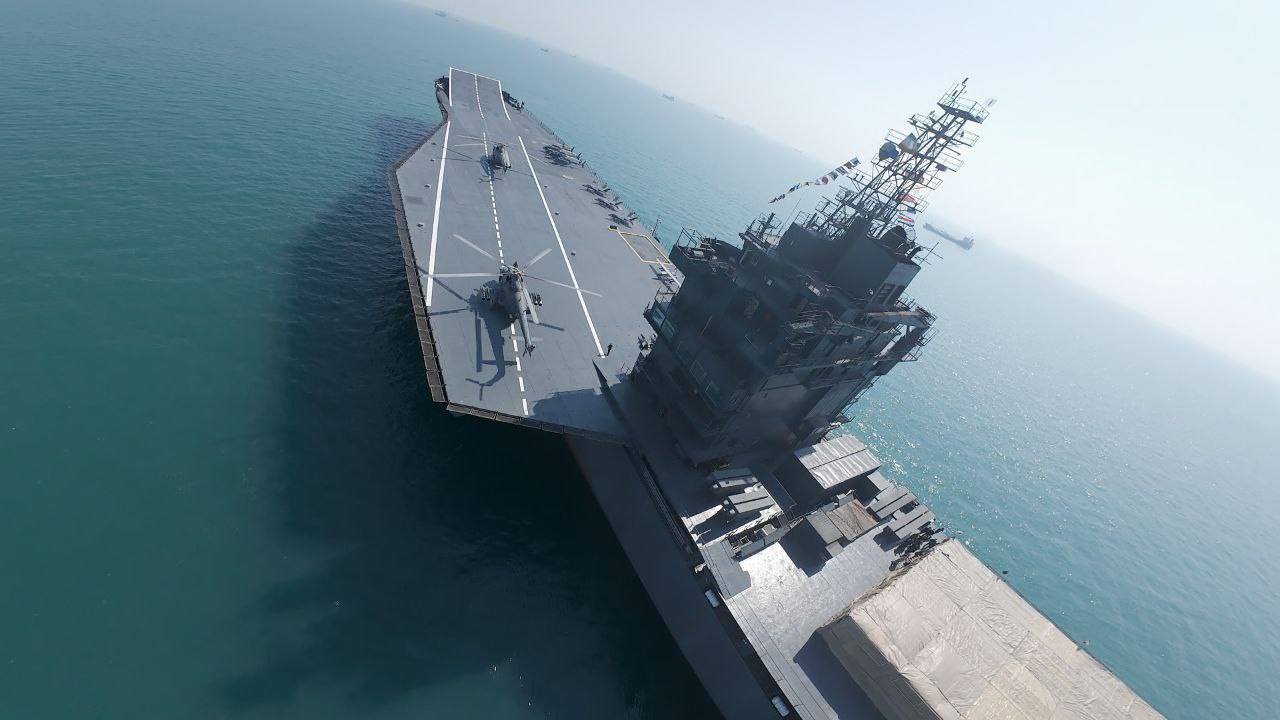
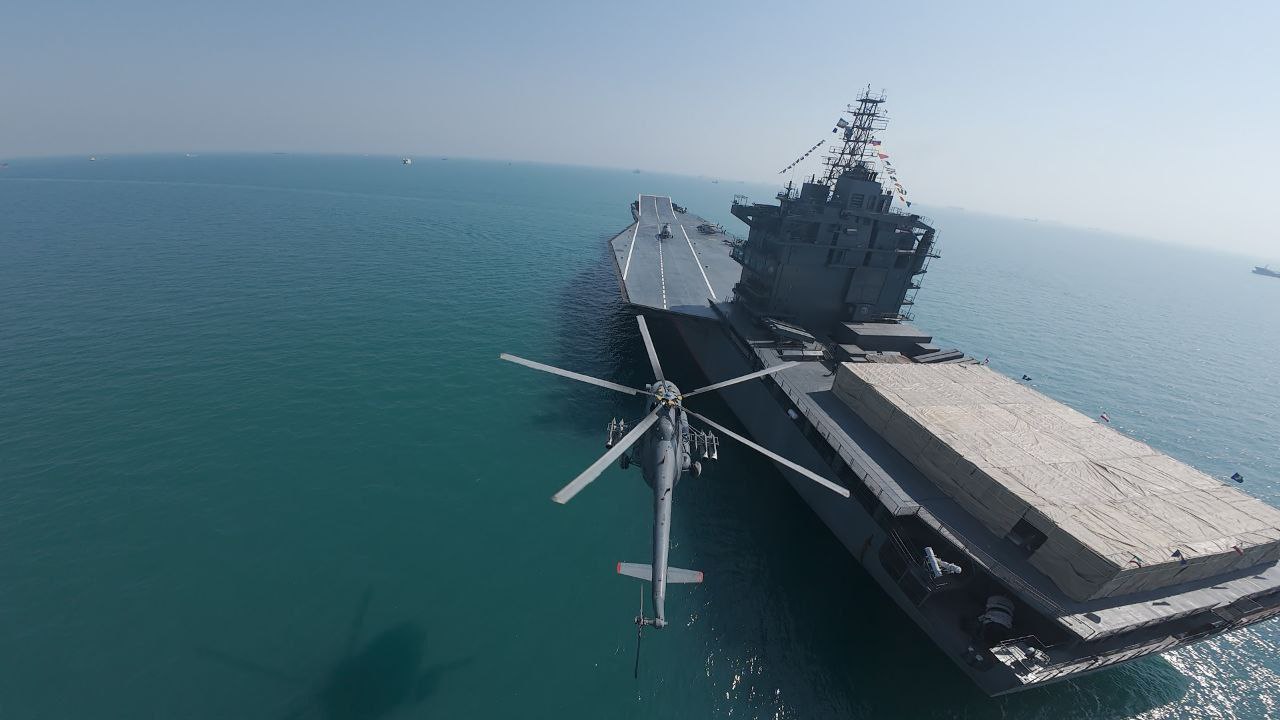
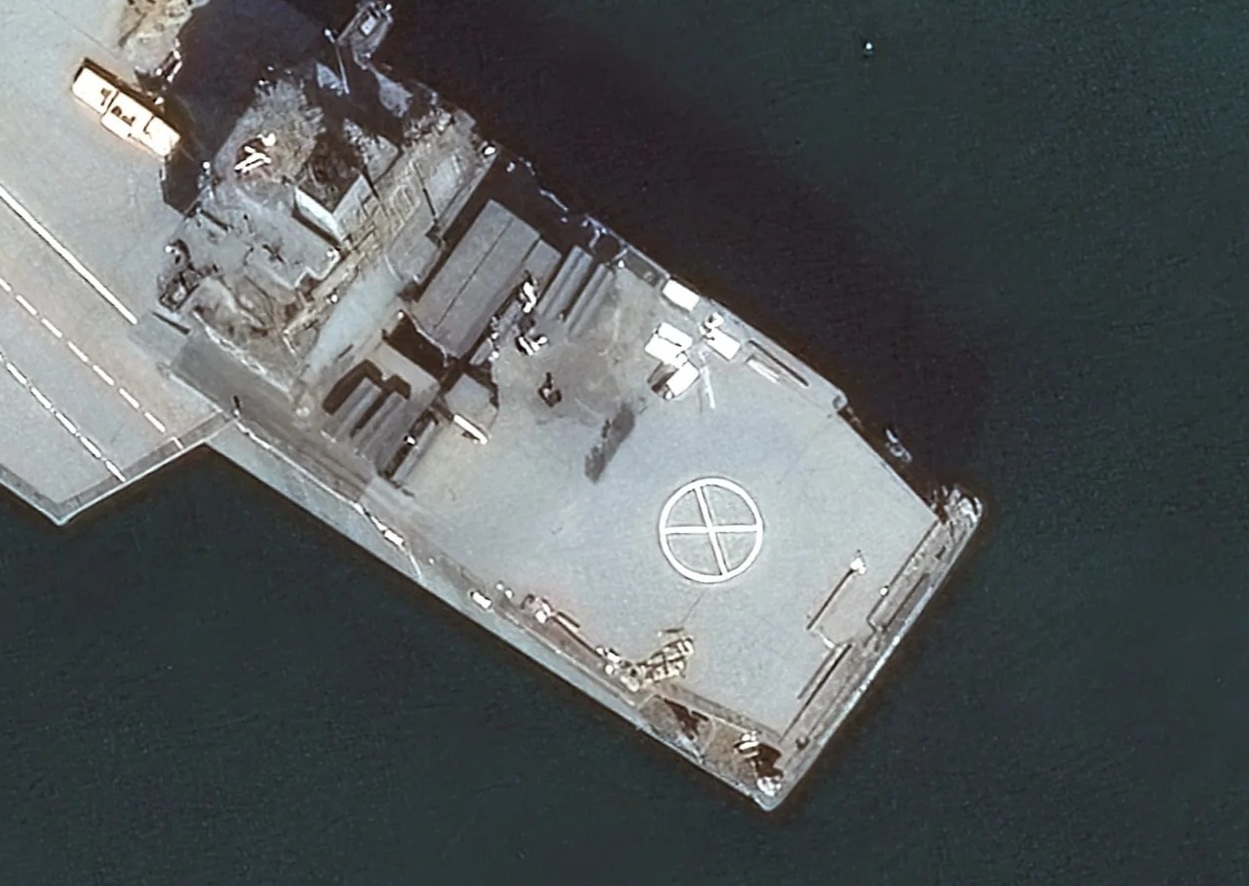
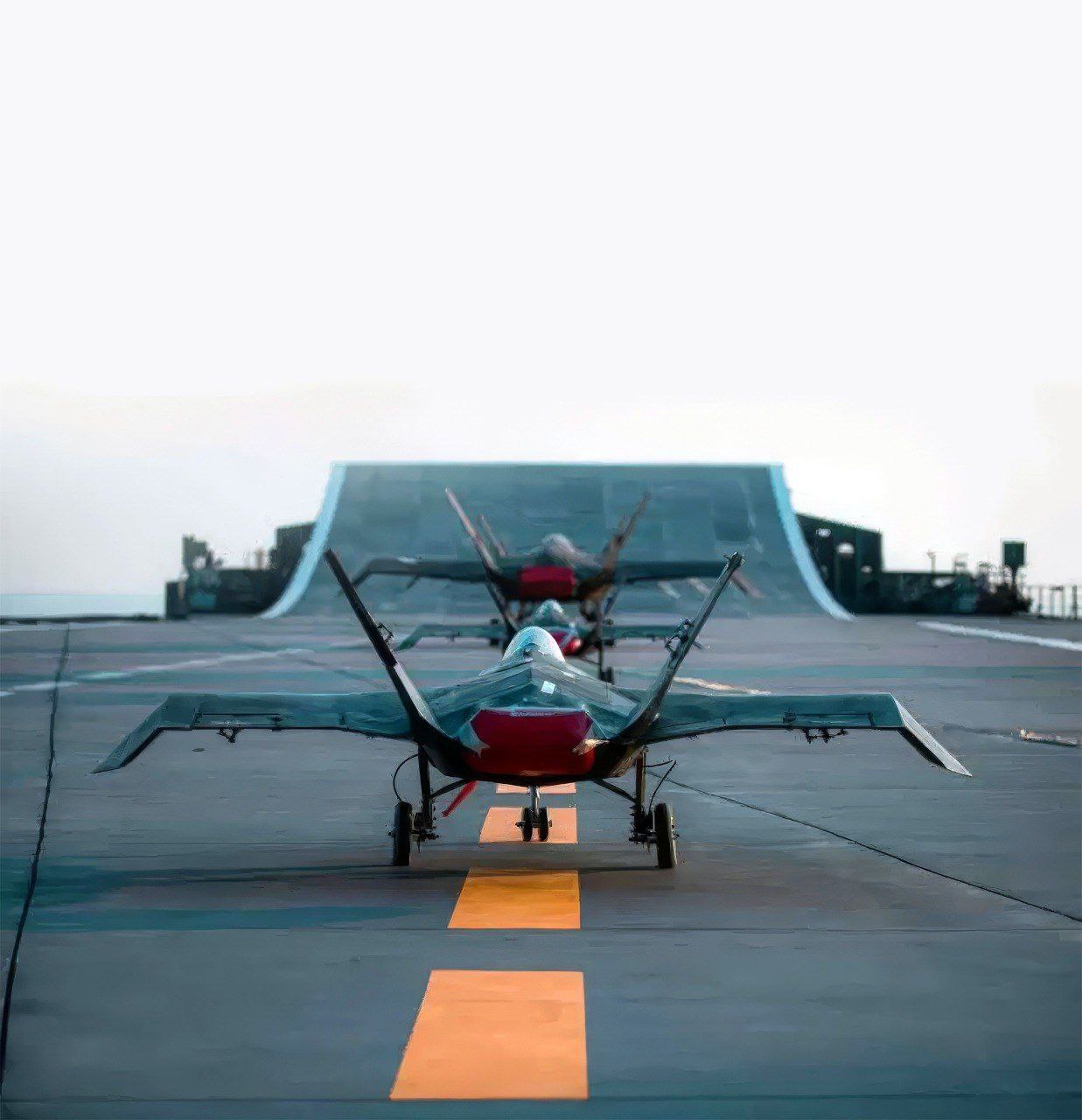
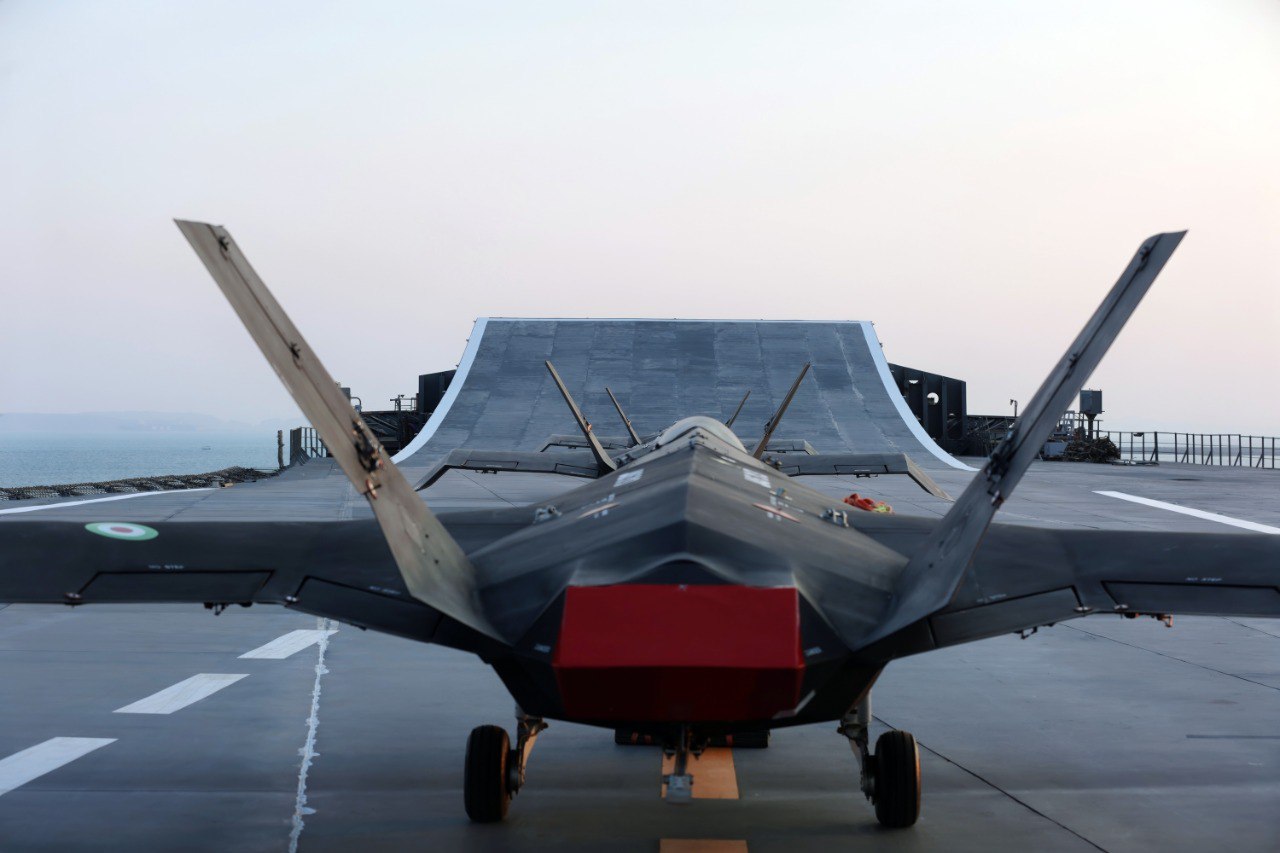
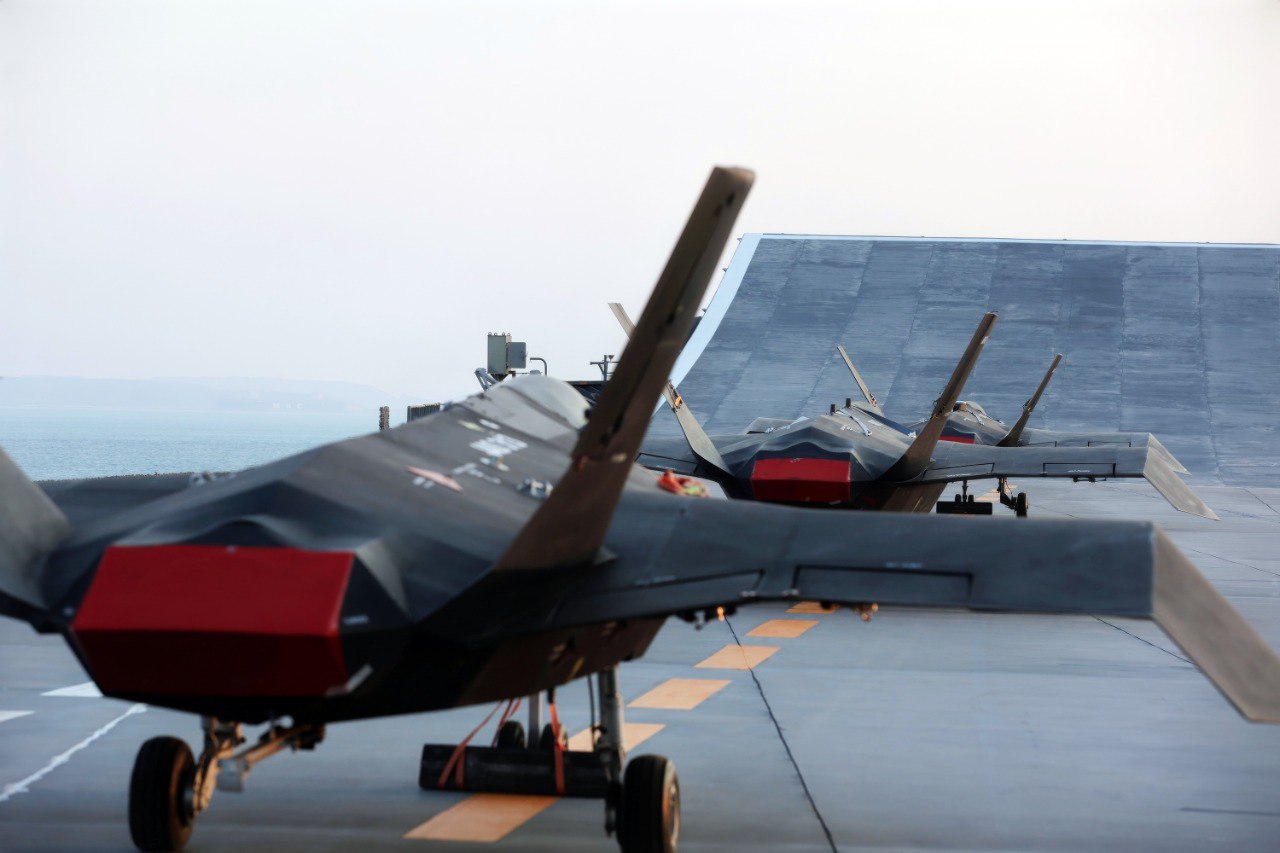
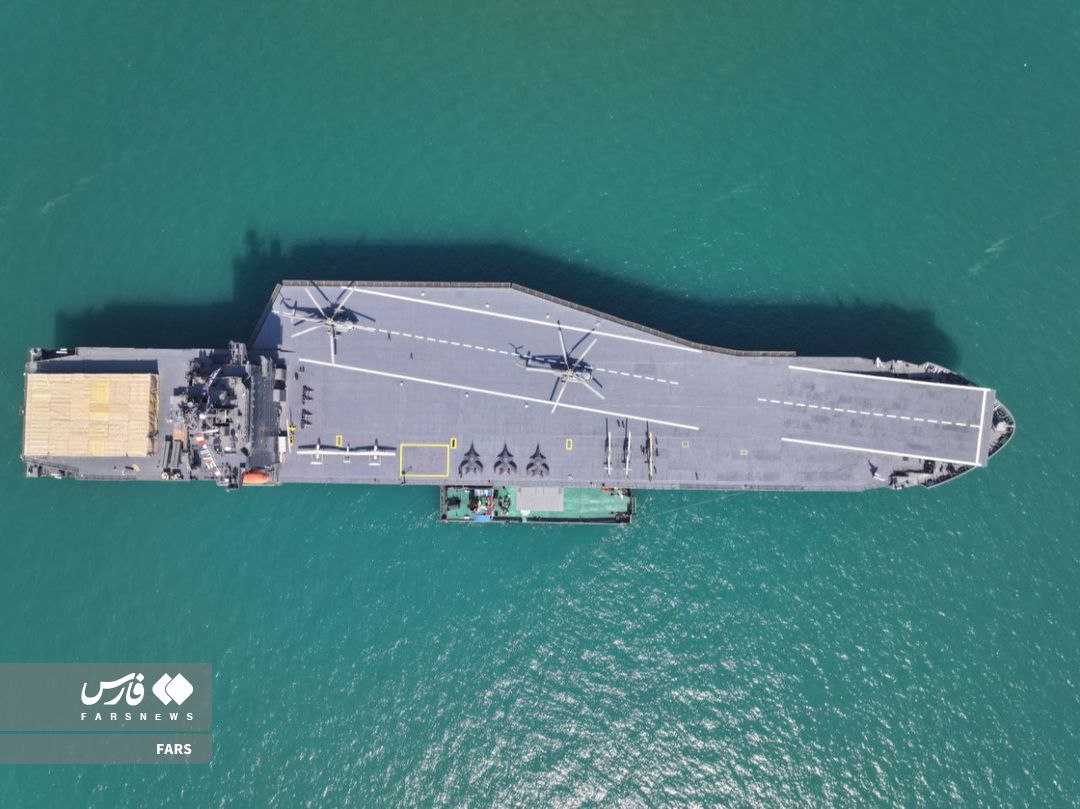
    This drone carrier features a 180-meter runway and an upwardly curved ramp, similar to those found on aircraft carriers, to facilitate drone takeoff. The ship is capable of carrying and operating various types of drones and helicopters. Additionally, it has a large space on the lower levels for housing multiple drones, missile-capable speedboats, and more.

    It is reported that the Shahid Bagheri drone carrier has the capacity to carry 60 drones and 30 fast missile boats. This capability significantly enhances its operational flexibility and firepower.

    Like all aircraft carrier or drone carrier class ships, this vessel utilizes an elevator to transport aircraft and other essential items from the hangar to the deck. Behind the bridge, there is a sizable area with a helicopter pad, designated for the ship’s primary helicopter(s). On the unveiling day, this section was covered with a tent for the ceremony and the commanders’ presence. Additionally, it appears that the main missile weapons of the Bagheri drone carrier are situated in this section as well.

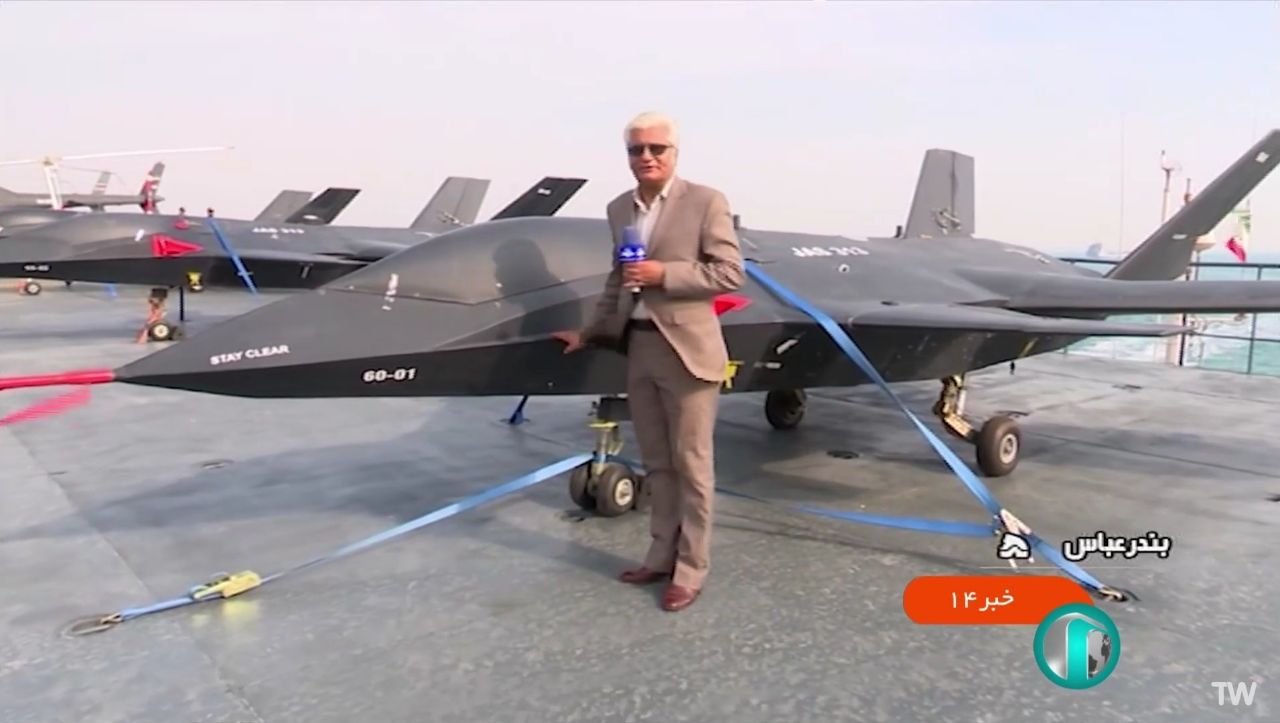
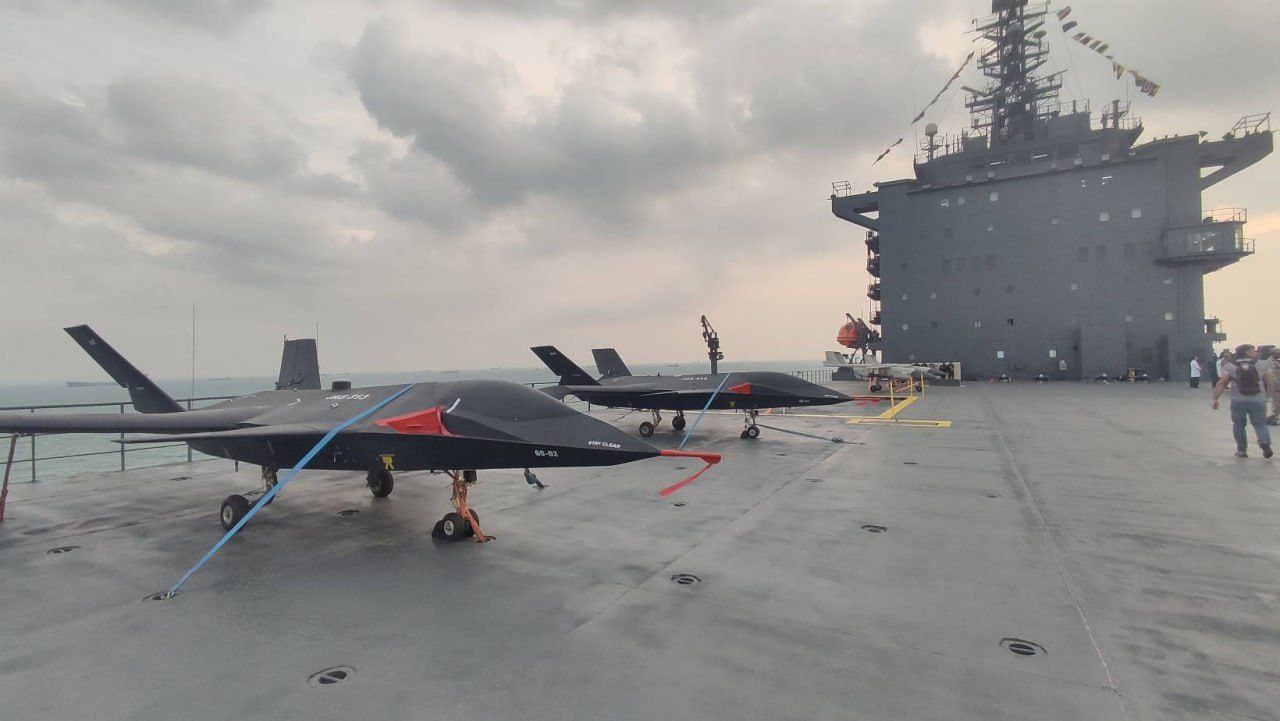
    The videos show the 60% scale variant of the Qaem drone being transferred to the ship’s deck by elevator and the 20% scale variant undergoing a flight test. These videos are archived and are not from the day of the joining ceremony.

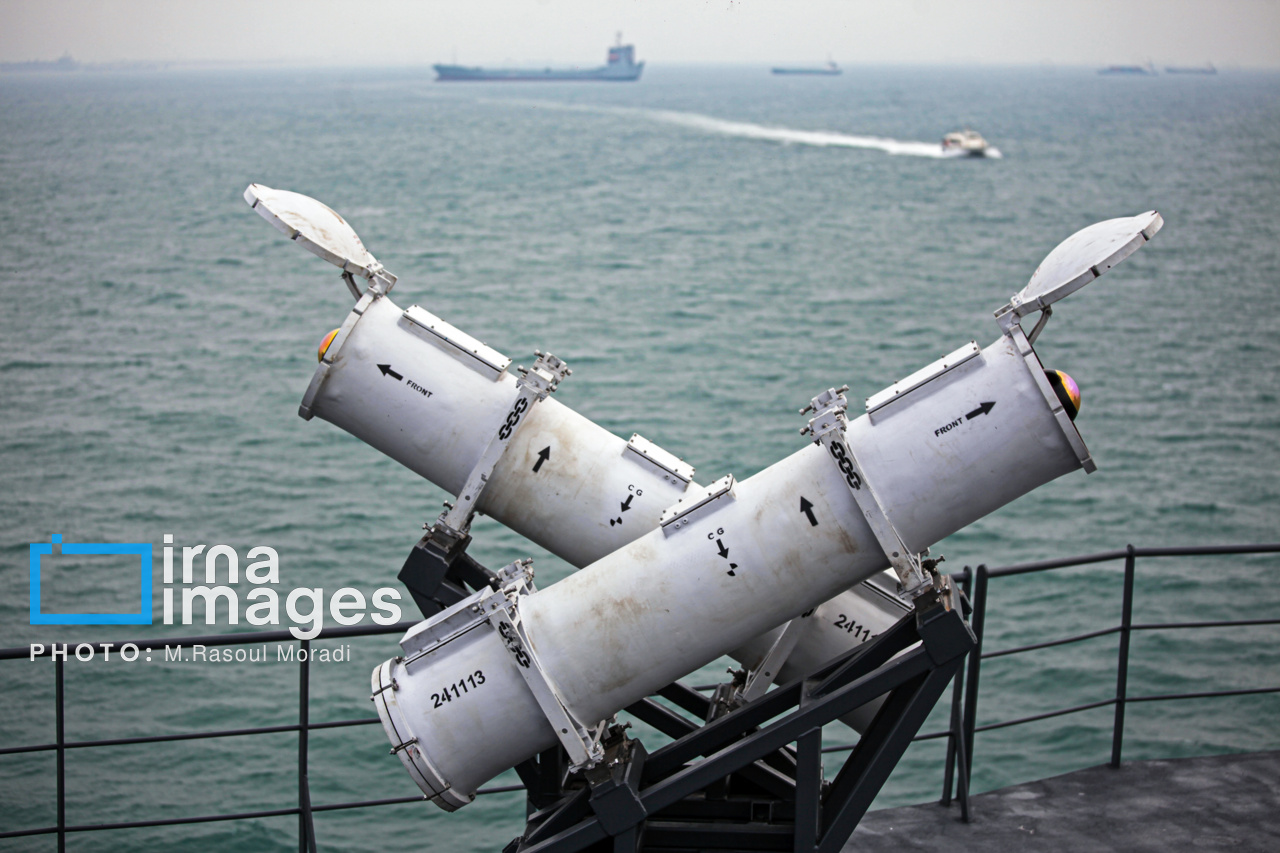
    Regarding armament, the Bagheri drone carrier is currently equipped with eight Kowsar 222 air defense missiles, each with a range of 17 km, positioned at the front and rear of the ship. Additionally, there are eight anti-ship missiles from the Qader/Nasir series, comprising four twin launchers, located behind the bridge. There is also a container in this section that probably contains two ballistic missiles. The vessel also features a single-barreled 30 mm cannon with an electro-optical system at the front and two triple-barreled 20 mm Asefeh Gatling guns situated at the rear and stern.

    Admiral Tangsiri’s explanation about IRIS Shahid Baqeri

    According to Admiral Tangsiri, Commander of the IRGC Navy, the Shahid Bahman Bagheri drone carrier is equipped with the following specifications and features:

    • Speed of 22 knots
    • Fast attack boats capable of firing missiles with a range of 30 kilometers
    • Drone combat group (reconnaissance, surveillance, and combat)
    • Attack and support helicopter combat flotilla
    • Submarine combat team
    • Six-bed specialized hospital and various medical and welfare facilities
    • 180-meter runway
    • Three separate fueling stations for helicopters, drones, and vessels
    • Electronic warfare teams
    • Missile defense systems
    • Special commando operations capabilities
    • Diving team
    • Long-range surface-to-surface missiles
    • Drone and helicopter control tower
    • Drone squadron
    • Eight two-story hangars
    • Ability to operate continuously for one year

    One of the most intriguing aspects of adding this drone carrier is the unveiling and deployment of the Qaem Jet drones. The Qaem (Ghaem) drone, also known as Qaher 313, has been observed in two versions—60% and 20%—on Shahid Bagheri drone carrier. It remains uncertain if the 100% scale variant of the Qaem drone will also be deployed on this carrier.

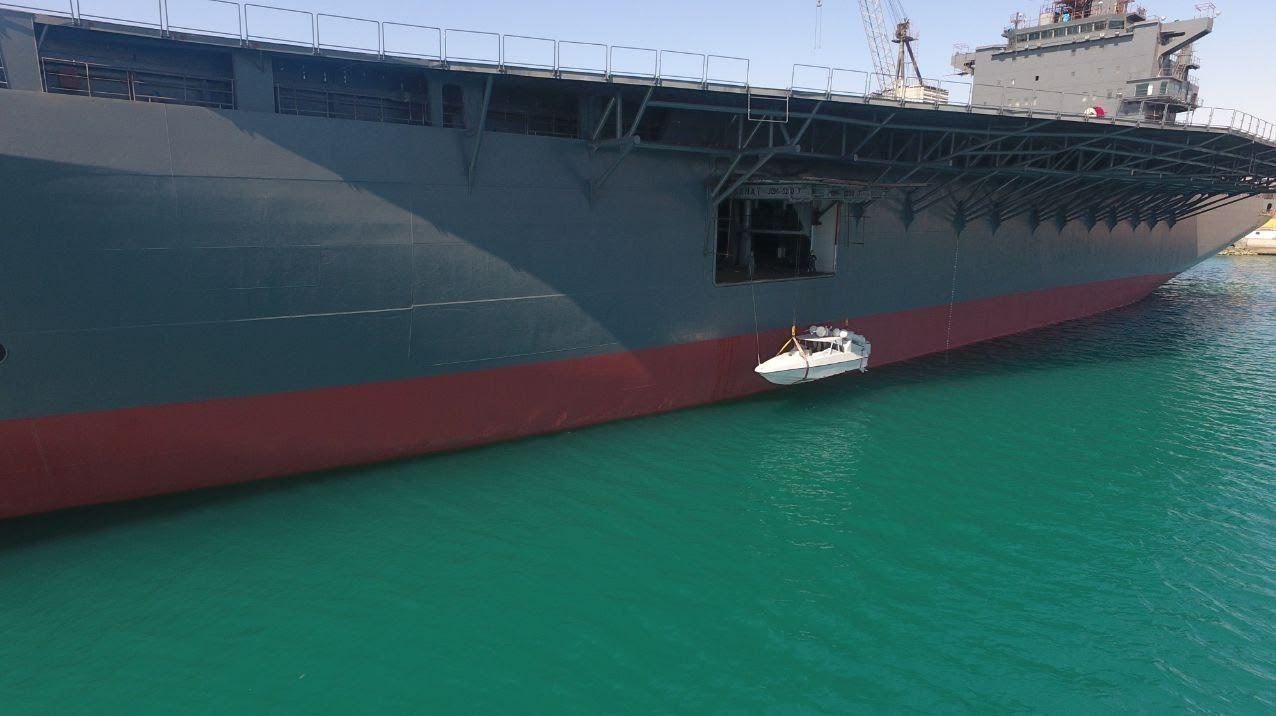
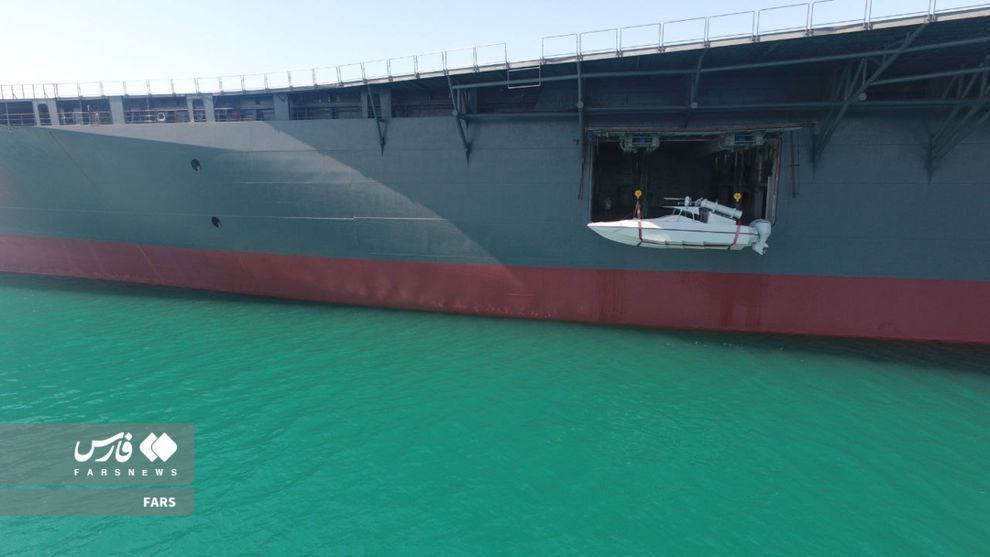
    As previously mentioned, Shahid Bagheri drone carrier is equipped with missile-launching fast craft. These fast craft are launched into the water using overhead cranes located on the sides of the ship.

    Iran can utilize drone carriers as floating bases in nearby waters or international waters to conduct various operations, including reconnaissance, intelligence, and combat missions. The United States, China, Russia, and Turkey have previously employed this capability at sea.

    The name of this ship, Shahid Bagheri, honors martyr Bahman Bagheri, who was martyred in 1988 during the Iran-Iraq War at Faw. Bahman Bagheri was a prominent martyr of the IRGC and served as the commander of communications at the IRGC Navy’s Nuh Base during the war.

    Ababil-3 drone landing and takeoff from the deck of the IRGC Navy’s Shahid Bahman Bagheri drone carrier

    Shahid Bagheri Drone Carrier specifications:
    Commissioned: February 6, 2025
    Length: 240 meters
    Beam: 32 meters
    Draft: 12 meters
    Speed: 22 kn
    Displacement: 42,000 tons
    Endurance: 1,000 days
    Missile arsenal:
    8 air defensive missiles
    8 anti-ship missiles
    Guns:
    1x 30 mm automatic cannon
    2x 20 mm Asefeh cannons
    Aircraft carried: 60 UAVs and various types of helicopters
    Boat carried: 30 fast missile boats
    Made by: Iran

  • Russian Delegation Visits Damascus, Begins Ties with New Syrian Government

    Russian Delegation Visits Damascus, Begins Ties with New Syrian Government

    The delegation, led by Mikhail Bogdanov, Deputy Foreign Minister of Russia, and Alexander Lavrentiev, Putin’s special envoy for Syria, met with Abu Muhammad al-Julani, the leader of Hayat Tahrir al-Sham in Damascus on January 28.

    During the meeting, Al-Julani requested that the Russian delegation restore the lost trust by paying compensation and participating in the reconstruction of Syria.

    For many years, Russia has been considered a supporter and partner in the leadership of Syria during the Assad family’s rule. During the Syrian war, Russia, along with Iran, played a significant role in changing the battle’s equation in favor of the central government. Russian airstrikes were a key factor in the militants’ defeat, and Russian military support inflicted significant losses on the militants. It appears that the new Syrian government has come to terms with Russia’s past support for Bashar al-Assad and attacks on militants, recognizing Moscow’s international influence and role in addressing future challenges.

    Simultaneously with the presence of the high-ranking Russian delegation in Damascus, the Russian newspaper Tass, citing the Turkish newspaper Sabah, considered five possible scenarios for Syria’s future:

    • The creation of the Syrian Democratic Republic by a coalition of opposition parties with ideological differences.
    • The creation of the Islamic Republic of Syria by Hayat Tahrir al-Sham (formerly Jabhat al-Nusra) and other terrorist groups.
    • The creation of an anti-Shiite state under the support and control of the Zionist regime.
    • The creation of a federal Syrian republic with regional and state governments under US supervision.
    • The division and disintegration of Syria.

    Syria is currently facing numerous intra-group and ideological differences, as well as economic, social, and security problems. The new Syrian government has not reached an agreement with the Syrian Democratic Forces, and the areas under SDF control remain outside the Damascus government’s control. Areas in southern Syria are also occupied by the Israeli army, and no specific time for the Zionist withdrawal from these areas has been announced, putting Syria at risk of disintegration.

    While none of the above scenarios can be definitively predicted for Syria’s future, it is evident that Al-Julani is seeking to form a seemingly Islamic government with a strong presence of Tahrir al-Sham elements. This possibility has become stronger given recent appointments and actions.

  • The Israeli Minister of Defense Revisited the Occupied Hermon Heights in Southern Syria

    The Israeli Minister of Defense Revisited the Occupied Hermon Heights in Southern Syria

    During his visit, he announced that the Israeli army would indefinitely remain in the Hermon Heights and the buffer zone to ensure the security of the Golan and northern regions of occupied Palestine. Additionally, Israel will establish contact with the Druze community in southern Syria.

    Hermon, also known as Jabal Al-Sheikh, is a strategic height in southern Syria, previously described by the Israeli Minister of Defense as the eye of the region. On December 8, coinciding with the fall of the Bashar al-Assad government, Israeli forces entered southern Syria and captured these significant heights. Jabal Al-Sheikh overlooks all of southern Syria and parts of Lebanon.

    It is worth noting that on December 17, Israeli Prime Minister Benjamin Netanyahu, along with Yisrael Katz and Ronen Bar, head of the Israeli General Intelligence Service (Shabak), also visited the Jabal Al-Sheikh Heights.

    The Israeli army has released a video showing the construction of a military post on Mount Hermon

    The southern part of the Suwayda province in Syria and the occupied Golan Heights are key areas where the Druze community resides. In recent years, Israel has taken steps to strengthen its relations with the Druze living in the Golan. To increase its influence in Syria and ensure permanent control of the southern regions, Israel seeks contacts and friendly relations with the Druze population of Syria. Recent activities and political positions of both the Zionists and the Druze reflect this reality.