The 1,930-TEU vessel, built in 2022 and owned by Shanghai-based Asean Seas Line, was en route from Jebel Ali to the Suez Canal with Aqaba as its final destination, scheduled to call at Jeddah port on January 29th.
The all-Chinese crew was safely rescued by a nearby vessel with no injuries reported.
The incident occurred approximately 226 kilometers northwest of Hudaydah, Yemen, in open waters. Diaplous Maritime Services warned the drifting vessel poses a navigational hazard, while Ambrey suggested the fire might have been caused by hazardous cargo. Thick smoke was seen emanating from the forward section of the ship.
The ASL Bauhinia remains adrift, with investigations ongoing. The possibility of a Yemeni army attack is ruled out, given the cessation of military operations in the Red Sea and Gulf of Aden in line with the Gaza ceasefire agreement. The US and Israel might portray Yemeni waters as unsafe to justify actions against Yemen, including adding the Ansar Allah movement to the terrorist list.
The new government’s proposals for the SDF included “recognizing the cultural rights of the Kurds and incorporating them into the future constitution, facilitating the integration of SDF forces into military and security institutions, and establishing a decentralized administrative system to govern the provinces.”
Rejecting these proposals, the SDF maintained their conditions, which include “integration into the new Syrian army as an independent unit, retaining their military positions in the areas under their current control, and receiving a share of the revenue from oil fields and wells.”
The SDF cited several reasons for their stance, including the potential for a large-scale operation by the Turkish army and its militants in northern Syria, as well as the uncertainty surrounding the dissolution of the Turkish-backed Syrian National Army (SNA), as key reasons for their insistence on their conditions.
Following the ceasefire in southern Lebanon on November 27, 2024, the Israeli army continued its advance into southern Lebanon, entering many areas without facing conflict, which they had not been able to control during their battle with Hezbollah. Over the 57-day ground conflict, Hezbollah managed to prevent the Israeli military from expanding deep into Lebanon, even south of the Litani River, restricting the fighting to the southern Lebanese border strip.
In total, considering the areas that came under Israeli influence during the ground battle and post-ceasefire, the Israeli army has so far withdrawn from the areas and villages of Shamaa, Tayrharfa, Shiheen, Al-Jubain, Al-Naqurah, Hamul, Bani Hayyan, Kfarshoba, Shabaa, Deir Mimas, Houla, Meis Al-Jabal, Marun Al-Ras, Aitaroun, Yaroun, Dhahira, Yarin, Umm Tut, Zalutiya, Taibah, Deir Saryan, Beit Leif, Haninne, Qantara, Ramieh, Aita Al-Shaab, Rmaish, and Quzah.
According to the ceasefire agreement, these areas have been handed over to UNIFIL forces following the withdrawal of Israeli troops and are now under the control of the Lebanese Army.
Recent reports indicate that the towns and villages of Labouneh, Marwahin, Bustan, Blida, Muhaibib, Markabah, Kafr Qala, Udaysah, Rab al-Thalathin, Tallusah, Tel al-Hamams, al-Wuzzani, al-Abbasiyyah, and al-Majidiyah are still under Israeli control or influence.
As per the ceasefire agreement, the Israeli army was supposed to evacuate these areas within 60 days, by January 26, 2025. However, this did not occur, and the Lebanese government, under pressure from the United States, accepted an extension of the Israeli withdrawal deadline to February 18.
Nevertheless, Hezbollah’s Secretary General and its military command’s Operations Room have stated they do not accept this delay. They assert that the United Nations, the agreement’s supporting countries (the United States and France), as well as the Lebanese government, army, and people must oppose the Zionist occupation.
Given Israel’s repeated requests for permanent deployment at three to five strategic points in southern Lebanon, it appears that Israel’s delays and excuses for not evacuating will continue. Israel’s main objectives are to completely devastate the border areas and reignite the conflict in southern Lebanon. With the Trump administration now in power in the United States, the West’s support for Israel has intensified, and any forthcoming conflict is likely to be more severe than before.
The White House outlined the new US administration’s policy towards Yemen, emphasizing cooperation with regional partners to dismantle Houthi capabilities, operations, and resources.
Trump’s decision was influenced by a proposal from US Republican senators titled the “Dismantle Iran’s Proxy Act,” which calls for a new strategy to confront Yemen, including measures to reduce Yemen’s capabilities in the Red Sea and cut off humanitarian aid.
The US previously listed the Yemeni Ansar Allah movement as a terrorist group during Trump’s first administration. Biden also announced on January 17, 2024, that he considered the Ansar Allah movement a terrorist group, but the process was not implemented by the end of his administration.
In recent years, Israeli military and security institutions have frequently reported the deaths of various resistance commanders, only for those claims to be later disproven when these commanders appear on the frontlines or before the cameras.
The fact that the Israeli regime relied on this intelligence for about eight months and believed the Hamas Beit Hanoun Battalion Commander was deceased highlights a significant intelligence failure. It is likely that similar reports regarding other resistance commanders in Gaza may also be proven incorrect in the coming weeks.
Hussein Fayyad, the Beit Hanoun Battalion Commander of the al-Qassam Brigades
Under the ceasefire agreement, the Israeli army will gradually withdraw from various areas of the Gaza Strip over the coming days and weeks, in stages.
Initial Withdrawal: Israeli forces left the southern areas of Beit Lahia and Jabalia yesterday, re-establishing the connection between northern Gaza and Gaza City. Displaced residents in the north are returning home.
Next Steps: On the seventh day of the agreement, Israeli forces will begin withdrawing from the Netzarim axis in central Gaza. They will initially move from Al-Rashid Street to Salah al-Din Street, and by the twenty-second day, will retreat to the buffer zone on the Gaza border, reopening travel routes for Palestinians.
Final Phase: On the 50th day, Israeli forces will fully withdraw from southern Gaza and the Philadelphi axis, redeploying to a 1-kilometer-deep buffer zone along the Gaza border.
Avichay Adraee, the Arab spokesman for the Israeli army, released a map showing the locations of Israeli forces in Gaza. He noted that currently, movement from south to north Gaza is dangerous due to Israeli presence on the Netzarim axis. Starting next week, Palestinian civilians will be able to return to northern Gaza. Activities such as fishing, swimming, diving, and approaching buffer zones, the Rafah crossing, and the Philadelphia axis will remain prohibited.
According to the Israeli army, the incident resulted in the death of an Israeli soldier named Sgt. First Class Eviatar Ben Yehuda, 31, of the Ephraim Regional Brigade’s 8211th Reserve Battalion. The battalion commander and two other soldiers were wounded.
The IWN investigations indicate that the number of Israeli “military” deaths claimed by the Israeli regime has reached 841 since the start of the war.
This morning, the first group of Palestinian prisoners were freed from Israeli prisons as part of the prisoner exchange agreement between Hamas and the Israeli regime. The released prisoners include 69 women and 21 children, with 76 from the West Bank and 14 from occupied Jerusalem.
Celebration of Palestinian Prisoners’ Release
As the buses carrying the Palestinian prisoners departed, a group of Palestinians holding pictures of martyred Hamas leaders, including Ismail Haniyeh, Yahya Sinwar, and Saleh Al-Arouri, chanted slogans in support of the resistance in front of Ofer Prison in western Ramallah.
Ramallah residents welcomed the Palestinian prisoners with a ceremony, expressing their joy and gratitude to the resistance groups.
Click to view full size
According to local sources, Israeli security forces have been deployed around the homes of the released prisoners in occupied Jerusalem, preventing people from entering the prisoners’ homes. The families of the released prisoners were also forced to sign a commitment stating that they had no right to any kind of celebration or joy outside their homes.
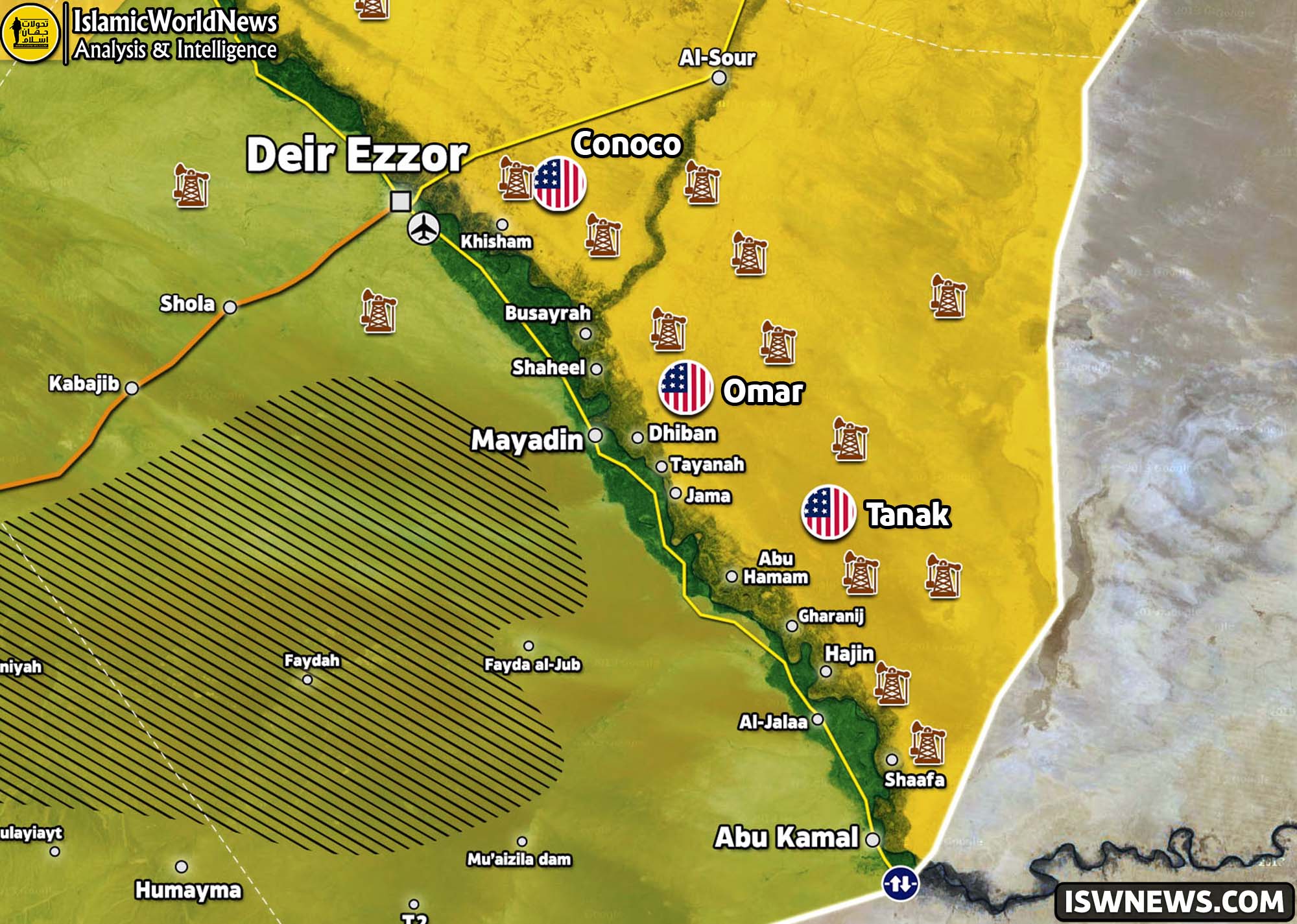
In retaliation, US aircraft targeted positions in Jabal Tharda near the Deir Ezzor military airport. The number of casualties and the extent of damages from these strikes have not yet been disclosed.
This attack marks the 36th attack on US positions at the CONOCO gas facility since the beginning of the war in Gaza, and it is the first attack on US positions in Deir Ezzor province since the fall of Bashar al-Assad’s government.
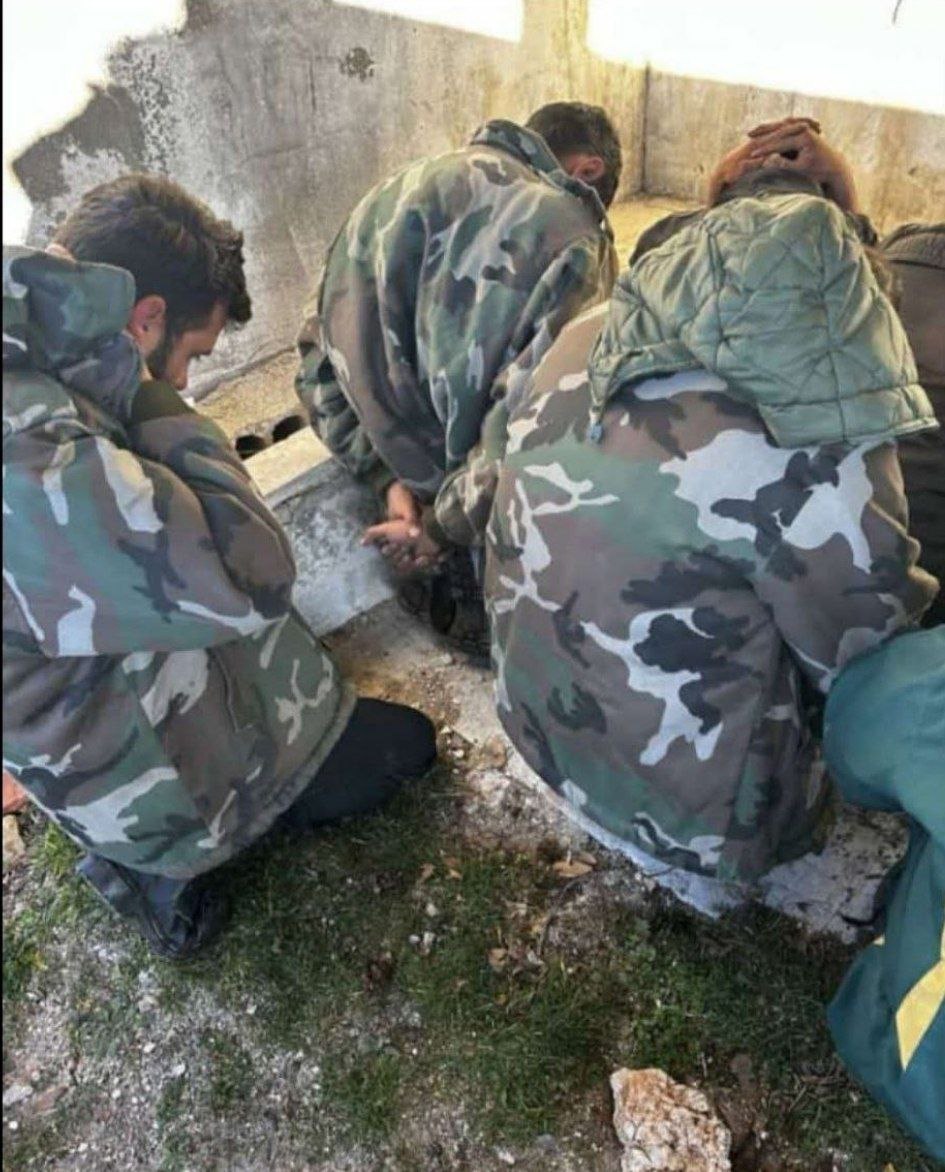
Additionally, during a clash with the militants, Bassam Hussam al-Din, a commander of the Syrian Army’s 25th Division, along with several of his companions, was killed, and several of his troops were captured.
The captured SAA soldiers
Meanwhile, Tahrir al-Sham militants arrested a number of Syrian Alawite leaders, prompting anger among the Alawite community in Latakia. This led to protests in the streets against Tahrir al-Sham’s actions.
Although the armed clashes on the outskirts of Jabla have ceased, Tahrir al-Sham militants are now sending aid convoys to various cities in Latakia province to prevent further incidents and suppress the Alawites.
Brigadier General Yahya Saree reported that the Yemeni armed forces targeted Tel Aviv with multiple suicide drones.
Additionally, the missile force of the Yemeni armed forces attacked the Israeli power plant in the Umm al-Rashrash area (Eilat) in southern occupied Palestine with a cruise missile.
According to the spokesman for the Yemeni armed forces, both operations successfully achieved their objectives.
The selection of these targets by the Yemeni armed forces reflects the Yemeni people’s response to the attacks by Israel and the American-British coalition. By pursuing this policy and emphasizing on the cessation of the war in the Gaza Strip in their military statements, they express their unwillingness to escalate the conflict and welcome the end of the war against Gaza. However, this is hindered by the Zionists’ persistence in inciting war and violence in the Gaza Strip, as well as conducting repeated airstrikes against civilian facilities in Yemen.
The investigations by IWN indicate that these attacks marks the 72th-73th aerial operation by the Yemeni armed forces against the Zionist regime in occupied Palestinian territory, utilizing ballistic missiles, cruise missiles, and suicide drones.
The Yemeni army’s operation in support of Palestinian people against the Zionist regime began on October 19, 2023, in occupied Palestinian territory and along the maritime route from the Gulf of Aden to the Red Sea. The continuous attacks on more than 180 ships affiliated with Israel, leading to the suspension of shipping by Zionist companies through the Red Sea route.
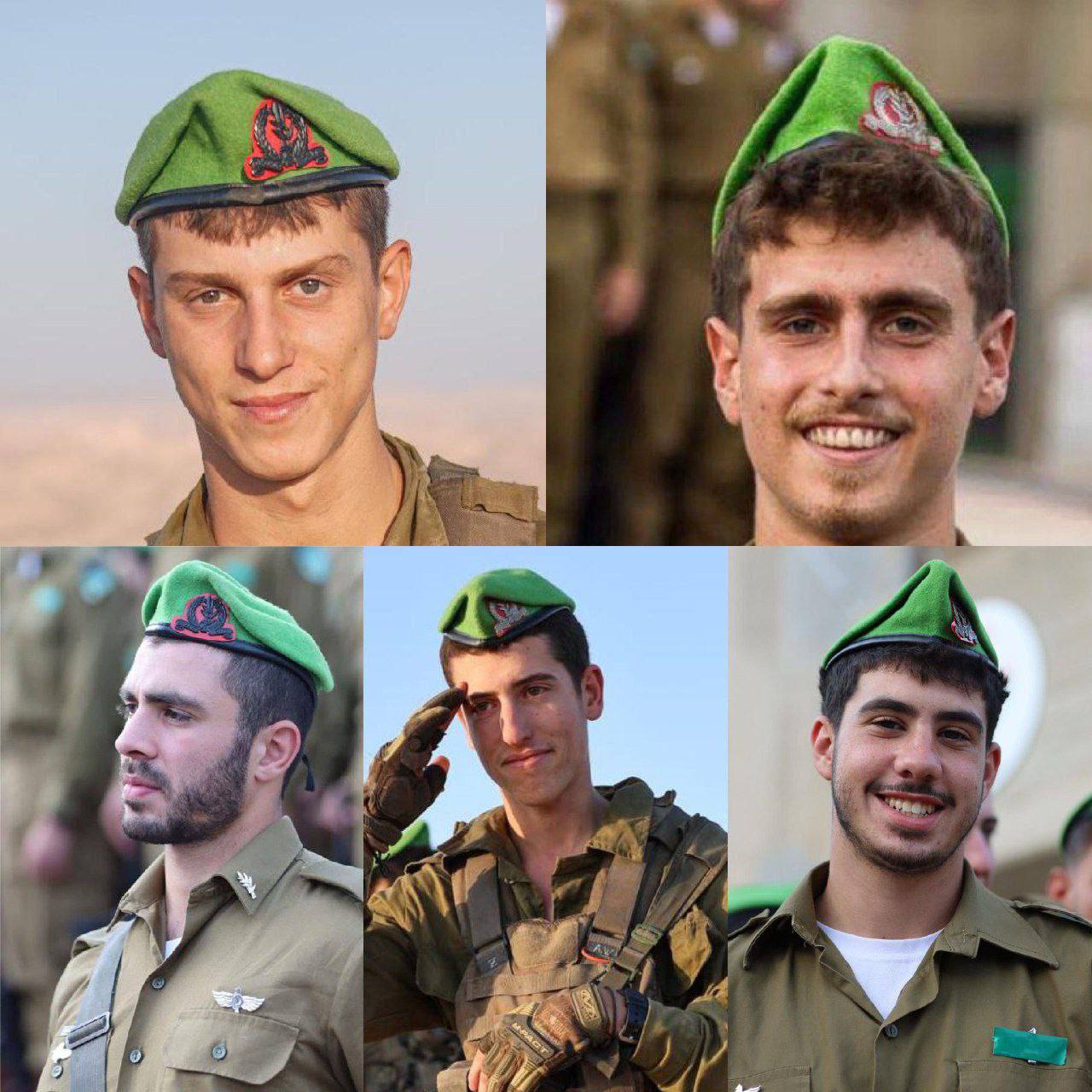
According to the Israeli army, Cpt. Yair Yakov Shushan, Staff Sgt. Yahav Hadar, Staff Sgt. Guy Karmiel, Staff Sgt. Yoav Feffer, and Staff Sgt. Aviel Wiseman were killed in Beit Hanun.
The liquidated soldiers were all served with the Nahal Brigade’s Reconnaissance Unit.
The incident occurred on Monday, when an alleged anti-tank missile struck an Israeli military unit, resulted in the death and injury of soldiers from the Nahal Brigade.
The IWN investigations indicate that the number of alleged Israeli deaths since the start of the ground attack on the Gaza Strip has increased to 413. The total number of “military” deaths, claimed by the Israeli regime has reached 840 since the start of the war.