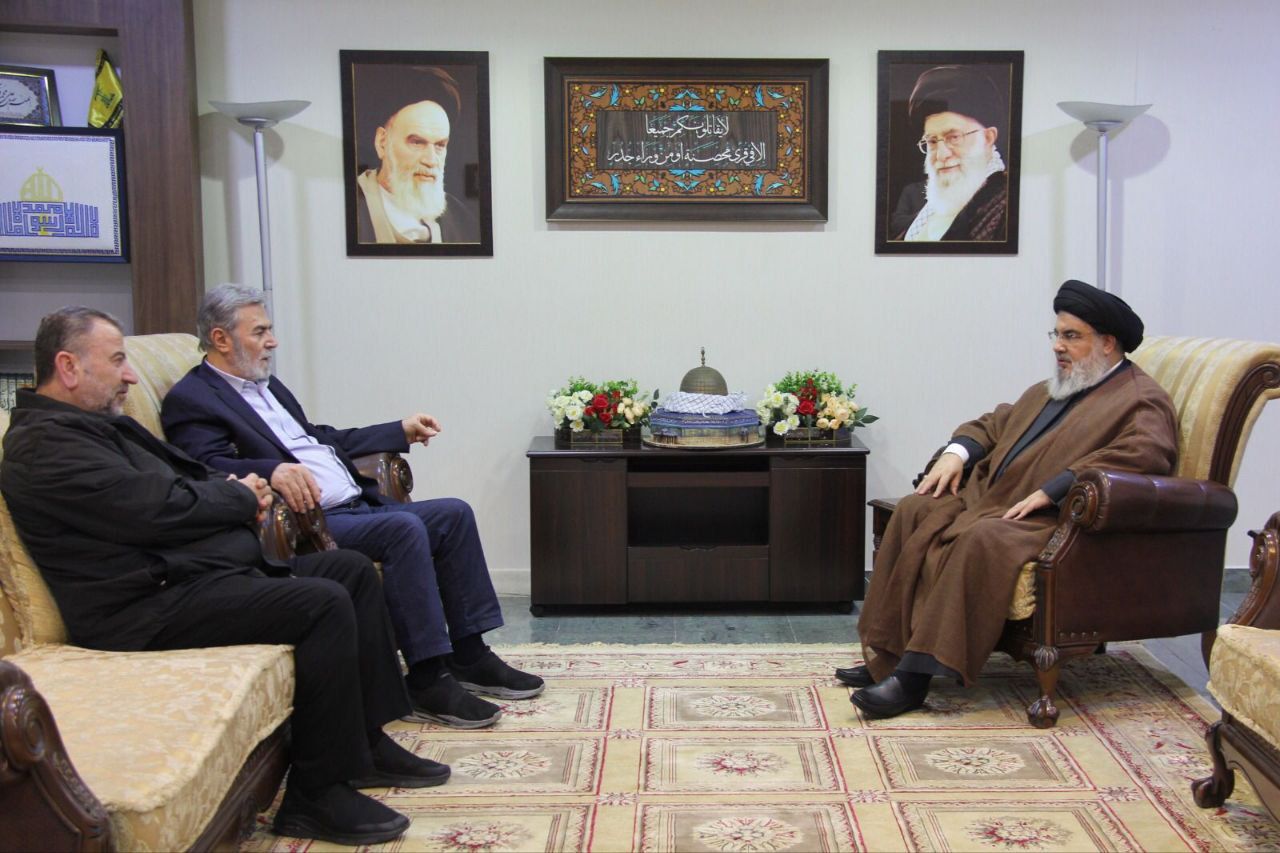
In this meeting, the recent developments in the Gaza Strip since the beginning of the Al-Aqsa storm operation and the events after that were reviewed and opinions were exchanged about the positions of the resistance at different levels as well as the ongoing conflicts in the northern front (the border between Lebanon and occupied Palestine).
The senior officials of the Palestinian and Lebanese resistance groups also discussed the actions that the resistance axis should take at this critical stage in order to achieve a real victory in Gaza and Palestine and to stop the aggression of Israel and the West.
They also agreed to continue coordination and follow up developments on a daily basis.
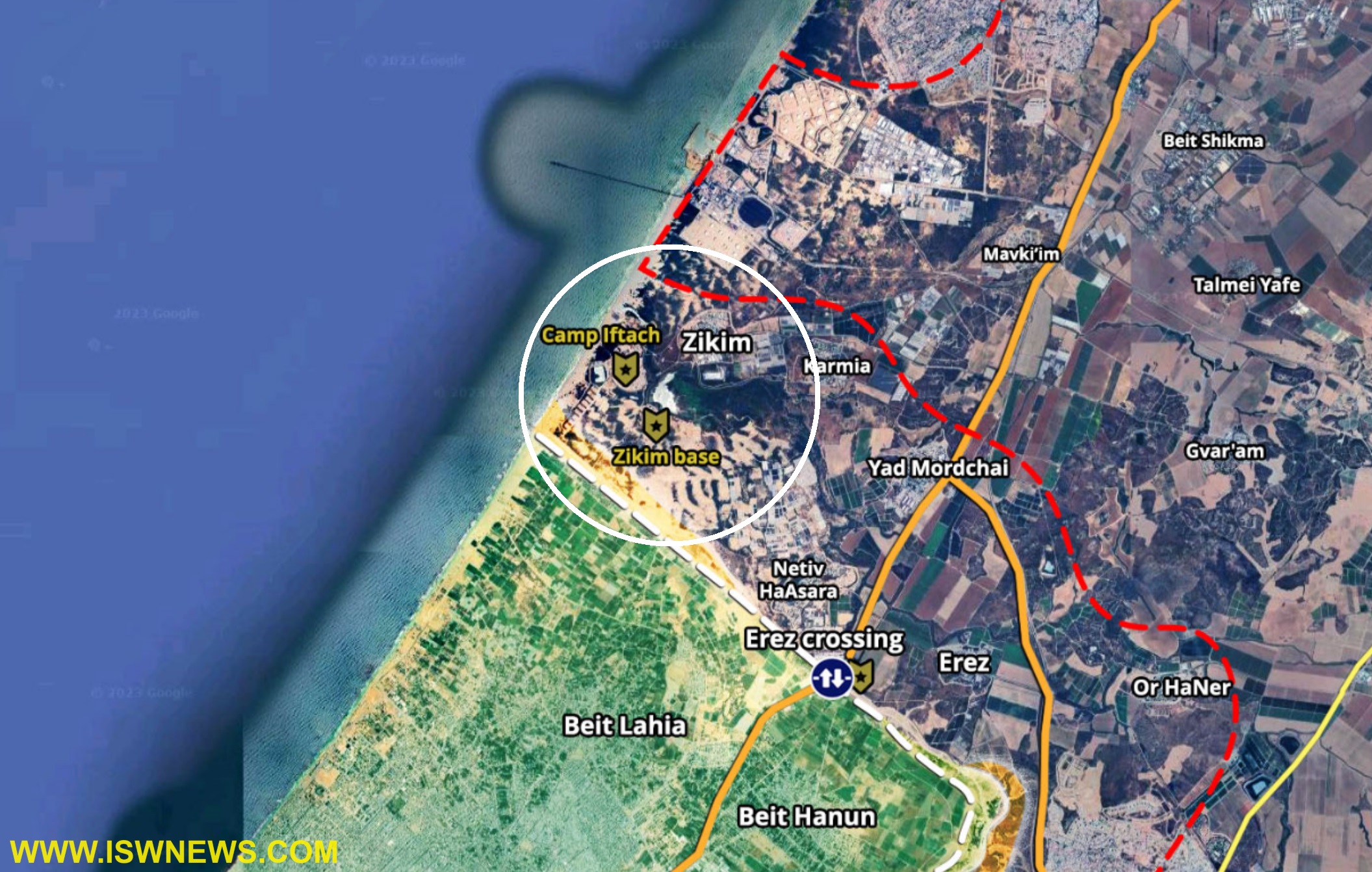
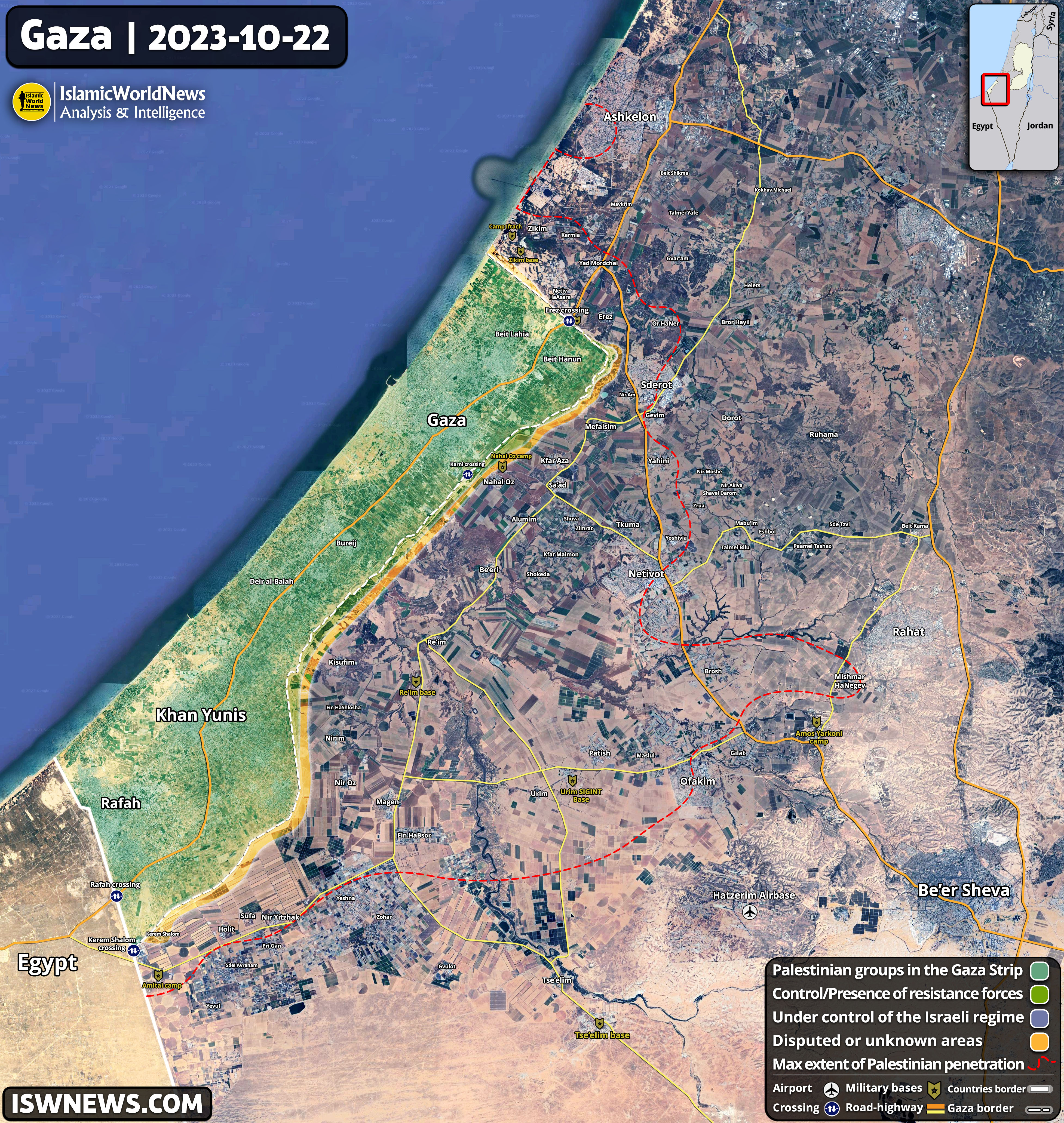
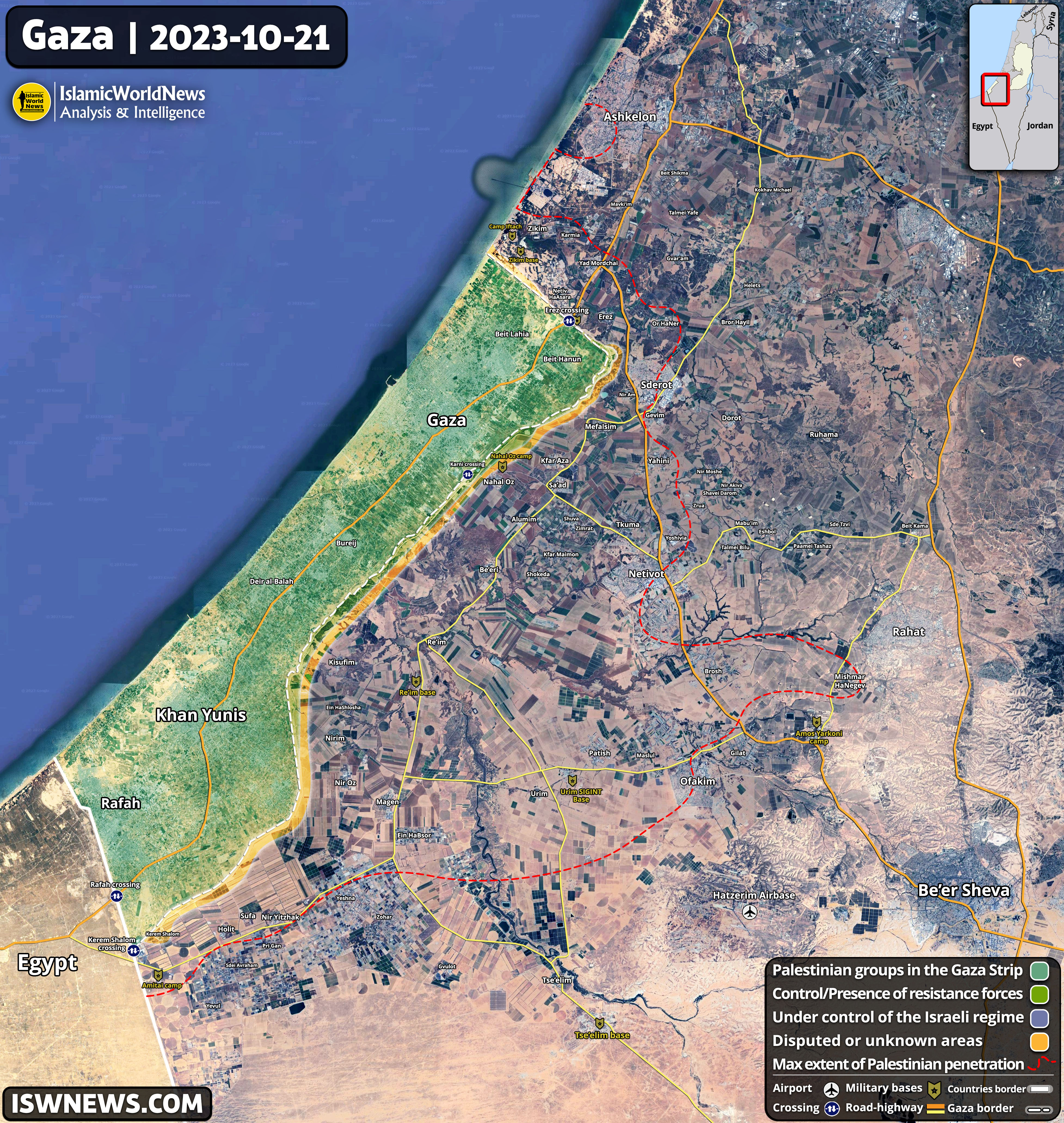
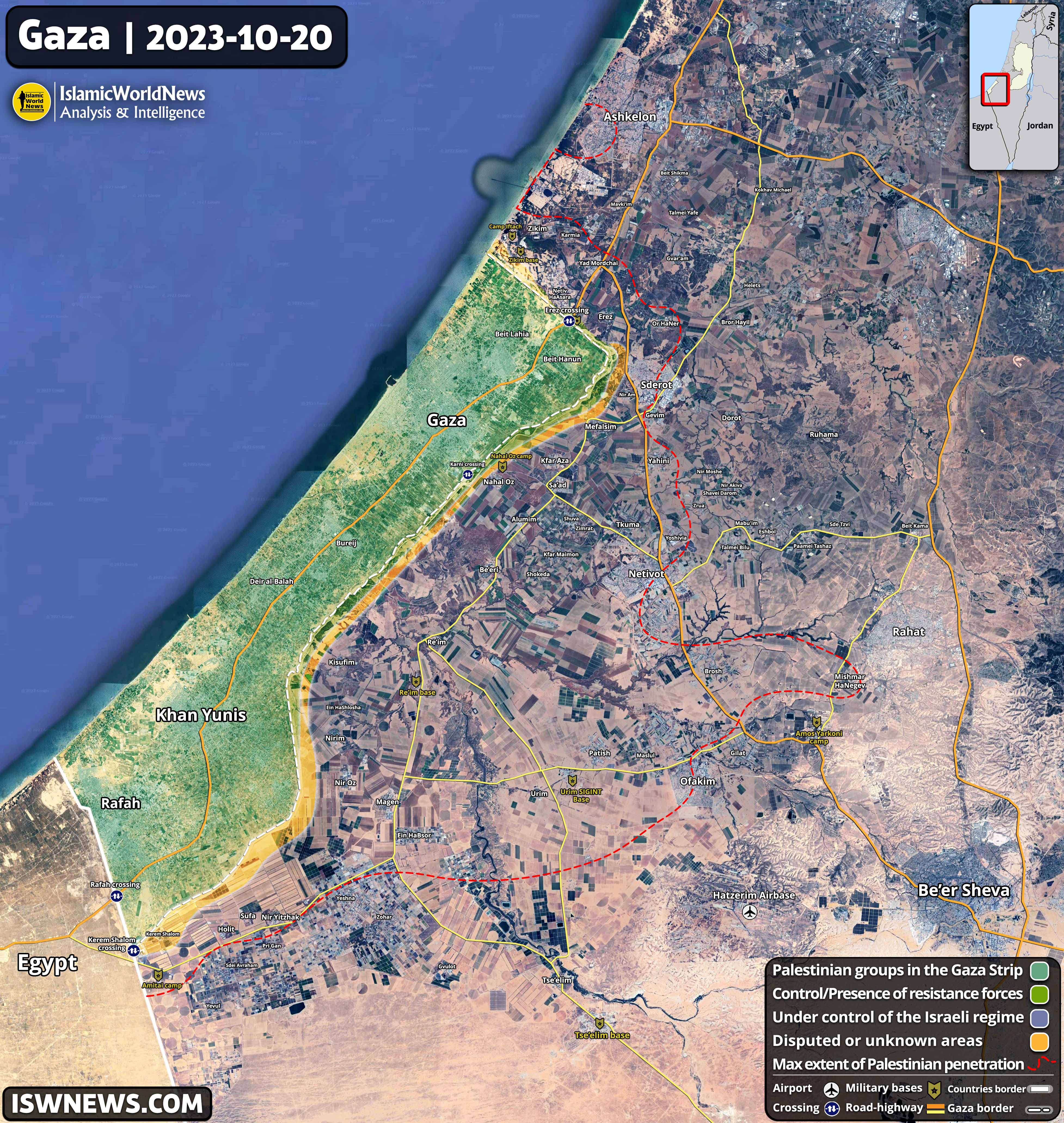
On the 18th day of the fighting, the Palestinian forces succeeded in penetrating the Zikim area in the north of the Gaza Strip. According to the available information, at least 15 Palestinian fighters have penetrated into Zikim. Clashes continued until the end of the day.
Rocket attacks on Israeli settlements around the Gaza Strip and further areas continue. Today, the cities of Tel Aviv, Ashdod and Ashkelon were targeted by heavy rocket attacks by resistance forces at least three times. In one of these attacks, a rocket hit Alfei Menashe area, northeast of Tel Aviv, and a house was seriously damaged and destroyed. The Zionist media made a strange claim that the attack was carried out by a cruise missile. The Zionists also claimed that this missile is Iranian and is similar to the Russian Kha-55 cruise missile!
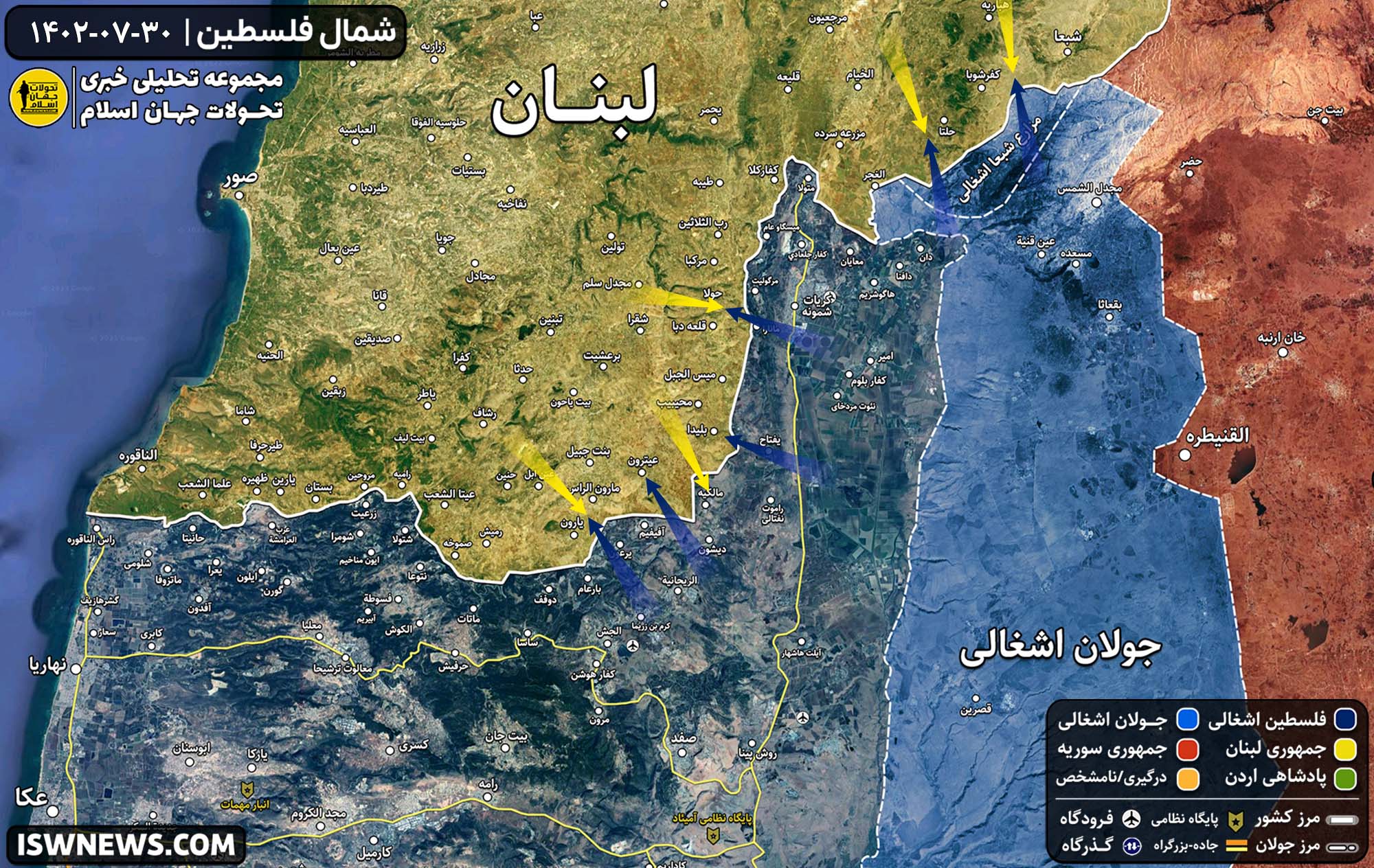
On the northern front, clashes and artillery attacks continue between Hezbollah and the Israeli army. As in the past days, Hezbollah attacked the border posts Israel in the Jal Alam area in the Labuna area (near Ras al-Naqourah), Manara, Al-Abad, Branit, and Al-Rahab using anti-tank guided missiles.
The Israeli army also attacked the areas of Yarun, Ayta al-Shaab, Ramie, Marwahin, Zahira, Ramish, Kafr Shuba and Halta, Harjiya and Al Ruwaisah with air and artillery attacks. Also Israeli drones targeted the heights of Jabal Sadaneh in the north of Kafr Shuba with four bombs.
According to Hezbollah’s announcement, nine members of Hezbollah were martyred in today’s clashes.
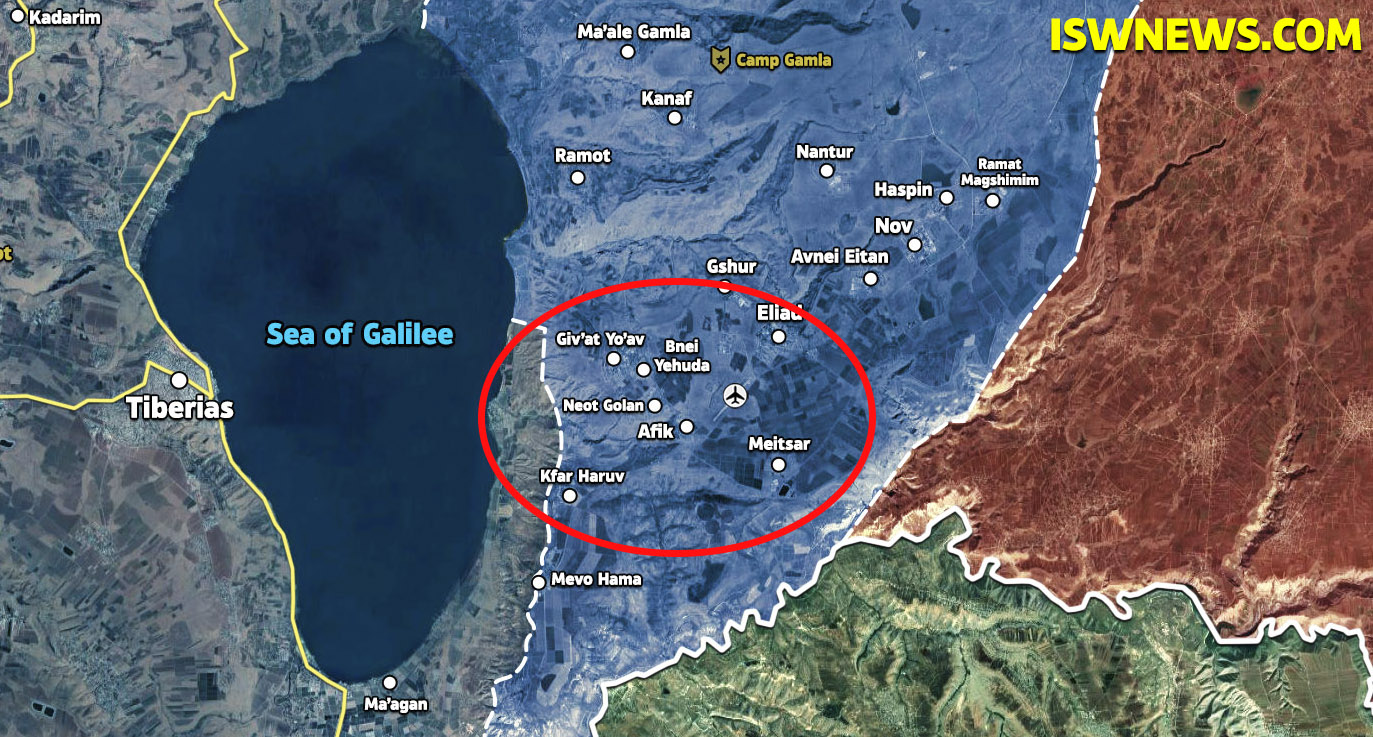
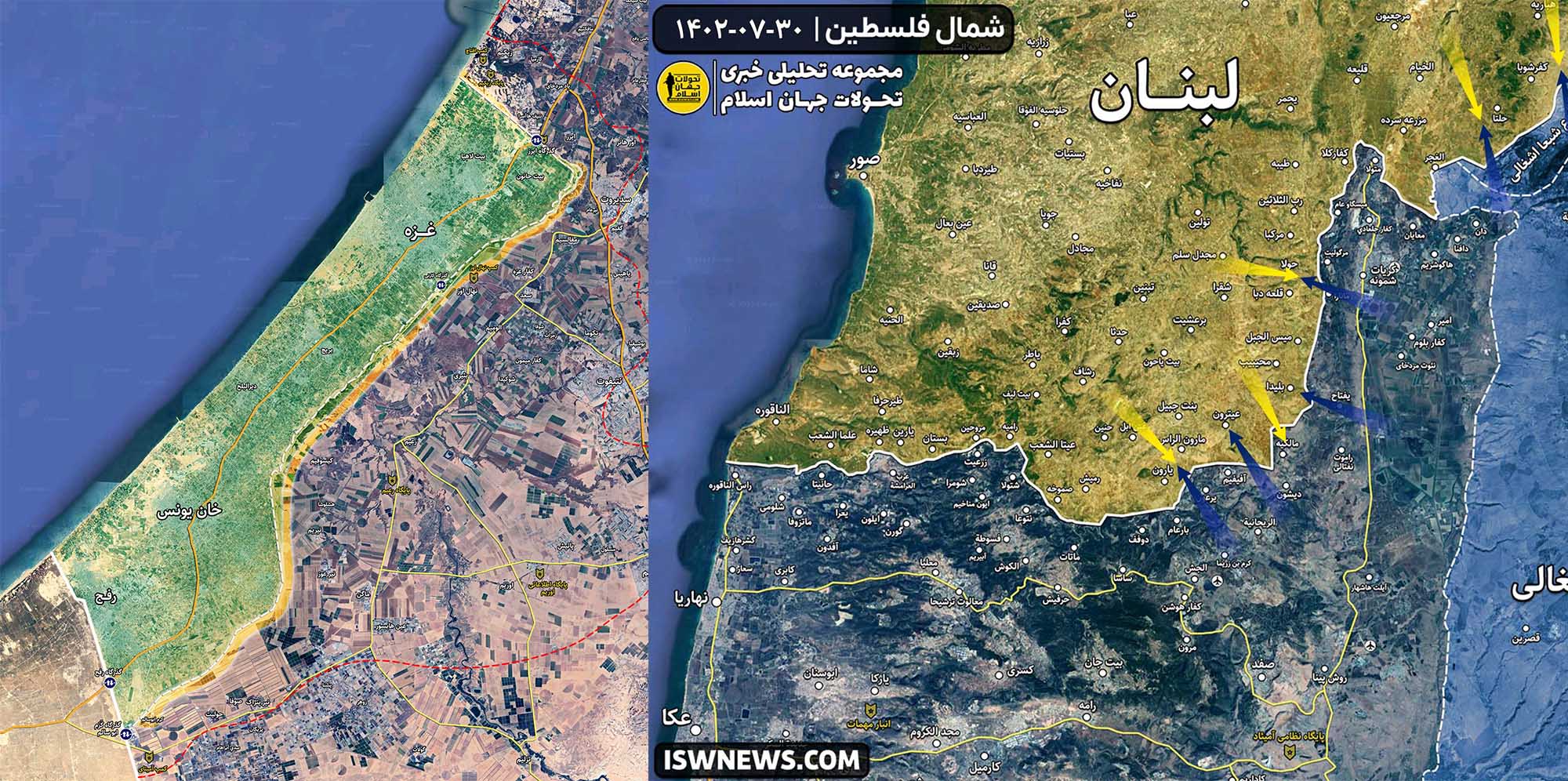
On the Golan front, the resistance forces in Syria attacked Israeli positions in the occupied Golan Heights with at least five rockets. The Occupied Golan Municipality announced that rocket attacks were carried out on Meitsar, Ne’ot Golan, Afik, Bnei Yehuda and Giv’at Yo’av areas in the southern Golan and led to power outages in some areas. This is the second rocket attack by resistance forces from Syrian territory on Israeli positions in the occupied Golan.
The areas that were targeted in the south of Golan
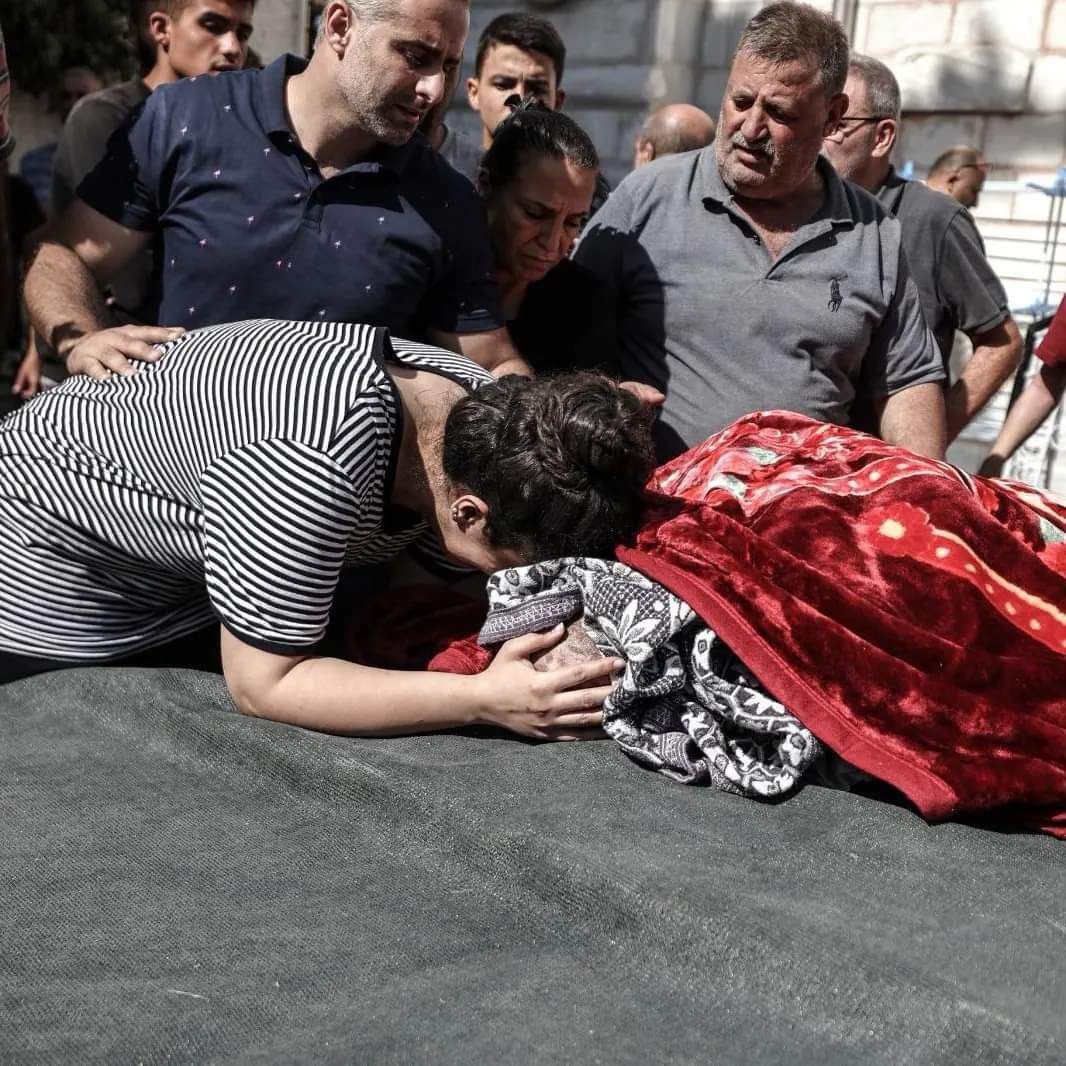
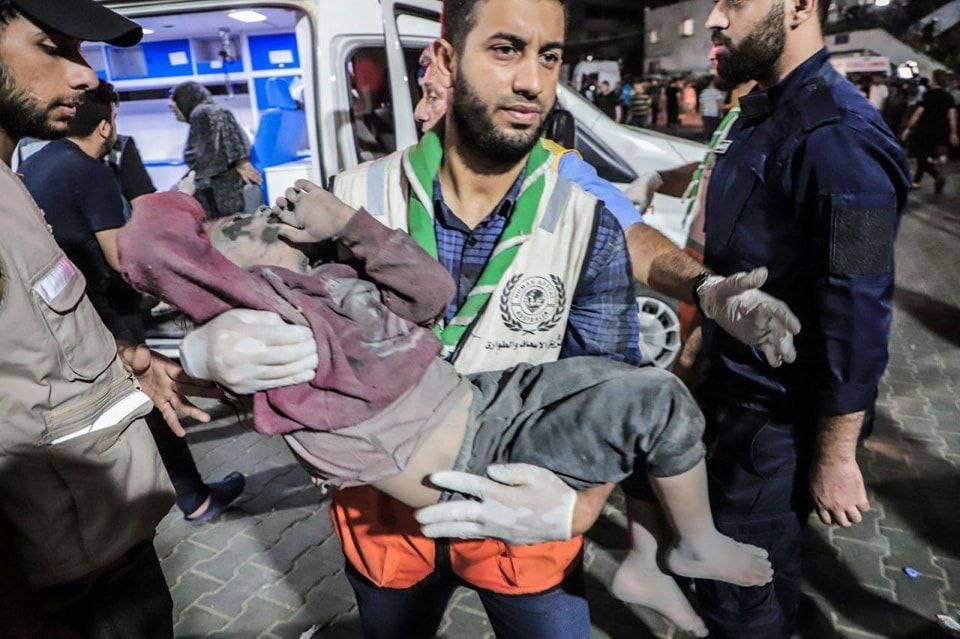
Regarding the number of casualties, the Palestinian Ministry of Health announced that the number of martyrs in Gaza has increased to more than 5,791 people, including 2,360 children and 1,292 women, and the number of injured has reached more than 15,500 people. In the West Bank, at least 90 Palestinians were martyred and more than 1,300 others were injured.
On the 17th day of the battles, there was no special and significant ground conflict around the Gaza Strip. The movements of the Israeli army’s ground forces around the Gaza Strip are currently still defensive. Also, rocket attacks on Israeli settlements around the Gaza Strip and further areas continue; But the intensity of the rocket attacks has been significantly reduced.
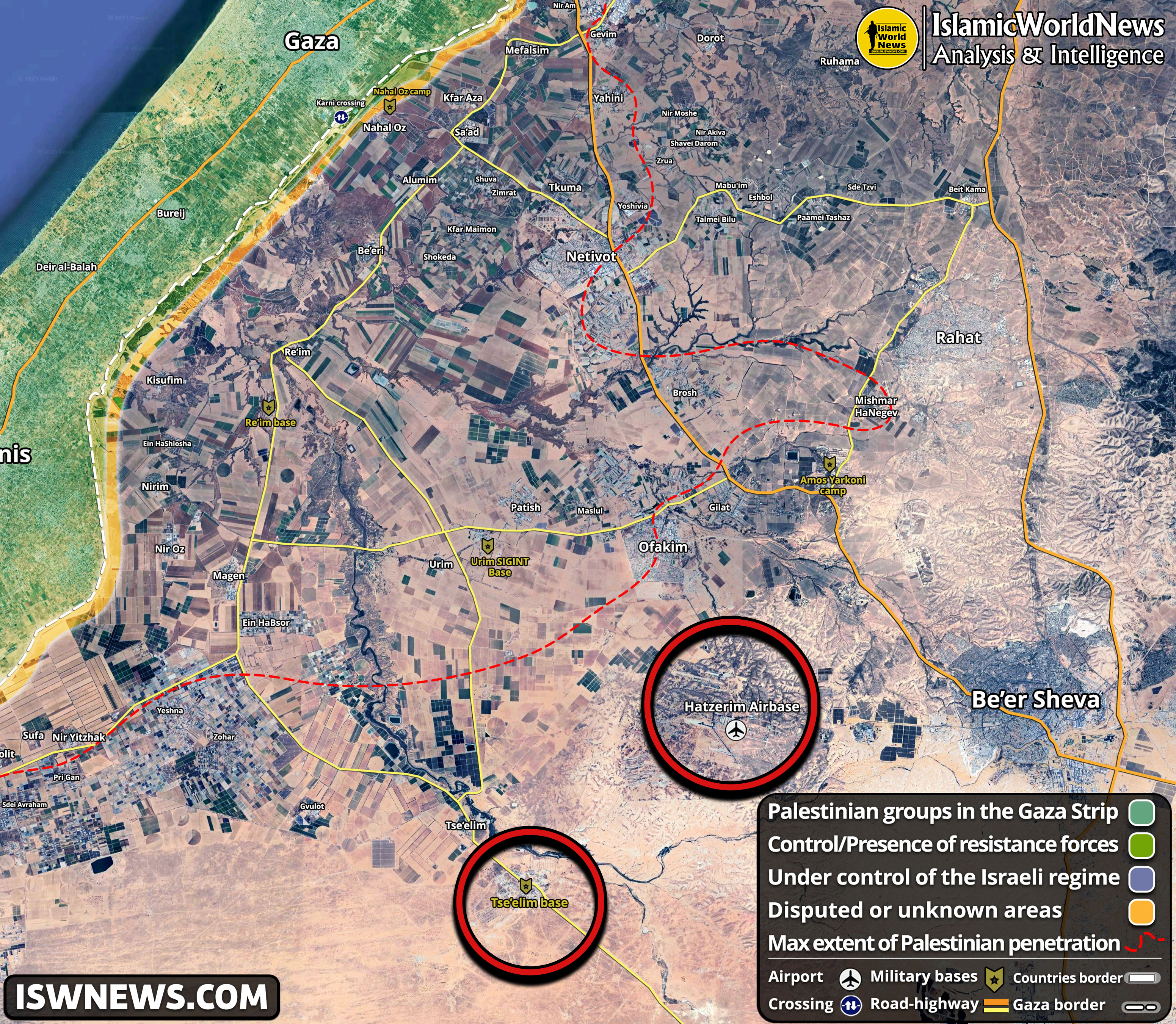
The only important event around the Gaza Strip was the Al-Qassam drone attack on the Hatzerim Air Base and the Tze’elim Base. Al-Qassam Brigades fired at least two suicide drone towards the positions of the 107th Squadron (Orange Tail Knights) of the Israeli Air Force at Hatzerim Air Base and the headquarters of the Sinai Division at Tze’elim Base. According to the information provided by the Israeli army, these two drones were intercepted and destroyed in the areas of Nir Oz and Ein HaBsour in east of the Gaza Strip.
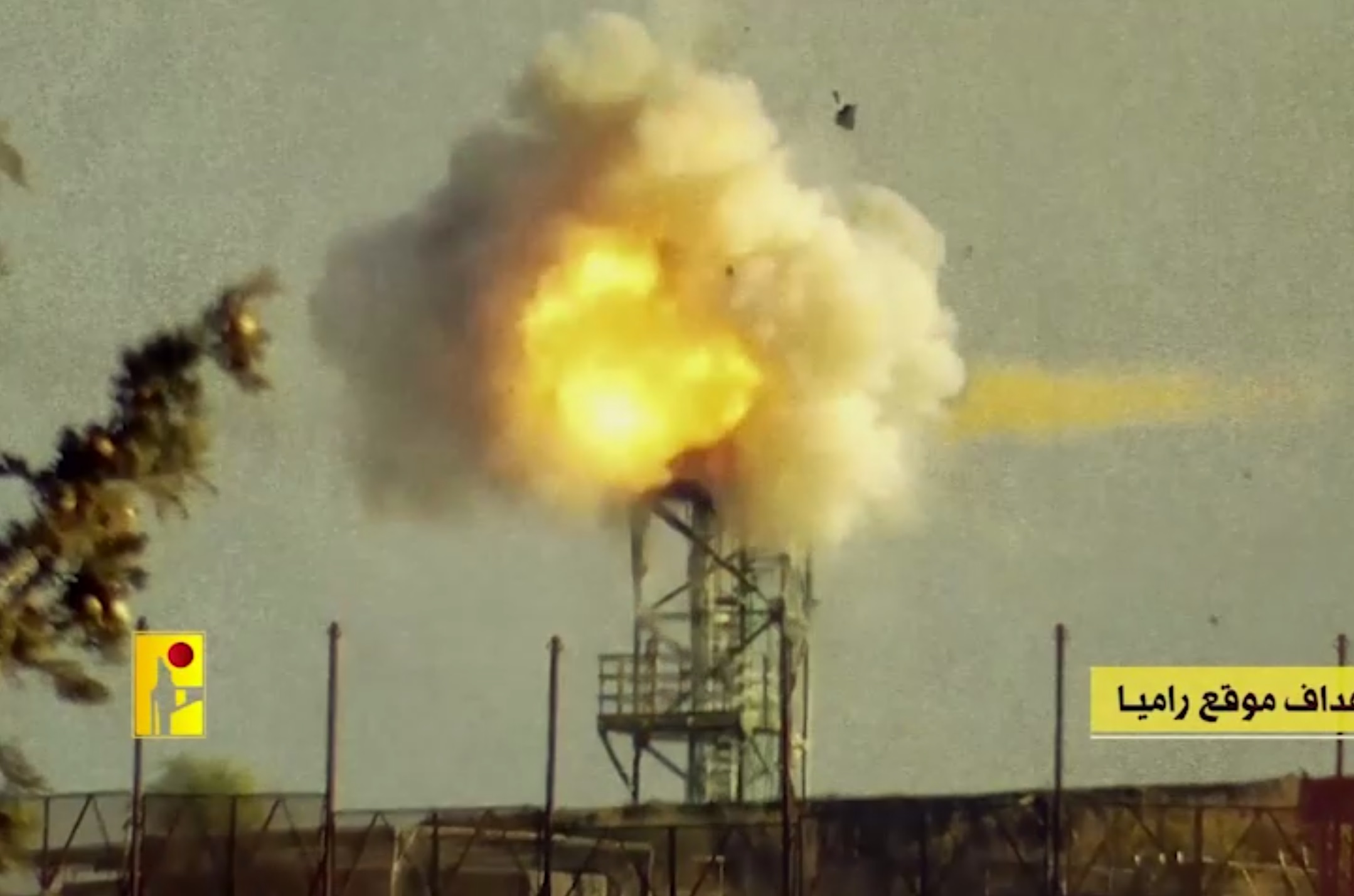
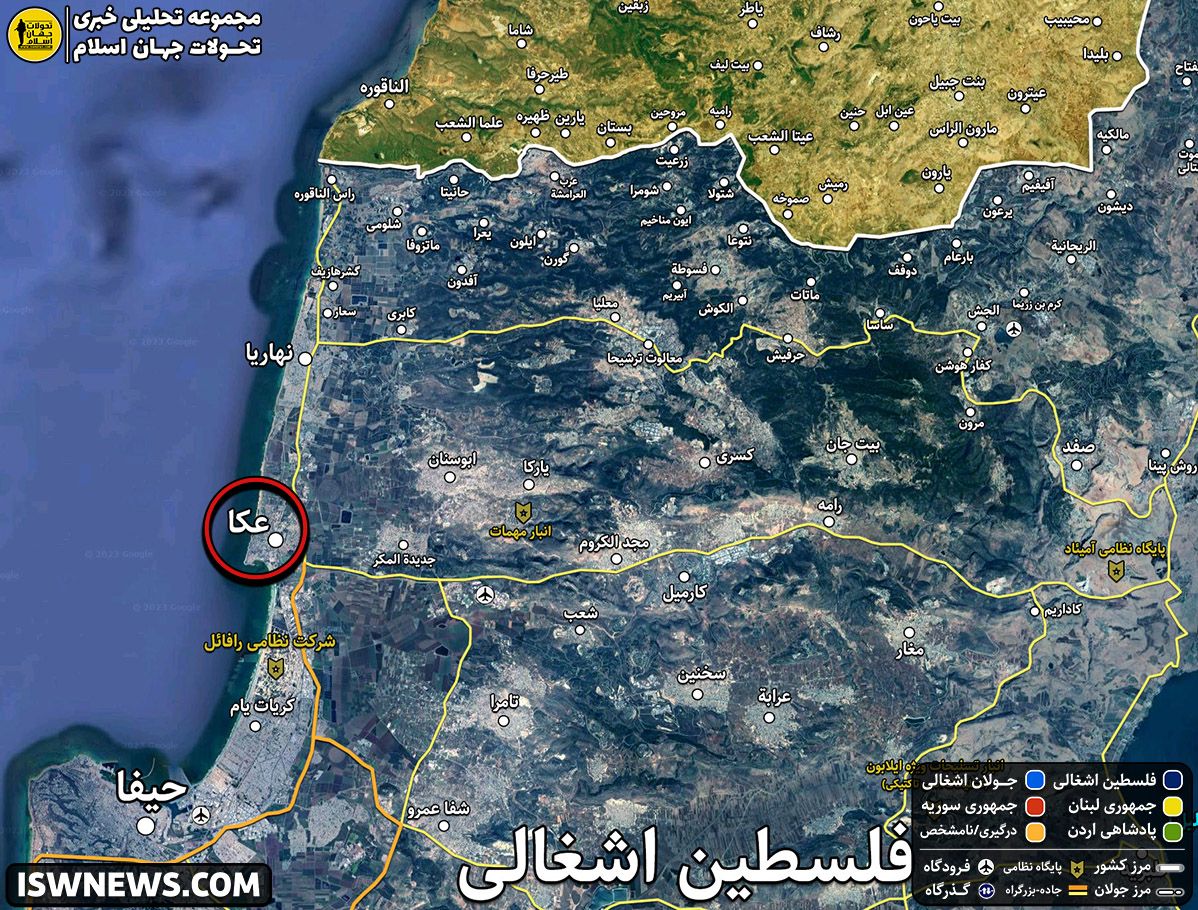
On the northern front, clashes and artillery duels continue between the Israeli forces and Hezbollah. As in the past days, Hezbollah attacked the border posts and military equipment of Israel several times using anti-tank guided missiles. The important event of this day was the penetration of a resistance drone to the north of Haifa. According to the available information, a drone of the resistance forces penetrated into Haifa Bay from Lebanon and through the Mediterranean Sea. Following this action, Israel’s air defense was activated in the sky of the coastal city of Acre and confronted this drone.
The Ministry of Health of Palestine announced that the number of martyrs in Gaza has increased to more than 5087 people and the number of injured people has reached more than 15273 people. In the West Bank, at least 90 Palestinians were martyred and more than 1,300 others were injured.
The armed conflicts between Hezbollah and the Israeli regime’s army in the northern Palestinian axis began on October 8, one day after the onset of Operation Al-Aqsa Storm throughout the Gaza Strip. Unlike the heavy ground, air, and sea clashes in the Gaza Strip, the conflicts in this axis have been limited to exchanges of fire and missile attacks. Hezbollah targets Israel’s military build-ups, defensive and army positions such as tanks, armored vehicles, surveillance cameras, and so on; and the Israeli army responds with artillery strikes and incendiary phosphorus bombs. However, these clashes have entered a new phase since this Saturday following the engagement of Israeli fighter jets and drones, and there is a possibility of an escalation in the level of clashes in comparison to the past confrontations.
The dispatch of Israeli Air Force helicopters to the clashes in the northern Palestinian front is actually an escalation in terms of the level of aggression by Israel; so, the Hezbollah movement can respond by expanding its attacks on all Israeli positions in northern Palestine, increasing joint attacks with the Palestinian resistance groups in the Gaza Strip, and even carrying out extensive rocket and drone attacks to intensify tensions with the Israeli regime.
As Sheikh Naim Qassem, deputy secretary-general of Hezbollah resistance movement, pointed out in his remarks on Saturday, the current clashes are commensurate with the situation and ongoing conflicts in southern Lebanon, and if necessary, Hezbollah will intensify its attacks. In fact, at this stage, Hezbollah is not seeking to expand the clashes with Israel and does not apparently want to be blamed as the initiator of the war with Israel. This has multiple reasons, including the possibility of the United States involvement in the war, Lebanon’s unstable economic situation, regional tensions, and so on. Moreover, Hezbollah cannot enter into a full-scale war with Israel without considering the regional conditions. The Israeli regime has also managed to get rid of the big shock of the early days following the Operation Al-Aqsa Storm and the Israeli intend to show they can overcome the hard circumstances by expanding their attacks on Lebanon and Syria.
Another issue is that the Israeli regime is paving the ground for a widespread war in southern Lebanon. In a significant decision made in a cabinet meeting on October 18, the Israeli military ordered the evacuation of settlements and villages along the occupied northern Palestinian border up to five kilometers from the Lebanese border. So far, some 27,000 Israeli settlers have been evacuated from 28 occupied settlements near the Lebanese border. The largest part of the plan to evacuate border settlements is related to the occupied settlement of Kiryat Shmona, which includes the transfer of 23,000 settlers. This evacuation plan is being implemented with the aim of preventing civilian casualties in possible attacks by Hezbollah and Palestinian resistance groups, as well as to open up the Israeli army’s hands for carrying out attacks and using prohibited weapons in occupied northern Palestine and southern Lebanon.
At this time, there are confrontations and exchanges of fire throughout the border areas between Lebanon and occupied Palestinian territories from Al-Naqoura to Shebaa Farms. The Axis of Resistance has a special coherence and the recent multiple attacks on the United States’ positions in Iraq and Syria testify to the synchronization of the battle between the Israeli-US front and the Gaza-Lebanon axis. The future and outcome of the armed clashes are unpredictable, because Israel has so far rejected any dialogue and mediation regarding the issue of the Gaza Strip and the regime is pursuing high-level aerial attacks (targeting civilians and public places such as hospitals, mosques, schools, markets, churches, and so on). The United States also links the Israeli front with the Ukrainian front and is using these clashes for its political purposes. The United States and the Israeli regime agree on carrying out ground operations in the Gaza Strip and in recent days, many military aids have been shipped from the United States and Europe to the city of Tel Aviv and military bases in other Israeli cities. The Israeli regime intends to destroy Palestinian resistance defense positions in the Gaza Strip with extensive aerial attacks and then enter into ground operations. Unofficial reports of dual-nationality soldiers entering Israel also confirm this issue.
Taking all these issues into consideration, the current war between the Israeli regime and Palestinian resistance groups in the Gaza Strip and the Lebanese Hezbollah in the north is a regional war in which the United States and other resistance groups are also involved. The Israeli regime’s ground operation in the Gaza Strip is directly related to intensified clashes in the north and resistance attacks in Iraq and Syria, and there is a possibility of it spreading to Yemen and even the Persian Gulf as well as the Sea of Oman.
The Israeli army claimed that it has intercepted and destroyed these drones in the areas of Nir Oz and Ein HaBsour, located in the east of the Gaza Strip.
This attack was carried out from Lebanon by Hezbollah or Palestinian resistance groups.
As we mentioned in the previous articles, Israel increased the level of conflict by bringing its fighter jets and drones into the conflicts on the northern front. “Drone attacks” is one of the predictable and in fact the most appropriate response that Hezbollah could give to this issue.
The drone attacks and the combination of operations with the Palestinian rocket attacks from the Gaza Strip can produce severe blows such as the Aramco operation. If the resistance in this matter is serious, Israel will soon regret increasing the level of conflict with Hezbollah.
Israeli defense missile fired at the attacking drone
On the 16th day of fighting, no significant ground fighting was observed around the Gaza Strip. The movements of the Israeli army’s ground forces around the Gaza Strip are currently still defensive. Also, rocket attacks on Israeli settlements around the Gaza Strip and further areas continue.
On the northern front, the Israeli regime artillery attacked the areas of Blida, Aytron, Raisat al-Alam in the heights of Kfarshoba, Bastrah and Raba al-Taban in Shebaa Farms, al-Dahira, Alma al-Shaab, Marun al-Ras, Jabal al-Bat and Hawla.
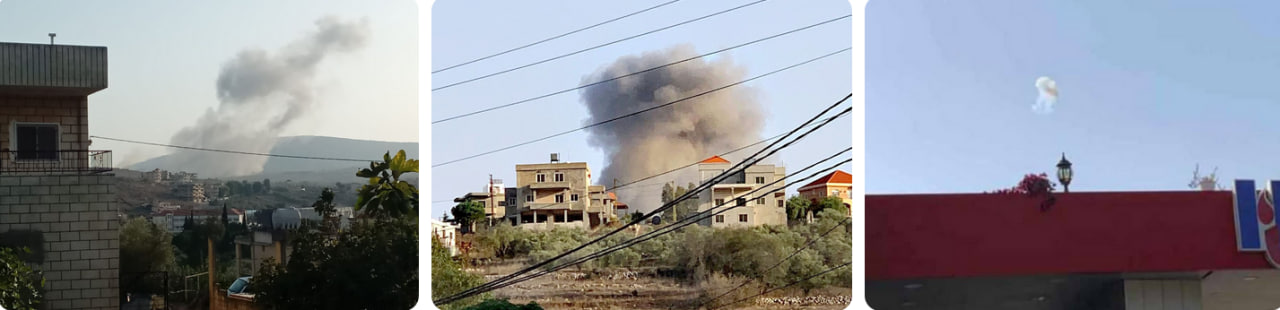
Israeli warplanes also bombarded Aytron area more than three times on the second day in a row since the beginning of their activities in the northern front. The Zionists also claimed to have shot down a Hezbollah drone using the Patriot system. Also in a rocket attack from Lebanese territory, a rocket was intercepted in the sky of Markaba using the Iron Dome system.
Pictures of the rocket interception in Markaba area and the attacks of Israeli fighter jets on Aytron area
In an operation, Hezbollah forces destroyed the monitoring equipment of the Israeli army on the border of Al-Abad area using ATGM missiles. In response to Israel’s artillery attacks, Hezbollah attacked their positions in al-Bayyad and al-Malikia area.
Hezbollah artillery attack on the positions of Israeli army in Al-Bayyad area
Also, seven members of Hezbollah were martyred in today’s clashes. No details have been released about the casualties of the Israeli forces.
According to the Palestinian Ministry of Health, Israel’s barbaric bombings against Gaza have resulted in the martyrdom of 4,651 people. Also, more than 14,245 people have been injured. In the West Bank, at least 88 Palestinians were martyred and more than 1,400 others were injured.
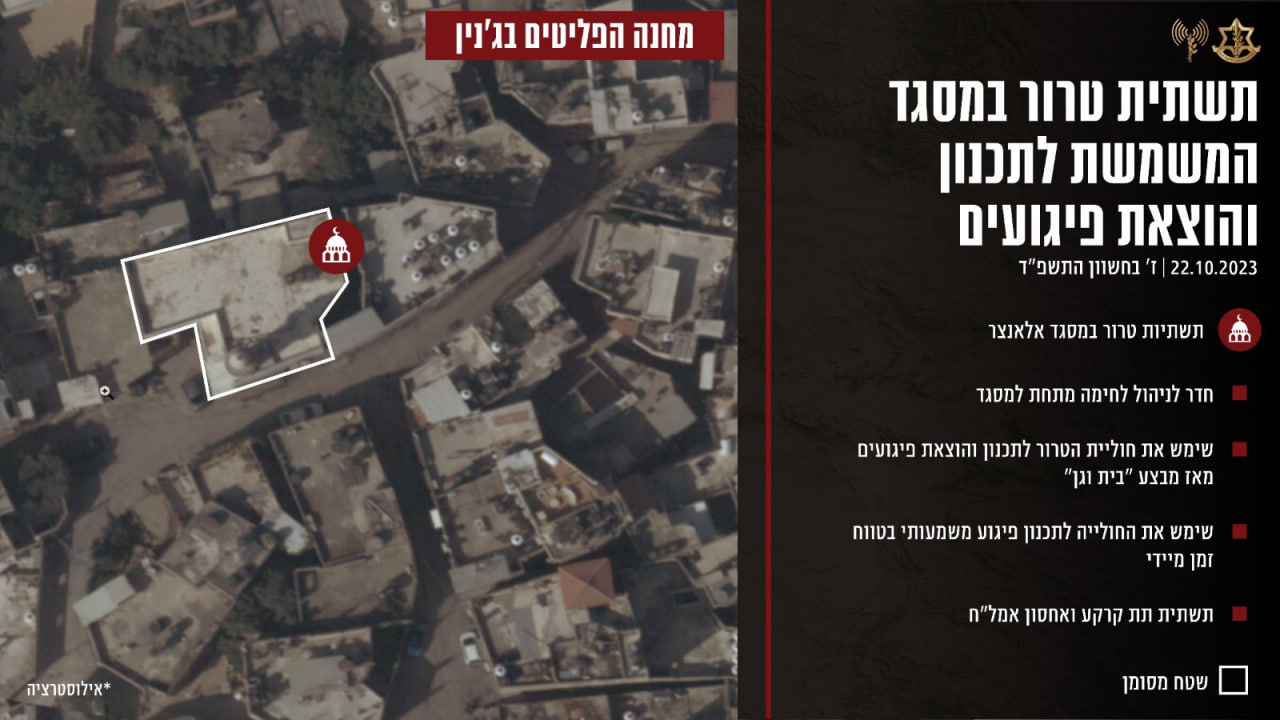
After this operation, the Israeli army claimed: In the joint attack of the army and the Public Security Service (Shabak), a tunnel under the Al-Ansar Mosque in Jenin was targeted. We targeted a group affiliated with Hamas and Islamic Jihad that was planning to carry out operations against Israel.
The pictures published by the Zionist regime from Ansar Mosque
Palestinian Red Crescent Organization in the West Bank announced that in this criminal attack, at least five Palestinians were martyred and several others were injured.
Jenin has a very important position and role in the developments of the West Bank and Palestine. This city is close to the northern areas of Palestine and is a short distance from the Jordanian border to the east. During the past years, Jenin has been source of many attacks against the Zionist regime and has a high potential to launch a resistance movement against Israel. Jenin can play a prominent role in transferring conflicts to the center of occupied Palestine in the possible operation to liberate Palestine from the southern front of Lebanon and the occupied Golan. Therefore, the Israeli security agencies have Jenin under their security and intelligence surveillance continuously.
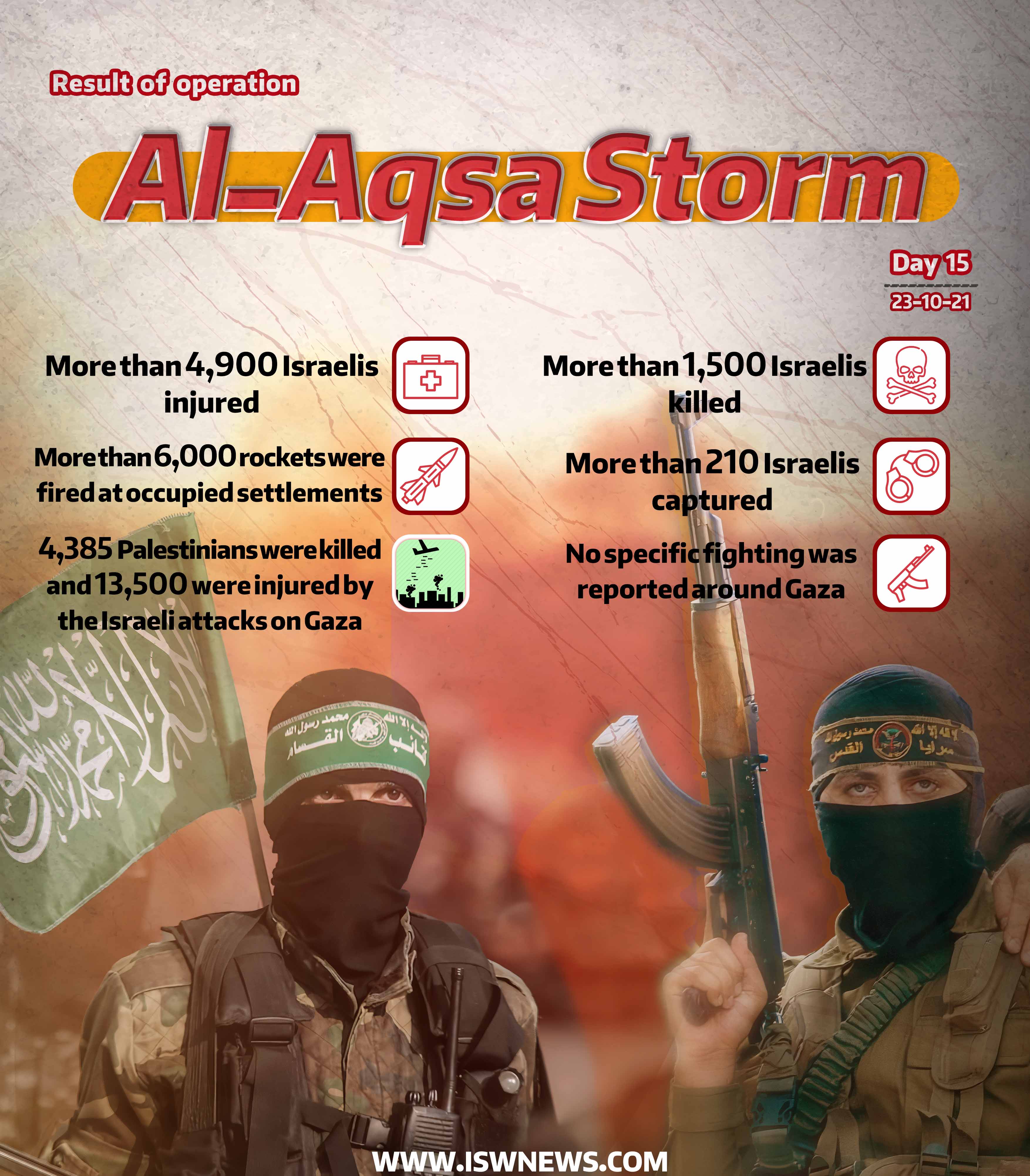
During the battles between the Palestinian resistance groups and the Israeli regime, so far, more than 1,500 Israelis were killed, more than 4,900 Israelis were wounded and at least 210 Israelis were captured by the Palestinian forces.
No specific ground fighting was reported around the Gaza Strip.
Palestinian resistance groups fired more than 6,000 rockets at the occupied territories.
The Palestinian Ministry of Health in the Gaza Strip announced that more than 4,385 Palestinians were killed and more than 13,500 others were wounded since the start of the conflict.
On the 15th day of fighting, there was no special and significant ground conflict around the Gaza Strip. The activity of the Israeli army’s ground forces around the Gaza Strip are currently still defensive. The only important change in this area is the Erez crossing. According to local sources, the Israeli regime has regained control of the Erez crossing in the north of the Gaza Strip. If the Israeli regime intends to attack the Gaza Strip by land, it is necessary to take control of all the northern areas of the Gaza Strip.
The resistance rocket attacks continue. On the 15th day, the resistance forces launched rocket attacks on Israeli settlements around the Gaza Strip and further areas; But the intensity of these attacks has decreased.
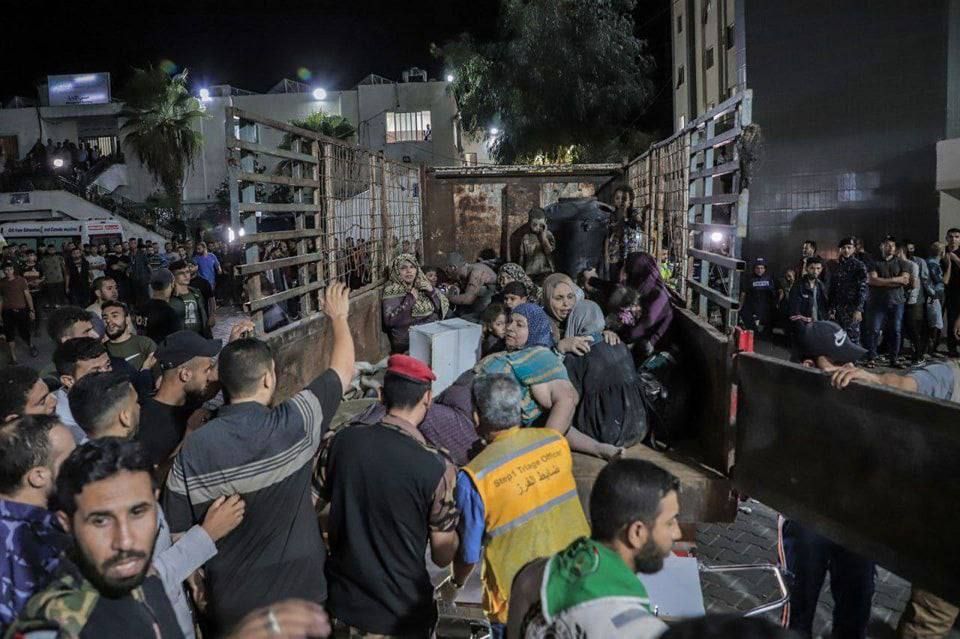
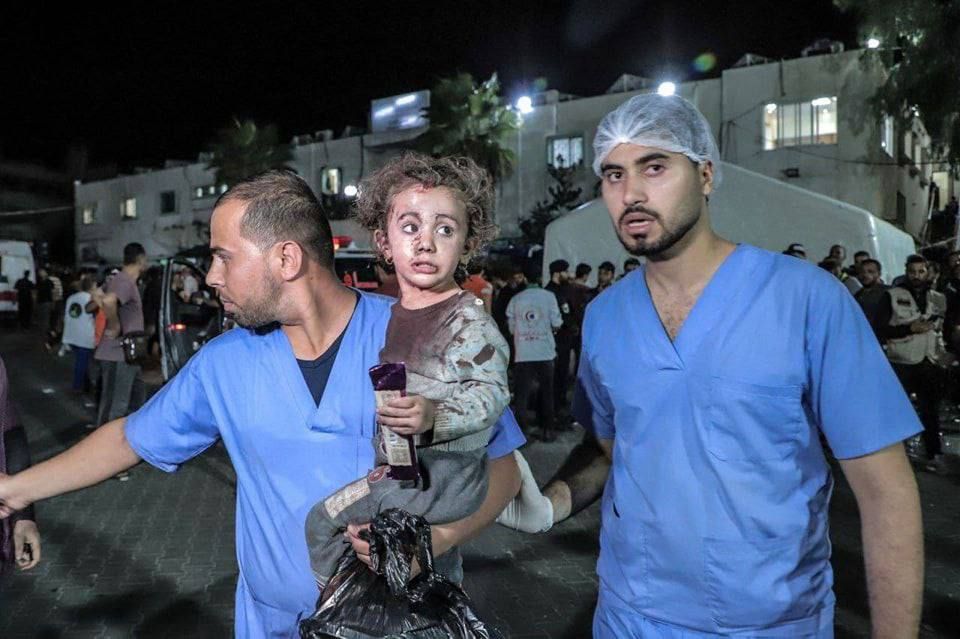
On the other hand, the heavy air attacks of the Israeli regime against different areas of the Gaza Strip continue. The situation of the people of the Gaza Strip is critical and the Israeli regime prevents the delivery of basic medical and food needs to the Gaza Strip. After international pressure and several days of gathering of people, human rights activists and journalists near the Rafah crossing, the Rafah crossing was opened for a short period of time for a limited number of trucks. However, this amount of aid only provides about 5% of the needs of the people of Gaza.
According to the Palestinian Ministry of Health, Israel’s barbaric bombings against Gaza have resulted in the martyrdom of 4,385 people. Also, more than 13,500 people have been injured. In the West Bank, at least 81 Palestinians were martyred and more than 1,400 others were injured.
On the northern front, clashes and artillery duels continue between Hezbollah and the Israeli regime. As in the past days, Hezbollah attacked the border posts and military equipment of Israel several times using anti-tank guided missiles. But the important event of this day in the northern front was the entry of Israeli regime fighter jets into the battles. After fifteen days, for the first time, Israeli fighter jets bombed areas in southern Lebanon. The Israeli army fighter jets carried out five airstrikes in the areas of Ramieh, Ayta al-Shaab, Al Makb and Yaroun in southern Lebanon until the last hour of Saturday. This issue shows the increase of tensions in the north of Palestine and it seems that the conflicts have entered a new phase.
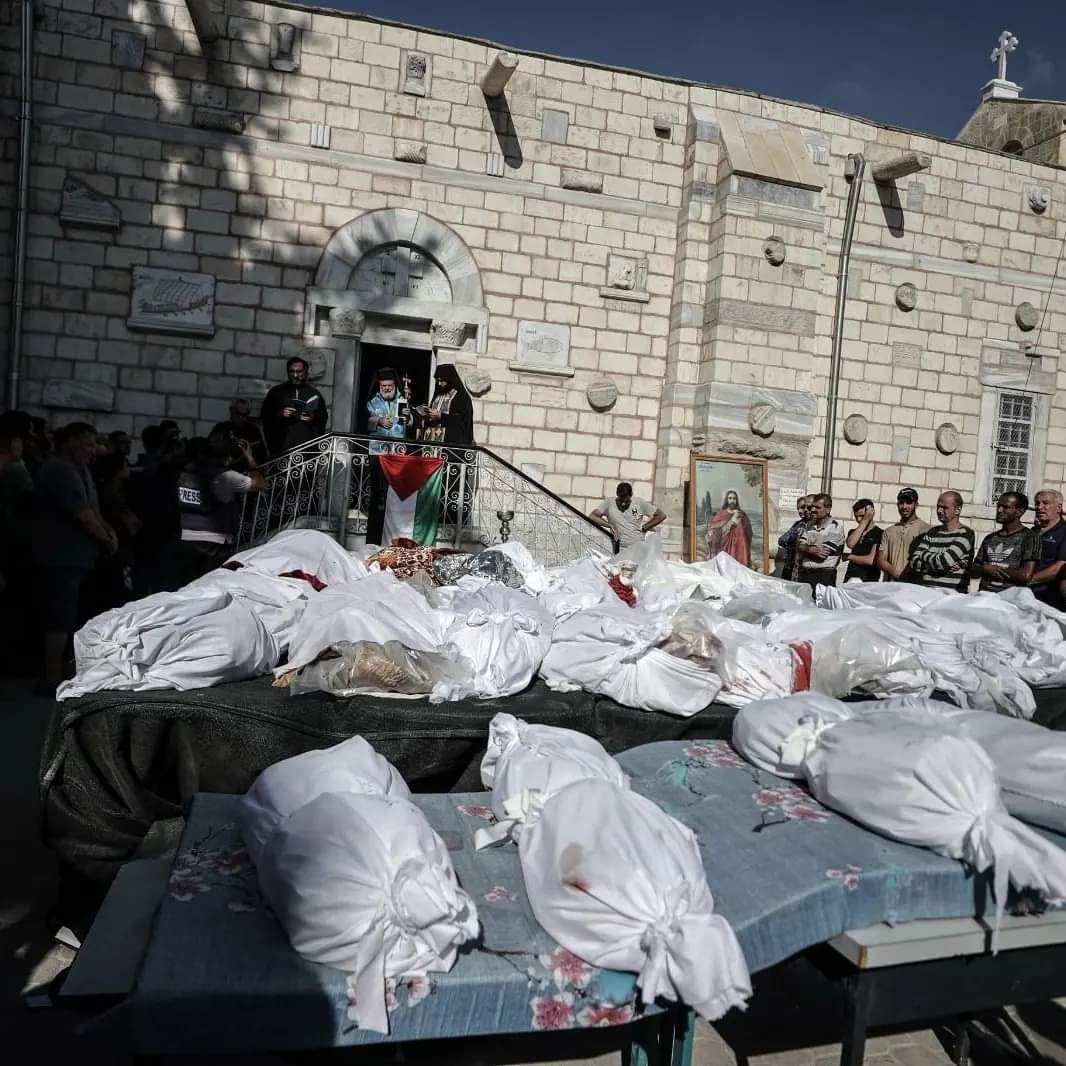
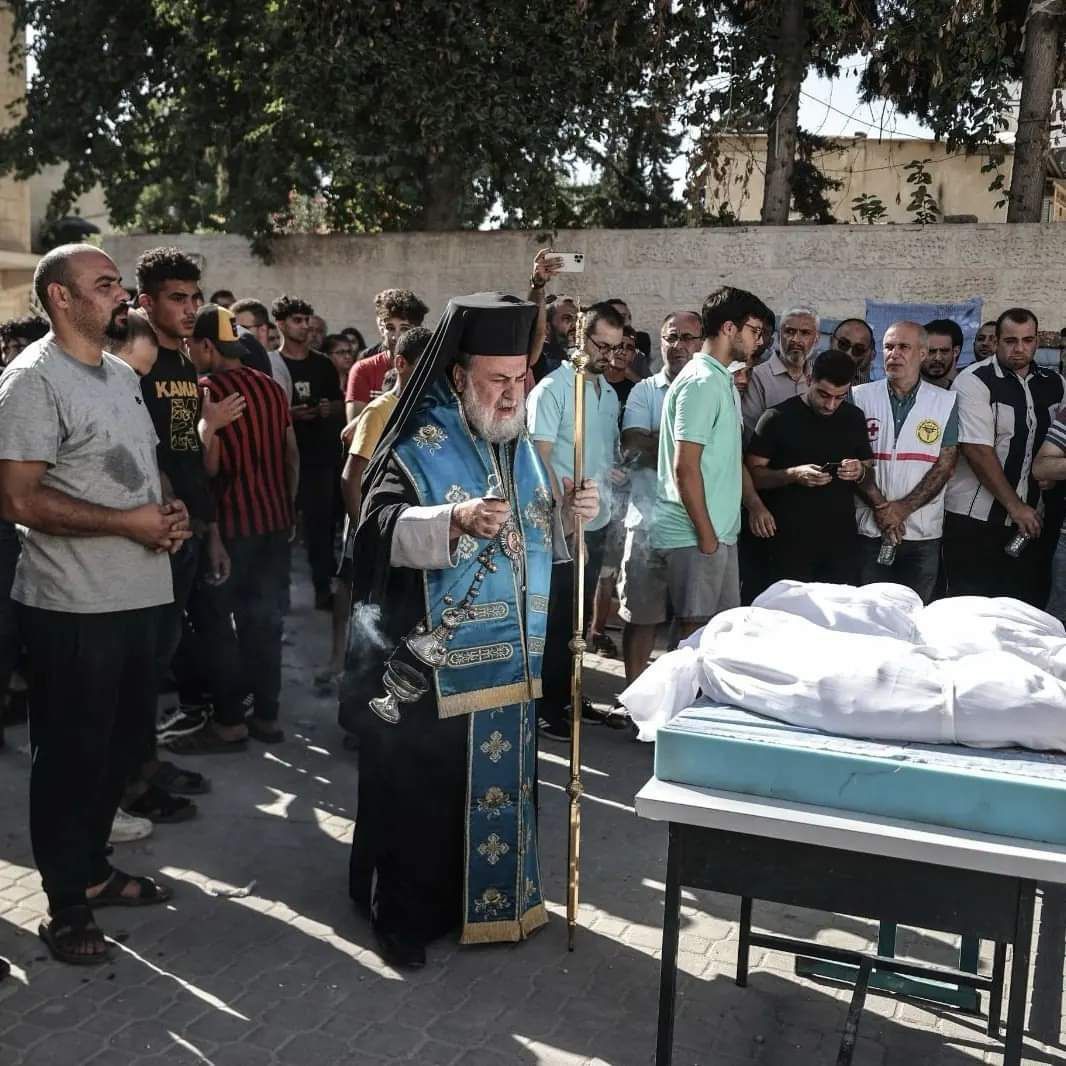
The Israeli regime fighter jets bombarded Saint Porphyrius Orthodox Church in the morning of October 20. Following this attack, one of the church buildings collapsed and more than 200 civilians who took shelter in this building were trapped. 18 civilians were martyred in this attack.
Saint Porphyrius Orthodox Church is the third oldest church in the world and has high value and importance historically. The Roman Church of Palestine has condemned this attack and considered it a war crime. Hamas also demanded the condemnation of these attacks by the international community and international institutions.
With this attack, Israel showed that in addition to mosques, hospitals and schools, the Christian religious places also will not be safe from their attacks.
On the 14th day of the fighting, there was no special and significant ground conflict around the Gaza Strip. The movements of the Israeli army’s ground forces around the Gaza Strip are currently still defensive. Also, rocket attacks on Israeli settlements around the Gaza Strip and further areas continue.
On the northern front, the conflict and exchange of fire between Hezbollah and the Zionist regime intensified from noon and continued until the end of the day. Artillery attacks were mostly focused on the areas of Al-Jebin, Shihein, Ramya, Yaron, Mis al-Jabal, Houla, Wadi Hunin, Kfarkala, Al-Adaysat, Kfarshuba, Shebaa, Al-Majidiyeh and Blida near the Lebanese border.
Also, at least three Israeli soldiers were killed and four others were injured following the Hezbollah ATGM attack on an Israeli army outpost in Netu’a area.
As mentioned earlier, the Israeli regime’s war cabinet has ordered the evacuation of border areas in northern Palestine up to a depth of 5 kilometers. According to Israeli media reports, 27,000 settlers have been evacuated from 28 settlements near the Lebanese border. The largest part of the evacuation operation is related to the settlement of Kiryat Shemona, which includes 23,000 settlers.
The Palestinian Ministry of Health announced that the number of martyrs in Gaza has increased to more than 4137 and the number of injured has reached more than 13,000. In the West Bank, at least 81 Palestinians were martyred and more than 1,400 others were injured.