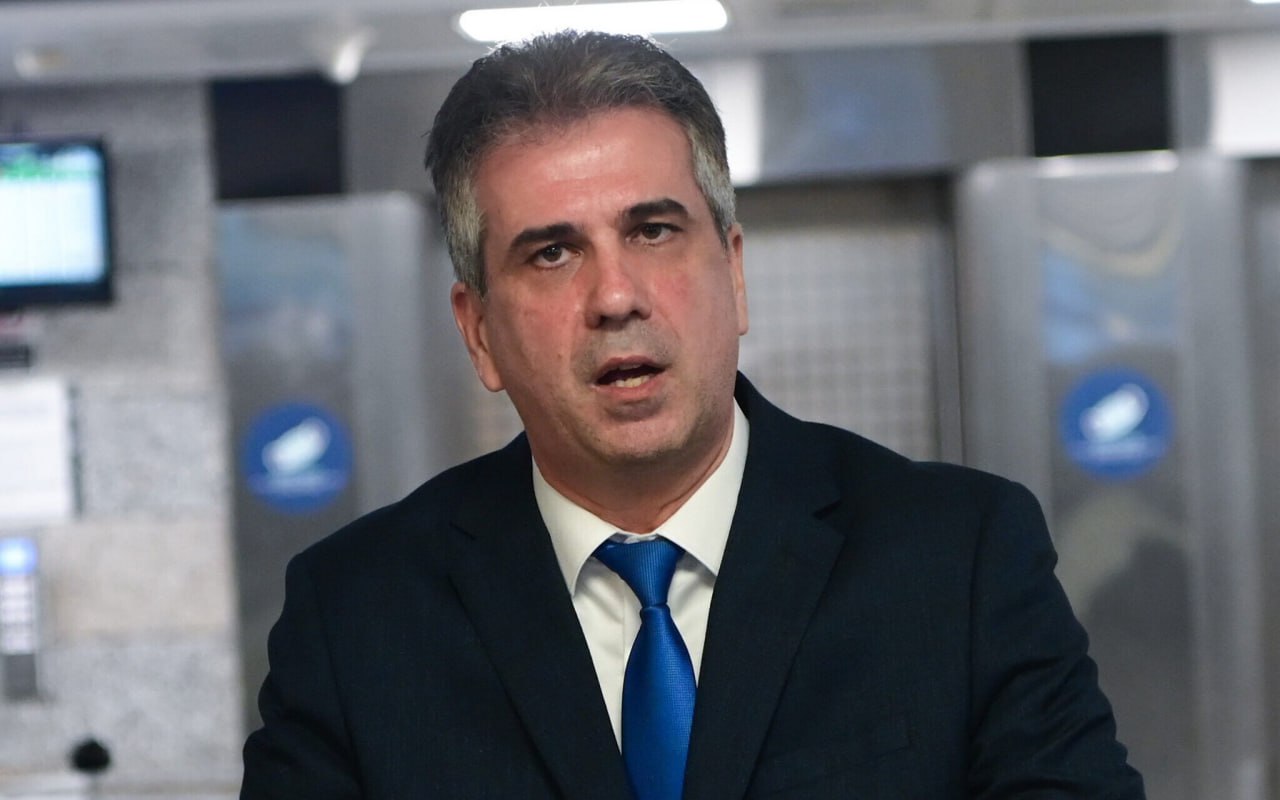
Cohen, who has previously voiced strong opposition to the establishment of a Palestinian state, reiterated his stance by declaring that the two-state solution “will never be realized.” He added that Israel will eventually impose sovereignty over the entire West Bank, noting that the only remaining questions are “when and how.”
These remarks come amid repeated warnings from the international community—particularly Arab and Western nations—about the consequences of continued occupation and illegal settlement expansion in the West Bank.
Cohen’s statements underscore the lack of support for a two-state solution even within civilian branches of the Israeli government, casting doubt on the viability of international efforts to resolve the Israeli-Palestinian conflict through political means.
The UN Special Rapporteur on Human Rights in Palestine condemned the attacks and called for immediate protective measures for the convoy. The Global Sumud Flotilla also issued a statement warning that the Israeli regime is spreading misleading information to justify military strikes against the humanitarian mission.
Israel Drone Attacks Target Global Sumud Flotilla in the MediterraneanIsrael Drone Attacks Target Global Sumud Flotilla in the Mediterranean
This marks the second attack on the Sumud flotilla in recent days. On the morning of September 8, one of its boats was targeted by an unidentified drone near the port of Sidi Bou Said in Tunisia.
Drone strikes on a civilian fleet with a humanitarian purpose represent a clear violation of international law and humanitarian principles. Such actions could be classified as war crimes under UN frameworks. The assault on Al-Sumoud is not merely a military act, it sends a political message aimed at deterring international activists working to break the blockade on Gaza.
This attack underscores the intensifying resistance operations in southern Gaza, where Palestinian fighters continue to confront Israeli forces with guerrilla tactics and improvised explosive devices. As ground incursions deepen, such incidents reflect the growing cost of occupation and the resilience of local defense efforts.
At least 14 Palestinians were martyred and dozens more injured in today’s attacks.
According to local sources, yesterday’s bombardments claimed the lives of at least 98 Palestinians and wounded 385 others. These figures bring the total death toll in Gaza to over 65,062, with more than 165,697 injured.
The unfolding tragedy in Gaza is not just a consequence of military operations, it is a profound humanitarian crisis that demands urgent global attention and moral clarity.
The forced displacement of tens of thousands, the targeting of so-called safe zones, and the collapse of vital infrastructure reveal a deliberate strategy that disregards the sanctity of civilian life. In the face of such suffering, silence is complicity.
The people of Gaza deserve not only protection but justice, dignity, and the right to live free from fear. It is imperative that the international community stands firmly with the oppressed, amplifies their voices, and works toward an immediate end to the violence. Gaza must not be abandoned; it must be defended, supported, and remembered.
Videos circulating online show Gaza’s exit routes packed with vehicles and crowds of people. Residents are leaving their homes in an effort to escape the intensifying brutal bombardment by Israel.
Gaza’s exit routes packed with vehicles and crowds of people
Reports indicate that over 190,000 people have been forcibly displaced. However, due to dire conditions in southern Gaza, including lack of shelter and basic services, some have returned to the city. Allegedly “safe zones” such as Al-Mawasi and Rafah lack essential infrastructure and have themselves been targeted by more than 100 Israeli airstrikes, resulting in the deaths of hundreds of Palestinians.
The unfolding tragedy in Gaza is not merely a consequence of military operations, it is a profound humanitarian crisis that demands urgent global attention and moral clarity. The forced displacement of tens of thousands, the targeting of so-called safe zones, and the collapse of vital infrastructure reveal a deliberate strategy that disregards the sanctity of civilian life. In the face of such suffering, silence is complicity. The people of Gaza deserve not only protection but justice, dignity, and the right to live free from fear. It is imperative that the international community stands firmly with the oppressed, amplifies their voices, and works toward an immediate end to the violence. Gaza must not be abandoned; it must be defended, supported, and remembered.
Turkey’s economic and trade cooperation with the Zionist regime is carried out through three main channels: sea, land, and air. These methods are as follows:
— Use of maritime transport and logistics routes: Oil, construction materials, steel, and more are shipped from Turkish ports to Israeli ports using vessels flying the flags of neutral countries such as Liberia, Panama, etc. According to available data, about 18% of Israel’s essential non-oil goods are supplied by Turkish cargo ships.
The maritime route is critical for supplying oil to the Zionist regime. Based on existing information, most of Israel’s oil needs are met by Central Asian countries like Azerbaijan and Kazakhstan via shipping routes that pass through Turkey. Thus, oil from the Caspian Sea is transported by the Baku government in cooperation with Turkey through the Baku–Tbilisi–Ceyhan pipeline into Turkey. Turkish tankers load the oil at Ceyhan port and, upon entering Israeli waters, turn off their AIS tracking systems and deliver the cargo to ports in Haifa, Ashdod, and Ashkelon. In January of last year, Israel topped the list of oil destinations from Azerbaijan, receiving 523,500 tons of oil worth $297 million.
The Baku-Tbilisi-Ceyhan pipeline, which transports oil from the Caspian Sea to the Mediterranean Sea
— Use of hybrid land and air routes: Trade via this method is conducted through third countries. Goods are likely transported overland from Turkey to Georgia and Azerbaijan, and from there flown to Israel. Azerbaijani logistics companies play a key role in this process. Cargo flights from Baku to Israel are actively ongoing, and it’s likely that Turkish goods are included in these shipments.
— Use of Turkish and other Israel-friendly air routes: Turkish and Israeli airlines may use routes through countries such as Jordan, the UAE, and Greece. Cargo may be labeled “for Oman,” while its actual destination is Tel Aviv.
Possible sea and air routes for transporting oil and goods to the Zionist regime
Financial transactions are also conducted through intermediary countries. Banks in the UAE and Switzerland facilitate money transfers between Turkey and Israel. Even cryptocurrency transactions may be used to maintain anonymity.
Overall, neither Turkey nor the Zionist regime shows any real intention of fully cutting economic and trade ties. Turkey profits from trade in various sectors, and Israel benefits not only from securing oil and essential goods like textiles and food, but also from Turkey’s potential role in exporting Israeli gas to Europe. Additionally, Israel can use Turkey as a gateway to access Central Asian and Caucasus markets. This is a strategically important issue that economically benefits both sides. In this context, public statements from Turkish and Israeli officials about severing ties are mostly for domestic consumption and global image management. As long as tensions remain “rhetorical,” it’s highly unlikely that the profitable trade between Turkey and Israel will be disrupted.
Economic and trade cooperation between countries—especially Islamic ones—and the Israeli regime prevents pressure from being effectively applied and instead enables the regime to continue its crimes against the Palestinian people and the region. Cutting off these ties is one of the most effective ways to pressure Israel to stop its crimes.
As a regionally influential country, if Turkey truly seeks to end the killing and war against Palestinians and apply pressure on Israel, it must sever its economic, trade, and political relations with the regime. Otherwise, it will be considered a direct and indirect accomplice in the crimes committed by the Israeli regime.
After weeks of airstrikes and limited advances in the western suburbs of Gaza City, the new ground operation has now entered a more serious phase. At the same time as this phase began, the Israeli army launched a new wave of airstrikes on various areas of Gaza to pave the way for a ground invasion.
The Israeli army emphasized that the ultimate goal is to completely surround Gaza City and to destroy the infrastructure of the resistance groups in the area. The operation is being commanded by General Eyal Zamir, the Chief of Staff of the Israeli Army, personally from the southern headquarters of the regime’s army.
Alongside the operation in Gaza City, the IDF’s 99th Division is conducting operations in the northern Gaza Strip, and the IDF’s Gaza Division is also deployed in the southern Gaza Strip.
The simultaneous deployment of several divisions and tens of thousands of new troops into Gaza City indicates the IDF’s efforts to change the field situation. However, a full siege of Gaza City in such a dense urban area with a large population would involve a war of attrition that could lead to heavy casualties. The expansion of the operation and the mobilization of reserve forces on this scale suggest that the current conflict has reached a critical stage.
Targets included central Khan Younis in southern Gaza, eastern Deir al-Balah, the Al-Shati refugee camp, areas surrounding the Abed al-Rahman Mosque in Deir al-Balah, the Bani Amer neighborhood in Gaza City’s Al-Daraj district, Al-Bureij refugee camp, Sheikh Radwan, and the northwest outskirts of Gaza City near the Netzarim corridor.
Israeli Military Intensifies Strikes on GazaIsraeli Military Intensifies Strikes on Gaza
According to local sources, at least 14 Palestinians were martyred and dozens more injured in today’s attacks.
The previous day saw even heavier casualties, with 34 Palestinians killed and 316 wounded, bringing the total death toll in Gaza to over 64,905, and the number of injured to more than 164,926, as reported by local health authorities.
The strikes have further deepened the humanitarian crisis in Gaza, where infrastructure damage, displacement, and medical shortages continue to worsen.
During the attack, fighters threw a bomb—likely a Shavaz type—at an Israeli tank, igniting a fire. The tank commander was forced to evacuate after the explosion and was subsequently targeted and killed by a resistance sniper.
Initial reports indicate at least four Israeli soldiers were liquidated in this attack.
The rising casualties within the Israeli military in Gaza are likely to increase political and public pressures on Netanyahu’s government.
These events highlight to the Israeli public that the military presence in Gaza has not secured peace and continues to impose a heavy toll on Zionist forces each day.
According to local sources, the assailants waited for the bus to stop before boarding and opening fire on passengers. Eyewitness footage and images from the scene show that the attackers used locally manufactured Carlo submachine guns.
Locally manufactured Carlo submachine guns used by attackers, with an image from the incident scene.
Both gunmen were killed during the operation, although initial reports confirm that one of the assailants was martyred at the scene.
Security forces have since cordoned off Ramot Junction and begun an investigation into the incident. Israeli forces are surrounding several Palestinian villages near Ramallah. The two Palestinians are believed to have departed from the villages of Al-Qubeiba and Qatanna, located west of the junction and beyond the Green Line.
This operation comes amid rising tensions across the region, following recent Israeli regime strikes in Gaza that have resulted in thousands of casualties. The attack in Jerusalem is being viewed as a retaliatory act in response to ongoing violence against Palestinians.
According to local sources, the bombardment focused on neighborhoods such as Sheikh Radwan in northern Gaza, Khan Younis in the south, Ramzoun, Al-Shalehat in western Gaza, Tel al-Hawa, Tel al-Nasr, and the outskirts of Gaza City. In a particularly alarming development, Israeli forces reportedly deployed bomb-laden robots to demolish residential homes in Sheikh Radwan.
Israeli strikes killed civilians, children in the Gaza StripIsraeli strikes in the Gaza Strip
Eyewitnesses described scenes of devastation, with families trapped under rubble and emergency responders overwhelmed by the scale of destruction.
The latest attacks follow a deadly day of violence in Gaza, where at least 87 Palestinians were killed and 409 injured in Israeli strikes, according to health officials. These figures bring the total death toll in the Gaza Strip to over 64,368, with more than 162,776 wounded since the escalation began.
Human rights organizations have condemned the strikes, calling for international accountability and urgent humanitarian intervention. Activists and observers have labeled the Israeli government’s actions as state terrorism, urging global powers to take immediate steps to halt the violence.
“This is not warfare—it’s a systematic assault on civilians,” said one local aid worker. “Children are dying in their homes. The world cannot remain silent.”
Israeli strikes killed civilians, children in the Gaza StripIsraeli strikes killed civilians, children in the Gaza Strip
In the initial stages, targeted airstrikes were carried out on high-rise buildings in central Gaza, which, according to the Israeli army, are used by Hamas for surveillance and military activities. Military officials emphasized that the main goal is not direct confrontation with Hamas forces, but rather the dismantling of their remaining infrastructure.
Another objective of the operation is widespread destruction in central Gaza. The Israeli military appears to be using this filthy tactic to forcibly push civilians toward the southern part of the Gaza Strip.
Given the complexity of the tunnel network and the possibility of Israeli hostages being held there, it is anticipated that “Gideon’s Chariots 2” could last for months. Some Israeli analysts speculate that the operation’s name might be changed in the future to present it as a new phase of conflict—potentially masking the failure of the current campaign.
Although the Israeli military claims the operation aims to minimize harm to civilians, field realities show extensive destruction of residential areas, displacement of thousands, and psychological pressure on the civilian population—clear examples of war crimes and crimes against humanity with severe consequences for Gaza’s residents. The establishment of refugee camps in southern Gaza, while seemingly humanitarian, could in practice lead to demographic shifts and increased instability. Moreover, the Israeli regime has shown that even these camps and tents are not spared from airstrikes.
Politically, such operations not only fail to weaken Hamas but may also strengthen the spirit of resistance and increase public support for the group. Ultimately, without a comprehensive political solution, the continuation of such operations will only exacerbate the humanitarian crisis and deepen regional divisions.