Avi Issacharoff, a prominent Israeli journalist and military analyst, has voiced sharp criticism of the Israeli government’s performance in Gaza. He stated that the official objectives of Israel’s military campaign in the region have not been achieved. According to Issacharoff, despite months of intense fighting, Hamas remains firmly in control of Gaza, and there are no signs of its organizational collapse.
He described the current situation as a painful yet unavoidable compromise, attributing it to the Israeli leadership’s inability to convert battlefield gains into meaningful political outcomes.
Narrative control is a crucial element in any war. In the past, Israel managed to project an image of victory to its public even when its operational success was limited. However, candid remarks from analysts like Issacharoff suggest that this time, even the narrative has unraveled.
Israeli public opinion is increasingly confused and distrustful of the government, and confidence in promises to eliminate Hamas is waning. Issacharoff’s comments reflect a broader consensus among analysts: without a structural shift in Gaza’s governance, Israel’s military campaign amounts to a strategic failure.
According to information provided by the manufacturer, the Klin suicide drone has a range of 120 kilometers, a flight endurance of 80 minutes, a ceiling of 2,000 meters, a speed of up to 300 kilometers per hour, a length of 1.6 meters, a wingspan of 1.9 meters, a takeoff weight of up to 13.5 kilograms, and a warhead weighing 5 kilograms.
The Klin suicide drone/loitering munition can autonomously track targets without relying on satellite positioning systems like GPS, using artificial intelligence. In addition to conventional targets, it can also track other drones.
In a video released in June this year showing Klin’s field performance, the drone locks onto a Ukrainian unmanned surface vehicle (USV) in the Black Sea and uses airburst munitions to accurately strike the target.
Klin drone field performance against Ukrainian USV
During the unveiling, three types of munitions were showcased: shaped charge, airburst explosive, and high-explosive fragmentation. This variety of munitions enhances the drone’s effectiveness against different targets and in various field conditions.
Types of munitions introduced for the Klin suicide drone
At first glance, the Klin drone may seem simple like other drones in its class; however, the development of autonomous drones like Klin reflects the rapid and significant evolution in Russia’s drone doctrine. Russia is quickly adapting to new battlefield conditions and filling tactical gaps to enhance asymmetric attack capabilities against Ukraine or any potential future conflict in Europe.
The origins of the HQ-9 air defense system trace back to the 1980s, driven by the strategic need of the People’s Liberation Army (PLA) to deploy a modern, long-range air defense solution capable of replacing outdated Soviet-era systems. This initiative, commonly referred to as “Project 9,” aimed to create a platform capable of countering advanced aerial threats posed by the United States and NATO—particularly those employing sophisticated electronic warfare tactics and suppression of enemy air defenses (SEAD).
HQ-9 launcher at China’s 60th anniversary parade in 2009.
While the People’s Republic of China initially pursued the acquisition of Russian S-300PMU systems, it ultimately concluded that national defense could not rely solely on imported technologies, especially given the risks of foreign political pressure and inherent technological limitations. The development of the domestic defense system under “Project 9” involved major state-owned enterprises such as the China Aerospace Science and Industry Corporation (CASIC) and the China Electronics Technology Group Corporation (CETC). The project aimed to integrate the best available technologies to create a system specifically tailored to counter a broad and evolving spectrum of aerial threats.
HQ-9 system components
The HQ-9 system is widely recognized in open-source literature as a hybrid platform that merges design elements from Russia’s S-300 missile series with distinctly non-Eastern technologies. The most critical aspect of this integration lies in its radar architecture. The HT-233 fire-control radar, the most advanced radar employed by the HQ-9, exhibits design characteristics that closely resemble the American AN/MPQ-53 radar used in the Patriot system—particularly its use of a passive electronically scanned array (PESA) with a unique lens configuration, diverging from the more conventional PESA layouts found in Russia’s 30N6 series.
This specific architectural choice is believed to reflect a deliberate effort to incorporate PESA technology that enables faster beam steering, higher target tracking rates, and robust electronic counter-countermeasures (ECCM)—capabilities deemed essential for survivability against U.S. and NATO suppression of enemy air defenses (SEAD) operations. Some accounts attribute these architectural similarities to alleged reverse engineering of the Patriot missile system via third-party access, although such claims remain unverified.
Prototype of the HQ-9 HT-233 3D phased array radar (PAR) for surveillance and target identification.
Documentation indicates that the initial version of the HQ-9 system entered service in the late 1990s. The first stable variant, designated HQ-9A, was officially commissioned in 2001. In 2006, the second generation—HQ-9B—underwent testing and saw rapid expansion by 2016. This version features upgraded electronics and an extended engagement range. At present, China has operationalized the third generation of the system.
The evolution of the various generations of this system is primarily defined by increased range and enhanced capabilities. The base HQ-9 model had an operational range of approximately 120 kilometers. The current main operational version, HQ-9B, extended this range to around 260–300 kilometers and raised the engagement ceiling to 50 kilometers. This variant notably employs a dual-mode seeker—combining radar and passive infrared—to maintain high lethality against targets with low radar cross-sections or those equipped with advanced electronic warfare capabilities.
The newer HQ-9C variant is specifically designed and optimized for terminal-phase ballistic missile defense. This version utilizes slimmer interceptor missiles, allowing each mobile launcher to carry twice as many interceptors—effectively increasing its capacity to eight missiles per launcher.
HQ-9 Battalion Structure and Fire Unit Components:
As the backbone of China’s air defense network, the HQ-9 system is built around a complex and multilayered organizational structure. Its design prioritizes maximum coverage, high survivability, and seamless integration into China’s broader integrated air and missile defense architecture.
Each HQ-9 battery typically consists of 6 to 8 mobile launchers connected to an HT-233 radar and operated under the control of a TWS-312 command post. These batteries function as part of a larger battalion-level organizational structure.
In the Chinese armed forces, a full HQ-9 battalion typically consists of one central command vehicle, six control vehicles, six target acquisition radars, a variable number of search radars, 48 mobile launchers carrying a total of 192 ready-to-fire missiles, and various support vehicles responsible for power supply, communications, positioning, and logistics. Chinese sources claim that HQ-9 battery components can be networked using fixed fiber-optic cables, directional microwave line-of-sight links, or other radio data transmission channels.
The system’s command center functions as the operational nerve hub, integrating input from various land-, sea-, and air-based search and tracking radars to deliver a unified picture of the aerial battlespace. Its integrated control capabilities are designed so that the HQ-9 can operate beyond its organic sensors, utilizing external data sources such as AWACS and long-range surveillance radars. This level of integration enables mid-course updates for missiles and significantly enhances tracking accuracy over extended ranges. The HQ-9 is capable of simultaneously guiding 4 to 8 missiles to intercept multiple targets.
The YLC-2V self-propelled vehicle on the left with its three support vehicles, and in the background, the HT-233 engagement radar.The loader is in the front and the HT-233 radar is on the right. The loader is based on the 8×8 Taian TAS-5380 chassis.HQ-9 battery
HQ-9 Radar Network and Detection Systems:
The HQ-9 system is equipped with a multilayered radar network designed to ensure comprehensive coverage across various ranges and altitudes.
HT-233 Fire-Control Radar: To achieve maximum combat effectiveness, a dedicated fire-control radar was developed specifically for the HQ-9 system. Commonly deployed alongside HQ-9 batteries, this radar—known as HT-233—is the most advanced fire-control unit available for the system. Its design closely resembles the AN/MPQ-53 radar used in the American Patriot system. Some sources attribute this similarity to a possible transfer of Patriot technology to China. The Chinese version is capable of simultaneously guiding six missiles toward six separate targets, or alternatively, concentrating two missiles on each of three targets.
HT-233 engagement radar and HQ-9 system launcher
The HT-233 radar is capable of conducting searches within a 120-degree azimuth arc and an elevation angle range from 0 to 90 degrees, with a maximum range of up to 300 kilometers. Its peak output power is reported at 1 megawatt, with an average of 60 kilowatts. Utilizing a passive electronically scanned array (PESA) composed of approximately 4,000 elements, the radar can track over 100 targets and engage more than 50 simultaneously. For comparison, the AN/MPQ-53 and Russia’s 30N6E radars each feature around 10,000 elements.
Additionally, the HT-233 is mounted on a mobile Tai’an TAS5501 chassis with a 10×10 configuration and operates in the C-band with a bandwidth of 300 MHz. At the brigade level, this radar can also serve as a search radar, while other fire-control radars such as the SJ-212, H-200, or SJ-231 may be deployed alongside it.
H-200 radar
Type-305 Radar: The LLQ-305 radar, available in two variants—A and B—is a mobile, three-dimensional active phased array target acquisition radar. Since its introduction into service in 1997, it has been widely deployed across the Chinese military and integrated with various defense systems. This radar is capable of supporting up to four HT-233 fire-control radars and has an estimated maximum range of 350 kilometers.
The Type 305A, also known as LLQ-305A, is one of the target acquisition radars used in the HQ-9 system. It is an AESA-type radar specifically designed to enhance the HQ-9’s ballistic missile defense capabilities. Its external design closely resembles the Thales Ground Master 400 AESA radar. Limited information is publicly available about this radar, aside from its ability to function as a fire-control radar and its estimated range of approximately 350 kilometers.
Type 305A search and acquisition radar
The Type 305B radar, also known as LLQ-305B, is an advanced development based on the YLC-2 radar. It is a three-dimensional system equipped with a 3.5-meter-high antenna and constructed using 60 waveguides, each measuring 350 millimeters. The radar operates in the S-band frequency range.
Type 305B search and acquisition radar
Type-120 Radar: The Type 120 radar, also known as LLQ-120, is a low-altitude search radar. It appears to be an evolved design derived from the JY-29/LSS-1 series. This telescopic radar features an antenna that measures 2.3 meters when retracted and extends to 7 meters when deployed. It utilizes a feed network composed of 16 waveguides, each 230 millimeters in diameter. The radar can rotate at a maximum speed of 10 revolutions per minute and operates in the L-band with a wavelength of 23.75 centimeters.
Type 120 radar
The Type-120 radar is likely co-located with the Type-305, and both systems transmit target tracking data to a command post responsible for managing HQ-9 and/or HQ-12 batteries. The Type-120 contributes frequency diversity and expands radar horizon coverage for detecting low-altitude aerial threats such as terrain-following aircraft and cruise missiles.
YLC-20 Radar: Although the Type-305 radar series is claimed to be capable of detecting stealth aircraft like the F-22 and F-35, identifying fully stealthy platforms such as the B-2 remains a significant challenge. The passive YLC-20 radar was developed based on the KRTP-91 Tamara passive sensor concept and incorporates lessons learned from China’s unsuccessful attempt to acquire six VERA sensors from the Czech Republic. The YLC-20 was first introduced in 2006.
YLC-20 radar
DWL002 Radar: The DWL002 passive radar is considered an upgraded version of the YLC-20 and was developed based on the Kolchuga passive sensor system, of which four units were reportedly sold to China. The radar is said to have a maximum detection range of approximately 500 kilometers.
DWL002 radarHQ-9 digital radar display
HQ-9 Launchers and Missiles:
The primary launcher system for the HQ-9 family is the Chinese-made Taian TA580/TAS5380 8×8 heavy-duty truck. This high-mobility chassis enables the system to execute “shoot-and-scoot” tactics, enhancing the battery’s survivability. The standard HQ-9/A/B launcher carries four ready-to-fire missile canisters, which are launched vertically.
HQ-9 system launcher
The latest variant, the HQ-9C launcher system, features a key architectural change: the interceptor missile has been made slimmer, allowing each launcher to carry up to eight interceptors. This doubling of ready-to-fire munitions significantly boosts the battery’s immediate firepower, which is especially critical for maximizing kill probability against multiple targets or ballistic missiles that require dual-shot engagement strategies.
HQ-9C launcherHQ-9B launcher (right image) next to HQ-9C launcher (left image)
HQ-9 Missile: The HQ-9 missile is a large, two-stage interceptor designed for high-speed performance and long-range engagements. According to the most reliable sources, its total weight is estimated to be close to 2 tons, with a length ranging between 6.8 and 9 meters. The missile’s structure consists of a large first stage with a diameter of 700 millimeters, followed by a slimmer second stage measuring 560 millimeters in diameter.
HQ-9A missile
Propulsion for the HQ-9 missile is provided by a two-stage solid-fuel rocket motor. According to reports, newer versions utilize low-smoke hydroxyl-terminated polybutadiene (HTPB) propellant. The missile is capable of reaching a maximum speed of Mach 4.2. One of the distinct design features that sets the HQ-9 apart from certain S-300 derivatives is the presence of exposed thrust vector control (TVC) fins, which enhance maneuverability during the initial launch phase.
The FD-2000 missile, which is the export version of the HQ-9 missile with a range of 120 km.
The HQ-9 missile employs a sophisticated guidance regime that has evolved significantly across its variants to improve accuracy and resistance to electronic interference. The base HQ-9 model uses an inertial guidance system during the mid-course phase, supplemented by frequent radio command updates from the fire-control radar. In the terminal phase, it relies on a technique known as Track-Via-Missile (TVM), which combines the advantages of semi-active radar homing (SARH) and command guidance. The estimated range of this version is between 120 and 150 kilometers.
HQ-9B Missile: The HQ-9B interceptor introduces a passive infrared seeker. The inclusion of an electro-optical/passive infrared channel is essential for maintaining target tracking against stealth aircraft that emit reduced radar signatures but still produce significant thermal emissions—especially under heavy electronic jamming. If the system’s radar is forced to shut down to avoid anti-radiation missile attacks, the HQ-9B can continue tracking using its passive thermal signature, significantly enhancing its survivability and overall radar resilience. The range of this variant is reported to be between 260 and 300 kilometers.
HQ-9C Missile: The HQ-9C interceptor is an upgraded version of the HQ-9B, with added ballistic missile defense capabilities. It is capable of performing both conventional air defense and low-altitude ballistic missile interception during the terminal phase. Compared to the standard HQ-9, the HQ-9C is slightly slimmer and longer, allowing each launch vehicle to carry eight missiles. Its range is estimated to be between 150 and 200 kilometers.
It is believed that both HQ-9B and HQ-9C variants are equipped with active radar homing (ARH) guidance. This enables the missile to operate in a true fire-and-forget mode after the internal seeker locks onto the target.
HQ-9B and HQ-9C missiles
HQ-9 Warhead: The HQ-9 missile is equipped with a heavy 180-kilogram high-explosive warhead, designed for maximum lethality. Its destructive power is ensured by a proximity fuze, which activates when the missile reaches within 5 kilometers of the target, guaranteeing detonation at the closest possible point. The warhead’s fragmentation blast has an effective radius of approximately 35 meters.
HQ-9 missile
Naval Variants of the HQ-9 Missile: All land-based versions of the HQ-9 missile have corresponding silo-launched naval variants, designated as HHQ-9A, HHQ-9B, and HHQ-9C. HHQ-9A missiles are launched from six-tube vertical launch systems (VLS) installed on Type-052C class destroyers. HHQ-9B missiles are fired from linear VLS arrays deployed aboard Type-052D and Type-055 class destroyers.
HHQ-9A VLSHHQ-9B VLSLaunchers for the naval version of the HQ-9 interceptorHHQ-9 naval interceptor missileHHQ-9B naval interceptor missileHHQ-9C naval interceptor missile
HQ-9 Air Defense System Operators:
The HQ-9 air defense system family is operated by the People’s Liberation Army Air Force (PLAAF), the air defense brigades of the PLA Rocket Force, and its naval variants by the PLA Navy.
Deployment of HQ-9 systems on disputed islands in the South China Sea is a key element of Beijing’s strategy to project military power. Satellite imagery confirmed HQ-9 batteries on Yongxing Island as of February 2016. Images from 2023 show the construction of hardened air defense facilities with retractable roofs on Woody Island, similar to those identified on Fiery Cross, Mischief, and Subi Reefs.
Pakistan: Pakistan confirmed the purchase of the HQ-9P system (similar to the FD-2000) in 2021. This variant was customized for Pakistan and includes two types of missiles with ranges of 100 km and 250 km. The system is operated by both the Pakistan Army’s air defense units and the Pakistan Air Force. Pakistan also uses the YLC-8E radar with a 700 km range for early warning.
Egypt: Egypt has recently deployed the advanced HQ-9B variant at strategic locations in the Sinai Peninsula.
Potential Operator – Iran: In 2025, various media sources reported that Iran may be considering the acquisition of the HQ-9 system. Interest grew following the system’s performance during the India–Pakistan conflict and the reported destruction of Iranian S-300 systems during a 12-day engagement.
Unsuccessful Proposal – Turkey: In 2013, Turkey, a NATO member, temporarily selected the FD-2000 export variant. However, the deal was canceled due to strong political pressure from NATO allies and the inclusion of China’s Precision Machinery Import-Export Corporation on the U.S. sanctions list under the Iran, North Korea, and Syria Nonproliferation Act.
Variants and Sub-Variants of the HQ-9 Missile System
Below is a list of the main variants and sub-variants of the HQ-9 surface-to-air missile system:
HQ-9 — The original and baseline version of the system.
HHQ-9 — The navalized version of the HQ-9 for shipborne deployment.
HQ-9A — An improved variant; first tested in 1999 and entered service in 2001.
HQ-9B — An upgraded version featuring a passive infrared seeker and an extended range of 260–300 km.
HHQ-9B — The naval counterpart of the HQ-9B variant.
HQ-9C — A further enhanced version with terminal-phase ballistic missile interception capability.
HHQ-9C — The naval version of the HQ-9C interceptor.
HQ-9P — A customized variant for Pakistan; reported to have a range of approximately 125 km for aircraft interception and 25 km for cruise missile defense.
FD-2000 — The standard export version with a range of 125 km.
FD-2000B — An export variant with an extended range of up to 250 km.
FD-2000BE — The most advanced export version available to international customers.
Official information provided by the manufacturer of the FD-2000 and FD-2000B export system
HQ-9 Air Defense System – Technical Specifications:
Type: Long-range, high-altitude air defense and anti-ballistic missile system Origin: China Manufacturer: China Aerospace Science and Industry Corporation (CASIC) Service Entry: 2001
System Range: 300 km Engagement Range: Up to 300 km Engagement Altitude: 50 km Tracking Capability: Over 100 targets Simultaneous Engagements: Over 50 targets Battery Composition: Each battery includes 6 to 8 mobile launchers
Radars: Fire-control radar: Passive electronically scanned array HT-233 with a range of 300 km Acquisition radar: Active electronically scanned 3D radar Type 305A/B with a range of 350 km Low-altitude search radar: Type 120 Passive detection radar: YLC-20 Passive detection radar: DWL002 with a range of 500 km
Missiles: HQ-9A/B/C
HQ-9A/B missile Range: 120 to 150 km HQ-9A 260 to 300 km HQ-9B Speed: Mach 4.2 Altitude: 50 km HQ-9B Length: 6.8 m Weight: 2000 kg Warhead: 180 kg
HQ-9C Missile: An upgraded version of the HQ-9B equipped with ballistic missile interception capability.
HQ-9 missile System – Click to view full-size image
Under the terms of the deal, Israeli forces are required to withdraw from designated areas within 24 hours. In return, Palestinian resistance groups will begin releasing Israeli captives 72 hours after the withdrawal. Tel Aviv has also agreed to release a number of Palestinian detainees.
A joint oversight committee—comprising representatives from the United States, Qatar, Egypt, Turkey, and other nations—will monitor the implementation of the agreement and mediate any disputes between the parties.
According to released footage, the Israeli military has begun dismantling and evacuating several of its positions in the Gaza Strip. The Israeli army confirmed that the ceasefire officially came into effect at 12:00 p.m. local time.
Israeli military has begun dismantling and evacuating several of its positions in the Gaza StripIsraeli military has begun dismantling and evacuating several of its positions in the Gaza Strip
In an era where security boundaries have shifted into the digital realm, espionage tactics have evolved alongside technology. Physical infiltration, traditional wiretapping, or field agents are no longer necessary. Today, a single Android app can silently breach hundreds of smartphones without the victims ever realizing it.
A new investigation by the “EekadFacts” platform has revealed one of the latest examples of such digital attacks: an Arabic-language app with a religious appearance that was, in fact, a spyware tool crafted by the Zionist regime.
According to the report, the malicious app—disguised with an Arabic religious name and interface—was designed and distributed using infrastructure registered in the occupied territories. The app connected to a domain named “Palpray.co,” a blend of “Palestine” and “Prayer,” chosen specifically to gain the trust of Arabic-speaking users, particularly Palestinian Muslims. This domain served as the command-and-control (C2) hub for the malware, allowing attackers to remotely extract sensitive data and execute commands once the app was installed on the victim’s device.
Technical analysis shows the domain was registered by the Israeli company “Wix” and used Cloudflare services to mask the true identity of its servers. Although the domain is currently inactive, evidence confirms it was operational for a period and used to manage malware communications. This constitutes a sophisticated and targeted cyberattack, designed with intimate knowledge of the target community and enhanced by cultural and religious elements to increase deception.
The choice of language and religious branding was central to the operation. The app featured a fully Arabic interface, religious-themed content, and a name evoking prayer and worship—all crafted to instill trust and a sense of safety in users. This technique, known in cybersecurity as social engineering, is one of the most effective methods for targeting human vulnerabilities. Victims often install such apps without verifying their origin—especially when presented with familiar names or religious themes.
In terms of targets, the operation likely aimed at Palestinian users, civil society activists, journalists, and possibly members of resistance groups. Previous research by organizations like Citizen Lab and Amnesty Tech has documented similar tactics used by the regime to infiltrate digital devices of opponents in Lebanon, Syria, Gaza, and the West Bank.
While this revelation is just one among many similar attacks, it once again highlights the critical importance of public awareness around cyber threats. In a time when trust in an app’s appearance can lead to exposure of private lives and confidential data, users in politically sensitive regions must be trained to detect hidden dangers. Moreover, digital rights watchdogs and regulatory bodies must enforce stricter oversight over the development and distribution of suspicious apps on open platforms like Android.
According to the report, U.S. military spending on Yemen-related operations between October 2024 and September 2025 exceeded $4.9 billion, raising the total cost over recent years to approximately $10 billion.
The expenses include extensive use of advanced weapons and equipment such as 2,000-pound bombs, precision missiles, Patriot air defense systems, along with the deployment of two U.S. aircraft carriers, fighter jets, bombers, and drones.
Material and personnel losses for the U.S. military include the destruction of three F/A-18 fighter jets (estimated cost: ~$210 million), 22 MQ-9 drones (estimated cost: ~$800 million), and the use of dozens of high-cost missiles and bombs, including 75 Tomahawk missiles and 20 AGM-150 bombs.
The American institute noted that despite these massive expenditures, the field results have not been decisive. Yemeni attacks resumed after a temporary ceasefire, leading to maritime operations that resulted in the sinking of ships and direct threats to oil tankers linked to Israeli interests. Airstrikes have also continued against airports and strategic targets deep within occupied Palestinian territories.
The publication of this report is seen as further confirmation of the failure of U.S. naval and aerial operations in Yemen, which ultimately led to their withdrawal from the Red Sea and Gulf of Aden and acceptance of a ceasefire brokered by Oman. Although the Watson Institute did not detail human casualties in this report, it is reported that at least two American soldiers were killed and several others wounded in Yemeni attacks.
Hamas confirmed the agreement in an official statement, expressing gratitude to Qatar, Egypt, Turkey, and Trump for their mediation efforts. The movement reiterated its demands for the withdrawal of Israeli forces from Gaza, the entry of humanitarian aid, and the exchange of prisoners. Hamas emphasized that the sacrifices made will not be in vain and reaffirmed its commitment to the Palestinian cause, pledging to continue the struggle until freedom, independence, and self-determination are achieved.
U.S. President Donald Trump announced: “I proudly declare that both Israel and Hamas have signed the first phase of our peace plan. This means all hostages will soon be released, and Israel will begin withdrawing its forces to the agreed lines—marking the first steps toward a strong, lasting, and eternal peace. All parties will be treated fairly. This is a historic day for the Arab and Muslim world, Israel, neighboring countries, and the United States. We thank the mediators from Qatar, Egypt, and Turkey for their cooperation in making this unprecedented event possible.”
Israeli Prime Minister Benjamin Netanyahu stated that a cabinet meeting will be held on Friday to formally approve the agreement.
Based on the statements from both sides, the implementation of the first phase appears imminent. The partial withdrawal of Israeli forces and the release of all Israeli hostages are expected to take place within the coming week. Reports suggest that Hamas currently holds around 20 living Israeli captives, while others have been killed or gone missing due to Israeli airstrikes.
It’s important to note that this agreement only covers the partial withdrawal of Israeli forces from Gaza and the exchange of prisoners. More complex and contentious issues—such as the disarmament of Hamas and the future governance structure of Gaza—remain unresolved. These topics will be addressed in later stages of negotiation, though there is a real risk of talks collapsing and conflict resuming! It is highly unlikely that the Israeli regime will forgo this historic opportunity to destroy the Islamic resistance in Gaza.
Footage released by activists aboard the flotilla shows Israeli forces using helicopters and fast boats to storm the vessels and detain all passengers.
According to a statement from the al-Sumud organizers, three boats—including the al-Dhamir, which carried journalists and medical personnel—were seized. The fate of the remaining vessels remains unclear. The flotilla consisted of nine boats and over 100 human rights activists from various countries, having departed from an Italian port roughly two weeks ago.
Israel’s Foreign Ministry issued a statement claiming its naval forces successfully thwarted another attempt to breach the Gaza blockade. The statement added: “All passengers are in good health and will be deported shortly after being transferred to an Israeli port.”
The seizure of the flotilla in international waters is widely viewed as a violation of maritime freedom and the 1982 UN Convention on the Law of the Sea (UNCLOS). The incident once again highlights the contested legality of Israel’s blockade on Gaza, which, according to multiple UN reports, constitutes part of a broader pattern of violations against Palestinian civilians.
Israeli Navy Intercepts al-Sumoud Flotilla En Route to GazaIsraeli Navy Intercepts al-Sumoud Flotilla En Route to GazaIsraeli Navy Intercepts al-Sumoud Flotilla En Route to Gaza
Military analysts interpret these exercises as a strategic signal to regional rivals: China is preparing to extend its operational reach deep into the Western Pacific, particularly toward the “Second Island Chain”—a key strategic zone that includes Guam and other U.S.-aligned territories. By enhancing flight range, mission endurance, and reducing reliance on local airbases, China is reshaping its aerial posture.
If paired with upgrades in radar systems, electronic warfare capabilities, and aircraft agility, this development could dramatically boost China’s influence in maritime operations, regional air dominance, and potential engagements beyond its immediate island periphery.
The Shenyang J-16 is a Chinese multirole fighter jet derived from the Shenyang J-11, itself a licensed version of Russia’s Sukhoi Su-27. Its design draws heavily from the Su-30MKK platform. As a 4.5-generation aircraft, the J-16 bridges the capability gap between older 4th-generation fighters and 5th-generation models. It features advanced AESA radar, carries PL-10 and PL-15 air-to-air missiles, and includes a variant optimized for electronic warfare. China currently operates around 450 units of this aircraft.
Historically, Balochistan was subjected to colonial divisions and centralized state control, depriving its people of self-determination. After Pakistan’s formation in 1947, the region was forcibly annexed, while in Iran it was absorbed into a centralized system. During the Cold War, Balochistan remained marginal, often suppressed due to separatist demands. However, in the 21st century, amid rising Asian economic power and multipolar dynamics, its ports and natural resources have elevated its geopolitical significance, placing it squarely in the global power competition.
Economic Value and Strategic Position
With a population of around 10 million and direct access to the Gulf of Oman and the Indian Ocean, Balochistan holds vital geopolitical value. The ports of Gwadar (Pakistan) and Chabahar (Iran) are central to ambitious infrastructure projects. Gwadar is a key component of the China–Pakistan Economic Corridor (CPEC), while Chabahar is linked to the North–South Transport Corridor supported by Iran and Russia.
In a multipolar world, Balochistan serves as a strategic counterweight to Western dominance. China and Russia see its ports as a means to reduce reliance on U.S.-controlled trade routes and to strengthen an independent bloc both economically and militarily. Investments from Russia, India, and China follow a shared logic: establishing a sphere of influence free from Euro-Atlantic interests and bypassing chokepoints like the Strait of Malacca, the Suez Canal, and the Persian Gulf.
Map of important transit corridors in central Asia: Brown: Chabahar route to Afghanistan, Red: China’s “Southern Waters” route, the historical “Great Highway” route, Green: Chabahar Central Asia route, Dashed: India-Iran maritime route
Chinese investment
Initially, China focused on Gwadar, investing $65 billion under its Belt and Road Initiative (BRI) to connect its Xinjiang province to the Arabian Sea and reduce dependence on the Strait of Malacca. However, persistent instability in Pakistani Balochistan—driven by separatist insurgency—has disrupted CPEC projects and led to attacks on Chinese and Pakistani military assets. These tensions have weakened Islamabad’s control and raised sovereignty concerns within Pakistan’s parliament.
In March 2025, China’s ambassador to Iran met with Chabahar Free Zone officials to discuss strategic cooperation under a 25-year agreement. The two sides emphasized linking Gwadar and Chabahar to create a transit corridor to Europe. The deal includes major investments such as petrochemical complexes, smart city development, coastal infrastructure, airport construction, automotive industrial zones, and water and fisheries management. According to Italy’s IARI think tank, China is gradually shifting its investments toward Chabahar, where Tehran’s centralized control offers a more secure environment for Chinese interests. This strategic pivot is part of Beijing’s broader effort to build a maritime network independent of Western dominance.
India’s Counterstrategy
To counter the China–Pakistan axis, India invested in Chabahar before China did. Unlike Gwadar, which is part of China’s BRI, Chabahar was developed with Indian support to secure direct access to Afghanistan and Central Asia. However, China’s potential involvement in Chabahar has raised concerns in New Delhi, as the port was previously seen as a rival to Gwadar. While Gwadar remains partially operational due to unrest, Chabahar has gained commercial traction. If India strengthens its partnership with Iran and expands logistical infrastructure, Chabahar could become a key trade hub for accessing Afghanistan, Central Asia, and even Russia. Still, competition with China and broader geopolitical tensions remain major challenges.
Russia’s Strategic Role
Iran–Russia cooperation in Chabahar is part of a 20-year strategic pact signed in 2025, focusing on defense, energy, and the North–South Transport Corridor (INSTC). Russia seeks access to warm-water ports and aims to bolster its position in non-Western trade networks. Joint military drills in Chabahar involving Russia, China, and Iran underscore the port’s rising geopolitical importance.
If local tensions are managed and neutral players like India are engaged, Balochistan could transform from a peripheral zone into a strategic pillar of the emerging multipolar world order.
A key focus of the meeting was the implementation framework of a recent agreement between al-Jolani’s administration and the Syrian Democratic Forces (SDF), with both sides emphasizing Syria’s territorial integrity and national sovereignty.
Simultaneously, an SDF delegation led by Mazloum Abdi arrived in Damascus to discuss the political transition process and security challenges in northeastern Syria with senior Syrian officials.
The concurrent presence of the U.S. envoy and the SDF commander in Damascus signals a coordinated push between Washington and Damascus toward a new political roadmap. This meeting is one of the few high-level meetings between the Syrian presidency, US representatives and the commanders of the Syrian Democratic Forces; this meeting could initiate a new phase of talks between the main actors in the Syrian crisis.
Aeronautics Ltd. began its journey in the late 1990s, focusing on the development of cost-effective unmanned aerial vehicles. This vision led to the creation of the Orbiter drone family. In 2019, the company was acquired by Israeli defense firm Rafael and private investor Avichay Stolero. The merger significantly enhanced Aeronautics’ technical and operational capabilities, granting it broader access to advanced technologies and resources.
Early models such as the Orbiter-1K and Orbiter-2 were initially designed for short-duration missions. However, as operational demands evolved, Aeronautics Ltd. introduced more advanced versions—first the Orbiter-4, and ultimately the Orbiter-5—to meet the growing complexity of tactical requirements.
Orbiter-5 was officially unveiled in June 2023 during the Paris Air Show, marking a major milestone in Aeronautics Ltd.’s tactical UAV development. Designed to deliver capabilities comparable to MALE (Medium Altitude Long Endurance) drones, Orbiter-5 stands out for its lightweight and portable design. As the most advanced member of the Orbiter family, it combines extended flight endurance, increased payload capacity, and enhanced operational intelligence in a compact tactical platform.
Orbiter Drone Variants:
The Orbiter UAV family includes a range of models, each tailored for specific mission profiles:
Orbiter-1K: Designed for strike missions, with a flight endurance of approximately 3 hours.
Orbiter-2: Built for short-range tactical reconnaissance.
Orbiter-3: Offers capabilities for surveillance and target acquisition.
Orbiter-4: Suited for extensive land and maritime operations.
Orbiter-5: The most advanced model, featuring over 25 hours of flight time and a payload capacity exceeding 25 kg.
Together, these drones cover a wide spectrum of operational needs, from rapid tactical missions to long-endurance strategic deployments.
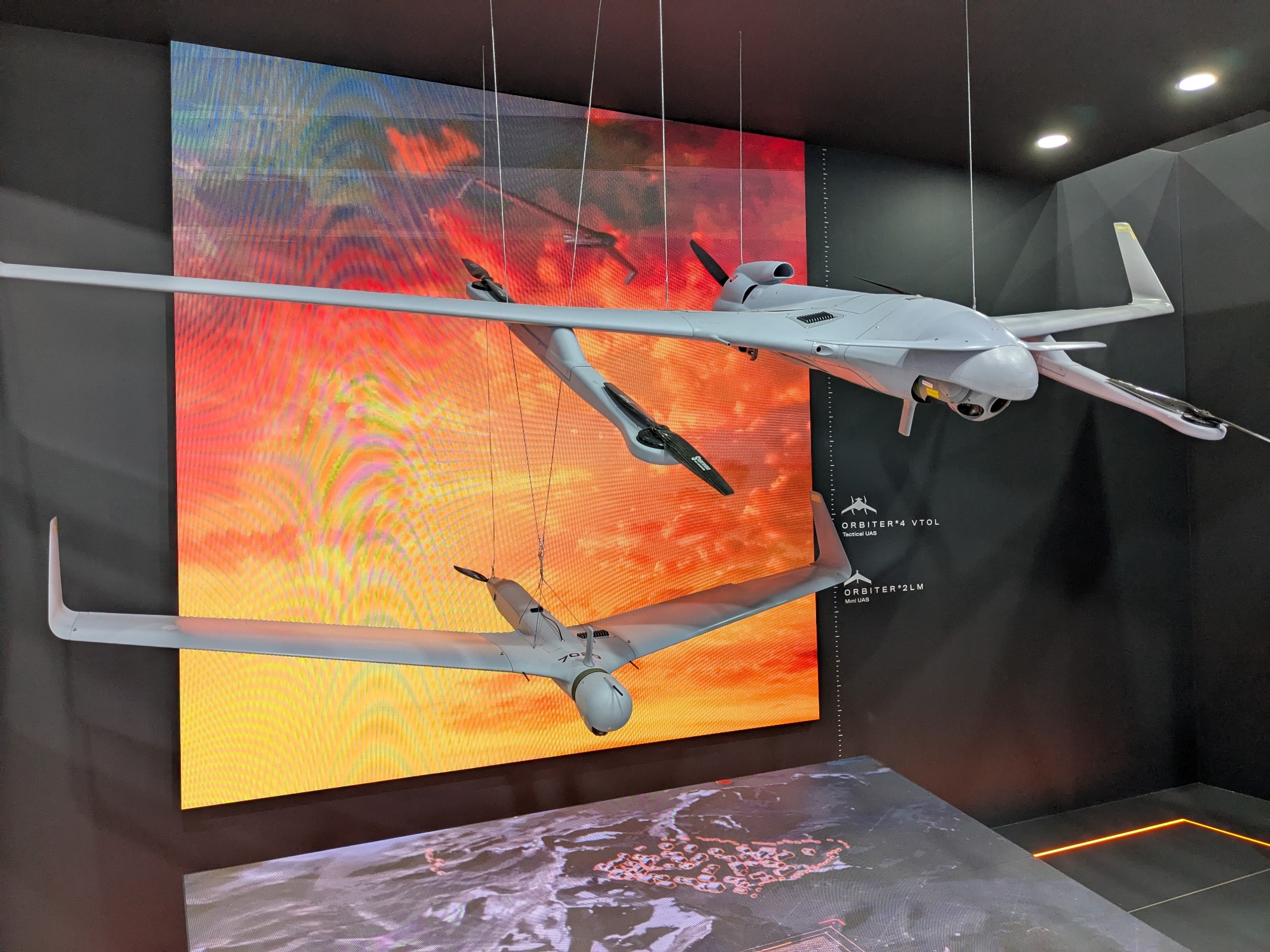
At the IDEX 2025 exhibition, Aeronautics Ltd. showcased a loitering munition variant of the Orbiter-2 (pictured below), along with a tactical Orbiter-4 drone equipped with an additional VTOL (Vertical Take-Off and Landing) kit. (Photo credit: P. Felstead)
Technical Features of the Orbiter-5 UAV:
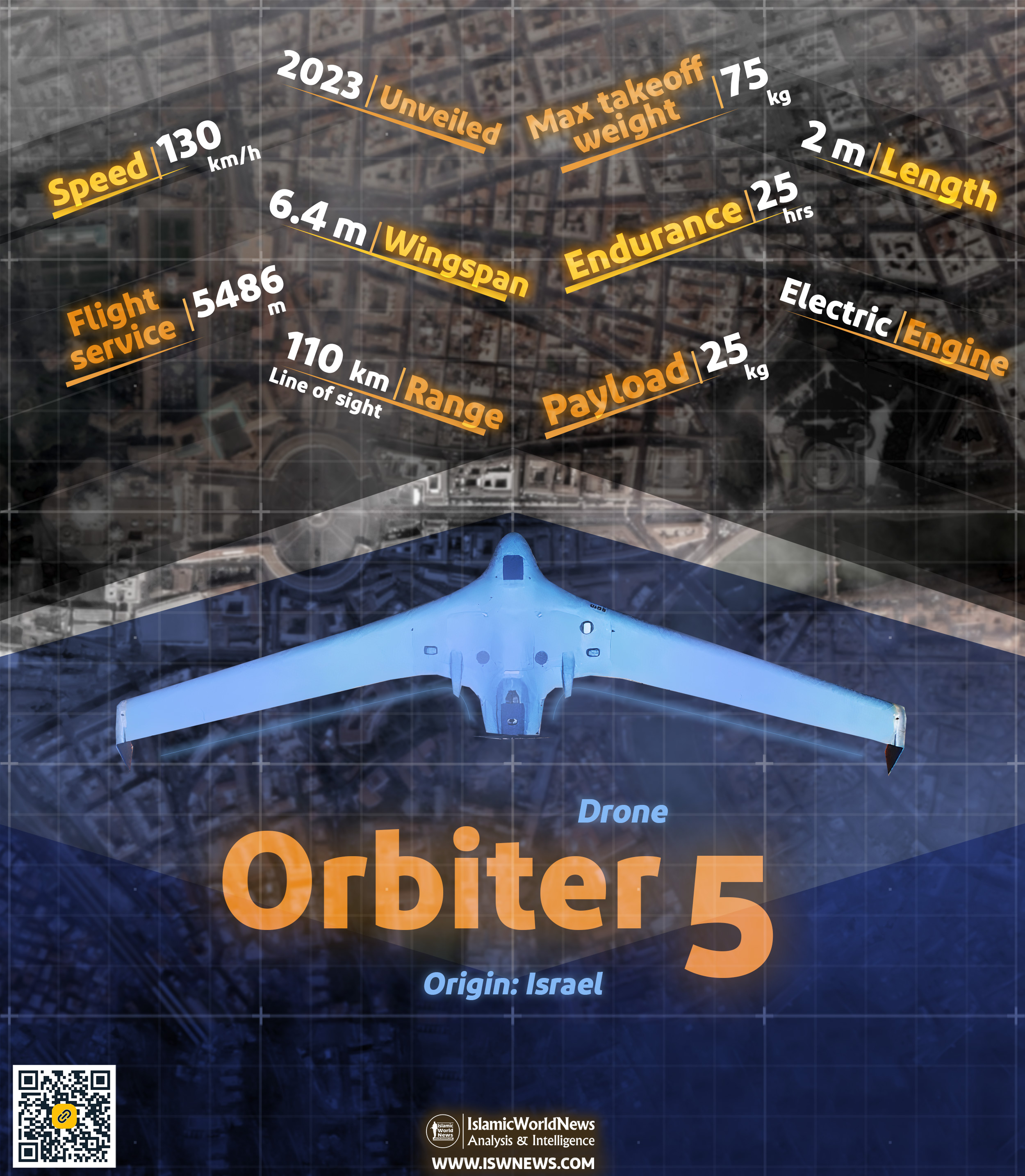
The Orbiter-5 drone boasts technical specifications with a wingspan of 6.4 meters, a body length of 2 meters, and a takeoff weight of 75 kilograms, it is built for endurance missions. It can reach an operational ceiling of 5,486 meters and a top speed of 130 km/h. Powered by a 600-watt four-stroke electric engine, the Orbiter-5 is equipped to perform long-duration tactical operations with efficiency and reliability.
The drone’s navigation system enables precise operation even in GPS-denied environments. Additionally, its dual avionics setup, dual-combustion engine, and automatic recovery capability in emergency situations significantly enhance its operational safety.
This drone is launched either via a rail-based launcher or directly from a vehicle, and it uses a parachute system for recovery upon landing.
Quick assembly—even in hostile territory—and easy transportability are among the key advantages of this drone, making it ideal for mobile and tactical operations. This capability is clearly demonstrated in the promotional video released by the manufacturer.
Aeronautics Ltd’s promotional video of the Orbiter-5 drone; from preparation to operation and landing
Payload and Sensors of Orbiter-5:
The Orbiter-5 is engineered to carry two separate payloads simultaneously, with a combined weight capacity of up to 25 kilograms—a significant leap compared to earlier Orbiter models. Its payload options include EO/IR (Electro-Optical/Infrared) sensors, SAR (Synthetic Aperture Radar), compact maritime surveillance radars (micro radars), communication and data transmission systems, and lightweight electronic warfare modules.
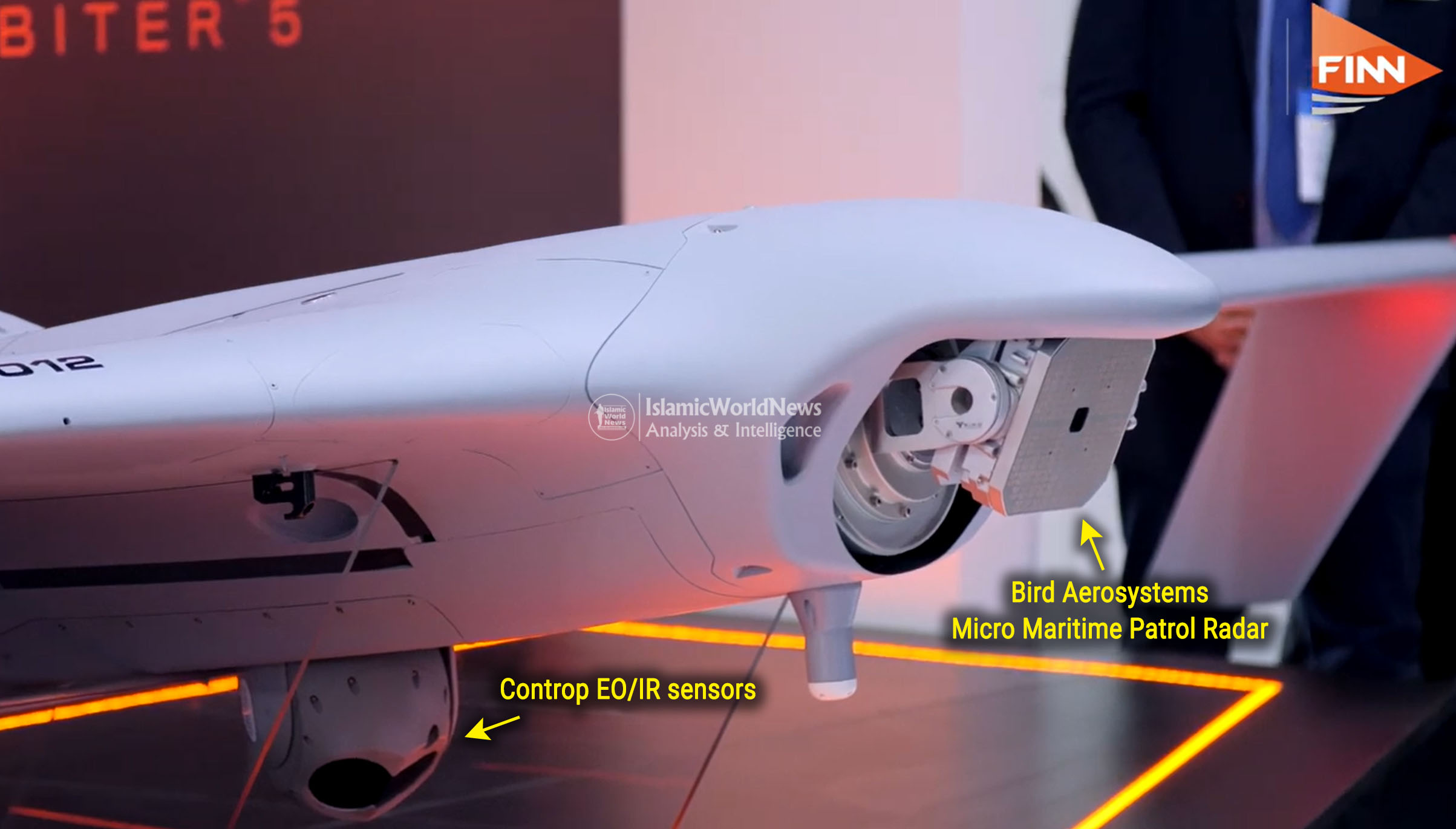
One of Orbiter-5’s key advantages is its modular payload design. This feature allows operators to quickly swap payload types based on mission requirements. For instance, the unit showcased at the 2023 Paris Air Show was equipped with a micro maritime patrol radar (MPR) from Bird Aerosystems and EO/IR sensors from Controp, demonstrating its adaptability and mission-specific configuration capabilities.
At the 2023 Paris Air Show, the Orbiter-5 was showcased equipped with a micro maritime patrol radar (MPR) developed by Bird Aerosystems, along with EO/IR (Electro-Optical/Infrared) sensors manufactured by Controp.
Satellite Communication Capability of Orbiter-5:
One of the most significant strengths of the Orbiter-5 UAV is its satellite communication system and ability to transmit live imagery. This feature sets it apart from many other drones in its class. It plays a crucial role in reconnaissance, surveillance, and precision targeting missions—especially in environments where ground-based communication or GPS signals are disrupted.
Prior to the 12-day conflict between Israel and Iran, the satellite communication capability of the Orbiter-5 drone was largely unknown, and it was not widely believed that the UAV was equipped with such technology. When operating via direct line-of-sight with a ground control station, Orbiter-5 has a maximum range of 110 kilometers. However, when connected through satellite communication, its operational range is determined by its flight endurance duration.
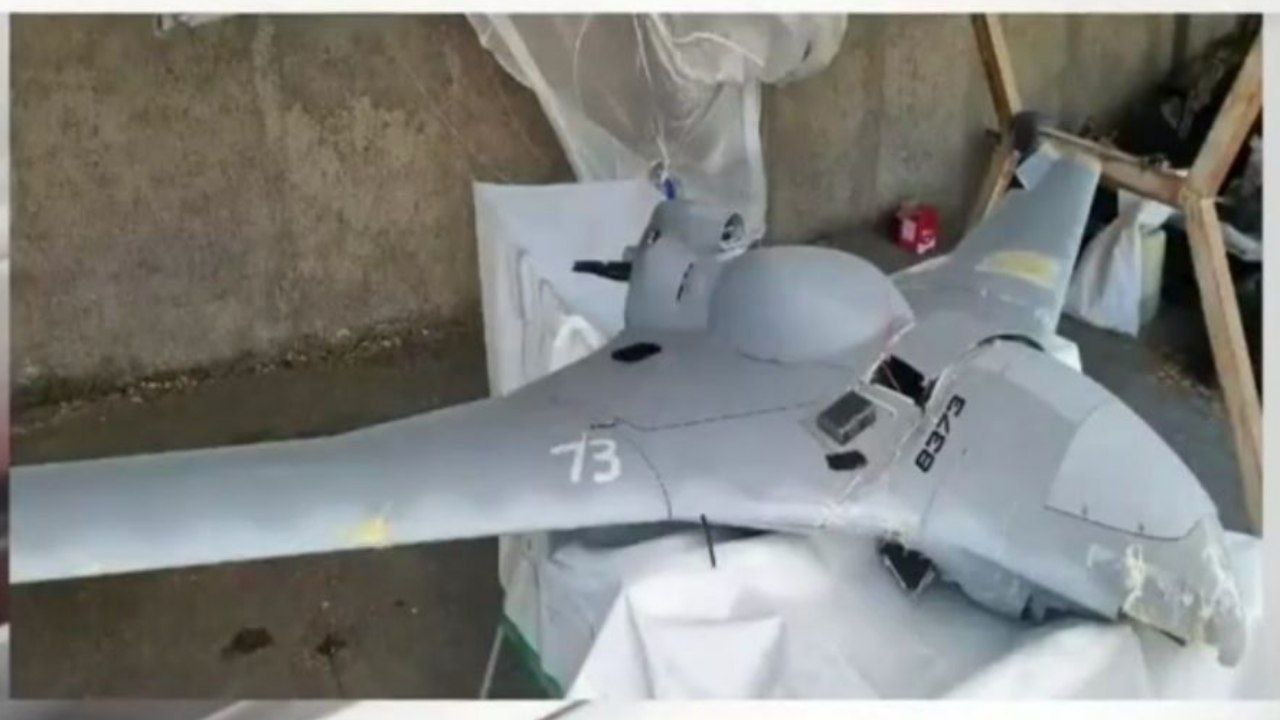
The Orbiter-5 drone, bearing serial number 8373 and equipped with a satellite communication antenna, was downed on June 24, 2025 in Zanjan, Iran.
During the 12-day conflict between Israel and Iran, the Israeli Air Force deployed the Orbiter-5 drone for precision reconnaissance, monitoring troop movements, and guiding aerial strikes against Iranian targets. Notably, Iran’s air defense systems succeeded in downing at least one Orbiter-5 unit in the western provinces of the country.
UAVs in the same class as the Orbiter-5—given its weight and dimensions—are typically deployed as tactical drones on the front lines. However, the Orbiter-5 unit downed in Iran was equipped with a satellite communication antenna, effectively overcoming the 110-kilometer range limitation of ground-based control stations. This upgrade elevated its role beyond that of a standard tactical drone, enabling Israel to extend its surveillance capabilities deeper into Iranian territory.
In summary, the Orbiter-5 has secured its place within Israel’s drone fleet by combining long flight endurance, satellite connectivity, and operational simplicity. As a cost-effective tactical UAV, it has significantly enhanced Israel’s reconnaissance and surveillance reach into rival territories.
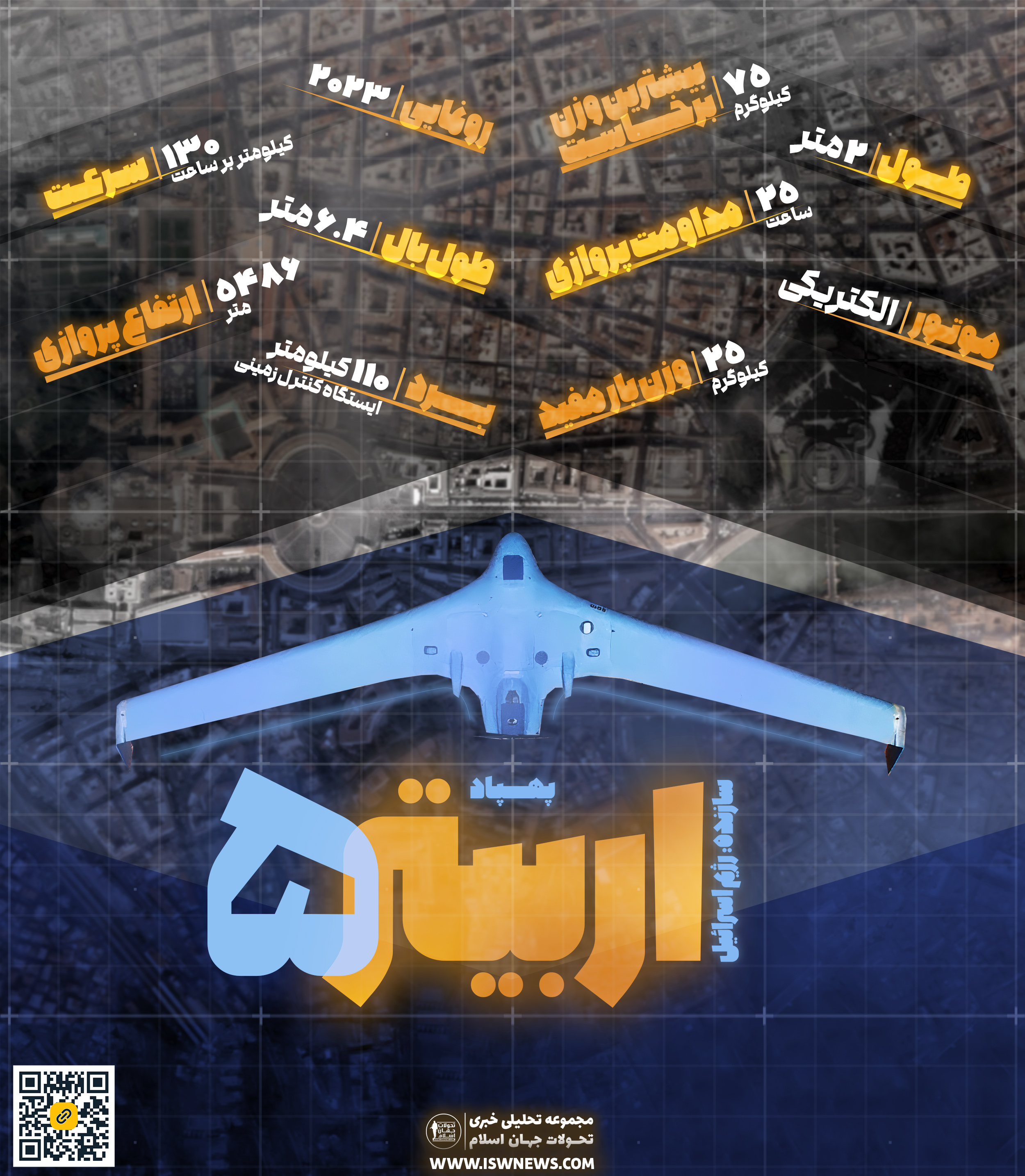
Orbiter-5 drone specifications:
Type: Reconnaissance and surveillance Origin: Israel Manufacturer: Aeronautics Ltd. Unveiled: 2023 Length: 2 meters Wingspan: 6.4 meters Engine: Four-stroke electric motor Range: 110 km (via ground control station) Maximum Speed: 130 km/h Operational Ceiling: 5,486 meters Endurance: 25 hours Maximum Takeoff Weight: 75 kg Payload Capacity: 25 kg
Orbiter-5 reconnaissance drone / Click to view full-size image