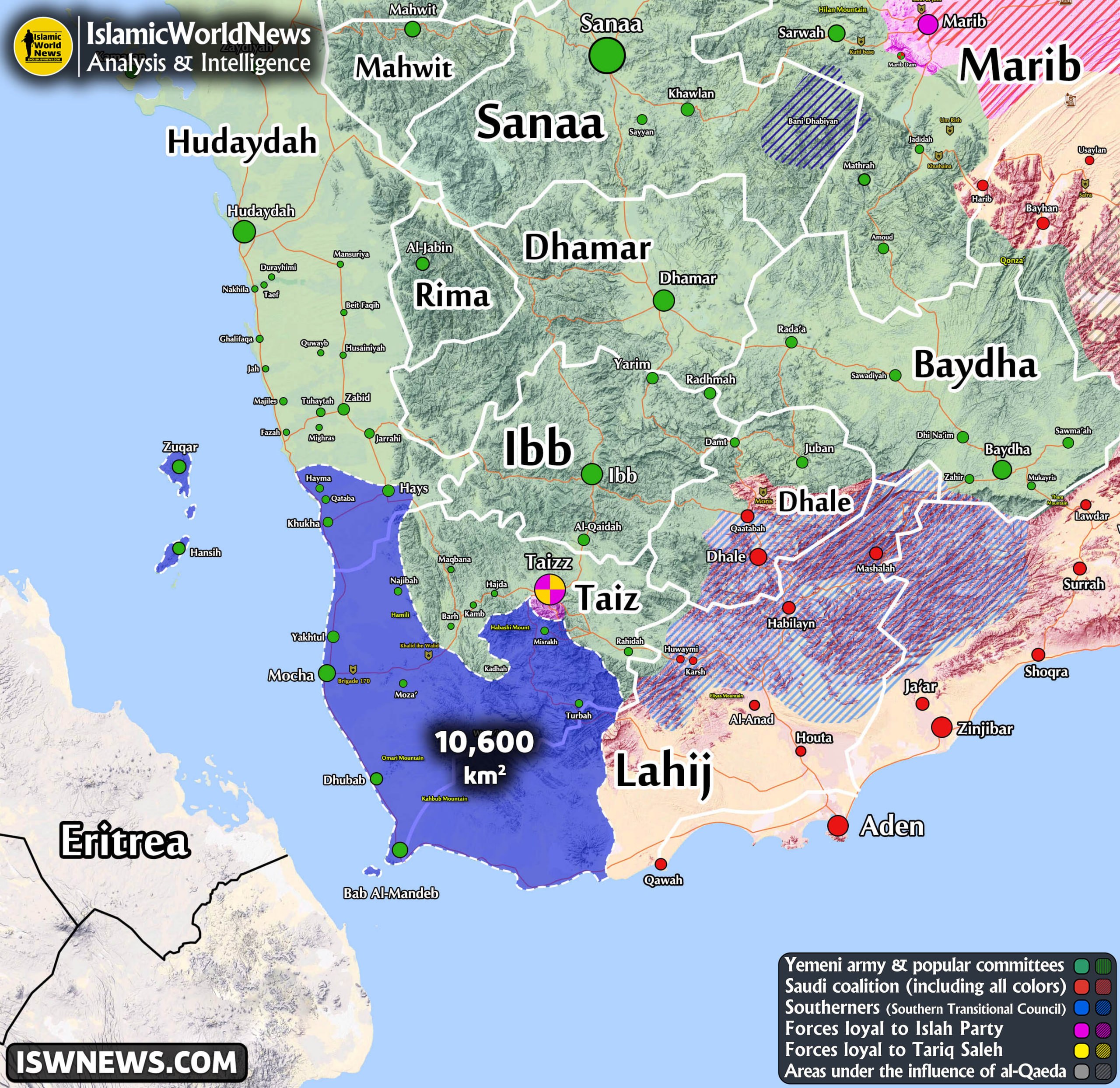
Continuing the series of operations by Yemeni armed forces under the codename “Wallahu Ashaddu Ba’san wa Ashaddu Tankilan” (God is stronger in might and more severe in punishment) in the provinces of al-Hudaydah, Taiz, and Lahij, Yemeni armed forces succeeded in clearing vast areas of these provinces totaling 10,600 square kilometers from Saudi coalition occupation.
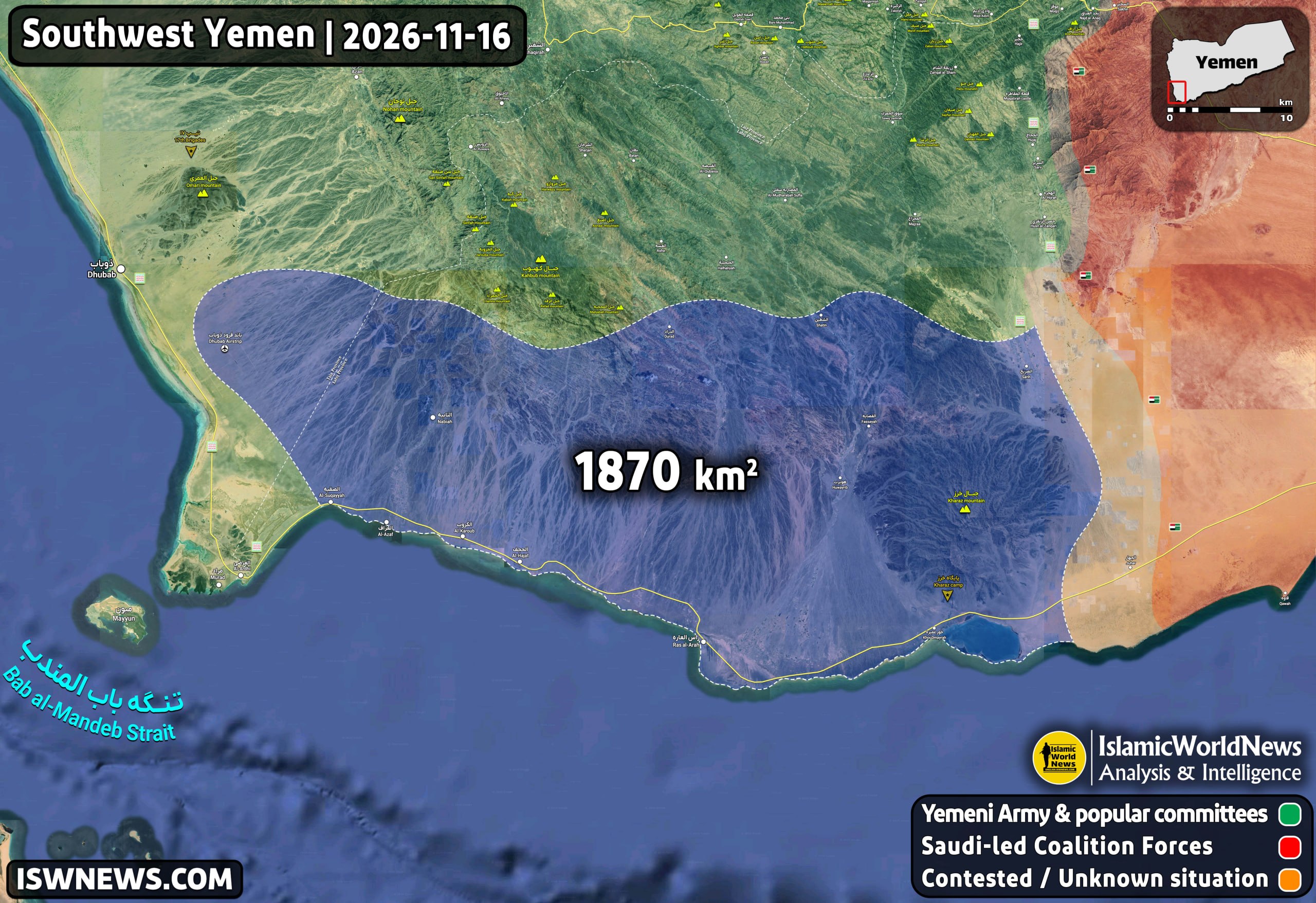
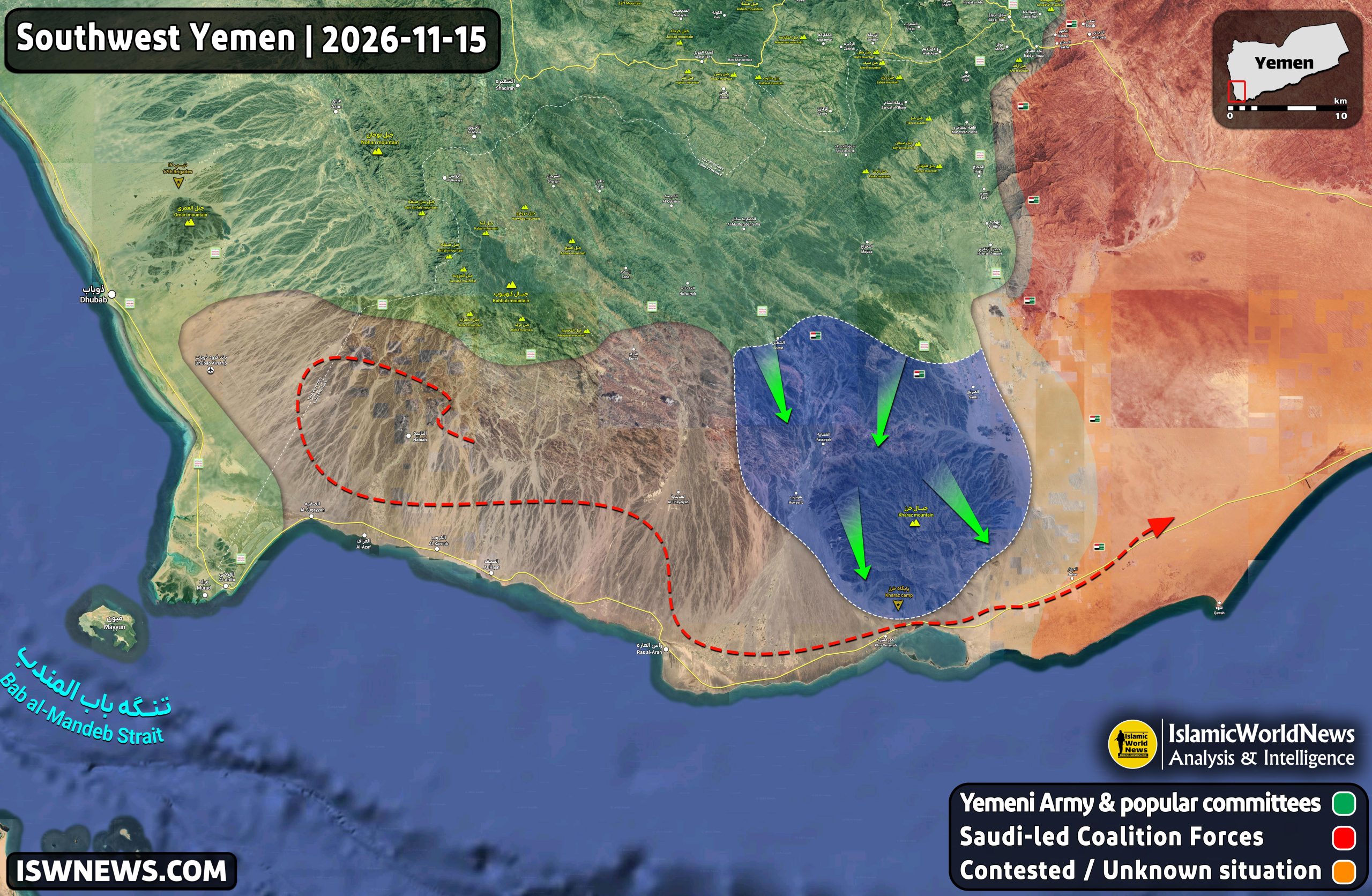
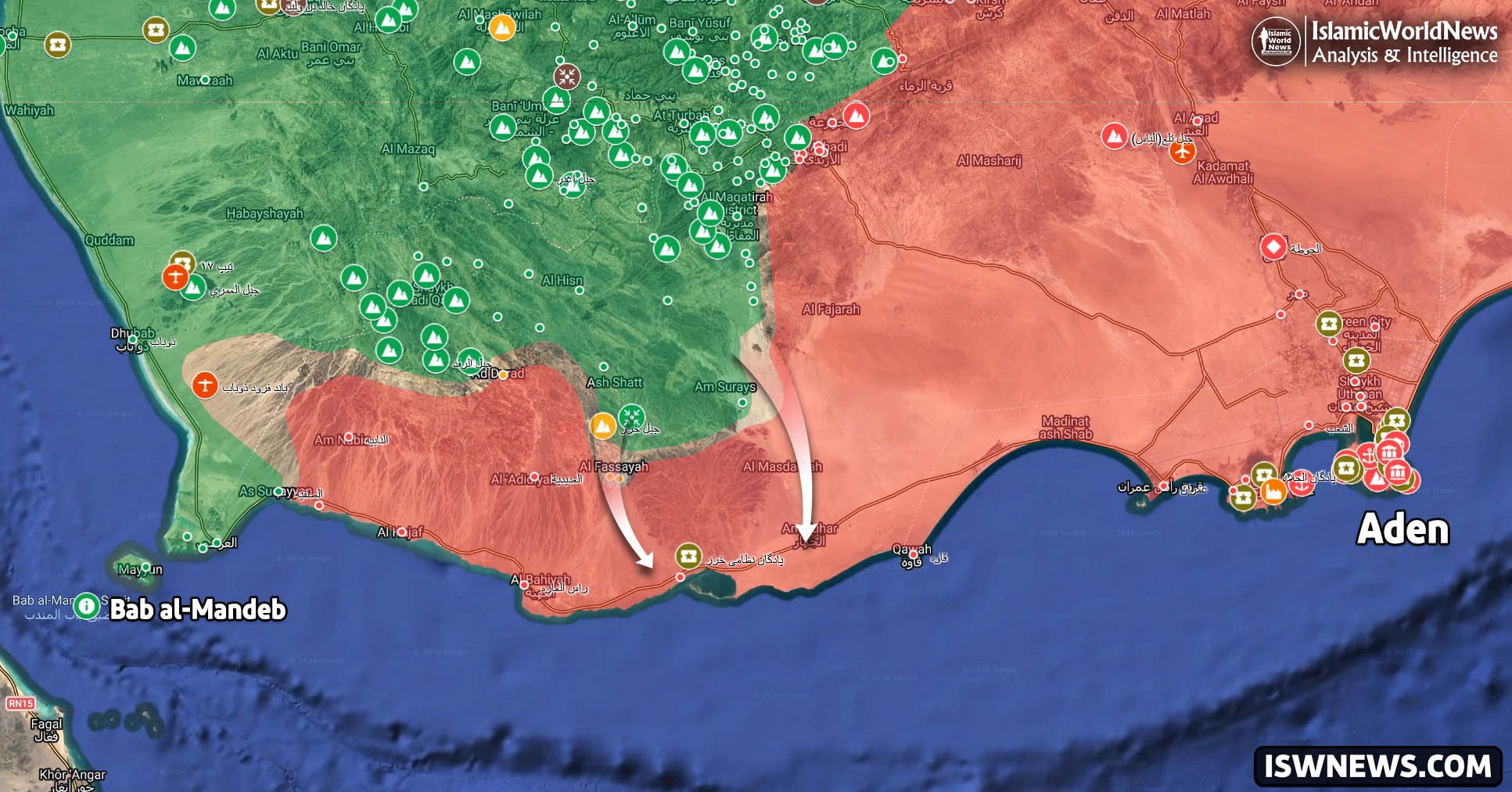
Following the recent attacks by Yemeni armed forces on the Kharaz heights and the encirclement of the eastern front of the Bab al-Mandeb Strait, Saudi coalition forces completely withdrew from the western coasts of Lahij Province. With this withdrawal, Yemeni armed forces took control of areas around Dhubab Airport, al-Azaf, Umm Nabiyah, Hajaf, Ras al-Arah, and Khawr Umayrah, and liberated approximately 1,870 square kilometers from Saudi coalition occupation.
It is predicted that Yemeni commanders will continue operations on this axis until security is established and complete control of the western heights of Lahj Province is achieved. It also appears that militants of the Southern Transitional Council intend to carry out attacks on the Tur al-Bahah and al-Madaribah axis in order somehow to prevent a possible Yemeni Army attack on Aden. However, Yemeni commanders have so far shown no decision to move toward Aden, and the southerners’ analysis of recent developments is completely wrong.
Overall, the file of the Bab al-Mandeb Strait axis was closed with the complete victory and success of the Yemeni Army, and another heavy defeat was inflicted on the Al-Amalika forces, Tariq Saleh, and the Southern Transitional Council.
With this advance, since the start of operations in southwestern Yemen on September 3, 2026, approximately 10,600 square kilometers of occupied areas—including southern al-Hudaydah Province, the eastern and western districts of Taiz Province, and the western areas of Lahj Province—have been liberated from Saudi coalition control.
According to Yossi Yehoshua, an i24NEWS military analyst, the disagreement among senior Israeli security officials over the operation was primarily related to the timing of the attack.
Trump’s initiative to prepare for a joint attack put Israel’s security establishment on its highest level of alert. According to this account, Eyal Zamir, Chief of Staff of the Israeli military, opposed carrying out the operation before the vote, citing concerns about its impact on the political process and the Israeli elections.
By contrast, Roman Gofman, the Mossad chief, supported the attack. According to the same report, during meetings held to discuss the plan, he warned: “We are not sure we will have another opportunity to launch a joint attack with the Americans.”
Trump ultimately backed down, and from then until the elections, no other plan to attack Iran was on the table. Hebrew-language sources also reported renewed efforts to revive the joint military operation, but gave no specific timeline or final decision on carrying it out.
The group alleged that the Prime Minister’s Office had paved the way for pressure and blackmail aimed at disarming the resistance by circulating fabricated reports through Emirati and Saudi media outlets, as well as some domestic media organisations.
The statement stressed that the Al-Nasr City issue and the resistance’s weapons must not become subjects of political disputes. The Islamic Resistance also accused the al-Zaidi government of seeking, under pressure from the UAE, Saudi Arabia, and the US, to implicate Kata’ib Hezbollah in fabricated cases through various measures and pretexts.
Regarding allegations of oil smuggling, the group said that a specialised technical committee had entered the city to investigate the claims but had found no violations involving the oil pipelines passing through the area. According to the group, the facilities documented during the field inspection and filming consisted of fuel storage tanks and a simple workshop for improving fuel quality.
The statement added that these facilities are used to supply fuel for military vehicles, heavy machinery, diesel generators, and military equipment, in order to compensate for fuel shortages affecting Popular Mobilisation Forces (PMF) units stationed in a sensitive military area stretching from northern Babil to Al-Qaim on the Iraqi-Syrian border.
The Islamic Resistance also accused certain media outlets of publishing fabricated images of a fuel reservoir and falsely attributing them to the technical committee. It said the workshop’s storage tanks had always been visible and openly accessible, and were located more than 5,000 metres from the oil pipeline passing through the city.
The group concluded by calling on Iraq’s judicial authorities to review the cases and provide protection to individuals who had been subjected to punishment over these allegations. It also called for serious investigations into corruption cases involving the supply of food to soldiers, food basket provisions, and a partnership contract with ADNOC.
The Islamic Resistance in Iraq concluded its statement by stressing: “Evil schemes and deception ultimately ensnare none but those who devise them.”
History of the development of the GBU-43/B MOAB bomb:
The design of the GBU-43/B MOAB (Massive Ordnance Air Blast) began in mid-2002 at the United States Air Force Research Laboratory. The primary goal of developing this weapon was to provide an efficient replacement for the older BLU-82 bomb.
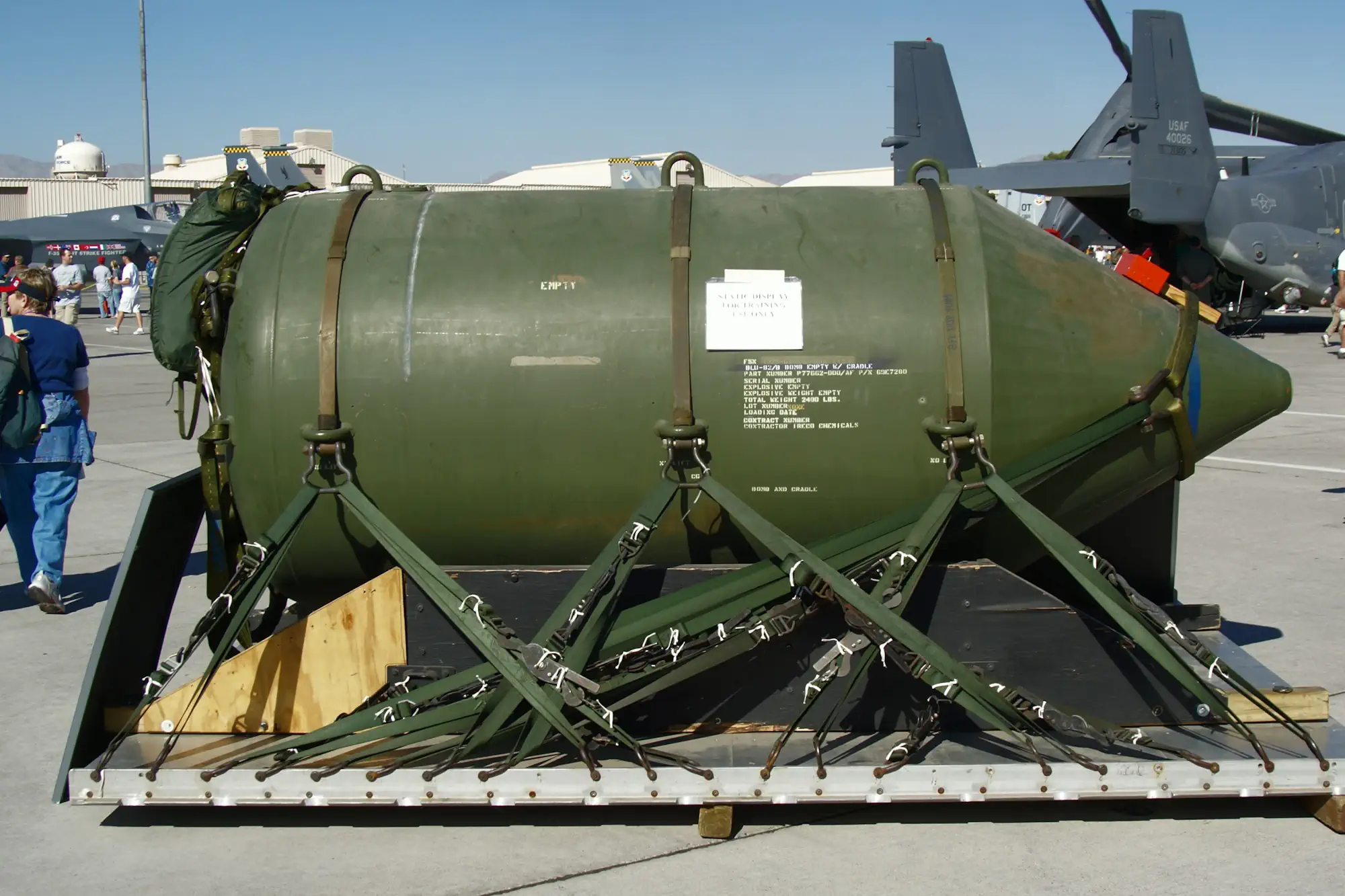
The free-fall BLU-82 bomb was initially developed during the Vietnam War to quickly create helicopter landing zones in dense jungles, and was later used in the Gulf War and the Battle of Tora Bora in Afghanistan to destroy fortified positions and instill fear in enemy forces. This bomb lacked a guidance system and was released from the rear of transport aircraft using a parachute. This delivery method severely reduced operational accuracy and forced the carrying aircraft to fly at a relatively close altitude and distance to the target, exposing it to threats.
BLU-82 free-fall bomb
As the year 2003 and the invasion of Iraq approached, the Pentagon, in the form of an emergency project and within only 9 weeks, put on its agenda the development of a bomb with destructive power similar to the BLU-82, but with the capability of being launched from a safer distance and with satellite guidance.
The name of this project, MOAB, was also chosen in a way to evoke a direct response to the famous phrase “Mother of All Battles” — a term used by Saddam Hussein during the First Gulf War to describe the battle with the international coalition.
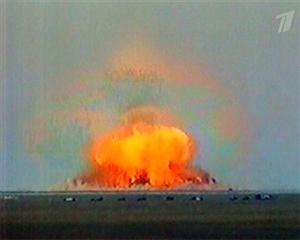
The simulation and prototype construction process was carried out with the participation of Dynetics. The first test of this bomb took place on March 11, 2003, at Range 70 of the Eglin Test Range. The mushroom cloud resulting from this test was visible from a distance of 32 kilometers and, only 9 days before the start of the military operation, sent a deterrent message to Baghdad.
With the end of the Iraq War without the use of the MOAB, production of this bomb continued at the McAlester Army Ammunition Plant in the state of Oklahoma. The development goals of this weapon can be examined in two areas: operational and psychological.
In the operational domain, Pentagon engineers sought to build a munition capable of destroying the mouths and entrances of natural caves in inaccessible areas, creating intense pressure in valleys, blocking tunnels, and clearing dense minefields. These capabilities could provide the basis for the advance of armored and infantry units.
In the psychological domain, this bomb was considered part of the “shock and awe” doctrine and was intended, by creating a massive explosion sound, ground shaking, and a widespread blast wave, to weaken the morale and resistance capability of enemy forces before direct engagement.
Video of the GBU-43/B bomb test in 2003
Technical and engineering specifications of the MOAB:
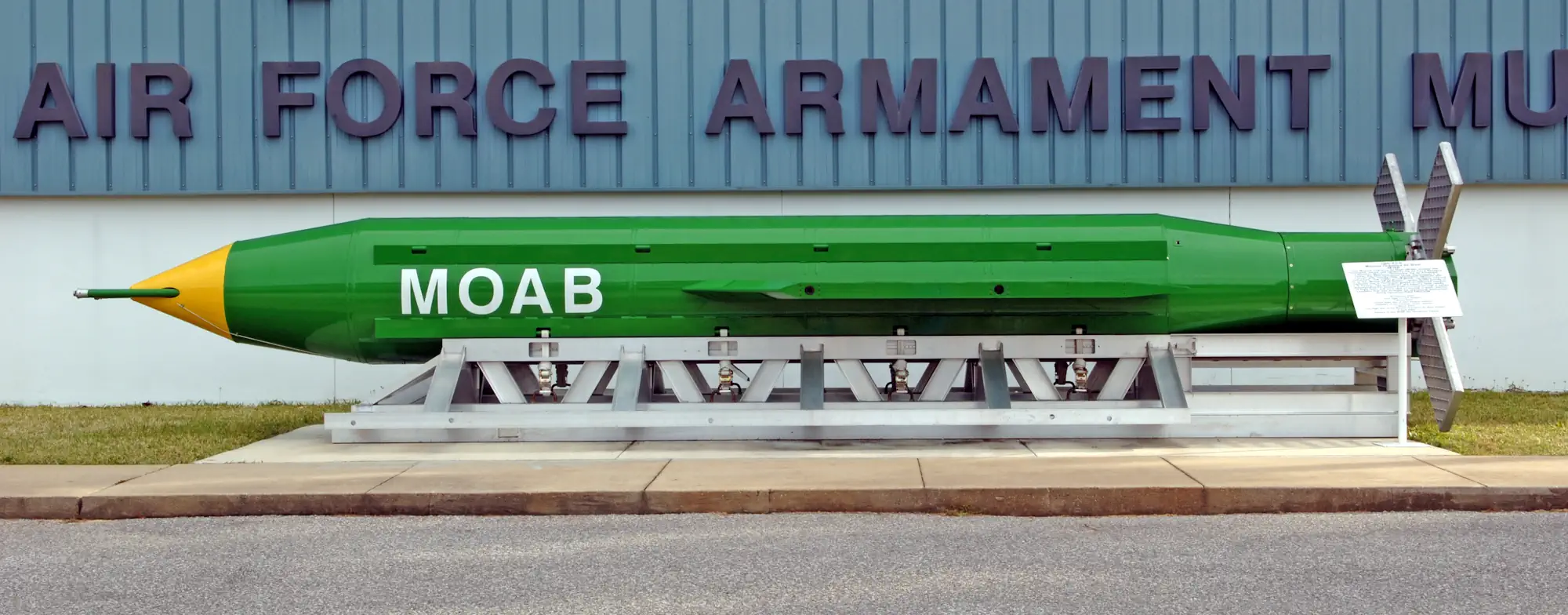
The structure of the GBU-43/B bomb consists of two main assemblies: the BLU-120/B warhead and the tail fin and navigation kit assembly, known by the designation KMU-593/B.
Unlike conventional bombs and heavy penetrators, in which a significant portion of their mass is devoted to thick steel casings, the outer body of the MOAB is made of aluminum sheets with a mass of approximately 1,300 kilograms. This design has brought the ratio of explosive mass to total bomb mass to a remarkable 87 percent.
The explosive material used in the warhead is the H-6 composition with a weight of approximately 8,500 kilograms. This composition was previously used in the maritime industry for the manufacture of torpedoes and naval mines. The explosive power of H-6 is estimated at about 1.35 to 1.38 times that of TNT. On this basis, the explosive yield of the MOAB is equivalent to approximately 11 tons of TNT, or 46 gigajoules of energy.
GBU-43/B bomb
In some public sources, the MOAB is mistakenly presented as a thermobaric or fuel-air weapon, whereas this bomb lacks a mechanism for dispersing fuel into the air before ignition and, in terms of classification, falls into the category of conventional high-explosive bombs.
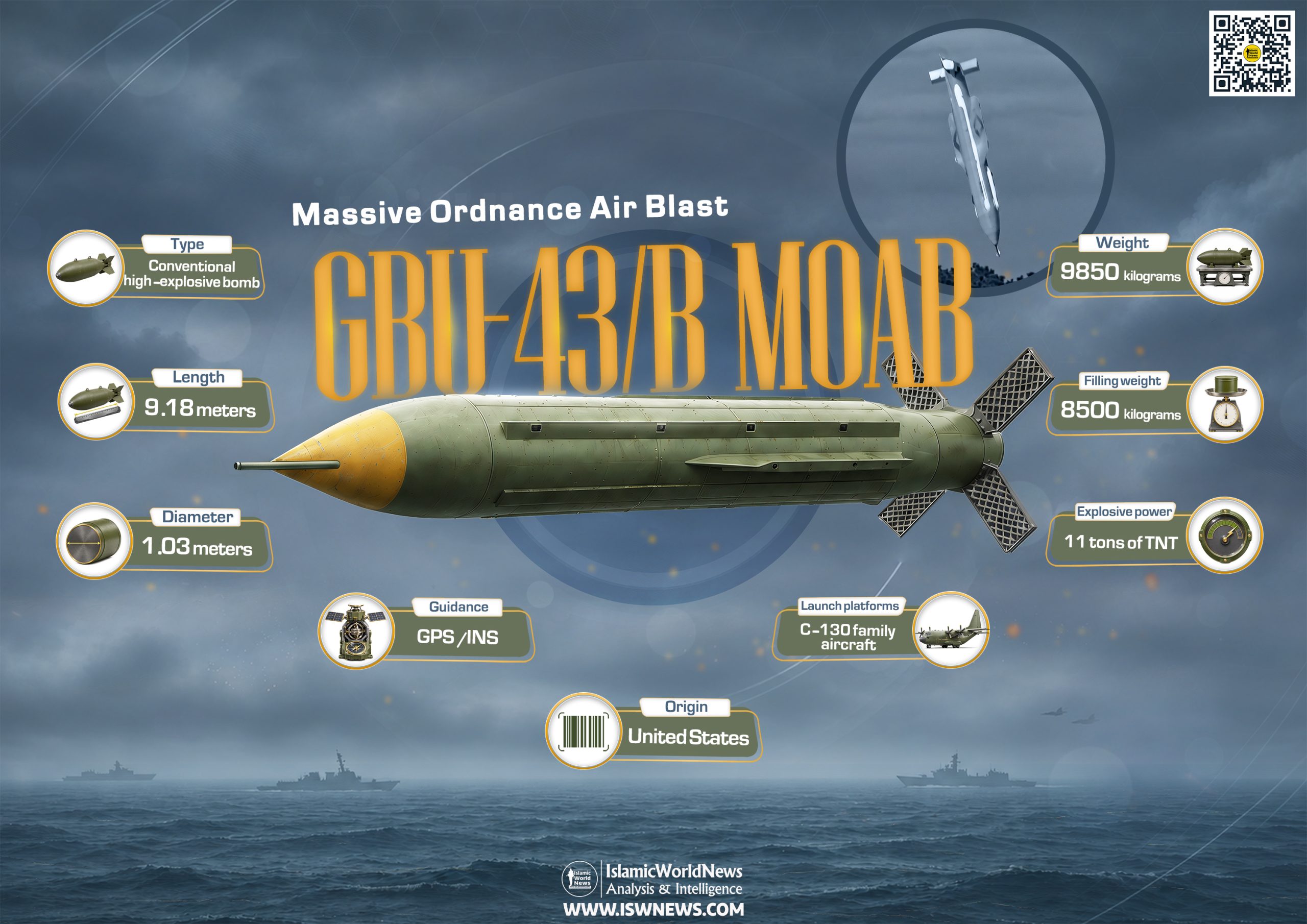
The dimensions of this bomb, including a length of 9.18 meters and a diameter of 1.03 meters, together with a mass of approximately 10 tons, rule out its carriage by conventional strategic bombers such as the B-52 and B-2. Therefore, heavy transport aircraft of the C-130 family, especially special operations variants such as the MC-130E Combat Talon I and MC-130H Combat Talon II, have been considered as the launch platform for this weapon.
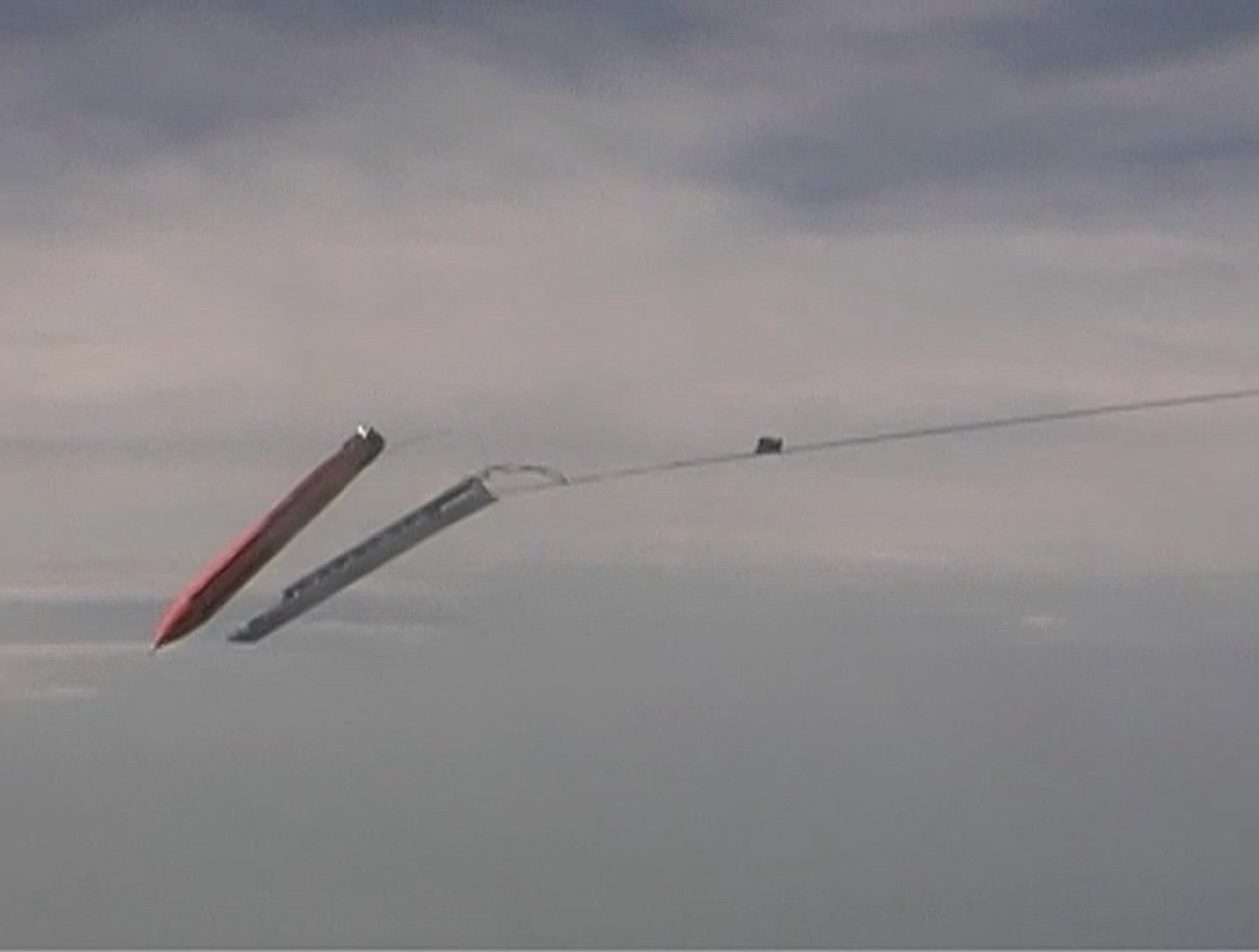
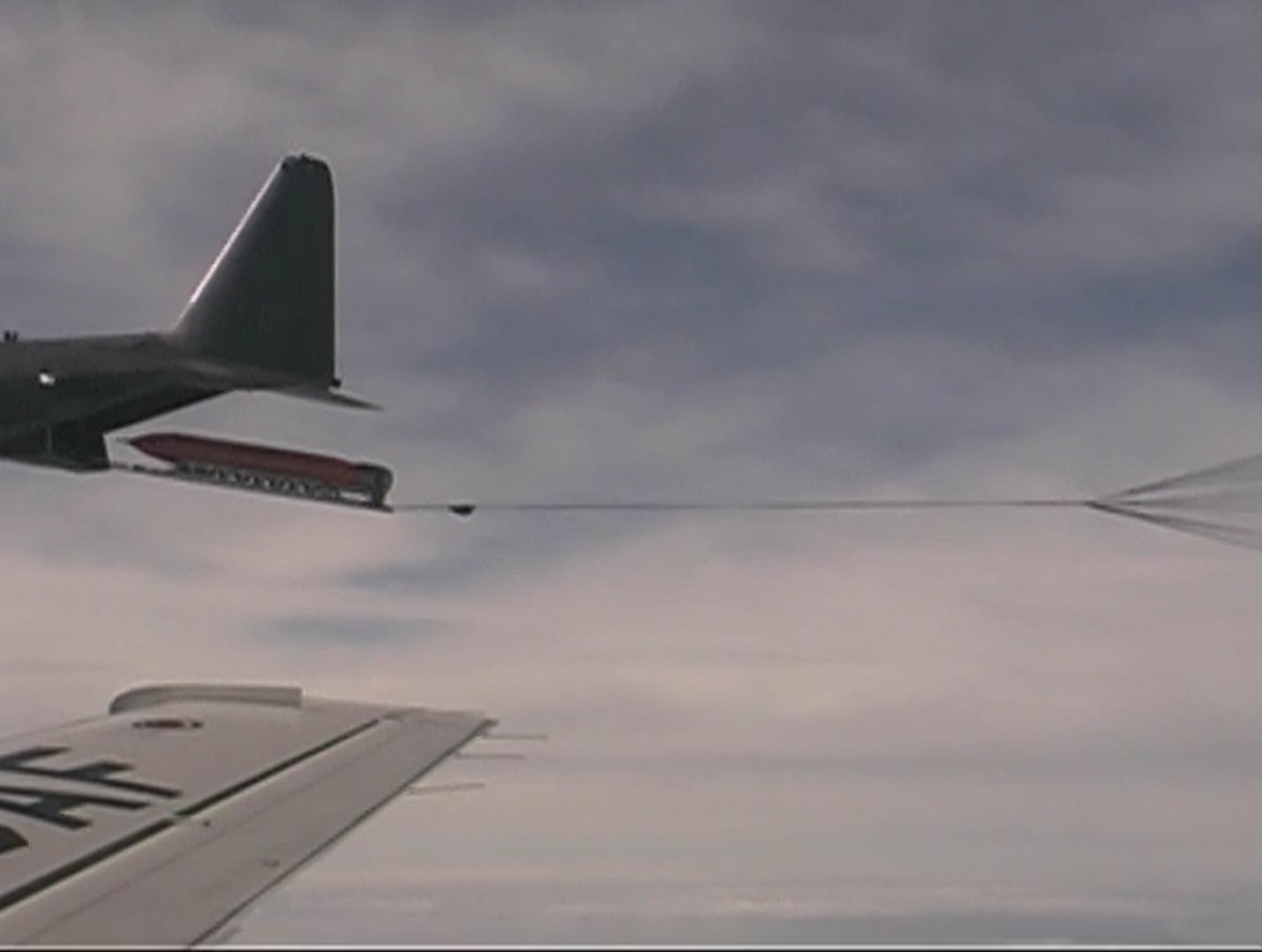
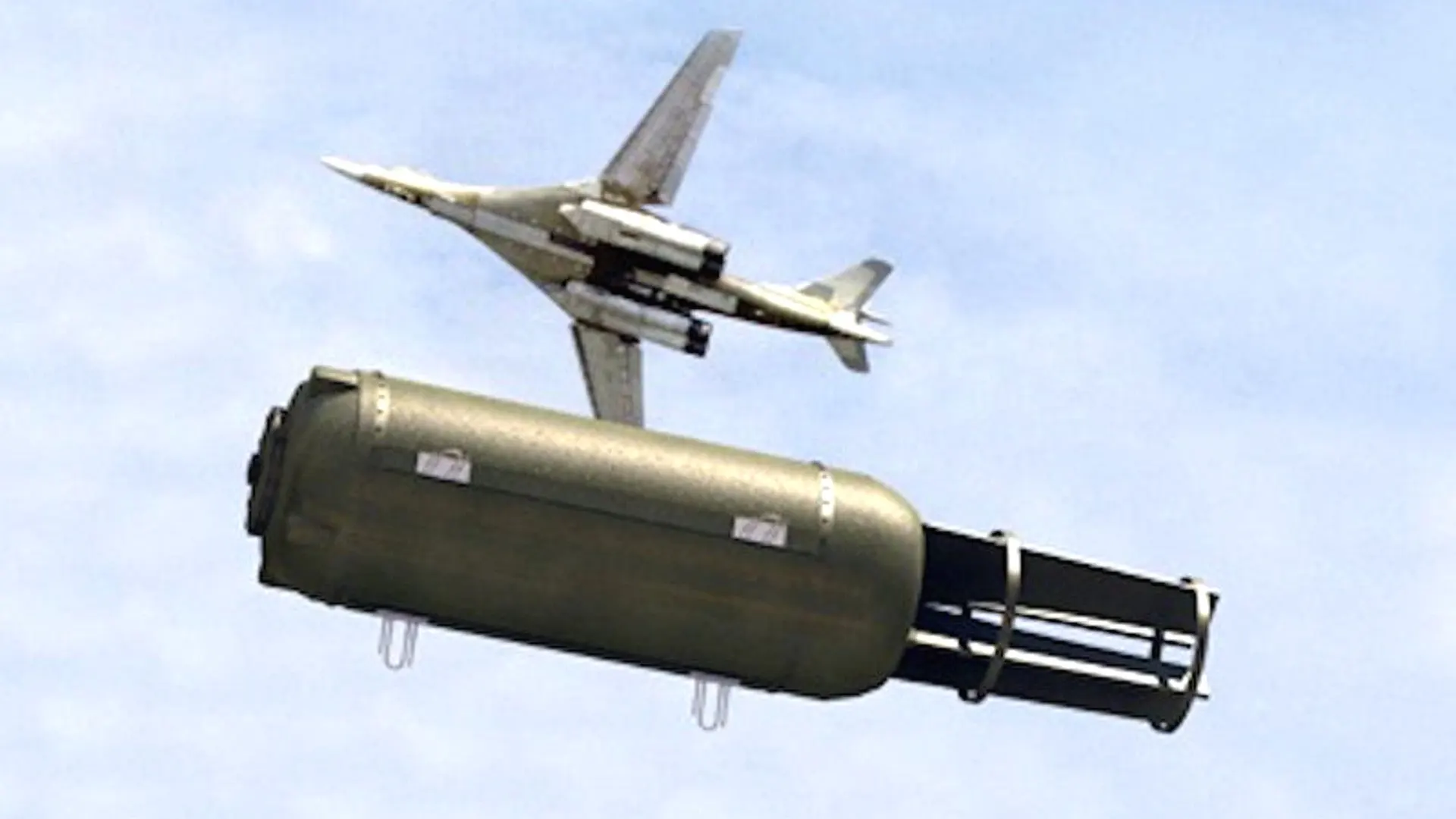
The bomb is placed on a restrained platform in the aircraft’s cargo bay. When launched from the rear ramp, a drogue parachute first opens, guiding the platform and bomb toward the end of the ramp and extracting them from the aircraft. After extraction, the bomb separates from the platform and enters free air.
Releasing the bomb from an aircraft’s cargo bay
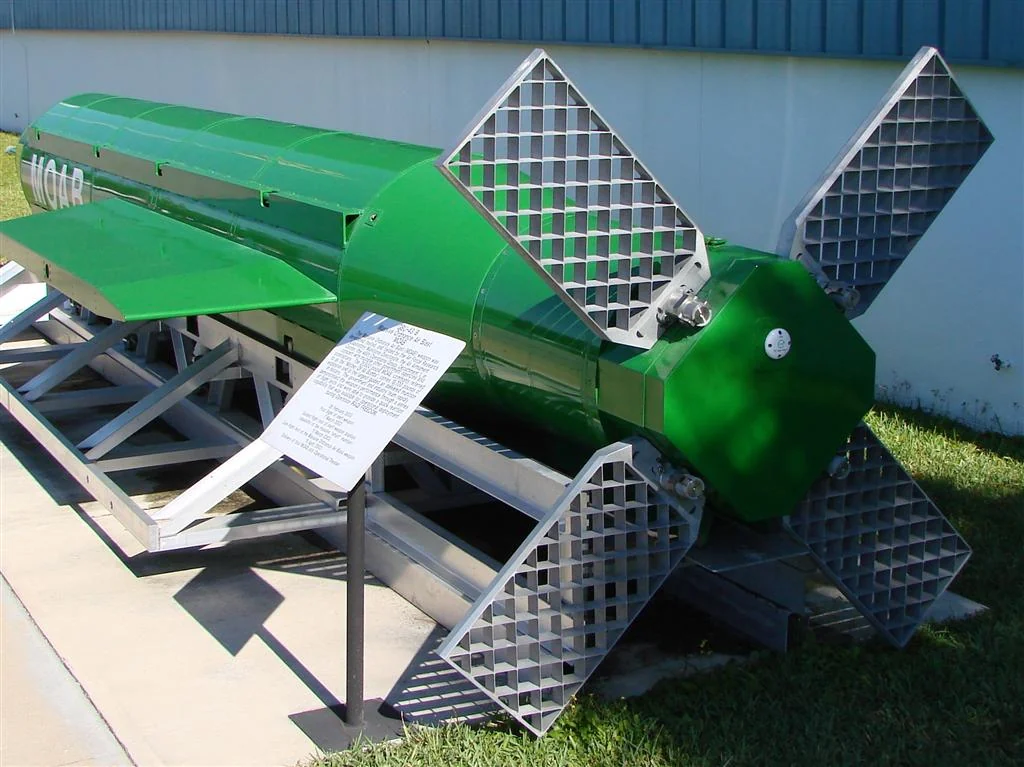
During the descent, four lattice fins deploy at the rear of the bomb. This assembly, combined with satellite and inertial guidance systems, enables trajectory correction and the guidance of the bomb toward its target, up to a range of approximately 5.5 kilometers.
Four latticefins at the rear of the bomb
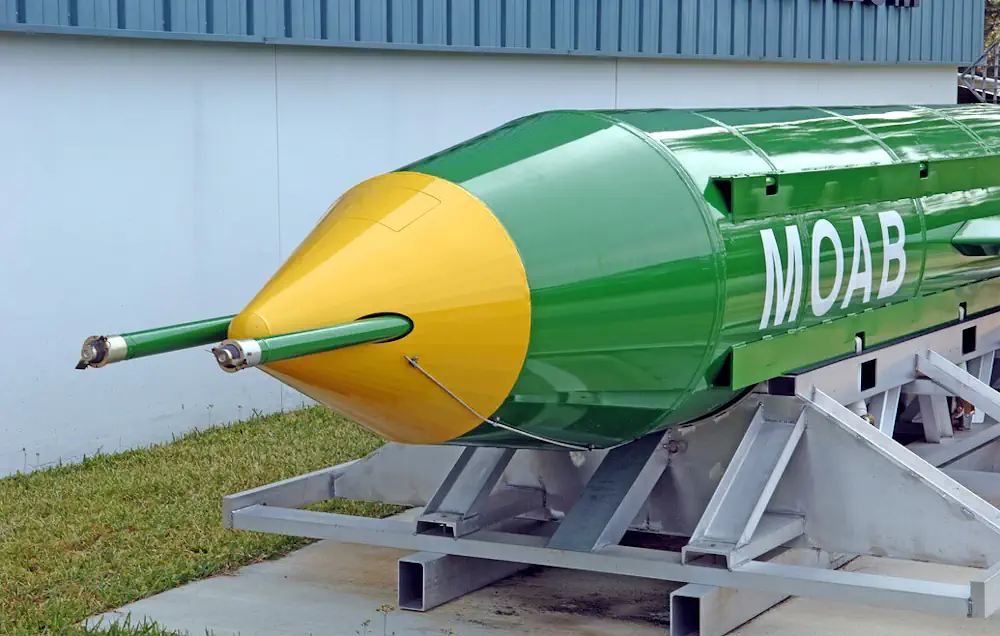
The detonation mechanism of the MOAB is based on the operation of radar altimeter fuses installed in the nose section. These fuses detonate the bomb at an altitude of approximately 1.8 to 3 meters above ground level, before physical impact with the target. Detonation at this altitude can lead to the formation of a phenomenon known as Mach reflection.
Nose section of the GBU-43/B bomb
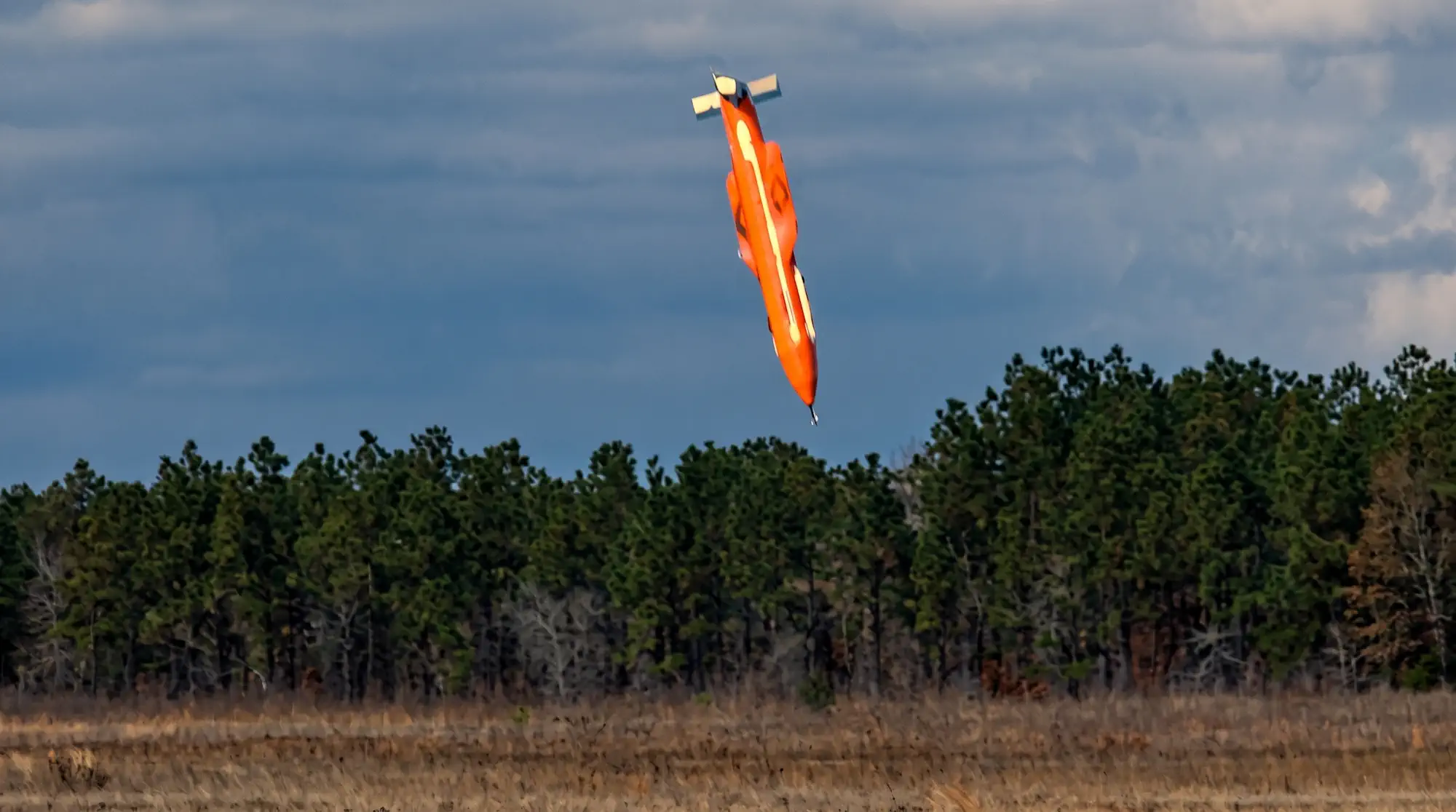
In this phenomenon, the blast wave reflects off the ground and merges with the initial wave, creating a powerful pressure front. At a distance of approximately 150 to 300 meters from the explosion’s epicenter, this wave can penetrate the entrances of caves, tunnels, and shelters with great force. Furthermore, drastic pressure fluctuations within enclosed spaces can cause severe lung injuries, the destruction of biological tissues, and respiratory impairment for individuals present in these environments.
The GBU-43/B bomb moments before the explosion
Operational history:
The only combat use of the GBU-43/B bomb in history was recorded on April 13, 2017. The target area contained a network of underground corridors and military tunnels that had been constructed in the 1980s, concurrently with the Afghan mujahideen war against Soviet forces and with initial support from the U.S. Central Intelligence Agency. ISIS forces had used these natural shelters to establish a defensive network consisting of extensive minefields, improvised explosive traps, and fortified positions.
In that operation, the bomb was dropped from the rear ramp of a U.S. Air Force MC-130 special operations aircraft over the Momand Valley in Achin District, Nangarhar Province, eastern Afghanistan. Afghan security officials and the Ministry of Defense announced the ISIS death toll from the attack as between 94 and 96 killed.
It is claimed that the blast wave penetrated the interior of the caves and tunnels and, by destroying the entrances and ventilation systems, disrupted access to this underground network. Additionally, the intensity of the blast wave helped clear minefields adjacent to the target area.
GBU-43/B bomb used in Afghanistan on April 13, 2017
Comparison of the MOAB with Tactical Nuclear Weapons:
The MOAB’s explosive yield of approximately 11 tons of TNT has led some media outlets to place it at the boundary between conventional munitions and nuclear weapons.
However, the only nuclear weapon with a comparable explosive yield is the U.S. W54 compact nuclear warhead, developed during the Cold War and used in the M-388 launcher system. Depending on its detonator setting, the warhead had a variable yield of between 10 and 20 tons of TNT.
Despite their comparable explosive yields, the two weapons differ significantly in size and weight. The MOAB requires a structure weighing nearly 10 tons to produce an explosive yield equivalent to 11 tons of TNT. By contrast, the W54 delivered a similar yield in a compact, capsule-shaped package weighing less than 27 kilograms and could be fired from a lightweight rocket launcher. Therefore, the two weapons belong to fundamentally different categories, and their similarities in explosive yield should not be taken as a direct equivalence.
W54 small nuclear warhead
Comparison with Russia’s FOAB bomb:
In 2007, the Joint Staff of the Armed Forces of the Russian Federation, in response to the claims raised about the MOAB bomb, released a video of the test of a bomb designated ATBIP. This weapon immediately became known in international media as the Father of All Bombs (FOAB).
The FOAB is in fact a thermobaric weapon whose operating principle is based on the dispersal of liquid fuel into the air and its combination with atmospheric oxygen. When the bomb’s casing opens at a specified altitude, the fuel mass spreads in the environment in the form of a vast aerosol cloud and is then ignited using delayed detonators.
Russian FOAB bomb
Russian officials claimed that the FOAB, despite having a lower mass than the MOAB—approximately 7.1 tons versus 9.85 tons—produces an explosive yield equivalent to 44 tons of TNT thanks to nanotechnology and the use of ambient oxygen instead of a solid oxidizer. This figure is about four times the explosive power of the American model. The complete destruction radius of this bomb has also been announced as up to 300 meters.
Comparison of the MOAB with bunker-buster weapons:
In turn, a comparison of this bomb with bunker-busting munitions, including the GBU-28 Paveway III and the GBU-57A/B (MOP), is noteworthy.
This is because these weapons pursue completely different objectives in terms of structural design and materials used. The MOAB bomb has an aluminum and relatively thin casing designed to devote more than 85 percent of the bomb’s total weight to the H-6 explosive compound. As a result, this bomb fundamentally lacks the ability to penetrate soil and concrete and is built to explode in the air. Its casing is also not designed to withstand the severe impact of striking hard surfaces before detonation.
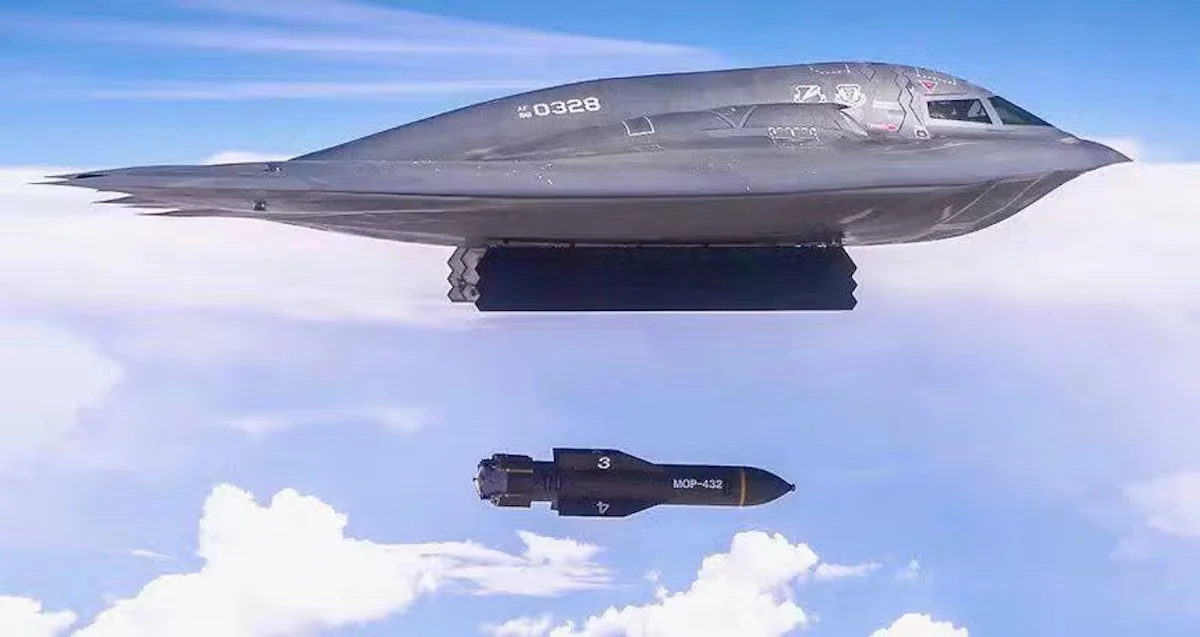
In contrast, bunker-busting munitions such as the GBU-57 MOP are built to withstand the pressure and mechanical shock of penetrating thick layers of soil, rock, and concrete. Despite weighing approximately 14 tons, this bomb carries less than 2,400 kilograms of explosive material. The bulk of its weight is devoted to a dense, robust steel casing made from special alloys. The elongated structure, reinforced nose, and high mass of this weapon enable it to penetrate into lower layers of the earth by relying on kinetic energy.
Another important difference concerns the fuse mechanism. The MOAB’s radar proximity fuse detects distance from the ground surface and detonates the bomb before impact; therefore, this weapon is not designed for physical penetration into the ground. In contrast, bunker-busting bombs are equipped with delay fuses that allow detonation after impact and penetration into various layers. These systems can, by calculating the timing and penetration conditions, delay detonation until the bomb reaches the desired depth so that targets buried underground or behind concrete structures are destroyed from within.
GBU-57 MOP bomb
Conclusion
The use of the GBU-43/B MOAB bomb is highly dependent on specific geographical conditions and operational environments, particularly the absence of effective air defense. Although this weapon is suitable for destroying extensive positions, tunnel networks, and surface fortifications, clearing mined areas, and creating a severe psychological effect in asymmetric warfare, due to the nature of its airburst detonation and its inability to penetrate deep layers of the earth, it cannot serve as a substitute for bunker-busting munitions.
On the other hand, compared with tactical nuclear weapons, the MOAB, despite possessing considerable mechanical destructive power, lacks the radiological effects of a nuclear explosion. This characteristic allows commanders to benefit from its high destructive capacity without imposing the political and strategic consequences of using a nuclear weapon.
Overall, the MOAB is a weapon with limited production numbers whose place is defined in operations against inaccessible areas and specific conditions.
Specifications of the GBU-43/B MOAB bomb:
Type: Conventional high-explosive guided bomb with airburst fuse Origin: United States Producer: Dynetics Development: Since 2002 Entered service: 2003 Length: 9.18 meters Diameter: 1.03 meters Engine: None (free-fall bomb) Range: Approximately 5.5 kilometers (dependent on release altitude) Weight: 9,850 kilograms Warhead: BLU-120/B Explosive weight: Approximately 8,500 kilograms of H-6 type Explosive yield: Equivalent to approximately 11 tons of TNT Flight path: Free fall, controlled by four grid fins Guidance: GPS/INS combined Launch platforms: C-130 family transport aircraft (especially MC-130E Combat Talon I and MC-130H Combat Talon II)
Yemeni forces have not yet entered the Khawr Umayrah settlement, but they are deployed around it and on the Kharaz heights and can target the coastal road with anti-armor missiles and artillery munitions. Therefore, Saudi coalition forces in Ras al-Arah and on the eastern front of the Bab al-Mandab Strait have officially been encircled.
In recent days, Ansarallah forces had repeatedly cut the aforementioned road with guerrilla attacks and hit-and-run tactics, but since yesterday this route has been completely cut off. It should be noted that a number of Saudi coalition forces fled toward Aden in recent days from the areas that were being besieged. However, after the encirclement was completed, a significant number of forces have been trapped in the Yemeni Army’s siege. No final decision has yet been made regarding the fate of these forces. It is possible that the coalition forces will withdraw from the area with the Yemeni Army’s permission, or there is the possibility of their complete capture.
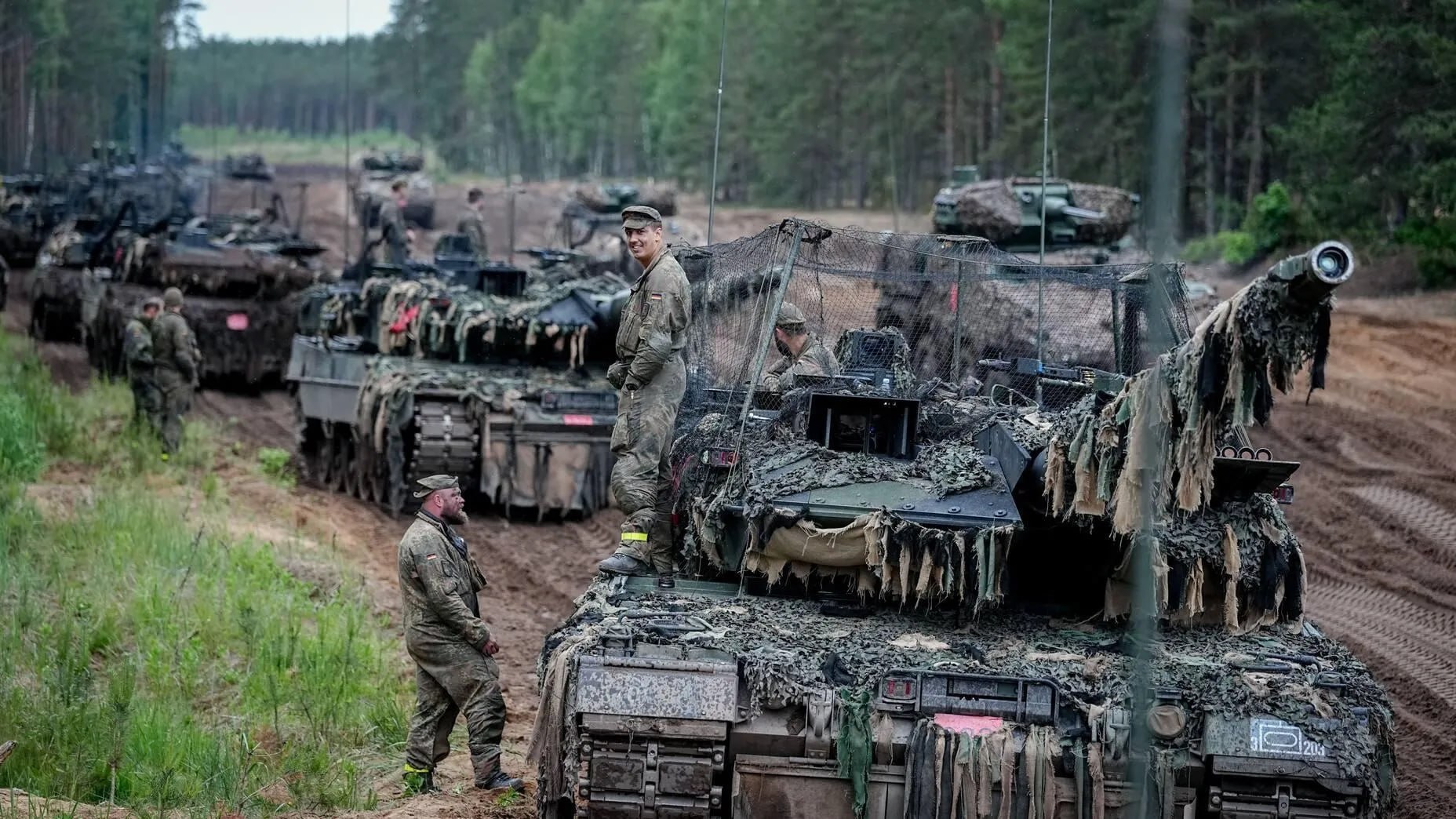
Six of these new battalions will be organized for territorial defence within Germany, while the other two will join the country’s permanently stationed brigade in Lithuania.
The six territorial defence battalions will come under the Territorial Defence Command and will be tasked with protecting critical infrastructure, military facilities, ports, airports, transport hubs, and communication routes.
The other two battalions will consist of an armoured artillery battalion and a support battalion, both of which will join Germany’s 45th Armoured Brigade in Lithuania.
The 45th Armoured Brigade is Germany’s first combat formation established with a permanent deployment mission outside German territory. Including its support units, the brigade is expected to have approximately 5,000 personnel.
In a potential large-scale conflict in Eastern Europe, German territory could become one of NATO’s main routes for transporting troops and military equipment to the alliance’s eastern flank. Under such circumstances, protecting bridges, railway lines, fuel depots, ports, and military facilities would take on particular operational importance.
The document, whose full version has not been released due to its classified nature, replaces the previous “One Force Design 2024” plan.
The main focus of the new plan is a shift towards an integrated structure combining sensors, communications networks, artificial intelligence, autonomous systems, long-range weapons, and electronic warfare capabilities.
Under this framework, crewed aircraft, drones, sensors, weapons, and command-and-control systems are expected to operate as a coordinated operational network. This would allow other parts of the force to continue carrying out missions even if some communications links are lost, or certain components of the network are damaged.
The use of autonomous systems and artificial intelligence is also being pursued more extensively to accelerate decision-making, improve operational coordination, and increase combat flexibility.
According to the think tank’s estimates, the US consumed approximately one-third to two-thirds of its pre-war stocks of certain key munitions during military operations against Iran and the subsequent clashes. The remaining stockpiles are considered sufficient for a resumption of hostilities with Iran, but the situation is more concerning in the event of a potential war with China.
Patriot: Approximately two-thirds of pre-war Patriot interceptor missile stocks have been consumed. Lockheed Martin plans to increase annual production capacity from around 600 to 2,000 missiles.
THAAD: Approximately half of the interceptor missile stockpile for this system was used during the war with Iran. The US is seeking to quadruple THAAD interceptor production capacity to replenish its stocks.
Tomahawk missiles: Approximately one-third of pre-war stocks have been consumed. RTX plans to increase annual production to 1,000 missiles.
JASSM cruise missiles: Approximately one-third of pre-war stocks have been consumed.
SM-3 and SM-6 missiles: Consumption of these naval interceptor missiles has been relatively limited. However, replenishing their stockpiles will take time due to low procurement levels in previous years.
Stinger missiles: Stockpiles of these short-range missiles have been reduced due to extensive transfers to Ukraine. Their production line has also only recently been reactivated after years of inactivity.
According to CSIS estimates, delivery of many newly manufactured munitions will take between two and four years following congressional funding allocations. Therefore, the main challenge facing the US is not simply securing funding, but also limited production capacity and the time required to replenish its stockpiles.
The think tank also notes that, from the fifth day of military operations against Iran, the US military gradually reduced its use of expensive, long-range munitions and shifted toward shorter-range and less expensive weapons.
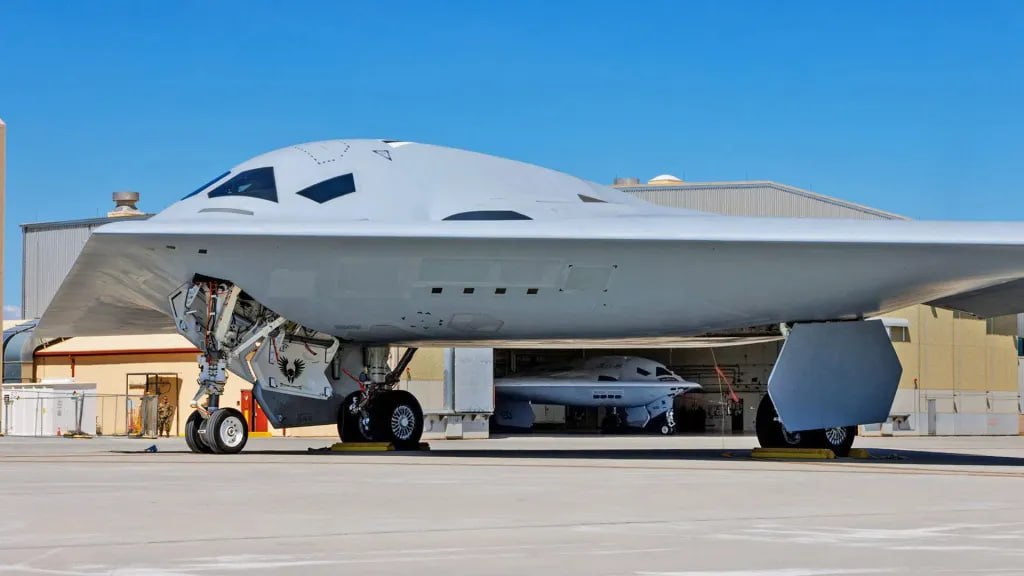
According to the US Air Force, the test was conducted using one of the B-21 pre-production aircraft, which took off from Edwards Air Force Base in California. During the test, a conventional munition was released to validate digital models and assess the aircraft’s ability to rapidly integrate new weapons.
The type of weapon used in the test and details of its performance have not yet been disclosed. The B-21 is designed to carry a wide range of conventional and nuclear weapons. The AGM-181A Long-Range Stand-Off (LRSO) nuclear cruise missile is also expected to be one of its key future weapons.
Two pre-production B-21 aircraft are currently participating in the flight-test programme, and the US Air Force plans to deploy the first operational examples of the bomber in 2027.
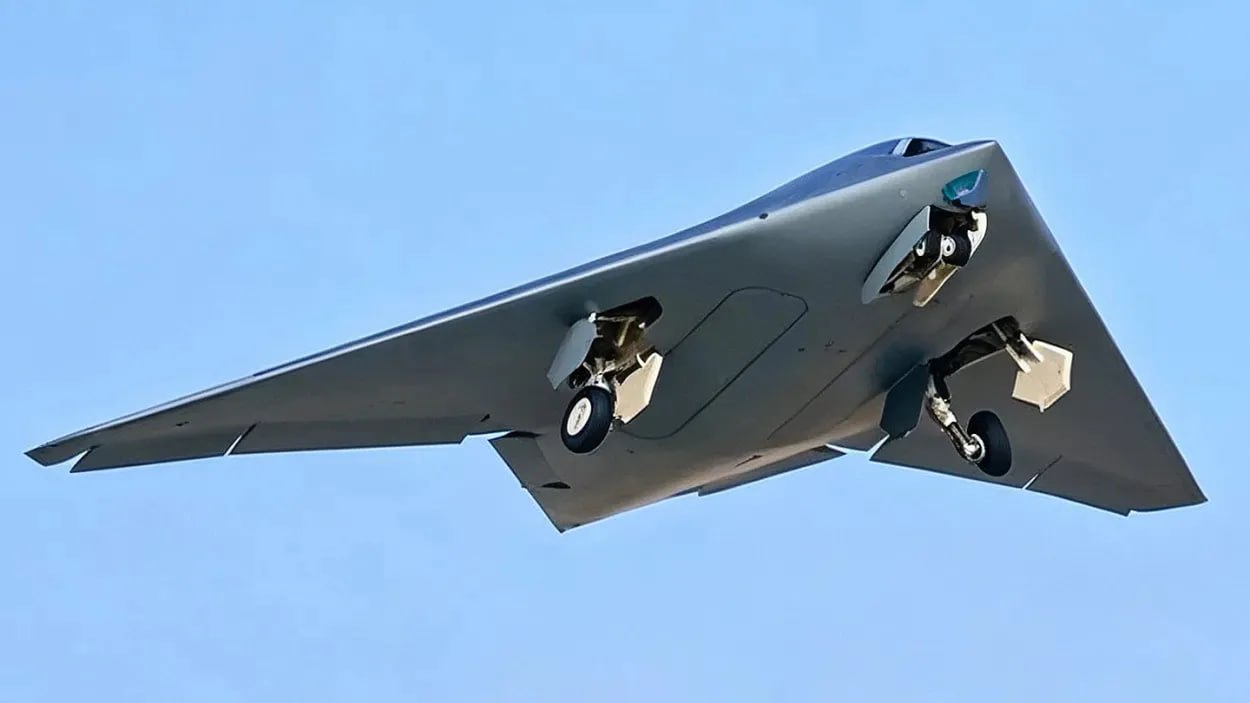
This flying-wing aircraft was developed to conduct strike missions and suppress enemy air defenses, and is intended for joint operations with Chinese manned fighter jets.
According to released information, the GJ-11 is equipped with two internal weapons bays that allow it to carry air-to-ground munitions without increasing its radar cross-section. Estimates suggest that each bay can accommodate at least one 454-kilogram-class munition.
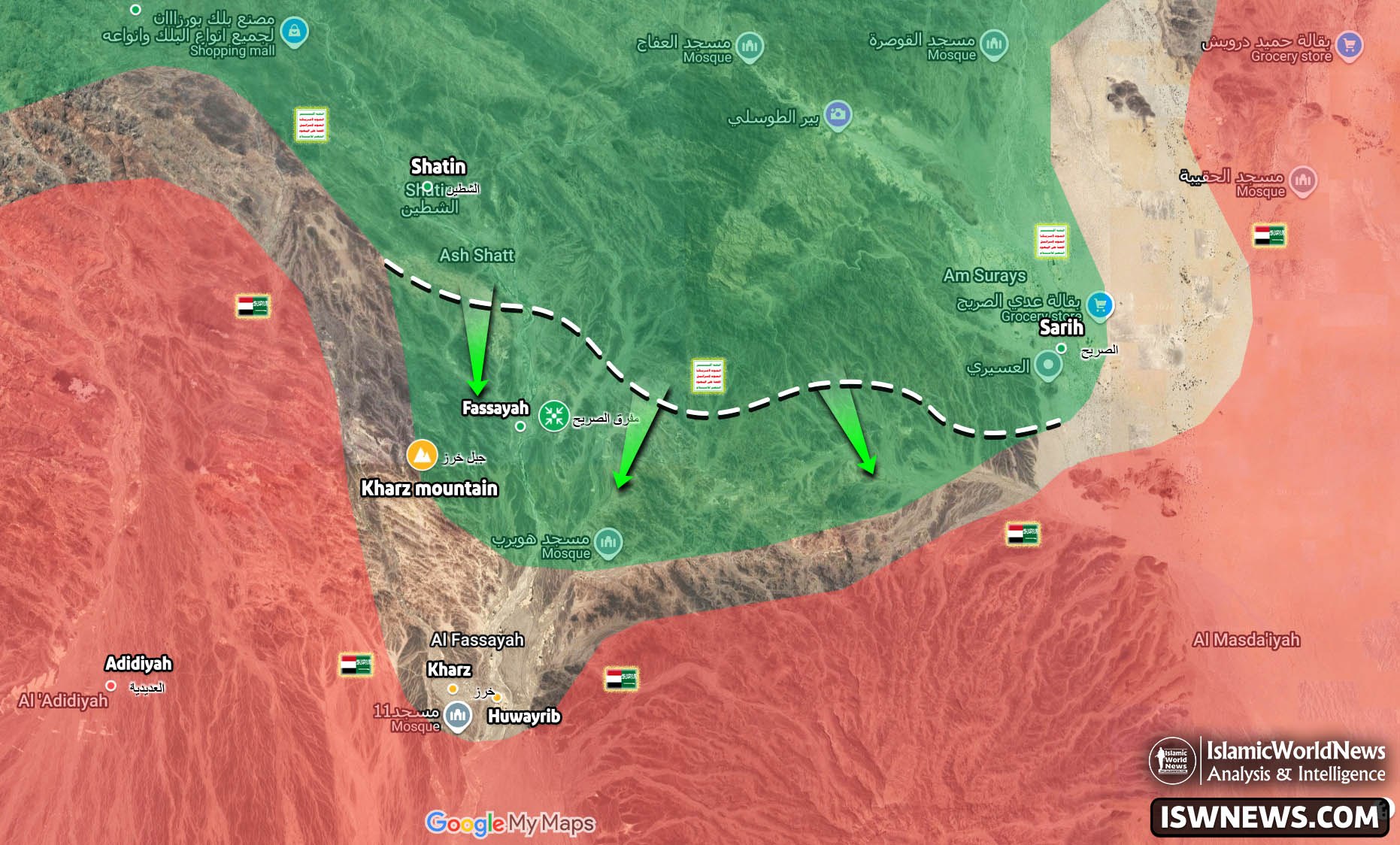
According to the latest field reports in southwestern Lahij Governorate, Yemeni armed forces and popular committees, after pushing back Al-Amaliqa and Tariq Saleh’s forces from the al-Sarih junction, succeeded in clearing the al-Fasayha area. Tariq Saleh’s forces have currently withdrawn from this axis, and Al-Amaliqa forces are resisting Yemeni Army attacks in the Huwayrib and Kharaz areas.
Yemeni forces have also attacked from the Durad axis toward the Ghayl al-Barir and al-Adidiyah areas, which has not yet yielded definitive results.
On the eastern axis of the Bab al-Mandeb Strait, the 17th Brigade of the Al-Amaliqa forces has withdrawn from the al-Saqiya area, and as of this moment, no reliable news has been received of Yemeni forces entering this area.
Last night’s Yemeni Army operation on this axis was a combination of media warfare, missile attacks on the Kharaz and Ras al-Arah bases, and a ground assault. The dissemination of news of a large-scale withdrawal from Ras al-Arah was in this context, and this has not materialized on the battlefield as of this moment.
Referring to the words of Imam Hussein (PBUH), “I see death as nothing but happiness, and life with oppressors as nothing but misery and disgrace,” Hezbollah Secretary-General Sheikh Naim Qassem emphasized that martyrdom represents the highest degree of sacrifice and Islamic upbringing, and holds an exalted position on the human and spiritual path.
He stated that the message of the martyrs brings glad tidings of peace and an end to sorrow for the Muslim community, as, according to God’s promise, the future belongs to the front of truth and resistance. Defending the homeland, humanity, freedom of the land, and supporting the oppressed Palestinian people are all part of the martyrs’ divine path.
Sheikh Naim Qassem described Martyrs’ Day as an opportunity to honor the patient and proud families of the martyrs and renew allegiance to their ideals. Praising the fathers and mothers who have sacrificed one or more of their children in defense of their homeland and divine ideals, he said that some families have offered two, three, four, or even five martyrs, yet continue to declare that if they had more children, they would make the same sacrifice again. This demonstrates how deeply rooted the culture of sacrifice and resistance is in society.
Addressing Palestine, the Hezbollah Secretary-General stressed that, contrary to Western propaganda, the roots of the crisis do not lie in Operation Al-Aqsa Flood. Rather, they must be traced back to British colonialism and the establishment of the Zionist regime in 1948—a process accompanied by massacres, the displacement of millions of people, and the destruction of infrastructure.
Referring to the humanitarian catastrophe in Gaza, he described the martyrdom and injury of tens of thousands of women and children, along with the siege imposed on more than 2.5 million people, as a continuation of the same historic policy of genocide and forced displacement, pursued with the silence and complicity of Western powers.
Sheikh Naim Qassem described blaming the Palestinian and Lebanese peoples for defending themselves as a distortion of reality, emphasizing that the root cause of the crises is the inherently expansionist and aggressive nature of the Zionist regime’s occupation, not the existence of resistance.
Regarding Iran, he stated that raising objections to uranium enrichment, despite Iran’s legal right to the peaceful use of nuclear energy under the 2015 agreement, is merely a pretext for restricting the power and independence of the resistance front.
The Hezbollah Secretary-General emphasized that the primary objective of the US and the Zionist regime is not to uphold the law or address nuclear concerns, but rather to gain control over the region’s strategic resources and wealth. He described the aggression against Iran as a blatant violation of international law and affirmed Iran’s legitimate right to self-defense and retaliation.
He also stressed the need for unity among the various fronts and coordination between the region’s armies, peoples, and resistance forces, describing such cooperation as a means of confronting aggression and safeguarding regional security and stability.
Regarding Lebanon, Sheikh Naim Qassem said that the Zionist regime’s expansionist plan to weaken Lebanon and pave the way for new settlements had been thwarted by the steadfastness of the people and resistance forces. He added: “Had it not been for the resistance and honorable people, the enemy would have advanced as far as the heart of Sidon.” He stressed that the root cause of Lebanon’s crises is occupation, not the existence of resistance.
He described the patience and steadfastness of the people and resistance forces, alongside active diplomacy and regional agreements—including the Islamabad Agreement and Iran’s efforts to de-escalate tensions—as important factors contributing to strength and stability in the face of aggressors.