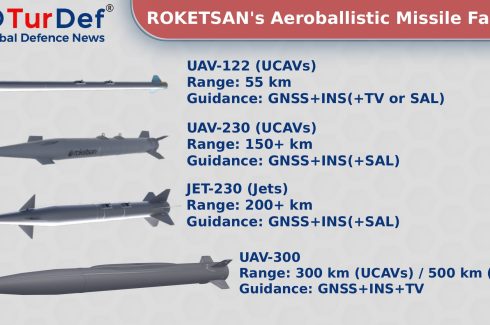
According to released information, ROKETSAN’s air-launched missile family is being developed in several models with different ranges, intended for use from combat drones and jet fighters.
The Boeing B-52, nicknamed the Stratofortress and often referred to by the moniker “Buff,” is a long-range, subsonic strategic bomber that has maintained its central position in the United States Air Force since the 1950s. Designed for the dual missions of nuclear deterrence and conventional strikes, it has played a key role in American military history. As of 2025, the aircraft has logged 70 years of operational service, and it is expected to retain its status for at least three more decades. This article will examine this strategic bomber.
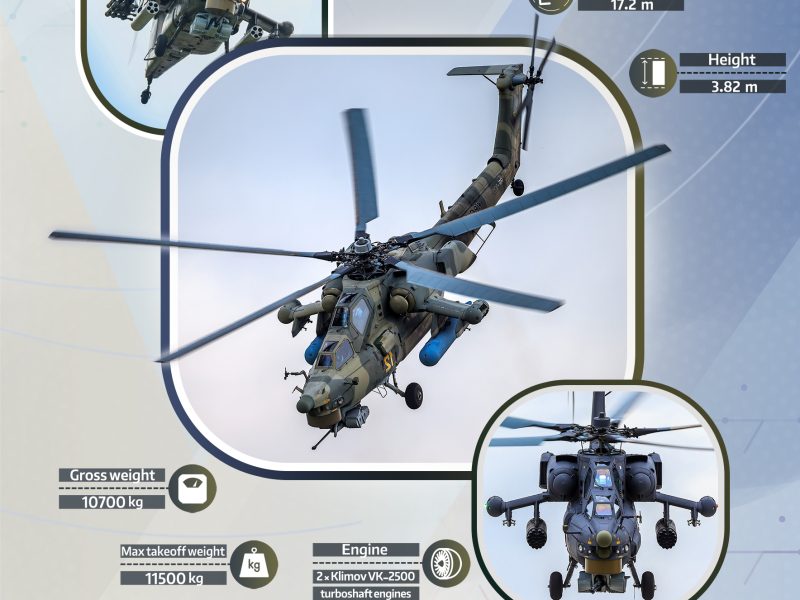
The Mi-28, known in NATO as Havoc, is a Russian twin-engine, two-seat attack helicopter designed for close air support, anti-armor warfare, and day-and-night operations in all weather conditions. The Mi-28 features heavy armor protection, advanced navigation and avionics systems, and multiple weapon configurations for guided missiles and unguided rockets. It is considered one of the core fire-support assets for ground forces in the militaries that operate it. This article examines the various components and characteristics of the helicopter.
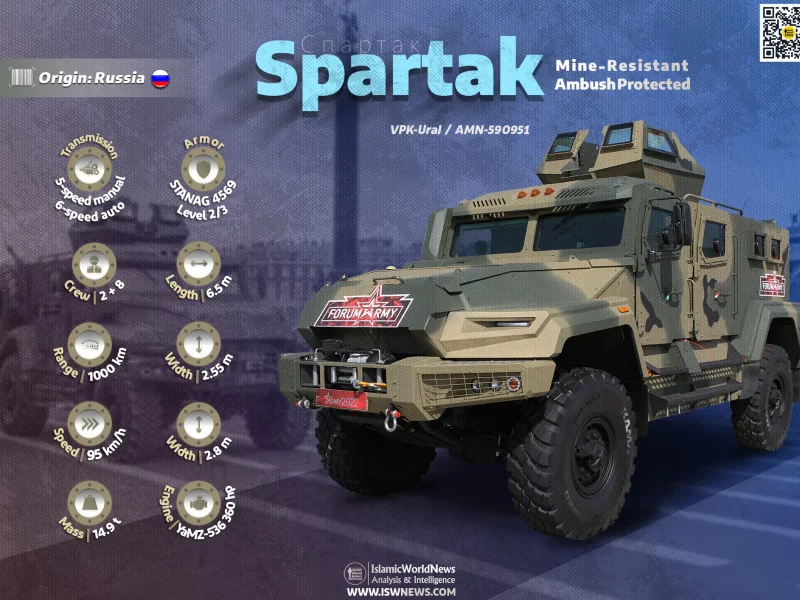
The Spartak (VPK-Ural or AMN-590951) is a Russian-made Mine-Resistant Ambush-Protected (MRAP) vehicle, designed to safeguard personnel against the lethal effects of small arms fire, landmines, and artillery fragments during counterterrorism operations and special missions. This platform has recently been inducted into service with Iran’s armed forces under the Border Guard Command (FARAJA). In this article, we will examine this armored fighting vehicle in detail.
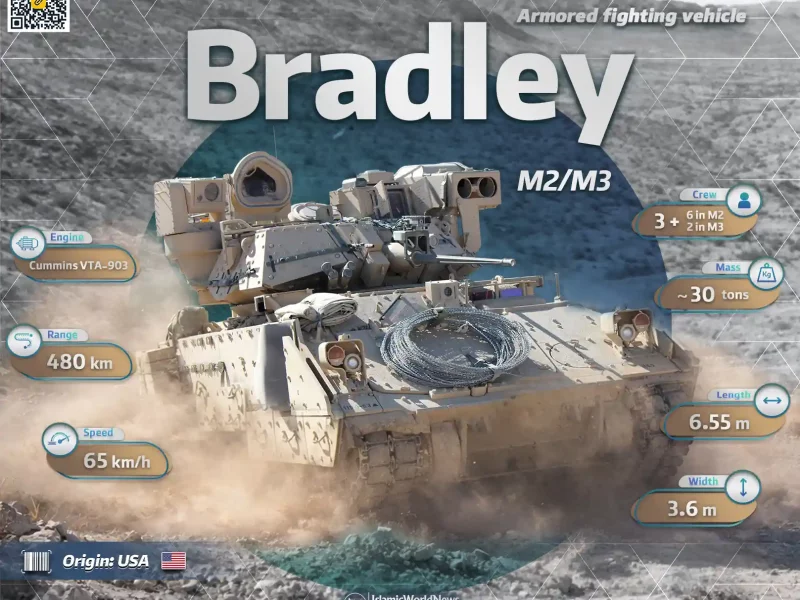
The Bradley Infantry Fighting Vehicle (IFV), developed by BAE Systems is among the most advanced armored vehicles designed to support infantry on the battlefield. Entering service with the U.S. Army in 1980, it has been widely deployed in numerous conflicts, including the Persian Gulf War, Iraq, and Afghanistan. With features such as high firepower, strong protection, and superior mobility, the Bradley has become one of the primary combat tools in infantry warfare. In the Ukraine war, it has also played a significant role by providing fire support, troop transport, and countering armored threats, thereby assisting Ukrainian forces against Russian attacks and making a notable impact on the battles. In this article, we will examine this armored fighting vehicle in detail.
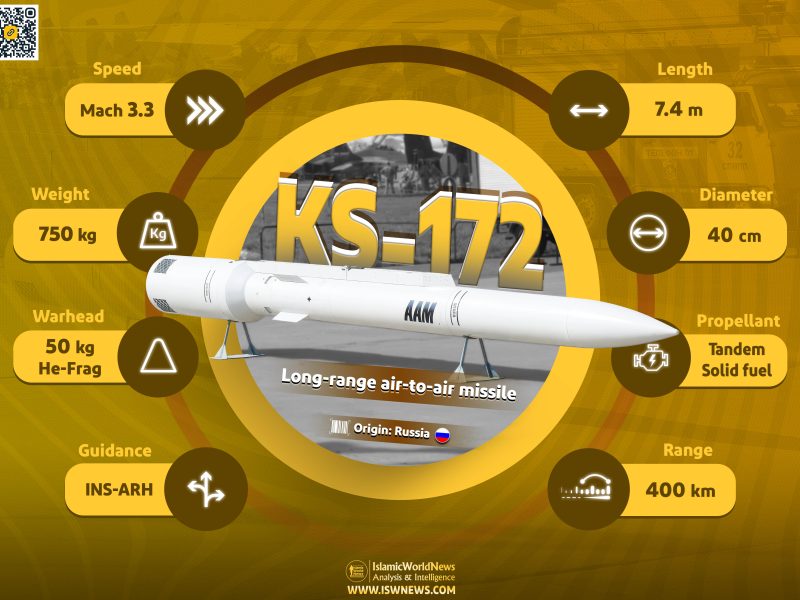
The KS‑172, also known as K‑100, Izdeliye‑172, AAM‑L, and R‑172, is a Russian very‑long‑range air‑to‑air missile designed to target Airborne Early Warning and Control (AWACS) aircraft, aerial refueling tankers, and command‑and‑control planes. According to various sources, its claimed range extends up to 400 kilometers. The design and development of the KS‑172 has been a lengthy and complex project, and recent reports in 2025 suggest that the missile has entered service with the Russian Air Force. In this article, we will take a closer look at KS-172 missile.
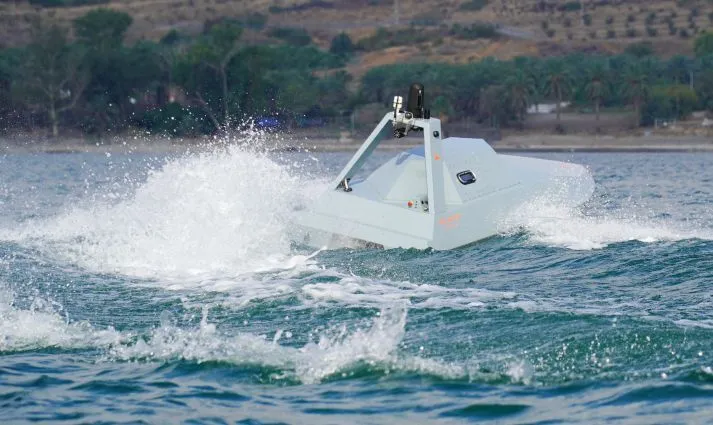
Skana Robotics Ltd. is an Israeli defense company focused on developing autonomous maritime systems, including surface, subsurface, and amphibious platforms, with the aim of strengthening modern naval forces. Through modular design, Skana offers products such as the Bull Shark (tactical surface vessel), Stingray (subsurface reconnaissance and anti‑submarine vehicle), and Alligator (high‑capacity amphibious craft), positioning itself in the global unmanned maritime market with low operating costs.
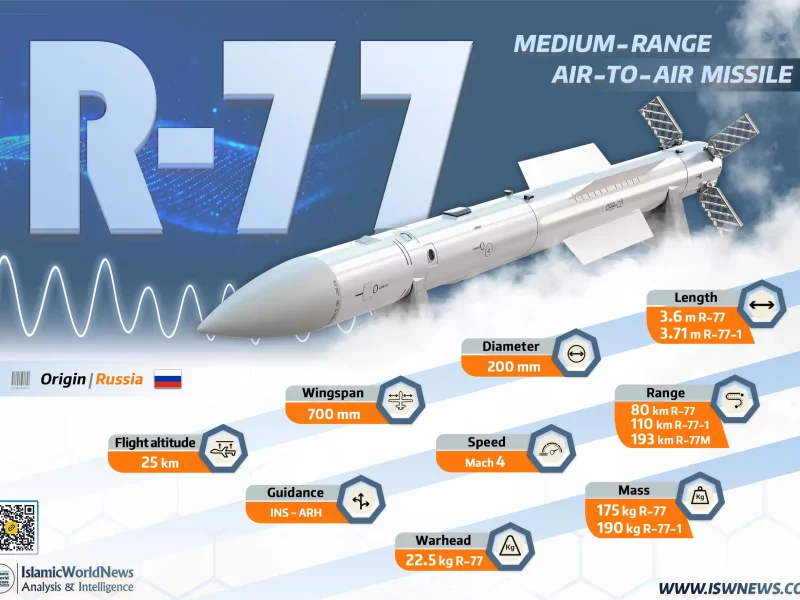
The R-77 air-to-air missile is regarded as one of the most important medium-range weapons of the Russian Aerospace Forces. Featuring a distinctive lattice-fin design, it offers high agility and maneuverability, and in advanced variants such as the R-77M, its range has been extended to 193 kilometers. Equipped with a multifunction active radar, data link, proximity fuse, and fragmentation warhead, the R-77 is considered a true “fire-and-forget” weapon capable of independent target engagement, and today forms part of the armament of Russia’s fifth-generation Su-57 fighter.
At the Dubai Airshow 2025, India officially unveiled and promoted its domestically developed Astra Mk1 air-to-air missile as a substitute for Russia’s R-77. This move comes at a time when many traditional buyers of Russian arms — including Algeria, Egypt, Indonesia, Malaysia, Vietnam, and Serbia — have faced long delays and non-delivery of R-77-1 missiles since 2023.
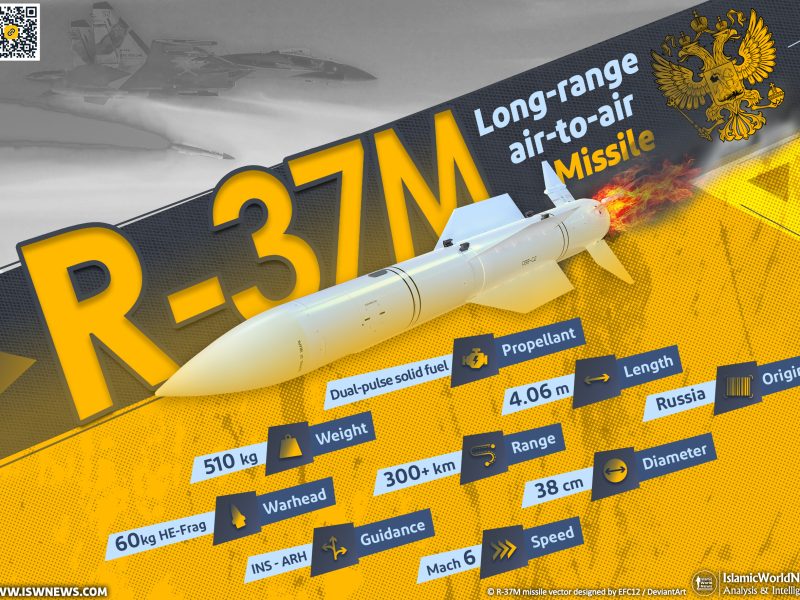
The R-37M missile is a Russian long-range, solid-fuel, supersonic air-to-air missile, regarded as one of the longest-range operational air-to-air weapons in the world. With active radar guidance and a range exceeding 300 km, it is an ideal option for targeting aerial refueling tankers, AWACS aircraft, and other standoff airborne platforms.
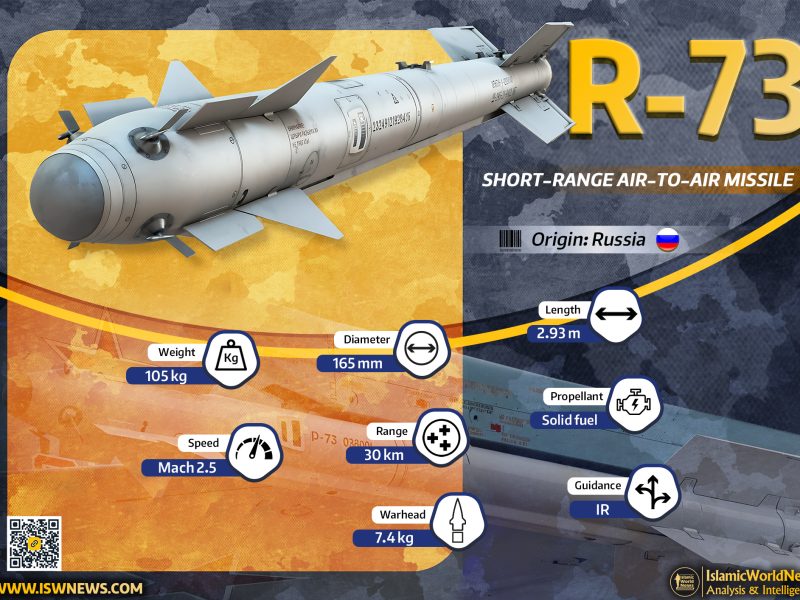
The R-73 missile is a short-range, infrared-guided air-to-air missile designed by Vympel NPO. Entering service in 1984, it is known in NATO designation as the AA-11 Archer.
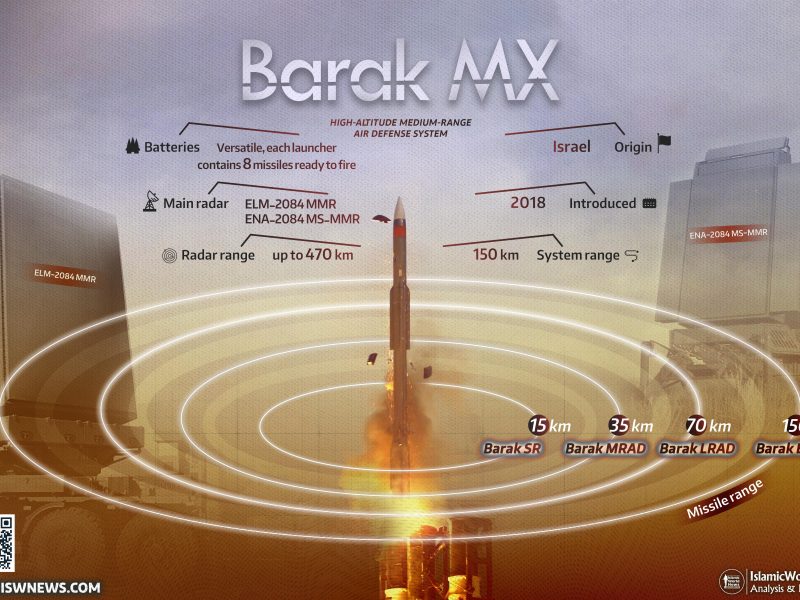
The Barak MX air defense system, developed by Israel Aerospace Industries, is a modular, network-centric platform built on an open architecture. Available in both land-based and Sea-based variants, it supports a wide range of radars and interceptor missiles, enabling engagement against diverse aerial, cruise, and ballistic threats. Given its export to foreign clients—particularly to conflict-prone regions such as the South Caucasus, the southern Persian Gulf, and the Eastern Mediterranean—Barak MX is regarded not only as an advanced weapon system but also as a geopolitical lever for Israel.