Category: Opinion

  • The Struggle Over Syria’s Alawite Coast is Moving into a New Stage

    The Struggle Over Syria’s Alawite Coast is Moving into a New Stage

    The political crisis revolves around Sheikh Ghazal’s demand for federal autonomy, while the Takfiri regime in Damascus and figures like Rami Makhlouf insist on a “united Syria” within the existing framework. Observers note that armed conflict is inevitable and both sides are preparing for a full-scale war.

    Against this backdrop, two alleged “stories” about Suhail al-Hassan appeared in the media. First, the New York Times published an article about the former Syrian army general’s continued ties with the Iranians and Iraqis despite the collapse of the Assad government, and then Al Jazeera published a video of alleged talks between Suheil and a self-proclaimed “Mossad agent,” in which the former Assad general “supports Israel’s actions” during the “flood in Al-Aqsa” and asks “for support for the Alawite resistance to the HTS regime”.

    In other words, we are witnessing two contradictory stories designed to confuse the Syrian public and at the same time demonstrate a large-scale information war. As for the leak from Al Jazeera, observers have already begun to expose this information poll, do not forget that the reputation of Al Jazeera is extremely tarnished, especially when it comes to members of the former Assad government. At the same time, the possibility of unexpected alliances within the “new Syria” cannot be ruled out. Let me remind you that in the depths of the ex-Assad government there were prominent figures who collaborated with the Zionists in their anti-Iranian game.

    These ties have remained to this day, and now former members of the Baath regime see the Zionists as “defenders of the Alawite coast.” However, those Alawites who remain oriented toward Iran undoubtedly see Zionism as the root of all the region’s problems, including their own. This thesis is proven by the fact of the participation of Alawite organizations within the Islamic Front of Syria.

    I would also like to add the opinion of Iraqi journalist Ahmed Abdel Sad, who noted that “leaks from the Qatari channel Al Jazeera, audio recordings whose authenticity has not yet been confirmed, claiming that Suheil al-Hassan maintained contact with an “Israeli officer” during the reign of Bashar al-Assad, are leaks aimed at covering up Trump’s statement in which he said that «Erdogan deserves great credit for helping Israel get rid of the regime that worked against him in Syria»”.

    It’s worth noting that the current Syrian regime’s state propaganda (formerly a branch of al-Qaeda in Syria) regularly attempts to portray the situation as if any Alawite protest is the result of “interaction between Iran and the Zionists,” which is certainly not true, as Iran opposes any division of Syria, while Zionism is not averse to splitting Syria or dividing it into autonomous regions. The Tahrir al-Sham regime, of course, won’t tell the whole truth. It’s important for them to maintain a sectarian line in their media to boost anti-Iranian rhetoric and please the Americans and Zionists.

    Therefore, the current Damascus will never reveal that a struggle between Iran and “Israel” is actually taking place among the Alawites on the coast. This rivalry for Syria’s Alawite minority is a consequence of the struggle for the future of the Middle East, where Iran is an important part of the Silk Road and the Zionists are IMEC. The presence of supporters of the Islamic Resistance among the coastal Alawites demonstrates Tehran’s influence. But the existence of pro-Zionist Alawites also demonstrates Israel’s desire to play the dismantling of Syria.

    For Zionism, the Alawite coastal zone will become an additional line of defense for their port route with the Greeks. Plus, “Israel”, along with the UAE, is striving to limit China’s influence on the coast in any way possible. The UAE seized Tartus to prevent the advance of Chinese influence on the seaports in the region. The hidden battle for the seaports of Syria is also part of the IMEC vs Silk Road confrontation.

    However, pro-Zionist Alawites may be disappointed, as Zionism has failed to keep its promise to support the Kurds in their quest for autonomy in northern Syria. “Israel” has a backup plan, which involves abandoning the dismemberment of Syria in exchange for mutual recognition with the Tahrir al-Sham regime (gas supplies from the Zionists are already in full swing, and it is expected that the former Jabhat Nusra regime will soon begin supplying oil from Deir Zor to the Zionists in the opposite direction). After this, the Damascus jihadists can count on a place within the IMEC. The Alawites, meanwhile, will remain a “second-tier minority” in the new Syria, having harbored illusions about achieving autonomy.

    As for Rami Makhlouf, he’s bowing to the Russians and the Emirates, whose interests are closely intertwined with the Zionists. Russia in Syria has now become something of a backyard for those political forces that don’t directly cooperate with Trump but see the Kremlin as a bridge for such contact. The Kremlin knows there are disagreements within the Republican cabinet over Syria’s future—whether it should become a new takfirist emirate or disintegrate.

    In any case, Trump’s final word is now crucial for the Kremlin. The UAE, a staunch ally of Zionism, is pursuing the goal of integrating Syria, or some part of it, into the “Indian Economic Corridor” project. Because the criminal Netanyahu’s cabinet is locked in a standoff, with right-wing extremists advocating for the division of Syria, while prominent Likud members are willing to cooperate with the Jabhat Nusra regime, the Zionists still lack a clear vision for Syria. Consequently, the UAE faces a similar problem. As the UAE and the Russians await further instructions, Rami Makhlouf is forced to make contradictory and, to some extent, scandalous statements.

    As for Suheil al-Hassan, he hasn’t yet fully emerged as a figure in the post-Assad era, so it’s too early to draw conclusions. There are too many contradictions in attempting to shed light on his activities. Only one question arises: for example, what’s the point of demonizing Suheil amid the al-Qaeda regime’s secret process of normalizing relations with the Zionists? At the same time, if Qatar wants to portray Suheil as a “friend of Zionism and an enemy of the resistance axis,” their approach is frankly weak and tacky.

    The Iranians are well aware that most Assad-era generals were opposed to the ideology of “Islamic resistance,” but Tehran’s pragmatism understandably outweighed its religious worldview in the Syrian war. Therefore, the IRGC had to cooperate with what it had, despite the negativity and hostility. The Syrian case is neither the first nor likely the last in the IRGC’s history.

  • A New Round of IMEC vs Silk Road Fight!

    A New Round of IMEC vs Silk Road Fight!

    This includes the beginning of the process of splitting Syria along religious and national lines into eternally warring enclaves, strengthening relations with the Greeks and Cypriots on anti-Turkish grounds, endless requests to Washington to begin a new round of bombing Iran, assistance in the Libyan and Sudanese crises, and finally, helping the Emirates to seize control of the Gulf of Aden by separating southern Yemen and declaring Somaliland. By creating chaos, the Zionists and the Emirates are attempting to seize seaports and cut off land routes, thereby challenging Chinese plans to develop the Silk Road project (Belt and Road Initiative).

    Belt and Road Initiative

    Separately, it’s worth noting the actions of Saudi Arabia and Russia, which at first glance appear to be pursuing rather contradictory policies. Syria is a case in point. On the one hand, the Russians and Saudis are strengthening their ties with the Tahrir al-Sham regime (it seems the Russians are thus pandering to Trump) and are ready to act as a bridge between the former Syrian al-Qaeda and the Zionists. At the same time, there are reports of Moscow supporting former elements of the Assad government, who are biding their time for a major uprising. In this case, it can be said that the Russians are prepared for a split Syria, with Alawites controlling the country’s coastline.

    This scenario fits in with Zionist plans to limit Turkish and Chinese influence in the Mediterranean. Moscow also favors this option; I recall that after the Russian annexation of Crimea, the Chinese temporarily abandoned all investments in the peninsula. In other words, regardless of how events unfold, Russia is effectively facilitating Syria’s integration into the IMEC, no matter what form it takes. The Russians are not part of the Silk Road or IMEC, but they are contributing specifically to a project related to India and the Zionists. The North-South transport corridor is intended to become a link with the Indian Economic Corridor.

    IMEC

    Saudi Arabia’s top priority is preventing Turkish influence and turning Damascus into a Turkish satellite. The struggle within the Saudi autocracy is already having an impact here, with lobbyists for the Silk Road pitted against supporters of integration into the “Indian Economic Corridor.” The struggle against Turkish influence is not limited to Syria; it is also taking place in Sudan, where Riyadh and Ankara are competing for control of Khartoum. Meanwhile, in Yemen, the Saudis have openly opposed the UAE’s plans, further confirming the deep rift within the Saudi royal family.

    Zionism and its allies make no secret of the fact that Turkey and Iran are the main strategic pillars of the Chinese project, and therefore these two countries should become the primary targets of the Zionist military. But any action is met with resistance, and so Turkey and Iran have begun the process of forming a military-strategic alliance, which will include Pakistan, Iraq, and several other Arab countries.

    I dare say that the parties are preparing for new wars that will not be limited to the area of their own sovereignty, and thus the entire Middle East will be drawn into a series of wars. The beginning of new conflicts, where Zionism acts as the instigators, may occur immediately after if J. D. Vance replaces Trump as head of the United States for various reasons. Let me remind you that his wife is from India, which symbolically reflects Washington’s support for the plans of “Israel”, the UAE and India to build IMEC. Another important factor is that J.D. Vance is a proponent of an isolationist approach in US foreign policy, which means that Zionism will have to act independently, where the US will provide support from a distance.

    In this case, Zionism and its regional allies will take all risks in the name of the fight against the Silk Road, which will lead to the fact that the key figures of the Chinese project will launch the process of forming stable strategic alliances to confront the enemy(IMEC) and regardless of Washington’s reaction, as it was until recently.

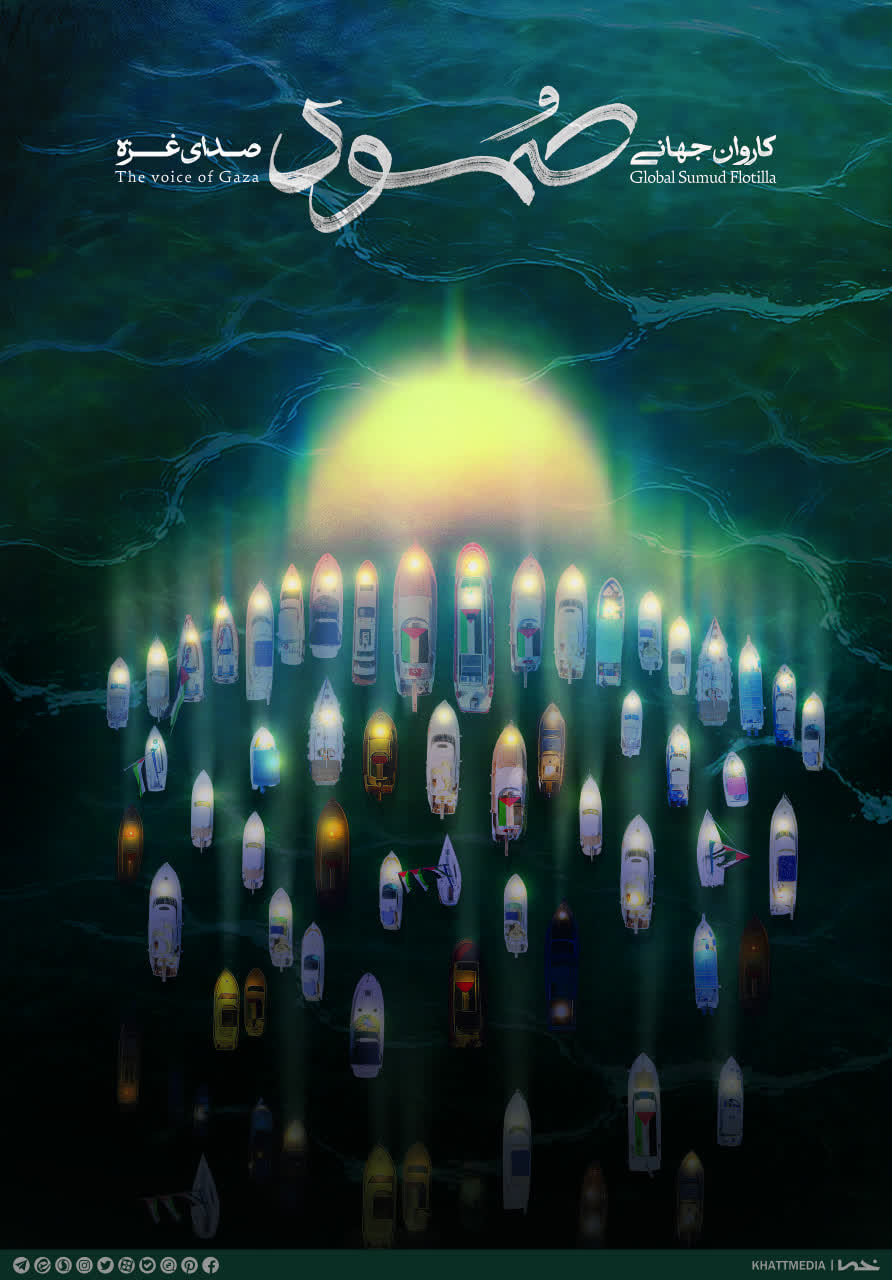
  • Sumud Flotilla: A Defining Showdown in the Mediterranean and Three Scenarios That Could Reshape the World

    Sumud Flotilla: A Defining Showdown in the Mediterranean and Three Scenarios That Could Reshape the World

    Legal Grounds: How the Trump Peace Plan Unintentionally Framed the Gaza Blockade as a War Crime

    To grasp the significance of this event, one must consider a key legal point: the Trump peace plan, by promising future access for humanitarian aid to Gaza, implicitly admitted that Gazans are currently deprived of this fundamental right. This undermines Israel’s claim that the blockade is purely a “security measure.” When access to basic aid is denied, the blockade becomes a form of “collective punishment”, which under Article 33 of the Fourth Geneva Convention constitutes a clear “war crime”. The Sumud Flotilla is advancing with this powerful legal foundation.

    Three Possible Scenarios Ahead Each with Global Consequences:

    1️⃣ Strategic Israeli Withdrawal and Normative Victory
    In this scenario, Tel Aviv allows the fleet to proceed to avoid confrontation with NATO and mounting global pressure. This would mark a triumph for soft power and global civil society. More than the aid itself, it would shatter the taboo of the blockade, setting a new precedent and delivering a major blow to Israel’s deterrence doctrine.

    2️⃣ Military Confrontation and Activation of International Mechanisms
    This is the most dangerous scenario. If Israeli naval forces attack the fleet and NATO escorts intervene to protect their citizens, a full-blown international crisis could erupt. Immediate consequences may include referral to the UN Security Council under Chapter VII, investigations by the International Criminal Court (ICC), and serious sanctions against Israel. It would test NATO’s cohesion and its commitment to defending its nationals.

    3️⃣ Israeli Intervention and Escort Inaction
    Here, Israel attacks the fleet while NATO warships refrain from direct engagement. This would be a tactical win for Tel Aviv but a strategic defeat for European governments and the entire international legal order. It would expose the fragility of humanitarian principles when confronted with brute force, signaling that realpolitik has overtaken global norms.

    Conclusion:
    The Sumud Flotilla carries more than material aid—it carries a fundamental question for the global order. This event places Israel at a crossroads: maintain deterrence, face international isolation, or risk war. The world’s response in the coming hours will not only determine Gaza’s fate but also shape the future of international relations and the credibility of global institutions for years to come.

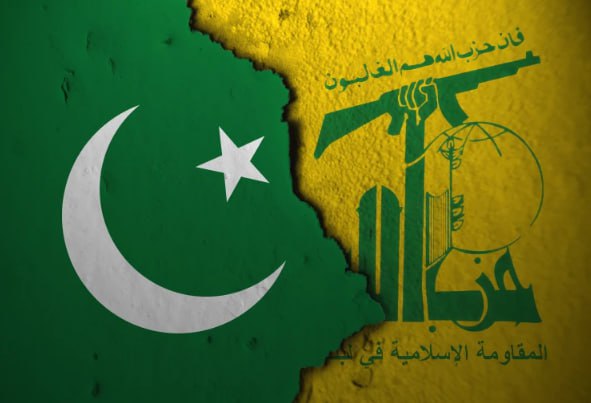
  • Pakistan and Hezbollah Are Snatching the Initiative from the Clutches of the Zionists!

    Pakistan and Hezbollah Are Snatching the Initiative from the Clutches of the Zionists!

    After Larijani’s visit to Saudi Arabia, Hezbollah leader Sheikh Qassem sent a message to the Saudi autocracy, which contained a proposal to begin normalizing relations between the parties. According to the Saudi journalist, Saudi Arabia reacted positively to Sheikh Qassem’s proposal.

    What’s happening? The starting point of the current amazing political processes was the October 7 event, when Hamas launched a preemptive strike on the Zionist colony. After that, Zionism organized probably the worst genocide in the last hundred years, which continues to this day. After the expansion of aggression towards Lebanon, Syria, Yemen, Iran and Qatar, it became clear that “Israel’s” goal is not just an attempt to destroy the axis of resistance, in a global sense, the Zionists are pursuing a utopian idea – the destruction of the main centers of the Silk Road, which, in their opinion, will easily create an IMEC, within which a special role is assigned to the Zionist colony.

    However, any action is met with opposition, which is why China has stepped up secret diplomacy aimed at uniting all participants of the Silk Road in the Middle East region into a single military and political alliance. The 12th air aggression of the Zionists and Americans against Iran, and then the assassination attempts of Hamas leaders in Qatar, became the trigger for the construction of the “Islamic NATO.”

    Pakistan, like Turkey, is the mouthpiece of Chinese foreign policy activities in the Middle East. Turkish military bases from Somalia to Syria are designed to ensure the safety of transport links within the framework of the One Belt, One Road project. The intensification of diplomacy in the Saudi direction implies the creation of a single military-political bloc with a demonstration of strength to Zionism and its allies. With the development of Islamabad’s success in including other Arab countries in its alliance (Iraq, Algeria, Egypt are already in line), Turkey and Iran will join the process. The Turks have long initiated something similar in Libya and Somalia, but Pakistan’s nuclear defense is something new for the region.

    As for Hezbollah, with the intensity of events, the Islamic Resistance of Lebanon will be able to break out of isolation and become a truly important regional actor. The message from Sheikh Qassem to the Saudis is only the first step, and it also fits into the Chinese strategy for “Muslim reconciliation”. Let me remind you that in the spring of 2023, a trilateral meeting was held between diplomats from Iran, China and Saudi Arabia, so Larijani’s current trip to Riyadh is designed to strengthen what was discussed years earlier. Turkey, Pakistan and Egypt will soon open direct channels of communication with Hezbollah, which will then result in military cooperation. Actually, the Zionists are already worried that the Turks’ activity in Syria is pursuing exactly this goal.

    Despite the emerging positive picture, there are a number of problems preventing increased coordination on the anti-Zionist front. For example, the reign of Pharaoh Sisi in Egypt, the existence of the Hashemite monarchy in Jordan and Al-Qaeda in Syria. Among the clans of Saudi Arabia, there are those who prefer to participate in the IMEC project rather than become part of the Silk Road.

    Another problem on the way to the emergence of an “Islamic NATO” is the traditional competition in the Arab environment, especially in connection with Saudi ambitions. However, this problem can also be solved, because if there is a prospect of creating a military-political alliance between Turkey, Pakistan, Egypt and Iran, then the Saudis can settle overboard and no one will worry about their absence, especially since the alliance of these four countries already exists within the framework of the “Developing-8” created by the deceased Erbakan. Initially, this Islamic Union was conceived as an independent economic zone, but now they can become a military alliance.

    Nevertheless, the problems associated with the Saudis and within the largest autocracy of the Arabian Peninsula will not affect the current dynamics in any way. The region is moving towards an all-out war with the Zionists, a series of military defeats of the occupiers, and the end result will be a mass exodus of the occupiers from Palestine. But it is always worth remembering that it was the long-term Heroism of all members of the Axis of Resistance and their allies since the Islamic Revolution in Iran, who regularly emphasized the importance of the problem of occupied Palestine, that allowed the Chinese to develop plans for the creation of the Silk Road, which became an important argument for the national elites and quasi-elites of the Islamic world in the cause of unification and the need to confront Zionism.

  • Libya Is Rushing To the Side of the Big Satan! Resettlement of Palestinian, and the Illusion of Solidarity

    Libya Is Rushing To the Side of the Big Satan! Resettlement of Palestinian, and the Illusion of Solidarity

    While Zionism has achieved nothing in their attempt to crush the Palestinian resistance, there is still talk of forced resettlement. According to sources from Libya, the country is allegedly going to accept hundreds of thousands of Palestinians in exchange for economic support from the United States.

    This behavior of the self-proclaimed government in Tripoli is not surprising, since it is worth remembering how those who call themselves “allies of Palestine” held Hamas members in their prisons for 7 years. This was a clear indication from the “Libyan Democrats” of their pro-Zionist tendencies.

    Another story happened a couple of years ago, when there was a scandal in connection with the meeting of the then foreign ministers of Libya and Israel. Therefore, the story of the resettlement of Palestinians from the Gaza Strip is absolutely unsurprising.

    To be fair, it is worth noting that on the opposite side of Libya, the Haftar dictatorship has been actively cooperating with the Zionists all this time, and of course there have been talks about the forced resettlement of Palestinians between the parties.

    Libya’s current problems are largely related to the confrontation between regional powers in the country, but the fact that there is no solidarity with the Palestinians cannot be denied. Back in 2013, the then head of Hamas, Khaled Mishaal, harbored illusions about the emergence of Libya as an alternative to Iran and Syria in terms of arms supplies to the Gaza Strip. The shahids Muhammad Deif, Ismail Haniyeh, Yahya Sinwar and many others have sharply spoken out against such a utopian idea. Today we see how deeply Mishaal was mistaken in his calculations. Not only was the Government of National Salvation not going to supply weapons to Hamas, they even organized the far-fetched arrest of members of the leading Palestinian resistance organization.

    Mishaal proceeded from the simple logic that the Libyan Muslim-Brotherhood (MB, Ikhwans), who were close to Hamas, could become an important ally of Palestine for ideological reasons, but why did the former head of Hamas decide that the Ikhwans in Libya had authority at all?

    Moreover, those who are commonly referred to as the main curators of the brotherhood in the person of the Turks and Qatar did not want to see the MB or another moderate Islamic political party at the helm in Tripoli. For example, I would like to point out the words of the late Iranian cleric Hadi Khosroshahi, who was in close contact with the Egyptian Brotherhood and was engaged in research on the international network of ikhwans. Khosroshahi noted that during his tour of the Arab Spring countries (Egypt, Libya, Tunisia), Erdogan insisted that Libya have a secular constitution.

    The conclusion is that the Qatari-Turkish alliance never wanted not only the liberation of Palestine, but also considered the Muslim-Brotherhood only as a temporary useful tool.

    As for some Hamas leaders, it turned out that those whom they saw as “strategic allies” turned out to be real enemies, because the proposal to resettle Palestinians in their country and arrest members of the Palestinian resistance are the best gifts to Zionism. Today we see that those who bet on an alliance with the axis of conformism in the person of Turkey and Qatar have completely lost and remained in the dustbin of history. While the supporters of the pro-Iranian line inside Hamas continue their glorious battle as part of the Axis of Resistance, but more importantly, the new generation of Palestinians will undoubtedly develop the line of the legendary tandem of martyrs Sinwar – Deif until the complete liberation of Palestine.

    As for the Libyans, to this day they do not have an organized pro-Palestinian organization that could help the Palestinians, not by word, but by deed. All pro-Palestinian activity in western Libya is limited to rallies and quotes from the Chief Mufti.

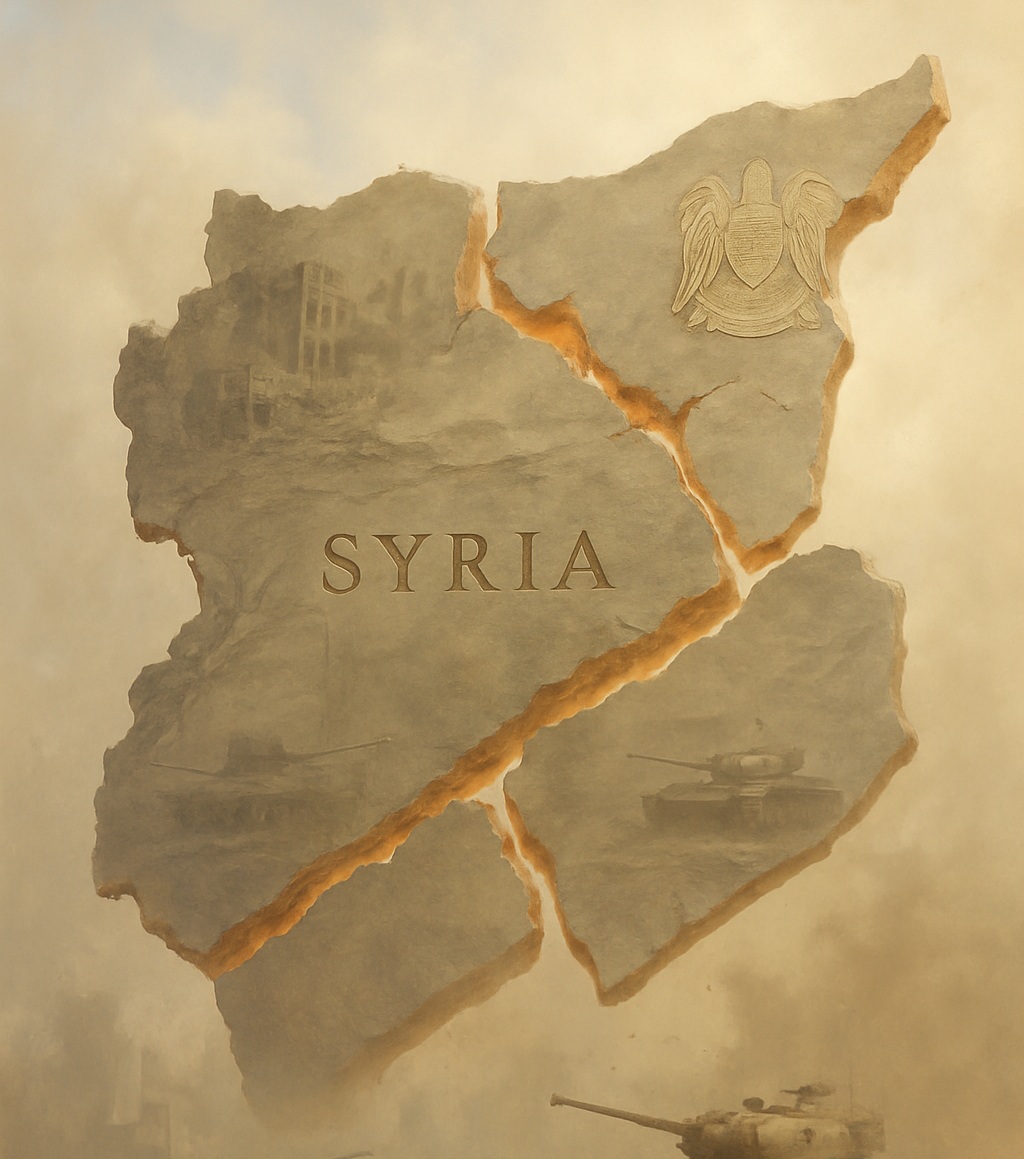
  • Gradual Fragmentation of Syria: Examining the Most Likely Governance Scenario for Syria’s Future

    Gradual Fragmentation of Syria: Examining the Most Likely Governance Scenario for Syria’s Future

    The “mini-state” model has emerged in several post-Ottoman Arab countries. Yemen, Libya, Lebanon (especially before the recent war), and to a large extent Sudan and Somalia, have all experienced this form of governance. The Trucial States (now the UAE, Qatar, and Bahrain) prior to 1971, and the territory of present-day Saudi Arabia before King Abdulaziz’s wars and the founding of the third Saudi state, are other examples. A diluted version of this model can be seen in present-day Iraq, though it has weakened since the first post-Saddam decade. Syria itself experienced a similar situation between 1946 and 1963.

    Preconditions for Mini-State Formation

    This situation arises when three conditions are met:

    1. The central government lacks sufficient hegemony.
    2. Nation-building efforts are severely disrupted, leading citizens to prioritize other identity factors over national identity.
    3. Economic resources are no longer monopolized by the state, forcing it to rely on influential actors for funding and security.

    If the central government is either in the “state-building phase” or has a system where political competition is institutionalized—especially if public opinion plays a role—this fragmentation intensifies. It’s crucial to distinguish between the legal structure of power and its actual distribution. None of the examples mentioned earlier are legally federal systems.

    Key Groups Likely to Form Mini-States

    This section identifies powerful domestic actors that may evolve into influential entities, forcing the central government to engage with them. In Arabic political discourse, such groups are said to form a “mini-state” (a state within a state).

    A) Kurds
    They are the most likely to establish a mini-state, possibly limited to northeastern Syria or areas like northern Hasakah and Ain al-Arab (Kobani). All four conditions mentioned earlier apply strongly to the Kurdish context.

    B) Druze
    The Druze are the second most likely group to form a mini-state. In broader governance comparisons, the Syrian Democratic Forces (SDF) are pursuing semi-secession, and one of the main Druze factions recently reached an agreement with the central government. Under this deal, the Interior and Justice Ministries in Suwayda province will be staffed exclusively by locals, while Druze groups will retain their weapons. This arrangement lays the groundwork for a mini-state in Suwayda.

    C) Alawites
    The coastal Alawite community has a moderate chance of forming a mini-state. Despite widespread sensitivity toward this group, internal cohesion, restrained ambitions, effective foreign support, and smart strategy could enable them to establish control over coastal areas.

    D) Free Syrian Army (Jaysh Suriya al-Hurra)
    This group, formed under direct U.S. guidance in the al-Tanf region, now controls territory from al-Tanf to Qaryatayn and Palmyra. Their strengths include foreign backing and a dual identity—Arab opposition to Assad with some advantages similar to the SDF. Their semi-autonomous presence within the Syrian army structure positions them as a potential mini-state.

    E) Daraa
    Daraa also has high potential for mini-state formation, but internal divisions among southern factions pose a major challenge. The population is split into four or five groups with serious rivalries, and at least half look to external powers for support. These internal fractures reduce the likelihood of a unified mini-state.

    F) Others
    Beyond these five, other regions also show potential for mini-state emergence. Due to space constraints, only their names are listed:

    • Arab tribes of Deir ez-Zor
    • Arab tribes of Raqqa
    • Turkmens of northern Aleppo
    • Salafists of Idlib
    • Smaller minorities

    Signs of This Scenario Emerging

    What are the indicators of this scenario unfolding in Syria? Both political and security developments offer clues. The clearest sign is Damascus’s concession to Suwayda’s Druze elders, allowing them to control the Interior and Justice Ministries—an arrangement even more extensive than the SDF-Damascus agreement. Another sign is the central government’s efforts to alter the situation in Afrin, which may lead to demographic changes.

    On the security front, armed groups in many areas refuse to surrender their weapons or integrate into a unified national army. Continued activity by pro-Assad militias (known as “Shabiha”), casualties inflicted by Tahrir al-Sham, and Damascus’s lack of control over all Syrian territory—effectively dividing the country into three or four zones—are further indicators.

    Politically, the most telling signs are how local elites influence governance. In provinces like Daraa and Suwayda, governors are chosen based on local power brokers’ preferences. In Daraa, Deir ez-Zor, Hama, and Aleppo, senior military commanders are appointed by external forces, not the president. Suwayda still lacks a military commander, and in coastal provinces, competition between official ministries and the newly formed “National Reconciliation Committee” is intensifying. In eastern Euphrates regions, no governors or military commanders have been appointed at all.

  • Israeli Intelligence Infiltration Plan in Yemen Using Ali Abdullah Saleh’s Son

    Israeli Intelligence Infiltration Plan in Yemen Using Ali Abdullah Saleh’s Son

    Recently, Arab media reported that Ansar Allah was at odds with its main political ally, the “Popular Congress Party,” and claimed that the party’s leaders were detained and their headquarters seized, allegedly due to connections with Ahmed Abdullah Saleh, the son of ex-Yemeni leader Ali Abdullah Saleh, now residing in the Emirates. These reports, however, were false, and the Yemeni Popular Congress Party denied the accusations circulated by Saudi and Emirati media that Ansar Allah intelligence agents had attacked its headquarters in Sanaa.

    Salim Al-Mughlas, a member of the Ansar Allah political bureau, revealed that Saudi Arabia and the UAE recently attempted to incite Yemeni factions and trigger internal conflict in Sanaa, but this plan failed. He dismissed rumors in Arab media about the arrest of Popular Congress Party members, stating that these provocations aimed to target both the Popular Congress Party and the Ansar Allah movement.

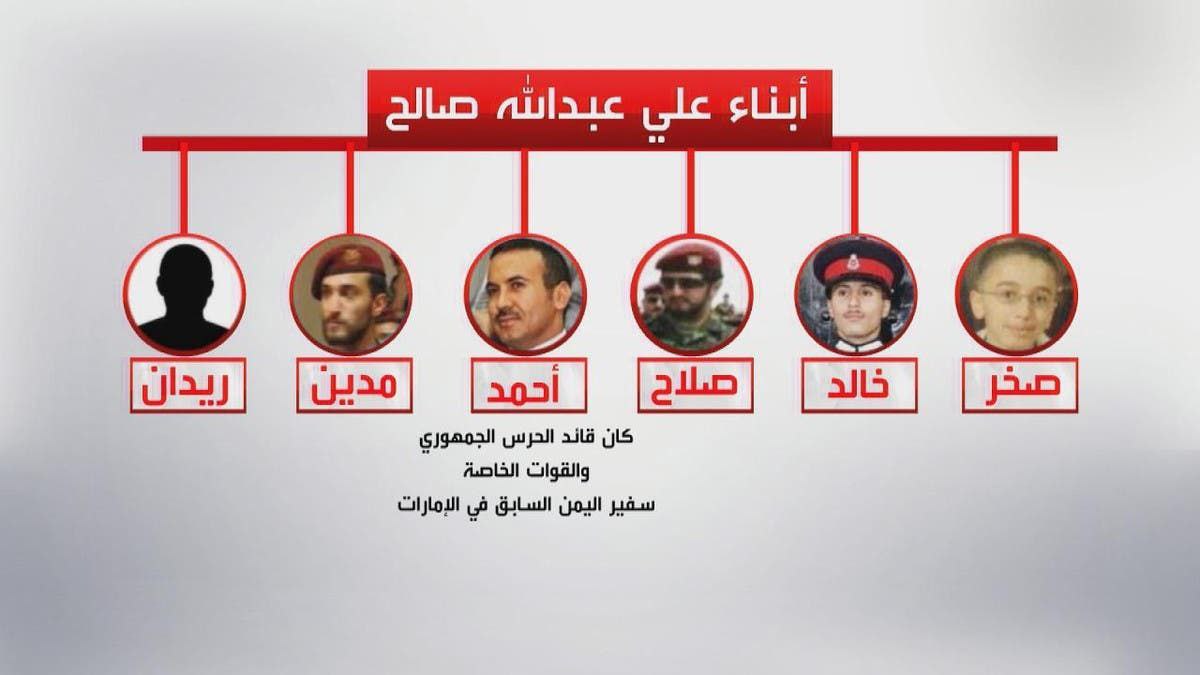
    The story indicates that the Ansar Allah intelligence service acted wisely by uncovering and preventing the sedition led by elements linked to the Popular Congress Party. It appears that Mossad is trying to involve Ahmed Abdullah Saleh in politics through Emirati agents and by attracting members of the Popular Congress Party based in Sanaa, aiming to create new security tensions. Meanwhile, alongside Tariq Saleh’s covert efforts to strengthen ties with the Islah Party in Taiz, local sources confirmed that Madin Abdullah Saleh, another son of former Yemeni leader Ali Abdullah Saleh, recently arrived in Marib. He traveled to Riyadh a few days earlier and was coordinated into Marib by the Saudis. These actions align with a tripartite plan involving Israel, the UAE, and Saudi Arabia to reintroduce Saleh’s children into Yemeni politics. During his visit, Madin likely met with Saudi-UAE coalition military leaders, including Sultan Al-Aradah, other Islah Party leaders, and Lieutenant General Sagheer bin Aziz, to discuss ongoing political and military developments.

    The plan to bring Ali Abdullah Saleh’s children back is actually a security strategy orchestrated by the Israeli Mossad. It started by rewriting the story of Saleh’s death at the hands of Ansar Allah while he was fleeing Sanaa, and progressed through his eldest son Ahmed’s contact with members of the Popular Congress Party in Sanaa. Recently, this has become more evident with the movements of Tariq and Madin Saleh in southwestern Yemen and Marib. It is anticipated that Saleh’s sons will enter Yemen as part of a new group of mercenaries connected to the Saudi coalition. Their goal is to recruit members of the Popular Congress Party in Sanaa, as well as forces loyal to Tariq Saleh and supporters of Ali Abdullah Saleh, such as Lieutenant General Sagheer bin Aziz. This strategy aims to weaken the political influence of Ansar Allah’s allies.

    At first glance, this plan might appear weak and naive, since the Popular Congress Party lacks significant power in Sanaa. Meanwhile, Ansar Allah, with its considerable political and social influence, could easily seize control of the entire organization of this party through a security operation. However, their separation will undermine Ansar Allah’s political standing in Yemen. Additionally, their subordinate elements could turn into a Mossad spy network in Sana’a and infiltrate the Yemeni government and armed forces. This would allow Israel to gather more intelligence and data on military and vital installations, as well as the headquarters of Ansar Allah leaders, commanders, and the Yemeni armed forces.

    Overall, Ansar Allah must work harder than ever to maintain the unity of their internal front within the Sana’a government and prevent spies from infiltrating areas under their control. One method of infiltration involves reopening roads between cities held by Ansar Allah and the resigned government, which is being pushed by the UN. This move could allow spies easier access to Ansar Allah’s internal territories. Although Ansar Allah oversees and inspects these roads, Israeli field agents possess specialized training and resources to evade security checks, potentially infiltrating cities controlled by Ansar Allah.

  • Investigating the Dimensions of Drone Attacks on Oilfields in the Kurdistan Region of Iraq

    Investigating the Dimensions of Drone Attacks on Oilfields in the Kurdistan Region of Iraq

    These drone attacks illustrate the complex political, economic, and security issues stemming from the ongoing tensions between Baghdad and Erbil. One significant attack occurred near Erbil International Airport, which prompted a response from American defense systems stationed in the area, resulting in the destruction of the attacking drone.

    In addition to the incident near Erbil Airport, drone strikes targeted oilfields operated by Norwegian companies DNO and American Hunt Oil in the Zakho and Sheikhan regions. These attacks led to the temporary halting of oil production in some fields, reportedly reducing the region’s overall production by 145,000 barrels per day—approximately half of its daily output.

    Origins and Reasons for the Attacks

    Although no specific group has claimed responsibility for the attacks, many Iraqis believe they are rooted not only in internal disputes among various Iraqi political factions but also stem from broader conflicts concerning the region’s economic and strategic interests. Some analysts suggest that these drone strikes may be part of a strategy aimed at pressuring the Kurdistan Region to accept new oil agreements with the central Iraqi government.

    This theory gained traction following the announcement of a new oil agreement between Baghdad and Erbil, which significantly reduces the region’s share of oil revenues. After this agreement, the frequency of drone attacks on oilfields decreased, indicating that the groups behind the attacks might have targeted these fields to coerce Erbil into accepting the new terms.

    Political Reactions and Consequences

    In response to the attacks, Iraqi Prime Minister Muhammad Shia al-Sudani initiated a comprehensive investigation and urged security authorities to identify the perpetrators as quickly as possible. He also stated that decisive measures would be taken against those responsible, reflecting the Iraqi central government’s strong concern for the security and stability of the region, which is one of the country’s primary sources of income.

    Conversely, the Iraqi Resistance Coordination Committee, which consists of various resistance groups, claimed that these attacks are a “settling of internal scores” between the Kurdistan Regional Government and oil companies. The committee denied any involvement in the drone attacks, asserting that their operations have never harmed the interests of the Iraqi people or security forces. They advised the Kurdistan Regional Government to concentrate on improving citizens’ livelihoods and addressing economic challenges instead of transferring its internal crises onto the central government.

    Economic Concerns and the Future of Oil Production

    The significant decline in oil production in the Kurdistan Region, along with extensive damage to its oil infrastructure, has led officials to call for more robust defense measures to protect these fields. The head of the Kurdistan Region’s Foreign Relations Office has stated that the United States is deeply concerned about these attacks. Consequently, various requests have been made to strengthen the defense systems of both the Kurdistan Region and all of Iraq.

    The drop in oil production and the damage to the region’s strategic oil fields have adversely impacted its revenues and raised concerns about the economic future of the Kurdistan Region. Reports indicate that the monthly oil revenue, which is approximately $297 million, is at serious risk due to the production being cut by half. This revenue constitutes a significant portion of the region’s budget. If the attacks and continued decline in production persist, the economic situation in the Kurdistan Region may be severely affected.

    Iran: A Possible Reason for These Attacks

    The recent drone attacks on oil fields in the Iraqi Kurdistan Region may also serve a strategic purpose for Iran. These security pressures could be Iran’s way of signaling that if the Kurdistan Region becomes a base for military and intelligence operations conducted by Israel and its proxy groups—particularly the Kurdish groups that act against Iran’s interests—then Erbil’s oil and economic resources will be subject to significant attacks and restrictions. This stance reflects Tehran’s concern regarding the increasing anti-Iranian influence in the Iraqi Kurdistan Region and suggests that any alignment by the Kurdistan Region with U.S. and Israeli objectives could lead to severe economic and security repercussions.

    Given the region’s heavy reliance on oil revenues, the escalation of drone attacks on oil wells and infrastructure not only poses a grave threat to Erbil’s economy but also sends a clear warning to regional and international actors: Tehran can use oil as a leverage tool to limit the influence of Israel and its Western allies in northern Iraq.

    In summary, this warning from Iran indirectly calls on the Kurdistan Regional Government to reconsider its regional policies. It emphasizes that to maintain economic stability and security, the Kurdistan Region should refrain from engaging in or facilitating anti-Iranian activities within its territories. Otherwise, the oil economy of the Kurdistan Region could sustain serious damage that would be difficult to repair.

    The drone attacks on the oil fields of the Iraqi Kurdistan Region should be viewed not only through the lens of military and security motives but also as part of a broader conflict in domestic and international politics. These attacks are clearly connected to the oil agreements between Baghdad and Erbil, as well as political developments within Iraq. Thus, the Iraqi central government should closely monitor the security and economic situation in the Kurdistan Region to prevent escalation. Simultaneously, the Kurdistan Region should avoid exacerbating internal tensions and crises to safeguard its security and interests while pursuing diplomatic and economic solutions to its ongoing challenges.

  • Zionism Is In Agony! Every Step Taken By The Israelis Accelerates The Complete Collapse Of The Zionist Colony

    Zionism Is In Agony! Every Step Taken By The Israelis Accelerates The Complete Collapse Of The Zionist Colony

    On the night of June 13, according to the Gregorian calendar, Zionism committed aerial aggression against scientific facilities of the Islamic Republic of Iran, the result of which was the murder of several scientists – Dr. Tehranchi, Fereydoon Abbasi, Ahmad Reza Zolfaghari, IRGC generals Hossein Salami, Mohammad Bagheri, Amir Ali Hajizadeh, Ghulam Ali Rasheed. Ali Shamkhani, one of their main nuclear negotiators with the West, was wounded. Following the precepts of the devil, Zionism did not forget to kill civilians and especially children of Iran.

    Immediately after the first acts of terror, Marco Rubio, known as the pro-Zionist hawk of the Trump team, disavowed the “Israeli” attacks and called these actions “one-liners.” The Democrats further criticized terrorist Netanyahu, calling his actions “sabotage” and “the risk of starting a major Middle East war” on the eve of the next round of negotiations on the nuclear issue. Earlier, Trump had repeatedly argued that the Zionists could launch attacks against Iran without American participation, thus Washington had previously disavowed any “Israeli” adventure in order to continue nuclear negotiations with Tehran.

    Why did Trump, who is known as the murderer of the legendary Soleimani and Muhandis, decide not to get involved in the Zionist aggression against Iran? There are many reasons, the internal instability that has befallen the United States, the defeat in the tariff war to China, the strong opposition of the Democrats, who are ready to fill the Senate and Congress, the internal opposition from the Republican Party, which led to a split, the question of impeachment regularly arises, and so on.

    The most important struggle within the United States on the Iranian issue can be traced to the confrontation between the Zionist lobby and Republican isolationists. The former insist on the armed support of “Israel” from the United States, the latter are opposed. In the end, Zionism simply invented another reason to continue to pursue its interests with the help of the Americans. This is stated by Bloomberg, which indicated that Netanyahu is challenging Trump with his actions. This plot can be considered just as a form of struggle within the Republican dictatorship of the United States.

    Zionism has been claiming that the Iranians have nuclear weapons since the 1980s

    By itself, the topic of the “threat” from Iran’s nuclear developments is another Zionist myth designed to influence the American people so that they continue to vote for the Republican Neocon hawks, who in turn will have to strongly support any Zionist plans to destroy the Islamic world. The Oded Yinon plan or the creation of the Indian corridor is no longer important, Israel has unleashed World War III and its liquidation will be the end of centuries of Zionist activity.

    If you look at what is happening from the other side, then all the actions of Zionism have the opposite effect. For example, after October 7, the International Criminal Court issued arrests, including against Netanyahu and Gallant, and investigations are continuing. Prominent European political figures from the predominantly left-wing coalition began to speak out against Zionism. Israel has already become a burden to American taxpayers and an enemy to the deep State there. The socio-political split within Israel a priori raises the question of the survival of the Zionist colony in the region, but for the complete surrender of Israel, a major war is necessary, which will bring the final result.

    In this regard, it should be remembered that after many years of supporting the Democrats in the US elections, some of the reputable leaders of the Chabad Jewish Orthodox have relied on Trump. The logic in this step is simple, from the point of view of CHABAD, Jews should have religious autonomy in the places where their movement originated (eastern Europe), the Zionist ideology itself is a catastrophe for Jews and therefore must be destroyed.

    According to some Chabad leaders, Trump is the one who can provoke a major war in the Middle East, where Zionist ideology will be destroyed and Jews will be forced to leave Palestine. Add to this the fact that CHABAD is a branch within the Hasidic movement, which has long been the main core of opposition to Netanyahu and other Zionists within Israel, and the overall picture becomes clear.

    That is, there are at least two plans related to Jewry, where the Zionists think that a big war will benefit them, while the religious beliefs of the Hasidim believe otherwise – “a big war will destroy Zionism.” Immediately after the first act of Zionist aggression, Trump promised to defend Israel, which a priori makes the Pentagon a target of attacks in the region.

    Summing up a certain result of the first round of the clash, we can say that Iran won, because despite the losses in the command structure of the military establishment, Zionism could not succeed in any of the tasks set. Moreover, it was the Zionists who were the first to demand a truce and actively called on the Americans to intervene in order to avoid even more of the consequences inflicted on them by the Iranians. From massive attacks on infrastructure to economic chaos, this is the outcome of the Zionist adventure at the moment.

    In conclusion, I would like to point out that despite all the pathos and propaganda of Zionism, an important goal of aggression against Iran is that the Islamic Republic is an important link in the Silk Road, respectively, for Zionism, which sees itself as part of the “Indian Economic Corridor” (IMEC), the desire to eliminate Iran is the most important goal. Moreover, of all the countries of the Islamic world integrated into the Silk Road, only the Islamic Republic is fighting a fatal battle with the Zionists. As confirmation, I would like to point to the words of a right-wing extremist from the ruling Zionist dictatorship, Smotrich, who pointed out that “the Gulf countries should pay us for our dirty work in Iran.” Given the fact that the Emirates and the Saudis (in the future, Qatar too) are an important link in the IMEC project, the words of maniac Smotrich can be considered as a cry for help to the allies against the “common enemy.”

    P.S. Part of the article was written on June 13, so the death toll may be outdated.

  • American Revelations Show ‘How Dangerous The Takfiri Presence’ is in Syria!

    American Revelations Show ‘How Dangerous The Takfiri Presence’ is in Syria!

    First, on May 1, former US Ambassador to Syria during the Obama administration, Robert Ford, told how he met with Ahmed al-Sharaa (aka Muhammad al-Julani) three times between 2023 and 2025, and together with a British NGO, they decided to make an international terrorist a “civilization politician.” Then, former US Special Representative to Syria James Jeffrey from 2018 to 2020, admitted in an interview that “in September 2018, Trump sent a tough message to Assad, Russia and Iran, preventing an imminent attack on Idlib”.

    It is worth noting here that both persons did not say a word about the crimes of the former Jabhat Nusra on the Alawite coast and the confrontation with the Druze, which shows how unwilling the Americans are to admit their complicity in the crimes of the Takfiris.

    But what conclusion follows from these revelations?

    The capture of Damascus by the former Syrian al-Qaeda had been in preparation since March 2023, months after Erdogan’s first statement about his readiness to meet with Assad “in the name of peace in the region.” In fact, throughout that year, Ankara sent positive signals to the then Damascus authorities, which were ignored by Assad. Probably, the trap of the Emirates and Saudis had an effect, who insisted on Syria’s return to the Arab League, and in return Damascus was supposed to limit the influence of the Iranians and avoid rapprochement with the Turks. Then, after a year of training under the leadership of former US Ambassador to Syria Robert Ford, Tahrir al-Sham militants were supposed to become “moderate democrats” in order to legally sit on the throne in Damascus in the future in the eyes of the collective West.

    Further, according to Jeffries, we learn that in his first term, Trump defended Idlib in every possible way, where Jabhat Nusra was based, which by that time had changed its name to Tahrir al-Sham. Moreover, if the Iranians and Assad wanted to eliminate the hotbed of terrorism, the Russians immediately capitulated after Pompeo’s call to Lavrov. There are enough reasons for Moscow’s behavior, including long-standing allied relations with the US Republicans, bargaining on the issue of Ukraine* (after all, in his first term, Trump did not touch on the Ukrainian issue at all, and Idlib became a bargaining chip for the Russian Federation), coordination with the Zionists (from the first days of the Syrian conflict, representatives of the “opposition” were a strategic asset for the Zionists).

    Interestingly, Jeffries is silent about the Turks in the Idlib situation. We remember that HTS has been on Turkey’s terrorist list all this time, and a couple of years ago, MIT was suspected of trying to poison al-Julani.

    In the end, the Trumpists and the British pro-Zionist NGO, by supporting Tahrir al-Sham, simply openly served the Zionists, who saw the jihadists as the main threat to the Assad government and opposition to Iran. The destruction of Syria is necessary for the implementation of Zionist geopolitical projects, such as the Hejaz Railway, where the UAE should replace Syria.

    It was not for nothing that I mentioned the Zionist genocide of Palestinians at the beginning of the article, because the overthrow of the Assad regime was directly related to the policy of external expansion of the “Israeli” colony. Despite a number of significant mistakes, Assad’s Syria continued to be an important link within the Axis of Resistance, and now, after the collapse of the Baath regime, Zionism began intensive preparations for the implementation of a step-by-step plan to create a “new Middle East”. The occupation of the Gaza Strip, the blockade of southern Lebanon and a fragmented Syria are the main directions of the Zionists’ external terror on the way to the “Indian economic corridor”.

    However, as in the attempts of IDF terrorists to “free” prisoners from captivity of the Palestinian resistance, the Zionists with their plans for the region are suffering defeat.

    Why? Two main reasons. 1 – From the point of view of the pagan priests from the castes and communities of the secret elites of the planet, In the new era of the energies of the constellation Aquarius, which began in 2014, the focus of the influence of the Cosmos on the lives of people has shifted to the strip of “Great Eurasia” from Valdai to Altai, and the center of political activity is moving from the North Atlantic (NATO zone) to the Pacific Ocean zone, where the core is the Europe – Eurasia – PRC – USA link. Zionism is becoming a burden for the entire collective West.

    2 – {And [remember, O Muhammad], when those who disbelieved plotted against you to restrain you or kill you or evict you (from Makkah). But they plan, and Allaah plans. And Allaah is the best of planners.} [Quran 8:30]

    * – This bargaining was noticed back in 2014

  • Tahrir al-Sham, Abrahamic Accords, Indian Corridor

    Tahrir al-Sham, Abrahamic Accords, Indian Corridor

    After remaining silent about the Zionist intervention, declaring its dictatorship for at least four years and committing genocide against the Alawites on the coast, the Syrian regime continues to negatively surprise the intelligent people of the planet. This time, Tahrir al-Sham arrested two prominent figures of the Palestinian Islamic Jihad without giving any explanation.

    Observers immediately came up with a number of versions that the main allies of the Zionists, represented by Mahmoud Abbas (head of the Palestinian Authority) and the US Republicans. A video is circulating on the Internet in which US Congressman Corey Mills (one of the Republicans who visited Damascus) stated that the interim leader of Syria, Ahmad al-Sharaa, made it clear that he is ready to establish and maintain strong relations with “Israel”. “The president (Ahmad al-Sharaa) and the leadership have demonstrated their willingness to work with Israel as they seek to stop the Hashd al-Shaabi from moving weapons from Iraq through Syria into Lebanon,” Mills said, adding that al-Sharaa has been “very clear” about his desire to “establish and maintain a strong relationship” with Israel and be a “good neighbor.”

    This turn of events is not surprising, since quite recently a former British diplomat warned about the Tahrir al-Sham regime’s intentions to recognize “Israel”, and as for the Palestinian resistance factions, even before the arrest of the Islamic Jihad members, the Hamas members in Syria were taken to Idlib, which looks like some kind of “imprisonment in a fortress”, the rest of the factions of the left and right were simply disarmed and disbanded. Add to this the growing influence of the Saudis and the UAE in the al-Jolani administration, where the issue of open diplomacy between Zionism and the former al-Qaeda of Syria is also regularly discussed. In addition, another protector of the jihadists, the Turks, are also afraid of a conflict with “Israel”.

    In fact, the former Jabhat Nusra does not really need intermediaries to move towards “normalizing relations with Israel”, because it is enough to recall the history of secret connections between jihadists and Zionists in Syria to understand how strong this unspoken alliance is. However, the ties between jihadists with the Turks worry the Zionists, but not because of the Erdogan factor, but because of the presence of Turkey itself, as the main link in the Chinese Silk Road, which automatically puts Turkey in the position of an enemy for “Israel”, which has set itself the ambitious task of reviving the Indian Economic Corridor project, which was thrown onto the dusty shelf of history after the Hamas attack on October 7, 2023. But after Trump’s return to the Oval Office, the Zionists, the Saudis-UAE, India and the US Republicans are again trying to revive the “golden road”.

    Turkish activity in Syria itself is not a problem for Zionism, but China’s growing weight will force the Turks (regardless of the name of the party in the country’s leadership), at a minimum, to take into account the influence of Iran and at a maximum – to clear the way for the IRGC. The current Jabhat Nusra feels the Turkish game and therefore, half a year after the capture of Damascus, a pro-Saudi lobby has appeared in the environment of the new dictatorship of Syria, as a factor of counterbalance to Ankara. It is no coincidence that a report has emerged about the Syrian dictatorship’s readiness to join the Abrahamic Accords, which are precisely associated with the Saudi-Emirati tandem.

    Therefore, the story of the arrest of Islamic Jihad representatives in Syria should be viewed as an anti-Iranian move to please the Zionists. Then, if Tel Aviv reacts positively to the arrest of Islamic Jihad members, it will be Hamas’ turn and, perhaps, even the Syrian Ikhwans. Thus, the al-Jolani regime plans not only to move towards official recognition of Israel, but also to join the Indian corridor. It is not without reason that al-Sharaa insisted on an Emirati component among his “ministers” and is actively looking for an alternative to Chinese technology in the West.

    In this story we are not only witnessing the double game of the former Syrian al-Qaeda, which is still balancing between the Turks and the Saudis, and has successfully transformed itself from jihadists with empty threats to “Israel” into Madkhalists striving for normalization. But it is also important how the Zionist occupation is similarly playing a double game, which the terrorist Netanyahu’s cabinet will of course justify as “plan A and plan B”. If plan A was to create the David Corridor, which means the split of Syria, then plan B implies mutual political recognition with the Tahrir al-Sham regime.

    In fact, as was said above, it is important for “Israel” to create all the conditions for laying out the Indian corridor and in this context it is not important whether a divided Syria will be part of this project or formally united, but with “former radical sectarians” in power.

    The main obstacle to the creation of an alternative to the Silk Road was and remains the Axis of Resistance, to which China has tacitly joined. Therefore, we still have much to see until the liberation of the sacred al-Quds.

  • Strength Amid Struggles: Syria’s Foundation of Resistance Takes Shape

    Strength Amid Struggles: Syria’s Foundation of Resistance Takes Shape

    At the beginning of the year, according to the Gregorian calendar, the “Islamic Front of Syria” made itself felt when it claimed responsibility for the shelling of Zionist invaders near Deraa and Quneitra. After the first act of resistance, Zionism and its supporters staged a brainstorming session, trying to understand what the new group of Syrians was like.

    The so-called Washington Institute reports on the activities of the Syrian Social Nationalist Party, the Coastal Shield Brigade and the Ghosts of the Spirit resistance forces, which allegedly form the backbone of the Islamic Front of Syria. The conclusions of the Zionists turned out to be far from reality, since in an interview with the Lebanese newspaper Al-Nahar, a representative of the Islamic Front of Syria said that there was only coordination between them and the Coastal Shield brigade, but due to the lack of a unified command within the Alawite group, such cooperation was terminated. The representative of the Islamic Front added that “for us, any party that joins forces with the enemy is no different from him.” This refers to a hint of cooperation between some Alawites and the UAE, which is unacceptable for the “southern resistance”.

    The publicists of the aforementioned pseudo-institute claim that Tehran maintains ties with some “victorious rebel groups” of the Syrian opposition. There is nothing surprising here, because the environment of the FSA insurgents has always been extremely fragmented, and Tehran established contact with some groups of the FSA brand during the Astana negotiations on Syria.

    Setting aside the opinion of the Neocons, I would like to add that thousands of former soldiers of the Syrian army still remain loyal and have ties with Iran and Hezbollah, the same principle applies to the NDF and LDF forces. Do not forget about the Palestinian factions, such as Hamas, Islamic Jihad, Liwa al-Quds and Aknaf Bait al-Maqdis. It can be concluded that the Islamic Resistance of Syria is a collective image of various groups with a common ideology.

    Why will the Islamic Front grow in number? The expansion of the Zionist intervention will be the main reason why some of the southern factions of the FSA themselves will go to meet the Axis of Resistance, which will resemble the fateful meeting between members of Hamas and Hezbollah in southern Lebanon at the turn of the 80s and 90s. Thus, members of the former southern insurgency will join the ranks of the Islamic Resistance. Former members of the NDF and LDF forces of Aleppo, Qamishli and Deir ez-Zor are also waiting in the wings. Regardless of the political future of Syria, the foundation of the anti-Zionist struggle has already been laid and it does not matter what kind of Syria will be (Takfiri dictatorship, democratic republic or fragmented quasi-state), the Islamic Resistance will gain momentum.

    With regard to the Zionist intervention, despite all the victorious pathos of the terrorist Netanyahu, the Zionists’ desire to “protect the Druze” and create a permanent corridor to the territories controlled by the SDF may conceal the very trap for the occupiers from Julius Caesar’s phrase – “The greatest enemy will hide where you least look.”

    P.S. On March 25, 2025, members of the Syrian Islamic Resistance Front fought against the Zionists in the countryside of Daraa, and Luay Reda Aqla, Ayham Hamdan, Amin Salem Muflih, and Ali Hanis became martyrs. In the future, these and other names will be listed as the first heroes of the resistance who set an example and laid the foundation for the formation of the “revolutionary struggle” against the occupiers.