Category: Opinion

  • Results Of Ansar Allah’s Anti-Israel Operations; Reasons, Results Of US-UK Invasion Of Yemen

    Results Of Ansar Allah’s Anti-Israel Operations; Reasons, Results Of US-UK Invasion Of Yemen

    1- What have been the results of the military operations of the Yemeni armed forces?
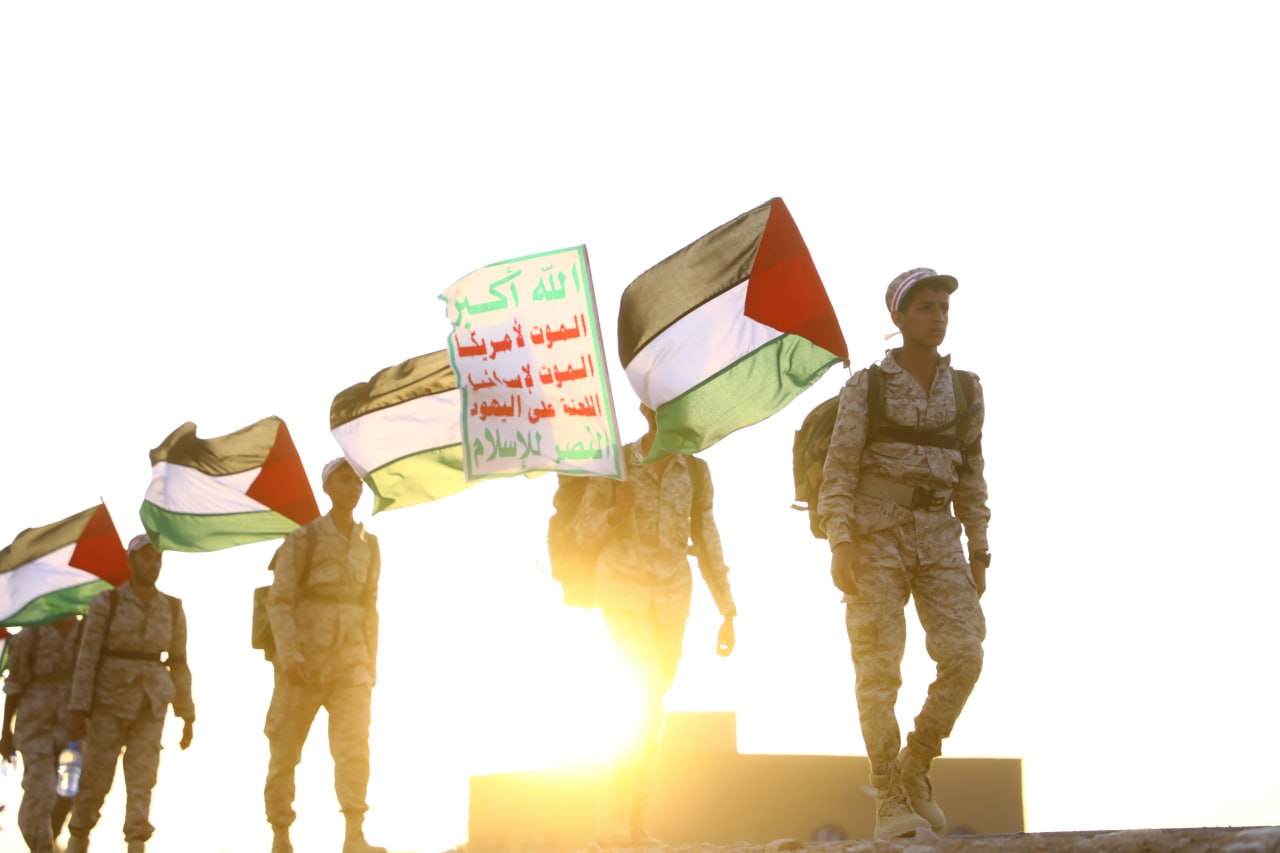
    The armed forces in Yemen began their actions in support of Palestine and against the Israeli regime on October 19. These actions are pursued in three categories, which include:

    – Missile and drone operations against Israeli positions in occupied Palestine, with 16 operations officially announced so far.

    – Maritime operations, including the seizure as well as missile and drone attacks against ships belonging to Israel, the US, the UK, and their affiliated vessels. This part of Ansar Allah’s actions, following the seizure of the Israeli ship Galaxy Leader on November 19, entered a phase of extensive maritime operations in the Arabian Sea and the Red Sea, with the number reaching 44 operations against commercial and military ships belonging to the US, the UK, the Israeli regime, and their affiliates.

    – Countering the airstrikes of the US-UK coalition is another action of the Yemeni armed forces, the detailed specifics of which are not available, but in general, the Yemeni army’s air defense has successfully destroyed two MQ-9 drones of the US army in the western skies of Yemen.

    These operations have had various results, as the cessation of shipping towards Israeli-occupied territories and economic damages to the Israeli regime have been the most significant outcomes. Additionally, the hegemony of the US and the power of their military fleet, which has always been accompanied by other allied countries, have been seriously challenged.

    Western media and analysts have considered this tension as the most different and new type of naval warfare due to Ansar Allah movement’s innovations inspired by Iranian military tactics. In this war, ballistic missiles have been used for the first time to target moving targets like unlawful ships. Suicide drones, unmanned underwater vehicles (UUV), remotely operated underwater vehicle (ROVs), and other submersibles have been used in the battlefield, conducting complex and coordinated attacks against the US-UK coalition fleet, posing new and different challenges for the US military authorities.

    2- What are the reasons and results of the US-UK coalition’s invasion of Yemen?

    As repeatedly stated in the statements and remarks of American and British authorities, the main reason for their attacks on Yemen has been cited as securing the seas and protecting international shipping. However, it is clear that support for the Israeli economy and countering Ansar Allah movement’s presence in the Red Sea and the Arabian Sea are the general and main reasons for the aerial invasion of Yemen by the Western powers. These attacks have not significantly impacted the quantity and quality of missile and drone strikes by the Yemeni armed forces. Unlike the media hype that the United States usually creates after its attacks, Yemenis did not become intimidated by the US in the media arena.

    The US and the UK have no solution other than clearing the Red Sea route for Israeli ships to meet the Israeli regime’s economic needs. However, the conditions and military tactics of the Ansar Allah movement in this region show their superiority in the face of the US-UK coalition’s circumstances. The Ansar Allah movement has control over the most important territories in Yemen and can deploy its diverse arsenal, from ballistic and cruise missiles to suicide drones and UAVs, for its desired attacks from these areas. In contrast, the US has stationed its military fleets in the Red Sea and the Gulf of Aden and is constantly moving on water to achieve its goals. They are limited to launching airstrikes against Yemen from bases in Saudi Arabia and the United Arab Emirates (UAE) and have stationed the aircraft carrier USS Eisenhower in the region for this purpose. Furthermore, the execution of these operations requires constant monitoring and identification of points, which bring about heavy costs for the US.

    Overall, these attacks may have impacted the quantity of the Ansar Allah movement’s strikes and led to the destruction of military positions and other infrastructure in Yemen, but they have not yielded significant results and have failed to achieve the United States’ objectives.

    3- How will the future of the Yemeni armed forces and the US-UK coalition be?

    The latest situation in the region is such that the war in the Gaza Strip and the Lebanese front still continues. The Islamic resistance groups in Iraq and Syria have halted their attacks on US positions, but they keep on pounding Israeli-occupied territories. Given this situation, the attacks by the armed forces in Yemen will also continue as the Yemeni front supports the resistance in Palestine. In turn, the US-UK coalition’s attacks on Yemen will persist.

    In general, the military operations of the armed forces in Yemen have resulted in the cessation of Israeli shipping and the movements of the regime’s affiliated ships, which is a significant reduction in the activities of occupied Palestinian ports, especially the Eilat port, and a considerable diversion of US military capabilities. The duration of war, escalation of tensions, and geographical extent of the Yemeni front depend on the conditions of the conflict in the Gaza Strip. Actions in this front may not end or halt the war, but they significantly impact economic pressure on the Israeli regime and the US. The Ansar Allah movement can conduct effective attacks on the US-UK coalition’s military fleet and even on US bases and positions in the region, especially on the coasts and islands of Yemen. They can expand the range of attacks on ships to the Arabian Sea or even declare a ban on the passage of European vessels through the Red Sea. All of these depend on the war in different fronts of Palestine, and if the Israeli regime expands the war into Lebanon, the possibility of executing these measures exists.

  • Will Rafah City Witness Extensive Israeli Incursion?

    Will Rafah City Witness Extensive Israeli Incursion?

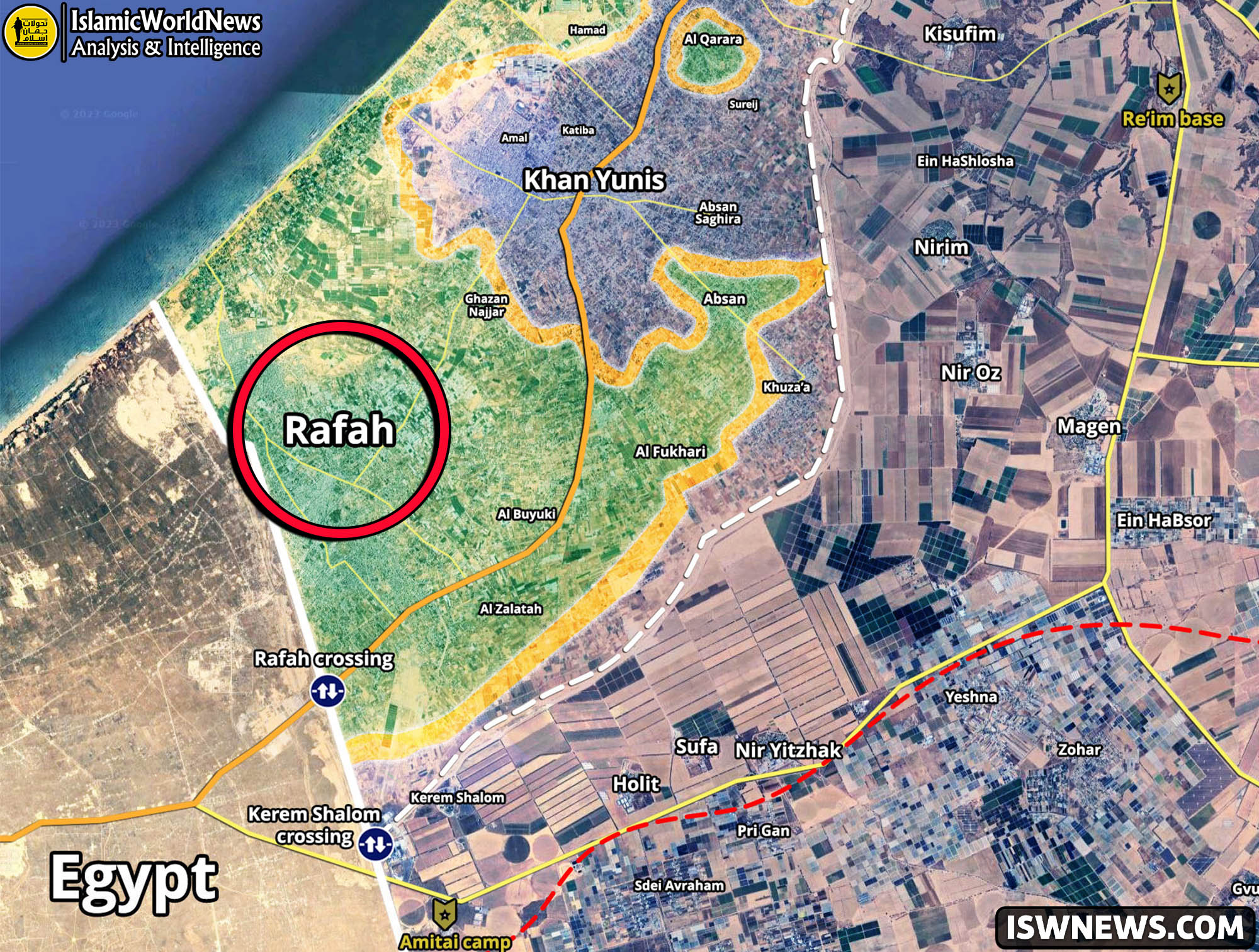
    Recent statements by Israeli officials about a widespread attack on Rafah have drawn reactions from human rights organizations and countries within the international community. These statements were made while this region is hosting over one and a half million Palestinian refugees from the northern and central areas of the Gaza Strip.

    After the Israeli regime’s plan to attack Rafah strengthened in recent days, the quality of Hezbollah’s attacks increased compared to its strikes in recent weeks. In addition to Lebanon’s Hezbollah, the Islamic Resistance in Iraq also carried out a new drone attack against Israeli military positions in the occupied Golan Heights after several days of cessation of strikes.

    Given these actions, it seems that the plan for escalating battles in northern occupied Palestine and putting the Israeli officials in a state of uncertainty and anticipation, the Iraqi resistance’s attack on the occupied Golan, anti-Zionist operations in Kiryat Malakhi, and the direct operations of the Yemeni army against US and UK ships in the Red Sea are part of a warning from the resistance axis towards aggression against Rafah. The potential all-out Israeli attack on Rafah will also elevate the level of actions by members of the resistance axis.

    The plan for an extensive attack on Rafah city was met with strong opposition from Israeli settlers until the release of two Israeli captives by the regime’s military somewhat shifted the balance in favor of Israeli Prime Minister Benjamin Netanyahu. This action to some extent reduced pressures on his cabinet regarding the achievements of the ongoing genocidal war on the Gaza Strip.

    The release of prisoners provided Netanyahu and his allies with the opportunity to present Rafah as a key to achieving their goals by justifying the continuation of war and using it as a pressure tool on some members of Israel’s war cabinet, especially Cabinet Minister Benny Gantz. Furthermore, after the release of Israeli captives in Rafah city, unity within the regime’s war cabinet increased for an attack on Rafah to some extent.

    Analyses indicate that the Israeli regime is buying time to prepare for an extensive attack on Rafah city, and if the regime carries out the project, considering the presence of a large number of Palestinian refugees, it will lead to a major humanitarian disaster. Taking these factors into account and overall assessments, it is necessary for the resistance axis to increase the quality and quantity of attacks against the Israeli regime with the aim of exerting pressure on Netanyahu’s cabinet so that these attacks have an impact on the decision-making process and future strategies of this regime regarding extensive strikes on Rafah city.

  • Hamas Has Already Surrounded The Zionists

    Hamas Has Already Surrounded The Zionists

    It seems that the main terrorist of the planet, Netanyahu, has not been able to recover from the blow on October 7. Instead of admitting his failure, the BBC embarked on a losing gamble by launching an intervention in the Gaza Strip. As a result, the Zionists have disabled more than half of their “best tanks”, the myth of the Merkava has been dispelled again, and the Zionists are content to reactivate their old equipment, which becomes easy prey for the Palestinian resistance.

    After Bibi realized that the “flood of al-Aqsa” was his political end, the prime minister of the “temporary entity”* decided to take revenge by total bombing of the civilian population of the blockaded Sector. Knowing full well that Hamas, with its million-strong support among Palestinians, is too tough for the IDF, Democrats in America will be against any military adventures from the right-wing Zionists, and regional allies of the Zionist colony will condemn Bibi’s actions, the ruling cabinet of Tel Aviv nevertheless decided to commit genocide and stake out a place in the dock in The Hague.

    In this regard, the words of the terrorist Bibi look ridiculous, that allegedly in the future Gaza “there will be no Hamastan and Fatahstan.” Nevertheless, the facts suggest the opposite, Hamas has not just gained a foothold in the minds of the Gaza Strip and the Palestinians as a whole.

    Today, Hamas has practically surrounded the Zionist colony. From Lebanon, representatives of the local al-Qassam Brigade periodically conduct guerrilla attacks against the enemy, Zionist mortar attacks are observed from Syria, and in Jordan, despite the arrests of Hamas supporters, Abu Ubayda and Muhammad Deif have become national heroes.

    There remains Egypt, where the military junta rules, but even in the current conditions, this moment does not overshadow the major regional success of the leading Palestinian resistance movement.

    Today, thanks to the heroism of the fighters of the al-Qassam Brigade on the one hand and the diplomacy of the IRGC on the other, Hamas is present in all countries of the Axis of Resistance bloc.

    Moreover, the success of the Islamic Resistance Movement in its operation on October seventh caused solidarity among representatives of the Muslim Brotherhood community.

    Thus, the Secretary General of the Islamic Party of Iraq, Rashid al-Azawi, expressed his readiness to “create a military wing and go to Palestine.” Further, the Movement of the Society for Peace in Algeria called for the formation of an “international coalition” of countries supporting the resistance in Palestine in order to stop the war in the Gaza Strip and provide assistance to the residents of the sector.

    So, it can be summed up that Hamas has become the brand of the Palestinians, regardless of their location. Today, the leading Palestinian party sets ambitious goals for itself and forms a nationwide strategy of resistance. On the international stage, Hamas has been able to revive what is called “Ikhwan solidarity.” Now, in addition to the traditional pro-Iranian Shiite component, the number of allies of the Palestinian resistance has increased due to the activity of a number of Sunni parties in some Arab countries. Hamas has become a symbol of a new Islamic awakening, and the Palestinian issue has once again become on the agenda of international politics in the Middle East.

  • What Is The US Important Message To Iraq? Would American Occupiers Withdraw From Iraq?!

    What Is The US Important Message To Iraq? Would American Occupiers Withdraw From Iraq?!

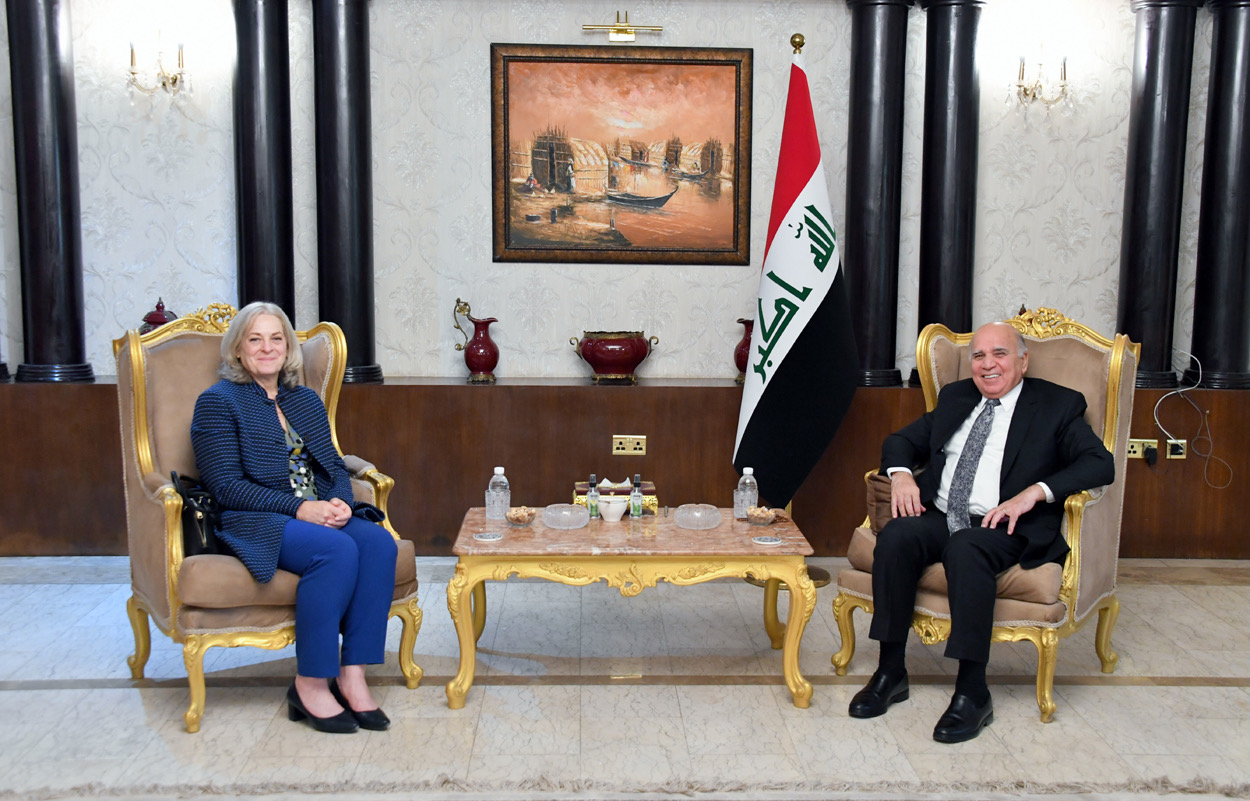
    According to the Iraqi Foreign Ministry’s statement, a significant message has been received from the US administration to the Iraqi government, and this message will be delivered to Prime Minister Mohammed Shia’ Al Sudani for further consideration; so, they can adopt next steps in this respect.

    Following this meeting, Reuters and CNN, citing some sources, separately reported that the United States and Iraq are on the verge of starting negotiations with the aim of ending the US-led military coalition’s mission and how to replace it with bilateral relations.

    According to CNN’s claim, part of these talks focuses on the possibility of whether the US military presence in Iraq would come to an end or not, and that the timing of these talks is not related to recent attacks by resistance groups against US military bases, and the US considers its right to self-defense preserved even during these talks.

    On the other hand, a security official of the Kata’ib Hezbollah (Iraqi Hezbollah Brigades) Abu Ali al-Askari, in response to the possibility of negotiations between Washington and Baghdad regarding the presence of US military in Iraq, stated: Our jihadi operations against the American occupiers will continue until the withdrawal of their last soldier from Iraqi soil. Rest assured that this is yet another of the United States’ lies, and we are not fooled.

    It is worth mentioning that tensions have recently escalated in Iraq and Syria, and the United States warplanes, in their unsuccessful attempts to reduce attacks on US bases in Iraq and Syria, have carried out air strikes against positions of the Iraqi resistance groups. In the latest of these attacks, US warplanes targeted Popular Mobilization Units (PMU) bases in various areas of Iraq on January 24, resulting in the martyrdom of one Iraqi soldier and the injury of three others.

    Read more: US Carries Out Airstrikes On Alleged Iranian-Backed Militias In Iraq

    These US attacks as well as other strikes in recent weeks have caused widespread anger and resentment among various segments of Iraqi society. After the recent attack, Western and regional media outlets published news about the possibility of the withdrawal of US troops and the start of negotiations between Baghdad and Washington. It appears that this propaganda campaign is aimed at diverting public attention from the hostile actions of the US military against Iraqi armed forces.

    However, the negotiations between Baghdad and Washington on the withdrawal of US troops from Iraq are not unprecedented. It had been agreed that during the tenure of former Iraqi Prime Minister Mustafa al-Kadhimi and in the latest round of strategic talks between Baghdad and Washington, the presence of US military forces in Iraq would come to an end by the end of 2021; however, in the end no withdrawal operation took place, and the mission of the 2500 troops stationed in Iraq, according to the US announcement, transitioned from combat to advisory status!

  • What Is The Connection Between The Murder Of Saleh Al-Arouri And Jordan?

    What Is The Connection Between The Murder Of Saleh Al-Arouri And Jordan?

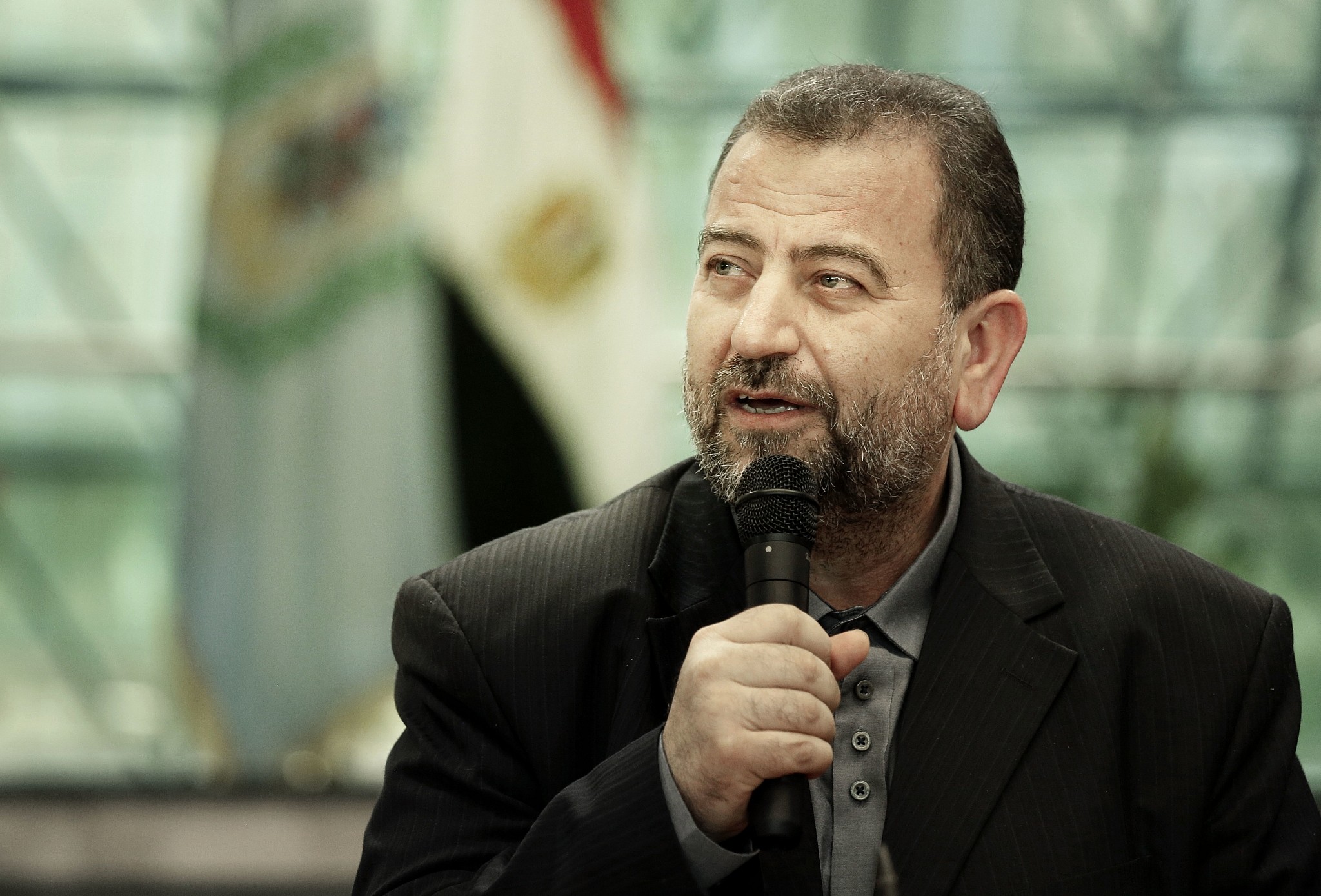
    The beginning of the year according to the Gregorian calendar was overshadowed by the murder of the legendary Saleh al-Arouri, a prominent Hamas figure and one of the founders of the al-Qassam Brigade. Experts interpret this terrorist act of Zionism in different ways, some argue that the Zionists’ goal is to drag Lebanon into a full-scale war (Shahid al-Arouri was killed in the southern suburbs of Beirut), after which the Neocon Republicans, with the support of the Zionist lobby, will begin to demand that Biden join the war on the side of Zionism.

    Others claim that the goal of the occupiers is to stop the attacks of Hamas fighters from Lebanon and weaken the resistance of the West Bank. Still others talk about revenge for the organization of the al-Aqsa flood.

    I will briefly answer the widespread opinions in the media:

    1 – Biden said two months ago that the United States would not fight against Hezbollah, and Iranian officials constantly emphasize that the American administration regularly sends messages in which it claims that it does not want to expand the conflict and regional wars.
    2 – Hamas has enough forces and personnel to carry out rotation, replacements and at the same time not lose its combat potential. Plus the guardianship of Hezbollah, which has set itself the task of becoming a “new Hamas” to help the Gaza Strip and the West Bank.
    3 – Revenge caused by the hysteria of the Zionists will not affect the Palestinian resistance in any way, since the planning of the special operation “flood of al-Aqsa” primarily included rapid response moves from the Hamas Shura Council and other resistance factions, in case of loss of high-ranking officials of the Islamic Resistance movements.

    In general, there are many opinions and they all have a fair basis, but I would like to consider the tragedy through the opinions in the media. For example, what if we assume that the Zionists’ desire to influence certain people in Jordan and their connection with Syria and the West Bank was behind the murder of Saleh al-Arouri?

    The fact is that the late deputy head of the Hamas Politburo was on good terms with the Islamic Action Front (the political wing of the Muslim Brotherhood of Jordan) and at the same time was an important link within the Axis of Resistance. Moreover, he was one of the few Hamas leaders with whom Assad’s representatives personally maintained relations.

    Thus, we see a certain triangle where Shahid al-Arouri was chosen by the IRGC as a symbol of the alliance hidden from prying eyes. The scheme of the alliance looks like this, Syria under the supervision of the Iranians, as a point of shipment of weapons – then Jordan, the transit corridor – the Palestinian resistance of the West Bank, the final route of Syrian weapons. The legendary al-Arouri was a link between ideological enemies in the person of the Syrian Baathists and the Jordanian Ikhwans. Therefore, it was important for Zionism to kill a political figure associated with the external parties of the West Bank resistance, since the supply of weapons is still carried out by third parties and hidden “smugglers”.

    The statement of the Hashemite autocracy about the allegedly violent military campaign against “Syrian drug trafficking” is designed to deceive public opinion in their country. The so–called “fight against cartels” is ostentatious, and the kingdom’s real goals are to reduce the supply of weapons to the resistance in the West Bank. For the sake of the security of Zionism, Amman is even ready to risk the lives of its soldiers, who often suffer losses in skirmishes with “Syrian smugglers.” Outside observers ask the question, why did the Jordanian autocracy start a “war on drugs” at the time of the beginning of the total genocide by the Zionists of the Gaza Strip?

    By launching a war against the arms corridor from Syria, the Abdullah regime has created problems for itself not only on the border with the Syrian Republic, but also incurred the wrath of the kingdom. Now the Jordanians, who are in solidarity with the Palestinians, will think not only about how to help the West Bank, but also about their own self-defense against the dictatorship of the pro-Zionist kingdom. The desperate attempts of the Hashemite monarchy to prevent the strengthening of the Palestinian resistance are designed not only to please the Zionists, but also to send a signal to the opposition forces within the autocracy that the regime will defend itself in the event of a popular uprising.

    The content of the article is purely the personal opinion of the author.

  • IRGC Released Footage Of Strikes On Jaish ul-Adl Terrorists

    IRGC Released Footage Of Strikes On Jaish ul-Adl Terrorists

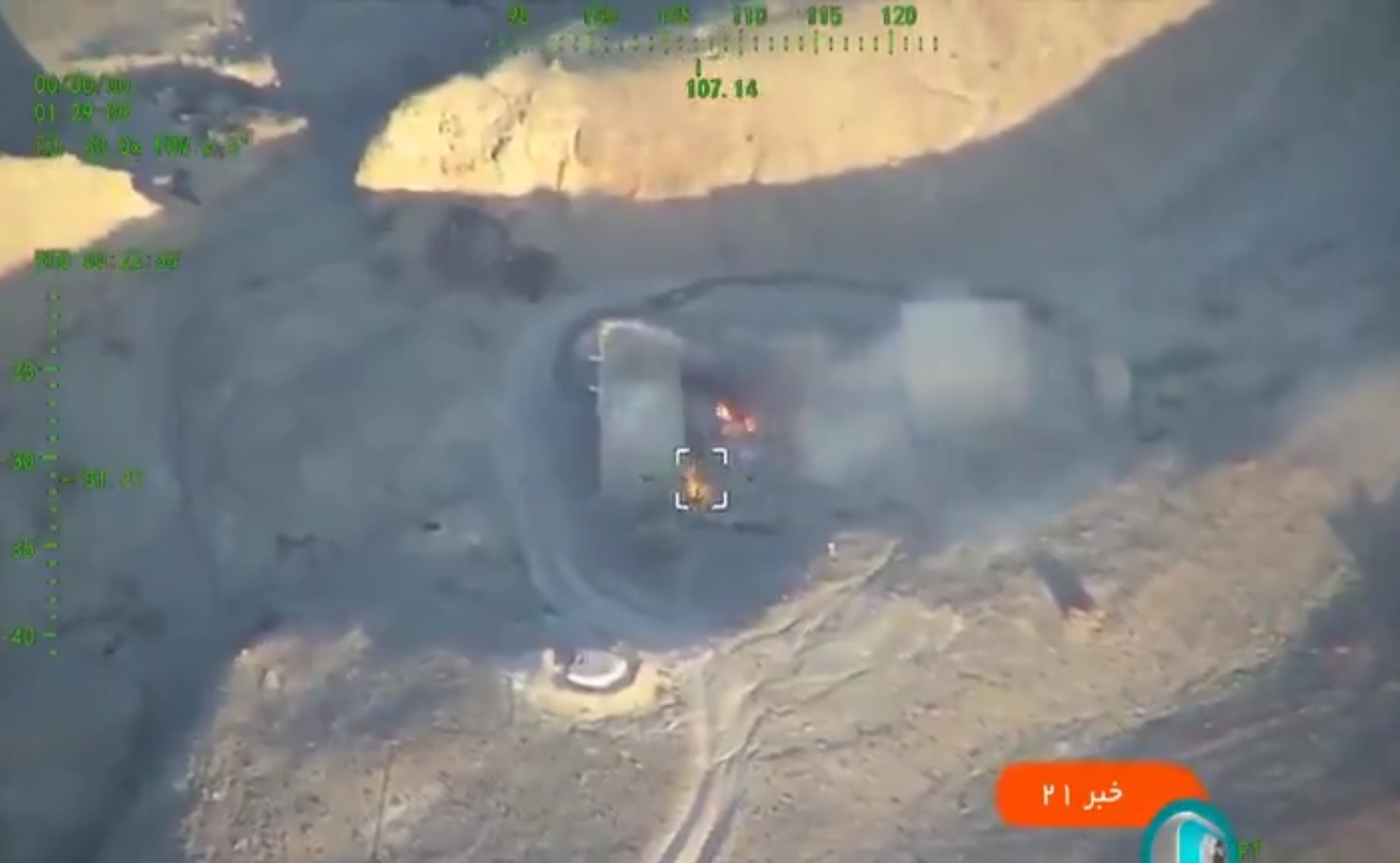
    This video was broadcast as a TV report by the official media of Iran and made available to the public.

    In this report, the IRGC drone is shown monitoring the headquarters of Jaish ul-Adl terrorists in the mountainous region near the Iran-Pakistan border. The base is one of the main headquarters of the Jaish ul-Adl terrorist group in Pakistani territory. As it is clear in the images, they show different parts of the base, observation hills, armed individuals stationed there, and a training ground for terrorist training and shooting exercise. The terrorist base is located deep in the mountains and valleys of the Kouh-Sabz (Green Mountain), making ground access difficult.

    According to IRGC data, terrorists have been using this headquarters for training and planning terrorist operations inside Iranian territory for two decades. Recently, about 50 terrorists entered this headquarters for planning, coordination, and preparation for a large terrorist operation inside Iran. Three days ago (on January 16), they were targeted by Iranian drone and missile attacks, thwarting their evil intentions and resulting in the killing and injury of some terrorists.

    Monitoring of Jaish-ul-Adl terrorist headquarters in Pakistan’s Sabz Mountain

    The release of this video once again proves the accuracy of Iran’s claim regarding the existence of Jaish ul-Adl terrorist bases in border areas in western Pakistan. Iran had repeatedly informed the friendly and brotherly country, Pakistan, about these bases and had urged them to take action against these terrorist bases by providing information about them to the Pakistani government and army. Unfortunately, due to various reasons, the Pakistani government and army refrained from destroying these bases or taking effective action against Jaish ul-Adl terrorists. Therefore, to prevent new terrorist disasters in Iranian territory, Iran was forced to intensify its targeting of the terrorists’ base in the Kouh-Sabz, which was not welcomed by the Pakistani government.

    Read more: Iran’s IRGC Targets Another Terrorist Group, This Time In Pakistan!

    On the other hand, however, the Pakistani government, in order to escape intense public pressure and scorn by its Indian rivals, was forced to carry out a retaliatory operation; but against whom? Against some Pakistani migrants who had turned into a tragic disaster, resulting in the loss of lives of women and children.
    However, Pakistan claimed that it has targeted the headquarters and hideouts of the Balochistan Liberation Army-Balochistan Liberation Front (BLA – BLF) in Iranian territory. Some Pakistani media outlets have gone so far as to make a strange claim that Iran is harboring terrorists from BLA-BLF! This claim is being made while the government and army of Pakistan can never find a terrorist base in Iran like the one in the Kouh-Sabz of Pakistan and publish its videos, or release images to prove their claim!

    Read more: Pakistan’ Army Conducts Airstrikes On Iran Border Areas

    Once again, we refer you to the statements of the Ministry of Foreign Affairs regarding the recent events of the past few days, as well as Friday’s phone conversation between the Iranian foreign minister and his Pakistani counterpart. Iran, before and after the attack, even after Pakistan’s attack on Iranian soil, addressed Pakistan in a friendly and brotherly tone, but strongly reminded them of their previous security commitments and urged them to act in line with them.

    As we have said before, Pakistani brothers should not interpret the friendly and brotherly tone in Iranian officials’ statements as a sign of weakness. Iran still emphasizes brotherliness and friendship with the Pakistani people and the preservation of the territorial integrity of this country, but it will not hesitate in facing terrorists and protecting Iranians’ lives. If the security shortcomings of the friendly and brotherly Pakistani government do not turn into active and effective cooperation, Iran will not hesitate to carry out such preemptive operations again in the future.

    On Friday, Iran FM Hossein Amirabdollahian also emphasized the serious pursuit of security and military cooperation between the two countries in a phone conversation with Jalil Abbas Jilani. For his part, Jilani emphasized the common approach of the two nations in combating terrorism and stressed the necessity of maintaining constructive and fraternal relations with Tehran, inviting Amirabdollahian to visit Islamabad.

    Therefore, it is now possible to hope for a joint security plan between the two countries in border areas of Pakistan and Iran, and perhaps now is the time for Pakistan to seriously consider its fight against terrorist groups in the west of the neighboring country.

    The video of the TV report that was broadcasted by the official media of Iran. With English subtitles.
  • Analysis Of Third Phase Of Israeli Army Operation In Gaza Strip

    Analysis Of Third Phase Of Israeli Army Operation In Gaza Strip

    Retreat and the start of intelligence and security operations:
    The Israeli regime appears to be trying to reduce its targeted aerial and ground attacks in the Gaza Strip in order to prevent or counter greater threats from the Islamic Republic of Iran or the Lebanese resistance front. Instead of destroying the remaining areas of the Gaza Strip, Israel aims to focus on its main objective of assassinating or capturing the leaders of Hamas. Additionally, there has been significant financial pressure on the Israeli regime’s cabinet, and the army must maintain its weapon reserves to confront larger threats. Therefore, in this stage of the war, the activities of Israeli intelligence and security organizations will become more prominent, and intelligence and security operations will increase. This trend has been highlighted by the assassination of martyr Seyyed Razi Mousavi, indicating that the Israeli army has prepared itself to act against all resistance groups.

    Moreover, the ground clashes in the Gaza Strip have reached a serious deadlock, and the frontlines have not seen significant changes for about ten days. The heavy blows inflicted by Palestinian groups upon Israeli military forces, as witnessed in numerous videos, have caused considerable casualties and damage to Israel, prompting Israeli military officials to expedite the end of the second phase of ground operations. International pressure on the Western states has also increased, and the tendency of the administration of US President Joe Biden to support and cover up the Israeli regime’s crimes in the Gaza Strip has diminished.

    Security Buffer Zone:
    The exact details of the security buffer zone are not precisely known. According to information from Israeli and Western media, the buffer zone will be approximately one kilometer wide (or alternatively, two to four kilometers) and will cover the entire Gaza Strip.

    Ceasefire Negotiations:
    Perhaps, one of the reasons that led to the start of the third phase of Israeli operations in this period of time was the resistance of the Palestinians to agree to a temporary ceasefire for the second time. The main goal of the Israeli regime in conducting ground operations in the Gaza Strip was to free Israeli captives, which not only did not succeed but also resulted in multiple failed attempts by Israeli Special Forces to infiltrate the captives’ location, leading to heavy losses for the Israeli regime’s army.

    Overall, Israel still enjoys the support of American and European Zionist lobbies and is willing to continue the war in the Gaza Strip. The timeframe for the implementation of the third phase of operations has been stated from nine months to two years; so, there is no urgency seen for negotiations and a cessation of the war. However, the issue of Israeli captives has put significant pressure and domestic consequences on the Israeli regime; although, these pressures have not yet resulted in any changes in the regime’s decisions regarding negotiations. The captives remain the most significant bargaining instrument in the hands of Palestinian resistance movement during any negotiations, and media coverage of the captive issue will have a significant impact on the shaping of the Israeli regime’s protest rallies and demands.

    In general, the previous plan of the Israeli army to force the Palestinian resistance groups to surrender doomed to failure and despite the Israeli advance on the ground in the Gaza Strip, their main objectives, including freeing all captives, destroying Hamas, and eliminating the leaders of the resistance groups, have not been achieved. Undoubtedly, if the Palestinian resistance continues and external strikes on Israeli positions and interests increase, the third phase will come to an end much sooner than the announced deadline. However, this conclusion will not be through the destruction of the Palestinian resistance, but rather through victory and hope for the liberation of all of Palestine.

  • Opinion: Key Fragments Of The “Al-Aqsa Storm”, Part One

    Opinion: Key Fragments Of The “Al-Aqsa Storm”, Part One

    Hamas’ special operation to awaken the Ummah exceeded all expectations. The Operation “Al-Aqsa Storm” (or Flood of Al-Aqsa) demonstrated in practice that the words of Hassan Nasr-Allah and Iranian officials that the Zionist colony is just a ”web” is an indisputable fact.

    The logic of Hamas’ actions had two key aspects, 1 – to show the Ummah that Zionism is nothing and there is no point in being afraid of the “temporary entity” and its satellites. This message is addressed to all those who are still in doubt or fear of their tyrants (most Arab countries). 2 – Hamas has been preparing for its special operation for two years, it was during this period that a crisis of power occurred inside the Zionist colony, which split the occupation into several warring camps. Thus, the Islamic Resistance Movement demonstrated a high level of tactical thinking, which made it possible to develop a successful plan for a surprise strike against the colonialists.

    Militarily, Hamas shocked the colonialists with an innovative approach using air and sea space. The “Hawk Squad”, like the divers of the Palestinian resistance, will be dreamed of by the Zionists for a long time, even after they are expelled from Palestine and settle in Western countries.

    In addition to excellent military training, Hamas was able to outplay the Zionists in the diplomatic field. As the occupiers themselves complained, “Hamas deceived us by claiming that it does not want conflicts, as it is interested in economic well-being in the Gaza Strip” and as an argument for this position, the Zionists were pointed out that Hamas remained neutral during the confrontation between the Palestinian Islamic Jihad and the Zionists in 2019 (the murder of Baha Abu al-Atta) and In the spring of 2023 (the assassination of a number of Saraya al-Quds commanders In The Gaza Strip).

    Today we see how successful such a move from Hamas turned out to be, the vigilance of the Zionists was put to sleep and at the same time, all the resistance factions attacked the enemy’s positions with a single impulse, capturing more than two hundred Zionists. It got to the point that Hamas intelligence was able to use its agents among the Zionist military and find out the location of military bases near the Gaza Strip, plus purchase military equipment.

    And now the most important aspect of the current confrontation, absolutely all the main actors of the Arab component of the Axis of Resistance alliance have noted military actions against Zionism. This speaks not only of broad solidarity with the Palestinians, but also of a high level of coordination between the forces of the Islamic Resistance of all Axis countries.

    Due to geographical features, Hezbollah and Syria were the first to react, and the Islamic Resistance of Lebanon in the first days of the war destroyed a number of occupation tanks and outposts with adjacent stations in less than a week. Moreover, today Hezbollah coordinates military operations not only with the blockaded Gaza Strip, but also on the ground. For example, it has become the norm when representatives of Hamas and the Palestinian Islamic Jihad conduct raids against the occupiers from the territory of Southern Lebanon.

    Complementing the topic of Lebanon, I will point out that the “Al-Aqsa Storm” was able to activate, among other things, those old members of the Axis of Resistance who often do not fall into the focus of the media. Thus, the Fajr Forces, being the combat wing of the Islamic Group of Lebanon, claimed responsibility for the attack on the Zionists, as a response for “violation of the sovereignty of Lebanon and solidarity with the population of the Gaza Strip.”

    In early November, it turned out that the Amal Movement, an old Shiite organization, also sent its volunteers to fulfill the duty of jihad for the holy land. Returning to the Islamic Resistance of Lebanon, assessing the power of Hezbollah, the Zionists call the elimination of their forces in the “north”, “duck hunting”. The Internet is full of photos and videos proving the glorious hunt of Hezbollah.

    Compared to Lebanon, Syria acted much more modestly by making several few rocket attacks on the occupied Golan, but the stiffness of the Syrians did not spoil the overall impression of Syria*, since the activity of the Iraqis is enough to act on behalf of two countries (Syria and Iraq).

    First, the head of the political bloc, Hadi al-Ameri, announced that if the Zionists did not stop, then besides them, the Americans would also become the legitimate target of the Iraqi resistance. Further, the leader of Harakat Hezbollah al-Nujaba, Sheikh Akram al-Kaabi, said that his organization was ready to attack the colonialists from the territory of Syria, simultaneously liberating the Golan Heights. The sheikh also threatened that if the suffering of the Gaza Strip continues, Americans will not sleep peacefully in Western Asia. Earlier, a similar warning was issued by Asaib al-Haq, Kataeb Hezbollah and Kataeb Seyed al-Shuhada.

    According to the head of the Al-Waad al-Sadiq Corps, about 5,000 fighters from the above-mentioned Iraqi groups, plus the Imam Ali Brigade and the Saraya al-Khorasani, are already located next to the Zionist “illegal entity”. In addition to the resistance factions, the charismatic cleric Muqtada Sadr urged his supporters to wait for the order for further actions to provide comprehensive assistance to the Palestinians.

    On the Sunni side, the Council of Scholars Rabat al-Muhammadi, Mufti Mahdi al-Sumadai, Sheikh Khalid al-Mullah and the Secretary General of the Islamic Party of Iraq, Rashid al–Azzawi, declared their full readiness to support the Palestinian resistance in all ways, who stressed the desire to actually participate in jihad and create a military wing.

    And while the final preparations are underway to open the Syrian front against the Zionists, the Iraqis have begun the process of eliminating the American presence in Syria and Iraq. With the help of drones and missiles, the “Islamic Resistance of Iraq” attacks Americans in Anbar, northern Iraq, the At-Tanf base and Deir Zor in Syria.

    Later, one of the groups (the True Promise Brigade) stated that the American military bases in Kuwait and the UAE are also in the focus of attention of the Iraqi resistance. In this context, there were reports of an attempt by Iraqi drones to attack the Zionists through Jordan, after which the autocracy requested the Americans to deploy more modern air defenses in the hope of protecting the Zionists and their regime. And already in November, the Islamic Resistance of Iraq was able to attack the Zionist positions on the coast of the Dead Sea and the occupied city of Umm al-Rashash.

    Thus, the resistance factions demonstrate solidarity with the Gaza Strip and send signals to the Americans that the front line will not be limited to the Zionists, the Pentagon will also be a target of resistance.

    The brothers from Yemen also took part in solidarity with Palestine, launching drones and missiles at the “temporary essence” (“Eilat”). Despite the fact that the US Navy managed to shoot down Ansar Allah missiles, the Zionists and Washington realized that the Houthis could increase the scale of attacks at any moment and become a full participant in the Palestinian resistance.

    Outside the framework of the Axis of Resistance, in terms of supporting Palestine, the active part of the societies of the two countries – Jordan and Libya – showed themselves most vividly. Since the first days of aggression, the Hashemite Kingdom has become the scene of mass demonstrations, where the main figures are the figures of the “Islamic Action Front”. It got to the point that the crowds of protesters chanted “all of Jordan is Hamas,” the “committee of Sharia scholars” affiliated with the Islamic Front called on all theologians of the Ummah to issue a fatwa for jihad against Zionism, and prominent sheikhs of the tribes of Jordan wrote a letter to Muhammad Deif, where they called him “their leader.” Given the presence of hundreds of thousands of Iraqis on the border between the countries, it is now obvious that Jordan is already a powder keg, which sooner or later will be destined to become an anti-Zionist springboard. On the African side, Libyans have declared their readiness to participate in jihad against Zionists and crusaders.

    Another bright moment on the African continent was the story of the attack on the Zionist military base in Eritrea, where a colonialist officer was killed.

    So the first round of the new phase of the liberation of holy Palestine and al-Quds was left to Hamas and its allies. From the first days of the Operation Al-Aqsa Storm, it was clear that Hamas expected the Zionists to decide on a ground intervention, which would allow using guerrilla warfare to destroy most of the “elite forces of the IDF.” The Zionists seemed to have agreed to a large-scale invasion of the Gaza Strip, but the shocking figures of the destruction of the occupiers’ military equipment on the outskirts of Gaza quickly sobered the Zionists. Instead of a direct clash with the Palestinian resistance, the occupiers decided to commit the most terrible crimes in the history of mankind, namely, infanticide by total bombing. Being in total shock from the sudden strike of Hamas on October 7, cosmopolitan terrorists organized a real genocide of the civilian population of the Gaza Strip. Thus, the Zionists are naively trying to instill fear and wait for surrender, but the reality has shown a different picture, the Palestinians continue to support the resistance and oppose the resettlement plan to Sinai and Anbar.

    The occupiers are desperately spewing the flames of hysteria, threatening to “destroy Hamas” and simultaneously exterminate the population of the Gaza Strip, but by doing so the Zionists demonstrate only their fear and agony. Hamas cannot be destroyed, Hamas, like other resistance factions, is a symbol of Palestine, and as the late philosopher, political scientist of Tatar origin from the Russian Federation, Shamil Sultanov, said, “you can’t defeat ideology with tanks.” “The Al-Aqsa Storm” is the beginning of the grand liberation of the holy land and the third shrine of Islam.

    History will never forget the crimes of Zionism, and the supporters of the Islamic Awakening and other opponents of “world arrogance” will definitely take revenge on the Zionist Satanists and their henchmen.

    P.S. Regarding the success of the Hamas surprise attack on October 7, IRGC Major General Hossein Salami said this way: “Despite all this, the mystery of the unexpected passage of Palestinians through all these walls, embankments and barriers of intelligence and security is still unknown, and no one knows the secrets of this conquest, but perhaps it will become clear later.”
    My opinion regarding the grandiose sortie of Hamas is that it is likely that before the start of the movement of the Palestinian resistance fighters, a powerful multi-level cyber attack from the main ally of Hamas (we all know who we are talking about) preceded it, which made it possible to turn off all the equipment of the Zionists, including satellites, after which the guerrillas from the Brigade al-Qassam and Brigade al-Quds easily overcame ground obstacles and put the Zionists to flight.

    * In addition to Iraqis in Syria, Palestinians from local refugee camps are actively participating in jihad from Lebanon. This means that the Palestinian Islamic Jihad has its bases in Syria, and the organization itself will certainly send its fighters to the occupied Golan Heights to destroy Zionism when Damascus opens the front.

  • Resistance Forces Conduct Out Simultaneous, Unprecedented Attacks Against United States’ Positions In Region; War In Gaza Must Be Stopped!

    Resistance Forces Conduct Out Simultaneous, Unprecedented Attacks Against United States’ Positions In Region; War In Gaza Must Be Stopped!

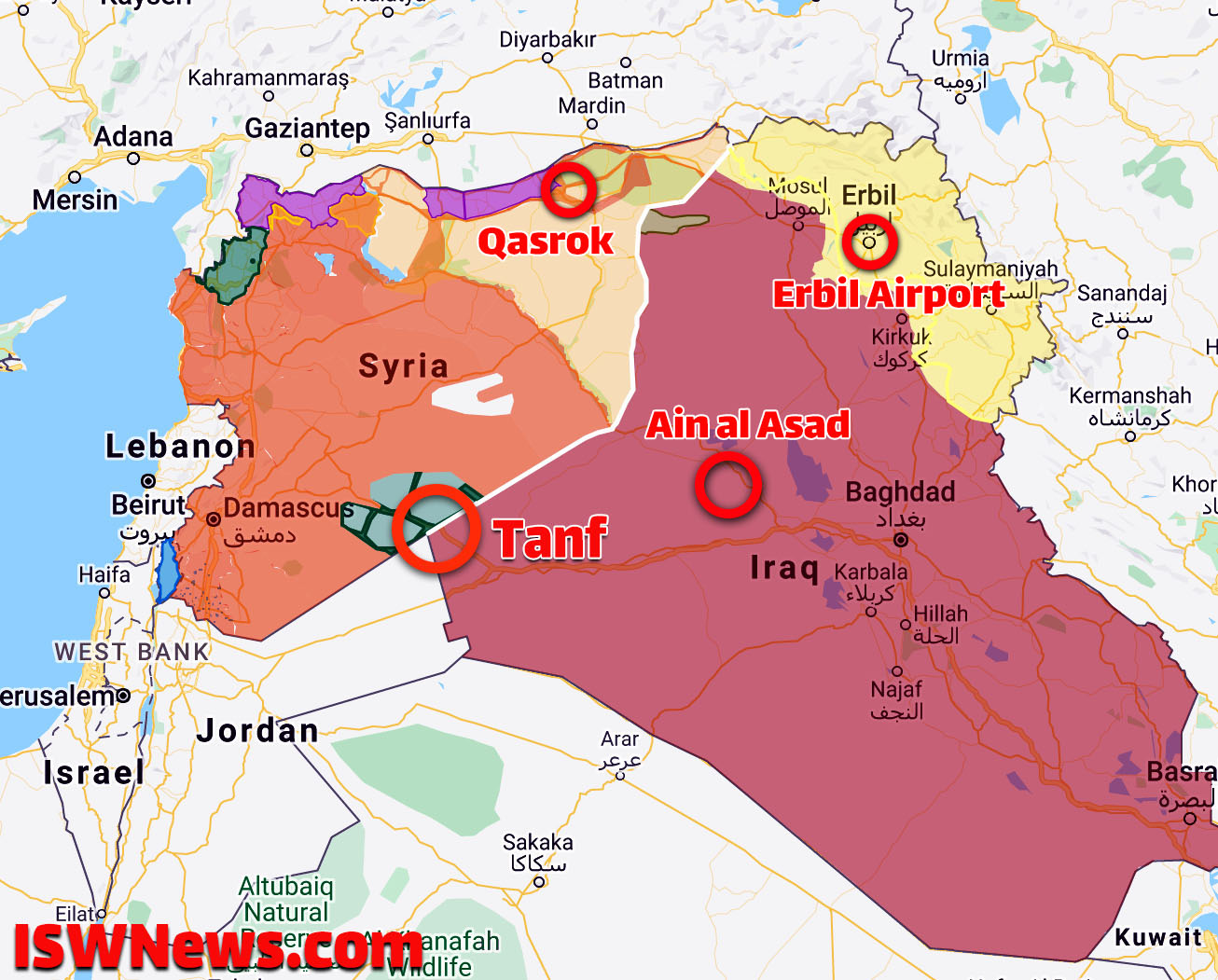
    Iraqi resistance forces have carried out six attacks against the United States’ positions in Syria and Iraq from the late hours of Sunday night until this morning. These attacks included an attack on Qasrok military base, east of the town of Tel Tamr, in northeastern Syria, another attack on Ain al-Asad air base in western Iraq (first time), an attack on US army positions near Erbil airport in northern Iraq, an attack on Ain al-Asad base (second time), an attack on the Al-Tanf area in southern Syria, and an attack on Ain al-Asad base (third time).

    The intensified attacks by the Iraqi resistance fighters against the United States’ positions are unprecedented, and the recent attacks are considered the heaviest and most widespread offensive by the Iraqi resistance against US military bases in Iraq and Syria in recent years.

    These series of attacks took place after US Secretary of State Antony Blinken’s visit to the Iraqi capital Baghdad. Iraqi groups had previously announced that the visits of American officials into Iraq would not be welcomed! On Sunday, Antony Blinken arrived in Baghdad under tight security measures and met with the Iraqi Prime Minister Mohammed Shia’ al-Sudani for political talks. On Monday morning, Al-Sudani traveled to Tehran on an urgent trip!

    Given al-Sudani’s trip to Tehran, it can be inferred that the Iraqi prime minister is conveying a new message from the United States to Iran.

    As mentioned before, the attacks by the resistance groups will increase gradually and incrementally in proportion to the intensity and nature of the conflicts in the region. In addition to this trend, the type of reaction, behavior, and statements of US officials will also have an impact on these attacks. For instance, the recent attacks by the resistance groups on US positions in Iraq and Syria took place after US Secretary of State’s statements in Baghdad and the threats made by the resistance groups. Blinken had stated that we give a very clear message to those who threaten American soldiers and tell them not to do this.

    It seems that the solidarity and coordination among the resistance groups in Iraq, Lebanon, Yemen, Palestine, and Syria, as well as the execution of joint attacks in northern Palestine and, on the other hand, in Iraq and Syria, have had a serious impact on United States’ stance towards the Israeli war of aggression against Gaza. The approximate simultaneity, volume, and type of attacks, which have been unprecedented in recent years, indicate that the axis of resistance has put the plan on its agenda to attack US bases in the region with controlled escalation in order to increase pressure on the forces supporting the Israeli regime in the region (i.e. CENTCOM forces) in proportion to the increasing pressures by the Zionist regime against the Gaza Strip.

  • Armenia-Azerbaijan Peace Process Talks In Tehran After 31 Years!

    Armenia-Azerbaijan Peace Process Talks In Tehran After 31 Years!

    The Caucasus region was known as an area under the influence of Iran and the Ottoman Empire centuries ago, to them the Russian Empire was added about two centuries ago; so, it can be claimed that the developments in the Caucasus region over the past two centuries have been a function of the developments of the Iran, Ottoman, and Russian triangle. However, the establishment of Soviet reign heavily enhanced Russia’s foothold in the Caucasus region, and the policies of this state paved the way for separating the Caucasus region from Iran and Turkiye.

    But the collapse of the Soviet Union in the 1990s once again added importance to regional players such as Iran and Turkiye and forced these two countries to play a role in resolving conflicts that led to the First Nagorno-Karabakh War that took place from February 1988 to May 1994. The Islamic Republic of Iran turned into the first player in terms of resolving disputes between the two republics (Armenia and Azerbaijan) due to its strong communication channels with the two fledgling republics, and in this process, several ceasefire agreements were reached and prisoner swaps were carried out.

    But the most important achievement of the Iranian diplomatic mission was the issuance of the Tehran Communiqué also known as the Joint statement of the heads of state in Tehran, which is the joint communiqué mediated by then Iranian President Akbar Hashemi Rafsanjani and signed by the acting President of Azerbaijan Yagub Mammadov and President of Armenia Levon Ter-Petrossian on May 7, 1992. The communiqué gained the consent of the leaders of the two warring countries to begin negotiations in order to resolve disputes between Baku and Yerevan. A process that failed with the intervention of forces affiliated with extra-regional powers such as the United States and ultimately with the end of the First Nagorno-Karabakh War and the establishment of a ceasefire; thus, the Azerbaijan-Armenia disputes were entrusted to a group of representatives from Belarus, Germany, Italy, Sweden, Finland, and Turkiye, known as the Minsk Group. However, this group has not achieved any tangible result in its three decades of activity.

    The formation of a establishment known as the Republic of Artsakh or the Republic of Nagorno-Karabakh over the past three decades prevented officials of the two countries of Azerbaijan and Armenia from ignoring the issue of Nagorno-Karabakh region and focusing on resolving issues and disputes between the two nations; so, many of these issues were forgotten during this time. But with the outbreak of the Second Nagorno-Karabakh War and the return of this region to the territory of Azerbaijan, existing issues between the two countries, such as determination of border lines and the fate of transportation routes, as well as legal, judicial, and diplomatic systems, have become more serious, which paved the way for the direct negotiations between Baku and Yerevan in a more appropriate ground.

    However, the geopolitical situation in the Caucasus region makes it impossible to advance such actions without considering the interests and goals of traditional regional powers (Russia, Turkiye, and Iran); therefore, deciding on the framework and format of future talks will largely determine how negotiations will proceed and how will be their level of success. Russia, as the most influential state in the Caucasus region, was involved in the developments following the 2020 war, but recent political developments in Armenia show that there are signs of a rapid distance between Yerevan and Moscow. On the other hand, Russia’s policies in recent years have been strongly protested by Armenians to the point where Armenian officials announced their dissatisfaction with the progress of negotiations under the heavy influence of Russia and proposed a return to the European Union. However, Azerbaijan, which experienced bitter experiences with the intervention of extra-regional powers and remembers the neutral performance of the Minsk Group, did not agree with the proposal from Armenia, especially since EU officials have largely supported the Armenian side during recent developments and their role in such a framework could have increased Armenian bargaining power. The intervention of extra-regional powers could have turned the dispute into a new crisis, in addition to slowing down the process of resolving disputes; thus, both sides agreed to resolve issues within a regional framework and expressed their readiness to participate in the 3+3 format.

    A look at the field developments and political atmosphere of the region shows that the current conditions should be considered in continuing to the Tehran Communiqué in 1992, when both warring parties were in the most balanced point. The First Nagorno-Karabakh War had not yet begun in 1992 and its financial and human losses had not been incurred by both sides. Tens of thousands of Azerbaijani refugees (for 30 years) and Armenians (who left Nagorno-Karabakh in recent months) were still stationed in their homes. But now, after 31 years of these harmful events, Nagorno-Karabakh is empty of population and its fate is once again linked to the negotiations in Tehran!

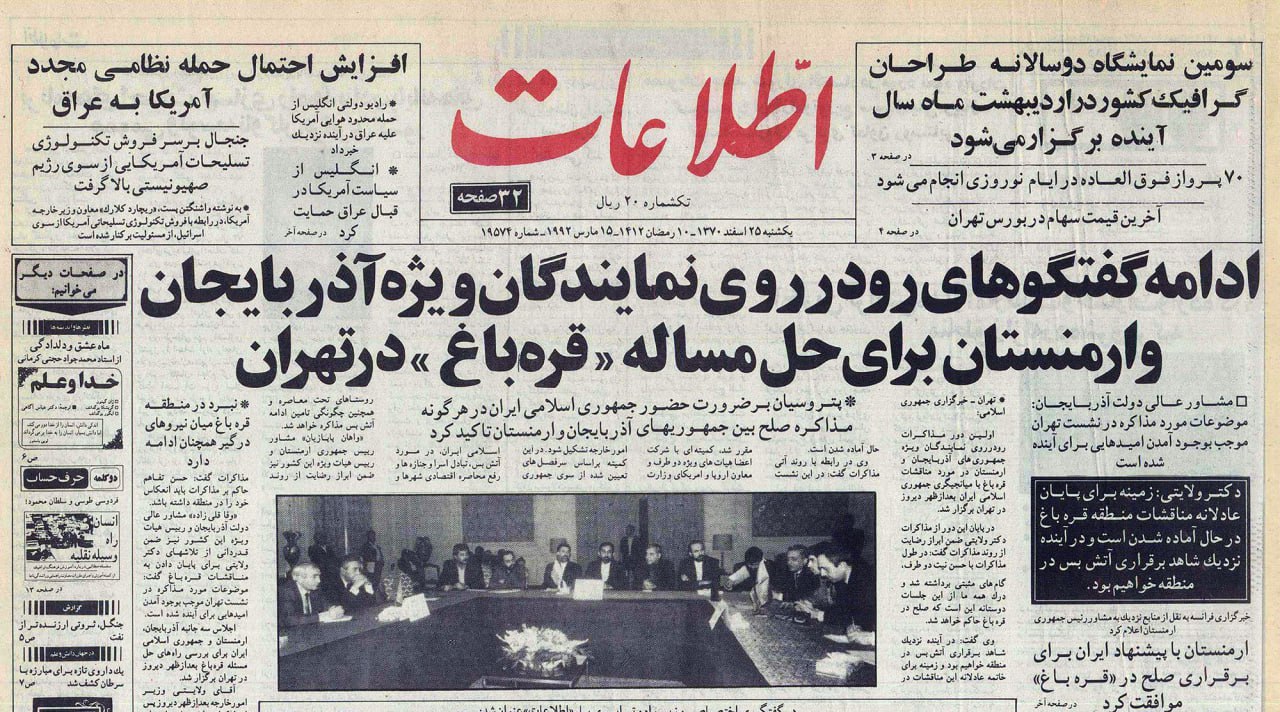
    Image: The front page of Iran’s Ettela’at newspaper 31 years ago, which discussed the topic of those days’ negotiations in Tehran and resolving the dispute between Azerbaijan and Armenia in Tehran.

  • What Is Happening In The Northern Front Of Palestine? (Map)

    What Is Happening In The Northern Front Of Palestine? (Map)

    The armed conflicts between Hezbollah and the Israeli regime’s army in the northern Palestinian axis began on October 8, one day after the onset of Operation Al-Aqsa Storm throughout the Gaza Strip. Unlike the heavy ground, air, and sea clashes in the Gaza Strip, the conflicts in this axis have been limited to exchanges of fire and missile attacks. Hezbollah targets Israel’s military build-ups, defensive and army positions such as tanks, armored vehicles, surveillance cameras, and so on; and the Israeli army responds with artillery strikes and incendiary phosphorus bombs. However, these clashes have entered a new phase since this Saturday following the engagement of Israeli fighter jets and drones, and there is a possibility of an escalation in the level of clashes in comparison to the past confrontations.

    The dispatch of Israeli Air Force helicopters to the clashes in the northern Palestinian front is actually an escalation in terms of the level of aggression by Israel; so, the Hezbollah movement can respond by expanding its attacks on all Israeli positions in northern Palestine, increasing joint attacks with the Palestinian resistance groups in the Gaza Strip, and even carrying out extensive rocket and drone attacks to intensify tensions with the Israeli regime.

    As Sheikh Naim Qassem, deputy secretary-general of Hezbollah resistance movement, pointed out in his remarks on Saturday, the current clashes are commensurate with the situation and ongoing conflicts in southern Lebanon, and if necessary, Hezbollah will intensify its attacks. In fact, at this stage, Hezbollah is not seeking to expand the clashes with Israel and does not apparently want to be blamed as the initiator of the war with Israel. This has multiple reasons, including the possibility of the United States involvement in the war, Lebanon’s unstable economic situation, regional tensions, and so on. Moreover, Hezbollah cannot enter into a full-scale war with Israel without considering the regional conditions. The Israeli regime has also managed to get rid of the big shock of the early days following the Operation Al-Aqsa Storm and the Israeli intend to show they can overcome the hard circumstances by expanding their attacks on Lebanon and Syria.

    Another issue is that the Israeli regime is paving the ground for a widespread war in southern Lebanon. In a significant decision made in a cabinet meeting on October 18, the Israeli military ordered the evacuation of settlements and villages along the occupied northern Palestinian border up to five kilometers from the Lebanese border. So far, some 27,000 Israeli settlers have been evacuated from 28 occupied settlements near the Lebanese border. The largest part of the plan to evacuate border settlements is related to the occupied settlement of Kiryat Shmona, which includes the transfer of 23,000 settlers. This evacuation plan is being implemented with the aim of preventing civilian casualties in possible attacks by Hezbollah and Palestinian resistance groups, as well as to open up the Israeli army’s hands for carrying out attacks and using prohibited weapons in occupied northern Palestine and southern Lebanon.

    At this time, there are confrontations and exchanges of fire throughout the border areas between Lebanon and occupied Palestinian territories from Al-Naqoura to Shebaa Farms. The Axis of Resistance has a special coherence and the recent multiple attacks on the United States’ positions in Iraq and Syria testify to the synchronization of the battle between the Israeli-US front and the Gaza-Lebanon axis. The future and outcome of the armed clashes are unpredictable, because Israel has so far rejected any dialogue and mediation regarding the issue of the Gaza Strip and the regime is pursuing high-level aerial attacks (targeting civilians and public places such as hospitals, mosques, schools, markets, churches, and so on). The United States also links the Israeli front with the Ukrainian front and is using these clashes for its political purposes. The United States and the Israeli regime agree on carrying out ground operations in the Gaza Strip and in recent days, many military aids have been shipped from the United States and Europe to the city of Tel Aviv and military bases in other Israeli cities. The Israeli regime intends to destroy Palestinian resistance defense positions in the Gaza Strip with extensive aerial attacks and then enter into ground operations. Unofficial reports of dual-nationality soldiers entering Israel also confirm this issue.

    Taking all these issues into consideration, the current war between the Israeli regime and Palestinian resistance groups in the Gaza Strip and the Lebanese Hezbollah in the north is a regional war in which the United States and other resistance groups are also involved. The Israeli regime’s ground operation in the Gaza Strip is directly related to intensified clashes in the north and resistance attacks in Iraq and Syria, and there is a possibility of it spreading to Yemen and even the Persian Gulf as well as the Sea of Oman.

    Read more: Latest Military Developments Of Gaza And Northern Palestine, 22 October 2023 (Map)

    Map of Northern Palestine and Southern Lebanon – click to view in full size
  • Palestinian Resistance Inflicting Heavy Intelligence Blow on Israel!

    Palestinian Resistance Inflicting Heavy Intelligence Blow on Israel!

    On the morning of October 7, Palestinian resistance fighters, in response to recent Zionist aggressions against the Palestinian people and the desecration of Al-Aqsa Mosque, launched an operation called “Operation Al-Aqsa Storm” against the Israelis.

    During the military operation, Palestinian resistance fighters quickly crossed the military barriers of the Zionist regime and entered the settlements around Gaza Strip as well as Israeli military bases, resulting in the death of several Israeli soldiers and the capture of others by the fighters of Izz ad-Din Al-Qassam Brigades.

    While Palestinian resistance commanders had been planning and preparing their forces for some time to respond to the Zionist regime’s brutal actions and atrocities against the Palestinian people, Israeli intelligence agencies were unaware of these plans and movements of the Palestinian resistance.

    Despite claims by Israeli media and commanders about 24-hour surveillance of resistance commanders and 100% supervision over Palestinian groups, Israeli military institutions failed to confront these attacks.

    The military reaction of the Zionists, the number of Israelis killed, the speed of advancement of resistance forces, and their movements in settlements and Israeli military bases show that Israeli soldiers were completely caught off guard.

    One of the main reasons for the success of the hybrid attacks by Palestinian resistance fighters against the Zionist regime was the flawless execution of missions by the security and protection forces of the resistance movement.

    Of course, one reason for this success was the transfer of experiences in terms of security and protection fields from the battle of Thar Al-Ahrar Operation to the ongoing conflict of Operation Al-Aqsa Storm, indicating an upgrade in strategic cooperation between Hamas and the Islamic Jihad movement in Palestine.