Category: Opinion

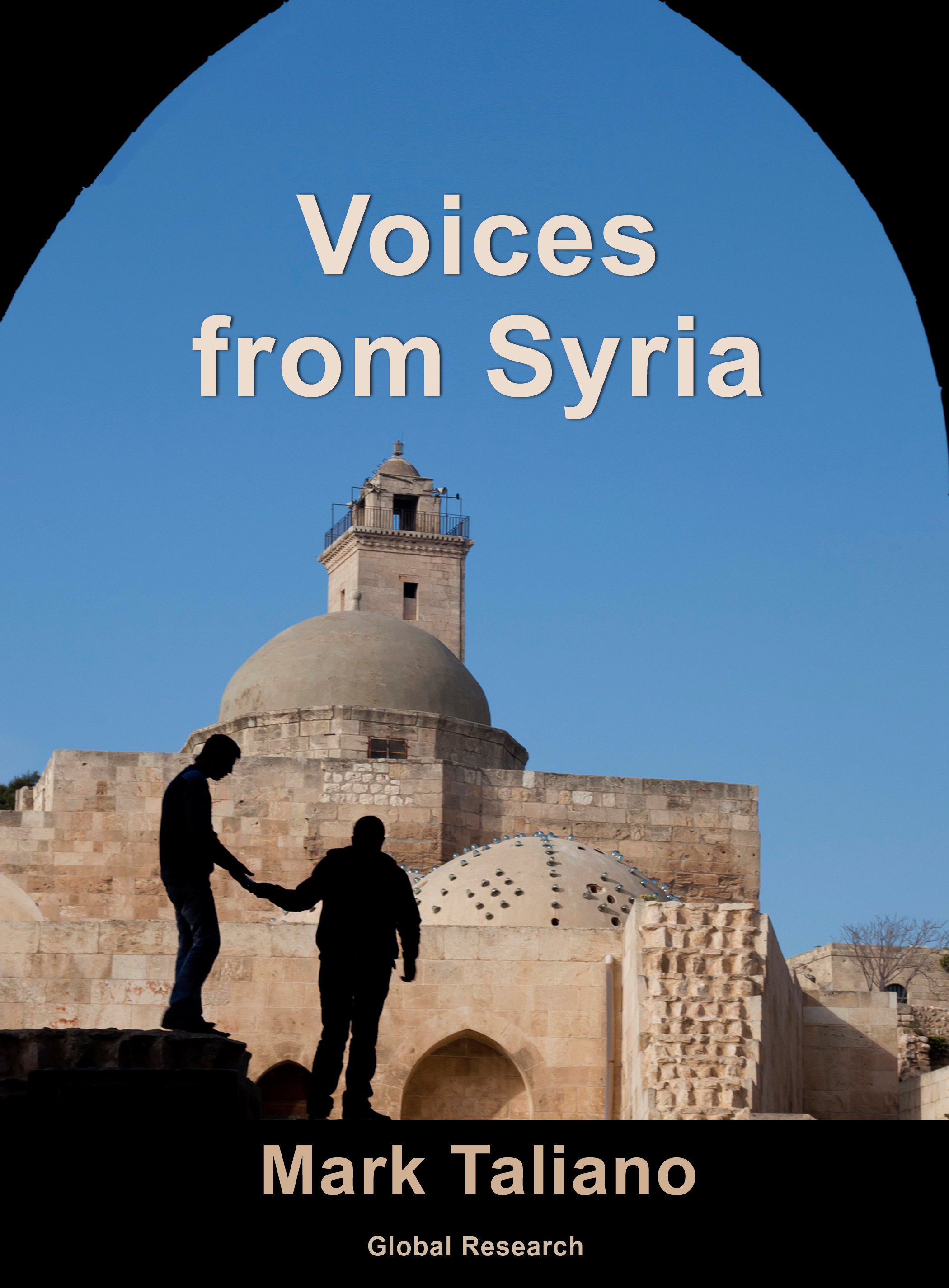
  • Voices from Syria That the West Has Refused to Listen to

    Voices from Syria That the West Has Refused to Listen to

    The author is a rigorous investigator and makes no secret of being a man of conviction. He has got a genuine and deep empathy for “the Holy land” of Syria, and for its “proud, forward-looking people”.

    A very simple but strong idea is the thread guiding the demonstration that makes up the core of “Voices from Syria”: Truth must be used against the lying narratives as an instrument for building peace and denouncing manipulations and crimes of the Western Empire and its Eastern allies (Israel, Turkey and Gulf Monarchies). Sticking to this approach, Mark Taliano made a point to collect moving and indisputable personal testimonies, evidences and reports coming from witnesses and sources in Syria. He hands over to all kinds of people who have suffered from war, violence and destruction, unveiling and pointing to the supporters, the decision makers, the actors, all those involved and responsible for carrying on and refueling the Dirty War.

    The writer’s honesty, his frankness, his refusal of any intellectual game at the expenses of the suffering Syrian People are such that his pleading can’t be contested. Through the authenticity of his “Voices from Syria” and the accuracy of these genuine testimonies, he shuts the door on the miserable and shameless lies and false flags of Western and Islamist [Wahhabi] propaganda. Here is a deeply documented book on the savage War against Syria (among other countries) which has been sowing crime, destruction and terror for years in this “Ancient Land”, “the mother of our civilization”. The western assault on Syria is an assault on our common humanity and Future.

    Terms such as fraud, false flag, lies, manipulation, false intelligence, misrepresentations, inversion of responsibilities, are repeatedly used. Indeed, “Voices from Syria” denounce:

    – The Great Fraud of the so-called “Global War on Terrorism” and the western support to Terror: the “War on Syria” is presented by the US and the West as a noble war for the sake of civilization. In fact, it is a mere war of aggression against a country and a people that did not declare War to anybody and just protect their national sovereignty: according to Nuremberg standards, this type of War is “the international crime par excellence”. In fact, the genuine Syrian People support their Homeland and their National Army.

    -Feigned Humanitarianism – for instance “the Responsibility to Protect” (R2P) – is used as Cover for Crimes against International Law. In Syria as elsewhere, “Regime Change Policy” is the real goal of the US and western “Deep State”.  -Corrupt Mainstream Media plays a strategic role in the Big Manipulation: in fact actors, facts, realities and responsibilities are clearly identified and very well known to Syrian People, but the deliberately lying narrative restlessly spread in the West leads the public opinion to believe that the US is leading a merciless campaign against Daesh, regardless of the fact that US intelligence is behind the creation and supports the Islamic State organization.

    Mark Taliano is not arguing over details and he is right. After reading his beautiful and invigorating book, you will never forget those “Voices from Syria” that the West has refused so obstinately to listen to. And you will let moderate intellectuals draw a balance between the pros and cons in the Kill and martyrdom of the Syrian People whose “blood is being shed for our sins”.

    Source : Ahtribune

  • Recently Visited Lebanon: Shia Hezbollah, the Sunni PM Hariri, and the Christian President Aoun Are All Part of the Fabric of Lebanese Society

    Recently Visited Lebanon: Shia Hezbollah, the Sunni PM Hariri, and the Christian President Aoun Are All Part of the Fabric of Lebanese Society

    e last time I was in Lebanon was in August 2014 when the battle for Arsal first began. Arsal, a small town in the north eastern part of Lebanon located near the Lebanon-Syria border, had just been overrun by a coalition group made up of ISIS & Nusra fighters, seeking to snatch the town and set into motion their deluded dream of an intolerant Salafist caliphate in Lebanon similar to that seen across half of Syria & Iraq.

    The terrorist fighters surrounded several Lebanese army checkpoints, catching them off guard. Once they entered the town they stormed the local police station, capturing 16 policemen and taking them hostage. The town subsequently fell to the terrorists and two soldiers, which had also been captured by the terror gang, were thankfully released later that same day; by sundown on the second day of fighting, at least 8 soldiers were reported dead, numerous civilians killed or wounded and at least 30 terrorist gunman also killed before they secured the town under Salafi Islamist control.

    It was a tense time to be in Lebanon. The Syrian war was at its bloodiest peak and many spectators at that stage still believed a defeat for Assad was possible. Now, with Arsal crawling with terrorists, many in Lebanon feared that they could be seeing the beginning of what many had predicted, that the dreadful Syrian war would spread into Lebanon – turning the country back to a similar state it had been during the blood soaked sectarian years of the 70’s and 80’s. I myself was currently allotted in the capital city Beirut, I had spent most of my trip visiting family and exploring Lebanon’s Southern areas known as Jabal Amel. Locals would talk about what was happening and work themselves up into quite a frenzy. The typical, friendly and traditionally laid back locals were presently nervous and suspicious; anti-Salafi sentiment was high – I saw conservative looking Sunni Muslim men with beards and misbahas being bullied as they walked down the street or got stuck in traffic on the main roads by more the secular Beirutis. “Sho ya Salafi, are you satisfied now your friends have come?” one driver barked in Arabic as his car stopped next to a conservatively dressed Muslim family in a car opposite mine. The following day I was strolling around downtown Beirut, exploring the various religious and historical sites, something which Lebanon is highly famous for, when I stumble across a beautiful old Christian church which appeared to have religious Byzantine era fresco paintings all around the internal walls. I couldn’t resist asking to enter and have a good look around, however, the door watchman seemed less impressed that I was an eager western tourist fascinated to take a look at his religious heritage site – he was more occupied in interrogating me as to why a non-local white guy with a scruffy beard and poor Arabic wanted to come into his church and take pictures. “You will probably bomb the place” he muttered to himself after I managed to negotiate my way inside, to just have a quick look. Then I made a rooky error, I pulled out my camera and tried to snap a quick pic but I was being watched closely and was heckled down by the doorman and told to leave. This was not the right moment for an untimely guest, such as me, to push the limits of the local hospitality. People were scared and rightly so; the Christian doorman was old enough to have seen the effects of a sectarian war ravage his country once before, now the same was happening again just next door in the far bigger Syria, only this time, the conflict has become famous for non-local ‘western jihadists’ participation.

    It is very fitting that, by some coincidence, I should return to Lebanon at the exact same moment to witness the Lebanese army achieved its final victory against the last remaining terrorists still holding onto land in Lebanon, the last time I was in Lebanon I witnessed the same terrorists enter Lebanon officially for the first time, I watched as they took over Arsal, now I watch as they waver and the ‘Battle for Arsal’ comes to a close. Therefore, I have the unique opportunity to compare the local mentality at these two key moments in Lebanon’s very recent history. Certainly, things are much calmer now. The Lebanon I know and love has returned to its natural welcoming and hospitable self.

    The Lebanese army has performed spectacularly well under the circumstances. With poor experience, a lack of proper investment and modern equipment, the Lebanese Armed Forces (LAF) have still managed to succeeded in stemming the flow of suicide bomber and car bomb attacks whilst also busted numerous terror cells active inside Lebanon, fighting off unruly Nusra sympathising anti-establishment armed groups in Tripoli and simultaneously maintaining an overall peace in a religiously divided country. Despite its short comings, it is one of the only Lebanese institutions which actually works regardless of the other crippling aspects of Lebanese sectarian politics blocking the rest of the country from working properly. This fact we must recognise.

    Lebanon’s western allies, such as the United States, were slow to offer any real practical support to the Lebanese Armed Forces (LAF) in the form of military assistance or weapons shipments over the past few years yet these same allies were very quick to publicise their “long, long relationship”, as President Trump put it, following the LAF’s rapid success in the recent military operation against Daesh near Arsal. The problem, however, is not just the fact that the US has failed to support the Lebanese army in the ways that it claims to have done so since the Syrian war first began and the dreadful Daesh (Arab acronym for ISIS) came into existence but the fact that the US can’t administer the facts on the ground in Lebanon – highlighted stupendously well by Trump during his speech while standing next to Lebanese PM Hariri – of Hezbollah’s role in defending Lebanon against radical Salafi terrorism, a truthful anecdote which has already been acknowledged by Russia, Syria, Iran, Iraq and many elements within Lebanon’s political and social classes.

    “Lebanon is on the front lines in the fight against ISIS, Al Qaeda, and Hizballah.” Trump confidently stated.

    The problem with that statement – it is not 100% correct. In fact, Hezbollah is an active political party with 12 seats in Lebanon’s parliament. Hezbollah is also recognized by not just the Lebanese President Aoun (a political ally of Hezbollah who was assisted by Hezbollah’s political block in securing his Presidential victory) but also by many senior Lebanese Army commanders who communicate regularly with key men in Hezbollah’s armed wing to coordinate the joint effort to defeat border terror groups.

    Trump went on to say, that “America’s assistance can help ensure that the Lebanese army is the only defender Lebanon needs. It’s a very effective fighting force.” A promise which has been repeated time and time again in the past by the US but Israel remains America’s number one priority for foreign military support. Lebanon’s military aid requirements have come to be seen as more of an inconvenience for the US as the Pentagon chief, General Mattis, has begun a campaign of fat trimming American foreign aid spending. Since 2005, the US has ploughed more than $1.4 billion into the Lebanese Army, providing weapons, equipment, and training – and helping to significantly boost its capabilities but only enough to keep the LAF’s head above water. Many in the US are beginning to reconsider this support as Hezbollah continues to remain a more effective military presence in Lebanon and the LAF has no interest in challenging Hezbollah for this local status – my question is, why should the LAF wish to confront Hezbollah when both groups share joint goals and common interests in defending Lebanese sovereignty?

    The reality on the ground in Lebanon is that the Shia Hezbollah is as much a part of the fabric of Lebanese society as the Sunni PM Hariri or the Christian President Aoun is. The idea that Hezbollah is somehow holding Lebanon to ransoms or turning the country into an Islamic republic, as is the case in Iran, is laughable.

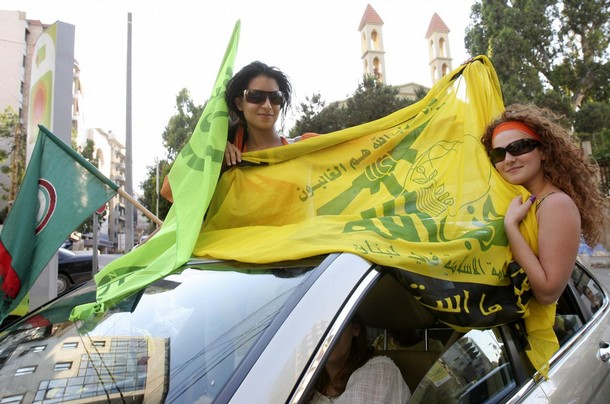
    If you travel to Lebanon, you will land at the Rafic Hariri airport. As you leave, you will immediately notice large green flags of the Amal movement, a rival Shia political party, erected one-by-one down the entire length of the entry and exit road out of the airport. As you continue on towards central Beirut, you could easily be fooled into believing that Lebanon had been completely taken over by the Amal movement with green Amal flags flying high alongside huge banners bearing the faces of Lebanon’s Shia parliamentary speaker, Nabih Berri (the leader of Amal) & the missing holy man Sayid Musa al-Sadr (Amal’s founder) gazing down on you at virtually every roadside or street corner in and around Beirut. It is the Green flags of Amal, not the bright Yellow flags of Hezbollah that dominates the streets of Beirut including the main city airport. I even went to Dahiyeh, the southern Beirut suburbs made famous in western media for its title as the notorious ‘Hezbollah stronghold’ in the Shia dominated part of Beirut. What I found was less of a stronghold and more of a lively urban district, largely run down and overcrowded. Tiny shops and homes squashed together and on top of one another with hundreds of electricity cables running tangled above our heads. I saw real character in Dahiyeh, but no Hezbollah.

    Dahiyeh, like many parts of Lebanon, was a photographic gold mine, the place oozed personality which I was desperate to capture on camera, alas, I could not. Although the Hezbollah are not a visible presence in Dahiyeh, that didn’t mean they did not exist. Taking photographs of the area is considered a security threat and both my driver and the locals would not have appreciated a white foreigner wearing flip-flops sticking a camera in their face; much like the Christian doorman, they are fearful of what the foreigner might bring – and I can’t blame them.

    Hezbollah does not pose a threat to the daily life of the Lebanese people. The local inhabitants of Dahiyeh were friendly, polite and incredibly welcoming for people who supposedly live in a terrorist stronghold. Would I be able to say the same if I was to pay a visit to Raqqa? Would I even return from the trip alive? Yet it is the Hezbollah, the group fighting Daesh in Lebanon, Syria & Iraq, that was receiving the biggest amount of attention during Trump’s speech and in the Pentagon’s foreign policy.

    The Hezbollah of today are not the same as the Hezbollah of the 80’s – neither is Iran. Both have changed dramatically and evolved into more mature regional actors in recent years. The problem is that the US has refused to change or even adapt its foreign policy in order to deal with the current field of play. To the US, Hezbollah is just another Islamist terror group, while Iran, just a revolutionary Islamist terror state looking to create a nuke to kill westerners with. In reality, we see both Iran & Hezbollah both spearheading the fight against global Salafi terrorism. Iran and Hezbollah are actively fighting in Syria and Iraq, helping in the local effort to military defeat Daesh and destroy what’s left of their so-called caliphate. Despite this, the West refuses to update its opinions of the two, continuing to peddle the old narratives from the 80’s: They are just terrorists – no proof needed.

    The Lebanese Army is about to confirm a monumental victory for its country. A deeply deserved victory, but an achievement not reached by the Lebanese Army alone – it involved numerous players from across the globe, including Iran & its IRGC (Revolutionary guards), Iraq and the Hashd al-Shaabi (Shia militias), the Syrian Arab Army (Assad’s forces) and Russia, yet the West continues to demonize all these actors, rightly or wrongly, as threats to world peace. As Pentagon chief Mattis put it, “The Iranian regime in my mind is the single most enduring threat to stability and peace in the Middle East. Despite repeated mentions of the Islamic State and al-Qaeda by others.”

    My own experience visiting Lebanon and the region, I can honestly say this narrative has become very cliché.

    Source: Ahtribunes
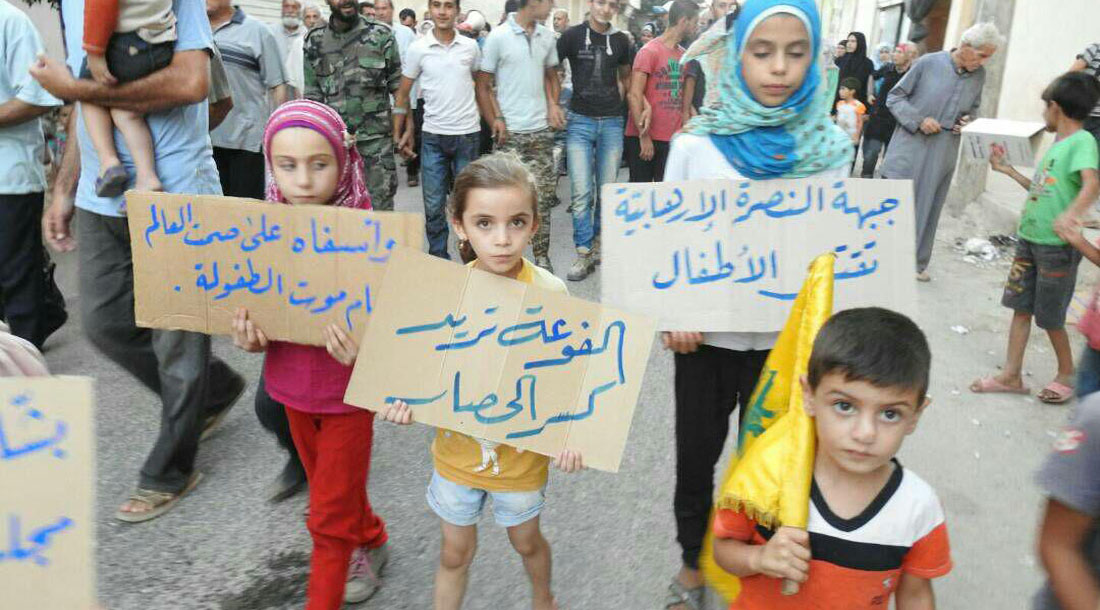
  • The residents of the two besieged towns of Fu’ah and Kafraya held their protest rally for the forty-second day.

    The residents of the two besieged towns of Fu’ah and Kafraya held their protest rally for the forty-second day.

    The residents of the two besieged towns of Fu’ah and Kafraya held their protest on the forty-second day in which they asked for speeding up the removal of the imposed siege and implementing the agreement called “the Fourth Cities Agreement” and returning the missing Rashedin blast And send immediate help to these two cities.

    It should be mentioned that, despite of hard condition of people and therapeutic conditions of the inhabitants of Fu’ah and Kafraya for more than 5 months, no help has been provided to these two cities.

  • Spread of ISIS And Al-Qaeda In Yemen In Context Of Saudi-led Intervention

    Spread of ISIS And Al-Qaeda In Yemen In Context Of Saudi-led Intervention

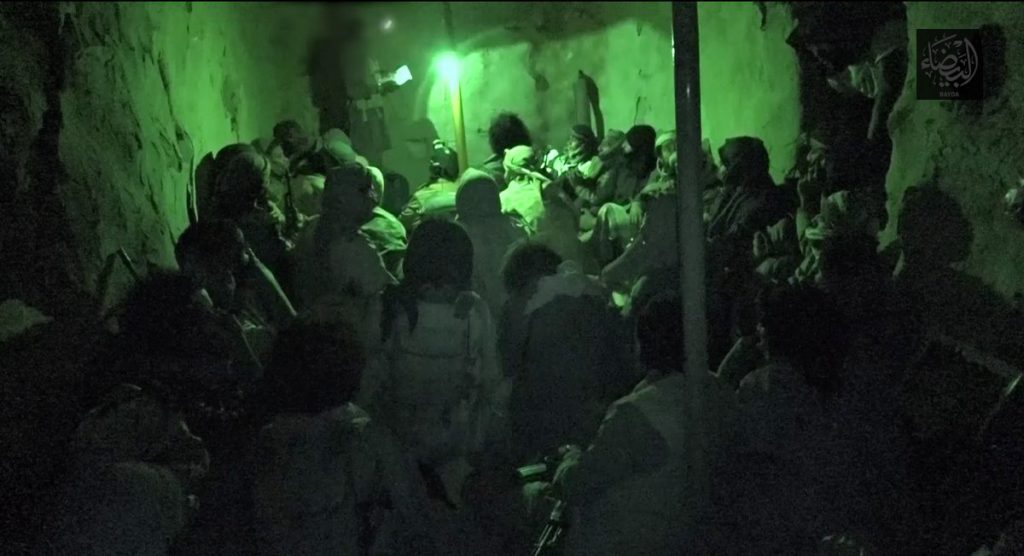
    The southern parts of Al-Bayda as well as Taiz are one of the main battlefields of the ongoing Yemeni war. Houthis, Hadi loyalists (backed up by the Saudi-led coalition), Al-Qaeda and ISIS have own interestes in the area.

    However, the slow growth of ISIS and the rapid expansion of Al-Qaeda in the areas controlled by the Saudi-led coalition and their allied units from the Hadi forces is extremely worrying.

    Widespread acts of terrorism and assassinations are observed in many small and large towns, including Al-Mukalla and even Aden, the main stronghold of Hadi forces.

    There are significant behavioral differences between the Syrian branch of Al-Qaeda (formerly known as the Al-Nusra Front; now known as Hayat Tahrir al-Sham) and the Yemeni Al-Qaeda branch when it comes to the usage of force.

    The Syrian Al-Qaeda tries using populist rhetorics in order go gain at least minor support from the local population. However, the Yemeni branch of al-Qaeda doesn´t show even significant interest in following the example of its Syrian counterparts. Thus, the Yemeni Al-Qaeda branch has proven itself to be as murderous and violent as ISIS.

  • Latest field developments in central Syria + What is the next move ?!

    Latest field developments in central Syria + What is the next move ?!

    The recent developments in central Syria have paved the way for the Syrian military and their allies to reach areas in the region that were once securely under the Islamic State’s (ISIL) control.

    However, with the Syrian Arab Army’s recent advance in the southern countryside of Al-Raqqa, the prospect of a complete victory against the Islamic State has become a reality.

    Victory at Al-Sukhnah:

    The Islamic State’s biggest loss in central Syria this year was not at Palmyra; it was the strategic desert city of Al-Sukhnah, which was considered the terrorist group’s main stronghold in this region.

    While the battle was not easy, the Syrian Army and their allies were able to finally break-through the enemy’s defenses earlier this month and begin a two week long process to liberate the city.

    With Al-Sukhnah liberated, the Syrian Arab Army and their allies from Liwaa Fatemiyoun and Hezbollah were able to push north from the city and begin an imperative operation to clear the rugged terrain between the Al-Raqqa and Homs governorates.

    Special Airborne Operation:

    Al-Sukhnah was no doubt a devastating defeat for ISIL, but it would also be the stepping stone for the Syrian Army’s airborne operation that resulted in the liberation of more than 20km of territory between the Al-Raqqa and Homs governorates this past weekend.

    Led by the airborne units of the Tiger Forces, the Syrian Army landed well behind enemy lines this past weekend, surprising the terrorist group with a powerful assault at the Al-Kadeer area.

    Following the death of more than 30 Islamic State terrorists, the Syrian Army was able to liberate Al-Kadeer and Makman, allowing them to link up with their forces and clear 20km of ground.

    Al-Kom’s liberation: 

    The Syrian Arab Army is still rolling along the Homs-Raqqa axis after launching another powerful assault on Monday morning that targeted the strategic Al-Kom(Kawm) area.

    Unable to hold their positions, the Islamic State was forced to frantically retreat from several points in the area after the Syrian Army plowed their front-lines.

    By nightfall on Monday, the Syrian Arab Army had successfully taken control of the Al-Kom area, forcing the Islamic State to withdraw all of their forces to Taybah in preparation for a massive enemy assault.

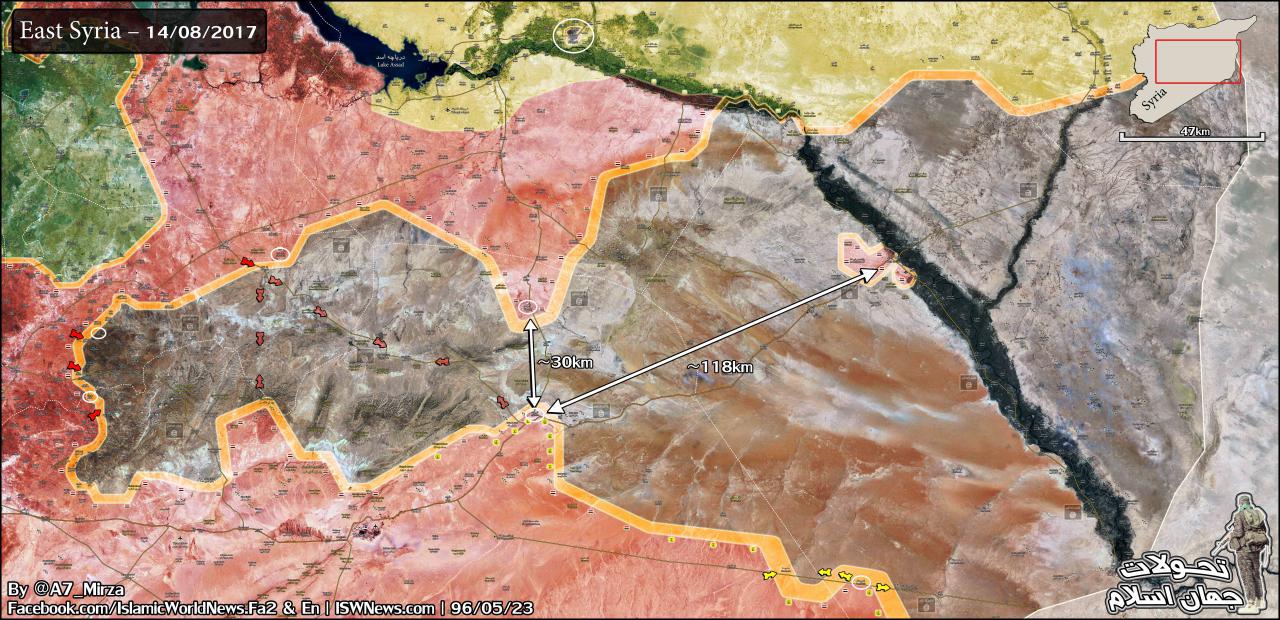
    The Road to Besiege ISIL in Central Syria

    The Syrian Army has now descended upon the Taybah area of the Homs Governorate, where they hope to link up with their troops & Resistance forces south of their positions.

    The only thing standing in the Syrian Army’s way is a large Islamic State force that is attempting to save their comrades in central Syria by preserving their last supply line from the east.

    If ISIL loses Taybah in the coming days, then their forces in the Hama and Homs governorates will be effectively besieged from all sides.


    Review other active axes

    On the Humaymah-T2 axis ; Despite the fire control of the Army and Resistance over the Hamima , the area has not yet completely cleared ,due to the geographic situation of the area and ISIS repeatedly attacking the desert-based bases in the (like what is happening in the Iraq-Syria border) and preventing forces to advance. With advancement in the south-east and reaching forces to Duwaykhilah area, Humaymah will be surrounded . So this strategy paves the way for further progress on Humaymah axis

    In south of Ithiriya axis ; SAA NDF advances and gained some territories in south of Ithriya especially in south of Duwaylib mount.
    Jbab Marina has been liberated ans some progress made between Jbab Marina and Ithiya mount.
    If SAA could break through ISIS defence lines and liberate the Ber Qatna, it would be the begginnig of operation in this axis towards Sukhnah or Sha’er mountain

    In east of Salamiyah axis ; Like always, this front is one the hot fronts for SAA forces, but the lazy one ! Most of the operations in this axis were done for repelling ISIS attacks or extending security belt for strategic areas and villages or diversion ops …

    Therefore in recent days military sources reported some SAA movements in Tarfawi and east of Mab`ujah axis but there is no signifcant changes military maps yet.

    please click on maps for download in original size

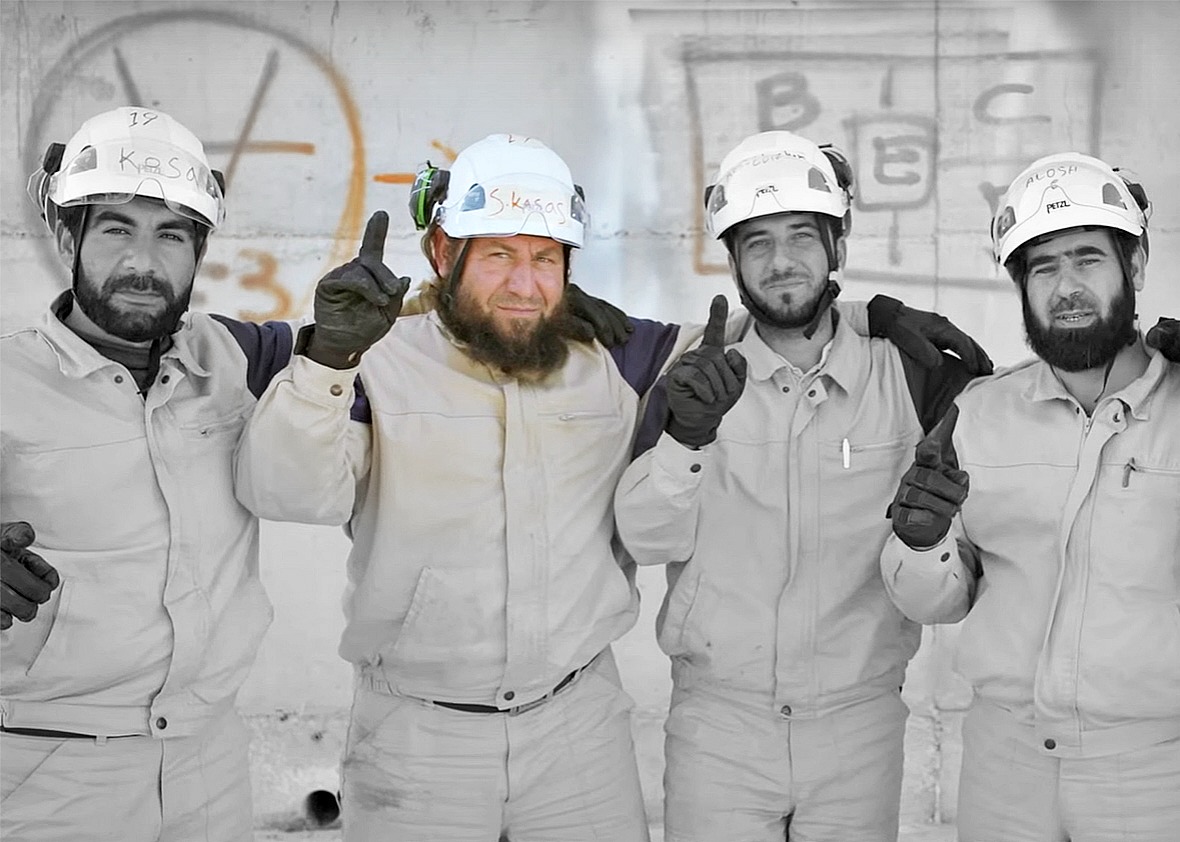
  • The White Helmets provide military aid

    The White Helmets provide military aid

    Political discourse is important in media and politics, especially the definitions of the words that we use in discourse.

    In Nicaragua v. United States (1984), the International Court of Justice established many principles of international law that apply to the current situation in Syria and I suspect that if this case were tried today with the same judges, it would probably have the same ruling. One aspect aside from the military situation that is quite nuanced is the issue of humanitarian aid.

    At issue in Nicaragua was whether humanitarian aid sent to the region during the war was in fact humanitarian aid or soft military aid. What they established was key– they stated that humanitarian aid is defined as aid that follows the general mission of the Red Cross and that is also indiscriminately distributed to civilians in all sides of a conflict. This has remained customary international law and is reflected within the text of the Syrian cessation of hostilities agreement from 2016 which states:

    “…humanitarian access should not benefit any particular group over any other, but shall be granted by all sides to all people in need, in full compliance with UNSCR 2254 and international humanitarian law.”

    In Nicaragua, the ICJ found that the United States had provided aid to Contra terrorists in soft military aid through USAID, which the Congress deemed to be a neutral agent of humanitarian aid (as per the congressional bill that approved the aid). The problem is that USAID is a subsidiary of the State Department– the Court took this into account in their ruling.

    Today, the Syrian White Helmets provide aid within rebel-held areas of Syria. While they may be called independent in a legal sense, they were established under the supervision of a British military contractor and receive funding from various western government agencies including USAID. Sound familiar? While a hypothetical Court may not be able to sufficiently draw the quid pro quo connections to deem the White Helmets an organ of the United States, et al., it is quite evident to anyone who can see what’s going on. If we get past this there is the issue of whether the aid is discriminatory or not. Even within the mainstream it is widely acknowledged that the White Helmets are only operating in rebel-occupied areas of Syria.

    Not only are many White Helmet volunteers former (or current) militants, they are hand in hand with militants in an organizational structure and thus could be sufficiently established as an organ of the opposition. Aid distribution from the White Helmets reflects this in every case; if they were a neutral organization, why did they not help the situation in Damascus when millions were facing water insecurity at the hands of rebel groups? Why do they shy away from government-held areas? Because they are not neutral.

    If we juxtapose the White Helmets with the Syrian Arab Red Crescent that has been in operation since 1942, that has more than 3 times as many volunteers as the White Helmets, operates all over Syria, is part of the International Federation, and has been accredited by the International Committee of the Red Cross since 1946, then we see that this is an organization that fits the Court’s definition of humanitarian aid. The Red Crescent has even been involved in helping militants relocate, for example in Darayya when militants surrendered to government forces. However, the use of the name “The Syrian Civil Defence” by the White Helmets misleads many in the public arena into believing that they are the only public aid program in Syria and the legitimate one when in fact they are not.

    Their goal is to discredit the legitimate government of Syria by framing the government as savage murderers of their own people, and to frame the opposition, with themselves firmly planted in this umbrella, as the saviors of Syria. At this point over 200,000 people have pulled together around 12 million pounds for the Syrian White Helmets which demonstrates the sheer effectiveness of the media discourse surrounding not only this particular organization but of the war in general. However, according to the principles of international law this is not humanitarian aid and violates many of the established agreements to come out of the peace process in Syria.

    You can read an extensive two-part analysis on the White Helmets by Max Blumenthal of Alternet here.

    Source : Al-Masdar

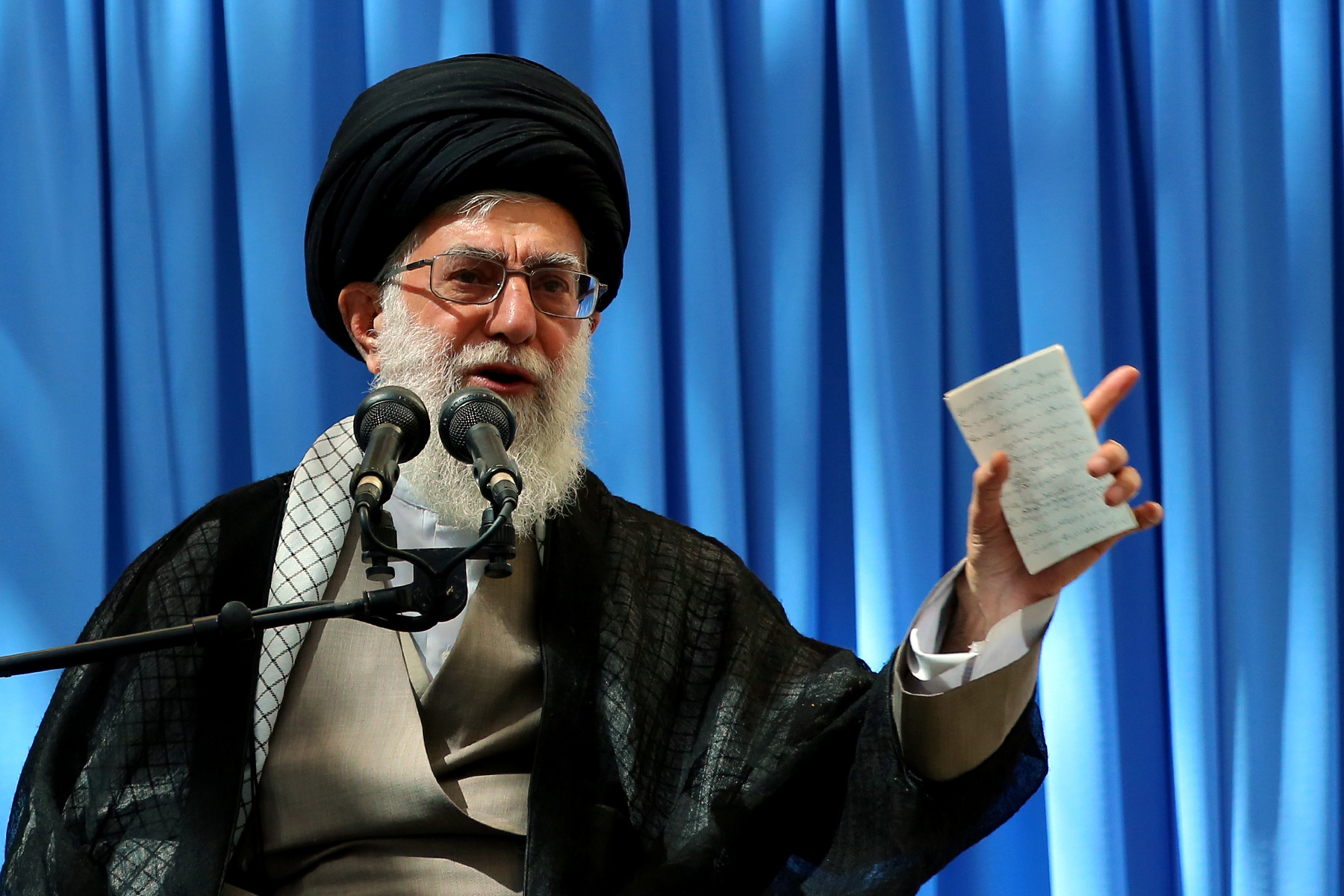
  • Enemies of Islam want to create rifts among Muslims: Ayatollah Khamenei

    Enemies of Islam want to create rifts among Muslims: Ayatollah Khamenei

    Today, we have certain problems within the world of Islam. We are suffering from the bloodshed, and there are deadly confrontations today. Yemen serves as an example. These issues should receive more attention.

    The truth is that today, the Islamic Ummah is suffering from numerous problems. Certain wounds have been and continue to be inflicted upon the body of the Islamic Ummah. The deepest wound is the one caused by discord. Enemies of Islam are trying to create discord among Muslim groups with different methods. They want to create rifts and enmities among them, by means of ethnic and denominational differences, based on geographical disputes of territorial and border issues. Tools for carrying out these methods are available to them [those involved in disputes], and the enemy is, unfortunately, using them. We, officials of Islamic governments, have ignored this measure that the enemy has adopted.

    When I think to myself, I feel that we should be extremely concerned that some American congressman – who is opposed to the very essence of Islam, an enemy to Islamic countries – expresses his “concerns” about the problems of a Sunni community, pitting people against Shi’a. We should be ever more vigilant upon hearing such rhetoric. An enemy, who is opposed to the essence of Islam, has now expressed his support for a certain Islamic group against another! Is this anything other than malevolence, conspiracy and enmity? As it so happens, this behavior unfortunately exists. We should ponder on it; we should understand this ploy.

    All Islamic countries lose from discord, and all of them profit from unity. Unity among Islamic countries, their closeness to one another, and their refusal to use force against one another are merits that can be used to their own advantage; we should understand that these qualities are to the advantage of Islamic countries. This is a divine logic: it is Islamic logic. Unfortunately, this logic does not receive enough attention.

    Today, we have certain problems within the world of Islam. We are suffering from the bloodshed, and there are deadly confrontations today. Yemen serves as an example. These issues should receive more attention. The issues of Syria, the issues of Iraq, the issues of North Africa and, the numerous issues that one witnesses in the world of Islam are all signs of discord and conflict. These conflicts serve as a disadvantage towards Islam; moreover, this is a disadvantage for the entire Islamic Ummah. We should resolve these problem.