Category: Opinion

  • Tareq Saleh’s Controversial Visit To Taizz; Prelude To Operations Against Ansar Allah And Islah Party?

    Tareq Saleh’s Controversial Visit To Taizz; Prelude To Operations Against Ansar Allah And Islah Party?

    Taizz city was one of the main strongholds of opponents of Ali Abdullah Saleh especially the Islah Party in the onset of revolution in Yemen and even before the turning point. Following the aggression by the Saudi-led coalition, the Islah Party could mobilize its militants to control parts of the city and it kicked off confrontations with followers of Ansar Allah movement and Ali Abdullah Saleh. The climax of the conflicts occurred when the late president betrayed Ansar Allah and the movement’s fighters retreated from urban areas and took a position in northern areas of the city.

    After over a decade of war in Yemen, several transformations and clashes happened in the country, but Taizz witnessed fewer changes due to its geographical situation, density of population and the spread of conflicts in other fronts.

    At present, Ansar Allah controls strategic points in northern, eastern and western areas of the city. The strategic areas encompass the International Airport, major roads, including Taizz-Aden, Taizz-Sanaa and Taizz- Al-Hudaydah, as well as the heights overlooking the city.

    The urban areas, military bases and administrative offices are under the control of the Islah Party and in some point under the supervision of the resigned government of Yemen. Moreover, there is side road in the southern Taizz, which connects the western entrance of the city to Al-Tarba town and Yemen’s southern cities. The side road is controlled by the militants of the Islah Party, which is utilized by the Saudi-led coalition to enter the battle grounds in Taizz.

    Tareq Saleh is nephew of the late president of Yemen, who is commander of the Popular Resistance Committees, which is under supervision of the Saudi-led coalition. Tareq Saleh became a member of the presidential council of the resigned government of Yemen following the resignation of former President of Yemen Abdrabbuh Mansur Hadi. Tareq Saleh has a close relationship with the United Arab Emirates (UAE), and he contributes to certain programs of Saudi Arabia, including their confrontation against the Southern Transitional Council (STC). Some of his covert efforts and supports in forming the Popular Resistance Committees, handing over the control of the southern front of Al-Hudaydah and western parts of Taizz to al- Mocha Port, as well as his cooperation in the formation of Al-Dara’ Al-Watan militants paved the way for enhancing his power and influence in the developments of the occupied territories of Yemen.

    As part of his latest attempts, Tareq Saleh met with a military delegation from Saudi Arabia and he visited the headquarters of the Popular Resistance Committees in Taizz, which are of great importance. According to local sources, he plans to implement a military operation in Taizz Governorate to take control of the region. The initiation of the operation can start along with Taizz- Al-Hudaydah and Taizz-Aden roads. Among the axes of confrontations, his militants’ attack on Ansar Allah’s strongholds in Taizz Governorate seems to be more probable than their strike on the Islah Party’s positions. The attack can happen along Albarh-Kamb-Hajda-Taizz fronts, because the Karsh front is controlled by the militants of the Southern Transitional Council. Furthermore, the Tareq forces require abundant equipment and militants to start operation in urban areas, but he cannot afford such an operation given the current circumstances in Taizz. In addition, he has started reaching consensus with certain commanders of the Islah Party.

    Therefore, provided that the Yemen peace negotiations by the mediation of Omen and the United Nations fails to reach a conclusion or stops, one of the areas, which may experience conflicts, would be Taizz front. Of course, victory in this front would not be an easy job for any party, but the incursion into the axis can create new headaches for the Asar Allah movement.

    Read more: Latest Military Map of Yemen; Knowing the Parties Involved in the Yemen War (Map Update)

  • Libya Is On Its Way To The Axis of Resistance!

    Libya Is On Its Way To The Axis of Resistance!

    Against the background of the twelve-year civil war in Libya, largely connected with the American-European presence, the parasitism of Zionism and the struggle for spheres of influence between regional players (Turkey, the UAE), a “ray of light in the dark kingdom” was still discovered.

    It became known about the existence of the Libyan community of Ahlu-Bayt consisting of a number of local tribes. The Shiites of Libya do not have a party yet, but there is a clear self-organization and connection with the leading Islamic figures of the country. Of course, the fact that the supporters of Ahlu-Bayt were able to declare themselves is, among other things, the merit of the activities of the Islamic Republic. There is still little information on this topic specifically, and this is normal, because the IRGC’s activities in Libya are carefully classified in view of the difficult situation in the country. However, thanks to the Iranian media, quite interesting information still leaked into general use.

    For example, from an interview with former Foreign Minister Ali Akbar Salehi, it became known that the IRGC helped Libyan revolutionaries fight the Gaddafi regime. In another interview with an expert from the Imam Khomeini Research Institute, Hujjat al-Islam Mahdi abu Talebi said that “the new government of Libya is turning to Iran for help in writing the constitution.” Based on this, it can be summed up that Iranians are present in Libya, which means that the foundation of Islamic revolutionary thinking has been laid in the Maghreb.

    Contrary to the opinion of the enemies, the export of the Islamic Revolution has not faded, on the contrary, the revolutionary enlightenment is opening new frontiers for itself and if twenty years ago no one would have believed about the presence of the IRGC in Libya, now it is difficult to find a place in the Islamic World where there would not be the presence of Iranians and the promotion of Islamic revolutionary ideas.

  • Dollar A Hostage In Washington’s Hands; Impact Of US Economic Hegemony On Iraq

    Dollar A Hostage In Washington’s Hands; Impact Of US Economic Hegemony On Iraq

    The ongoing fluctuations in the exchange rate of the US dollar against the Iraqi dinar cause difficulties for the political and social circumstances in the Arab state. Iraq is a West Asian country, which was capable of defeating the ISIS terrorist group as well as foreign-backed color revolutions; however, today the Islamic nation is experiencing social turbulence caused by the US-imposed economic sanctions. The US has inflicted harsh measures on the Iraqi banks under the excuse of hampering the smuggling of foreign currencies as well as money laundering. To this end, the United States Treasury Department has imposed rationing on Iraqis’ oil revenues, which are frozen in the US banks, which created a situation that ended up in the dropping of the Iraqi national currency from 1,460 dinars (the official rate) to 1,640 dinars at once. Of course, newly appointed Governor of Central Bank of Iraq Muhsen al-Allaq tries to manage the current crisis in a calculated manner and he relentlessly reminds the Iraqi people of the surge in the Central Bank’s dollar reserves, which are now said to reach over 100 billion dollars, as if the increase of the reserves is part of his own achievement!

    After Baghdad passed the Anti-money Laundering and Counter-terrorism Financing in 2018, the Financial Action Task Force (FATF) excluded the Arab country from the particular monitoring process also known as the international standard for the fight against money laundering and the financing of terrorism. Despite the fact that Iraq is not a member state of the FATF, the Iraqi government has carried out mechanisms to create an electronic platform linked to the international Society for Worldwide Interbank Financial Telecommunication (SWIFT) system, which is a Belgian cooperative society providing services related to the execution of financial transactions and payments between banks worldwide, in order to sell dollars. Some experts believe that the platform will be a long-term alternative and a legal window for dealing foreign currencies and it is more or less out of the control of the government in Baghdad.

    The recent crisis in Iraq kicked off following the imposition of sanctions by the US Treasury Department on three Iraqi banks belonging to an Iraqi tradesman called Ali Muhammad Ghulam Al-Ansari as well as some 16 other banks. The unexpected move caused a decline of around 40% in the sale of dollars by the Central Bank of Iraq, leading to a contraction in supply and a surge in demand for the dollars in the country, which resulted in an increase in the price of the dollar to over 1,550 Iraqi dinars.

    A high-ranking Iraqi official revealed that the Central Bank of Iraq and the US Treasury Department have held a series of meetings in the last quarter of 2022 in the Jordanian capital Amman to pave the way for further coordination between the Iraqi and American officials. One of the members of the finance commission of Iraq’s parliament elaborated that the US Treasury Department followed a special program to provide dollars to Baghdad regularly, which was once in every three months, when the Americans sent 2.5 billion dollars to Iraq by the use of five aircraft.

    Since 2018, the American financial authorities have initiated to provide the Iraqis with dollars, which have traceable serial numbers. In the mentioned meetings Amman, the US Treasury Department informed the Iraqi authorities that sums of the traceable dollars were detected in a number of states in the West Asia region. Therefore, Washington decided to decrease the amount of the dollar transfer to nearly half of the previous sum. It is notable that the traceable dollars, which have been transferred to the Arab country comprise the Iraqis’ assets, which have been blocked in the United States’ banks.

    A source close to the governor of the Central Bank of Iraq has acknowledged that the moves by the US are aimed at hindering the trafficking of dollars to regional countries such as Iran, Syria and Lebanon; so, the Central Bank of Iraq has in words ordered the Iraqi commercial banks to stop selling travelers from those three countries. The source has also mentioned that in accordance with the instructions of the United States, the transfer of dollars from Iraq to Lebanon is forbidden, even if tourists intend to transfer dollar to the neighboring country. It is worth mentioning that the Central Bank of Iraq has ordered the Iraqi banks to sell up to 5,000 dollars to travelers if and only if those who demand dollars accept to provide visas and plane tickets to prove their country of destination.

    Given the fact that the United States dominates the international monetary system, Washington possesses the capability to control all the assets of the Central Bank of Iraq by resorting to threats or sanctions; even though the assets are not deposited solely in the US banks. It is interesting that the Iraqi people’s oil revenues, which amounted to more than 90 billion dollars in 2022 because of the hike in oil prices in international markets, should remain in an account in the United States, while the move is against any economic, financial and even accounting codes! The assets belong to the Iraqi government and should be supervised by the Arab state’s ministry of finance; so, the Central Bank of Iraq is not in charge of decision-making on the assets. The move by the US Treasury Department gives Washington more authority to decide upon the turnover of currency in the Arab country.

    Today’s circumstances of Iraq obviously indicates that the dependence on the dollar system is detrimental for the monetary and economic policies of a state; in particular a country, which relies profoundly upon oil export revenues and its wealth suffers from a so-called single-product economy. It seems that the diversification of the fields of trade as well as accepting alternative currencies for a country like Iraq, which has a long history of political instability and economic woes, would be a more reasonable method than ever. 

  • Is Sheikh Khazali changing priorities?

    Is Sheikh Khazali changing priorities?

    It seems that another resistance faction and a veteran of the jihad during the NATO occupation have exchanged the tactics of resistance for political gain. Asaib al-Haq slowly repeats the path of the BADR organization, only if the former military wing of the ISCI (Islamic Supreme Council of Iraq) has never claimed the status of a “leader of jihad”, and the League of the Righteous has been positioning itself as such for a long time. It all started with the fact that at the very beginning of the work of the new Prime Minister Muhammad Shia al-Sudani, there was information that there was competition between Asaib and Kataeb Hezbollah for the position of head of intelligence in Iraq. But Sheikh Khazali does not stop and then it became known about the appointment of other representatives of the “League of the Righteous” to a number of government positions by the Prime Minister Al-Sudani(this is reported by the telegram channel “Larsa”).

    Apparently, Sheikh Khazali is trying to kill three birds with one stone. Firstly, the head of Asaib al-Haq wants to enjoy power for the first time in a long time and impose his vision of “the development of Iraqi society.” 2 – Sheikh Khazali is trying to overshadow absolutely all the leaders of the “coordination structure”, and in the future “help” to complete their political career. 3 – The Sheikh sees himself as a counterweight to the popular charismatic cleric Muqtada Sadr. Therefore, strengthening their positions at the state level should help Sheikh Khazali to confront the “always oppositional” Sadr.

    Personally, I was not surprised by the behavior of Sheikh Khazali, it is enough to recall the strange words of the leader of Asaib al-Haq immediately after the murder of the legendary Suleimani and Muhandis. At that moment, in an interview, the sheikh said that allegedly the local resistance was ready to immediately strike at the Americans, but due to the fact that the Iranians “delayed the signal”, the Iraqis did not attack the occupiers. That is, does Sheik Khazali need to get an order from Tehran once again to organize the elimination of colonialism? In any case, even if the Iranians have conceived other measures to avenge Suleimani, this does not remove responsibility from the Iraqis!!!! For Iraq is a separate “independent country” and the Muslims there are obliged to form their own response to the occupiers, but this did not happen. Another curious incident of the sheikh occurred a year after the murder of Suleimani and Muhandis. Then, in an interview with the al-Ahd channel, the sheikh said that the alleged Turkish intervention is more dangerous than the American presence….. Here, as they say, no comments. It is difficult to imagine how the influence of the United States and Turkey on world politics and Iraq in particular can be compared.

    Analyzing the behavior of the leader of the League of the Righteous, we see that he is only interested in political capital, respectively, his ideas for “transforming the country” are ordinary populism. The Sheikh is not going to take revenge on the Americans for the murder of Suleimani and Muhandis, and after his organization received a number of government posts, the Sheikh even put on pause the question of Turkish intervention. About Zionism in self-proclaimed Kurdistan, also not a word.

    It seems that the Iraqi theater of political absurdity has been replenished with a new actor, which once again proves the rottenness of the quota system and the lack of Islamic revolutionary thinking among yesterday’s jihad leaders. Critics from the Islamic movements of Iraq were right again when they said that the leaders of the coordination structure needed only power and oil revenue. Their second thesis will be confirmed very soon – “only religious figures can change Iraq for the better.”

    In conclusion, it is necessary to ask a rhetorical question. Do the Americans know that Sheikh Khazali is trying to fill the government in Al-Sudani with his people? Of course they do. Is it possible to say that there is some kind of coordination of the actions of the Sheikh and the Americans? Of course, if Washington was not satisfied with something, then surely the Americans would have followed active actions specifically against Asaib al-Haq, but this does not happen. Conclusion – everyone is satisfied with everything.

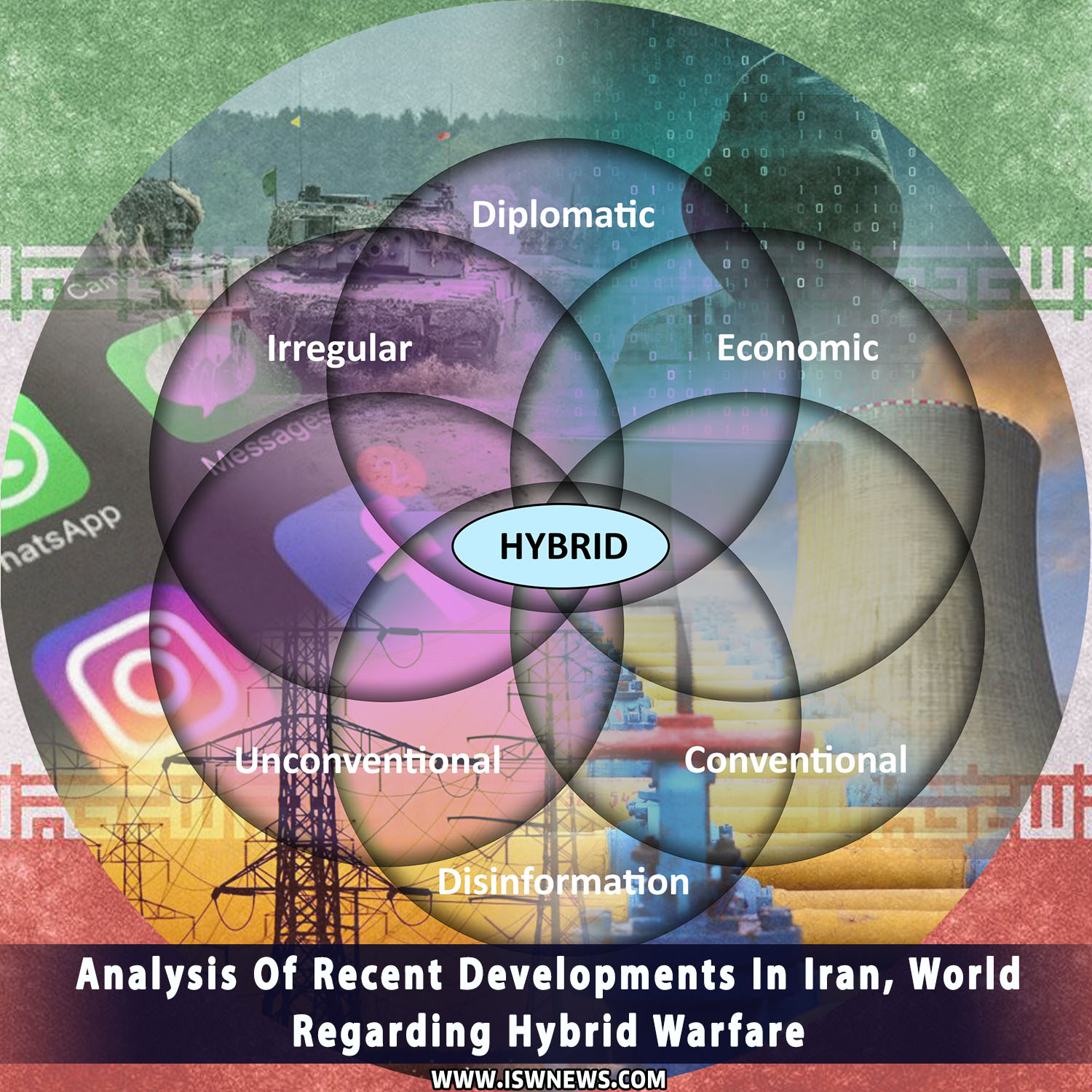
  • Analysis Of Recent Developments In Iran, World Regarding Hybrid Warfare

    Analysis Of Recent Developments In Iran, World Regarding Hybrid Warfare

    In addition to the effect of the European Union’s sanctions on the Iranian economy, the recent unknown blasts and strikes, and different incidents that have happened in Iran, we are witnessing the circulation of manipulated and fake news stories, which seems to be a complete example of hybrid warfare. However, who are designing and implementing the attacks?

    In a bid to answer the question; first, let’s review and categorize the recent news reports:

    1- The widespread drone strikes and blasts in Isfahan, Tehran, Tabriz, Rasht, Hamadan and Karaj:

    The nature of the news story collection had its roots in a combination of numerous fake news and a correct story but based on wrong information. The blast in Isfahan was conducted by the unsuccessful strike of three quadcopters on workshops belonging to the Ministry of Defence and Armed Forces Logistics, and the flights carried out by rescue aircraft in Tehran were portrayed as the flights by army fighter jets in a mission to intercept the unmanned combat aerial vehicles (UCAVs). Regarding to reports of strikes on Tabriz, Hamadan, Mahabad, Baneh and so on, whether there was not blast or strike, or the events in the cities were wrongly attributed to airstrikes. For instance, the burning incident of reeds around Yusefkand Lagoon in outskirts of Mahabad city was described as an Israeli drone attack!

    2- Qatari foreign minister’s trip to Iran:

    Minister of Foreign Affairs of the Islamic Republic of Iran Hossein Amirabdollahian met with his Qatari counterpart Sheikh Mohammed bin Abdulrahman Al-Thani on January 29, and said in a joint press conference that today we received messages from various signatories to the Joint Comprehensive Plan of Action (JCPOA) via the Qatari foreign minister.

    The presentation of a proposal for resuming the nuclear negotiations amid the peak of an ongoing conflict conveys the opposite meaning contrary to de-escalating and resolving of disputes in a peaceful manner. The US’s policy in this pattern of information warfare is a kind of double standard attitude similar to “two-edged scissors.” The Americans push ahead their attacks like the sharp edge of the scissors and at the same time, they offer to hold talks like the slow edge of the scissors.

    3- Iran-Russia military collaborations:

    The military collaborations and exchange of weaponries between Russia and Iran, experienced a significant acceleration particularly in the past one year following the onset of the Ukraine conflict as well as the West-imposed sanctions on Russia. It is worth mentioning that the Iran-made Shahed 136 drones have succeeded in inflicting heavy blows on the United States and NATO military projects and equipment. The shipment of the Iranian UAVs and ballistic missiles to Russia as well as the reciprocal transfer of the Russian Sukhoi 35 fighter jets and other Russian-made weaponries to Iran will bring about harsh repercussions for the West and Israel. Hence, they will make all-out efforts to prevent, sabotage and delay the exchange of arms between Russia and Iran.

    4- Ukraine’s warning to Iran:

    The Ukrainian authorities are of the opinion that the recent blast in Isfahan has anything to do with the conflict in the European country. The Ukrainians claim that the Islamic Republic is one of Russia’s military partners, who provides the Russians with lethal weaponries; thus, Iran will not be secure from mysterious strikes. So, Mykhailo Podoliak, an adviser to the president of Ukraine Volodymyr Zelenskyy, wrote on his Twitter account reacting to the blast in Isfahan that “the logic of confrontation is cruel and fatal. The logic holds the culprits and collaborators obstinately accountable. The night time blasts in Iran were conducted against drone and missile manufacturing facilities and oil refineries. Ukraine cautioned you.”

    The warning from Ukraine is not taken into account as a threat to the Islamic Republic of Iran; however, it indicates the repercussions of the Europeans’ anti-Iran stances and deeds. Regrettably, the Iranian authorities have not shown any appropriate reaction to the sanctions by the European Union. In the face of such issues, the officials of the Ministry of Foreign Affairs of the Islamic Republic referred to some phone calls with the European officials, calling the anti-Iran moves as superficial or trying to justify the imposition of sanctions with other matters such as the pressures made by of the US on Europe and so on. However, what is being witnessed actually is the intensification of economic pressure on Iran in particular concerning the issues such as selling crude oil and procuring currency for domestic needs.

    5- Palestinian attacks on settlements in the occupied territories of Palestine and recent incident at the Republic of Azerbaijan’s embassy in Tehran:

    The fresh operations made by the Palestinians in Jerusalem al-Quds have inflicted a heavy blow on the social status of the Zionist regime as well as the credibility of the government of Prime Minister Benjamin Netanyahu. The Israelis opine that the Palestinian resistance groups such as Hamas, Islamic Jihad, and others are fully supported by the Islamic Republic and these groups are operators of Iranians’ strikes on the occupied territories of Palestine. Hence, the Israelis mobilize their agents inside Iran’s soil to conduct proxy attacks. Thanks to Iran’s strong alliances with powerful resistance movements in Lebanon, Palestine, Yemen and other states in the West Asia region, the Islamic Republic enjoys the upper hand in terms of military struggle; so, Tehran is in the position to win any tough confrontation if it reaches the conclusion that it should engage in any military conflict, but the Iranians avoid such struggles because of their economic boundaries. In contradiction to Iran’s military superiority, Israel possesses upper hand in the political and economic fields; moreover, it has recently enhanced its influence in the Caucasus and Central Asian states. The Israeli diplomats as a result of their active and strong diplomacy succeeded in improving the relationship and influence in the Caucasus and Central Asian countries, which is considered as a very grave threat to Iran.

    Meanwhile, Iran increased its non-oil exports via the Caucasus region and Central Asian countries in recent years in a bid to compensate the deficiencies of its economy and decrease the effect of West-imposed sanctions. However, the Zionist regime’s influence in that regions can have the opposite effect and limit Iran’s paths to dodge the sanctions. Furthermore, the incident, which occurred in the Republic of Azerbaijan’s embassy in Tehran can negatively affect the International North–South Transport Corridor (INSTC) and the circumstances may be deteriorated by the hasty reaction by Azerbaijani President Ilham Aliyev’s government and it may linger to end up in severing ties and even initiating a conflict with Iran.

    All in all, now Iran is under pressure and in a hybrid warfare (political, economic, military, etc.). Any irrelevant news and event, such as a fire in a lagoon or an earthquake, can be placed under Western propaganda and used by Westerners to create chaos and achieve sinister goals against Iran. Such efforts will continue in the future, because this is an effective tactic of Westerners in hybrid warfare to deal with independent nations!

    Read more: A Failed Attack On The Facilities Of Iran’s Ministry of Defense in Isfahan; What Was The Nature Of The Blasts In Tehran And Other Iranian Cities?

  • Britain’s Role In Yemen Conflict; From Selling Arms To Saudi Arabia To Backing Inflation Of Customs Tariffs In Yemen

    Britain’s Role In Yemen Conflict; From Selling Arms To Saudi Arabia To Backing Inflation Of Customs Tariffs In Yemen

    In the past decade, Britain was one of the most determining ultra-regional players in the crises and developments in the West Asia region. They have resorted to the crises in Syria, Iraq, Yemen and so on in line with their multilayered policy and actively intervened in that region. In the meantime, Yemen is of significant importance for the British rulers because of its key role in linking the waters of the Asia to Africa and Europe. They sold arms and provided Saudi Arabia and Iraq with military training by the use of exerting political pressures, misused diplomatic ties, and even played a mediator role in the early years of the conflicts in Yemen, Iraq, and Syria to pursue their own agenda silently. However, the policy changed in recent months and their military advisers played more active role in the region particularly in Yemen war.

    What are Britain’s multifaceted policies?

    – Political and Military Tools: Britain’s foreign policy is based on internationalism and contribution to allies or regional and ultra-regional powers, and it pursued the same policy in the face of the Yemen crisis. The Saudi-led coalition has time and again conducted air raids on Yemen’s cities by the use of Britain-manufactured arms, from the Euro Typhoon and Tornado fighter jets to different bombs and missiles in the war on Yemen. Furthermore, more than 280 military advisers of the Royal Air Force (RAF) are involved in training and assisting the Saudi military personnel in the Arab country. Britain continued the supports in spite of the violation of human rights (the manslaughter of Saudi journalist Jamal Khashoggi) as well as the arms embargo by certain European states on Saudi Arabia; so, the cooperation turned the Saudi kingdom into the largest purchaser of Britain’s weaponries.

    – Field Military Presence in Yemen: On the other hand, the British military advisers and diplomats are actively present in the usurped regions of Yemen in particular in Al Mahrah and Aden governorates, and they overtly make decisions or influence the internal affairs of the Arab country. One of the most crucial issues that occurred recently and Britain played a key role was the 50% hike of the customs tariffs for the import of commodities in ports that are under the control of the Saudi-led coalition. The decision has been seemingly taken by the Supreme Economic Council of the so-called resigned Yemeni government, and British Ambassador to Yemen Richard Oppenheim embraced and supported the decision. Obviously, the decision was a response to Ansar Allah movement’s measures in hindering the illegal export of Yemen’s oil and the movement’s stress on the payment of the salaries of all Yemeni employees during the negotiations mediated by Oman and the United Nations; and the Ansar Allah movement amplified the resigned government’s taxes in order to respond to the proposal of 50% discount for the import of commodities from Al Hudaydah Port. The consequences of the next measures of the two sides are not clear in the economic war, and possibly the rivalry would be extended to the confiscation of fuel tankers and even a naval confrontation.

    – The Control of the Asian Waterways to Africa and Europe: Britain follows up an internationalist policy and cooperates an international coalition in the Red Sea and the Gulf of Aden, which is known as “153 forces”, to control the regional waters. They contribute to the occupation of the Yemeni islands (Socotra, Mayun, Abd al- Kuri and so on) in cooperation with the UAE in a bid to benefit from the collaboration. The contribution to the coalition and mutual collaborations provides them with the opportunity to respond to the Ansar Allah’s strikes from the western coast of Yemen and also hinder the Iranians’ infiltration and the dispatch of Iran’s aid to the Arab country.

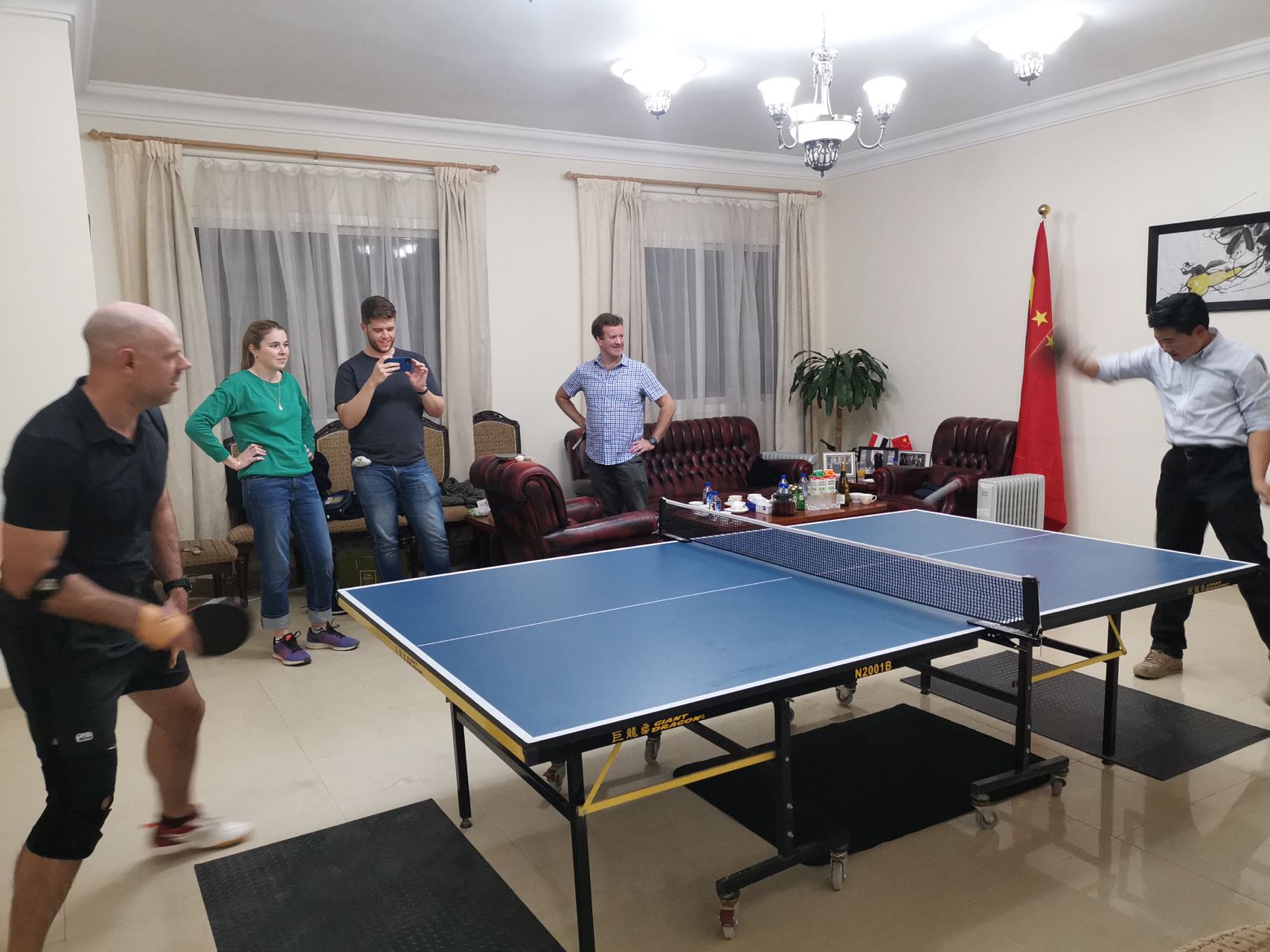
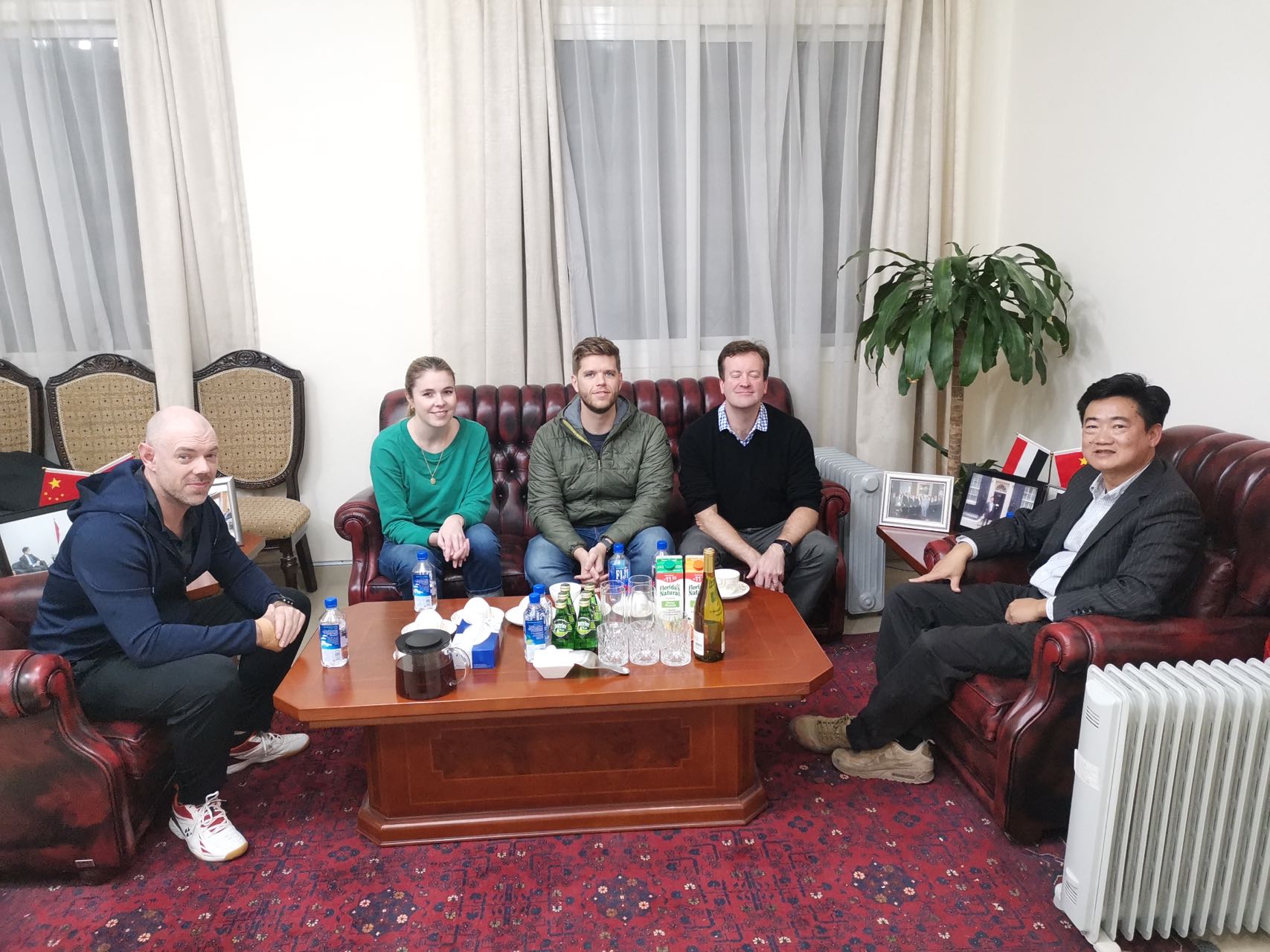
    Britain also enters into a deal with ultra-regional powers in a bid to advance the multi-layered policy. For instance, the resigned Yemeni government faced a strict budget deficit following Ansar Allah prevented illegal export of Yemen’s oil by resorting to three drone attacks on Al-Dhabbah and Qena ports on the southern shores of the Arab nation. The British ambassador started consultations with his Chinese counterpart Shao Zheng to finance the resigned government via the oil sale and supply Yemen with basic commodities. The British and Chinese sides displayed the talks as they were playing ping pong (referring to the ping pong diplomacy between the US and China in the 1970s) at China’s diplomatic mission in Aden Governorate.

    As a whole, Britain is misusing and exploiting the crises created in the regional states particularly in the West Asia region through pursuing a multi-layered policy. The British policy-makers are fanning the flame of conflict by selling arms and dispatching military advisors to Arab countries, and they also loot the oil resources and wealth of a state under the pretext of being a mediating and peacemaking player. Britain’s actions in Yemen are a good instance of their dirty policy.

    Read more: Ansar Allah-Saudi coalition agreement; What are the outline and impediments of recent negotiations on Yemen?

    PS.
    “Ping-pong diplomacy” is a meaningful phrase in politics, which refers to the secret negotiations between the United States and China in the 1970s which resulted in opening the U.S.-PRC relationship, leading the U.S. to lift the embargo against China and the normalization of relations.

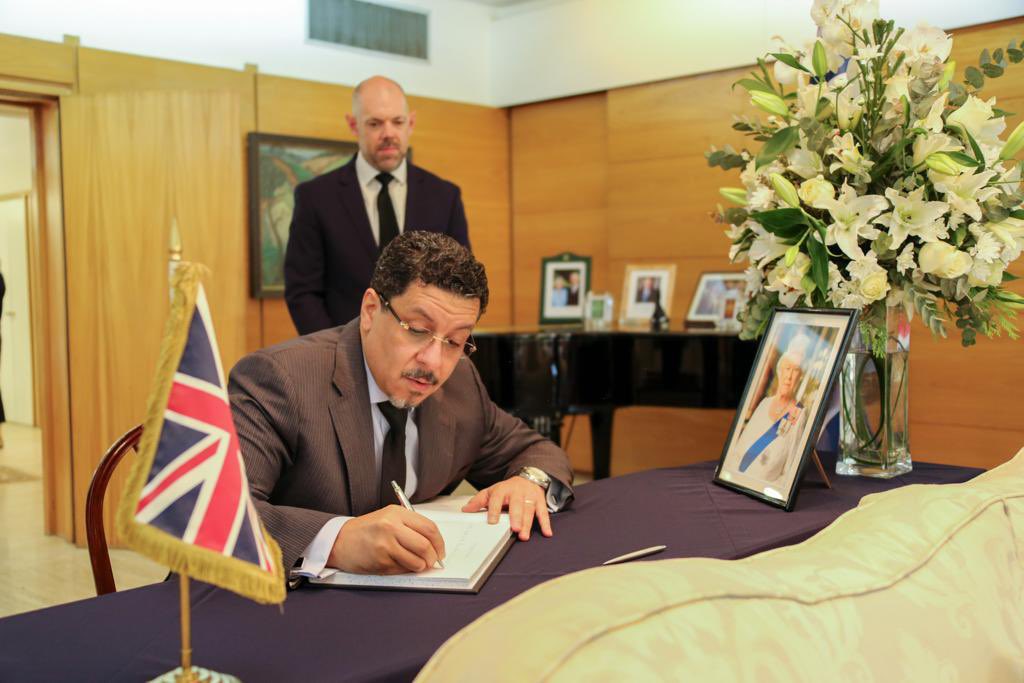
    Image: The presence of Ahmed bin Awad Mubarak, the foreign minister of the resigned government of Yemen, at the British Embassy in Yemen to offer condolences on the occasion of the death of Queen Elizabeth II.

  • Protests In Tel Aviv; Netanyahu More Extremist Than Ever!

    Protests In Tel Aviv; Netanyahu More Extremist Than Ever!

    The January 21 rallies in the occupied cities of al-Quds, Tel Aviv and Haifa in protesting the policies of new Prime Minister Benjamin Netanyahu brought numerous reactions inside and outside the occupied Palestinian territories. According to the Israeli Hebrew language newspaper Haaretz, over 2,500 Israelis in Haifa and more than 100k people poured into Kaplan Street in Tel Aviv to hold protest rallies against Netanyahu’s policies.

    Netanyahu, who formed a powerful coalition of the extreme right and Kahanists (extremist religious Zionist) succeeded in concluding the Knesset voting in favor of his own party, handed over the most vital ministries such as the Ministry of Internal Security, the Ministry of Finance and the Ministry of the Interior to extremist politicians, for instance Itamar Ben-Gvir, Bezalel Smotrich and Rabbi Aryeh Deri. The move forced the opposition faction namely the leftists to create a wave of criticism against Netanyahu and his new cabinet. Hence, his opponents triggered people to participate in the protest rallies and they themselves attended the protests as well.

    The former Chief of the General Staff of the Israeli Army Aviv Kokhavi and the former Minister of Foreign Affairs Yair Lapid declared Saturday night that they will contribute to the countermeasures against Netanyahu’s policies concerning the reform of the judicial system. Yair Lapid publicized on last Wednesday before the protest rallies that the objective of the protest would be to halt the crazy behaviors by Netanyahu and his cabinet members. The former foreign minister also said that we will support our beloved country in the face of the obliteration of democracy through participating in the protest.

    Even though the most comments by the opposition faction and the leftist party against Netanyahu have their roots in competitive and political agendas; however, it should not be neglected that following the new developments in occupied territories of Palestine and the West Bank, the leftists are expected to adopt vigilant policies in dealing with the Palestinian people.

    At the onset of the formation of the new cabinet, Netanyahu attempted to annex Judea and Samaria Area to Israel – which encompasses the entire West Bank that was occupied by the regime since 1967 but excludes East Jerusalem – unilaterally based on an extremist attitude to show that his cabinet came to marginalize the Arab people of the West Bank and attract the support of the religious Jews, the Haredi and the Kahanists endlessly.

    It is obvious that the formation of the extremist cabinet has no other motivation than to enhance racism, which is a government that prefers ultra-orthodox Judaism to human rights and behaves even the Israeli Arab citizens like foes. The new Israeli government considers the democratic and liberal thoughts as foreign plots, which seek to decline the Jewish identity; thus, the leftists are entitled to take on a leadership role, when it comes to the protests and encourage the opponents of Netanyahu to take part in the rallies.

    One of the most blatant examples of the extremist policies of the Netanyahu government is the measures, which have been done by Minister of Internal Security Itamar Ben-Gvir. The minister, who is known as the most famous politician of the right-wing “Jewish Power” Party, appeared in the neighborhood of Sheikh Jarrah in the occupied Jerusalem and violated the holiness of Al-Aqsa Mosque, and made harsh statements on the expulsion of Arab people from Palestine, which brought about strong criticism against Netanyahu and the new Israeli cabinet. The behaviors, which are even out of Israeli legal principles and regulations as well as provocative measures that triggered anger among the Arabs who are on the verge of a new intifada, prompted the Israelis to react to the extremist cabinet. Therefore, the protesters in the downtown streets of Tel Aviv raised up the Israeli flags and banners that were written on them: “Our kids are not living in a dictatorship” and “Israel, we have problem!” The protestors held up placards of Ben-Gvir’s caricatures as well.

    Netanyahu’s financial charges case is still under investigation; so, in spite of the protest rallies, the new premier declared that he will keep on his plan for the judicial reforms. However, the opponents consider the reforms as an attempt to revise the constitution in a way that Netanyahu would be able to get rid of the trial. Israel’s judicial shortcomings, which are considered as a source of shame by the opponents, involved Netanyahu’s cabinet members. A day after the protest rallies and following the Israeli Supreme Court’s verdict that ruled Rabbi Aryeh Deri is not competent for the ministry post over his constant financial crimes, PM Netanyahu ordered Rabbi Aryeh Deri’s dismissal in a cabinet meeting. Benjamin Netanyahu, who returned to power merely three weeks ago, faces the court’s ruling as a serious blow to his reputation. Rabbi Aryeh Deri, who is the chairman of the religious party of ultra-orthodox Jews named Shas and is also the most senior minister and an ally in the Netanyahu coalition, took the helm of the Ministry of Interior and the Ministry of Health and he was supposed to take the helm of the Ministry of Finance, when it would come to rotating the cabinet positions in the middle of the government’s lifetime.

    Several experts in political affairs mentioned that the continuation of the process will add to the protest rallies in Israel and the circumstances will push the regime and the Netanyahu government to face grave social and political challenges. On one hand, the opponents and the leftists; and on the other hand, the Arab people of the West Bank, who have encountered racist attitudes, have been prompted to respond in a reciprocal manner.

  • Ansar Allah-Saudi coalition agreement; What are the outline and impediments of recent negotiations on Yemen?

    Ansar Allah-Saudi coalition agreement; What are the outline and impediments of recent negotiations on Yemen?

    In contradiction of several reports on an agreement between the Saudi-led coalition and Ansar Allah to extend the truce and agree Ansar Allah’s conditions; no agreement has been reached in this respect so far, and dialogs between the two sides are still ongoing mediated by the UN and Oman. Ansar Allah’s most vital conditions to reach the extension of the temporary ceasefire are subjects such as a comprehensive end of hostilities, prisoner swap, paying salaries of employees from oil incomes, lifting Yemen siege through reopening Sana’a Airport and Al Hudaydah Port. The conditions have been among the issues, which have been discussed in the last years negotiations, but the conditions have never been approved by Saudi Arabia and the UAE, or they proposed different conditions to accept the Yemenis’ suggestions.

    Nonetheless, the circumstances of the Saudi-led coalition have deteriorated as a result of the past year tensions among the factions, who are backed by the coalition; thus, Ansar Allah has become more powerful. The feebleness of the Saudi-led coalition and the failure of their military operation pushed them towards pursuing negotiations. The situation forced the US, Russia and the European countries to follow the attitude of Saudi Arabia and the UAE to interact with Ansar Allah.

    Potential provisions of agreement between Ansar Allah-Saudi-led coalition:

    The most significant matters debated in the talks between Ansar Allah and the Saudi coalition are issues such as an all-inclusive truce, prisoner swap, paying employees’ salaries from oil incomes, lifting Yemen siege by reopening Sana’a Airport and Al Hudaydah Port.

    Foreign media outlets quoted an Ansar Allah official as saying that the Saudis promised to pay all the remaining salaries of Yemeni employees; while a Saudi diplomat said that the payment of civil servants’ wages is conditional on accepting security assurances such as setting up a buffer zone on northwest border of Yemen with Saudi Arabia. Concerning the prisoner swap, the two sides offered their own lists in March 2022 and finalized the prisoner swap agreement of 2,223 inmates following personal visiting of the detainees, but despite Ansar Allah announced its willingness, the Saudis have not taken any step to enforce the deal. The issue of reopening and developing flights at Sana’a Airport and the lifting of limits at Al Hudaydah Port are also matters that have faced buts and ifs by the Saudi-led coalition, when it comes to inspection; so, the agreements have not been entirely implemented.

    There are also similar disagreements in other issues, and as said by Ansar Allah officials, if the Saudis and Emiratis show willingness to reach an agreement, the process to achieve this goal and end of the conflict and establish peace in Yemen seems not be a hard work.

    What are the impediments to the Ansar Allah-Saudi agreement?

    Besides the Saudi-led coalition’s hesitation and lack of seriousness in reaching a peace agreement with Yemen, the tensions among the various groups under the Saudi-led coalition, from the Southern Transitional Council and the Reform Party to the militants of Tareq Saleh and other factions and influential figures, are stumbling block in the way of achieving an agreement. The struggle between the Islah Party and the militants of the resigned government has been spread to the Yemeni city of Sion in northern Hadhramaut Governorate and the city of Marib in Marib Governorate, and the struggle over controlling oil fields and administrative offices remain in an indirect way.

    The Southern Transitional Council, following clashes with the Islah Party and the Al-Qaeda terrorist group in Abyan Governorate and their retreatment from the city of Al-Mukalla and the Al-Anad base and the Ras al-Ara area in Lahij Governorate, backed away from its claim to split the southern governorates and focused on maintaining its current position in order to aggregate its forces in the occupied areas of Yemen.

    Another matter that gets in the way of the peace process in Yemen is the colonizing and usurping efforts made by foreign states, particularly the United Arab Emirates (UAE) and the United States, as well as the destructive role of European and Zionist companies, when it came to looting wealth in the war-torn country. For instance, the Emiratis have extended their presence on Yemen’s southern coastal areas.

    They constructed numerous military bases between Aden and Abyan with the support of Abdul Latif al-Sayed militants on the beaches and oil-rich zones of Shabwah occupied with the support of Al-Amaliqa militants and in Al-Mahrah Governorate backed by Mohsen Mursa’s militants following their moves in Socotra Island, Mayun, Abdul Kori, Al-Rayan base and Ras Sherwin beaches in recent months.

    Read more: Where is the UAE’s biggest military base on the coast of Hadhramaut?

    The United States and Israel with the support of the UAE and some Yemeni factions are pushing forward their secret projects in Yemen’s eastern and central areas. The essence and details of the plans are not fully clear, but the continuation of the conflict, the looting of oil and other precious resources, the control of strategic locations and lastly the breakup of Islamic states are the outlines of their plot.

    Concerning the Al-Ghaydhah Airport, Saudi Arabia is pursuing the plan of annexation of eastern Yemen to its territories and the construction of an oil pipeline from the Saudi kingdom to the coastal areas of the Al-Mahra Governorate, while the Saudi have experienced less success in pushing forward their objectives in the central and southern regions of Yemen. To this end, they have misused Europe’s requirement for oil resources and provided the European companies with the opportunity to contribute to the projects of exploration and extraction of crude oil in Yemen.

    Read more: Latest Military Map of Yemen; Knowing the Parties Involved in the Yemen War (Map Update)

    Conclusion:

    Given the unproductive experience of the Stockholm Agreement in December 2018 and the imperfect employment of the three truce periods from April 2 to October 3, 2022, the possibility of direct achievement of an inclusive agreement by Ansar Allah and the Saudi-led coalition seems to be unrealistic and out of reach. Seemingly, the two sides chose a temporary period of several months of ceasefire and after successful implementation of the plan, they would resolve Yemen’s external problems through signing an agreement, and then they would form a new government and resolve internal problems with the Saudi-backed factions to pave the way for reaching a comprehensive agreement.

    Iran’s positive participation and the negotiations with Saudi Arabia seem to be complementary to the intra-Yemeni talks as well. Iran-Saudi Arabia negotiations’ development or stoppage would not change the framework of Ansar Allah’s demands, but the talks are expected to affect the process, and even Ansar Allah’s measures in this path would assist Iranians’ stances.

  • What Are The Options For “Al-Julani” After The Syrian-Turkish Rapprochement?

    What Are The Options For “Al-Julani” After The Syrian-Turkish Rapprochement?

    In conjunction with the Turkish measures aimed at containing the “opposition”, whether the military one represented by the so-called “Syrian National Army” or the political one represented by the “opposition coalition” and the “interim government”, the problem remains with “Hay’at Tahrir al-Sham – Jabhat al-Nusra” and its leader called “Abu Mohammad al-Julani.”

    Analysts considered that “Al-Julani,” who had previously announced that he absolutely rejects the Syrian-Turkish rapprochement, called on the “Syrian National Army” (SNA) factions to cooperate with the “Tahrir al-Sham,” in an attempt to create a new military reality aimed at impeding this rapprochement.

    Al-Julani’s options are limited, one of which is to accept the reality and try to gain a new position in the new political and military arena that is being formed in Syria. Another option for the leader of Tahrir al-Sham is to retreat from Idlib to the northern outskirts of Aleppo, where it has increased its presence in recent months as some reports suggest that al-Julani is preparing for a new military battle. This will include retreating from areas in the outskirts of Idlib and in the lines of contact with areas controlled by the Syrian Army, in exchange for further advances in Aleppo province.

    In the context, sources indicated to the Lebanese newspaper, Al-Akhbar, that there are several discussions taking place in the opposition circles about the possibility of the involvement of “Al-Julani” and his group in the battles with the “SDF”, noting that this matter requires the formation of a unified operations room that brings together all the factions, initially. It is an outlet that al-Julani considers acceptable, as it guarantees the continuation of his presence and his group, especially since the last three years, he has taken extensive measures to to dust off al-Qaeda by removing the manifestations of extremism from the areas under his control.

    The expansion of “Tahrir al-Sham” in the countryside of Aleppo, whether it coincided with a withdrawal from all of Idlib or from some areas there, opens the door to several scenarios awaiting the north-east of Syria, in light of the expansion of the United States’ activities, which constituted the repositioning in Raqqa, and feeding the “SDF” with specific weapons such as anti-tank weapons and anti-aircraft training.

    Considering the existence of actual channels of communication between him and Washington, which clearly emerged during the assassination of two ISIS leaders, including the most prominent former leader of the organization, “Abu Bakr Al-Baghdadi, these scenarios increase the possibility of Al-Julani’s transfer to American bases.

    In addition to this, the Idlib case is one of the cases that cannot be ignored or postponed due to its priority for Damascus, Moscow and even Ankara, which are looking for economic investment by activating their disrupted export routes. All this requires the securing of the main roads, including the M4 highway, part of which is in the lines of contact with the Syrian Democratic Forces (SDF), another part of which stretches from Aleppo to Latakia, under the control of the Syrian government, and a small part is surrounded by Turkish military posts and headquarters of Tahrir al-Sham.

    During the past week, these areas have witnessed the serious moves by the Turkish army to pave the way for the reopening of a part of this highway, through continuous combing operations, as well as consultation to transfer the three military headquarters of Tahrir al-Sham to another area, but these measures alone will not be sufficient.

    Despite the previous promises made by the leader of Tahrir al-Sham to adhere to the Astana negotiations and prevent any attack on the M4 highway, Ankara fears that the “jihadist” factions or undisciplined elements will carry out retaliatory attacks on the M4 highway in response to some actions.
    The sources revealed that Turkish army and intelligence officers held three meetings with the Tahrir al-Sham delegation in the past few days and Al-Julani reportedly has emphasized his commitment secure the road and not to harm the Turkish points and not to attack the M4 highway. Following the meeting, the Turkish delegation received a set of questions by al-Julani, including the possibility of bringing him and his group into the path of a political solution, to which the leader of Tahrir al-Sham did not receive any response from Turkey.

    It is noteworthy that the Aleppo-Latakia International Road or the M4 highway is an international road that connects the cities of Aleppo and Latakia in Syria to the Al Yaroubiyah on the Iraqi border. This highway is parallel to the Turkish border, and in Idlib it intersects with the Aleppo-Hama international road (M5), which is 60 km in common.

    Read more: Trilateral Meeting Of Russia, Turkey And Syria In Moscow

  • Russian Su-35 Swap For Iranian Ballistic Missiles To Affect Regional Developments

    Russian Su-35 Swap For Iranian Ballistic Missiles To Affect Regional Developments

    In October, American media reported that Russia purchased Iran-made missiles of Zolfaghar and Fateh-110. A month ago, several sources reported that Iranian cargo aircraft carried out several flights to Moscow, and the Russians used Iran-made Shahed-136 suicide drones in Kupyansk and Nikopol, Ukraine, indicating the military collaborations between Tehran and Moscow developed and entered a new phase.

    Read more:
    Military Knowledge: Zolfaghar Ballistic Missile
    Military Knowledge: Fateh-110 Ballistic Missile

    The success of drone attacks by Russia and the psychological impact of the strikes on the Ukrainians prompted the Western states to activate their propaganda and political campaign against Iran-made warfare, and impose new sanctions on Tehran to dissuade the Islamic Republic from the military cooperation with Russia. Of course, the connection has never been confirmed by the Russian and Iranian statesmen, while the Western powers and the Zionist regime put forward different speculations on the delivery paths of the Iranian drones to Russia via Tajikistan, Uzbekistan or other countries.

    Nevertheless, the Russian media outlets reported in November 2022 that the Russian and Iranian authorities held talks on the purchase of Iran-made short-range and medium-range ballistic missiles to be used for the Ukraine war. But new reports of those media claimed that the Iranian missiles are going to be swapped for 24 Russian Su-35 fighter jets.

    The fighter jets were scheduled to be delivered to Egypt’s Air Force on the basis of a 2019 contract worth $2 billion, but the United States’ threats pushed back Cairo that was concerned about the potential sanctions by the West; so, the Egyptians refrained from receiving the whole shipment of the fighter jets.

    Read more: Delivery of the new Sukhoi-35s to the Egyptian Army + Images

    Unofficial reports from both sides (Russia and Iran) say that the Su-35 jets will be handed over to Tehran, and that the Iranian pilots are getting trainings to start flying the fighters.

    So, what are the benefits of the contract for Iran and Russia? And is the swap deal of the Russian Su-35 for the Iranian ballistic missiles useful for both countries?

    Russia is experiencing a complicated conflict and the Russians’ missile arsenal is suffering from shortages after 10 months of heavy clashes. Moscow experiences that it could not reach the desired results in the Ukraine war, and the Russians cannot consume all missiles to target pre-planned points in Ukraine. Thus, they resort to bargaining the swap deal with Iran, which seems to be the best option for the Russians to find a way out of the existing weak point in the war.

    As the Western media claimed, the Russians are after purchasing Zolfaghar and Fateh-110 missiles. The Iran-made missiles have not been used in a broaden conflict like the Ukraine war so far, but the Zolfaghar missiles were successfully fired at the Daesh hideouts in Deir Ezzor in eastern Syria in June 18, 2017 and October 1, 2018. The Fateh-110 missiles were also effectively fired at a spy center affiliated to Israel in Erbil, northern Iraq, on March 13, 2022. It is worth mentioning that the Fateh-110 missiles have been utilized by Ansar Allah fighters in the Yemen war.

    The usage of fighters and strategic bombers will inflict heavy costs on the Ministry of Defence of the Russian Federation in the long-run. The most airstrikes by the Russians are being conducted by unguided weapons; so, in a situation that the Ukrainians have enhanced their counterstrikes, the Russian weaponries are not applicable to strike targets in the depth of the Ukrainian soil. Moreover, the accuracy of the Iran-made missiles can be seen as another strong point, which can help intensify the aftermath of Russian strikes on Ukraine.

    The Iranian armed forces possess abundant missile arsenals that are the best option for the exchange of ballistic missiles with Su-35 in terms of price difference (the Rial-Dollar exchange rate deals) and other issues. The Zolfaghar and Fateh-110 are the best and widely used Iran-made missiles, and the Islamic country is not afraid of their structural details being revealed.

    Russia’s usage of the Iranian weaponries in the war on Ukraine, while the Ukrainians enjoy all-out support by the US and NATO, is a sort of simulation or proxy war. Iran can oversee the result of Russians’ use of the weapons and equipment in order to develop them and overhaul their potential defects in the face of the West-made weaponries.

    The West-imposed sanctions on Iran’s Air Force over the last 40 years caused the limitation of the access to warplanes, including state-of-the-art fighter jets; so, almost no country agreed to strike a deal with Iran in this respect. But the war in Ukraine created an opportunity for the Islamic Republic to purchase the Russian warplanes and the Iranians try to meet parts of their needs in the effort to stand against the enemies.

    The military cooperation and the swap or sale of weaponries have always been considered as normal acts among militarily powerful states; however, the Iranians’ progress in manufacturing deterrent equipment, including drones and missiles, seems not to be in favor of the US and Europe, who have been the biggest producers and suppliers of weapons in the world for years; so, they resort to threats and sanctions in dealing with Iran’s progress in military sector.

    Read more: Military Knowledge: Sukhoi Su-35 Multirole Fighter Jet

  • Opinion: Latest updates on Eastern Yemen; What is the role of Hadhramaut province?

    Opinion: Latest updates on Eastern Yemen; What is the role of Hadhramaut province?

    At present, most of the northern areas of this province are under the control of slah Party militants, and its central and southern areas are under the control of the UAE-affiliated groups, especially the Southern Transitional Council (STC). This situation is the result of the latest resignation of Abdrabbuh Mansur Hadi from the presidency of the resigned government, followed by tension and competition between the powerful parties in the presidential council of the resigned government, especially the Southern Transitional Council and Islah Party.

    The battle between the Southerners and Islah Party over the sovereignty of Hadhramaut has also brought Ansar Allah into the fray, and in recent months, the Salvation Government authorities of Yemen (based in Sanaa), backed by Ansar Allah’s drones, have carried out effective threats in order to stop the oil export from the coasts of this province. In the ceasefire negotiations mediated by the United Nations, Ansarullah asked for allocating Yemen’s oil revenues to the salaries of government employees and won’t make an extension on the agreement unless they keep up with their demand.

    However, the representatives of Saudi Arabia and the United States consider this demand excessive and are not ready to pay a certain amount of Yemen’s oil revenues to the government based in Sana’a.

    The tension between the southerners and the Islah Party has been intensified after the large-scale deployment of Al-Qaeda terrorist militants in Seiyun, as well as the dismissal and appointment of a number of Islah Party members in Hadhramaut by Rashad al-Alimi, the head of the presidential council of the resigned government. It seems that Rashad al-Alimi intends to establish an apparent balance in the resigned government by handing over the north of Hadhramaut to the Islah party and granting oil concessions and the southern areas of this province to the UAE faction (and the US-affiliates) and gradually reducing the share of the Islah party in the resigned government.

    In the latest developments in this province, supporters of the southerners staged demonstrations in the cities of Seiyun, Tarim and al-Qatn and demanded the withdrawal of Islah Party militants and their foreign supporters (al-Qaeda) from these cities. On the other hand, the Islah party militants, who have been strengthened with the help of al-Qaeda, while arresting the protesters, are trying to take control of the roads and consolidate the communication line with Marib.

    In general, with the continuation and possible increase of tension between STC (supported by the UAE) and the Islah Party (supported Al-Qaeda), we will witness more conflicts in Hadhramaut province in the coming days.

  • Opinion: Symbolic steps marking the liberation of the holy al-Quds

    Opinion: Symbolic steps marking the liberation of the holy al-Quds

    It all started with the visit of Khalil al-Haya to Damascus, where the parties discussed the resumption of relations. Prominent Hamas figure Mahmoud Zahhar stressed that “Hamas has returned to Syria to realize a common goal – to end Zionism”. Then, in the capital of Jordan, activists of the Islamic Action Front held a pro-Palestinian rally, where party leaders demanded that the king open a branch of Hamas in Jordan. At this event, Sheikh Trad al-Fayez said that “the liberation of Palestine will begin from the territory of Transjordan.” Finally, a meeting was held in Iraq between the head of the Quds Forces (IRGC), Ismail Kaani and the Mufti of Iraq, Mahdi al-Sumadai.

    Iraq and Syria have long been part of the regional anti-Zionist resistance. The IRGC and Hezbollah bases plus their Palestinian and Iraqi proxies are located in Syria. In Iraq, everything is ready to create a “revolutionary front” for the liberation of the holy al-Quds. Despite the intra-Shiite differences, the parties are similar in the need to create “special military forces for the battles for Palestine.” The Sunni region of the country also has authoritative figures for the liberation campaign for al-Quds, which was shown by the visit of Ismail Kaani. The Sunni environment of Iraq is on the verge of major changes, which are closely related to the dynamics of the Palestinian resistance. Among the followers of the Ahlu-Sunnah of Iraq, there is a sufficient number of pro-Palestinian figures, organizations and parties who jointly acted against the American occupation, the fight against ISIS, and then took a common position on the self-proclaimed referendum of the Barzani regime in Kurdistan. Now it’s the turn to fight the Zionists.

    Based on the recent rally in Amman, we can say that Jordan is ready to make a revolutionary U-turn towards Palestine. It is worth recalling that the Islamic Action Front is a great friend of Hamas, so any activity of the Jordanian “Muslim-Brotherhood” adds advantages to the leading Palestinian party.

    The Lion’s Den uprising initiated a major shift in the regional situation, now the King of Jordan is forced to go out of his way to prevent the radicalization of the Jordanian public, and at the same time support the efforts of the Palestinian Authority to curb the growth of revolutionary sentiments in the West Bank. The king is assisted in this by the leader of the Egyptian junta, Sisi. These efforts are doomed to failure, because now the principle of “local concentration” is operating inside the Axis of Resistance. While the Zionists are trying to suppress resistance in the West Bank, the Islamic Resistance in Syria is destroying the remnants of insurgency in the south of the country, and the Iraqis are expanding their presence on the border with Jordan right under the noses of the American-British occupiers.

    Palestinian Reports mentioned that the Zionist force that stormed Jenin this morning had lost military maps while raiding the area