Category: Opinion

  • Opinion: The riot project in Suwayda

    Opinion: The riot project in Suwayda

    In recent months, some residents of Suwayda province protested against the inappropriate management by the Syrian officials and livelihood problems. Southern Syria has always been the focus of attention by many intelligence agencies, including the Mossad. Therefore, these gatherings were managed and intensified by the Israeli intelligence agencies, and after a short period of time, the protests turned into armed conflicts.

    Although some of these elements were arrested by the Syrian security forces and the allies, the available evidence and the examination of the recent gatherings in Suwayda confirm the role of intelligence agencies.

    These elements were able to turn the gatherings into violence only by inciting the existing faults and highlighting the weaknesses of the Syrian government and their presence in the events. The main problem that paved the way for the foreign elements in Suwayda is the unfavorable economic conditions and the failure to address the demands of the people. This province is controlled by the Syrian authorities.

    Considering the arrival of winter and problems such as lack of fuel, frequent power outages, as well as the increase in violence and tensions in Suwayda, it is likely that livelihood problems turn into a dangerous security problem and we may witness a serious challenge similar to the beginning of the Syrian conflict in Daraa province.

    Currently, the intensity of the conflicts in Suwayda has decreased and the deployment of security forces and military police in this city has established relative peace but the evidence indicates that opposition groups are planning a new round of riots and we may see a series of disturbances in the coming days.

  • Where is the UAE’s biggest military base on the coast of Hadhramaut?

    Where is the UAE’s biggest military base on the coast of Hadhramaut?

    As it is evident from the satellite images of Al-Rayan airport, the UAE has increased its activities on the coasts of Hadhramaut province. The runway and buildings around the airport and Al-Rayan port have been fully developed in recent years, and various other projects are being built around the airport, which shows the UAE’s long-term plan for the coast of Hadhramaut.

    By examining the satellite images of the airport, or rather Al-Rayan military base, we see the the Patriot air defense systems deployed by the UAE in this base. This issue, along with the flight of military transport planes of the United Arab Emirates or the United States (C17 Globemaster, C295W, a C-130 Hercules and V-22 Osprey) to this airport, determines the participation of the US companies and the presence of their advisers in Al-Rayan. This is contrary to the UAE’s alleged plan to withdraw its military from Yemen in 2019 and is proof of their serious activity in exporting/looting Hadhramaut oil and gas in Shabwah province. Of course, at that time, Ansar Allah and the analytical media rejected the claim of the UAE’s withdrawal from Yemen by providing documentation and stated that their plan is a kind of purposeful military presence in Yemen.

    Deployment of the Patriot Air Defense System around Al-Riyan Airport

    The deployment of the Patriot air defense system is not a new issue in Yemen, and we have seen it before in Marib, Aden and several other places in Yemen. But the interesting thing is that the distance between al-Dhaba and al-Rayan base is less than 12 kilometers, and these systems did not show any activity in the recent Ansar Allah drone attack on al-Dhaba port!

    Read more: Ansar Allah drone attack on al-Dhaba port on the coast of Hadhramaut

    In general, the coastal city of Al-Rayan has become a source for the export of petroleum products in Yemen, especially in Hadhramout province, and Ansar Allah cannot ignore this issue. Countering the looting of Yemen’s wealth is one of the main slogans of Ansar Allah leaders in their speeches, and with the end of the ceasefire announced by the United Nations, these points can be considered as new legitimate targets of Ansar Allah’s missile and drone attacks.

    Read more: The Israelis entered the coast of Hadramaut province

  • Opinion: Another false flag, now in Europe

    Opinion: Another false flag, now in Europe

    There is a trace of the Zionists behind the big anti-Iranian game. It is not for nothing that Zelensky set himself the goal of becoming a new “greater Israel”. The discrediting of the Iranians in the Ukrainian conflict is in the nature of a provocation, in order to disrupt the negotiations between Tehran and the West and, in addition, increase the flow of sanctions against Iran. Zelensky recently dismissed the ambassador to Iran without any explanation, who openly praised the armed forces of the Islamic Republic.

    Actually, the strategy of Zionism that made up the story with the Iranian UAVs is visible to the naked eye. Ukraine was allegedly subjected to “aggression by Iranian weapons,” and the Zionists decided to “help” Kiev by supplying “their arsenal.” So it became known that the United States, with the consent of Israel, is transferring funds to the Armed Forces of Ukraine to combat Iranian kamikaze drones, – said the Ambassador of Ukraine to the “temporary entity” Yevhen Korniychuk. According to him, the supply of funds to the Armed Forces of Ukraine to combat Iranian UAVs is “a major shift in the “Israeli” policy in support of Ukraine.”

    Today, the Zionist actor continues to involve Ukraine in Zionist schemes in the anti-Islamic direction, since in addition to Iran, Turkey is now gradually turning into an “enemy of Ukraine.” It became known that Kiev requested sanctions against a number of Turkish businessmen, and the reason was allegedly the connection of merchants with the Russian Federation. In my opinion, the work of the “temporary entity” is again visible here. Someone assured Kiev of their readiness to replace Bayraktars, proposed a plan to discredit Erdogan, the reason being Ankara’s readiness to recognize Assad, in which case the situation in Syria becomes easier for the Iranians and it becomes possible to strengthen the anti-Zionist flank in the south of the Syria. Accordingly, this “someone” who proposed the anti-Turkish game to Zelensky is Zionism.

    Now about the UAV of the Russian Federation. The story of the “drone deliveries” from Iran contradicts the official position of the Islamic Republic, which calls for dialogue and an early solution to the Russian-Ukrainian conflict. Iranian Foreign Minister Hossein Amir Abdollahiyan earlier noted that “the baseless accusations recently made by the US Security Adviser against Iran in relation to the supply of Iranian unmanned aerial vehicles to Russia for their use in the war against Ukraine are connected with Biden’s visit to occupied Palestine, for self-serving political purposes.” The same thing is happening today.

    As for the use of UAVs by Russians, interesting information has already leaked onto the Internet. Back in mid-March, the Ukrainian military themselves discovered Zionist-made drones in the service of the Russian Federation. The history of cooperation between the Kremlin and Zionism in this direction is not new. It all started in 2009, when during the conflict between Russia and Georgia, the Georgian army used Zionist UAVs against the Russians. Moscow assessed the “effectiveness” of the weapons of the “temporary essence” and decided to purchase anological UAVs. As a result, from 2009 to 2015, Zionist firms sold more than $800 million worth of reconnaissance drones to Russia. The table is listed at the beginning of the article. Moreover, the Russian Federation has already used Zionist UAVs against Ukraine, but Zelensky is silent, like everyone else.

    Table of Russian purchases of Israeli UAVs

    As a result, we are faced with another fake story where Zionism uses Ukraine for its own purposes. But we should not lose sight of the foresight of some strategists of Zionism who want to see anti-Islamic and anti-Iranian sentiments throughout northern Eurasia in the post-Russian period, because it is not for nothing that they insist inside Ukraine that they should play a major role in the future collapse of the Russian Federation, and anti-Iranian hysteria will have to become the trump card of the Zionists from Kiev in the construction of “new republics” on the site of the former Russian Federation.

    P.S. Zelensky’s dissatisfaction with the lack of arms supplies from Israel should not confuse observers. Such claims are a consequence of the split of the Zionist movement into those who want to continue the occupation of Islamic lands, and supporters of the “new Israel” in Europe. We can say that we are witnessing a battle for the future of the Zionist movement, and the situation with Ukraine largely reflects the undercover struggle between the Zionists.

    In mid-October, the Zionists will openly say that they are ready to supply weapons to Kiev.

    As needed to be proved, the Zionists, with the help of their media, created a hype about “Iran’s participation on the side of the Russian Federation” in order to justify their arms supplies to Ukraine.

  • Opinion: Iran Increasingly Uneasy About Threats to Common Border With Armenia

    Opinion: Iran Increasingly Uneasy About Threats to Common Border With Armenia

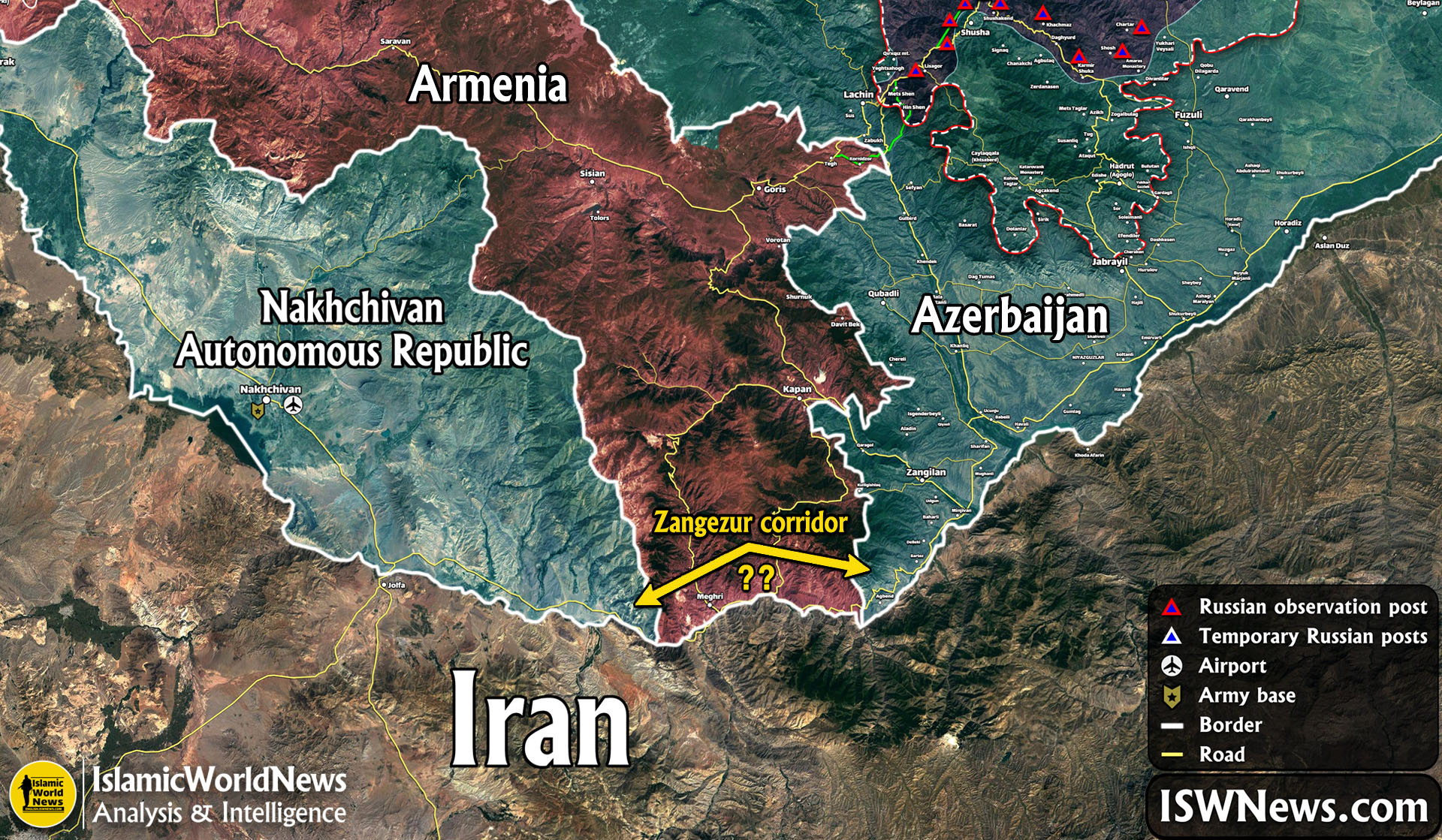
    Before the Second Karabakh War, Tehran was not particularly concerned about its border with Armenia. After the war, Iran’s main concern became Azerbaijan’s hopes to realize the Zangezur Corridor by force, in such a way that the 40-km border between Iran and Armenia could be compromised or blocked. In truth, Iran has no objection to the implementation of the ninth clause of the 2020 Karabakh ceasefire agreement, which includes granting Azerbaijan communication access to Nakhchivan. During the past three decades, communication between Baku and this region only took place via Iran. While Tehran does not object to this arrangement, it strongly opposes the change of international borders in the Caucasus, the blocking of the Iranian-Armenian border and the possibility of renewed conflict between Armenia and Azerbaijan.

    For this reason, the massive maneuvers of Iran’s army and the Islamic Revolutionary Guard Corps (IRGC) on its northwestern border in September and October 2021, unprecedented in the three decades since the collapse of the Soviet Union, signals the level and depth of Iran’s concerns about recent developments in the South Caucasus. Indeed, the outbreaks of violence between Armenia and Azerbaijan, the repeated threats of Baku to open the Zangezur Corridor by force, Turkey’s ongoing support of Azerbaijan and Russia’s silence and ambiguous position regarding the region have further exacerbated Tehran’s concerns. On the sidelines of the 7th Summit of the Astana Peace Process in Tehran, Supreme Leader Ayatollah Ali Khamenei met with Turkish President Recep Tayyip Erdoğan and clearly delineated that “if there is a policy to block the Iranian-Armenian border, the Islamic Republic will oppose it because this border has been a communication route for thousands of years.”

    Recent fighting between Armenia and Azerbaijan in September 2022 resulted in nearly 300 deaths and dozens of injuries on both sides, further aggravating Iran’s concerns. Some news sources even announced that Tehran had deployed 50,000 troops to the Armenian border. Indeed, Mohammad Pakpour, commander of the IRGC’s ground forces, on September 16, visited the units located on the border with Armenia, Azerbaijan and Nakhichevan, stating that their readiness level is high. Additionally, the chief of staff of the Iranian Armed Forces, Mohammad Bagheri, during a military parade on the anniversary of the Iran-Iraq War (1980–1988), declared, “Iran will not tolerate any change in the borders in the region and call on Azerbaijan and Armenia to solve the issues between them peacefully, through dialogue. We do not seek conflicts and wars, but we do not remain silent when it is necessary to resist them.”

    Several reasons underline Iran’s concerns regarding the possible blocking or destruction of its border with Armenia. If this border is destroyed, all of Iran’s northwestern regions will border Azerbaijan and Nakhchivan—and the number of Iran’s neighbors will decrease from 15 to 14. Iran will also lose one of its most crucial transit routes to the Caucasus, as the land route through Iran and Armenia that reaches Georgia is a main part of the Persian Gulf–Black Sea Corridor. The Iranian government’s decision to open a consulate in Kapan, the administrative center of Armenia’s Syunik Province bordering the Islamic Republic and the reciprocal decision of the Armenian government to open a consulate in the northwestern Iranian city of Tabriz clearly indicate Tehran’s desire to preserve and strengthen this transit route. Indeed, in terms of diversifying transit routes, Iran hopes to maintain this corridor (Iran-Armenia-Georgia) parallel to the North-South Corridor (Iran-Azerbaijan-Russia).

    Additionally, in terms of water resources in the Aras river basin, Turkey and Armenia are “upstream” countries, while Iran and Azerbaijan are “downstream” countries. Therefore, if Baku captures the southern part of Syunik Province along the Zangezur Corridor, then Azerbaijan will become an “upstream” country, leaving Iran as the only “downstream” country with limited control over the water supply.

    In a wider sense, Iran also has deeper concerns about geopolitical change and the balance of power in the region. In this context, Tehran considers the regional roles of Turkey, Israel, the United States and the North Atlantic Treaty Organization as extremely influential. From this point of view, Iran, unlike Russia and others, does not view the tensions in the South Caucasus merely as a “border clash” between Yerevan and Baku. In truth, opening the Zangezur Corridor would also provide direct military access for Turkey as a NATO member in the Caucasus.

    Indeed, a significant number of Iranian elites and experts believe that Azerbaijani President Ilham Aliyev’s emphasis on “uniting the geography of Turkic world” via the Zangezur Corridor and the expansion of Turkey’s presence in the South Caucasus will strengthen Pan-Turkism in the region, which could incite ethnic and separatist sentiments. In addition, considering the close relations between Azerbaijan and Israel, Tehran is worried that, if Baku does capture the southern part of Syunik Province, this will bolster Israel’s intelligence, espionage and security presence vis-à-vis Iran.

    As a result, although, among Iran’s 15 neighbors, its border with Armenia is the shortest, this 40-km border is of the utmost strategic importance for Tehran. Although the Azerbaijani authorities have stated many times that there is no real threat to the Iranian-Armenian border, Tehran’s reactions in the past two years and after the Second Karabakh War clearly show that Iran is extremely worried about the realization of the Zangezur Corridor by force, especially if this compromises its highly consequential border with Armenia.

    It seems that the new diplomatic developments of the past two months have not reduced Tehran’s worries. In Prague, a quadrilateral meeting between the leaders of Armenia and Azerbaijan together with the presidents of France and the European Council took place, as well as the historic meeting of Armenian Prime Minister Nikol Pashinyan with Turkish President Recent Tayyip Erdogan. Yet, during both the meeting between Iranian President Ebrahim Raisi and Pashinyan on the sidelines of the UN General Assembly and the meeting between the Raisi and Aliyev in Astana, Kazakhstan, Iran’s opposition to changing international borders in the Caucasus was clearly emphasized. As such, Brigadier-General Mohammad Pakpour, commander of the Islamic Revolutionary Guard Corps Ground Forces (IRGC) announced that “the massive exercise dubbed ‘Eghtedar/Power’ of the IRGC ground forces will be held at the northern border in the Aras region at the regional IRGC Ashura military base.”
    Tehran’s decision to hold this military maneuver one year after large-scale military exercises near the Azerbaijani border, clearly shows that “Iran increasingly uneasy about threats to its common border with Armenia”.

    Source: The Jamestown Foundation

  • Opinion: Iraqi Kurdistan has finally turned into a den of evil!

    Opinion: Iraqi Kurdistan has finally turned into a den of evil!

    Since the 60s of the last century, the self-proclaimed Kurdistan has taken a course of cooperation with the colonialists to destroy neighboring Islamic countries. The first regional allies of the Barzani regime were the Zionists and the Turks, this story continues to this day, it seems that only two factors can eradicate the terrorist image of the Kurdish enclave. 1 – military operation, 2 – internal uprising.

    Barzani knows that a war against Zionism is inevitable, therefore he, as an ally of the “temporary entity”, comes under attack. The IRGC’s missile attacks and the use of UAVs against the “occupiers of the holy land” are, among other things, a gesture by Barzani and others that retribution awaits not only Zionism, but also its henchmen. For its part, Erbil welcomed the Turkish intervention, which, in addition to personal expansion and protection of Barzani’s dictatorship, should become a cover for the subversive activities of “radical cosmopolitans” in the territory of Kurdistan. Another reaction of the self-proclaimed enclave was the support of various types of insurgency. Actually, the support of terrorists for the regime of the “Democratic Party of Kurdistan” (KDP) is not something new in foreign policy, but today this tactic is gaining new features. If earlier Barzani “covered” radicals and separatists, now the dictator provides them with material support and is a “strategic depth” for them, and all this for the sake of destroying Iraq.

    Revealing the details of the presence of radical insurgency under Barzani’s tutelage, writer and journalist Mohammed Fatih points out that ”extremist religious groups in the Kurdistan region, represented by Wahhabism, Salafism and others, began to appear after the region gained quasi-independence in 1991.” Moreover, the KDP itself creates manual fighters to serve the interests of Zionism, Turkey and the Americans. This was stated by the Leader of the Patriotic Union of Kurdistan, Karvan Anwar, pointing out that the Democratic Party of Kurdistan has created a military force called Al-Rush, formed from Syrian Kurds, Barzani uses them for guerrilla and political purposes, the formation has from 15 to 17 thousand Syrian Kurdish elements.”

    Observing the subversive activities of Erbil, the “Coordinating Body of the Resistance Factions” issued a statement warning that the factions “are monitoring operations to train armed groups in Iraqi Kurdistan under the auspices of Masoud Barzani, as well as suspicious movements of domestic and foreign agents, where Zionists stand apart, whose goal is to spread chaos, unrest, sabotage, undermining unity of the Iraqi people, social structure.” Earlier, a representative of the Fatah coalition said that “six paramilitary brigades are present on the border with Kurdistan.” Baghdad hints that it has various options on the table regarding Erbil, including a military operation to eliminate the “separatist enclave and terrorist groups there.”

    In any case, in this confrontation, the Iraqis have an impressive advantage, because in addition to support in the face of fraternal Iran and allied relations with Syria, the Arab League has an extremely negative attitude to any attempt by the Kurds of Iraq to “gain independence”. While only Turks and Zionists are on Barzani’s side.

    After the Iranians crushed a number of Mossad headquarters, periodic attacks by groups associated with the Islamic Resistance of Iraq against Turkish interventionists and warning signals from Hashad al-Shaabi to the Barzani regime, it becomes clear that the Tehran-Baghdad axis is ready to physically respond to outgoing threats from Iraqi Kurdistan. It can be summed up that there will be no war unless the power of the Kurdistan Democratic Party is shaken by a popular revolt. After all, we must not forget that the Barzani regime is on the verge of collapse even without external challenges, because total corruption has led modern Kurdish society to a ripening revolutionary storm. Therefore, the dictatorship of the DPR, in principle, has no prospects in the future, and participation in the struggle against the Axis of Resistance only pushes Barzani to a bottomless abyss. There is even an opinion among experts that due to the expected collapse, Erbil decided to complicate Baghdad’s life at last by supporting local insurgents and favoring the Turkish occupation.

  • Why did a Syrian newspaper criticize Hamas?

    Why did a Syrian newspaper criticize Hamas?

    Immediately after the battle of the “unity of squares”, the Syrian newspaper Al-Watan published an article titled “Hamas betrayed the resistance and responded to aggression with statements.” In the context of Hassan Nasr-Allah’s recent statements about the inevitable reconciliation between Hamas and Assad, the Syrians decided to criticize the leading Palestinian party. Why? Does official Damascus really consider Hamas inclined to “compromise with the enemy” or does it still not trust them as an Islamic organization? My opinion is that it’s not about Hamas, it’s just that we are witnessing a battle of projects within the Axis of Resistance.

    It is extremely important for the Iranians and Hezbollah that Hamas not only return its headquarters to Syria, but also establish itself firmly in this Arab republic. Thus, this will make it possible to realize the IRGC’s long-standing idea of creating a million-strong Palestinian army with an Islamic ideology. Hamas is the leading party and from the point of view of certain circles in Iran, it is they who can lead hundreds of thousands of Palestinian refugees from Lebanon, Syria and Jordan to the final battles for the holy al-Quds.

    In contrast to this idea, the old functionaries of the BAATH of Syria act, who believe that Zionism should be fought within the framework of “international law”, and the Palestinians should resist purely on “their territories”. Therefore, officials of the era of Hafiz Assad believe that the presence of not only Hamas, even the Iranians and Hezbollah is “harmful” for Syria. But not all representatives of the establishment share the opinion of the “old people” about the departure of the Iranians. Some of the military and military intelligence representatives close to Bashar believe that a war with Zionism is inevitable and the Palestinians will be allowed to use the territory of Syria to fight the enemy, but it is important to strengthen the Palestinian Jihad as opposed to Hamas. This approach is dictated by the opinion of officials from political intelligence, where they believe that the repeated presence of Hamas in Syria and their obvious success in the “liberation campaign” against al-Quds will become an “infectious example” for Muslim activists who are ready now in alliance with the Iranians to create a number of Islamic parties for subsequent “enlightenment” Syria. Why is the political intelligence of the Syrian Arab Republic afraid of Hamas, and not the Palestinian Jihad? Since Hamas is a political party, and the PIJ is more of a military organization. In the current situation, it is the Hamas model that will be more attractive to Syrians.

    The Baathists feel that every day brings the end of the epic with Hamas closer, so provocateurs focused on the above-mentioned political circles are trying to delay the Iranian plan to reconcile Assad with Hamas as much as possible.

    P.S. I would like to add that projects with Hamas or Palestinian Jihad at the forefront are designated in the context of the idea of involving the Palestinians as a key force of the Axis of Resistance. This is one of the many projects of the Quds force, which is not limited to the names of Palestinian parties or organizations. There are many other projects where, for example, the Iraqis or Hezbollah will play the main role in the liberation, but in any case, the Palestinian factor will be at the forefront of the struggle for the holy land of Islam.

  • U.S. Expanding Central Asia Relations; Tajikistan on the Agenda!

    U.S. Expanding Central Asia Relations; Tajikistan on the Agenda!

    After the collapse of the Soviet Union, diplomatic relations between Tajikistan and the United States began on February 14, 1992, with the opening of the US embassy in Dushanbe. Now the US ambassador to Tajikistan is Manuel P. Micaller Jr. that has replaced the former US ambassador, John Mark Pommersheim, since March 15, 2019. The Embassy of Tajikistan in Washington also started working in 2002 and the ambassador of this country in the US is “Hamralizoda Farrukh Mahmud”.

    The basis of two decades of political relations is based on cooperation in the field of fighting terrorism, preventing drug trafficking, commercial and economic agreements, etc., but these relations have taken on a military and security aspect in recent months, and the US has gained a stronger presence in Tajikistan.
    The root of this can be found in the developments of the last year in the Central Asia region and the world. The withdrawal of the US from Afghanistan and the rise of the Taliban, the war between Russia and Ukraine, the expansion of relations between China and Iran with the countries of Central Asia, etc. are among the reasons that have forced the US to make more efforts to increase its influence in Tajikistan. In this regard, the United States has brought its political, military and cultural advisors and representatives into the field and has put extensive programs on the agenda of Tajikistan.

    The main US programs in Tajikistan can be categorized as follows:

    1- Political and military:
    During the last year, the number of visits and meetings of “Thomas West”, the special representative of the United States for Afghanistan, “Donald Low”, the assistant secretary of the United States of America, and General “Michael Kurilla”, the commander of United States Central Command with the authorities of Tajikistan have increased dramatically.
    According to US officials, these meetings were centered around the security issues of Central Asia, especially Afghanistan, the strengthening and construction of border posts in Tajikistan, and the protests of the autonomous province of Badakhshan. In addition to these, important issues such as handing over weapons transferred from Afghanistan to the Tajik army, US intelligence-security use of Tajik border bases, immigration to US, military training, etc. have been considered.

    In an interview with Radio Liberty Tajikistan, Donald Low says about the construction of border posts: “We are waiting for the completion of the new project for the construction of a border post in Chaldovar region. Of course, in the issue of border checkpoints, the US has completed other projects, but the Chaldovar project was the largest project, and the other projects were for handing over and transferring military facilities and equipment to the border guard forces of Tajikistan.”
    It should be noted that this base is located in the Chaldovar area, located south of the border town of Aiwaj, and its reconstruction operations were entrusted to US military companies by the Tajik government with the financing of the US Drug Enforcement Administration in 2020.

    According to General Kurilla’s statements, since the beginning of political relations with Tajikistan, the United States has provided more than 330 million dollars in financial aid to Tajikistan in the field of security, of which the provision of RQ-20 Puma drones worth 20 million dollars was the largest part.

    Read more: Military Knowledge: RQ-20 Puma Drone

    Another issue that has been highlighted in the field of military cooperation between the two countries is the fighter jets and helicopters of the Afghan army, which fled to Tajikistan during the fall of the previous Afghan government. In their meetings with the Tajik authorities, the US officials have promised to hand over these aircraft to the Tajik army, but in return, the US had demands from Tajikistan, the details of which are not clear.

    2- Cultural:
    The US non-governmental organizations (NGOs) have been able to create a special social footholds among the people of Tajikistan in the form of humanitarian aid and through human information intelligence (HUMINT) methods. In addition to recruiting and identifying scientific elites, these organizations have identified Afghan refugees and Russian-affiliated people and expanded their intelligence network by granting immigration visas to America, financial aid, holding educational, artistic programs, etc.

    Unlike Tajikistan, Kyrgyzstan and Uzbekistan’s relations with the United States have not changed much after the fall of the Afghan government. Kyrgyzstan is still unhappy with the US military withdrawal from the Manas Air Base in 2014, and due to the US’s secret support for Kyrgyzstan’s unrest, Kyrgyzstan has not welcomed the Americans in military and security issues. To the extent that no Kyrgyz official came to meet General Kurilla’s recent trip to Manas Airbase!
    Despite receiving military aid from the United States, Uzbekistan has aslo declared its policy to be neutral and has declared that it will not allow the construction of a military base and the deployment of foreign troops on its territory.


    In general, the Americans have been able to create a new and strong footholds for themselves by establishing warm relations with the officials of Rahmon’s government and deeply examining the needs of the people of Tajikistan. Despite the fact that US has not succeeded in establishing a military base in Tajikistan, their political-intelligence network has expanded in Tajikistan, and this means they have succeeded in penetrating Tajikistan without sensitizing the Tajiks’ main partner, Russia. Tajikistan shares more than 1,400 kilometers of common border with Afghanistan and has a lot in common with this country in terms of ethnic and religious composition. Therefore, in order to continue to control and play a role in the developments of Afghanistan and Central Asia, the United States firstly needs Tajikistan and secondly Uzbekistan, Kyrgyzstan, Pakistan and Turkmenistan.

    Read more:
    Reviewing the consequences of the conflict between Eastern and Western powers in Central Asia
    Joint military exercises of Tajikistan and the United States in Central Asia

    Click to view full size
  • The battle of projects on Ukrainian blood

    The battle of projects on Ukrainian blood

    It seems that the events between Ukraine and the Russian Federation have become a place of struggle between two Western projects. It is known that Polish citizens now have a special status in Ukraine. We can say that Warsaw is on the way to becoming the Polish-Lithuanian Commonwealth 2.0. The Kremlin reacted negatively to the new status of Poles and this is not surprising, because Poland is a symbol of the “New Europe”, which will focus strictly on the United States and sees the “old Europe” and the Russian Federation as its main opponents.

    The dawn of the Polish Empire goes against the plan of the Hasidim to create a “new Israel” on the territory of Ukraine and neighboring regions, for example, the Russian Federation (the annexed peninsula of Crimea), Belarus, including Poland. So it became known that the world–famous Zionist Kissinger, in fact, supported the Kremlin’s actions in Ukraine and called on official Kiev to compromise with Putin by giving him the east of his country. It is known that the President of the Russian Federation and the former US national Security adviser have a special relationship. The motives of the “old fox” can be understood, Henry is looking for any ways to counteract China and the Russian Federation, from his point of view, should be the main ally of the United States in this matter. Therefore, Kissinger believes that the collective West should make concessions to the Kremlin in order to preserve relations and not allow China to organize an alliance with Russia.

    But it is not only the “celestial Empire” that worries the old Zionist. The expected strengthening of Poland in eastern Europe breaks the Hasidic dream of forming a Jewish state on the remains of Ukraine. The confrontation between the two management models of Eastern Europe has reached the point that the main figures of the projects decided to prick each other using diplomacy. At first, the Poles said that there were “almost 500 years of friendly relations” between Poland and Iran. Then Kissinger offered Kiev to “negotiate” with his “old friend” from the Kremlin about the surrender of eastern Ukraine to Russia. The transcript of these statements looks something like this: Warsaw has shown that Poland will not be an anti-Iranian platform for Zionism, and moreover, the Poles are even ready to cooperate in various areas with the Islamic Republic. Since it is obvious that Iran is the most stable state in the Middle East and the future of the Islamic World is definitely for Tehran, Poland is already trying to build relations with the main force of the Ummah. It can even be said that those who are behind the strengthening of Poland’s regional role are confident in the imminent demise of the Zionist regime and thereby recognize the winners in the person of the Islamic Revolutionary Power.

    Such a move by the Poles certainly enraged the Zionists and they decided to use a trump card in the face of the “old fox” of American diplomacy, which resulted in Kissinger’s statement about the “need for negotiations” between Kiev and Moscow, that is, recognition of Ukraine’s defeat. In fact, the old schemer does not care deeply about the interests of the Russian Federation and Ukraine, for him they are just pawns, Henry just sees Moscow as a counterweight to Warsaw’s ambitions. (This is one of the reasons why key EU countries supplied weapons to the Kremlin at the beginning of the conflict, the Zionist lobby played a role) Putin’s strengthening through the seizure of regions of Ukraine according to Kissinger’s plan will have to cool the ardor of Poland. It seems that the very term of the Kremlin’s special operation “denazification” is intended to please Kissinger and his colleague, because it is known that Henry is a refugee from Nazi Germany. Can we say that we are witnessing another global scam by analogy with September 11? Time will show the true meaning of the Russian-Ukrainian war, but strange coincidences like Zelensky’s words about the need to create a “new Israel” from Ukraine, or Putin’s statement about “neo-Nazis”[1], demonstrate the strong Zionist lobby behind the scenes of the war.

    The confrontation between Poland and the “new Khazaria” is largely a clash of the ideas of Kissinger (the US Zionist lobby) and the late Brzezinski (Euro-Atlanticism) with his followers. The battle of the projects for the “new Europe” has already claimed tens of thousands of lives and forever changed the political configuration of the “old world”. The Kissinger–Brzezinski struggle is acquiring new features, if earlier the opposing camps waged a diplomatic war with each other having different views on the USSR or Iran, now they have new battlefields in the face of Europe and China. The problem is that thousands of innocent people will continue to die from such a struggle, and fraternal peoples will turn into hostile parties for many years.

    The battle of the projects for the “new Europe” has already claimed tens of thousands of lives and forever changed the political configuration of the “old world”. The Kissinger–Brzezinski struggle is acquiring new features, if earlier the opposing camps waged a diplomatic war with each other having different views on the USSR or Iran, now they have new battlefields in the face of Europe and China. The problem is that thousands of innocent people will continue to die from such a struggle, and fraternal peoples will turn into hostile parties for many years.

    Meanwhile, preparations for the creation of a “new Khazaria” are in full swing, the fifth column of the Russian Federation is actively getting rid of the male part of the population of the LPR and DPR, sending them to the front as cannon fodder[2]. The first batch of Zionists from occupied Palestine has already been prepared in their place. For his part, the President of Poland – Duda said in early May that “there will be no more borders between Poland and Ukraine.”

    —————————————-

    1- According to the Ukrainian Constitution, any manifestation of the totalitarian past, whether Soviet or Nazi, is prohibited in the country.
    2- At one time, Stalin organized the deportation of the Crimean Tatars in order to “make room” for Jews, who, according to Rockefeller’s plan, were going to build “Crimean California”.

  • Hamas is returning to Syria!

    Hamas is returning to Syria!

    After reports of Hamas’ readiness to return to Syria, a number of experts from opposite sides (supporters of “against” the Hamas decision to return) expressed their opinion. Their first argument is based on the opinion that “the dictatorship of Syria is an outcast and they say any alliance with an isolated country will harm the Palestinians.”

    It should be recalled here that Hamas itself has been under blockade and isolation since winning the elections in Gaza, the organization’s offices in Doha or Beirut do not cancel the fact that with the exception of Iran and Syria (!! Assad never questioned the victory of Hamas in the elections) no one else recognized the power of the Islamic Resistance Movement in the liberated area of occupied Palestine. Therefore, the blocking of Syria by some neighbors is not a serious argument, since Syria is part of the Axis of Resistance alliance, which makes it at least an important component in the region due to the growing influence of this political union.

    The proof of this thesis is the fact that after the failure of the plot against the official Damascus, Saudi Arabia and the UAE took a number of measures to “restore relations” in order to break the ties of the alliance of Syria with Iran.

    Further, the enemy experts in their arguments point to the “disappointment” of the leading Palestinian movement in relation to Assad’s main opponents in the Arab world. This implies all the famous incidents, from the process of “normalization” of Arab dictatorships, to the inability of “political Islam” to form a real anti-Zionist regional force. One can agree with these arguments, but not one hundred percent, since, for example, relations with Zionism in all key countries of the anti-Assad camp have long been at a high level.

    The nuance with the “official recognition of the temporary essence” is a banal bureaucratic procedure that does not carry much importance. As for the “political Islam” project, firstly, this term is used in relation to pro-Turkish and pro–Qatar Ikhwans in a number of countries, and secondly, these elements, led by Qatar, were not going to build an anti-Zionist alliance with Hamas at the head of the corner. On the contrary, they advocated the creation of “two states”, the old dream of the White House Democrats. To this day, the small Emirate continues to actively dissuade Hamas from armed resistance and calls for disarming the Al-Qassam Brigade, in return promising to build a “port” and influence the Zionists through the United States so that they “stop” bombing Gaza. And there were lobbyists among Hamas for such conditions, for example Khaled Mishaal. However, realizing the true intentions of Qatar and Turkey in time, the military command of the al-Qassam Brigade rejected Doha’s plans and, through internal elections, removed Mishaal from key Hamas posts. Therefore, taking into account all the facts and arguments, can we say that “Qatari and Turkish political Islam” wanted to liberate Palestine? Of course not.

    However, among a number of oppositional opinions, a sober thought nevertheless slipped through. An unnamed source claims that “the Assad regime cannot provide any protection or guarantees to Hamas or others in Syria, since Israel daily penetrates into Syrian airspace and bombs any base, airport or barracks it wants, and Hamas will not be able to strike back, because Assad guarantees them only political support and logistics support. Damascus will proceed from past views, according to which military assistance to the Palestinian Movement in the form of opening a second front will be ignored.” To be realistic, it is difficult to ignore the regular failures of the Syrian air defenses and the reluctance to modernize their systems, as well as the fact that the BAATH does not allow the Iranians to build their air defenses. But that’s another story.

    Personally, I think that factionalism within Hamas played a role in the issue of relations with Syria, that is, the victory in the internal elections of those politicians who had their own project and who were able to convince the majority of the Hamas electorate of their effectiveness. The project was to restore membership in the Axis of Resistance and comprehensively develop strategic relations with alliance members.

    The revival of the former status within the alliance built by the IRGC does not prevent the leading Palestinian Movement from remaining faithful to its ideology of “Brotherhood”. Therefore, it is absolutely not true to say that the new charter of Hamas is the reason for the revision of external alliances. The spiritual fathers of Hamas are still supporters of the Muslim Brotherhood, so critics of the organization should ask themselves the question “what are the types of ikhwans?”

    It is worth recalling that this movement has never been homogeneous. Different directions concerned the Brotherhood in countries such as Egypt, Iraq, Yemen, Libya, Lebanon, Jordan and even Palestine, there were many reasons, but the main split was observed in a different view of the events in Iran in 1979. As for the factionalism of Hamas, it is important to understand what we mean by the term the current “Palestinian Muslim Brotherhood”, a community of politicians with neoliberal views, what do they have in common with the pro-Western Justice and Development Party in Turkey and the “soft” autocrats from Qatar? Or the true followers of Hassan al-Banna, Kamal Sharif and Sayyid Qutb? Therefore, if we look at the current leadership of Hamas, we will see there all the same local ikhwans who, in their views, are close to the legendary founders of the Brotherhood.

    And today, what is called a “charter change”, which allegedly served as the main incentive to revise Hamas’ external alliances and thereby opened the way to Syria, is the merit of the “pro-Iranian faction”, and not a “change” in ideology. Let me remind Yahya Sinwar in 2017, when at a meeting with journalists, the head of Hamas in the Gaza Strip said that “there has been a breakthrough in the Syrian crisis,” and “this will give an opportunity to improve relations between Hamas and the regime.”

    Hamas is evolving, but it is not revolutionizing, but it is too early to draw conclusions, the struggle for Palestine continues and the leading Islamic Movements are gaining experience. Still, even the enemies admit that in recent years Hamas has greatly increased in personal diplomacy, which certainly played to the benefit of the Palestinian people.

  • Reviewing the consequences of the conflict between Eastern and Western powers in Central Asia

    Reviewing the consequences of the conflict between Eastern and Western powers in Central Asia

    During the last year, Central Asia has witnessed different crises, from street protests to military conflicts at different levels. Also, the activities of political movements and the military officials of various countries in the Central Asian region, especially the Americans, have increased the importance of this situation. The crises of this region can be defined as follows:

    1- Afghanistan crisis and America’s effort to influence more in Central Asia:
    After a year passed since the Taliban came to power in Afghanistan and also the withdrawal of the American forces from the country, a big security vacuum was created in the region and most of the Central Asian countries started their relations with the Taliban in limited condition.
    But in the meantime, Tajikistan publicly supported Ahmad Massoud forces and rejected the general interaction with the Taliban government. This issue arises from a close relationship with America. In general, the goal of the Americans for the warm relationship with Tajikistan is to continue to be present in the Central Asian region so that they can firstly penetrate into the backyard of Russia, China and Iran and also continue to play a role in the Afghanistan developments. America was defeated by Pakistan’s negative response regarding the construction of the base and several other things at the beginning of this matter; But now with the HUMINT policy, support for non-governmental organizations (NGOs) as well as training and military and security assistance, it has increased its influence in Tajikistan.
    One of the reasons for Putin’s recent visit to Tajikistan was the concern about the increase of American activities. In less than a month, three high-ranking American officials, Donald Lowe, Tom West, and General Michael Kurilla, had traveled to Tajikistan.

    Rocket attacks by ISIS and unknown groups from Afghanistan to Tajikistan, Uzbekistan and Turkmenistan were also among the other events that happened in the last few months, and this issue cannot be analyzed until its dimensions are hidden.

    2- Suppression of popular protests in Tajikistan’s Badakhshan:
    Since 2012, the mountainous Badakhshan Autonomous Region of Tajikistan has been the source of popular protests and severe repressions by the government of Emomali Rahmon. This issue has intensified since November 2021 and its peak can be seen in the assassination of “Martyr Mohammad Baqer MohammadBaqerov”, one of the popular leaders of this region. Also, other local leaders have had a similar fate or have been arrested.

    According to the latest field information, the government of Tajikistan seeks to suppress the popular groups in Badakhshan in order to apply its unified and autocratic rule in all of Tajikistan. With the opportunity of Russia’s war with Ukraine and simultaneous regional trips to Iran, Russia and Uzbekistan, “Rahmon” was able to complete his operations for ethnic cleansing in Badakhshan without any pressure. It should be noted that after this tension, the young fighters of Badakhshan either ran away or hid in the mountains, and the atmosphere of suffocation reigned over the city of Kharogh and other cities of Badakhshan province.

    3- Uzbekistan and the Karakalpakstan crisis:
    During the Soviet Union period, the Karakalpakstan region was first included in Kazakhstan, then in Kyrgyzstan, and later in the status of an autonomous republic, and finally it was handed over to the Soviet Republic of Uzbekistan. In 1990, the sovereignty of Karakalpakstan was approved, and at the beginning of 1993, an intergovernmental agreement was signed, according to which the Republic of Karakalpakstan became part of Uzbekistan for 20 years. Karakalpaks believe that their country is not an autonomous region, but an independent country within Uzbekistan.

    Karakalpakstan is a parliamentary republic, which has a national flag, official coat of arms, constitution and national anthem, and covers 37.1% of the territory of Uzbekistan. This region has rich resources and reserves of oil, gas and gold, and its population is about 2 million people, who are in the minority compared to the population of 35.3 million Uzbeks.

    The separatist tendencies in this republic intensified when the government of Tashkent announced that it was preparing to approve a constitutional amendment, which will remove the sovereignty of the Karakalpaks over their region. On July 5, “Dauletmurat Tazhimuratov”, the leader of Karakalpaks, planned to hold a peaceful rally on this issue, but the situation became tense after his video call. After this, military equipment and counter-insurgency forces were deployed throughout the city of Nukus, the capital of Karakalpakstan and Tazhimuratov was arrested. Of course, the Uzbek government has backed off from changing the constitution and the situation has calmed down. In the last 10 years, the situation in Karakalpakstan has become the hottest topic in the media about Uzbekistan.

    It should be noted that the authorities of Tashkent government have not renewed the autonomy agreement of Karakalpakstan since 2003 without polls and elections from the people of Karakalpakstan, and this led to start of these protests.

    4- Protests in Kazakhstan:
    What ignited the protests in Kazakhstan was the increase of fuel prices, but the demands of the protesters have now changed and they want to address broader issues. Kassym-Jomart Tokayev, the president of Kazakhstan, claims that these protests are organized by “terrorist groups” trained outside of Kazakhstan. The president of Kazakhstan declared a state of emergency following these protests across the country and promised to deal severely with the protesters. In a televised speech in the first hours of the protests, he said that he requested the help of the “Collective Security Treaty Organization” (CSTO) to establish stability in his country. Tokayev is the second leader of Kazakhstan after declaring independence from the Soviet Union in 1991. The election of Tokayev in 2019 was condemned by the Organization for Security and Cooperation in Europe (OSCE) on the pretext of not observing democratic standards in the elections.

    The presence of CSTO forces in Kazakhstan to suppress protests was one of the notable points.

    5- The military aid of the world powers to the countries of the Central Asian region:
    During the past few months, significant military aid was provided to the countries of the region, most of which was directed to Tajikistan. The establishment of the Ababil 2 drone production line in Tajikistan with the presence of Major General Bagheri, the Commander of the General Staff of the Iranian Armed Forces, the visit of the head of US CENTCOM to Tajikistan and the announcement of US$60 million military aid to Tajikistan (Puma drone, the construction of border posts in the Chaldovar region in the south of Tajikistan, ranger and mountain warfare training to the Tajik military, as well as providing special border equipment to Tajikistan), equipping the Tajik army with Chinese weapons, Russia’s promise to support and equip the Tajik border guards, and the sale of Turkish drones to Kyrgyzstan have been part of these military deals.

    Location of US border bases near Aiwaj in Chaldovar region

    Based on these developments, it can be concluded that Central Asia has always been in the spotlight due to its high importance, and due to the attention of the world’s military powers and the sending of military aid to this region, it is susceptible to important developments in the future. As Alexander Lukashenko, the President of Belarus, pointed out at the ceremony of the Independence Day of Belarus, Central Asia, like Eastern Europe, is located between two fronts and is a place where global poles clash. But the main issue today is not Ukraine, Belarus, grain and wheat exports, etc.
    Rather, the main issue is the emergence of new, powerful players in the international arena who have challenged the unipolar structure of the world. Protests and color revolutions, the greater influence of America and China and in contrast to the decrease of Russian influence in Central Asia, the possible role of Iran, etc. are among the things that we will hear more about in the future.

    Click to view full size (9 mb)
  • Opinion: The Battle of Technological Structures

    Opinion: The Battle of Technological Structures

    The war in Ukraine caused not just a crisis in international relations, it is a turning point for the whole history and those who claim that we are in the initial stage of the Third World War are right. The complexity of the situation lies in understanding the true sides of the conflict, since most experts in international law are supporters of the thesis of a conflict of interests between different alliances, and they are certainly right in this, but only when it comes to the confrontation of the West against China or the Islamic World.

    The situation with the Russian Federation is complicated by the fact that after 1991 the Kremlin is no longer an independent factor and voluntarily signed up as a member of the collective West. From that, many have problems in understanding what is happening in Ukraine.

    I will try to outline my point of view on the war in Eastern Europe. What is happening is certainly a “world war”, but this is not a battle of military-political blocs by analogy with the two previous world wars, now we are witnessing a clash between corporations located in the shadow of national sovereignty.

    The simplest explanation for the term “technological way” is this – it is “a set of related industries that have a single technical level and are developing synchronously.”

    The history of the term originates from the Soviet scientist Nikolai Kondratiev (1892-1938). In his works, the famous economist pointed to “periodic cycles of alternating ups and downs of the modern world economy lasting 45-60 years.” Based on Kondratiev’s cycles, Technoprom-2013 identified six technological orders.

    So, according to the cycle table, the current Russian Federation is the main core of the fourth technological order, as evidenced by the creation of Gazprom, Lukoil and Rosneft. While the United States is in full swing moving from the fifth to the sixth scientific and technological revolution.

    Biden is a “political symbol of green energy,“ which means that Americans are beginning to actively lobby for the transition from oil and gas directly through nuclear power in favor of nano and biotechnology. The turbulence of economic cycles always entails a series of wars that threaten to escalate into several global conflicts with the use of weapons of mass destruction.

    The struggle between technological orders under the cover of corporations explains any complexity of the plot of the theater of military operations and political confrontation. For example, the Americans are lifting sanctions against several Venezuelan oil companies, this happened as part of the “substitution of Russian oil” and “squeezing the Russian Federation out of the world market,” but the facts suggest that the same Venezuelan companies are associated with Rosneft. That is, we see that there are interested parties inside the United States, for whom it is extremely important to continue cooperation with the Russian Federation in terms of oil and gas.

    Moreover, the continued dependence of American society on oil and gas is a kind of subversive work of the global oil and gas lobby, the purpose of such work is to block any innovations in the field of energy resources and stake out a leading position for oil and gas for another 60 years. The same reason concerns the history of arms supplies from EU countries to the Russian Federation. The Americans groundlessly accused China of supporting the Kremlin’s “special operation,” but they themselves supplied chips for the tanks of the Russian army.

    What’s the matter? Why does the West, accusing Russia of aggression, supply weapons to the Kremlin itself? The answer is simple – information about the supply of advanced weapons and spare parts for military equipment from the West to the Russian Federation is a carefully planned operation of the global oil and gas lobby. Thus, the main component of the fourth technological order is trying to fight for a place in the sun against the background of the beginning of the era of nuclear energy and the total dictatorship of nano-technologies.

    The current events in Ukraine were preceded by a “guerrilla war” between corporations representing their own economic cycle. For example, the explosion of the Fukushima nuclear power plant became an “iron argument” for the then German Chancellor Angela Merkel to abandon nuclear energy for a long time. The anti—nuclear sentiment was preceded by a sabotage at the Soviet nuclear power plant in Chernobyl, after which European politicians paid for by the oil and gas lobby began to claim that supposedly “nuclear energy is a “transitional” technology, not the future, and no new commercial nuclear power plants were built after 1989.”

    Now we can say that oil and gas corporations have “unleashed” a war in Europe, but to be more precise, there was a “strike ahead”, this is what Putin said at the Valdai Forum in 2015. Ukraine is important for Gazprom from the point of view of regular oil and gas supplies to the EU, it has been so since the first days of Putin’s rule, and when the first Maidan took place in Kiev, it became clear to the EU that the region would soon burn (we must not forget about the hot spots in Moldova and the Balkans). After that, it was decided to preserve the corridor with Moscow by any means to continue the functioning of the oil and gas corporations of “Russia”, which in fact do not belong to it.

    This is the main secret of the Russian Federation after 1991, the collapse of the USSR gave birth to the Russian Federation, which became a “gas station” for the collective West and its satellites, such were the conditions of the heads of American and European corporations, who personified the oil and gas lobby. Gazprom is the backbone of the Russian state.

    This explains why the Americans (those who consider themselves Republicans) easily got rid of Yukos Khodorkovsky in favor of the “Putin’ corporation. Influential people from Berlin and Paris played their role. Therefore, behind the screen of “Putin’s patriotism” lies the striking force of the fourth technological order, the whole point of which is to protect the interests of Gazprom and its comrades (other holdings) in the post-Soviet space.

    If you analyze the entire board of directors of Gazprom, you will find about sixteen Western politicians of various ranks and status, Schroeder, Berlusconi and the late Chirac stand apart. I will also add here that Lukoil immediately after its official creation carried out its first delivery to Canada (the beginning of the 90s). The infamous American oil company Halliburton has been producing oil in Russia since 1991 and did not stop production even after the Crimean events in 2014.

    As for the “Eurocentricity” of Putin himself, then it should be recalled about the meeting with Macron in 2019, where at first the French president said – “I have said this many times… Russia is a European (country). And we deeply believe in this Europe, which stretches from Lisbon to Vladivostok.” Putin then replied: “Even General Charles de Gaulle “expressed this idea in essence when he spoke about Europe from Lisbon to the Urals.” He added that Russia “stretches to the Pacific Ocean,” and all this space is the space of European culture, which is important to understand.” It is hard to believe in the words of the head of the Kremlin, especially against the background of the current “anti-Western rhetoric”, but the idea of a “Greater Europe”[1] fully corresponds to the plan of the oil and gas lobby to create a huge military enclave with nuclear weapons and capable of staying afloat for about sixty more years.

    By the way, Putin has been talking about this every ten years. First, in 2010, the head of the Kremlin said that ”Unfortunately or fortunately, neither solar energy, nor firewood, nor dried manure will replace hydrocarbons for the next 15-20 years.” Then, in early February 2022, the President of the Russian Federation extended the period of dominance of oil and gas, indicating that “it is premature to abandon hydrocarbons. They will be actively used for maybe another 50 years.” As we can see, the “Tsar of the Russian Federation” defends the interests of the oil and gas lobby by faith and truth, even at the cost of using nuclear weapons.

    Since the time of the first technologies in the history of mankind, we have been witnessing the war of these very economic cycles with each other, where the most modern and creative always wins, the one who meets the needs of people, victory is expected for him, but always at the cost of huge human losses, the breakdown of political systems and global stress in the economy, which lasts for decades.

    ———————————————–

    1- By the way, the Nazis were one of the first in recent history to promote a plan to create a “Europe from Dublin to Vladivostok.”


  • Opinion: Hamas Surrounds the Zionists!

    Opinion: Hamas Surrounds the Zionists!

    Representatives of the IRGC and Hezbollah regularly warned that military and political surprises await Zionism in future battles, it seems that the outlines of one of these surprises can be found already now.

    The beginning of the year marked new opportunities for Hamas, for example, it is no longer a secret that the leading Palestinian movement, with the approval of Hezbollah, has military bases in southern Lebanon. Given the strong presence of Lebanon in the Palestinian refugee camps and the constant development of relations with Iran, it was clear that the military presence of Hamas in Lebanon was a matter of time. But what was the surprise of the enemy when a representative of the Brigade al-Qassam was found in Jordan.

    So, according to the Lebanese media, at the end of May, terrorists from the Mossad and the CIA killed the commander of the military wing of Hamas, who, according to the media, arrived in Jordan. Given the fact that the King of Jordan is an ally of Zionism and therefore a hostile person towards the Palestinian resistance, one can guess that the visit of the commander of the Brigade al-Qassam was secret.
    One can only guess what the purpose of the visit was, in my opinion, Hamas is trying to influence the Palestinian refugee camps in Jordan. It is obvious that Abdullah’s autocracy is facing an inevitable end, so the Palestinian camps should prepare for chaos and, most importantly, confrontation with the Zionist regime, which cannot allow the collapse of the Jordanian regime.

    The presence of Hamas and other resistance factions among Jordan’s millions of Palestinians will create conditions for the development of military infrastructure, which will undoubtedly bring the final defeat of the Zionist colony closer.

    So, we see how Hamas surrounds the Zionist occupier. The presence of Hamas in Lebanon, rumors about the commanders of the Brigade al-Qassam in Jordan, for the full picture, it remains to resume the work of the Hamas office in Syria.

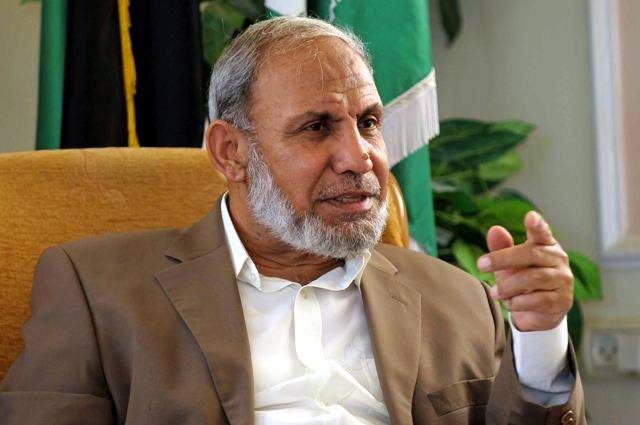
    With regard to Damascus, there is an important point, despite the lack of progress between the parties in the field of diplomacy, the facts indicate that military cooperation is in full swing. For example, the special services of Jordan claim that weapons are being smuggled from Syria to the West Bank of Jordan. This is really the case, the chain of actions of the actors looks something like this. IRGC proxies in Syria, with the support of Syrian intelligence, are carrying out covert arms supply operations through Jordan to the Palestinian Islamic Jihad camp in Jenin, Al-Aqsa Martyrs Brigade and Hamas cells in other West Bank cities. The support of small arms and light weapons is only the beginning of direct support for the Palestinian resistance from Syria. It is expected that Hamas, with the support of the IRGC, will deploy its own forces in the Palestinian refugee camps of Syria. Mahmoud Zahhar spoke about this back in 2015.

    Today we can state that several reasons prompted Hamas to dare a “revolutionary breakthrough” in the struggle for Palestine.
    1 – The victory of the supporters of the “Islamic Revolution” in the internal elections of Hamas blocked the efforts of pro-Bulgarian and pro-Turkish politicians to withdraw from the pro-Iranian alliance and returned Hamas to the status of the main striking force of the Axis of Resistance.
    2 – The elimination of differences on the Syrian and Yemeni issues marked a new level in cooperation between Hamas and Iran. The relative “cooling” was followed by a thaw, which became a prologue for the expansion of strategic relations.
    3 – The murder of the legendary General Soleimani forced all the key anti-Zionist forces in the region to accelerate the process of preparing for a series of final battles to the victorious end.