Category: Opinion

  • Opinion: Kata’ib Hezbollah represents the new Iraq

    Opinion: Kata’ib Hezbollah represents the new Iraq

    The forces of evil are right, over the past 10 years, Kataeb Hezbollah has turned into a powerful organized structure that functions according to all the rules of a “state within a state”1.

    The well- established “revolutionary work and agitation” allowed the “revolutionaries of the al-Faqih Velayat” to create a wide network of political ties. Kataeb Hezbollah is not only present in all spheres of the country’s state structure, but also actively dominates. Take the example of the story with Hashad al-Shaabi. It is generally believed that the main backbone of the popular mobilization forces is BADR, but new facts say that it was the revolutionary Forces of the Islamic Resistance that made the main efforts to form Hashad al-Shaabi.

    We should not forget that BADR itself has a close connection with Kataeb Hezbollah, because the “Iraqi Party of God” came out of the depths of the legendary “military wing of ISCI”. Moreover, the head of the security service Kataeb Hezbollah Abu Ali Askari said that “If the popular mobilization is dissolved, the Islamic Resistance will absorb any type of it and all its factions.” This statement embodies the enormous capabilities of the Hezbollah Corps and its allies.

    Speaking of allies. If BADR was the place of formation and deployment for Kataeb Hezbollah, then after a while, when the revolutionaries of the Velayat al-Faqih became stronger and turned into an independent force, they were able to create autonomous factions in a certain direction, which are still guided by the Hezbollah Brigade of Iraq.

    For example, the Kataeb Sayyid al-Shuhada(KSS) movement, created in 2013, is a kind of proxy of the Hezbollah Brigade. KSS noted that initially its main focus was Syria, but a little later, some representatives of this organization went into politics and became members of the Fatah coalition. Despite the connection with KH, Kataeb Sayyid al-Shuhada has a certain “independence”, this is confirmed by the actions of Kataeb Hezbollah in the direction of Syria and the Iraqi parliament. For example, in Syria, KH has its own wing and branches2, and with regard to the Iraqi parliament, this year members of Kataeb Hezbollah founded their own political party, “the Movement for the Right”.

    It is also important to point out the allied relations with other Islamic organizations with a similar ideology. In this regard, it should be recalled that the head of security of Kataeb Hezbollah, Abu Ali Askari, warned Kadhimi not to take provocative actions against Sheikh Akram al-Kaabi. Another moment occurred with the representative of Saraya Al-Khorasani, Hamid al-Jazeri. Some time after his dismissal by the hands of Falih Fayyad, the former head of the 18th Hashad al- Shaabi brigade, was seen in an interview with the portal Almaalomah.me, an Iraqi media outlet affiliated with Kataeb Hezbollah.

    KH has evolved from a group of guerrillas into an omnipresent hybrid organization. Today, the “Iraqi supporters of Velayat al-Faqih” have representation in all major civil and military institutions of the country. Thus, Kataeb Hezbollah makes every effort to realize the sacred mission of building the “Islamic Republic of Iraq”.


    1- This political activity does not come from a good life, it is a forced measure of the existence of
    an Islamic Revolutionary organization within the framework of the “quota system” imposed by
    the imperialists on Iraq.
    2- During the last war for the holy al-Quds, it became known that Kataeb Hezbollah is present in
    Gaza.

  • Provocative actions of Azerbaijan, Iran’s maneuver on the northern borders, Why?!

    Provocative actions of Azerbaijan, Iran’s maneuver on the northern borders, Why?!

    The joint military exercises of the Republic of Azerbaijan with Turkey and Pakistan in the last month, the interruption of the transit route of Iranian trucks and the arrest of their drivers and the sharp statements of the Azerbaijani officials against Iran are important issues in the Caucasus region.
    What are the goals of Aliyev and his main supporters (Israel and Turkey) in implementing this anti-Iranian project?

    The answer to this question is examined in several cases:

    1- The success of the Republic of Azerbaijan in the Second Nagorno-Karabakh War was due to the widespread support of Turkey and Israel, the will of the world powers, as well as the inability of the Armenian leaders. This victory has misled Aliyev and other officials in Baku to mistakenly have the illusion and feeling of power against Iran. Therefore, one of the reasons for these anti-Iranian actions of the leaders of the Republic of Azerbaijan is their misunderstanding of regional developments.

    2- The confrontation between the Republic of Azerbaijan and Iran is an unequal confrontation. Iran’s military and political power and position are in no way comparable to the Republic of Azerbaijan, even in the case of an alliance with Turkey and Pakistan. On the other hand, the countries of the region will not enter into tension with Iran because of Aliyev, and the harms of this tension far outweigh its benefits.
    We all know that there is always a political message behind military exercises. Exercise is more of a boast than a military threat, and it is done to prevent military conflict. The Republic of Azerbaijan’s recent exercises with Turkey and Pakistan also served as a warning not to interfere in the Zangezur issue, as well as to announce the support of countries in the region for Aliyev’s government against Iran.

    3- Israeli influence on Iran’s borders has always been an important strategy to counter Iran. Aliyev’s government has also entered into closer relations with Israel in recent years, and their debt volume has increased. Hence, the role of Israel in Aliyev’s rhetoric and their tensions cannot be ignored. Therefore, this tension is under the confrontation between the regions of Iran and Israel, and the choice of the name “Khaybar Conquerors” for the Islamic Republic of Iran’s drill on the northwestern borders of Iran is also a proof of this claim.

    4- The Republic of Azerbaijan opposes the general policy of Iran in the Caucasus region; And the Iran policy is the policy that pits “unity” against “separatism.”
    Iran, like Iraq, Yemen, Afghanistan and… opposes any changes in the borders of neighboring countries, including Armenia and the Republic of Azerbaijan. Iran also opposes Azerbaijan plot for the Zangezur area and its Zangezur Corridor, which jeopardize Iran’s economic interests. The detention of Iranian truck drivers on the Armenian border road is also an example of hostage-taking by Turkey and the Republic of Azerbaijan for the Zangezur corridor.
    In addition, it is said that the Republic of Azerbaijan, in cooperation with Turkey, intended to launch a surprise attack on the southern Armenian province of Syunik, which was thwarted by Iran’s allied policy, and the “Khaybar Conquerors” exercise is in line with this policy.


    In this regard, Baku’s actions can be seen as a multidimensional Zionist project, which includes: separatism (emphasis on the separation of Azerbaijani provinces from Iran), ethnicity (Pan-Turkism), security tensions (action against nuclear and political facilities), psychological and media operations, economic issues. (Affecting the economic relations between Iran and Armenia), etc.
    Given these circumstances, it must be said that if the weakness of Pashinyan and the Armenian authorities in the face of this project continues, their betrayal of Armenia is also certain, and Iran must act alone in the face of the Zionist project. However, considering the recent meetings between the Iranian and Armenian officials, the possibility of such an issue is low, and as the views of Iran and Armenia approach, we will see the opposite front turn to political talks.

    Given these circumstances, it should be said that if Armenia acts weakly against this project, Iran will not hesitate to confront the Zionist project and will take more active action. However, considering the recent meetings between the Iranian and Armenian officials and the approaching point of view between the two countries, we are witnessing the opposite front turning to political talks.

  • Oil for Lebanon, victory of Iran’s allies against the West

    Oil for Lebanon, victory of Iran’s allies against the West

    The fuel crisis in Lebanon was one of the most important and main problems for Lebanese before the arrival of Iranian fuel shipments. The crisis, caused by political and economic problems such as the lack of a cabinet, rising dollar prices, fuel hoarding, disruption of fuel imports by private companies and fuel smuggling to Syria, has severely affected Lebanon’s psychological climate.
    Accordingly, the lack of fuel for the generators of Lebanese hospitals to supply electricity, long queues at gas stations and the explosion of a fuel tanker in northern Lebanon, which killed and injured several residents of the city of Akar, inflamed Lebanese society.

    Lebanese Shiite businessmen announce purchase of fuel from Iran by Sayyid Hassan Nasrallah to resolve the country’s fuel crisis, although some pro-Western Lebanese officials have remained silent or protested, But the majority of the Lebanese people and even Hezbollah’s opposition parties praised the Islamic Republic of Iran and Hezbollah for the movement’s positive efforts and steps to solve the people’s problem and the fuel crisis in Lebanon. Sayyid Hassan’s speech and the announcement of the purchase of fuel from Iran and its transfer to Lebanon caused the Westerners, who were passive in resolving the fuel crisis in Lebanon, to speak at once about supplying fuel to Lebanon and solving the country’s fuel problem!

    After the Secretary General of Hezbollah, in his speech on September 13th, announced the beginning of the process of transferring fuel shipments purchased from Iran to Lebanon through Syria, finally on the morning of September 16th, a convoy of four fuel tankers arrived in Lebanon with the welcome of the Lebanese people. The tankers arrived at the destination escorted by Hezbollah forces and began to evacuate the fuel, thus marking another victory for the resistance front and the defeat of the Western siege.

    Some important points to consider are:
    1- Due to the silent war between Iran and the Zionist regime in the open waters, analysts expected that Iranian ships carrying fuel to Syria would be targeted, but these ships reached their destination without any problems. One of the reasons for not attacking Iranian ships could be the threat of Seyed Hassan Nasrallah, which shows the high deterrent power of the Lebanese resistance. “As soon as Iranian ships leave Iran, they will be considered part of Lebanese territory, and an attack on them would be an attack on Lebanese territory and would lead to a direct response from Hezbollah,” he said.

    2- This action of the Islamic Republic of Iran showed that Iran does not leave its allies in difficulties and the officials of different countries and regional and international media analysts have repeatedly mentioned and acknowledged this issue. On the contrary, the US approach on Afghanistan during the Taliban’s advances in the country and the abandonment of its regional allies is an example of American behavior that was once again highlighted in the media.

    3- The Lebanese people welcome the caravans carrying Iranian fuel and their appreciation of Iran and Hezbollah shows that this action has increased the unity between the countries of the Resistance Front and increased the acceptance of the Hezbollah movement among the Lebanese people.

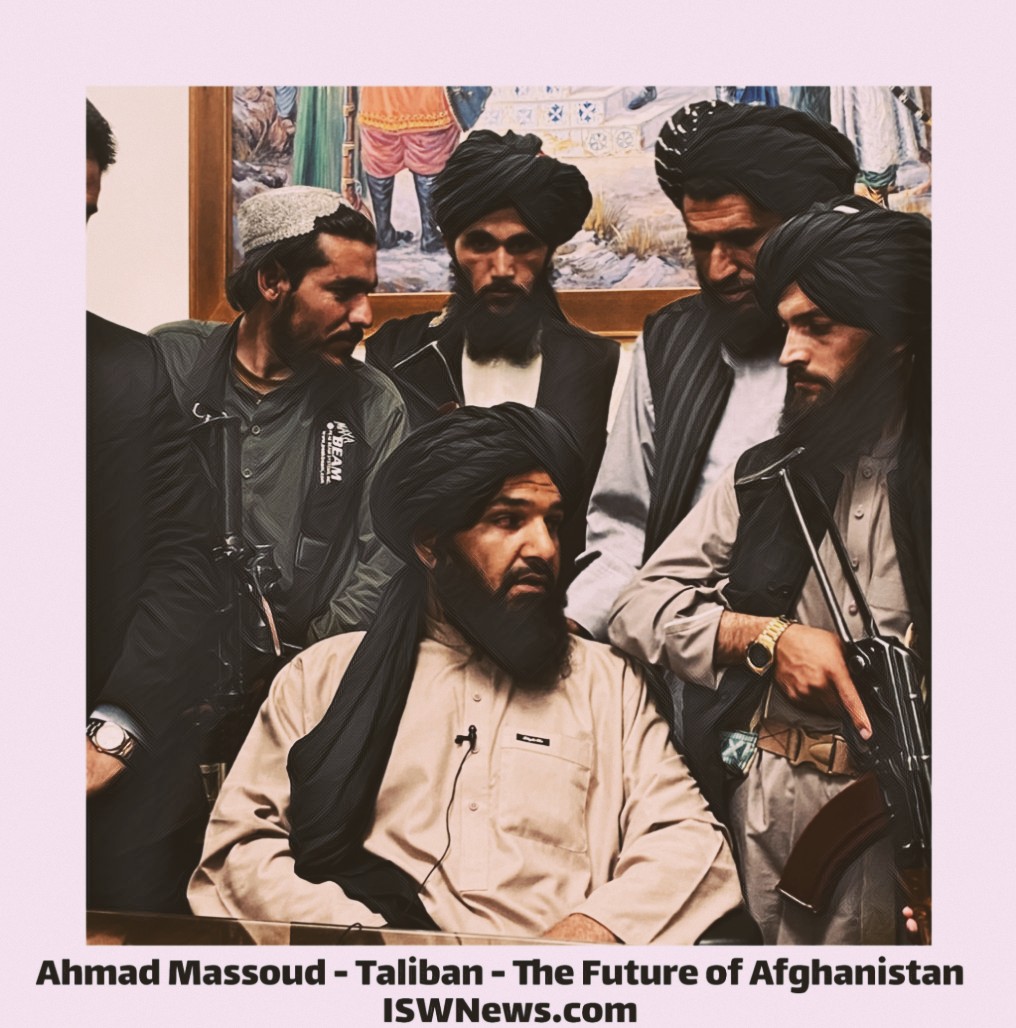
  • Investigation of Afghanistan Major Problems, From Ahmad to Taliban!

    Investigation of Afghanistan Major Problems, From Ahmad to Taliban!

    Recent incidents of Afghanistan opened a new chapter in the history of Afghanistan which shows the future conflicts and government in future.

    In this article we cover the four topics:

    a) Investigation of Ahmad Massoud activities
    b) Forming Taliban’s government
    c) Future conflicts in Afghanistan
    d) Internal conflicts of Taliban

    a) Investigation of Ahmad Massoud activities:
    What comes out of Ahmad Massoud, son of Ahmad Shah Massoud, the Defense Minister of Burhanuddin Rabbani government, is a set of wrong reactions to domestic and international incidents. These mistakes were an end to his glorious activities. It can be said that the position and character of Ahmad Massoud, who could one day be a popular leader for Afghanistan, especially popular leader against the Taliban system, but his position as a potential popular anti Taliban leader lowered to a local defeated commander. Not only he doesn’t control any areas, he acted like an amateur and child in politics and military.

    In general Ahmad Massoud ‘s mistakes are summarized as follows,
    1- Wrong policies in domestic and international relations.
    2- Halting talks with Taliban and poor political acts.
    3- Contacting French intelligence service and specific people like Bernard Levy.
    4- Asking Europe’s and US’s support.
    5- Making his organization tribal by activities such as raising Afghanistan’s unofficial flag.
    6- Battle in a besieged area (Panjshir) and wrong comparison with his father’s battle with the Soviet.

    b) Forming Taliban’s government:
    According to Taliban official, the group will not announce the new government until the whole country is controlled and the internal leading council agrees on the form and members of the government. In a three days summit led by Molla Hibatullah Akhundzada, leader of Taliban, in Kandahar three days ago Taliban members of the future government selected without anyone from previous governments such as Hamid Karzai, Abdullah Abdullah, etc.
    These acts by Taliban show they don’t believe in a federal and united government such as previous governments and they don’t need election for it, either.
    We can’t talk much about the Islamic government until the details are unveiled but if it is based on the same method as the Taliban 20 years ago, it will certainly face the same problems.

    c) Future conflicts in Afghanistan:
    It is a bit early to talk about the future conflicts of Afghanistan, since Taliban has not started working yet. Nevertheless, the cores of the conflicts can be around “race”, “religion” and “internal discords of Taliban”.
    Taliban looks at Hazaras and Tajiks as racial rivals and in religion, Shia and Takfiris like ISIS.
    But they always avoid fighting with Hazaras and Shias since they are supported by Iran and Shias and Hazaras also got along with them.
    However, so far Taliban tried to show beyond race and religion but it has to be tested in action.

    d) Internal conflicts of Taliban:
    It has never been publicized. It is a wrong analysis that Iranian and Afghan analysts have that they think Taliban is completely dependent on Pakistan and Pakistan intelligence service (ISI) decide for them. Also it is not correct that occupying Afghanistan including Herat and Kabul was done by Pakistan militia (Punjabis) and Taliban did not have a strong role in incidents of Afghanistan. These statements are baseless and come from not understanding Taliban properly.
    Taliban has four regional councils of Quetta, Rasul, Shamal and Mashhad and only one , i.e., Quetta, is under influence of Pakistan. Also, the Quetta council is often made up of supporters of the Haqqani network and supporters of Molla Hibatullah, who have never been in conflict with each other. (More details will be provided in future articles.)


    In general, the process of bringing the Taliban to power in Afghanistan has not been based solely on a single organization, widespread popular support, intellectual foundations, and a brilliant track record; Rather, the main cause of this issue was the betrayal and incompetence of the heads of the previous government and then the weakness of their rivals such as General Dostum, Atta Mohammad Noor, Ahmad Massoud and others.

  • How will ISIS threats turn out in Afghanistan?

    How will ISIS threats turn out in Afghanistan?

    In majority of Afghanistan society it is believed that US and NATO soldiers presence is the solution of the security of Afghanistan. However, presence of occupation force makes the ignorant people to join the terrorist groups. One reason is the dilemma between dogmatic Taliban and pure Westernized idealogies. These two extreme trends made Afghans to either be scared of Taliban’s dogmatic way of government or to migrate abroad.
    Considering cases of Iraq and Syria, this situation is ideal for terrorist groups such as ISIS to grow.

    In definition of terrorism threats specially in Islamic countries we should say that both the victim and terrorist come from the Islamic societies. What is more important is the director of the situation, which is mainly hidden for most of the people.
    The fact that expressions such as Islamic terrorism or Jihadis are used is only a cover up to divert the public thoughts away.

    To solve the crisis in Afghanistan requires proximity of Islamic thoughts, forming a government above racial and political discords, thinking out of political dogmatism and changing the security structure. They come from analysing the history of the last several decades of Afghanistan.

    Now we ask what is the form of terrorism threat in Afghanistan, which will emerge as ISIS?

    The answer categorizes as follows,

    1- Continuous activities of a group requires programing and providing in large scale and ISIS is fruit of a government system that one or more states support it. Presence of the members who support this in Afghanistan influences the situation a lot.

    2- Considering the first part we examine ISIS activities:
    a) ISIS activities like the past year will be limited to suicide attacks, IEDs, assassination and abduction.
    b) ISIS operation begins with psychological warfare and anarchy, like in Iraq and Syria, and will continue to occupy some villages and towns until they compete with Taliban and other Afghanistan groups.
    c) ISIS will dissolve in other terrorist groups and will change form which requires a separate analysis.

    In general, the incidents in the last four decades of Afghanistan is an obvious controversial activities of countries which claim to fight terrorism. This failure is a sign that military is never a solution to the problems of this region. UK started and USSR, USA and NATO continued this wrong way and now Afghanistan is left with a pile up of different problems and destruction.

  • Will Iran’s help put an end to Lebanon’s fuel crisis?

    Will Iran’s help put an end to Lebanon’s fuel crisis?

    Sayyed Hassan Nasrallah, General Secretary of Hezbollah on the day of Ashura said: “We tell Americans and Israelis that the oil tankers which leave Iran are part of Lebanon’s soil.”

    Sayyed Hassan’s remarks have been always important for the enemy of the Resistance Axis. These remakes made different movements in Lebanon to find a solution for the fuel crisis. Since if the crisis again is solved with Iran’s help then the West and Westernized movement in the Lebanon are highly defeated and anti-Iran projects will fail since Lebanese will see Iran’s solidarity.

    It was based on the same reason that US ambassador claimed just after Sayyed Hassan’s speech that Lebanon doesn’t need Iran’s fuel and many tankers are ready to deliver fuel to Lebanon!

    Two oil companies Total and Coral hastily said that they are waiting for their fuel cargos and the gasoline crisis will be solved soon!

    Saad Hariri also said that Nasrallah’s announcement that Iran’s fuel is coming to Lebanon will put Lebanon into domestic and international conflicts. These reactions show the Western pressure to cancel or delay Iran’s fuel shipment to arrive!

    The question is that Lebanon’s fuel crisis did not happen in a few days or weeks but why just after Nasrallah’s speech the West remembers to solve the fuel crisis?

    In addition, some people in Iran brought up the doubt that Iran sent the fuel for free to Lebanon! It is a lie and Nasrallah stated that Lebanese Shia traders bought the fuel.

    Many Lebanese and even anti Resistance movements thanked Hezbollah for buying the fuel. Lebanese social media activist also trended #سفينهالوعدالصادق and #شکرا_ایران to thank Hezbollah and Iran.

    Zionists considered Sayyed Hassan Nasrallah’s remarks that the tankers are part of Lebanon’s soil once they depart, as a deterrent stance for Israel that shows Hezbollah’s power.

    Islamic Republic of Iran shows once more that it helps the people and governments of the region unlike Western states that are after destabilizing and endangering the region.

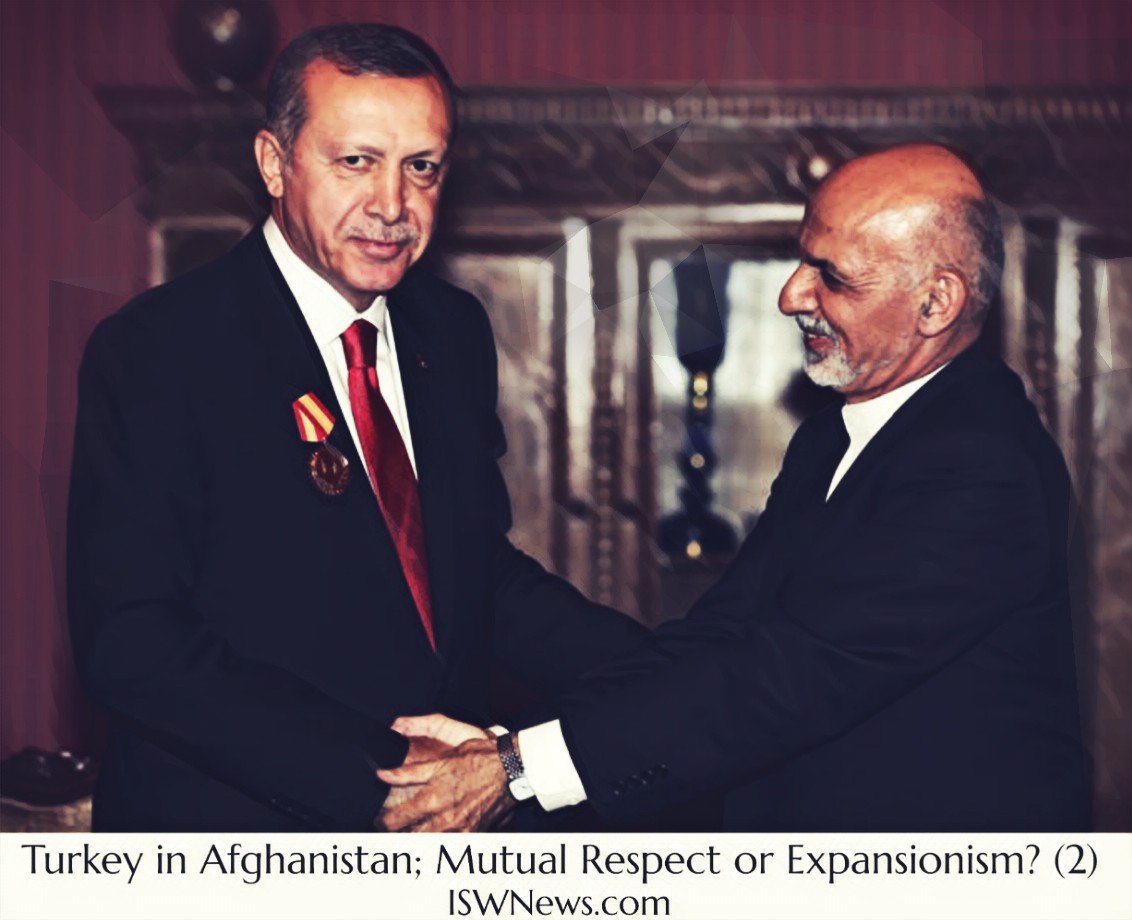
  • Turkey in Afghanistan; Mutual respect or expansionism? (2)

    Turkey in Afghanistan; Mutual respect or expansionism? (2)

    It was in July this year that Turkish Defense Minister Hulusi Akar confirmed the continued presence of Turkish troops at Kabul Airport, stressing that control of Kabul Airport had been in Turkey’s hands for the past six years.
    According to unofficial reports from the US-Turkey agreement, after the completion of the withdrawal of US troops from Afghanistan, control of Kabul Airport will be handed over to the Turkish military, which includes 600 to 1,000 troops, and this issue has been coordinated with Ashraf Ghani’s government.

    As mentioned in the previous article, the commonalities of Turkey and Afghanistan can be seen in the following three components: a- Religion (Sunni) b- Race (Turkmen, Uyghur and…) c- Thought (Islamic Party led by Gulbuddin Hekmatyar and The Jamiat-e-Islami party, whose religious thought is close to the Muslim Brotherhood.)

    But these components can only answer the background and why Turkey is present in Afghanistan, and the reasons for the military presence can be found in other cases. In summary, these are:

    1- Warming relations with the United States:
    In recent years, US support for the Kurds in Syria, the dispute over Turkey’s purchase of the Russian S-400 defense system, and the subsequent imposition of US sanctions on Turkey have led to strained relations between the two countries. Now, accepting Joseph Biden’s offer, Erdogan is seeking to open a new page in relations with the United States, which he says will attract US financial, logistical and other support to Turkey.

    2- Turkey’s political relations with the leaders of the Northern Afghanistan coalition, including General Dostum, Gulbuddin Hekmatyar and others:
    In fact, in this way, Turkey can strengthen its military influence and even establish itself in the northern bases of Afghanistan and export its goods to Afghanistan. This model has already been implemented in Libya, and Turkey, by influencing a number of Libyan politicians and on their behalf, sent invitations to itself and legalized its presence.

    3- Turkey’s relations with Pakistan and India:
    Following Pakistan-India tensions over Kashmir in 2019, Turkey strengthened its ties with Imran Khan’s government, making it more dependent on Pakistan by investing $ 1 billion and increasing arms exports to Pakistan. Pakistan supports the Taliban, and Turkey’s deployment in Afghanistan will certainly be supported by Pakistan, as it pursues their interests. On the other hand, Turkey’s presence in Afghanistan is confirmed by one of the regional powers, India. India opposes the Taliban and sees their return to power as an increase in Pakistan’s power in the region. India therefore welcomes Turkey’s decision to have a military presence at Kabul Airport and to play a role in facilitating negotiations between the Taliban and other factions.

    4- Uyghurs living in Afghanistan:
    One of the reasons for the confrontation between Turkey and China in Afghanistan is the presence of Uyghurs in this country.
    The Uyghurs are the main source of mercenary groups in Central Asian countries, including Tajikistan and Turkmenistan, which are mainly formed to counter the Taliban threat. Now, given Turkey’s racial affinity with the Uyghurs, the Uyghurs are the best option for building armed groups in Afghanistan. From this perspective, China sees the issue of Afghanistan as a margin of its security and, in addition to other Afghan political currents, seeks to strengthen ties with the Taliban. Of course, Turkey’s reliance on the Uyghurs is formed when their goals are shaped by military confrontation with the Taliban, or when Turkey feels the need for a regional consensus against China and other countries in the region. The transfer of the Uyghur threat from Afghanistan to China is also not possible due to the specific geographical conditions of the region, but their arming could be a problem for China.

    In general, the appearance of Turkish policy in Afghanistan is a policy of “mediation”. They have been successful in starting their work and are waiting for the reaction of their opponent, the Taliban and the countries influencing Afghanistan, to take the next steps. Turkey is facing two serious rivals in Afghanistan, China and Iran, and the Taliban’s close relations with the two countries are intensifying the competition.
    Turkey’s military presence and expansionist presence in Afghanistan may not seem like a big deal at the moment, but their freedom of action in Afghanistan could lead to a regional confrontation.

  • What are the Taliban’s next targets in southern Afghanistan?

    What are the Taliban’s next targets in southern Afghanistan?

    Southern Afghanistan has been the source of Taliban activities in Afghanistan in recent years due to its desert climate; In the years after the Soviet withdrawal, it became a hotbed of the Taliban and the city of Kandahar was the gathering place and headquarters of the group until 2001; And in general, the southern regions of Afghanistan after the US and NATO invasion have remained as a safe haven for the Taliban.

    Following the Taliban extensive advance in recent months, as well as the capture of the capital of Nimruz province, the following seems to be one of the group’s next targets in southern Afghanistan:

    1- Chahar Burjak city in the south of Nimruz province:
    This city is located near the Iranian border and Kamal Khan Dam is located in this district. The importance of occupying this region is to completely cut off the Afghan government from the border with Iran and also to take control of the water resources of this region. The Ashraf Ghani government and the Taliban see Afghanistan’s water resources as an important tool in negotiations with Iran.

    2- Lashkar Gah city, the capital of Helmand province:
    The background is the domination of Lashkar Gah, the conquest of Gereshk city and the important base of Shurabak or Camp Bastion. This base used to be the headquarters of NATO and US forces and is one of the largest military bases in Afghanistan and even in the region. Shurabak base has an area of ​​about 30 km and is located at a distance of 240 km from the border of Zabol city in Iran. Therefore, the existence of such a base in Helmand province has a significant role in controlling the southern regions of Afghanistan.

    3- Kandahar city, the capital of Kandahar province:
    As mentioned above, Kandahar is the headquarters and gathering place of the Taliban, and control of this city is one of the most important points in southern Afghanistan. Kandahar has historically been an important point in Iran-India relations, and several wars have been fought over it over the last four hundred years.

    4- Farah city, the capital of Farah province:
    Farah is the junction of southern and western Afghanistan. Farah has a thriving agriculture due to the crossing of Khashrood and Farah rivers. In addition to water and agricultural resources, the Abu Nasr Farahi border crossing is located in the province, which along with the Islam Qala crossings in Herat and Milak in Nimruz province have a high share in Afghanistan’s economic exchanges, which could be a good source of income for the Taliban.

    As a result, it can be said that in the Taliban target bank, “capturing provincial centers” is a priority. This is because border crossings are activated if the provincial capitals are under the control of the Taliban and government forces are not present at military bases.

  • Aliyev threat, is another war on the way?

    Aliyev threat, is another war on the way?

    The anniversary of the summer clashes of July 14, 2020 and the martyrdom of 11 Azerbaijani servicemen, including Polad Hashimov, has entered the political calendar of the South Caucasus region. The event is considered the beginning of the September 27 military operation of the Azerbaijani coalition in occupied Nagorno-Karabakh against Armenian and Armenian separatists. Although the end of the dispute was signed on November 10 of this year after 44 days between the two parties, disputes over the implementation of the terms of the contract remain.

    Hot summer July, Exclaves war!

    July is still tense, and can still be considered the start point of another war. Especially since the media once again reported more than three major clashes between Armenian and Azerbaijani forces last week. The first clash on Friday, July 9 on the border of Azerbaijan’s Gadabay district and the northern part of the Nagorno-Karabakh region with Armenia’s Chambarak region was reported by the Ministry of Defense of Azerbaijan and the positions of these forces were shelled in Zamanli village.

    The clashes took place near the Artsvashen (Bashkend) area which is Armenia’s exclave inside Azerbaijan. The 40-square-kilometer Artsvashen was occupied by Azerbaijani forces in 1992 after the start of the war between Armenia and Azerbaijan, and its Armenian inhabitants were displaced to Armenia.

    The second clash took place on Tuesday July 13 in the town of Shusha in Nagorno-Karabakh (Artsakh) and near the Russian peacekeeping post. A disputed town which was inhabited by a mix of Armenians and Azeris before the Nagorno-Karabakh crisis began. The city was captured from Azerbaijan by Armenians in 1992 and came under Armenian control. Shusha (Shushi) was captured by the Azeri side in the last days of the war last year.

    The third clash took place on Wednesday, July 14, coinciding with the anniversary of Hashimov’s death on the northwestern border of Nakhchivan with Armenia and near the town of Sadarak in the Nakhchivan Autonomous Republic. An Azerbaijani soldier was wounded and Azerbaijani Nakhchivan army forces exchanged fire with the Armenian side. This area is located near the borders of Turkey and Karki (Tigranashen) village which is Azerbaijan’s exclave inside Armenia. Karki was occupied by Armenia in 1992 and its Azeri inhabitants were displaced.

    The fourth clash also took place on July 19 in the same Sadarak-Yersakh border area between the two sides which led to injury of several people including the head of Yeraskh community of Ararat region Rudik Ogikyan in Yeraskh village.

    In addition, the Republic of Azerbaijan has two other exclaves in northern Armenia, which are part of the 1992 occupied territories. Barkhudarly and Sofolu (Barkhudarlu) areas of Rayon Ghazakh (Qazax) with an area of 22 square kilometers are located in the Tavush district , Armenia. Also, the Yukhari Askipara exclave (Azeri: Yuxarı Əskipara – Armenian: Verin Voskepar) is also located inside the Tavush district.

    According to the terms of the ceasefire, all these areas shall be returned to their country and the displaced have the right to return to their place of residence.

    Azerbaijan: Zangezur belongs to us!

    Establishing a corridor connecting the mainland of Azerbaijan with its exclave territory in Nakhchivan is a major geopolitical challenge. According to the Moscow agreement, the Zangezur (Syunik) corridor between the mainland of Azerbaijan and the outskirts of Nakhchivan is to be established.

    Of course, Azerbaijan’s interpretation of this corridor is slightly different, so that in addition to a transport corridor, it has officially made a territorial claim to the southern parts of Armenia. The Zangezur and Goycha regions claimed by Azerbaijan include the Meghri, Kapan, Sisian and Goris, which were ceded to Armenia during the former Soviet Union.

    Click to see the full size map
    The map above shows the military situation before and after the start of the Azerbaijani army operation in Nagorno-Karabakh. The Azerbaijani army took control of more than 50% of the occupied territories in the south of Nagorno-Karabakh in a 44-day period from September 27 to November 10. According to the peace agreement reached between Azerbaijan and Armenia, the regions of Aghdam, Kalbajar and Lachin were handed over to the Azerbaijani government. Armenian forces now control about 55 percent of the “Nagorno-Karabakh Autonomous Region.”

    Aliyev’s iron fist in Nagorno-Karabakh!

    The President of Azerbaijan on Thursday, July 15, at a ceremony of handing over housing units and cars to the wounded and families affected by last year’s war in the town of Khojavand, Nagorno-Karabakh (Azerbaijani-controlled areas) explained Azerbaijan’s position on territorial policy and the issue of refugees.
    Elham Aliyev spoke about the return of the Goycha and Zangezur regions to the rule of the Republic of Azerbaijan and the return of the Azeris of Armenia And he mentioned this issue as a necessary condition for the permanent implementation of the peace agreement with Armenia. (About 300,000 Azeris were displaced from Armenia from the Goycha and Zangezur and Yerevan regions between 1988 and 1991, causing Armenian-Azeri tensions. This group is known as the “Yeraz” and is part of the Aliyev family.)

    “When all communications are opened, we, the people of Azerbaijan, will return to their ancestral land, of course. The 10 November Trilateral Declaration states: all refugees must return to their homeland. Our native land is Zangezur; our native land is Goycha district, Iravan. We will definitely return there,” Azerbaijan President quoted Aliyev as saying.

    He stated that the political solution is the most logical option for this position. Emphasizing his country’s determination to implement these cases, Aliyev warned the Armenian side to implement the terms of the ceasefire agreement before its military action and to hand over the construction of the Zangezur corridor to Azerbaijan.
    The President of Azerbaijan also claimed the dissolution of Autonomous Republic of Nagorno-Karabakh and creation of the Nagorno-Karabakh Economic Zone. He stressed that the residents of this region must accept Azerbaijani citizenship or go to Armenia forever. Aliyev also said that if the Armenian authorities in Nagorno-Karabakh resist like last year war, he will hit them with an iron fist and will make them runaway like a dog!

    Does Aliyev send a message of war?

    Elham Aliyev’s remarks in the Khojavend region, the southeastern territories of Nagorno-Karabakh and the proximity of areas controlled by Armenian forces can be seen as a signal to the other side. The remarks come as Armenia weakens after the war and is in a political and judicial crisis after the parliamentary elections. So another war between Azerbaijan and Armenia is not so unlikely and could happen again.
    The Caucasus region, with a density of 80 ethnic groups and religions of Islam, Christianity, Jews and Zoroastrians, is one of the most tense military and security regions in the world. This geopolitical disorder is the result of the creation of small ethnic states where races live intertwined.

  • Palestinian Islamic Jihad takes on the role of a revolutionary

    Palestinian Islamic Jihad takes on the role of a revolutionary

    The last round of the battle of the sacred land demonstrated a high level of coordination between the main forces of the Axis of Resistance. The breakthrough in the holy struggle of the Palestinians occurred in three directions at once.

    1- Following the advice of the leader of the Islamic Revolution-Ali Khamenei, the Gaza Strip and the West Bank have finally united in a united front against the occupiers.
    2- Hamas has set up an “operations room “with Hezbollah and the IRGC in Beirut to coordinate military operations. Nothing like this has ever happened before in the history of the Palestinian struggle.
    3- For the first time, Palestinian Islamic Jihad has called on Palestinian refugee camps in Lebanon, Syria and Jordan to join the revolution in the West Bank. For the Islamic organization, which after the martyrdom of the legendary Fathi Shaqaqi focused on a “purely military direction”, such a call became a symbol of a new approach to its policy. There was not just progress, but a kind of ijtihad.

    Another sign of great change in the Palestinian party was the direct cooperation with the Revolutionary Brothers on the battlefield itself. So, for example, it is known that a fighter from Yemen became a martyr in the ranks of Saraya Al-Quds, another example is the presence of Kataeb Hezbollah on the front line. The telegram channel of the 45th Hashad al-Shaabi Brigade, showed photos from the tunnels of Gaza, which featured representatives of Kataeb Hezbollah. Why am I sure that the Iraqi brothers fought in the ranks of the Palestinian Islamic jihad? Because earlier, representatives of the Harakat Hezbollah al-Nujaba office were repeatedly seen in the circle of Saraya Al-Quds fighters*, although with a social mission. As far as we know, these Iraqi organizations have a similar ideology, so it is logical to assume that they coordinate their military and political actions with their brothers in the revolutionary ideology, which is the Palestinian Islamic jihad.

    Under the leadership of Ziyad Nakhala, the Palestinian jihad is developing by leaps and bounds, the current organization has grown significantly in the political sense, and most importantly, the revolutionary party has a lot to grow. And only now the “veteran” of the Islamic political space of Palestine has gradually begun to realize its truly huge potential. It follows from the facts that the Palestinian Islamic Jihad has become a platform for all the revolutionary forces in the region and thus regained the title of the “main revolutionary” on the Palestinian land.

    In the rapid progress of the Palestinian Jihad, it is impossible not to mention old and reliable friends from the IRGC and Hezbollah, who did not doubt for a day the remarkable future success of the Palestinian brothers.

    *Note. The statement about the presence of Kataeb Hezbollah in the ranks of the Palestinian Islamic jihad is a purely personal opinion of the author. I came to this conclusion after seeing joint photos of representatives of Saraya Al-Quds and members of al-Nujaba, during Ramadan 2020.

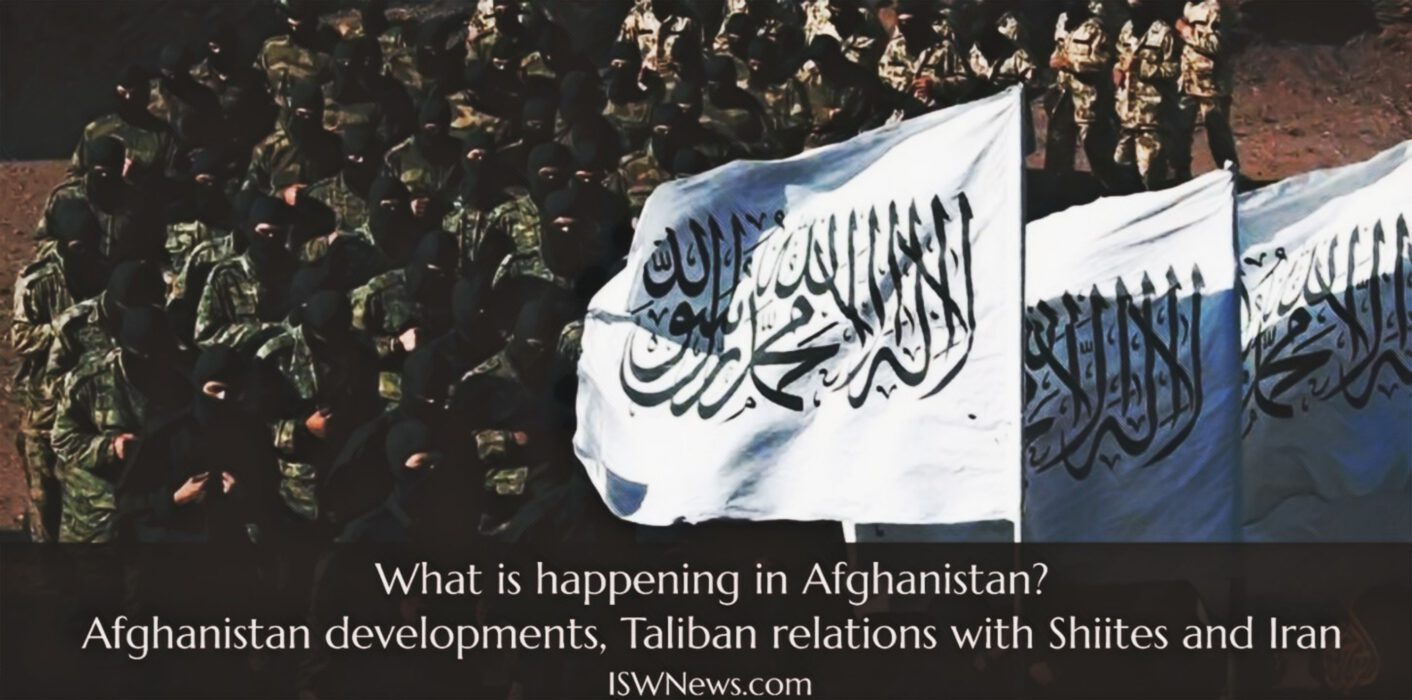
  • What is happening in Afghanistan? Afghanistan developments, Taliban relations with Shiites and Iran

    What is happening in Afghanistan? Afghanistan developments, Taliban relations with Shiites and Iran

    As the various dimensions of the recent Taliban activities become clearer and the positions of foreign and neighboring countries regarding the conflicts in Afghanistan become clearer, it is possible to examine the latest developments in this country:

    1- The latest military situation in Afghanistan:
    According to the latest news from the Afghan conflict, more than 90 other districts have been added to the Taliban-held areas since the beginning of the 1400 Solar Hijri year (since March 21), and clashes with the Afghan army are ongoing in many provinces of the country.
    Taliban spokesman Zabihullah Mujahid said the group’s militants would not attack provincial capitals until September 11, the date of Joseph Biden’s administration withdrawal from Afghanistan, because of its adherence to the Doha agreement. Zabihullah Mujahid claim comes as most areas of Kunduz, Sar-e Pul, Takhar, Ghazni, Kandahar and Helmand provinces have been captured by the Taliban and Afghan Army bases have been besieged by the Taliban.
    Now, with the rising tensions and clashes, the intra-Afghan talks have stopped and the leaders of different currents such as General Abdul Rashid Dostum, Atta Muhammad Nour, Muhammad Mohaqiq etc., are wearing military uniforms and are seeking to control the areas under their influence. Ashraf Ghani and Abdullah Abdullah have also been overshadowed by Western disregard, and their recent trip to the United States to seek the help and assistance of Joseph Biden has been fruitless.

    Among the reasons for the rapid advance of the Taliban are the government’s financial weakness in solving economic problems, the tactical weakness of the army, the lack of unity of the opposition tribes, the dissatisfaction of the people and the withdrawal of foreign troops, etc. Based on this, it seems that the Taliban will continue their progress in different provinces until the Americans leave Afghanistan, and during this period, they will force the government and currents of Afghanistan to accept their terms.

    2- What is the solution to the problems and disputes in Afghanistan?
    The roots of the Afghan war are mostly in ethnic and then sometimes religious differences. The common ethnicity of Taliban-minded individuals with the Pashtuns has strengthened the group in Afghanistan in recent years, and their differences with the Hazara and Tajik tribes, some of whom were Shiites, have shifted to a Shiite-Wahhabi religious war at some point in Afghanistan’s recent history. While not the Taliban are subject to Wahhabism nor are all Hazaras, Tajiks, etc., Shiites.
    In the past, the main body of the Taliban group considered their religious ideas based on the Hanafi religion, and in the years of their rule, they followed the principles of this religion. But this group has different spectrums and extremist allies such as al-Qaeda, the Haqqani network, etc., And this has strengthened the image of a religious war in Afghanistan.

    Certainly the solution to such disputes is not military intervention nor the formation of a puppet government of a foreign power. Rather, it requires a series of solutions.
    The following solutions are significant for solving Afghanistan’s problems:
    A- The union of scholars of different religions and elites of Afghan society
    B- Preventing the misuse of using the name of religious war for the ethnic-political war of the Taliban and ethnic currents
    C- Stopping the war and calling it illegitimate throughout Afghanistan
    D- Forming a parliament of all currents, ethnicities and religions And forming a government with trans-ethnic and trans-sectarian tendencies

    Otherwise, Afghanistan will continue to fall prey to two factors, the difference between “ethnicity” and “religion”.
    These solutions require international cooperation, especially in neighboring countries such as Iran, Pakistan and China. This is due to the cultural, economic and political capabilities and commonalities of these countries and, most importantly, the influence of these countries on Afghanistan.

    Some domestic and foreign media cite the permanent deployment of US and NATO forces in Afghanistan, the replacement of Chinese troops in Afghan military bases, the entry of Iran and the sending of Fatemiyun fighters to the war in Afghanistan, etc. as a way to end the war in Afghanistan, but in the reality they are making mistakes, and this mistake is due to their misinterpretation and lack of comprehensive understanding of the issues of Afghanistan in the last 50 years.
    Some think tanks and media outlets have also talked about plans to divide Afghanistan into northern and southern parts, or the Afghan federal government. These issues cannot be properly addressed until the complete withdrawal of foreign troops from Afghanistan, the fall or survive of the central government in Kabul, the transparency of the role of neighboring countries in Afghanistan, etc., are finally determined.

    3- Relations between Afghanistan Shiites and Taliban:
    Media stories about the Taliban massacre of Shiites, as well as Taliban claims that they did not attack Shiite areas of Afghanistan, are largely media taboo.
    The Taliban’s views and confrontations with the Afghanistan Shiites are far more moderate than those of extremist groups in the region, such as ISIS, Sipah-e-Sahaba, the Al-Nusra Front, and others, but their differences with the Afghan Shiites are primarily “racial” and secondarily “political” and finally, it is “religious.”
    The main discord between the Taliban and the Shiites of Afghanistan in recent years has been with two currents called the Unity Party (Hezbe Wahdat) led by Abdul Ali Mazari and its affiliates and the Islamic Movement of Afghanistan. The main cause of this discord was mostly the political positions of these currents in opposition to the Taliban and later the alliance with the Afghan Northern Alliance and ethnic differences with them.
    These discords were exacerbated by the Taliban’s non-compliance with the peace agreement with the Hezbe Wahdat and the clashes in Kabul in 1994 and the subsequent assassination of the party’s leader, Abdul Ali Mazari. The extremist actions of some Taliban commanders in dealing with Shiites in different areas in the following years also led to deepening differences.

    However, although the Taliban’s clashes with Afghan Shiites are mainly based on racial and political differences, the Taliban have not left a brilliant record in dealing with Afghan Shiites, as evidenced by recent clashes in Balkh, Maidan Wardak, Ghazni and Bamyan, Kajran district in Daykundi province, the massacre of Mirza Olang village in Sar-e Pol province, etc. And this is a matter of great concern to the Shiites of Afghanistan.

    Also, some erroneous analyzes have blamed the Hazara and Tajik Shiites for these differences and say that the resistance of the Shiites in Afghanistan has worsened the situation and caused some more acute problems, which is also wrong. The role of the Taliban extremist currents in shaping the religious process in Afghanistan has been more prominent than any other group; Because the Taliban, by allying with the terrorist group al-Qaeda, infiltrated the Wahhabi ideology in their commanders and forces, and the result was the rapid collapse of their government after the US invasion.

    Nevertheless, in spite of all the existing problems, now in the face of this important issue, we must be more comprehensive than ever and find the causes and try to solve them. By examining the trend and behavior of the Taliban in recent years, the Taliban organization has somehow tried to change the Taliban’s bad view of the Shiites, and we generally see more balanced and controlled behavior than in the past of this group. During the recent large-scale Taliban operation, most parts of Afghanistan have been captured by the Taliban through compromise and agreement with the elders of the districts.

    4- Iran-Taliban relations and Iran’s position on resolving Afghanistan disputes:
    Iran considers the solution of the problems of Afghanistan in the consensus and unity of all races and religions of this country; Because, based on his experiences since the beginning of the Islamic Revolution, he knows the West’s tactic for waging war, and that is nothing but inciting “racial” and “religious” differences.

    In general, the reasons for the establishment of relations between Iran and the Taliban in recent years can be summarized as follows:
    A- The Taliban, as the representative of a part of the people of Afghanistan, with whom it is necessary to communicate and talk in order to achieve peace and establish a comprehensive government in Afghanistan.
    B. Countering terrorist groups such as ISIS, al-Qaeda, etc., which have become more active with the US presence in Afghanistan. (Although the Taliban themselves have carried out many terrorist acts in the past and present, they have shown that they are resilient and that they can be effective in countering major terrorist groups such as ISIS and repelling regional threats.)
    C. Afghanistan is Iran’s eastern neighbor and communication with the Taliban is essential in order to establish security and control the eastern borders in parts that Taliban control.
    D. Communication with the Taliban is important to prevent war between the two countries, and this issue became necessary during the attack on the Iranian consulate in Mazar-e-Sharif and the events that followed in 1998.
    E) The issue of refugees and common economic interests, etc., including water resources, some of which are located in areas of Afghanistan controlled by the Taliban, and Iran must engage in dialogue and interaction with them to protect its interests.

    Despite the important reasons cited for the need for Iran’s relations with the Taliban, just as Iran had no role in creating the Taliban; and unlike Saudi Arabia and the UAE and Pakistan, Iran have never recognized the Taliban Islamic Emirate in Afghanistan and have not supported them militarily. Thus, the slander of Iran’s support for the recent movements of the Taliban and the overthrow of the central government is a baseless accusation by Westerners and Western figures, including Ashraf Ghani.
    In addition, Iran has always informed the official government of Afghanistan of the details of relations with the Taliban and has made extensive and comprehensive efforts to establish peace and security in the country with all currents.
    Thus, Iran’s relations with the Taliban are shaped by the sensitive situation in the region, and the pro-Western media tries to cover up the illegal actions of the United States and its allies, from invading and occupying Afghanistan to a unilateral agreement with one side (the Taliban) and ignoring other Afghan currents. And surely, they are trying to deceive the public opinion of the Afghan people and the people of the region to show Iran’s policy towards Afghanistan and the Taliban upside down.

  • The Iraqi factor in the struggle for Palestine

    The Iraqi factor in the struggle for Palestine

    Against the background of the brilliant victory of the Palestinians, the efforts of the brothers from the Iraqi resistance went unnoticed by many media outlets, but not by the main enemies of the Ummah. The Zionist portal MEMRI notes that the headquarters of Harakat Hezbollah al-Nujaba is located in Gaza, and its fighters took part in the fighting.

    Indeed, Al-Nujaba has an office in Gaza, and Sheikh Akram al-Kaabi has repeatedly warned of an imminent fight against the occupiers. The rapid progress of the “Iraqi revolutionaries” in the foreign policy direction has led to the fact that Harakat Al-Nujaba has literally surrounded the occupiers, since in addition to Gaza, Iraqi resistance fighters are present in Syria and plan to liberate the Golan, after which a view of occupied Palestine will open.

    Another example is the activities of the Kataeb Hezbollah. In its telegram channel, the Islamic organization posted a photo of its presence in the tunnels of Gaza, thereby pointing to the participation of the second Iraqi resistance organization fighting for the liberation of Palestine.

    KAF media published photos from Gaza tunnels

    The Iraqi resistance even posted a picture of the martyr on its website.


    Like al-Nujaba, Kataeb Hezbollah is actively involved in building the foundation of the anti-Zionist front Syria. In Iraq, the late martyr Muhandis developed a plan to build a ballistic missile system in the west of the country. Kataeb Hezbollah, being the “main pillar of the nervous system” of the Islamic Resistance in Iraq,

    successfully combines the struggle on three fronts – the Americans in Iraq, the Takfiri in Syria and the Zionists in Palestine.

    The Sadridist and Saraya Al-Khorasani factions can be added to the likely participants in future liberation wars. After all, both sides also have a presence in Syria. Thus, it is safe to say that in the next battles for Palestine, the Iraqis will play an important role on all fronts.

    In conclusion, it is worth pointing out that the Iraqi struggle against Zionism is nationwide and is supported by representatives of all local madhhabs. Talking about the Iraqi Sunnis and the Palestinian struggle, it is not difficult to guess that the above-mentioned factions of the Islamic Resistance, in the x-hour, will be joined by supporters of Grand Mufti Mahdi al-Sumadai, followers of religious figures in Fallujah, local Ikhwans and volunteers from among ordinary Sunnis who dream of taking revenge on the Americans for the murder of the legendary Soleimani and Muhandis.