Category: Opinion

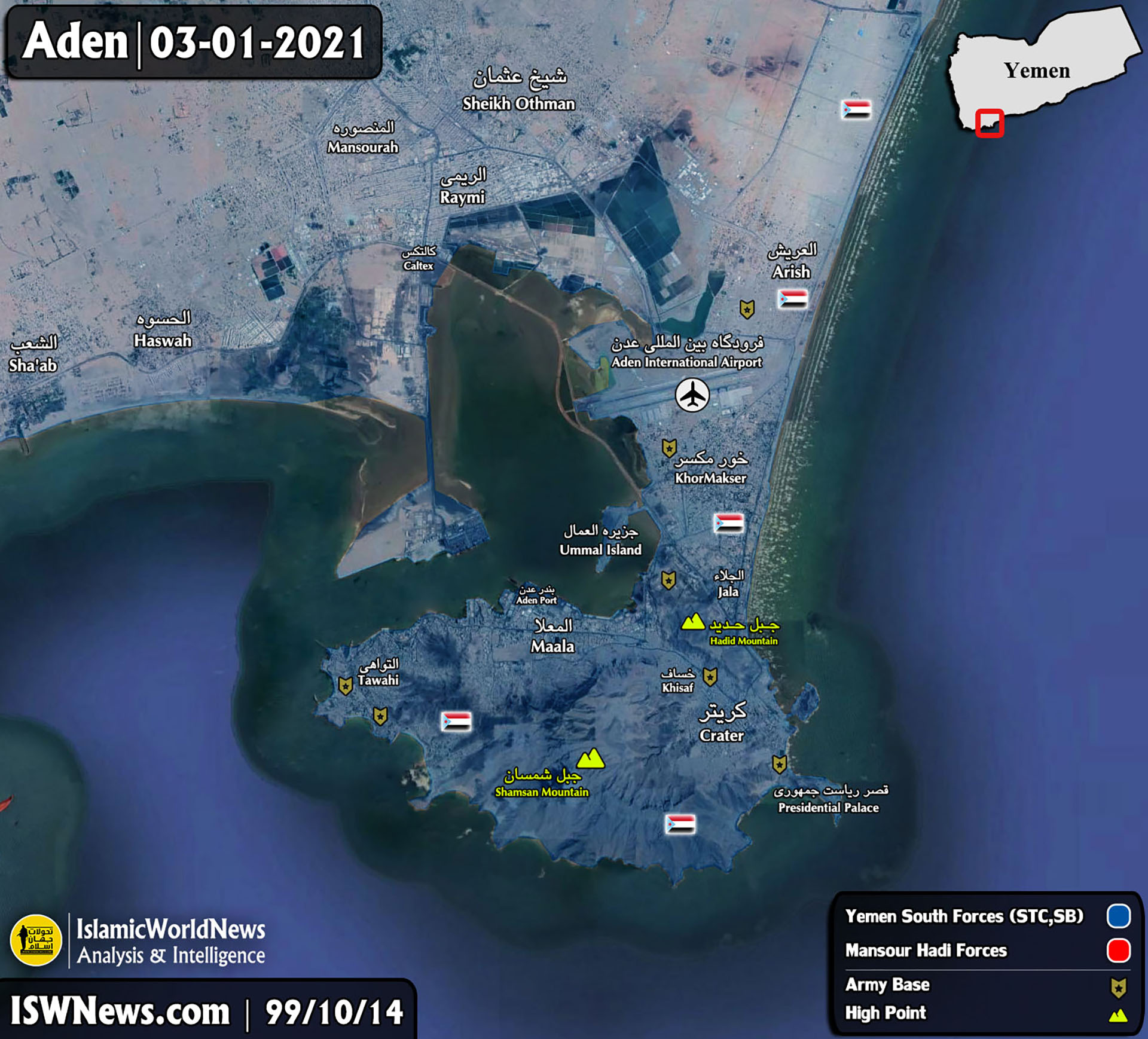
  • What are the reasons and purposes of the Aden explosions?

    What are the reasons and purposes of the Aden explosions?

    On December 30, when the new cabinet of the resigned government of Mansour Hadi arrived in Aden, the sound of explosions shook Aden airport, killing 26 people and injuring 84 others. So far, no group or individual has claimed responsibility for the attack, and the Saudi coalition media, as usual seeks to accuse Ansar Allah and Iran.
    The allegations come as the Iranian Foreign Ministry and embassy in Yemen, as well as the Yemeni rescue government, have condemned the rocket attack on Aden airport and denied the allegations.

    Following a rocket attack on Aden Airport and drone attack on the Aden Presidential Palace, various parts of Aden have come under attack again in recent weeks. The number of these attacks has reached 15 since the arrival of the new cabinet of the resigned government in Aden on December 30. These 15 attacks are generally bombings, landmines, assassinations, etc., which are different from the methods of used by Ansar Allah, and as mentioned in the past, these attacks can be the work of two groups:

    1. The Muslim Brotherhood, whose share of power has now diminished with the removal of two of their key ministers in the Hadi government. During the Riyadh Agreement, out of a total of 24 ministries, half of the ministries were transferred to the Southerners.
    Former Interior Minister “Ahmad al-Maysari” and former Transport Minister “Saleh al-Jabwani”, representatives of the Muslim Brotherhood in Mansour Hadi’s government, were ousted. Mansour Hadi also withdrew from introducing “Ahmad al-Issa”, the Brotherhood option for the Ministry of Economy.
    In fact, the Muslim Brotherhood in the new cabinet has been severely weakened and this level of isolation could lead to recent actions in Aden.

    2- But the other accused are the southern separatists who have problems with the unity of Yemen from the beginning and saw their goal in the division of South Yemen, and this goal has now been seriously overshadowed by the formation of a joint cabinet and the establishment of the government in Aden. This could be the best reason for the recent attacks and explosions in Aden which is similar to previous southerners attacks in these areas.

    Right now, this level of sabotage does not hinder the implementation of the Riyadh agreement, and it seems that the next step in the new cabinet of Mansour Hadi’s government is the Joining of the southern military and the army of the current government, as well as the consolidation of their weapons. The aim of this action is to launch new ground attacks against Ansar Allah positions under the leadership of the Saudi coalition.
    The coalition’s lack of manpower for a variety of reasons, including the cancellation of direct US involvement in the Yemeni war (following Trump’s defeat in the presidential election), the Sudanese refusal to participate in the fighting, and the inefficiency of Saudi and Emirati ground forces. Therefore there is currently no better alternative for them than the Yemeni mercenaries.

  • Consequences of US withdrawal from Afghanistan

    Consequences of US withdrawal from Afghanistan

    As we know, the United States has signed a unilateral agreement with the Taliban to find a dignified way out of the 19-year war in Afghanistan, which, if fully implemented, will still have different dimensions for the country’s future. From this perspective, we examine the issues facing Afghanistan:

    1- The current situation of the government and army of Afghanistan and its future:
    Having a strong military force is one of the essential components of achieving stability, peace, and ultimately establishing a capable government. Consequently, a capable and effective government and meeting the requirements and solving political and social problems can prevent the emergence of terrorist groups.

    Unfortunately, Afghanistan’s current government and army have a high financial and political dependence on foreign countries (US and NATO). Without their help, they will not be able to deal with the Taliban and ISIS groups.
    In the US peace agreement with the Taliban, the future of this government and military forces remains unclear, and only a political agreement is mentioned, and this is enough to worry other Afghan factions about the future of Afghanistan; Because Afghans have experienced such a vacuum in the years since the presidency of Mohammad Najibullah. At that time, the army collapsed due to chronic ethnic and factional differences, lack of strong leadership, reduced financial support, etc.

    The Taliban have not taken a formal and transparent position on the government so far and the military, referring only to their conversion to Islam by using a vague term.

    2- The position of the West Asian region countries and Iran about the consequences of the withdrawal of the United States from Afghanistan:
    Among the countries and powers in West Asian, Iran, Russia, India, China, Turkey and even Pakistan have the desire and the opportunity to partner with the Afghan army to avoid a power vacuum after the United States’ withdrawal.
    In the meantime, Iran has more suitable conditions to help Afghanistan’s stability for several reasons, including common culture and race, balanced relations with all Afghanistan groups, the Liwa Fatemiyoun army’s existence, etc.

    Iranian officials have also recently taken a positive view of further assistance in resolving the Afghan crisis, calling the Liwa Fatemiyoun an efficient force for Afghanistan’s stability.

    3- Intra-Afghan talks:
    In the first round of talks, the parties have agreed on the agenda and framework of their talks, and in the second round, which will be held in the coming days, they intend to discuss the issue of the “Islamic Transitional State”. The Taliban are also said to have demanded a 60 per cent share in the transitional government and a 40 per cent share of the opposition delegation and tried to legalize the Hanafi religion in the negotiations.

    There is no single voice on the Taliban front. On the one hand, Ashraf Ghani’s government emphasizes the establishment of a comprehensive ceasefire. It rejects regime change, and on the other hand, the factions present in the negotiating team are pursuing other positions.

    On the other hand, the clashes between the Taliban and the army continue, and the central government is facing the death of more than 10,000 people in these clashes. Furthermore, controlling some cities and regions such as Atghar city in Zabul province, the Helmand province’s western and southern regions have fallen into the Taliban’s hands. Despite such circumstances, it can be said that the Afghan peace talks are moving in an uncertain and unreliable direction.

    4- Change of government in the United States and the promise to leave Afghanistan:
    State of America of Obama, Trump and Biden on their election campaign promises so much about ending the war in Afghanistan and Iraq have provided. For a dignified exit, they have always sought to maintain the country as one of their bases by establishing a democratic government in Afghanistan, withdrawing their forces from Afghanistan, and ending their billion-dollar spending on security in the country. However, this goal has not been realized in the latest government effort to a deal with the Taliban Trump was unstable.

    US macro-policies in essential regions of the world, such as West Asia and Central Asia, are not something that can be changed by changing governments and political figures. With a proper railroad, the Americans will determine their government’s framework in each region and each issue. The peace agreement with the Taliban, the inter-Afghan talks, and any other program will be based explicitly on US pre-determined policy. Of course, this does not mean that Joseph Biden’s government is committed to a peace agreement with the Taliban and that any of them may call the Biden a violator of the agreement and leave it.

    In general, US goals in Afghanistan are:
    1- Overcoming the Taliban
    2- Establishing an effective Afghan government
    3- Maintaining military and security influence in Afghanistan

    These goals have been abandoned by a hasty and unilateral agreement with the Taliban and the handover of the government’s formation to the inter-Afghan talks. More importantly, the United States’ goals are in complete contradiction with the Taliban’s goals. In other words, the Taliban is 100% opposed to the US presence in Afghanistan, and it remains to be seen what decision Joseph Biden will take to confront the Taliban after taking over the US presidency.

  • Turkey’s presence in Afghanistan; mutual respect or expansionism? (1)

    Turkey’s presence in Afghanistan; mutual respect or expansionism? (1)

    In recent days Recep Tayyip Erdogan, president of Turkey, has asked for military presence in Afghanistan by submitting a plan, renewal of his country’s presence in Afghanistan for another 18 months, to his country’s parliament. This is while the USA and NATO have committed to the agreement of their military forces’ withdrawal from Afghanistan. Of course Turkey in recent years has not seen its presence in Afghanistan by occupation and colonization, and to create this view in Afghanistan, it has been taking extensive measures, including building schools, TV channels, and so forth.

    Generally the common reasons between Turkey and Afghanistan are as follows:
    1-Sunni religion 2-Racial affiliation with Uzbeks, Turkmen, Ghezelbash, etc. 3-Presence of Muslim Brotherhood in Afghanistan, Jamiat-e-Islami Party, in the body of Afghan government.

    Indeed, Turkey’s presence after 11th September and Afghanistan’s war entered a new stage as one of the members of NATO, and the Turkish government with special role of Ahmet Davutoglu and according to its national interests and taking into account political, economic, cultural, etc. consideration expanded its influence in Afghanistan and exploited its existing potentials in this country.
    Turkey began its military presence in Afghanistan in 2015 as a peacekeeping force, which initially reached 1079 and raised to 1206 in 2018. Erdogan, regardless of the USA peace agreement with Taliban, has demanded renewal of his country’s presence in Afghanistan for another 18 months.
    Turkey has a warm and close relationship with the Islamic party of Afghanistan and its leader, Gulbuddin Hekmatyar, in respect of ideas and stances as well as with General Abdul Rashid Dostum and the National Islamic Movement in terms of races. Somewhat these two parties can be considered Turkey’s main allies in Afghanistan.

    They believe that Turkey’s presence in Afghanistan, whether military or civilian, is based on absolute respect and observance of Afghan people’s rights, and is not for implementing colonialism and occupation.
    On the other hand, opponents of Turkish influence in Afghanistan, either militaristic or non militaristic presence of this country in Afghanistan, are not satisfied with Turkish cultural influence which is implemented by TV channels, schools, and so forth, and condemn the view of secular Islamic in Turkey.

    From previous years, Turkey has old relations with Afghanistan, and the government of Ottoman was the second country to announce Afghanistan’s independence from Britain. Turkey has established close links to Pakistan to fortify its influence in Afghanistan, and ita endeavors to reduce Iran’s mediation by its Uzbek and Turkmen neighbors.
    Turkey has been pursuing this issue before with the formation of Turkish countries council in 2009, and in general, it can be said that Turkey is trying to build a bridge between Azerbaijan and Turkmenistan to better exert its influence on Central Asian countries, including Afghanistan.
    Religious and racial commonalities are the main elements of Turkey’s foreign policy and in spite of the fact that Afghanistan is not a priority of Turkey’s foreign policy, the Erdogan government have not limited themselves to build military, cultural, etc. bases in this country, from Kabul and Mazar-e-Sharif to Jawzjan.

  • How will Marib be conquered? Part 3

    How will Marib be conquered? Part 3

    Following part two we covered the axes Ansar Allah can advance in Marib province. We are analyzing based on recent incidents in this axis.

    As mentioned before, following are axes Ansar Allah can advance in Marib and Al Jawf fronts:

    1- Cleansing Raghwan district
    2- To Kanayis base
    3- To Ruwaik base
    4- South of Marib
    5- West of Marib

    Ansar Allah launched missile attacks to Saudi coalition positions in Marib, by focusing on Tadawin camp which is the training and logistics camp for Saudi coalition. According to ISWNews Analysis Group local source, only in one of these attacks, one helicopter destroyed and more than 15 troops killed, from which 7 were Saudis.
    According to our investigation, Ansar Allah launched more than 8 drone and missile attacks to Tadawin base in the last month, during which 18 missiles of Badr 1 and Badr P-1 were used. This amount of attack shows the importance of Tadawin base in supporting Marib fronts against Ansar Allah.
    Considering Ansar Allah upper hand in ground conflicts and Saudi coalition loss of popularity in Marib, Saudi coalition increased deploying more of Al Qaeda and ISIS terrorists to Yemen. According to local sources, in the last stage of Al Qaeda and Saudis collaboration, three Al Qaeda commanders, Abdullah Ali Hamad Miqan, Raid bin Saud bin Muali and Salman Ali Hamad Miqan who participated in Syria war, along with tens of terrorists came from Syria to Marib. Therefore, one of the reasons for AnsarAllah’s continuous missile attacks go Saudi coalition bases in Marib including Tadawin, is to weaken the logistics and ties between Al Qaeda and the coalition.

    Ansar Allah has two strategies to conquer Marib: 1. Military operation, 2. Negotiating with the tribes.
    According to local sources, some of Marib tribes recently had a meeting with the topic of the war issues and Marib battle and issued a statement “Marib youths unity” which has the following points:
    a) Marib tribes suffered 6,326 deaths and 21,448 wounded and are not afraid of battle.
    b) Foreign forces should leave Marib province to end the war.
    c) All the elders of Marib tribes in a united stance should negotiate with all sides of the conflict specially Sanaa (Ansar Allah) to keep the Marib away from war and bloodshedding.
    d) Controlling and positions of Marib should be left to the youths of the tribes and city.

    Therefore, tribes’ pressure on Islah party and Mansoor Hadi resigned government has increased and will reach its peak when Ansar Allah arrives at the western gates of the city. It is said that Abidah tribes (in east of Marib) started talking with Ansar Allah which helped Ansar Allah significantly to claim Marib.

    In conclusion, Ansar Allah has two strategies of “negotiation with tribes Murad and Abidah” and “intensifying missile attack to the coalition bases” and by preparing in Sarwah district the operation in west of Marib will start soon.

  • How will Marib be conquered? Part 2

    How will Marib be conquered? Part 2

    In previous years, Ansar Allah’s advance was stopped behind the gates of Marib, but after Operation “Fa’amkana Minhom” in al-Jawf Province and Ansar Allah Operation in the north of al-Baydha; The ground for the liberation operation in Marib province was again provided for Ansar Allah.

    In the first article, we introduced the Saudi coalition military bases in the provinces of Marib and al-Jawf, which formed the defensive line of their positions, and the main focus of the coalition’s operations in the war was the “conquest of Sanaa.”

    After the start of Ansar Allah operation in Marib province, which was preceded by two operations, “Fa’amkan Minhom” and the peration north al-Baydha against al-Qaeda and ISIS, Ansar Allah succeeded in liberating the districts of Majzar, Madghal, Maheliyah and Rahbah, and clashes continue in the districts of Raghwan, Sarwah, Jabal Murad, al-Abdiya, al-Jubah and Huraib.

    Currently, Ansar Allah has almost broken the main defensive line of the Saudi coalition in Marib by capturing four Labanat base, al-Khanjar base (in al-Jawf province), al-Jufra base and Maas bases in the west of Marib province, and the precision missile and drone strikes on the bases of Sahn al-Jinn, Tadawin, the third military zone, al-Ruwaik, and… have led to the weakness of the coalition in supporting the front lines. Therefore, it can be said that the military power of the Saudi coalition in Marib province has been drained and the conflict between the two main sides of the Yemeni war, namely Ansar Allah and the resigned government of Mansour Hadi, in Marib province is nearing its final step.

    Now, Ansar Allah must achieve the following in order to complete its victory in the west of Marib province:

    1- Clearing the district of Raghwan:
    Negotiations with some tribes have been effective, but most of the tribes in the Raghwan area are resisting Ansar Allah, whose defeat is imminent.

    2- Moving in direction of Kanayis base:
    The clearing of this base will also lead to the security of eastern parts of al-Jawf, and the coalition attacks on the Labanat base and the eastern villages of al-Hazm city will no longer be possible.

    3- Moving in direction of al-Ruwaik base:
    This route will be militarily costly due to the desert climate, because it will put Ansar Allah’s equipment and forces within the reach of the coalition air force. Therefore, it does not seem that Ansar Allah will make the final attack on Marib from this route. However, this route is important for imposing a siege on Marib or controlling al-Safer oil resources.

    4- Moving from the south of Marib:
    The Murad tribes are among the main and staunch supporters of the Yemeni Muslim Brotherhood and the resigned government of Mansour Hadi in Marib, who generally reside in the southern and central district of Marib province. Although it is difficult and time consuming for Ansar Allah to cross this route, but while reducing the Saudi coalition power on other fronts, it leads to the decrease of the coalition popularity among the people of Marib. The heights of Jabal Murad district, and the two bases of Rabish and al-Khashina are also among the important points of these areas, the clearing of which is considered as the control of the south of Marib province.

    5- Moving from the western route:
    The main axis of entry into the city of Marib for Ansar Allah is the Sanaa-Marib road and the Sarwah-Marib road. Ansar Allah’s domination of the Marib Dam and its western heights could lead to the surrender of the city without conflict. In this regard, Ansar Allah must push back the Saudi-led coalition forces from the bases of Sahn al-Jinn, Tadawin and the third military zone.

    As we have mentioned before, Ansar Allah does not seek to impose defeat on the Saudi coalition and push them back to control Marib, but seeks to consolidate the coalition’s defeat in the region, end Mansour Hadi’s belligerence, and reject their (Muslim Brotherhood) ideology for the model of governing Yemen.
    Nevertheless, Ansar Allah used to consider the Yemeni Muslim Brotherhood as one of the political factions and wanted to interact with them. However, this faction has not shown flexibility in its actions with Ansar Allah and even the southerners. Undoubtedly, Marib is their most important base, and with its liberation by Ansar Allah, the resigned government will face many problems in other areas under its control, which could eventually lead to the collapse of their current.

    Click to see the full size map

    YOUR SUPPORT IS CRITICAL TO KEEP ISWNews ALIVE!


    I’d like to thank readers for their confidence and support. Thanks to your support we can continue to perform our duty on reporting the important events in the region. So If you like our contents, please don’t feel embarrassed to contribute and help our project, for as little as 1 Dollar. Your contribution, however small, will help ensure our project continuity. Thank you.


  • Where is the Yemen war heading? Part 2

    Where is the Yemen war heading? Part 2

    1- Ansar Allah operation in Marib province:
    In recent days we see that Ansar Allah operation is changing courses from south of Marib to west of the province and the conflict is continuing to liberate Raghwan district and Maas base. As stated in article “Audience Question: Why Ansar Allah Operation in Marib Slowed Down?“, Ansar Allah started negotiation with Raghwan district tribes to stabilize the advances, similar to other areas of Marib province, and it is expected that these tribes join the peace process and condemning Saudi coalition assault. Otherwise these tribes won’t be significant adversaries even in case of any support of Saudi coalition.

    Maas base has fallen from military point of view but Ansar Allah advances slowly due to mine field around the base, however its complete liberation is soon. Following the liberation of Maas base, Saudi coalition hand to target the capital and in media war regarding the engagements in Nihm district will be emptied and the direction of the engagements will go toward Marib town and north and south of the province.

    2- Saudi coalition media war:
    The coalition media emphasize on two points, as usual: a) Sabotaging Iran diplomatic activity in Yemen and b) Belittling Ansar Allah victories.

    As an example Saudi coalition media released a list claimed that Ansar Allah suffered a casualty of 230 forces in Marib battle recently, which are far from truth. Since Saudi coalition actually “withdrew tactically” and the level of conflict is not that intense to cause such casualties.

    On the other hand, Iran’s diplomatic endeavor in Yemen, which started by sending new ambassador to Yemen, is now the coalition media main target now. Mr. Hasan Irloo influential activities include meeting with political officials, families of martyrs, participating in popular events, etc., which are useful to enhance the bilateral relations of two countries and also on Ansar Allah domestic policies. Iran’s diplomatic steps in Yemen is a good start to end Yemen siege, in general. Accelerating these endeavors and encouraging other allies of the Resistance to open their embassies in Sanaa helps with breaching the siege ASAP.

    3- Negotiation halts and rejecting UN proposition:
    Ansar Allah and Saudi delegates talks are a mean still active in Oman, whose latest outcome was the recent POW exchange agreement, during which American, Saudi, Sudanese, … prisoners were exchanged with a higher number of Ansar Allah POWs. The negotiations, which suggested by UN, finally came to the conclusion by UN proposal which was rejected by Ansar Allah leader.

    UN proposal draft was as follows:

    • Paying the salaries of all employees based on the 2014 salaries. (before war started).
    • Comprehensive ceasefire effective immediately after signing and forming military committees supervised by UN with presence of both sides.
    • Resuming political activities and economical and humanitarian efforts to reduce the suffer of Yemeni people due to six years war.
    • Releasing all of the POWs of both sides according to Stockholm agreement.
    • Opening Sanaa international airport and lifting the limitation of oil and cargo ships sailing and immediate permit to repair Safer tanker. The Safer tanker is damaged at Al Hudaydah harbor and if it sinks, it has severe impact on the environment.
      It was natural that this proposal is rejected by Ansar Allah since they were included in the Stockholm agreement and Saudi coalition did not respect them. According to the latest updates, Ansar Allah conditioned the continuation of the talks to reopening of Sanaa airport and Al Hudaydah harbor according to Stockholm agreement, in their messages to UN and Saudi coalition.

    4- Socotra:
    Socotra island with an area of 3,650 km2 lays in south of Yemen and Indian ocean and has a good overlook on Bab al-Mandeb strait. Bab al-Mandeb strait is the connection point and the main maritime passage between the horn of the Africa and west of Asia which connects the Red sea to Aden gulf and Arab sea.
    Most of the oil and gas export from the Persian gulf, which are exported to Europe and the rest of the world via Suez canal or SUMED, goes through this strait. According to Eritrean sources, Israeli regime is establishing a military/security base in Emba Soira mountain, 135 km south of Asmara, capital of Eritrea, since 2016. This mountain is the highest peak in Eritrea with 3018 m height. Therefore Israel has full overlook over Bab al-Mandeb strait with this base and Socotra island.

    Socotra island is more vulnerable to secession due to its distance from mainland Yemen. Considering the recent activities of Saudi Arabia and UAE to build many bases and changing the demographics of the island, Ansar Allah should pay attention to it. Drone and missile attacks to Saudi coalition in the island can be a good start to reclaim the sovereignty of the island back to Yemen.

    Conclusion:
    Ansar Allah should launch operations end the war after six years of resistance. Operations to give Ansar Allah higher stakes and forces the enemy to accept the peace. Otherwise Saudi coalition doesn’t have any problem with damages and multi billion dollars expenses of the war in Yemen. Since they are to be used for this purpose. Liberation of Marib, Aden, Al Hudaydah coast and extensive drone and missile attacks against Aramco structures and UAE economical points can seriously help to end the war. The lift of siege of Yemen which is important to end the war can be only done by Iran and other Resistance countries diplomatic efforts, which are expected to accelerate soon.

  • The peace agreement between Azerbaijan and Armenia; Who is the winner of this conflict?

    The peace agreement between Azerbaijan and Armenia; Who is the winner of this conflict?

    Prior to the agreement, three other ceasefires had been announced in Nagorno-Karabakh, which none of them lasted. But Russia’s more serious entry as a major player in the Fourth ceasefire ended the fragile agreements and ceasefires in the Nagorno-Karabakh.

    The Azerbaijan-Armenia peace agreement has nine main clauses and is summarized as follows:
    1- Complete cessation of clashes and stop in the current positions
    2- Delivery of Agdam region to Azerbaijan
    3 and 4 – Deployment of Russian forces in Nagorno-Karabakh
    5- Establishing a center to monitor the implementation of the agreement
    6- Delivery of Kalbajar and Lachin regions to Azerbaijan
    7- Return of refugees to Karabakh
    8- Exchange of prisoners and corpses
    9- Establishing a transit corridor between western areas of Azerbaijan and Nakhchivan region

    At first glance, this agreement may seem like a complete victory for Azerbaijan and a defeat for Armenia, or at least Azerbaijan has achieved what it wanted from Nagorno-Karabakh. However, with a further examination of this agreement and the deployment of Russian forces in the Nagorno-Karabakh region, many questions and ambiguities arise about the fate of this region, which we will examine on a map to better understand this agreement.

    – Green hached are regions that scheduled to be returned to the Republic of Azerbaijan within a certain period of time. The Kalbajar region will be handed over to the Republic of Azerbaijan by November 15, the Agdam region by November 20, the Lachin region and the occupied territories of Gazakh by December December 1.
    The important point about this issue is that “not” all the districts(Rayons) of Agdam, Kalbajar and Lachin, but also the areas that were occupied by the Armenian forces outside the “Nagorno-Karabakh Autonomous Region” will be returned to Azerbaijan. For example, the eastern half of Rayon Kalbajar is located in the “Nagorno-Karabakh Autonomous Oblast” and these areas will remain under the control of Armenian forces and only the western half of Kalbajar will be handed over to Azerbaijan. The same is true about a small part of western areas of Aqdam Rayon too. In other words, the “Nagorno-Karabakh Autonomous Oblast” mechanism is still in place in these areas.
    Regarding the two occupied points in the Gazakh region in northwestern Azerbaijan, it is noteworthy that despite the agreement to return the two points to the Republic of Azerbaijan, the next statement issued by Russia does not mention the status of these two points. And how to solve this issue is unknown. It is said that the original text of the agreement has been leaked and in the next version, which is the original version, this part has been modified and deleted.

    – Blue hached are areas where 1,960 Russian peacekeepers with 90 armored vehicles and 380 vehicles and special equipment will be stationed.
    If we look closely at the deployment of Russian forces in the Nagorno-Karabakh region, it is quite clear that these forces will be stationed exactly inside and on the borders of the “Nagorno-Karabakh Autonomous Oblast.” This means that in fact the “Nagorno-Karabakh Autonomous” will be recognized for Armenia and will remain in the possession of Armenian forces. Although this issue is not mentioned in the text of the agreement, but in practice it will mean that.
    In addition to this issue, it should be added that: The text of the agreement states that the Russian peacekeeping forces will remain in the region for 5 years, and if there is no particular problem, this 5-year period will be extended for another 5 years. And these courses will continue indefinitely. Clearly, this also confirms and extends the survival of autonomy in Nagorno-Karabakh.
    Nonetheless, these areas are separate from the areas captured by the Azerbaijani army during the recent operation in the Nagorno-Karabakh region.
    If we look closely at the southern regions of Karabakh, and especially the southern regions of the “Nagorno-Karabakh Autonomous Oblast”, it is clear that the Azerbaijani forces have taken control of a small part of the southern “Nagorno-Karabakh Autonomous Oblast” and most of the achievements are in areas occupied by Armenian forces outside the “Nagorno-Karabakh Autonomous Oblast.”

    – On the map, the progress of Azerbaijan army in the Nagorno-Karabakh region is shown in yellow.
    Obviously, this is a very good victory because the Republic of Azerbaijan has been able to liberate almost all the southern regions of Karabakh, but on the other hand, this should not be too bad for Armenia either; Because in general, the areas around the “Nagorno-Karabakh Autonomous Oblast”, both in the north and in the south of Karabakh, are officially and internationally part of the territory of Azerbaijan, and the Armenian forces, which occupied the areas around the “Nagorno-Karabakh Autonomous Oblast” in the last 28 yeasr, are now giving the lands to its owner in the south by military force, and in the north by the recent agreement.
    Therefore, Armenia can consider the occupied territories around the “Nagorno-Karabakh Autonomous Oblast” as a negotiating card, which it is now handing over, and in return will take over most of the “Nagorno-Karabakh Autonomous Oblast” region.
    The Republic of Azerbaijan has also achieved its goal to return the 7 occupied cities of Karabakh. Nevertheless, it is worth mentioning that Azerbaijan demands all of Nagorno-Karabakh, and with the current situation and the field conditions, this issue has not been achieved.
    Because most of the “Nagorno-Karabakh Autonomous Oblast” with the support of Russia remains under the control of Armenian forces for an indefinite period of time.

    Another important issue that should be considered is Russia’s opposition to the presence of Turkish forces in Nagorno-Karabakh. The President of Azerbaijan stated in a televised speech on the agreement to end the war in Nagorno-Karabakh that, in addition to the Russian peacekeeping forces, the Turkish peacekeeping forces will also be stationed in Nagorno-Karabakh. But the Kremlin said in a statement that the issue was not mentioned in the agreement and that the leaders of Russia, Armenia and Azerbaijan had not agreed on the deployment of Turkish troops in the Nagorno-Karabakh region. According to the statement, the presence of Turkish troops in the Nagorno-Karabakh region is virtually rejected, and this implicitly confirms Russia’s support for the continuation of autonomy in the remaining areas of the “Nagorno-Karabakh Autonomous Oblast.”
    In general, the presence of Turkish forces in Nagorno-Karabakh or direct land links between Turkey and the Republic of Azerbaijan is a strategic threat to Russia, a threat that reduces Russia’s influence and hegemony in the Caucasus and the Caspian Sea and then in Central Asia. In other words.it will increase Turkey’s power and influence in the region; This is definitely against the wishes and policy of Russia. Therefore, Russia is trying to prevent this from happening.
    Russia’s opposition to the official deployment of Turkish forces in Nagorno-Karabakh can be interpreted from this perspective.

    – Another important issue is the establishment of a new transit and transportation route between Stepanakert and Armenia along the Lachin corridor for three years, as well as the establishment of a safe transit route between the west of the Republic of Azerbaijan and the Nakhchivan region through Armenia. These routes also will be secured by Russian FSB forces.
    Comparing these two routes, it can be concluded that Armenia provides Azerbaijan with a safe transportation route in exchange for a safe transportation route to Stepanakert. This also means that Azerbaijan implicitly accepts the autonomy of Nagorno-Karabakh in exchange for Azerbaijan’s direct connection to the Nakhchivan region.
    On the map, the new transit and transportation route between Stepanakert and Armenia has been marked with a red arrow and the possible communication route between Azerbaijan and Nakhchivan has been marked with a yellow arrow. Nonetheless, there is a railroad in the south of Armenia and near the borders of Iran, the use of which can also be on the agenda.

    – Another important issue is the return of refugees to Nagorno-Karabakh. During the Karabakh war, Azeri residents in various parts of Karabakh, including Khojaly, were driven out of the “Nagorno-Karabakh Autonomous Oblast” or Armenians expelled from the southern part of Nagorno-Karabakh, such as Hadrut, during the last two months of fighting; The mechanism for the return of the displaced persons is not explicitly mentioned in the agreement, and so far none of the officials of the parties have commented on it. The city of Shusha is an example of this problem; Shusha is now under the control of the Republic of Azerbaijan, and if this clause of the agreement is to be implemented, Armenians and Azeris must be present together in Shusha, which seems impossible in the current situation.


    In general, this agreement, beyond what the parties claim is neither an absolute victory nor an absolute defeat Rather, so far each side has achieved a certain amount of its own goals; The difference is that Azerbaijan has achieved somewhat slightly more than Armenia.
    The Republic of Azerbaijan acquired the territories around the “Nagorno-Karabakh Autonomous Oblast” (plus parts of the south of the “Nagorno-Karabakh Autonomous Oblast”) after 28 years. On the other hand, Armenia gained autonomy (at least nominally) and a presence in the “Nagorno-Karabakh Autonomous Oblast”.
    The Republic of Azerbaijan achieved a direct land route with the Nakhchivan region, and on the opposite side of Armenia achieved a direct land route to the center of the “Nagorno-Karabakh Autonomous Oblast”, the city of Stepanakert.

    Regarding the future of the Nagorno-Karabakh region, according to the existing agreement, there are many issues and ambiguities that are not mentioned at least in the text of the contract, and this issue will be problematic in the future and will bring an uncertain future for Nagorno-Karabakh. At present, with Russia’s direct entry into Nagorno-Karabakh, its influence and pressure on the region has increased, and on the other hand, important political developments are taking place in Armenia, and the lines of contact and conflict will always be a place for escalating tensions. Anything is possible in the future, just as Azerbaijan recaptured Nagorno-Karabakh after 28 years of renewal, it is not unlikely that Armenia will pursue a similar policy towards Azerbaijan, or even the odds prepare conditions for the continuation of the Azerbaijani army operation in Nagorno-Karabakh.

    And the Karabakh conflict is still continue…

    Click to see the full size map
  • Karabakh War the graveyard of national governments; Will the pro-Western government of Pashinyan be overthrown?

    Karabakh War the graveyard of national governments; Will the pro-Western government of Pashinyan be overthrown?

    Relations between Azerbaijan and Armenia over the disputed region of Nagorno-Karabakh have been strained since the start of the war on September 27. According to Russian President Vladimir Putin, this bloody war has killed 5,000 people and has shown a different face of new battles. The Armenian army has lost airspace in the Nagorno-Karabakh region in the face of Israeli and Turkish drone strikes. Many attribute this to the deterioration of equipment and low-tech weapons and old anti-aircraft radars.
    Of course, the country’s ground forces also leave their strongholds and retreat, leaving weapons, ammunition and equipment on the battlefield. Such behavior is very strange in a classic army. Usually, any experienced soldier destroys weapons, equipment and ammunition while retreating, which is less common in this war. Even the newly deployed forces of Armenia to Nagorno-Karabakh are facing a shortage of supplies and the logistics of Armenia are practically inoperable. Their border forces also withdrew along the border lines of the occupied territories with Iran without any special resistance.
    The Armenians lost control of the Mataghis Dam (Sugovushan) and the Aras Dam, the cities of Fuzuli, Jibrayil, Hadrut, Zangilan and Qubadli, and Azerbaijan reached the international border of Armenia along the Aras River. Even the Armenian Defense Minister admits to successive defeats. The display of the destroyed and looted equipment of the Armenian army and the capture of the Armenian forces by the Azerbaijani coalition have also greatly lowered the morale of the Armenian forces. However, the resistance of the defense forces of the Nagorno-Karabakh region during the recent battles has been far greater than that of the Armenian army, which is also very strange.

    Many have so far cited the power of the coalition forces of Azerbaijan, Turkey, Pakistani Army Special Forces, Syrian and Caucasian terrorists as the main reason for the superiority on the battlefields with the Armenian forces.

    But why have the Armenian Armed Forces done so little over the past month except to retreat and counter-attack?

    Although the Armenians are positioned in the highlands, they do not make good use of this advantage, and Azerbaijani forces have reached the vicinity of Shusha and the Lachin crossing, which threatens the most important communication corridor between Armenia and Nagorno-Karabakh.

    Air and artillery strikes inside Armenia have also destroyed some military equipment inside the country. The Prime Minister of Armenia has asked the Russian Federation for help in concluding a defense and military pact, which has been met with a cold reaction from the President of the Russian Federation, Vladimir Putin.
    Putin has stated that he is willing to intervene militarily in favor of Armenia only if Armenian territory is attacked, which shows a clear difference of position with the history of the Russians in the first Nagorno-Karabakh War.
    However, Russia, with its military base in Gyumri, could thwart all efforts by hostile forces with its air force and air defense in the area.

    Iran has also closed the Norduz border terminal on the border between East Azerbaijan Province and Armenia, and some believe this is due to internal pressures from pro-Azerbaijani rallies in Azeri cities. In any case, Iran’s move to suspend economic relations with Armenia has caused more economic problems for Armenia, as Georgia’s borders with Armenia have been closed and the situation in Armenia is deteriorating.

    In addition to the above, the Prime Minister of Armenia dismissed the Border Command of the country due to the shooting in “ceasefire conditions” from inside Armenia to Azerbaijani forces on the Aras border and the reciprocal response of Azerbaijani forces. Although Azerbaijan denies any response to the fire of the Armenian side, the fire of both sides is undeniable. Also, the three-time violation of the ceasefire during the war, which both sides accuse each other of, is not something that can be considered the will of the political parties.

    If we study the history of the armed forces of the countries that inherited the former Soviet Union, we come across strong relations between the armed forces of these countries and Russia, which raises the issue of influence in the military forces of these republics.
    It is not yet clear whether the Russian elements are violating the ceasefire, but there are hands on the Armenian side that are leading the way to military defeat, political instability and protest. Armenia’s political atmosphere is against Prime Minister Pashinyan, who effectively controls the government and the commander of the country’s military. A number of political activists and the media have criticized his actions in the Nagorno-Karabakh conflict.

    But why should such a thing happen in Armenia during a war?

    The political record of the Prime Minister of Armenia Nikol Pashinyan shows that he has entered the field of politics from the world of journalism (editor of Haykakan Zhamanak newspaper) and has a history of opposition to the pro-Russian government in 2007 and political imprisonment, which was pardoned in 2009. Pashinyan, who has been a member of parliament for the country since 2012, founded the “Civil Contract” party in 2015 and the “My Step Alliance” in 2018.

    He was the main protester against the results of the 2018 National Assembly elections and the victory of Serzh Sargsyan, the Former President and (pro-Russian) Republican Candidate, and called the election results fraudulent.

    Pashinyan was able to organize a wave of opposition against Sargsyan by marching from the city of Gyumri to Yerevan, and Sargsyan resigned as prime minister on April 23. Pashinyan became prime minister on May 8 of that year by a majority vote. But his promises to solve the challenges of previous periods without a proper solution not only failed, but also led to popular protests and opposition before the Karabakh war.

    The distinguishing feature of Pashinyan in this period can be called the greater Westernization and diminishing of Russia’s political and economic role in Armenia. Attending NATO military exercises, establishing economic ties with the European Union instead of Russia, and making controversial remarks about the Gyumri base have been hot topics during his tenure. The Pashinyan government’s determination to join the North Atlantic Treaty Organization (NATO) also exacerbates Iran’s concerns, which is against the national interests of Iran.

    Opposition initiative

    During a meeting with the Prime Minister, Robert Kocharyan andSerzh Sargsyan proposed his resignation in order to find a way out of the crisis, and it is not unlikely that if the prime minister refuses, the option of a march and a military coup to save the country from military defeat in the Nagorno-Karabakh war will happen, which in the current situation will be accepted by the majority of the country’s society.

    It can be argued that the recent war has provided the greatest opportunity for Russian supporters in Armenia to oust the Pashinyan under the pretext of inefficiency and military defeat, and to end the work of the pro-Westerners in this country.
    Of course, Pashinyan, as a journalist, has not learned a lesson from the history of the Nagorno-Karabakh war. A similar scenario was planned in 1992 for Azerbaijani President Ayaz Mutalibov, in which the militants of the Azerbaijani Popular Front (supporters of Abulfaz Elchibey) evacuated the Lachin and Shusha fronts against the invasion of the Armenian army and after the Khojaly tragedy, these militants ended the life of the government with the presence of several thousand forces in Baku and in front of the Presidential Palace.
    However, the next government of Azerbaijan did not last long, and the military defeats combined with the economic crisis and the political coup of Heydar Aliyev, which had the political support of Iran, led to the collapse of the “Abulfaz Elchibey” government and the political and military elements of the “Abulfaz Elchibey” government were dismissed and imprisoned as the cause of Azerbaijan’s defeats.

    Such a possible change could change the course of the recent war, and Armenia, with the support of the Russians, this time will show a new face with a new strategy that will not be pleasant for the Azerbaijani coalition at all. This unhappiness starts from the fact that the Azerbaijani coalition, like a gambler, has put all its cards on the table and its military strategy has been known over the past month. The air superiority under the flight of drones, heavy shelling, infiltration of commando groups behind the opponent’s front and then armored and infantry attacks of Azerbaijan is a strategy that has nothing to hide.
  • Lebanon goes back to first step

    Lebanon goes back to first step

    First. Saad al-Hariri and the Future Movement, and more generally the March 14 Alliance, are among the main founders of the status quo.
    The fact that he enters the scene as a hero shows the deterioration of the situation.
    According to some analysts, when the Lebanese compromising movement realized in the October protests last year that Hariri could no longer be supported due to the circumstances, he took control of the protests and implemented the statelessness project in Lebanon.
    With various crises and pressure on the Diab cabinet that came to power after Hariri, they sought to blame the current situation on March 8 Alliance, which had a large presence in the Diab cabinet.
    While in the worst case they were the heirs of the situation and not its founders. Now, with this tactical retreat in recent months, they are introducing Hariri as the last chance, even though, according to Nizar Hassan, Hariri himself represents the millionaires.

    Second. Given the deplorable situation, Hariri and his entourage are expected to use a non-partisan or technocratic cabinet as much as possible and even avoid political disputes to maintain their relatively tarnished image.
    For this reason, Hariri will try to advance the issue of Hezbollah with the help of the French order to accept Hezbollah as a whole and relatively peaceful changes in it, and not the Saudis and the likes of Samir Geagea.
    Although it is not yet clear how Al Saud will react, which has a history of taking Hariri hostage and taking a clear stance on Hezbollah, and what would be the Al-Saud reaction to Hariri’s greater desire for France?
    Contrary to Saudi Arabia’s vague positions, the Lebanese Forces Party party, led by Samir Geagea, has claimed that it has 15,000 troops and can fight Hezbollah! With all the above interpretations, it should be noted that Saad Hariri, who has French citizenship, also has Saudi citizenship, and it seems that the option of good police – bad police is more probable.
    It goes without saying that Macron is trying to show himself as the savior of Lebanon in order to at least overcome the problems, given the US election and the involvement of Americans in internal affairs and trying to find an independent identity from the United States, as well as the history of Lebanese colonization and cultural closeness. However, his remarks and falling into the trap of Erdogan regarding the Prophet of Islam could affect the degree of his acceptance and the nature of the implementation of his plans in the Middle East and Lebanon.

    Third. Hezbollah’s position must be judged beyond zero-sum thinking. Hezbollah did not declare its support for Hariri and only wished success to the future government and does not involve itself in Hariri’s possible mistakes.
    And Hezbollah, on the other hand, by not creating a problem in the way of forming the government, says no to the continuing statelessness in Lebanon. However, it remains to be seen whether Hariri crosses the Shiite red line, the two ministries of finance and health.

  • Where is the Yemen war heading? Part 1

    Where is the Yemen war heading? Part 1

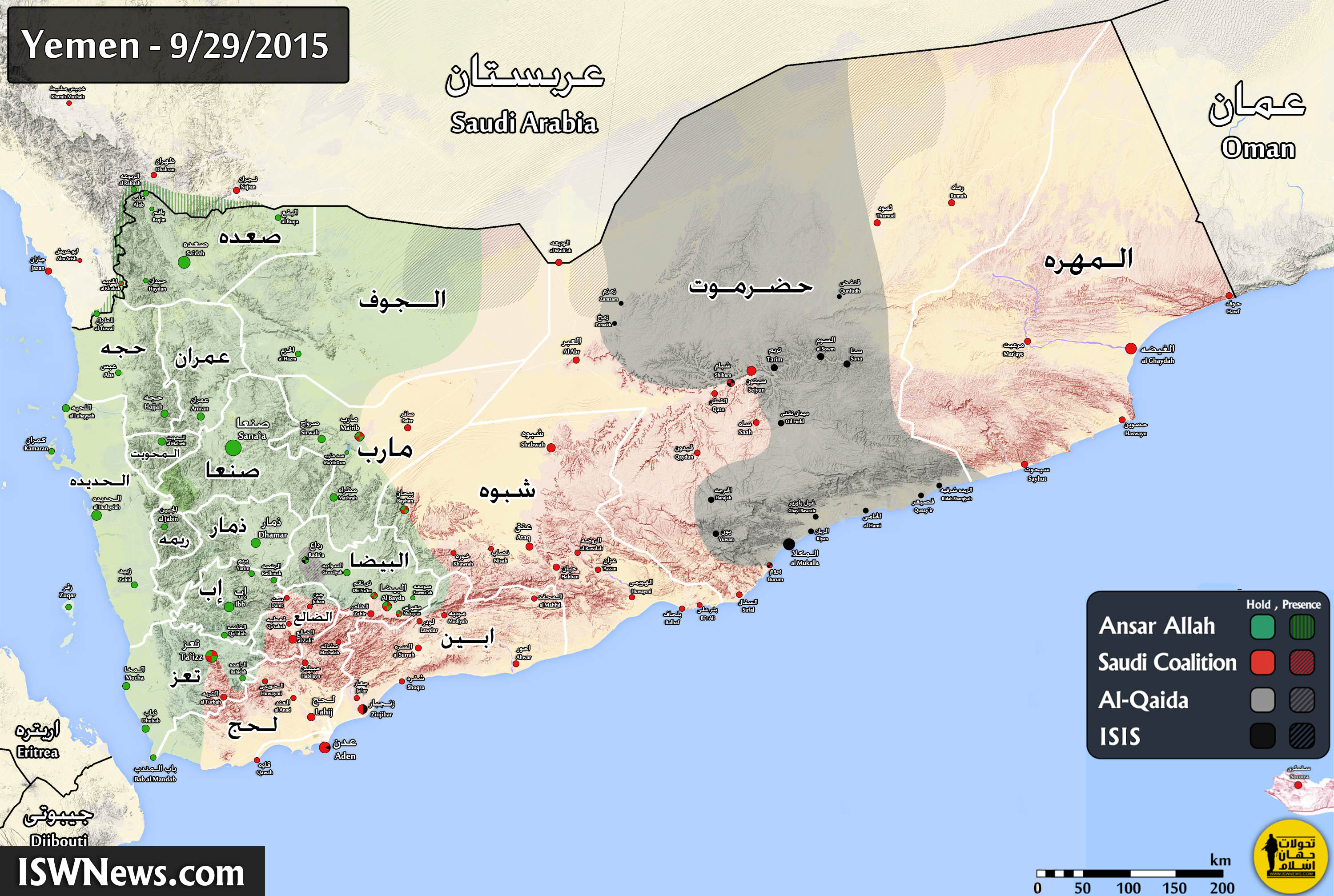
    What we have observed in recent months in Yemen is Ansar Allah’s steady continuous advance toward Marib city. By liberating Marib district in Sanaa province and western part of Al Jawf province, Ansar Allah turned the conflict direction toward the main base of Mansour Hadi resigned government forces, i.e., Marib. In the last few months, Ansar Allah pressured from north, south and west which resulted in liberation of districts Majzar, Madghal, Maheliyah, Rahbah and advances continue in the Jabal Murad, Jubah and Abdiyah districts.

    Yemen fronts in 2015

    In despite of Ansar Allah’s important advances and victories, they can’t change the balance of war in Yemen. It can be achieved only when the enemy is forced to give serious points in the political field.

    Saudi coalition, led by Saudi Arabia and UAE, uses two arms of “Mansour Hadi resigned government” and “Southerners” to hold their positions and interests in Yemen and therefore their bases in Marib and Aden are important for Saudi coalition. In case of liberation of these two bases, we can say the balance is turned in Yemen war and Ansar Allah has higher hand.

    Therefore, Ansar Allah’s primary mission is Marib and if it happens the Muslim Brotherhood movement and Mansour Hadi resigned government will be weaken severely which can lead to end of support for the movement by Saudi coalition. Southerners tried hard to get the attention of Saudi coalition and Muslim Brotherhood is always accused of collaborating with terrorist groups such as Al Qaeda and ISIS, and supporting Qatar and Turkey. Thus liberation of Marib is the end of resigned government in Yemen.

    After Marib, Ansar Allah’s possible plans are as follows:

    1- Negotiation with resigned government and Saudis:
    Ansar Allah showed optimism regarding negotiation with Muslim Brotherhood of Yemen due to their relations with their counterpart in Palestine and called it the start to talk. However, dependency of the resigned government to Saudis and presence of militant people in between did not allow for a separate independent talk.
    It seems conquering Marib can flick the resigned government to stop their illusions including: Turkey intervention in Yemen, defeating AnsarAllah by siege, etc., and talk with AnsarAllah with reality.

    2- Launching operation to Aden:
    After defeating Muslim Brotherhood movement, Southerners will rise as the main rival for Ansar Allah. Since the “Southern Transitional Council ” is heavily depending on UAE secessionist policies unlike Ansar Allah that wants to keep Yemen united, therefore the only solution for Ansar Allah is military operation against Southerners. We have elaborated on this matter previously. In short, Ansar Allah will focus on Dhale-Aden route in case of an operation.

    3- Launching operation in south of Al Hudaydah and west coast:
    Remainder of Ali Abdullah Saleh are commanded by Tariq Saleh and took position in west coast under support of UAE and consent of Saudi Arabia. It is highly possible they launch operation against Ansar Allah. Therefore Ansar Allah can attack south of Al Hudaydah and Taiz coasts and take the control of Bab al-Mandeb back without being worried about Sweden agreement which will be abolished by Mansour Hadi resigned government after conquering Marib.
    Controlling west of Yemen coasts has advantages of: preparing breaking the siege of Yemen for Iran, interrupting Israel plan to control Aden gulf and Bab al-Mandeb strait, observing enemies tankers and warships, etc.

    4- Operation in Saudi soil:
    One way to confront Saudi coalition attacks is to retaliate, which worked very well so far. For example, to retaliate Saudi coalition airstrikes to Sanaa, Saudi Arabia capital, i.e., Riyadh was targeted by drones and missiles. Or to retaliate attacking vital infrastructure of Yemen, Saudi Aramco was targeted.
    How can Ansar Allah retaliate occupation of east of Yemen by Saudi Arabia? Are liberation of Najran and Jizan or even advancing further toward Asir and Khamis Mushait more complicated than operations “Nasr Min Allah” and “Faamkan Minhom”? As Ansar Allah officials never limited the operations to a certain point or area and always talked about liberation of all of Yemen. Advancing in south of Saudi Arabia can make a balance in the war or be used as a lever in negotiations.

    5- Limited complementary operations:
    Following conquering Marib, Ansar Allah will advance toward Safer oil fields, whose liberation is the last stage of operation in Marib province.
    In Baydha province, liberation of districts Nate’, Numan, Musawara and Zaher, which are occupied by Saudi coalition and terrorist groups, can be the second stage of operation in Baydha, following liberation of Marib town. Liberating northern border and cleansing Yatmah and Boqa’ area are important in Al Jawf province, and north of Hajjah can be the introduction to advancing to Jizan.

    Anyhow, Ansar Allah should follow one or more of the above scenarios to achieve the mission of revolution in Yemen, otherwise stopping or slowing the advances will wear out Ansar Allah’s strength and gives time to enemy to rebuild.
    As Saudis are trying to take US into war against Yemen to cover for their weak points, and UAE is colliding with Israel to stabilize their occupation in Yemen. The outcome of these agreements will be difficult for Ansar Allah.

  • Libya awaits Saif al-Islam Gaddafi

    Libya awaits Saif al-Islam Gaddafi

    After conflicts broke out between two movements “Libyan National Army” (LNA) led by general Haftar and “Government of National Accord” (GNA) led by Fayez al-Sarraj in northwest of Libya, pressuring Libya to accept ceasefire, resuming oil export, etc. by foreign powers, led Libya in a direction that is important in the future of Libya.

    The following article is based on the situation right now and the details can change in the future. The deductions are as follows:

    1- Russia supporting Saif al-Islam Gaddafi:
    Some western analysts believe that Russia is using its influence in military, politics, society, etc. to bring back Saif al-Islam Gaddafi to libya’s politics. (These Russian forces include Maxim Shogali and Samir Saifan who are arrested by GNA and now in prison.)
    He says that using Wagner forces and using Arabic countries support (e.g. UAE) for LNA, Russia planned to occupy Tripoli which was not successful due to Turkey intervention. Now Russia, with the help of some European countries, is trying to prepare the situation for Saif al-Islam Gaddafi to come back to power.
    It is said that a person close to Putin, labeled as “Putin’s cook” is initiating a political movement whose mission is to acquit Saif al-Islam Gaddafi from terrorist activities and accuse his opponents and apparently its goal is to establish “security and peace, and a decisive Libya.”
    In the negotiations, Russia told Turkey that cities Sirte and Jufra are its red lines, since it counts on Sirte tribes support for Saif al-Islam. In addition Sirte is the gate to oil resources of libya and Russia won’t ignore it easily.

    2- The influence of normalizing the relations between UAE and Zionist regime on libya:
    In addition to the influence on Palestinian groups fighting Zionists, normalizing the relations between UAE and Zionist regime has influence on UAE foreign and military policies specially in Yemen and Libya.
    One reason behind this agreement is failure of UAE in Libya and Yemen wars, which forced Emirates to form a coalition with more influential powers.
    The incidents of the last year in Libya are influenced by tensions and policies of countries which intervened in the civil war. UAE’s intervention only brought heavy expenses for them.
    Having the least common interests with the other major support of LNA, i.e., Russia and limited military capabilities against Turkey are among the failure reasons.
    The influence of Israel and UAE relations on Libya will be clearer in future, however we should not forget about the abduction of Imam Musa Sadr in Libya and hidden relations between Gaddafi family and Israel (claimed by Muslim Brotherhood).

    3- Reduction of political support for general Haftar:
    Currently the supporters of LNA are changing direction from supporting militancy, which resulted in rejection of Haftar’s plan to reclaim Tripoli, to supporting ceasefire and political solutions.
    However this is the result of Russia and Turkey agreement mainly, which also brought serious troubles such as conditional resignation of Fayez al-Sarraj which was decried by Turkey.
    GNA leaders, under influence of European countries, saw their recent victory in northwest of Libya a good opportunity to leave the power and rise the peaceful flag!
    On the other hand, Aguila Saleh Issa, head of parliament, is supported by Egypt to be a new player in east of libya and resulted in anger of general Haftar. This can be related to Haftar’s relation with Venezuela and his oil policies, which are mainly dictated by Russia. This is not acceptable by USA and therefore the root of USA supporting Turkey’s intervention in Libya is to remove Haftar slowly using Egypt and UAE.

    Considering the recent incidents, the pressure of European countries on GNA caused GNA to accept the ceasefire and hold the election. Russia influence in the east and USA will resulted in limiting nationalist general Haftar power in east of Libya.
    Continuation of ceasefire, resuming oil export and holding presidential election are the topics to discuss between four influential powers in Libya, i.e., Russia, EU, Arabic states and Turkey. In case of an election in March 2021, the main candidate will be Saif al-Islam Gaddafi.

    .

  • PKK in Armenia?

    PKK in Armenia?

    Ukraine has also declared its readiness to help Azerbaijan and the conflict has gone beyond the region. Accordingly, news has been published about the readiness of Kurdish leftist groups, including the Kurdistan Workers’ Party (PKK) and the People’s Protection Units (YPG), in this battle. But why should these groups go to Armenia?

    The reasons that some proponents of this issue rely on are as follows: First, one percent of the world’s Kurds live in Armenia and Nakhchivan, and the Kurds have also been killed in the battles over Nagorno-Karabakh. The second is to meet the military needs of Kurdish groups through Armenia. The third case is the presence of Turkey and Syrian militants in this battle, which is at war with the Kurds.
    The question is, how can the Kurds reach Armenia?

    Syrian President Bashar al-Assad, who is not happy with the actions of Turkey and the Syrian militants in his country, has condemned the actions of Turkey and its mercenaries in the war against the Armenians. On the other hand, he has tried to attract the Kurds in Syria by giving them some concessions. Now that another proxy war has broken out, the presence of the Kurds in the mountain battles could be very effective and increase the weight of the developments towards Armenia.

    Before the attack and a week before the start of the Nagorno-Karabakh war, the Turkish and Azerbaijani media in a pre-emptive move strangely accused Iran’s role in allowing the Kurds to cross into Armenia, and tried to warn the Islamic Republic of Iran against the passage of these forces.
    However, as long as the Russians are on one side of the equation, there is no need for Iran to cooperate with the Kurds, and they can take Russian planes to Armenia and the battle lines in Nagorno-Karabakh.

    On the other hand, Armenians living in other countries are willing to make any effort to change the equation by announcing their readiness to participate and provide financial assistance.
    Armenians living in Georgia, Lebanon, Russia, the United States and France have already proven that they will do everything in their power to survive.

    Also, the presence of a population of 15 million Azeris on the territory of Iran and the southern borders of Armenia and the uproar that is heard to stage Iran’s Azeris to put political and economic pressure on Armenia, indicates that a major collision is taking place. Although the Islamic Republic of Iran has only provided political support to Azerbaijan and is not taking part in a war that is not in Iran’s interest, this thinking challenges the northwestern borders.
    On the other hand, Elham Aliyev introduces himself as an Islamic ruler! and demands the maximum support of all Muslims for himself and the actions of his government. On the other hand, Nicole Pashinian considers this battle sacred and a clash of civilizations.
    The same options, along with Turkey’s stubbornness and insistence on continuing the war, could spark another proxy war, but this time along Eurasian highways and energy.